Tag Archives: God

James 1: 1-8 The Wisdom of the Letter of James

Jan Hus Memorial at Old Town Square in Prague built in 1915. Photo by Jorge Royan. Shared under CC BY-SA 3.0

James 1: 1-8

Words highlighted have notes below on translation.

 1 James, a servant of God and of the Lord Jesus Christ,
  To the twelve tribes in the dispersion:
  Greetings.
  2
 My brothers and sisters, whenever you face various trials, consider it all joy, 3 because you know that the testing of your faith produces endurance. 4 And let endurance complete its work, so that you may be complete and whole, lacking in nothing.
  5
 If any of you is lacking in wisdom, ask God, who gives to all generously and ungrudgingly, and it will be given you. 6 But ask in faith, never doubting, for the one who doubts is like a wave of the sea, driven and tossed by the wind. 7, 8 For the doubter, being double-minded and unstable in every way, must not expect to receive anything from the Lord.

James, the author of the letter, has traditionally been understood as James the Just or James the brother of our Lord who was one of the influential early leaders of the church in Jerusalem.[1] Throughout this reflection my assumption will be that this is an early Christian letter, written in a similar time period to the letters of Paul, from a leader of the church in Jerusalem to the Jewish followers of Jesus scattered throughout the world. James introduces himself as a servant (literally slave in Greek) of God and of the Lord Jesus Christ. Although the translation of the Greek doulos as ‘servant’ in most English translations makes sense, especially with the history of how slaves were treated in the United States, it is worth noting that most of the apostles claim to be slaves/servants of Christ or God. In the ancient world a slave could exercise authority on behalf of their master, yet unlike a servant who is employed and can quit a slave was owned by the household. From a contemporary perspective in an individualistic society where personal freedom is highly valued it is worth being reminded that in the ancient world you were always bound to your family or the household you served. I do think for James the sense of obedience and servitude are an important part of how he sees the life of wisdom.

James and the author of 1 Peter are the only two New Testament authors to address their letters to the diaspora. Although at the time of the writing of James, assuming that the biblical James is the author, Israel and Jerusalem are not yet in rebellion against Rome, there are still more Jews living outside of Palestine in the diaspora than who live inside it. (Moore-Keish, 2019, pp. 20-21) At this early time, prior to 62 CE when James the Just is killed, the boundaries between Judaism and Christianity are still porous and many of the early followers of the way of Jesus Christ considered themselves a part of the Jewish people. Yet, there is also throughout the New Testament an adoption of the titles and language used for the Jewish people throughout the Old Testament to speak about the role of the new followers of Jesus throughout the church. Although James is writing in a manner that is highly reflective of the Hebrew Scriptures and Torah obedience, it is also likely that his audience may also include the churches of Paul and others among the Gentiles. James never mentions Sabbath-keeping, circumcision, or diet. Like the Gospel of Matthew, James attempts to write about a faith that is connected with Torah observance the letter is also shaped by a merciful reading of scripture which is shaped by both the teachings of Jesus and the prophetic witness before him.

Most modern translations will translate the Greek adelphos/adelphoi with ‘brothers and sisters’ rather than the generic ‘brother/brothers’ since James was addressing both men and women with the letter. What immediately strikes me as we enter into the letter of James is the way many of the early Christian writers are sharing a common vocabulary as they address the new followers of the way of Jesus Christ. James’s brief encouragement to find joy in their trials echoes Jesus’s words in the Sermon on the Mount:

“Blessed are you when people revile you and persecute you and utter all kinds of evil against you falsely on my account. Rejoice and be glad, for your reward is great in heaven, for in the same way they persecuted the prophets who were before you. Matthew 5: 11-12

Although James has been often read in opposition to Paul, his language throughout this letter often uses the same language and rhythms as Paul. Here in verses three and four you can see a similar pattern in Paul’s letter to the Romans:

And not only that, but we also boast in our afflictions, knowing that affliction produces endurance,  and endurance produces character, and character produces hope,  and hope does not put us to shame, because God’s love has been poured into our hearts through the Holy Spirit that has been given to us. Romans 5: 3-5[2]

In verse four we have the first appearance in the letter of the Greek teleios (NRSVue ‘mature’/NRSV ‘perfect’). This is an important word for James; the word is used twenty times in the New Testament; five of those uses occur in this short letter. Additionally, James utilized both the verbal form teleo twice and the substantive telos once. (Moore-Keish, 2019, p. 28) When I was working through Matthew’s gospel this was a word I wrestled with because I don’t believe that the word intends the sense of moral perfection that is often read into it.[3] Teleios is a word of destination and completion, and I like the NRSVue’s adoption of ‘mature’ for this word. James does want his readers to live a complete and mature life shaped by the path of God’s wisdom.

The letter of James shares many similarities with the wisdom literature in the Old Testament with its interest in shaping a life that is faithful to God’s intent as outlined in the law. Wisdom literature often contrasts the path of wisdom with the opposing path of foolishness. James contrasts the single-minded way of faith with the double-minded way of doubt. Faith and doubt are opposing ideas in James, and I believe that Joel B. Green captures the essence of James’s thought when he states that for James, “faith has more the sense of confidence.” (Green, 2025, p. 30) In the Gospel of Matthew ,faith had more the sense of openness and in Matthew’s gospel worship and doubt often coexisted, but James is approaching faith and doubt as opposites. James’s definition of faith is, ironically, incredibly close to Luther’s famous explanation of the first commandment, “We are to fear, love, and trust God above all things.” Faith and wisdom are a single-minded confidence in God and God’s ways. For those lacking in wisdom they are told to ask God confidently for the wisdom they need to lack nothing. The parallel use of ‘lacking nothing’ in verse four and ‘lacking wisdom’ five form an interesting parallel between ‘enduring trials’ and ‘asking God for wisdom.’

James targets those among his readers whose practice does not match their profession. They are double-minded because they want to be friends of God and friends of the world at the same time. (NIB XII:182) James’s thoughts echo Jesus’s words contrasting between those who try to serve two masters,[4] and it is telling that Jesus is contrasting those who serve God and wealth as James is about to contrast those of humble means and the rich.  

Martha L. Moore-Keish quotes a portion from the final letter of the Jan Hus, a reformer in Czechoslovakia (1369-1415) before he was burned at the stake that I want to close this portion of the reflection with because it wrestles with the themes of James in the concrete moment of temptation/trial:

Surely it is difficult to rejoice without perturbation, and to esteem it all joy in various temptations. It is easy to talk about it and to expound it, but difficult to fulfill it. Even the most patient and valiant soldier, knowing that on third day He would rise, conquering by His death the enemies and redeeming the elect from damnation, after the Last Supper was troubled in spirit…O most kind Christ, draw us weaklings after Thyself, for unless Thou draw us, we cannot follow Thee! Give us a courageous spirit that it may be ready; and if the flesh is weak, may Thy grace go before, now, as well as subsequently. For without Thee we can do nothing, and particularly to go to a cruel death for Thy sake. Give us a valiant spirit, a fearless heart, the right faith, a firm hope, and perfect love, that we may offer our lives for Thy sake with the greatest patience and joy. Jan Hus, from a letter written just prior to his being burned at the stake on July 6, 1415. (Moore-Keish, 2019, p. 25)


[1] Mark 6:3 indicates that Jesus has two brothers, James and Joses. James as a leader of the early church is mentioned in Acts 12:17; James plays a pivotal role in the Jerusalem council in Acts 15 (see verse 13) as well as meeting with Paul when he returns to Jerusalem in Acts 21: 17-26. Throughout Acts James is one of the leaders of the church and he often acts in a conciliatory manner between the church in Jerusalem and the Hellenistic mission of Paul and others. In Paul’s letter to the Galatians, James seems to have enough influence and power to make Peter change his behavior.

[2] See also 1 Peter 1: 6-7:  In this you rejoice, even if now for a little while you have had to suffer various trials, so that the genuineness of your faith—being more precious than gold that, though perishable, is tested by fire—may be found to result in praise and glory and honor when Jesus Christ is revealed.

[3] See my reflection on Matthew 5: 33-48 and Perfection and Blamelessness in the Bible.
[4] Matthew 6:24.

Introduction to the Letter of James

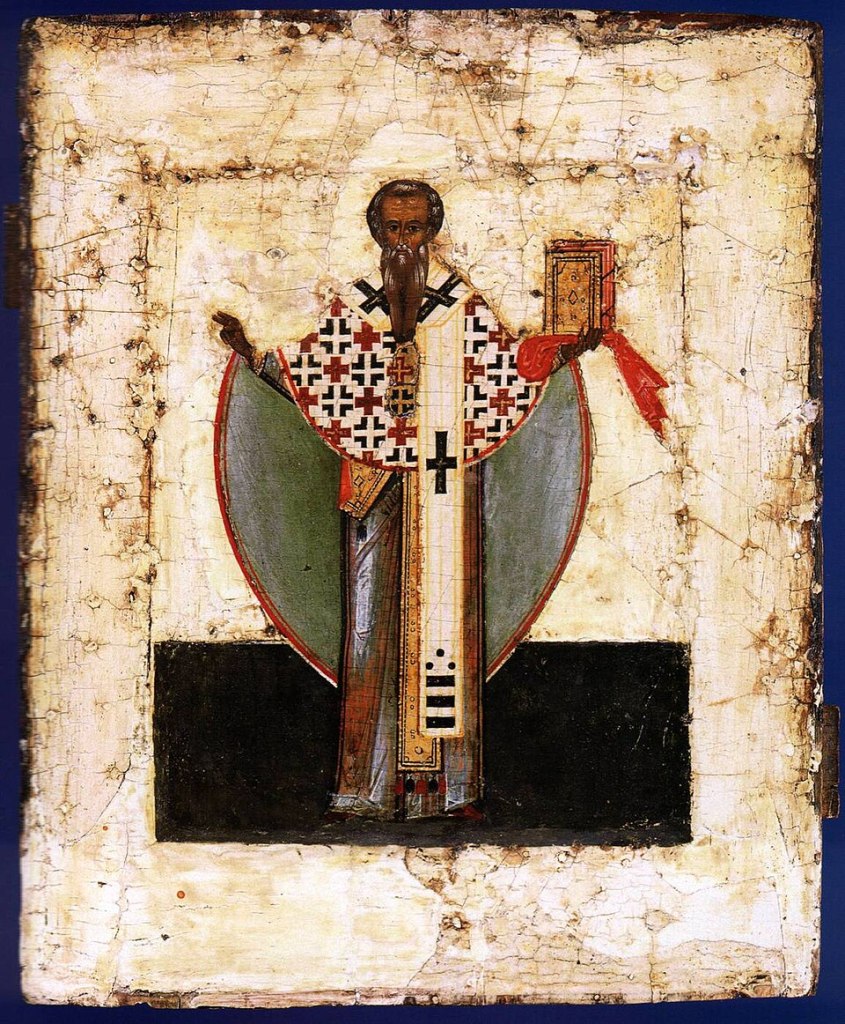
James the Just, 16th-century Russian icon

The Letter of James (or book of James) in the New Testament is either written by or attributed to James the brother of the Lord, one of the early leaders of the church in Jerusalem. If James the brother of Jesus, or James the Just as he is sometimes known, is the author of this letter then it is an early window into a Jerusalem based Christianity since James the Just was killed in 62 CE. Martha L. Moore-Kiesh expands on how early Christian writers elaborated on James’s martyrdom:

Eusebius, for instance, cites Clement of Alexandria, who say that James was “thrown down from the pinnacle of the temple and beaten to death with a fuller’s club.” Because of this legend, later iconography of James often portrays him with a club, recalling this alleged mode of his death. (Moore-Keish, 2019, p. 6)

Scholars for generations have debated whether the Letter of James is an early Christian document from a leader of the young church or a latter document attributed to James for authority. Ultimately it is impossible to know which is true but many of the arguments for a later date are not viewed as being as conclusive as they once were. For the purposes of these reflections, I am going to assume an early date and that the letter does originate with James the brother of our Lord, although I don’t believe that assumption will drastically alter the interpretation of this letter.

Some may be surprised to see a Lutheran pastor doing a detailed reflection on James since, especially in the Lutheran but also broader Protestant tradition James has often been neglected. Much of this goes back to Luther’s famous “Preface to the New Testament” (1522) where Luther compares James unfavorably with several other New Testament books:

In a word St. John’s Gospel and his first epistle, St. Paul’s epistles, especially Romans, Galatians, and Ephesians, and St. Peter’s first epistle are books that show you Christ and teach you all that is necessary and salvatory for you to know, even if you were never to see or hear any other book or doctrine. Therefore St. James’ epistle is really an epistle of straw, compared to these others, for it has nothing of the nature of the gospel about it. (Luther, 1989, p. 117)

Luther’s distaste for James emerges from his conflicts with the Catholic Church over ‘faith alone’ verse ‘works righteousness.’ James’s strong words about faith without works being dead (James 1:17) provided ammunition for Luther’s opponents to attack his theological perspective. These reflections will not remain bound to the binary way of thinking that characterized the debate over Reformation/counter-Reformation theology.

 A large part of my reflection with scripture is dealing with texts which I am less familiar with to attempt to engage with the breadth of the wisdom of scripture. I’ve been excited to dig deeper into James because it seems to resonate with a lot of my work on Matthew and Revelation. It is coming from early Jewish Christianity (or Judaic messianism since some hypothesize that there has not been a split from Judaism at the time the book has been written) in contrast to the Hellenistic mission of Paul and some of the other disciples. Like Matthew it quotes, alludes to, and echoes the law, the prophets, and the wisdom traditions that make up the Hebrew Scriptures. As Scot McKnight states:

Few dispute the Jewishness of this letter…It appeals to the Tanakh often (1:11; 2:8-10, 23; 4:6; 5: 4, 5), alludes to it constantly (e.g. 1: 13-15, 27; 2: 20-26; 3:9; 4: 7-10, 11-12; 5: 10-11, 17), and breathes throughout the spirit of biblical Judaism as it came to expression in diverse ways in the first century AD. The author chooses to call his audience something thoroughly biblical—“the twelve tribes in the Dispersion” (1:1) (McKnight, 2011, p. 25)

It also is deeply connected to several of the teachings of Jesus, particularly the sermon on the mount.

The letter of James is a book that seeks a practice of faith that is authentic and single-minded. It stands in the prophetic and wisdom tradition which privileges a faith that is practices mercy and impartiality, particularly to the vulnerable, over worship or theology. As Luke Timothy Johnson states, “James’s concern is with moral rather than manners.” (NIB XII:179) It can be subversive text to societies and congregations that have organized themselves around a moral order where those with wealth and power have been encouraged to maintain their privileged position. It can be an uncomfortable book. I enjoyed Scot McKnight’s playful adaptation of a famous Mark Twain proverb, “To ape the famous words of Mark Twain, it is not the lack of clarity of context of James that bothers me; it is the words in the text that bother me.” (McKnight, 2011, p. 4) The letter of James is not hard to understand but that does not make it easy to embody.

I have been random in the order I have engaged scripture and although the Old Testament/Hebrew Scriptures are significantly larger than the New Testament I did not anticipate or realize until recently how much more time I had spent in these fourteen years of reflections in the Old Testament. I realized recently that I had completed thirteen Old Testament books along with most of Psalms and only two New Testament books and that I had fewer books in the Old Testament that I had not written on. My plan going forward is to alternate between the New Testament and Old Testament. The New Testament books tend to go slower for me since I fully translate the Greek Text (with Hebrew I look at critical words and study multiple translations) and I have greater familiarity with the texts. The letter of James is only five chapters, but I am looking forward in learning from my engagement with this letter I have probably underutilized.  

Resources for this reflection

With each of these reflections I have taken multiple dialogue partners to learn from. For this journey I have selected:

Green, Joel B. (2025). James A Commentary. Louisville, KY: Westminster John Knox Press.

Johnson, Luke T. (1998) “Letter of James” in The New Interpreter’s Bible: A Commentary in Twelve Volumes. Nashville: Abingdon Press. (Referred to as NIB XII throughout the reflections)

McKnight, Scott. (2011). The Letter of James: the New International Commentary on the New Testament. Grand Rapids, MI: William B. Eerdman’s Publishing Company.

Moore-Keish, M. L. (2019). James: Belief A Theological Commentary on the Bible. Louisville, KY: Westminster John Knox Press.

Joel Green, Luke T. Johnson, and Scott McKnight were all New Testament scholars I was familiar with. Joel Green’s commentary just came out and I was excited to have him as one of my dialogue partners. Luke T. Johnson also wrote the much longer Anchor Bible commentary on James, but since he wrote the commentary in the New Interpreter’s Bible, I decided to capture his voice through a series I already owned. The New International Commentary (NICNT) by Scot McKnight is by far the longest commentary, and I’ve used the NICNT and NICOT commentaries in several of these reflections as a good, detailed commentary to assist with translation and other issues. The Belief series is a theological commentary, written by theologians instead of biblical scholars and I like it as a different voice coming with different questions.

Psalm 130 De Profundis

A piercingly bright curtain of stars is the backdrop for this beautiful image taken by astronomer Håkon Dahle at the La Silla Observatory in Chile. Shared under CC 4.0 https://en.wikipedia.org/wiki/Night_sky#/media/File:Starry_Night_at_La_Silla.jpg

Psalm 130

A Song of Ascents.

1 Out of the depths I cry to you, O LORD.
  2
 Lord, hear my voice!
 Let your ears be attentive
  to the voice of my supplications!

 3
 If you, O LORD, should mark iniquities,
  Lord, who could stand?
 4
 But there is forgiveness with you,
  so that you may be revered.

 5
 I wait for the LORD; my soul waits,
  and in his word I hope;
 6
 my soul waits for the Lord
  more than those who watch for the morning,
  more than those who watch for the morning.

 7
 O Israel, hope in the LORD!
  For with the LORD there is steadfast love,
  and with him is great power to redeem.
 8
 It is he who will redeem Israel
  from all its iniquities.

Bolded words have comments on translation below.

Psalm 130  is often called De profundis from the Latin rendering of the initial words out of the depths. It is one of my personal favorites as it cries with longing for the steadfast love, forgiveness, and redemption that comes from God. Martin Luther called this psalm, “a proper master and doctor of Scripture” and he would use it as the inspiration for his song “Out of the Depths I Cry To You.”[1] Throughout the reformation the song and the psalm were commonly used at funerals, and “Out of the Depths I Cry to You” was sung at the funerals of Fredrick the Wise, John of Saxony, and Martin Luther. (LW 53:222) Psalm 130 was also sung on the afternoon before John Wesley’s transformational experience at Aldersgate. James L. Mays appropriately calls this psalm, “a succinct but powerful expression of the theme that is at the heart of Scripture: the human predicament and its dependence on divine grace.” (Mays, 1994, p. 405)  

The psalmist cries out to the LORD from the depths, a phrase that can reference the sea[2] but for many readers it is also a metaphor for a desperate situation or depression. The initial two lines start a pattern of two verses stanzas where God is referred to twice. In the first three stanzas the first time the psalmists utilize the name of God (LORD in NRSVue)[3] in the initial verse of the stanza while the second reference is the generic Adonai (Lord in NRSVue). In verses seven the name of God is utilized twice. There is a consistent belief throughout the scriptures that the LORD is a God who hears and is attentive to the voice of the faithful ones, especially in desperate times.

The rapid move in verse three to talking about iniquities implies that the desperate situation referred to by the psalmist crying out from the depths may be due to their own lack of faithfulness. The word iniquities[4] occurs more than two hundred times in the Old Testament, especially in the prophets, to describe sin and guilt. (Nancy deClaisse-Walford, 2014, p. 928) Yet, the psalmist understands that fundamental to the character of God is forgiveness. The LORD is a God who desires justice, but as James L. Mays says,

The error is to understand the LORD as a god whose principal way with human beings is to watch for iniquities. If that were the case, there would be no hope of anyone. (Mays, 1994, p. 406)

Psalm 130 is one of many places in the Old Testament where we see a God of grace. I have often said to my congregation if you go to the bible looking for a judgmental God you will find one, but if you go to scripture seeking a gracious God you find the patience, forgiveness, and steadfast love of God as a defining characteristic of the God the bible witnesses to. That the LORD is a forgiving and attentive God provides hope for this psalmist who cries out from the depths.

The third stanza with its doubled final line in verse six is what initially captured my attention with this psalm. The psalmist waits and trusts in the LORD with all their being[5] and hopes in God’s word. The verb waits in verse six is not present in Hebrew but needs to be supplied for the translation to make sense. The doubling of more than those who watch for the morning heightens the expectation of the psalm. For me these doubled lines reminded me of keeping watch while in the army at that final watch before the sun rose. I have trouble if it is cold at night getting warm but as soon as the sun comes up my body is typically able to regulate itself better and so for me the longing for sunrise is something I feel intensely in my body. This hope for God with the entirety of one’s being like waiting for the dawning of the new day is a powerful reversal from the depths that the psalm began with.

In the final two verses the psalmist moves from their own situation to that of the people of God and calls on them to hope in the LORD. Just as the LORD has redeemed and rescued the one who call on God from the depths despite their iniquities, now the LORD will redeem Israel from its iniquities and the trouble they have caused. The name of God is now linked to one of the fundamental characteristics of God, steadfast love (hesed). The calling on the name of God twice in this final stanza may be to link the name of God with the characteristic steadfast love (hesed) of God. For the God of Israel, the iniquities of the people are not the final word, steadfast love and redemption are. The God who forgives the individual and rescues them from the depths also forgives and rescues the people. The individual and the people of God wait and hope in the LORD with all their being more than those waiting and watching for the coming of the dawn.


[1] “Out of the Depths I Cry To You” although not as popular as “A Mighty Fortress” or “Lord, Keep Us Steadfast in Your Word” continues to be sung and it is hymn 600 in the songs of Evangelical Lutheran Worship.

[2] Isaiah 51:10; Ezekiel 27:34; Psalm 69:2.

[3] When the word LORD is capitalized in the NRSV or NRSVue translation of the Hebrew it indicates the four letters of the divine name YHWH (often pronounced Yahweh) are behind it. Hebrew readers will often substitute the Hebrew Adonai to avoid speaking the name of God and risking taking the name of God in vain.

[4] Hebrew ‘awonot.

[5] The Hebrew nephesh often translated soul in English is a very different concept than most modern conceptions of ‘soul.’ For Hebrew the nephesh is about life and not about something that is freed after death.

Psalm 129 Hope in the Midst of Oppression

Farewell Melody by Ravil Akmaev Shared under the Creative Commons 3.0

Psalm 129

A Song of Ascents.

1 Often have they attacked me from my youth
 —let Israel now say—
2
 often have they attacked me from my youth,
 yet they have not prevailed against me.
3
 The plowers plowed on my back;
 they made their furrows long.
4
 The LORD is righteous;
 he has cut the cords of the wicked.
5
 May all who hate Zion
 be put to shame and turned backward.
6
 Let them be like the grass on the housetops
 that withers before it grows up,
7
 with which reapers do not fill their hands
 or binders of sheaves their arms,
8
 while those who pass by do not say,
 “The blessing of the LORD be upon you!
 We bless you in the name of the LORD!”

Bolded words have notes below on translation.

Psalm 129 speaks a defiant word of confidence that the oppression they have experienced will ultimately be responded to by the God who sees their oppression. Living faithfully does not prevent the faithful from suffering but the faithful trust that God will not allow the oppressors to prevail but will act on behalf of the oppressed one. The psalm begins with the Hebrew word rabbat (translated Often in the NRSVue) a word that can indicate either frequency (as the NRSV and NRSVue indicate) or severity (NIV greatly). The psalm begins with the impression of an overwhelming and continual oppression by an unnamed enemy. The individual describes their pain metaphorically like their back being plowed like a field being prepared for harvest. Isaiah uses a similar image when God promises to deliver the people from their tormentors:

And I will put it into the hand of your tormentors, who have said to you, “Bow down, that we may walk on you,”and you have made your back like the ground and like the street for them to walk on. Isaiah 51:23

And Micah speaks similarly of Jerusalem:

Therefore because of you Zion shall be plowed as a field; Jerusalem shall become a heap of ruins, and the mountain of the temple a wooded height. Micah 3:12

The word translate cord (Hebrew ‘abot) can refer to the cords used to guide animals when plowing, continuing the metaphor of verse three, or it can refer to instruments of punishment used to inflict pain, making the wounds on the back metaphorically referred to as furrows. (Nancy deClaisse-Walford, 2014, p. 924) Without the intervention of the LORD the life of the poet would be similar to the character portrayed in Metallica’s song “The Unforgiven”

They dedicate their lives to running all of his

He tries to please them all, this bitter man he is

Throughout his life the same, he’s battled constantly,

This fight he cannot win

A tired man they see no longer cares

In contrast to the man who suffers in the lyrics of “The Unforgiven” the poet has hope that there is one who sees their oppression and acts to right the wrongs they have endured. Who cuts the cords that have cut them, who turns them backward and brings them to shame, who causes their lives to dry up like grass without soil of any depth.

Hate, in both Hebrew and English, is an emotionally charged word, but there are difference in meaning. In Hebrew to hate another person, “usually implies a distancing of oneself from the other person or thing rather than wishing the other harm.” (Nancy deClaisse-Walford, 2014, pp. 924-925) Within the poem the poet asks that the one who “hates” not receive the “blessing” of the LORD. The psalmist expects a world where the hate of the enemy is turned away and loses its power, much like the narrative of Balaam in Numbers 22-24 where he is brought in to curse the people of Israel and instead can only give words of blessing.

Like the suffering servant of Isaiah 50 and 53, the writer of Psalm 129 undergoes suffering and yet endures trusting in God’s eventual reversal of their situation. Like the suffering servant in Isaiah, this psalm brings the suffering of the individual and the suffering of the people together and speaks of them interchangeably. While reflecting on this psalm I was reminded of Paul’s words in 2 Corinthians:

4 but as servants of God we have commended ourselves in every way: in great endurance, afflictions, hardships, calamities, 5 beatings, imprisonments, riots, labors, sleepless nights, hunger; 6 in purity, knowledge, patience, kindness, holiness of spirit, genuine love, 7 truthful speech, and the power of God; with the weapons of righteousness for the right hand and for the left; 8 in honor and dishonor, in ill repute and good repute. We are treated as impostors and yet are true, 9 as unknown and yet are well known, as dying and look—we are alive, as punished and yet not killed, 10 as sorrowful yet always rejoicing, as poor yet making many rich, as having nothing and yet possessing everything. 2 Corinthians 6: 4-10

Paul, like this psalmist, is willing to endure suffering because he trusts that God sees and responds to his suffering. The psalm incorporates both the suffering of an individual and the suffering of the people of God who speak with a defiant faith that the LORD is a God who hears the suffering of the people, cuts the cords of the oppressors, and holds the judgment of the wicked in God’s hands.

Psalm 128 A Blessed Life for the Man, His Family, and His Society

Parents with child statue, Hrobákova street, Petržalka, Bratislava By Kelovy – Own work, Public Domain, https://commons.wikimedia.org/w/index.php?curid=1622776

Psalm 128

A Song of Ascents.

1 Happy is everyone who fears the LORD,
  who walks in his ways.
 2
 You shall eat the fruit of the labor of your hands;
  you shall be happy, and it shall go well with you.

 3
 Your wife will be like a fruitful vine
  within your house;
 your children will be like olive shoots
  around your table.
 4
 Thus shall the man be blessed
  who fears the LORD.

 5
 The LORD bless you from Zion.
  May you see the prosperity of Jerusalem
  all the days of your life.
 6
 May you see your children’s children.
  Peace be upon Israel!

Bolded words have notes on translation below.

In contrast to the individualistic ways that most people of the modern west conceptualize their world, for most ancient societies and religions the primary unit is not the individual but the family. A good life started with a prospering family and then extended to the prosperity of the city and then to the nation. This way of thinking is reflected in this psalm about a blessed life for a man, his family, Jerusalem, and all Israel. This is a wisdom psalm as the key word happy (Hebrew ‘asre) should alert us.[1] Psalms 127 and 128 share several frequently used wisdom words along with the conception that following the path of wisdom leads to a prosperous household.

Fearing the LORD and walking in the way of the LORD leads to happiness/contentment and enjoying the fruit of their labor. Ecclesiastes may believe that the labor/toil we do is vanity, but even Ecclesiastes can state:

There is nothing better for mortals than to eat and drink and find enjoyment in their toil. This also, I saw, is from the hand of God, for apart from him who can eat or who can have enjoyment? For to the one who pleases him God gives wisdom and knowledge and joy, but to the sinner he gives the work of gathering and heaping, only to give to one who pleases God. This also is vanity and a chasing after wind. Ecclesiastes 2: 24-26

The contentment is not merely for the man (literally mighty one, Hebrew gibbor)[2] but for the entire household. Grape vines and olive trees are two of the critical agricultural products of Israel. The metaphorical linking of the fruitfulness of the land to the wife (or wives) and children of the man coincides with the view that children are a sign of blessing and barrenness is a sign of disfavor.

The blessing of this ‘mighty one’ and their family now is extended to Jerusalem and Israel. Jerusalem is the place where the temple of the LORD resides and where the hoped for blessing would originate from on earth, and the psalmist desires to hearer to see the prosperity (Hebrew tob, literally goodness) of the city throughout their life. Seeing grandchildren is a sign of old age acquired and a family which continues to grow. The psalm ends with the desire of peace (shalom) resting on Israel. The man (mighty one) has received a blessed life for himself, his family, and for his society.

Psalm 128 shares a common worldview with Martin Luther’s explanation of the first commandment as, “We are to fear, love, and trust God above all things.” Fearing the LORD and walking in the ways of the LORD in biblical thought leads to prosperity. There are righteous people who suffer, who may be barren, and the wicked do sometimes prosper, but for the psalms the belief that God will provide for the faithful is fundamental. The stated blessing in this psalm echoes the idea of peace represented in the words of the prophet Micah:

but they shall all sit under their own vines and under their own fig trees, and no one shall make them afraid, for the mouth of the Lord of hosts has spoken. Micah 4:4

It sharply contrasts with the judgment on Cain in Genesis 4:

And now you are cursed from the ground, which has opened its mouth to receive your brother’s blood from your hand. When you till the ground, it will no longer yield to you its strength; you will be a fugitive and a wanderer on the earth.” Cain said to the Lord, “My punishment is greater than I can bear! Today you have driven me away from the soil, and I shall be hidden from your face; I shall be a fugitive and a wanderer on the earth, and anyone who meets me may kill me.” Genesis 4: 11-14

At a fundamental level what the scriptures consider wisdom is simple: fearing the LORD and walking in his ways. Following this path entrusts one’s life, one’s family, and one’s society into the hands of God. The faithful one’s throughout the Jewish and Christian story have entrusted God can care for their life, their family and the world around them.


[1] The Hebrew ‘asre is frequently an indicator of wisdom literature. We may not think of happy or blessed in this way, but for Hebrew writers this is a common word when talking about the path of wisdom. Wisdom writers can interchange the idea of happiness and wisdom, see for example the way Psalm 110:10; Proverbs 1:7; 9:10 can pair wisdom with the fear of the LORD. Walter Brueggemann and William Bellinger, Jr. say of ‘asre, “The term introduces an observation about living: one who walks or lives in ways in line with YHWH’s purposes find wholeness. (Bellinger, 2014, p. 545)

[2] Hebrew gibbor which can refer to physical strength or the economic strength to equip oneself and a group for combat. Ruth 4:11 uses this term for economic ability in reference to Boaz.

Psalm 127 The Wisdom of Trusting the LORD

Nocks on a group of Arrows. Image by By Samuraiantiqueworld – Own work, CC BY-SA 3.0, https://commons.wikimedia.org/w/index.php?curid=15357007

Psalm 127

A Song of Ascents. Of Solomon.

 1 Unless the LORD builds the house,
  those who build it labor in vain.
 Unless the LORD guards the city,
  the guard keeps watch in vain.
 2
 It is in vain that you rise up early
  and go late to rest,
 eating the bread of anxious toil,
  for he gives sleep to his beloved.

 3
 Sons are indeed a heritage from the LORD,
  the fruit of the womb a reward.
 4
 Like arrows in the hand of a warrior
  are the sons of one’s youth.
 5
 Happy is the man who has
  his quiver full of them.
 He shall not be put to shame
  when he speaks with his enemies in the gate.

Bolded words have notes on translation below.

Psalm 127 rotates around the basic claim that everything comes from the trustworthy LORD who builds the house, guards the city, and gives the blessing of family. The opening verse introduces the word translated in the NRSVue ‘house’ (Hebrew bayit) which can be used in multiple ways. Nancy deClaissé-Walford illustrates the multiple ways Hebrew uses bayit:

The word house (bayit) has a number of meanings in the Hebrew Bible. It can refer to family dwellings (Gen. 19:2; Judg. 11:31; 2 Kgs. 4:2); to the whole household (Gen. 46:27; Josh. 7:18; Ruth 1:8); to the whole people of Israel (Exod. 40:38; 1 Kgs. 20:31; Ezek. 36:22); to ruling dynasties (2 Sam. 3:1; 7:11; 1 Kgs. 16:3); or to the temple in Jerusalem (2 Kgs. 22:3; Ezra 6:15; Jer. 7:2). (Nancy deClaisse-Walford, 2014, p. 918)

Critical to the wordplay in this Psalm is the usage of the term in Nathan’s prophecy to David in 2 Samuel 7: 11-13

The LORD declares to you that the LORD will make you a house (bayit). When your days are fulfilled and you lie down with your ancestors, I will raise up offspring after you, who shall come forth from your body, and I will establish his kingdom. He shall build a house (bayit) for my name, and I will establish the throne of his kingdom forever.

While the building of a family dwelling or a temple would also be a labor committed to the LORD and the word allows and encourages those meanings, the psalm also wants us to understand the resonance of household, especially when linked thematically and phonetically to the second half of the psalm (see below).

The LORD is the primary actor throughout the psalm as the builder of the house and the guard of the city and the provider of children while the psalmist lives in trust of the LORD. They may participate with God in the building of the house, the protection of the city, and the procreation and raising of a family, but they can trust that the LORD provides that which they need. Instead of anxious toil trying to secure their house, city, and family they can sleep in peace entrusting the LORD to provide that which they need. I am reminded of Martin Luther’s explanation of the petition of the Lord’s prayer on daily bread:

What is this?

In fact, God gives daily bread without our prayer, even to all evil people, but we ask in this prayer that God cause us to recognize what our daily bread is and to receive it with thanksgiving.

What then does “daily bread” mean?

Everything our bodies need such as food, drink, clothing, shoes, house, home, fields, livestock, money, property, an upright spouse, upright children, upright members of the household, upright and faithful rulers, good government, good weather, peace, health, decency, honor, good friends, faithful neighbors, and the like. (Luther, 1978, p. 36)

Wisdom is trusting the LORD to provide for the house and the security of the city so that the faithful one can be free from anxiety and worry. The psalmist understands cooperating with God but the idea of securing their own future by working harder or longer is foolishness. For the psalmist God provides for the home, the community, and the family.

As briefly mentioned above there is a phonetic connection between the verses in Hebrew that is not present in English. Nancy deClaissé-Walford is again helpful in showing this:

The word translated here as children (NRSVue sons) is the Hebrew banim, whose acoustic similarity to the Hebrew word build (bana) and house (bayit) in v. 1, coupled with the polyvalent meaning of the word “house” in the Hebrew Bible, strongly connects the two stanzas of Psalm 127. (Nancy deClaisse-Walford, 2014, p. 918)

The word ‘reward’ (Hebrew sakar) also appears in Genesis 15 when God tells Abram, “your reward (sakar) shall be very great. Within this promise Abram is told to look to the heavens and count the stars…so shall his dependents be. This psalm echoes the story of Abram/Abraham when multiple sons/children are viewed as a ‘reward.’ ‘Warrior’ and ‘man’ in verses four and five are the Hebrew gibbor and its alternate form geber which is an important term often translated “mighty one”[1] which can refer to either military or economic power. Finally, the word ‘happy’ (Hebrew ‘asre) is a term frequently used in wisdom literature. This wise ‘mighty one’ whose house the LORD has built, whose city the LORD has guarded, and whose family has produced many children as a reward from God can live at peace and content because they have trusted in the LORD. The LORD who builds their household, guards them and provides for their family will not allow their enemies to put them to shame.


[1] Hebrew gibbor hehayil which can refer to physical strength or the economic strength to equip oneself and a group for combat. Ruth 4:11 uses this term for economic ability in reference to Boaz.

Psalm 126 Carrying in the Sheaves Planted in Tearful Moments

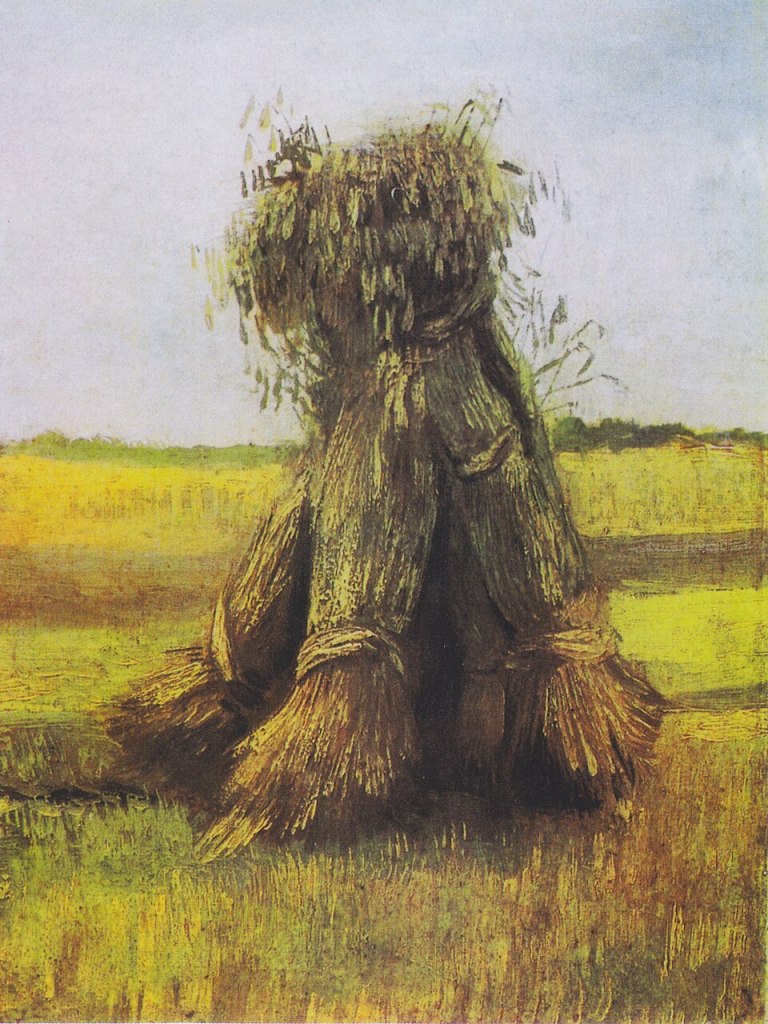
Wheatsheaves in a Field (1885) by Vincent van Gogh

Psalm 126

A Song of Ascents.

1 When the LORD restored the fortunes of Zion,
  we were like those who dream.
 2
 Then our mouth was filled with laughter
  and our tongue with shouts of joy;
 then it was said among the nations,
  “The LORD has done great things for them.”
 3
 The LORD has done great things for us,
  and we rejoiced.

 4
 Restore our fortunes, O LORD,
  like the watercourses in the Negeb.
 5
 May those who sow in tears
  reap with shouts of joy.
 6
 Those who go out weeping,
  bearing the seed for sowing,
 shall come home with shouts of joy,
  carrying their sheaves.

Bolded words have notes on translation below.

Psalm 126 follows a common pattern in the psalms and throughout the scriptures. It begins with a remembrance of the ways God has acted on behalf of the people in the past and then moves to an appeal for God’s action in the troubles of the present. As J. Clinton McCann Jr. states, “We live in the hope of God’s help always remembering what God has done in the past…and always anticipating what God will do in the future.”(NIB III:1196) The imagery of sowing and reaping have led to the Psalm’s usage on Thanksgiving Day in worship (Year B in the Revised Common Lectionary) and it inspired Knowles Shaw’s song “Bringing in the Sheaves.”

The psalm is structured around two uses of a Hebrew idiom translated “restored our fortunes” in the NRSVue. The phrase is difficult to render in English and has led to a wide variety of translations, but in the prophets it relates to the change in condition brought about by God turning away from God’s wrath and again regarding the people with favor. (Mays, 1994, p. 399) The use of the phrase often refers to the return of the exiles to the homeland of Israel (Deuteronomy 30:3; Jeremiah 30: 3, 18; 32:44; Ezekiel 39:25) and here it may also refer to a homecoming of the exiles from Babylon. (NIB III: 1195) The specific context that the psalm originally spoke to is not required for the reader to understand the relief and joy of those who have experienced the great things God has done for the people of the psalmist. The dreamy state of the remembered joy and laughter of the people emerges from the ways God has provided for and protected the people in the past. From the memory of what God has done in the past comes the hope of God’s action in the present.

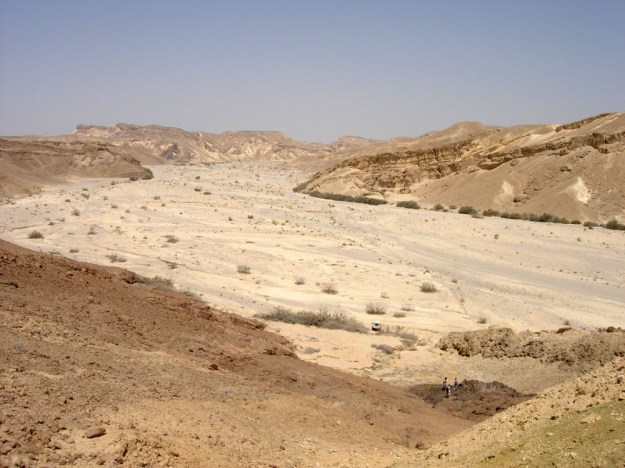
Wadi in Nahal Paran, Negev, Israel By Wilson44691 at English Wikipedia – Photograph taken by Mark A. Wilson (Department of Geology, The College of Wooster).[1], Public Domain, https://commons.wikimedia.org/w/index.php?curid=3140024

The experience of the present is one described metaphorically by the dry watercourses of the Negeb. During the rainy season these creek beds are filled with water but now in the metaphor of the psalm they are dry. Psalm 42 used the imagery of thirsting for water as a metaphor for thirsting for God’s presence:

As a deer longs for flowing streams, so my soul longs for you, O God. Psalm 42:1

The prophet Joel will also use a similar image:

In that day the mountains shall drip sweet wine, the hills shall flow with milk, and all the stream beds of Judah shall flow with water; a fountain shall come forth from the house of the LORD and water the Wadi Shittim. Joel 3:18

It is possible as Walter Beyerin argues that the author of Psalm 126 utilized Joel as a source of imagery as the psalmist, in his reconstruction, attempts to deal with the disappointment that prevailed in Judah after the return from Babylon (NIB III: 1196) but the beauty of the psalms is their ability to fit circumstances frequently encountered in life. Most people can relate to the imagery of drought in the personal, relational, economic, and spiritual struggles of life. The desire for the tears of today to turn to shouts of joy and a desire for the pain of the present to have some harvest of meaning in the future. To live in anticipation that the God who brings an end to the dryness of the watercourses of the Negeb will also turn tears into joy as people come in carrying the sheaves planted in these moments of hardship.

Psalm 125 A Place Where Righteousness Can Flourish

The Judean Hills viewed from the Dead Sea By Kreecher at Russian Wikipedia – Transferred from ru.wikipedia to Commons., Public Domain, https://commons.wikimedia.org/w/index.php?curid=4241172

Psalm 125

A Song of Ascents.

1 Those who trust in the LORD are like Mount Zion,
  which cannot be moved but abides forever.
 2
 As the mountains surround Jerusalem,
  so the LORD surrounds his people
  from this time on and forevermore.
 3
 For the scepter of wickedness shall not rest
  on the land allotted to the righteous,
 so that the righteous might not stretch out
  their hands to do wrong.
 4
 Do good, O LORD, to those who are good
  and to those who are upright in their hearts.
 5
 But those who turn aside to their own crooked ways,
  the Lord will lead away with evildoers.
  Peace be upon Israel!

Bolded words have notes on translation below.

Underlying the wisdom of the psalter is the conviction that God is trustworthy. Those who trust in the LORD become like the one that they trust in the metaphors of this psalm. Jerusalem, the temple, and Mount Zion were viewed as being a place protected by God an idea echoed by Psalm 46: 5,” The LORD is in the midst of the city, it shall not be moved.” Zion as a focal point of hope was likely increased in the aftermath of Sennacherib’s unsuccessful siege of Jerusalem in the time of King Hezekiah/Uzziah (2 Kings 18–20). Mount Zion is in the psalm an immovable object and now those who trust in the LORD in the metaphor are also immovable. Yet they are not immovable because they stand on their own but instead, they are surrounded by the LORD’s presence perpetually just as Mount Zion is surrounded by even higher mountains particularly in the east. God is trustworthy and those who trust in God are able to stand fast because they are surrounded by God’s protection and strength.

The Hebrew particle ki which begins verse three indicates a strong contrast between the forces of wickedness and the righteous. I like Nancy deClaissé-Walford’s translation of this verse as “Surely the tribe of the wicked ones will not rest upon the inheritance of the righteous.” (Nancy deClaisse-Walford, 2014, p. 901) which captures several elements of the Hebrew. Some scholars have viewed verse three as indicating a post-exilic era since might indicate a time when ‘the wicked’ dominated the inheritance of ‘the righteous’ but I think the easier reading is to assume a pre-exilic time among a people who believe that God’s defense of the land and the city will never change. The land was a breathing space for the righteous to learn how to live free from the pressures of the wicked world around them. Jerusalem and Mount Zion became a safe space where the righteous were protected from the wicked.

The basic wisdom themes of the LORD watching over the life of the good and leading away the wicked and evildoers is a central theme of the psalms beginning with Psalm 1. The sovereignty, strength, and protection of God over the city was to create a space where righteousness could flourish. Yet the practice of life in Jerusalem in 1&2 Kings and 1&2 Chronicles tells a less rosy story of the city of peace which rested on Mount Zion. As I was thinking about this psalm I was reminded of the opening lines of a Paramore song from 2009 “Turn it Off.” “I scraped my knees while I was praying/ And found a demon in my safest haven.” The people of God have often dreamed of space of safety and well-being, and it is shattering when those places become corrupted. For the prophets that was their understanding of why Jerusalem did not endure on Mount Zion forever, and it is a warning for any place of God that allows the scepter or tribe of wickedness to have power over the righteous ones. The pilgrims of the Songs of Ascent have come seeking a safe space where they can live in righteousness surrounded and protected by the LORD. Those charged with leading places where people gather to worship bear a responsibility in partnership with God to make these places of peace where the righteous are protected. Israel has rarely known peace and as I write these words it is currently at war along with the United States against Iran. Yet I long, along with these pilgrims from long ago, for shalom (peace) for Israel, shalom for those who gather to seek the LORD in churches and synagogues and other holy spaces, and peace for the righteous and the upright in heart.

Psalm 124 Us and God Against the World

Pilgrim Steps Leading to the Double Gate (Southern Steps of the Temple Mount, Jerusalem) picture from 2009 by Wilson44691 – Own work, Public Domain, https://commons.wikimedia.org/w/index.php?curid=6899573

Psalm 124

A Song of Ascents. Of David.

 1 If it had not been the LORD who was on our side
  —let Israel now say—
 2
 if it had not been the LORD who was on our side,
  when our enemies attacked us,
 3
 then they would have swallowed us up alive,
  when their anger was kindled against us;
 4
 then the flood would have swept us away;
  the torrent would have gone over us;
 5
 then over us would have gone
  the raging waters.

 6
 Blessed be the LORD,
  who has not given us
  as prey to their teeth.
 7
 We have escaped like a bird
  from the snare of the hunters;
 the snare is broken,
  and we have escaped.

 8
 Our help is in the name of the Lord,
  who made heaven and earth.

Bolded words have notes on translation below.

The overall meaning of the psalm should be clear to any reader: the LORD is the one who is on our side and who rescues us from the perils of the world. The theme of God as strength, support, shelter, rock, shield, fortress and many other metaphors of protection and comfort occur regularly throughout the psalms and scripture in general. The theme of this fifth song of ascent is not new, but its language (somewhat dulled in English translations) is striking. Israel would not continue to exist without the LORD. Paul’s defiant statement in his letter to the church in Rome echoes the sentiment of this psalm: “What then are we to say about these things? If God is for us, who is against us?” (Romans 8:31)

Verse one and two both begin with a statement that seems conditional in English, “If it had not been the LORD who was on our side” but as Nancy deClaissé-Walford highlights,

Verses 1 and 2 both begin with if not (lûlê), forming the protasis of vv. 1-5. Lûlê, however, is only used in Hebrew to express an unreal condition. The psalm-singers are confident that the Lord is on their side. (Nancy deClaisse-Walford, 2014, p. 907)

This psalm of corporate trust in the LORD begins and ends with a confident assurance that the God of Israel has protected the people of God against her enemies. The enemies identified in verse two is identified with the collective noun humanity(‘adam). Israel and God have all humanity arrayed in opposition to them, and without God Israel would have been overwhelmed.

The psalm then uses several images that indicate that the people of God on their own are powerless before those who oppose them. Their enemy is large enough to swallow them alive, or to sweep over the life of the people,[1] to be devoured in the mouth or captured in a trap. In verse six the word rendered teeth is the same word (lason) rendered tongue in Psalm 120:2

          Deliver me, O LORD, from lying lips, from a deceitful tongue.

Compared to the hunter of fowl the people of Israel are like a bird unable to free themselves from the traps their enemies have laid. On their own Israel is small and weak before the mass of humanity arrayed against them. Yet here, as in Psalm 121, their help is in the name of the LORD who makes heaven and earth. What was a confession of individual trust in Psalm 121 is now a corporate statement of trust in the creating and protecting God. As a people they ‘go with God.’

In the United States, where I live and lead a congregation, there is a reliance on self-sufficiency that is very different from the biblical faith represented in the psalms and throughout the bible. As J. Clinton McCann, Jr. aptly writes,

To profess that God is our fundamental help means to profess that we are not sufficient to create and secure our own lives and future. In short, we need help. (NIB IV: 1191)

As people of God, we believe that God is on our side and stands with us against the enemies that threaten to consume or overwhelm us. If it were only our own strength that we could rely on we would find ourselves consumed, overwhelmed, and trapped but in our own weakness we know our help comes from the one who created the heavens and the earth.


[1] In verse 4b and 5 the “us” in the verse is the Hebrew nephesh, often rendered “soul” in English translations but in Hebrew thought it is closer to the essence of life, not something that can be separated from life. J. Clinton McCann, Jr. notes the word may have originally meant neck. (NIB IV: 1190)

Psalm 123 Appealing to the God whose Mercy Overcomes Contempt

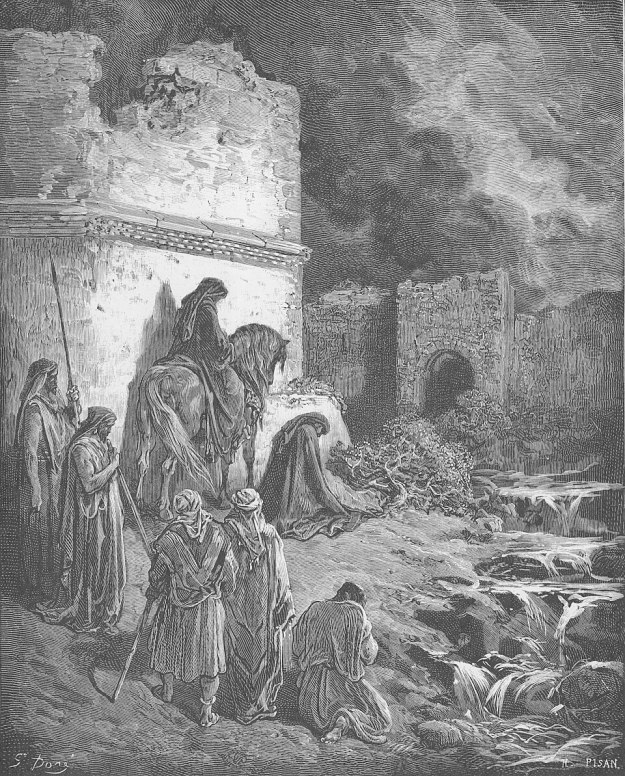
Nehemiah Views the Ruins of Jerusalem’s Walls (Neh. 2:1-20) Gustave Dore, Dore’s English Bible (1866)

Psalm 123

A Song of Ascents 

1 To you I lift up my eyes,
  O you who are enthroned in the heavens!
 2
 As the eyes of servants
  look to the hand of their master,
 as the eyes of a maid
  to the hand of her mistress,
 so our eyes look to the LORD our God,
  until he has mercy upon us.

 3
 Have mercy upon us, O LORD, have mercy upon us,
  for we have had more than enough of contempt.
 4
 Our soul has had more than its fill
  of the scorn of those who are at ease,
  of the contempt of the proud.

Bolded words have notes on translation below.

If you read the psalms of ascent as a sequence, which scholars assume was a common practice during a pilgrimage to Jerusalem, there is a narrative that may underly the pattern. The psalmist begins in a place far from the city of peace surrounded by those who desire war (Psalm 120). The psalmist then departs on a journey lifting up their eyes to the hills (Mount Zion-Psalm 121). In the third song of ascent the psalmist arrives at their destination of Jerusalem (Psalm 122). Now in Jerusalem the pilgrim is joined by other pilgrims coming to the city of peace and they turn their eyes to God and lift up their complaint about the world they come from. They have left behind others in a land of people who seek conflict and speak with lying lips (Psalm 120) and now in the city of God they appeal for not only Jerusalem but the world the LORD stands in authority over.

The psalm begins with a solitary speaker lifting up their eyes to the LORD who sits on the seat of authority in heaven. The psalmist may imagine God presiding over the gods of the nations as in Psalm 82 as they address the LORD in this manner, and this may set the stage for the complaint that the people raise about the contempt and scorn they have received in the nations. The eyes of an individual pilgrim are joined by other servants and maids of the LORD their God look to their master for mercy. The Hebrew conception of the relationship between a servant or maid and their master or mistress envisions the master/mistress bearing responsibility for their subordinates. The subordinates are dependent upon their master for their provision and protection, but the expectations of the master in the psalm are conditioned by the merciful LORD their God who is master over the heavens and the earth. The identity of the LORD God as expressed by God in Exodus 34 is:

 “The LORD, the LORD,
a God merciful and gracious,
slow to anger,
and abounding in steadfast love and faithfulness,
7 keeping steadfast love for the thousandth generation,
forgiving iniquity and transgression and sin,
yet by no means clearing the guilty,
but visiting the iniquity of the parents upon the children
and the children’s children,
to the third and the fourth generation.” Exodus 34: 5-7.

And the blessing of the Aaronic priests in Numbers 6:22-27 echoes the ideas of God turning God’s face in graciousness towards those who lift up their eyes to the LORD:

 22 The Lord spoke to Moses, saying, 23 “Speak to Aaron and his sons, saying: Thus you shall bless the Israelites: You shall say to them:
 24
 The Lord bless you and keep you;
 25
 the Lord make his face to shine upon you and be gracious to you;
 26
 the Lord lift up his countenance upon you and give you peace.
  27
 “So they shall put my name on the Israelites, and I will bless them.”

The pilgrim has joined other pilgrims within the city seeking mercy from the LORD their God and they lift up their eyes and their appeal. As Walter Brueggemann notes, “Our psalmist…dares to look to heaven, not because he is worthy but because he knows that the master to whom he looks is merciful.” (Bellinger, 2014, p. 533)

The character of the people of God is expected to match the God who they serve and this informs the view of what the kings, princes, and nobles of Israel were to be. The character of God is one of the reasons that subordinates can look to those in authority over them with the expectation of receiving mercy. This psalm made me reflect on leaders I have encountered in numerous settings who I was proud to serve under. They were leaders who were invested in those who they led and were dependable. Many of them saw the way they led as connected to their faith and it was reflected not only in their actions but in the response of their subordinates to their authority.

Psalm 123 is unusual because it ends in complaint rather than thanksgiving, but it may rely on the following psalm to complete the normal pattern. The pilgrim looks at the world of people of lying lips and who seek conflict and they dare to seek in their God, “the grace that overcomes the world.” (Mays, 1994, p. 396) Before they begin their complaint they have invoked God’s mercy three times. They need God’s mercy to overcome the contempt and scorn which have overwhelmed them. Nancy deClaissé-Walford notes on the translation of verse three and four:

The word translated overwhelmed (NRSVue have had more than enough/ its fill) is from the root ‘saba’, which means, literally, “eat one’s full, be sated, have enough.” And interestingly the word translated mockery (NRSVue scorn) is from the root la’ag, which beans literally, “speak with a stammering tongue.” (Nancy deClaisse-Walford, 2014, p. 904)

Their experience of conflict and lies in their communities have overwhelmed them. They have had more of mockery and scorn than they can take and the leaders in the communities they have come from leave them crying out for God’s mercy which can overcome the mockery and scorn which overwhelms them.

J. Clinton McCann, Jr. connects the language of this complaint to the post-exilic experience of the time of Nehemiah.

As several scholars observe, the situation certainly sounds like that of the post-exilic era (see, e.g., Neh 2:19, 4:4, where “ridiculed” and “despised” represent the same Hebrew root as “contempt” in Ps 123: 3-4, “scorn” in 123:4 also occurs in Neh 2:19; 4:1 as “mocked.” (NIB IV: 1187)

The post-exilic experience of returning to the remains of the once proud city of Jerusalem and being taunted by their neighbors is a reasonable backstory for the psalm, but the experience of being overwhelmed by contempt or scorn is a common experience. If the experience is tied to the experience of Psalm 120 that also is a common experience of people longing for peace and justice in an unjust world that seeks conflict. That is one of the reasons that the psalms continue to resonate thousands of years after their composition. They may have originally spoken to a specific crisis in the pilgrim’s life but now they speak to the community of the faithful raising their eyes to God and appealing for God’s mercy which can overcome the experiences and injustices which threaten to overwhelm them.