Monthly Archives: April 2026

Introduction to the Letter of James

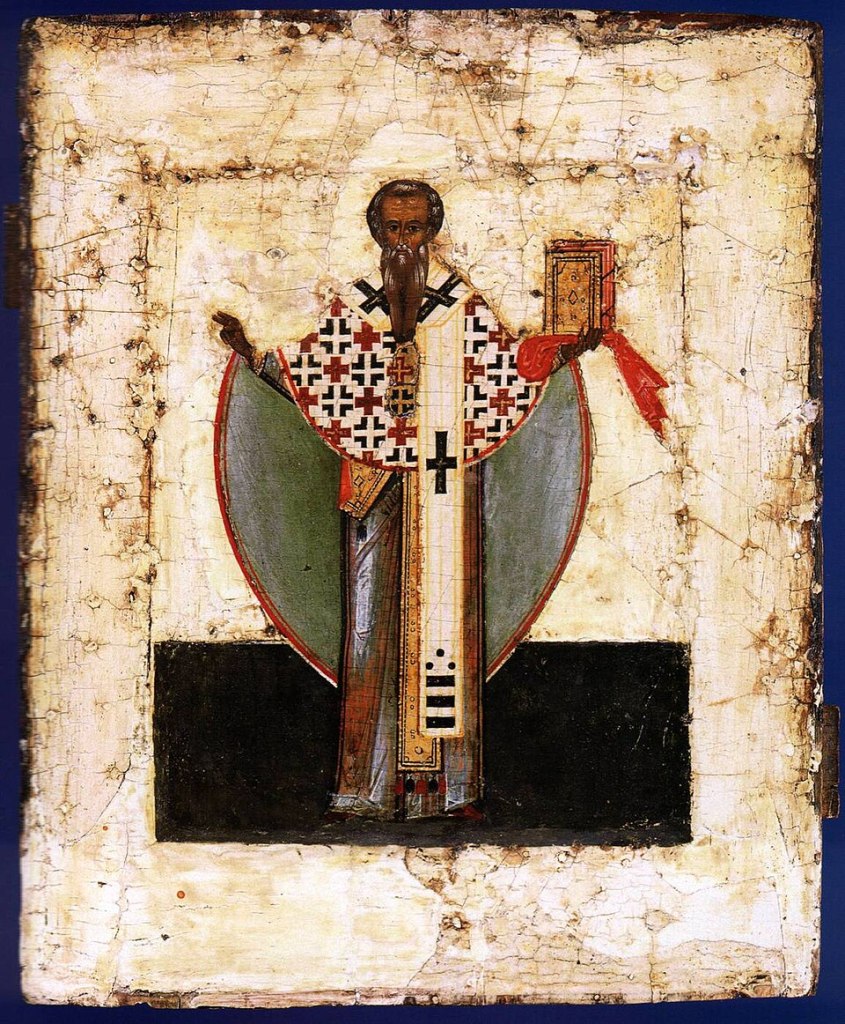
James the Just, 16th-century Russian icon

The Letter of James (or book of James) in the New Testament is either written by or attributed to James the brother of the Lord, one of the early leaders of the church in Jerusalem. If James the brother of Jesus, or James the Just as he is sometimes known, is the author of this letter then it is an early window into a Jerusalem based Christianity since James the Just was killed in 62 CE. Martha L. Moore-Kiesh expands on how early Christian writers elaborated on James’s martyrdom:

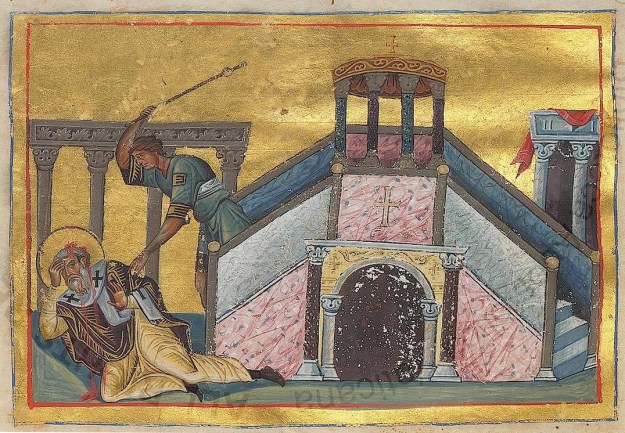
Eusebius, for instance, cites Clement of Alexandria, who say that James was “thrown down from the pinnacle of the temple and beaten to death with a fuller’s club.” Because of this legend, later iconography of James often portrays him with a club, recalling this alleged mode of his death. (Moore-Keish, 2019, p. 6)

Scholars for generations have debated whether the Letter of James is an early Christian document from a leader of the young church or a latter document attributed to James for authority. Ultimately it is impossible to know which is true but many of the arguments for a later date are not viewed as being as conclusive as they once were. For the purposes of these reflections, I am going to assume an early date and that the letter does originate with James the brother of our Lord, although I don’t believe that assumption will drastically alter the interpretation of this letter.

Some may be surprised to see a Lutheran pastor doing a detailed reflection on James since, especially in the Lutheran but also broader Protestant tradition James has often been neglected. Much of this goes back to Luther’s famous “Preface to the New Testament” (1522) where Luther compares James unfavorably with several other New Testament books:

In a word St. John’s Gospel and his first epistle, St. Paul’s epistles, especially Romans, Galatians, and Ephesians, and St. Peter’s first epistle are books that show you Christ and teach you all that is necessary and salvatory for you to know, even if you were never to see or hear any other book or doctrine. Therefore St. James’ epistle is really an epistle of straw, compared to these others, for it has nothing of the nature of the gospel about it. (Luther, 1989, p. 117)

Luther’s distaste for James emerges from his conflicts with the Catholic Church over ‘faith alone’ verse ‘works righteousness.’ James’s strong words about faith without works being dead (James 1:17) provided ammunition for Luther’s opponents to attack his theological perspective. These reflections will not remain bound to the binary way of thinking that characterized the debate over Reformation/counter-Reformation theology.

 A large part of my reflection with scripture is dealing with texts which I am less familiar with to attempt to engage with the breadth of the wisdom of scripture. I’ve been excited to dig deeper into James because it seems to resonate with a lot of my work on Matthew and Revelation. It is coming from early Jewish Christianity (or Judaic messianism since some hypothesize that there has not been a split from Judaism at the time the book has been written) in contrast to the Hellenistic mission of Paul and some of the other disciples. Like Matthew it quotes, alludes to, and echoes the law, the prophets, and the wisdom traditions that make up the Hebrew Scriptures. As Scot McKnight states:

Few dispute the Jewishness of this letter…It appeals to the Tanakh often (1:11; 2:8-10, 23; 4:6; 5: 4, 5), alludes to it constantly (e.g. 1: 13-15, 27; 2: 20-26; 3:9; 4: 7-10, 11-12; 5: 10-11, 17), and breathes throughout the spirit of biblical Judaism as it came to expression in diverse ways in the first century AD. The author chooses to call his audience something thoroughly biblical—“the twelve tribes in the Dispersion” (1:1) (McKnight, 2011, p. 25)

It also is deeply connected to several of the teachings of Jesus, particularly the sermon on the mount.

The letter of James is a book that seeks a practice of faith that is authentic and single-minded. It stands in the prophetic and wisdom tradition which privileges a faith that is practices mercy and impartiality, particularly to the vulnerable, over worship or theology. As Luke Timothy Johnson states, “James’s concern is with moral rather than manners.” (NIB XII:179) It can be subversive text to societies and congregations that have organized themselves around a moral order where those with wealth and power have been encouraged to maintain their privileged position. It can be an uncomfortable book. I enjoyed Scot McKnight’s playful adaptation of a famous Mark Twain proverb, “To ape the famous words of Mark Twain, it is not the lack of clarity of context of James that bothers me; it is the words in the text that bother me.” (McKnight, 2011, p. 4) The letter of James is not hard to understand but that does not make it easy to embody.

I have been random in the order I have engaged scripture and although the Old Testament/Hebrew Scriptures are significantly larger than the New Testament I did not anticipate or realize until recently how much more time I had spent in these fourteen years of reflections in the Old Testament. I realized recently that I had completed thirteen Old Testament books along with most of Psalms and only two New Testament books and that I had fewer books in the Old Testament that I had not written on. My plan going forward is to alternate between the New Testament and Old Testament. The New Testament books tend to go slower for me since I fully translate the Greek Text (with Hebrew I look at critical words and study multiple translations) and I have greater familiarity with the texts. The letter of James is only five chapters, but I am looking forward in learning from my engagement with this letter I have probably underutilized.  

Resources for this reflection

With each of these reflections I have taken multiple dialogue partners to learn from. For this journey I have selected:

Green, Joel B. (2025). James A Commentary. Louisville, KY: Westminster John Knox Press.

Johnson, Luke T. (1998) “Letter of James” in The New Interpreter’s Bible: A Commentary in Twelve Volumes. Nashville: Abingdon Press. (Referred to as NIB XII throughout the reflections)

McKnight, Scott. (2011). The Letter of James: the New International Commentary on the New Testament. Grand Rapids, MI: William B. Eerdman’s Publishing Company.

Moore-Keish, M. L. (2019). James: Belief A Theological Commentary on the Bible. Louisville, KY: Westminster John Knox Press.

Joel Green, Luke T. Johnson, and Scott McKnight were all New Testament scholars I was familiar with. Joel Green’s commentary just came out and I was excited to have him as one of my dialogue partners. Luke T. Johnson also wrote the much longer Anchor Bible commentary on James, but since he wrote the commentary in the New Interpreter’s Bible, I decided to capture his voice through a series I already owned. The New International Commentary (NICNT) by Scot McKnight is by far the longest commentary, and I’ve used the NICNT and NICOT commentaries in several of these reflections as a good, detailed commentary to assist with translation and other issues. The Belief series is a theological commentary, written by theologians instead of biblical scholars and I like it as a different voice coming with different questions.

The Book of Psalms 1-130

Love is Not a Victory March by Marie -Esther@deviantart.com

Book I (Psalms 1-41)

Psalm 1: Poetry and Law

Psalm 2: The Lord’s Messiah

Psalm 3: Hope in the Heart of Brokenness

Psalm 4: Finding a Space in the Blessing

Psalm 5: The God Who Hears and Protects

Psalm 6: How Long, O Lord

Psalm 7: The God Who Judges

Psalm 8: The Soul Searcher’s Psalm

Psalm 9: Praising the God of Justice and Might

Psalm 10: Calling Upon God to be God

Psalm 11: Confident Faith in the Midst of Trouble

Psalm 12: Save Us From Ourselves

Psalm 13: The Cry from a Godforsaken Place

Psalm 14: The Wisdom of Holding to the Covenant

Psalm 15: Entering the Sacred Presence of God

Psalm 16: Remaining Faithful in a Pluralistic Setting

Psalm 17: An Embodied Prayer

Psalm 18: Royal Thanks at the End of the Journey

Psalm 19: Creation, the Law and a Faithful Life

Psalm 20: In the Day of Trouble

Psalm 21: A Blessing for the King

Psalm 22: A Desperate Cry to God

Psalm 23: The LORD as Shepherd, Host, and Destination

Psalm 24: The Coming of the LORD

Psalm 25: The Struggle of Faith from Aleph to Tav

Psalm 26: Liturgy of the Falsely Accused

Psalm 27: Faith in an Age of Anxiety

Psalm 28: Can You Hear Me LORD?

Psalm 29: The Thundering Voice of God

Psalm 30: The Life of Praise

Psalm 31: Faith, Questions, and the Life of Faith

Psalm 32: A Psalm of Restoration

Psalm 33: The Earth is Full of the Steadfast Love of God

Psalm 34: The Experienced Faithfulness of God

Psalm 35: Lord, Fight for me in the Struggle

Psalm 36: The Way of God and the Way of the Wicked

Psalm 37: A Song of a Wise Life

Psalm 38: A Cry for Forgiveness and Healing

Psalm 39: There Are No Words

Psalm 40: Experienced Faithfulness and the Hope of Deliverance

Psalm 41: The One Who Cares for the Poor

Book II (Psalms 42-72)

Psalm 42: Thirsting for God in an Arid Time

Psalm 43: Calling for God’s Love among a Loveless People

Psalm 44: Demanding a Fulfillment of God’s Covenant Promises

Psalm 45: A Love Song Among the Psalms

Psalm 46: A Mighty Fortress

Psalm 47: God Assumes Kingship Over Creation

Psalm 48: God and Zion

Psalm 49: Wealth, Wisdom and Death

Psalm 50: Recalled to the Covenantal Life

Psalm 51: Seeking the Possibility of Redemption

Psalm 52: The Wicked Will Not Prosper Forever

Psalm 53: Reflecting Again on the Unjust

Psalm 54: A Cry for Deliverance

Psalm 55: A Desperate Prayer from an Unsafe Environment

Psalm 56: Trusting God in the Midst of Trouble

Psalm 57: Fleeing to the Steadfast Love and Faithfulness of God

Psalm 58: A Jagged Prayer for Vengeance

Psalm 59: God’s Steadfast Love as an Alternative to the Dog-Eat-Dog Worldview

Psalm 60: A Plea for God’s Return to the People

Psalm 61: A Life Dependent on God

Psalm 62: Truly Faith Surrounds My Troubles

Psalm 63: Hungering and Thirsting

Psalm 64: Protect the Innocent One from the Words of the Wicked

Psalm 65: A Song of Thanksgiving to a Gracious Creator

Psalm 66: Formed by Steadfast Love

Psalm 67: A Blessing for the Earth

Psalm 68: God as Warrior and Protector of the Powerless

Psalm 69: A Cry for Deliverance from Unjust Suffering

Psalm 70: God Help Me Quickly

Psalm 71: A Prayer for Help Shaped by a Life of Worship

Psalm 72: Leading God’s Covenant People

Book III (Psalms 73-89)

Psalm 73: When Faith is Challenged

Psalm 74: A Psalm When the World Collapses

Psalm 75: God’s Answer to the Boastful and Arrogant

Psalm 76: The Fearfully Powerful Defender of Peace

Psalm 77: Searching for God in a Shattered World

Psalm 78: Telling History to Change the Future

Psalm 79: Words of Pain and Hope in a National Crisis

Psalm 80: A People Waiting for God’s Forgiveness

Psalm 81: Hear, O People

Psalm 82: The God Who Upholds Justice for the Vulnerable

Psalm 83: A Fearful Prayer for Deliverance

Psalm 84: Better is One Day in the House of God

Psalm 85: Waiting for God’s Kingdom to Come

Psalm 86: A Servant’s Plea For Their Lord’s Deliverance

Psalm 87: Mother Jerusalem

Psalm 88: Only Darkness Knows Me

Psalm 89: Shattered Worlds and Broken Symbols

Book IV (Psalms 90-106)

Psalm 90: Remembering the Character of God in Crisis

Psalm 91: Enfolded in God’s Protection

Psalm 92: Song of the Sabbath

Psalm 93: God the King

Psalm 94: Thy Kingdom Come

Psalm 95: Lifting Up Voices and Listening in Silence

Psalm 96: A New Song of God’s Triumph

Psalm 97: The Righteous Reign of God

Psalm 98: A Joyous Song of God’s Salvation

Psalm 99: The Universal King Worshipped by a Particular People

Psalm 100: Know the LORD is God and we are God’s

Psalm 101: A Leader Shaping a Community of Character

Psalm 102: The Song Of One Suffering In Solitude

Psalm 103: A Meditation on the Steadfast Love of God

Psalm 104: Praise the Great God of Creation

Psalm 105: Give Thanks to the Faithful God of Our Story

Psalm 106: Confessing the Unfaithfulness of the People of God

Book V (Psalms 107-150)

Psalm 107: The God of Steadfast Love who Rescues

Psalm 108: Old Words Brought Together For A New Time

Psalm 109: A Prayer for God’s Vengeance

Psalm 110: A Psalm of Enthronement

Psalm 111: The Beginning of Wisdom

Psalm 112: An Authentic Life Shaped by Wisdom

Psalm 113: The God On High Who Lifts The Lowly

Psalm 114: The Awesome God Of The Exodus

Psalm 115: Trusting God Above All Things

Psalm 116: The God Who Delivers from Death

Psalm 117: The Goal of all the Peoples

Psalm 118: A Reflection on the Steadfast Love of God

Psalm 119: An Artistic Articulation of Life Under the Law

Psalm 120: A Pilgrimage To A Place of Peace

Psalm 121: Vaya Con Dios

Psalm 122: Prayers of Peace for Jerusalem

Psalm 123: Appealing to the God whose Mercy Overcomes Contempt

Psalm 124: Us and God Against the World

Psalm 125: A Place Where Righteousness Can Flourish

Psalm 126: Carrying in the Sheaves Planted in Tearful Moments

Psalm 127: The Wisdom of Trusting the LORD

Psalm 128: A Blessed Life for the Man, His Family, and His Society

Psalm 129: Hope in the Midst of Oppression

Psalm 130: De Profundis

Psalm 130 De Profundis

A piercingly bright curtain of stars is the backdrop for this beautiful image taken by astronomer Håkon Dahle at the La Silla Observatory in Chile. Shared under CC 4.0 https://en.wikipedia.org/wiki/Night_sky#/media/File:Starry_Night_at_La_Silla.jpg

Psalm 130

A Song of Ascents.

1Out of the depths I cry to you, O LORD.
  2
Lord, hear my voice!
 Let your ears be attentive
  to the voice of my supplications!

3
If you, O LORD, should mark iniquities,
  Lord, who could stand?
4
But there is forgiveness with you,
  so that you may be revered.

5
I wait for the LORD; my soul waits,
  and in his word I hope;
6
my soul waits for the Lord
  more than those who watch for the morning,
  more than those who watch for the morning.

7
O Israel, hope in the LORD!
  For with the LORD there is steadfast love,
  and with him is great power to redeem.
8
It is he who will redeem Israel
  from all its iniquities.

Bolded words have comments on translation below.

Psalm 130  is often called De profundis from the Latin rendering of the initial words out of the depths. It is one of my personal favorites as it cries with longing for the steadfast love, forgiveness, and redemption that comes from God. Martin Luther called this psalm, “a proper master and doctor of Scripture” and he would use it as the inspiration for his song “Out of the Depths I Cry To You.”[1] Throughout the reformation the song and the psalm were commonly used at funerals, and “Out of the Depths I Cry to You” was sung at the funerals of Fredrick the Wise, John of Saxony, and Martin Luther. (LW 53:222) Psalm 130 was also sung on the afternoon before John Wesley’s transformational experience at Aldersgate. James L. Mays appropriately calls this psalm, “a succinct but powerful expression of the theme that is at the heart of Scripture: the human predicament and its dependence on divine grace.” (Mays, 1994, p. 405)  

The psalmist cries out to the LORD from the depths, a phrase that can reference the sea[2] but for many readers it is also a metaphor for a desperate situation or depression. The initial two lines start a pattern of two verses stanzas where God is referred to twice. In the first three stanzas the first time the psalmists utilize the name of God (LORD in NRSVue)[3] in the initial verse of the stanza while the second reference is the generic Adonai (Lord in NRSVue). In verses seven the name of God is utilized twice. There is a consistent belief throughout the scriptures that the LORD is a God who hears and is attentive to the voice of the faithful ones, especially in desperate times.

The rapid move in verse three to talking about iniquities implies that the desperate situation referred to by the psalmist crying out from the depths may be due to their own lack of faithfulness. The word iniquities[4] occurs more than two hundred times in the Old Testament, especially in the prophets, to describe sin and guilt. (Nancy deClaisse-Walford, 2014, p. 928) Yet, the psalmist understands that fundamental to the character of God is forgiveness. The LORD is a God who desires justice, but as James L. Mays says,

The error is to understand the LORD as a god whose principal way with human beings is to watch for iniquities. If that were the case, there would be no hope of anyone. (Mays, 1994, p. 406)

Psalm 130 is one of many places in the Old Testament where we see a God of grace. I have often said to my congregation if you go to the bible looking for a judgmental God you will find one, but if you go to scripture seeking a gracious God you find the patience, forgiveness, and steadfast love of God as a defining characteristic of the God the bible witnesses to. That the LORD is a forgiving and attentive God provides hope for this psalmist who cries out from the depths.

The third stanza with its doubled final line in verse six is what initially captured my attention with this psalm. The psalmist waits and trusts in the LORD with all their being[5] and hopes in God’s word. The verb waits in verse six is not present in Hebrew but needs to be supplied for the translation to make sense. The doubling of more than those who watch for the morning heightens the expectation of the psalm. For me these doubled lines reminded me of keeping watch while in the army at that final watch before the sun rose. I have trouble if it is cold at night getting warm but as soon as the sun comes up my body is typically able to regulate itself better and so for me the longing for sunrise is something I feel intensely in my body. This hope for God with the entirety of one’s being like waiting for the dawning of the new day is a powerful reversal from the depths that the psalm began with.

In the final two verses the psalmist moves from their own situation to that of the people of God and calls on them to hope in the LORD. Just as the LORD has redeemed and rescued the one who call on God from the depths despite their iniquities, now the LORD will redeem Israel from its iniquities and the trouble they have caused. The name of God is now linked to one of the fundamental characteristics of God, steadfast love (hesed). The calling on the name of God twice in this final stanza may be to link the name of God with the characteristic steadfast love (hesed) of God. For the God of Israel, the iniquities of the people are not the final word, steadfast love and redemption are. The God who forgives the individual and rescues them from the depths also forgives and rescues the people. The individual and the people of God wait and hope in the LORD with all their being more than those waiting and watching for the coming of the dawn.


[1] “Out of the Depths I Cry To You” although not as popular as “A Mighty Fortress” or “Lord, Keep Us Steadfast in Your Word” continues to be sung and it is hymn 600 in the songs of Evangelical Lutheran Worship.

[2] Isaiah 51:10; Ezekiel 27:34; Psalm 69:2.

[3] When the word LORD is capitalized in the NRSV or NRSVue translation of the Hebrew it indicates the four letters of the divine name YHWH (often pronounced Yahweh) are behind it. Hebrew readers will often substitute the Hebrew Adonai to avoid speaking the name of God and risking taking the name of God in vain.

[4] Hebrew ‘awonot.

[5] The Hebrew nephesh often translated soul in English is a very different concept than most modern conceptions of ‘soul.’ For Hebrew the nephesh is about life and not about something that is freed after death.

Psalm 129 Hope in the Midst of Oppression

Farewell Melody by Ravil Akmaev Shared under the Creative Commons 3.0

Psalm 129

A Song of Ascents.

1Often have they attacked me from my youth
 —let Israel now say—
2
often have they attacked me from my youth,
 yet they have not prevailed against me.
3
The plowers plowed on my back;
 they made their furrows long.
4
The LORD is righteous;
 he has cut the cords of the wicked.
5
May all who hate Zion
 be put to shame and turned backward.
6
Let them be like the grass on the housetops
 that withers before it grows up,
7
with which reapers do not fill their hands
 or binders of sheaves their arms,
8
while those who pass by do not say,
 “The blessing of the LORD be upon you!
 We bless you in the name of the LORD!”

Bolded words have notes below on translation.

Psalm 129 speaks a defiant word of confidence that the oppression they have experienced will ultimately be responded to by the God who sees their oppression. Living faithfully does not prevent the faithful from suffering but the faithful trust that God will not allow the oppressors to prevail but will act on behalf of the oppressed one. The psalm begins with the Hebrew word rabbat (translated Often in the NRSVue) a word that can indicate either frequency (as the NRSV and NRSVue indicate) or severity (NIV greatly). The psalm begins with the impression of an overwhelming and continual oppression by an unnamed enemy. The individual describes their pain metaphorically like their back being plowed like a field being prepared for harvest. Isaiah uses a similar image when God promises to deliver the people from their tormentors:

And I will put it into the hand of your tormentors, who have said to you, “Bow down, that we may walk on you,”and you have made your back like the ground and like the street for them to walk on. Isaiah 51:23

And Micah speaks similarly of Jerusalem:

Therefore because of you Zion shall be plowed as a field; Jerusalem shall become a heap of ruins, and the mountain of the temple a wooded height. Micah 3:12

The word translate cord (Hebrew abot) can refer to the cords used to guide animals when plowing, continuing the metaphor of verse three, or it can refer to instruments of punishment used to inflict pain, making the wounds on the back metaphorically referred to as furrows. (Nancy deClaisse-Walford, 2014, p. 924) Without the intervention of the LORD the life of the poet would be similar to the character portrayed in Metallica’s song “The Unforgiven”

They dedicate their lives to running all of his

He tries to please them all, this bitter man he is

Throughout his life the same, he’s battled constantly,

This fight he cannot win

A tired man they see no longer cares

In contrast to the man who suffers in the lyrics of “The Unforgiven” the poet has hope that there is one who sees their oppression and acts to right the wrongs they have endured. Who cuts the cords that have cut them, who turns them backward and brings them to shame, who causes their lives to dry up like grass without soil of any depth.

Hate, in both Hebrew and English, is an emotionally charged word, but there are difference in meaning. In Hebrew to hate another person, “usually implies a distancing of oneself from the other person or thing rather than wishing the other harm.” (Nancy deClaisse-Walford, 2014, pp. 924-925) Within the poem the poet asks that the one who “hates” not receive the “blessing” of the LORD. The psalmist expects a world where the hate of the enemy is turned away and loses its power, much like the narrative of Balaam in Numbers 22-24 where he is brought in to curse the people of Israel and instead can only give words of blessing.

Like the suffering servant of Isaiah 50 and 53, the writer of Psalm 129 undergoes suffering and yet endures trusting in God’s eventual reversal of their situation. Like the suffering servant in Isaiah, this psalm brings the suffering of the individual and the suffering of the people together and speaks of them interchangeably. While reflecting on this psalm I was reminded of Paul’s words in 2 Corinthians:

4but as servants of God we have commended ourselves in every way: in great endurance, afflictions, hardships, calamities, 5beatings, imprisonments, riots, labors, sleepless nights, hunger; 6in purity, knowledge, patience, kindness, holiness of spirit, genuine love, 7truthful speech, and the power of God; with the weapons of righteousness for the right hand and for the left; 8in honor and dishonor, in ill repute and good repute. We are treated as impostors and yet are true, 9as unknown and yet are well known, as dying and look—we are alive, as punished and yet not killed, 10as sorrowful yet always rejoicing, as poor yet making many rich, as having nothing and yet possessing everything. 2 Corinthians 6: 4-10

Paul, like this psalmist, is willing to endure suffering because he trusts that God sees and responds to his suffering. The psalm incorporates both the suffering of an individual and the suffering of the people of God who speak with a defiant faith that the LORD is a God who hears the suffering of the people, cuts the cords of the oppressors, and holds the judgment of the wicked in God’s hands.

Psalm 128 A Blessed Life for the Man, His Family, and His Society

Parents with child statue, Hrobákova street, Petržalka, Bratislava By Kelovy – Own work, Public Domain, https://commons.wikimedia.org/w/index.php?curid=1622776

Psalm 128

A Song of Ascents.

1Happy is everyone who fears the LORD,
  who walks in his ways.
2
You shall eat the fruit of the labor of your hands;
  you shall be happy, and it shall go well with you.

3
Your wife will be like a fruitful vine
  within your house;
 your children will be like olive shoots
  around your table.
4
Thus shall the man be blessed
  who fears the LORD.

5
The LORD bless you from Zion.
  May you see the prosperity of Jerusalem
  all the days of your life.
6
May you see your children’s children.
  Peace be upon Israel!

Bolded words have notes on translation below.

In contrast to the individualistic ways that most people of the modern west conceptualize their world, for most ancient societies and religions the primary unit is not the individual but the family. A good life started with a prospering family and then extended to the prosperity of the city and then to the nation. This way of thinking is reflected in this psalm about a blessed life for a man, his family, Jerusalem, and all Israel. This is a wisdom psalm as the key word happy (Hebrew ‘asre) should alert us.[1] Psalms 127 and 128 share several frequently used wisdom words along with the conception that following the path of wisdom leads to a prosperous household.

Fearing the LORD and walking in the way of the LORD leads to happiness/contentment and enjoying the fruit of their labor. Ecclesiastes may believe that the labor/toil we do is vanity, but even Ecclesiastes can state:

There is nothing better for mortals than to eat and drink and find enjoyment in their toil. This also, I saw, is from the hand of God, for apart from him who can eat or who can have enjoyment? For to the one who pleases him God gives wisdom and knowledge and joy, but to the sinner he gives the work of gathering and heaping, only to give to one who pleases God. This also is vanity and a chasing after wind. Ecclesiastes 2: 24-26

The contentment is not merely for the man (literally mighty one, Hebrew gibbor)[2] but for the entire household. Grape vines and olive trees are two of the critical agricultural products of Israel. The metaphorical linking of the fruitfulness of the land to the wife (or wives) and children of the man coincides with the view that children are a sign of blessing and barrenness is a sign of disfavor.

The blessing of this ‘mighty one’ and their family now is extended to Jerusalem and Israel. Jerusalem is the place where the temple of the LORD resides and where the hoped for blessing would originate from on earth, and the psalmist desires to hearer to see the prosperity (Hebrew tob, literally goodness) of the city throughout their life. Seeing grandchildren is a sign of old age acquired and a family which continues to grow. The psalm ends with the desire of peace (shalom) resting on Israel. The man (mighty one) has received a blessed life for himself, his family, and for his society.

Psalm 128 shares a common worldview with Martin Luther’s explanation of the first commandment as, “We are to fear, love, and trust God above all things.” Fearing the LORD and walking in the ways of the LORD in biblical thought leads to prosperity. There are righteous people who suffer, who may be barren, and the wicked do sometimes prosper, but for the psalms the belief that God will provide for the faithful is fundamental. The stated blessing in this psalm echoes the idea of peace represented in the words of the prophet Micah:

but they shall all sit under their own vines and under their own fig trees, and no one shall make them afraid, for the mouth of the Lord of hosts has spoken. Micah 4:4

It sharply contrasts with the judgment on Cain in Genesis 4:

And now you are cursed from the ground, which has opened its mouth to receive your brother’s blood from your hand.When you till the ground, it will no longer yield to you its strength; you will be a fugitive and a wanderer on the earth.” Cain said to the Lord, “My punishment is greater than I can bear! Today you have driven me away from the soil, and I shall be hidden from your face; I shall be a fugitive and a wanderer on the earth, and anyone who meets me may kill me.” Genesis 4: 11-14

At a fundamental level what the scriptures consider wisdom is simple: fearing the LORD and walking in his ways. Following this path entrusts one’s life, one’s family, and one’s society into the hands of God. The faithful one’s throughout the Jewish and Christian story have entrusted God can care for their life, their family and the world around them.


[1] The Hebrew ‘asre is frequently an indicator of wisdom literature. We may not think of happy or blessed in this way, but for Hebrew writers this is a common word when talking about the path of wisdom. Wisdom writers can interchange the idea of happiness and wisdom, see for example the way Psalm 110:10; Proverbs 1:7; 9:10 can pair wisdom with the fear of the LORD. Walter Brueggemann and William Bellinger, Jr. say of ‘asre, “The term introduces an observation about living: one who walks or lives in ways in line with YHWH’s purposes find wholeness. (Bellinger, 2014, p. 545)

[2] Hebrew gibbor which can refer to physical strength or the economic strength to equip oneself and a group for combat. Ruth 4:11 uses this term for economic ability in reference to Boaz.