Tag Archives: Psalms of Ascent

Psalm 130 De Profundis

A piercingly bright curtain of stars is the backdrop for this beautiful image taken by astronomer Håkon Dahle at the La Silla Observatory in Chile. Shared under CC 4.0 https://en.wikipedia.org/wiki/Night_sky#/media/File:Starry_Night_at_La_Silla.jpg

Psalm 130

A Song of Ascents.

1Out of the depths I cry to you, O LORD.
  2
Lord, hear my voice!
 Let your ears be attentive
  to the voice of my supplications!

3
If you, O LORD, should mark iniquities,
  Lord, who could stand?
4
But there is forgiveness with you,
  so that you may be revered.

5
I wait for the LORD; my soul waits,
  and in his word I hope;
6
my soul waits for the Lord
  more than those who watch for the morning,
  more than those who watch for the morning.

7
O Israel, hope in the LORD!
  For with the LORD there is steadfast love,
  and with him is great power to redeem.
8
It is he who will redeem Israel
  from all its iniquities.

Bolded words have comments on translation below.

Psalm 130  is often called De profundis from the Latin rendering of the initial words out of the depths. It is one of my personal favorites as it cries with longing for the steadfast love, forgiveness, and redemption that comes from God. Martin Luther called this psalm, “a proper master and doctor of Scripture” and he would use it as the inspiration for his song “Out of the Depths I Cry To You.”[1] Throughout the reformation the song and the psalm were commonly used at funerals, and “Out of the Depths I Cry to You” was sung at the funerals of Fredrick the Wise, John of Saxony, and Martin Luther. (LW 53:222) Psalm 130 was also sung on the afternoon before John Wesley’s transformational experience at Aldersgate. James L. Mays appropriately calls this psalm, “a succinct but powerful expression of the theme that is at the heart of Scripture: the human predicament and its dependence on divine grace.” (Mays, 1994, p. 405)  

The psalmist cries out to the LORD from the depths, a phrase that can reference the sea[2] but for many readers it is also a metaphor for a desperate situation or depression. The initial two lines start a pattern of two verses stanzas where God is referred to twice. In the first three stanzas the first time the psalmists utilize the name of God (LORD in NRSVue)[3] in the initial verse of the stanza while the second reference is the generic Adonai (Lord in NRSVue). In verses seven the name of God is utilized twice. There is a consistent belief throughout the scriptures that the LORD is a God who hears and is attentive to the voice of the faithful ones, especially in desperate times.

The rapid move in verse three to talking about iniquities implies that the desperate situation referred to by the psalmist crying out from the depths may be due to their own lack of faithfulness. The word iniquities[4] occurs more than two hundred times in the Old Testament, especially in the prophets, to describe sin and guilt. (Nancy deClaisse-Walford, 2014, p. 928) Yet, the psalmist understands that fundamental to the character of God is forgiveness. The LORD is a God who desires justice, but as James L. Mays says,

The error is to understand the LORD as a god whose principal way with human beings is to watch for iniquities. If that were the case, there would be no hope of anyone. (Mays, 1994, p. 406)

Psalm 130 is one of many places in the Old Testament where we see a God of grace. I have often said to my congregation if you go to the bible looking for a judgmental God you will find one, but if you go to scripture seeking a gracious God you find the patience, forgiveness, and steadfast love of God as a defining characteristic of the God the bible witnesses to. That the LORD is a forgiving and attentive God provides hope for this psalmist who cries out from the depths.

The third stanza with its doubled final line in verse six is what initially captured my attention with this psalm. The psalmist waits and trusts in the LORD with all their being[5] and hopes in God’s word. The verb waits in verse six is not present in Hebrew but needs to be supplied for the translation to make sense. The doubling of more than those who watch for the morning heightens the expectation of the psalm. For me these doubled lines reminded me of keeping watch while in the army at that final watch before the sun rose. I have trouble if it is cold at night getting warm but as soon as the sun comes up my body is typically able to regulate itself better and so for me the longing for sunrise is something I feel intensely in my body. This hope for God with the entirety of one’s being like waiting for the dawning of the new day is a powerful reversal from the depths that the psalm began with.

In the final two verses the psalmist moves from their own situation to that of the people of God and calls on them to hope in the LORD. Just as the LORD has redeemed and rescued the one who call on God from the depths despite their iniquities, now the LORD will redeem Israel from its iniquities and the trouble they have caused. The name of God is now linked to one of the fundamental characteristics of God, steadfast love (hesed). The calling on the name of God twice in this final stanza may be to link the name of God with the characteristic steadfast love (hesed) of God. For the God of Israel, the iniquities of the people are not the final word, steadfast love and redemption are. The God who forgives the individual and rescues them from the depths also forgives and rescues the people. The individual and the people of God wait and hope in the LORD with all their being more than those waiting and watching for the coming of the dawn.


[1] “Out of the Depths I Cry To You” although not as popular as “A Mighty Fortress” or “Lord, Keep Us Steadfast in Your Word” continues to be sung and it is hymn 600 in the songs of Evangelical Lutheran Worship.

[2] Isaiah 51:10; Ezekiel 27:34; Psalm 69:2.

[3] When the word LORD is capitalized in the NRSV or NRSVue translation of the Hebrew it indicates the four letters of the divine name YHWH (often pronounced Yahweh) are behind it. Hebrew readers will often substitute the Hebrew Adonai to avoid speaking the name of God and risking taking the name of God in vain.

[4] Hebrew ‘awonot.

[5] The Hebrew nephesh often translated soul in English is a very different concept than most modern conceptions of ‘soul.’ For Hebrew the nephesh is about life and not about something that is freed after death.

Psalm 129 Hope in the Midst of Oppression

Farewell Melody by Ravil Akmaev Shared under the Creative Commons 3.0

Psalm 129

A Song of Ascents.

1Often have they attacked me from my youth
 —let Israel now say—
2
often have they attacked me from my youth,
 yet they have not prevailed against me.
3
The plowers plowed on my back;
 they made their furrows long.
4
The LORD is righteous;
 he has cut the cords of the wicked.
5
May all who hate Zion
 be put to shame and turned backward.
6
Let them be like the grass on the housetops
 that withers before it grows up,
7
with which reapers do not fill their hands
 or binders of sheaves their arms,
8
while those who pass by do not say,
 “The blessing of the LORD be upon you!
 We bless you in the name of the LORD!”

Bolded words have notes below on translation.

Psalm 129 speaks a defiant word of confidence that the oppression they have experienced will ultimately be responded to by the God who sees their oppression. Living faithfully does not prevent the faithful from suffering but the faithful trust that God will not allow the oppressors to prevail but will act on behalf of the oppressed one. The psalm begins with the Hebrew word rabbat (translated Often in the NRSVue) a word that can indicate either frequency (as the NRSV and NRSVue indicate) or severity (NIV greatly). The psalm begins with the impression of an overwhelming and continual oppression by an unnamed enemy. The individual describes their pain metaphorically like their back being plowed like a field being prepared for harvest. Isaiah uses a similar image when God promises to deliver the people from their tormentors:

And I will put it into the hand of your tormentors, who have said to you, “Bow down, that we may walk on you,”and you have made your back like the ground and like the street for them to walk on. Isaiah 51:23

And Micah speaks similarly of Jerusalem:

Therefore because of you Zion shall be plowed as a field; Jerusalem shall become a heap of ruins, and the mountain of the temple a wooded height. Micah 3:12

The word translate cord (Hebrew abot) can refer to the cords used to guide animals when plowing, continuing the metaphor of verse three, or it can refer to instruments of punishment used to inflict pain, making the wounds on the back metaphorically referred to as furrows. (Nancy deClaisse-Walford, 2014, p. 924) Without the intervention of the LORD the life of the poet would be similar to the character portrayed in Metallica’s song “The Unforgiven”

They dedicate their lives to running all of his

He tries to please them all, this bitter man he is

Throughout his life the same, he’s battled constantly,

This fight he cannot win

A tired man they see no longer cares

In contrast to the man who suffers in the lyrics of “The Unforgiven” the poet has hope that there is one who sees their oppression and acts to right the wrongs they have endured. Who cuts the cords that have cut them, who turns them backward and brings them to shame, who causes their lives to dry up like grass without soil of any depth.

Hate, in both Hebrew and English, is an emotionally charged word, but there are difference in meaning. In Hebrew to hate another person, “usually implies a distancing of oneself from the other person or thing rather than wishing the other harm.” (Nancy deClaisse-Walford, 2014, pp. 924-925) Within the poem the poet asks that the one who “hates” not receive the “blessing” of the LORD. The psalmist expects a world where the hate of the enemy is turned away and loses its power, much like the narrative of Balaam in Numbers 22-24 where he is brought in to curse the people of Israel and instead can only give words of blessing.

Like the suffering servant of Isaiah 50 and 53, the writer of Psalm 129 undergoes suffering and yet endures trusting in God’s eventual reversal of their situation. Like the suffering servant in Isaiah, this psalm brings the suffering of the individual and the suffering of the people together and speaks of them interchangeably. While reflecting on this psalm I was reminded of Paul’s words in 2 Corinthians:

4but as servants of God we have commended ourselves in every way: in great endurance, afflictions, hardships, calamities, 5beatings, imprisonments, riots, labors, sleepless nights, hunger; 6in purity, knowledge, patience, kindness, holiness of spirit, genuine love, 7truthful speech, and the power of God; with the weapons of righteousness for the right hand and for the left; 8in honor and dishonor, in ill repute and good repute. We are treated as impostors and yet are true, 9as unknown and yet are well known, as dying and look—we are alive, as punished and yet not killed, 10as sorrowful yet always rejoicing, as poor yet making many rich, as having nothing and yet possessing everything. 2 Corinthians 6: 4-10

Paul, like this psalmist, is willing to endure suffering because he trusts that God sees and responds to his suffering. The psalm incorporates both the suffering of an individual and the suffering of the people of God who speak with a defiant faith that the LORD is a God who hears the suffering of the people, cuts the cords of the oppressors, and holds the judgment of the wicked in God’s hands.

Psalm 127 The Wisdom of Trusting the LORD

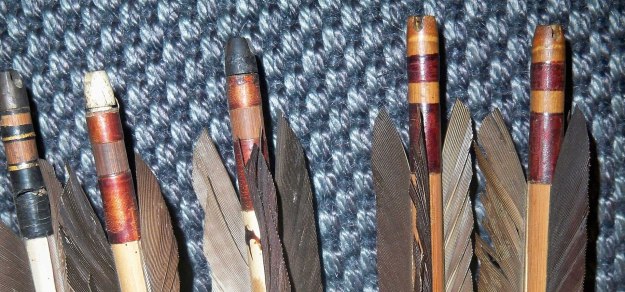
Nocks on a group of Arrows. Image by By Samuraiantiqueworld – Own work, CC BY-SA 3.0, https://commons.wikimedia.org/w/index.php?curid=15357007

Psalm 127

A Song of Ascents. Of Solomon.

1Unless the LORD builds the house,
  those who build it labor in vain.
 Unless the LORD guards the city,
  the guard keeps watch in vain.
2
It is in vain that you rise up early
  and go late to rest,
 eating the bread of anxious toil,
  for he gives sleep to his beloved.

3
Sons are indeed a heritage from the LORD,
  the fruit of the womb a reward.
4
Like arrows in the hand of a warrior
  are the sons of one’s youth.
5
Happy is the man who has
  his quiver full of them.
 He shall not be put to shame
  when he speaks with his enemies in the gate.

Bolded words have notes on translation below.

Psalm 127 rotates around the basic claim that everything comes from the trustworthy LORD who builds the house, guards the city, and gives the blessing of family. The opening verse introduces the word translated in the NRSVue ‘house’ (Hebrew bayit) which can be used in multiple ways. Nancy deClaissé-Walford illustrates the multiple ways Hebrew uses bayit:

The word house (bayit) has a number of meanings in the Hebrew Bible. It can refer to family dwellings (Gen. 19:2; Judg. 11:31; 2 Kgs. 4:2); to the whole household (Gen. 46:27; Josh. 7:18; Ruth 1:8); to the whole people of Israel (Exod. 40:38; 1 Kgs. 20:31; Ezek. 36:22); to ruling dynasties (2 Sam. 3:1; 7:11; 1 Kgs. 16:3); or to the temple in Jerusalem (2 Kgs. 22:3; Ezra 6:15; Jer. 7:2). (Nancy deClaisse-Walford, 2014, p. 918)

Critical to the wordplay in this Psalm is the usage of the term in Nathan’s prophecy to David in 2 Samuel 7: 11-13

The LORD declares to you that the LORD will make you a house (bayit). When your days are fulfilled and you lie down with your ancestors, I will raise up offspring after you, who shall come forth from your body, and I will establish his kingdom. He shall build a house (bayit) for my name, and I will establish the throne of his kingdom forever.

While the building of a family dwelling or a temple would also be a labor committed to the LORD and the word allows and encourages those meanings, the psalm also wants us to understand the resonance of household, especially when linked thematically and phonetically to the second half of the psalm (see below).

The LORD is the primary actor throughout the psalm as the builder of the house and the guard of the city and the provider of children while the psalmist lives in trust of the LORD. They may participate with God in the building of the house, the protection of the city, and the procreation and raising of a family, but they can trust that the LORD provides that which they need. Instead of anxious toil trying to secure their house, city, and family they can sleep in peace entrusting the LORD to provide that which they need. I am reminded of Martin Luther’s explanation of the petition of the Lord’s prayer on daily bread:

What is this?

In fact, God gives daily bread without our prayer, even to all evil people, but we ask in this prayer that God cause us to recognize what our daily bread is and to receive it with thanksgiving.

What then does “daily bread” mean?

Everything our bodies need such as food, drink, clothing, shoes, house, home, fields, livestock, money, property, an upright spouse, upright children, upright members of the household, upright and faithful rulers, good government, good weather, peace, health, decency, honor, good friends, faithful neighbors, and the like. (Luther, 1978, p. 36)

Wisdom is trusting the LORD to provide for the house and the security of the city so that the faithful one can be free from anxiety and worry. The psalmist understands cooperating with God but the idea of securing their own future by working harder or longer is foolishness. For the psalmist God provides for the home, the community, and the family.

As briefly mentioned above there is a phonetic connection between the verses in Hebrew that is not present in English. Nancy deClaissé-Walford is again helpful in showing this:

The word translated here as children (NRSVue sons) is the Hebrew banim, whose acoustic similarity to the Hebrew word build (bana) and house (bayit) in v. 1, coupled with the polyvalent meaning of the word “house” in the Hebrew Bible, strongly connects the two stanzas of Psalm 127. (Nancy deClaisse-Walford, 2014, p. 918)

The word ‘reward’ (Hebrew sakar) also appears in Genesis 15 when God tells Abram, “your reward (sakar) shall be very great. Within this promise Abram is told to look to the heavens and count the stars…so shall his dependents be. This psalm echoes the story of Abram/Abraham when multiple sons/children are viewed as a ‘reward.’ ‘Warrior’ and ‘man’ in verses four and five are the Hebrew gibbor and its alternate form geber which is an important term often translated “mighty one”[1] which can refer to either military or economic power. Finally, the word ‘happy’ (Hebrew ‘asre) is a term frequently used in wisdom literature. This wise ‘mighty one’ whose house the LORD has built, whose city the LORD has guarded, and whose family has produced many children as a reward from God can live at peace and content because they have trusted in the LORD. The LORD who builds their household, guards them and provides for their family will not allow their enemies to put them to shame.


[1] Hebrew gibbor hehayil which can refer to physical strength or the economic strength to equip oneself and a group for combat. Ruth 4:11 uses this term for economic ability in reference to Boaz.

Psalm 126 Carrying in the Sheaves Planted in Tearful Moments

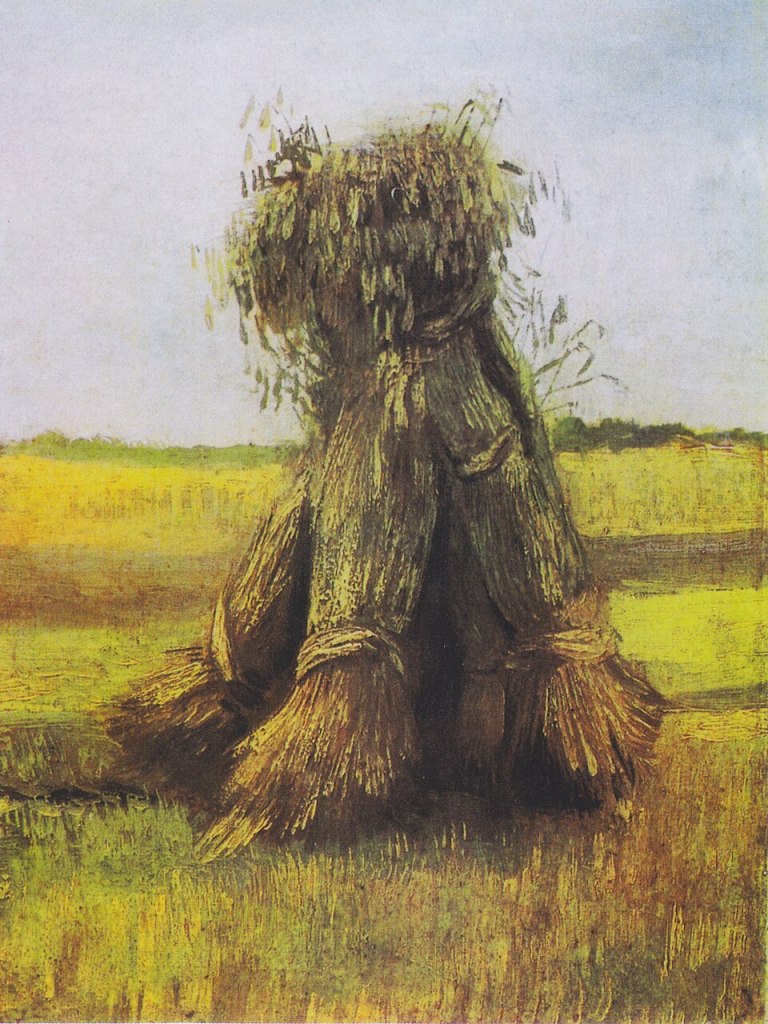
Wheatsheaves in a Field (1885) by Vincent van Gogh

Psalm 126

A Song of Ascents.

1When the LORD restored the fortunes of Zion,
  we were like those who dream.
2
Then our mouth was filled with laughter
  and our tongue with shouts of joy;
 then it was said among the nations,
  “The LORD has done great things for them.”
3
The LORD has done great things for us,
  and we rejoiced.

4
Restore our fortunes, O LORD,
  like the watercourses in the Negeb.
5
May those who sow in tears
  reap with shouts of joy.
6
Those who go out weeping,
  bearing the seed for sowing,
 shall come home with shouts of joy,
  carrying their sheaves.

Bolded words have notes on translation below.

Psalm 126 follows a common pattern in the psalms and throughout the scriptures. It begins with a remembrance of the ways God has acted on behalf of the people in the past and then moves to an appeal for God’s action in the troubles of the present. As J. Clinton McCann Jr. states, “We live in the hope of God’s help always remembering what God has done in the past…and always anticipating what God will do in the future.”(NIB III:1196) The imagery of sowing and reaping have led to the Psalm’s usage on Thanksgiving Day in worship (Year B in the Revised Common Lectionary) and it inspired Knowles Shaw’s song “Bringing in the Sheaves.”

The psalm is structured around two uses of a Hebrew idiom translated “restored our fortunes” in the NRSVue. The phrase is difficult to render in English and has led to a wide variety of translations, but in the prophets it relates to the change in condition brought about by God turning away from God’s wrath and again regarding the people with favor. (Mays, 1994, p. 399) The use of the phrase often refers to the return of the exiles to the homeland of Israel (Deuteronomy 30:3; Jeremiah 30: 3, 18; 32:44; Ezekiel 39:25) and here it may also refer to a homecoming of the exiles from Babylon. (NIB III: 1195) The specific context that the psalm originally spoke to is not required for the reader to understand the relief and joy of those who have experienced the great things God has done for the people of the psalmist. The dreamy state of the remembered joy and laughter of the people emerges from the ways God has provided for and protected the people in the past. From the memory of what God has done in the past comes the hope of God’s action in the present.

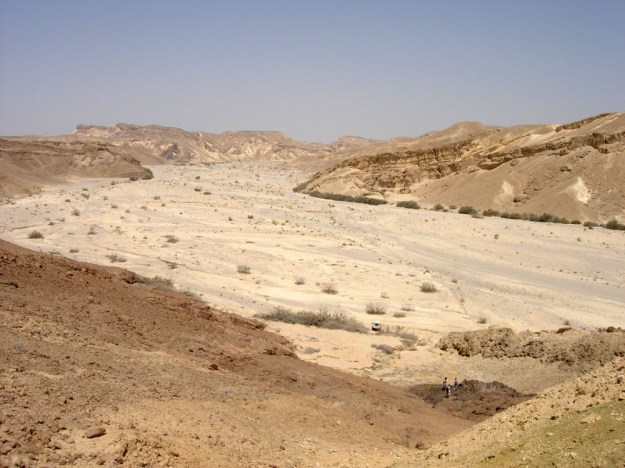
Wadi in Nahal Paran, Negev, Israel By Wilson44691 at English Wikipedia – Photograph taken by Mark A. Wilson (Department of Geology, The College of Wooster).[1], Public Domain, https://commons.wikimedia.org/w/index.php?curid=3140024

The experience of the present is one described metaphorically by the dry watercourses of the Negeb. During the rainy season these creek beds are filled with water but now in the metaphor of the psalm they are dry. Psalm 42 used the imagery of thirsting for water as a metaphor for thirsting for God’s presence:

As a deer longs for flowing streams, so my soul longs for you, O God. Psalm 42:1

The prophet Joel will also use a similar image:

In that day the mountains shall drip sweet wine, the hills shall flow with milk, and all the stream beds of Judah shall flow with water; a fountain shall come forth from the house of the LORD and water the Wadi Shittim. Joel 3:18

It is possible as Walter Beyerin argues that the author of Psalm 126 utilized Joel as a source of imagery as the psalmist, in his reconstruction, attempts to deal with the disappointment that prevailed in Judah after the return from Babylon (NIB III: 1196) but the beauty of the psalms is their ability to fit circumstances frequently encountered in life. Most people can relate to the imagery of drought in the personal, relational, economic, and spiritual struggles of life. The desire for the tears of today to turn to shouts of joy and a desire for the pain of the present to have some harvest of meaning in the future. To live in anticipation that the God who brings an end to the dryness of the watercourses of the Negeb will also turn tears into joy as people come in carrying the sheaves planted in these moments of hardship.

Psalm 124 Us and God Against the World

Pilgrim Steps Leading to the Double Gate (Southern Steps of the Temple Mount, Jerusalem) picture from 2009 by Wilson44691 – Own work, Public Domain, https://commons.wikimedia.org/w/index.php?curid=6899573

Psalm 124

A Song of Ascents. Of David.

1If it had not been the LORD who was on our side
  —let Israel now say—
2
if it had not been the LORD who was on our side,
  when our enemies attacked us,
3
then they would have swallowed us up alive,
  when their anger was kindled against us;
4
then the flood would have swept us away;
  the torrent would have gone over us;
5
then over us would have gone
  the raging waters.

6
Blessed be the LORD,
  who has not given us
  as prey to their teeth.
7
We have escaped like a bird
  from the snare of the hunters;
 the snare is broken,
  and we have escaped.

8
Our help is in the name of the Lord,
  who made heaven and earth.

Bolded words have notes on translation below.

The overall meaning of the psalm should be clear to any reader: the LORD is the one who is on our side and who rescues us from the perils of the world. The theme of God as strength, support, shelter, rock, shield, fortress and many other metaphors of protection and comfort occur regularly throughout the psalms and scripture in general. The theme of this fifth song of ascent is not new, but its language (somewhat dulled in English translations) is striking. Israel would not continue to exist without the LORD. Paul’s defiant statement in his letter to the church in Rome echoes the sentiment of this psalm: “What then are we to say about these things? If God is for us, who is against us?” (Romans 8:31)

Verse one and two both begin with a statement that seems conditional in English, “If it had not been the LORD who was on our side” but as Nancy deClaissé-Walford highlights,

Verses 1 and 2 both begin with if not (lûlê), forming the protasis of vv. 1-5. Lûlê, however, is only used in Hebrew to express an unreal condition. The psalm-singers are confident that the Lord is on their side. (Nancy deClaisse-Walford, 2014, p. 907)

This psalm of corporate trust in the LORD begins and ends with a confident assurance that the God of Israel has protected the people of God against her enemies. The enemies identified in verse two is identified with the collective noun humanity(‘adam). Israel and God have all humanity arrayed in opposition to them, and without God Israel would have been overwhelmed.

The psalm then uses several images that indicate that the people of God on their own are powerless before those who oppose them. Their enemy is large enough to swallow them alive, or to sweep over the life of the people,[1] to be devoured in the mouth or captured in a trap. In verse six the word rendered teeth is the same word (lason) rendered tongue in Psalm 120:2

          Deliver me, O LORD, from lying lips, from a deceitful tongue.

Compared to the hunter of fowl the people of Israel are like a bird unable to free themselves from the traps their enemies have laid. On their own Israel is small and weak before the mass of humanity arrayed against them. Yet here, as in Psalm 121, their help is in the name of the LORD who makes heaven and earth. What was a confession of individual trust in Psalm 121 is now a corporate statement of trust in the creating and protecting God. As a people they ‘go with God.’

In the United States, where I live and lead a congregation, there is a reliance on self-sufficiency that is very different from the biblical faith represented in the psalms and throughout the bible. As J. Clinton McCann, Jr. aptly writes,

To profess that God is our fundamental help means to profess that we are not sufficient to create and secure our own lives and future. In short, we need help. (NIB IV: 1191)

As people of God, we believe that God is on our side and stands with us against the enemies that threaten to consume or overwhelm us. If it were only our own strength that we could rely on we would find ourselves consumed, overwhelmed, and trapped but in our own weakness we know our help comes from the one who created the heavens and the earth.


[1] In verse 4b and 5 the “us” in the verse is the Hebrew nephesh, often rendered “soul” in English translations but in Hebrew thought it is closer to the essence of life, not something that can be separated from life. J. Clinton McCann, Jr. notes the word may have originally meant neck. (NIB IV: 1190)

Psalm 122 Prayers of Peace for Jerusalem

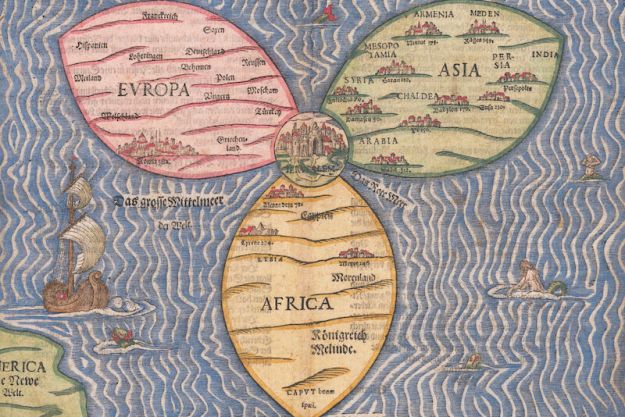
The Bünting Clover Leaf Map, by Heinrich Bünting, was published in 1581 and depicts Jerusalem as the center of the world.

Psalm 122

A Song of Ascents

1I was glad when they said to me,
  “Let us go to the house of the LORD!”
2
Our feet are standing
  within your gates, O Jerusalem.

3
Jerusalem—built as a city
  that is bound firmly together.
4
To it the tribes go up,
  the tribes of the LORD,
 as was decreed for Israel,
  to give thanks to the name of the LORD.
5
For there the thrones for judgment were set up,
  the thrones of the house of David.

6
Pray for the peace of Jerusalem:
  “May they prosper who love you.
7
Peace be within your walls
  and security within your towers.”
8
For the sake of my relatives and friends
  I will say, “Peace be within you.”
9
For the sake of the house of the LORD our God,
  I will seek your good
.

Bolded words have notes on translation below.

If we look at the first three songs of ascent in order (Psalm 120-122) there is a suggestive narrative. The psalmist begins in a place far from the city of peace surrounded by those who desire war (Psalm 120). The psalmist then departs on a journey lifting up their eyes to the hills (Mount Zion-Psalm 121). In this third song of ascent the psalmist arrives at their destination of Jerusalem. (NIB IV:1183) This song of thanksgiving upon arriving in the city of Jerusalem, the spiritual center of their world captures the joy of a pilgrim upon reaching their long-awaited destination.

Both Isaiah 2: 2-3 and Micah 4:1-4 envision Jerusalem as being the spiritual center of the world for Jews and Gentiles, where the nations see the people living in harmony with God’s will for the world and they come to the mountain of God seeking instruction. Jerusalem becomes the pivot for a complete reordering of power in the prophetic imagination as swords become plowshares and spears become pruning hooks. The city of shalom (Jerusalem) becomes a light on the hill that the nations are drawn to learn God’s ways of peace.

The psalm is structured around the two houses that reside in Jerusalem: the house of the LORD and the house of David. The house of David occupies the central verse of the poem structurally, and the royal house occupies an important role in providing judgment for people coming to the city. As James L. Mays can highlight:

Pilgrimage season was likely a time when conflicts and disputes unsettled in the country courts were brought to the royal officials and their successors in the postexilic period. The peace of the community depended on the establishment of justice. Pilgrimage is a journey in search of justice. (Mays, 1994, p. 393)

The house of David has a crucial role in making Jerusalem a place of shalom, but the psalm also places the house of the LORD as the bookends structurally of the psalm. The place of the house of the LORD at the beginning and end encompasses the authority of the house of David. (NIB IV: 1184) 2 Samuel 7 makes a similar point when the LORD informs David that he will build a house (lineage) for David rather than David building a house for the LORD.

The psalm begins with a joyous embrace of the traditional call to go up to the house of the LORD. There is some debate about whether the perspective of the psalmist is currently in Jerusalem (are) or whether it should be translated in past tense as the psalmist remembers Jerusalem in anticipation of a journey, but I have stayed with the NRSVue’s translation of Our feet are standing. From the perspective of the pilgrim, Jerusalem is a city bound firmly together. There is some Hebrew word play in the word for bound (Hebrew habar) which is never elsewhere used for construction and always refers to human alliances or covenants. (NIB IV:1184) The psalm imagines a time where the unified tribes of Israel gather in Jerusalem as a place of festival, worship, and ultimately peace making.

The language in verse six to seven centers around shalom (peace) and Jerusalem (yeru-shalom) and the structure in Hebrew makes this even clearer by the phonetic repetition of ‘sh’ and ‘l’ sounds. As Nancy deClaissé-Walford states:

Of the ten Hebrew words that make up vv. 6 and 7, six contain the letters sin and lamed: ask (sha’alu); well-being (twice) (shalom); Jerusalem (yerushalaim); may they be at ease (yishelayu); and tranquility (shalwa)—acoustically and visually emphasizing the theme of well-being. (Nancy deClaisse-Walford, 2014, p. 901)

Jerusalem is the city of shalom, the longed-for peace absent in Psalm 120. Peace is for the city of peace, for the walls that defend the city from hostility, and for the families who are present in the city or back home. Psalm 133 will later echo this hope for peace among relatives.

Walter Brueggemann and William H. Bellinger make an important point for this prophetic imagination of the people in the context of the exile. When there is no longer a city of shalom to seek where the houses of the LORD and David reside, how are the people to function? Brueggemann points to the prophet Jeremiah (Jeremiah 29: 4-10) when he states:

”seek the welfare of the city where I have sent you in exile, and pray to the LORD on its behalf, for in its welfare you will find your welfare.” The word “welfare” of course renders the Hebrew shalom; the prophet is exhorting the deportees to pray for the shalom of the city of Babylon. (Bellinger, 2014, p. 530)

In the absence of the city, the temple, and the Davidic king it was still possible to seek peace, but it involved seeking the shalom of the place where you find yourself transplanted. Even if Jerusalem is de-centered from the world, peace can still be found in the cities where the pilgrims sojourn.

Psalm 120 A Pilgrimage To A Place Of Peace

Pilgrim Steps Leading to the Double Gate (Southern Steps of the Temple Mount, Jerusalem) picture from 2009 by Wilson44691 – Own work, Public Domain, https://commons.wikimedia.org/w/index.php?curid=6899573

Psalm 120

A Song of Ascents.

1 In my distress I cry to the LORD, that he may answer me:

2 “Deliver me, O LORD, from lying lips, from a deceitful tongue.”

3 What shall be given to you? And what more shall be done to you, you deceitful tongue?

4 A warrior’s sharp arrows, with glowing coals of the broom tree!

5 Woe is me, that I am an alien in Meshech, that I must live among the tents of Kedar.

6 Too long have I had my dwelling among those who hate peace.

7 I am for peace; but when I speak, they are for war.

The Psalms of Ascent (Psalm 120 – 134) are fifteen psalms that may have been used as a part of the pilgrimage to Jerusalem. Jerusalem sits upon a hill so any approach to Jerusalem is always an ascent, but the ascent may also refer to the ascending of the steps of the temple. Mishnah states there are fifteen steps that lead from the Court of Women to the Court of the Israelites which correspond to the fifteen psalms. (Nancy deClaisse-Walford, 2014, p. 887) It is conceivable that a practice of reciting these fifteen short (except for Psalm 132) psalms as one approaches Jerusalem or as one ascends the steps of the temple. As this psalm indicates, this practice may help the people transition from their exile in a world of war and deceitful tongues to their homecoming in the city of peace.[1]

Too long have I had my dwelling among those who hate peace. The poet is a stranger in a strange land. They are a foreigner/alien(ger) in the midst of a people of different gods, sharp tongues, and unjust practices. Meshech and Kedar are likely metaphors for places both geographically and spiritually distant from the memory of their homeland. The situation of this psalm forms the antithesis of Psalm 133: How very good and pleasant it is when kindred live together in unity. The situation of Psalm 120 could be summarized: how traumatizing it is for one who lives as an alien among those who love division.

In language that resonates with James 3: 1-12, the psalmist describes the tongue as an instrument of violence. The psalmist may be the direct recipient of these deceitful and painful words, or they may exist in a society where the truth has disappeared.[2] Like the son in the parable of the prodigal[3] they may find themselves vulnerable and hungry in a world where no one cares. It may be ironic, as Brueggemann and Bellinger state, that the person who considers themself a person of peace would respond to these deceitful tongues with metaphorical weapons of war (Bellinger, 2014, p. 524) but the psalmist is asking for God to deliver. God is in the position to judge the people who the psalmist lives among. Yet, it is also possible that the description in verse four is merely a continuation of the description of the words of the lying lips and deceitful tongues. Sharp weapons are used metaphorically along with predatory animals to describe people hostile to the psalmist in Psalm 57:4. The broom tree is a hard wood tree known for its long burning fires. (Nancy deClaisse-Walford, 2014, p. 892)

This psalm can resonate with people of all times who attempt to live justly in an unjust world. Who seek peace (shalom) among a people whose words and actions seek conflict. As James L. Mays states about Psalm 120,

It is a poignant expression of the pilgrims’ pain over the world from which they come. It puts that world in the sharpest possible contrast to the peace they desire and seek in coming to Zion. (Mays, 1994, p. 388)

People of peace long for a homecoming where they can live in unity with their brothers and sisters who speak with truthful lips and words that heal instead of these weaponized tongues they encounter in the land of their sojourn. Pilgrimage, either physical or spiritual, is a hopeful ascent to a place of shalom.


[1] Jerusalem’s name comes from a combination of the word for city and shalom.

[2] Similar imagery is used in Psalm 10:4; 12: 1-4; and 31:8.

[3] Luke 15: 11-32.