Tag Archives: Trusting God

James 4 Addressing the Cause of the Conflicts in the Body

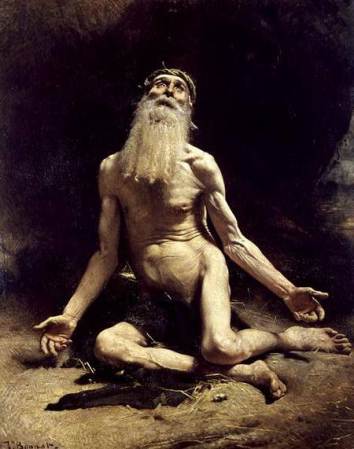
Job (oil on canvas) by Bonnat, Leon Joseph Florentin (1833-1922)

James 4:1-10

 1Those conflicts and disputes among you, where do they come from? Do they not come from your cravings that are at war within you? 2You want something and do not have it, so you commit murder. And you covet something and cannot obtain it, so you engage in disputes and conflicts. You do not have because you do not ask. 3You ask and do not receive because you ask wrongly, in order to spend what you get on your pleasures. 4Adulterers! Do you not know that friendship with the world is enmity with God? Therefore whoever wishes to be a friend of the world becomes an enemy of God. 5Or do you suppose that the scripture speaks to no purpose? Does the spirit that God caused to dwell in us desire envy? 6But God gives all the more grace; therefore it says,
 “God opposes the proud
  but gives grace to the humble.”
7
Submit yourselves therefore to God. Resist the devil, and he will flee from you. 8Draw near to God, and he will draw near to you. Cleanse your hands, you sinners, and purify your hearts, you double-minded. 9Lament and mourn and weep. Let your laughter be turned into mourning and your joy into dejection. 10Humble yourselves before the Lord, and he will exalt you.

James begins this portion of his letter with a set of militaristic terms which are to be at odds with the wisdom which comes from above which is pure, peaceable, gentle, willing to yield, full of mercy and good fruits, and without a trace of partiality or hypocrisy (3:17). Yet, it is precisely these militaristic verbs of conflicts (polemos), disputes (mache), waging war (stateuo), commit murder (phoneuo), and conflict (polemeo) which are tearing the body apart. These warlike verbs are driven by cravings (hedone), want (epithymeo), and coveting (zealoo). Earlier James had linked cravings to temptation and temptation to sin and sin to death (1:14-15) and now these cravings, wants, and desires are dealing death in the body of the community. James uses this stark language to show how those he is addressing have adopted the values of the world rather than submitting to the wisdom of God.

James’s language is full of conflict-related terms, and he criticizes those who engage in disputes and conflicts, but I do not believe that James is provoking a conflict but instead identifying the conflicts that are already present in the body. It is possible that James is speaking of the war within you in a manner similar to Paul’s description of the internal conflict of Romans 7, but I find it more likely that James’s target is a conflict emerging externally within these early Christian communities. It is possible that the polemic (from the Greek polemos translated by the NRSVue here as conflict) is merely verbal and that the murder mentioned is merely metaphorical. Yet, this time before the Jewish war[1] was a time of factions and disputes within the Jewish community in Judea and Galilee and there may have been zealots (from the Greek zealoo translated by the NRSVue as coveting) who were engaged in violence to attempt to establish their vision of justice. There is a continual struggle in the Hebrew scriptures against those who seek their own pleasure/cravings (the Greek hedone where we get our term hedonic) and advantage at the expense of others in the community. Whether verbal or physical there is something rearing its head in the conflict of the community that represents the values of the world and not of God. Those called followers of Christ may be attempting to seize their desires through disputes and conflicts, and even when they do ask they ask merely for the hedonic things that the world values rather than entrusting their desires to God.

James leans into the prophetic language of adultery to speak of the unfaithfulness of these followers of Christ to the faith of Christ. As Scot McKnight illustrates:

Hosea was the first to speak of the covenant relationship of Israel with YHWH in terms of marital intimacy and marital infidelity (Hos 1-3, 9:1). His language was then picked up like variations on a theme, by Isaiah (54: 1-6, 57:3), Jeremiah (2:2; 3: 6-14, 20) and Ezekiel (16: 23-26-38; 23:45). Both Jesus (Matt 12:39; 16:4; Mark 8:38) and the early Christians (1 Cor 6:15; 2 Cor 11:2; Eph 5:22-32; Rev 19:7; 21:9) carried on this tradition by using marital imagery for God’s people and referring to disobedience as relational, covenantal infidelity. (McKnight, 2011, p. 332)

James is not alone in placing the world (and its values) in conflict with God and God’s covenant values. 1 John uses very similar language:

Do not love the world or the things in the world. The love of the Father is not in those who love the world, for all that is in the world—the desire of the flesh, the desire of the eyes, the pride in riches—comes not from the Father but from the world. And the world and its desire are passing away, but those who do the will of God abide forever. 1 John 2: 15-17

Jesus would tell his followers that one cannot serve two masters, and although in Matthew’s gospel Jesus is placing God and wealth (mammon) in conflict (Matthew 6:24) here friendship with the word (and its values) is enmity with God. Those who James addresses are mistaking earthly things for heavenly things, worldly wisdom for divine wisdom.

Verse five and six have given interpreters a lot of struggles throughout history. Many readers have been confused because James appears to cite an unknown scripture with unclear Greek grammar. (Moore-Keish, 2019, p. 145) One possible solution which I find helpful is proposed by Scot McKnight that the scripture quoted is Proverbs 3:34 which actually is quoted in verse six, and the remainder of verse five is setting the framework for James quoting Proverbs. Another option McKnight mentions is the general theme of God’s jealous love throughout the scriptures. (McKnight, 2011, p. 336) This quote contrasting the proud (scorners in NRSVue’s translation of Proverbs 3:34)[2] and the humble who God grants grace to forms a pivot between James’s identification of the conflicts in the community and the distorted worldview that causes the conflicts and the actions of those who would follow the way of Christ.

Ten imperatives occurring in a staccato manner provide the call to action in resisting the friendship of the world. James calls these Jesus followers to submit, resist, draw near, cleanse, purify, lament, mourn, weep, allow laughter to be turned to mourning, and humble themselves. Both James and 1 Peter use Proverbs 3:34 and then turn to imperatives to shape the proper actions of the community in similar manners:

In the same way, you who are younger must be subject to the elders. And all of you must clothe yourselves with humility in your dealings with one another, for
 “God opposes the proud
  but gives grace to the humble.”
Humble yourselves, therefore, under the mighty hand of God, so that he may exalt you in due time.Cast all your anxiety on him, because he cares for you. Discipline yourselves; keep alert. Like a roaring lion your adversary the devil prowls around, looking for someone to devour. Resist him, steadfast in your faith, for you know that your brothers and sisters in all the world are undergoing the same kinds of suffering. 1 Peter 5: 5-9

Submission to God and God’s will is a common theme in the Hebrew scriptures. The call to resist (anthistemi) has the military connotation to stand one’s ground, hence Ephesians uses this term:

Therefore take up the whole armor of God, so that you may be able to withstand on the evil day and, having prevailed against everything, to stand firm (anthistemi). Ephesians 6:13

In Genesis, in the story of Cain and Able, Cain is instructed to resist sin:

The Lord said to Cain, “Why are you angry, and why has your countenance fallen? If you do well, will you not be accepted? And if you do not do well, sin is lurking at the door; its desire is for you, but you must master it.” Genesis 4: 6-7

Here James is telling these followers of Christ if they stand firm (resist) the devil that it will cause him to flee. Throughout the prophets there is a call to return to God, for example:

Therefore say to them: Thus says the Lord of hosts: Return to me, says the Lord of hosts, and I will return to you, says the Lord of hosts. Zech 1:3 (see also Malachi 3:7)

James continues to draw together themes from throughout scriptures in an echo of Psalm 24:

Who shall ascend the hill of the Lord? And who shall stand in his holy place? Those who have clean hands and pure hearts, who do not lift up their souls to what is false and do not swear deceitfully. Psalm 24: 3-4

The idea of being double-minded, trying to be friends with God and the world, have been present throughout this section but here James utilizes the term first used in 1:7. James would likely agree with Ecclesiastes that there is a time for everything, but the conflict at work in the community demonstrates to James that it is a time for mourning. As the prophet Joel could state to his community:

Yet even now, says the Lord, return to me with all your heart, with fasting, with weeping, and with mourning; rend your hearts and not your clothing. Return to the Lord your God,for he is gracious and merciful, slow to anger, abounding in steadfast love, and relenting from punishment. Joel 2: 12-13

I do not believe that James is intending to form a dour community but reading the signs of the times he feels that those who are laughing now will mourn when God’s kingdom comes and those who are mourning now will laugh (Luke 6:25). The people of God are to embrace humility (tapeinosis) in a way very different than the surrounding world. As Joel Green states, “Outside biblical useage, the terminology for one who is humble (tapeinos)or humility (tapeinosis) is generally negative.” (Green, 2025, p. 122) The New Testament thinks of this term very differently as Mary’s song illustrates when it declares that God has “looked with favor on the lowly state [tapeinosis] of his servant,” and ”lifts up the lowly [tapeinos]” (Luke 1: 48, 52)

Almost two millenia after James wrote his letter to these twelve tribes in the Diaspora, we still struggle to separate the ways of the world from the ways of God. Walter Brueggemann describes our plight in this way,

We who are not the richest nation are today’s main coveters….the central problem of our lives is that we are torn apart by the conflict between our attraction to the good news of God’s abundance and the power of our belief in scarcity—a belief that makes us greedy, mean and unneighborly. We spend our lives trying to sort out this ambiguity. (Moore-Keish, 2019, p. 145) quoting Brueggemann, “The Liturgy of Abundance and the Myth of Scarcity”

In a culture that promotes cravings (hedone), want (epithymeo), and coveting (zealoo) we also are called to submit, resist, draw near, cleanse, purify, lament, mourn, weep, allow laughter to be turned to mourning, and humble ourselves. Our faith tells us that God will provide what we need and yet the world tells us we must seize and secure our own future. James may be frustrated with his initial hearers yet I doubt his language would change much if he were able to address the followers of Christ scattered throughout the world today and divided by our own conflicts, disputes, and even wars.

James 4: 11-12

  11Do not speak evil against one another, brothers and sisters. Whoever speaks evil against another or judges another speaks evil against the law and judges the law, but if you judge the law, you are not a doer of the law but a judge. 12There is one lawgiver and judge who is able to save and to destroy. So who, then, are you to judge your neighbor?

James has already indicated at the beginning of chapter three that not many should be teachers because of the danger of the misuse of the tongue and the danger it can cause in the community. Now James instructs the not to speak against (Greek katalaleo, NRSVue speak evil) or judge (Greek krivo) their neighbor. James again echoes Jesus in the Sermon on the Mount (Matthew 7:1-5) when he commands his followers not to judge. The one lawgiver who can save and destroy is God (see Matthew 10:28; Deuteronomy 32:39) and followers of the way of Jesus are not to put themselves in God’s place where they are the judges of the law. The followers of Christ are to learn to be doers of the law and worry about the log in their own eye before they attempt to remove the mote from their neighbor’s eye. (Matthew 7:5).

Image from https://www.sciencedaily.com/releases/2014/01/140130190453.htm

James 4: 13-17

  13Come now, you who say, “Today or tomorrow we will go to such and such a town and spend a year there, doing business and making money.” 14Yet you do not even know what tomorrow will bring. What is your life? For you are a mist that appears for a little while and then vanishes. 15Instead you ought to say, “If the Lord wishes, we will live and do this or that.” 16As it is, you boast in your arrogance; all such boasting is evil. 17Anyone, then, who knows the right thing to do and fails to do it commits sin.

In humbling oneself and submitting to God one learns the wisdom that one’s life is completely in God’s hands. The foolish person believes they are the master of their own destiny and like the rich young fool in Luke 12: 15-20 makes grandiose plans for a future that never arrives. James taps into the one of the fundamental insights of Ecclesiastes and Proverbs about the evanescent nature of life. Humanity is mist which appears for a little while and vanishes. This immediately calls to mind one of the favorite words of the writer of Ecclesiastes, the Hebrew word hebel (or hevel)[3]. This Hebrew word is where Abel’s name comes from in Genesis 4 and although most English translations render it as vanity it literally means vapor, smoke, mist. Humans for James and Ecclesiastes are hebel/hevel. Or as Proverbs can state, “Do not boast about tomorrow, for you do not know what a day may bring.” (Proverbs 27:1) and “The human mind may devise many plans, but it is the purpose of the Lord that will be established.” (Proverbs 19:21)

Language is important to James because it demonstrates that one understands one’s place within God’s world. Instead of claiming that one is the master of one’s future one submits one’s life to the will of God. To boast of one’s own self-security and future is the way of the world and in opposition to God.

Language is important to James, but it is not sufficient. Knowledge is also important but insufficient. Just as faith without works is dead for James, one who knows the right thing and does not act in accordance with that knowledge commits sin. James is attempting to form communities scattered throughout the world who can resist the ways of the world and carrying a living faith which can follow the way of Jesus faithfully as they await with patience the coming of the kingdom of God.


[1] Assuming the letter is from James the Just who dies in 62 CE or someone roughly contemporary to him.

[2] Often scripture quoted in the New Testament may be subtly different than in the Old Testament/Hebrew Scriptures and this normally is because the New Testament will quote the Septuagint (the Greek translation of the Hebrew Scriptures) while the NRSVue and most other English translations go back to the Hebrew text. Hebrew is a very different language than Greek or English and there is often shades of meaning that are unable to be fully captured in any translation.

[3] In Hebrew the letter ‘Bet’ can be either a ‘b’ or ‘v’ sound.

Psalm 127 The Wisdom of Trusting the LORD

Nocks on a group of Arrows. Image by By Samuraiantiqueworld – Own work, CC BY-SA 3.0, https://commons.wikimedia.org/w/index.php?curid=15357007

Psalm 127

A Song of Ascents. Of Solomon.

1Unless the LORD builds the house,
  those who build it labor in vain.
 Unless the LORD guards the city,
  the guard keeps watch in vain.
2
It is in vain that you rise up early
  and go late to rest,
 eating the bread of anxious toil,
  for he gives sleep to his beloved.

3
Sons are indeed a heritage from the LORD,
  the fruit of the womb a reward.
4
Like arrows in the hand of a warrior
  are the sons of one’s youth.
5
Happy is the man who has
  his quiver full of them.
 He shall not be put to shame
  when he speaks with his enemies in the gate.

Bolded words have notes on translation below.

Psalm 127 rotates around the basic claim that everything comes from the trustworthy LORD who builds the house, guards the city, and gives the blessing of family. The opening verse introduces the word translated in the NRSVue ‘house’ (Hebrew bayit) which can be used in multiple ways. Nancy deClaissé-Walford illustrates the multiple ways Hebrew uses bayit:

The word house (bayit) has a number of meanings in the Hebrew Bible. It can refer to family dwellings (Gen. 19:2; Judg. 11:31; 2 Kgs. 4:2); to the whole household (Gen. 46:27; Josh. 7:18; Ruth 1:8); to the whole people of Israel (Exod. 40:38; 1 Kgs. 20:31; Ezek. 36:22); to ruling dynasties (2 Sam. 3:1; 7:11; 1 Kgs. 16:3); or to the temple in Jerusalem (2 Kgs. 22:3; Ezra 6:15; Jer. 7:2). (Nancy deClaisse-Walford, 2014, p. 918)

Critical to the wordplay in this Psalm is the usage of the term in Nathan’s prophecy to David in 2 Samuel 7: 11-13

The LORD declares to you that the LORD will make you a house (bayit). When your days are fulfilled and you lie down with your ancestors, I will raise up offspring after you, who shall come forth from your body, and I will establish his kingdom. He shall build a house (bayit) for my name, and I will establish the throne of his kingdom forever.

While the building of a family dwelling or a temple would also be a labor committed to the LORD and the word allows and encourages those meanings, the psalm also wants us to understand the resonance of household, especially when linked thematically and phonetically to the second half of the psalm (see below).

The LORD is the primary actor throughout the psalm as the builder of the house and the guard of the city and the provider of children while the psalmist lives in trust of the LORD. They may participate with God in the building of the house, the protection of the city, and the procreation and raising of a family, but they can trust that the LORD provides that which they need. Instead of anxious toil trying to secure their house, city, and family they can sleep in peace entrusting the LORD to provide that which they need. I am reminded of Martin Luther’s explanation of the petition of the Lord’s prayer on daily bread:

What is this?

In fact, God gives daily bread without our prayer, even to all evil people, but we ask in this prayer that God cause us to recognize what our daily bread is and to receive it with thanksgiving.

What then does “daily bread” mean?

Everything our bodies need such as food, drink, clothing, shoes, house, home, fields, livestock, money, property, an upright spouse, upright children, upright members of the household, upright and faithful rulers, good government, good weather, peace, health, decency, honor, good friends, faithful neighbors, and the like. (Luther, 1978, p. 36)

Wisdom is trusting the LORD to provide for the house and the security of the city so that the faithful one can be free from anxiety and worry. The psalmist understands cooperating with God but the idea of securing their own future by working harder or longer is foolishness. For the psalmist God provides for the home, the community, and the family.

As briefly mentioned above there is a phonetic connection between the verses in Hebrew that is not present in English. Nancy deClaissé-Walford is again helpful in showing this:

The word translated here as children (NRSVue sons) is the Hebrew banim, whose acoustic similarity to the Hebrew word build (bana) and house (bayit) in v. 1, coupled with the polyvalent meaning of the word “house” in the Hebrew Bible, strongly connects the two stanzas of Psalm 127. (Nancy deClaisse-Walford, 2014, p. 918)

The word ‘reward’ (Hebrew sakar) also appears in Genesis 15 when God tells Abram, “your reward (sakar) shall be very great. Within this promise Abram is told to look to the heavens and count the stars…so shall his dependents be. This psalm echoes the story of Abram/Abraham when multiple sons/children are viewed as a ‘reward.’ ‘Warrior’ and ‘man’ in verses four and five are the Hebrew gibbor and its alternate form geber which is an important term often translated “mighty one”[1] which can refer to either military or economic power. Finally, the word ‘happy’ (Hebrew ‘asre) is a term frequently used in wisdom literature. This wise ‘mighty one’ whose house the LORD has built, whose city the LORD has guarded, and whose family has produced many children as a reward from God can live at peace and content because they have trusted in the LORD. The LORD who builds their household, guards them and provides for their family will not allow their enemies to put them to shame.


[1] Hebrew gibbor hehayil which can refer to physical strength or the economic strength to equip oneself and a group for combat. Ruth 4:11 uses this term for economic ability in reference to Boaz.

Psalm 124 Us and God Against the World

Pilgrim Steps Leading to the Double Gate (Southern Steps of the Temple Mount, Jerusalem) picture from 2009 by Wilson44691 – Own work, Public Domain, https://commons.wikimedia.org/w/index.php?curid=6899573

Psalm 124

A Song of Ascents. Of David.

1If it had not been the LORD who was on our side
  —let Israel now say—
2
if it had not been the LORD who was on our side,
  when our enemies attacked us,
3
then they would have swallowed us up alive,
  when their anger was kindled against us;
4
then the flood would have swept us away;
  the torrent would have gone over us;
5
then over us would have gone
  the raging waters.

6
Blessed be the LORD,
  who has not given us
  as prey to their teeth.
7
We have escaped like a bird
  from the snare of the hunters;
 the snare is broken,
  and we have escaped.

8
Our help is in the name of the Lord,
  who made heaven and earth.

Bolded words have notes on translation below.

The overall meaning of the psalm should be clear to any reader: the LORD is the one who is on our side and who rescues us from the perils of the world. The theme of God as strength, support, shelter, rock, shield, fortress and many other metaphors of protection and comfort occur regularly throughout the psalms and scripture in general. The theme of this fifth song of ascent is not new, but its language (somewhat dulled in English translations) is striking. Israel would not continue to exist without the LORD. Paul’s defiant statement in his letter to the church in Rome echoes the sentiment of this psalm: “What then are we to say about these things? If God is for us, who is against us?” (Romans 8:31)

Verse one and two both begin with a statement that seems conditional in English, “If it had not been the LORD who was on our side” but as Nancy deClaissé-Walford highlights,

Verses 1 and 2 both begin with if not (lûlê), forming the protasis of vv. 1-5. Lûlê, however, is only used in Hebrew to express an unreal condition. The psalm-singers are confident that the Lord is on their side. (Nancy deClaisse-Walford, 2014, p. 907)

This psalm of corporate trust in the LORD begins and ends with a confident assurance that the God of Israel has protected the people of God against her enemies. The enemies identified in verse two is identified with the collective noun humanity(‘adam). Israel and God have all humanity arrayed in opposition to them, and without God Israel would have been overwhelmed.

The psalm then uses several images that indicate that the people of God on their own are powerless before those who oppose them. Their enemy is large enough to swallow them alive, or to sweep over the life of the people,[1] to be devoured in the mouth or captured in a trap. In verse six the word rendered teeth is the same word (lason) rendered tongue in Psalm 120:2

          Deliver me, O LORD, from lying lips, from a deceitful tongue.

Compared to the hunter of fowl the people of Israel are like a bird unable to free themselves from the traps their enemies have laid. On their own Israel is small and weak before the mass of humanity arrayed against them. Yet here, as in Psalm 121, their help is in the name of the LORD who makes heaven and earth. What was a confession of individual trust in Psalm 121 is now a corporate statement of trust in the creating and protecting God. As a people they ‘go with God.’

In the United States, where I live and lead a congregation, there is a reliance on self-sufficiency that is very different from the biblical faith represented in the psalms and throughout the bible. As J. Clinton McCann, Jr. aptly writes,

To profess that God is our fundamental help means to profess that we are not sufficient to create and secure our own lives and future. In short, we need help. (NIB IV: 1191)

As people of God, we believe that God is on our side and stands with us against the enemies that threaten to consume or overwhelm us. If it were only our own strength that we could rely on we would find ourselves consumed, overwhelmed, and trapped but in our own weakness we know our help comes from the one who created the heavens and the earth.


[1] In verse 4b and 5 the “us” in the verse is the Hebrew nephesh, often rendered “soul” in English translations but in Hebrew thought it is closer to the essence of life, not something that can be separated from life. J. Clinton McCann, Jr. notes the word may have originally meant neck. (NIB IV: 1190)

Psalm 121 Vaya Con Dios

View from Badwater Basin in Death Valley shared by photographersnature under CC 3.0 https://en.wikipedia.org/wiki/Death_Valley#/media/File:Badwater_Desolation.jpg

Psalm 121

1I lift up my eyes to the hills—
  from where will my help come?
2
My help comes from the LORD,
  who made heaven and earth.

3
He will not let your foot be moved;
  he who keeps you will not slumber.
4
He who keeps Israel
  will neither slumber nor sleep.

5
The LORD is your keeper;
  the LORD is your shade at your right hand.
6
The sun shall not strike you by day
  nor the moon by night.

7
The LORD will keep you from all evil;
  he will keep your life.
8
The LORD will keep
  your going out and your coming in
  from this time on and forevermore.

Notes on the bolded words below.

One of my favorite farewells is the Spanish ‘vaya con dios’ which means ‘go with God.’ The English Godspeed is similar, which comes from the middle English ‘God spede you’ which means ‘may God prosper you.’ This short but well-loved psalm may have originated as a song for pilgrims making the journey to mount Zion to worship. The departing pilgrim receives a blessing from the one wishing God’s guarding presence upon the pilgrim. It may have originated as a ‘farewell liturgy’ as James Limburg identified this psalm, (NIB IV: 1180) but for many faithful people this has become a psalm of trust which encompasses the entire life of the faithful one guarded by the God who is both personally available and cosmically powerful.

The first two verses of the psalm are spoken by the pilgrim and is spoken in first person. The individual looks to the surrounding landscape to the hills, and likely to the destination of Zion, but their help for through the dangers of the coming journey do not come from the hills but from the LORD. The LORD is both ‘my help,’ one who is personally concerned for the fate of this pilgrim departing on the journey but also ‘the LORD who made heaven and earth.’ In a common duality seen in scripture God is both powerful and attentive, over all things and concerned about the life of the faithful one who places their life in God’s hand.

In verse three the voice now shifts to the one remaining behind as the pronouns are now second person. Within the final eight verses the word rendered ‘keep’ or ‘keeper’ in the NRSVue is the Hebrew samar. The Hebrew samar is a more active concept than ‘keep’ and has the active sense of guarding and watching over. (Nancy deClaisse-Walford, 2014, pp. 895-897) Within the movement of the psalm the God who guards will not slumber during his time of protecting and watching over the pilgrim. The LORD guards Israel and the LORD will guard the faithful one. The language continues and intensifies as the LORD guards and provides a shade (Hebrew sel) for the pilgrim. The word for shade (sel) is often used in the psalter in the phrase ‘the shelter (sel) of you wings’ and may reference the image of God extending God’s wing or cloak in protection and shelter in the journey through the wilderness. The sun and moon have sometimes been thought of mythologically as forces which oppose the pilgrim’s journey but this is not necessary for the psalm for a journey through desert on the journey to Jerusalem (or any other destination).

In the Lord’s prayer the petition ‘and deliver us from evil (or the evil one)’ taps into a consistent theme with the LORD guarding the pilgrim from evil and guarding their life. In a common Hebrew merism[1] the LORD watches over the totality of the pilgrim’s journey, their departures and their returning home for this journey and their entire life.

Psalm 121 has a rich use in the worship life of the church, and it is frequently used with both baptismal liturgies and funeral services. The psalm’s use in these two moments that form the bookends of the Christian life nicely encompass the belief that God guards the person of faith throughout the totality of their life. Martin Luther would have parents teach their children to “fear, love, and trust God above all things.” This psalm echoes the trustworthiness of the God who guards the life of the faithful one. It is a blessing for the entirety of the journeys of life as people of faith go with God. Our entire life is guarded and sheltered by the God who is both personally available and cosmically powerful.


[1] A merism is a literary device which denote the totality or completeness of something.

Psalm 115 Trusting God Above All Things

The Parable of the Talents, depicted by artist Andrei Mironov. Oil on canvas, 2013 Shared under CC-SA 4.0 http://artmiro.ru/blog/creative_commons/2015-07-04-244

Psalm 115

1 Not to us, O LORD, not to us, but to your name give glory, for the sake of your steadfast love and your faithfulness.

2 Why should the nations say, “Where is their God?”

3 Our God is in the heavens; he does whatever he pleases.

4 Their idols are silver and gold, the work of human hands.

5 They have mouths, but do not speak; eyes, but do not see.

6 They have ears, but do not hear; noses, but do not smell.

7 They have hands, but do not feel; feet, but do not walk; they make no sound in their throats.

8 Those who make them are like them; so are all who trust in them.

9 O Israel, trust in the LORD! He is their help and their shield.

10 O house of Aaron, trust in the LORD! He is their help and their shield.

11 You who fear the LORD, trust in the LORD! He is their help and their shield.

12 The LORD has been mindful of us; he will bless us; he will bless the house of Israel; he will bless the house of Aaron;

13 he will bless those who fear the LORD, both small and great.

14 May the LORD give you increase, both you and your children.

15 May you be blessed by the LORD, who made heaven and earth.

16 The heavens are the LORD’s heavens, but the earth he has given to human beings.

17 The dead do not praise the LORD, nor do any that go down into silence.

18 But we will bless the LORD from this time on and forevermore. Praise the LORD!

Martin Luther when talking about the first commandment explained the commandment on having no other gods by stating, “We are to fear, love, and trust God above all things.” Psalm 111 ended with “the fear of the LORD is the beginning of wisdom.” Now Psalm 115 centers on trusting the LORD. Chris Tomlin’s contemporary Christian song “Not to us” takes the first verse of this song and constructs a song around the first half of the verse, but if we were to construct a modern song based on the central idea of this psalm it would use verses nine through eleven as the chorus. Structurally this psalm centers on the call for Israel, the house of Aaron, and those who fear the LORD to trust the LORD who will help and protect them.

The psalm begins with a call for the name of the LORD to be given its proper glory, honor, and respect. On the one hand, this does reflect the proper posture of humility for the worshipper of the LORD and calling on the actions of God and the actions of the worshipping community to be solely for God’s glory. On the other hand, throughout the Hebrew Scriptures when the people call upon God to act for the sake of God’s name they have frequently been unfaithful and unworthy of God’s redemption and rescue. The argument is frequently made by the people that the disaster that has come upon them has brought dishonor to the reputation of God. The psalmist knows that the LORD is a God of steadfast love (hesed) and faithfulness. Yet the nations look at Israel and wonder where is their God? They may be looking upon the disaster that has occurred among the people and wonder if the LORD is absent or impotent. The psalmist protests that God is able to do whatever God pleases and that God rules from the heavens and unlike their neighbors in Canaan or Babylon they do not need, nor are they allowed to create, images of silver or gold.

The faith of Israel was centered on the God who forbade the constructions of images that would attempt to capture the image of God. The mocking of idols here resonates with Isaiah’s taunts in Isaiah 44: 9-20 which come from the time of the Babylonian exile. The faith of Jewish, Christian, and Muslim creates a worship space that looks very different from many other religions. My congregation sits next to a large Hindu temple and their worship space is configured around the images that are central to their practice. The world of both Canaan and Babylon (and oftentimes the practice inside Israel and Judah) were filled with alternative ‘gods’ and alternative ways of worship and practice. These practices of worshipping other gods also led to a different way of relating to the world and the neighbor. For the Jewish people their faith was a faith tied to the law (Torah) which envisioned a very different society than most societies we are aware of in the ancient world.

The polemic against idols is, as James Mays reminds us, “to chastise and correct the congregation itself in support of the first and second commandment.” (Mays, 1994, p. 367) The congregation of Israel was to focus on its own practices and be an example for the nations. Yet, Israel just like people of faith of all times struggled to trust in the LORD above all things. The psalm takes the people back to the heart of their faith, trusting the LORD who helps and protects them. There will always been temptations to trust in one’s acquired wealth, work, alliances, connections, or physical or military strength. Israel was never a world power with a large enough military to stand against the Egyptian, Assyrian, Babylonian, Greek, or Roman empires in their times. Throughout their history they were looked upon as an oddity. Both Jews and early Christians were sometimes viewed as atheists because they had no images for their God and they refrained from the practices of their neighbors to attempt to remain faithful to their God.

The heavens are the LORD’s but the earth has been given as a gift to human beings. One of the aspects of biblical faith is the understanding of the earth and our place within it as a gift. The God who created the earth continues to provide for not only the faithful ones but all the people and creatures of the earth. Those who fear the LORD know trust that they will experience God’s blessing of provision in both their fields and their families.

The psalm closes with the note that the dead do not praise the LORD. Throughout most of the Hebrew Scriptures (Old Testament) there is no view of the dead going to heaven or hell. When a place of the dead is mentioned, it is often utilized to bargain with God because the dead cannot praise God.[1] The focus of the Hebrew Scriptures is on life being lived in covenant with God and trusting that God will provide for that life.

This psalm is about trust and praise being directed toward the God of Israel. From the perspective of the scriptures this is the way of a wise life. Those who follow idols and their ways are foolish. It is a call for those who have directed their trust and praise elsewhere to repent and return to the path of wisdom. Idols do not need to be the creations of gold and silver that the psalmist references. In the United States we are taught in multiple ways to ensure our security through wealth, power, fame, education, and work. None of these things are evil, but when our trust relies on these things instead of the LORD our faith is misplaced. The psalm shares a similar concern with Joshua at the end of his time leading the people where he challenges the people to choose which path and which gods they will follow. “As for me and my household, we will serve the LORD.” (Joshua 24:15) was Joshua’s challenge which the people answered that they also would serve the LORD. The people of Israel as well as the church continually has to remind itself that serving the LORD is very different from the alternative visions of faith present in the world. The psalm reminds me that we are to fear, love, and trust God above all things.


[1] See also Psalm 6:5.