Psalm 147
1 Praise the LORD!
How good it is to sing praises to our God,
for he is gracious, and a song of praise is fitting.
2 The LORD builds up Jerusalem;
he gathers the outcasts of Israel.
3 He heals the brokenhearted
and binds up their wounds.
4 He determines the number of the stars;
he gives to all of them their names.
5 Great is our Lord and abundant in power;
his understanding is beyond measure.
6 The LORD lifts up the downtrodden;
he casts the wicked to the ground.
7 Sing to the LORD with thanksgiving;
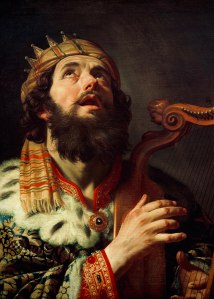
make melody to our God on the lyre.
8 He covers the heavens with clouds,
prepares rain for the earth,
makes grass grow on the hills.
9 He gives to the animals their food
and to the young ravens when they cry.
10 His delight is not in the strength of the horse
nor his pleasure in the speed of a runner,
11 but the LORD takes pleasure in those who fear him,
in those who hope in his steadfast love.
12 Extol the LORD, O Jerusalem!
Praise your God, O Zion!
13 For he strengthens the bars of your gates;
he blesses your children within you.
14 He grants peace within your borders;
he fills you with the finest of wheat.
15 He sends out his command to the earth;
his word runs swiftly.
16 He gives snow like wool;
he scatters frost like ashes.
17 He hurls down hail like crumbs—
who can stand before his cold?
18 He sends out his word and melts them;
he makes his wind blow, and the waters flow.
19 He declares his word to Jacob,
his statutes and ordinances to Israel.
20 He has not dealt thus with any other nation;
they do not know his ordinances.
Praise the LORD!
Bolded words have notes on translation below.
In the final five ‘Hallelujah’ psalms the praise of God radiates outwards. The previous psalm began with the praise of an individual, and now the praise moves to Jerusalem and Israel. From the prayer of the faithful person in Psalm 146 to the song of the faithful people in Psalm 147 the praise of God expands. Yet, even within this psalm there is a hint to the continuing expansion of God’s praise to come.
The psalm is composed of three stanzas, each with combine to call the people of Jerusalem to praise the LORD. The first stanza (vv. 1-6) begins the call to praise and lists several reasons for the praise of God. The initial verse points back to the gracious character of God but in the second and third verse we move to the gracious actions of God on behalf of the community of Israel. Many interpreters view the language of ‘gathering the outcasts of Israel’ placing this poem within a post-exilic time when the people are returning to Jerusalem after the Babylonian exile. The language of the psalm is similar to the language of Isaiah 40-66 and other post-exilic prophets and the brokenhearted whose wound are bound may be those who have endured the exile. Yet the vision of the psalmist moves from the people to the cosmos as the creator God numbers and names the stars. The God who lifts up the downtrodden and brings justice to curb the actions of the wicked is the same God who oversees the heavens and the earth.
The creation imagery continues in the second stanza (vv. 7-11). The people can sing with thanksgiving for the way God oversees the provision for all of the earth. The proper weather allows for the plants and animals to flourish, and the cries of the young raven are heard just as Israel’s cries for help. Throughout the last two psalms the weakness of humanity has been contrasted with the strength of God. Here as the strength of the horse or the speed of the human runner is not what God seeks, but those who place their fear and hope in him instead of their own strength, military strength,[1] or the strength of any beast of the earth.
In the third stanza all of Jerusalem is called to join in the Hallelujah. Israel was never a major military power, and especially if this psalm comes from a post-exilic context the people were unable to defend themselves against the empires of the day. It is the LORD that strengthens their defenses and protects their children. Just as God provides for the grass of the field and the ravens of the air, God provides the wheat for the people of Israel. God is in the commanding position of God’s word going out to the earth and accomplishing rapidly that what it intends to do. In language that resonates with God’s answer from the whirlwind in Job 38 we see the weather as a visible sign of God’s incredible power. Wind in verse eighteen is the Hebrew ruach which can also mean breath or spirit, and while wind is likely the primary meaning intended in this verse of weather-related imagery, God’s spirit also goes forth into the earth. Yet God’s power over the width and breadth of creation becomes known specifically in God’s revelation to Israel. The entire creation may witness the actions of God, but Israel has the words of God given in their specific revelation of the law. Israel occupies a special place in God’s world because they are the bearers of the word and law of God. They praise the LORD for their unique insight into the power, character, and will of God.
J. Clinton McCann, Jr. elegantly point to the belief underlying this psalm and many other psalms when he states:
At the heart of the biblical faith is the astounding claim that the power that has strewn the stars into their courses (v. 4) is the same power that—or better who—“heals all the brokenhearted” (v.3), “lifts up the downtrodden” (v.6), and declares an intelligible, personal, life-giving word to Israel (vv. 19-20). In short, our trust—indeed, our hope—is that the power behind the universe has a personal face that is turned toward us in “steadfast love” (v.11b). (NIB IV:1269)
As a part of the people of God, we claim insight into the character of God, God’s actions in the world, and God’s will for our lives, our society, and ultimately the ordering of the entire world. Praise enters the space of wonder that the God who creates the heavens and the earth responds to the need of the faithful people. Yet our cries and the cries of the raven are both heard by God. Here the people of God are called to praise the LORD, but in the coming psalms our songs join the symphony of creation in praising the LORD.
[1] Horses are primarily thought of as a military asset owned by the king rather than something a normal person would own for transportation or farm labor in the bible.