Tag Archives: Bible Study

Psalm 139 Asking the God who Knows and Sees Me to Respond to the Injustice on Earth

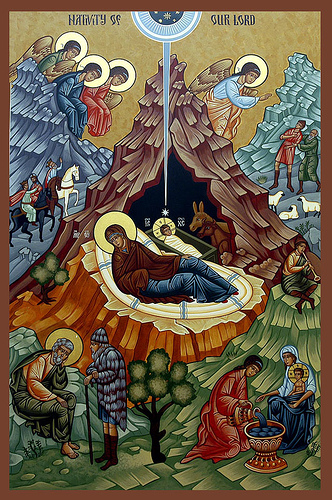
The Nativity of Christ, Icon by Ranosonar

Psalm 139

To the leader. Of David. A Psalm

1O Lord, you have searched me and known me.
2
You know when I sit down and when I rise up;
 you discern my thoughts from far away.
3
You search out my path and my lying down
 and are acquainted with all my ways.
4
Even before a word is on my tongue,
 O Lord, you know it completely.
5
You hem me in, behind and before,
 and lay your hand upon me.
6
Such knowledge is too wonderful for me;
 it is so high that I cannot attain it.

7
Where can I go from your spirit?
 Or where can I flee from your presence?
8
If I ascend to heaven, you are there;
 if I make my bed in Sheol, you are there.
9
If I take the wings of the morning
 and settle at the farthest limits of the sea,
10
even there your hand shall lead me,
 and your right hand shall hold me fast.
11
If I say, “Surely the darkness shall cover me,
 and night wraps itself around me,”
12
even the darkness is not dark to you;
 the night is as bright as the day,
 for darkness is as light to you.

13
For it was you who formed my inward parts;
 you knit me together in my mother’s womb.
14
I praise you, for I am fearfully and wonderfully made.
 Wonderful are your works;
 that I know very well.
15
My frame was not hidden from you,
 when I was being made in secret,
 intricately woven in the depths of the earth.
16
Your eyes beheld my unformed substance.
 In your book were written
 all the days that were formed for me,
 when none of them as yet existed.
17
How weighty to me are your thoughts, O God!
 How vast is the sum of them!
18
I try to count them—they are more than the sand;
 I come to the end—I am still with you.

19
O that you would kill the wicked, O God,
 and that the bloodthirsty would depart from me—
20
those who speak of you maliciously
 and lift themselves up against you for evil!
21
Do I not hate those who hate you, O Lord?
 And do I not loathe those who rise up against you?
22
I hate them with perfect hatred;
 I count them my enemies.
23
Search me, O God, and know my heart;
 test me and know my thoughts.
24
See if there is any wicked way in me,
 and lead me in the way everlasting.

Psalm 139 is a paradox. The first eighteen verses in poetic and beautiful imagery describe the psalmists experience of being fully known by God. The language of the final six verses describes the psalmist’s reaction to the jarring reality that there are many who oppose the ways of God. Many readers of this psalm are surprised at the sudden change from the sense of wonder and awe in the first three stanzas of the psalm to the imprecatory voice of the final stanza. Most readers may be familiar with the first eighteen verses while the final six will rarely appear in the worship of most churches. Some scholars feel that these verses were later added into the beautiful and comforting message of God’s full knowledge and encompassing of the speaker, but I feel the psalm makes sense as we have received it as I will share below.

A key word in this psalm is “known/knowledge” which occurs seven times (vv. 1-2, 4, 6, 14, 23 twice) and while the seven occurrences may be random, Hebrew poetry like to utilize numerical occurrence to make a point. Seven is traditionally a number of completeness. So, in addition to the thematic complete knowledge of God it may also be structurally reinforcing this message. (NIB IV: 1235) The verbs attributed to God including “know,” “search,” and “test” often appear in imagery when God is described as a judge, and this image of God is often used when one is calling on God for intervention or help. (Mays, 1994, pp. 426-427) Throughout the psalm the psalmist wrestles with the reality that they are known, searched, and tested completely by God and yet the wicked ones who resist God’s way still endure and God is called to judge these ones who the psalmist ‘hates’ (see below).

In the first stanza God knows the psalmist’s thoughts, words, and actions completely. Whether the psalmist is coming or going, waking or sleeping, standing or sitting, God knows their path, their thoughts, and even the words that have not left their mouth. They live their life surrounded by God’s presence and comforted by God’s touch. They respond in an appropriate sense of awe and wonder that the God who created the heavens and the earth can know them. The psalm is not interested in constructing a doctrine of omnipotence and omnipresence but instead deploys its language to try to express their wonder that God knows them, comforts them, is present with them and protects them.

The second stanza continues the wonder at God’s presence throughout the creation. The most surprising line of this stanza is that the psalmist includes God’s presence in Sheol, a place in other psalms where people are cut off from God’s hand (Psalm 88). Yet, for the psalmist even this place where God had been thought absent God is present. Heaven to Sheol, from the rising sun to the farthest edges of the sea, and even in the darkest night they are seen and known by God. There is nowhere in all creation, the heavens, the earth and under the earth, where they can escape God’s spirit or God’s sight. For the psalmist this is an awe-inspiring reality but primarily in a comforting rather than an ominous sense.

The third stanza turns the reflections to God’s deep involvement throughout the duration of their life. The beautiful language of God knitting the psalmist together in their mother’s womb, shaping and forming them for their life in God’s presence and protection. They wonder at their body and mind created by the hand of God and the days of their life are numbered according to God’s plan. The psalmist is less concerned with an idea or predestination than poetically describing the wonder at their life shaped by God’s hands and lived within God’s presence.

It may be a paradox, but for me the first three stanzas set up the final stanza. The psalmist looks upon God’s active presence in their own life and experience and then turns outward to the world where injustice and wickedness persist. The language does not seem to indicate that the psalmist is personally under threat or attack but instead seems to be broken-hearted by the ways in which others are treating God and God’s commandments. They are heartsick by the idolatry and injustice they see at work in the world and they call upon the God who is profoundly present throughout their life to extend that presence throughout the world and judge the wicked and those who oppose God’s ways. The language of ‘kill’ and ‘hate’ are jarring to our ears. The word translated ‘hate’ (Hebrew sane’) refers to an emotional aversion to something or someone. (Nancy deClaisse-Walford, 2014, p. 966) Throughout the psalms and wisdom literature in the bible the wicked pose a threat, leading astray others from following God’s way and threatening the peace of the society. The psalmist in their own way is calling on God for God’s will to be done on earth. The God who is present throughout the life of the psalmist and whose spirit is present throughout the world is asked to judge the earth and be as deeply involved throughout the creation as they perceive God being within their own life. Like the other psalms calling on God to judge an enemy, the enemy is committed into God’s hands. Yet the psalmist joins those throughout the generations calling upon God to establish God’s justice on earth and to heal the society from the damage done by the wicked, the bloodthirsty, those who speak maliciously, and who rise up against God.

Psalm 133 Images of Unity

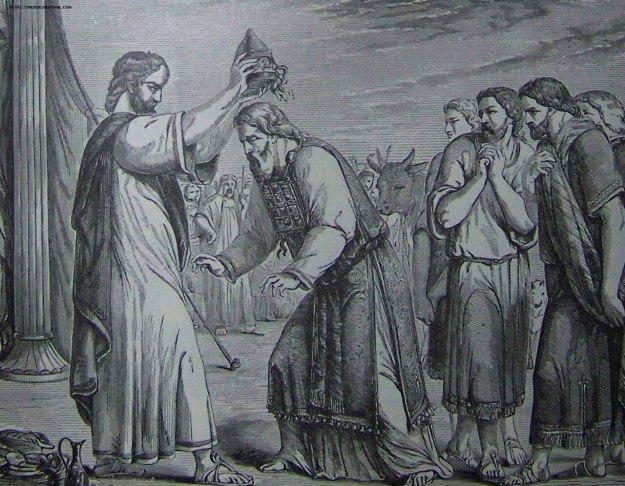
Consecration of Aaron and His Sons, illustration from the 1890 Holman Bible

Psalm 133

A Song of Ascents.

1How very good and pleasant it is
  when kindred live together in unity!
2
It is like the precious oil on the head,
  running down upon the beard,
 on the beard of Aaron,
  running down over the collar of his robes.
3
It is like the dew of Hermon,
  which falls on the mountains of Zion.
 For there the LORD ordained his blessing,
  life forevermore.

Bolded words have notes on translation below.

This short psalm utilizes two images of fluids flowing down as a metaphor for the good and pleasant experience of unity among kindred. Every world religion I am aware of utilizes familial imagery and then expands the imagery of family to the expectations of community life. Here within the pilgrims coming into Jerusalem and reciting these songs of ascent they are surrounded by other travelers who have come from other towns and perhaps other countries. Yet, for the Hebrew people they were all children of Abraham, Isaac, and Jacob. They were all an extended family. They were all kin.

As the travelers move towards the temple the first good and pleasant image remembers the anointing of Aaron as the high priest for the people. The pouring of oil on the head is common in the ancient world and had both provided moisture to the scalp and skin as well as a pleasant odor. Yet oil is precious and the image here is of fine oil being used lavishly. The oil flows down (Hebrew yored) from the hair to the beard to the collar of the robes. The anointing of Aaron is imagined as a special and lavish event, and the pilgrims going up to Jerusalem are joined to this good and pleasant memory from the past as they come together in unity to worship the LORD in Zion.

Mount Hermon is roughly 200 kilometers north of Jerusalem and the snow and water that collects there is the source of the Jordan River. The water from Hermon flows down (NRSVue which falls on)[1] to the mountains of Zion as God provides life for the land and people. The LORD utilizes both the normal events of rain and snow and the ritual events of anointing priests to provide a good and pleasant place for the children of Abraham, Isaac, and Jacob to live in unity and prosperity forevermore.

Adele Berlin suggests that the imagery of Psalm 133 may invoke a hope for the reunification of the northern kingdom of Israel and the southern kingdom of Judah by poetically having the “dew of Hermon” in the northern kingdom flow to Zion in the heart of Judah. (NIB IV: 1214) Whether the psalmist imagines a reunification of Israel and Judah is uncertain, but within the context of a pilgrimage to Zion the bonds of family are extended to new kindred from different starting points but sharing a common destination. They all come together to experience the good and pleasant reality of kindred living together in unity under God’s blessing.


[1] This is the same Hebrew verb yored utilized in verse two for the oil flowing down to Aaron’s beard and robes.

Psalm 131 The Humble Child of the Mothering God

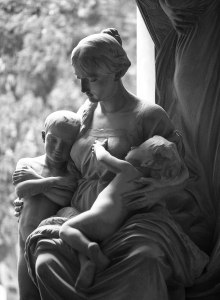
Statue of a mother with children at the Monumental Cemetery of Staglieno in Genoa. Photo by Alessandro Giudice CC by SA 4.0

Psalm 131

A Psalm of Ascents. Of David.

1O LORD, my heart is not lifted up;
  my eyes are not raised too high;
 I do not occupy myself with things
  too great and too marvelous for me.
2
But I have calmed and quieted my soul,
  like a weaned child with its mother;
  my soul is like the weaned child that is with me.
3
O Israel, hope in the LORD
  from this time on and forevermore.

This short psalm is striking for its central metaphor where the faithful one is a dependent child and LORD is the mother who is the safe and comforting place the child goes to. Jesus will later tell his disciples

Truly I tell you, unless you change and become like children, you will never enter the kingdom of heaven. Whoever becomes humble like this child is the greatest in the kingdom of heaven. Whoever welcomes one such child in my name welcomes me. Matthew 18: 3-5

Humility plays a central role in both the posture of the psalmist and the posture that Jesus is encouraging in his disciples. The hearers are encouraged to have, “Utter trust in and childlike dependence on God for life and the future.” (NIB IV: 1209) The first verse points to the humble and childlike stance of the psalmist, while the second verse introduces the central metaphor of the childlike speaker and the mothering God who comforts and quiets the speaker’s being, and the third verse expands this posture to Israel whose hope is in the nurturing presence of God.

The heart in Hebrew thought is not the seat of emotion but the seat of will and direction, so the heart not being lifted up is not about being in an exalted emotional state but instead the inner intention of the psalmist is to remain in one’s proper state. The eyes are the outward facing representation of this stance, and they are also not raised too high. The psalmist focuses on the simple things and rather than concentrate their will and striving on great and marvelous things, they rest in their dependence on God. The triple negative of the first verse demonstrates verbally the stance of humility the psalmist has towards God and the world. If this psalm comes from David, as its attribution indicates, it paints the picture of a king who understands their limits and who places honor where it belongs. The king becomes the child needing to be quieted by the nurturing mother God.

The use of feminine imagery for God is relatively rare in the bible, but it does occur. Isaiah uses a similar image of a mother and a nursing child:

Can a woman forget her nursing child, or show no compassion for the child of her womb? Even these may forget, yet I will never forget you. Isaiah 49: 15

The psalmist has been calmed and quieted in their innermost being. The Hebrew nephesh, rendered soul by the NRSVue, is the most essential part of life and the self but it does not have the sense of soul that is separate from the body and continues beyond life.[1] The Hebrew gamal translated by the NRSVue as weaned can mean either ‘sated’ or ‘weaned.’ If the word is translated ‘sated’, the image of the child is that of an infant who is relaxing after feeding where the hands and legs relax and the child may fall asleep on the mother’s breast or look up at their mother with a satisfied look. If the word is translated ‘weaned,’ as most translations do, the child is coming to the mother for comfort, nurturing, and a loving embrace instead of food. Normally in the bible the context indicates that gamal be translated as a weaned child but here the context allows for either interpretation. With the theme of humility, I like the translation of ‘sated’ with a completely dependent infant on the mother for nutrition, care, and love but ultimately either translation serves the metaphor.

The psalm concludes with the expansion to the people of Israel. The declaration for Israel to hope in the LORD echoes the identical declaration in Psalm 130:5 linking the two psalms together in their conclusions. The God who provides rescue from the desperate situation is the same God who quiets the inner being of humble on like a mother comforts her child. In de Profundis (Psalm 130) the petitioner waits on the LORD more than one who waits for morning, but in Psalm 131 the comforted child can be at peace in the present moment and know that their hope for the future is in the steady, comforting mother-like love of God which calms and quiets them both in the present and forevermore.


[1] The Greek philosophical idea of soul, which many Christians assume is the biblical idea, where the soul is imprisoned in the body and is liberated at death is not the perspective of the Old or New Testament. This enters Christian thought through theologians in the church influenced by Neo-Platonic philosophy (like Augustine).  

The Letter of James

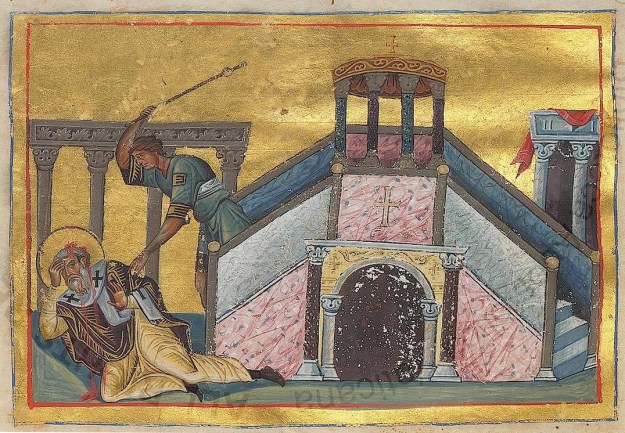
Martyrdom of James the Just By Authors of Menologion of Basil II (circa 985 AC, Constantinople), Byzantine manuscript illuminators

Introduction to the Letter of James

James 1: 1-8 The Wisdom of the Letter of James

James 1: 9-15 Blessings in a World of Reversals

James 1: 16-27 Religion the Cares for the Vulnerable

James 2: 1-13 Faith, Favoritism, and the Royal Law of Love

James 2: 14-26 Faith Without Works is Dead

James 3: 1-12 On the Danger of Being a Teacher and the Destructive Power of the Tongue

James 3: 13-18 What Wisdom Looks Like

James 4 Addressing the Cause of Conflicts in the Body

James 5 Harsh Words for the Rich and Encouragement for the Faithful

Reflections After Walking Through the Letter of James

Reflections After Walking Through the Letter of James

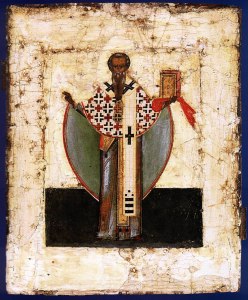
James the Just, 16th-century Russian icon

The message that James wants to impart to his readers is designed to be clear and practical. Yet, I always find myself amazed at what I discover in these reflections when I walk through a portion of scriptures, the connections that get made with other portions of the text, the ways in which there is depth and richness that a casual reader may miss. James, like most of the New Testament letters not attributed to Paul, were barely touched upon in my studies in seminary, nor have they been a part of my regular preaching or study. I was amazed at the ways the letter of James connects with the law, the prophets, wisdom literature, and the words of Jesus as he attempts to shape the faithful practice of his Jewish Christian audience.

Prior to coming to this reflection on James has been a series of reflections on a significant portion of the Hebrew Scriptures/Old Testament which have nurtured a love within me for the depth and riches of law, the history, the prophetic witness, and the wisdom tradition which all attempt to speak to the experience of the people of Israel with their God. When I worked through the Gospel of Matthew and Revelation several years ago, those reflections were shaped by the wisdom accumulated through those journeys, and now the same is true of James. I am thankful for both my own heightened awareness of the language of the scripture that the early Christians read but also for the patient work of scholars who dedicate their lives to the study of specific books. I was impressed by the richness that I had previously overlooked in James’s short letter to the twelve tribes in the Diaspora. Part of the paradox of scripture is that it can be both clear and practical and at the same time deep and profound.

James is attempting to cultivate in his hearers an authentic and living faith that is demonstrated through practices of compassion and mercy. Sometimes James can appear as judgmental to a casual reader, but fundamental to the witness of James is mercy. James does have some challenging words for our context, and his language is often like that of an Old Testament prophet, but sometimes the challenging words are the ones we need to wrestle with the most. This is a short letter, but it challenged me, it was like doing a steeper climb but for a shorter duration than my experience of some other books. This may be because I am more of a New Testament scholar than a Hebrew bible scholar, but I think it is also due to the wide number of topics James covers in this short letter. I am thankful for the witness of James and the way in which his attempts to cultivate a living faith in the communities he is writing to in his time continue to challenge us to an authentic living faith two millennia later.

James 2:14-26 Faith Without Works is Dead

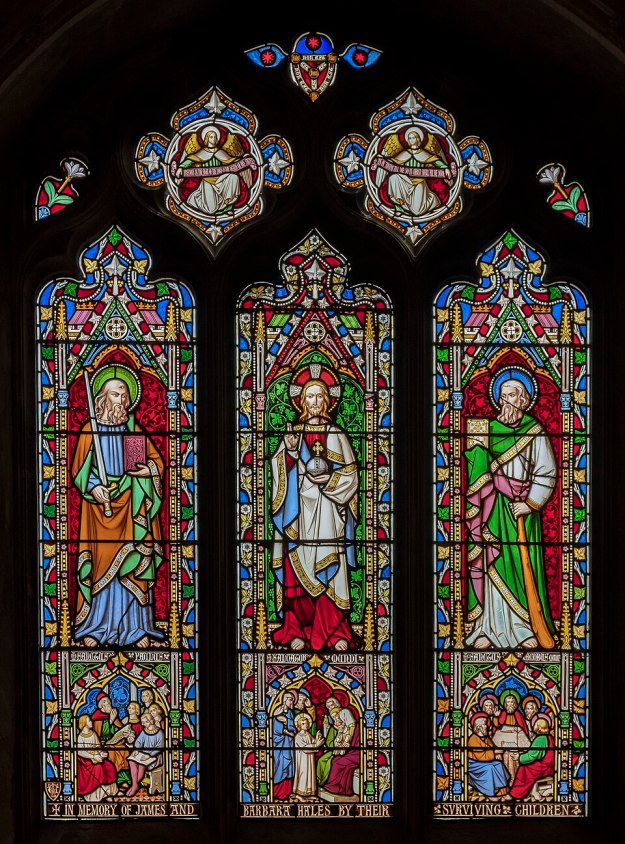
Stained Glass in Norwich Cathedral depicting St Paul, Christ (as Saviour of the world), and St James the Less. The lower panels show St Paul dictating, Jesus in the Temple, and St James at the Council of Jerusalem. The glass is by Wailes, 1852, and is in memory of James and Barbara Hales.

James 2: 14-26

  14What good is it, my brothers and sisters, if someone claims to have faith but does not have works? Surely that faith cannot save, can it? 15If a brother or sister is naked and lacks daily food 16and one of you says to them, “Go in peace; keep warm and eat your fill,” and yet you do not supply their bodily needs, what is the good of that? 17So faith by itself, if it has no works, is dead.
  18
But someone will say, “You have faith, and I have works.” Show me your faith apart from works, and I by my works will show you faith. 19You believe that God is one; you do well. Even the demons believe—and shudder. 20Do you want to be shown, you senseless person, that faith apart from works is worthless21Was not our ancestor Abraham justified by works when he offered his son Isaac on the altar? 22You see that faith was active along with his works, and by works faith was brought to completion. 23Thus the scripture was fulfilled that says, “Abraham believed God, and it was reckoned to him as righteousness,” and he was called the friend of God. 24You see that a person is justified by works and not by faith alone. 25Likewise, was not Rahab the prostitute also justified by works when she welcomed the messengers and sent them out by another road? 26For just as the body without the spirit is dead, so faith without works is also dead.

“Do this and you will live.” In Luke’s gospel these words come between the lawyer’s answer to what scripture says one must do to inherit eternal life[1] and Jesus’s parable commonly known as the Good Samaritan (Luke 10: 25-37). I reference the beginning of this well-known parable since it quotes both the commandment to love God and the love of neighbor, both of which occupy James’s attention throughout this chapter. A faith that merely knows about God for James is useless, impotent, empty, and ultimately dead.

Joel Green quotes the novelist Ursula Le Guin at the beginning of his commentary on James:

The fantasy novelist Ursula Le Guin wrote, “To learn a belief without belief is to sing a song without the tune.” She goes on: “A yielding, an obedience, a willingness to accept these notes as the right notes, this pattern as the true pattern, is the essential gesture of performance, translation, and understanding.” (Green, 2025, p. 1)

A faith that does not work on behalf of the vulnerable sister or brother may know the words of the song but it lacks the notes and the action to perform it faithfully. It may be able to echo the words of the Shema, that God is one, (Deuteronomy 6:4) but knowing God is one and loving God with all of one’s being are two different things. Stating one loves one’s neighbor and being unwilling to help the naked and hungry brother or sister would be the double-minded faith of the previous chapter.

I appreciate the inclusive goal of the NRSVue (and the NRSV that came before it) in translating the Greek adelphos as brothers and sisters, since James intends his words for both male and female listeners. Unfortunately, in verse fifteen we have one of the rare instances where the Greek does have both brothers and sisters (adelphos e adelphe) and it is likely that James wants us to intentionally focus on both men and especially women who are hungry and naked. Women had far fewer opportunities in the ancient world to provide for their needs and this is why widows in particular are linked with orphans and resident aliens throughout scriptures as a vulnerable and easily oppressed population.  James who previously stated that undefiled religion includes caring for the widows and orphans now links faith to the practices of neighbor love which provide for the needs of the naked and hungry men and women in their midst. Just as religion that does not care for widows and orphans is defiled for James, faith that merely says keep warm and eat your fill without acting in response to the needs of the neighbor is unable to save and dead.

James contrasts a faith which is merely knowledge with a faith that involves practices/works/ and deeds of mercy in a stark manner. Like wisdom literature often does we are given a choice between a wise path and a foolish path. For James the wise path is the path of the royal law of liberty, of Jesus, of Abraham and Rahab while the foolish path is that of demons. The demons know that God is one and tremble but they do not act in mercy or love toward the neighbor. James is trying to hammer the point home that faith merely as knowledge is worthless/ineffective[2] and reveals an empty[3] (NRSVue senseless) person.

James proceeds to his two examples: Abraham and Rahab. One man and one woman, one a central figure in the story of Israel and one an outsider who becomes a part of the community, but both who are reflected on in the Hebrew tradition as people who showed hospitality. Abraham is an obvious choice because of his central position in the story of the Jewish people and the likely use by people who James directs his letter at (see below). By referencing the willingness of Abraham to sacrifice his son Isaac to God in obedience to God’s instructions James may be attempting to link this action with loving God with all of one’s being. Abraham was a man of wealth who had slaves and flocks, but Rahab was a woman who lived on the edge of Jericho, a prostitute, and not a part of Israel when she shows hospitality to the Israelite spies in Joshua 2. Like the Samaritan in Jesus’s parable, she is the one who shows hospitality and mercy to God’s people in a moment of need and binds herself to God and God’s people by her actions. It is her actions (works) of hospitality (including protecting the spies) which link her to God’s community.

I want to be careful how I say this next piece because it could easily be misread, but I do think one of our mistakes as people who live in the aftermath of the optimistic view of the enlightenment, where we strive to create a better world and better society, is that we focus more on the systems that surround us than the vulnerable ones in our midst. As a Lutheran Christian I am a part of the magisterial reformation which attempted to have the church partner with the government to shape a better world. This is not a bad thing, but it is also not what James is thinking of. Luke Timothy Johnson is worth quoting at length here:

James does not rail against an economic system that oppresses the poor. Instead, he calls precisely for the formation of communities gathered by the faith of Jesus in which the poor are honored and cared for by others who are themselves “poor” in the eyes of the world. Nor does James suggest the those who are impoverished need to be relieved of their poverty before they can claim human dignity. Just the opposite. The poor have been chosen by God to be the heirs of the kingdom. To say that the poor need to get possessions to become more fully human is to accept the equation of being and having characteristic of the world. For James the hope of the poor is the God who gives every perfect gift without grudging, and a crown of glory to those who love God (1:12). (NIB XII: 200-201) emphasis mine.

Or in the words of José Antonio Olivar’s song “Cuando el pobre (When the Poor Ones”:

           When the poor ones, who have nothing, still are giving;

          when the thirsty pass the cup, water to share;

when the wounded offer others strength and healing:

          We see God, here by our side, walking our way;

          we see God, here by our side, walking our way.[4]

James does not wait for the members of his community to be wealthy before they care for the needs of the hungry, naked, and vulnerable. In James’s view this community which may have nothing still is giving and God is there providing in their poverty and walking with them in the way.

This is also the appropriate spot to discuss the different ways Paul and James deploy similar vocabulary in a very different manner for different communities and issues. Paul in Galatians 2 mentions James (along with Cephas/Peter and John) as one of the pillars of the community that sends him to the Gentiles (Galatians 2:9) only asking that he remember the poor. Some time afterward “some people from James” cause Cephas to stop eating with the Gentiles (for fear of the circumcision faction) which leads Paul to confront Cephas. In Galatians 3, along with Romans 4, Paul argues for faith in contrast to the works of the law. It is worth noting that the ‘works’ Paul is arguing against are the boundary markers like circumcision and dietary restrictions, items which James never addresses in his letter. Just as Paul dealt with ‘people from James’ it is likely that James is dealing with followers of Paul whose language of faith without works, and even Paul’s utilization of Abraham as an example of this saving faith may be causing a different problem among the Christians in the communities James is addressing. Paul and James would agree that the poor and the vulnerable are both worthy of respect[5] and should be cared for within the community. The differences between Paul and James in their language have often obscured the strong resonances that both share. These two early church leaders conducted their ministry in different communities, and both were concerned in shaping practices of faith with different challenges.


[1] The Greek zoea ion which is rendered ‘eternal life’ in most English translations, but I do not believe that is what the gospels are trying to communicate. See my discussion on Afterlife, Eternal Life, and the Kingdom of God.

[2] The Greek arge is the opposite of the Greek word erge (work/deed) [a + erge] and this is part of the wordplay that James is utilizing

[3] Kenos primary meaning is empty. It can be used metaphorically for senseless or foolish.

[4] Translated by Martin A. Seltz in Evangelical Lutheran Worship. Hymn 725.

[5] See for example Paul’s condemnation of those in Corinth whose practices at the Lord’s Supper, “show contempt for the church of God and humiliate those who have nothing.” 1 Corinthians 11: 22.

James 1: 1-8 The Wisdom of the Letter of James

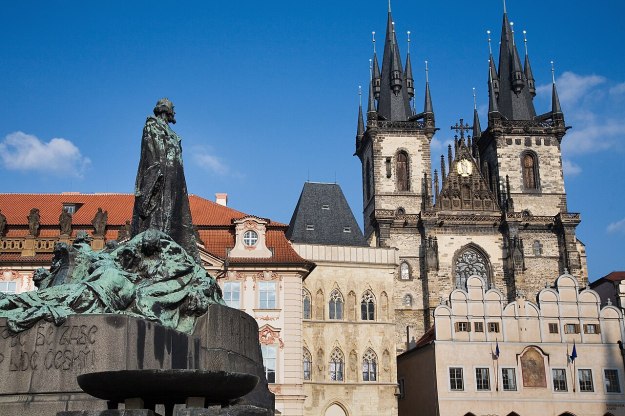
Jan Hus Memorial at Old Town Square in Prague built in 1915. Photo by Jorge Royan. Shared under CC BY-SA 3.0

James 1: 1-8

Words highlighted have notes below on translation.

 1James, a servant of God and of the Lord Jesus Christ,
  To the twelve tribes in the dispersion:
  Greetings.
  2
My brothers and sisters, whenever you face various trials, consider it all joy, 3because you know that the testing of your faith produces endurance. 4And let endurance complete its work, so that you may be complete and whole, lacking in nothing.
  5
If any of you is lacking in wisdom, ask God, who gives to all generously and ungrudgingly, and it will be given you. 6But ask in faith, never doubting, for the one who doubts is like a wave of the sea, driven and tossed by the wind. 7, 8For the doubter, being double-minded and unstable in every way, must not expect to receive anything from the Lord.

James, the author of the letter, has traditionally been understood as James the Just or James the brother of our Lord who was one of the influential early leaders of the church in Jerusalem.[1] Throughout this reflection my assumption will be that this is an early Christian letter, written in a similar time period to the letters of Paul, from a leader of the church in Jerusalem to the Jewish followers of Jesus scattered throughout the world. James introduces himself as a servant (literally slave in Greek) of God and of the Lord Jesus Christ. Although the translation of the Greek doulos as ‘servant’ in most English translations makes sense, especially with the history of how slaves were treated in the United States, it is worth noting that most of the apostles claim to be slaves/servants of Christ or God. In the ancient world a slave could exercise authority on behalf of their master, yet unlike a servant who is employed and can quit a slave was owned by the household. From a contemporary perspective in an individualistic society where personal freedom is highly valued it is worth being reminded that in the ancient world you were always bound to your family or the household you served. I do think for James the sense of obedience and servitude are an important part of how he sees the life of wisdom.

James and the author of 1 Peter are the only two New Testament authors to address their letters to the diaspora. Although at the time of the writing of James, assuming that the biblical James is the author, Israel and Jerusalem are not yet in rebellion against Rome, there are still more Jews living outside of Palestine in the diaspora than who live inside it. (Moore-Keish, 2019, pp. 20-21) At this early time, prior to 62 CE when James the Just is killed, the boundaries between Judaism and Christianity are still porous and many of the early followers of the way of Jesus Christ considered themselves a part of the Jewish people. Yet, there is also throughout the New Testament an adoption of the titles and language used for the Jewish people throughout the Old Testament to speak about the role of the new followers of Jesus throughout the church. Although James is writing in a manner that is highly reflective of the Hebrew Scriptures and Torah obedience, it is also likely that his audience may also include the churches of Paul and others among the Gentiles. James never mentions Sabbath-keeping, circumcision, or diet. Like the Gospel of Matthew, James attempts to write about a faith that is connected with Torah observance the letter is also shaped by a merciful reading of scripture which is shaped by both the teachings of Jesus and the prophetic witness before him.

Most modern translations will translate the Greek adelphos/adelphoi with ‘brothers and sisters’ rather than the generic ‘brother/brothers’ since James was addressing both men and women with the letter. What immediately strikes me as we enter into the letter of James is the way many of the early Christian writers are sharing a common vocabulary as they address the new followers of the way of Jesus Christ. James’s brief encouragement to find joy in their trials echoes Jesus’s words in the Sermon on the Mount:

“Blessed are you when people revile you and persecute you and utter all kinds of evil against you falsely on my account. Rejoice and be glad, for your reward is great in heaven, for in the same way they persecuted the prophets who were before you. Matthew 5: 11-12

Although James has been often read in opposition to Paul, his language throughout this letter often uses the same language and rhythms as Paul. Here in verses three and four you can see a similar pattern in Paul’s letter to the Romans:

And not only that, but we also boast in our afflictions, knowing that affliction produces endurance, and endurance produces character, and character produces hope, and hope does not put us to shame, because God’s love has been poured into our hearts through the Holy Spirit that has been given to us. Romans 5: 3-5[2]

In verse four we have the first appearance in the letter of the Greek teleios (NRSVue ‘mature’/NRSV ‘perfect’). This is an important word for James; the word is used twenty times in the New Testament; five of those uses occur in this short letter. Additionally, James utilized both the verbal form teleo twice and the substantive telos once. (Moore-Keish, 2019, p. 28) When I was working through Matthew’s gospel this was a word I wrestled with because I don’t believe that the word intends the sense of moral perfection that is often read into it.[3] Teleios is a word of destination and completion, and I like the NRSVue’s adoption of ‘mature’ for this word. James does want his readers to live a complete and mature life shaped by the path of God’s wisdom.

The letter of James shares many similarities with the wisdom literature in the Old Testament with its interest in shaping a life that is faithful to God’s intent as outlined in the law. Wisdom literature often contrasts the path of wisdom with the opposing path of foolishness. James contrasts the single-minded way of faith with the double-minded way of doubt. Faith and doubt are opposing ideas in James, and I believe that Joel B. Green captures the essence of James’s thought when he states that for James, “faith has more the sense of confidence.” (Green, 2025, p. 30) In the Gospel of Matthew ,faith had more the sense of openness and in Matthew’s gospel worship and doubt often coexisted, but James is approaching faith and doubt as opposites. James’s definition of faith is, ironically, incredibly close to Luther’s famous explanation of the first commandment, “We are to fear, love, and trust God above all things.” Faith and wisdom are a single-minded confidence in God and God’s ways. For those lacking in wisdom they are told to ask God confidently for the wisdom they need to lack nothing. The parallel use of ‘lacking nothing’ in verse four and ‘lacking wisdom’ five form an interesting parallel between ‘enduring trials’ and ‘asking God for wisdom.’

James targets those among his readers whose practice does not match their profession. They are double-minded because they want to be friends of God and friends of the world at the same time. (NIB XII:182) James’s thoughts echo Jesus’s words contrasting between those who try to serve two masters,[4] and it is telling that Jesus is contrasting those who serve God and wealth as James is about to contrast those of humble means and the rich.  

Martha L. Moore-Keish quotes a portion from the final letter of the Jan Hus, a reformer in Czechoslovakia (1369-1415) before he was burned at the stake that I want to close this portion of the reflection with because it wrestles with the themes of James in the concrete moment of temptation/trial:

Surely it is difficult to rejoice without perturbation, and to esteem it all joy in various temptations. It is easy to talk about it and to expound it, but difficult to fulfill it. Even the most patient and valiant soldier, knowing that on third day He would rise, conquering by His death the enemies and redeeming the elect from damnation, after the Last Supper was troubled in spirit…O most kind Christ, draw us weaklings after Thyself, for unless Thou draw us, we cannot follow Thee! Give us a courageous spirit that it may be ready; and if the flesh is weak, may Thy grace go before, now, as well as subsequently. For without Thee we can do nothing, and particularly to go to a cruel death for Thy sake. Give us a valiant spirit, a fearless heart, the right faith, a firm hope, and perfect love, that we may offer our lives for Thy sake with the greatest patience and joy. Jan Hus, from a letter written just prior to his being burned at the stake on July 6, 1415. (Moore-Keish, 2019, p. 25)


[1] Mark 6:3 indicates that Jesus has two brothers, James and Joses. James as a leader of the early church is mentioned in Acts 12:17; James plays a pivotal role in the Jerusalem council in Acts 15 (see verse 13) as well as meeting with Paul when he returns to Jerusalem in Acts 21: 17-26. Throughout Acts James is one of the leaders of the church and he often acts in a conciliatory manner between the church in Jerusalem and the Hellenistic mission of Paul and others. In Paul’s letter to the Galatians, James seems to have enough influence and power to make Peter change his behavior.

[2] See also 1 Peter 1: 6-7:  In this you rejoice, even if now for a little while you have had to suffer various trials, so that the genuineness of your faith—being more precious than gold that, though perishable, is tested by fire—may be found to result in praise and glory and honor when Jesus Christ is revealed.

[3] See my reflection on Matthew 5: 33-48 and Perfection and Blamelessness in the Bible.

[4] Matthew 6:24.

Introduction to the Letter of James

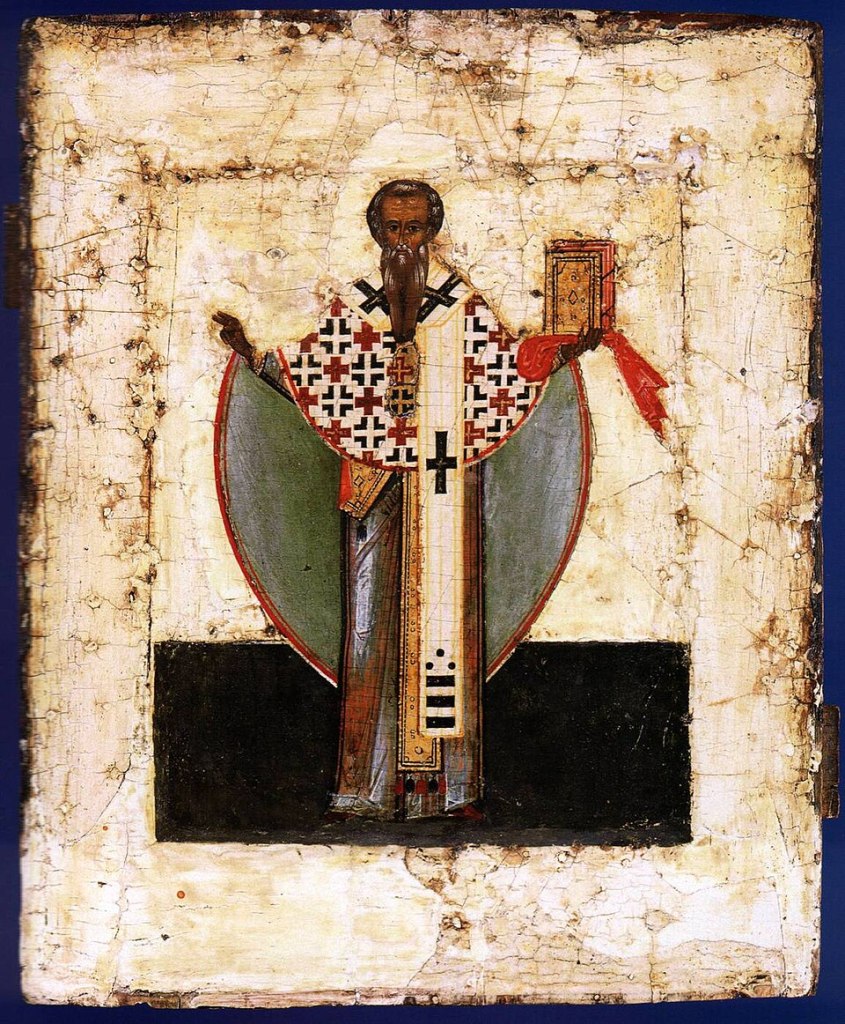
James the Just, 16th-century Russian icon

The Letter of James (or book of James) in the New Testament is either written by or attributed to James the brother of the Lord, one of the early leaders of the church in Jerusalem. If James the brother of Jesus, or James the Just as he is sometimes known, is the author of this letter then it is an early window into a Jerusalem based Christianity since James the Just was killed in 62 CE. Martha L. Moore-Kiesh expands on how early Christian writers elaborated on James’s martyrdom:

Eusebius, for instance, cites Clement of Alexandria, who say that James was “thrown down from the pinnacle of the temple and beaten to death with a fuller’s club.” Because of this legend, later iconography of James often portrays him with a club, recalling this alleged mode of his death. (Moore-Keish, 2019, p. 6)

Scholars for generations have debated whether the Letter of James is an early Christian document from a leader of the young church or a latter document attributed to James for authority. Ultimately it is impossible to know which is true but many of the arguments for a later date are not viewed as being as conclusive as they once were. For the purposes of these reflections, I am going to assume an early date and that the letter does originate with James the brother of our Lord, although I don’t believe that assumption will drastically alter the interpretation of this letter.

Some may be surprised to see a Lutheran pastor doing a detailed reflection on James since, especially in the Lutheran but also broader Protestant tradition James has often been neglected. Much of this goes back to Luther’s famous “Preface to the New Testament” (1522) where Luther compares James unfavorably with several other New Testament books:

In a word St. John’s Gospel and his first epistle, St. Paul’s epistles, especially Romans, Galatians, and Ephesians, and St. Peter’s first epistle are books that show you Christ and teach you all that is necessary and salvatory for you to know, even if you were never to see or hear any other book or doctrine. Therefore St. James’ epistle is really an epistle of straw, compared to these others, for it has nothing of the nature of the gospel about it. (Luther, 1989, p. 117)

Luther’s distaste for James emerges from his conflicts with the Catholic Church over ‘faith alone’ verse ‘works righteousness.’ James’s strong words about faith without works being dead (James 1:17) provided ammunition for Luther’s opponents to attack his theological perspective. These reflections will not remain bound to the binary way of thinking that characterized the debate over Reformation/counter-Reformation theology.

 A large part of my reflection with scripture is dealing with texts which I am less familiar with to attempt to engage with the breadth of the wisdom of scripture. I’ve been excited to dig deeper into James because it seems to resonate with a lot of my work on Matthew and Revelation. It is coming from early Jewish Christianity (or Judaic messianism since some hypothesize that there has not been a split from Judaism at the time the book has been written) in contrast to the Hellenistic mission of Paul and some of the other disciples. Like Matthew it quotes, alludes to, and echoes the law, the prophets, and the wisdom traditions that make up the Hebrew Scriptures. As Scot McKnight states:

Few dispute the Jewishness of this letter…It appeals to the Tanakh often (1:11; 2:8-10, 23; 4:6; 5: 4, 5), alludes to it constantly (e.g. 1: 13-15, 27; 2: 20-26; 3:9; 4: 7-10, 11-12; 5: 10-11, 17), and breathes throughout the spirit of biblical Judaism as it came to expression in diverse ways in the first century AD. The author chooses to call his audience something thoroughly biblical—“the twelve tribes in the Dispersion” (1:1) (McKnight, 2011, p. 25)

It also is deeply connected to several of the teachings of Jesus, particularly the sermon on the mount.

The letter of James is a book that seeks a practice of faith that is authentic and single-minded. It stands in the prophetic and wisdom tradition which privileges a faith that is practices mercy and impartiality, particularly to the vulnerable, over worship or theology. As Luke Timothy Johnson states, “James’s concern is with moral rather than manners.” (NIB XII:179) It can be subversive text to societies and congregations that have organized themselves around a moral order where those with wealth and power have been encouraged to maintain their privileged position. It can be an uncomfortable book. I enjoyed Scot McKnight’s playful adaptation of a famous Mark Twain proverb, “To ape the famous words of Mark Twain, it is not the lack of clarity of context of James that bothers me; it is the words in the text that bother me.” (McKnight, 2011, p. 4) The letter of James is not hard to understand but that does not make it easy to embody.

I have been random in the order I have engaged scripture and although the Old Testament/Hebrew Scriptures are significantly larger than the New Testament I did not anticipate or realize until recently how much more time I had spent in these fourteen years of reflections in the Old Testament. I realized recently that I had completed thirteen Old Testament books along with most of Psalms and only two New Testament books and that I had fewer books in the Old Testament that I had not written on. My plan going forward is to alternate between the New Testament and Old Testament. The New Testament books tend to go slower for me since I fully translate the Greek Text (with Hebrew I look at critical words and study multiple translations) and I have greater familiarity with the texts. The letter of James is only five chapters, but I am looking forward in learning from my engagement with this letter I have probably underutilized.  

Resources for this reflection

With each of these reflections I have taken multiple dialogue partners to learn from. For this journey I have selected:

Green, Joel B. (2025). James A Commentary. Louisville, KY: Westminster John Knox Press.

Johnson, Luke T. (1998) “Letter of James” in The New Interpreter’s Bible: A Commentary in Twelve Volumes. Nashville: Abingdon Press. (Referred to as NIB XII throughout the reflections)

McKnight, Scott. (2011). The Letter of James: the New International Commentary on the New Testament. Grand Rapids, MI: William B. Eerdman’s Publishing Company.

Moore-Keish, M. L. (2019). James: Belief A Theological Commentary on the Bible. Louisville, KY: Westminster John Knox Press.

Joel Green, Luke T. Johnson, and Scott McKnight were all New Testament scholars I was familiar with. Joel Green’s commentary just came out and I was excited to have him as one of my dialogue partners. Luke T. Johnson also wrote the much longer Anchor Bible commentary on James, but since he wrote the commentary in the New Interpreter’s Bible, I decided to capture his voice through a series I already owned. The New International Commentary (NICNT) by Scot McKnight is by far the longest commentary, and I’ve used the NICNT and NICOT commentaries in several of these reflections as a good, detailed commentary to assist with translation and other issues. The Belief series is a theological commentary, written by theologians instead of biblical scholars and I like it as a different voice coming with different questions.

2 Kings 23 The Reforms and Death of Josiah

2 Kings 23: 1-3 Attempting to Recreate the Covenant

1Then the king directed that all the elders of Judah and Jerusalem should be gathered to him. 2The king went up to the house of the LORD, and with him went all the people of Judah, all the inhabitants of Jerusalem, the priests, the prophets, and all the people, both small and great; he read in their hearing all the words of the book of the covenant that had been found in the house of the LORD. 3The king stood by the pillar and made a covenant before the LORD, to follow the LORD, keeping his commandments, his decrees, and his statutes, with all his heart and all his soul, to perform the words of this covenant that were written in this book. All the people joined in the covenant.

King Josiah responded to the rediscovered book of the law of Moses with repentance and seeking God’s will through the prophet Hulda. After learning that his understanding of the judgment that hangs over the people is confirmed by God and learning that God has seen and responded to the king’s action of mourning and repentance Josiah initiates his reforms by gathering the leaders and the people of Judah in an action to recommit the people to the covenant. The action echoes the creation of the covenant between God and the people by Moses (Exodus 24: 4-8), the recommittal to the covenant preceding Moses’ death (Deuteronomy 29:2-29)[1] and finally when Joshua renews the covenant in the promised land (Joshua 8:30-35). Throughout the narratives of the book of Judges, 1&2 Samuel, and 1&2 Kings this is the only instance of covenant renewal of this type. Other kings have attempted to renew the worship in the temple or the building of the temple, but only here in the time of kings are the people reconnected to the law in this manner.[2] This will also happen when the temple is rebuilt and the people are regathered in Jerusalem under the governor Nehemiah and the priest Ezra (Nehemiah 8). King Josiah seems to understand that his personal repentance may be enough for his own reign, but the only chance for the people lies in reestablishing the practices that were designed to make the people of Judah into the people of the LORD the God of Israel.

2 Kings 23: 4-14 Reforming the Practices in Judah

  4The king commanded the high priest Hilkiah, the priests of the second order, and the guardians of the threshold to bring out of the temple of the LORD all the vessels made for Baal, for Asherah, and for all the host of heaven; he burned them outside Jerusalem in the fields of the Kidron and carried their ashes to Bethel. 5He deposed the idolatrous priests whom the kings of Judah had ordained to make offerings in the high places at the cities of Judah and around Jerusalem, those also who made offerings to Baal, to the sun, the moon, the constellations, and all the host of the heavens. 6He brought out the image of Asherah from the house of the LORD, outside Jerusalem, to the Wadi Kidron, burned it at the Wadi Kidron, beat it to dust, and threw the dust of it upon the graves of the common people. 7He broke down the houses of the illicit priests who were in the house of the LORD, where the women did weaving for Asherah. 8He brought all the priests out of the towns of Judah and defiled the high places where the priests had made offerings, from Geba to Beer-sheba; he broke down the high places of the gates that were at the entrance of the gate of Joshua the governor of the city, which were on the left at the gate of the city. 9The priests of the high places, however, did not come up to the altar of the LORD in Jerusalem but ate unleavened bread among their kindred. 10He defiled Topheth, which is in the valley of Ben-hinnom, so that no one would make a son or a daughter pass through fire as an offering to Molech. 11He removed the horses that the kings of Judah had dedicated to the sun at the entrance to the house of the LORD, by the chamber of the eunuch Nathan-melech, which was in the precincts; then he burned the chariots of the sun with fire. 12The altars on the roof of the upper chamber of Ahaz that the kings of Judah had made and the altars that Manasseh had made in the two courts of the house of the Lord he pulled down from there and broke in pieces and threw the rubble into the Wadi Kidron. 13The king defiled the high places that were east of Jerusalem, to the south of the Mount of Destruction, which King Solomon of Israel had built for Astarte the abomination of the Sidonians, for Chemosh the abomination of Moab, and for Milcom the abomination of the Ammonites. 14He broke the pillars in pieces, cut down the sacred poles, and covered the sites with human bones.

The list of idolatrous images and practices that Josiah attempts to eradicate is encyclopedic in nature and paints the picture of the pervasive perversity of the people. Baal, Asherah, and the host of heaven have all been attractive alternatives for the leaders and people of Israel throughout their history as well as the worship at the high places by local priests and leaders who may not have been committed exclusively to the LORD. The ‘illicit priests’ (NRSVue) of verse seven is rendered ‘male prostitutes’ in many translations[3] and may indicate a linkage between some of these idolatrous religious practices and sexual practices. The list is similar to the list of abominable practices in the temple in Ezekiel 8 and it is likely that even during Josiah’s life many of these practices endured even if they were done in secret. Some of these idolatrous practices go back to the time of King Solomon (1 Kings 11: 1-13) and King Josiah forms a faithful contrast to Solomon. The actions of removing and destroying these idolatrous imagery and practices in a public and cultic manner is intended to purge these images from the practices of Judah. Josiah attempts to eradicate these practices, both long standing and recent, and attempt to recenter worship in a purged temple with administered by the priests who are faithful to the LORD in Jerusalem.

The reading of the covenant is not enough. Josiah seems to understand that only a complete abandonment of the idolatrous practices of his ancestors and the people may turn away the anger of the LORD. His work of purging the temple, the countryside, and the people is a model of what is expected in the law (Deuteronomy 12: 1-12), but despite the extreme actions to purge these images and practices from Judah the renewal will not survive his death. There is an optimism in the time of Josiah that is reflected in the prophet Jeremiah, but Jeremiah will also see that the reforms do not run deep enough and the people quickly return to the practices that Josiah attempted to eradicate.

2 Kings 23: 15-20 Reforming the Practices in Israel

  15Moreover, the altar at Bethel, the high place erected by Jeroboam son of Nebat, who caused Israel to sin—he pulled down that altar along with the high place. He burned the high place, crushing it to dust; he also burned the sacred pole. 16As Josiah turned, he saw the tombs there on the mount, and he sent and took the bones out of the tombs and burned them on the altar and defiled it, according to the word of the LORD that the man of God proclaimed when Jeroboam stood by the altar at the festival; he turned and looked up at the tomb of the man of God who had proclaimed these things. 17Then he said, “What is that monument that I see?” The people of the city told him, “It is the tomb of the man of God who came from Judah and proclaimed these things that you have done against the altar at Bethel.” 18He said, “Let him rest; let no one move his bones.” So they let his bones alone, with the bones of the prophet who came out of Samaria. 19Moreover, Josiah removed all the shrines of the high places that were in the towns of Samaria that kings of Israel had made, provoking the LORD to anger; he did to them just as he had done at Bethel. 20He slaughtered on the altars all the priests of the high places who were there and burned human bones on them. Then he returned to Jerusalem.

I intentionally separated this section from the previous section because the actions here are occurring in Northern Israel/Samaria. Jeremiah also indicates that during the time of Josiah there was a hope for a reunification of the two halves of Israel that had broken apart after Solomon (1 Kings 12). It is difficult to peer this far back into history since we have few historical witnesses from this point but it is plausible with Assyrian power in decline that Josiah may have had a window where he could assume control over portions of Northern Israel/Samaria and attempt to bring the people who now live there into the worship of the LORD. Bethel is mentioned, but the altar in Dan is not. However, the story takes us back to the strange story of the unnamed prophet who testifies against the altar at Bethel and foretells its destruction under Josiah and then is later buried in the city. (1 Kings 13) The method of defiling the altars that Josiah practices to bring about ritual uncleanness is not specifically outlined in the law, although contact with a dead body did bring about ritual uncleanness. The killing of the idolatrous priests, however, is consistent with the expectations of Deuteronomy 13: 13-19 for a man who has led people to follow other gods.

2 Kings 23: 21-23 Reestablishing the Passover

  21The king commanded all the people, “Keep the Passover to the LORD your God as prescribed in this book of the covenant.” 22No such Passover had been kept since the days of the judges who judged Israel, even during all the days of the kings of Israel and of the kings of Judah, 23but in the eighteenth year of King Josiah this Passover was kept to the Lord in Jerusalem.

Passover is the ritual that reminds the people of Israel of their identity, an identity that goes to the heart of the law. They are descendants of a people enslaved and liberated by the LORD’s powerful actions to deliver them from Egypt. This central festival in the life of the people of God is mentioned here for the first time in the books of 1 & 2 Kings and is not mentioned in Judges or 1 & 2 Samuel either. The last time the scriptures note the people celebrating the Passover prior to Josiah was in Joshua when the people celebrated at Gilgal.[4] There is an attempt to reconnect the people to their story through the renewal of the covenant, the removal of idolatrous alternatives, and the reinstatement of the rituals which help provide meaning. It is possible that Passover celebrations have continued through the story of Israel with or without royal institution, but I do believe that 2 Kings is attempting to show a drastic contrast between the loss of communal identity in the practices that surround the practice of the commandments, statutes, and ordinances of the law. Something central to the life of the people, in the view of 2 Kings, has been lost for many generations and for a brief window under Josiah there is the potential to rediscover the life the people were intended to live in the promised land.

2 Kings 23: 24-30 The Death of Josiah, a Final Word on both Josiah and Judah

  24Moreover, Josiah put away the mediums, wizards, teraphim, idols, and all the abominations that were seen in the land of Judah and in Jerusalem, so that he established the words of the law that were written in the book that the priest Hilkiah had found in the house of the LORD. 25Before him there was no king like him who turned to the LORD with all his heart, with all his soul, and with all his might, according to all the law of Moses, nor did any like him arise after him.
  26
Still the LORD did not turn from the fierceness of his great wrath by which his anger was kindled against Judah because of all the provocations with which Manasseh had provoked him. 27The LORD said, “I will remove Judah also out of my sight, as I have removed Israel, and I will reject this city that I have chosen, Jerusalem, and the house of which I said, ‘My name shall be there.’ ”

  28
Now the rest of the acts of Josiah and all that he did, are they not written in the Book of the Annals of the Kings of Judah? 29In his days Pharaoh Neco king of Egypt went up to the king of Assyria to the River Euphrates. King Josiah went to meet him, but when Pharaoh Neco met him at Megiddo, he killed him. 30His servants carried him dead in a chariot from Megiddo, brought him to Jerusalem, and buried him in his own tomb. The people of the land took Jehoahaz son of Josiah, anointed him, and made him king in place of his father.

Josiah’s actions to restore the nation of Judah to the expectations of the words of the law are shown in the book as an example of what a good king was expected to be. Yet all the works of Josiah are not enough to turn aside the anger of the LORD. They delay the anger and provide a window of perceived prosperity during the lifetime of this king but ultimately it seems that the wickedness of Manasseh have a greater impact on the future of the people than the reforms of Josiah. Josiah may be portrayed alongside Moses, Joshua, David, and Hezekiah as shining examples of leaders seeking God’s ways but ultimately these leaders were unable to undo the corruption among the people.

The prophet Jeremiah, when writing about the time of Josiah, shares the early optimism of what could be with this reformer king but quickly realizes that the reforms did not change the practices of the people. Josiah may be able to capture a hope of a reunification of Israel and a return to their previous relationship with their God but the rituals, the readings of the law, and the removal of the idols do not ultimately change the hearts of the people and the leaders who will follow him. Just as Hezekiah was followed by Manasseh, so Josiah will be followed by leaders who are unable or unwilling to continue his actions.

The Deuteronomic history and 2 Kings is written from the perspective of the exile of Judah and wants to understand how the people of Israel could fall from their pinnacle under David and Solomon to the moment where they are exiles in a foreign land. 2 Kings like the prophets Jeremiah and Ezekiel points to the wickedness of Manasseh but also a wickedness that goes back to Solomon’s betrayal under the influence of his wives. On the one hand, from the perspective of the narrator, the LORD has been incredibly patient with both Israel and Judah waiting for generations for them to live into their identity and willing to postpone God’s wrath for the sake of these moments of repentance. On the other hand, the narration of the unfaithful history of Judah and Israel in the words of 1 & 2 Kings helps to provide meaning and context for a people who have lost their land, their king, and their temple.

Josiah’s death occurs abruptly in the text and brings an end to this time of possibility. We can only hypothesize why Josiah would go out to meet Pharoah Neco at Megiddo. Assyria is in decline and by 610 BCE is beginning to lose ground to the Babylonians. Pharoah Neco at this time is a relatively new king and leads a force northward to help the Assyrians when Josiah meets him at Megiddo. Could Josiah be forming an alliance with Babylon against Assyria? It is possible. It is also possible that this king who has experienced success in regaining territory in Northern Israel to bring about the possibility of a reunited kingdom may view himself as divinely authorized to protect the land from any invasion even if Pharoah’s armies were only intending to pass through Judah on their way to the conflict in the north. Ultimately the critical reality is that Josiah dies at the hands of Pharoah Neco and this brings about the end of this final promising moment in the history of Davidic kings. Josiah is buried but ultimately does not die in peace as the prophet Huldah had stated and his death brings about the rapid descent of Judah towards its exile under Babylon.

2 Kings 23: 31-37 The Brief Reign of Jehoahaz and the Transition to Jehoiakim

  31Jehoahaz was twenty-three years old when he began to reign; he reigned three months in Jerusalem. His mother’s name was Hamutal daughter of Jeremiah of Libnah. 32He did what was evil in the sight of the LORD, just as his ancestors had done. 33Pharaoh Neco confined him at Riblah in the land of Hamath, so that he might not reign in Jerusalem, and imposed tribute on the land of one hundred talents of silver and a talent of gold. 34Pharaoh Neco made Eliakim son of Josiah king in place of his father Josiah and changed his name to Jehoiakim. But he took Jehoahaz away; he came to Egypt and died there. 35Jehoiakim gave the silver and the gold to Pharaoh, but he taxed the land in order to meet Pharaoh’s demand for money. He exacted the silver and the gold from the people of the land, from all according to their assessment, to give it to Pharaoh Neco.

  36
Jehoiakim was twenty-five years old when he began to reign; he reigned eleven years in Jerusalem. His mother’s name was Zebidah daughter of Pedaiah of Rumah. 37He did what was evil in the sight of the LORD, just as all his ancestors had done.

Jehoahaz, whose birth name seems to be Shallum[5] reigned for only three months before he was removed by Pharoah Neco and replaced by Jehoiakim as a more palatable leader to Egypt who now extends control over Judah and requires a heavy tribute[6] on the people. The death of Josiah has not only brought about an end to the reforms of his reign but has also changed the political situation of the people. We don’t know what Jehoahaz did in his three-month reign, which was evil in the sight of the narrator of 2 Kings, but his unfaithfulness is implied to be linked to the decline of the people as we move into the final two chapters of the narrative.

Jehoiakim, Josiah’s second born son, is chosen to succeed Jehoahaz by Pharoah Neco. This is an area where the chapter break would make sense to come two verses earlier since Jehoiakim’s story follows in the coming chapter. At this point it is worth noting the narrator’s judgment of Jehoiakim as one who did evil in the sight of the LORD and then end this discussion to resume his story in the following chapter.  


[1] The narrative setting of the book of Deuteronomy paints the book as a witness of Moses’ public restatement of the law before the people which the people assent to at the end of the book.

[2] Many biblical scholars from the historical critical and source critical schools would argue that the law as we have it in Genesis-Deuteronomy is a later document. Their arguments are cogent, but ultimately, I do think it is likely that even if Genesis-Deuteronomy will reach their final form in the time of exile there is some pre-existing collection of the commandments which is active here and earlier through the story of Israel and Judah.

[3] The Hebrew qesesim refers to ‘sacred males.’ “It is an open question whether these persons were or were not male “cult prostitutes.” (Cogan, 1988, p. 286)

[4] Joshua 5: 10-12. 2 Chronicles 30 mentions a celebration of Passover under King Hezekiah, but in the Deuteronomic History (Joshua-2 Kings) this is the first mention since the time of Joshua

[5] Jeremiah 22: 11-12. 1 Chronicles 3:15 indicates that he was Josiah’s fourth son.

[6] A talent is around 70 pounds, so a tribute of roughly 7,000 pounds of silver and 70 pounds of gold in the text.

2 Kings 22 King Josiah and the Rediscovery of the Law

Josiah Hearing the Book of the Law (1873) Unknown author – The story of the Bible from Genesis to Revelation

2 Kings 22

 1Josiah was eight years old when he began to reign; he reigned thirty-one years in Jerusalem. His mother’s name was Jedidah daughter of Adaiah of Bozkath. 2He did what was right in the sight of the LORD and walked in all the way of his father David; he did not turn aside to the right or to the left.

  3
In the eighteenth year of King Josiah, the king sent Shaphan son of Azaliah son of Meshullam, the secretary, to the house of the LORD, saying, 4Go up to the high priest Hilkiah and have him add up the entire sum of the silver that has been brought into the house of the LORD that the keepers of the threshold have collected from the people; 5let it be given into the hand of the workers who have the oversight of the house of the LORD; let them give it to the workers who are at the house of the LORD repairing the house, 6that is, to the carpenters, to the builders, to the masons; and let them use it to buy timber and quarried stone to repair the house. 7But no accounting shall be asked from them for the silver that is delivered into their hand, for they deal honestly.”
  8
The high priest Hilkiah said to Shaphan the secretary, “I have found the book of the law in the house of the LORD.” When Hilkiah gave the book to Shaphan, he read it. 9Then Shaphan the secretary came to the king and reported to the king, “Your servants have melted down the silver that was found in the house and have delivered it into the hand of the workers who have oversight of the house of the LORD.” 10Shaphan the secretary informed the king, “The priest Hilkiah has given me a book.” Shaphan then read it aloud to the king.
  11
When the king heard the words of the book of the law, he tore his clothes. 12Then the king commanded the priest Hilkiah, Ahikam son of Shaphan, Achbor son of Micaiah, Shaphan the secretary, and the king’s servant Asaiah, saying, 13Go, inquire of the LORD for me, for the people, and for all Judah, concerning the words of this book that has been found, for great is the wrath of the LORD that is kindled against us, because our ancestors did not obey the words of this book to do according to all that is written concerning us.”
  14
So the priest Hilkiah, Ahikam, Achbor, Shaphan, and Asaiah went to the prophet Huldah the wife of Shallum son of Tikvah son of Harhas, keeper of the wardrobe; she resided in Jerusalem in the Second Quarter, where they consulted her. 15She declared to them, “Thus says the LORD, the God of Israel: Tell the man who sent you to me: 16Thus says the LORD: I will indeed bring disaster on this place and on its inhabitants—all the words of the book that the king of Judah has read. 17Because they have abandoned me and have made offerings to other gods, so that they have provoked me to anger with all the work of their hands, therefore my wrath will be kindled against this place, and it will not be quenched.’ 18But as to the king of Judah who sent you to inquire of the LORD, thus shall you say to him: ‘Thus says the LORD, the God of Israel: Regarding the words that you have heard, 19because your heart was penitent and you humbled yourself before the LORD, when you heard how I spoke against this place and against its inhabitants, that they should become a desolation and a curse, and because you have torn your clothes and wept before me, I also have heard you, says the LORD. 20Therefore, I will gather you to your ancestors, and you shall be gathered to your grave in peace; your eyes shall not see all the disaster that I will bring on this place.’ ” They took the message back to the king.

The thirty-one years of King Josiah’s reign in Jerusalem are a final window of hope for Judah. Even though as readers of 2 Kings we know that shortly after Josiah’s death we will reach the end of the story of the kings of the line of David and enter into the time of exile in Babylon, for the author of 2 Kings this is a moment of hope for a rediscovery of faithfulness, restoration of the temple, recommittal to the covenant, and even a hope for the reunification of Israel and Judah. The parallel telling of the story of the reign of King Josiah in 2 Chronicles 34-35 has the reformation of Josiah beginning in his twelfth year, but for 2 Kings the critical event is the discovery of the law in the eighteenth year[1] which initiates a period of repentance for the king and a recommittal to the covenant.

The characterization of King Josiah as one who ‘did not turn aside to the right or the left’ echoes the language of Deuteronomy calling for covenant obedience.[2] His obedience to the covenant links him to Moses, and then the text continues to link him to his ancestor David. Then the text takes us to the repair of the temple in language which parallels the actions of King Jehoash in 2 Kings 12: 1-16. In inquiring of the LORD through the prophet he, like his great-grandfather Hezekiah who sought God’s word through the prophet Isaiah. By his actions Josiah is shown embodying the actions of the good kings and leaders that have come before him. Although the prophet Jeremiah is not mentioned in this narrative, we also know that Jeremiah’s ministry begins in the thirteenth year of Josiah’s reign.[3]

The king sends Shaphan, the scribe or secretary, to the high priest Hilkiah[4] to instigate the utilization of the funds brought into the temple for the temple’s repair. As mentioned above, the narrative is similar to the rebuilding under Jehoash, but at this moment there is a critical discovery that is shared by Hilkiah with Shaphan and eventually with the king, the rediscovered book of the law. Shaphan reads this book to the king who responds by rending his garments in an act of mourning and repentance. Walter Brueggemann draws an insightful contrast between this action by Josiah and an opposite reaction by his son Jehoiakim:

Josiah, the good king, hears the scroll and tears his garment in a dramatic act of repentance (22:11). In Jeremiah 36:23, Jehoiakim, Josiah’s son who is a bad king, hears the scroll of Jeremiah and “cuts” the scroll and not his garments; that is, he does not repent but seeks to dispose of the troublesome scroll. (Brueggemann, 2000, p. 545)

Yet Josiah as a king who upon hearing the words of the law humbles himself and seeks God’s guidance is the model of what a good king is supposed to be.

The book of the law mentioned in this portion of 2 Kings has traditionally been thought of as Deuteronomy in some form. Deuteronomy is the only book among the torah[5] that specifically expects worship being concentrated in the city that God places God’s name upon. Deuteronomy also has lengthy sections of ‘curses’ that result from covenant disobedience. (Cogan, 1988, p. 294) We will never know whether the ‘law’ is Deuteronomy, the torah as a whole, or some proto-Deuteronomic document[6] but what 2 Kings wants us to understand is that Josiah received these words as the covenantal expectations of God and responded to them with the appropriate repentance and rigor.

The high priest Hilkiah, the scribe Shaphan, as well as Ahikam and Achbor are sent to the prophetess Hulda to seek God’s will. Ahikam, the son of Shaphan may be the son of the secretary and another advisor to the king, although some scholars are confused by Ahikam’s position in the list ahead of his father if they are related.[7] Ahikam son of Shaphan will be instrumental in preserving the prophet Jeremiah’s life during the reign of Jehoiakim.[8] In contrast Achbor’s son Elnathan will be charged with capturing the prophet Uriah and returning him to King Josiah for execution.[9] Like Josiah and Jehoiakim fathers and sons can take very different paths.

Hulda is the only woman prophet mentioned in either Israel or Judah, and yet she is trusted by the king and his men to speak the words of the LORD. Her message is ominous and hopeful. It is ominous because the king has heard the threats for covenant disobedience in the law correctly and the actions, particularly of Manasseh, have kindled an unquenchable wrath in God against the people. It is also hopeful because the actions of the king have been seen and appreciated by God. The king’s heart was penitent (literally soft in Hebrew) and tore his clothes and wept. God has postponed the disaster and held back the wrath during the reign of Josiah.

The humility and repentance of the king open the possibility for the repentance of the people. God’s judgment has been postponed, and there remains a hope that continued obedience can avert the disaster on the horizon. Jeremiah will continue to testify to the people after Josiah’s death to try to prevent the destruction that comes with this judgment enacted through the Babylonians. Yet Jeremiah will also see that the reforms enacted by Josiah will not change the heart of the people. Just as the people, in the narrative of 2 Kings, were quick to embrace the corruption of Manasseh the reforms of Josiah will unfortunately not survive his death. Yet 2 Kings wants to continue to celebrate this final good king who like Moses, David, Jehoash, and Hezekiah attempted to follow God’s will and to turn neither to the left or right.  


[1] King Josiah would be roughly twenty-six at the time of the discovery of the law in the text.

[2] Deuteronomy 5:32; 17:20; 28:14.

[3] Josiah would have been 21-22 at the call of Jeremiah, five years before the rediscovery of the book of the law. Jeremiah is portrayed as a young, ‘only a boy’ in the narrative of his call. Jeremiah 1:6.

[4] Hilkiah is also the name of the prophet Jeremiah, but Jeremiah’s father is a priest at Anathoth, and it is likely that he is the son of a different Hilkiah than the high priest in this story.

[5] Genesis, Exodus, Leviticus, Numbers, and Deuteronomy.

[6] Scholars of the source critical school popular in the middle 20th century were focused on trying to find the source material behind the text. They had some good insights but ultimately, they tended to divide up the text into sections rather than engage the text as it has been received.

[7] Age does normally grant a person higher respect and status in ancient cultures, but Ahikam may also be a contemporary and valued advisor to this king who began his reign as a young boy.

[8] Jeremiah 26: 24.

[9] Jeremiah 26:22.