Psalm 131
A Psalm of Ascents. Of David.
1 O LORD, my heart is not lifted up;
my eyes are not raised too high;
I do not occupy myself with things
too great and too marvelous for me.
2 But I have calmed and quieted my soul,
like a weaned child with its mother;
my soul is like the weaned child that is with me.
3 O Israel, hope in the LORD
from this time on and forevermore.
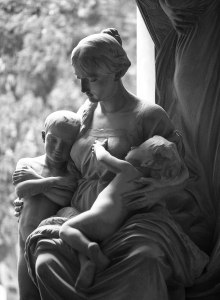
This short psalm is striking for its central metaphor where the faithful one is a dependent child and LORD is the mother who is the safe and comforting place the child goes to. Jesus will later tell his disciples
Truly I tell you, unless you change and become like children, you will never enter the kingdom of heaven. Whoever becomes humble like this child is the greatest in the kingdom of heaven. Whoever welcomes one such child in my name welcomes me. Matthew 18: 3-5
Humility plays a central role in both the posture of the psalmist and the posture that Jesus is encouraging in his disciples. The hearers are encouraged to have, “Utter trust in and childlike dependence on God for life and the future.” (NIB IV: 1209) The first verse points to the humble and childlike stance of the psalmist, while the second verse introduces the central metaphor of the childlike speaker and the mothering God who comforts and quiets the speaker’s being, and the third verse expands this posture to Israel whose hope is in the nurturing presence of God.
The heart in Hebrew thought is not the seat of emotion but the seat of will and direction, so the heart not being lifted up is not about being in an exalted emotional state but instead the inner intention of the psalmist is to remain in one’s proper state. The eyes are the outward facing representation of this stance, and they are also not raised too high. The psalmist focuses on the simple things and rather than concentrate their will and striving on great and marvelous things, they rest in their dependence on God. The triple negative of the first verse demonstrates verbally the stance of humility the psalmist has towards God and the world. If this psalm comes from David, as its attribution indicates, it paints the picture of a king who understands their limits and who places honor where it belongs. The king becomes the child needing to be quieted by the nurturing mother God.
The use of feminine imagery for God is relatively rare in the bible, but it does occur. Isaiah uses a similar image of a mother and a nursing child:
Can a woman forget her nursing child, or show no compassion for the child of her womb? Even these may forget, yet I will never forget you. Isaiah 49: 15
The psalmist has been calmed and quieted in their innermost being. The Hebrew nephesh, rendered soul by the NRSVue, is the most essential part of life and the self but it does not have the sense of soul that is separate from the body and continues beyond life.[1] The Hebrew gamal translated by the NRSVue as weaned can mean either ‘sated’ or ‘weaned.’ If the word is translated ‘sated’, the image of the child is that of an infant who is relaxing after feeding where the hands and legs relax and the child may fall asleep on the mother’s breast or look up at their mother with a satisfied look. If the word is translated ‘weaned,’ as most translations do, the child is coming to the mother for comfort, nurturing, and a loving embrace instead of food. Normally in the bible the context indicates that gamal be translated as a weaned child but here the context allows for either interpretation. With the theme of humility, I like the translation of ‘sated’ with a completely dependent infant on the mother for nutrition, care, and love but ultimately either translation serves the metaphor.
The psalm concludes with the expansion to the people of Israel. The declaration for Israel to hope in the LORD echoes the identical declaration in Psalm 130:5 linking the two psalms together in their conclusions. The God who provides rescue from the desperate situation is the same God who quiets the inner being of humble on like a mother comforts her child. In de Profundis (Psalm 130) the petitioner waits on the LORD more than one who waits for morning, but in Psalm 131 the comforted child can be at peace in the present moment and know that their hope for the future is in the steady, comforting mother-like love of God which calms and quiets them both in the present and forevermore.
[1] The Greek philosophical idea of soul, which many Christians assume is the biblical idea, where the soul is imprisoned in the body and is liberated at death is not the perspective of the Old or New Testament. This enters Christian thought through theologians in the church influenced by Neo-Platonic philosophy (like Augustine).

