Tag Archives: wonder

Psalm 139 Asking the God who Knows and Sees Me to Respond to the Injustice on Earth

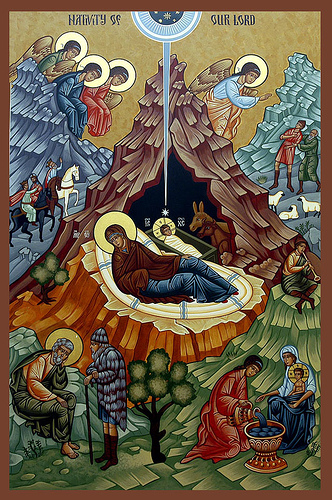
The Nativity of Christ, Icon by Ranosonar

Psalm 139

To the leader. Of David. A Psalm

1O Lord, you have searched me and known me.
2
You know when I sit down and when I rise up;
 you discern my thoughts from far away.
3
You search out my path and my lying down
 and are acquainted with all my ways.
4
Even before a word is on my tongue,
 O Lord, you know it completely.
5
You hem me in, behind and before,
 and lay your hand upon me.
6
Such knowledge is too wonderful for me;
 it is so high that I cannot attain it.

7
Where can I go from your spirit?
 Or where can I flee from your presence?
8
If I ascend to heaven, you are there;
 if I make my bed in Sheol, you are there.
9
If I take the wings of the morning
 and settle at the farthest limits of the sea,
10
even there your hand shall lead me,
 and your right hand shall hold me fast.
11
If I say, “Surely the darkness shall cover me,
 and night wraps itself around me,”
12
even the darkness is not dark to you;
 the night is as bright as the day,
 for darkness is as light to you.

13
For it was you who formed my inward parts;
 you knit me together in my mother’s womb.
14
I praise you, for I am fearfully and wonderfully made.
 Wonderful are your works;
 that I know very well.
15
My frame was not hidden from you,
 when I was being made in secret,
 intricately woven in the depths of the earth.
16
Your eyes beheld my unformed substance.
 In your book were written
 all the days that were formed for me,
 when none of them as yet existed.
17
How weighty to me are your thoughts, O God!
 How vast is the sum of them!
18
I try to count them—they are more than the sand;
 I come to the end—I am still with you.

19
O that you would kill the wicked, O God,
 and that the bloodthirsty would depart from me—
20
those who speak of you maliciously
 and lift themselves up against you for evil!
21
Do I not hate those who hate you, O Lord?
 And do I not loathe those who rise up against you?
22
I hate them with perfect hatred;
 I count them my enemies.
23
Search me, O God, and know my heart;
 test me and know my thoughts.
24
See if there is any wicked way in me,
 and lead me in the way everlasting.

Psalm 139 is a paradox. The first eighteen verses in poetic and beautiful imagery describe the psalmists experience of being fully known by God. The language of the final six verses describes the psalmist’s reaction to the jarring reality that there are many who oppose the ways of God. Many readers of this psalm are surprised at the sudden change from the sense of wonder and awe in the first three stanzas of the psalm to the imprecatory voice of the final stanza. Most readers may be familiar with the first eighteen verses while the final six will rarely appear in the worship of most churches. Some scholars feel that these verses were later added into the beautiful and comforting message of God’s full knowledge and encompassing of the speaker, but I feel the psalm makes sense as we have received it as I will share below.

A key word in this psalm is “known/knowledge” which occurs seven times (vv. 1-2, 4, 6, 14, 23 twice) and while the seven occurrences may be random, Hebrew poetry like to utilize numerical occurrence to make a point. Seven is traditionally a number of completeness. So, in addition to the thematic complete knowledge of God it may also be structurally reinforcing this message. (NIB IV: 1235) The verbs attributed to God including “know,” “search,” and “test” often appear in imagery when God is described as a judge, and this image of God is often used when one is calling on God for intervention or help. (Mays, 1994, pp. 426-427) Throughout the psalm the psalmist wrestles with the reality that they are known, searched, and tested completely by God and yet the wicked ones who resist God’s way still endure and God is called to judge these ones who the psalmist ‘hates’ (see below).

In the first stanza God knows the psalmist’s thoughts, words, and actions completely. Whether the psalmist is coming or going, waking or sleeping, standing or sitting, God knows their path, their thoughts, and even the words that have not left their mouth. They live their life surrounded by God’s presence and comforted by God’s touch. They respond in an appropriate sense of awe and wonder that the God who created the heavens and the earth can know them. The psalm is not interested in constructing a doctrine of omnipotence and omnipresence but instead deploys its language to try to express their wonder that God knows them, comforts them, is present with them and protects them.

The second stanza continues the wonder at God’s presence throughout the creation. The most surprising line of this stanza is that the psalmist includes God’s presence in Sheol, a place in other psalms where people are cut off from God’s hand (Psalm 88). Yet, for the psalmist even this place where God had been thought absent God is present. Heaven to Sheol, from the rising sun to the farthest edges of the sea, and even in the darkest night they are seen and known by God. There is nowhere in all creation, the heavens, the earth and under the earth, where they can escape God’s spirit or God’s sight. For the psalmist this is an awe-inspiring reality but primarily in a comforting rather than an ominous sense.

The third stanza turns the reflections to God’s deep involvement throughout the duration of their life. The beautiful language of God knitting the psalmist together in their mother’s womb, shaping and forming them for their life in God’s presence and protection. They wonder at their body and mind created by the hand of God and the days of their life are numbered according to God’s plan. The psalmist is less concerned with an idea or predestination than poetically describing the wonder at their life shaped by God’s hands and lived within God’s presence.

It may be a paradox, but for me the first three stanzas set up the final stanza. The psalmist looks upon God’s active presence in their own life and experience and then turns outward to the world where injustice and wickedness persist. The language does not seem to indicate that the psalmist is personally under threat or attack but instead seems to be broken-hearted by the ways in which others are treating God and God’s commandments. They are heartsick by the idolatry and injustice they see at work in the world and they call upon the God who is profoundly present throughout their life to extend that presence throughout the world and judge the wicked and those who oppose God’s ways. The language of ‘kill’ and ‘hate’ are jarring to our ears. The word translated ‘hate’ (Hebrew sane’) refers to an emotional aversion to something or someone. (Nancy deClaisse-Walford, 2014, p. 966) Throughout the psalms and wisdom literature in the bible the wicked pose a threat, leading astray others from following God’s way and threatening the peace of the society. The psalmist in their own way is calling on God for God’s will to be done on earth. The God who is present throughout the life of the psalmist and whose spirit is present throughout the world is asked to judge the earth and be as deeply involved throughout the creation as they perceive God being within their own life. Like the other psalms calling on God to judge an enemy, the enemy is committed into God’s hands. Yet the psalmist joins those throughout the generations calling upon God to establish God’s justice on earth and to heal the society from the damage done by the wicked, the bloodthirsty, those who speak maliciously, and who rise up against God.

Three Metaphors at a Closing of a Story: Part 1 Diverging Paths

The story ends, as all stories eventually do
A door closes, a world comes to its conclusion
And I stand watching as the words that conjured it
Sink slowly into the deep sea of memories.
Its characters who became my companions on the road.
I have known their names, I have shared their dreams
I supped at their table and walked their winding way
But they now recede with their world as my path diverges
Their story ends and mine continues forward
And I have been changed on this journey through their world
Rarely do I walk out of a story unaltered by its magic
I’ve seen another world and talked with its denizens
Yet, other worlds beckon from the shelves invitingly
There is a beautiful, tearful, strange magic in these words
Which invoke such vivid reactions in my mind
It’s time to close the book, maybe someday I’ll return
To share this journey once again, to rekindle friendships lost
And rediscover the people and place in these pages.

Song of Creation

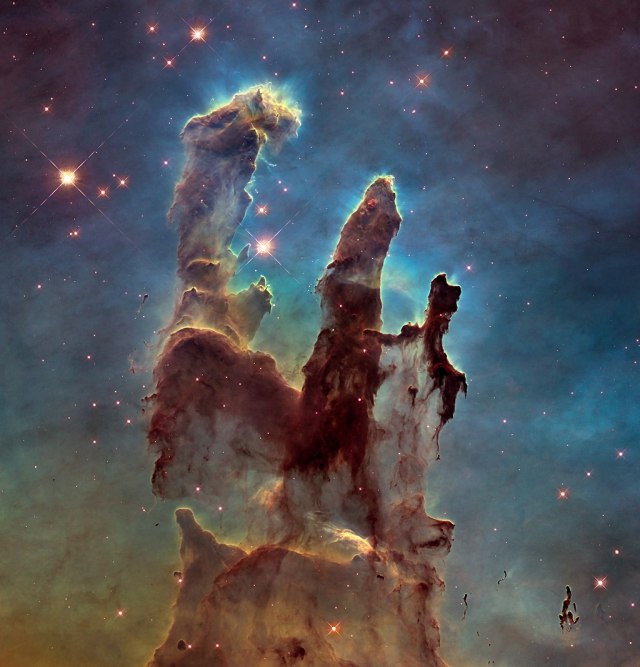
By NASA, ESA, and the Hubble Heritage Team (STScI/AURA) – http://hubblesite.org/image/3471/news_release/2015-01, Public Domain, https://commons.wikimedia.org/w/index.php?curid=38165284


What is the palette in which the master artist dipped the brush that painted in colors?
Or what thunderous notes did the creator sing to tune the sun and stars and quasars?
Which no eye would see, nor any ear hear, nor thought comprehend for millions of years
Where the colors spoken into being or where did they burst onto the scene with the elements
Did spirits or angels go to gather them together at their master’s directing like treasure hunters
Or was it the act of a solitary composer working in silence waiting to create an audience
Crafting the depths of the universe and sprinkling brilliant light into the blackness of the abyss
Singing into the silence of space a symphonic composition whose melodies gave form and shape
Whose beat marked the passage of days and millennia as the spheres turned and the cosmos shone.

What runes were hidden deep within the caverns of the earth which are the hidden signature
Of the master artist waiting to be discovered by those who peer deeply into the painting?
What fingerprints might remain from the act of raising the mountains and carving canyons?
Do the notes of the songbird echo some piece of the melody of the maker, a reflected praise?
Or the whale song of the deep form a baseline with the rumble of the continental drift?
Might the human drive of curiosity be the imprint of the master’s image on the creature?
The drive to delight in the possibilities of the palette of the painting they reside within
The desire to listen to the melody of the cosmos in all its wide range of sounds
To develop eyes to see and ears to hear and minds to comprehend their place in the picture
To join the song and dance in delight at the magic of the universe’s echo of the song it learned
At the knee of its creator and which it continues to sing as it wonders at its majesty

Watching the Skies

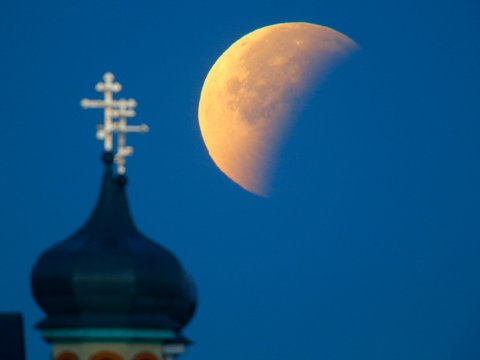
The moon was slowly consumed by the shadow of earth
But life continued its unending cycle of misery and mirth
For if math and science have stolen from us that which was magic
And the heavens movements we no longer look upon, it is tragic
If the stars and moon hold no stories and myths anymore
And we’ve lost the art of telling stories and have no lore
Yet, for a moment perhaps within the movement of the week
We stopped for a moment, looked into the early morning sky to peek
At this brief disturbance of the heavens above and understood
How this event might have been read in the past for evil or for good
Questioning how our ancestor’s fecund imaginations might
Explain the darkening of the moon in the waning hours of the night
And crafted tales from holy to the obscene
To pass on to their families and kin what they had seen
While they watched the heaven to try to learn
Some piece of guidance for their earth-bound sojourn
 
Or how when the sun’s rays began to paint the sky and the cloud
In a palette of reds and purples and blues so bright and so loud
A picture more vivid that any done with paint and canvas and brush
Were the work of their creator’s hand as the heavens commenced to blush
For the piece of beauty that unfolds before our sight as day ends the night
Is a work of no dyes or colors but a painting of pure unaltered light
Celebrating the death of the night and the resurrection of the day
In a magical world where the children of men may run and play
Yet, for a moment perhaps within the movement of the sky
We stopped for a moment, looking into the morning sky wondering why
These brilliant red skies which evanescently decorate the transition from night
Once gave ancient sailors warning where we only take a brief delight
As they searched the heavens for signs while they crossed the hostile deep
Looking to stars, clouds and wind for signs they might keep
Watching the heavens above trying to learn
Some piece of guidance for their nautical sojourn

Psalm 8- The Soul Searcher’s Psalm

Picture of Buzz Aldrin taken by Neil Armstrong on the Apollo 11 mission to the moon

Picture of Buzz Aldrin taken by Neil Armstrong on the Apollo 11 mission to the moon

 Psalm 8
 <To the leader: according to The Gittith. A Psalm of David.>
O LORD, our Sovereign, how majestic is your name in all the earth!
You have set your glory above the heavens.
2 Out of the mouths of babes and infants you have founded a bulwark because of your foes,
to silence the enemy and the avenger.
3 When I look at your heavens, the work of your fingers,
the moon and the stars that you have established;
4 what are human beings that you are mindful of them, mortals that you care for them?
5 Yet you have made them a little lower than God, and crowned them with glory and honor.
6 You have given them dominion over the works of your hands;
you have put all things under their feet,
7 all sheep and oxen, and also the beasts of the field,
8 the birds of the air, and the fish of the sea, whatever passes along the paths of the seas.
9 O LORD, our Sovereign, how majestic is your name in all the earth!
 

When Apollo 11 made its trip to the moon in 1969 the leaders of various nations and important voices from the earth were invited to send messages that were included on a small disk that included these greeting. Pope Paul VI included Psalm 8 as a part of his greeting and in light of the magnitude of the journey and the fragility of the men and machines that made the journey this psalm was an excellent choice. This is the first Psalm of praise and wonder in the Psalter and it wonders at the writer’s place in the cosmos and the place of humanity in the cosmos. It, like the language of the creation narratives in Genesis, is an expression of awe and praise, of reflecting on the majesty of the world and the universe that wondered encounters.  Where Psalms 3-7 have found the psalmist finding their world compressed by fear, by weakness or sickness, by oppression or opposition in Psalm 8 we find the world expanded beyond the immediate moment as the poet gazes into the sky and enters into a state of wonder and awe.

Perhaps the place of wonder, praise and amazement arises out of the experience of being delivered. Where before there was wonder about the present moment because of one’s enemies, now the enemies have been silenced from the weakest of place-from the mouth of babes. The world is no longer compressed and the promise in previous Psalms to praise the LORD can now be fulfilled. This is as Rolf Jacobson calls it appropriately the Psalm for ‘soul searchers’ (Nancy de Clarisse-Walford, 2014, p. 120) For those who look out at the heavens and the earth and all of flora, fauna and features and marvel. In our modern age as we look further out into the night sky at galaxies and universes or deeper into the subatomic world we can still respond from a place of awe at the complexity and beauty of the cosmos we inhabit. Yet for many people the world has lost the sense of wonder it may have once had. The skies become illumined by electric lights blotting out the stars and constellations, the beauty of the world becomes reduced to cold and analytical resources to be exploited. We lose the mystery and magic of the world and the romance between the question of ourselves as a part of the creation and yet somehow entrusted with it as well. As Charles Taylor states memorably speaking of our disenchanted reality, “We might say that we moved from living in a cosmos to be included in a universe.” (Taylor, 2007, p. 59) What Charles Taylor is referring to is the sense of loss that many people feel about the difference between the enchanted cosmos of our ancestors full of mystery, magic and danger and our more analyzed and scientific universe where we have lost the sense of mystery and magic.

Psalms are poetry and in their words they wonder about the place in the world of the writer and the writer’s relationship with their Creator. What are human beings that you are mindful of them? These fragile and fickle beings that live for only a short time and then must pass the torch to the next generation. Yet in the midst of the marvel of the cosmos which the poet stands within is the contrast between the miniscule and the majestic. The finite is valued by the infinite, for the Creator has endowed the creation, these men and women, with the ability to reign. Perhaps reflecting back to the Genesis 1 creation narrative Psalm 8 talks of humans being crowned with the glory of God, perhaps a way of referring to the Hebrew thought that humans are created in the image of God. And echoing the creation narratives humanity rules over “the fish of the sea, and over the birds of the air, and over the cattle, and over all the wild animals of the earth, and over every creeping thing that creeps upon the earth.” (Genesis 1. 26) and yet the place of the Psalmist is not due to the Psalmist own power or majesty but instead is bestowed upon them by the Creator whose name is magnificent in all the earth. It is praise and awe and wonder, and as Martin Luther reflected on creation almost 500 years ago the response was simply:

“For all of this I owe it to God to thank and praise, serve and obey him. This is most certainly true.” (Luther, 1994, p. 25)