Time Magazine Top 100 Novels
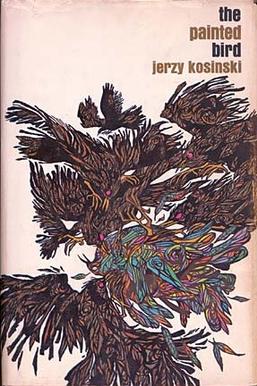
Book 68: The Painted Bird by Jerry Kosinski (1965)
This is a series of reflections reading through Time Magazine’s top 100 novels as selected by Lev Grossman and Richard Lacayo published since 1923 (when Time magazine was founded). For me this is an attempt to broaden my exposure to authors I may not encounter otherwise, especially as a person who was not a liberal arts major in college. Time’s list is alphabetical, so I decided to read through in a random order, and I plan to write a short reflection on each novel.
The Painted Bird was a journey into the darkness of humanity that makes the Lord of the Flies look like a children’s tale by comparison. This is a brutal book. The book is a multi-year journey of a young boy who starts out as a six-year-old in Eastern Europe at the beginning of World War II and ends the story as a traumatized twelve-year-old reunited with parents he has not seen for the duration of the war. Throughout the war the unnamed boy moves from one horrific situation to another. Sometimes this young child is the victim of the story’s violence from bullying or horrific abuse by some of the individuals he lives with. Sometimes we witness the atrocities that humans in society practice upon one another through the boy’s eyes. Important to the story is the boy’s appearance which is why he is sent into the country in the first place: he has darker skin, black hair, and black eyes and most of the adults in the story view him as a gypsy in a time when the Germans were putting gypsies and Jews in concentration camps. I’m not a person who normally advocates for trigger warnings, but I’ll make an exception for this book: there is child abuse, rape, torture, bestiality, sexual torture and even murder in a way to destroy someone sexually, cruelty to animals, and more. The story is fictional, but it does pull on some of the author’s experience in Poland as well as the experiences of others in Eastern Europe. The story is disturbing and it is meant to be, it paints the story of survivors in an inhumane world.
I cannot think of any book that disturbed me the way this one did. I can deal with the horrors of war, and I know that women and children are often victims in a society broken by conflict. Yet violence against women and children are abhorrent to me and this book has violence against women or children in every chapter. This was more horrific than any horror novel. The unnamed boy eventually loses his speaking voice in the story (although he remains the narrator throughout) as he witnesses the unspeakable. The book, written from the perspective of the boy, somehow manages to be dispassionate despite the horror inviting the reader to enter the numbness of the boy and the shattered people around him. Something of this story made me think of Hieronymus Bosch’s paintings of hell, where every manner of human deviance is displayed and amplified.
I can see the argument for this being an important book, especially in bearing witness to the horror of World War II specifically in Eastern Europe. I can see how for many oppressed groups the experience of this unnamed boy might at points resonate with their experience. It is a journey into the heart of darkness that one should not start lightly. Unless there is something very dark within you this is not a book to enjoy. I cannot think of a book I was happier to reach the end of. I can acknowledge this being an important book but there were so many scenes where I found the world and actions of the characters in the story repulsive. War may be hell, but the experiences of the boy and those around him in this story are some deeper, darker circle of hell.

