Tag Archives: Heart

Psalm 138 Praising the LORD With One’s Whole Heart and Being

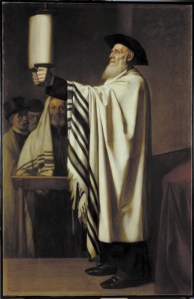
The Presentation of the Torah By Édouard Moyse – Own work Musée d’art et d’histoire du Judaïsme, CC BY-SA 4.0, https://commons.wikimedia.org/w/index.php?curid=41893002

Psalm 138

Of David.

1I give you thanks, O LORD, with my whole heart;
  before the gods I sing your praise;
2
I bow down toward your holy temple
  and give thanks to your name for your steadfast love and your faithfulness,
  for you have exalted your name and your word
  above everything.
3
On the day I called, you answered me;
  you increased my strength of soul.

4
All the kings of the earth shall praise you, O LORD,
  for they have heard the words of your mouth.
5
They shall sing of the ways of the LORD,
  for great is the glory of the LORD.
6
For though the LORD is high, he regards the lowly,
  but the haughty he perceives from far away.

7
Though I walk in the midst of trouble,
  you preserve me against the wrath of my enemies;
 you stretch out your hand,
  and your right hand delivers me.
8
The Lord will fulfill his purpose for me;
  your steadfast love, O LORD, endures forever.
  Do not forsake the work of your hands.

Psalm 138 utilizes themes common throughout the book of Psalms as it thanks and praises the God the psalmist follows with their whole heart. To follow the LORD with one’s whole heart is not merely a matter of belief but also behavior. The heart in Hebrew thought is not the seat of emotion but the seat of will and intention. The first stanza of the psalm begins with the heart, the seat of will and intention, and ends with the nephesh (NRSVue soul) which is the center or essence of life and being. ‘Heart’ and ‘soul’ they give thanks, sing praise, bow down, and call upon the LORD their God.

This psalm, like many portions of the Hebrew Scriptures, are not monotheistic as we conceive, but view the LORD the God of Israel as the God above all gods. In the midst of a pluralistic world where others worship other gods the psalmist sings the praise of the God above all gods. This God whose name[1] and ‘word’[2] are exalted above everything is the God worthy of thanks, praise and bowing down to. The LORD is known by the central descriptions of God’s characters: ‘steadfast love’ (hesed)[3] and faithfulness (‘emet). The LORD is a God who answers when the psalmist calls and they are strengthened in courage and ‘strength of soul’ in response.

The praise of the LORD expands from the psalmist in the first stanza to ‘all the kings of the earth’ in the second. The ‘words’ of the LORD have now spread to the nations and these mighty one join the psalmist in singing of the glory of God. Throughout the psalms there have been times when the praise of God has been echoed throughout the creation but here the emphasis is on the nations not only praising the glory and power of the LORD but also the ways of the LORD. Central to the way of the LORD is the care of the lowly who God regards. The mighty and haughty may find themselves distant from God but the lowly and vulnerable are seen and protected by God. The kings of the earth in honoring the ways of God would also turn to practices which protect the vulnerable and lowly.

Even though the psalmist appears to be delivered in the first stanza, the final stanza returns to God protecting them in the midst of trouble. Thematically this stanza is similar to Psalm 23 preserving the faithful one in the midst of trouble and delivering them from their enemies. The hand of the LORD is a central feature to these final two verses, appearing three times. The psalmist is the work of the hands of God but also asks God to stretch out the hand in protection and deliver with the right hand. The LORD fulfills God’s purposes, and the psalmist echoes the refrain of Psalm 136 ‘your steadfast love, O LORD, endures forever.’ J. Clinton McCann Jr. summarizes the psalm nicely when he states:

The psalmist is able to present his or her whole life to God, because the psalmist trust that it is God’s character to manifest “steadfast love” (hesed) and “faithfulness” (‘emet). (NIB IV: 1232)

The psalmist’s wholehearted and embodied thanks, praise and worship points to a future reality when all the king and nations of the earth join in the celebration of the ways of God. They entrust themselves to the God of steadfast love and faithfulness who walks with them in the midst of trouble.


[1] The name of the LORD is a central idea in Hebrew thought and lies behind the commandment on honoring God’s name and keeping it holy. The temple, for example, is ‘a house built for the name of the LORD.’ The name of the LORD can refer to the presence of God but with the understanding that all the earth cannot contain the presence of the LORD.

[2] The Hebrew term for ‘word’ throughout this psalm is not the normal debar but instead from the verbal root ‘amar. Nancy deClaissé-Walford indicates this is more of an emphasis on voicing of the word and perhaps ‘sayings’ is a more accurate translation of this less common word. (Nancy deClaisse-Walford, 2014, p. 960)

[3] For more about the hesed of God see my comments on Psalm 136.

What Lies Beneath

IMG_0751

There is a kindness in the smile that reflects the big heart that lies within
Where tenderness and tenacity together toil to transform the world in little ways
For there is a fiery resolve that refuses to release its hopes and dreams
There is a curiosity in the eyes that are continually seeking and wondering
And the ears that sometimes hear a little too clearly bringing in the sights and sounds
Of the world to the quick mind that lies beneath, continually trying to make sense
Of the experiences of the day and the wisdom of the ages, taking into itself
The cares and the worries of the moments and turning them over and over
Looking for the meaning in the moment and the wisdom in the worry and weariness
Perhaps that kind smile and curious eyes and thinning hairline together form
A window to a soul that is a fusion of the best of the saint and the sinner
For what lies beneath is an soul that is older than its years and kinder than its scars

This is a part of the #introtopoetry prompt where the topic is a face and the challenge it to use allteration. I didn’t originally intend to use my own face but it ended up being helpful in working through some of the worries of the moment

Psalm 14- The Wisdom of Holding to the Covenant

Jozsef Somogyi's statue of the Tired Man in Mako, Hungary

Jozsef Somogyi’s statue of the Tired Man in Mako, Hungary

Psalm 14

To the leader. Of David.
1 Fools say in their hearts, “There is no God.”
   They are corrupt, they do abominable deeds;
   there is no one who does good.
2 The LORD looks down from heaven on humankind
   to see if there are any who are wise,
   who seek after God.
3 They have all gone astray, they are all alike perverse;
   there is no one who does good,
   no, not one.
4 Have they no knowledge, all the evildoers
   who eat up my people as they eat bread,
   and do not call upon the LORD?
5 There they shall be in great terror,
   for God is with the company of the righteous.
6 You would confound the plans of the poor,
   but the LORD is their refuge.
7 O that deliverance for Israel would come from Zion!
   When the LORD restores the fortunes of his people,
   Jacob will rejoice; Israel will be glad.

In the ancient Middle East the idea of a godless world is unknown. However, in the Psalmist’s time and in every time there are those who functioned as practical atheists, whose spoken beliefs had little or no impact on their decisions throughout their lives. The heart in the Hebrew world view was not the seat of emotion but the seat of decision making and will. The heart is where actions spring from. Note that the Psalm does not say ‘Fools say with their mouths’ but ‘Fools say in their hearts.’ As the Psalm unfolds we see the way that the foolish actions are really actions against the covenant that God has made with the people of Israel. The LORD looks for those who are seeking the will of God. As Psalm 1 can state, “but their (the wise/righteous) delight is in the law of the LORD, and on his law they meditate day and night.” (Psalm 1.2)

The fool is known by what they do and their actions reflect a betrayal of the justice that was considered essential to the covenant.  The book of Deuteronomy dwells frequently on the fear that the people in prosperity will “forget the LORD their God, by failing to keep his commandments, his ordinances and his statutes,” (Deuteronomy 8. 11) and the poor, the widow, the orphan and the alien will be denied justice. When the acquisition of wealth becomes more important than the neighbor then the people have forgotten the LORD their God. When the people turn away from placing God at the center of their day to day actions and decisions the result is the perversion of the covenant people. They are no longer the salt of the earth but rather they are corrupt and their corruption spreads to everything around them. The actions of the people have consequences for not only themselves, but also for the community and the very land that they live upon.

The language of the Psalm also reaches into the language of the prophetic. The dark line speaking about the wicked “who eat up my people as they eat bread,” reaches a fuller exposition in Micah. In Micah, speaking to the rulers who have turned away from the covenant, the prophet can say:

you who hate good and love evil, who tear the skin off my people, and the flesh off their bones, who eat the flesh of my people, flay their skin off them, break their bones in pieces, and chop them up like meat in a kettle, like flesh in a caldron. (Micah 3. 2f.)

And yet these same leaders may use their words to cry upon the LORD, but God will not answer them.

Unlike Psalm 13 which cries out for immediate action, Psalm 14 takes more of a tone of the inevitability of God’s action on behalf of the poor. The hearer is cautioned to take the way of the wise and the side of the poor for that is the side of God. God hears and sees and protects the powerless and the vulnerable. Those wise whose hearts are turned to God know that their actions towards the vulnerable and the powerless are also seen and weighed by God.

A biblical image that comes to mind with this Psalm is the ending of Solomon’s reign and the beginning of his son, Rehoboam’s reign. Solomon is initially lifted up as being wise and following the way of the LORD but in 1 Kings 11 Solomon’s heart is turned away from the LORD. When he dies and his son takes the throne there is already conflict within the nation of Israel, the economic policies of Solomon have placed a heavy burden on the population and the assembly of Israel asks for relief from Rehoboam. Rehoboam refuses to relieve any of the economic burdens on the people and the kingdom is spit in two, never to be united again. (1 Kings 12) The book of Kings looks upon this split as God’s judgment upon the house of David for turning their heart away from the LORD, even though God did not act in supernatural ways but rather simply didn’t sustain the reign of the line of David over the entire house of Israel.

So how do we approach this Psalm in our secular world that is influenced by global economic corporations? For me the Psalm speaks to the faithful as a way of remembering what is it to set one’s heart upon the LORD and how loving the LORD with all one’s heart, soul, mind and strength is linked to loving and protecting one’s neighbor. When we forget this connection we too can become corrupt and allow the community and the environment around us to become corrupted by short term economic interests at the expense of our neighbor. Entering into the prophetic worldview of the scriptures forces us to consider the impact of the decisions we make upon the life of my neighbor’s and especially the lives of the vulnerable.