Tag Archives: soul

Psalm 138 Praising the LORD With One’s Whole Heart and Being

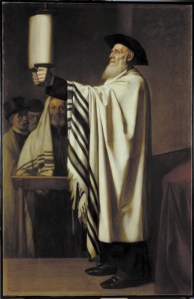
The Presentation of the Torah By Édouard Moyse – Own work Musée d’art et d’histoire du Judaïsme, CC BY-SA 4.0, https://commons.wikimedia.org/w/index.php?curid=41893002

Psalm 138

Of David.

1I give you thanks, O LORD, with my whole heart;
  before the gods I sing your praise;
2
I bow down toward your holy temple
  and give thanks to your name for your steadfast love and your faithfulness,
  for you have exalted your name and your word
  above everything.
3
On the day I called, you answered me;
  you increased my strength of soul.

4
All the kings of the earth shall praise you, O LORD,
  for they have heard the words of your mouth.
5
They shall sing of the ways of the LORD,
  for great is the glory of the LORD.
6
For though the LORD is high, he regards the lowly,
  but the haughty he perceives from far away.

7
Though I walk in the midst of trouble,
  you preserve me against the wrath of my enemies;
 you stretch out your hand,
  and your right hand delivers me.
8
The Lord will fulfill his purpose for me;
  your steadfast love, O LORD, endures forever.
  Do not forsake the work of your hands.

Psalm 138 utilizes themes common throughout the book of Psalms as it thanks and praises the God the psalmist follows with their whole heart. To follow the LORD with one’s whole heart is not merely a matter of belief but also behavior. The heart in Hebrew thought is not the seat of emotion but the seat of will and intention. The first stanza of the psalm begins with the heart, the seat of will and intention, and ends with the nephesh (NRSVue soul) which is the center or essence of life and being. ‘Heart’ and ‘soul’ they give thanks, sing praise, bow down, and call upon the LORD their God.

This psalm, like many portions of the Hebrew Scriptures, are not monotheistic as we conceive, but view the LORD the God of Israel as the God above all gods. In the midst of a pluralistic world where others worship other gods the psalmist sings the praise of the God above all gods. This God whose name[1] and ‘word’[2] are exalted above everything is the God worthy of thanks, praise and bowing down to. The LORD is known by the central descriptions of God’s characters: ‘steadfast love’ (hesed)[3] and faithfulness (‘emet). The LORD is a God who answers when the psalmist calls and they are strengthened in courage and ‘strength of soul’ in response.

The praise of the LORD expands from the psalmist in the first stanza to ‘all the kings of the earth’ in the second. The ‘words’ of the LORD have now spread to the nations and these mighty one join the psalmist in singing of the glory of God. Throughout the psalms there have been times when the praise of God has been echoed throughout the creation but here the emphasis is on the nations not only praising the glory and power of the LORD but also the ways of the LORD. Central to the way of the LORD is the care of the lowly who God regards. The mighty and haughty may find themselves distant from God but the lowly and vulnerable are seen and protected by God. The kings of the earth in honoring the ways of God would also turn to practices which protect the vulnerable and lowly.

Even though the psalmist appears to be delivered in the first stanza, the final stanza returns to God protecting them in the midst of trouble. Thematically this stanza is similar to Psalm 23 preserving the faithful one in the midst of trouble and delivering them from their enemies. The hand of the LORD is a central feature to these final two verses, appearing three times. The psalmist is the work of the hands of God but also asks God to stretch out the hand in protection and deliver with the right hand. The LORD fulfills God’s purposes, and the psalmist echoes the refrain of Psalm 136 ‘your steadfast love, O LORD, endures forever.’ J. Clinton McCann Jr. summarizes the psalm nicely when he states:

The psalmist is able to present his or her whole life to God, because the psalmist trust that it is God’s character to manifest “steadfast love” (hesed) and “faithfulness” (‘emet). (NIB IV: 1232)

The psalmist’s wholehearted and embodied thanks, praise and worship points to a future reality when all the king and nations of the earth join in the celebration of the ways of God. They entrust themselves to the God of steadfast love and faithfulness who walks with them in the midst of trouble.


[1] The name of the LORD is a central idea in Hebrew thought and lies behind the commandment on honoring God’s name and keeping it holy. The temple, for example, is ‘a house built for the name of the LORD.’ The name of the LORD can refer to the presence of God but with the understanding that all the earth cannot contain the presence of the LORD.

[2] The Hebrew term for ‘word’ throughout this psalm is not the normal debar but instead from the verbal root ‘amar. Nancy deClaissé-Walford indicates this is more of an emphasis on voicing of the word and perhaps ‘sayings’ is a more accurate translation of this less common word. (Nancy deClaisse-Walford, 2014, p. 960)

[3] For more about the hesed of God see my comments on Psalm 136.
Afterlife, Eternal Life and the Life of the Kingdom

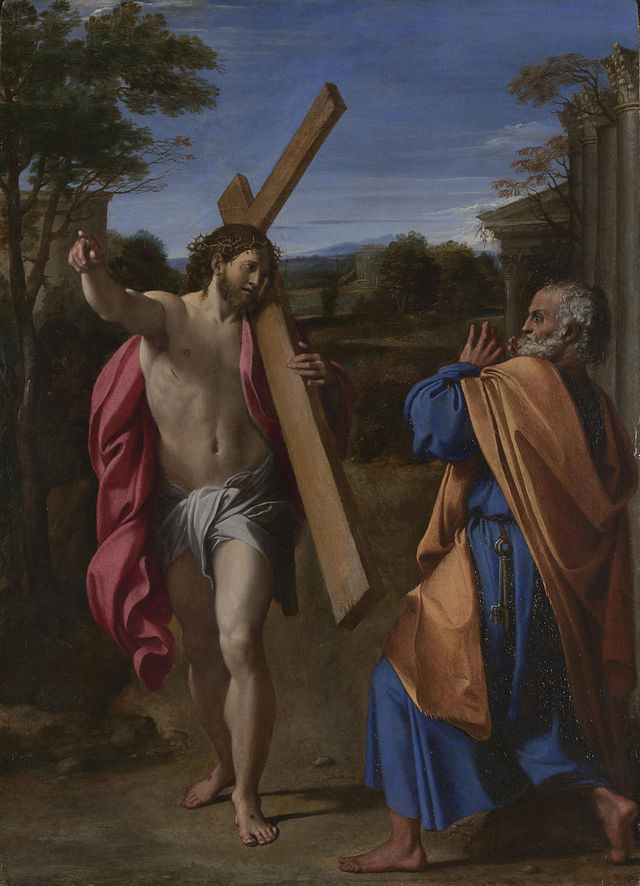
Domine, quo Vadis? by Annibale Carracci, 1062

When most people who grow up in a Christian church talk about eternal life they are talking about ‘going to heaven’ or what happens to the ‘soul’ after death. Many Christians who faithfully come to worship each week do not realize that this is not the primary direction of Christian hope, instead most of this idea comes from the interaction of Greek philosophical worldview and the language of Christianity. Unfortunately, this focus on the soul’s ascent to be with God in heaven has transformed the profoundly grounded hope of the early followers of Christ into an otherworldly escapism which is often disconnected the horizontal dimension of faith which involve my neighbors and the world.

The Jewish covenantal understanding of their faithful relationship with God and their neighbor is the foundation upon which Jesus builds his vision of life under the kingdom of heaven. Despite Matthew’s frequent use of the kingdom of heaven, instead of the kingdom of God as predominant in Mark and Luke, what Jesus is referring to is God’s kingdom coming to earth. The entire direction of the New Testament’s hope is God’s coming to dwell among God’s people on earth. This is not unique to the New Testament, throughout the Hebrew Scriptures there is in the tabernacle and the temple a place where God can dwell among the people, the prophets dream and the psalms sing about the transformations that will come into the world when God reigns not only among Israel but among all the peoples. Just as the people of Israel were to be an alternative community among the empires of Egypt, Assyria, Babylon, Persia and Rome, these followers of Christ were to be an alternative community with alternative values to Rome or whatever society they found themselves within. When Paul, for example, in Philippians 3: 20 can state that, “our citizenship is in heaven, and it is from there we are expecting a Savior, the Lord Jesus Christ.” He is talking about living as person of an alternative community, the kingdom of heaven, and embodying those values within the space of the Roman empire and teaching others to do the same. Paul’s descriptions of the future glory in Romans 8: 18-27 beautifully dreams the interactive way that the unveiling of the children of God, those who are living under God’s calling and have been transformed for the sake of the world, is precisely for the liberation of the creation (not an escape from it). It is also why Paul ends 1 Corinthians, with the exception of the final travel plans and greeting, with a long discussion about the implication of the resurrection of Christ for the resurrection of all people. Paul is specifically arguing against a ‘non-bodily’ and ‘non earthly’ resurrection, even though many in the Hellenistic (Greek speaking) world would have embraced the idea of the ‘salvation of the soul’ willingly and viewed this bodily resurrection as scandalous. The book of Revelation is often thought of as the destruction of the earth, but what it narrates is the final coming of God to earth and the last but futile resistance of the forces aligned against God’s coming kingdom.

When the gospels speak of ‘eternal life’, the phrase that is translated is the Greek zoe aion. Zoe is where we get the feminine name Zoe from and it means ‘life.’ Aion is where we get the English word ‘eon’ from and while it is often translated ‘eternal’ but when most Christians think of ‘eternal life’ they think of life in heaven. For another perspective on how to think about the term ‘eon,’ it occurs as a noun at the end of Matthew’s gospel, “I am with you always, to the end of the age.” While some might argue that Jesus really is talking about being with the disciples for ‘eternity,’ what I believe Jesus is telling the disciples is, “I will be will be with you to the end of this age” which will end when the kingdom of heaven/God comes to earth.

In Matthew, Mark and Luke when zoe aion is only used when either the rich young man (all three gospels) or in Luke when a scribe asks (Luke 10:25) Jesus always points them back to the commandments of how they are to live in this life. In both cases the question is not about how to get to heaven, but how to participate in the life of the kingdom of God in the present and Jesus’ answer reflects that earthly reality. John’s gospel uses this term more than the other three gospels combined, but John has long been associated with a ‘realized eschatology’ where the promises of God’s kingdom are already being realized. For example, in John 17 Jesus can state,

since you have given him authority over all people, to give eternal life to all whom you have given him. 3 And this is eternal life, that they may know you, the only true God, and Jesus Christ whom you have sent. (John 17: 2-3)

“Eternal life” in John’s gospel is already realized in knowing Jesus and the God who sends Jesus. This life is revealed by participating in the faith and life of Jesus

While the New Testament can use a diverse set of language to talk about the approaching of God’s kingdom to this world, the movement is always God’s movement towards the world instead of the escape of the soul to join God. There are at best hints of some immediate experience of an afterlife and they often come in parables (like the rich man and Lazarus in Luke’s gospel) or when Jesus (again in Luke) tells the bandit on the cross “today you will be with me in paradise.” Portions of the church in the last several decades have begun to rediscover the centrality of the resurrection and the coming of God to dwell among the earth instead of the otherworldly focus of much of the church in the previous centuries. It is a subject that pastors and teachers have to approach delicately because it is a drastic change to the imaginations of many of the faithful, but it also invites the faithful into a closer relationship with the world and with the neighbors God has placed within it. In Paul’s rich language it is a call to join in the groaning labor pains of creation while we and the world await the redemption of our bodies. (Romans 8:23)

What Lies Beneath

IMG_0751

There is a kindness in the smile that reflects the big heart that lies within
Where tenderness and tenacity together toil to transform the world in little ways
For there is a fiery resolve that refuses to release its hopes and dreams
There is a curiosity in the eyes that are continually seeking and wondering
And the ears that sometimes hear a little too clearly bringing in the sights and sounds
Of the world to the quick mind that lies beneath, continually trying to make sense
Of the experiences of the day and the wisdom of the ages, taking into itself
The cares and the worries of the moments and turning them over and over
Looking for the meaning in the moment and the wisdom in the worry and weariness
Perhaps that kind smile and curious eyes and thinning hairline together form
A window to a soul that is a fusion of the best of the saint and the sinner
For what lies beneath is an soul that is older than its years and kinder than its scars

This is a part of the #introtopoetry prompt where the topic is a face and the challenge it to use allteration. I didn’t originally intend to use my own face but it ended up being helpful in working through some of the worries of the moment