Tag Archives: Language

James 3: 1-12 On the Danger of Being a Teacher and the Destructive Power of the Tongue

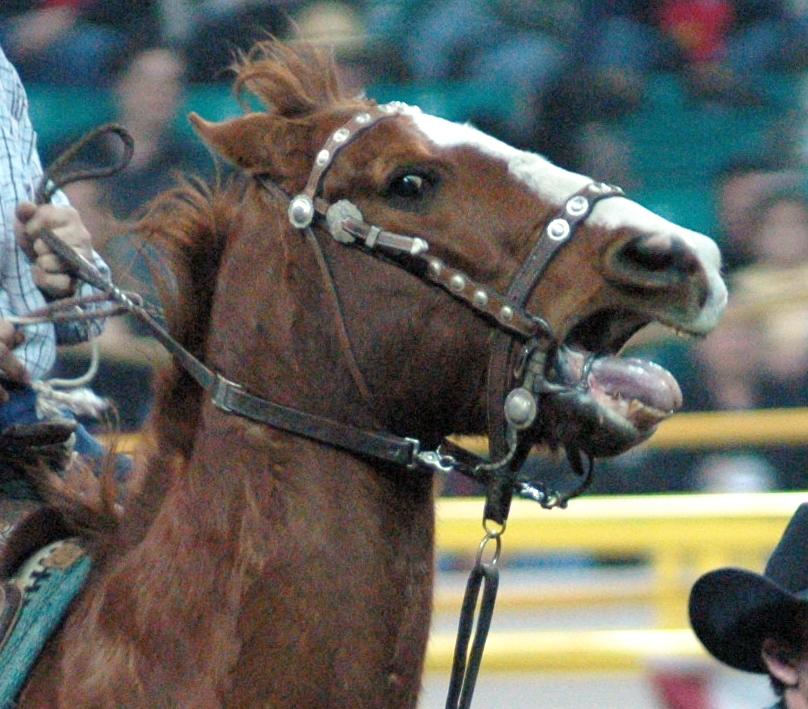
Harsh Bit Use on a Horse CC BY 2.0, https://commons.wikimedia.org/w/index.php?curid=2904985

James 3: 1-12

1Not many of you should become teachers, my brothers and sisters, for you know that we who teach will face stricter judgment. 2For all of us make many mistakes. Anyone who makes no mistakes in speaking is mature, able to keep the whole body in check with a bridle. 3If we put bits into the mouths of horses to make them obey us, we guide their whole bodies. 4Or look at ships: though they are so large and are driven by strong winds, yet they are guided by a very small rudder wherever the will of the pilot directs. 5So also the tongue is a small member, yet it boasts of great exploits.
  How great a forest is set ablaze by such a small fire! 6
And the tongue is a fire. The tongue is placed among our members as a world of iniquity; it stains the whole body, sets on fire the cycle of life, and is itself set on fire by hell. 7For every species of beast and bird, of reptile and sea creature, can be tamed and has been tamed by the human species, 8but no one can tame the tongue—a restless evil, full of deadly poison. 9With it we bless the Lord and Father, and with it we curse people, made in the likeness of God. 10From the same mouth comes a blessing and a curse. My brothers and sisters, this ought not to be so. 11Does a spring pour forth from the same opening both fresh and brackish water? 12Can a fig tree, my brothers and sisters, yield olives or a grapevine figs? No more can salt water yield fresh.

Words matter. For those entrusted with the authority to speak on behalf of a community, to shape its life and actions, those words they speak in teaching and leadership can shape both the faithful and the perception of the faithful in the world around them. Yet, in an age where words have increased exponentially and everyone through the existing technology can have a platform to broadcast their opinions as facts, James’s warning is even more prescient. As a person who attempts to use my words carefully, I also see the way the tools of the information age have created an age of misinformation. I saw this firsthand during the week I was writing this reflection which I will share below, but I share Luke Timothy Johnson’s view that, “We dwell in a virtual Babel of linguistic confusion and misdirection.” (NIB XII: 206) In the United States we have often highlighted the value of free speech, but I fear that we have rarely emphasized the responsibility of utilizing of freedom of speech in a way that builds up the community of faith and our surrounding world.

James’s words about the tongue are likely intended for his entire audience, but he is intentional in his decision to begin this section by addressing teachers in the community. Teachers, to utilize James’s metaphors, can be the bit and bridle which guide the community, the rudder that steers the ship of the church through the strong winds of the world or they can be the fire which burns the community to ash and ruins. They are not to be like some of the religious leaders that Jesus spoke against in Matthew’s gospel:

They love to have the place of honor at banquets and the best seats in the synagogues and to be greeted with respect in the marketplaces and to have people call them rabbi.  But you are not to be called rabbi, for you have one teacher, and you are all brothers and sisters. Matthew 23: 6-8

If James is writing in the time leading up to the Jewish War where conflict was in the air and the wood is dry and easily kindled for revolution, it is probable that James, particularly with his words in the next section, is resisting those leaders in his community and in Judea who were using words to inflame. There have always been teachers who have used their words in irresponsible, uncaring, and hurtful ways but in times of conflict we often mistake cruelty and confidence for faith. James’s earlier words where faith is contrasted with doubt may lead some readers to mistakenly believe James advocates for this type of faith, but this chapter shows how mistaken that reading of James would be. Any leader who can bless God and curse people has missed what faith is for James. Faith for James does works born of gentleness and wisdom as the following section will highlight.

James can acknowledge that we all make mistakes, and that mistakes in speaking are perhaps the most difficult to restrain. James continues to utilize the Greek teleios (NRSVue mature, NRSV perfect)[1] which is a word of goal or destination. If you can restrain your words you are complete or whole or mature, and while words are important they need to be well chosen. James introduced this in chapter 1,[2] and now focuses his writing on several commonly used images for speech. Scot McKnight shows the way the metaphors that James uses are present in the writings of other ancient authors:

Plutarch compares words let loose to boats caught by winds that shipwreck and sparks caught by winds that set off fires…Philo connects horses and bits but what strikes the reader of his On the Creation is that these are set in a context of humans being made in God’s image and having the capacity to train animals. (83-86). In his Allegorical Interpretation of Genesis, Philo connects the rudder and boat to a mind set ablaze by irrational sense like fire (3.224). (McKnight, 2011, pp. 276-277)

Yet, James is also tapping into wisdom literature’s concern for the tongue. For example:

Lying lips conceal hatred, and whoever utters slander is a fool. When words are many, transgression is not lacking, but the prudent are restrained in speech.The tongue of the righteous is choice silver; the mind of the wicked is of little worth.The lips of the righteous feed many, but fools die for lack of sense. Proverbs 10: 18-21

Death and life are in the power of the tongue, and those who love it will eat its fruits. Proverbs 18:21

A person may make a slip without intending it. Who has not sinned with his tongue? Sirach 19:16[3]

Or in Matthew’s gospel:

I tell you, on the day of judgment you will have to give an account for every careless word you utter, for by your words you will be justified, and by your words you will be condemned.” Matthew 12: 36-37

Speech is important throughout both scripture and imagery related to speech and tongues abounds in the ancient world, but James’s words about the tongue still can shock. In James’s imagery the tongue seems to have a will of its own. As Joel Green notes:

We hear James’s charge that horses and ships can be controlled by the tongue seems out of control. Notice again James’s wording: “It boasts of great things” (and not, say, “With it we boast of great things”)—as if the tongue had a mind of its own. (Green, 2025, p. 102)

The word the NRSVue translates as ‘tame’ (damazo) is a word for subduing or restraining, and tame is probably a little weak in a context where the tongue is unrestrainable. The tongue can set ablaze, is a restless evil and full of deadly poison in what may be an echo of Psalm 140:3,       “They make their tongue sharp as a snake’s, and under their lips is the venom of vipers.” I’m writing this in the week before Pentecost when tongues of fire rested on the first apostles, but as Martha L. Moore-Keish aptly states:

at Pentecost, the tongues of fire were sent by God, empowering people to speak by the power of the Spirit. The question is: Whose fiery tongues are inspiring us? Whose words are we speaking? (Moore-Keish, 2019, p. 125)

Unrestrained tongues which can curse those made in God’s image are not inspired by the wisdom from above (as the next section discusses) but are earthly, unspiritual, and devilish. They are set on fire by hell/Gehenna[4] and bring death instead of life. Many may have grown up with the proverb, “Sticks and stones may break my bones, but words will never hurt me.” But James knows better, as does scripture. As Proverbs says, death and life are in the power of the tongue.

James has earlier discussed a double-minded faith and now talks about a contradictory action by the tongue which should be as impossible as both fresh and brackish water coming from the same spring at the same time. Here the tongue is used to bless God and curse people made in the likeness of God. Just as faith of Jesus is incompatible with favoritism to the rich, it is incompatible with cursing another person. James does not limit this cursing to the community of faith, for Jewish thought would say that all humanity, male and female, are formed in God’s image. Just as fig trees cannot bear olives or vineyards figs, so the tongue of a person of faith should only flow with blessings for both God and those formed in God’s image.

As I have sat with James’s words through this week, I have also had to sit with a heartbreaking image of how true James’s words are. My congregation is in Frisco, Texas a very diverse suburb of Dallas of approximately 250,000 people. Unlike many parts of Texas, the diversity in Frisco in heavily Asian, particularly Indian, in background and I will see people from my community playing cricket across the street from my church instead of football or baseball most Sunday mornings. Our congregation is situated next to a very large Hindu temple, and our communities have had an ongoing relationship and dialogue for eighteen years. But Frisco was also on the front page of the Dallas Morning News this morning for a contentious city council meeting on Tuesday night, which I was present for, where several individuals and groups unleashed their tongues in ways that were both painful and hateful. Some of these were people with authority over a church, others were people who called themselves Christian. Much of it was political theater and may have been motivated by envy or selfish ambition, and it did bring disorder and wickedness. It did not look like the fruits of wisdom that James discusses below. In James’s time and in ours not many should be leaders and those who are must continually learn to restrain their tongues and speak words of blessing instead of cursing.


[1] For a fuller discussion of teleios see my reflection on Perfection and Blamelessness in the Bible.

[2] James 1: 19, 26.

[3] See also Proverbs 12:18; 13:3; 16:27; 18:7, 21; 26: 21; Sirach 28: 13-14, 18-22.

[4] See my reflection on Gehenna, Tartaros, Sheol, Hades, and Hell for a fuller discussion of these terms in the New Testament.

Psalm 29- The Thundering Voice of God

Supercell Thunderstorm over Chaparral, New Mexico on April 3, 2004

Supercell Thunderstorm over Chaparral, New Mexico on April 3, 2004

Psalm 29

<A Psalm of David.>
 1 Ascribe to the LORD, O heavenly beings, ascribe to the LORD glory and strength.
 2 Ascribe to the LORD the glory of his name; worship the LORD in holy splendor.
 3 The voice of the LORD is over the waters; the God of glory thunders, the LORD, over mighty waters.
 4 The voice of the LORD is powerful; the voice of the LORD is full of majesty.
 5 The voice of the LORD breaks the cedars; the LORD breaks the cedars of Lebanon.
 6 He makes Lebanon skip like a calf, and Sirion like a young wild ox.
 7 The voice of the LORD flashes forth flames of fire.
 8 The voice of the LORD shakes the wilderness; the LORD shakes the wilderness of Kadesh.
 9 The voice of the LORD causes the oaks to whirl, and strips the forest bare; and in his temple all say, “Glory!”
 10 The LORD sits enthroned over the flood; the LORD sits enthroned as king forever.
 11 May the LORD give strength to his people! May the LORD bless his people with peace!
 
What language do we use to praise God and where does it come from? I know for many contemporary Christians there is a fear of using the secular language or language that may come from a mythological or another religion’s background. Yet, here is Psalm 29 which uses the language that the Canaanites used to talk about their god Baal and repurposes that praise in a way to explicitly and repetitively talk about the LORD. In our desire to ascribe to the LORD glory and strength what words, what language and what images shall we use? How do the metaphors capture some piece of what the LORD’s strength and power is? One of the gifts of the Psalms is the way in which it stretches and challenges the ways in which we can poetically allow ourselves to talk about God.

The metaphorical exploration of the power of God’s voice as a thunderstorm is a potent image on its own. The powerful image also takes on a polemical context when paired in a Canaanite environment when their primary god Baal is a storm god who battles the chaotic sea (Yam). In a bold move the poet who puts these words on paper takes the primary image of strength of the god of the surrounding nation and usurps the image to talk about the voice of the LORD. All the other heavenly beings are summoned from the beginning to honor the LORD and to assume their proper subservient positions. The unimaginable power of the mighty storm which can strip the forests are or which can break the mighty cedars of Lebanon is now one attribute of the LORD’s strength.

To use the language of the surrounding world as a part of the language we use to praise God is necessary and yet like all metaphors it has its limits. The Psalms never pretend to be a systematic theology but rather a window into the ways in which God has been experienced. The metaphors can capture our imaginations as ways, as in this Psalm, to give praise to God. In a Psalm where the voice of the LORD is emphasized seven times the only word spoken is reserved for those in the temple. We, like those in the temple, use our own limited words to try to proclaim, “Glory!” The bible wants to use the language it can muster to bring honor and praise to the LORD, and if it means redirecting language which the people of the LORD believed was misused to worship other gods then they would repurpose and recast those words to bring honor and praise to their God. To echo another poet quoted by Paul in Philippians they wanted to see that time when “every knee should bend, in heaven and on earth and under the earth.” (Philippians 2. 10)

Psalm 29 celebrates the power of the LORD with all its destructive might but ultimately that power is wielded so that the people may be at peace. As in Psalm 46 where the bows are broken and spears are shattered and shields burned to make wars cease, so here the incredible powerful voice of the LORD is wielded to bring the people peace. As Rolf Jacobson can state, “God’s strength quells the warring madness of the children of Adam and Eve. (Nancy deClaisse-Walford, 2014, p. 286) Until the days to come that the prophet Isaiah could dream of when swords are turned into plowshares and spears into pruning hooks (Isaiah 2.4) and where the voice of the LORD blesses the people with peace and all the nations stream to the house of the LORD we live in the expectation for the time when the voice of the LORD’s immense power thunders across our world, strengthens the people, blesses us with peace and all can proclaim, “Glory!”

In The Beginning Was The Sentence

Creation by Selfish Eden (deviantart.com)

Creation by Selfish Eden (deviantart.com)

Human beings have an incredible sense of perseverance when you think about it. We will take complex tasks, think them through, experiment, learn and then try to be prepared for the next time we use things. Now, on the one hand, this can lead to some unhealthy behaviors of hoarding or becoming pack rats but, at the same time, we don’t discard a tool that has become useful like animals will do. A chimpanzee may realize that it works well, for example, to use a stick to poke into an ant mound but they don’t store sticks for this use, when the chimpanzee comes upon the need he finds a stick and the same way with other tool using animals. Humans are unique in their ability to predict a future need based upon a past need and within language this also is a crucial development. (Bronowski, 1978, p. 32f.)

Now it is possible that there have been breakthroughs in animal communication that I am unaware of, but the way Bronowski illustrates this breakthrough is the concept that animals communicate not in words but sentences or ideas. For example a chipmunk may has a different signal based on danger from a snake, danger from the air, or danger from a large ground animal, but you can’t deconstruct and recombine these signals into components of danger and the type of animal-they are one unit. They paint in a way a limited verbal picture of their environment and the immediate need they need to respond to. Yet human language is different, and the way our language is structured relying on words and not sentences as the building block of communication allows for the sharing of knowledge and imagination in ways not possible otherwise. For example “Jack loves Jill” and “Jill loves Jack” even though they share the same components do not mean the same thing. Language becomes an incredibly powerful tool for conveying and sharing images, thoughts and even worldviews, a picture may be worth a thousand words but only if it is done well and the person viewing the picture can understand what it is. It is not a coincidence that early languages began with characters that represented pictorially the ideas they were trying to express, but as ideas became more and more complex and the communication of thoughts and ideas contained more and more words language evolved to use letters to create words reflecting the sound of the word. For a word either read or heard to be transformed into a visual image is an act of imagination and it may evoke different images for different readers/hearers. For example if I say “bird” someone may think of a sparrow or an eagle or an ostrich, or perhaps even an obscene gesture, words on their own begin to paint the picture and then when combined within a sentence with actions and descriptions we refine the picture.

Imagination and creativity may help with survival and with creating new tools and ideas that help an individual, but if they are going to make any lasting impression they need to be able to be communicated. The evolution of language, first spoken and later written, has made it possible to pass on and build upon the ideas of others. But there is always a process of taking the information we receive in terms of letters and sounds and reconstituting them in our mind in terms of images (and these images are often moving images-videos if you will) as we translate representations into a mental vision.

purple rose 01 by picsofflowers.blogspot.com

Creative Words: A Poem

Creation by Selfish Eden (deviantart.com)

Creation by Selfish Eden (deviantart.com)

A clever turn of phrase or a verbal picture
In the beginning come the words
And in their own Genesis they craft a new world
Painting with the spirit of imagination
Breathing new life where once only an abyss rested
The words emerge and join together
As bones and sinews
Muscles and skin
Life emerges from the bone yard of the void
Once they emerge they take their own form and have their own life
Each one its own character to be savored and relished
Evoking sights and smells
Sounds feelings and emotions
Recreating the past
Re-imagining the future
Each one has the potential to unearth memories long forgotten
Some use their indelible ink to tattoo themselves on the soul
The realities they create may be harsh and brutal
In their dystopic world we see the dark side of reality
The truths we would rather not see
The sins we would prefer remain buried
Words that rend the world and pierce the soul
Sometimes the poet and the prophet are one
Crying tears of sorrow over words that cannot be contained
And a people whose ears no longer hear and eyes no longer see
Yet words uttered from the same mouth may ache of passion and love
Calling us to hope
Lightening our darkness
Pointing to potentiality and power unimagined
And a future seen only through the hopes and dreams of faith
But they are never just words
They are echoes of the deep language that pours its magic into the world
They point to the real and imagined
They define and name
They build up and tear down
Words set loose on the world
Bearing the best and worst of humanity’s heart
Laying naked the mind and soul
A mirror showing the sacred and profane blended together
For the world the words create reflect the heart of their creator
They go forth to create
They rattle around in the eardrums and the imaginations
Of those who have eyes to see and ears to hear
For in the beginning the words come
The Genesis, the beginning of all the potential worlds they might create
And in the end, when their pneumatic inspiration ceases
Remains the apocalypse of new creation
Unveiled within our memory

Composed Neil White, 2013

purple rose 01 by picsofflowers.blogspot.com