Tag Archives: Psalms

Psalm 128 A Blessed Life for the Man, His Family, and His Society

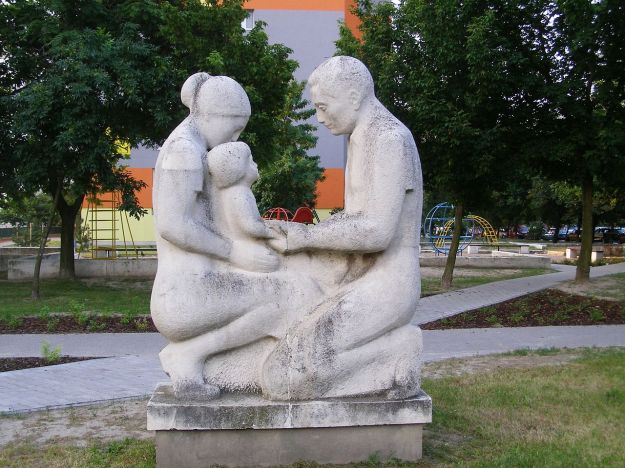
Parents with child statue, Hrobákova street, Petržalka, Bratislava By Kelovy – Own work, Public Domain, https://commons.wikimedia.org/w/index.php?curid=1622776

Psalm 128

A Song of Ascents.

1Happy is everyone who fears the LORD,
  who walks in his ways.
2
You shall eat the fruit of the labor of your hands;
  you shall be happy, and it shall go well with you.

3
Your wife will be like a fruitful vine
  within your house;
 your children will be like olive shoots
  around your table.
4
Thus shall the man be blessed
  who fears the LORD.

5
The LORD bless you from Zion.
  May you see the prosperity of Jerusalem
  all the days of your life.
6
May you see your children’s children.
  Peace be upon Israel!

Bolded words have notes on translation below.

In contrast to the individualistic ways that most people of the modern west conceptualize their world, for most ancient societies and religions the primary unit is not the individual but the family. A good life started with a prospering family and then extended to the prosperity of the city and then to the nation. This way of thinking is reflected in this psalm about a blessed life for a man, his family, Jerusalem, and all Israel. This is a wisdom psalm as the key word happy (Hebrew ‘asre) should alert us.[1] Psalms 127 and 128 share several frequently used wisdom words along with the conception that following the path of wisdom leads to a prosperous household.

Fearing the LORD and walking in the way of the LORD leads to happiness/contentment and enjoying the fruit of their labor. Ecclesiastes may believe that the labor/toil we do is vanity, but even Ecclesiastes can state:

There is nothing better for mortals than to eat and drink and find enjoyment in their toil. This also, I saw, is from the hand of God, for apart from him who can eat or who can have enjoyment? For to the one who pleases him God gives wisdom and knowledge and joy, but to the sinner he gives the work of gathering and heaping, only to give to one who pleases God. This also is vanity and a chasing after wind. Ecclesiastes 2: 24-26

The contentment is not merely for the man (literally mighty one, Hebrew gibbor)[2] but for the entire household. Grape vines and olive trees are two of the critical agricultural products of Israel. The metaphorical linking of the fruitfulness of the land to the wife (or wives) and children of the man coincides with the view that children are a sign of blessing and barrenness is a sign of disfavor.

The blessing of this ‘mighty one’ and their family now is extended to Jerusalem and Israel. Jerusalem is the place where the temple of the LORD resides and where the hoped for blessing would originate from on earth, and the psalmist desires to hearer to see the prosperity (Hebrew tob, literally goodness) of the city throughout their life. Seeing grandchildren is a sign of old age acquired and a family which continues to grow. The psalm ends with the desire of peace (shalom) resting on Israel. The man (mighty one) has received a blessed life for himself, his family, and for his society.

Psalm 128 shares a common worldview with Martin Luther’s explanation of the first commandment as, “We are to fear, love, and trust God above all things.” Fearing the LORD and walking in the ways of the LORD in biblical thought leads to prosperity. There are righteous people who suffer, who may be barren, and the wicked do sometimes prosper, but for the psalms the belief that God will provide for the faithful is fundamental. The stated blessing in this psalm echoes the idea of peace represented in the words of the prophet Micah:

but they shall all sit under their own vines and under their own fig trees, and no one shall make them afraid, for the mouth of the Lord of hosts has spoken. Micah 4:4

It sharply contrasts with the judgment on Cain in Genesis 4:

And now you are cursed from the ground, which has opened its mouth to receive your brother’s blood from your hand.When you till the ground, it will no longer yield to you its strength; you will be a fugitive and a wanderer on the earth.” Cain said to the Lord, “My punishment is greater than I can bear! Today you have driven me away from the soil, and I shall be hidden from your face; I shall be a fugitive and a wanderer on the earth, and anyone who meets me may kill me.” Genesis 4: 11-14

At a fundamental level what the scriptures consider wisdom is simple: fearing the LORD and walking in his ways. Following this path entrusts one’s life, one’s family, and one’s society into the hands of God. The faithful one’s throughout the Jewish and Christian story have entrusted God can care for their life, their family and the world around them.


[1] The Hebrew ‘asre is frequently an indicator of wisdom literature. We may not think of happy or blessed in this way, but for Hebrew writers this is a common word when talking about the path of wisdom. Wisdom writers can interchange the idea of happiness and wisdom, see for example the way Psalm 110:10; Proverbs 1:7; 9:10 can pair wisdom with the fear of the LORD. Walter Brueggemann and William Bellinger, Jr. say of ‘asre, “The term introduces an observation about living: one who walks or lives in ways in line with YHWH’s purposes find wholeness. (Bellinger, 2014, p. 545)

[2] Hebrew gibbor which can refer to physical strength or the economic strength to equip oneself and a group for combat. Ruth 4:11 uses this term for economic ability in reference to Boaz.

Psalm 127 The Wisdom of Trusting the LORD

Nocks on a group of Arrows. Image by By Samuraiantiqueworld – Own work, CC BY-SA 3.0, https://commons.wikimedia.org/w/index.php?curid=15357007

Psalm 127

A Song of Ascents. Of Solomon.

1Unless the LORD builds the house,
  those who build it labor in vain.
 Unless the LORD guards the city,
  the guard keeps watch in vain.
2
It is in vain that you rise up early
  and go late to rest,
 eating the bread of anxious toil,
  for he gives sleep to his beloved.

3
Sons are indeed a heritage from the LORD,
  the fruit of the womb a reward.
4
Like arrows in the hand of a warrior
  are the sons of one’s youth.
5
Happy is the man who has
  his quiver full of them.
 He shall not be put to shame
  when he speaks with his enemies in the gate.

Bolded words have notes on translation below.

Psalm 127 rotates around the basic claim that everything comes from the trustworthy LORD who builds the house, guards the city, and gives the blessing of family. The opening verse introduces the word translated in the NRSVue ‘house’ (Hebrew bayit) which can be used in multiple ways. Nancy deClaissé-Walford illustrates the multiple ways Hebrew uses bayit:

The word house (bayit) has a number of meanings in the Hebrew Bible. It can refer to family dwellings (Gen. 19:2; Judg. 11:31; 2 Kgs. 4:2); to the whole household (Gen. 46:27; Josh. 7:18; Ruth 1:8); to the whole people of Israel (Exod. 40:38; 1 Kgs. 20:31; Ezek. 36:22); to ruling dynasties (2 Sam. 3:1; 7:11; 1 Kgs. 16:3); or to the temple in Jerusalem (2 Kgs. 22:3; Ezra 6:15; Jer. 7:2). (Nancy deClaisse-Walford, 2014, p. 918)

Critical to the wordplay in this Psalm is the usage of the term in Nathan’s prophecy to David in 2 Samuel 7: 11-13

The LORD declares to you that the LORD will make you a house (bayit). When your days are fulfilled and you lie down with your ancestors, I will raise up offspring after you, who shall come forth from your body, and I will establish his kingdom. He shall build a house (bayit) for my name, and I will establish the throne of his kingdom forever.

While the building of a family dwelling or a temple would also be a labor committed to the LORD and the word allows and encourages those meanings, the psalm also wants us to understand the resonance of household, especially when linked thematically and phonetically to the second half of the psalm (see below).

The LORD is the primary actor throughout the psalm as the builder of the house and the guard of the city and the provider of children while the psalmist lives in trust of the LORD. They may participate with God in the building of the house, the protection of the city, and the procreation and raising of a family, but they can trust that the LORD provides that which they need. Instead of anxious toil trying to secure their house, city, and family they can sleep in peace entrusting the LORD to provide that which they need. I am reminded of Martin Luther’s explanation of the petition of the Lord’s prayer on daily bread:

What is this?

In fact, God gives daily bread without our prayer, even to all evil people, but we ask in this prayer that God cause us to recognize what our daily bread is and to receive it with thanksgiving.

What then does “daily bread” mean?

Everything our bodies need such as food, drink, clothing, shoes, house, home, fields, livestock, money, property, an upright spouse, upright children, upright members of the household, upright and faithful rulers, good government, good weather, peace, health, decency, honor, good friends, faithful neighbors, and the like. (Luther, 1978, p. 36)

Wisdom is trusting the LORD to provide for the house and the security of the city so that the faithful one can be free from anxiety and worry. The psalmist understands cooperating with God but the idea of securing their own future by working harder or longer is foolishness. For the psalmist God provides for the home, the community, and the family.

As briefly mentioned above there is a phonetic connection between the verses in Hebrew that is not present in English. Nancy deClaissé-Walford is again helpful in showing this:

The word translated here as children (NRSVue sons) is the Hebrew banim, whose acoustic similarity to the Hebrew word build (bana) and house (bayit) in v. 1, coupled with the polyvalent meaning of the word “house” in the Hebrew Bible, strongly connects the two stanzas of Psalm 127. (Nancy deClaisse-Walford, 2014, p. 918)

The word ‘reward’ (Hebrew sakar) also appears in Genesis 15 when God tells Abram, “your reward (sakar) shall be very great. Within this promise Abram is told to look to the heavens and count the stars…so shall his dependents be. This psalm echoes the story of Abram/Abraham when multiple sons/children are viewed as a ‘reward.’ ‘Warrior’ and ‘man’ in verses four and five are the Hebrew gibbor and its alternate form geber which is an important term often translated “mighty one”[1] which can refer to either military or economic power. Finally, the word ‘happy’ (Hebrew ‘asre) is a term frequently used in wisdom literature. This wise ‘mighty one’ whose house the LORD has built, whose city the LORD has guarded, and whose family has produced many children as a reward from God can live at peace and content because they have trusted in the LORD. The LORD who builds their household, guards them and provides for their family will not allow their enemies to put them to shame.


[1] Hebrew gibbor hehayil which can refer to physical strength or the economic strength to equip oneself and a group for combat. Ruth 4:11 uses this term for economic ability in reference to Boaz.
Psalm 126 Carrying in the Sheaves Planted in Tearful Moments

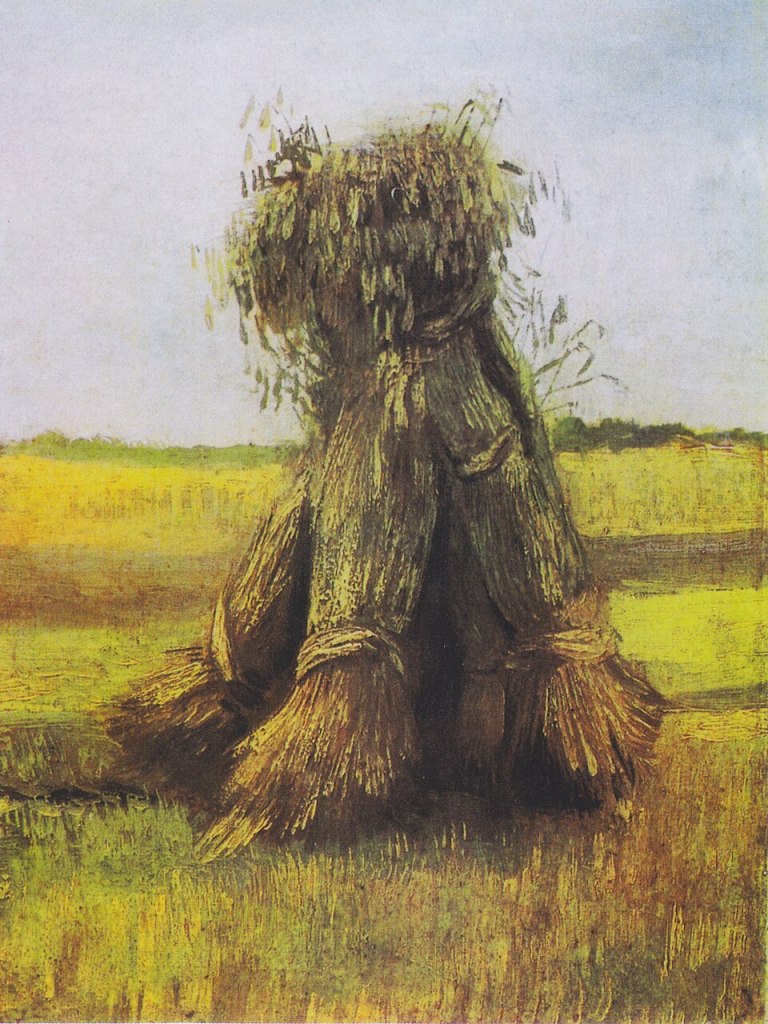
Wheatsheaves in a Field (1885) by Vincent van Gogh

Psalm 126

A Song of Ascents.

1When the LORD restored the fortunes of Zion,
  we were like those who dream.
2
Then our mouth was filled with laughter
  and our tongue with shouts of joy;
 then it was said among the nations,
  “The LORD has done great things for them.”
3
The LORD has done great things for us,
  and we rejoiced.

4
Restore our fortunes, O LORD,
  like the watercourses in the Negeb.
5
May those who sow in tears
  reap with shouts of joy.
6
Those who go out weeping,
  bearing the seed for sowing,
 shall come home with shouts of joy,
  carrying their sheaves.

Bolded words have notes on translation below.

Psalm 126 follows a common pattern in the psalms and throughout the scriptures. It begins with a remembrance of the ways God has acted on behalf of the people in the past and then moves to an appeal for God’s action in the troubles of the present. As J. Clinton McCann Jr. states, “We live in the hope of God’s help always remembering what God has done in the past…and always anticipating what God will do in the future.”(NIB III:1196) The imagery of sowing and reaping have led to the Psalm’s usage on Thanksgiving Day in worship (Year B in the Revised Common Lectionary) and it inspired Knowles Shaw’s song “Bringing in the Sheaves.”

The psalm is structured around two uses of a Hebrew idiom translated “restored our fortunes” in the NRSVue. The phrase is difficult to render in English and has led to a wide variety of translations, but in the prophets it relates to the change in condition brought about by God turning away from God’s wrath and again regarding the people with favor. (Mays, 1994, p. 399) The use of the phrase often refers to the return of the exiles to the homeland of Israel (Deuteronomy 30:3; Jeremiah 30: 3, 18; 32:44; Ezekiel 39:25) and here it may also refer to a homecoming of the exiles from Babylon. (NIB III: 1195) The specific context that the psalm originally spoke to is not required for the reader to understand the relief and joy of those who have experienced the great things God has done for the people of the psalmist. The dreamy state of the remembered joy and laughter of the people emerges from the ways God has provided for and protected the people in the past. From the memory of what God has done in the past comes the hope of God’s action in the present.

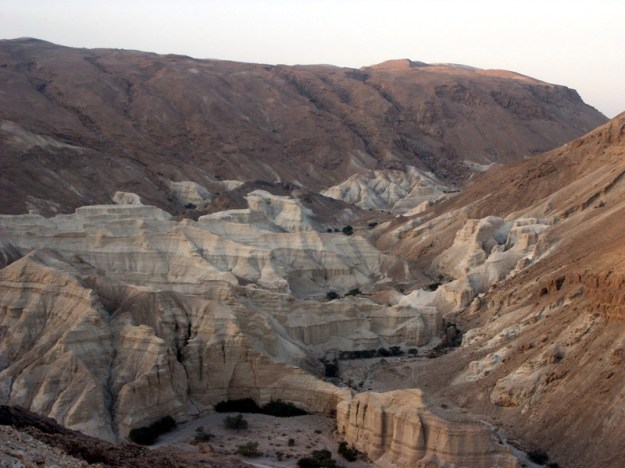
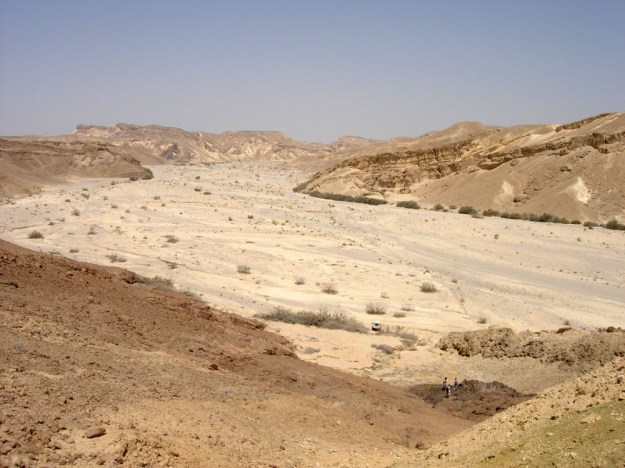
Wadi in Nahal Paran, Negev, Israel By Wilson44691 at English Wikipedia – Photograph taken by Mark A. Wilson (Department of Geology, The College of Wooster).[1], Public Domain, https://commons.wikimedia.org/w/index.php?curid=3140024

The experience of the present is one described metaphorically by the dry watercourses of the Negeb. During the rainy season these creek beds are filled with water but now in the metaphor of the psalm they are dry. Psalm 42 used the imagery of thirsting for water as a metaphor for thirsting for God’s presence:

As a deer longs for flowing streams, so my soul longs for you, O God. Psalm 42:1

The prophet Joel will also use a similar image:

In that day the mountains shall drip sweet wine, the hills shall flow with milk, and all the stream beds of Judah shall flow with water; a fountain shall come forth from the house of the LORD and water the Wadi Shittim. Joel 3:18

It is possible as Walter Beyerin argues that the author of Psalm 126 utilized Joel as a source of imagery as the psalmist, in his reconstruction, attempts to deal with the disappointment that prevailed in Judah after the return from Babylon (NIB III: 1196) but the beauty of the psalms is their ability to fit circumstances frequently encountered in life. Most people can relate to the imagery of drought in the personal, relational, economic, and spiritual struggles of life. The desire for the tears of today to turn to shouts of joy and a desire for the pain of the present to have some harvest of meaning in the future. To live in anticipation that the God who brings an end to the dryness of the watercourses of the Negeb will also turn tears into joy as people come in carrying the sheaves planted in these moments of hardship.

Psalm 125 A Place Where Righteousness Can Flourish

The Judean Hills viewed from the Dead Sea By Kreecher at Russian Wikipedia – Transferred from ru.wikipedia to Commons., Public Domain, https://commons.wikimedia.org/w/index.php?curid=4241172

Psalm 125

A Song of Ascents.

1Those who trust in the LORD are like Mount Zion,
  which cannot be moved but abides forever.
2
As the mountains surround Jerusalem,
  so the LORD surrounds his people
  from this time on and forevermore.
3
For the scepter of wickedness shall not rest
  on the land allotted to the righteous,
 so that the righteous might not stretch out
  their hands to do wrong.
4
Do good, O LORD, to those who are good
  and to those who are upright in their hearts.
5
But those who turn aside to their own crooked ways,
  the Lord will lead away with evildoers.
  Peace be upon Israel!

Bolded words have notes on translation below.

Underlying the wisdom of the psalter is the conviction that God is trustworthy. Those who trust in the LORD become like the one that they trust in the metaphors of this psalm. Jerusalem, the temple, and Mount Zion were viewed as being a place protected by God an idea echoed by Psalm 46: 5,” The LORD is in the midst of the city, it shall not be moved.” Zion as a focal point of hope was likely increased in the aftermath of Sennacherib’s unsuccessful siege of Jerusalem in the time of King Hezekiah/Uzziah (2 Kings 1820). Mount Zion is in the psalm an immovable object and now those who trust in the LORD in the metaphor are also immovable. Yet they are not immovable because they stand on their own but instead, they are surrounded by the LORD’s presence perpetually just as Mount Zion is surrounded by even higher mountains particularly in the east. God is trustworthy and those who trust in God are able to stand fast because they are surrounded by God’s protection and strength.

The Hebrew particle ki which begins verse three indicates a strong contrast between the forces of wickedness and the righteous. I like Nancy deClaissé-Walford’s translation of this verse as “Surely the tribe of the wicked ones will not rest upon the inheritance of the righteous.” (Nancy deClaisse-Walford, 2014, p. 901) which captures several elements of the Hebrew. Some scholars have viewed verse three as indicating a post-exilic era since might indicate a time when ‘the wicked’ dominated the inheritance of ‘the righteous’ but I think the easier reading is to assume a pre-exilic time among a people who believe that God’s defense of the land and the city will never change. The land was a breathing space for the righteous to learn how to live free from the pressures of the wicked world around them. Jerusalem and Mount Zion became a safe space where the righteous were protected from the wicked.

The basic wisdom themes of the LORD watching over the life of the good and leading away the wicked and evildoers is a central theme of the psalms beginning with Psalm 1. The sovereignty, strength, and protection of God over the city was to create a space where righteousness could flourish. Yet the practice of life in Jerusalem in 1&2 Kings and 1&2 Chronicles tells a less rosy story of the city of peace which rested on Mount Zion. As I was thinking about this psalm I was reminded of the opening lines of a Paramore song from 2009 “Turn it Off.” “I scraped my knees while I was praying/ And found a demon in my safest haven.” The people of God have often dreamed of space of safety and well-being, and it is shattering when those places become corrupted. For the prophets that was their understanding of why Jerusalem did not endure on Mount Zion forever, and it is a warning for any place of God that allows the scepter or tribe of wickedness to have power over the righteous ones. The pilgrims of the Songs of Ascent have come seeking a safe space where they can live in righteousness surrounded and protected by the LORD. Those charged with leading places where people gather to worship bear a responsibility in partnership with God to make these places of peace where the righteous are protected. Israel has rarely known peace and as I write these words it is currently at war along with the United States against Iran. Yet I long, along with these pilgrims from long ago, for shalom (peace) for Israel, shalom for those who gather to seek the LORD in churches and synagogues and other holy spaces, and peace for the righteous and the upright in heart.

Psalm 124 Us and God Against the World

Pilgrim Steps Leading to the Double Gate (Southern Steps of the Temple Mount, Jerusalem) picture from 2009 by Wilson44691 – Own work, Public Domain, https://commons.wikimedia.org/w/index.php?curid=6899573

Psalm 124

A Song of Ascents. Of David.

1If it had not been the LORD who was on our side
  —let Israel now say—
2
if it had not been the LORD who was on our side,
  when our enemies attacked us,
3
then they would have swallowed us up alive,
  when their anger was kindled against us;
4
then the flood would have swept us away;
  the torrent would have gone over us;
5
then over us would have gone
  the raging waters.

6
Blessed be the LORD,
  who has not given us
  as prey to their teeth.
7
We have escaped like a bird
  from the snare of the hunters;
 the snare is broken,
  and we have escaped.

8
Our help is in the name of the Lord,
  who made heaven and earth.

Bolded words have notes on translation below.

The overall meaning of the psalm should be clear to any reader: the LORD is the one who is on our side and who rescues us from the perils of the world. The theme of God as strength, support, shelter, rock, shield, fortress and many other metaphors of protection and comfort occur regularly throughout the psalms and scripture in general. The theme of this fifth song of ascent is not new, but its language (somewhat dulled in English translations) is striking. Israel would not continue to exist without the LORD. Paul’s defiant statement in his letter to the church in Rome echoes the sentiment of this psalm: “What then are we to say about these things? If God is for us, who is against us?” (Romans 8:31)

Verse one and two both begin with a statement that seems conditional in English, “If it had not been the LORD who was on our side” but as Nancy deClaissé-Walford highlights,

Verses 1 and 2 both begin with if not (lûlê), forming the protasis of vv. 1-5. Lûlê, however, is only used in Hebrew to express an unreal condition. The psalm-singers are confident that the Lord is on their side. (Nancy deClaisse-Walford, 2014, p. 907)

This psalm of corporate trust in the LORD begins and ends with a confident assurance that the God of Israel has protected the people of God against her enemies. The enemies identified in verse two is identified with the collective noun humanity(‘adam). Israel and God have all humanity arrayed in opposition to them, and without God Israel would have been overwhelmed.

The psalm then uses several images that indicate that the people of God on their own are powerless before those who oppose them. Their enemy is large enough to swallow them alive, or to sweep over the life of the people,[1] to be devoured in the mouth or captured in a trap. In verse six the word rendered teeth is the same word (lason) rendered tongue in Psalm 120:2

          Deliver me, O LORD, from lying lips, from a deceitful tongue.

Compared to the hunter of fowl the people of Israel are like a bird unable to free themselves from the traps their enemies have laid. On their own Israel is small and weak before the mass of humanity arrayed against them. Yet here, as in Psalm 121, their help is in the name of the LORD who makes heaven and earth. What was a confession of individual trust in Psalm 121 is now a corporate statement of trust in the creating and protecting God. As a people they ‘go with God.’

In the United States, where I live and lead a congregation, there is a reliance on self-sufficiency that is very different from the biblical faith represented in the psalms and throughout the bible. As J. Clinton McCann, Jr. aptly writes,

To profess that God is our fundamental help means to profess that we are not sufficient to create and secure our own lives and future. In short, we need help. (NIB IV: 1191)

As people of God, we believe that God is on our side and stands with us against the enemies that threaten to consume or overwhelm us. If it were only our own strength that we could rely on we would find ourselves consumed, overwhelmed, and trapped but in our own weakness we know our help comes from the one who created the heavens and the earth.


[1] In verse 4b and 5 the “us” in the verse is the Hebrew nephesh, often rendered “soul” in English translations but in Hebrew thought it is closer to the essence of life, not something that can be separated from life. J. Clinton McCann, Jr. notes the word may have originally meant neck. (NIB IV: 1190)

Psalm 123 Appealing to the God whose Mercy Overcomes Contempt

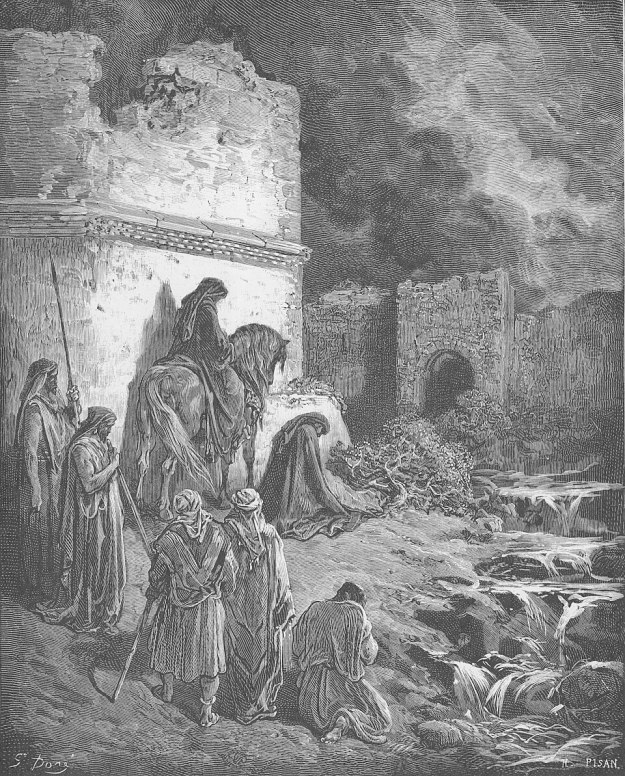
Nehemiah Views the Ruins of Jerusalem’s Walls (Neh. 2:1-20) Gustave Dore, Dore’s English Bible (1866)

Psalm 123

A Song of Ascents 

1To you I lift up my eyes,
  O you who are enthroned in the heavens!
2
As the eyes of servants
  look to the hand of their master,
 as the eyes of a maid
  to the hand of her mistress,
 so our eyes look to the LORD our God,
  until he has mercy upon us.

3
Have mercy upon us, O LORD, have mercy upon us,
  for we have had more than enough of contempt.
4
Our soul has had more than its fill
  of the scorn of those who are at ease,
  of the contempt of the proud.

Bolded words have notes on translation below.

If you read the psalms of ascent as a sequence, which scholars assume was a common practice during a pilgrimage to Jerusalem, there is a narrative that may underly the pattern. The psalmist begins in a place far from the city of peace surrounded by those who desire war (Psalm 120). The psalmist then departs on a journey lifting up their eyes to the hills (Mount Zion-Psalm 121). In the third song of ascent the psalmist arrives at their destination of Jerusalem (Psalm 122). Now in Jerusalem the pilgrim is joined by other pilgrims coming to the city of peace and they turn their eyes to God and lift up their complaint about the world they come from. They have left behind others in a land of people who seek conflict and speak with lying lips (Psalm 120) and now in the city of God they appeal for not only Jerusalem but the world the LORD stands in authority over.

The psalm begins with a solitary speaker lifting up their eyes to the LORD who sits on the seat of authority in heaven. The psalmist may imagine God presiding over the gods of the nations as in Psalm 82 as they address the LORD in this manner, and this may set the stage for the complaint that the people raise about the contempt and scorn they have received in the nations. The eyes of an individual pilgrim are joined by other servants and maids of the LORD their God look to their master for mercy. The Hebrew conception of the relationship between a servant or maid and their master or mistress envisions the master/mistress bearing responsibility for their subordinates. The subordinates are dependent upon their master for their provision and protection, but the expectations of the master in the psalm are conditioned by the merciful LORD their God who is master over the heavens and the earth. The identity of the LORD God as expressed by God in Exodus 34 is:

 “The LORD, the LORD,
a God merciful and gracious,
slow to anger,
and abounding in steadfast love and faithfulness,
7 keeping steadfast love for the thousandth generation,
forgiving iniquity and transgression and sin,
yet by no means clearing the guilty,
but visiting the iniquity of the parents upon the children
and the children’s children,
to the third and the fourth generation.” Exodus 34: 5-7.

And the blessing of the Aaronic priests in Numbers 6:22-27 echoes the ideas of God turning God’s face in graciousness towards those who lift up their eyes to the LORD:

 22The Lord spoke to Moses, saying, 23Speak to Aaron and his sons, saying: Thus you shall bless the Israelites: You shall say to them:
24
The Lord bless you and keep you;
25
the Lord make his face to shine upon you and be gracious to you;
26
the Lord lift up his countenance upon you and give you peace.
  27
So they shall put my name on the Israelites, and I will bless them.”

The pilgrim has joined other pilgrims within the city seeking mercy from the LORD their God and they lift up their eyes and their appeal. As Walter Brueggemann notes, “Our psalmist…dares to look to heaven, not because he is worthy but because he knows that the master to whom he looks is merciful.” (Bellinger, 2014, p. 533)

The character of the people of God is expected to match the God who they serve and this informs the view of what the kings, princes, and nobles of Israel were to be. The character of God is one of the reasons that subordinates can look to those in authority over them with the expectation of receiving mercy. This psalm made me reflect on leaders I have encountered in numerous settings who I was proud to serve under. They were leaders who were invested in those who they led and were dependable. Many of them saw the way they led as connected to their faith and it was reflected not only in their actions but in the response of their subordinates to their authority.

Psalm 123 is unusual because it ends in complaint rather than thanksgiving, but it may rely on the following psalm to complete the normal pattern. The pilgrim looks at the world of people of lying lips and who seek conflict and they dare to seek in their God, “the grace that overcomes the world.” (Mays, 1994, p. 396) Before they begin their complaint they have invoked God’s mercy three times. They need God’s mercy to overcome the contempt and scorn which have overwhelmed them. Nancy deClaissé-Walford notes on the translation of verse three and four:

The word translated overwhelmed (NRSVue have had more than enough/ its fill) is from the root ‘saba’, which means, literally, “eat one’s full, be sated, have enough.” And interestingly the word translated mockery (NRSVue scorn) is from the root la’ag, which beans literally, “speak with a stammering tongue.” (Nancy deClaisse-Walford, 2014, p. 904)

Their experience of conflict and lies in their communities have overwhelmed them. They have had more of mockery and scorn than they can take and the leaders in the communities they have come from leave them crying out for God’s mercy which can overcome the mockery and scorn which overwhelms them.

J. Clinton McCann, Jr. connects the language of this complaint to the post-exilic experience of the time of Nehemiah.

As several scholars observe, the situation certainly sounds like that of the post-exilic era (see, e.g., Neh 2:19, 4:4, where “ridiculed” and “despised” represent the same Hebrew root as “contempt” in Ps 123: 3-4, “scorn” in 123:4 also occurs in Neh 2:19; 4:1 as “mocked.” (NIB IV: 1187)

The post-exilic experience of returning to the remains of the once proud city of Jerusalem and being taunted by their neighbors is a reasonable backstory for the psalm, but the experience of being overwhelmed by contempt or scorn is a common experience. If the experience is tied to the experience of Psalm 120 that also is a common experience of people longing for peace and justice in an unjust world that seeks conflict. That is one of the reasons that the psalms continue to resonate thousands of years after their composition. They may have originally spoken to a specific crisis in the pilgrim’s life but now they speak to the community of the faithful raising their eyes to God and appealing for God’s mercy which can overcome the experiences and injustices which threaten to overwhelm them.

Psalm 122 Prayers of Peace for Jerusalem

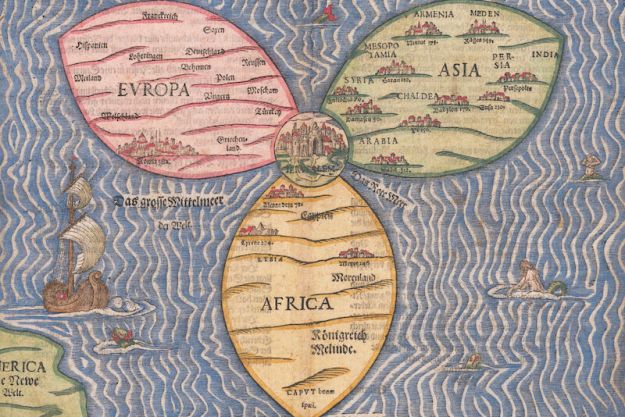
The Bünting Clover Leaf Map, by Heinrich Bünting, was published in 1581 and depicts Jerusalem as the center of the world.

Psalm 122

A Song of Ascents

1I was glad when they said to me,
  “Let us go to the house of the LORD!”
2
Our feet are standing
  within your gates, O Jerusalem.

3
Jerusalem—built as a city
  that is bound firmly together.
4
To it the tribes go up,
  the tribes of the LORD,
 as was decreed for Israel,
  to give thanks to the name of the LORD.
5
For there the thrones for judgment were set up,
  the thrones of the house of David.

6
Pray for the peace of Jerusalem:
  “May they prosper who love you.
7
Peace be within your walls
  and security within your towers.”
8
For the sake of my relatives and friends
  I will say, “Peace be within you.”
9
For the sake of the house of the LORD our God,
  I will seek your good
.

Bolded words have notes on translation below.

If we look at the first three songs of ascent in order (Psalm 120-122) there is a suggestive narrative. The psalmist begins in a place far from the city of peace surrounded by those who desire war (Psalm 120). The psalmist then departs on a journey lifting up their eyes to the hills (Mount Zion-Psalm 121). In this third song of ascent the psalmist arrives at their destination of Jerusalem. (NIB IV:1183) This song of thanksgiving upon arriving in the city of Jerusalem, the spiritual center of their world captures the joy of a pilgrim upon reaching their long-awaited destination.

Both Isaiah 2: 2-3 and Micah 4:1-4 envision Jerusalem as being the spiritual center of the world for Jews and Gentiles, where the nations see the people living in harmony with God’s will for the world and they come to the mountain of God seeking instruction. Jerusalem becomes the pivot for a complete reordering of power in the prophetic imagination as swords become plowshares and spears become pruning hooks. The city of shalom (Jerusalem) becomes a light on the hill that the nations are drawn to learn God’s ways of peace.

The psalm is structured around the two houses that reside in Jerusalem: the house of the LORD and the house of David. The house of David occupies the central verse of the poem structurally, and the royal house occupies an important role in providing judgment for people coming to the city. As James L. Mays can highlight:

Pilgrimage season was likely a time when conflicts and disputes unsettled in the country courts were brought to the royal officials and their successors in the postexilic period. The peace of the community depended on the establishment of justice. Pilgrimage is a journey in search of justice. (Mays, 1994, p. 393)

The house of David has a crucial role in making Jerusalem a place of shalom, but the psalm also places the house of the LORD as the bookends structurally of the psalm. The place of the house of the LORD at the beginning and end encompasses the authority of the house of David. (NIB IV: 1184) 2 Samuel 7 makes a similar point when the LORD informs David that he will build a house (lineage) for David rather than David building a house for the LORD.

The psalm begins with a joyous embrace of the traditional call to go up to the house of the LORD. There is some debate about whether the perspective of the psalmist is currently in Jerusalem (are) or whether it should be translated in past tense as the psalmist remembers Jerusalem in anticipation of a journey, but I have stayed with the NRSVue’s translation of Our feet are standing. From the perspective of the pilgrim, Jerusalem is a city bound firmly together. There is some Hebrew word play in the word for bound (Hebrew habar) which is never elsewhere used for construction and always refers to human alliances or covenants. (NIB IV:1184) The psalm imagines a time where the unified tribes of Israel gather in Jerusalem as a place of festival, worship, and ultimately peace making.

The language in verse six to seven centers around shalom (peace) and Jerusalem (yeru-shalom) and the structure in Hebrew makes this even clearer by the phonetic repetition of ‘sh’ and ‘l’ sounds. As Nancy deClaissé-Walford states:

Of the ten Hebrew words that make up vv. 6 and 7, six contain the letters sin and lamed: ask (sha’alu); well-being (twice) (shalom); Jerusalem (yerushalaim); may they be at ease (yishelayu); and tranquility (shalwa)—acoustically and visually emphasizing the theme of well-being. (Nancy deClaisse-Walford, 2014, p. 901)

Jerusalem is the city of shalom, the longed-for peace absent in Psalm 120. Peace is for the city of peace, for the walls that defend the city from hostility, and for the families who are present in the city or back home. Psalm 133 will later echo this hope for peace among relatives.

Walter Brueggemann and William H. Bellinger make an important point for this prophetic imagination of the people in the context of the exile. When there is no longer a city of shalom to seek where the houses of the LORD and David reside, how are the people to function? Brueggemann points to the prophet Jeremiah (Jeremiah 29: 4-10) when he states:

”seek the welfare of the city where I have sent you in exile, and pray to the LORD on its behalf, for in its welfare you will find your welfare.” The word “welfare” of course renders the Hebrew shalom; the prophet is exhorting the deportees to pray for the shalom of the city of Babylon. (Bellinger, 2014, p. 530)

In the absence of the city, the temple, and the Davidic king it was still possible to seek peace, but it involved seeking the shalom of the place where you find yourself transplanted. Even if Jerusalem is de-centered from the world, peace can still be found in the cities where the pilgrims sojourn.

Psalm 121 Vaya Con Dios

View from Badwater Basin in Death Valley shared by photographersnature under CC 3.0 https://en.wikipedia.org/wiki/Death_Valley#/media/File:Badwater_Desolation.jpg

Psalm 121

1I lift up my eyes to the hills—
  from where will my help come?
2
My help comes from the LORD,
  who made heaven and earth.

3
He will not let your foot be moved;
  he who keeps you will not slumber.
4
He who keeps Israel
  will neither slumber nor sleep.

5
The LORD is your keeper;
  the LORD is your shade at your right hand.
6
The sun shall not strike you by day
  nor the moon by night.

7
The LORD will keep you from all evil;
  he will keep your life.
8
The LORD will keep
  your going out and your coming in
  from this time on and forevermore.

Notes on the bolded words below.

One of my favorite farewells is the Spanish ‘vaya con dios’ which means ‘go with God.’ The English Godspeed is similar, which comes from the middle English ‘God spede you’ which means ‘may God prosper you.’ This short but well-loved psalm may have originated as a song for pilgrims making the journey to mount Zion to worship. The departing pilgrim receives a blessing from the one wishing God’s guarding presence upon the pilgrim. It may have originated as a ‘farewell liturgy’ as James Limburg identified this psalm, (NIB IV: 1180) but for many faithful people this has become a psalm of trust which encompasses the entire life of the faithful one guarded by the God who is both personally available and cosmically powerful.

The first two verses of the psalm are spoken by the pilgrim and is spoken in first person. The individual looks to the surrounding landscape to the hills, and likely to the destination of Zion, but their help for through the dangers of the coming journey do not come from the hills but from the LORD. The LORD is both ‘my help,’ one who is personally concerned for the fate of this pilgrim departing on the journey but also ‘the LORD who made heaven and earth.’ In a common duality seen in scripture God is both powerful and attentive, over all things and concerned about the life of the faithful one who places their life in God’s hand.

In verse three the voice now shifts to the one remaining behind as the pronouns are now second person. Within the final eight verses the word rendered ‘keep’ or ‘keeper’ in the NRSVue is the Hebrew samar. The Hebrew samar is a more active concept than ‘keep’ and has the active sense of guarding and watching over. (Nancy deClaisse-Walford, 2014, pp. 895-897) Within the movement of the psalm the God who guards will not slumber during his time of protecting and watching over the pilgrim. The LORD guards Israel and the LORD will guard the faithful one. The language continues and intensifies as the LORD guards and provides a shade (Hebrew sel) for the pilgrim. The word for shade (sel) is often used in the psalter in the phrase ‘the shelter (sel) of you wings’ and may reference the image of God extending God’s wing or cloak in protection and shelter in the journey through the wilderness. The sun and moon have sometimes been thought of mythologically as forces which oppose the pilgrim’s journey but this is not necessary for the psalm for a journey through desert on the journey to Jerusalem (or any other destination).

In the Lord’s prayer the petition ‘and deliver us from evil (or the evil one)’ taps into a consistent theme with the LORD guarding the pilgrim from evil and guarding their life. In a common Hebrew merism[1] the LORD watches over the totality of the pilgrim’s journey, their departures and their returning home for this journey and their entire life.

Psalm 121 has a rich use in the worship life of the church, and it is frequently used with both baptismal liturgies and funeral services. The psalm’s use in these two moments that form the bookends of the Christian life nicely encompass the belief that God guards the person of faith throughout the totality of their life. Martin Luther would have parents teach their children to “fear, love, and trust God above all things.” This psalm echoes the trustworthiness of the God who guards the life of the faithful one. It is a blessing for the entirety of the journeys of life as people of faith go with God. Our entire life is guarded and sheltered by the God who is both personally available and cosmically powerful.


[1] A merism is a literary device which denote the totality or completeness of something.

The Book of Psalms 1-120

Love is Not a Victory March by Marie -Esther@deviantart.com

Book I (Psalms 1-41)

Psalm 1: Poetry and Law

Psalm 2: The Lord’s Messiah

Psalm 3: Hope in the Heart of Brokenness

Psalm 4: Finding a Space in the Blessing

Psalm 5: The God Who Hears and Protects

Psalm 6: How Long, O Lord

Psalm 7: The God Who Judges

Psalm 8: The Soul Searcher’s Psalm

Psalm 9: Praising the God of Justice and Might

Psalm 10: Calling Upon God to be God

Psalm 11: Confident Faith in the Midst of Trouble

Psalm 12: Save Us From Ourselves

Psalm 13: The Cry from a Godforsaken Place

Psalm 14: The Wisdom of Holding to the Covenant

Psalm 15: Entering the Sacred Presence of God

Psalm 16: Remaining Faithful in a Pluralistic Setting

Psalm 17: An Embodied Prayer

Psalm 18: Royal Thanks at the End of the Journey

Psalm 19: Creation, the Law and a Faithful Life

Psalm 20: In the Day of Trouble

Psalm 21: A Blessing for the King

Psalm 22: A Desperate Cry to God

Psalm 23: The LORD as Shepherd, Host, and Destination

Psalm 24: The Coming of the LORD

Psalm 25: The Struggle of Faith from Aleph to Tav

Psalm 26: Liturgy of the Falsely Accused

Psalm 27: Faith in an Age of Anxiety

Psalm 28: Can You Hear Me LORD?

Psalm 29: The Thundering Voice of God

Psalm 30: The Life of Praise

Psalm 31: Faith, Questions, and the Life of Faith

Psalm 32: A Psalm of Restoration

Psalm 33: The Earth is Full of the Steadfast Love of God

Psalm 34: The Experienced Faithfulness of God

Psalm 35: Lord, Fight for me in the Struggle

Psalm 36: The Way of God and the Way of the Wicked

Psalm 37: A Song of a Wise Life

Psalm 38: A Cry for Forgiveness and Healing

Psalm 39: There Are No Words

Psalm 40: Experienced Faithfulness and the Hope of Deliverance

Psalm 41: The One Who Cares for the Poor

Book II (Psalms 42-72)

Psalm 42: Thirsting for God in an Arid Time

Psalm 43: Calling for God’s Love among a Loveless People

Psalm 44: Demanding a Fulfillment of God’s Covenant Promises

Psalm 45: A Love Song Among the Psalms

Psalm 46: A Mighty Fortress

Psalm 47: God Assumes Kingship Over Creation

Psalm 48: God and Zion

Psalm 49: Wealth, Wisdom and Death

Psalm 50: Recalled to the Covenantal Life

Psalm 51: Seeking the Possibility of Redemption

Psalm 52: The Wicked Will Not Prosper Forever

Psalm 53: Reflecting Again on the Unjust

Psalm 54: A Cry for Deliverance

Psalm 55: A Desperate Prayer from an Unsafe Environment

Psalm 56: Trusting God in the Midst of Trouble

Psalm 57: Fleeing to the Steadfast Love and Faithfulness of God

Psalm 58: A Jagged Prayer for Vengeance

Psalm 59: God’s Steadfast Love as an Alternative to the Dog-Eat-Dog Worldview

Psalm 60: A Plea for God’s Return to the People

Psalm 61: A Life Dependent on God

Psalm 62: Truly Faith Surrounds My Troubles

Psalm 63: Hungering and Thirsting

Psalm 64: Protect the Innocent One from the Words of the Wicked

Psalm 65: A Song of Thanksgiving to a Gracious Creator

Psalm 66: Formed by Steadfast Love

Psalm 67: A Blessing for the Earth

Psalm 68: God as Warrior and Protector of the Powerless

Psalm 69: A Cry for Deliverance from Unjust Suffering

Psalm 70: God Help Me Quickly

Psalm 71: A Prayer for Help Shaped by a Life of Worship

Psalm 72: Leading God’s Covenant People

Book III (Psalms 73-89)

Psalm 73: When Faith is Challenged

Psalm 74: A Psalm When the World Collapses

Psalm 75: God’s Answer to the Boastful and Arrogant

Psalm 76: The Fearfully Powerful Defender of Peace

Psalm 77: Searching for God in a Shattered World

Psalm 78: Telling History to Change the Future

Psalm 79: Words of Pain and Hope in a National Crisis

Psalm 80: A People Waiting for God’s Forgiveness

Psalm 81: Hear, O People

Psalm 82: The God Who Upholds Justice for the Vulnerable

Psalm 83: A Fearful Prayer for Deliverance

Psalm 84: Better is One Day in the House of God

Psalm 85: Waiting for God’s Kingdom to Come

Psalm 86: A Servant’s Plea For Their Lord’s Deliverance

Psalm 87: Mother Jerusalem

Psalm 88: Only Darkness Knows Me

Psalm 89: Shattered Worlds and Broken Symbols

Book IV (Psalms 90-106)

Psalm 90: Remembering the Character of God in Crisis

Psalm 91: Enfolded in God’s Protection

Psalm 92: Song of the Sabbath

Psalm 93: God the King

Psalm 94: Thy Kingdom Come

Psalm 95: Lifting Up Voices and Listening in Silence

Psalm 96: A New Song of God’s Triumph

Psalm 97: The Righteous Reign of God

Psalm 98: A Joyous Song of God’s Salvation

Psalm 99: The Universal King Worshipped by a Particular People

Psalm 100: Know the LORD is God and we are God’s

Psalm 101: A Leader Shaping a Community of Character

Psalm 102: The Song Of One Suffering In Solitude

Psalm 103: A Meditation on the Steadfast Love of God

Psalm 104: Praise the Great God of Creation

Psalm 105: Give Thanks to the Faithful God of Our Story

Psalm 106: Confessing the Unfaithfulness of the People of God

Book V (Psalms 107-150)

Psalm 107: The God of Steadfast Love who Rescues

Psalm 108: Old Words Brought Together For A New Time

Psalm 109: A Prayer for God’s Vengeance

Psalm 110: A Psalm of Enthronement

Psalm 111: The Beginning of Wisdom

Psalm 112: An Authentic Life Shaped by Wisdom

Psalm 113: The God On High Who Lifts The Lowly

Psalm 114: The Awesome God Of The Exodus

Psalm 115: Trusting God Above All Things

Psalm 116: The God Who Delivers from Death

Psalm 117: The Goal of all the Peoples

Psalm 118: A Reflection on the Steadfast Love of God

Psalm 119: An Artistic Articulation of Life Under the Law

Psalm 120: A Pilgrimage To A Place of Peace

Psalm 120 A Pilgrimage To A Place Of Peace

Pilgrim Steps Leading to the Double Gate (Southern Steps of the Temple Mount, Jerusalem) picture from 2009 by Wilson44691 – Own work, Public Domain, https://commons.wikimedia.org/w/index.php?curid=6899573

Psalm 120

A Song of Ascents.

1 In my distress I cry to the LORD, that he may answer me:

2 “Deliver me, O LORD, from lying lips, from a deceitful tongue.”

3 What shall be given to you? And what more shall be done to you, you deceitful tongue?

4 A warrior’s sharp arrows, with glowing coals of the broom tree!

5 Woe is me, that I am an alien in Meshech, that I must live among the tents of Kedar.

6 Too long have I had my dwelling among those who hate peace.

7 I am for peace; but when I speak, they are for war.

The Psalms of Ascent (Psalm 120 – 134) are fifteen psalms that may have been used as a part of the pilgrimage to Jerusalem. Jerusalem sits upon a hill so any approach to Jerusalem is always an ascent, but the ascent may also refer to the ascending of the steps of the temple. Mishnah states there are fifteen steps that lead from the Court of Women to the Court of the Israelites which correspond to the fifteen psalms. (Nancy deClaisse-Walford, 2014, p. 887) It is conceivable that a practice of reciting these fifteen short (except for Psalm 132) psalms as one approaches Jerusalem or as one ascends the steps of the temple. As this psalm indicates, this practice may help the people transition from their exile in a world of war and deceitful tongues to their homecoming in the city of peace.[1]

Too long have I had my dwelling among those who hate peace. The poet is a stranger in a strange land. They are a foreigner/alien(ger) in the midst of a people of different gods, sharp tongues, and unjust practices. Meshech and Kedar are likely metaphors for places both geographically and spiritually distant from the memory of their homeland. The situation of this psalm forms the antithesis of Psalm 133: How very good and pleasant it is when kindred live together in unity. The situation of Psalm 120 could be summarized: how traumatizing it is for one who lives as an alien among those who love division.

In language that resonates with James 3: 1-12, the psalmist describes the tongue as an instrument of violence. The psalmist may be the direct recipient of these deceitful and painful words, or they may exist in a society where the truth has disappeared.[2] Like the son in the parable of the prodigal[3] they may find themselves vulnerable and hungry in a world where no one cares. It may be ironic, as Brueggemann and Bellinger state, that the person who considers themself a person of peace would respond to these deceitful tongues with metaphorical weapons of war (Bellinger, 2014, p. 524) but the psalmist is asking for God to deliver. God is in the position to judge the people who the psalmist lives among. Yet, it is also possible that the description in verse four is merely a continuation of the description of the words of the lying lips and deceitful tongues. Sharp weapons are used metaphorically along with predatory animals to describe people hostile to the psalmist in Psalm 57:4. The broom tree is a hard wood tree known for its long burning fires. (Nancy deClaisse-Walford, 2014, p. 892)

This psalm can resonate with people of all times who attempt to live justly in an unjust world. Who seek peace (shalom) among a people whose words and actions seek conflict. As James L. Mays states about Psalm 120,

It is a poignant expression of the pilgrims’ pain over the world from which they come. It puts that world in the sharpest possible contrast to the peace they desire and seek in coming to Zion. (Mays, 1994, p. 388)

People of peace long for a homecoming where they can live in unity with their brothers and sisters who speak with truthful lips and words that heal instead of these weaponized tongues they encounter in the land of their sojourn. Pilgrimage, either physical or spiritual, is a hopeful ascent to a place of shalom.


[1] Jerusalem’s name comes from a combination of the word for city and shalom.

[2] Similar imagery is used in Psalm 10:4; 12: 1-4; and 31:8.

[3] Luke 15: 11-32.