1Naaman, commander of the army of the king of Aram, was a great man and in high favor with his master because by him the Lord had given victory to Aram. The man, though a mighty warrior, suffered from a skin disease. 2Now the Arameans on one of their raids had taken a young girl captive from the land of Israel, and she served Naaman’s wife. 3She said to her mistress, “If only my lord were with the prophet who is in Samaria! He would cure him of his skin disease.” 4So Naaman went in and told his lord just what the girl from the land of Israel had said. 5And the king of Aram said, “Go, then, and I will send along a letter to the king of Israel.” He went, taking with him ten talents of silver, six thousand shekels of gold, and ten sets of garments. 6He brought the letter to the king of Israel, which read, “When this letter reaches you, know that I have sent to you my servant Naaman, that you may cure him of his skin disease.” 7When the king of Israel read the letter, he tore his clothes and said, “Am I God, to give death or life, that this man sends word to me to cure a man of his skin disease? Just look and see how he is trying to pick a quarrel with me.” 8But when Elisha the man of God heard that the king of Israel had torn his clothes, he sent a message to the king, “Why have you torn your clothes? Let him come to me, that he may learn that there is a prophet in Israel.” 9So Naaman came with his horses and chariots and halted at the entrance of Elisha’s house. 10Elisha sent a messenger to him, saying, “Go, wash in the Jordan seven times, and your flesh shall be restored, and you shall be clean.” 11But Naaman became angry and went away, saying, “I thought that for me he would surely come out and stand and call on the name of the LORD his God and would wave his hand over the spot and cure the skin disease! 12Are not Abana and Pharpar, the rivers of Damascus, better than all the waters of Israel? Could I not wash in them and be clean?” He turned and went away in a rage. 13But his servants approached and said to him, “Father, if the prophet had commanded you to do something difficult, would you not have done it? How much more, when all he said to you was, ‘Wash, and be clean’?” 14So he went down and immersed himself seven times in the Jordan, according to the word of the man of God; his flesh was restored like the flesh of a young boy, and he was clean. 15Then he returned to the man of God, he and all his company; he came and stood before him and said, “Now I know that there is no God in all the earth except in Israel; please accept a present from your servant.” 16But he said, “As the LORD lives, whom I serve, I will accept nothing!” He urged him to accept, but he refused. 17Then Naaman said, “If not, please let two mule loads of earth be given to your servant, for your servant will no longer offer burnt offering or sacrifice to any god except the Lord. 18But may the LORD pardon your servant on one count: when my master goes into the house of Rimmon to worship there, leaning on my arm, and I bow down in the house of Rimmon, when I do bow down in the house of Rimmon, may the LORD pardon your servant on this one count.” 19He said to him, “Go in peace.”
The healing of Naaman, along with Elijah’s ascent in the whirlwind, are probably the two best-known and most frequently used stories from 2 Kings in the life of the church. This story, along with Elijah’s provision of meal and oil for the widow of Zarephath, is utilized in Luke 4:27 as an explanation for the expansiveness of Jesus’ ministry, but it is also paired with Jesus’ healing of lepers in the gospels. Naaman is both the victorious mighty warrior who occupies a privileged position with the king of Aram and has servants and slaves along with the access to considerable wealth and power, but in Israel he is also a Gentile, an unclean one, and an oppressor. The story illustrates the fundamental differences between the world envisioned by the king of Aram and Naaman at the beginning of the story and the prophet Elisha when he enters in the middle of the story.
The position of Naaman, in the view of 2 Kings, is a result of the LORD the God of Israel granting him victory leading the Arameans. On the one hand this provides an explanation for the defeat of Israel by a foreign power, the defeat is a judgment on the unfaithfulness of Samaria. On the other hand, it makes the mighty warrior subject, unknowingly at the beginning of the story, to the LORD the God of Israel. Even a captive young woman from Israel knows what this mighty warrior cannot, that the hope for healing resides in Samaria. This young woman who is a captive and the mighty man who is a leader of armies may be on opposite sides of the power differential but in the story they are linked. Captured slaves often have an unfavorable view of their masters, yet in Naaman throughout the story we see that this mighty man is both respected enough by his servants for them to speak truthfully and compassionately to him and Naaman as their master listens. The commander of warriors who can deliver victories depends upon the knowledge willingly shared by a captured young woman residing in his household.
The skin disease which has been traditionally translated as leprosy is probably not what we today categorize as leprosy (or Hansen’s disease) but it was something that ancient cultures took very seriously. Leviticus 13-14 deals with the priestly role in the diagnosis, the social implications for a person diagnosed with this skin disorder and the method that they can also be reintegrated into the community once they are healed. The seriousness of the disease can be demonstrated by the incredible amount of wealth (ten talents of silver, six thousand shekels of gold, and ten sets of garments)[1] which the king of Aram sends to the king of Israel to bring about the healing of his favored commander.
In the ancient world there was no concept of separation of religious and state powers. For most ancient kings, even in Israel, there are religious figures including prophets in the royal court. The prophet Nathan was involved in the court of king David, and earlier in the Omri dynasty we saw the conflict between the prophets who spoke favorably to king Ahab and Micaiah who was a faithful prophet of the LORD but not in royal favor. As Alex Israel notes about the contrasting views of prophets between the kings of Aram and Israel:
The king of Aram was incapable of imagining a scenario in which the prophet would not be fundamentally subordinate to the king, and so he sought the prophet by means of the latter. By contrast, the king of Israel couldn’t conceive a situation in which the prophet would be responsive to his control, and so he failed to entertain the prospect of appealing to Elisha! (Israel, 2019, p. 98)
The king of Aram views the king of Israel as his subordinate who he can command, but Elisha does not answer to the king of Israel. Yet, Elisha does hear of the king’s distress and instructs him to send Naaman to him.
Naaman has probably encountered other healers and prophets in Damascus who attempted to heal his skin disease, and he has ideas of how that process should look for a person of his station. As a person of high status, he anticipated personal attention from the prophet. His status as a mighty warrior and commander of the armies of Aram have allowed him to be a person who is able to fulfill their request, but now he finds that this status means nothing before the prophet, and he is reduced to a “supplicant who comes to the healer as a leper.” (Brueggemann, 2000, p. 334) Yet, as previously we saw with the young woman from Israel, Naaman is a master who his servants are willing to speak to in an honest and compassionate way. Once Naaman has completed his complaint about the command delivered by an emissary to wash in the Jordan, his servants are able to convince him that the prophet has not asked a hard thing, and it is in Naaman’s interest to attempt this novel cure.
The washing in the Jordan results in Naaman’s skin becoming like a young boy. The description of Naaman’s skin utilizing the masculine form of the words used to describe the young girl at the beginning of the story now link the two together. In some way Naaman is now like this enslaved young woman even though they occupy vastly different places in the social hierarchy. Both stand in a place of dependency before God and Naaman has not only learned that there is a prophet in Samaria, but that there is no God in all the earth except in Israel.
After the healing Naaman stands, with all his company before the prophet Elisha. Naaman attempts to offer payment, but Elisha swears that he will take no payment.[2] Naaman then makes two requests when payment continues to be refused. First Naaman requests to take two mule loads of earth. Naaman likely believes that the God of Israel is tied to the land of Israel and bringing the earth will allow him to build an altar or worship space where he can access this God whom he has discovered. Secondly, he requests that in his state functions that God would not hold it against him when he escorts his master into the worship space of Rimmon, the god of Damascus. Elisha does not judge Naaman for these requests and instructs him to depart in shalom.
2 Kings 5: 19b-27
But when Naaman had gone from him a short distance, 20Gehazi, the servant of Elisha the man of God, thought, “My master has let that Aramean Naaman off too lightly by not accepting from him what he offered. As the LORD lives, I will run after him and get something from him.” 21So Gehazi went after Naaman. When Naaman saw someone running after him, he jumped down from the chariot to meet him and said, “Is everything all right?” 22He replied, “Yes, but my master has sent me to say, ‘Two members of a company of prophets have just come to me from the hill country of Ephraim; please give them a talent of silver and two changes of clothing.’ ” 23Naaman said, “Please accept two talents.” He urged him and tied up two talents of silver in two bags, with two changes of clothing, and gave them to two of his servants, who carried them in front of Gehazi. 24When he came to the citadel, he took the bags from them and stored them inside; he dismissed the men, and they left. 25He went in and stood before his master, and Elisha said to him, “Where have you been, Gehazi?” He answered, “Your servant has not gone anywhere at all.” 26But he said to him, “Did I not go with you in spirit when someone left his chariot to meet you? Is this a time to accept silver and to accept clothing, olive orchards and vineyards, sheep and oxen, and male and female slaves? 27Therefore the skin disease of Naaman shall cling to you and to your descendants forever.” So he left his presence diseased, as white as snow.
The stories of the previous chapter seem to indicate that the company of prophets (or sons of the prophets) continually struggle with poverty and this may inform Gehazi’s action contrary to his master Elisha. As Choon-Leong Seow remarks, “the faithfulness of Naaman’s slave girl at the beginning of the story stands in stark contrast to the treachery of Elisha’s servant at the end of the chapter.” (NIB III:192) While Elisha swore an oath (“as the LORD lives”) that he would accept no gift (literally blessing) from Naaman his servant Gehazi swears an oath that he will take something from this Gentile. Gehazi runs after Naaman’s party and Naaman, after dismounting his chariot asks, “Is all shalom?” Gehazi gives a reason for wanting a blessing/payment from Naaman, which Naaman is eager to grant giving double the initial request. For Naaman this is far less than the ten talents of silver he was willing to pay as payment for healing, but the roughly one hundred fifty pounds of silver with two sets of garments[3] which two of Naaman’s servants carry back to the citadel would be an incredible amount of wealth among the company of prophets. Yet, Gehazi’s secret is known by Elisha and the Hebrew indicates that Elisha’s heart went with Gehazi (NRSV ‘spirit’). Silver and clothing, land and livestock, servants and slaves for the company of the prophets is not where their security comes from. Gehazi has trusted in the same things that the king of Aram and Naaman trusted, and Elisha indicates that now Naaman’s skin disease will cling to Gehazi and his descendants.
The healing of Naaman does not end the conflict between Aram and Samaria which will continue in the narrative of the next two chapters. It is also not the end of Gehazi’s role in the story who will reappear in chapter eight. It is possible that the healing of Naaman is brought forward in the story to be a part of an Elisha cycle of miracles which reaches its peak with the thwarting of the king of Aram’s invasion of Israel. The king of Israel’s inability to heal his servant did not provide the provocation for a continued war, but ultimately the healing of Naaman did not end the conflict between Samaria and Damascus.
[1] The NIV notes that 10 shekels of silver is about 750 lbs (340 kg) of silver and 6,000 shekels of gold is about 150 lbs (70 kg).
[2] Numbers 22:18 and Daniel 5:17 are both times where two very different prophets (Balaam and Daniel) indicate that gold will not be acceptable to earn favor or as payment for a servant of the LORD.
[3] Garments in the ancient world are also expensive and an indicator of wealth.
Carmelite chapel – “Elisha resurrecting the son of the Shunammitee” by Jean-Baptiste Despax (1710-1773)
2 Kings 4:1-7
1Now the wife of a member of the company of prophets cried to Elisha, “Your servant my husband is dead, and you know that your servant feared the LORD, but a creditor has come to take my two children as slaves.” 2Elisha said to her, “What shall I do for you? Tell me, what do you have in the house?” She answered, “Your servant has nothing in the house except a jar of oil.” 3He said, “Go outside, borrow vessels from all your neighbors, empty vessels—and not just a few. 4Then go in, shut the door behind you and your children, and start pouring into all these vessels; when each is full, set it aside.” 5So she left him and shut the door behind her and her children; they kept bringing vessels to her, and she kept pouring. 6When the vessels were full, she said to her son, “Bring me another vessel.” But he said to her, “There are no more.” Then the oil stopped flowing. 7She came and told the man of God, and he said, “Go sell the oil and pay your debts, and you and your children can live on the rest.”
The fourth chapter of 2 Kings again departs from the normal royal time that structures the book. Throughout these four stories of miracles that Elisha performs the kings of Israel and Judah are never mentioned. The four stories all have thematic connections with the miracles of Elijah and the widow of Zarephath in 1 Kings 17: 8-24 and the four miracle stories where Elijah has two may thematically model the doubling of Elijah’s spirit that Elisha received as his prophetic heir. The stories can be viewed within the chapter as two stories related women and their children and two stories of providing food, of as two stories of miraculous provision which surround two stories of rescue from death. Ultimately all four stories weave together in a tapestry of stories about the man of God who leads the company of prophets.[1]
The kings of Israel and Judah are not ever mentioned in these stories, but in their absence we get in this first story a window into the world at the time of Elisha and the view is not flattering. The story provides, “a disturbing glance of the cruel socioeconomic reality of ancient Israel.” (Israel, 2019, p. 65) A world that is strikingly different from the world imagined in the law. A world in which widows, one of the vulnerable groups in the ancient world, and their children stand vulnerable to creditors. In Exodus widows, along with resident aliens and orphans, are mentioned as recipients of God’s special protection.
You shall not abuse any widow or orphan. If you do abuse them, when they cry out to me, I will surely hear their cry; my wrath will burn, and I will kill you with the sword, and your wives shall become widows and orphans. Exodus 22: 22-24
This entire story responds to this small portion of Exodus 22 when the oppressor in the story turns out to be a creditor/moneylender (Hebrew nosheh) which is mentioned in the verses immediately following Exodus’ warning not to abuse widows and orphans.
If you lend money to my people, to the poor among you, you shall not deal with them as a creditor (nosheh); you shall not exact interest from them. If you take your neighbor’s cloak in pawn, you shall restore it before the sun goes down; for it may be your neighbor’s only clothing to use as cover; in what else shall that person sleep? And if your neighbor cries out to me, I will listen, for I am compassionate. Exodus 22: 25-27
The company of prophets throughout these stories seem to operate from a place of poverty, and there is no economic ability within the community to pay off the creditor without the miracle. This is a story of provision that comes from God acting through the man of God.[2] Interestingly throughout these stories Elisha rarely mentions God and assumes that God will act upon his words.
The action that Elisha narrates for the woman does involve both participation from herself and her children, the community of people around them, and most importantly God. The woman and her children are to collect vessels from the surrounding community. Although the text does not specifically indicate that she does this[3] there are an unknown number of vessels available for her and her children to fill behind closed doors.[4] The oil in the house fills all the available vessels and provides a means to paying off the creditors, providing a source of income for the widow and her children, and providing protection in an world that would enslave the children for their father’s debts.
2 Kings 4: 8-37
8 One day Elisha was passing through Shunem, where a wealthy woman lived, who urged him to have a meal. So whenever he passed that way, he would stop there for a meal. 9 She said to her husband, “Look, I am sure that this man who regularly passes our way is a holy man of God. 10 Let us make a small roof chamber with walls and put there for him a bed, a table, a chair, and a lamp, so that he can stay there whenever he comes to us.” 11 One day when he came there, he went up to the chamber and lay down there. 12 He said to his servant Gehazi, “Call the Shunammite woman.” When he had called her, she stood before him. 13 He said to him, “Say to her: Since you have taken all this trouble for us, what may be done for you? Would you have a word spoken on your behalf to the king or to the commander of the army?” She answered, “I live among my own people.” 14 He said, “What then may be done for her?” Gehazi answered, “Well, she has no son, and her husband is old.” 15 He said, “Call her.” When he had called her, she stood at the door. 16 He said, “At this season, in due time, you shall embrace a son.” She replied, “No, my lord, O man of God; do not deceive your servant.” 17 The woman conceived and bore a son at that season, in due time, as Elisha had declared to her. 18 When the child was older, he went out one day to his father among the reapers. 19 He complained to his father, “Oh, my head, my head!” The father said to his servant, “Carry him to his mother.” 20 He carried him and brought him to his mother; the child sat on her lap until noon, and he died. 21 She went up and laid him on the bed of the man of God, closed the door on him, and left. 22 Then she called to her husband and said, “Send me one of the servants and one of the donkeys, so that I may quickly go to the man of God and come back again.” 23 He said, “Why go to him today? It is neither new moon nor Sabbath.” She said, “It will be all right.” 24 Then she saddled the donkey and said to her servant, “Urge the animal on; do not hold back for me unless I tell you.” 25 So she set out and came to the man of God at Mount Carmel. When the man of God saw her coming, he said to Gehazi his servant, “Look, there is the Shunammite woman; 26 run at once to meet her and say to her: Are you all right? Is your husband all right? Is the child all right?” She answered, “It is all right.” 27 When she came to the man of God at the mountain, she caught hold of his feet. Gehazi approached to push her away, but the man of God said, “Let her alone, for she is in bitter distress; the LORD has hidden it from me and has not told me.” 28 Then she said, “Did I ask my lord for a son? Did I not say, ‘Do not mislead me?’ ” 29 He said to Gehazi, “Gird up your loins, and take my staff in your hand, and go. If you meet anyone, give no greeting, and if anyone greets you, do not answer, and lay my staff on the face of the child.” 30 Then the mother of the child said, “As the Lord lives and as you yourself live, I will not leave without you.” So he rose up and followed her. 31 Gehazi went on ahead and laid the staff on the face of the child, but there was no sound or sign of life. He came back to meet him and told him, “The child has not awakened.” 32 When Elisha came into the house, he saw the child lying dead on his bed. 33 So he went in and closed the door on the two of them and prayed to the LORD. 34 Then he got up on the bed and lay upon the child, putting his mouth upon his mouth, his eyes upon his eyes, and his hands upon his hands, and while he lay bent over him, the flesh of the child became warm. 35 He got down, walked once to and fro in the room, then got up again and bent over him; the child sneezed seven times, and the child opened his eyes. 36 Elisha summoned Gehazi and said, “Call the Shunammite woman.” So he called her. When she came to him, he said, “Take your son.” 37 She came and fell at his feet, bowing to the ground; then she took her son and left.
Elisha, traveling through the country of Israel, becomes a regular guest of a well-off woman and her husband. This woman shows hospitality to the man of God by providing both a meal and eventually building a room for the prophet and his companions. Elisha seeks to reward the hospitality of the woman and her husband by speaking to the political and military powers in the region, but she has no need to have the prophet speak on her behalf. This woman seems to be a formidable individual even though she is childless. Gehazi, the servant of Elisha, suggests that she is childless and her husband is old, so Elisha promises her in due time she will bear a son.
This story bears a strong resonance with the story of Sarah being promised Isaac in Genesis 18. God promises to return in due season and Sarah will have a child. Sarah challenges God by saying, “I did not laugh,” while this wealthy woman pushes back to the prophet, “do not deceive your servant.” In both stories both age and barrenness are a factor. Yet, in both cases in due season a child comes to a previously childless mother and an aged father.
Yet, after this incredible birth comes an unimaginable tragedy. The promised son mysteriously experiences pain in his head at a time when he is old enough to visit his father in the fields. He dies tragically on his mother’s lap; she lays him on the prophet’s bed and moves into action. This woman gives commands to her husband to provide both a donkey and a servant for her journey to the prophet[5] and this woman sets out do demand the man of God’s presence in this time. Like the story in 1 Kings 17, where the widow goes to Elijah on behalf of her son, it is the woman who impels the man of God to act.
Behind the woman’s response and the prophet’s questions of things being all right is the Hebrew term shalom. When she speaks to her husband she tells him, “It will be shalom.” Elisha’s questions to her (spoken through Gehazi), “Is it shalom to you? Is it shalom to your husband? Is it shalom to your son?” She answers, “It is shalom.” This indomitable woman will not settle for Gehazi as a substitute for the man of God, she clings to his feet and echoes back to him her initial challenge, “Did I not say, ’Do not mislead me.’” Even though Gehazi is dispatched with the staff of Elisha, this woman will not be satisfied without the prophet’s presence and so they both return to the Shunammite woman’s house. Gehazi proves unable to revive the child and so Elisha comes into the house and closes the door.
Elisha attempts to resuscitate the child but is only able to warm the child’s skin. The two of them, presumably Elisha and Gehazi, pray and Elisha walks to and fro in the room before bending over the child one additional time when the child sneezes seven times and revives. Elisha has Gehazi summon the Shunammite woman and restores her son to her. This woman, who like the later Syrophoenician woman in Mark or the Canaanite woman in Matthew, refused to be denied the man of God’s action has their child restored.
2 Kings 4: 38-44
38 When Elisha returned to Gilgal, there was a famine in the land. As the company of prophets was sitting before him, he said to his servant, “Put the large pot on, and make some stew for the company of prophets.” 39 One of them went out into the field to gather herbs; he found a wild vine and gathered from it a lapful of wild gourds and came and cut them up into the pot of stew, not knowing what they were. 40 They served some for the men to eat. But while they were eating the stew, they cried out, “O man of God, there is death in the pot!” They could not eat it. 41 He said, “Then bring some flour.” He threw it into the pot and said, “Serve the people and let them eat.” And there was nothing harmful in the pot.
42 A man came from Baal-shalishah bringing food from the first fruits to the man of God: twenty loaves of barley and fresh ears of grain in his sack. Elisha said, “Give it to the people and let them eat.” 43 But his servant said, “How can I set this before a hundred people?” So he repeated, “Give it to the people and let them eat, for thus says the LORD: They shall eat and have some left.” 44 He set it before them; they ate and had some left, according to the word of the LORD.
As mentioned above, the company of prophets throughout this chapter live in a vulnerable position when there is famine in the land. Through both stories God provides for these prophets through the actions of Elisha. The first story is a story of making a poisonous stew palatable. Elisha returns to the company of prophets at Gilgal and has them put a large pot on. One member of the company finds some wild gourds, possibly citrullus colcynthus a small yellow melon known as the “Apple of Sodom” which “is a strong purgative and has been known to be fatal.” (Cogan, 1988, p. 58) Elisha makes the poisonous stew palatable by adding flour and serving it to the company.
The second miracle of provision takes twenty loaves and fresh grain providing more than enough for the hundred people present at Gilgal. A man comes bringing an offering to God to the man of God. This man from Baal-shalishah comes to the man of God instead of the royal shrine at Bethel and the prophet takes on the position as the mediator between the people and God. Elisha’s servant, likely Gehazi from the previous and following story, wonders how it can be enough for such a large group. Elisha declares that the LORD says they will all eat and have some left. Like Elijah with the widow of Zarephath’s meal and oil or the loaves and fishes in the hands of Jesus, the loaves of brought to Elisha are more than enough in the provision of God.
[1] Literally the sons of the prophets, the Benei HaNavi’im in Hebrew.
[2] Throughout the chapter Elisha is mainly referred to by his title ‘the man of God’ rather than his name. This may be due to the honor paid as the leader of the company of prophets and as the heir to Elijah.
[3] Some take this absence as a comment on the woman’s faith and limits the benefit she receives. For me this is reading too much into the story.
[4] In both this and the following miracle the action takes place behind closed doors and out of the public view.
[5] It is possible in the narrative that the father is unaware of his son’s death.
1In the eighteenth year of King Jehoshaphat of Judah, Jehoram son of Ahab became king over Israel in Samaria; he reigned twelve years. 2He did what was evil in the sight of the Lord, though not like his father and mother, for he removed the pillar of Baal that his father had made. 3Nevertheless, he clung to the sin of Jeroboam son of Nebat that he caused Israel to commit; he did not depart from it. 4Now King Mesha of Moab was a sheep breeder who used to deliver to the king of Israel one hundred thousand lambs and the wool of one hundred thousand rams. 5But when Ahab died, the king of Moab rebelled against the king of Israel. 6So King Jehoram marched out of Samaria at that time and mustered all Israel. 7As he went he sent word to King Jehoshaphat of Judah, “The king of Moab has rebelled against me; will you go with me to battle against Moab?” He answered, “I will; I am as you are; my people are your people; my horses are your horses.” 8Then he asked, “By which way shall we march?” Jehoram answered, “By the way of the wilderness of Edom.” 9So the king of Israel, the king of Judah, and the king of Edom set out, and when they had made a roundabout march of seven days, there was no water for the army or for the animals that were with them. 10Then the king of Israel said, “Alas! The Lord has summoned these three kings to hand them over to Moab.” 11But Jehoshaphat said, “Is there no prophet of the Lord here through whom we may inquire of the Lord?” Then one of the servants of the king of Israel answered, “Elisha son of Shaphat, who used to pour water on the hands of Elijah, is here.” 12Jehoshaphat said, “The word of the Lord is with him.” So the king of Israel and Jehoshaphat and the king of Edom went down to him. 13Elisha said to the king of Israel, “What have I to do with you? Go to your father’s prophets or to your mother’s.” But the king of Israel said to him, “No; it is the Lord who has summoned these three kings to hand them over to Moab.” 14Elisha said, “As the Lord of hosts lives, whom I serve, were it not that I have regard for King Jehoshaphat of Judah, I would give you neither a look nor a glance. 15But get me a musician.” And then, while the musician was playing, the hand of the Lord came on him. 16And he said, “Thus says the Lord: I will make this wadi full of pools. 17For thus says the Lord: You shall see neither wind nor rain, but the wadi shall be filled with water, so that you shall drink, you, your army, and your animals. 18This is only a trifle in the sight of the Lord, for he will also hand Moab over to you. 19You shall conquer every fortified city and every choice city; every good tree you shall fell, all springs of water you shall stop up, and every good piece of land you shall ruin with stones.” 20The next day, about the time of the morning offering, suddenly water began to flow from the direction of Edom until the country was filled with water. 21When all the Moabites heard that the kings had come up to fight against them, all who were able to put on armor, from the youngest to the oldest, were called out and were drawn up at the frontier. 22When they rose early in the morning and the sun shone upon the water, the Moabites saw the water opposite them as red as blood. 23They said, “This is blood; the kings must have fought together and killed one another. Now then, Moab, to the spoil!” 24But when they came to the camp of Israel, the Israelites rose up and attacked the Moabites, who fled before them; as they entered Moab, they continued the attack. 25The cities they overturned, and on every good piece of land everyone threw a stone until it was covered; every spring of water they stopped up, and every good tree they felled. Only at Kir-hareseth did the stone walls remain until the slingers surrounded and attacked it. 26When the king of Moab saw that the battle was going against him, he took with him seven hundred swordsmen to break through opposite the king of Edom, but they could not. 27Then he took his firstborn son who was to succeed him and offered him as a burnt offering on the wall. And great wrath came upon Israel, so they withdrew from him and returned to their own land.
This is a strange story for several reasons. On the one hand it is a story of a bad, but not as bad as his predecessors, king of Israel who calls on an alliance with the kings of Judah and Edom. The king of Israel is not portrayed in a favorable light and Elisha has no regard for him. The act of prophesy by Elisha is also linked to a performance of a musician which sets the mood for a prophetic state. The prophetic command is also strange since it contradicts the rules for war outlined in Deuteronomy. Finally, the strangest note is at the end when the king of Moab’s sacrifice of his firstborn son turns the tide and Israel withdraws. Yet, this is also an interesting passage for historians who have the ‘Mesha Stele’ which provides an independent witness to this time-period from the perspective of Moab.
From a historical perspective the discovery of the ‘Mesha Stele’ confirms several points of the 2 Kings narrative. King Mesha of Moab was ‘oppressed’ by the Omri dynasty, likely paying tribute to the king. In the view of King Mesha this situation is due to Chemosh, the god of the Moabites, being displeased with his people. Finally, it confirms an uprising of Mesha against a son of Omri, presumably Jehoram, in which King Mesha accomplishes some victories. The precipitating events which cause the king of Israel to reach out to his allies and begin to take military action against Moab are given an independent witness by this discovery. This also makes sense within the previous narrative where King Ahab dies and Moab rebels in 2 Kings 1:1. Ahaziah’s brief reign, cut short by his fall and then sending messengers to Ekron seeking insight from Baal-zebub, made him too weak of a leader to respond to this rebellion.
There are numerous similarities between this narrative and the conflict between Aram and the Israel and Judah mentioned in 1 Kings 22. In both narratives King Jehoshaphat of Judah replies both as and ally, but also the weaker party in the relationship, willingly committing his forces to the king of Israel’s conflict. In both stories it is the king of Judah who requests that they seek out the opinion of a prophet of the LORD that is not tied to the royal apparatus of the king of Israel. Unlike the previous story the outcome is mostly favorable for both the king of Israel and the king of Judah.
King Mesha is noted as a sheep-breeder, and his tribute is an excessive quantity of both lambs and wool. There is no time-period for the tribute so it may be an annual tribute, or it may be the tribute over the time of subservience. Although King Mesha may simply preside, “over a semi-nomadic economy in Moab. The principle industry is sheep and the principle products are wool and lamb.” (Brueggemann, 2000, p. 306) It is also worth noting that throughout scripture kings are often portrayed metaphorically as shepherds. The king may be directly involved in sheep-breeding, but it is equally likely that he is the ‘shepherd’ of a people whose primary livelihood revolves around sheep.
The king of Israel moves his army through Judah and through Edom to attack Moab from the south. This move is likely to approach Moab from a direction they do not expect and to utilize the element of surprise, but any advantage quickly dissipates when the army runs out of water. It is possible that springs or waters they expected to utilize had dried up or that they simply failed to adequately plan and scout the route, but the situation results in an army foundering in the wilderness and vulnerable to the king of Moab’s attack. Jehoram interprets this as a sign of the LORD’s displeasure, but Jehoshaphat suggests they inquire of a prophet of the LORD. Apparently, Elisha has either been traveling in proximity of the company or has at some earlier point moved to the wilderness of Edom to be available at this moment of the kings’ peril.
According to the evaluation of 2 Kings, Jehoram is still a bad king but not as bad as his predecessors. Sometime in his reign he is reported to have removed the pillar of Baal (likely after the LORD’s deliverance in this narrative) and according to the narrative of 2 Kings, he believes that the LORD the God of Israel has called the three kings together in this mission and is also punishing them. Even though it is King Jehoshaphat of Judah who asks to consult a prophet of the LORD, King Jehoram does not seem to resist the kings going to consult with Elisha nor does he push back against Elisha’s harsh words. Elisha, like his predecessor Elijah, has little use for the kings of the Omri dynasty but he does respect the king of Judah.
Elisha requests a musician and then has a moment when the hand of the LORD comes upon him. The hand of the LORD coming upon Elisha was likely viewed by the observers as an ecstatic experience and there is an expectation of prophets being overtaken by an experience they cannot control.[1] Elisha’s message brings an answer not only to the immediate problem of water, but it also foretells victory over their Moabite opponents. Yet, strangely, the prophet’s commands violate the expectations of conflict outlined in Deuteronomy which prohibits the chopping down of trees.[2] There is a biblical desire to preserve the land. In ancient warfare it is common attempt to deny your enemy the fruitfulness of the land, which is what the prophet’s guidance indicates, but the tension between the law in Deuteronomy and the prophet’s guidance is one additional strange element to this strange story.
The Hebrew storytellers love wordplay and allusion to other narratives, and in the Moabites response to these kings in the wilderness. The waters being red as blood recalls on of God’s first major actions to bring the people out of Egypt by turning the waters of the Nile to blood.[3] But the scene also plays on the origin story of Edom in Genesis being Esau, Jacob/Israel’s brother, whose name means ‘red’ and is famous for selling his birthright for ‘red stuff.’[4] We don’t know why the Moabites interpret the red looking water as blood, but it causes them to camp of Israel in a less cautious manner.
The overall progression of the battle is portrayed as a rout where Israel and its allies overwhelm the Moabite advance on their camp and then proceed to follow Elisha’s guidance against the land and the cities. Only Kir-hareseth’s[5] stone wall briefly stops the advance before slingers attack it. The victories of Israel are not strange in this narrative, but the halting of the success is.
The final verse of this chapter has provoked the greatest debate among interpreters as they wrestle with how to deal with the implications of wrath coming upon Israel as a result of the King of Moab’s sacrifice. The bible shares with the rest of the ancient world the belief that there is power in blood and there is in many ancient belief systems an idea that appears in many fantasy worlds that connects blood, particularly the shedding of blood, in the practice of magic or appeasing deities or demons. The most literal interpretation of the words is that King Mesha sacrifices his first-born heir to Chemosh on the wall and this awakens Chemosh who grants the Moabites power against their foes. The Hebrew scriptures are insistent that the LORD is above all other gods, but it also assumes a world where these other gods of the nations do have power. The offense of this interpretation is that Chemosh successfully resists the LORD and halts the prophesied conquest over Moab. Rabbinic exegetes give an explanation that the son sacrificed is the son of the king of Edom, the ally of Israel and Judah, and this sacrifice causes Edom to turn against his allies. (Cogan, 1988, p. 48) Brueggemann speaks for a lot of modern readers when he states, “The most remarkable fact about the narrative is that everything we would most like to know is left unsaid.” (Brueggemann, 2000, p. 315) It is a strange ending to a strange story. It is unusual that a story where another god may have prevented the outcome the LORD’s prophet indicated to be completed. Yet, the story does not give any reason for the King Mesha of Moab being able to finally resist the kings of Israel, Judah and Edom as well as the LORD who stands behind them.
[5] Brueggemann notes on Kir-hareseth, “Nothing is known of this city, the site of Israel’s last success in this military campaign. However, the mention of the city in Isa 16;7, Jer 48:31, 36 as a poetic parallel for “Moab” suggest that it was a major site, certainly a freighted item in the prophet’s imagination. (Brueggemann, 2000, p. 313)
1Now when the Lord was about to take Elijah up to heaven by a whirlwind, Elijah and Elisha were on their way from Gilgal. 2Elijah said to Elisha, “Stay here, for the Lord has sent me as far as Bethel.” But Elisha said, “As the Lord lives and as you yourself live, I will not leave you.” So they went down to Bethel. 3The company of prophets who were in Bethel came out to Elisha and said to him, “Do you know that today the Lord will take your master away from you?” And he said, “Yes, I know; keep silent.” 4Elijah said to him, “Elisha, stay here, for the Lord has sent me to Jericho.” But he said, “As the Lord lives and as you yourself live, I will not leave you.” So they came to Jericho. 5The company of prophets who were at Jericho drew near to Elisha and said to him, “Do you know that today the Lord will take your master away from you?” And he answered, “Yes, I know; keep silent.” 6Then Elijah said to him, “Stay here, for the Lord has sent me to the Jordan.” But he said, “As the Lord lives and as you yourself live, I will not leave you.” So the two of them went on. 7Fifty men of the company of prophets also went and stood at some distance from them, as they both were standing by the Jordan. 8Then Elijah took his mantle and rolled it up and struck the water; the water was parted to the one side and to the other, and the two of them crossed on dry ground. 9When they had crossed, Elijah said to Elisha, “Tell me what I may do for you before I am taken from you.” Elisha said, “Please let me inherit a double share of your spirit.” 10He responded, “You have asked a hard thing, yet if you see me as I am being taken from you, it will be granted you; if not, it will not.” 11As they continued walking and talking, a chariot of fire and horses of fire separated the two of them, and Elijah ascended in a whirlwind into heaven. 12Elisha kept watching and crying out, “Father, father! The chariots of Israel and its horsemen!” But when he could no longer see him, he grasped his own clothes and tore them in two pieces. 13He picked up the mantle of Elijah that had fallen from him and went back and stood on the bank of the Jordan. 14He took the mantle of Elijah that had fallen from him and struck the water. He said, “Where is the Lord, the God of Elijah? Where is he?” He struck the water again, and the water was parted to the one side and to the other, and Elisha crossed over. 15When the company of prophets who were at Jericho saw him at a distance, they declared, “The spirit of Elijah rests on Elisha.” They came to meet him and bowed to the ground before him. 16They said to him, “See now, we have fifty strong men among your servants; please let them go and seek your master; it may be that the spirit of the Lord has caught him up and thrown him down on some mountain or into some valley.” He responded, “No, do not send them.” 17But when they urged him to the point of embarrassment, he said, “Send them.” So they sent fifty men who searched for three days but did not find him. 18When they came back to him (he had remained at Jericho), he said to them, “Did I not say to you, ‘Do not go’?”
The well-known imagery of the chariot of fire and the ascension of Elijah into heaven in the whirlwind serves as a transition between the prophetic ministry of Elijah and Elisha. The story is told outside of the framing of time in the succession of kings, likely to enhance the special nature of this moment. As Walter Brueggemann states, “the remarkable moment of prophetic transition is so odd and so exceptional that it cannot be held in royal time or understood in royal rationality.” (Brueggemann, 2000, p. 293) In this moment Elisha beholds that God’s power and might are at work in the world in a way that both reflects the imagery of the kingly power of the day (chariots and horses as the primary military technology of the time) but also transcends it. In addition to the transition between the ministries of Elijah and Elisha it also reminds the readers that God’s work in the world, often unseen, continues and occasionally the faithful servants of God have their eyes opened to see God’s power and presence in surprising ways.
Throughout this journey from Gilgal to Bethel to Jericho and then to the Jordan, a journey of at least twenty-four miles, Elijah tells Elisha three times to “Stay here” and Elisha answers, “As the Lord lives and as you yourself live, I will not leave you.” The story has some resonance with the refusal of Ruth to abandon her mother-in-law Naomi in Ruth 1: 15-17, and there are familial overtones to the Elijah and Elisha narrative as well. Both Ruth and Elisha are not related to the person they are clinging to by blood, but both claim the bond and responsibility of primary relations. This is heightened when one realizes that the word “leave” has the connotation of “abandon” in Hebrew. (Brueggemann, 2000, p. 294) Elisha’s ask of a ‘double share’ of Elijah’s spirit also connects with the ‘double share’ that a first-born heir is to receive according to Deuteronomy 21: 15-17. Elisha is probably not asking to receive twice the spirit endowed charisma as Elijah but instead to be recognized by Elisha and ultimately God as the proper heir to the prophetic ministry of Elijah.
Elisha is aware throughout the narrative of Elijah’s impending departure, a knowledge reinforced by the message of the sons of prophets at each location of their journey. Finally, as Elijah approaches the Jordan River, he utilizes his mantle and causes the waters of the river to be divided. Elijah’s mantle functions in a similar manner to Moses’ staff and Elijah’s authority is the authority promised in Deuteronomy 18:18 of a prophet like Moses. After Elijah’s ascension the same mantle in the hands of Elisha demonstrates that this heir to the prophetic ministry of Elijah is also a prophet with the authority and power that God entrusted to both Elijah and Elisha.
Most religious art depicting the ascension of Elijah pictures the prophet riding in the chariot, but that is not explicit in the text. The chariot of fire and the horses[1] separate Elijah from Elisha. Elisha sees a multitude of chariots, a sight he will later share with his servant in 2 Kings 6:17. Elijah, and presumably the chariots as well, ascend in the whirlwind. The company of prophets who observed this from a distance presumably saw something like the whirlwind but not the chariots of Israel and its horsemen.[2] In their limited vision they press Elisha to allow fifty strong men from their company to seek Elijah’s body to give it a proper burial. Elisha says not to send them but eventually is pressed enough that in embarrassment he allows the fifty to seek Elijah.
Elijah’s influence will continue long beyond his death even though he will only be mentioned one additional time in the Hebrew Bible. Elijah is the forerunner of the day of LORD in Malachi 4: 5-6:
See, I will send you the prophet Elijah before the great and terrible day of the Lord comes. He will turn the hearts of parents to their children and the hearts of children to their parents, so that I will not come and strike the land with a curse.
Elijah continues to have a role in the practice of both Judaism and Christianity. In Judaism the role of Elijah would be tied to the coming of the messiah and he continues to have a seat at the practice of circumcision, during the Sedar meal, and the prayer at the end of the Sabbath calls for Elijah to come in the coming week. Elijah’s role in Christianity would rest upon John the Baptist and the one who preceded the coming of Jesus and Elijah along with Moses would appear at the transfiguration. Only Elijah and Enoch would not experience death in their stories in the bible, and this allowed both figures to become popular in the stories and hope of later generations.
2 Kings 2: 19-25 A Prophet of Blessing and Curse
19Now the people of the city said to Elisha, “The location of this city is good, as my lord sees, but the water is bad, and the land is unfruitful.” 20He said, “Bring me a new bowl, and put salt in it.” So they brought it to him. 21Then he went to the spring of water and threw the salt into it and said, “Thus says the Lord: I have made this water wholesome; from now on neither death nor miscarriage shall come from it.” 22So the water has been wholesome to this day, according to the word that Elisha spoke. 23He went up from there to Bethel, and while he was going up on the way, some small boys came out of the city and jeered at him, saying, “Go away, baldhead! Go away, baldhead!” 24When he turned around and saw them, he cursed them in the name of the Lord. Then two she-bears came out of the woods and mauled forty-two of the boys. 25From there he went on to Mount Carmel and then returned to Samaria.
The ministry of Elisha as the main prophetic figure of the time begins with two stories that intentionally bring together the potential for blessing and curse in a figure whose life and ministry are closely tied to God. The first story now links Elisha to Moses with a story with multiple parallels to Moses’ making the bitter waters of Marah sweet. Alex Israel identifies the similarities between the two stories:
Marah follows the splitting of the Reed Sea. Our Jericho story follows the miraculous parting of the Jordan River.
Three Days: Marah followed the crossing of the Reed Sea by three days. Similarly, the events at Jericho transpire three days after the splitting of the Jordan (II Kings 2: 17-18).
In both instances, the water is undrinkable. The people voice the problem to the prophet.
The water is made drinkable by casting into it (vayashleh) a substance that would seem unrelated to the treatment of water (tree/salt).
The proclamation made in God’s name identifies God as their “healer”: At Marah, “I am the Lord, your healer.” (Ex. 15:26) At Jericho, “Thus says the Lord: I have healed this water.” (II Kings 2:21) (Israel, 2019, p. 31)
One could argue, a Choon-Leong Seow does, that Elisha even surpasses the work of Moses by ‘healing’ the waters where Moses only ‘sweetens’ the bitter waters. (NIB III:178) This ministry of blessing in Jericho is now set alongside a curse on the prophet’s journey to Bethel towards the disrespectful small boys.
The second half of these stories cause a fair amount of discomfort for modern readers who view the prophet’s curse and the resulting mauling of the boys as an overreaction to their taunting of the prophet as ‘baldy’ or ‘baldhead.’ Forty-two may be a figure to explain a large number[3] but our modern embarrassment at the mauling of these boys in my view misses the point of the narrative. Elisha, as the prophet of God and speaker of the words of God, is closely tied both to this ministry of Moses and Elijah but more critically to the God of Israel. To disrespect Elisha, for the narrative, is to disrespect God. When the people of entreat Elijah with respect he brings them blessing, when these boys treat the emissary of God with disrespect it brings a curse. A true bearer of God’s message of blessing and curse is a fearful and wonderful thing.
Elisha’s ministry begins by retracing the steps of Elijah from the Jordan to Jericho, from Jericho to Bethel, and finally returning to Mount Carmel. Mount Carmel, as Alex Israel reminds us, is the site of “Elijah’s pièce de resistance” (Israel, 2019, p. 22) where the God of Israel demonstrated victory over the 500 prophets of Baal. (1 Kings 18: 20-40) Now Elisha begins his career by ascending both physically and metaphorically to the zenith of Elijah’s ministry.
[1] The Hebrew word rekeb may refer to a group of chariots (NIB III:176).
[2] This phrase will reappear at the end of Elisha’s ministry in 2 Kings 13: 14-19.
[3] This is also the number of victims slain by Jehu in 2 Kings 10:14
Gustave Dore, Fire Consumes the Soldiers of Ahaziah from the Illustrated Bible. 19th Century Engraving. Cropped Image
2 Kings 1
1 After the death of Ahab, Moab rebelled against Israel. 2 Ahaziah had fallen through the lattice in his upper chamber in Samaria, and lay injured; so he sent messengers, telling them, “Go, inquire of Baal-zebub, the god of Ekron, whether I shall recover from this injury.” 3 But the angel of the LORD said to Elijah the Tishbite, “Get up, go to meet the messengers of the king of Samaria, and say to them, ‘Is it because there is no God in Israel that you are going to inquire of Baal-zebub, the god of Ekron?’ 4 Now therefore thus says the LORD, ‘You shall not leave the bed to which you have gone, but you shall surely die.'” So Elijah went.
5 The messengers returned to the king, who said to them, “Why have you returned?” 6 They answered him, “There came a man to meet us, who said to us, ‘Go back to the king who sent you, and say to him: Thus says the LORD: Is it because there is no God in Israel that you are sending to inquire of Baal-zebub, the god of Ekron? Therefore you shall not leave the bed to which you have gone, but shall surely die.'” 7 He said to them, “What sort of man was he who came to meet you and told you these things?” 8 They answered him, “A hairy man, with a leather belt around his waist.” He said, “It is Elijah the Tishbite.”
9 Then the king sent to him a captain of fifty with his fifty men. He went up to Elijah, who was sitting on the top of a hill, and said to him, “O man of God, the king says, ‘Come down.'” 10 But Elijah answered the captain of fifty, “If I am a man of God, let fire come down from heaven and consume you and your fifty.” Then fire came down from heaven, and consumed him and his fifty.
11 Again the king sent to him another captain of fifty with his fifty. He went up and said to him, “O man of God, this is the king’s order: Come down quickly!” 12 But Elijah answered them, “If I am a man of God, let fire come down from heaven and consume you and your fifty.” Then the fire of God came down from heaven and consumed him and his fifty.
13 Again the king sent the captain of a third fifty with his fifty. So the third captain of fifty went up, and came and fell on his knees before Elijah, and entreated him, “O man of God, please let my life, and the life of these fifty servants of yours, be precious in your sight. 14 Look, fire came down from heaven and consumed the two former captains of fifty men with their fifties; but now let my life be precious in your sight.” 15 Then the angel of the LORD said to Elijah, “Go down with him; do not be afraid of him.” So he set out and went down with him to the king, 16 and said to him, “Thus says the LORD: Because you have sent messengers to inquire of Baal-zebub, the god of Ekron,– is it because there is no God in Israel to inquire of his word?– therefore you shall not leave the bed to which you have gone, but you shall surely die.”
17 So he died according to the word of the LORD that Elijah had spoken. His brother, Jehoram succeeded him as king in the second year of King Jehoram son of Jehoshaphat of Judah, because Ahaziah had no son. 18 Now the rest of the acts of Ahaziah that he did, are they not written in the Book of the Annals of the Kings of Israel?
This final prophetic episode in the Elijah cycle prior to the ascension of Elijah in the following chapter occurs during the year long reign of Ahaziah.[1] The division between 1 Kings and 2 Kings splits the comments on the brief reign of Ahaziah between the final three verses of 1 Kings and the initial chapter of 2 Kings. Ahaziah’s insignificant reign cut short by his injury and offense against God are contrasted with the significant prophet Elijah’s final action. The Book of Kings could easily have been the Book of Prophets, since for most of the book the kings are often secondary characters to the prophets.
Ahaziah fell from his upper chamber to the lower floor and is injured by the fall and confined to his bed. Yet, Ahaziah’s response to his injury is what dominates his portion of the story. Instead of appealing to the LORD, whether through a prophet or through the temple in Jerusalem he sends messengers to Ekron to appeal to the priests of prophets of Baal-zebub. There has been an ongoing animosity between the leaders in Samaria and Jerusalem, and the Omri dynasty has also been hostile to Elijah and other prophets of the LORD so on the one hand the action of Ahaziah to appeal to a foreign god, even a god of the once hostile Philistines, is not out of character for the Omri dynasty. Yet it is an audacious slight of the LORD the God of Israel, one that will have fatal consequences for this insignificant king.
Baal-zebub, the title for the god of Ekron would be the lord of the flies, and this is likely an intended insult of Baal-zebul the lord of the house. This is reflected title Beelzebul in the New Testament when Jesus is accused of being in lead with the lord of demons.[2] This minor spelling change turns the master of the house into the master of something considered a pest and nuisance in the ancient world. It is possible that ‘zebub’ is a local ‘baal’[3] and there is some debate over the rendering of ‘zebub’ as ‘fly’, but the Bible does frequently use insults for the other ‘gods’ that the people of Israel and the surrounding country follow.
Hebrew loves wordplay and it helps to know that the word for messenger (malakh) and angel (malakim) are closely related. Ahaziah sends messengers and the messenger of the LORD comes to Elijah to intercept these messengers of the king. Elijah’s message from the messenger (angel) of God speaks directly to the king’s messengers, “Is it because there is no God in Israel that you (plural) are going to inquire of Baal-zebub, the god of Ekron?” But when the king’s messengers return to the king they now point the blame on the king, “Is it because there is no God in Israel that you (singular) are sending to inquire of Baal-zebub, the god of Ekron?” The sentence declared on the king is terminal by the LORD. As Brueggemann states:
The particular phrase, “surely die,” is repeated three times by the prophet (1:4, 6, 16). While the phrase looks commonplace in the English translation, it is in fact a quite severe, absolute, and formal pronouncement of a death penalty from which there is no escape or reprieve. (Brueggemann, 2000, p. 284)
From the description of the man who intercepted the prophets, a hairy man with a leather belt around his waist, the king realizes that it is the longtime foe of the Omri dynasty, the prophet Elijah. Elijah’s successor Elisha we will learn in 2:23 is bald and so there is a drastic difference in the appearance of the hairy man and the man ridiculed for being bald. The description of Elijah will also be paralleled, although in an inexact manner, by the appearance of John the Baptist at the beginning of the gospels.[4] Elijah and Elisha will be different in appearance and as we transition to the Elisha cycle it will be worthwhile to compare the ministries of these two prophets.
The king views Elijah as a threat and sends three separate leaders and soldiers to bring Elijah down from the mountain.[5] The king desires to bring Elijah down by force but only manages to cause Elijah to bring down the fire of God upon his forces.[6] The first commander of fifty goes up the mountain to approach Elijah and orders the man of God to come down, yet Elijah demonstrates that the forces of the king are no match for the power of God as the first group of fifty is consumed. The second leader goes up to Elijah, but he may not go up the mountain. There may be some hint in the story that this second commander keeps his distance, but his words indicate that now the king orders Elijah to come down. The second group of fifty meets the same fate as the first. The final commander comes and kneels before the prophet and asks the prophet to show grace[7] for his life and the lives of his men. This final commander also indicates that he is Elijah’s servant instead of the king’s. The messenger (angel) of the LORD lets Elijah know it is safe to go with this commander to deliver the message directly to the king.
For the narrative of 2 Kings, King Ahaziah dies because of the declaration of the LORD not the injuries the king receives falling through the lattice. Throughout the Elijah cycle the people under the Omri dynasty have had divided loyalties. Elijah is an uncompromising in his zeal for the LORD the God of Israel and although the Omri will continue beyond the time of Elijah, it is quickly coming to end. Ahaziah in the narrative of the Book of Kings will be one more king whose brief reign in Samaria will be defined by his disobedience to the LORD the God of Israel.
[1] 1 Kings 22:51 notes that Ahaziah ruled for two years. He came to power in the seventeenth year of Jehoshaphat of Judah and died in his eighteenth year, but his total reign was less than twelve months long. (Cogan, 1988, p. 21)
[3] Baal is a general title for lord, and there were multiple ‘Baals’ worshipped regionally throughout Canaan.
[4] John is wearing camel’s hair as clothing rather than being described as hairy, although he does have the leather belt around his waist.
[5] Choon-Leong Seow notes that the same word har is used here as a Mount Carmel and the NIV and NRSV translation of this as ‘hill’ obscures the linkage to the previous story (1 Kings 18). (NIB III:173)
[6] Once again there is a Hebrew wordplay between the word for ‘man’ (‘is) and the word for fire (‘es). NIB III: 173.
[7] NRSV entreat. The Hebrew hanan means “to show grace’. (Brueggemann, 2000, p. 286)
Cry Of Prophet Jeremiah on the Ruins of Jerusalem by Ilya Repin 1870
1&2 Kings together form a narrative that runs from the pinnacle of the nation of Israel under Solomon to its nadir at the beginning of the Babylonian exile. First and Second Kings were initially a common book, the book of Kings, which was later divided into two books in the biblical canon.[1] I worked through 1 Kings in 2022-2023, and now it is time to walk through the remainder of this story of the northern kingdom’s destruction by the Assyrian empire in 721 BCE and the Babylonian empire’s conquering of Judah in roughly 587 BCE. 1 Kings ends during of the ministry of Elijah and Elisha the prophets in northern Israel.
In the Jewish division of the Hebrew Scriptures the Deuteronomic History (Joshua, Judges, 1&2 Samuel, and 1&2 Kings) are all grouped with the prophets. They are history viewed through a theological lens and with the intention of looking backwards to understand the situation of the people in exile. There is a tradition of associating these books with Jeremiah, and they do share a common worldview. This association is heightened by the reality that 2 Kings and Jeremiah end with a narration that is almost identical.
2 Kings narrates the collapse of the land of Israel and the monarchy of both Israel (Samaria) and Judah. The kings throughout the book of Kings are evaluated by the theological perspective of Deuteronomy and with a few notable exceptions most of these kings can be summarized by the phrase, “He committed all the sins that his father did before him; his heart was not true to the LORD his God like the heart of his father David.” (1 Kings 15:3 referring to Abijam, son of Rehoboam, son of Solomon but similar language is used for all the ‘bad’ kings).
If you spend much time working in the Hebrew Scriptures/Old Testament, the impact of the Babylonian exile is unavoidable. It is a central defining crisis for the people of Judah. The books of Jeremiah, Lamentations, and Ezekiel are all centered around this time-period and 2 Kings’ historical narrative ends at the exile. 2 Kings has some stories that are utilized in the life of the church, but as a book the stories of 2 Kings are probably less familiar than the stories of 1 Kings. My journey through 1 Kings provided me a much fuller appreciation of this portion of the story of God’s people, and I look forward to discovering the conclusion of this portion of the story of Israel in a richer way.
Walter Brueggemann is one of the most prolific Christian writers on the Hebrew Scriptures and brings a wide breadth of knowledge on both the collection of scripture as whole. His writing is consistently readable and insightful and tends to explore challenging perspectives. The Smith & Helwys Bible Commentary series is a very attractive resource bringing together commentary and discussion with artwork, maps, and other visual resources. This resource is closer to the blogging format which I write in than many books. More of a thematic commentary which is useful for preaching and teaching. I also utilized this volume during my reflections on 1 Kings.
Cogan, Mordechai and Hayim Takmor, II Kings: A New Translation with Introduction and Commentary (The Anchor Bible). New York City: Doubleday & Company, Inc. 1988
The Anchor Bible, Now the Anchor Yale Bible, is a detailed textual commentary. I utilized Mordechai Cogan’s first volume in my work on 1 Kings. This is the longest and most detailed of the works I used for this journey through 2 Kings. This is a volume more directed to the specialist rather than the preacher or teacher and some knowledge of Hebrew is helpful in using this resource.
Israel, Alex. II Kings: In A Whirlwind. (Maggid Studies in the Tanakh). Jerusalem: Maggid Books, 2019.
I utilized Rabbi Alex Israel’s first volume in my reflections on 1 Kings. When looking at a Hebrew Scripture text I like to have a Jewish voice and the Maggid Studies are an approachable resource. Rabbi Israel’s skill as a teacher is on display in this volume as he writes an approachable text which brings 2 Kings into dialogue with the historical context and rabbinic interpretation. A clear and insightful perspective on the people and events of 2 Kings.
Seow, Choon-Leong. “The Books of 1 and 2 Kings.” In New Interpreter’s Bible III: 1-295.12 Vols. Nashville: Abingdon Press. 1999.
The NIB (New Interpreter’s Bible) is a solid resource as a resource for preaching and teaching that covers the entire bible and goes into some textual issues, but it primarily is focused on giving a fuller context to the story. Choon-Leon Seow’s contribution on the 1 and 2 Kings goes into a little more depth on translational issues than some other portions of this commentary set I’ve utilized, and this was a positive since it identified some interesting things to explore in the Hebrew text. This was another solid portion of the NIB and it is a resource worth having on the shelf for a pastor.
[1] The division initially occurred in the translation of the Hebrew Text into Greek (the Septuagint).
1 In my distress I cry to the LORD, that he may answer me:
2 “Deliver me, O LORD, from lying lips, from a deceitful tongue.”
3 What shall be given to you? And what more shall be done to you, you deceitful tongue?
4 A warrior’s sharp arrows, with glowing coals of the broom tree!
5 Woe is me, that I am an alien in Meshech, that I must live among the tents of Kedar.
6 Too long have I had my dwelling among those who hate peace.
7 I am for peace; but when I speak, they are for war.
The Psalms of Ascent (Psalm 120 – 134) are fifteen psalms that may have been used as a part of the pilgrimage to Jerusalem. Jerusalem sits upon a hill so any approach to Jerusalem is always an ascent, but the ascent may also refer to the ascending of the steps of the temple. Mishnah states there are fifteen steps that lead from the Court of Women to the Court of the Israelites which correspond to the fifteen psalms. (Nancy deClaisse-Walford, 2014, p. 887) It is conceivable that a practice of reciting these fifteen short (except for Psalm 132) psalms as one approaches Jerusalem or as one ascends the steps of the temple. As this psalm indicates, this practice may help the people transition from their exile in a world of war and deceitful tongues to their homecoming in the city of peace.[1]
Too long have I had my dwelling among those who hate peace. The poet is a stranger in a strange land. They are a foreigner/alien(ger) in the midst of a people of different gods, sharp tongues, and unjust practices. Meshech and Kedar are likely metaphors for places both geographically and spiritually distant from the memory of their homeland. The situation of this psalm forms the antithesis of Psalm 133: How very good and pleasant it is when kindred live together in unity. The situation of Psalm 120 could be summarized: how traumatizing it is for one who lives as an alien among those who love division.
In language that resonates with James 3: 1-12, the psalmist describes the tongue as an instrument of violence. The psalmist may be the direct recipient of these deceitful and painful words, or they may exist in a society where the truth has disappeared.[2] Like the son in the parable of the prodigal[3] they may find themselves vulnerable and hungry in a world where no one cares. It may be ironic, as Brueggemann and Bellinger state, that the person who considers themself a person of peace would respond to these deceitful tongues with metaphorical weapons of war (Bellinger, 2014, p. 524) but the psalmist is asking for God to deliver. God is in the position to judge the people who the psalmist lives among. Yet, it is also possible that the description in verse four is merely a continuation of the description of the words of the lying lips and deceitful tongues. Sharp weapons are used metaphorically along with predatory animals to describe people hostile to the psalmist in Psalm 57:4. The broom tree is a hard wood tree known for its long burning fires. (Nancy deClaisse-Walford, 2014, p. 892)
This psalm can resonate with people of all times who attempt to live justly in an unjust world. Who seek peace (shalom) among a people whose words and actions seek conflict. As James L. Mays states about Psalm 120,
It is a poignant expression of the pilgrims’ pain over the world from which they come. It puts that world in the sharpest possible contrast to the peace they desire and seek in coming to Zion. (Mays, 1994, p. 388)
People of peace long for a homecoming where they can live in unity with their brothers and sisters who speak with truthful lips and words that heal instead of these weaponized tongues they encounter in the land of their sojourn. Pilgrimage, either physical or spiritual, is a hopeful ascent to a place of shalom.
[1] Jerusalem’s name comes from a combination of the word for city and shalom.
The Hebrew Alphabet. Hebrew reads right to left so it begins with Aleph and ends with Tet
Psalm 119
Introduction to Psalm 119
I’m going to modify my normal pattern of having the text first and then a reflection due to the length of Psalm 119 which is longer than several biblical books. Many readers find Psalm 119, “boring, repetitious, and without plot development.” (Bellinger, 2014, p. 519) Translations of this psalm lose the key organizational feature of Psalm 119 which its acrostic organization and that in combination with the length of the psalm makes it difficult for many readers to fully appreciate. Also hindering the hearing of this psalm dedicated to a “Torah piety” or “law piety” is a lingering stigma of legalism associated with Judaism. Yet, what this psalm advocates for in its language and organization is a joyful way of life organized around God’s guidance to God’s people.
I have spent far more time in Hebrew acrostic poetry in the past year than the average person spends in a lifetime having worked through Lamentations, Psalm 111, 112, and now 119 this year. Psalm 119 is the acrostic of acrostics intensifying the form to have eight lines begin with each letter of the Hebrew alphabet (from Aleph to Tav) for a total of 176 verses. The acrostic form is a way of indicating a complete poetic treatment of a topic, and the intensification of this psalm of an eight-fold acrostic is designed to convey a complete treatment of a life faithfully and joyfully lived in relation to God through the law. In addition to the eight-fold repetition of a common letter to start each group of lines are the eight synonyms for the law utilized throughout the poem: law, decrees (or statutes), ordinances, statutes, word, precepts, and promises. One of these synonyms occurs in every verse except verses 3, 37, 90 and 122. In the 176 verses there are five verses where two synonyms occur compared to the four where none occur. The repetition is intentional to reinforce the central position of the law in the relationship between God and the people.
Psalm 119 begins with the Hebrew asre (‘happy’ NRSV) which is a common word in wisdom literature, just as the acrostic is a common wisdom literature form. Psalm 1 and Psalm 19 are the other two psalms primarily associated with a ‘Torah piety’ and both psalms share both vocabulary as well as a common vision of what a wise life consists of. The similarities between Psalm 1 and Psalm 119, some of which will be noted below, were strong enough that Claus Westermann could suggest that they once formed the beginning and end of the psalter. (Bellinger, 2014, p. 520)
For the reflections below I will take each eight-verse portion of the acrostic as a unit for reflection. On the one hand the psalm is designed to be viewed as an entire unit held together by its acrostic organization and focal vocabulary. On the other hand, the psalm is daunting for its length, and I will follow the habit of many other scholars in attempting to look at the psalm in its components and then have some final reflections. Dietrich Bonhoeffer in 1939-1940 considered his work on Psalm 119 to be “the climax of his theological life.” (Bethge, 2000, p. 667) Yet even Bonhoeffer in his reflections only made it to verse twenty-one. For me this may be a high mountain to climb, but hopefully there are many more pinnacles in my life of reflection.
1 Happy are those whose way is blameless, who walk in the law of the LORD.
2 Happy are those who keep his decrees, who seek him with their whole heart,
3 who also do no wrong, but walk in his ways.
4 You have commanded your precepts to be kept diligently.
5 O that my ways may be steadfast in keeping your statutes!
6 Then I shall not be put to shame, having my eyes fixed on all your commandments.
7 I will praise you with an upright heart, when I learn your righteous ordinances.
8 I will observe your statutes; do not utterly forsake me.
As mentioned in the introduction there is a strong connection between Psalm 1, 19 and Psalm 119. They share a common vision of what leads to happiness or contentment (Hebrew asre) but they also share a common vocabulary. As J. Clinton McCann, Jr. notes, “every word of v. 1 occurs in either Psalm 1 or Psalm 19.” (NIB IV: 1168) Dietrich Bonhoeffer in his reflection on verse one uses the terms ““complete”, “whole,” undivided, unassailable” for the term the NRSV translates ‘blameless’ and he notes that Luther in his 1521 translation of the psalm says, “the wholly healthy ones.” (DBWE 15: 500) The Hebrew concept of ‘blameless’ or ‘without fault’ is not the legalistic perspective often (wrongly) attributed to Jewish thought. It is clear as you progress through the poem that the psalmist does not consider themselves without fault, and yet they desire to be steadfast in their adherence to God’s vision for the world. They are seeking a way of life in harmony with God’s will for the world, and they seek that harmony through God’s revealed will in the Torah.
Beth
9 How can young people keep their way pure? By guarding it according to your word.
10 With my whole heart I seek you; do not let me stray from your commandments.
11 I treasure your word in my heart, so that I may not sin against you.
12 Blessed are you, O LORD; teach me your statutes.
13 With my lips I declare all the ordinances of your mouth.
14 I delight in the way of your decrees as much as in all riches.
15 I will meditate on your precepts, and fix my eyes on your ways.
16 I will delight in your statutes; I will not forget your word.
Throughout the law there is a concern for passing on the practices from generation to generation. This is perhaps best illustrated in the verses that immediately follow the Shema in Deuteronomy 6:
Keep these words that I am commanding you today in your heart. Recite them to your children and talk abou them when your are at home and when you are away, when you lie down and when you rise. Deuteronomy 6: 6-7.
The book of Proverbs is also an attempt to pass on wisdom to the next generation. How are young people to keep their way pure, by remaining attentive to the word, commandments, statutes, ordinances, decrees, and precepts (all synonyms mentioned in this section). This shares a common vision with Matthew’s parable of the treasure found in the field[2] where the object (here the law) is to become the thing which the individual gives up all other things to possess and guard. It becomes the treasure of the heart, the words upon the lips, the delight of life, and that which is meditated on. The young person learns to center their life on God’s law and God’s word.
Gimel
17 Deal bountifully with your servant, so that I may live and observe your word.
18 Open my eyes, so that I may behold wondrous things out of your law.
19 I live as an alien in the land; do not hide your commandments from me.
20 My soul is consumed with longing for your ordinances at all times.
21 You rebuke the insolent, accursed ones, who wander from your commandments;
22 take away from me their scorn and contempt, for I have kept your decrees.
23 Even though princes sit plotting against me, your servant will meditate on your statutes.
24 Your decrees are my delight, they are my counselors.
For the first time the notes of lament make their way into the psalm. Living in attentive service to the way of God in the law does not guarantee a life free of struggle. Yet even in the midst of the struggle the psalmist remains focused on the ordinances of God and the way of life they outline. It is possible that Psalm 119 comes from the time of the exile where the person may have lived as an alien in the land of Babylon, but it also may come from a time where they feel alienated from the community. Even in the space where the psalmist is a stranger receiving scorn and contempt from those who have power in the land, they trust that the God who gave the law will continue to provide for this seeker after God’s decrees.
Daleth
25 My soul clings to the dust; revive me according to your word.
26 When I told of my ways, you answered me; teach me your statutes.
27 Make me understand the way of your precepts, and I will meditate on your wondrous works.
28 My soul melts away for sorrow; strengthen me according to your word.
29 Put false ways far from me; and graciously teach me your law.
30 I have chosen the way of faithfulness; I set your ordinances before me.
31 I cling to your decrees, O LORD; let me not be put to shame.
32 I run the way of your commandments, for you enlarge my understanding.
Dust, as J. Clinton McCann, Jr. notes, is elsewhere associated with death.[3] (NIB IV: 1169) The Hebrew word nephesh (NRSV soul) is not the Greek idea of a eternal soul that is separate from the physical body but rather the essence of life or center of life. Yet in a time where life is clinging to death God revives with the word. Life seeking understanding is the way of the psalmist. God can strengthen with the word, teach this student the law, and keep this seeker from shame. They know that life is found in these commandments of God, but they also seek for God to continue to enlarge their understanding of this gracious gift that God has bestowed to the people. The LORD is a God who can bring life from the dust, strength from sorrow, and honor from shame.
He
33 Teach me, O LORD, the way of your statutes, and I will observe it to the end.
34 Give me understanding, that I may keep your law and observe it with my whole heart.
35 Lead me in the path of your commandments, for I delight in it.
36 Turn my heart to your decrees, and not to selfish gain.
37 Turn my eyes from looking at vanities; give me life in your ways.
38 Confirm to your servant your promise, which is for those who fear you.
39 Turn away the disgrace that I dread, for your ordinances are good.
40 See, I have longed for your precepts; in your righteousness give me life.
The verbs that drive this section ask for the LORD to take control of the petitioner’s ways: teach, give, lead, turn the heart and eyes, confirm, and turn away from the things that lead to disgrace. The poet seeks right understanding, right willing (the heart as the seat of will), right seeing, a right practice of faith and life that leads to a wise path instead of the foolish path that leads to disgrace. The psalmist desires that which is life giving and yet knows that there are temptations which can turn the heart, eye, and mind to the path of the wicked. Yet, the psalmist desires to hold fast to the good that God has revealed to the people.
Waw
41 Let your steadfast love come to me, O LORD, your salvation according to your promise.
42 Then I shall have an answer for those who taunt me, for I trust in your word.
43 Do not take the word of truth utterly out of my mouth, for my hope is in your ordinances.
44 I will keep your law continually, forever and ever.
45 I shall walk at liberty, for I have sought your precepts.
46 I will also speak of your decrees before kings, and shall not be put to shame;
47 I find my delight in your commandments, because I love them.
48 I revere your commandments, which I love, and I will meditate on your statutes.
A note of lament returns with those who taunt the psalmist, but the dominant chord of this refrain is continued trust in God. A faithful life will always be lived in the midst of those who seek different sources of security. To those involved in the court of the king the psalmist’s trust in God’s ways may seem naïve in a world of politics and intrigue. Yet, the psalmist asks for their words of their mouth to be their LORD’s words of truth. They seek to fulfill the intention of Deuteronomy 17: 14-20 by becoming a living breathing law which continually is before the king reminding them of God’s way. This way of life, which reveres and meditates on the law is an act of love for the poet.
Zayin
49 Remember your word to your servant, in which you have made me hope.
50 This is my comfort in my distress, that your promise gives me life.
51 The arrogant utterly deride me, but I do not turn away from your law.
52 When I think of your ordinances from of old, I take comfort, O LORD.
53 Hot indignation seizes me because of the wicked, those who forsake your law.
54 Your statutes have been my songs wherever I make my home.
55 I remember your name in the night, O LORD, and keep your law.
56 This blessing has fallen to me, for I have kept your precepts.
This verse moves between the poet’s request for God to remember to the poet’s repeated remembering.[4] When God remembers in the Hebrew Scriptures it leads to God acting. For example, the story of Noah, when God sees the bow in the clouds God remembers (Genesis 9:16) or in Egypt when God hears the cries of the people God remembers (Exodus 20:8). The psalmist calls on God to remember as they are remembering God’s ordinances and God’s name. The second half of verse 54 reads literally, “in the house of my sojourning” (NIB IV: 1170) and may reflect a situation of displacement, perhaps in exile, of the psalmist. Yet, wherever the psalmist finds themselves they attempt to live a wise life which leads them into conflict with the wicked and arrogant in their midst. Perhaps in a time of exile and confusion they are attempting to hold on to the covenant while others are turning away from the way of God’s law. Yet, in the dark of the night this psalmist remembers and maintains their way of obedience.
Het
57 The LORD is my portion; I promise to keep your words.
58 I implore your favor with all my heart; be gracious to me according to your promise.
59 When I think of your ways, I turn my feet to your decrees;
60 I hurry and do not delay to keep your commandments.
61 Though the cords of the wicked ensnare me, I do not forget your law.
62 At midnight I rise to praise you, because of your righteous ordinances.
63 I am a companion of all who fear you, of those who keep your precepts.
64 The earth, O LORD, is full of your steadfast love; teach me your statutes.
It is likely that this psalm was written by a Levite, and the initial verse of this section which declares the LORD is the portion for this poet would recall the division of the land in Numbers and Joshua where the Levites do not have a share in the land, instead the LORD is their portion.[5] But if this psalm is written in exile, now the entirety of the people is left with the LORD as their portion. The poet again alludes to a situation where they need the LORD to act upon the covenant for their rescue, to remember as requested in the previous section. The poet is keeping the commandments, now they implore the LORD to do the same as they are ensnared by the cords of the wicked. The psalmist trusts the LORD and there are others who apparently share this trust, but the poem alludes to a world where the faithful are not the powerful and they are vulnerable to the actions of the wicked.
Teth
65 You have dealt well with your servant, O LORD, according to your word.
66 Teach me good judgment and knowledge, for I believe in your commandments.
67 Before I was humbled I went astray, but now I keep your word.
68 You are good and do good; teach me your statutes.
69 The arrogant smear me with lies, but with my whole heart I keep your precepts.
70 Their hearts are fat and gross, but I delight in your law.
71 It is good for me that I was humbled, so that I might learn your statutes.
72 The law of your mouth is better to me than thousands of gold and silver pieces.
The word ‘good’ (Hebrew tob) occurs six times[6] in these eight verses. The LORD is good and does good and deals well (good) with the servant of the LORD. In echo the servant desires to learn good judgment and the good law of God’s mouth and can even view it as good that they have been humbled. In contrast the arrogant have hearts that are gross and fat. Their words are lies instead of the good words of the law. This is the binary language of wisdom literature: good and wicked, faithful and foolish. Yet even the poet went astray and had to be humbled to find the good. The psalmist has not lived a perfect life and had to have a time of repentance. But now they keep the word and know the value of this treasure their LORD has provided.
Yodh
73 Your hands have made and fashioned me; give me understanding that I may learn your commandments.
74 Those who fear you shall see me and rejoice, because I have hoped in your word.
75 I know, O LORD, that your judgments are right, and that in faithfulness you have humbled me.
76 Let your steadfast love become my comfort according to your promise to your servant.
77 Let your mercy come to me, that I may live; for your law is my delight.
78 Let the arrogant be put to shame, because they have subverted me with guile; as for me, I will meditate on your precepts.
79 Let those who fear you turn to me, so that they may know your decrees.
80 May my heart be blameless in your statutes, so that I may not be put to shame.
The psalmist taps into the poetic imagery of the Hebrew scriptures of God not only as the creator of the heavens and the earth, but the craftsman or potter that fashioned each individual person. They as a creature are completely in God’s hands and even though their suffering may be at the hands of the wicked it is still tied into God’s judgments. Yet, the psalmist trusts in the attributes of God: God’s steadfast love (hesed) and mercy. The psalmist trusts that this moment where the arrogant are able to bring them shame will be reversed in God’s justice. They seek a place of leadership in the community, but they also seek a heart that is fixed on the statutes of God.
Kaph
81 My soul languishes for your salvation; I hope in your word.
82 My eyes fail with watching for your promise; I ask, “When will you comfort me?”
83 For I have become like a wineskin in the smoke, yet I have not forgotten your statutes.
84 How long must your servant endure? When will you judge those who persecute me?
85 The arrogant have dug pitfalls for me; they flout your law.
86 All your commandments are enduring; I am persecuted without cause; help me!
87 They have almost made an end of me on earth; but I have not forsaken your precepts.
88 In your steadfast love spare my life, so that I may keep the decrees of your mouth.
The perilous condition reaches its pinnacle in these eight verses as the psalmist wastes away.[7] The nephesh (NRSV soul)[8], the very life of the person and the vision of the psalmist are all failing. They wonder how much longer they can endure in this situation without God’s intervention on behalf of the faithful one. The poet needs God to act to counteract the actions of the wicked which threaten their life. The remain steadfast in their adherence to the commandments and throw themselves on the steadfast love (hesed) of their God.
Lamedh
89 The LORD exists forever; your word is firmly fixed in heaven.
90 Your faithfulness endures to all generations; you have established the earth, and it stands fast.
91 By your appointment they stand today, for all things are your servants.
92 If your law had not been my delight, I would have perished in my misery.
93 I will never forget your precepts, for by them you have given me life.
94 I am yours; save me, for I have sought your precepts.
95 The wicked lie in wait to destroy me, but I consider your decrees.
96 I have seen a limit to all perfection, but your commandment is exceedingly broad.
The poem transitions from its lowest point to its highest. The psalmist previously had been wasting away but now they turn their eyes to the eternal LORD. Their faith rests not on their own strength but the faithfulness of God and the goodness of God’s eternal law. The psalmist trusts that this law of God will provide them deliverance from the wicked who attempt to destroy them. The meaning of the word translated perfection in verse 96 (Hebrew tikla) is not entirely clear but the overall direction of the final verse is to compare the greatness of God’s commandments and ways to the transitory nature of the wicked.
Mem
97 Oh, how I love your law! It is my meditation all day long.
98 Your commandment makes me wiser than my enemies, for it is always with me.
99 I have more understanding than all my teachers, for your decrees are my meditation.
100 I understand more than the aged, for I keep your precepts.
101 I hold back my feet from every evil way, in order to keep your word.
102 I do not turn away from your ordinances, for you have taught me.
103 How sweet are your words to my taste, sweeter than honey to my mouth!
104 Through your precepts I get understanding; therefore I hate every false way.
The effusive language of these eight verses now focuses on the psalmist’s love of the law. Love is not a common word in the psalter, and it takes on a sensual tone with language similar to the Song of Songs in talking about the words being sweeter than honey. This zealous adherent to the law of God seeks to surpass their teachers and elders by focusing on God’s law as the center of their life. The psalmist may be a young person (v.9) and this may be the zeal of youth, but their direction focused in the right direction. Whatever their age, they are seeking ardently the wise way of God’s law.
Nun
105 Your word is a lamp to my feet and a light to my path.
106 I have sworn an oath and confirmed it, to observe your righteous ordinances.
107 I am severely afflicted; give me life, O LORD, according to your word.
108 Accept my offerings of praise, O LORD, and teach me your ordinances.
109 I hold my life in my hand continually, but I do not forget your law.
110 The wicked have laid a snare for me, but I do not stray from your precepts.
111 Your decrees are my heritage forever; they are the joy of my heart.
112 I incline my heart to perform your statutes forever, to the end.
This group of verses begins with the most well-known verse of the psalm, “Your word is a lamp to my feet and a light to my path.” The way or law of God is the guide for the psalmist’s life, but they remain imperiled by the actions of the wicked. Previously the LORD was lifted up as the heritage of the psalmist (NRSV portion) and now the decrees of God are the heritage of the poet. Yet even in this situation where the wicked imperil the poet they lift up an offering of praises and continue to incline their heart to the performance of God’s law. Praise and obedience continue even in threatening times.
Samekh
113 I hate the double-minded, but I love your law.
114 You are my hiding place and my shield; I hope in your word.
115 Go away from me, you evildoers, that I may keep the commandments of my God.
116 Uphold me according to your promise, that I may live, and let me not be put to shame in my hope.
117 Hold me up, that I may be safe and have regard for your statutes continually.
118 You spurn all who go astray from your statutes; for their cunning is in vain.
119 All the wicked of the earth you count as dross; therefore I love your decrees.
120 My flesh trembles for fear of you, and I am afraid of your judgments.
This section begins with the contrast between the hate of the ‘double-minded’ and the love of the law. The evildoers attempt to pull the faithful one away from the commandment, but God is the hiding place and shield, a frequent image in scripture. The psalmist fears God far more than the wicked who are valued as dross. The psalmist continues to trust that God’s judgment between the foolish/double-minded/wicked ones and themselves will come to pass.
Ayin
121 I have done what is just and right; do not leave me to my oppressors.
122 Guarantee your servant’s well-being; do not let the godless oppress me.
123 My eyes fail from watching for your salvation, and for the fulfillment of your righteous promise.
124 Deal with your servant according to your steadfast love, and teach me your statutes.
125 I am your servant; give me understanding, so that I may know your decrees.
126 It is time for the LORD to act, for your law has been broken.
127 Truly I love your commandments more than gold, more than fine gold.
128 Truly I direct my steps by all your precepts; I hate every false way.
The poet lifts us their justice (mishpat) and righteousness (tsedeq) and implores the LORD to do good (tob) and show steadfast love (hesed). Yet once again the eyes of the psalmist are in danger of failing as they watch in hope for God’s rescue and fulfillment of the promises of the law. But the psalmist cries to God that the time has indeed come to act on behalf of this one who treasures the law more than gold. Their life rests in the hands of the God of the law.
Pe
129 Your decrees are wonderful; therefore my soul keeps them.
130 The unfolding of your words gives light; it imparts understanding to the simple.
131 With open mouth I pant, because I long for your commandments.
132 Turn to me and be gracious to me, as is your custom toward those who love your name.
133 Keep my steps steady according to your promise, and never let iniquity have dominion over me.
134 Redeem me from human oppression, that I may keep your precepts.
135 Make your face shine upon your servant, and teach me your statutes.
136 My eyes shed streams of tears because your law is not kept.
The poet finds the commandments of God as wonderful, but they live in a time where the law is not kept. They are attempting to live as a faithful servant of God in an unfaithful time. They continue to long for and pant for God’s commandments and they trust that God will be faithful to them and redeem them from their trouble. Yet, they cry for the unfaithfulness of the world around them. They and perhaps a minority among the people continue to seek God’s way.
Tsadhe
137 You are righteous, O LORD, and your judgments are right.
138 You have appointed your decrees in righteousness and in all faithfulness.
139 My zeal consumes me because my foes forget your words.
140 Your promise is well tried, and your servant loves it.
141 I am small and despised, yet I do not forget your precepts.
142 Your righteousness is an everlasting righteousness, and your law is the truth.
143 Trouble and anguish have come upon me, but your commandments are my delight.
144 Your decrees are righteous forever; give me understanding that I may live.
God is righteous and God’s decrees are righteous, and this righteousness of God and God’s decrees is the repetitive image throughout this section. The servant of God may be small and despised but they are zealous for God’s ways. They continue to seek God’s righteous and good way and trust in God’s promise even though they may be insignificant. Their trust remains in the righteousness of God and God’s law.
Qoph
145 With my whole heart I cry; answer me, O LORD. I will keep your statutes.
146 I cry to you; save me, that I may observe your decrees.
147 I rise before dawn and cry for help; I put my hope in your words.
148 My eyes are awake before each watch of the night, that I may meditate on your promise.
149 In your steadfast love hear my voice; O LORD, in your justice preserve my life.
150 Those who persecute me with evil purpose draw near; they are far from your law.
151 Yet you are near, O LORD, and all your commandments are true.
152 Long ago I learned from your decrees that you have established them forever.
The psalm continues its movement from petition to trust as it oscillates through the experience of life where the faithful one is not surrounded by a community that practices the law. The ones who persecute this faithful poet are near to them but far from God’s law. The psalmist’s whole heart is crying out for God’s attention to the difference between the psalmist’s life and the lives of the ones who threaten them. Yet, ultimately, they trust in God and God’s law.
Resh
153 Look on my misery and rescue me, for I do not forget your law.
154 Plead my cause and redeem me; give me life according to your promise.
155 Salvation is far from the wicked, for they do not seek your statutes.
156 Great is your mercy, O LORD; give me life according to your justice.
157 Many are my persecutors and my adversaries, yet I do not swerve from your decrees.
158 I look at the faithless with disgust, because they do not keep your commands.
159 Consider how I love your precepts; preserve my life according to your steadfast love.
160 The sum of your word is truth; and every one of your righteous ordinances endures forever.
The psalmist continues to pray that God preserve their life. I like Nancy deClaissé-Walford’s translation of this phrase as cause me to live. (Nancy deClaisse-Walford, 2014, pp. 880-881) If God will look on their misery, rescue them, plead their cause and redeem them, then God will cause them to live according to the promises God has made. God’s mercy, justice, and precepts will cause this poet to live even in the face of their many persecutors and adversaries. The poet trusts that God’s word is truth that will triumph over the falsehoods of their oppressors.
Sin and Shin
161 Princes persecute me without cause, but my heart stands in awe of your words.
162 I rejoice at your word like one who finds great spoil.
163 I hate and abhor falsehood, but I love your law.
164 Seven times a day I praise you for your righteous ordinances.
165 Great peace have those who love your law; nothing can make them stumble.
166 I hope for your salvation, O LORD, and I fulfill your commandments.
167 My soul keeps your decrees; I love them exceedingly.
168 I keep your precepts and decrees, for all my ways are before you.
Although this penultimate group of verses begins with one final reminder of the powerful enemies who oppress the psalmist the bulk of this section is devoted to praise. Princes in a monarchical society were people with power, but the poet trust in God and God’s promises instead of princes. For the first time the word praise (hallel) occurs in the psalm. Seven times a day may reflect a regular pattern of praise or it may indicate a continual life of praise. Those who love the law have peace (shalom) and live their lives before God.
Taw
169 Let my cry come before you, O LORD; give me understanding according to your word.
170 Let my supplication come before you; deliver me according to your promise.
171 My lips will pour forth praise, because you teach me your statutes.
172 My tongue will sing of your promise, for all your commandments are right.
173 Let your hand be ready to help me, for I have chosen your precepts.
174 I long for your salvation, O LORD, and your law is my delight.
175 Let me live that I may praise you, and let your ordinances help me.
176 I have gone astray like a lost sheep; seek out your servant, for I do not forget your commandments.
The closing verse of this psalm which repetitively speaks of the psalmist’s obedience to the law is striking because of it using language used elsewhere to describe the wicked. (NIB IV: 1175) The word the NRSV translates as ‘lost’ (Hebrew ‘obed) has its root meaning in ‘perish.’ This final verse uses the familiar metaphor of God as a shepherd who seeks out the sheep. Yet, this one who has gone astray is the same one who seeks and does not forget the commandments. James L. Mays articulates the place of the poet well when he reminds us:
The word of God is given but never possessed…It is there, objectively available in all the forms of God’s communication. But it must be sought and constantly studied in prayer in order to be taught, to learn with the help of God to receive the gift of understanding. (Mays, 1994, p. 385)
This massive psalm which intensifies the acrostic form attempts to bring a sense of completeness to this treatment of life under the law, decrees (or statutes), ordinances, statutes, word, precepts, and promises of God. It is a life of seeking and learning that trusts God’s faithfulness in an unfaithful world. It is an act of faith transmitted through artistry for the purpose of teaching and worship. It is seeking the peace, the steadfast love, the mercy, and the rescue of God as the faithful one attempts to live in harmony with God’s will.
[1] I will follow the NIV’s practice of including the letter of the Hebrew alphabet which begins each of the eight verses in each section of the acrostic. I am using the NIV’s spelling for the letters of the Hebrew alphabet.
[6] ‘Dealt well’ in verse 65 and ‘is better to me’ in verse 72 are also the Hebrew tob. The NRSV translation is smoother, but it obscures this repetition.
[7] Languishes (v.81), fail (v. 82), made an end of me (v.87) are all the same word in Hebrew kalah which means waste away, fail, be finished, to be spent.
[8] See my comments on vv. 25-32 for additional reflections on the Hebrew idea of nephesh.
1 O give thanks to the LORD, for he is good; his steadfast love endures forever!
2 Let Israel say, “His steadfast love endures forever.”
3 Let the house of Aaron say, “His steadfast love endures forever.”
4 Let those who fear the LORD say, “His steadfast love endures forever.”
5 Out of my distress I called on the LORD; the LORD answered me and set me in a broad place.
6 With the LORD on my side I do not fear. What can mortals do to me?
7 The LORD is on my side to help me; I shall look in triumph on those who hate me.
8 It is better to take refuge in the LORD than to put confidence in mortals.
9 It is better to take refuge in the LORD than to put confidence in princes.
10 All nations surrounded me; in the name of the LORD I cut them off!
11 They surrounded me, surrounded me on every side; in the name of the LORD I cut them off!
12 They surrounded me like bees; they blazed like a fire of thorns; in the name of the LORD I cut them off!
13 I was pushed hard, so that I was falling, but the LORD helped me.
14 The LORD is my strength and my might; he has become my salvation.
15 There are glad songs of victory in the tents of the righteous: “The right hand of the LORD does valiantly;
16 the right hand of the LORD is exalted; the right hand of the LORD does valiantly.”
17 I shall not die, but I shall live, and recount the deeds of the LORD.
18 The LORD has punished me severely, but he did not give me over to death.
19 Open to me the gates of righteousness, that I may enter through them and give thanks to the LORD.
20 This is the gate of the LORD; the righteous shall enter through it.
21 I thank you that you have answered me and have become my salvation.
22 The stone that the builders rejected has become the chief cornerstone.
23 This is the LORD’s doing; it is marvelous in our eyes.
24 This is the day that the LORD has made; let us rejoice and be glad in it.
25 Save us, we beseech you, O LORD! O LORD, we beseech you, give us success!
26 Blessed is the one who comes in the name of the LORD. We bless you from the house of the LORD.
27 The LORD is God, and he has given us light. Bind the festal procession with branches, up to the horns of the altar.
28 You are my God, and I will give thanks to you; you are my God, I will extol you.
29 O give thanks to the LORD, for he is good, for his steadfast love endures forever.
Psalm 118 has the flow of a moment of worship with a repetition which easily leads to a responsive feel between the primary speaker and the congregation gathered. This psalm closes the Egyptian hallel psalms used during the Passover meal in the Jewish tradition and is the psalm for both Palm Sunday and Easter in the lectionary for Christians. Although we cannot know how this psalm was used in the time after its composition it does echo in all four gospels as they tell of the entry of Jesus into Jerusalem before the crucifixion as well as numerous other echoes throughout the New Testament. Martin Luther, while he was hiding at Coburg Castle during the Diet of Augsburg inscribed the words of verse seventeen on the wall as a message of confidence and reassurance. (Nancy deClaisse-Walford, 2014, p. 868) This worship like song of praise has shaped the practice and faith of countless generations of both Jewish and Christian faithful.
The opening words of Psalm 118 are words frequently used in gathering people for worship or concluding a prayer in worship in the Hebrew Scriptures. Chronicles uses nearly identical wording to close for David’s first psalm of thanksgiving when the ark of the covenant is brought into the tent of God, Solomon uses it while dedicating the temple, and Jehoshaphat uses these words in his reformation.[1] Both Psalm 106 and 107 have the same words in their opening verse. Particularly with the opening of Psalm 107 which begins book five of the psalter and Psalm 118 beginning and ending with this statement about the goodness of the LORD and the hesed (steadfast love NRSV) of God enduring forever may form both a bookend for the psalm but also for this portion of the psalter. Psalm 118 on its own and this group of psalms (107-118) can be grouped together as a reflection on the goodness and the hesed of God.
Israel, the house of Aaron, and those who fear the LORD are all to declare that the LORD’s hesed endures forever. These are the same trio of groups called upon to trust the LORD in Psalm 115: 9-11 and to the initial readers it was likely an emphatic way of referring to all of Israel, although most modern readers hear the final verse as expanding this trust and proclamation beyond Israel to ‘those who fear the LORD’ throughout the nations. For Psalm 118 the focus in the first four and final verse on the hesed of the LORD prepares the hearer of the psalm to reflect on the verses in between as demonstrating and explaining the unending hesed of the LORD.
The speaker speaks of the LORD’s rescue of them from a tight space. The Hebrew word for distress (mesar) in verse five has the sense of “narrow,” “restricted,” or “tight.” (NIB IV:1154) Knowing this fuller meaning gives a more poetic flow to the verse as the speaker is taken from a tight or narrow space into a broad place. This rescue leads the psalmist to speak in trust in confidence in the LORD’s ability to deliver from anything that mortals and rulers (princes) may array against them. As the apostle Paul will later state to the church in Rome in an echo of this psalm, “If God is for us, who is against us.” (Romans 8:31b) The psalm echoes the common image of God as a refuge against these mortals and princes arrayed against them.
These enemies poetically swarm like bees, blaze like fire among thorns and push hard against the psalmist but the LORD cuts them off and helps the faithful one in distress. The words of verse fourteen through sixteen pulls on the words of the song of Moses in Exodus 15:1-18, ancient songs of faith whose words that become relevant to the psalmist’s experience of delivery. After the ordeal which pushed the psalmist hard but the LORD delivered, they can exclaim that “I shall not die, but I shall live, and recount the deeds of the LORD.”
Throughout the Hebrew scriptures there is a primary testimony that punishment and testing all come from God. Yet, even in that testing and punishment there is mercy where God does not abandon the psalmist and allows them to both endure the moment and enter into this time of praise and triumph. There is the movement through the gates of the righteous into the worship space where the psalmist can lift up his triumphal praise with the congregation of the faithful. Verse twenty-two which speaks of the stone the builders rejected probably referred to the psalmist originally (Nancy deClaisse-Walford, 2014, p. 868) but this psalm is used multiple times in the New Testament as a way of reflecting on the rejection and exaltation of Jesus.[2] This marvelous deliverance from the tight space to the broad place allows the psalmist and those gathered with him to realize that “this is a day that the LORD has made; let us rejoice and be glad in it.”
The psalm closes with what continues to feel like a triumphal procession which continues to seek the favor of the LORD as they celebrate the moment of triumph. As mentioned above, verse twenty-six echoes in the gospel narration of Jesus’ entry into Jerusalem before his crucifixion. Even if we may not fully grasp the specifics of the worship event in the psalm where the festal procession is bound with branches, the movement towards the altar and the temple is clear. The people and the psalmist process in thanksgiving and praise to celebrate the experience of deliverance because of the hesed of God. They continue to worship the God they experience as a good God of unending steadfast love (hesed).
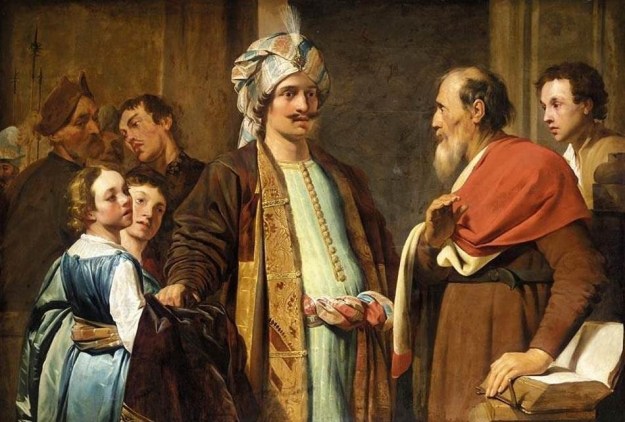

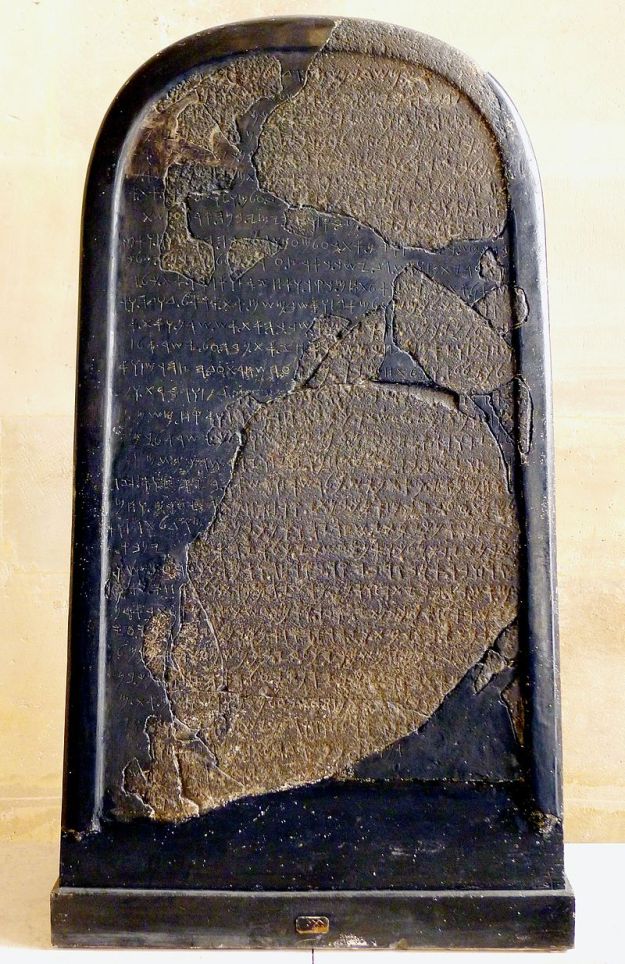

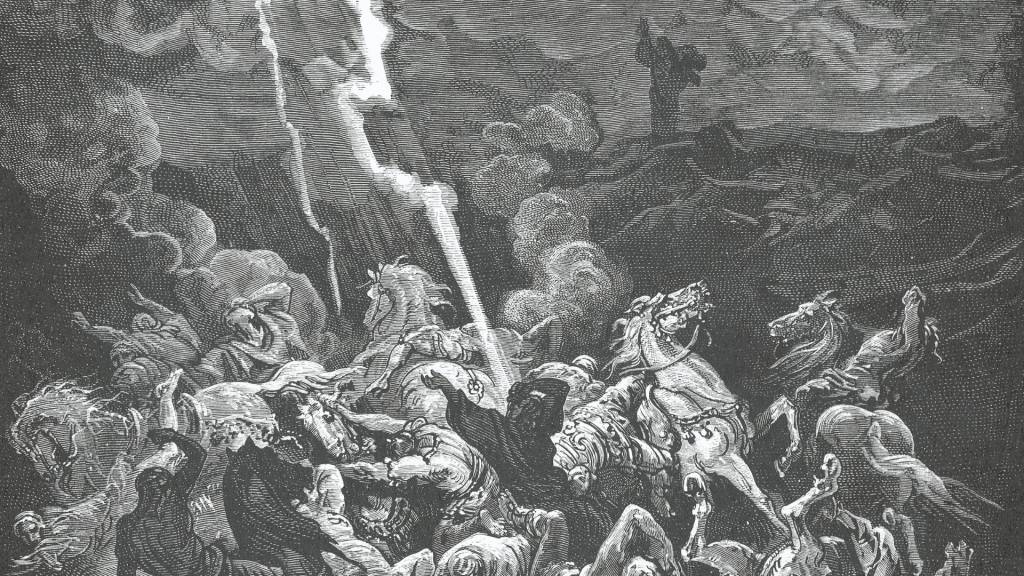



 Sign of the Rose