1Unless the LORD builds the house, those who build it labor in vain. Unless the LORD guards the city, the guard keeps watch in vain. 2It is in vain that you rise up early and go late to rest, eating the bread of anxious toil, for he gives sleep to his beloved.
3Sons are indeed a heritage from the LORD, the fruit of the womb a reward. 4Like arrows in the hand of a warrior are the sons of one’s youth. 5Happy is the man who has his quiver full of them. He shall not be put to shame when he speaks with his enemies in the gate.
Bolded words have notes on translation below.
Psalm 127 rotates around the basic claim that everything comes from the trustworthy LORD who builds the house, guards the city, and gives the blessing of family. The opening verse introduces the word translated in the NRSVue ‘house’ (Hebrew bayit) which can be used in multiple ways. Nancy deClaissé-Walford illustrates the multiple ways Hebrew uses bayit:
The word house (bayit) has a number of meanings in the Hebrew Bible. It can refer to family dwellings (Gen. 19:2; Judg. 11:31; 2 Kgs. 4:2); to the whole household (Gen. 46:27; Josh. 7:18; Ruth 1:8); to the whole people of Israel (Exod. 40:38; 1 Kgs. 20:31; Ezek. 36:22); to ruling dynasties (2 Sam. 3:1; 7:11; 1 Kgs. 16:3); or to the temple in Jerusalem (2 Kgs. 22:3; Ezra 6:15; Jer. 7:2). (Nancy deClaisse-Walford, 2014, p. 918)
Critical to the wordplay in this Psalm is the usage of the term in Nathan’s prophecy to David in 2 Samuel 7: 11-13
The LORD declares to you that the LORD will make you a house (bayit). When your days are fulfilled and you lie down with your ancestors, I will raise up offspring after you, who shall come forth from your body, and I will establish his kingdom. He shall build a house (bayit) for my name, and I will establish the throne of his kingdom forever.
While the building of a family dwelling or a temple would also be a labor committed to the LORD and the word allows and encourages those meanings, the psalm also wants us to understand the resonance of household, especially when linked thematically and phonetically to the second half of the psalm (see below).
The LORD is the primary actor throughout the psalm as the builder of the house and the guard of the city and the provider of children while the psalmist lives in trust of the LORD. They may participate with God in the building of the house, the protection of the city, and the procreation and raising of a family, but they can trust that the LORD provides that which they need. Instead of anxious toil trying to secure their house, city, and family they can sleep in peace entrusting the LORD to provide that which they need. I am reminded of Martin Luther’s explanation of the petition of the Lord’s prayer on daily bread:
What is this?
In fact, God gives daily bread without our prayer, even to all evil people, but we ask in this prayer that God cause us to recognize what our daily bread is and to receive it with thanksgiving.
What then does “daily bread” mean?
Everything our bodies need such as food, drink, clothing, shoes, house, home, fields, livestock, money, property, an upright spouse, upright children, upright members of the household, upright and faithful rulers, good government, good weather, peace, health, decency, honor, good friends, faithful neighbors, and the like. (Luther, 1978, p. 36)
Wisdom is trusting the LORD to provide for the house and the security of the city so that the faithful one can be free from anxiety and worry. The psalmist understands cooperating with God but the idea of securing their own future by working harder or longer is foolishness. For the psalmist God provides for the home, the community, and the family.
As briefly mentioned above there is a phonetic connection between the verses in Hebrew that is not present in English. Nancy deClaissé-Walford is again helpful in showing this:
The word translated here as children (NRSVue sons) is the Hebrew banim, whose acoustic similarity to the Hebrew word build (bana) and house (bayit) in v. 1, coupled with the polyvalent meaning of the word “house” in the Hebrew Bible, strongly connects the two stanzas of Psalm 127. (Nancy deClaisse-Walford, 2014, p. 918)
The word ‘reward’ (Hebrewsakar) also appears in Genesis 15 when God tells Abram, “your reward (sakar) shall be very great. Within this promise Abram is told to look to the heavens and count the stars…so shall his dependents be. This psalm echoes the story of Abram/Abraham when multiple sons/children are viewed as a ‘reward.’ ‘Warrior’ and ‘man’ in verses four and five are the Hebrew gibbor and its alternate form geber which is an important term often translated “mighty one”[1] which can refer to either military or economic power. Finally, the word ‘happy’ (Hebrew ‘asre) is a term frequently used in wisdom literature. This wise ‘mighty one’ whose house the LORD has built, whose city the LORD has guarded, and whose family has produced many children as a reward from God can live at peace and content because they have trusted in the LORD. The LORD who builds their household, guards them and provides for their family will not allow their enemies to put them to shame.
[1] Hebrew gibbor hehayil which can refer to physical strength or the economic strength to equip oneself and a group for combat. Ruth 4:11 uses this term for economic ability in reference to Boaz.
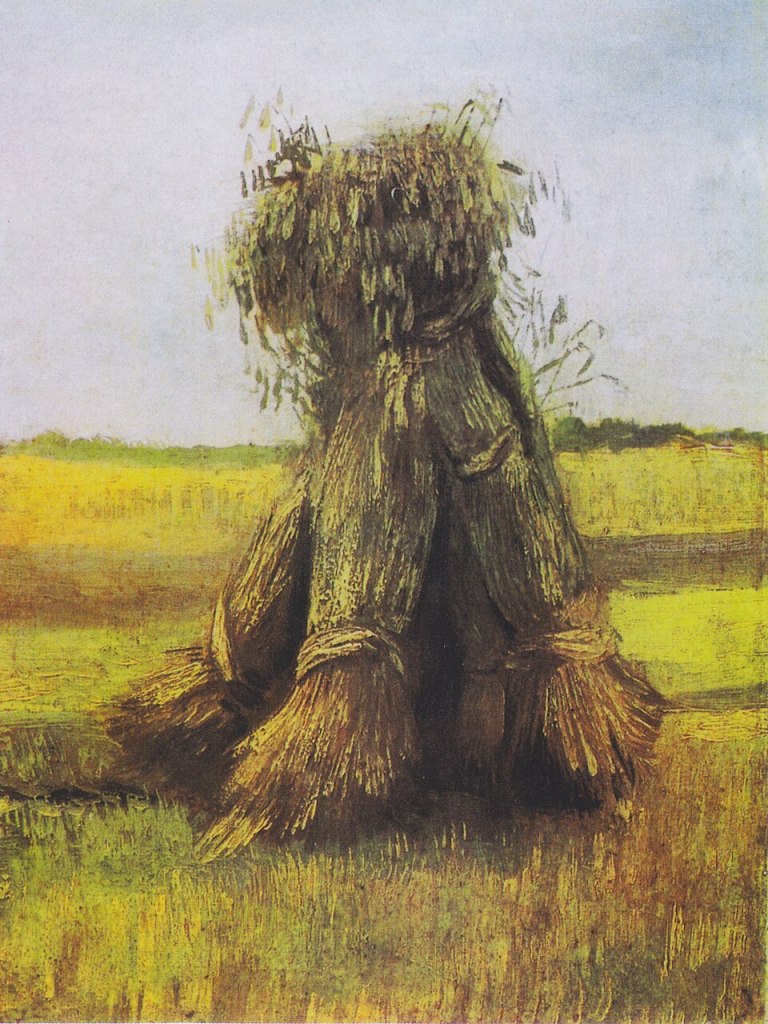
Wheatsheaves in a Field (1885) by Vincent van Gogh
Psalm 126
A Song of Ascents.
1When the LORD restored the fortunes of Zion, we were like those who dream. 2Then our mouth was filled with laughter and our tongue with shouts of joy; then it was said among the nations, “The LORD has done great things for them.” 3The LORD has done great things for us, and we rejoiced.
4Restore our fortunes, O LORD, like the watercourses in the Negeb. 5May those who sow in tears reap with shouts of joy. 6Those who go out weeping, bearing the seed for sowing, shall come home with shouts of joy, carrying their sheaves.
Bolded words have notes on translation below.
Psalm 126 follows a common pattern in the psalms and throughout the scriptures. It begins with a remembrance of the ways God has acted on behalf of the people in the past and then moves to an appeal for God’s action in the troubles of the present. As J. Clinton McCann Jr. states, “We live in the hope of God’s help always remembering what God has done in the past…and always anticipating what God will do in the future.”(NIB III:1196) The imagery of sowing and reaping have led to the Psalm’s usage on Thanksgiving Day in worship (Year B in the Revised Common Lectionary) and it inspired Knowles Shaw’s song “Bringing in the Sheaves.”
The psalm is structured around two uses of a Hebrew idiom translated “restored our fortunes” in the NRSVue. The phrase is difficult to render in English and has led to a wide variety of translations, but in the prophets it relates to the change in condition brought about by God turning away from God’s wrath and again regarding the people with favor. (Mays, 1994, p. 399) The use of the phrase often refers to the return of the exiles to the homeland of Israel (Deuteronomy 30:3; Jeremiah 30: 3, 18; 32:44; Ezekiel 39:25) and here it may also refer to a homecoming of the exiles from Babylon. (NIB III: 1195) The specific context that the psalm originally spoke to is not required for the reader to understand the relief and joy of those who have experienced the great things God has done for the people of the psalmist. The dreamy state of the remembered joy and laughter of the people emerges from the ways God has provided for and protected the people in the past. From the memory of what God has done in the past comes the hope of God’s action in the present.
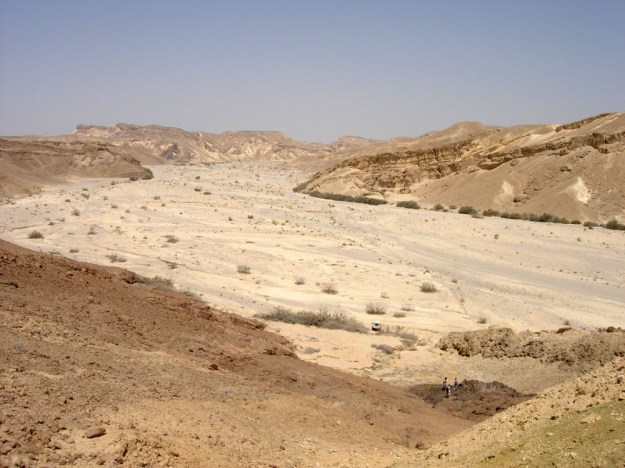
Wadi in Nahal Paran, Negev, Israel By Wilson44691 at English Wikipedia – Photograph taken by Mark A. Wilson (Department of Geology, The College of Wooster).[1], Public Domain, https://commons.wikimedia.org/w/index.php?curid=3140024
The experience of the present is one described metaphorically by the dry watercourses of the Negeb. During the rainy season these creek beds are filled with water but now in the metaphor of the psalm they are dry. Psalm 42 used the imagery of thirsting for water as a metaphor for thirsting for God’s presence:
As a deer longs for flowing streams, so my soul longs for you, O God. Psalm 42:1
The prophet Joel will also use a similar image:
In that day the mountains shall drip sweet wine, the hills shall flow with milk, and all the stream beds of Judah shall flow with water;a fountain shall come forth from the house of the LORD and water the Wadi Shittim. Joel 3:18
It is possible as Walter Beyerin argues that the author of Psalm 126 utilized Joel as a source of imagery as the psalmist, in his reconstruction, attempts to deal with the disappointment that prevailed in Judah after the return from Babylon (NIB III: 1196) but the beauty of the psalms is their ability to fit circumstances frequently encountered in life. Most people can relate to the imagery of drought in the personal, relational, economic, and spiritual struggles of life. The desire for the tears of today to turn to shouts of joy and a desire for the pain of the present to have some harvest of meaning in the future. To live in anticipation that the God who brings an end to the dryness of the watercourses of the Negeb will also turn tears into joy as people come in carrying the sheaves planted in these moments of hardship.
1Those who trust in the LORD are like Mount Zion, which cannot be moved but abides forever. 2As the mountains surround Jerusalem, so the LORD surrounds his people from this time on and forevermore. 3For the scepter of wickedness shall not rest on the land allotted to the righteous, so that the righteous might not stretch out their hands to do wrong. 4Do good, O LORD, to those who are good and to those who are upright in their hearts. 5But those who turn aside to their own crooked ways, the Lord will lead away with evildoers. Peace be upon Israel!
Bolded words have notes on translation below.
Underlying the wisdom of the psalter is the conviction that God is trustworthy. Those who trust in the LORD become like the one that they trust in the metaphors of this psalm. Jerusalem, the temple, and Mount Zion were viewed as being a place protected by God an idea echoed by Psalm 46: 5,” The LORD is in the midst of the city, it shall not be moved.” Zion as a focal point of hope was likely increased in the aftermath of Sennacherib’s unsuccessful siege of Jerusalem in the time of King Hezekiah/Uzziah (2 Kings 18–20). Mount Zion is in the psalm an immovable object and now those who trust in the LORD in the metaphor are also immovable. Yet they are not immovable because they stand on their own but instead, they are surrounded by the LORD’s presence perpetually just as Mount Zion is surrounded by even higher mountains particularly in the east. God is trustworthy and those who trust in God are able to stand fast because they are surrounded by God’s protection and strength.
The Hebrew particle ki which begins verse three indicates a strong contrast between the forces of wickedness and the righteous. I like Nancy deClaissé-Walford’s translation of this verse as “Surely the tribe of the wicked ones will not rest upon the inheritance of the righteous.” (Nancy deClaisse-Walford, 2014, p. 901) which captures several elements of the Hebrew. Some scholars have viewed verse three as indicating a post-exilic era since might indicate a time when ‘the wicked’ dominated the inheritance of ‘the righteous’ but I think the easier reading is to assume a pre-exilic time among a people who believe that God’s defense of the land and the city will never change. The land was a breathing space for the righteous to learn how to live free from the pressures of the wicked world around them. Jerusalem and Mount Zion became a safe space where the righteous were protected from the wicked.
The basic wisdom themes of the LORD watching over the life of the good and leading away the wicked and evildoers is a central theme of the psalms beginning with Psalm 1. The sovereignty, strength, and protection of God over the city was to create a space where righteousness could flourish. Yet the practice of life in Jerusalem in 1&2 Kings and 1&2 Chronicles tells a less rosy story of the city of peace which rested on Mount Zion. As I was thinking about this psalm I was reminded of the opening lines of a Paramore song from 2009 “Turn it Off.” “I scraped my knees while I was praying/ And found a demon in my safest haven.” The people of God have often dreamed of space of safety and well-being, and it is shattering when those places become corrupted. For the prophets that was their understanding of why Jerusalem did not endure on Mount Zion forever, and it is a warning for any place of God that allows the scepter or tribe of wickedness to have power over the righteous ones. The pilgrims of the Songs of Ascent have come seeking a safe space where they can live in righteousness surrounded and protected by the LORD. Those charged with leading places where people gather to worship bear a responsibility in partnership with God to make these places of peace where the righteous are protected. Israel has rarely known peace and as I write these words it is currently at war along with the United States against Iran. Yet I long, along with these pilgrims from long ago, for shalom (peace) for Israel, shalom for those who gather to seek the LORD in churches and synagogues and other holy spaces, and peace for the righteous and the upright in heart.
1If it had not been the LORD who was on our side —let Israel now say— 2if it had not been the LORD who was on our side, when our enemies attacked us, 3then they would have swallowed us up alive, when their anger was kindled against us; 4then the flood would have swept us away; the torrent would have gone over us; 5then over us would have gone the raging waters.
6Blessed be the LORD, who has not given us as prey to their teeth. 7We have escaped like a bird from the snare of the hunters; the snare is broken, and we have escaped.
8Our help is in the name of the Lord, who made heaven and earth.
Bolded words have notes on translation below.
The overall meaning of the psalm should be clear to any reader: the LORD is the one who is on our side and who rescues us from the perils of the world. The theme of God as strength, support, shelter, rock, shield, fortress and many other metaphors of protection and comfort occur regularly throughout the psalms and scripture in general. The theme of this fifth song of ascent is not new, but its language (somewhat dulled in English translations) is striking. Israel would not continue to exist without the LORD. Paul’s defiant statement in his letter to the church in Rome echoes the sentiment of this psalm: “What then are we to say about these things? If God is for us, who is against us?” (Romans 8:31)
Verse one and two both begin with a statement that seems conditional in English, “If it had not been the LORD who was on our side” but as Nancy deClaissé-Walford highlights,
Verses 1 and 2 both begin with if not (lûlê), forming the protasis of vv. 1-5. Lûlê, however, is only used in Hebrew to express an unreal condition. The psalm-singers are confident that the Lord is on their side. (Nancy deClaisse-Walford, 2014, p. 907)
This psalm of corporate trust in the LORD begins and ends with a confident assurance that the God of Israel has protected the people of God against her enemies. The enemies identified in verse two is identified with the collective noun humanity(‘adam). Israel and God have all humanity arrayed in opposition to them, and without God Israel would have been overwhelmed.
The psalm then uses several images that indicate that the people of God on their own are powerless before those who oppose them. Their enemy is large enough to swallow them alive, or to sweep over the life of the people,[1] to be devoured in the mouth or captured in a trap. In verse six the word rendered teeth is the same word (lason) rendered tongue in Psalm 120:2
Deliver me, O LORD, from lying lips, from a deceitful tongue.
Compared to the hunter of fowl the people of Israel are like a bird unable to free themselves from the traps their enemies have laid. On their own Israel is small and weak before the mass of humanity arrayed against them. Yet here, as in Psalm 121, their help is in the name of the LORD who makes heaven and earth. What was a confession of individual trust in Psalm 121 is now a corporate statement of trust in the creating and protecting God. As a people they ‘go with God.’
In the United States, where I live and lead a congregation, there is a reliance on self-sufficiency that is very different from the biblical faith represented in the psalms and throughout the bible. As J. Clinton McCann, Jr. aptly writes,
To profess that God is our fundamental help means to profess that we are not sufficient to create and secure our own lives and future. In short, we need help. (NIB IV: 1191)
As people of God, we believe that God is on our side and stands with us against the enemies that threaten to consume or overwhelm us. If it were only our own strength that we could rely on we would find ourselves consumed, overwhelmed, and trapped but in our own weakness we know our help comes from the one who created the heavens and the earth.
[1] In verse 4b and 5 the “us” in the verse is the Hebrew nephesh, often rendered “soul” in English translations but in Hebrew thought it is closer to the essence of life, not something that can be separated from life. J. Clinton McCann, Jr. notes the word may have originally meant neck. (NIB IV: 1190)
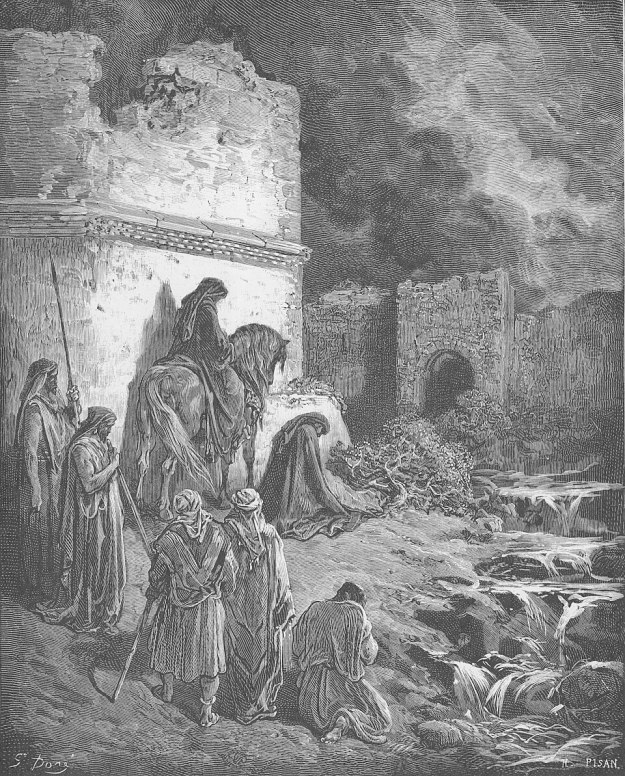
Nehemiah Views the Ruins of Jerusalem’s Walls (Neh. 2:1-20) Gustave Dore, Dore’s English Bible (1866)
Psalm 123
A Song of Ascents
1To you I lift up my eyes, O you who are enthroned in the heavens! 2As the eyes of servants look to the hand of their master, as the eyes of a maid to the hand of her mistress, so our eyes look to the LORD our God, until he has mercy upon us.
3Have mercy upon us, O LORD, have mercy upon us, for we have had more than enough of contempt. 4Our soul has had more than its fill of the scorn of those who are at ease, of the contempt of the proud.
Bolded words have notes on translation below.
If you read the psalms of ascent as a sequence, which scholars assume was a common practice during a pilgrimage to Jerusalem, there is a narrative that may underly the pattern. The psalmist begins in a place far from the city of peace surrounded by those who desire war (Psalm 120). The psalmist then departs on a journey lifting up their eyes to the hills (Mount Zion-Psalm 121). In the third song of ascent the psalmist arrives at their destination of Jerusalem (Psalm 122). Now in Jerusalem the pilgrim is joined by other pilgrims coming to the city of peace and they turn their eyes to God and lift up their complaint about the world they come from. They have left behind others in a land of people who seek conflict and speak with lying lips (Psalm 120) and now in the city of God they appeal for not only Jerusalem but the world the LORD stands in authority over.
The psalm begins with a solitary speaker lifting up their eyes to the LORD who sits on the seat of authority in heaven. The psalmist may imagine God presiding over the gods of the nations as in Psalm 82 as they address the LORD in this manner, and this may set the stage for the complaint that the people raise about the contempt and scorn they have received in the nations. The eyes of an individual pilgrim are joined by other servants and maids of the LORD their God look to their master for mercy. The Hebrew conception of the relationship between a servant or maid and their master or mistress envisions the master/mistress bearing responsibility for their subordinates. The subordinates are dependent upon their master for their provision and protection, but the expectations of the master in the psalm are conditioned by the merciful LORD their God who is master over the heavens and the earth. The identity of the LORD God as expressed by God in Exodus 34 is:
“The LORD, the LORD, a God merciful and gracious, slow to anger, and abounding in steadfast love and faithfulness, 7 keeping steadfast love for the thousandth generation, forgiving iniquity and transgression and sin, yet by no means clearing the guilty, but visiting the iniquity of the parents upon the children and the children’s children, to the third and the fourth generation.” Exodus 34: 5-7.
And the blessing of the Aaronic priests in Numbers 6:22-27 echoes the ideas of God turning God’s face in graciousness towards those who lift up their eyes to the LORD:
22The Lord spoke to Moses, saying, 23“Speak to Aaron and his sons, saying: Thus you shall bless the Israelites: You shall say to them: 24The Lord bless you and keep you; 25the Lord make his face to shine upon you and be gracious to you; 26the Lord lift up his countenance upon you and give you peace. 27“So they shall put my name on the Israelites, and I will bless them.”
The pilgrim has joined other pilgrims within the city seeking mercy from the LORD their God and they lift up their eyes and their appeal. As Walter Brueggemann notes, “Our psalmist…dares to look to heaven, not because he is worthy but because he knows that the master to whom he looks is merciful.” (Bellinger, 2014, p. 533)
The character of the people of God is expected to match the God who they serve and this informs the view of what the kings, princes, and nobles of Israel were to be. The character of God is one of the reasons that subordinates can look to those in authority over them with the expectation of receiving mercy. This psalm made me reflect on leaders I have encountered in numerous settings who I was proud to serve under. They were leaders who were invested in those who they led and were dependable. Many of them saw the way they led as connected to their faith and it was reflected not only in their actions but in the response of their subordinates to their authority.
Psalm 123 is unusual because it ends in complaint rather than thanksgiving, but it may rely on the following psalm to complete the normal pattern. The pilgrim looks at the world of people of lying lips and who seek conflict and they dare to seek in their God, “the grace that overcomes the world.” (Mays, 1994, p. 396) Before they begin their complaint they have invoked God’s mercy three times. They need God’s mercy to overcome the contempt and scorn which have overwhelmed them. Nancy deClaissé-Walford notes on the translation of verse three and four:
The word translated overwhelmed (NRSVue have had more than enough/ its fill) is from the root ‘saba’, which means, literally, “eat one’s full, be sated, have enough.” And interestingly the word translated mockery (NRSVue scorn) is from the root la’ag, which beans literally, “speak with a stammering tongue.” (Nancy deClaisse-Walford, 2014, p. 904)
Their experience of conflict and lies in their communities have overwhelmed them. They have had more of mockery and scorn than they can take and the leaders in the communities they have come from leave them crying out for God’s mercy which can overcome the mockery and scorn which overwhelms them.
J. Clinton McCann, Jr. connects the language of this complaint to the post-exilic experience of the time of Nehemiah.
As several scholars observe, the situation certainly sounds like that of the post-exilic era (see, e.g., Neh 2:19, 4:4, where “ridiculed” and “despised” represent the same Hebrew root as “contempt” in Ps 123: 3-4, “scorn” in 123:4 also occurs in Neh 2:19; 4:1 as “mocked.” (NIB IV: 1187)
The post-exilic experience of returning to the remains of the once proud city of Jerusalem and being taunted by their neighbors is a reasonable backstory for the psalm, but the experience of being overwhelmed by contempt or scorn is a common experience. If the experience is tied to the experience of Psalm 120 that also is a common experience of people longing for peace and justice in an unjust world that seeks conflict. That is one of the reasons that the psalms continue to resonate thousands of years after their composition. They may have originally spoken to a specific crisis in the pilgrim’s life but now they speak to the community of the faithful raising their eyes to God and appealing for God’s mercy which can overcome the experiences and injustices which threaten to overwhelm them.
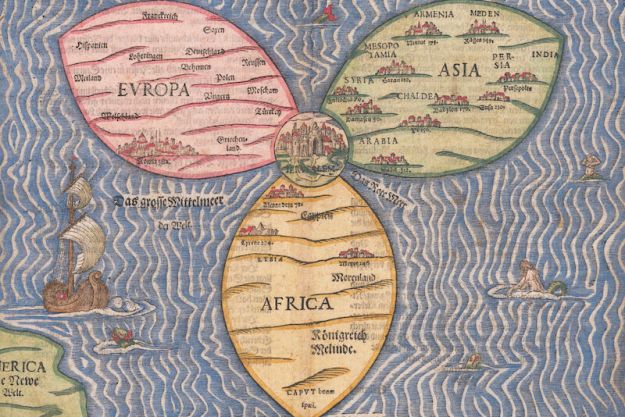
The Bünting Clover Leaf Map, by Heinrich Bünting, was published in 1581 and depicts Jerusalem as the center of the world.
Psalm 122
A Song of Ascents
1I was glad when they said to me, “Let us go to the house of the LORD!” 2Our feet are standing within your gates, O Jerusalem.
3Jerusalem—built as a city that is bound firmly together. 4To it the tribes go up, the tribes of the LORD, as was decreed for Israel, to give thanks to the name of the LORD. 5For there the thrones for judgment were set up, the thrones of the house of David.
6Pray for the peace of Jerusalem: “May they prosper who love you. 7Peace be within your walls and security within your towers.” 8For the sake of my relatives and friends I will say, “Peace be within you.” 9For the sake of the house of the LORD our God, I will seek your good.
Bolded words have notes on translation below.
If we look at the first three songs of ascent in order (Psalm 120-122) there is a suggestive narrative. The psalmist begins in a place far from the city of peace surrounded by those who desire war (Psalm 120). The psalmist then departs on a journey lifting up their eyes to the hills (Mount Zion-Psalm 121). In this third song of ascent the psalmist arrives at their destination of Jerusalem. (NIB IV:1183) This song of thanksgiving upon arriving in the city of Jerusalem, the spiritual center of their world captures the joy of a pilgrim upon reaching their long-awaited destination.
Both Isaiah 2: 2-3 and Micah 4:1-4 envision Jerusalem as being the spiritual center of the world for Jews and Gentiles, where the nations see the people living in harmony with God’s will for the world and they come to the mountain of God seeking instruction. Jerusalem becomes the pivot for a complete reordering of power in the prophetic imagination as swords become plowshares and spears become pruning hooks. The city of shalom (Jerusalem) becomes a light on the hill that the nations are drawn to learn God’s ways of peace.
The psalm is structured around the two houses that reside in Jerusalem: the house of the LORD and the house of David. The house of David occupies the central verse of the poem structurally, and the royal house occupies an important role in providing judgment for people coming to the city. As James L. Mays can highlight:
Pilgrimage season was likely a time when conflicts and disputes unsettled in the country courts were brought to the royal officials and their successors in the postexilic period. The peace of the community depended on the establishment of justice. Pilgrimage is a journey in search of justice. (Mays, 1994, p. 393)
The house of David has a crucial role in making Jerusalem a place of shalom, but the psalm also places the house of the LORD as the bookends structurally of the psalm. The place of the house of the LORD at the beginning and end encompasses the authority of the house of David. (NIB IV: 1184) 2 Samuel 7 makes a similar point when the LORD informs David that he will build a house (lineage) for David rather than David building a house for the LORD.
The psalm begins with a joyous embrace of the traditional call to go up to the house of the LORD. There is some debate about whether the perspective of the psalmist is currently in Jerusalem (are) or whether it should be translated in past tense as the psalmist remembers Jerusalem in anticipation of a journey, but I have stayed with the NRSVue’s translation of Our feet are standing. From the perspective of the pilgrim, Jerusalem is a city bound firmly together. There is some Hebrew word play in the word for bound (Hebrew habar) which is never elsewhere used for construction and always refers to human alliances or covenants. (NIB IV:1184) The psalm imagines a time where the unified tribes of Israel gather in Jerusalem as a place of festival, worship, and ultimately peace making.
The language in verse six to seven centers around shalom (peace) and Jerusalem (yeru-shalom) and the structure in Hebrew makes this even clearer by the phonetic repetition of ‘sh’ and ‘l’ sounds. As Nancy deClaissé-Walford states:
Of the ten Hebrew words that make up vv. 6 and 7, six contain the letters sin and lamed: ask (sha’alu); well-being (twice) (shalom); Jerusalem (yerushalaim); may they be at ease (yishelayu); and tranquility (shalwa)—acoustically and visually emphasizing the theme of well-being. (Nancy deClaisse-Walford, 2014, p. 901)
Jerusalem is the city of shalom, the longed-for peace absent in Psalm 120. Peace is for the city of peace, for the walls that defend the city from hostility, and for the families who are present in the city or back home. Psalm 133 will later echo this hope for peace among relatives.
Walter Brueggemann and William H. Bellinger make an important point for this prophetic imagination of the people in the context of the exile. When there is no longer a city of shalom to seek where the houses of the LORD and David reside, how are the people to function? Brueggemann points to the prophet Jeremiah (Jeremiah 29: 4-10) when he states:
”seek the welfare of the city where I have sent you in exile, and pray to the LORD on its behalf, for in its welfare you will find your welfare.” The word “welfare” of course renders the Hebrew shalom; the prophet is exhorting the deportees to pray for the shalom of the city of Babylon. (Bellinger, 2014, p. 530)
In the absence of the city, the temple, and the Davidic king it was still possible to seek peace, but it involved seeking the shalom of the place where you find yourself transplanted. Even if Jerusalem is de-centered from the world, peace can still be found in the cities where the pilgrims sojourn.
1I lift up my eyes to the hills— from where will my help come? 2My help comes from the LORD, who made heaven and earth.
3He will not let your foot be moved; he who keeps you will not slumber. 4He who keeps Israel will neither slumber nor sleep.
5The LORD is your keeper; the LORD is your shade at your right hand. 6The sun shall not strike you by day nor the moon by night.
7The LORD will keep you from all evil; he will keep your life. 8The LORD will keep your going out and your coming in from this time on and forevermore.
Notes on the bolded words below.
One of my favorite farewells is the Spanish ‘vaya con dios’ which means ‘go with God.’ The English Godspeed is similar, which comes from the middle English ‘God spede you’ which means ‘may God prosper you.’ This short but well-loved psalm may have originated as a song for pilgrims making the journey to mount Zion to worship. The departing pilgrim receives a blessing from the one wishing God’s guarding presence upon the pilgrim. It may have originated as a ‘farewell liturgy’ as James Limburg identified this psalm, (NIB IV: 1180) but for many faithful people this has become a psalm of trust which encompasses the entire life of the faithful one guarded by the God who is both personally available and cosmically powerful.
The first two verses of the psalm are spoken by the pilgrim and is spoken in first person. The individual looks to the surrounding landscape to the hills, and likely to the destination of Zion, but their help for through the dangers of the coming journey do not come from the hills but from the LORD. The LORD is both ‘my help,’ one who is personally concerned for the fate of this pilgrim departing on the journey but also ‘the LORD who made heaven and earth.’ In a common duality seen in scripture God is both powerful and attentive, over all things and concerned about the life of the faithful one who places their life in God’s hand.
In verse three the voice now shifts to the one remaining behind as the pronouns are now second person. Within the final eight verses the word rendered ‘keep’ or ‘keeper’ in the NRSVue is the Hebrew samar. The Hebrew samar is a more active concept than ‘keep’ and has the active sense of guarding and watching over. (Nancy deClaisse-Walford, 2014, pp. 895-897) Within the movement of the psalm the God who guards will not slumber during his time of protecting and watching over the pilgrim. The LORD guards Israel and the LORD will guard the faithful one. The language continues and intensifies as the LORD guards and provides a shade (Hebrew sel) for the pilgrim. The word for shade (sel) is often used in the psalter in the phrase ‘the shelter (sel) of you wings’ and may reference the image of God extending God’s wing or cloak in protection and shelter in the journey through the wilderness. The sun and moon have sometimes been thought of mythologically as forces which oppose the pilgrim’s journey but this is not necessary for the psalm for a journey through desert on the journey to Jerusalem (or any other destination).
In the Lord’s prayer the petition ‘and deliver us from evil (or the evil one)’ taps into a consistent theme with the LORD guarding the pilgrim from evil and guarding their life. In a common Hebrew merism[1] the LORD watches over the totality of the pilgrim’s journey, their departures and their returning home for this journey and their entire life.
Psalm 121 has a rich use in the worship life of the church, and it is frequently used with both baptismal liturgies and funeral services. The psalm’s use in these two moments that form the bookends of the Christian life nicely encompass the belief that God guards the person of faith throughout the totality of their life. Martin Luther would have parents teach their children to “fear, love, and trust God above all things.” This psalm echoes the trustworthiness of the God who guards the life of the faithful one. It is a blessing for the entirety of the journeys of life as people of faith go with God. Our entire life is guarded and sheltered by the God who is both personally available and cosmically powerful.
[1] A merism is a literary device which denote the totality or completeness of something.
Charles-Antoine Bridan, Relief on the Wall of Notre Dame Cathedral in Chartres (1786-1789) Isaiah speaking to King Ahaz
The practice of a sustained reflection on scripture, particularly the parts I am less familiar with, has been a big part of my growth over the past thirteen years. This is a significant part of my discipline of learning how to use the fullness of wisdom and learning in scripture and every book in its own way changes me a little. The book of Kings as a whole portion of the story of Israel and Judah from Solomon to the collapse of the Davidic line of kings, Jerusalem, and the temple tries to comprehend how the people could go from the pinnacle at the beginning of Solomon’s reign to the pit of the exile. 2 Kings begins in the middle of the stories of Elijah and Elisha and then moves through the end of the northern kingdom of Israel under Assyria and the southern kingdom of Judah under Babylon.
2 Kings provides a context for the pre-exilic prophets. The narrator of 2 Kings provides short narrations of the kings and prophets of Israel and Judah, but when this is paired with Amos, Hosea, early Isaiah (or first Isaiah), Micah, Zephaniah, Nahum, Habakkuk, Jeremiah and Ezekiel it provides multiple windows into this time. I’ve been writing on this blog about the bible since 2013 and one of the earlier books I started in 2013 was the book of Jeremiah which coincides with the final four chapters of 2 Kings. There are a total of sixteen books of the bible I have now worked through in whole or in part, and it is amazing how much I have learned and grown. When I compare what I knew about this period when I worked on Jeremiah to how I see it now it is amazing how much fuller my vision is. 2 Kings shares several connections with Isaiah and Jeremiah
Although it is an ancient story, the book of Kings narrates the struggle of remaining faithful to the LORD the God of Israel in a world of numerous alternatives. Israel and Judah struggled to maintain their distinctiveness among the nations and kings often influenced their people to follow the practices of the nations they traded and made alliances with. The book of Kings could also be the book of Prophets and particularly in the Elijah and Elisha narrative the prophetic seems to take precedence over the kings in the narrative. In Judah in 2 Kings there are some moments of hope, particularly with Jehoash, Hezekiah, and Josiah but there are also many moments where the reforms of these good kings are undone by the wickedness of the next generation. God is slow to give up on this people and eagerly looks for repentance, but by the end of the story both Israel and Judah have exhausted the patience of God.
Ilya Repin, Cry of the Prophet Jeremiah on the Ruins of Jerusalem (1870)
2 Kings 25: 1-21 The Destruction of Jerusalem and the Second Group of Judeans Taken Into Exile
1And in the ninth year of his reign, in the tenth month, on the tenth day of the month, King Nebuchadnezzar of Babylon came with all his army against Jerusalem and laid siege to it; they built siegeworks against it all around. 2So the city was besieged until the eleventh year of King Zedekiah. 3On the ninth day of the fourth month, the famine became so severe in the city that there was no food for the people of the land. 4Then a breach was made in the city wall; the king with all the soldiers fled by night by the way of the gate between the two walls, by the King’s Garden, though the Chaldeans were all around the city. They went in the direction of the Arabah. 5But the army of the Chaldeans pursued the king and overtook him in the plains of Jericho; all his army was scattered, deserting him. 6Then they captured the king and brought him up to the king of Babylon at Riblah, who passed sentence on him. 7They slaughtered the sons of Zedekiah before his eyes, then put out the eyes of Zedekiah; they bound him in fetters and took him to Babylon. 8In the fifth month, on the seventh day of the month—which was the nineteenth year of King Nebuchadnezzar, king of Babylon—Nebuzaradan, the captain of the bodyguard, a servant of the king of Babylon, came to Jerusalem. 9He burned the house of the Lord, the king’s house, and all the houses of Jerusalem; every great house he burned down. 10All the army of the Chaldeans who were with the captain of the guard broke down the walls around Jerusalem. 11Nebuzaradan the captain of the guard carried into exile the rest of the people who were left in the city and the deserters who had defected to the king of Babylon—all the rest of the multitude. 12But the captain of the guard left some of the poorest people of the land to be vinedressers and tillers of the soil. 13The bronze pillars that were in the house of the LORD as well as the stands and the bronze sea that were in the house of the LORD, the Chaldeans broke in pieces and carried the bronze to Babylon. 14They took away the pots, the shovels, the snuffers, the dishes for incense, and all the bronze vessels used in the temple service, 15as well as the firepans and the basins. What was made of gold the captain of the guard took away for the gold and what was made of silver for the silver. 16As for the two pillars, the one sea, and the stands that Solomon had made for the house of the LORD, the bronze of all these vessels was beyond weighing. 17The height of the one pillar was eighteen cubits, and on it was a bronze capital; the height of the capital was three cubits; latticework and pomegranates, all of bronze, were on the capital all around. The second pillar had the same, with the latticework. 18The captain of the guard took the chief priest Seraiah, the second priest Zephaniah, and the three guardians of the threshold; 19from the city he took an officer who had been in command of the soldiers and five men of the king’s council who were found in the city; the secretary who was the commander of the army who mustered the people of the land; and sixty men of the people of the land who were found in the city. 20Nebuzaradan the captain of the guard took them and brought them to the king of Babylon at Riblah. 21The king of Babylon struck them down and put them to death at Riblah in the land of Hamath. So Judah went into exile out of its land.
The final chapter of 2 Kings brings the first temple period of Israel to its tragic conclusion. 2 Kings 24: 18-25:30 and Jeremiah 52 are mostly identical[1] and almost certainly share a common source. There is a long tradition connecting Jeremiah and the Deuteronomic history which narrates from Joshua through the end of 2 Kings, and they share a common theological perspective. Regardless author who compiled 2 Kings shared material with the individual who collected the sayings of both Isaiah[2] and Jeremiah and the compilation of these remembrances of the prophets and the narration of the story of the kings and prophets of Israel and Judah are a part of mourning the loss of Jerusalem, the temple, and the Davidic king as well as assigning meaning to the tragedy.
Zedekiah, originally named Mattaniah, was Josiah’s third son who was introduced in 2 Kings 24:17 and who foolishly, in the view of 2 Kings, rebels against King Nebuchadnezzar and Babylon. Jerusalem was again at the center of a coalition attempting to throw off their masters and there were prophets who encouraged this rebellion as we see in Jeremiah. Alex Israel summarizes the moment well:
Nebuchadnezzar had absented himself from the region, attending to other pressing campaigns in his far-flung kingdom. But the Akkadian rebellion against Nebuchadnezzar in 595-594 BCE aroused regional hopes of overthrowing Babylonian control. Yet, again Jerusalem was the center of a southern conspiracy in which the kings of Edom, Moav, Ammon, Tyre, and Sidon convened in Jerusalem during the fourth year of Zedekiah’s rule. (Jer. 27:9, 15-18; 28:3-4.) The kings were boosted by prophets who predicted the success of the rebellion and the return of the Temple vessels to Jerusalem. One such prophet, Hannania ben Azzur, even promises the imminent restoration of the exiled king Jehoachin to Jerusalem. Hope of independence runs high. (Israel, 2019, p. 362)
The prophet Jeremiah is a lone and often unpopular voice which speaks against this rebellion and is often viewed as a traitor by many of his fellow residents of Jerusalem. Zedekiah is portrayed in Jeremiah as a king who is sympathetic to Jeremiah and seeks God’s word through him but is unable to resist the other nobles and leaders who surround him. The removal of the elites in the first exile may have made the remaining leaders a less wise and more volatile group, but ultimately between the false prophets like Hananiah and the people surrounding King Zedekiah the city and the people find themselves in revolt against Babylon.
King Nebuchadnezzar of Babylon turns his forces towards the rebellious capital of Jerusalem and entrusts his captain Nebuzaradan with dealing with this troublesome nation. Nebuzaradan’s title in the Hebrew, rav tabbahim, literally means “the chief cook” but like Potiphar in Genesis 37:36 who shares this title it probably has little to do with cooking. As Alex Israel can note about the Hebrew verb tbh, which is behind tabbahim, “can be translated as “cook” or as “slaughter”; as such Nebuzaradan has been seared into the Jewish memory as the “chief executioner.” (Israel, 2019, p. 365) Nebuzaradan initiates a siege which lasts from the tenth month of Zedekiah’s ninth year to the ninth month of Zedekiah’s eleventh year. Near the end of this almost two year long siege the situation in Jerusalem has become so desperate that Lamentations remembers it in these harsh words:
4The tongue of the infant sticks to the roof of its mouth for thirst; the children beg for food,but there is nothing for them. 5Those who feasted on delicacies perish in the streets; those who were brought up in purple cling to ash heaps. 6For the chastisement of my people has been greater than the punishment of Sodom, which was overthrown in a moment, though no hand was laid on it. 7Her princes were purer than snow, whiter than milk; their bodies were more ruddy than coral, their form cut like sapphire. 8Now their visage is blacker than soot; they are not recognized in the streets. Their skin has shriveled on their bones; it has become as dry as wood. 9Happier were those pierced by the sword than those pierced by hunger, whose life drains away, deprived of the produce of the field. 10The hands of compassionate women have boiled their own children; they became their food in the destruction of my people.
In this moment Zedekiah attempts to flee, fighting his was free with the remaining soldiers and is captured by the Babylonians at the plains of Jericho. The remaining army scatters which provides a reason why there are captains of the forces who will come to Gedaliah in the following section.
Nebuzaradan may be thought of as the chief butcher in the memory of the Jewish people, and he is responsible for the destruction of the walls and the temple as well as the death of the king’s sons[3] and many of the remaining leaders. However, Jerusalem has been an unreliable vassal and at the center of the rebellion against the empire. He does eliminate the remaining power structure that led the city into rebellion: the king is taken into exile blind and without heirs, the leaders of the temple, the government officers near the king, and many of the ‘people of the land’ who exercised power in Jerusalem are executed, but after the riches remaining in the temple are cut up and carted off to Babylon he also razes the city and the temple. The razing of the capital indicates the Babylon has no interest in reorganizing Judah around this unfaithful center. (Cogan, 1988, pp. 323-324)
Both 2 Kings and Jeremiah spend more time cataloging the items removed from the temple than the disposition of the remaining people. This may be structural for book of Kings which begins with Solomon taking the throne and building the temple. Now that book closes with the destruction of the temple and the removal of all the items that Solomon created for the temple. It is also plausible that the catalog of the items removed is for a hopeful time when the treasures of the temple can be returned to the people for a new temple. Jeremiah 52:30 indicates that Nebuzaradan only takes into exile seven hundred forty-five people from Jerusalem and the surrounding territory, and this number seems incredible small.[4] The entirety of the people is not displaced. A diminished people who are, in 2 Kings narration, the poorest of the land are left to care for the fields and vineyards of what remains of Judah.
2 Kings 25: 22-26 The Appointment and Assassination Gedaliah the Governor
22 He appointed Gedaliah son of Ahikam son of Shaphan as governor over the people who remained in the land of Judah, whom King Nebuchadnezzar of Babylon had left. 23 Now when all the captains of the forces and their men heard that the king of Babylon had appointed Gedaliah as governor, they came with their men to Gedaliah at Mizpah, namely, Ishmael son of Nethaniah, Johanan son of Kareah, Seraiah son of Tanhumeth the Netophathite, and Jaazaniah son of the Maacathite. 24 Gedaliah swore to them and their men, saying, “Do not be afraid because of the Chaldean officials; live in the land, serve the king of Babylon, and it shall be well with you.” 25 But in the seventh month, Ishmael son of Nethaniah son of Elishama, of the royal family, came with ten men; they struck down Gedaliah so that he died, along with the Judeans and Chaldeans who were with him at Mizpah. 26 Then all the people, high and low, and the captains of the forces set out and went to Egypt, for they were afraid of the Chaldeans.
Nebuzaradan appoints Gedaliah to be the governor over what remains of Judah. Gedaliah’s grandfather was the secretary in the time of Josiah (2 Kings 22:3) and his father Ahikam was sent along with his grandfather to the prophet Huldah seeking God’s guidance. Ahikam also had protected Jeremiah in the past (Jeremiah 26:24) and Jeremiah supported Gedaliah. Nebuzaradan was aware of Jeremiah’s stance on the war (Jeremiah 40:4) and it is conceivable that Nebuzaradan chose Gedaliah because of his proximity to Jeremiah.[5] The remaining leaders of fighting men came to Gedaliah and received an offer of clemency if they would serve the land and remain loyal to Babylon.
Jeremiah 40–41 goes into a longer narration of the plot against Gedaliah. Johanan son of Kareah comes and informs Gedaliah that Ishmael son of Nethaniah is engaged with the Ammonite king in a plot to kill Gedaliah.[6] Johanan offers to kill Ishmael but Gedaliah refuses to believe the warning and is killed by Ishmael and his men. The remaining exiles view the murder of the governor as the final nail in the coffin of Judah as a nation and reverse the Exodus by fleeing to Egypt. Jeremiah informed the people not to flee, but Johanan and the commanders take the remaining people including Jeremiah into exile. (Jeremiah 42–43)
2 Kings 25: 27-30 A Brief Note of Hope for the Line of David
27In the thirty-seventh year of the exile of King Jehoiachin of Judah, in the twelfth month, on the twenty-seventh day of the month, King Evil-merodach of Babylon, in the year that he began to reign, released King Jehoiachin of Judah from prison; 28he spoke kindly to him and gave him a seat above the other seats of the kings who were with him in Babylon. 29So Jehoiachin put aside his prison clothes. Every day of his life he dined regularly in the king’s presence. 30For his allowance, a regular allowance was given him by the king, a portion every day, as long as he lived.
King Evil-merodach (aka Amel-marduk) was the son and successor of Nebuchadnezzar and at the beginning of his reign he shows favor to Jehoiachin. This is a small moment of hope at the ending of this tragedy. The English, released…from prison, misses some of the parallels in the Hebrew phrase that literally means “raised the head.” This is the same phrase used in the dreams of Pharoah’s servants in Genesis 40:13[7] and indicates assuming power and authority again. A generation later the grandson of Jehoiachin, Zerubbabel will be one of the leaders of the generation that returns to Jerusalem to rebuild the temple.[8]
[1] Jeremiah 52: 28-30 gives additional details about the people deported and omits the governorship and assassination of Gedaliah which Jeremiah deals with in more detail in Jeremiah 40-41.
[2] As mentioned above the crossover between 2 Kings 18–19 and Isaiah 36-37.
[3] The murder of the king’s sons before blinding Zedekiah is intended as a torment where the last thing Zedekiah sees is the ending of his line.
[4] Jeremiah also has significantly smaller numbers for the initial exile. See Jeremiah 52:28-29.
[5] This is not explicit in Jeremiah, and it is also possible that Gedaliah was also known as a voice who opposed the war.
[6] Killing Gedaliah would destabilize the region and the Ammonite king may have seen this as an opportunity.
[7] The second servant does have his head raised up in being executed, but the situation of Jehoiachin parallels the first servant who returns to his office as the chief cupbearer.
[8] 1 Chronicles 3: 17-19 gives the lineage of Zerubbabel as the grandson of Jechoniah. Ezra 2:1 and Haggai 2:4 indicate that Zerubbabel is one of the leaders who return to rebuild the temple.





 Sign of the Rose
