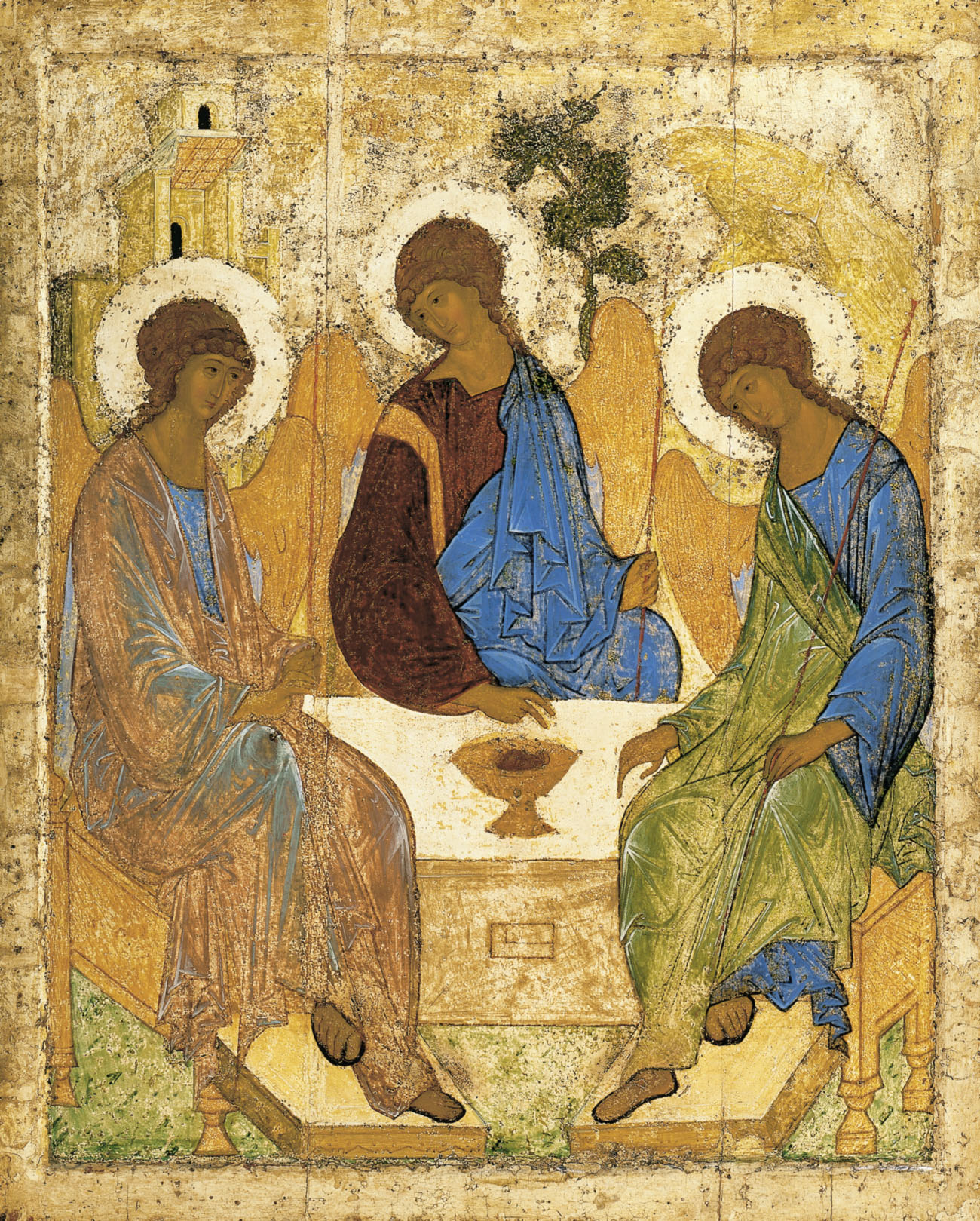
Rublev’s Icon of the Holy Trinity
If you had to describe what God is like to someone, how would you do it? Now I know that there is always a sense in which our words fail us and God is beyond description, but that doesn’t alleviate the need for us to talk about God and to try to say who God is and what God is about in the world. We need to understand who God is and how God acts as we try to make sense of the disasters, whether they are something huge like the tornado that devastated the city of Moore and parts of New Castle, Shawnee and Oklahoma City last week or whether they are the more personal disasters we may encounter in our lives. How do I talk about God in the midst of the ending of a marriage or the loss of employment, in having to move-where is God in the midst of these things and who is God in the midst of all of these things. We may argue with God, question God’s character, weep with God and yet I am becoming more and more convinced that we do our best to describe in some way the God we come to know in the midst of our lives-or the God we want to come to know in the midst of our crises and cries.
Today is Trinity Sunday, now every Sunday is a Sunday in which we attempt to talk about God and the way God interacts in the world, but on Trinity Sunday we come to talk about the God who meets us in the Father, the Son and in the Spirit and we celebrate a concept about God-a way of talking about God that the early church leaders felt was their best answer to give words to the experience of God they had experienced and the world had experienced. It is the picture of a God who is always coming down to be a part of the world and a part of the lives of God’s people. It is a mystery, we cannot adequately describe everything about God, but we try to use the language of the scriptures, tradition and our experience to give a frame of reference to talk about the God who creates, who renews, who enters into relationships and restores peace and the God who loves. Unlike most other stories of the ancient world, the Bible’s story of creation is not a story of a god who subdues and conquers an evil world but rather a God who speaks into being a good world that God loves, that God wants to be a part of. From the earliest stories of Adam and Eve we see God’s desire to come down and to be a part of the lives of Adam and Eve, of Abraham and Sarah, of Jacob and Leah and Rachael, of Moses and Aaron and Miriam, of Samuel and Solomon and of many others. God was not content to be separate and distant from their lives, no instead God chose to come down and interact with them. We see a God who loves the world for all its warts and worries. The entire purpose of the people of God building first a tabernacle and then under Solomon a temple was so that God could dwell in the midst of God’s people. God would continue to send God’s Spirit upon the prophets and priests and sometimes even kings to speak to the people. In the Book of Proverbs we hear about the wisdom of God which was there at the beginning of creation and the prophets can often talk about the Spirit of the Lord coming upon them, but at the same time somehow the LORD their God was one, and there was only one God. And yet they Jewish people used the language they had to try to talk about who their God was.
Yet God was not content to dwell in houses made of stone, to remain locked behind the walls of a temple or a tabernacle. God is many things, but never tame, never safe, God is good and loving but never safe. In the prophets we began to hear the hope for a new relationship God was creating with God’s people and who God’s people were was about to move beyond the boundaries of the Jewish people as God continued to love the world. In the words of the prophet Jeremiah:
31 The days are surely coming, says the LORD, when I will make a new covenant with the house of Israel and the house of Judah. 32 It will not be like the covenant that I made with their ancestors when I took them by the hand to bring them out of the land of Egypt– a covenant that they broke, though I was their husband, says the LORD. 33 But this is the covenant that I will make with the house of Israel after those days, says the LORD: I will put my law within them, and I will write it on their hearts; and I will be their God, and they shall be my people. 34 No longer shall they teach one another, or say to each other, “Know the LORD,” for they shall all know me, from the least of them to the greatest, says the LORD; for I will forgive their iniquity, and remember their sin no more. Jeremiah 31: 31-34
Or in the prophet Joel which we heard last week at Pentecost:
28 Then afterward I will pour out my spirit on all flesh;
your sons and your daughters shall prophesy,
your old men shall dream dreams,
and your young men shall see visions.
29 Even on the male and female slaves,
in those days, I will pour out my spirit. Joel 2: 28-29
At Christmas we celebrate this Word of God that was there in the midst of creation, that was with God and was God coming down, sharing our life, putting on flesh and living among us. This Jesus of Nazareth came and proclaimed the kingdom of God and in his healings, his words, his actions, his forgiveness of sins and his life people encountered something they hadn’t before. Somehow in the midst of this man people were encountering God. Somehow he was more than just a righteous and holy person and it was really after the resurrection at Easter that those who had been with him began to understand in a new way that this really was God dwelling and walking among us. And yet there was Jesus and there was the Father who Jesus had prayed to and somehow they were both God. The early church would wrestle with how exactly they were going to talk about this, but ultimately in both Jesus and the Father they had encountered God and they needed some way to give honor and praise to the God who had continued to come down and dwell among them.
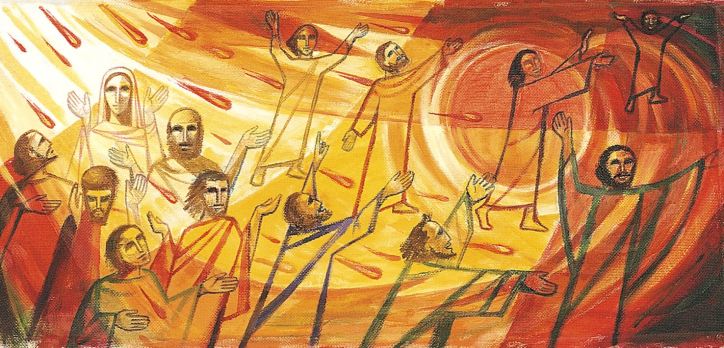
At Pentecost we celebrate the Spirit coming down and the disciples and the people encountered a presence that was somehow undeniably of God. And yet this was the Spirit that was there throughout the ministry, it was the Spirit that also had moved over the waters of creation, the Spirit that had spoken through the prophets. And as the early church tried to make sense of this God they had encountered in Jesus, in the Father and in the Spirit they talked about God as Trinity. It was a way of giving language, words to the experience of the God who comes down, who loves the world and us so much that God cannot seem to help but want to be a part of our lives.
Yet wherever God the Father is active, when we look we find the Son and the Spirit, and when Jesus is active the Father and the Spirit are there, as Jesus can say to his followers :
12 “I still have many things to say to you, but you cannot bear them now. 13 When the Spirit of truth comes, he will guide you into all the truth; for he will not speak on his own, but will speak whatever he hears, and he will declare to you the things that are to come. 14 He will glorify me, because he will take what is mine and declare it to you. 15 All that the Father has is mine. For this reason I said that he will take what is mine and declare it to you. John 16: 12-15
The Spirit speaks what the Spirit hears, the Father and the Son share in this ministry. The Spirit bears witness to the Son and the Father. Sometimes people will talk about the Father being about creation, the Son about redemption, and the Spirit about the new life-but each are involved in all three, for example when Paul talks about redemption:
Therefore, since we are justified by faith, we have peace with God through our Lord Jesus Christ, 2 through whom we have obtained access to this grace in which we stand; and we boast in our hope of sharing the glory of God. 3 And not only that, but we also boast in our sufferings, knowing that suffering produces endurance, 4 and endurance produces character, and character produces hope, 5 and hope does not disappoint us, because God’s love has been poured into our hearts through the Holy Spirit that has been given to us.
That somehow this action involves all of God but we encounter God and Jesus and the Spirit all working at the same time to give us peace and pour love into our hearts. We are made a part of what God is doing in the world and as God suffers we also encounter the suffering that is a part of love. At some point it is probably simpler to say 1+1+1=3 and stick with pictures and diagrams of how God the Father and God the Son and God the Spirit interact and are related. This picture from the Church Center is just that, one of the traditional representations of three in one, yet ultimately this is not about a concept of God, it is about the God who loves the world and who we encounter throughout the story, throughout times and in the experience of our own lives, a God who loves and comes down to dwell with us. A God who we encounter in Jesus and the Spirit and in the God who is the creator of all things, and somehow they are all somehow God and yet we experience them in different times and different manners.