Jeremiah 25- Drinking the Cup of Wrath

Jeremiah 25: 1-14- The Voice of Frustration

The Prophet Jeremiah by Michelangelo

The Prophet Jeremiah by Michelangelo

1 The word that came to Jeremiah concerning all the people of Judah, in the fourth year of King Jehoiakim son of Josiah of Judah (that was the first year of King Nebuchadrezzar of Babylon), 2 which the prophet Jeremiah spoke to all the people of Judah and all the inhabitants of Jerusalem: 3 For twenty-three years, from the thirteenth year of King Josiah son of Amon of Judah, to this day, the word of the LORD has come to me, and I have spoken persistently to you, but you have not listened. 4 And though the LORD persistently sent you all his servants the prophets, you have neither listened nor inclined your ears to hear 5 when they said, “Turn now, everyone of you, from your evil way and wicked doings, and you will remain upon the land that the LORD has given to you and your ancestors from of old and forever; 6 do not go after other gods to serve and worship them, and do not provoke me to anger with the work of your hands. Then I will do you no harm.” 7 Yet you did not listen to me, says the LORD, and so you have provoked me to anger with the work of your hands to your own harm.

                8 Therefore thus says the LORD of hosts: Because you have not obeyed my words, 9 I am going to send for all the tribes of the north, says the LORD, even for King Nebuchadrezzar of Babylon, my servant, and I will bring them against this land and its inhabitants, and against all these nations around; I will utterly destroy them, and make them an object of horror and of hissing, and an everlasting disgrace. 10 And I will banish from them the sound of mirth and the sound of gladness, the voice of the bridegroom and the voice of the bride, the sound of the millstones and the light of the lamp. 11 This whole land shall become a ruin and a waste, and these nations shall serve the king of Babylon seventy years. 12 Then after seventy years are completed, I will punish the king of Babylon and that nation, the land of the Chaldeans, for their iniquity, says the LORD, making the land an everlasting waste. 13 I will bring upon that land all the words that I have uttered against it, everything written in this book, which Jeremiah prophesied against all the nations. 14 For many nations and great kings shall make slaves of them also; and I will repay them according to their deeds and the work of their hands.


After going through Jeremiah for the past several months, for whatever reason writing this chapter I wanted to stop. Twenty five chapters of darkness with little hope is difficult to go through intentionally and I can only imagine the pain that Jeremiah went through in not only bearing the difficult message he is given to bear but also the constant rejection and persecution by his people. Yet, after letting sit for a couple days I was ready to return again to hearing Jeremiah’s words and trying to understand them. This is a chapter that is filled with frustration, broken dreams and lost hope. For twenty three years Jeremiah has spoken the message given to him and for twenty three years it has not been heard and so the time of change is coming. In the frustration there is the promise of an everlasting disgrace, of a falling never to rise again, of a complete loss of joy and gladness. It is a picture of the exile to come, and yet even in the language of everlasting in English comes from the Hebrew ‘olam which doesn’t refer to a timeless future but rather the forseeable future. Regardless the judgment is harsh and at the beginning of the time of exile the prospect of being alienated from one’s homeland and all one knows for seventy years must have seemed like an eternity.

                Jeremiah probably seemed like a traitor to his people and his faith in saying that Nebuchadrezzar was a servant of the Lord, and yet he gives theological significance to the rise of the Babylonian empire and its king. Jeremiah gives voice to what others will not, that God is at work in the movement of nations and that even this pagan empire can be a tool that the Lord is using, and that the chosen people can be the recipients of both the Lord’s blessing and curse. The land and people that were meant to be a light will become darkness, the land of milk and honey will become a waste and ruin, and hope of a new light will have to come at some other time. In this time of the prophet’s heartbreak it is not here.

Jeremiah 25: 15-38- The Cup of Wrath

cup-of-wrath

15 For thus the LORD, the God of Israel, said to me: Take from my hand this cup of the wine of wrath, and make all the nations to whom I send you drink it. 16 They shall drink and stagger and go out of their minds because of the sword that I am sending among them.

                17 So I took the cup from the LORD’s hand, and made all the nations to whom the LORD sent me drink it: 18 Jerusalem and the towns of Judah, its kings and officials, to make them a desolation and a waste, an object of hissing and of cursing, as they are today; 19 Pharaoh king of Egypt, his servants, his officials, and all his people; 20 all the mixed people; all the kings of the land of Uz; all the kings of the land of the Philistines– Ashkelon, Gaza, Ekron, and the remnant of Ashdod; 21 Edom, Moab, and the Ammonites; 22 all the kings of Tyre, all the kings of Sidon, and the kings of the coastland across the sea;23 Dedan, Tema, Buz, and all who have shaven temples; 24 all the kings of Arabia and all the kings of the mixed peoples that live in the desert; 25 all the kings of Zimri, all the kings of Elam, and all the kings of Media; 26 all the kings of the north, far and near, one after another, and all the kingdoms of the world that are on the face of the earth. And after them the king of Sheshach shall drink.

27 Then you shall say to them, Thus says the LORD of hosts, the God of Israel: Drink, get drunk and vomit, fall and rise no more, because of the sword that I am sending among you.

28 And if they refuse to accept the cup from your hand to drink, then you shall say to them: Thus says the LORD of hosts: You must drink! 29 See, I am beginning to bring disaster on the city that is called by my name, and how can you possibly avoid punishment? You shall not go unpunished, for I am summoning a sword against all the inhabitants of the earth, says the LORD of hosts.

30 You, therefore, shall prophesy against them all these words, and say to them:

The LORD will roar from on high, and from his holy habitation utter his voice;

he will roar mightily against his fold, and shout, like those who tread grapes,

against all the inhabitants of the earth.

                31 The clamor will resound to the ends of the earth,

for the LORD has an indictment against the nations;

he is entering into judgment with all flesh,

and the guilty he will put to the sword, says the LORD.

                32 Thus says the LORD of hosts:

See, disaster is spreading from nation to nation,

and a great tempest is stirring from the farthest parts of the earth!

                33 Those slain by the LORD on that day shall extend from one end of the earth to the other. They shall not be lamented, or gathered, or buried; they shall become dung on the surface of the ground.

                34 Wail, you shepherds, and cry out; roll in ashes, you lords of the flock,

for the days of your slaughter have come—

and your dispersions, and you shall fall like a choice vessel.

                35 Flight shall fail the shepherds, and there shall be no escape for the lords of the flock.

                36 Hark! the cry of the shepherds, and the wail of the lords of the flock!

For the LORD is despoiling their pasture,

                37 and the peaceful folds are devastated, because of the fierce anger of the LORD.

38 Like a lion he has left his covert; for their land has become a waste because of the cruel sword, and because of his fierce anger.

In this vision of the cup of wrath, where Jeremiah takes it to all the nations beginning in Jerusalem and eventually ending with Babylon which seems as unforgiving a passage as one will find in scripture. The language is so angry it almost spits when it is said and yet perhaps it is precisely this language of cursing that is needed to move beyond the woundedness. As the cup and its wrath and curse pass among all the nations of the region no one is exempted. The sovereignty of God is completely and utterly unquestionable to the prophet. What is the pot to say to its creator when it is used in a way that the pot might find objectionable? To be honest I find this a very distasteful passage, it reveals a dark side of God in Jeremiah’s view that I have difficulty coming to terms with at times. It is a picture of God who is so wrapped up in God’s anger that the wrath must be spread over every nation, that each people is now being held to the same curse as the chosen people. Perhaps it only the language of brokenheartedness, the rage that needs to be given vent. Perhaps it is Jeremiah and others trying to assign theological meaning to the crisis and destruction going on around them. Regardless of where it comes from I know that as a 21st Century American I stand in a very different place than Jeremiah and there are times where I cannot faithfully place myself in his shoes nor give voice to the pain and anger in his words about the brokenness of his people and of all the nations.

Daydream- A Poem

New Era by Aeon Lux on deviantart.com

New Era by Aeon Lux on deviantart.com

My mind drifts off to another place
I’m raising anchor to sail away from reality
To go wherever the spirit blows
To another world crafted in the corner of my mind
What possibilities and problems reside in this new world?
What monsters have emerged in the air or land or sea?
Is it a place filled with the hustle and bustle of commerce?
Or is it an isolated wilderness, some undiscovered country?
Will it be filled with technology that staggers the imagination?
Or perhaps some magical land in a time before rationality
Wher’er it may be never fear, I shall return
When the klaxon calls of necessity bid me return
But for now my mind is seeking some new adventure

Neil White, 2014

Making Monsters- A Poem

Monsters of the Mind, by Tirby@deviantart.com

Monsters of the Mind, by Tirby@deviantart.com

Stitching together the fragments of reality and imagination
Combined with the human energy of creativity
To construct our own monsters and demons
As a place to house our fears and concerns
Personifying them into corporeal forms
With mortal bodies that can be slain
For all the monsters found their wilderness banished
Under the unending growth of the cities
Cast aside into another cosmos
Yet without their presence there is an emptiness
And so like Frankenstein we set to work
Exhuming the monsters of the past
Adding a bit of our own devilry
And setting them free to roam
In the open places of our minds.

Is this also a Promethean struggle to rise beyond the limits set for us?
Some new and strange mutation of an original sin
Passed from fathers to sons and mothers to daughters
To need the foul creatures which take our own evil
And carry it as a scapegoat in their misshapen forms?
As the dark shadows of the world become know and its creatures labeled
And the imitation and exaggeration no longer holds our attention
Do we delve ever deeper into our darkness?
Fascinated with our own capacity for the creation
Of the beings to trouble our dreams
The peculiar draw of our nightmares
And our conflicted need for something to fear.

Neil White, 2014

Jeremiah 24-Exile, Figs and Reversals

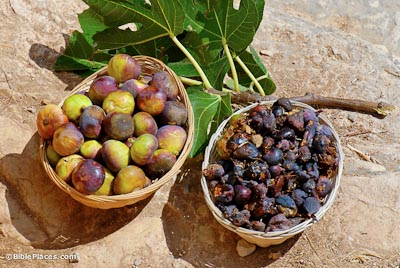
Baskets-of-good-and-bad-figs,-Jeremiah-24,-tb092506048-bibleplaces

1 The LORD showed me two baskets of figs placed before the temple of the LORD. This was after King Nebuchadrezzar of Babylon had taken into exile from Jerusalem King Jeconiah son of Jehoiakim of Judah, together with the officials of Judah, the artisans, and the smiths, and had brought them to Babylon. 2 One basket had very good figs, like first-ripe figs, but the other basket had very bad figs, so bad that they could not be eaten. 3 And the LORD said to me, “What do you see, Jeremiah?” I said, “Figs, the good figs very good, and the bad figs very bad, so bad that they cannot be eaten.”
4 Then the word of the LORD came to me: 5 Thus says the LORD, the God of Israel: Like these good figs, so I will regard as good the exiles from Judah, whom I have sent away from this place to the land of the Chaldeans. 6 I will set my eyes upon them for good, and I will bring them back to this land. I will build them up, and not tear them down; I will plant them, and not pluck them up. 7 I will give them a heart to know that I am the LORD; and they shall be my people and I will be their God, for they shall return to me with their whole heart.
8 But thus says the LORD: Like the bad figs that are so bad they cannot be eaten, so will I treat King Zedekiah of Judah, his officials, the remnant of Jerusalem who remain in this land, and those who live in the land of Egypt. 9 I will make them a horror, an evil thing, to all the kingdoms of the earth– a disgrace, a byword, a taunt, and a curse in all the places where I shall drive them. 10 And I will send sword, famine, and pestilence upon them, until they are utterly destroyed from the land that I gave to them and their ancestors.

This vision takes place in the time between the initial exile of 598 BCE and the final massive deportation of 587 BCE. In 598 BCE, when the Babylonians come and deal with the people of Judea and the city of Jerusalem without the Judeans being able to effectively oppose them they take the elite of the land into exile leaving Zedekiah to reign in place of the removed Jeconiah. For the elite taken into exile it seems like the ending of everything they know, but they are the basket of good figs. This is the same exile spoken of, for example, in the beginning of the book of Daniel:

3 Then the king commanded his palace master Ashpenaz to bring some of the Israelites of the royal family and of the nobility, 4 young men without physical defect and handsome, versed in every branch of wisdom, endowed with knowledge and insight, and competent to serve in the king’s palace; they were to be taught the literature and language of the Chaldeans. (Dan 1:3-4)

With the officials, the artisans and the smiths taken into exile with King Jeconiah, what remains to surround the newly appointed Zedekiah are those who have risen to fill the void of power left by the removal of the elite. As Binyamin Lau describes it:

Whereas the exiled leaders had the capacity for leadership, their replacements come from the dregs of society, seizing the leadership vacuum as an opportunity to accumulate power. Violence and aggression prevail as paupers become princes overnight. Might makes right. King Zedekiah, young, weak, and bankrupt, cannot control the situation. (Lau, 2013, p. 131)

To those in exile there is now a word of hope. With their homes, wealth, position and status gone now God will act on their behalf to bring them back, to plant and to give them a new heart. Perhaps in the exile they will again find what it means to be the people of God. But for those still in Judah, the new officials of Zedekiah, the city of Jerusalem and the people of the land the nightmare is not over. Zedekiah will be led once again into conflict with Babylon and Babylon’s answer will be decisive. At this time where the people remaining in the land probably look upon those in exile as cursed and themselves as blessed, Jeremiah points to the opposite reality. Their horror still remains to come, they are not yet ready to receive a word of hope. Their course will still rely upon Egypt rather than the Lord. Just as the Assyrians became the instrument of judgment for the northern kingdom of Israel according to the prophets of that time, Babylon is the instrument of God’s judgment for Jeremiah. To oppose Babylon is to oppose God’s will at this time. The baskets of figs, good and bad point to a reality that defies the reality the people are experiencing at the time. The first harvest of the people out of the land become the first-ripe figs and in Jeremiah’s world of absolutes those left on the tree have spoiled and the time when they are swept away is quickly approaching.

Images for the Third Sunday after Epiphany

The Calling of the Disciples from Matthew’s Gospel

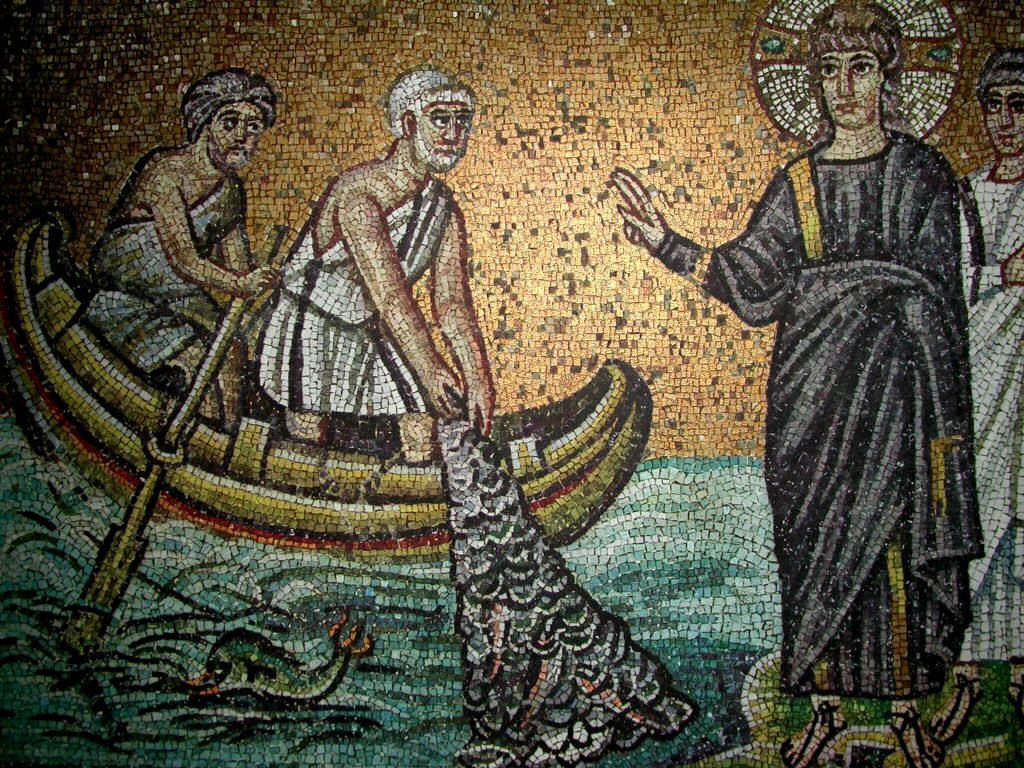
The Calling of the Apostles, Mosaics from San Marco, Santa Maria Assunta in Torcello and Murano

The Calling of the Apostles, Mosaics from San Marco, Santa Maria Assunta in Torcello and Murano

Apostle's Call, Relief from Manastery of San Pedro da Roda

Apostle’s Call, Relief from Manastery of San Pedro da Roda


Calling of Peter and Andrew, Duccio di Buonisegna (1308-1311)

Calling of Peter and Andrew, Duccio di Buonisegna (1308-1311)


James Tissot, The Calling of Saint Peter and Saint Andrew (1886-1894)

James Tissot, The Calling of Saint Peter and Saint Andrew (1886-1894)


Jeremiah 23-A Righteous Branch and Unrighteous Prophets

Jeremiah 23: 1-7: The Righteous Branch

rootofjessebranch

1 Woe to the shepherds who destroy and scatter the sheep of my pasture! says the LORD. 2 Therefore thus says the LORD, the God of Israel, concerning the shepherds who shepherd my people: It is you who have scattered my flock, and have driven them away, and you have not attended to them. So I will attend to you for your evil doings, says the LORD. 3 Then I myself will gather the remnant of my flock out of all the lands where I have driven them, and I will bring them back to their fold, and they shall be fruitful and multiply. 4 I will raise up shepherds over them who will shepherd them, and they shall not fear any longer, or be dismayed, nor shall any be missing, says the LORD.
5 The days are surely coming, says the LORD, when I will raise up for David a righteous Branch, and he shall reign as king and deal wisely, and shall execute justice and righteousness in the land. 6 In his days Judah will be saved and Israel will live in safety. And this is the name by which he will be called: “The LORD is our righteousness.”
7 Therefore, the days are surely coming, says the LORD, when it shall no longer be said, “As the LORD lives who brought the people of Israel up out of the land of Egypt,” 8 but “As the LORD lives who brought out and led the offspring of the house of Israel out of the land of the north and out of all the lands where he had driven them.” Then they shall live in their own land.

Anyone who reads Jeremiah has to make educated guesses about the context that Jeremiah is writing to, especially when the time period is not made explicit. I see this as an extension of what comes before at the end of chapter 22 which is addressing the beginning of the exile (the first exile where the leadership is taken into exile but the people are left primarily in the land) in the time of Jechoniah and so this passage comes very late in the story of Jeremiah. The chapter verse delineations in scripture come much later and probably reflect an effort to highlight the messianic hope of this passage rather than see it buried at the end of a long chapter of judgment against the king, yet this passage probably belongs as an extension of chapter 22. Rabbi Lau has a different perspective, that it comes much earlier in the time of Josiah and contrasts between Josiah and the local leaders of his time (Lau, 2013, p. 28ff.) but this is an area where I think both Walter Brueggemann and Patrick Miller, who I have been reading as I have gone through Jeremiah, are correct. (Brueggemann, 1998, p. 205) (Elizabeth Actemeir, et. al., 1994, p. VI:744)

The themes of these verses are full of echoes throughout the prophets and in the gospels as well. The verses about the shepherds and the ways they have not been faithful is echoed in Ezekiel 34:
2 Mortal, prophesy against the shepherds of Israel: prophesy, and say to them– to the shepherds: Thus says the Lord GOD: Ah, you shepherds of Israel who have been feeding yourselves! Should not shepherds feed the sheep? 3 You eat the fat, you clothe yourselves with the wool, you slaughter the fatlings; but you do not feed the sheep. 4 You have not strengthened the weak, you have not healed the sick, you have not bound up the injured, you have not brought back the strayed, you have not sought the lost, but with force and harshness you have ruled them. 5 So they were scattered, because there was no shepherd; and scattered, they became food for all the wild animals. 6 My sheep were scattered, they wandered over all the mountains and on every high hill; my sheep were scattered over all the face of the earth, with no one to search or seek for them.
7 Therefore, you shepherds, hear the word of the LORD: 8 As I live, says the Lord GOD, because my sheep have become a prey, and my sheep have become food for all the wild animals, since there was no shepherd; and because my shepherds have not searched for my sheep, but the shepherds have fed themselves, and have not fed my sheep; 9 therefore, you shepherds, hear the word of the LORD:
10 Thus says the Lord GOD, I am against the shepherds; and I will demand my sheep at their hand, and put a stop to their feeding the sheep; no longer shall the shepherds feed themselves. I will rescue my sheep from their mouths, so that they may not be food for them. 11 For thus says the Lord GOD: I myself will search for my sheep, and will seek them out Ezekiel 34: 2-11
And is echoed in John chapter 10 where Jesus talks about being the good shepherd in contrast to the previous shepherd, or in Mark 6: 34 where the people are discussed as sheep without a shepherd. Here in Jeremiah at the end of verse four the promise is for a new and faithful shepherd who will come. After a long passage of judgment now comes the hope of the coming days.
Again the passage about the righteous branch has echoes in other places as well, for example in Isaiah 11:
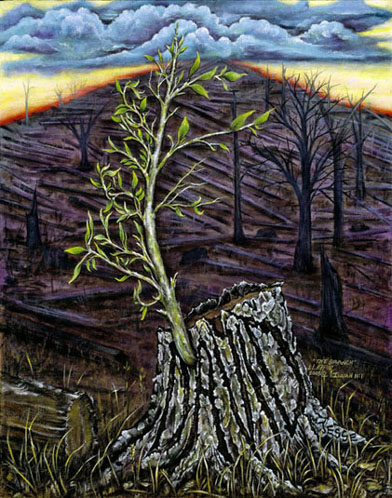
A shoot shall come out of the stump of Jesse, and a branch shall grow out of his roots. Isaiah 11:1
And the hope is that out of the defunct lineage of David which seems to be coming to an end that the God of Israel will maintain the commitment to the line of David and from that line will raise up a righteous branch who will live out of the vision of the Lord’s peace. And the renewal that the Lord will bring will make even the paradigmatic event of the Jewish people’s story, the Exodus, take second place to the new renewal that the Lord will do when the people are returned from exile. This is a story of hope for at least two sets of people: for the Jewish people it was a hope of renewal and return with a righteous and faithful king where God would gather from all the lands of the diaspora God’s people once again, and for Christians is also is an image of hope for from the story of Jesus we cannot help but hear that story in the hope of the righteous branch that arises out of the line of David. One passage can bring hope in two different ways, and hearing the hope of one another should also help us to see our dependence upon the Hebrew Scriptures to understand the life and ministry and hope of Jesus and his followers.

Jeremiah 23: 9-40: The Failure of the Prophets

The Breaking of Jeremiah's Yoke by Hananiah, Cathedral of Notre Dame, Amiens, France

The Breaking of Jeremiah’s Yoke by Hananiah, Cathedral of Notre Dame, Amiens, France

9 Concerning the prophets:
My heart is crushed within me, all my bones shake;
I have become like a drunkard, like one overcome by wine,
because of the LORD and because of his holy words.
10 For the land is full of adulterers; because of the curse the land mourns,
and the pastures of the wilderness are dried up.
Their course has been evil, and their might is not right.
11 Both prophet and priest are ungodly;
even in my house I have found their wickedness, says the LORD.
12 Therefore their way shall be to them like slippery paths in the darkness,
into which they shall be driven and fall;
for I will bring disaster upon them in the year of their punishment, says the LORD.
13 In the prophets of Samaria I saw a disgusting thing:
they prophesied by Baal and led my people Israel astray.
14 But in the prophets of Jerusalem I have seen a more shocking thing:
they commit adultery and walk in lies;
they strengthen the hands of evildoers, so that no one turns from wickedness;
all of them have become like Sodom to me, and its inhabitants like Gomorrah.
15 Therefore thus says the LORD of hosts concerning the prophets:
“I am going to make them eat wormwood, and give them poisoned water to drink;
for from the prophets of Jerusalem ungodliness has spread throughout the land.”
16 Thus says the LORD of hosts: Do not listen to the words of the prophets who prophesy to you; they are deluding you. They speak visions of their own minds, not from the mouth of the LORD. 17 They keep saying to those who despise the word of the LORD, “It shall be well with you”; and to all who stubbornly follow their own stubborn hearts, they say, “No calamity shall come upon you.”
18 For who has stood in the council of the LORD so as to see and to hear his word?
Who has given heed to his word so as to proclaim it?
19 Look, the storm of the LORD! Wrath has gone forth, a whirling tempest;
it will burst upon the head of the wicked.
20 The anger of the LORD will not turn back
until he has executed and accomplished the intents of his mind.
In the latter days you will understand it clearly.
21 I did not send the prophets, yet they ran;
I did not speak to them, yet they prophesied.
22 But if they had stood in my council,
then they would have proclaimed my words to my people,
and they would have turned them from their evil way,
and from the evil of their doings.
23 Am I a God near by, says the LORD, and not a God far off? 24 Who can hide in secret places so that I cannot see them? says the LORD. Do I not fill heaven and earth? says the LORD. 25 I have heard what the prophets have said who prophesy lies in my name, saying, “I have dreamed, I have dreamed!” 26 How long? Will the hearts of the prophets ever turn back– those who prophesy lies, and who prophesy the deceit of their own heart? 27 They plan to make my people forget my name by their dreams that they tell one another, just as their ancestors forgot my name for Baal. 28 Let the prophet who has a dream tell the dream, but let the one who has my word speak my word faithfully. What has straw in common with wheat? says the LORD. 29 Is not my word like fire, says the LORD, and like a hammer that breaks a rock in pieces? 30 See, therefore, I am against the prophets, says the LORD, who steal my words from one another. 31 See, I am against the prophets, says the LORD, who use their own tongues and say, “Says the LORD.” 32 See, I am against those who prophesy lying dreams, says the LORD, and who tell them, and who lead my people astray by their lies and their recklessness, when I did not send them or appoint them; so they do not profit this people at all, says the LORD.
33 When this people, or a prophet, or a priest asks you, “What is the burden of the LORD?” you shall say to them, “You are the burden, and I will cast you off, says the LORD.” 34 And as for the prophet, priest, or the people who say, “The burden of the LORD,” I will punish them and their households. 35 Thus shall you say to one another, among yourselves, “What has the LORD answered?” or “What has the LORD spoken?” 36 But “the burden of the LORD” you shall mention no more, for the burden is everyone’s own word, and so you pervert the words of the living God, the LORD of hosts, our God. 37 Thus you shall ask the prophet, “What has the LORD answered you?” or “What has the LORD spoken?” 38 But if you say, “the burden of the LORD,” thus says the LORD: Because you have said these words, “the burden of the LORD,” when I sent to you, saying, You shall not say, “the burden of the LORD,” 39 therefore, I will surely lift you up and cast you away from my presence, you and the city that I gave to you and your ancestors. 40 And I will bring upon you everlasting disgrace and perpetual shame, which shall not be forgotten.

First the critique goes towards the ruling elite, the shepherds, the king but now it turn on the religious authorities and in particular the other prophets. There are several points in the book of Jeremiah where we hear about other prophets who are proclaiming a different message than Jeremiah is called to proclaim and the people hear different religious authorities proclaiming a very different message, or more likely they hear Jeremiah as a voice that is so different from the message others are saying that he goes unheard. In giving the people a false message they have prevented the people from having a realistic hope of turning. The narratives from the political and religious elites are going in the opposite direction of the proclamation given to Jeremiah. They proclaim an unconditional peace which serves the people rather than the covenantal shalom which calls the people to live in justice.
Perhaps these other prophets feel compelled to live into their roles, prophets are supposed to have a message from the Lord, dreams to dreams and visions to tell and so in the absence of these visions they have kept up the appearance, or perhaps the prophets have been coopted into the royal and priestly power systems to be additional mouthpieces for these authorities. Whatever the case they have failed in their calling, according to Jeremiah they are producing only lies and false visions and they are leading the people astray. They have become worse than the prophets of northern Israel which led Israel to worship Baal, for they perhaps are constructing a misleading image of the Lord. God’s judgment is on the prophets who have misled the people. Their condemnation will be harsher, everlasting disgrace and perpetual shame, and unlike the promise of a righteous branch that will arise out of the stump of Jesse, there is no promise for the prophets-they are also to be cast out of the city.

purple rose 01 by picsofflowers.blogspot.com

At the Birth of the Day- A Poem

images

In the midst of the unmoving darkness with its bone chilling cold
Emerges the beginning of a new day
As the approaching sun paints the sky with its pallet of light
As the skies cry out in the labor pains of the genesis of morning
As the sun slowly emerges from the depths of the ground
Breaking the reign of darkness, crying out for life to re-emerge from its slumber
Smiling with its rays of fire to warm the creatures of the day
Re-inviting those with eyes to see into the drama of another cycle of new possibilities
Of awakening from the land of dreams to shape a new reality
In the breaking dawn of a new beginnings

Neil White, 2014

Images for the Second Sunday after Epiphany, Lectionary 2A

The second Sunday of Epiphany always takes us into John’s story, and in year A it is John the Baptist pointing out Jesus as the Lamb of God, two of John’s disciples (one being Andrew) following Jesus and then Andrew bringing Simon who is renamed Peter.

There are some good John the Baptist images in my Advent posts, but here is another couple:

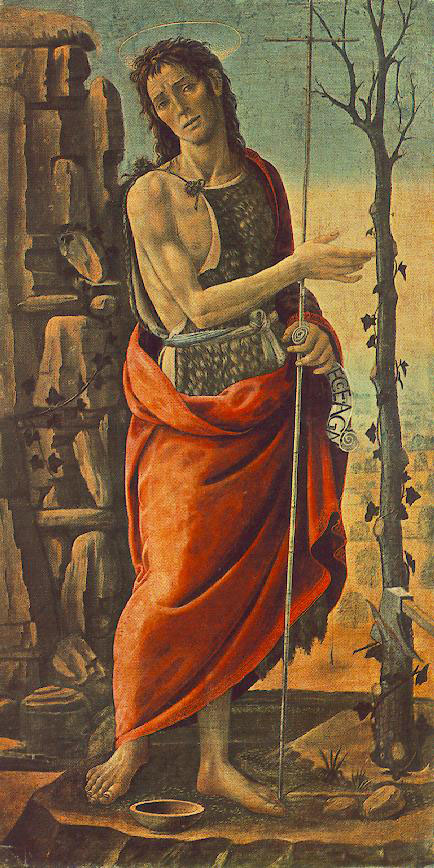
Jacopo del Sellaio, St John the Baptist about 1485

Jacopo del Sellaio, St John the Baptist about 1485

Carvaggio, St. John the Baptist

Carvaggio, St. John the Baptist

Then the calling of the disciples (many other images of this will be out next week for the Matthew reading)

Carvaggio, the Calling of Saints Peter and Andrew

Carvaggio, the Calling of Saints Peter and Andrew

Ghirlandio Domenico, the Calling of the First Apostles (1481)

Ghirlandio Domenico, the Calling of the First Apostles (1481)

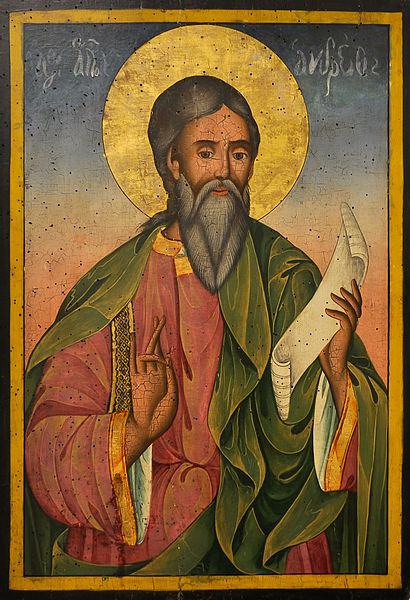
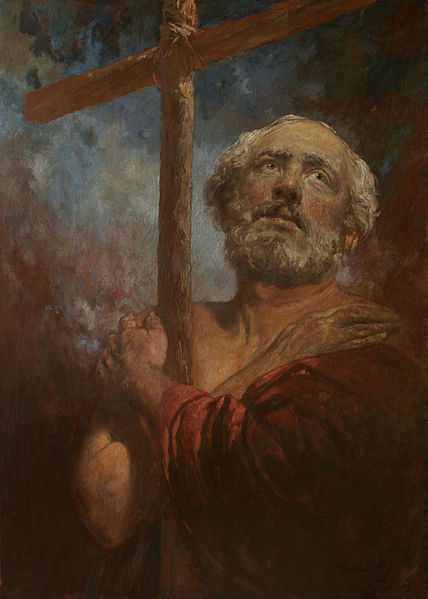
And since this is one of the place Andrew is highlighted:

Icon of St. Andrew by Yoan from Gabravo, 19th Centuty

Icon of St. Andrew by Yoan from Gabravo, 19th Centuty

Andrey Mironov, Saint Andrew (2013) copyright holder grants licence under Creative Commons Attribution

Andrey Mironov, Saint Andrew (2013) copyright holder grants licence under Creative Commons Attribution

Jeremiah 22: Justice, the King and Judgment

Justice and the Covenant

Gustav Dore, Jeremiah Preaching (1865)

Gustav Dore, Jeremiah Preaching (1865)

1 Thus says the LORD: Go down to the house of the king of Judah, and speak there this word, 2 and say: Hear the word of the LORD, O King of Judah sitting on the throne of David– you, and your servants, and your people who enter these gates. 3 Thus says the LORD: Act with justice and righteousness, and deliver from the hand of the oppressor anyone who has been robbed. And do no wrong or violence to the alien, the orphan, and the widow, or shed innocent blood in this place. 4 For if you will indeed obey this word, then through the gates of this house shall enter kings who sit on the throne of David, riding in chariots and on horses, they, and their servants, and their people. 5 But if you will not heed these words, I swear by myself, says the LORD, that this house shall become a desolation. 6 For thus says the LORD concerning the house of the king of Judah:
You are like Gilead to me, like the summit of Lebanon;
but I swear that I will make you a desert, an uninhabited city.
7 I will prepare destroyers against you, all with their weapons;
they shall cut down your choicest cedars and cast them into the fire.
8 And many nations will pass by this city, and all of them will say one to another, “Why has the LORD dealt in this way with that great city?” 9 And they will answer, “Because they abandoned the covenant of the LORD their God, and worshiped other gods and served them.”
10 Do not weep for him who is dead, nor bemoan him;
weep rather for him who goes away, for he shall return no more to see his native land.

Two conflicting views of reality are coming into conflict between the prophetic and the royal ideologies of the day. Jeremiah’s worldview comes out of the Mosaic and particular the Deuteronomic covenant where the covenant is conditional, if the people live into the vision that God has set before them they will be bless and if they do not they shall be cursed. For example the structure of Deuteronomy 28 illustrates this well:
If you will only obey the LORD your God, by diligently observing all his commandments that I am commanding you today, the LORD your God will set you high above all the nations of the earth; 2all the blessings shall come upon you and overtake you, if you obey your God:….
But if you will not obey the LORD your God by diligently observing all his commandments and decrees, which I am commanding you today, then all these curses shall come upon you and overtake you:
Deuteronomy 28: 1,2,15
And the prophetic voice interprets these obligations primarily not in terms of cultic actions but in terms of living in justice/righteousness (justice and righteousness are the same word families in both Hebrew and Greek). In contrast the royal ideology views God’s commitment as unconditional, so long as there is a Davidic king and a temple God will not forsake God’s people. The prophet Jeremiah tries again and again to call the people and the rulers back to the vision of justice and righteousness. They are charged again to not shed innocent blood, to care for the weakest of the society, the widows and orphans, and their success is conditional upon their living out of this justice. In contrast to the desire to accumulate more and more wealth among the elite as a way of securing their position, Jeremiah points to the practice of justice and righteousness as a condition for their security which ultimately comes from God. Numerous passages throughout the prophets echo this sentiment, perhaps one of the most well known being from Amos:
But let justice roll down like waters, and righteousness like an ever-flowing stream. Amos 5: 24

The King Of No Account

Vultures around a Dead Donkey

Vultures around a Dead Donkey

11 For thus says the LORD concerning Shallum son of King Josiah of Judah, who succeeded his father Josiah, and who went away from this place: He shall return here no more, 12 but in the place where they have carried him captive he shall die, and he shall never see this land again.
13 Woe to him who builds his house by unrighteousness, and his upper rooms by injustice;
who makes his neighbors work for nothing, and does not give them their wages;
14 who says, “I will build myself a spacious house with large upper rooms,”
and who cuts out windows for it, paneling it with cedar, and painting it with vermilion.
15 Are you a king because you compete in cedar?
Did not your father eat and drink and do justice and righteousness?
Then it was well with him.
16 He judged the cause of the poor and needy; then it was well.
Is not this to know me? says the LORD.
17 But your eyes and heart are only on your dishonest gain,
for shedding innocent blood, and for practicing oppression and violence.
18 Therefore thus says the LORD concerning King Jehoiakim son of Josiah of Judah: They shall not lament for him, saying, “Alas, my brother!” or “Alas, sister!” They shall not lament for him, saying, “Alas, lord!” or “Alas, his majesty!” 19 With the burial of a donkey he shall be buried– dragged off and thrown out beyond the gates of Jerusalem.
20 Go up to Lebanon, and cry out, and lift up your voice in Bashan;
cry out from Abarim, for all your lovers are crushed.
21 I spoke to you in your prosperity, but you said,
“I will not listen.” This has been your way from your youth,
for you have not obeyed my voice.
22 The wind shall shepherd all your shepherds,
and your lovers shall go into captivity;
then you will be ashamed and dismayed because of all your wickedness.
23 O inhabitant of Lebanon, nested among the cedars,
how you will groan when pangs come upon you, pain as of a woman in labor!
24 As I live, says the LORD, even if King Coniah son of Jehoiakim of Judah were the signet ring on my right hand, even from there I would tear you off 25 and give you into the hands of those who seek your life, into the hands of those of whom you are afraid, even into the hands of King Nebuchadrezzar of Babylon and into the hands of the Chaldeans. 26 I will hurl you and the mother who bore you into another country, where you were not born, and there you shall die. 27 But they shall not return to the land to which they long to return.
28 Is this man Coniah a despised broken pot, a vessel no one wants?
Why are he and his offspring hurled out and cast away in a land that they do not know?
29 O land, land, land, hear the word of the LORD!
30 Thus says the LORD: Record this man as childless,
a man who shall not succeed in his days;
for none of his offspring shall succeed in sitting on the throne of David,
and ruling again in Judah.

Much of the ire of the prophets is directed at the kings, and we need to remember that this is a time much different from our own. In an age where the vast majority of the population was illiterate and relied on the kings and the elites of the society to establish the systems of justice that the society operated within. As Brueggeman accurately states, “The conduct of the king is decisive for the weal or woe of the entire social system.” (Brueggemann, 1998, p. 194) and so here at the end of the Davidic monarchy, at the point where the elites are being taken into exile, including King Jehoiakim and his son Jeconiah (here referred to as Coniah) who is contrasted to his well respected father/grandfather Josiah. He is of no account, he will not have the honors he desires, instead of an honorable death Jeremiah declares he will have the death of a donkey—simply thrown beyond the gates. God is done with Jeconiah, ready to cast him off. In contrast to Josiah who rebuilt the temple, his son and grandson are accused with surrounding themselves with luxury far greater. This is not a new critique, it goes at least as far back as Solomon when the amount of resources placed into the temple is compared with the amount of time and resources that go into the construction of Solomon’s houses. Yet in contrast to Jeremiah’s words at the end of this chapter about his being recorded childless, when the people return to Jerusalem under the Persian empire it will be Zerubabbel, the grandson of Jeconiah will be leading the people home. The grandson of the one who if he was a signet ring on the LORD’s finger he would be cast off will experience the reversal of being the signet ring that is put back on after the exile is over.

On that day, says the LORD of hosts, I will take you, O Zerubbabel my servant, son of Shealtiel, says the LORD, and make you like a signet ring; for I have chosen you, says the LORD of hosts. Haggai 2: 24

And the harsh words of Jeremiah about the type of death Jehoiakim (or Jehoiachin) would receive seem also not to come to pass as the ending of 2 Kings points to:

27 In the thirty-seventh year of the exile of King Jehoiachin of Judah, in the twelfth month, on the twenty-seventh day of the month, King Evil-merodach of Babylon, in the year that he began to reign, released King Jehoiachin of Judah from prison; 28 he spoke kindly to him, and gave him a seat above the other seats of the kings who were with him in Babylon. 29 So Jehoiachin put aside his prison clothes. Every day of his life he dined regularly in the king’s presence. 30 For his allowance, a regular allowance was given him by the king, a portion every day, as long as he lived. 2 Kings 25: 27-30