Exodus 3: The Calling of Moses and the Name of God

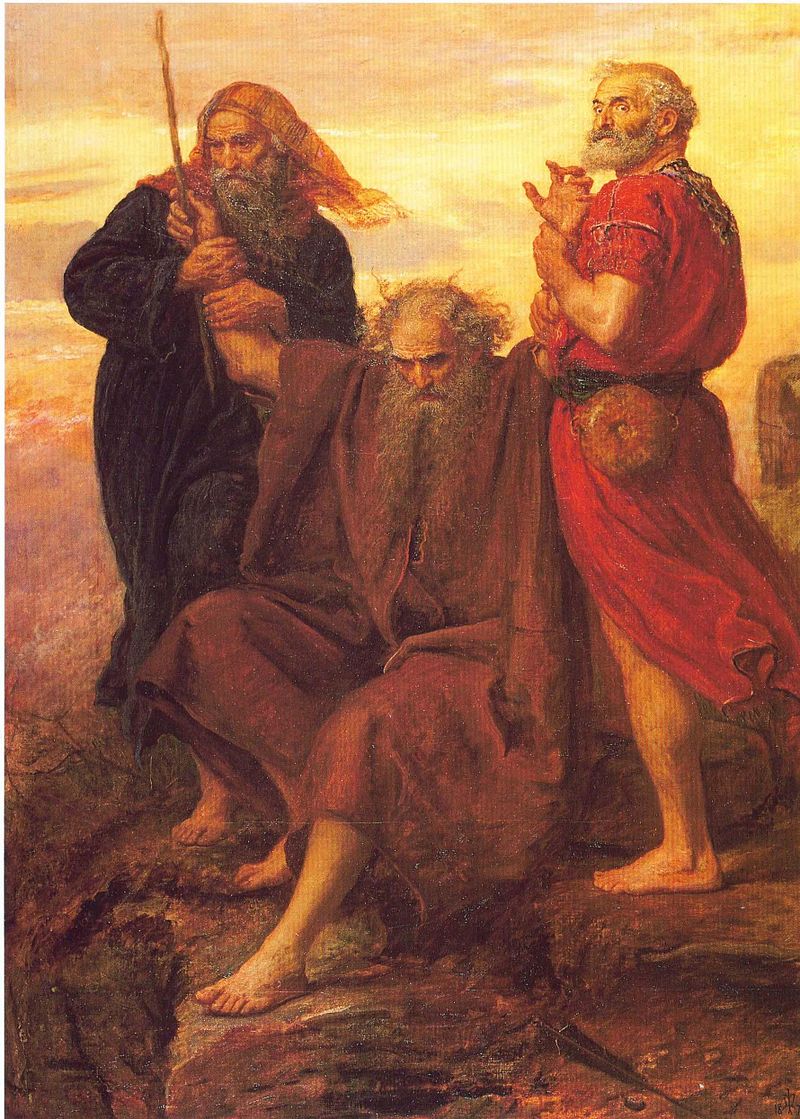
Burn by JustinChristenbery from deviantart.com

Burn by JustinChristenbery from deviantart.com

Exodus 3:1-12- Moses, the Mountain, the Burning Bush and the Voice of God

Moses was keeping the flock of his father-in-law Jethro, the priest of Midian; he led his flock beyond the wilderness, and came to Horeb, the mountain of God. 2 There the angel of the LORD appeared to him in a flame of fire out of a bush; he looked, and the bush was blazing, yet it was not consumed. 3 Then Moses said, “I must turn aside and look at this great sight, and see why the bush is not burned up.” 4 When the LORD saw that he had turned aside to see, God called to him out of the bush, “Moses, Moses!” And he said, “Here I am.” 5 Then he said, “Come no closer! Remove the sandals from your feet, for the place on which you are standing is holy ground.” 6 He said further, “I am the God of your father, the God of Abraham, the God of Isaac, and the God of Jacob.” And Moses hid his face, for he was afraid to look at God.

 7 Then the LORD said, “I have observed the misery of my people who are in Egypt; I have heard their cry on account of their taskmasters. Indeed, I know their sufferings, 8 and I have come down to deliver them from the Egyptians, and to bring them up out of that land to a good and broad land, a land flowing with milk and honey, to the country of the Canaanites, the Hittites, the Amorites, the Perizzites, the Hivites, and the Jebusites. 9 The cry of the Israelites has now come to me; I have also seen how the Egyptians oppress them. 10 So come, I will send you to Pharaoh to bring my people, the Israelites, out of Egypt.” 11 But Moses said to God, “Who am I that I should go to Pharaoh, and bring the Israelites out of Egypt?” 12 He said, “I will be with you; and this shall be the sign for you that it is I who sent you: when you have brought the people out of Egypt, you shall worship God on this mountain.”

Chapters three and four are the calling of Moses into his large task of being the leader, law bringer, prophet and teachers of the people of Israel. The call of Moses on the mountain with the burning bush, the angel of the LORD, the voice of God and Moses’ reluctance to take up the call is a very rich text densely condensed into the narrative we have handed on to us. Moses’ transition from tending the flock of his father-in-law to tending the people of the God of Abraham, Isaac and Jacob and the task of confronting the king of Egypt is a daunting one.

Moses’ father-in-law is here called Jethro instead of Reuel. There are multiple interpretations of why the name changes in this part of the story. One is that Jethro is a title, perhaps an honorary title given to a priest of Midian, while Reuel is the name of his father-in-law. Another theory comes from the source theory that was particularly popular in scholarly interpretations of the Pentateuch in the previous generation of scholars. Much as scholars in this vein would discern different source material behind the books of Genesis, Exodus, Leviticus, Numbers and Deuteronomy based on the way that the texts referred to God and their theology (the classic J-E-P-D, or Jehovah {or YHWH}, Elohist {primarily using the term Elohim to refer to God}, Priestly and Deuteronomist divisions that some may have learned in a bible class came out of this theoretical approach). According to this theory we see a seam where the compiler of the book of Exodus uses a different source to tell this part of the story. Regardless, in the narrative of Exodus we have Reuel and Jethro are referring to the same person, the father-in-law of Moses and the one out of whose household the LORD will call the leader to bring the Israelites out of Egypt.

Mountains in ancient literature are the typical places where a theophany (appearances of a divine being) occur, perhaps because of their proximity to the skies (the heavens) and perhaps because of their inaccessibility. Mount Horeb, Mount Sinai, the temple mount, the Mount of the Transfiguration or the mountain where the Sermon on the Mount and even Golgotha in its own way become places where the presence of the divine somehow encounters the people who are on the mountain when God appears. These mountaintop experiences of the immanent presence of the divine are both clarifying and terrifying. They often represent critical points within the communication of God with God’s people and so here, like in the giving of the law, God will set apart the people of Israel for a special purpose within the world and Moses for a special purpose with the people.

Many people of all ages are familiar with the story of the burning bush, where God speaks to Moses out of the fire but the story is more complex than that. Much as in the book of Genesis (example Genesis 22: 15) the angel of the LORD is the one who appears and speaks, and yet God’s voice is heard through this mediating messenger. The burning bush, which is not consumed by the fire, catches Moses’ attention. This magical moment is designed to lure Moses into this experience of the God’s words and call. The LORD is portrayed as watching for the moment when Moses is lured into this experience and encounters the fire and the angel of the LORD. Even though later in Exodus Moses will speak to God ‘face to face’ here the presence of God is mediated. Somehow the angel of the LORD is a messenger and yet an extension of the voice of God and here, even though mediated, the presence of God draws closer and makes this piece of mountainous property a holy place where God is present in a more immediate way. Much as the angel of the LORD will be the mediator of God’s presence to Moses, now Moses is being prepared to be the mediator of God’s presence to the people of both Israel and Egypt.

The fear of the LORD is the beginning of wisdom, and knowledge of the Holy One is insight” Proverbs 9:10 can state, and here Moses’ initial reaction to this intensified presence of the LORD is to hide his face and to fear.  Rabbi Jonathan Sacks has a fascinating discussion of ‘of what was Moses afraid?’ (Sacks, 2010, pp. 35-40) where he pulls on Rabbinic wisdom to draw several parallels in Moses’ life: Moses here hides his face and later the Israelites will see Moses’ face radiant after he talks with God and be afraid to approach him; he is afraid to look upon God here and later in Exodus he will see the form of God. And yet, why is the fear of the LORD the beginning of wisdom, or why is Moses afraid. Rabbi Sacks argument that to see the face of God is also to see ultimate justice of history and to understand why sometimes humans must suffer would be a wisdom whose price was too high. Whether these thoughts in any way parallel Moses’ thoughts we will never know but there is a perspective that we, no matter how broad minded we try to be, cannot see. Certainly, leaders at times must make choices that will cause pain for a portion of their followers to forward some greater good, or parents at times deny their children momentary pleasures for their health, security or well-being. Yet, we as people, while we can say with Martin Luther King, Jr. that ‘the moral arc of the universe is long, but it bends towards justice’ we still are, like Moses, called to become angry and upset about oppression and the injustice of this world. Moses is probably chosen because he could see the injustices, like those committed towards the Hebrew people or the daughters of Jethro in the previous chapter and felt compelled to act upon those injustices.

God has heard and seen the misery of the people and now God is going to act upon that observation. Moses will be the instrument that the LORD uses to bring the people from slavery to the promised land. God’s actions in the world often are mediated through the people God calls, indeed Israel as a people’s calling is to mediate God’s presence and blessing to the world. Being an instrument of God is both an incredible but also a fearful calling, perhaps this is one of the central reason why so often one of the first things said is ‘Do not be afraid’ but that is not said here. Instead the promise of God’s presence with Moses is to be the reassurance that he will need to boldly go before Pharaoh.

The land that the Israelites are to go to is here referred to for the first time as a land of milk and honey. As Carol Myers, can remind us this refers to, “The products of animal husbandry (represented by “milk”) and viticulture (represented by “honey,” or grape syrup) represent the productivity of a land that, in fact, has a difficult topography and chronic water shortages.” (Myers, 2005, p. 54) Honey in the bible is rarely bee honey, there are expectations like Judges 14 in the story of Samson, and mainly this fruit syrup. The land of milk and honey is only a productive land on the condition of the LORD of Israel granting fertility and rains at the appropriate time. It is not, like the American heartland, a comparatively easy place to grow crops and herds. The people’s prosperity, like their entire life will always be dependent upon the generative gift of the LORD their God.

Moses’ response to the call is one of self-doubt. It is easy to forget in the boldness that Moses will need to later embody before the people, before Pharaoh and before God that his initial response is one of self-doubt. Perhaps for most of us this is the natural response. We are unable to see within ourselves the very characteristics that God based God’s calling upon. The things that we may see as challenges, perhaps in Moses’ case his inability to see the injustices occurring without acting, may be the very characteristics that God sees as necessary for the calling we have. Moses will bargain with God here and in chapter four about Moses’ perceived insufficiencies and needs for reassurance and even when it may not be the way the LORD would prefer God accommodates Moses. Moses the man is critical to God’s work of liberation and even though he cannot see who he will become God sees within him the potential and the characteristics that God needs for him to be the instrument chosen for this task.

Hebrew Letters for the Name of God

Hebrew Letters for the Name of God

Exodus 3: 13-22 The Name of God

13 But Moses said to God, “If I come to the Israelites and say to them, ‘The God of your ancestors has sent me to you,’ and they ask me, ‘What is his name?’ what shall I say to them?” 14 God said to Moses, “I AM WHO I AM.” He said further, “Thus you shall say to the Israelites, ‘I AM has sent me to you.'” 15 God also said to Moses, “Thus you shall say to the Israelites, ‘The LORD, the God of your ancestors, the God of Abraham, the God of Isaac, and the God of Jacob, has sent me to you’:

This is my name forever, and this my title for all generations.

 16 Go and assemble the elders of Israel, and say to them, ‘The LORD, the God of your ancestors, the God of Abraham, of Isaac, and of Jacob, has appeared to me, saying: I have given heed to you and to what has been done to you in Egypt. 17 I declare that I will bring you up out of the misery of Egypt, to the land of the Canaanites, the Hittites, the Amorites, the Perizzites, the Hivites, and the Jebusites, a land flowing with milk and honey.’ 18 They will listen to your voice; and you and the elders of Israel shall go to the king of Egypt and say to him, ‘The LORD, the God of the Hebrews, has met with us; let us now go a three days’ journey into the wilderness, so that we may sacrifice to the LORD our God.’ 19 I know, however, that the king of Egypt will not let you go unless compelled by a mighty hand. 20 So I will stretch out my hand and strike Egypt with all my wonders that I will perform in it; after that he will let you go. 21 I will bring this people into such favor with the Egyptians that, when you go, you will not go empty-handed; 22 each woman shall ask her neighbor and any woman living in the neighbor’s house for jewelry of silver and of gold, and clothing, and you shall put them on your sons and on your daughters; and so you shall plunder the Egyptians.”

There is both power and necessity in a name. There is necessity in a name in being able to differentiate creatures, people, things and even God. Just as in Genesis 2: 19-20 where God brings Adam each of the different creatures to name, so there is a need to have a way to distinguish the God of Abraham, Isaac and Jacob from the gods of Egypt or Canaan. One of the things that people throughout the narrative of Genesis did was give names for the God they encountered (for example Hagar will name God ‘El-Roi’, Melchizedek will call God ‘El-Elyon’).  Here God is asked for what God’s name is and God’s response ‘I AM WHO I AM’ and its later four Hebrew Letter YHWH will be the one name that of God that is spoken rarely if ever among the Jewish people.

The divine name is behind the later commandment in Exodus 20:7 “You shall not make wrongful use of the name of the LORD your God, for the LORD will not acquit anyone who misuses his holy name.” Many Jewish people will not even write the word God, substituting G_d. Even in the translation of the Bible the name is not casually written. Only here is the name translated “I AM” and throughout the rest of the Hebrew Scriptures (or Old Testament) the four-letter name of God is translated LORD. A person reading in Hebrew would pronounce ‘Adonai’ the Hebrew word for Lord rather than Yahweh which is scholarship’s best guess at the proper pronunciation of the divine name.

In the fantasy series Eragon to know the true name of something is to have power over that item and magic was worked by knowing something’s true name. This is an ancient idea that Christopher Paolini picked up knowingly or unknowingly in those stories. For example, in an exorcism if one can call upon the name of the demon being exorcised it is a sign of power (an example of this is in the story of Jesus and the Gerasene demoniac in Mark 5: 1-20 and parallels). There is an entire tradition of Jewish mysticism based upon the names of God which have some resonance of magical power. Here the name of God is both necessary and powerful, in a certain sense God unveils a part of God’s identity in releasing this name. Yet, the name itself, “I AM,” has a certain veiling quality as well. Coming from the ‘to be’ verb of Hebrew it both reveals and refuses to reveal. The LORD says, “I exist” and perhaps I am behind all existence (which would fit with the Hebrew understanding of God as the creator of all things) and yet it is only four letters. Yet, those four letters would necessitate a commandment to prevent their misuse, the name of God is a powerful thing. This is also a dynamic that the Gospel of John uses in respect to Jesus’ numerous ‘I am’ sayings (I am the bread of life, I am the good shepherd, I am the gate, I am the way, the truth and the light, etc.)

God calls Moses to go and assemble the elders and then foreshadows much of what is to come in the remainder of Exodus through Joshua. The land to which they are going is now named as the land of the Canaanites, Hittites, Amorites, Perizzites, Hittites and Jebusites. The initial request is to go out for three days to sacrifice, a request that will be denied multiple times by Pharaoh. Also foreshadowed is the conflict between Pharaoh, and by extension the gods of Egypt, and the LORD. Finally, the Egyptians giving to the people of Israel as they begin their journey jewelry, wealth and clothing. God may see what is ahead for Moses and the people and yet Moses will still need to see some evidence from God how this may come about.


Star Wars, National Identity and the Seduction of the Dark Side

takeheraway-anh

I was five years old when Star War: The New Hope (or Episode IV) was released and as a child I watched it countless times. I anxiously awaited each new chapter in this space opera which would become for many one of the great American stories. I grew up wanting to be Luke Skywalker, being able to wield the force and fly in X-Wing Starfighters and I believe many of my peers wanted to be either Luke or Han Solo or Princess Leia. Yet, there has been a trend I am noticing more and more lately and I think it says something about our society. In a narrative about the fall and redemption of Anakin Skywalker there has become an increasing fondness for the fallen Anakin, or Darth Vader and the Empire which he serves.

I never reflected on this phenomenon until recently. Admittedly the Stormtroopers and Darth Vader had the cooler costumes with their skeletal look. Yet one of the reasons for portraying these soldiers in this manner was to reinforce the message of the Empire they served, one of fear. I enjoyed the occasional video of Darth Vader and his troopers dancing to M.C. Hammer as it combined pieces of my childhood. Yet, the movies continually presented the Galactic Empire and its forces, or the First Order in Episode VIII, as forces that needed to be rebelled against. Lucas intentionally or unintentionally tapped into the piece of the American narrative that rebelled against an English empire in the Eighteenth Century that was perceived by the colonists as oppressive. The movies wanted us to identify with the Rebellion for all their flaws. Yet, somehow in culture something shifted, at least partially.

The movies and the literature and other media they spawned, with all their successes and flaws, presented a worldview that many Americans embraced.  Yet, for at least a portion of the American audience there was the shift in alliances. Perhaps I should have noticed the increased use of the Imperial March with its brassy statement of power and control being used by high schools and colleges within football games and other sporting events. Perhaps the emergence of things like the 501st legion which was committed to cos-play using Stormtrooper, Sith Lord or Clone Trooper costumes should have been something I noticed. Yet, it wasn’t until last summer when Benjamin Burnley from the band Breaking Benjamin, who I knew was an avid fan of many pop culture items like the Star Wars series, launched into a praise of the First Order/Galactic Empire to play the imperial march that I began to wonder, “do we know what we are rooting for?”

Ultimately a rock musician loving the Imperial March or a bunch of people creating Stormtrooper costumes for fun is not something that I worry about too much. Yet, when we begin to embrace the ideals and policies behind the Galactic Empire it does become extremely worrisome. When Steve Bannon, Donald Trump’s chief advisor can remark, “Dick Cheney. Darth Vader. Satan. That’s power.” The peace and order throughout the galaxy in the movies was only achieved, temporarily, by the use of fear and military power that had no moral qualms with destroying entire worlds that disagreed with their policies or were merely inconvenient. Our current administration campaigned on the rhetoric of fear, and has continued to govern using that rhetoric. When a nation that has struggled throughout its life to become a place where “all men (and women) are created equal” begins to be governed in a way that appears increasing xenophobic (much as the Empire’s policies were portrayed) I worry about the image we are attempting to mold ourselves into.

I grew up in the 1970s and 80s, during a time when there was a fear of the Soviet Union and the Warsaw Pact which existed behind the iron curtain. It was a group of nations that had an enormous military and was equipped with a massive nuclear arsenal. Within the Soviet Union and the Warsaw Pact there was not the free press or the ability to protest that the United States and its NATO allies enjoyed. In the 80s it was easy to paint the Soviet Union as the ‘evil empire’ and at least for a young boy they became the concrete manifestation of the Galactic Empire within the Star Wars narrative. I still remember hearing Ronald Regan challenge Mikhail Gorbachev, “Mister Gorbachev tear down this wall!” When the Soviet Union collapsed and the Berlin Wall did fall, when former Warsaw Pact nations like East Germany and Poland as well as pieces of the former Soviet Union like Estonia and Latvia became a part of the NATO alliance I think we found ourselves at an identity crisis without the same type of massive enemy. Afghanistan and Iraq, where our forces have been deployed most recently, were no match conventionally for the United States military. When a nation with the best equipped military and an arsenal of weapons of mass destruction begins to use the rhetoric of fear on its own citizens as well as our allies throughout the world, when we begin to become the ones talking about building a wall, and when we begin to close ourselves off from others because of race or religion then our fragile American experiment is at risk of becoming a different vision.  When we American power comes from fear rather than projecting ‘certain unalienable rights’ that our founders claimed then we have lost our way. Darth Vader (as well as Satan) may represent power but not a power that I would be willing to align myself with.  If that is what our republic becomes then it will be indeed time for a rebellion to arise within our nation again. I, like many, hope that the rebellion if it occurs is done peaceable and through protest, mobilization, and voting. Again, this is one of those places where I pray that I am wrong, but through the stories of my youth and my faith I have a very different vision for this country than I fear our current administration does.

Theological Influence: Miroslav Volf

One of the projects I have decided to do is to catalog in some small way the influence of

Miroslav Volf, Henry B. Wright Professor of Theology at Yale University

Miroslav Volf, Henry B. Wright Professor of Theology at Yale University

some of the major thinkers who have influenced my growth as both a Christian, a pastor and as an individual as I reengage some of their work in my reading. Since I just finished rereading After our Likeness by Miroslav Volf I will use him as the first, (well other than my beginning of a similar document of the work of Martin Luther). I have only met Professor Volf once in Tulsa, Oklahoma where he was speaking and yet as an author his works from the first one I picked up in my final year of seminary in 2004 (Exclusion and Embrace) have probably done more than any other modern theologian to challenge and shape me over the past twelve years. I have not read everything Volf has published but what I have read has been very fruitful and thought provoking.

after-our-likenessAfter our Likeness: The Church as the Image of the Trinity. (1998) This works started out as a Habilitationsschrift, one of the dissertations that Volf had to submit for his doctoral degree from the University of Tübingen. This is probably the hardest to read of Volf’s work and the most abstractly theological. He attempts to bring a Free church ecclesiology into conversation with a Roman Catholic and Orthodox ecclesiology represented by Cardinal (Joseph) Ratzinger, who would after the publication of this be elevated to be Pope Benedict XVI, from the Catholic Church and Metropolitan John D. Zizoulas from the Orthodox church.  Volf’s ambitious project attempts to deal with issues that deal with both the concrete forms of individual churches as well as the catholicity of the church. He begins his contribution to this dialogue with John Smyth’s position (based on Matthew 18:20) that where two or three or more saints are joined together that there is the church.  The individual church in his model is joined by the action of the Triune God to the church universal.

work-in-the-spiritWork in the Spirit: Toward a Theology of Work, (1991) This volume also evolved out of Volf’s doctoral studies, this one out of his dissertation evaluating Karl Marx’s understanding of work from a theological perspective. Within Work in the Spirit he takes this dialogue with both Karl Marx’s understanding of work and Martin Luther’s concept of vocation and tries to apply these to our context where work is far more dynamic than in Luther’s or even Marx’s time. Volf highlight’s the idea of charisms or gifts of the Spirit as a departure point to attempt to imagine a theological view of work that is not limited to Marx’s view of the alienation of work or Luther’s more static view of vocation. Because this flows out of his doctoral work this still is a little more formal than some of Volf’s later works.

exclusion-and-embraceExclusion and Embrace: A Theological Exploration of Identity, Otherness, and Reconciliation (1996) This is the volume that introduced me to the work of Miroslav Volf and from the first page of the preface, where he lays out what is at stake in this theological exploration, through the final chapter on Violence and Peace it is a passionate and articulate formulation of a theology of the cross for our time. Volf is able to be both honest about the challenges of reconciliation while holding before the reader the dream and hope of embrace as the end for which we are called to work. He powerfully weaves together theology, scripture and personal experience into a work that I have gone back to multiple times in my own ministry.

free-of-chargeFree of Charge: Giving and Forgiving in a Culture Stripped of Grace (2005) This was written for a less academic audience but keeps Volf’s profound insight into the nature of forgiveness and his honest reflections about the struggle to forgive. Volf addresses many false views of both God and forgiveness in this beautiful little work that continues to delve into the vision of reconciliation he began in Exclusion and Embrace.

end-of-memoryThe End of Memory: Remembering Rightly in a Violent World (2006) Volf continues his reflections on reconciliation by exploring memory and the way our identities are formed by what we remember. Bringing together theology, psychology, sociology as well as personal experience and reflection into a cohesive reflection on how memory and forgiveness can live together. Another profound work that continues to work towards the goals of reconciliation laid out in Exclusion and Embrace.

against-the-tideAgainst the Tide: Love in a Time of Petty Dreams and Persisting Enmities (2010) This is a collection of short essays, many originally appearing as a column in Christian Century. Like all collections there is benefits and challenges: this is not a cohesive work like his other volumes but it is a collection that you can pick up a three-page reflection and then put down without losing a train of thought. There are some gems in this work and it probably would be best as more of a reflection type reading rather than a volume to read straight through.

captive-to-the-word-of-godCaptive to the Word of God: Engaging the Scriptures for Contemporary Theological Reflection (2010) I don’t remember this volume as well as many others of Volf’s. Like Against the Tide it is a collection of (longer) essays from a span of sixteen years on how to read the scriptures. Volf presents a way of not only reading scriptures theologically in a pluralistic world but also makes the point that ultimately theology should lead beyond a way of thinking to a way of living.

flourishing-volfFlourishing: Why We Need Religion in a Globalized World (2015) One of the things I love about Volf’s writing is that he asks good questions that need to be wrestled with. The question for this book is fairly simple: What is a life worth living? And what does religion (specifically but not limited to Christianity) have to contribute to the answer of this question? This is a measured and wise beginning of the answers to those questions. Volf engages both the ancient wisdom of books like Ecclesiastes and Job and the questions they prompt that still resonate in our lives.

Exodus 2: Moses’ Story Begins

Alexey Tyranox, Moses Being Lowered into the Nile by His Mother (1839-1842)

Alexey Tyranox, Moses Being Lowered into the Nile by His Mother (1839-1842)

Exodus 2: 1-10 The Continued Resistance of Women

Now a man from the house of Levi went and married a Levite woman. 2 The woman conceived and bore a son; and when she saw that he was a fine baby, she hid him three months. 3 When she could hide him no longer she got a papyrus basket for him, and plastered it with bitumen and pitch; she put the child in it and placed it among the reeds on the bank of the river. 4 His sister stood at a distance, to see what would happen to him.

 5 The daughter of Pharaoh came down to bathe at the river, while her attendants walked beside the river. She saw the basket among the reeds and sent her maid to bring it. 6 When she opened it, she saw the child. He was crying, and she took pity on him, “This must be one of the Hebrews’ children,” she said. 7 Then his sister said to Pharaoh’s daughter, “Shall I go and get you a nurse from the Hebrew women to nurse the child for you?” 8 Pharaoh’s daughter said to her, “Yes.” So the girl went and called the child’s mother. 9 Pharaoh’s daughter said to her, “Take this child and nurse it for me, and I will give you your wages.” So the woman took the child and nursed it. 10 When the child grew up, she brought him to Pharaoh’s daughter, and she took him as her son. She named him Moses, “because,” she said, “I drew him out of the water.”

The resistance to the policies of the unnamed king of Egypt begins with Shiphrah and Puah, the Hebrew midwives, and continues with a mother, a daughter of the Hebrews and a daughter of the king’s own household. Even in the time of oppression the Israelites continue to marry and bear children, even though the lives of those children are now threatened by a command to all the people of Egypt. Yet, even in ancient Egypt we hear a memory of the subtle and artful resistance to the abhorrent policies of murder. This one child rescued from being thrown into the Nile will later lead the people out of slavery and into a new calling and identity.

A mother looks upon her newborn son and seeing that, in similar language to the creation narratives in Genesis, that he is good attempts to preserve this small piece of God’s creation she holds in her hands. For three months she manages to keep the child hidden but ultimately the wickedness of humanity forces her, like God sealing up Noah and his family in an ark (and the word for the basket here is the same used for the ark in Genesis), places him in the waters of the Nile-the same waters that Pharaoh demanded the Egyptians cast the Hebrew sons into, and hopes against hope for deliverance from those very waters. The mother moves away from the basket leaving a final hope in God’s unseen hands but his sister, perhaps Miriam but unnamed here, continues to watch.

Deliverance comes from the household of the man who ordered the death of the Hebrew children. This daughter of Pharaoh has nothing to gain by being involved in this story. She could’ve easily allowed the basket to remain undisturbed by human hands and still she sees, she acts, and she becomes the deliverance for this child and a medium God will use in the deliverance of the people. She is able to see in this child the human cost of her father’s oppression and she takes pity and acts. She realizes that this indeed must be one of the Hebrew’s children consigned to death and she hears his cries, much as God will later hear the Israelite’s cries. All throughout this beginning of Exodus it is women who prefigure the ways in which God will act.

The surprising nature of the story continues when the daughter of Moses’ mother speaks openly to the daughter of Pharaoh and together they conspire to save the child’s life. It is Moses’ sister who suggests a subtle resistance that allows the mother of Moses’ to be shielded from losing her son and to be compensated by Pharaoh’s household for resisting the deathly order of Pharaoh himself. Moses will grow to be a child of two worlds, both the world of the Hebrews still connected to his family of birth and connected to the household of Pharaoh where he receives not only protection and privilege but also his name. Yet, like Pharaoh’s daughter, his mother and his sister, he too will see the cost of the oppression around him as a young man and be compelled to act.

Lawrence Alma-Tadema, The Finding of Moses (1904)

Lawrence Alma-Tadema, The Finding of Moses (1904)


Exodus 2: 11-15a: Reacting to the Oppression

 11 One day, after Moses had grown up, he went out to his people and saw their forced labor. He saw an Egyptian beating a Hebrew, one of his kinsfolk. 12 He looked this way and that, and seeing no one he killed the Egyptian and hid him in the sand. 13 When he went out the next day, he saw two Hebrews fighting; and he said to the one who was in the wrong, “Why do you strike your fellow Hebrew?” 14 He answered, “Who made you a ruler and judge over us? Do you mean to kill me as you killed the Egyptian?” Then Moses was afraid and thought, “Surely the thing is known.” 15 When Pharaoh heard of it, he sought to kill Moses.

Moses has grown up as a person of two worlds. He has both his identity as a child brought into the household of Pharaoh as well as his identity as a Hebrew. Perhaps he was shielded during his upbringing from the friction between these two identities but upon seeing the oppression of his people he feels compelled, like God will at the end of chapter two, to act. Moses reacts violently, he feels his kinship with the Hebrew being beaten, and he commits murder. His action may not be a reasoned and calm reaction, most likely we would brand this type of action today a terrorist action, and yet he sees the oppression and feels compelled to act. Perhaps this is something that God sees in Moses, one who cannot stand aside while the powerful abuse the powerless. Moses believes that he is able to act without his action being seen and known, yet he soon finds he is now seen by both sets of peoples as a murder. His fellow Hebrew sees his quest for justice in a different manner, as yet another person who acts with violence to achieve his goals.

Moses’ resistance is more violent and less effective than the resistance of the women who came before him. Moses ultimately ends up fleeing to preserve his life and going from being a person of two people to a man without a people. Yet, he will continue to see and act when he sees those with power taking advantage of those without. Moses will be unable to be the liberator of the people from their oppression on his own, ultimately he, like God, needs to see and to choose how to act. For Moses his actions mean giving up the protection that Pharaoh’s daughter was able to provide for him and he identifies with a people who is not ready to accept him.

Ciro Ferri, Moses and the Daughters of Jethro (between 1660 and 1689)

Ciro Ferri, Moses and the Daughters of Jethro (between 1660 and 1689)

Exodus 2: 15b-22: An Alien Residing in a Foreign Land

But Moses fled from Pharaoh. He settled in the land of Midian, and sat down by a well. 16 The priest of Midian had seven daughters. They came to draw water, and filled the troughs to water their father’s flock. 17 But some shepherds came and drove them away. Moses got up and came to their defense and watered their flock. 18 When they returned to their father Reuel, he said, “How is it that you have come back so soon today?” 19 They said, “An Egyptian helped us against the shepherds; he even drew water for us and watered the flock.” 20 He said to his daughters, “Where is he? Why did you leave the man? Invite him to break bread.” 21 Moses agreed to stay with the man, and he gave Moses his daughter Zipporah in marriage. 22 She bore a son, and he named him Gershom; for he said, “I have been an alien residing in a foreign land.”

Moses may have fled Egypt but he has not left his sense of justice behind. In Midian, where he comes to rest after his flight, he feels compelled this time to act on behalf of the daughters of Midian who are being harassed by the shepherd in that region and being made to wait until their flocks are watered so they can water their own flock. Moses again acts and breaks what was apparently an ongoing struggle. When their father is surprised by their early return he realizes something must have changed. Moses again sees and chooses to act and this action opens up a new home for the wanderer.

Reuel, the priest of Midian, after inquiring of his daughters about their early arrival challenges them to welcome in this stranger. “Where is he? Why did you leave the man? Invite him to break bread.” Reuel in extending his hospitality to Moses welcomes the alien residing in his land. This hospitality eventually transforms into a new kinship when he gives his daughter, Zipporah, to become Moses’ wife and later bear Moses his son Gershom. Moses now becomes a man of a third people and family and makes his home in the land of Midian away from the empire of Egypt and away from the oppression of the Hebrew people. His choices have led him to a new home away from the homes he knew. He once again is extended the unexpected saving hospitality of another and his life begins again. It will take God’s call to get him to reluctantly return to Egypt and become the one God uses to liberate the Israelites, and yet in his son’s name there is perhaps the longing for home and the identification of displacement he feels being an Egyptian and an Israelite in the household of the priest of Midian.

Exodus 2: 23-25: The God of the Israelites

 23 After a long time the king of Egypt died. The Israelites groaned under their slavery, and cried out. Out of the slavery their cry for help rose up to God. 24 God heard their groaning, and God remembered his covenant with Abraham, Isaac, and Jacob. 25 God looked upon the Israelites, and God took notice of them.

Up to this point in Exodus we have seen a human drama where the Israelites and Egyptians have struggled to live within the fear of Pharaoh. But the God of the Israelites is a God who, like the midwives, Moses’ mother and sister, Pharaoh’s daughter, and ultimately Moses, sees and acts. Unlike the gods of the Egyptians or the many gods of the nations than will surround the Israelites in the promised land the God of Israel has an eye for the oppressed. The pivot of Exodus is here where God hears their cry, God remembers the promises made to Abraham, Isaac and Jacob, God takes notice and God decides to act.

The death of the king of Egypt doesn’t change the position of the Israelite people. Individual policies may have changed and the order to kill infants may not have continued but the people are reduced to cries and groans. They may be numerous but they also feel powerless in their captivity. The God of the Israelites, who is ultimately the God of the whole earth, will challenge the gods of Egypt and their emissaries to bring out of the empire of the day a slave people who might learn to be the covenant people of God.

In the Land of Trolls

Theodor Kittelsen, "The Sea Troll" (1887)

Theodor Kittelsen, “The Sea Troll” (1887)

In the Land of Trolls

We dreamed of a networked world full of bridges
Spanning the gaps between people and nations
Connectivity in a globalized world brought us closer
Enabling us to find new brothers and sisters and friends
That lived in lands we could have never visited before
The oceans and borders that separated ceased to matter
And we could share our images, our passions, our hearts desire
Sharing the parts of life we wanted others to see and admire
Never knowing that this land of connectivity built its bridges
In the land of trolls.
 
They sat there silent: watching, waiting, biding their time
Plotting how to ambush and overwhelm the unsuspecting
The beautiful avatars that ventured over their bridges provoked something
Within them: hatred and ugliness emerged from their gut
And many found themselves overcome by the bile and bellow
The bridges also allowed the trolls to find their own fellows
Together they could construct cathedrals of fear and congregations of hate
Defending the bridges they claimed as their own domain
Mainly working through intimidation and harassment
Yet occasionally in their obsession they use physical violence
But often the psychological scars of the encounter
Entered the blood and bone of the ambushed
In the land of trolls
 
So how do you deal with trolls, do you abandon the bridges?
Surrendering the dream of connectivity and the connections made
Are armies sent beneath the bridges in an attempt to root them out?
Do solitary heroes stand-alone against the onslaught of the hoard?
Or do we simply refuse to feed the trolls any longer?
Do we deny them the sustenance of our fear or the sight of our pain?
Others have attempted to act as missionaries attempting to convert
Yet, the trolls have often dined on the well-meaning priest of reconciliation
The trolls seem to like the safety and darkness of their unseen haunts
Yet, I wonder, if a troll unseen and unheard even exists at all
Or does it become one more vanquished spirit searching for a victim
Some mortal to haunt with its shadowy threats and terrifying words
Yet, perhaps if their voice has no power they might find themselves bypassed
Haunting an unused wasteland cursed to wander the wilderness
That has become the land of trolls

Exodus 1: Setting the Stage

Roman collared slaves-Marble relief from Smyrna (Izmir, Turkey), 200 CE

Roman collared slaves-Marble relief from Smyrna (Izmir, Turkey), 200 CE

 Exodus 1: 1-7 Setting the Stage

These are the names of the sons of Israel who came to Egypt with Jacob, each with his household: 2 Reuben, Simeon, Levi, and Judah, 3 Issachar, Zebulun, and Benjamin, 4 Dan and Naphtali, Gad and Asher. 5 The total number of people born to Jacob was seventy. Joseph was already in Egypt. 6 Then Joseph died, and all his brothers, and that whole generation. 7 But the Israelites were fruitful and prolific; they multiplied and grew exceedingly strong, so that the land was filled with them.

The book of Genesis, the preceding book in the Bible, spends the bulk of the book with God working through a specific family, the family of Abraham, Isaac and Jacob, to be God’s covenant partners and to be a blessing to all the nations. As Exodus begins we are joined to the ending of the book of Genesis where the sons of Jacob (Israel) have come down to Egypt and settled in the land of Goshen. Joseph was already in Egypt after being sold into slavery and rising to being second in command of all Egypt and Jacob and his remaining sons come to Egypt seeking relief from a severe famine throughout the land. Throughout the stories of Abraham, Isaac, Jacob, and Joseph God has continued to provide for them in unexpected ways. Yet, now we have left the time of Abraham, Isaac and Jacob and the original sons of Israel behind as that generation passes away.

One of the struggles of many of the stories of Genesis was the struggle against barrenness. Sarah, Rebekah and Rachel all struggle with infertility and these families of the promise struggle with the command in the first creation narrative to ‘be fruitful and multiply’ (Genesis 1. 28). At the end of Genesis and here at the beginning of Exodus there has been a slow increase from the original two of Sarah and Abraham to now a household of seventy born to Jacob. Yet now the increase becomes exceedingly fruitful, they begin to become numerous and this combined with a historical amnesia in the land of Egypt sets the stage for the initial crisis of Exodus and the transition from the people’s lives in Egypt to their journey to the promised land.

Exodus 1: 8-14 Historical Amnesia and the Politics of Fear and Oppression

 8 Now a new king arose over Egypt, who did not know Joseph. 9 He said to his people, “Look, the Israelite people are more numerous and more powerful than we. 10 Come, let us deal shrewdly with them, or they will increase and, in the event of war, join our enemies and fight against us and escape from the land.” 11 Therefore they set taskmasters over them to oppress them with forced labor. They built supply cities, Pithom and Rameses, for Pharaoh. 12 But the more they were oppressed, the more they multiplied and spread, so that the Egyptians came to dread the Israelites. 13 The Egyptians became ruthless in imposing tasks on the Israelites, 14 and made their lives bitter with hard service in mortar and brick and in every kind of field labor. They were ruthless in all the tasks that they imposed on them.

The initial reception in Egypt for the family of Israel was positive and as the book of Deuteronomy can remind the people: “You shall not abhor any of the Egyptians, because you were an alien residing in their land.” (Deuteronomy 23: 7) Yet, as time passes a sense of historical amnesia sets in. A new king, an unnamed king, arises in the land of Egypt. He may rule the superpower of the day but within this book that will become the ‘West’s meta-narrative of hope’ (Sacks, 2010, p. 1) his name remains unspoken and forgotten. He will not be linked to any of the massive construction projects of one of the Egyptian dynasties or to the culture of the land. This nameless ruler will be only remembered for the way in which the ruler of the most powerful empire of that age feared a subset of those in his land.

Until this point the Israelites were a family, they may have grown larger, but here it is the unnamed ruler who for the first time designates them as a unique people. Somehow the Israelites are distinct, they are unlike the people of the rest of the nation and that distinction gives rise to a politics of oppression. Ultimately, as Rabbi Sacks can remind us, “Pharaoh is driven by political motives, not hate.” (Sacks, 2010, p. 4) Throughout the book of Exodus the people of Egypt will be presented as one option, even a shrewd option for a type of society that can capitalize on the fear and distinction of a people to transform them from neighbors into forced laborers. Fear provides the opportunity to not only discriminate against a people but to build a civilization on their broken backs. The people of Israel will be challenged to learn a different way of organizing their lives rather than the manner of the Pharaohs of Egypt or the kings of the nations that surround them. Yet, the politics of fear and oppression continue to be used in our time to set one group of people against another and to transform neighbors into the ones to be feared.

The initial strategy to remove the threat of the Israelites through oppression fails because the more they were oppressed the more they multiplied. While the policy may have the desired effect in the near term by allowing the Egyptians to have a forced labor pool to build the monuments and houses of the empire it continues to create a fear and a dependence upon the very people they wish to eliminate. The oppression and violence has not yet reached its peak and yet it has already begun to change the oppressor. To maintain this separation between Egyptian and Israelite they become ruthless. Fear and oppression has changed them. Their placing of the projects of the empire above the needs of their neighbor changes their culture. Hospitality is replaced with brutality and yet the Israelites endure and continue to multiply even under the heavy burden of the empire’s imposed service.

Exodus 1: 15-22 The Disobedience of Women

15 The king of Egypt said to the Hebrew midwives, one of whom was named Shiphrah and the other Puah, 16 “When you act as midwives to the Hebrew women, and see them on the birthstool, if it is a boy, kill him; but if it is a girl, she shall live.” 17 But the midwives feared God; they did not do as the king of Egypt commanded them, but they let the boys live. 18 So the king of Egypt summoned the midwives and said to them, “Why have you done this, and allowed the boys to live?” 19 The midwives said to Pharaoh, “Because the Hebrew women are not like the Egyptian women; for they are vigorous and give birth before the midwife comes to them.” 20 So God dealt well with the midwives; and the people multiplied and became very strong. 21 And because the midwives feared God, he gave them families. 22 Then Pharaoh commanded all his people, “Every boy that is born to the Hebrews you shall throw into the Nile, but you shall let every girl live.”

This is the first of six stories in the book of Exodus of outstanding moral courage and they are all about women, two (Pharaoh’s daughter and Zipporah) are not Israelites and here with Shiphrah and Puah they may not be Israelites as well. (Sacks, 2010, p. 9) We don’t know whether these two women are simply midwives that are working with the Hebrew women or whether they are themselves Hebrews but they are named while the king of Egypt remains anonymous. They become examples of how women, who would not have a place within the power structures of men, are able to subvert the command of the king.

The king of Egypt asks these women to commit a crime against humanity. Perhaps the Hebrews are no longer valued as humans any longer by Pharaoh and they become a subhuman beast of burden where the master can decide upon their life and death. Yet, for these women it is not only a crime against humanity but also a crime against the LORD of the Hebrew women who keeps granting them the fertility to bring forth children. The Pharaoh has overstepped the line with these two servants and they work in their own way to find a way to allow life to occur when death has been ordered. Shiphrah and Puah have a calling, whether through morality or through faith, to not carry out this order to kill infants. When they are summoned they respond with a lie and it is a lie which also taunts the strength of the Egyptians. Hebrew women are able to deliver without a midwife present, they are much more robust than the more fragile Egyptian women who need to wait upon the ministering of the midwives. This is one of those times where God seems to delight in the craftiness of the servant. The midwives, who may have been in their role because they have no families of their own, are seen and they too are granted fertility and families. They also now have a place with the Hebrews and they become the first to resist the murderous impulses of the empire. Pharaoh, deciding that these women will not do his work for him now extends the murderous command to all his people. Now the murder of Israelites infant boys becomes the work of the nation and doubtless there will be those who are willing to embrace the politics of fear and division and be a part of the ordered purge. Yet, it is from within the oppression of the empire that something new will happen, that the people who were slaves to Pharaoh will be claimed as the first-born children by the God who is not bound to any place or nation but is instead the creator of the heaven and the earth.

Transitioning Into Exodus

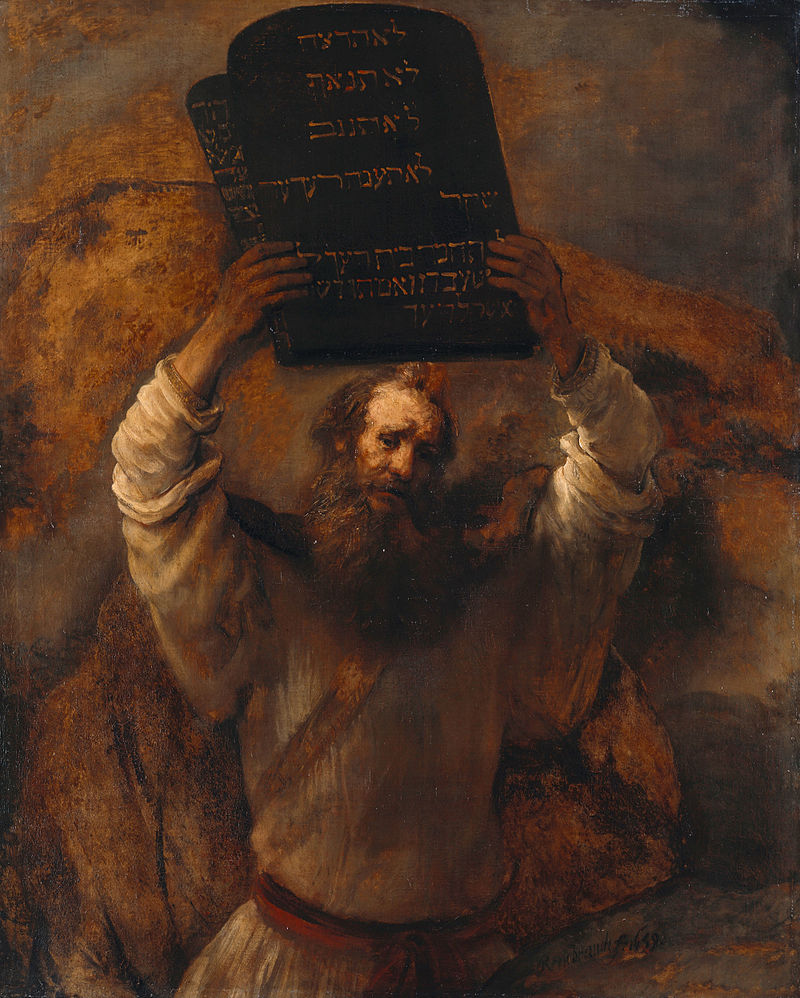
Rembrandt, Moses with the Ten Commandments

Rembrandt, Moses with the Ten Commandments

When I started the biblical reflections portion of this blog almost four years ago, I didn’t realize how much I would learn and how much it would shape my ministry. Many Christians don’t know how to approach the Hebrew Scriptures that many call the Old Testament, and as much as I love the gospels and the letters of Paul I am learning how to hear those writings much more fully as I become more and more familiar with the Psalms, Jeremiah, Deuteronomy, Ecclesiastes, Esther and Haggai. I am understanding more what Dietrich Bonhoeffer meant when he said,

I notice more and more how much I am thinking and perceiving things in line with the Old Testament; thus in recent months I have been reading much more the Old than the New Testament. Only when one knows the name of God may not be uttered may one sometimes speak the name of Jesus Christ. Only when one loves life and the earth so much that with it everything seems lost and at its end may one believe in the resurrection of the dead and a new world. Only when one accepts the law of God as binding for oneself may one perhaps sometimes speak of grace. And only when the wrath and vengeance of God against God’s enemies are allowed to stand can something of forgiveness and love of enemies touch our hearts. Whoever wishes to be and perceive too quickly and too directly in New Testament ways is to my mind no Christian. We have already, discussed this a few times, and every day confirms for me that it is right. One can and must not speak the ultimate word prior to the penultimate. We are living in the penultimate and believe the ultimate. (DBW 8: 213)

As I have wrestled with some difficult pieces of the Bible it has caused me to think about ethics, faith, our current world and so much more. For me this is the more challenging way but it has also been incredibly rewarding. Finishing Psalms 21-30 as a transition between books now I stand ready to begin another large piece. Next will be the book of Exodus, the second of the Pentateuch that I have approached. It is a book that I am more familiar with than I was with Jeremiah or Deuteronomy when I began and it is more of a narrative than any of the books I have done previously. I have two trustworthy companions for the journey. Since this is one of the central books of the Torah and the defining drama of the Jewish people I am delighted to have Rabbi Jonathan Sacks’, Covenant and Conversation: A Weekly Reading of the Jewish Bible as he reads through Exodus: The Book of Redemption as one of my primary dialogue partners. I will also be taking along Carol Meyers commentary on Exodus from the New Cambridge Bible Commentary Series. I have other resources that I have read in the past or that are on my shelf that may also be a part of this journey. With the forty chapters of Exodus the hope is to make the journey in approximately forty weeks, but as journeys go there are often unforeseen stops along the way. I am looking forward to this next exploration as I reenter the journey of the people of Israel from Egypt into the wilderness, from slavery into becoming the people of God and seeing how their journey and faith continue to shape and inform my own.

Psalm 30- The Life of Praise

Mosaic Mural of Pentecost by Manuel Perez Paredes in Nuestro Senor del Veneno Temple, Mexico City

Mosaic Mural of Pentecost by Manuel Perez Paredes in Nuestro Senor del Veneno Temple, Mexico City

Psalm 30

<A Psalm. A Song at the dedication of the temple. Of David.>
 1 I will extol you, O LORD, for you have drawn me up, and did not let my foes rejoice over me.
 2 O LORD my God, I cried to you for help, and you have healed me.
 3 O LORD, you brought up my soul from Sheol, restored me to life from among those gone down to the Pit.
 4 Sing praises to the LORD, O you his faithful ones, and give thanks to his holy name.
 5 For his anger is but for a moment; his favor is for a lifetime. Weeping may linger for the night, but joy comes with the morning.
 6 As for me, I said in my prosperity, “I shall never be moved.”
 7 By your favor, O LORD, you had established me as a strong mountain; you hid your face; I was dismayed.
 8 To you, O LORD, I cried, and to the LORD I made supplication:
 9 “What profit is there in my death, if I go down to the Pit? Will the dust praise you? Will it tell of your faithfulness?
 10 Hear, O LORD, and be gracious to me! O LORD, be my helper!”
 11 You have turned my mourning into dancing; you have taken off my sackcloth and clothed me with joy,
 12 so that my soul may praise you and not be silent. O LORD my God, I will give thanks to you forever.

This is a Psalm of praise but as Rolf Jacobson also can state it is a Psalm about praise. (Nancy deClaisse-Walford, 2014, p. 298) Psalm thirty with its poetic polarities looks at what a life of praise might look like and how one’s experience of God’s deliverance can lead to a life where one’s soul can praise and not be silent. The Psalm also moves beyond the individual Psalmists praise to the community’s experience of the deliverance of God and the attribution of the Psalm as a song at the dedication of the temple can let us wonder how the words originally written by one speaker now gets echoed to the faithful ones through their testimony and becomes reflective of a communal faith at the dedication of a place of worship. Praise leads the person not to remain silent, to proclaim their life before the gathered community and ultimately to dedicate a place where God’s name can be praised.

The superscription which lists the Psalm as being used in the dedication of a temple has two possibilities in ancient Israelite and Jewish writings: the dedication of the second temple in 515 BCE (as described in Ezra 6) or the rededication of the temple after the Maccabean revolt in 165 BCE after it had been defiled by Antiochus Epiphanes (which Hanukah and the books of Maccabees talk about). (Nancy deClaisse-Walford, 2014, p. 289) In either case the community has come out of a time where the LORD appeared to hide his face and remove the protection from the people and yet ultimately the people stand in the position of being renewed and redeemed from either captivity or persecution. In using these words in the position of praising God with the dedication of a new (or renewed) temple the people take the experience of the Psalmist and the words of praise and relate them to the experience of the Jewish community as they emerge from the shadow of oppression and the threat of death.

The Psalm itself bursts with praise from the writer’s experience of redemption. From the very beginning the poet show how their LORD saved them from the point of death. The language is full of images reflecting a struggle for life against the possibility of death. Being drawn up, brought up from Sheol, having one’s life restored from among those who have gone down to the Pit: these are all ways of representing the near-death experience that the Psalmist trusts that God has redeemed them from. So, the Psalmist feels compelled not only to tell and praise but to command others to praise and give thanks as well. In sharing their experience and song they begin to teach the community how to sing praises to the LORD and to give thanks to his holy name.

In the center of the psalm is the testimony of a life that has forgotten praise and which became comfortable in its complacency. The Psalmist, like many in our own time, made security their idol and they began to trust in their own strength rather than the LORD who had provided for them. They began to believe that they would never be moved. Yet, this is where the LORD hides the protecting and benevolent face of God. To many people who believe God only brings prosperity and blessing this may indeed feel like what Martin Luther would call ‘the alien work of God’: the actions of condemnation, judgment or punishment. Or as Dietrich Bonhoeffer could say in a 1944 letter to Eberhard Bethge,

Thus our coming of age leads us to a truer recognition of our situation before God. God would have us know that we must live as those who manage their lives without God. The same God who is with us is the God who forsakes us (Mark 15: 34!) (DBW 8:479)

The Psalmist describes the descent into the Godforsaken place that leads them to pleading for life. The Psalms come from a time before the Jewish people would even begin thinking of a resurrection and so the ending of life is the ending of praise. Death silences the songs of the faithful but even at the edge of the abyss the faithful can cry out. They know that God’s anger will pass, that joy will come in the morning. That God can and will act to bring life out of death, hope out of despair, turn mourning into dancing and brokenness into healing.

So, the Psalmist and the community that can echo these words learn to praise and not be silent. They participate in a faith in a redeeming God who delivers the faithful ones in their time of trouble. Having participated in the renewal of life after the brush with death, persecution or destruction they learn that it is because of the LORD that they shall never be moved. As St. Paul could echo this idea in a later time, talking to the early followers of Jesus, ‘that neither death, nor life, nor angels, nor rulers, nor things present, nor things to come, nor powers, nor height, nor depth, nor anything else in all creation, will be able to separate us from the love of God in Christ Jesus our LORD.” (Romans 8.38f.) And as the faithful gather together in the places dedicated to praising and giving thanks to God forever as the old song says, “How can they keep from singing.”


Understanding the Constitution of the United States: Article 1 Section 9-10 Limiting the Powers of Congress and the Individual States

Image of the U.S. Constitution from http://wvconstitutionaladvocates.com/u-s-constitution/

Image of the U.S. Constitution from http://wvconstitutionaladvocates.com/u-s-constitution/

These final two sections limit both the powers of the congress in passing laws as well as the powers of individual states as they construct their state constitution and legal systems.

Section 9:

The first clause of section 9 is now obsolete but it prevented the congress from interfering with the slave trade until 1808 but did allow for the taxation of the slave trade. The constitution is not a perfect document nor were the founders perfect. This is one of the places where we see the necessity of being able to amend the constitution.

The writ of habeas corpus prevents unlawful detention or imprisonment except in cases of rebellion or invasion.  President George W. Bush’s administration attempted to argue that this provision allowed for the detainees at Guantanamo Bay outside the jurisdiction of habeas corpus but the Supreme Court overturned this action in the case of Boumediene vs. Bush.

The congress cannot pass a bill of attainder where a person or group can be declared guilty of some crime and punished without a trial.

The congress cannot establish a uniform tax on individuals based only on their count within the census, taxes can be based upon income and other factors but there is no tax merely for being within the United States.

No tax can be passed on commerce between states.

No preference shall be given to imports entering in one state’s ports over another’s and vessels traveling from one state to another must not be made to pay duties or tariffs to another.

No money may be withdrawn from the treasury except through the sequence of appropriations and laws and an accounting of the receipts and expenditures of the U.S. government must be published.

No title or nobility shall be granted by the United States and no person in office shall accept any gift, salary, office or title from a foreign government without the consent of congress.

Section 10: Limiting the Power of Individual States

States may not:

– enter into treaties, alliances or confederations

-print their own coin

– pass any bill of attainder (see section 9)

-pass any law that makes something that was legal when it occurred punished as illegal after a new law has been passed

-grant any titles of nobility

-impose duties on imports or exports (except to provide for the execution of the state’s inspection laws)

-Lay a duty of tonnage (a fee for being able to use a port)

-keep troops or ships of war

– Enter into agreements or compacts with other states or foreign powers or engage in war.


The Irrational Pieces of Our Identity: A Reflection on the Departure of the San Diego Chargers

la-chargers

Today I’m heartbroken. It isn’t for any particularly rational reason. Others today are worrying that they may lose their health coverage as congress continues its movement to repeal the ACA (Affordable Care Act known as Obamacare to its foes). Some are worried about the approval hearings for many of the Trump cabinet picks who if approved may prove threatening to their civil rights. Both of those are rational fears that some of my friends have today. Yet, today my heartbreak comes from that irrational part of my identity that comes from that almost tribal affiliation that a person has with a sports team. For those who enjoy sports it can be an uplifting and heartbreaking drama as you root for a team, a place, individual players and ultimately you give something of yourself to them. My affiliation has been irrational from the beginning. Even though I have never lived in San Diego, have only been in their stadium once and have only visited the city a couple of times I have been a San Diego Chargers fan for decades. How did a person who grew up in Texas and who has never lived on the West Coast end up rooting for a California team? I’ve told the story to many people, and I believe it is true, that I really think that sometime in my preteen or teenage years I decided I liked the uniform. Growing up in Texas in the 80s, and now living in Frisco, Texas where the Dallas Cowboys have their training facility I should, by all rights, be a Dallas Cowboys fan but somehow through living in Louisiana, Iowa, Wisconsin, Arkansas, Oklahoma, Nebraska and once again in Texas that loyalty has stuck. I have rooted for individual players like LaDainian Tomlison or Philip Rivers. I have wanted to like their coaches even though by the end of both Norv Turner and Mike McCoy’s tenures I was beginning to lose patience. I rooted for them to get the new stadium that someday I dreamed of being able to finally afford a trip to San Diego and tickets to a game to enjoy. Even though I have multiple jerseys, many shirts and hats and have paid to have coverage of their games here I know that I am not the type of fan that finances NFL teams anymore. Yet, even still, some part of my irrational identity was and to some level still is invested in them.

The decision to move the San Diego Chargers away from the city of San Diego after 56 years must have been a difficult one and I can at some detached level understand the frustration the team’s ownership has felt for the last several years attempting to find a way to build a stadium that is comparable to the other stadiums that are either built or being built across the NFL, not to mention the large stadiums built for college teams. I do believe that part of the appeal for me with the Chargers was San Diego and not only the beautiful location of the city and the tourist orientation of the city but also the similarities between it and my city I grew up in, San Antonio. Both are military cities, San Antonio is an Air Force/Army city while San Diego is Navy/Marine Corps, both have tourism as primary industries and both were large enough to support a professional team and yet still small enough to feel smaller than the Los Angeles, New York, Chicago, and even the Dallas/Fort Worth Metroplex where I currently live. I like rooting for the smaller market team, it felt a little like rooting for the underdog. I suppose having lived on the opposite side of Louisiana from New Orleans I could’ve picked up rooting for the Saints in the early 90s, or living in southern Wisconsin in 2002-03 I could’ve picked up rooting for the Packers. I know what it is like to be on the receiving end of a new team arriving since I lived in Oklahoma City when the Thunder arrived and they became one of the teams I rooted for and at times I would feel torn as they played the Spurs which I grew up rooting for.

What comes next for this unsettled irrational piece of my identity? At this point I don’t know. Perhaps as this year unfolds it will become clearer. Will I become the fan of the LA Chargers that I have been of the San Diego Chargers or will I migrate to some other team and some other group of players? I enjoy the game and the strategy of football and the level of play that is a part of the professional game so I doubt I’ll stop watching all together. But there is a sense of loss today. I can only imagine what those who live in San Diego and who regularly attended the games, even over the last couple dismal seasons, must feel.

Dan Fouts, the hall of fame San Diego quarterback said today that “the San Diego Chargers are dead” and today that is what it feels like. I was fortunate to have them going through one of their great stretches in a challenging time in my personal life and my career and I have a lot of memories of coming home and looking forward to that three to four hours where I could plug into their game with thousands of other fans and root for them in a time where they dominated the AFC West. Even the past two years with all the injuries and inconsistencies I have doggedly seen the potential in this team which seemed to fight hard each game, even when they seemed to find uncanny ways to lose in the end. I’m not going to go out and throw away my Chargers gear, at least not at this point but I am frustrated. I know that at the end of the year I intentionally did not buy any new jerseys or hats or gear knowing that this might happen. Like many in the San Diego Chargers tribe there is a sense of being heartbroken, betrayal and grief. Ultimately life will go on, but as with all grief it changes things.