Tag Archives: Wrath of God

Lamentations 5 Unless You Have Utterly Rejected Us

Farewell Melody by Ravil Akmaev Shared under the Creative Commons 3.0

Lamentations 5

1Remember, O LORD, what has befallen us; look, and see our disgrace!
2Our inheritance has been turned over to strangers, our homes to aliens.
3We have become orphans, fatherless; our mothers are like widows.
4We must pay for the water we drink; the wood we get must be bought.
5With a yoke on our necks we are hard driven; we are weary, we are given no rest.
6We have made a pact with Egypt and Assyria, to get enough bread.
7Our ancestors sinned; they are no more, and we bear their iniquities.
8Slaves rule over us; there is no one to deliver us from their hand.
9We get our bread at the peril of our lives, because of the sword in the wilderness.
10Our skin is black as an oven from the scorching heat of famine.
11Women are raped in Zion, virgins in the towns of Judah.
12Princes are hung up by their hands; no respect is shown to the elders.
13Young men are compelled to grind, and boys stagger under loads of wood.
14The old men have left the city gate, the young men their music.
15The joy of our hearts has ceased; our dancing has been turned to mourning.
16The crown has fallen from our head; woe to us, for we have sinned!
17Because of this our hearts are sick, because of these things our eyes have grown dim:
18because of Mount Zion, which lies desolate; jackals prowl over it.
19But you, O LORD, reign forever; your throne endures to all generations.
20Why have you forgotten us completely? Why have you forsaken us these many days?
21Restore us to yourself, O LORD, that we may be restored; renew our days as of old —
22unless you have utterly rejected us, and are angry with us beyond measure.

This final poem of Lamentations is the shortest of the five poems that make up the book and it has several differences from the preceding poems. It is one third of the length of the first three poems and half the length of Lamentations four. It also drops the acrostic[1] form but maintains the twenty-two lines that acrostic poems maintain. Yet more significant than the change in form and length is the change in voice and addressee. Previously there have been strong individual voices: daughter Zion, the narrator and the strong man, but now the voice of the poem becomes the communal ‘we.’ God has been a subject of the previous poems but was rarely addressed, now God is the direct addressee of this final poem. God has been absent and closed off throughout this book and yet the poet refuses to give up on God’s countenance returning to consider the plight of the people and acting upon that plight.

Most modern people of faith are used ideas of God inherited from philosophy that refer to God being omnipresent, omniscient, and all powerful. Yet, Hebrew thought doesn’t move in these patterns, nor would they care about a God who was all powerful and all seeing but did not act upon their world. The God of the Hebrew Scriptures is not an unmoved mover but a passionate and responsive God who may turn away in anger but whose steadfast love is unending. Yet, in this moment the people have experienced a God who in anger chooses not to see, hear, or respond to the people. This final poem, now in the voice of the people, once again calls upon their God to look at their situation, to see their troubles and their disgrace, and to act. In many ways the poem is echoes the protest psalms[2] which call upon God to remember the people and to deliver them from their turmoil.

The initial chapters of Jeremiah[3] utilize the metaphor of marriage between God and Jerusalem/Judah/the people, an image that is also utilized in Ezekiel 16 and is implied in the personification of daughter Zion in the initial two chapters of Lamentations. Now the image is reversed in this world where the inheritance of the people has been turned over to strangers and their homes to aliens. In a world where the people of Jerusalem and Judah have become orphans, the LORD is the absent father who has left their mothers to be like widows. God has abandoned the role of protector and provider for the people. Now the people are finding themselves as orphans in a world where nothing is provided. Water and wood must be purchased with hard labor. The joyous memory of childhood is forgotten under the hard labor and long days of their current bondage.

In verse six the people look in retrospect at the past alliances that they utilized to get the food they needed. They have relied upon Egypt and Assyria both for trade and for protection rather than trusting in their God. This reliance on God instead of military might, alliances, trade, and wealth has been a consistent theme in the law and the prophets but also was probably viewed as a naïve and unrealistic approach by many leaders of Israel and Judah. Yet, the poet looks upon the compromises of the past as evidence of the infidelity of the people to the LORD. They went to Egypt and Assyria to get bread in the past because they either did not fully rely on the LORD or were unfaithful to the covenant and therefore under judgment. By the time of Lamentations, Assyria was no longer a power in the world. Egypt continued to be relied on, even though they proved unreliable at the critical moment, by Judah until the collapse of Jerusalem. As the poet tries to make sense of the community’s current reality they look back to the sins of the past to explain the suffering of the present.

The poem describes an unsafe world that the people of Jerusalem now endure. The references may be to the time of the siege of Jerusalem or the entry into exile under Babylon. If the poem refers to the time of the siege of Jerusalem, the slaves that ruled over the people would come from Jerusalem. These would be the leaders left after the initial exile of leaders in 593 BCE when the Babylonians brought the king, many of the nobles and priests, and the best of the nation into Babylon. This is the background of the narrative beginning of the book of Daniel and the place where Ezekiel’s prophecies emerge from. Another alternative is that the ‘slaves’ are the servants of Nebuchadrezzar and the taskmasters who oversaw the removal of the people of Judah to their exile in Babylon. The witnesses of the siege of Jerusalem and the aftermath of the collapse both point to a treacherous time for the people. Providing for the daily needs of an individual or family in this chaotic time may have been a dangerous business. I’m reminded of the situation in Bosnia before U.N. Peacekeepers attempted to provide some stability, where men and women had to risk sniper fire to go to get groceries. Armed violent men could make even the simplest situations perilous. As mentioned in the previous poem, the nobles who had previously avoided having sunburned skin from working outdoors now have their fairer skin blackened by the sun and their fatness reduced by famine. Women are often the victims in times of conflict, and the poem does not shy away from the rape of both virgins and married women.

Elders and princes do not escape the punishment by the newly powerful ones. Being hung up by the hands is a form of torture and humiliation. It is probably not crucifixion, since that seems to emerge from the Persian empire, nor strappado which was a medieval punishment where the person is suspended by their hands being tied behind their back, used famously in Vietnam as a punishment for captured prisoners of war. Young men and old men both suffer in this moment. Young men carry the millstone, and the word for millstone (tehon) used here is not one of the regular words for this. A household millstone would be something a normal young man could easily bear, but perhaps this is something larger, and likewise carrying wood is something boys can do unless these are loads too heavy to bear. It is possible that these young men and boys are being asked to carry the loads that pack animals would normally carry and are being crushed under an unbearable weight. (Goldingay, 2022, p. 201)

The old men and the young men have ceased their normal activities. The music of the young and the gathering at the city gate by the old are now gone. The poem may intentionally echo the ceasing (NRSV are no more) of verse seven to indicate that the reason the music and gathering no loner happen is that the men are gone, they died in the conflict and the initial exile. Death hangs over the people and the remnant likely feel like they are ghosts of their former selves. They are heart sick, and their eyes have dimmed in their despair. Mount Zion, which they believed was established forever, is now the haunt of jackals.

The crisis for the people is the LORD’s inaction. They do not believe that the LORD is incapable of addressing their situation but rather that the LORD has forgotten and forsaken the people. The protest of this poet and the people lead them to cry to their God for restoration. Restore us, O LORD, that we may be restored. But the poem, and this collection of poems, ends surprisingly with a depressing possibility: the LORD has utterly rejected the people, and God whose steadfast love has always been stronger than God’s wrath is now angry beyond measure. The poet, based on the current situation of the people, holds this closing thought as a plausible reality. That they now live in a world where God has permanently turned away, where their prayers will never again be heard, when they will never again be the people of the LORD. It is almost like the poem ends with a shrug. If this is the way, then the orphaned people will have to learn how to live in the absence of their father. If the sins of their ancestors are unforgivable then they will have to learn to live in this dangerous world as the unforgiven.

Lamentations is an uncomfortable book. As Kathleen O’Connor eloquently states about the divine absence in the book:

There is only the blind God, the missing voice that hovers over the entire book. Lamentations is about absence…The experience of divine absence, blindness, and imperviousness to human suffering, expressed in countless ways by several speakers, is the book’s central subject. It is God’s absence from the poems, however, that creates space for the speakers to explore their momentous suffering, to move from numb silence and pre-literate groans to speech that is eloquent, beautiful and evocative and that gives form and shape to the unspeakable. (NIB VI: 1071)

The perception of God’s absence in moments of great suffering is a common experience in both individual and communal sufferings. The scriptures, particularly the Hebrew Scriptures, wrestle and protest God’s apparent absence at critical moments in the stories of the people and individual faithful ones. Lamentations voices a “daring, momentous honesty about the One who hides behind clouds, turns away prayers, and will not pay attention.” (NIB VI:1071) This is an audacious protest to God and is a model of a faithful poet, or poets, attempting to make sense of their place in a world where God seems absent and unwilling to see or hear.

Lamentations is one voice in the collection of voices that make up our scriptures. It is a voice from a time where the poet’s world has collapsed, and God appears absent. Yael Ziegler suggests that the book of Isaiah intentionally adopts some of the language of Lamentations to provide a new vision of hope for the people who survived the exile. (Ziegler, 2021, p. 478) Although the poems of Lamentations come to an end, the people who preserved these poems did not. There would be a time of renewed hope and a new beginning beyond this time of tragedy and heartbreak. Yet, they had to grieve before a new hope could be born. They would encounter this time of God’s wrath, silence, and abandonment before they would encounter a time where God would do a new thing in their midst. The book of Lamentations attempts to use words and structure to bring meaning and order to their grief and suffering. The reality that the community would continue to hand on these poems and later generations would continue to hold them as a part of their sacred writings even as God remains silent throughout the book testifies to their resonance with suffers from many generations.


[1] Acrostic poetry begins each line with a successive letter of the Hebrew alphabet.

[2] Psalm 44; 74; 79.

[3] Particularly Jeremiah 2-4.

Lamentations 3 The Cry of the Strong Man

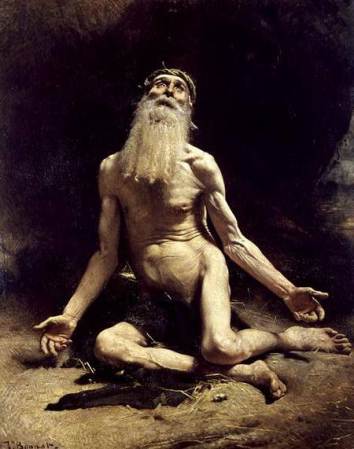
Job (oil on canvas) by Bonnat, Leon Joseph Florentin (1833-1922)

Lamentations 3

1 I am one who has seen affliction under the rod of God’s wrath;
2 he has driven and brought me into darkness without any light;
3 against me alone he turns his hand, again and again, all day long.
4 He has made my flesh and my skin waste away, and broken my bones;
5 he has besieged and enveloped me with bitterness and tribulation;
6 he has made me sit in darkness like the dead of long ago.
7 He has walled me about so that I cannot escape; he has put heavy chains on me;
8 though I call and cry for help, he shuts out my prayer;
9 he has blocked my ways with hewn stones, he has made my paths crooked.
10 He is a bear lying in wait for me, a lion in hiding;
11 he led me off my way and tore me to pieces; he has made me desolate;
12 he bent his bow and set me as a mark for his arrow.
13 He shot into my vitals the arrows of his quiver;
14 I have become the laughingstock of all my people, the object of their taunt-songs all day long.
15 He has filled me with bitterness, he has sated me with wormwood.
16 He has made my teeth grind on gravel, and made me cower in ashes;
17 my soul is bereft of peace; I have forgotten what happiness is;
18 so I say, “Gone is my glory, and all that I had hoped for from the LORD.”
19 The thought of my affliction and my homelessness is wormwood and gall!
20 My soul continually thinks of it and is bowed down within me.
21 But this I call to mind, and therefore I have hope:
22 The steadfast love of the LORD never ceases, his mercies never come to an end;
23 they are new every morning; great is your faithfulness.
24 “The LORD is my portion,” says my soul, “therefore I will hope in him.”
25 The LORD is good to those who wait for him, to the soul that seeks him.
26 It is good that one should wait quietly for the salvation of the LORD.
27 It is good for one to bear the yoke in youth,
28 to sit alone in silence when the LORD has imposed it,
29 to put one’s mouth to the dust (there may yet be hope),
30 to give one’s cheek to the smiter, and be filled with insults.
31 For the LORD will not reject forever.
32 Although he causes grief, he will have compassion according to the abundance of his steadfast love;
33 for he does not willingly afflict or grieve anyone.
34 When all the prisoners of the land are crushed under foot,
35 when human rights are perverted in the presence of the Most High,
36 when one’s case is subverted — does the LORD not see it?
37 Who can command and have it done, if the LORD has not ordained it?
38 Is it not from the mouth of the Most High that good and bad come?
39 Why should any who draw breath complain about the punishment of their sins?
40 Let us test and examine our ways, and return to the LORD.
41 Let us lift up our hearts as well as our hands to God in heaven.
42 We have transgressed and rebelled, and you have not forgiven.
43 You have wrapped yourself with anger and pursued us, killing without pity;
44 you have wrapped yourself with a cloud so that no prayer can pass through.
45 You have made us filth and rubbish among the peoples.
46 All our enemies have opened their mouths against us;
47 panic and pitfall have come upon us, devastation and destruction.
48 My eyes flow with rivers of tears because of the destruction of my people.
49 My eyes will flow without ceasing, without respite,
50 until the LORD from heaven looks down and sees.
51 My eyes cause me grief at the fate of all the young women in my city.
52 Those who were my enemies without cause have hunted me like a bird;
53 they flung me alive into a pit and hurled stones on me;
54 water closed over my head; I said, “I am lost.”
55 I called on your name, O LORD, from the depths of the pit;
56 you heard my plea, “Do not close your ear to my cry for help, but give me relief!”
57 You came near when I called on you; you said, “Do not fear!”
58 You have taken up my cause, O LORD, you have redeemed my life.
59 You have seen the wrong done to me, O LORD; judge my cause.
60 You have seen all their malice, all their plots against me.
61 You have heard their taunts, O LORD, all their plots against me.
62 The whispers and murmurs of my assailants are against me all day long.
63 Whether they sit or rise — see, I am the object of their taunt-songs.
64 Pay them back for their deeds, O LORD, according to the work of their hands!
65 Give them anguish of heart; your curse be on them!
66 Pursue them in anger and destroy them from under the LORD’s heavens.

This third poem in Lamentations intensifies the acrostic pattern exhibited in the first two poems. In Lamentations one and two each stanza, as noted by the verse numbers in those poems, begins with a successive letter of the Hebrew alphabet. In Lamentations three we jump from twenty-two to sixty-six verses because every line of the three-line stanzas begins with the appropriate letter. Three verses for aleph, three for bet, and through the Hebrew alphabet to tav. Although the poem is approximately the same length as the previous two poems the poet increases their reliance on form in a way only exceeded by Psalm 119 which has eight verses utilizing each starting letter as it moves through the acrostic pattern.

In poetry form matters. Acrostic is a form used to denote completion, and it brings an external order to a disordered world. Like the acrostic poem of Psalm 25, the poet attempts to reconcile the promises of the steadfast love (hesed) of God in a world where that love is challenged by the absence of God’s protection or the presence of God’s wrath. It is an act of faith that holds onto the language the poet learned throughout their life in a time where their life is turned upside down. Yet, here in this central poem of the book of Lamentations we do get a small glimmer of hope and as Kathleen O’Connor suggests, like Jeremiah 3033, the placement of hope at the center may be intentional, yet that hope “remains muted at best.” (NIB VI: 1057)

In the first two poems there were two primary voices: the feminine voice of daughter Zion and the masculine voice of the witness reporting on daughter Zion’s experience of trauma, destruction, grief, and rage. In the second chapter of Lamentations this witness transforms into an advocate for daughter Zion unable to remain a passive observer. Yet, in this third chapter or third poem the voice throughout is that of a man. The first two poems have examined the impact of war and defeat on a feminine voice, but now the impact is viewed through a male lens. The NRSV overcorrects in its agenda for inclusive language when in the initial verse it translates “I am one.” The Hebrew geber may not mean warrior but it does have a definitively macho sense of standing up for oneself and others who are defenseless. The geber is a defender of women, children, and other non-combatants. In Job 38:3 and 40:7 this is the term utilized when Job is commanded by God to “Gird up your loins like a man (geber), I will question you and you shall declare to me.” The experiences of men and women are different and what they experience in this moment of defeat are different. Now this man, in the poem, who was supposed to provide security for the women and children of Judah stands, “injured, struck down, shot, pursued, captured, chained up, terrified, defeated, and taunted.” (Goldingay, 2022, p. 125) This man has lost two of the primary components of masculine identity traditionally understood. They have lost their ability to protect those under their protection and to provide for themselves and others.

Also in the first verse, the NRSV introduces that the man has suffered under the rod of God’s wrath, although God is not mentioned in the Hebrew at this point. Although from the first two poems as well as the later imagery of this poem we know that ultimately God is the one responsible for the suffering of the man and those around him, the one who causes the suffering is not explicitly named until verse eighteen when the LORD is finally named. Although it is the speaker’s God, the LORD of Israel, who is responsible for all the violent actions upon this man it may be that in the initial declaration of suffering it is difficult to voice that the LORD of steadfast love became the bringer of affliction and wrath in this moment.

 Violent verbs drive the action that has broken this man into a world of darkness. This was not a single wound that the man can recover from, but his assailant has turned his hand against this once strong man again and again. Flesh, bone, and skin: the whole of his person is devastated and although he still lives and speaks in pain he is on the path to becoming a resident of the broken boneyard of Ezekiel 37. The language then moves to the language of siege and imprisonment. The people of Judah would have recently experienced the siege, and imprisonment was typically a political punishment in the Middle East rather than the default punishment for wrongdoings in became in Western societies.[1] Poetry does not need to be consistent to be powerful. On the one hand the man is surrounded and besieged, on the other he is isolated and alone. Ultimately the besieging and imprisoning presence has cut him off from world and most critically for the poet, from God’s steadfast love.

Martin Luther once spoke of the wrath of God as God’s alien work, while the grace of God was God’s proper work. Although still unnamed, it has become clear that the LORD has become like a dangerous animal[2] waiting to attack or an archer with this strong man in his sights. He has fallen from being a person worthy of respect to the laughingstock of the people. The good things have turned to bitterness, and wormwood a plant with a strong smell, bitter taste and reputation for toxicity (Goldingay, 2022, p. 134) utilized in the prophet Jeremiah’s writings,[3] becomes the unappealing drink provided. This once strong man now lies with his face and teeth on the ground among the gravel and cowering in ashes either in mourning or more likely in the aftermath of the destruction of Jerusalem. This man’s life (nephesh)[4] has been deprived of peace (shalom) and happiness (tob). Finally in verse eighteen we have the LORD named when all that the man had hoped from the LORD is gone. Reflection on his desperate and homeless situation only brings more bitterness.

Faith is not a straight path. Grief also is not a linear journey. This man has moved from bitterness to a remembrance of the faith he learned and the God he still trusts. The steadfast love of the LORD never ceases, his mercies never come to an end becomes a pivot point in this poetic reflection as the faith this man has learned is confronted by the reality of a life made bitter. The LORD is his inheritance and the one he can hope in. The good (happiness NRSV) that the man has forgotten is now emphasized as the starting word of the three ‘tet’ verses[5] which each begin with tob (good). Good is the LORD, good that one should wait, good that one should bear. The path of faithfulness that the man discerns is one of seeking God, staying silent and submissive, and bearing the suffering that is imposed, of bowing down and turning the other cheek. God will turn from wrath to grace because that is the character of the LORD of the man’s faith.

Verses thirty-four to thirty-six are translated as a question in most English translations, but the question form is not required in Hebrew. Another possible reading of these verses is that God does not see the way prisoners are crushed, and human rights are being violated, and justice is subverted. Yet, this also conflicts with the faith the man has learned where the LORD is responsible for everything both good and bad.[6] So the man turns inward to examine whether he individually and his people collectively have sinned testing and examining their ways. Ultimately the man’s verdict is that we have transgressed but also you have not forgiven. This final realization for the man forms a final pivot where the path of silence and submission is left aside for a final protest even more heated than the first. For this man the difference between the character of God represented by steadfast love and the experience of God as unforgiving requires him to raise his voice to attempt to pierce God’s obscuring anger.

The problem is that the God who sees and hears is shielding Godself from seeing and hearing. Wrapped in anger and a cloud no prayer can pass through God has abandoned the people. The poet digs into their humiliation and declares that God has made them filth and rubbish among the people. We open our mouths and God does not hear, but our enemies open their mouths, and we cannot help but hear them. Panic and pitfall, devastation and destruction[7] have come upon the man and his people and like both daughter Zion and the witness in the previous two psalms[8] his eyes flow an unceasing river of tears. Yet, these tears are now a part of this man’s protest to God. He can be broken in body and spirit, eating the dirt and covered in ashes, isolated and imprisoned, and caught up in a seemingly unending flood of tears if God will see. This man is able to remember God’s words from the past, “Do not fear!” the only words attributed to God in the book of Lamentations, but even these words come from the past. In repetitive fashion this poet calls on God as the ‘you’ who can act. Ultimately ‘You’ the LORD have heard their taunts and in the final verses this man asks for what daughter Zion cried for. Treat my enemies the way you have treated me. You have punished me for my transgressions, now punish them. I have known the anguish of the heart as I sit here in dust and ashes, the object of their taunt songs, let them know the impact of your curse on their lives. I have seen affliction under your wrath, turn your anger to them and destroy them. The poems of Lamentations attempt to make sense of a world that makes no sense. It is highly ordered by the poetic structure as it encounters a disordered world. It attempts to reconcile the faith in a God of steadfast love with the experience of God’s wrath. Their world, their home, their lives, and their relationship with their God is broken. They speak these words into the silence of the void waiting for an answer from their LORD which they have not received. This man, geber, is attempting to gird his loins like Job and stand before God and pierce the cloud of God’s wrath which seems to have silenced prayers. It is an act of audacity, but we inherited an audacious set of scriptures.


[1] There is no provision in the Torah for imprisonment. Jeremiah in Jeremiah 38 was imprisoned not because he broke no laws but because he was an annoyance to the leaders in Jerusalem.

[2] Bear and lion are paired as dangerous animals (Hosea 13;8; Amos 5:19) (Goldingay, 2022, p. 132)

[3] Jeremiah 9:15; 23:15

[4] The Hebrew nephesh often translated soul in English is a very different concept than most modern conceptions of ‘soul.’ For Hebrew the nephesh is about life and not about something that is freed after death.

[5] Verses 25-27 which begin with the Hebrew letter ‘tet.’

[6] See my Reflection: A Split In The Identity of God.

[7] The NRSV does a good job of capturing the alliteration of this phrase in Hebrew.

[8] 1:16; 2:18.

Ezekiel 20 Retelling Israel’s Story in a Negative Light

Ezekiel 20: 1-32

1 In the seventh year, in the fifth month, on the tenth day of the month, certain elders of Israel came to consult the LORD, and sat down before me. 2 And the word of the LORD came to me: 3 Mortal, speak to the elders of Israel, and say to them: Thus says the Lord GOD: Why are you coming? To consult me? As I live, says the Lord GOD, I will not be consulted by you. 4 Will you judge them, mortal, will you judge them? Then let them know the abominations of their ancestors, 5 and say to them: Thus says the Lord GOD: On the day when I chose Israel, I swore to the offspring of the house of Jacob — making myself known to them in the land of Egypt — I swore to them, saying, I am the LORD your God. 6 On that day I swore to them that I would bring them out of the land of Egypt into a land that I had searched out for them, a land flowing with milk and honey, the most glorious of all lands. 7 And I said to them, Cast away the detestable things your eyes feast on, every one of you, and do not defile yourselves with the idols of Egypt; I am the LORD your God. 8 But they rebelled against me and would not listen to me; not one of them cast away the detestable things their eyes feasted on, nor did they forsake the idols of Egypt.

Then I thought I would pour out my wrath upon them and spend my anger against them in the midst of the land of Egypt. 9 But I acted for the sake of my name, that it should not be profaned in the sight of the nations among whom they lived, in whose sight I made myself known to them in bringing them out of the land of Egypt. 10 So I led them out of the land of Egypt and brought them into the wilderness. 11 I gave them my statutes and showed them my ordinances, by whose observance everyone shall live. 12 Moreover I gave them my sabbaths, as a sign between me and them, so that they might know that I the LORD sanctify them. 13 But the house of Israel rebelled against me in the wilderness; they did not observe my statutes but rejected my ordinances, by whose observance everyone shall live; and my sabbaths they greatly profaned.

Then I thought I would pour out my wrath upon them in the wilderness, to make an end of them. 14 But I acted for the sake of my name, so that it should not be profaned in the sight of the nations, in whose sight I had brought them out. 15 Moreover I swore to them in the wilderness that I would not bring them into the land that I had given them, a land flowing with milk and honey, the most glorious of all lands, 16 because they rejected my ordinances and did not observe my statutes, and profaned my sabbaths; for their heart went after their idols. 17 Nevertheless my eye spared them, and I did not destroy them or make an end of them in the wilderness.

18 I said to their children in the wilderness, Do not follow the statutes of your parents, nor observe their ordinances, nor defile yourselves with their idols. 19 I the LORD am your God; follow my statutes, and be careful to observe my ordinances, 20 and hallow my sabbaths that they may be a sign between me and you, so that you may know that I the LORD am your God. 21 But the children rebelled against me; they did not follow my statutes, and were not careful to observe my ordinances, by whose observance everyone shall live; they profaned my sabbaths.

Then I thought I would pour out my wrath upon them and spend my anger against them in the wilderness. 22 But I withheld my hand, and acted for the sake of my name, so that it should not be profaned in the sight of the nations, in whose sight I had brought them out. 23 Moreover I swore to them in the wilderness that I would scatter them among the nations and disperse them through the countries, 24 because they had not executed my ordinances, but had rejected my statutes and profaned my sabbaths, and their eyes were set on their ancestors’ idols. 25 Moreover I gave them statutes that were not good and ordinances by which they could not live. 26 I defiled them through their very gifts, in their offering up all their firstborn, in order that I might horrify them, so that they might know that I am the LORD.

27 Therefore, mortal, speak to the house of Israel and say to them, Thus says the Lord GOD: In this again your ancestors blasphemed me, by dealing treacherously with me. 28 For when I had brought them into the land that I swore to give them, then wherever they saw any high hill or any leafy tree, there they offered their sacrifices and presented the provocation of their offering; there they sent up their pleasing odors, and there they poured out their drink offerings. 29 (I said to them, What is the high place to which you go? So it is called Bamah to this day.) 30 Therefore say to the house of Israel, Thus says the Lord GOD: Will you defile yourselves after the manner of your ancestors and go astray after their detestable things? 31 When you offer your gifts and make your children pass through the fire, you defile yourselves with all your idols to this day. And shall I be consulted by you, O house of Israel? As I live, says the Lord GOD, I will not be consulted by you.

This chapter in Ezekiel is one of the most uncomfortable passages I have wrestled with in the twelve years since I began this discipline of working through scripture on signoftherose. My goal was to pay particular attention to the passages of scripture I was less familiar with. For me this was more difficult than Ezekiel 16 with its portrayal of Jerusalem as God’s faithless bride because that imagery has resonance with imagery used in Jeremiah, and I was able to view it through my personal experiences of heartbreak and the emotions that evoked. I was glad to find I was not alone in my assessment of this passage, for example Katheryn Pfisterer Darr states:

Ezekiel 20: 1-44 is one of the Bible’s most troubling texts. What are we to make of an oracle that intentionally portrays a people’s history in the most pejorative of terms, in order utterly to erode any sense of integrity, any basis of hope? (NIB VI: 1290)

This text goes against many modern notions of independence. Israel cannot be Israel without living in the covenantal relationship with God. God chose them and the critical verse which forms the pivot for this chapter is verse thirty-two, “What is in your mind shall never happen — the thought, “Let us be like the nations, like the tribes of the countries, and worship wood and stone.”  Ezekiel has throughout the previous nineteen chapters attempted to demonstrate the apostasy of Israel as the cause for the LORD’s just action of condemnation. Now this rhetorical retelling of the history of Israel attempts to portray the total depravity of Israel throughout its history.

The prophet Ezekiel may be a poet, but he has little interest in ideas expressed in Emily Dickinson’s poem “Tell All the Truth But Tell It Slant”

Tell all the truth but tell it slant —

Success in Circuit lies

Too bright for our infirm Delight

The Truth’s superb surprise

As Lightning to the Children eased

With explanation kind

The Truth must dazzle gradually

Or every man be blind —[1]

Ezekiel’s message to a people who no longer have ears to hear is not told with an explanation kind, instead it is a brutally direct confrontation with the long running patterns of disobedience which have, in Ezekiel’s view, characterized the relationship between the people and their God. Or as Daniel Block states:

Far from being a story of election and salvation, Israel’s story is one of apostasy…Ezekiel’s “theology of history” is revisionist in the extreme. Other prophets had recognized the historical roots of Israel’s sins, but Ezekiel perceives the nation as corrupt as no other prophet did. (Block, 1997, p. 614)

Nor is Ezekiel’s primary concern at this point repentance, from early on God has communicated to Ezekiel that his role is to communicate the message so that, “Whether they hear or refuse to hear (for they are a rebellious house), they shall know that there has been a prophet among them.” (Ezekiel 2:5)

The prophecy is dated August 14, 591 BCE based on the information in verse one. This is two years before the siege of Jerusalem, almost a year after the prophecy in chapter eight, and two years after Ezekiel’s initial call. (Ganzel, 2020, p. 146) There have been several suggestions for why the elders approach Ezekiel at this point. One suggestion is that words of the false prophet Hananiah’s prophecy[2] had reached the exiles which suggested that the exile would be ending at this point. This is possible, but it is also possible that the elders are attempting to seek the LORD as mentioned in Deuteronomy 4:29, “From there (exile among the nations) you will seek the LORD your God and you will find him if your search after him with all your heart and soul (nephesh-life).” Yet, in Ezekiel’s view these elders are not wholeheartedly turning to the LORD. Like in chapter fourteen when certain elders come and the LORD considers whether he will answer them, only to answer in judgment, now the prophet is commanded to judge or arraign[3] the elders and the people.

The narrative begins in Egypt when the LORD chose (Hebrew bahar) Israel, swears to them and makes Godself known to them. The use of the Hebrew bahar reflects the language of Deuteronomy 7: 6-8:

For you are a people holy to the LORD your God; the LORD your God has chosen you out of all the peoples on earth to be his people, his treasured possession. It was not because you were more numerous than any other people that the LORD set his heart on you and chose you — for you were the fewest of all peoples. It was because the LORD loved you and kept the oath that he swore to your ancestors, that the LORD has brought you out with a mighty hand, and redeemed you from the house of slavery, from the hand of Pharaoh king of Egypt.

Being chosen by the LORD involves casing away the detestable things and the ‘idols’[4] of Egypt but from the very beginning they failed, in Ezekiel’s retelling of the story, to change their practices or to turn away from the idols they had in Egypt.

Throughout the narrative, their disobedience evokes a strong reaction from the LORD and God considers pouring out his wrath and spending his anger against them but refrains so that the name of God will not be profaned among the nations. The idea of God acting so that God’s name may be recognized and honored among the nations is reflected in the aftermath of the golden calf when Moses interceded for the people (Exodus 32: 11-14) and in the LORD’s declaration of identity in the thirteen attributes of God (Exodus 34: 1-9). A similar pattern is repeated when the people refuse to enter the promised land for fear of its occupants and Moses again has to intercede with the LORD (Numbers 14: 13-25). Throughout this retelling of history, the refrain reoccurs, Then I thought I would pour out my wrath upon them and spend my anger against them in the wilderness. But I withheld my hand, and acted for the sake of my name, so that it should not be profaned in the sight of the nations, in whose sight I had brought them out. This points to the LORD’s continual forbearance with the people in the past, but also highlights the anger and pain that the LORD bears from this continued pattern of disobedience.

Ezekiel’s retelling of Israel’s story continues from God’s choosing of the people in Egypt, even in their disobedience, to the leading of the people out of Egypt into the wilderness to give them the law and to lead them to the promised land. Ezekiel views this period as a time of continued rebellion[5] but now as the LORD makes the covenant expectations clear the rebellion takes on a more strident stance. The LORD has provided the statutes and ordinance by which everyone should live and gave them the practice of sabbath as a sign between God and the people. The people did not observe the statutes, rejected the ordinances, and greatly profaned the sabbath. In addition to the pursuit of idols and detestable things they have now added disobedience to the laws, decrees, and practices that are a part of the covenant. Yet, God’s anger is once again restrained by acting for the sake of the name of the God. Even though one generation never emerges from the wilderness their children inherit the promised land. Yet, the LORD warns them in the wilderness, probably referencing Deuteronomy where Moses warns the people before entering the land, to not follow the ways of their parents or to defile themselves with idol. Instead, they are charged to live by the law (statutes and ordinances) and to hallow the sabbath day.

The children who enter the promised land and the generations that follow fail in these practices. Ezekiel’s narration of God’s response produces a passage that, “Students of Scripture have struggled with…through the centuries.” (Block, 1997, p. 637)

because they had not executed my ordinances, but had rejected my statutes and profaned my sabbaths, and their eyes were set on their ancestors’ idols. Moreover I gave them statutes that were not good and ordinances by which they could not live. I defiled them through their very gifts, in their offering up all their firstborn, in order that I might horrify them, so that they might know that I am the LORD. (v. 24-26)

This is a difficult group of verses, and we are going to slow down and spend some time with this discomfortable passage. As Ellen Davis explains,

The statement resists all attempts at domestication. Its power lies precisely in the fact that it cannot be conformed to human reason. The verse reasserts, indeed, carries to its illogical extreme what is Ezekiel’s constant theme: the indisputable authority of God to determine and interpret the course of human history. (Davis, 1989, p. 114)

As I mentioned in my reflection A Split in the Identity of God, one of the difficult things for most Christians readers of scripture to reconcile is the all-encompassing view of the prophetic witness of God being responsible for all things. The adoption of idolatrous practices and non-covenant rules, and even the offering of children are now placed within the divine purview. The law was a gift, and now these not good laws become an anti-gift. The accusations of Ezekiel 16:20 of child sacrifice are now a way in which the LORD can horrify[6] the people. Throughout the narration of the Deuteronomic history[7] the people of Israel adopt idolatrous practices, fail to live according to the covenant, and at some points appear to engage in child sacrifice to Molech. It is impossible to know whether child sacrifice is occurring in the context of the exile in Babylon or in Jerusalem at the time. Yet, the theological implication of assigning the disobedience of the people, even to the point of, in the best light, misreading the provision for redeeming firstborns in Exodus 13: 11-16 or Exodus 22:29 to God is theologically troubling. Ezekiel is not a systematic theologian, nor is his message one of logical coherency. Ezekiel is providing a way to make sense of the future cataclysm for the people of Jerusalem while attempting to maintain God’s justice. Yet, most readers throughout history have struggled to reconcile these verses.

One of the insights I had in studying Jeremiah was that the God of Jeremiah, and by extension Ezekiel, is a brokenhearted God. The God portrayed in the bible has a surprisingly human set of emotions including anger, pain, desire, and loss. The LORD loves deeply and hurts deeply at the unfaithfulness of the people, and this hurt has been constrained by the concern for the honor of the divine name. Yet, generations of pain have compounded and the release of the pain—at least in words—is not always logical or easy to understand. The prophet stands between the wounded God and the wounding people and is the mediator of that pain from God to the people. The language of pain is attempting to shake the people from their long pattern of disobedience, or at least to give them language to explain the consequences when the LORD no longer saves them from the consequences of their actions. As modern people we might narrate this history differently from a different theological perspective, but Ezekiel (like his contemporary Jeremiah) has no choice but to pour out the emotion he receives from a brokenhearted God to a people who refuses to hear.

Deuteronomy 12 states to the people when they enter the land that they were to destroy the high places and shrines that the nations they pushed out created. Yet here Ezekiel narrates that instead of destroying these high places and shrines they adopted them for their own idolatrous practices. The play on words of “What is the high place (bamah) to which you go? So it is called Bamah to this day” adds one more way the people give the honor due to the LORD to the other gods of the nations.  Ezekiel argues that all the practices of the past continue to be built upon and practiced by the people in the present. The narration of the story of Israel has gotten progressively worse until the LORD’s anger can no longer be contained and the consequences of disobedience can no longer be averted.

There is no hope, at this point in Ezekiel, that the people will repent and save Jerusalem, the temple, the king, and the land from the consequences of this long pattern of disobedience. He is attempting to help the people understand their current crisis. His rhetorical retelling of the story of Israel as a story of continual and progressive disobedience and depravity is a difficult piece of scripture, but it is also a window into the pain of a brokenhearted God who has long delayed the consequences of the disobedience of the people.  Yet, Israel does not have the free will to choose to follow the gods of Egypt, Canaan, or Babylon. As we will see in the section that follows this will never happen. Israel can only be Israel in relation to the LORD the God of Israel.

Ezekiel 20: 33-44

32 What is in your mind shall never happen — the thought, “Let us be like the nations, like the tribes of the countries, and worship wood and stone.”

33 As I live, says the Lord GOD, surely with a mighty hand and an outstretched arm, and with wrath poured out, I will be king over you. 34 I will bring you out from the peoples and gather you out of the countries where you are scattered, with a mighty hand and an outstretched arm, and with wrath poured out; 35 and I will bring you into the wilderness of the peoples, and there I will enter into judgment with you face to face. 36 As I entered into judgment with your ancestors in the wilderness of the land of Egypt, so I will enter into judgment with you, says the Lord GOD. 37 I will make you pass under the staff, and will bring you within the bond of the covenant. 38 I will purge out the rebels among you, and those who transgress against me; I will bring them out of the land where they reside as aliens, but they shall not enter the land of Israel. Then you shall know that I am the LORD.

39 As for you, O house of Israel, thus says the Lord GOD: Go serve your idols, everyone of you now and hereafter, if you will not listen to me; but my holy name you shall no more profane with your gifts and your idols.

40 For on my holy mountain, the mountain height of Israel, says the Lord GOD, there all the house of Israel, all of them, shall serve me in the land; there I will accept them, and there I will require your contributions and the choicest of your gifts, with all your sacred things. 41 As a pleasing odor I will accept you, when I bring you out from the peoples, and gather you out of the countries where you have been scattered; and I will manifest my holiness among you in the sight of the nations. 42 You shall know that I am the LORD, when I bring you into the land of Israel, the country that I swore to give to your ancestors. 43 There you shall remember your ways and all the deeds by which you have polluted yourselves; and you shall loathe yourselves for all the evils that you have committed. 44 And you shall know that I am the LORD, when I deal with you for my name’s sake, not according to your evil ways, or corrupt deeds, O house of Israel, says the Lord GOD.

There is no free will for Israel. They do not get to opt out of being the people of God or self-select into being a different people. As Ellen Davis states,

Israel cannot be like the nations, no matter how assiduously it seeks to deny the association with YHWH by departing from anything recognizable as the law of God. (Davis, 1989, p. 114)

On the one hand this is the gracious promise that they will be brought out from the people to be gathered. On the other hand, there is no escape from their identity as the people of God and the judgment that they will endure. They will be brought back under the covenant and the rebels among the people will be purged. The only future is as a people obedient to the LORD. They will be sanctified, and in the future they will practice the laws and statutes and ordinances in a way that brings honor to the name of God. They will remember and regret their practices of the past. Everything hangs on the LORD’s control over history and the future of Israel. There is hope in the future, but it does not rest upon the practices of faithfulness of the people. As Ezekiel has narrated the story of Israel is a story of apostasy and depravity. Yet, with the LORD there is the promise of a gracious new beginning where a purified people will return to the land and properly honor their God. God is remaining faithful to God’s promises for the sake of God’s name. It is a difficult justice for most modern people to comprehend, but it is still gracious. Israel will have a future as Israel because of God’s action to make that future manifest.

Ezekiel 20: 45-49

45 The word of the LORD came to me: 46 Mortal, set your face toward the south, preach against the south, and prophesy against the forest land in the Negeb; 47 say to the forest of the Negeb, Hear the word of the LORD: Thus says the Lord GOD, I will kindle a fire in you, and it shall devour every green tree in you and every dry tree; the blazing flame shall not be quenched, and all faces from south to north shall be scorched by it. 48 All flesh shall see that I the LORD have kindled it; it shall not be quenched. 49 Then I said, “Ah Lord GOD! they are saying of me, ‘Is he not a maker of allegories?'”

These final five verses of chapter twenty are related to the imagery that will come in chapter twenty-one and set the stage for a new set of imagery organized around a sword. Yet, since in our bible they are a part of chapter twenty I will address them as they stand in the chapter. Now Ezekiel is to set his face[8] towards the south. He is to set his face toward Teman (either a place name for a northern district of Edom or may simply refer to south), Darom (either a place name between Beersheba and Beth-Gubrin or another term for south), and the ‘scrubland’[9] of the Negeb (negeb as a common noun also means south, or dry) (NIB VI: 1294) and declare that a blazing fire is coming upon these lands and it will scorch the land from south to north. Ezekiel answers the LORD that he is being accused of being a “maker of allegories.” The Hebrew doubling of the word masal (proverb, parable) probably indicates to Ezekiel that his message is not being received as seriously as he believes it merits. He may feel that the people are failing to understand his message, or that perhaps they view his words and actions as entertainment, but they do not yet understand that a prophet has been among them. The people may be taunting Ezekiel because his words have not come to pass and that his view of reality seems too divergent from the views of others, even others who claim the title of prophet, in his time and previously. It is difficult to walk through the first twenty-four chapters of Ezekiel, and it is only in the aftermath of the destruction of Jerusalem and the temple, the ending of the line of Davidic kings, and the exile that the prophet’s words make sense. Even those in exile with Ezekiel are looking forward to a homecoming to Jerusalem rather than the extension of their exile to the entire nation. Ezekiel’s words are difficult to stomach in the aftermath of the Babylonian exile and were probably unpalatable beforehand. It is only afterwards that people will understand that this maker of allegories was the prophet in their midst they failed to listen to.


[1] https://www.poetryfoundation.org/poems/56824/tell-all-the-truth-but-tell-it-slant-1263

[2] Jeremiah 28:1-4.

[3] “The interrogative particle often conveys an indignant affirmation.” (Block, 1997, p. 618)

[4] Ezekiel’s frequently used term gillum which is a derogatory term best rendered as something like ‘shit gods.’

[5] Daniel Block notes that Jeremiah views the Exodus romantically while Ezekiel views this time in Israel’s story as a continued example of their total depravity and abandonment to sin. (Block, 1997, p. 630)

[6] Hebrew samen is actually harsher than horrify. Katheryn Pfisterer Darr suggests, “that I might desolate them.” (NIB VI: 1284)

[7] The books between Joshua and 2 Kings in the bible. Referred to as the Deuteronomic history because they share the theological perspective of Deuteronomy.

[8] Which indicates judgment.

[9] It is doubtful the Negeb, which is desert-like, was ever in its history forested.

Ezekiel 9 The Sealing of the Righteous and the Judgment of the City

Ancient Egyptian Scribe’s Palette By Staff or representatives of Harrogate Museums and Arts service – Commons:Licensing., CC BY-SA 4.0, https://commons.wikimedia.org/w/index.php?curid=38347984

Ezekiel 9

1 Then he cried in my hearing with a loud voice, saying, “Draw near, you executioners of the city, each with his destroying weapon in his hand.” 2 And six men came from the direction of the upper gate, which faces north, each with his weapon for slaughter in his hand; among them was a man clothed in linen, with a writing case at his side. They went in and stood beside the bronze altar.

3 Now the glory of the God of Israel had gone up from the cherub on which it rested to the threshold of the house. The LORD called to the man clothed in linen, who had the writing case at his side; 4 and said to him, “Go through the city, through Jerusalem, and put a mark on the foreheads of those who sigh and groan over all the abominations that are committed in it.” 5 To the others he said in my hearing, “Pass through the city after him, and kill; your eye shall not spare, and you shall show no pity. 6 Cut down old men, young men and young women, little children and women, but touch no one who has the mark. And begin at my sanctuary.” So they began with the elders who were in front of the house. 7 Then he said to them, “Defile the house, and fill the courts with the slain. Go!” So they went out and killed in the city. 8 While they were killing, and I was left alone, I fell prostrate on my face and cried out, “Ah Lord GOD! will you destroy all who remain of Israel as you pour out your wrath upon Jerusalem?” 9 He said to me, “The guilt of the house of Israel and Judah is exceedingly great; the land is full of bloodshed and the city full of perversity; for they say, ‘The LORD has forsaken the land, and the LORD does not see.’ 10 As for me, my eye will not spare, nor will I have pity, but I will bring down their deeds upon their heads.”

11 Then the man clothed in linen, with the writing case at his side, brought back word, saying, “I have done as you commanded me.”

The idolatrous actions of the people in the previous chapter have defiled the temple of the LORD. In the previous chapters we have seen judgment declared upon the city of Jerusalem, the land, and now the temple. Ezekiel has been the obedient prophet who enacts predominantly in signs what he sees and records. Here the prophet sees the judgment of God embodied in these six men with weapons for slaughter and a scribal/priestly figure with a writing case. The glory of God has come out from the holy of holies and gives the instructions to these agents of destruction to execute God’s justice upon the rebellious occupants of the city of Jerusalem.

Ezekiel observes the scene from a position near the bronze altar originally dedicated by Solomon (1 Kings 8: 64) and moved from a central position before the entrance to the holy of holies to a north facing position under King Ahaz (2 Kings 16: 14). Looking towards the north he sees the approach of these six men with weapons of destruction and the man in linen cloth with a writing case. The men bearing ‘instruments or weapons of destruction’ are those who will execute the sentence. The approach from the north is consistent with the direction a threat from Babylon would approach Jerusalem. Linen was the fabric used for priests and one of the functions of the priestly caste was to be scribes.[1] Now this man in linen is instructed to go throughout the city and mark with a taw[2] those who moan and groan over the abominations done in the city. This mark functions like the blood on the lintels and doorposts in Exodus 12:7 or the scarlet cord on Rahab’s house in Joshua 2: 21. This scribe is to seek out those who see the actions perpetrated in the city through the LORD’s perspective and who see the incongruity between the idolatrous actions of many and the covenantal expectations of the people of God.

There is a chilling echo between this story and the destruction of Sodom and Gomorrah in Genesis 18-19. When Abraham intercedes for Sodom hoping that ten righteous persons might be found and the city not be destroyed on their behalf, God grants Abraham’s request (after an extended bargaining period by Abraham) but when the angels investigate the depravity of Solomon they remove only Lot’s family. Again, this somewhat angelic figure goes through the city to mark those saved from destruction before the destroyers proceed through the city bringing death. Ezekiel who until this point has been obedient, only protesting an action he felt would defile him (Ezekiel 4:14) now falls prostrate before the LORD and intercedes for the people. Yet, throughout the first half of Ezekiel it has become clear that it is too late for this intercession. Prophets, stand between God and the people. These individuals charged with announcing God’s judgment also love and care for this people, city, and temple. Jeremiah when he is commanded not to intercede for the people (Jeremiah 7: 16) still continues to intercede for the people, and here Ezekiel does as well. This is the fate of those called to be prophets, they are people caught between the God whom they are obedient to and the people who have broken God’s heart.

Any hope for a remnant of Jerusalem rests with those still faithful enough to bemoan the state of Jerusalem and the temple. The destroyers are tasked with the elimination of all those unmarked regardless of age or gender. One key group not included in the list are strong men and men of war. (Block, 1997, p. 308)  It is possible as Daniel Block suggests that these warriors and able-bodied men are eliminated in the military struggle against Babylon’s forces, but the parallel of old men and young men may also form an inclusive group from the old to the young. Those considered defenseless and frail, those normally under the protection of God from the strong, are included in this list because they too cannot be considered innocent by their participation in these idolatrous actions. From the point of view of Ezekiel, the defilement of idolatry has made even these vulnerable ones guilty, and they remain unmarked and selected for destruction.

The previous chapters have been dominated by visual activities, whether indescribable sites seen by the prophets or sign acts done by the prophet for others to see. Chapter nine is primarily aural. We do not follow the scribal figure or the destroyers through the city, we merely hear their summons, their instructions, Ezekiel’s intercession, the LORD’s response, and the scribal figure’s report that he has completed the LORD’s task. Yet, the instructions are dark enough to convey the gravity of the situation. The killing begins with those at the sanctuary and now the Jerusalem temple is treated like the idolatrous shrines in the high places which are destroyed. The ritualistic defilement of these unholy places is now shared by this place which was once considered holy. The actions of those in Jerusalem have made the temple no better than a high place.

This action by the scribal figure in this chapter is echoed in the sealing of the 144,000 in Revelation 7: 1-8. Although there are differences in the two visions: in Revelation both the sealer and destroyers are angels and it is a seal placed on the righteous rather than a mark, the resonance between both images is strong. In Revelation, the action is expanded to a cosmic scale, rather than the judgment upon the temple and Jerusalem here. In Revelation there are many who are sealed (a total of 144,000) but here the implication is that few are marked, and the prophet interprets this destruction as a disaster which could bring about the end of Israel.

Ezekiel’s words and actions did not bring about change among those in Jerusalem and Judah. His words clearly have gained some interest among the elders in exile with him, but Ezekiel’s commission is to declare what is given and he is not responsible for its reception. This time of judgment by God upon the unfaithfulness of the people are difficult to read and they were distressing for the people in Ezekiel’s time to hear. In the traumatic aftermath of the destruction of Jerusalem and the remnants exile in Babylon they provided an answer to the question of why this event occurred. Even though the prophet intercedes for the people he communicates that the actions of God are justified because “the guilt of the house of Israel and Judah is exceedingly great; the land is full of bloodshed and the city full of perversity.” Perhaps we, like Abraham, might want the LORD to save the city on behalf of some small representative group of the righteous who moan and groan over the abominations practiced in the city, but the God who Ezekiel transmits to us indicates that the judgment long delayed is finally occurring.

[1] The evolution of the English word clerk comes from the clerical work performed by clergy since for much of history the clergy were among the elites who could read and write.

[2] The last letter of the Hebrew alphabet, similar in appearance and sound to the English T.

Ezekiel 7 A Three Alarm Crisis

Jerusalem is on Fire from the Art Bible (1896)

Ezekiel 7

The word of the LORD came to me: 2 You, O mortal, thus says the Lord GOD to the land of Israel:

An end! The end has come upon the four corners of the land.
3 Now the end is upon you, I will let loose my anger upon you; I will judge you according to your ways, I will punish you for all your abominations.
4 My eye will not spare you, I will have no pity. I will punish you for your ways, while your abominations are among you. Then you shall know that I am the LORD.
5 Thus says the Lord GOD: Disaster after disaster! See, it comes.
6 An end has come, the end has come. It has awakened against you; see, it comes!
7 Your doom has come to you, O inhabitant of the land. The time has come, the day is near — of tumult, not of reveling on the mountains.
8 Soon now I will pour out my wrath upon you; I will spend my anger against you. I will judge you according to your ways, and punish you for all your abominations.
9 My eye will not spare; I will have no pity. I will punish you according to your ways, while your abominations are among you. Then you shall know that it is I the LORD who strike.
10 See, the day! See, it comes! Your doom has gone out. The rod has blossomed, pride has budded.
11 Violence has grown into a rod of wickedness. None of them shall remain, not their abundance, not their wealth; no pre-eminence among them.
12 The time has come, the day draws near; let not the buyer rejoice, nor the seller mourn, for wrath is upon all their multitude.
13 For the sellers shall not return to what has been sold as long as they remain alive. For the vision concerns all their multitude; it shall not be revoked. Because of their iniquity, they cannot maintain their lives.
14 They have blown the horn and made everything ready; but no one goes to battle, for my wrath is upon all their multitude.
15 The sword is outside, pestilence and famine are inside; those in the field die by the sword; those in the city — famine and pestilence devour them.
16 If any survivors escape, they shall be found on the mountains like doves of the valleys, all of them moaning over their iniquity.
17 All hands shall grow feeble, all knees turn to water.
18 They shall put on sackcloth, horror shall cover them. Shame shall be on all faces, baldness on all their heads.
 19 They shall fling their silver into the streets, their gold shall be treated as unclean.
Their silver and gold cannot save them on the day of the wrath of the LORD. They shall not satisfy their hunger or fill their stomachs with it. For it was the stumbling block of their iniquity. 20 From their beautiful ornament, in which they took pride, they made their abominable images, their detestable things; therefore I will make of it an unclean thing to them.
21 I will hand it over to strangers as booty, to the wicked of the earth as plunder; they shall profane it.
22 I will avert my face from them, so that they may profane my treasured place; the violent shall enter it, they shall profane it.
23 Make a chain! For the land is full of bloody crimes; the city is full of violence.
24 I will bring the worst of the nations to take possession of their houses. I will put an end to the arrogance of the strong, and their holy places shall be profaned.
25 When anguish comes, they will seek peace, but there shall be none.
26 Disaster comes upon disaster, rumor follows rumor; they shall keep seeking a vision from the prophet; instruction shall perish from the priest, and counsel from the elders.

27 The king shall mourn, the prince shall be wrapped in despair, and the hands of the people of the land shall tremble. According to their way I will deal with them; according to their own judgments I will judge them. And they shall know that I am the LORD.

My father was a firefighter when I was growing up, and the number of alarms would determine the number of trucks that would be sent to a reported fire. Larger disasters required more trucks and firefighters available to fight the fire or rescue trapped people and they would attempt to dispatch the appropriate response for the situation. The structure of chapter seven sounds three distinct alarms for this disaster which is coming upon the land of Israel and threatens not only Jerusalem, but all the towns of Judea with survivors having to flee to the mountains in powerlessness and humiliation. Yet, for the people hearing these three alarms from the prophet there are no rescuers to deliver them.

Before dealing with the alarms that we encounter in Ezekiel 7, I want to take a moment to recall the character of the LORD as articulated in Exodus 34:

5 The LORD descended in the cloud and stood with him there, and proclaimed the name, “The LORD.” 6 The LORD passed before him, and proclaimed,

“The LORD, the LORD,
a God merciful and gracious,
slow to anger,
and abounding in steadfast love and faithfulness,
7 keeping steadfast love for the thousandth generation,
 forgiving iniquity and transgression and sin,
yet by no means clearing the guilty,
but visiting the iniquity of the parents upon the children
and the children’s children,
to the third and the fourth generation.”

The elements of this list, sometimes called the thirteen attributes of God, are critical to understanding the character of the God of Israel. Within this identity is a God who is merciful and gracious, slow to anger, and abounding in steadfast love and faithfulness who forgives, but there is also the caution that God will not clear the guilty. Ezekiel understands that God has been slow to anger, has continually sought to show Israel steadfast love and faithfulness but Israel has responded with disobedience for generations. Israel has failed, within the prophecies of Ezekiel, to be a light to the nations and now God will no longer clear the guilty who are continuing to corrupt the people of God and to violate God’s covenant.

The first alarm occurs in the first four verses of the chapter when Ezekiel is to declare the end for the land and the people. This is similar to the language of Amos 8:2 where the LORD declares an end for the people of Samaria:

The end has come upon my people Israel; I will never pass them by again.

Amos declared to the northern kingdom that their grace period was running out, and now Ezekiel from exile warns the people of Judah that their grace period has also expired. In the past God may have overlooked their failures to live according to the covenant but now the curses in the law are being enacted. (Block, 1997, p. 249)

A second alarm resounds in verses five through nine. The flow is broken by indicating God speaks a second time at the beginning of verse five. Six words describe the impact of the curse which the people’s continued disobedience have awakened: disaster, end, doom, the time, the day, and the tumult. The language is similar to Zephaniah 1: 14-16, and it is possible that Ezekiel may have been familiar with this prophet from forty to fifty years earlier. Regardless of the similarities, the announcement of this alarm does not give any chance for return, for the time when the wrath of God will unfold upon the nation will be soon. The punishment is for the purpose of removing the abominations from among the people and they will realize that this is the action of their God in response to their long running disobedience.

The final alarm begins in verse ten as many of the words that described the impact of the curse are now repeated along with additional descriptions. The arrival of the day and doom twists the imagery of the budding rod which declared Aaron as God’s chosen high priest (Numbers 17) into a rod of violence and wickedness. In the time where this rod is blooming the normal actions of buying and selling have become meaningless for the land and the marketplace have all been invaded and there is no expectation of returning to one’s home. A sentinel sounds the horn to alert the people to defend their homes, but no one prepares to fight. Conflict destroys those outside the city while famine and sickness ravage those behind the walls. The only refuge is the mountains where the people wail over their fate. Their panic is so complete that their hands have become weak, and they even lose control over their bladders[1]. There is no buying oneself out of this situation and gold and silver are thrown away as unclean[2] things. God has turned away and the worst of the nations comes to put an end to the disobedience of the people. No one can change the unfolding of this curse. The visions of the prophets fail, the priest no longer have instruction (torah) to give, the elders have no counsel, the king mourns, and the princes are without hope. Every corner of the land is stricken by this long-delayed judgment and in the end the people will know the LORD.

These words were hard to hear when they were first spoken or read, and they are difficult today. Many Christians want the God of steadfast love and faithfulness but do not want a God who judges them if they are the ones guilty of disobedience. Many modern people have an agnostic view of God, where God will neither do good or ill. For the prophets this would be the definition of foolishness. There is always a risk when a people focus on the grace of God that the sense of awe and wonder becomes diminished, and both cynicism and self determination replace obedience and respect. The patience of God in the past for Judah has led to complacency among the people in Ezekiel’s time. These words of Ezekiel point to a process of undoing the pillars that the people of Israel’s false security rested upon. In the end the prophecy of Ezekiel envisions a people who once again know the LORD and whose abominations and idols have been removed.

[1] The NRSV’s all knees turn to water is misleading. The imagery here is losing control of the bladder in a state of panic, or crudely pissing oneself in fear. (NIB VI: 1167)

[2] The Hebrew nidda denotes bodily secretions, especially menstrual blood which was considered a source of uncleanness in the Levitical ideas of purity. (NIB VI: 1167)

Ezekiel 5 An Image of Jerusalem’s Destruction

Jerusalem is on Fire from the Art Bible (1896)

Ezekiel 5: 1-4

1 And you, O mortal, take a sharp sword; use it as a barber’s razor and run it over your head and your beard; then take balances for weighing, and divide the hair. 2 One third of the hair you shall burn in the fire inside the city, when the days of the siege are completed; one third you shall take and strike with the sword all around the city; and one third you shall scatter to the wind, and I will unsheathe the sword after them. 3 Then you shall take from these a small number, and bind them in the skirts of your robe. 4 From these, again, you shall take some, throw them into the fire and burn them up; from there a fire will come out against all the house of Israel.

An uncomfortable prophet becomes the embodiment of an uncomfortable message. The God of Israel has transformed from being the protector of Jerusalem to being actively engaged in the scattering and death of the people of Jerusalem. This culmination of the sign-act which through lying on one side, eating a restrictive diet, constructing a model of the siege and now the shaving of the prophet’s hair by a sword has deconstructed the identity of the prophet to demonstrate the destructive forces that are being unleased on Jerusalem. Ezekiel among the prophets has the greatest concern for ritual purity in relation to the Levitical understanding of a priest. Near the end of the book of Ezekiel he will note that priests are not to shave their heads (Ezekiel 44: 20) and this follows the prohibition of shaving bald spots on their heads or shaving the edges of their beards in mourning for all priests (Leviticus 21: 5, see also Deuteronomy 14: 1 where this practice is extended to all people). As before the command of the LORD pushes Ezekiel past the boundaries of what is expected of a priest and perhaps removes him from the role of the priesthood to serve as a strange prophet with a message that embodies the LORD’s disgust at what Israel has become.

Priests were prohibited from shaving their heads, even in the act of mourning but the use of a sharp sword as the instrument may point to the experience of shaving as a mark of dishonor or humiliation as part of a military defeat. Jerusalem is facing a military catastrophe as the continued image of the siege demonstrates. Ezekiel has already been instructed to cook his food in a way that violated his understanding of faithfulness to God’s law, and yet here Ezekiel does not protest. Ezekiel has been commanded to be obedient in contrast with the people. The implication is that the prophet does shave his head and beard, weighs his hair, and divides it in thirds according to the instructions. Two thirds of the city are represented destroyed either within or outside the city by the burning or striking of the representative thirds and the remnant remains under threat of God unsheathing the sword after them. Only a small number is bound to the prophet in order to remain safe.

Ezekiel 5: 5-17

5 Thus says the Lord GOD: This is Jerusalem; I have set her in the center of the nations, with countries all around her. 6 But she has rebelled against my ordinances and my statutes, becoming more wicked than the nations and the countries all around her, rejecting my ordinances and not following my statutes. 7 Therefore thus says the Lord GOD: Because you are more turbulent than the nations that are all around you, and have not followed my statutes or kept my ordinances, but have acted according to the ordinances of the nations that are all around you; 8 therefore thus says the Lord GOD: I, I myself, am coming against you; I will execute judgments among you in the sight of the nations. 9 And because of all your abominations, I will do to you what I have never yet done, and the like of which I will never do again. 10 Surely, parents shall eat their children in your midst, and children shall eat their parents; I will execute judgments on you, and any of you who survive I will scatter to every wind. 11 Therefore, as I live, says the Lord GOD, surely, because you have defiled my sanctuary with all your detestable things and with all your abominations — therefore I will cut you down; my eye will not spare, and I will have no pity. 12 One third of you shall die of pestilence or be consumed by famine among you; one third shall fall by the sword around you; and one third I will scatter to every wind and will unsheathe the sword after them.

13 My anger shall spend itself, and I will vent my fury on them and satisfy myself; and they shall know that I, the LORD, have spoken in my jealousy, when I spend my fury on them. 14 Moreover I will make you a desolation and an object of mocking among the nations around you, in the sight of all that pass by. 15 You shall be a mockery and a taunt, a warning and a horror, to the nations around you, when I execute judgments on you in anger and fury, and with furious punishments — I, the LORD, have spoken — 16 when I loose against you my deadly arrows of famine, arrows for destruction, which I will let loose to destroy you, and when I bring more and more famine upon you, and break your staff of bread. 17 I will send famine and wild animals against you, and they will rob you of your children; pestilence and bloodshed shall pass through you; and I will bring the sword upon you. I, the LORD, have spoken.

If you are making this journey with me through Ezekiel it quickly becomes uncomfortable to hear these harsh words of judgment from God directed at Jerusalem recorded in these first five chapters. This strange prophet’s declarations are unfamiliar to most people who are used to a less judgmental version of Christianity. As Katheryn Pfisterer Darr can state,

Ezekiel has a difficult time securing a place in mainstream Christianity. With a few well-known exceptions (e.g., the valley of dry bones vision in 37: 1-14), his oracles seldom make their way into lectionary readings and sermons, for they are deemed too severe, too complex, and too painful to set before our congregations and Bible study groups. And Ezekiel makes us uncomfortable—a sentiment we surely share not only with his original audience in exile, but also with two and a half millennia of his interpreters, both Jewish and Christian. Among the early rabbis, for example, we find the opinion that reading the book’s beginning and ending was too dangerous to be undertaken by anyone younger than thirty years of age. (NIB VI:1129)

This particular prophetic unit is, “one of the harshest that is delivered to the nation anywhere in Tanakh. It remains difficult to read, even as we are removed by so many generations.” (Ganzel, 2020, p. 54) Yet, even with the harshness and difficulty of reading Ezekiel I still believe it has something to teach us about a passionate God and a people who were once a treasured possession, a holy people, and a nation of priests (Exodus 19: 5-6) but now are viewed as impure and disgusting.

Jerusalem has ceased to be Zion, the home of God. Their privileged status has been forfeited at this time in their story with God, and Ezekiel is concerned with both pronouncing the change of status but also communicating the cause for this change. Throughout the first five chapters we have heard the charge that the people have rebelled against God’s statutes and ordinances. They were intended to be a witness to the righteousness of God revealed to them by the covenant. Instead, they failed to even live up to the righteousness of the nations[1] (ordinances of the nations in NRSV) and this is the root of the LORD’s anger with his people.

Ezekiel frequently uses the language of purity/impurity from the law, particularly Leviticus. Ezekiel uses the terms ‘detestable things’ (Hebrew shikkutzim) and ‘abominations’ (Hebrew to’evot) for the first of more than eighty uses throughout his prophecies. Detestable things typically refer to impure creatures which are forbidden as food, but in Ezekiel they normally refer to the idolatrous practices which have defiled the temple and the people. Abominations in the law are things that is, “hateful, disgusting, or worthy of condemnation.” (Ganzel, 2020, p. 51) and throughout Ezekiel these are the items that defile the bond between husband and wife, the land, the temple, Sabbath, and even God’s name. For Ezekiel these detestable things and abominations corrupt the people, the land, and even the temple making them impure and disgusting to God. The treasured possession is polluted, the holy people are unholy, and the nation of priests have become idolatrous.

The judgment echoes the language of the curses in the law[2] as well as what is found in other prophets.[3] It also remembers the cannibalism that is reported during the siege of Samaria under Ben-Hadad as referenced in 2 Kings 6: 24-41. Ezekiel adds to the reports of eating children or other residents with the reversal of children eating parents. The stress and starvation of siege warfare can make people abandon their humanity in the struggle to survive. Yet, for Ezekiel the Babylonians are not the primary oppressors of Jerusalem. The Babylonians are merely their God’s deadly arrows of famine and destruction.

The God presented by the prophets has a surprisingly human range of emotions from passionate love to anger. Years ago, when I was working through Jeremiah I realized this was the language of a broken-hearted God. God is grieving the loss of what could have and perhaps should have been with the people. Is God reacting rationally, absolutely not, God is reacting emotionally in Ezekiel. This is a painful text which causes us to ask difficult questions. What would cause God the heartbreak which leads to this rage? What actions cause God’s people to go from treasured possessions to detestable things and abominations? How do we explain the disasters within our lives, our churches, and our society and does God have a role in those disasters? What are the ‘idols’ that we trust instead of the God we claim to worship? What are the obligations of our identity as the people of God? All challenging questions without easy answers. The prophet finds himself caught between a rebellious people and a passionate God. He occupies that uncomfortable place of faithfulness is a time a judgment. Yet, even the prophet’s faithfulness may look like disobedience to the strict ideas of purity. There are no easy answers in Ezekiel. The first half of the book leads us unrelentingly to the destruction of Jerusalem, and it is only in the second half where the hope for the surviving remnant can be voiced.

[1] Hebrew mishpat haggoyim this would be a strong condemnation from the perspective of a law observant Hebrew. The righteousness of the Gentiles would be an oxymoron to the Jewish people who viewed themselves as the bearers of God’s vision of righteousness. Ezekiel argues they would not even maintain the standard of those outside the covenant.

[2] Leviticus 26: 29, Deuteronomy 28: 53-57

[3] Isaiah 9:20-21; 49:26 (although here it refers to Israel’s enemies); Jeremiah 19:9; Zechariah 11:9

The Evolution of the Day of the LORD as Salvation or Judgment

Lamentations over the Death of the First Born of Egypt by Charles Sprague Pearce (1877)

The Evolution of the Day of the LORD as Salvation or Judgment

Joel, Amos, Obadiah, and Zephaniah all use the phrase ‘the day of the LORD’ to refer to a time where the LORD the God of Israel intervened in the life of Israel for salvation or judgment. Although this phrase is mainly used in these prophets, there are a number of similar phrases and ideas that pervade both the Hebrew Scriptures and the New Testament. The concept that the God of Israel intervenes in history is a central feature of the scriptures and probably originates for Israel in the memory of the deliverance of the people from their slavery in Egypt. Particularly at the critical moment in the story of Israel where the firstborn children of Egypt are struck down this is viewed as the critical day of God’s intervention for the people. Although the signs and wonders (or plagues as they are commonly referred) arrayed against the Egyptians unfold over an extended period of time, it is the final one that will be memorialized in the celebration of the Passover:

Remember this day on which you came out of Egypt, out of the house of slavery, because the LORD brought you out from there by strength of hand…You shall tell your child on that day, ‘It is because of what the LORD did for me when I came out of Egypt.’ Exodus 13: 1,8.

In Joshua, Judges, 1 and 2 Samuel there are often key ‘days’ when the LORD delivers an enemy into the hands of the people or an individual. For example:

On the day when the LORD gave the Amorites over to the Israelites, Joshua spoke to the LORD; and he said in the sight of Israel, “Sun, stand still at Gibeon, and Moon, in the valley of Aijalon.” And the sun stood still, and the moon stopped, until the nation took vengeance on their enemies. Joshua 10: 12-13.

Then Deborah said to Barak, “Up! For this is the day on which the LORD has given Sisera into your hand. The LORD is indeed going before you. Judges 4: 14.

This very day the LORD will deliver you (Goliath) into my (David) hand, and I will strike you down and cut off your head; and I will give the dead bodies of the Philistine army this very day to the birds of the air and the wild animals of the earth, so that all the earth may know that there is a God in Israel, and that all this assembly may know that the LORD does not save by sword and spear; for the battle is the LORD’s and he will give you into our hand. 1 Samuel 17: 46-47.[1]

Throughout these the image of God as the divine warrior who defends Israel and fights on their behalf in their wars is present. When Israel was unfaithful the LORD would not go out before them, and the results were disastrous[2] but God was not actively opposing Israel, merely withdrawing support for a time.

It is probably the prophet Amos who first utilizes the day of the LORD as a judgment. Amos’ ministry is during the time of King Uzziah (Azariah) of Judah (783-742 BCE) and King Jeroboam II of Israel (786-746 BCE)[3] when Jeroboam seems to be restoring the boundaries of Israel.  Amos is a shrill and unwelcome voice challenging the assumptions of the king of Israel and those religious leaders in the north who believed that God would always intervene for Israel. Amos’ dark vision of the day of the LORD as judgment begins:

Alas for you who desire the day of the LORD! Why do you want the day of the LORD? It is darkness and not light; as if someone fled from a lion and was met by a bear; or went into a house and rested a hand against the wall, and was bitten by a snake. Is not the day of the LORD darkness, not light, and gloom with no brightness in it. Amos 5: 18-20

Other prophets will follow Amos’ lead to talk about the day of the LORD as a day or wrath or punishment by Assyria, by Babylon,[4] or by environmental destruction by locusts and drought.[5] Sometimes the day of the LORD’s wrath will be directed at the nations or the enemies of Israel[6] but within the prophets the day of the LORD as wrath or judgment can often be paired with the day of the LORD as salvation.[7] These visions of the day of the LORD’s deliverance can move towards a utopian vision of divine closeness and prosperity for the people expressed in very poetic ways:

Then afterward I will pour out my spirit on all flesh; your sons and your daughters shall prophesy, your old men shall dream dreams, and your young men shall see visions. Even on the male and female slaves, in those days, I will pour out my spirit. I will show portents in the heavens and on the earth, blood and fire and columns of smoke. The sun shall be turned to darkness, and the moon to blood, before the great and terrible day of the LORD comes. Then everyone who calls on the name of the LORD shall be saved; for in Mount Zion and in Jerusalem there shall be those who escape, as the LORD has said, and among the survivors shall be those whom the LORD calls. Joel 2:28-32

On that day there shall not be either cold or frost. And there shall be continuous day (it is known to the LORD), not day and not night, for at evening time there shall be light. On that day living waters shall flow out from Jerusalem, half of them to the eastern sea and half of them to the western sea; it shall continue in summer as in winter. And the LORD will become king over all the earth; on that day the LORD will be one and his name one. Zechariah 14:6-9

The New Testament picks up these threads and weaves them into a new expectation of a coming day of God. The synoptic gospels (Matthew, Mark, and Luke) all share a common expectation of a day of judgment[8] as does Paul.[9] Yet, this time of the Son of Man’s return, the judgment of God, or the day of the Lord are now also times of expectation for the elect. It can be a great day of wrath[10] and the great day of God.[11]

The God of both Judaism and Christianity is a God who is engaged in the life of the world. Many in Christianity have reduced these concepts of the day of the Lord to refer only to the end of history and the establishment of the kingdom of God at some time in the future. The day of the Lord can refer to some type of establishment of God’s presence among the people in the future, but it may also refer to God’s judgment as it is being experienced or anticipated in the present or God’s deliverance expected or experienced. There is a poetic vision of hope that often expresses itself within the hope for the future, but that poetic side can also view the past and present through the dark lens of judgment. The gift and challenge of the bible is that it can use the same idea in multiple ways to remind the people of God’s continuing activity in the life of the people and the world. Sometimes people of faith understood the community’s life as having strayed from the will of God and God worked through the environment, through the nations, and through the prophets warning to call the people to return. Yet, for the people of faith, God’s intervention in history is often a hoped-for experience. The day of the Lord can be darkness or light, destruction or deliverance. Yet, God’s judgment is often followed by God’s renewed presence and recommitment to the people.

[1] See also 1 Samuel 3: 12, 4: 12-13, 24:10

[2] For example, the story of Achan son of Carmi taking some of the devoted things that God instructed the people to destroy in Joshua 7.

[3] This is the time of the rise of the Assyrian empire which will eventually capture Israel and Judah will be miraculously saved.

[4] Isaiah 13, Jeremiah 4:9, 25:33, Lamentations 1:12, Zephaniah 1: 7-10, 14

[5] Joel 1-2

[6] Jeremiah 50: 21, Obadiah 1: 15

[7] Isaiah 49:8, Jeremiah 39: 16, Joel 2: 18-27, Zephaniah 3: 8, 11, Zechariah 14:6-7.

[8] Matthew 11:22, 12: 36, 24:42,50, 25:31-45, Mark 13: 32, Luke 22-37

[9] Romans 2: 5, 16, 1 Thessalonians 5: 2-8

[10] Romans 2:5, Revelation 6:17

[11] Jude 1:6, Revelation 16:14

Joel 2: 1-27 The Day of the Lord Averted

Millions of swarming Australian plague locusts on the move By CSIRO, CC BY 3.0, https://commons.wikimedia.org/w/index.php?curid=35486123

Joel 2: 1-17 The Day of the LORD Draws Near

1 Blow the trumpet in Zion; sound the alarm on my holy mountain! Let all the inhabitants of the land tremble, for the day of the LORD is coming, it is near —
2 a day of darkness and gloom, a day of clouds and thick darkness! Like blackness spread upon the mountains a great and powerful army comes; their like has never been from of old, nor will be again after them in ages to come.
3 Fire devours in front of them, and behind them a flame burns. Before them the land is like the garden of Eden, but after them a desolate wilderness, and nothing escapes them.
4 They have the appearance of horses, and like war-horses they charge.
5 As with the rumbling of chariots, they leap on the tops of the mountains, like the crackling of a flame of fire devouring the stubble, like a powerful army drawn up for battle.
6 Before them peoples are in anguish, all faces grow pale.
7 Like warriors they charge, like soldiers they scale the wall. Each keeps to its own course, they do not swerve from their paths.
8 They do not jostle one another, each keeps to its own track; they burst through the weapons and are not halted.
9 They leap upon the city, they run upon the walls; they climb up into the houses, they enter through the windows like a thief.
10 The earth quakes before them, the heavens tremble. The sun and the moon are darkened, and the stars withdraw their shining.
11 The LORD utters his voice at the head of his army; how vast is his host! Numberless are those who obey his command. Truly the day of the LORD is great; terrible indeed — who can endure it?
12 Yet even now, says the LORD, return to me with all your heart, with fasting, with weeping, and with mourning;
13 rend your hearts and not your clothing. Return to the LORD, your God, for he is gracious and merciful, slow to anger, and abounding in steadfast love, and relents from punishing.
14 Who knows whether he will not turn and relent, and leave a blessing behind him, a grain offering and a drink offering for the LORD, your God?
15 Blow the trumpet in Zion; sanctify a fast; call a solemn assembly;
16 gather the people. Sanctify the congregation; assemble the aged; gather the children, even infants at the breast. Let the bridegroom leave his room, and the bride her canopy.
17 Between the vestibule and the altar let the priests, the ministers of the LORD, weep. Let them say, “Spare your people, O LORD, and do not make your heritage a mockery, a byword among the nations. Why should it be said among the peoples, ‘Where is their God?'”

One of the choices that any reader of Joel has to make is whether the imagery in chapter two continues to be a metaphor for the invasion of locusts or whether this is now an invasion from a conquering army. Those who believe this is describing an invasion of an actual army will point to the language in verse twenty of ‘the northern army’ as evidence of a literal army since a human army (at this time) would invade from the north rather than across the desert to the east and Egypt was no longer the primary threat from the south. Locust plagues in this part of the world tend to originate in Africa and spread from the south and southeast through the Middle East and the Indian Subcontinent. My perspective throughout this chapter is that this is using the metaphor of a military invasion to describe the swarm of locusts which has brought the region to the brink. It may be a restatement of the same condition of chapter one of the approach of a new swarm, but repetition in Hebrew poetry and in the prophets is a common rhetorical device used to, “intensify the impression on the reader.” (Collins, 2013, p. 18)

The prophet Joel is the sentinel raising the alarm in Zion to awaken the people that this invasion of locusts is the day of the LORD’s judgment. Like Jeremiah or Ezekiel,[1] Joel is now charged to raise the alarm for the people to give them a chance to return to the LORD and plead for mercy. For Joel this crisis is not a prelude to God’s action of judgment, the insectile invasion which has threatened the life of the people, the animals, and the land itself the dark day of the LORD that nothing can stand before.  Life hangs in the balance and the only hope is that the LORD will relent and turn the plague of locusts away.

Joel’s language echoes the language of other prophets as he narrates the situation. The day of the LORD as a time of judgment goes back to the 8th century BCE prophet Amos who indicates that the day of the LORD is a day of darkness. The day of the LORD being near and being a day of clouds and thick darkness echoes the language of Zephaniah 1: 7, 15. Later in verse eleven the language is similar to Malachi 4: 5 and 3:2. Finally verse fourteen echoes the King of Nineveh in Jonah 3:9 when he declares, “Who knows? God may relent and change his mind; he may turn from his fierce anger, so that we do not perish.” Joel is likely familiar with these passages, and they may provide him the language to articulate his understanding of God’s action upon Israel. Joel has demonstrated that he is immersed in the language and imagery of the scriptures, and they form the lexicon he uses to describe the experience of this crisis.

As mentioned above, I view this language as metaphorically describing the locust swarm. Although the language of an invading army could be literal, and armies do destroy both the land and the people, the particular choices that Joel makes poetically describe the swarm as well. The day of thick darkness and the blackness on the mountains may indicate a swarm so thick it obscures the sun and covers the ground. The sound of a locust swarm has been described as a roar with constant popping like a brush or forest fire. (Birch, 1997, p. 143) Revelation will use the metaphor of approaching horses to describe the locusts in that vision (Revelation 9:7). No walls or weapons are able to repel this locust horde which enters the city unopposed and emerges in the houses of the city. There is no sanctuary from this immense horde which decimates fields and households. These insignificant insects come together to be a gathered horde of ‘mighty warriors’[2]

Joel’s responsibility to sound the shofar (trumpet) and alert the people is because the LORD wants the people to return to the LORD. The alarm is so that the people do not have to endure the unendurable day of the LORD. Even now, with the locust swarm on the horizon there is a chance that God will lead this devouring army away, but the time for action is now. The actions of public repentance: fasting, weeping and morning are the appropriate start, but they are not sufficient. Joel’s well-known call to “rend your hearts and not your clothing” indicates that something more than ceremony is needed. The heart in Hebrew is the seat of volition and will and Joel is calling for people not merely to be ‘broken-hearted’ but to make a change. This is a call to action. The crisis is at hand and the communal actions of blowing the shofar, sanctifying a fast, calling a solemn assembly, and gathering the people where there are no exemptions: the infant to the elderly. This solemn communal activity takes precedence over celebrating the joy of a new marriage. The life of the people is at stake and both public and private change is necessary in this moment. There is still a hope that God may relent, that God may remember that Israel is God’s inheritance and has a responsibility to ensure the continuation of the people. The call goes up to remind God that God’s honor will suffer if the people cease to exist because the death of the people will cause the nations to question. “Where is their God?

Joel expects the priests to both set an example for the people but also to intercede with God for the people. Like Moses standing between God and the people after the golden calf, the priests stand between the vestibule and the altar on behalf of the people. In a world where the priests and those in the temple would be the only ones with access to the scriptures they are called to interpret to the people what this repentant life will look like. They will be responsible for both interceding before God and teaching the covenant way of life that the LORD is expecting from the people. The existence of the people hangs in the balance as the priests begin to intercede and lead the solemn assembly. They act in hope that the LORD will prove to be a God who is gracious and abounding in steadfast love who will turn away the impending disaster and leave a blessing in its place.

Threshing Place in Santorini, Greece. Photo by Stan Zurek – CC BY-SA 3.0, https://commons.wikimedia.org/w/index.php?curid=917402

Joel 2: 18-27 Judgment Turns to Blessing

18 Then the LORD became jealous for his land, and had pity on his people.
19 In response to his people the LORD said: I am sending you grain, wine, and oil, and you will be satisfied; and I will no more make you a mockery among the nations.
20 I will remove the northern army far from you, and drive it into a parched and desolate land, its front into the eastern sea, and its rear into the western sea; its stench and foul smell will rise up. Surely he has done great things!
21 Do not fear, O soil; be glad and rejoice, for the LORD has done great things!
22 Do not fear, you animals of the field, for the pastures of the wilderness are green; the tree bears its fruit, the fig tree and vine give their full yield.
23 O children of Zion, be glad and rejoice in the LORD your God; for he has given the early rain for your vindication, he has poured down for you abundant rain, the early and the later rain, as before.
24 The threshing floors shall be full of grain, the vats shall overflow with wine and oil.
25 I will repay you for the years that the swarming locust has eaten, the hopper, the destroyer, and the cutter, my great army, which I sent against you.
26 You shall eat in plenty and be satisfied, and praise the name of the LORD your God, who has dealt wondrously with you. And my people shall never again be put to shame.
27 You shall know that I am in the midst of Israel, and that I, the LORD, am your God and there is no other. And my people shall never again be put to shame.

The crisis is averted, the relationship is restored, the curse is turned away and blessings for the people are returned. This oracle of reassurance given to Joel promises renewal for the people, the animals, and the land. Grain, wine, and oil return to nourish the people. The ‘northern army’ is driven to the east and west where it dies in the sea and in the wilderness. As mentioned above I believe that Joel’s imagery is describing the locust swarm and not an army, and the death of the locusts in the wilderness would create a stench. The language is reminiscent of the end of the ‘wonder’ of locusts in Exodus 10:19 where the locusts are driven into the Red Sea. With the locusts gone the soil can recover, the wilderness can provide the grass the cattle desire, the trees and the vines are once again fruitful. The signs of abundance have returned in the aftermath of the curse. The return of the people has led to the return of God’s blessings on the land. The drought ends with the return of the early and late rains and the harvest fills the threshing floor and the vats. The years of scarcity will be replaced by years of abundance and the people will be satisfied and live in prosperity.

This joyous vision of renewed prosperity for the people, the animals, and the soil ends with the promise of the LORD’s dwelling in the midst of Israel. One of the recurring themes in scriptures is the desire of God to dwell among God’s people. The disobedience of the people causes God to withdraw, but the entire purpose of the tabernacle or temple is to give a place for God’s presence among the people. In a similar way Jeremiah can echo this vision:

But this is the covenant that I will make with the house of Israel after those days, says the LORD: I will put my law within them, and I will write it on their hearts; and I will be their God, and they shall be my people. No longer shall they teach one another, or say to each other, “Know the LORD,” for they shall all know me, from the least of them to the greatest, says the LORD; for I will forgive their iniquity, and remember their sin no more. Jeremiah 31: 33-34

The people will no longer know shame. Instead, the people will know the LORD. The renewed relationship with the people and the land opens up a hopeful vision of the future where the people know the will of God.

[1] Jeremiah 4:5, Ezekiel 3: 17-21, 33:1-9

[2] The warriors mentioned in verse seven is the Hebrew gibborim which are the elite warriors or men of status (officers, leaders). The labeling of these grasshoppers as gibborim poetically shows how these pests have become more threatening than the greatest warriors of an enemy army.

Psalm 90 Remembering the Character of God in Crisis

Grigory Mekheev, Exodus (2000) artist shared work under Creative Commons Attribution-Share Alike 3.0

 Psalm 90

<A Prayer of Moses, the man of God.>
1 Lord, you have been our dwelling place in all generations.
2 Before the mountains were brought forth, or ever you had formed the earth and the world, from everlasting to everlasting you are God.
3 You turn us back to dust, and say, “Turn back, you mortals.”
4 For a thousand years in your sight are like yesterday when it is past, or like a watch in the night.
5 You sweep them away; they are like a dream, like grass that is renewed in the morning;
6 in the morning it flourishes and is renewed; in the evening it fades and withers.
7 For we are consumed by your anger; by your wrath we are overwhelmed.
8 You have set our iniquities before you, our secret sins in the light of your countenance.
9 For all our days pass away under your wrath; our years come to an end like a sigh.
10 The days of our life are seventy years, or perhaps eighty, if we are strong; even then their span is only toil and trouble; they are soon gone, and we fly away.
11 Who considers the power of your anger? Your wrath is as great as the fear that is due you.
12 So teach us to count our days that we may gain a wise heart.
13 Turn, O LORD! How long? Have compassion on your servants!
14 Satisfy us in the morning with your steadfast love, so that we may rejoice and be glad all our days.
15 Make us glad as many days as you have afflicted us, and as many years as we have seen evil.
16 Let your work be manifest to your servants, and your glorious power to their children.
17 Let the favor of the Lord our God be upon us, and prosper for us the work of our hands — O prosper the work of our hands!

We can only guess at the reason the editor of Psalms assembled the collections of songs and prayers in the order they did, but the ending of book three with the darkest two psalms of the collection which enter the dark night of the individual soul and the community lament over the loss of the Davidic king, the land, the temple, and Zion is suggestively answered by a psalm attributed to Moses. A community that has lost its land now learns again that God is their dwelling place. A community wondering about how they will survive in a foreign land remembers the person that God used to lead them out of the land of Egypt. In a time when God’s judgment seems like it will never end the people of Israel are taken back to when their lives were threatened by God’s anger and Moses stood between God and the people asking God to change God’s mind about the judgment God intended.

The beginning of this psalm is often used in funeral services and many people may stop at the comforting tone of verse one. Beth Tanner notes that the translation of the Hebrew by many translations as “our dwelling place” misses the emphasis of the Hebrew which translated literally is “Lord, a dwelling place YOU have been to us.” (Nancy deClaisse-Walford, 2014, p. 691) God has provided a place for the people as a place of refuge and safety, rather than the people being entitled to God being that dwelling place. The psalm rests in the space of insecurity where the people are reliant upon God’s steadfast love and compassion for their continued existence, and they do not take this for granted. They know that their lives hang in the balance between their experience of God’s wrath and the promise of God’s compassion.

This psalm attributed to Moses also mirrors the language of Exodus 32-34 where Moses stands in the space between God and the people. Moses led the people to Mount Sinai where Moses received the commandments and the instructions for the Tabernacle, but while Moses was on the mountain the people constructed the golden calf. God’s anger burns hot against the people and poses a lethal threat to the people of Israel. Moses confronts both the people of Israel and the God of Israel and boldly asks God to repent of God’s anger and spare God’s people. In Exodus 34 God’s declaration makes it clear that God is choosing to be a God who is “merciful and gracious, slow to anger, and abounding in steadfast love and faithfulness.” (Exodus 34: 6-7) God’s anger had threatened to consume the people, but now God’s presence will continue to abide among the people in their wilderness journey and in their new residence in the promised land. God chooses to continue to be a dwelling place for a people who have failed to keep God’s covenant.

The psalm oscillates between the permanence and steadfast nature of God and the frailty and transience of human life. In the Hebrew God is the eternal and mighty great birth mother[1] of the world while humans are pulverized dust.[2] The seventy or eighty years of a mortal life is comparatively a couple hours of lost sleep to God (a watch in the night). Reminding God of the fragility of human life the psalmist asks for God’s compassion upon these frail beings unable to live in the presence of God’s wrath without being consumed. The psalmist asks God for the ability to count the days of God’s anger so they will understand that there is an end.

I am writing this post near the end of August in Texas in 2023 which has been a brutally hot summer in the Dallas/Fort Worth metroplex where I live. Through July and the first twenty days of August there have been over forty days above 100 degrees, no rain, and temperatures rarely drop below 80 degrees at night. Looking at the forecast through the end of August, there is no change in sight and although I know that the temperature has to change at some point as we enter into the fall, the oppressive temperatures and the worsening drought makes every day harder. As the plants die and the soil is blown about by the hot winds it can seem like the present experience will never change. Yet, I know that September is on the horizon, and that eventually the cooler temperatures will come. It may seem trivial compared to the struggles of the people of Israel during the Exodus or during the exile in Babylon, but without a hope that things will change in the future the blast furnace of the present would be hard to endure. And just as I have no control over the weather, the people of Israel could not control how long they would be in exile. They rely upon their God’s compassion to change their situation.

For the people of Israel their problem is that God is angry with them, and that God has been angry for a long time. In the midst of God’s anger, they are like grass dying under unrelenting temperatures and persistent drought. They are waiting for the return of God’s compassion to nourish their life and God’s steadfast love to cause them to grow again. They hope, pray, and long for the end of this time of tribulation and hope to know and even longer time of gladness, joy, and growth. In their sojourn in a land that is not their own they can only rely upon God to be a place of shelter in their homelessness.


[1] The NRSV follows the Greek Septuagint reading “to mold or to form” but the Hebrew indicates that God gives birth to the earth and the world. Parallel language to Deuteronomy 32:18You were unmindful of the Rock that bore you; you forgot the God who gave you birth.” (Nancy deClaisse-Walford, 2014, p. 692)

[2] It is possible that there is an echo of Genesis 3:19, but a different word for dust is used here. The word in Psalms is only used here and is likely derived from the word for being crushed or pulverized. (Nancy deClaisse-Walford, 2014, p. 692)

Psalm 88 Only Darkness Knows Me

Marc Chagall, Solitude (1933)

Psalm 88

<A Song. A Psalm of the Korahites. To the leader: according to Mahalath Leannoth. A Maskil of Heman the Ezrahite.>
1 O LORD, God of my salvation, when, at night, I cry out in your presence,
2 let my prayer come before you; incline your ear to my cry.
3 For my soul is full of troubles, and my life draws near to Sheol.
4 I am counted among those who go down to the Pit; I am like those who have no help,
5 like those forsaken among the dead, like the slain that lie in the grave, like those whom you remember no more, for they are cut off from your hand.
6 You have put me in the depths of the Pit, in the regions dark and deep.
7 Your wrath lies heavy upon me, and you overwhelm me with all your waves. Selah
8 You have caused my companions to shun me; you have made me a thing of horror to them. I am shut in so that I cannot escape;
9 my eye grows dim through sorrow. Every day I call on you, O LORD; I spread out my hands to you.
10 Do you work wonders for the dead? Do the shades rise up to praise you? Selah
11 Is your steadfast love declared in the grave, or your faithfulness in Abaddon?
12 Are your wonders known in the darkness, or your saving help in the land of forgetfulness?
13 But I, O LORD, cry out to you; in the morning my prayer comes before you.
14 O LORD, why do you cast me off? Why do you hide your face from me?
15 Wretched and close to death from my youth up, I suffer your terrors; I am desperate.
16 Your wrath has swept over me; your dread assaults destroy me.
17 They surround me like a flood all day long; from all sides they close in on me.
18 You have caused friend and neighbor to shun me; my companions are in darkness.

Psalms 88 and 89 stand together at the end of book three of the book of Psalms and take us into the darkest despair of the entire book. (Nancy de Claisse-Walford, 2014, p. 668) Both prayers are appeals for help that have no resolution within the psalm and while Psalm 89 is a prayer grieving the destruction of Judah and the loss of the promises to the line of David, Psalm 88 is the prayer of an individual who is either metaphorically or physically at the point where, “Death is so near and so real that it becomes the subject of the lament.” (Mays, 1994, p. 282) This is not the type of prayer that was taught in Sunday school, nor is this psalm used in the worship of most churches. Its vision of the world is darker than many churches are comfortable with but it also speaks honestly to the experience of deep darkness that many both inside and outside the church experience. The daring language of the psalm, which is willing to declare that God is responsible for their dire circumstance, turns on the head the vision of Psalm 56:4 or Romans 8:31 as it wonders, “if God is against me, who can be for me?” The psalmist’s words break forth from the dark night of the soul where their abandonment by God and their companions leaves only darkness to know them.

The psalm is attributed to Heman the Ezrahite. It is possible that the intent is to attribute the psalm to Heman who is listed as one of the wise men who Solomon surpasses in 1 Kings 4:31 or Heman the singer, one of the Kohathites appointed by David in 1 Chronicles 6:33. It is also possible that it is the same individual referred to in both 1 Kings and 1 Chronicles (singers/psalmists would be considered wise in Hebrew society) but it is also likely that the Heman referred to in the psalm is a different person unmentioned elsewhere in scripture. Regardless of the authorship of the psalm, it speaks in the brutally honest language of the Hebrew Scriptures that many contemporary Christians have little exposure to.

The psalm begins in a pious cry out to God, crying out to God for God’s attention to the prayers of the one dependent on God’s salvation. The prayer uses three different words for ‘crying out’ to God in verse 1, 9b and 13 (NIB IV: 1027) exhausting the language of prayer as they desperately seek an answer from the God who is both their only hope of salvation and the source of their troubles. The psalm begins with language that would is the traditional language of prayer learned in worship. Yet, once the prayer begins the dam holding back the psalmist’s words breaks and their desperation and abandonment cannot be contained. The pain of the psalmist rushes forth from the shattered walls of convention and flows into an irresistibly honest prayer that emerges from the space of death, darkness, and despair.

The stakes of this prayer are incredibly high for the psalmist. The very center of their life[1] is threatened. The psalmist deploys an incredible number of words for death: Sheol, the Pit, like the dead, slain, grave, those you remember no more, cut off from your hands, in the regions dark and deep, shades (Hebrew Rephaim), Abaddon, darkness, the land of forgetfulness. Almost every line has the presence of death within this prayer. This deployment is especially striking when compared to the rest of the Hebrew Scriptures which rarely talk about death and the afterlife. In verses three to five the mentions of death indicate the serious nature of the psalmist’s petitions but the jarring realization comes in verse six when the psalmist turns their invective to God and declares that God is the one responsible for the psalmist’s situation. God may be the psalmist’s salvation but God is also, in this psalm, the psalmist’s oppressor.

The psalmist girds up their loins and stands before God in accusation declaring that God has put them at death’s door, that God’s wrath is actively overwhelming the psalmist in waves, and God has caused the alienation of the psalmist from their companions. Many Christians are not familiar with this type of accusatory language directed at God and are surprised at the directness of this psalm or Jeremiah’s accusations of God.[2] As mentioned in my comments on Psalm 86 there is a relationship between the servant and their Lord, and here the servant boldly claims that their Lord has violated their relationship. Where the servant needed protection, their Lord has overwhelmed them with wrath. Where the servant looks for a compassionate answer, the answer[3] they receive is unbearable. The actions of God have alienated the servant from both God and their companions making them, like Job, one despised and one cursed by God.

The psalmist’s eyes growing dim is not a statement of eyesight, but indicates that their vitality is failing. Physically and mentally, they are dying and yet they continue to cry out to God. They cry out from a place of “abandonment and lostness…so great that it saturates the soul so there is room for nothing else.” (Nancy de Claisse-Walford, 2014, p. 671) But it is heartbreaking that for the psalmist it is God who has cast them into this space of darkness and death and then turns away from their cries. In a series of six rhetorical questions: Do you work wonders for the dead? Do the shades rise up to praise you? Are your wonders known in the darkness, or your saving help in the land of forgetfulness? Is your steadfast love declared in the grave, or your faithfulness in Abaddon? The answer to each of these rhetorical questions in the vision of the psalmist is no! As mentioned above the Hebrew scriptures rarely talk about death and the afterlife and there is no conception of heaven and hell as destinations for the people of God in the psalms. Psalm 88 deploys this shocking set of questions to the God of life to get their either unresponsive or oppressive God to relent and deliver their servant from death or the relationship will be broken and God will be the unfaithful one who broke it. In the Psalms when the concept of death, Sheol, the Pit, or Abaddon are mentioned it is assumed that there is no longer any communication between the deceased and God.[4] The only freedom this psalm offers the psalmist is the freedom of the dead where God either does not remember or has actively cut off God’s servant. (Nancy de Claisse-Walford, 2014, p. 671) Yet the psalmist cries out to their Lord as a servant desiring to continue to serve their God in the land of the living.

The psalmist cries out one final time in verse thirteen. Their prayers come before God and even boldly confront[5] God asking God to relent. God’s anger has left the psalmist in the space of darkness and death. There is no escape for the servant from the anxiety filled and deathly state of the servant’s life. There is no answer as the psalm reaches its final gasp, there is only the cry of the servant thrown “against a dark and terrifying void” (Nancy de Claisse-Walford, 2014, p. 669) The final word of the psalm is darkness.[6] The sad final phrase is obscured by the NRSV’s translation. The NIV’s “darkness is my closest friend” or Beth Tanner’s “only darkness knows me” (Nancy de Claisse-Walford, 2014, p. 670) better captures the isolation and abandonment that the psalm closes with. We may rebel against a psalm where death and darkness have the final word, but the book of Psalms reminds us that there are times where the faithful ones of God may find themselves in the God forsaken place where God seems silent, absent, or angry; where relationships prove themselves unfaithful, and where the agonizing prayer breaks forth to God from the death’s door where no light seems to be able to penetrate the darkness of the faithful one’s world.

Nobody would choose to walk into the place of depression and suffering where death and darkness seem to be their only companion, but even people of faith may find themselves in these spaces that appear devoid of God’s steadfast love and compassion. Depression can make the world feel like a place where darkness is the sufferer’s only companion and death may cry out to them. Even faithful people can suffer from bouts of depression so deep that suicide and death seem closer than God. God does not condemn these words of the psalmist as faithless, instead they are placed within the scriptures of God’s people. From a Christian perspective we may answer the rhetorical questions of Psalm 68 differently than the psalmist: from a Christian perspective, to quote Paul, “If we live, we live to the Lord, and if we die, we die to the Lord; so then, whether we live or whether we die, we are the Lord’s.” (Romans 14:8) Yet, this psalm invites us to walk into the swampland of the soul, pitch a tent, and get to know the lay of the land. It invites us to dwell in the God forsaken place of the crucifixion without immediately jumping forward to the surprise of the resurrection. Sometimes resurrection takes time, sometimes prayers end in darkness as they await a response from God, and sometimes faithful ones walk through the valley of the shadow of death. This uncomfortable psalm invites us into an honest relationship with God that demonstrates a confrontational or defiant calling upon God to act in compassion and love rather than abandonment or wrath.  We may not like that darkness has the last word and we may want a happy ending to occur within eighteen verses, but sometimes we dwell in darkness and hope for a light which we cannot see but our faith longs for.

[1] The NRSV’s ‘soul’ in verse 3 is the Hebrew nephesh which occurs frequently in the psalms but the modern idea of ‘soul’ comes from Greek thought instead of Hebrew thought. The Hebrew nephesh is closer to ‘life itself’ or ‘the essence of life.’

[2] For example: Jeremiah 15: 17-18, 20: 7-10. Particularly in Jeremiah 20 our English translations often soften the shocking language or Jeremiah.

[3] The Hebrew word translated ‘waves’ also can means ‘answer.’

[4] See for example Psalm 6:5, Psalm 30:9. The contrary point will be argued by Psalm 139:8 where even if the psalmist makes their bed in Sheol, God is present there.

[5] The Hebrew verb qdm can mean either come before or confront.

[6] The final word of the psalm is the Hebrew hoshek (darkness).