Tag Archives: Old Testament

Lamentations 1 The Cry of Daughter Zion

By Antoine Coypel – Susanna Accused of Adultery (1695-1696)http://www.museodelprado.es/imagen/alta_resolucion/P02247.jpg, Public Domain, https://commons.wikimedia.org/w/index.php?curid=12894461

Lamentations 1

1How lonely sits the city that once was full of people! How like a widow she has become, she that was great among the nations! She that was a princess among the provinces has become a vassal.
2She weeps bitterly in the night, with tears on her cheeks; among all her lovers she has no one to comfort her; all her friends have dealt treacherously with her, they have become her enemies.
3Judah has gone into exile with suffering and hard servitude; she lives now among the nations, and finds no resting place; her pursuers have all overtaken her in the midst of her distress.
4The roads to Zion mourn, for no one comes to the festivals; all her gates are desolate, her priests groan; her young girls grieve, and her lot is bitter.
5Her foes have become the masters, her enemies prosper, because the LORD has made her suffer for the multitude of her transgressions; her children have gone away, captives before the foe.
6From daughter Zion has departed all her majesty. Her princes have become like stags that find no pasture; they fled without strength before the pursuer.
7Jerusalem remembers, in the days of her affliction and wandering, all the precious things that were hers in days of old. When her people fell into the hand of the foe, and there was no one to help her, the foe looked on mocking over her downfall.
8Jerusalem sinned grievously, so she has become a mockery; all who honored her despise her, for they have seen her nakedness; she herself groans, and turns her face away.
9Her uncleanness was in her skirts; she took no thought of her future; her downfall was appalling, with none to comfort her. “O LORD, look at my affliction, for the enemy has triumphed!”
10Enemies have stretched out their hands over all her precious things; she has even seen the nations invade her sanctuary, those whom you forbade to enter your congregation.
11All her people groan as they search for bread; they trade their treasures for food to revive their strength. Look, O LORD, and see how worthless I have become.
12Is it nothing to you, all you who pass by? Look and see if there is any sorrow like my sorrow, which was brought upon me, which the LORD inflicted on the day of his fierce anger.
13From on high he sent fire; it went deep into my bones; he spread a net for my feet; he turned me back; he has left me stunned, faint all day long.
14My transgressions were bound into a yoke; by his hand they were fastened together;
 they weigh on my neck, sapping my strength; the LORD handed me over to those whom I cannot withstand.
15The LORD has rejected all my warriors in the midst of me; he proclaimed a time against me to crush my young men; the LORD has trodden as in a wine press the virgin daughter Judah.
16For these things I weep; my eyes flow with tears; for a comforter is far from me,
 one to revive my courage; my children are desolate, for the enemy has prevailed.
17Zion stretches out her hands, but there is no one to comfort her; the LORD has commanded against Jacob that his neighbors should become his foes; Jerusalem has become a filthy thing among them.
18The LORD is in the right, for I have rebelled against his word; but hear, all you peoples,
 and behold my suffering; my young women and young men have gone into captivity.
19I called to my lovers but they deceived me; my priests and elders perished in the city
 while seeking food to revive their strength.
20See, O LORD, how distressed I am; my stomach churns, my heart is wrung within me, because I have been very rebellious. In the street the sword bereaves; in the house it is like death.
21They heard how I was groaning, with no one to comfort me. All my enemies heard of my trouble; they are glad that you have done it. Bring on the day you have announced, and let them be as I am.
22Let all their evil doing come before you; and deal with them as you have dealt with me because of all my transgressions; for my groans are many and my heart is faint.

Poetry can be used to speak to things that are at the edge of our ability to articulate. It can be utilized to speak to moments of profound joy, of awe and wonder, of emotions like love and happiness whose meanings seem to transcend our words. Yet poetic words can be utilized in our moments of heartbreak, depression, grief, and trauma as we attempt to make sense of a world which seems senseless. Lamentations is the work of a poet or poets attempting to make sense of their reality in the aftermath of the destruction of Jerusalem in 586 BCE. The poet has seen death from war and starvation, has seen the foundations upon which their life was built collapse, and the LORD who was supposed to protect Zion has turned away. The poet attempts to make sense of the loss of the home they knew, grieve the family and friends who did not survive the siege and the beginning of the exile, and to walk among a shattered people with shattered dreams into a previously unimagined reality.

The survivors of Jerusalem not only retained the words of the prophets who warned of this reality, but they also retained the words of the prophets and poets wrestling with God, attempting to reconcile their faith with the world they experience. They are living in a disordered world, and yet in their words they attempt to bring some order into the disorder. Kathleen O’Connor in her book Jeremiah: Pain and Promise talks about the way these works written in the time surrounding the exile invite not only the contemporary generation but also future generations to enter the process of being meaning-makers.

It not only reflects the interpretive chaos that follows disasters, when meaning collapses and formerly reliable beliefs turn to dust. Jeremiah’s literary turmoil is also an invitation to the audience to become meaning-makers, transforming them from being passive victims of disaster into active interpreters of their world. (O’Connor, 2011, p. 31)

Making sense of a traumatic world-changing event is not an overnight process. It is a journey through the dark shadows of grief and fear, depression and guilt, the struggle to survive as others surrender to the end. This first poem in the book of Lamentations attempt to bring some order to the disorder and give voice to the pain and humiliation felt by the people. They, like Jeremiah and Ezekiel, understand that the tragedy is a result of their own rebellion and disobedience which have broken their relationship with the LORD who protected them. They also understand that they have no future without the LORD looking, seeing, and considering the fate of this disgraced and displaced people.

The poem has two voices, a narrator and daughter Zion. The narrator is the primary speaker for the first half of the poem and attempts to relate the fate of daughter Zion as an observer of the fall of this city personified as a woman. The poem begins with the interrogative “How?” Although in English translations the word how is used primarily as an inquiry about the state of daughter Zion: How lonely, How like a widow. The word also inquires about the manner or way in which something comes to pass: How did it happen that lonely sits the city, How did she become like a widow? How did this place of honor among the nations become dishonored? How did the princess become the vassal? What has brought about this reversal for daughter Zion and those who made their home in this great city. Something has changed that has brought about the reversal of fortunes for the city and the people.

The narrator voice in the poem has a greater detachment from the suffering and events occurring to daughter Zion. Daughter Zion may weep, but the narrator reports. Yet, the narrator’s reports begin to allude to the reason why daughter Zion weeps. In a world where women were not to have lovers, they were to be faithful to their husband, now this one who has become like a widow[1] we learn is also abandoned by her lovers and friends. Something has gone wrong in the relationships that were supposed to provide support. The narrator slips out of the metaphor to narrate Judah’s entry into exile and the suffering that comes with her displacement from the promised land into the hostile nations. The exclamation that Judah found no resting place echoes the language of the curses for disobedience in Deuteronomy 28:65. As Lamentations, like Ezekiel and Jeremiah, make sense of the catastrophe of the Babylonian exile the utilize the theological perspective of Deuteronomy.

Now the roads that pass through Jerusalem mourn the loss of the pilgrim traffic to the festivals, and the priests who officiated at the festivals groan as the young women grieve. The young women here are teenage women of marriageable age. These may be the women at greatest risk of sexual violence from the enemy soldiers who have breached the city and who now escort them into exile. They also would be the women whose potential partners died in the defense of the city or in the aftermath of the breach. Daughter Zion now returns to the poem as one with a bitter lot, whose foes are now her master, whose enemies prosper. The reason is for the first time explicitly stated by the narrator: she is being made to suffer by the LORD for her transgressions. Jeremiah, Ezekiel, and Lamentations all share a common perspective on the disastrous events. The tragedy of the siege, destruction, and exile are all a result of Judah’s disobedience to God and the curses of Deuteronomy 28 echo throughout Lamentation’s poetic remembrance.

Yael Zigler has a powerful explanation of the poetic image of the princes being like stags which find no pasture:

The verse portrays the previously powerful leadership as drained of energy, unable to find pastures or the basic means of survival. If they cannot find pasture for themselves, they certainly cannot help their people, whose sufferings are compounded by their leaders’ impotence. (Ziegler, 2021, p. 92)

Nobles, priests, and elders all failed the people in this crisis, but now they are unable to even deliver themselves. Both Jeremiah and Ezekiel had harsh words for these leaders who failed to care for the people and who compounded the upcoming crisis, but now as the world is turned upside down the powerful in Jerusalem are now impotent.

As the image once again returns to Jerusalem personified as mourning over her past riches and glories. She is isolated among the nations. Lamentations adopt a similar image to Hosea 1-3, Jeremiah 24, and particularly the harsh language of Ezekiel 16. Jerusalem’s past actions have led those who once admired her to despise her. Like the imagery of Ezekiel 16:35-43, Jerusalem is like a woman who is shamed by having her clothing taken away as an act of humiliation. The language of uncleanness enters the poem for the first time, but the uncleanness is literally in her hems at the bottom of her clothing. Whether the poem imagines her walking through the uncleanness of the world around her and it clinging to the skirts or whether it utilizes the image of menstruation[2] (which will come up with uncleanness later in the poem) without rags to catch the blood. Regardless of how exactly her uncleanness is visualized in the imagery of the poem, from the narrator’s perspective her actions which took no thought of the future, are the reason for her humiliated state. Her fall from grace was appalling and former friends and lovers are distant as daughter Zion for the first time raises her voice in the poem calling out to the LORD to “look at my affliction, for the enemy has triumphed!

The narrator concludes his portion of the poem with the enemies of Zion taking her precious things and invading her sanctuary. Nations that were not to be a part of the congregation of Israel in the law now stand in the center of the temple where even priests would not enter. The language behind invade, often rendered “come into,” often denotes sex in the Hebrew scriptures and the poetic intent of the imagery may be to communicate that this is both the pillaging and rape of Zion. (Goldingay, 2022, p. 67) Daughter Zion is stripped, humiliated, dishonored, and disgraced as her people struggle to find the food, they need for the strength to endure the ravages of the siege and now exile. For most of the first half of the poem the narrator has described her sorry state, but now she turns to the LORD and to those who see her and raises her voice to command people to look, see, and consider her.

Rather than cowering in her pitiful state, daughter Zion lifts her voice and demands to be seen. The first one she cries to is the LORD to see the state that the LORD’s fierce anger has left her in. Then she cries to those who pass by to look and see her sorrow. Former friends and lovers who pass by ashamed of her are commanded by daughter Zion to see her in all her suffering and to understand the reason for her suffering. Her betrayal of the LORD has resulted in the LORD’s actions. As Kathleen O’Connor narrates,         

Using vivid, violent verbs; she relates Yahweh’s brutal treatment of her. He sent fire; he spread a net; he turned her back; he left her devastated. Divine attacks of the female body again serve as a metaphor for the destruction of the city. (NIB VI: 1033)

In addition to the violent verbs listed above, the transgressions become a yoke which daughter Zion bears. The harsh language of daughter Zion’s appeal may also be designed to call upon the LORD to again assume the protector role. She now is the vulnerable one who needs the protection of the LORD. Like in the Psalms, the LORD may be both the cause of their suffering and the only one who can end the suffering.

The warriors, young men, daughters, and children of Zion now bear the crushing weight of the defeat of Zion by her foes. Warriors and young men have been crushed in the crucible of war and starvation, and in an image that will resonate in Isaiah 63, Joel 3, and Revelation 14 now “girl daughter Judah” is treaded as in a wine press. Daughter Zion weeps, and there is no one to comfort her or wipe away her tears. Children, perhaps orphaned by war or the first to suffer from starvation, are a prime example of the vulnerable caught in situations they cannot control.

In verse seventeen the narrator interrupts daughter Zion’s cries. This narrator can describe her isolation where no one will comfort her because the LORD has commanded her neighbors to become her foes. Yet, even beyond foes Jerusalem has become a “filthy thing” among them. “Filthy thing” (NRSV) or “unclean thing” (NIV) translates the Hebrew term nidda which refers to a “menstrual rag.” As Kathleen O’Connor states daughter Zion, “is not only ritually unclean, but she is also repulsive and dirty.” (NIB VI: 1033) Yet, rather than refute the narrator’s claim daughter Zion proclaims, “the LORD is in the right.” The woman does not deny that her suffering is justified but she also cries out the peoples once again to look and see her sufferings. Her bowels churn and her heart is wrung and death reigns both in the house and in the streets.

The enemies of Zion have seen and heard but their reaction is one of joy. In one final appeal the woman asks for the LORD to judge these enemies. That they may be judged as she was judged. That their evil may come before the LORD as her own rebellion came before the LORD. The LORD has dealt fairly if violently with her, now dealing in a similar fashion with those who abuse and taunt her. With a groaning body and a faint heart, she appeals to God out of her desolation asking for her God to look, see, and consider her words.

This acrostic poem utilizes the voice of a narrator and daughter Zion to express the pain and desolation of the collapse of the world as the people of Jerusalem gives words to the trauma of the exile. Like reading Elie Wiesel’s Night it allows a reader to encounter a small part of the tragic reality that the author encounters. Its language may at times make us uncomfortable, but we should never feel comfortable looking into the courageous act of someone trying to use words to express the inexpressible depths of their pain, their attempts to reimagine the relationship between themselves and their God in the midst of an earthshattering tragedy, and their attempts to make sense in a senseless world. One appeal of the acrostic form is that it imposes order on a chaotic world.

Any time we engage with the scriptures it is helpful to remember that there is some distance between the worldview of the exiles of Jerusalem in 586 BCE and ourselves. To appreciate the courage of the poet in their attempt to make sense of the world with words does not require us to fully endorse the use of vivid, violent verbs against a metaphorical female body. Although I cannot speak with authority about the view of masculinity of this time, I do believe one of the intentional uses of this language is to invoke in the LORD, who plays the masculine role in this imagery here and throughout the prophets, the role of protector. Jeremiah, Ezekiel, and Lamentations do not shirk from the perspective that Jerusalem’s punishment is justified but that does not prevent Jeremiah, Lamentations, and the Psalms[3] from calling out to the LORD to look, see, consider and to respond in mercy.

The first poem of Lamentations may be able to articulate the pain of daughter Zion, but it is unable to resolve that pain. Even though the poet has worked through their crisis from aleph to tav, the acrostic poem has not brought about a complete expression of the pain. Perhaps that leads to the second poem which also speaks out of the pain of defeat, grief, and an uncertain future. These poems are steps on the way to healing. They are the articulation of the pain and loss of the people of Jerusalem. The loss of home, the loss of identity, the loss of meaning. Yet, in a strange way, these poems are a part of the rediscovery of faith. The LORD is the focal point of daughter Zion’s appeal. Daughter Zion hopes for a future beyond the anger of the LORD in this moment which has brought such devastation and disgrace.


[1] Widows in the bible are not only women who have lost their husbands but also people who have lost familial support and are therefore vulnerable. A person may be a widow and have a son or son-in-law to take her into her house, but widows as a vulnerable portion of the population (like orphans and strangers/resident aliens) would be those outside the familial support structure. (NIB VI: 1029)

[2] This may be a source of discomfort for modern readers, but menstruation occupies a significant place in the law in relation to cleanness and uncleanness. Similar language appears in the prophets.

[3] Ezekiel rarely appeals to the LORD for mercy. Ezekiel tends to value obedience to the LORD and rarely protests like his older colleague Jeremiah.

Introduction to Lamentations

Jeremiah Lamenting the Destruction of Jerusalem by Rembrandt van Rijn 1630

I have intentionally worked my way through several books normally overlooked by Christian readers and leaders in our scriptures. The book of Lamentations for most of its history would qualify as an underutilized book within the scriptures we share with our Jewish Ancestors. Although there has been some recent scholarly interest in these five poems, for the average person of faith the name of the book is probably enough to scare the casual reader away. Yet, I do believe that we neglect the breadth of scripture to our own detriment. Over the thirteen years I’ve been writing on signoftherose I’ve gained a much greater appreciation for the wisdom of Hebrew poetry and the open and honest dialogue between God and God’s people that our scriptures capture.

Having worked through Psalms 1-110 and Song of Songs (or Song of Solomon) has given me a much greater appreciation of Hebrew poetry, and Lamentations is poetry. Lamentations is five poems, four of which are structured as acrostics[1] which move sequentially through the twenty-two letters of the Hebrew alphabet and the final poem’s twenty-two lines while not acrostic matches the twenty-two verse format of an acrostic. The acrostic form is often used to denote the completion of a thought, but due to the tragic event that evokes these poems it is also may be a tool to provide structure during a traumatic time.

Gwen Sayler and Ann Fritschel, my Hebrew Bible instructors twenty-five years ago at Wartburg Seminary used to joke that the answer to any question in the Hebrew Scriptures was likely to be the Babylonian exile. This event reshaped the Hebrew people when the Davidic king is sent into exile as well as the people. They mourn the loss of their land, the temple, and Jerusalem. Having worked through both Jeremiah and Ezekiel, which bracket Lamentations in the Christian arrangement of scriptures, has involved me dwelling in the writings of this period around 587 BCE. Lamentations current position after Jeremiah is due to the traditional attribution of these poems to Jeremiah.

The Hebrew name of this short book of poems is Eikha which comes from the first word of the first poem. Eikha is the elongated form of the word eikh which means “how?” How has this disaster happened to the people. This question would consume the two long prophetic books of Jeremiah and Ezekiel, the Deuteronomic historical retelling of the narrative of 1 & 2 Kings which climaxes at the exile at the end of the narrative, and several psalms most notably Psalm137. How has the relationship between God and God’s people come to this point where the central symbols of the people have collapsed: the Davidic monarchy, the city of Jerusalem (Zion), the land, and the temple built by Solomon. As the people find themselves as strangers in strange lands they have to rediscover what it means to be the people of the covenant.

Lamentations is a book with theological implications, but it is not attempting to be systematic. It is emotional, as it should be. Its voice is the voice of the wounded people of a lost city seeing through tear-filled eyes. It may be utilizing structure to help make sense of the chaotic, but it is a book shaped by grief and broken hearts. As John Goldingay states, “Lamentations is a “mandate to question.”” (Goldingay, 2022, p. 30) Theologically Lamentations assumes, like much of Hebrew literature, that the God of Israel is responsible for everything that occurs. Although Lamentations understands that the cause of the exile is the covenant unfaithfulness of Israel to their God, they protest and plead with God to change God’s mind and reverse the punishment they are receiving. Ultimately for the poet or poets of Lamentations their physical and emotional problems are a result of their relational problems with their God.

Resources Used For This Journey

Harvey Cox and Stephanie Paulsell, Lamentations and The Song of Songs. Belief Commentary on the Bible. Louisville: Westminster John Knox Publishing Company,2012.

The Belief Commentary series is a theological commentary written by theologians rather than biblical scholars. Harvey Cox did the Lamentations half of this commentary and uses Lamentations as a springboard into a wide range of theological topics. I read this commentary initially when I was working through Song of Songs.

John Goldingay, The Book of Lamentations. (New International Commentary on the Old Testament series). Grand Rapids: William B. Eerdman’s Publishing Company, 2022.

The NICOT series of commentaries have often been helpful textual commentaries, and when looking for a volume to assist with the language as well as the historical background these have often been helpful. John Goldingay is a scholar who has written extensively on Jeremiah and the literature associated with Jeremiah.

Kathleen M. O’Connor, “Book of Lamentations” in The New Interpreter’s Bible. Volume VI. Nashville, Abingdon Press, 1996.

The NIB is a solid all-around commentary on the entire bible and apocrypha. It is designed for pastors and those leading in congregations, so it does not normally engage the textual issues as deeply as the NICOT or Anchor Bible commentaries.

Ziegler, Yael, Lamentations: Faith in a Turbulent World. Maggid Studies in Tanakh. Jerusalem. Maggid Books, 2021.

When I can I attempt to utilize a Jewish scholar when reading the scriptures that we share. The Maggid Studies I have utilized in the past have been approachable but also provide a window into perspectives that most Christian scholars may not explore.


[1] Chapter three is acrostic but instead of one verse per letter there are three verses.

Psalm 105 Give Thanks to the Faithful God of Our Story

Grigory Mekheev, Exodus (2000) artist shared work under Creative Commons Attribution-Share Alike 3.0

Psalm 105 

1O give thanks to the LORD, call on his name, make known his deeds among the peoples.
 2Sing to him, sing praises to him; tell of all his wonderful works.
 3Glory in his holy name; let the hearts of those who seek the LORD rejoice.
 4Seek the LORD and his strength; seek his presence continually.
 5Remember the wonderful works he has done, his miracles, and the judgments he has uttered,
 6O offspring of his servant Abraham, children of Jacob, his chosen ones.
 7He is the LORD our God; his judgments are in all the earth.
 8He is mindful of his covenant forever, of the word that he commanded, for a thousand generations,
 9the covenant that he made with Abraham, his sworn promise to Isaac,
 10which he confirmed to Jacob as a statute, to Israel as an everlasting covenant,
 11saying, “To you I will give the land of Canaan as your portion for an inheritance.”
 12When they were few in number, of little account, and strangers in it,
 13wandering from nation to nation, from one kingdom to another people,
 14he allowed no one to oppress them; he rebuked kings on their account,
 15saying, “Do not touch my anointed ones; do my prophets no harm.”
 16When he summoned famine against the land, and broke every staff of bread,
 17he had sent a man ahead of them, Joseph, who was sold as a slave.
 18His feet were hurt with fetters, his neck was put in a collar of iron;
 19until what he had said came to pass, the word of the LORD kept testing him.
 20The king sent and released him; the ruler of the peoples set him free.
 21He made him lord of his house, and ruler of all his possessions,
 22to instruct his officials at his pleasure, and to teach his elders wisdom.
 23Then Israel came to Egypt; Jacob lived as an alien in the land of Ham.
 24And the LORD made his people very fruitful, and made them stronger than their foes,
 25whose hearts he then turned to hate his people, to deal craftily with his servants.
 26He sent his servant Moses, and Aaron whom he had chosen.
 27They performed his signs among them, and miracles in the land of Ham.
 28He sent darkness, and made the land dark; they rebelled against his words.
 29He turned their waters into blood, and caused their fish to die.
 30Their land swarmed with frogs, even in the chambers of their kings.
 31He spoke, and there came swarms of flies, and gnats throughout their country.
 32He gave them hail for rain, and lightning that flashed through their land.
 33He struck their vines and fig trees, and shattered the trees of their country.
 34He spoke, and the locusts came, and young locusts without number;
 35they devoured all the vegetation in their land, and ate up the fruit of their ground.
 36He struck down all the firstborn in their land, the first issue of all their strength.
 37Then he brought Israel out with silver and gold, and there was no one among their tribes who stumbled.
 38Egypt was glad when they departed, for dread of them had fallen upon it.
 39He spread a cloud for a covering, and fire to give light by night.
 40They asked, and he brought quails, and gave them food from heaven in abundance.
 41He opened the rock, and water gushed out; it flowed through the desert like a river.
 42For he remembered his holy promise, and Abraham, his servant.
 43So he brought his people out with joy, his chosen ones with singing.
 44He gave them the lands of the nations, and they took possession of the wealth of the peoples,
 45that they might keep his statutes and observe his laws. Praise the LORD!

Although there is no superscript to introduce Psalm 105, verses 1-15 of this psalm appear in the mouth of King David in 1 Chronicles 16: 8-22 combined with several other psalms. This quote of this psalm at the arrival of the ark of the covenant in the tent David set up for it in Jerusalem is one possible background for the composition of this psalm narrating God’s gracious actions on behalf of the covenant people. Within book four of the psalter this psalm pairs with Psalm 106 which closes book four as well as Psalm 103 and 104 which preceded it. Psalm 103 gives thanks to the LORD because God is good (hesed), Psalm 104 gives thanks to the God who is great in relation to the creation, and now Psalm 105 celebrates the covenant faithfulness of God to God’s people in a narration of their history. Psalm 105 and Psalm 106 form complementary narrations of the history of God’s faithfulness. Throughout Psalm 105 there is no mention of the faithless moments in Israel’s history with the LORD the God of Israel, nor is there any moment of reflection upon God’s reaction to those moments of faithlessness. Unlike the other historical psalms[1] that is not the purpose of this psalm. Psalm 106 will contrast the faithfulness of God with the faithlessness of the people.

Once again, the people are summoned to give thanks and praise the LORD for the things that God has done and to remember the works, miracles, and judgments. The covenant throughout this Psalm appears to be the covenant with Abraham in relation to God giving the people the land of Canaan. Even though the second half of the psalm will deal with God’s mighty works in the Exodus narrative the Sinai covenant is never mentioned. Instead the focal point of the promise is the covenant with Abraham confirmed with Jacob (aka Israel) and the statute here and everlasting covenant is one sided. God promises protection and the land as an inheritance for this family set aside by God.

The people in the time of Abraham, Isaac, and Jacob wander this land as strangers (Hebrew gerim) who are reliant upon the LORD for protection. Abraham would claim before the Hittites that he was a “stranger and alien residing among them”[2] and this reality of the patriarchs and the people in Egypt being ‘strangers’ forms the ethical reaction to ‘strangers’ in Deuteronomy: “You shall also love the stranger, for you were strangers in the land of Egypt.[3] Yet here the focus of the narrative is not upon the ethical responsibility of the people, but the gracious protection of God. God does not allow the settled nations to touch his anointed people or to harm the prophets.[4]

The backstory of the psalm continues through the narrative of Genesis, arriving to the story of Joseph who is sent ahead by God to Egypt to provide bread for the people in a time of famine. Even here, although Joseph is sold as a slave, the mention of the role of the brothers of Joseph in his sojourn in Egypt is obscured. Instead, it is the LORD who tests him through these ordeals. Joseph becomes a heroic figure who endures slavery and imprisonment only to rise to become the lord of the house of Pharoah. Yet, even at the end of this brief retelling of the Joseph story Jacob/Israel is an alien in the land of Ham.[5]

At the midpoint of the psalm the narrative shifts from the stories of Genesis to the stories of Exodus. Exodus remembers the duration of the sojourn of the people in Egypt as four hundred thirty years[6] and during this time they had not only been protected by God but prospered, emerging as a people great in number and feared by their Egyptian overlords. Moses and Aaron are sent to be God’s voice to the people and to Pharoah. The number and order of the plagues are different from the narration of Exodus 7-12 and Psalm 78:44-51. It is possible that this is a separate tradition recounting the Exodus narrative, but I believe it is also likely that the constraints of the poetic form of this psalm are responsible for the truncated nature of this retelling.

Yet, the truncated nature of the retelling of the signs and miracles performed in Egypt are extravagant compared to the narration of the journey from Egypt to the promised land. As mentioned above, the giving of the covenant at Sinai as well as the disobedience of the people is omitted. The forty years of wandering in the wilderness is reduced to eight verses or one stanza of the psalm and as throughout the psalm the focus is on God’s presence, protection, and provision for the people. God provided protection by the cloud and the fire, provided mana from heaven, quails for the camp, and water from the rock, and brought them to the long-promised land of the covenant.

Songs can play a crucial role in helping people to remember their story, and this Psalm helps to remind the people where they come from. Throughout this psalm they are sustained by protection and provision of the LORD through works, miracles, and judgments which demonstrate the faithfulness of the LORD to the people. Any narration of a story makes choices about what to include and what to exclude based upon the intent of the story, or in this case poem or song. The focus upon God’s continual faithfulness and provision may choose to exclude the faithless moments of the people, and yet this psalm stands within a collection of psalms and narratives which reinforce, strengthen, and complete its narration. Yet, the focal imagery of the past three psalms of God being a God of goodness and steadfast love, God being a God of greatness in relation to the creation, and finally God being a God of steadfast love and greatness towards the covenant people mutually reinforce each other.


[1] Psalm 78, 106, 136.

[2] Genesis 23:4.

[3] Deuteronomy 10:19.

[4] Presumably for the purpose of the Psalm the patriarchs are the prophets.

[5] The tradition of Egypt coming from Noah’s son Ham is traced back to Genesis 10:6 where Cush (Ethiopia), Egypt, Put, and Canaan trace their lineage to this survivor of the ark in the Hebrew telling of their history.

[6] Exodus 12:40.

Psalm 103 A Meditation on the Steadfast Love of God

A Frosty Morning By USFWS Mountain-Prairie – A Frosty Morning, Public Domain, https://commons.wikimedia.org/w/index.php?curid=110781726

Psalm 103

Of David.
 1Bless the LORD, O my soul, and all that is within me, bless his holy name.
 2Bless the LORD, O my soul, and do not forget all his benefits —
 3who forgives all your iniquity, who heals all your diseases,
 4who redeems your life from the Pit, who crowns you with steadfast love and mercy,
 5who satisfies you with good as long as you live so that your youth is renewed like the eagle’s.
 6The LORD works vindication and justice for all who are oppressed.
 7He made known his ways to Moses, his acts to the people of Israel.
 8The LORD is merciful and gracious, slow to anger and abounding in steadfast love.
 9He will not always accuse, nor will he keep his anger forever.
 10He does not deal with us according to our sins, nor repay us according to our iniquities.
 11For as the heavens are high above the earth, so great is his steadfast love toward those who fear him;
 12as far as the east is from the west, so far he removes our transgressions from us.
 13As a father has compassion for his children, so the LORD has compassion for those who fear him.
 14For he knows how we were made; he remembers that we are dust.
 15As for mortals, their days are like grass; they flourish like a flower of the field;
 16for the wind passes over it, and it is gone, and its place knows it no more.
 17But the steadfast love of the LORD is from everlasting to everlasting on those who fear him, and his righteousness to children’s children,
 18to those who keep his covenant and remember to do his commandments.
 19The LORD has established his throne in the heavens, and his kingdom rules over all.
 20Bless the LORD, O you his angels, you mighty ones who do his bidding, obedient to his spoken word.
 21Bless the LORD, all his hosts, his ministers that do his will.
 22Bless the LORD, all his works, in all places of his dominion. Bless the LORD, O my soul.

This poem of blessing and praise attempts to capture the fulness of God’s steadfast love and compassion from the experience of the individual, the community of the faithful, and all of creation. This psalm is not an acrostic[1] but like an acrostic poem it is twenty-two lines long and it is likely that the author is using form to denote a whole or complete treatment of the steadfast love and compassion of God. In twenty-two lines the poet covers a remarkable breath of issues. Rolf A. Jacobson can state,

Psalm 103 is a wide-reaching hymn of praise that reaches out and touches most of the great theological issues of life and faith—sin and forgiveness, sickness and health, oppression and vindication, God’s election of Israel and the gift of the law, God’s transcendence and God’s mercy, human mortality and divine immortality, and the reign of God. (Nancy deClaisse-Walford, 2014, p. 759)

This psalmist joins its voice with the hosts of heaven and the works of God’s creation in lifting their humble blessing on the God of steadfast love and compassion.

This is a psalm where a little knowledge of Hebrew can bring a lot of richness to one’s reading because translations restrict the meaning of some key Hebrew ideas. “Bless,” Hebrew barak, originally meant to bow in homage to one’s king or lord and it does not have the connotation of providing a gift or benefit that the English bless/blessing has. This poem or praise or worship is framed by “bless” and the imperative to “bless” begins with the psalmist and then extends to the heavens and earth joined by the psalmist’s “soul.” “Soul” in Hebrew thought, Hebrew nephesh, is not the Greek idea of a soul which is different from the body but instead is the essence of life and the totality of oneself. It is not only the spiritual Greek “soul” which is to praise God but the center of one’s life and everything else that is a part of the psalmist joined in the action of praising God’s name.

Martin Luther’s contemporary Philip Melanchthon once stated memorably in his Loci Communes, “that to know Christ is to know his benefits.” (Melanchthon, 2014, p. 24) Now this psalm attributed to David[2] reflects on several of the primary characteristics of God and their benefits for the psalmist and all of creation. The thirteen attributes articulated in Exodus 34: 6-7 provide the language for much of reflection on God’s characteristics throughout the scriptures. In the aftermath of the golden calf, God has chosen not to destroy the people of Israel and declares to Moses:

The LORD passed before him, and proclaimed,

“The LORD, the LORD,

a God merciful and gracious,

slow to anger,

and abounding in steadfast love and faithfulness,

7 keeping steadfast love for the thousandth generation,

 forgiving iniquity and transgression and sin,

yet by no means clearing the guilty,

but visiting the iniquity of the parents upon the children

and the children’s children,

to the third and the fourth generation.”

The psalmist begins with the LORD’s action of forgiving iniquity which is linked to the healing of diseases. The word for diseases can refer to illness, weakness, or pains that come from hunger, famine, disease, or old age (Nancy deClaisse-Walford, 2014, p. 763) and the cause of  ‘disease’ is often a punishment for iniquity in Hebrew thought.[3] Yet, it is the forgiveness of the LORD which brings about the rescue from death for this poet. The rescue from the Pit may be a time when their life was at death’s door or it may be a metaphor for God’s rescue from a time of urgency, but regardless the psalmist has benefited from the forgiving nature of the LORD for the LORD’s servant and the poet understands the benefits they have received from their God.

Instead of crowning the psalmist with gold or silver they are crowned with steadfast love and mercy. Steadfast love and mercy are traits associated with God and God has reached into the divine character to place these traits upon the servant of the LORD. Steadfast love, Hebrew hesed, is the central feature attributed to God and hesed is the root of the New Testament concept of the grace of God. Hesed is a relational love and within this psalm God’s hesed is for those who fear him. Hebrew thought is covenantal in nature and the steadfast love of God is tied to the fear, honor, and respect of God’s people. Transgressions can be removed but the mercy of God is only known in relationship with the LORD. Frequently in the psalms hesed is paired with faithfulness, but in this psalm and other psalms relating to human sin and divine anger resolved by faithfulness it may instead be paired with compassion/mercy. [4](Mays, 1994, p. 328) The psalmist trusts that God’s hesed and mercy/compassion will prevail over any anger at the transgressions of either the psalmist or the people.

The dimensions of the “steadfast love”/hesed of God and the forgiveness of God are measured by the vastness of the heavens. The vertical distance between the heavens and the earth are used metaphorically to speak of the unmeasurable hesed of God. Yet, although English translations obscure this, the length of the heavens is used to envision God’s forgiveness of transgressions. The Hebrew behind “as far as the east is from the west,” is literally rendered as distant as the sunrise (rising) is from the sunset (setting). The compassion/mercy of the LORD is compared to the compassion of a father for their child. God’s steadfast love and forgiveness are as vast as can be comprehended and yet God’s compassion is as tender and intimate as what one hopes to experience within the family.

The immeasurability of the steadfast love of God and the forgiveness of God is contrasted by the impermanence of God’s human servants. The psalm picks up the play on words of Genesis 3:18 “you are dust, and to dust you shall return.”[5] The impermanence of humanity is poetically rendered by the metaphors of dust and grass, flowers and wind. In contrast to the impermanence of humanity is the permanence of the hesed of God which lasts from everlasting to everlasting to those who live in faithfulness to the covenant and obedience to the commandments. The steadfast love of God in Hebrew is a relational concept and the gracious, eternal, and forgiving love of God is tied to the fear, respect, obedience, and faithfulness of the servant.

The psalm ends where it begins, in ‘blessing’ the LORD. The blessings begin with the angels and the hosts and ministers of the LORD and then extends to all the works of God’s hands (the creation of God) and finally resides in the voice of this poet praising God in harmony with all creation. The psalmist has seen the way God has crowned their life with the attributes of God, and they have come to celebrate the benefits of living in a relational covenant of steadfast love and compassion/mercy with their God. Martin Luther would later echo the sentiment of the psalmist in reflecting on God’s act of creation when he stated, “For all this I owe it to God to thank and praise, serve and obey him. This is most certainly true.” (Luther, 1978, p. 25) Like the psalmist we can reflect upon the benefits of this life lived in blessing and praise of God, we can marvel at the immeasurable depth of God’s steadfast love and forgiveness, and we can strive to live in faithful obedience to the God whose love and compassion shape our lives.


[1] In an acrostic poem each line begins with a successive letter in the alphabet. In Hebrew there are twenty-two letters and a multiple of twenty-two is often a clue that a psalm or other Hebrew poetry is acrostic. Acrostic poetry tends to denote dealing with a topic in a complete manner.

[2] Some scholars attribute this psalm to a post-monarchical period and point to the reference to Moses instead of a king as evidence of this reaching back to a pre-Davidic period for a foundation for their faith. Although this historical reconstruction is possible, it is also possible that a psalm written by David, particularly before he is king, would refer back to the last common leader of the people of Israel and the creator of the law.

[3] Although this is not absolute. Within Deuteronomic thought suffering and illness is linked to iniquity, but there are significant counter voices like Job which challenge this linkage.

[4] Psalm 51:1; 77: 7-10.

[5] The name Adam in Genesis 3 is taken from the Hebrew word for soil/ground adamah. In both the psalm and Genesis 3 the word for dust is aphar, but even though the Hebrew utilizes two words in the wordplay the connection between the two words is clear in Genesis 3.

Psalm 102 The Song of One Suffering in Solitude

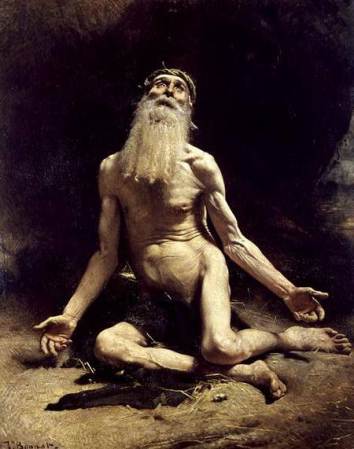
Job (oil on canvas) by Bonnat, Leon Joseph Florentin (1833-1922)

Psalm 102

A prayer of one afflicted, when faint and pleading before the LORD.
 1Hear my prayer, O LORD; let my cry come to you.
 2Do not hide your face from me in the day of my distress. Incline your ear to me; answer me speedily in the day when I call.
 3For my days pass away like smoke, and my bones burn like a furnace.
 4My heart is stricken and withered like grass; I am too wasted to eat my bread.
 5Because of my loud groaning my bones cling to my skin.
 6I am like an owl of the wilderness, like a little owl of the waste places.
 7I lie awake; I am like a lonely bird on the housetop.
 8All day long my enemies taunt me; those who deride me use my name for a curse.
 9For I eat ashes like bread, and mingle tears with my drink,
 10because of your indignation and anger; for you have lifted me up and thrown me aside.
 11My days are like an evening shadow; I wither away like grass.
 12But you, O LORD, are enthroned forever; your name endures to all generations.
 13You will rise up and have compassion on Zion, for it is time to favor it; the appointed time has come.
 14For your servants hold its stones dear, and have pity on its dust.
 15The nations will fear the name of the LORD, and all the kings of the earth your glory.
 16For the LORD will build up Zion; he will appear in his glory.
 17He will regard the prayer of the destitute, and will not despise their prayer.
 18Let this be recorded for a generation to come, so that a people yet unborn may praise the LORD:
 19that he looked down from his holy height, from heaven the LORD looked at the earth,
 20to hear the groans of the prisoners, to set free those who were doomed to die;
 21so that the name of the LORD may be declared in Zion, and his praise in Jerusalem,
 22when peoples gather together, and kingdoms, to worship the LORD.
 23He has broken my strength in midcourse; he has shortened my days.
 24“O my God,” I say, “do not take me away at the midpoint of my life, you whose years endure throughout all generations.”
 25Long ago you laid the foundation of the earth, and the heavens are the work of your hands.
 26They will perish, but you endure; they will all wear out like a garment. You change them like clothing, and they pass away;
 27but you are the same, and your years have no end.

 28The children of your servants shall live secure; their offspring shall be established in your presence.

Psalm 102 is described in its superscription as a prayer of one afflicted, when faint and pleading before the LORD. This type of description is unusual among the psalms. It doesn’t indicate an author to attribute the psalm to, nor does it give instructions for its performance or a reference to a scriptural story that the psalm comes from. This psalm of a suffering one who is alienated from their body, from society, and ultimately from God may have been intended as a psalm that any suffering individual could recite at times where their situation seemed hopeless, and God’s help seemed far away. Imagery of impermanence, loneliness, pain, and shame permeate the complaint of the psalm, but like many psalms of complaint there is a turn towards hope. The psalmist intuits that the answer, “to human finitude and mortality is divine infinitude and immortality.” (Nancy deClaisse-Walford, 2014, p. 754)

The opening language of the psalm resonates with appeals throughout the psalter as Rolf A. Jacobson notes:

The opening appeal to be heard employs language quite typical of these entreaties—hear my prayer, let my cry come unto you (39:12), do not hide your face (27:9; 143:7), turn your ear towards me (31:2; 71:2), make haste to answer me (69:17; 143:7) (Nancy deClaisse-Walford, 2014, p. 751)

Although Rolf Jacobson attributes this to intentionally creating a generic composition for use in the community, the use of familiar language may also reflect a person shaped in the communal worship which utilizes these psalms. The language of prayer and faith is shaped in the worshipping community which shaped the psalmist’s faith and life. Yet, now in a time when the author is alienated from their own physical body, from the community, and from God, they turn to the words that shaped their life when they were physically, socially, and religiously whole.

The psalm moves between personal complaints about their own health and isolation, “I complaints” in Westermann’s terminology, complaints about the actions of isolation and persecution by those in the psalmist’s society, “they complaints”, and complaints about the way that God is treating the psalmist, “you complaints.”[1] The personal complaints begin with an image of transience that reminds me of Ecclesiastes frequently used term hebel (vanity, emptiness). Hebel literally means smoke, mist, or vapor but is often used metaphorically to refer to the emptiness of life.[2] Now for the psalmist their days pass away like smoke and their bones burn like a furnace. Their life down to their very bones is going up in smoke while their heart withers like grass and they are too far gone to even eat the bread that could give them strength.  Their songs have turned to groans and their body now is transforming into a (barely) living skeleton. We don’t know if they were suffering from an illness, but they attribute their suffering to God’s judgment upon them. Their suffering is also done in isolation, they are like an unclean owl of the wastelands or a lonely bird on a roof. These lonely images of birds heighten the feeling of the psalm, for the sufferer is not only weak but they are abandoned.

The social complaints are also sharply worded as the psalmist’s unnamed name is synonymous with a curse among their enemies. Their personal weakness and isolation are viewed in the society as a curse from God, and enemies have taken advantage of this weakness. The only nourishment left for this abandoned one is the bread of ashes and the drink of tears.  Yet, behind both the physical pain and suffering and the social isolation is the LORD. We are never told of any sin that this poet has committed, but they view their suffering because of God’s anger and distance. In the words of the psalm God has cast the suffering one aside and yet hope resides in God repenting from God’s attitude towards the psalmist, turning the face and hearing with the ear and responding with grace and healing.

In contrast to the evanescent position of the psalmist is the strength and might of the LORD. The psalmist now joins his fate to the action of God to have compassion on Zion. It is possible that this psalm originates in the time of the exile where there is hope for the rebuilding of Zion and rescue the people from the destitute position as exiles in a foreign land. Yet, even without the context of the Babylonian exile, the turn to hope is based on the faithfulness of God for the people and a belief that God’s anger lasts only a moment, but God’s favor is for a lifetime.[3] The poet’s strength may have been broken in the middle of their life by God’s action, but if God wills it will be renewed. The heavens and the earth which seem so permanent to humanity are like a garment that can easily be changed by the powerful and permanent God. God will continue to endure and only in God can this suffering one hope to find a renewed physical, social, and religious life. The psalmist claims their familial bond to the LORD the God of Israel and now awaits the parental turning of their God to the children of God’s servants.


[1] Rolf A. Jacobson notes this helpful pattern citing Westermann, The Psalms (54-57). (Nancy deClaisse-Walford, 2014, p. 752)

[2] Psalm102 does not use the term hebel but the combination of words of impermanence create a similar resonance for me as Ecclesiastes.

[3] Psalm 30:5.

Exodus 2: Moses’ Story Begins

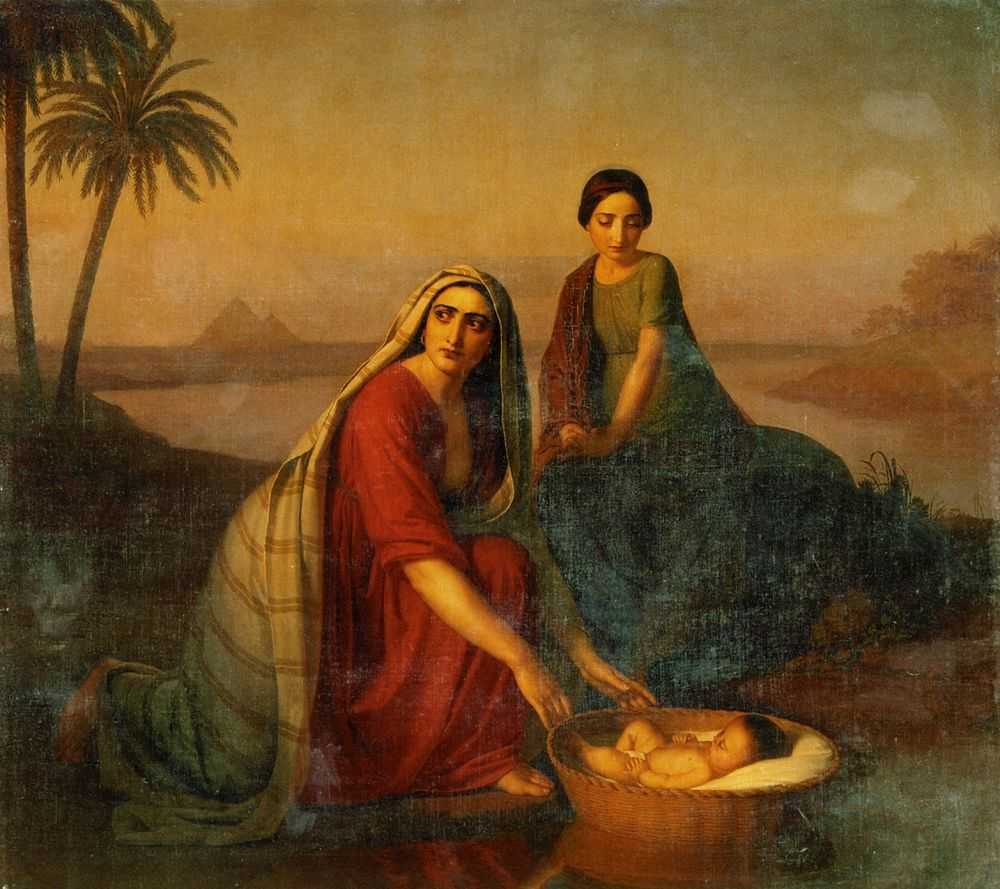
Alexey Tyranox, Moses Being Lowered into the Nile by His Mother (1839-1842)

Alexey Tyranox, Moses Being Lowered into the Nile by His Mother (1839-1842)

Exodus 2: 1-10 The Continued Resistance of Women

Now a man from the house of Levi went and married a Levite woman. 2 The woman conceived and bore a son; and when she saw that he was a fine baby, she hid him three months. 3 When she could hide him no longer she got a papyrus basket for him, and plastered it with bitumen and pitch; she put the child in it and placed it among the reeds on the bank of the river. 4 His sister stood at a distance, to see what would happen to him.

 5 The daughter of Pharaoh came down to bathe at the river, while her attendants walked beside the river. She saw the basket among the reeds and sent her maid to bring it. 6 When she opened it, she saw the child. He was crying, and she took pity on him, “This must be one of the Hebrews’ children,” she said. 7 Then his sister said to Pharaoh’s daughter, “Shall I go and get you a nurse from the Hebrew women to nurse the child for you?” 8 Pharaoh’s daughter said to her, “Yes.” So the girl went and called the child’s mother. 9 Pharaoh’s daughter said to her, “Take this child and nurse it for me, and I will give you your wages.” So the woman took the child and nursed it. 10 When the child grew up, she brought him to Pharaoh’s daughter, and she took him as her son. She named him Moses, “because,” she said, “I drew him out of the water.”

The resistance to the policies of the unnamed king of Egypt begins with Shiphrah and Puah, the Hebrew midwives, and continues with a mother, a daughter of the Hebrews and a daughter of the king’s own household. Even in the time of oppression the Israelites continue to marry and bear children, even though the lives of those children are now threatened by a command to all the people of Egypt. Yet, even in ancient Egypt we hear a memory of the subtle and artful resistance to the abhorrent policies of murder. This one child rescued from being thrown into the Nile will later lead the people out of slavery and into a new calling and identity.

A mother looks upon her newborn son and seeing that, in similar language to the creation narratives in Genesis, that he is good attempts to preserve this small piece of God’s creation she holds in her hands. For three months she manages to keep the child hidden but ultimately the wickedness of humanity forces her, like God sealing up Noah and his family in an ark (and the word for the basket here is the same used for the ark in Genesis), places him in the waters of the Nile-the same waters that Pharaoh demanded the Egyptians cast the Hebrew sons into, and hopes against hope for deliverance from those very waters. The mother moves away from the basket leaving a final hope in God’s unseen hands but his sister, perhaps Miriam but unnamed here, continues to watch.

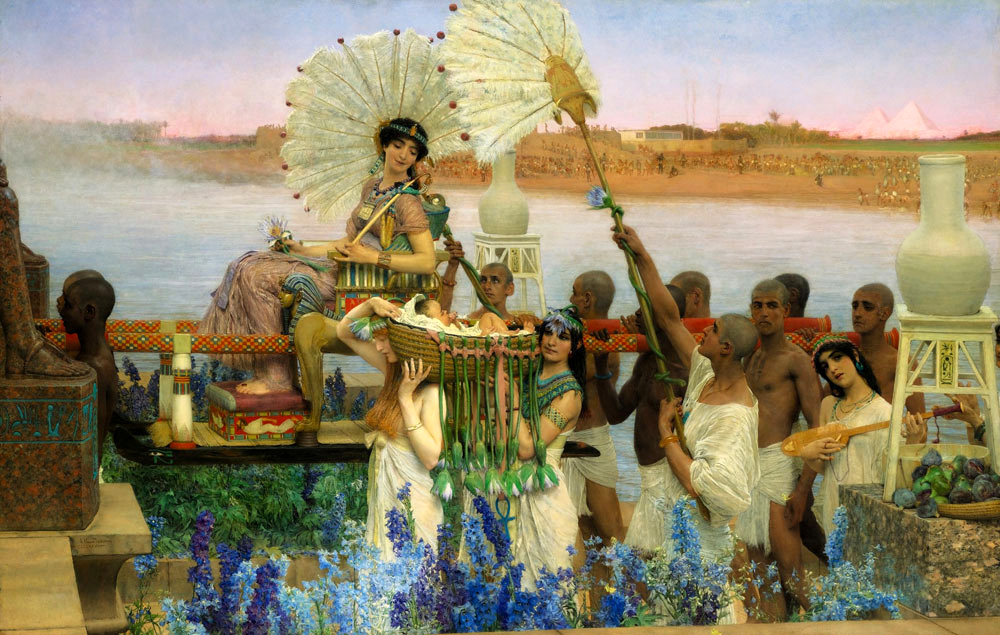
Deliverance comes from the household of the man who ordered the death of the Hebrew children. This daughter of Pharaoh has nothing to gain by being involved in this story. She could’ve easily allowed the basket to remain undisturbed by human hands and still she sees, she acts, and she becomes the deliverance for this child and a medium God will use in the deliverance of the people. She is able to see in this child the human cost of her father’s oppression and she takes pity and acts. She realizes that this indeed must be one of the Hebrew’s children consigned to death and she hears his cries, much as God will later hear the Israelite’s cries. All throughout this beginning of Exodus it is women who prefigure the ways in which God will act.

The surprising nature of the story continues when the daughter of Moses’ mother speaks openly to the daughter of Pharaoh and together they conspire to save the child’s life. It is Moses’ sister who suggests a subtle resistance that allows the mother of Moses’ to be shielded from losing her son and to be compensated by Pharaoh’s household for resisting the deathly order of Pharaoh himself. Moses will grow to be a child of two worlds, both the world of the Hebrews still connected to his family of birth and connected to the household of Pharaoh where he receives not only protection and privilege but also his name. Yet, like Pharaoh’s daughter, his mother and his sister, he too will see the cost of the oppression around him as a young man and be compelled to act.

Lawrence Alma-Tadema, The Finding of Moses (1904)

Lawrence Alma-Tadema, The Finding of Moses (1904)


Exodus 2: 11-15a: Reacting to the Oppression

 11 One day, after Moses had grown up, he went out to his people and saw their forced labor. He saw an Egyptian beating a Hebrew, one of his kinsfolk. 12 He looked this way and that, and seeing no one he killed the Egyptian and hid him in the sand. 13 When he went out the next day, he saw two Hebrews fighting; and he said to the one who was in the wrong, “Why do you strike your fellow Hebrew?” 14 He answered, “Who made you a ruler and judge over us? Do you mean to kill me as you killed the Egyptian?” Then Moses was afraid and thought, “Surely the thing is known.” 15 When Pharaoh heard of it, he sought to kill Moses.

Moses has grown up as a person of two worlds. He has both his identity as a child brought into the household of Pharaoh as well as his identity as a Hebrew. Perhaps he was shielded during his upbringing from the friction between these two identities but upon seeing the oppression of his people he feels compelled, like God will at the end of chapter two, to act. Moses reacts violently, he feels his kinship with the Hebrew being beaten, and he commits murder. His action may not be a reasoned and calm reaction, most likely we would brand this type of action today a terrorist action, and yet he sees the oppression and feels compelled to act. Perhaps this is something that God sees in Moses, one who cannot stand aside while the powerful abuse the powerless. Moses believes that he is able to act without his action being seen and known, yet he soon finds he is now seen by both sets of peoples as a murder. His fellow Hebrew sees his quest for justice in a different manner, as yet another person who acts with violence to achieve his goals.

Moses’ resistance is more violent and less effective than the resistance of the women who came before him. Moses ultimately ends up fleeing to preserve his life and going from being a person of two people to a man without a people. Yet, he will continue to see and act when he sees those with power taking advantage of those without. Moses will be unable to be the liberator of the people from their oppression on his own, ultimately he, like God, needs to see and to choose how to act. For Moses his actions mean giving up the protection that Pharaoh’s daughter was able to provide for him and he identifies with a people who is not ready to accept him.

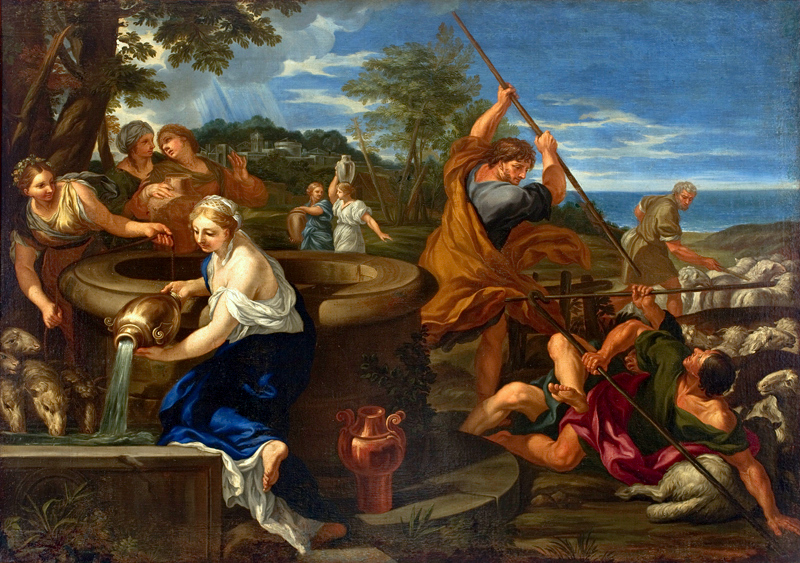
Ciro Ferri, Moses and the Daughters of Jethro (between 1660 and 1689)

Ciro Ferri, Moses and the Daughters of Jethro (between 1660 and 1689)

Exodus 2: 15b-22: An Alien Residing in a Foreign Land

But Moses fled from Pharaoh. He settled in the land of Midian, and sat down by a well. 16 The priest of Midian had seven daughters. They came to draw water, and filled the troughs to water their father’s flock. 17 But some shepherds came and drove them away. Moses got up and came to their defense and watered their flock. 18 When they returned to their father Reuel, he said, “How is it that you have come back so soon today?” 19 They said, “An Egyptian helped us against the shepherds; he even drew water for us and watered the flock.” 20 He said to his daughters, “Where is he? Why did you leave the man? Invite him to break bread.” 21 Moses agreed to stay with the man, and he gave Moses his daughter Zipporah in marriage. 22 She bore a son, and he named him Gershom; for he said, “I have been an alien residing in a foreign land.”

Moses may have fled Egypt but he has not left his sense of justice behind. In Midian, where he comes to rest after his flight, he feels compelled this time to act on behalf of the daughters of Midian who are being harassed by the shepherd in that region and being made to wait until their flocks are watered so they can water their own flock. Moses again acts and breaks what was apparently an ongoing struggle. When their father is surprised by their early return he realizes something must have changed. Moses again sees and chooses to act and this action opens up a new home for the wanderer.

Reuel, the priest of Midian, after inquiring of his daughters about their early arrival challenges them to welcome in this stranger. “Where is he? Why did you leave the man? Invite him to break bread.” Reuel in extending his hospitality to Moses welcomes the alien residing in his land. This hospitality eventually transforms into a new kinship when he gives his daughter, Zipporah, to become Moses’ wife and later bear Moses his son Gershom. Moses now becomes a man of a third people and family and makes his home in the land of Midian away from the empire of Egypt and away from the oppression of the Hebrew people. His choices have led him to a new home away from the homes he knew. He once again is extended the unexpected saving hospitality of another and his life begins again. It will take God’s call to get him to reluctantly return to Egypt and become the one God uses to liberate the Israelites, and yet in his son’s name there is perhaps the longing for home and the identification of displacement he feels being an Egyptian and an Israelite in the household of the priest of Midian.

Exodus 2: 23-25: The God of the Israelites

 23 After a long time the king of Egypt died. The Israelites groaned under their slavery, and cried out. Out of the slavery their cry for help rose up to God. 24 God heard their groaning, and God remembered his covenant with Abraham, Isaac, and Jacob. 25 God looked upon the Israelites, and God took notice of them.

Up to this point in Exodus we have seen a human drama where the Israelites and Egyptians have struggled to live within the fear of Pharaoh. But the God of the Israelites is a God who, like the midwives, Moses’ mother and sister, Pharaoh’s daughter, and ultimately Moses, sees and acts. Unlike the gods of the Egyptians or the many gods of the nations than will surround the Israelites in the promised land the God of Israel has an eye for the oppressed. The pivot of Exodus is here where God hears their cry, God remembers the promises made to Abraham, Isaac and Jacob, God takes notice and God decides to act.

The death of the king of Egypt doesn’t change the position of the Israelite people. Individual policies may have changed and the order to kill infants may not have continued but the people are reduced to cries and groans. They may be numerous but they also feel powerless in their captivity. The God of the Israelites, who is ultimately the God of the whole earth, will challenge the gods of Egypt and their emissaries to bring out of the empire of the day a slave people who might learn to be the covenant people of God.

Exodus 1: Setting the Stage

Roman collared slaves-Marble relief from Smyrna (Izmir, Turkey), 200 CE

Roman collared slaves-Marble relief from Smyrna (Izmir, Turkey), 200 CE

 Exodus 1: 1-7 Setting the Stage

These are the names of the sons of Israel who came to Egypt with Jacob, each with his household: 2 Reuben, Simeon, Levi, and Judah, 3 Issachar, Zebulun, and Benjamin, 4 Dan and Naphtali, Gad and Asher. 5 The total number of people born to Jacob was seventy. Joseph was already in Egypt. 6 Then Joseph died, and all his brothers, and that whole generation. 7 But the Israelites were fruitful and prolific; they multiplied and grew exceedingly strong, so that the land was filled with them.

The book of Genesis, the preceding book in the Bible, spends the bulk of the book with God working through a specific family, the family of Abraham, Isaac and Jacob, to be God’s covenant partners and to be a blessing to all the nations. As Exodus begins we are joined to the ending of the book of Genesis where the sons of Jacob (Israel) have come down to Egypt and settled in the land of Goshen. Joseph was already in Egypt after being sold into slavery and rising to being second in command of all Egypt and Jacob and his remaining sons come to Egypt seeking relief from a severe famine throughout the land. Throughout the stories of Abraham, Isaac, Jacob, and Joseph God has continued to provide for them in unexpected ways. Yet, now we have left the time of Abraham, Isaac and Jacob and the original sons of Israel behind as that generation passes away.

One of the struggles of many of the stories of Genesis was the struggle against barrenness. Sarah, Rebekah and Rachel all struggle with infertility and these families of the promise struggle with the command in the first creation narrative to ‘be fruitful and multiply’ (Genesis 1. 28). At the end of Genesis and here at the beginning of Exodus there has been a slow increase from the original two of Sarah and Abraham to now a household of seventy born to Jacob. Yet now the increase becomes exceedingly fruitful, they begin to become numerous and this combined with a historical amnesia in the land of Egypt sets the stage for the initial crisis of Exodus and the transition from the people’s lives in Egypt to their journey to the promised land.

Exodus 1: 8-14 Historical Amnesia and the Politics of Fear and Oppression

 8 Now a new king arose over Egypt, who did not know Joseph. 9 He said to his people, “Look, the Israelite people are more numerous and more powerful than we. 10 Come, let us deal shrewdly with them, or they will increase and, in the event of war, join our enemies and fight against us and escape from the land.” 11 Therefore they set taskmasters over them to oppress them with forced labor. They built supply cities, Pithom and Rameses, for Pharaoh. 12 But the more they were oppressed, the more they multiplied and spread, so that the Egyptians came to dread the Israelites. 13 The Egyptians became ruthless in imposing tasks on the Israelites, 14 and made their lives bitter with hard service in mortar and brick and in every kind of field labor. They were ruthless in all the tasks that they imposed on them.

The initial reception in Egypt for the family of Israel was positive and as the book of Deuteronomy can remind the people: “You shall not abhor any of the Egyptians, because you were an alien residing in their land.” (Deuteronomy 23: 7) Yet, as time passes a sense of historical amnesia sets in. A new king, an unnamed king, arises in the land of Egypt. He may rule the superpower of the day but within this book that will become the ‘West’s meta-narrative of hope’ (Sacks, 2010, p. 1) his name remains unspoken and forgotten. He will not be linked to any of the massive construction projects of one of the Egyptian dynasties or to the culture of the land. This nameless ruler will be only remembered for the way in which the ruler of the most powerful empire of that age feared a subset of those in his land.

Until this point the Israelites were a family, they may have grown larger, but here it is the unnamed ruler who for the first time designates them as a unique people. Somehow the Israelites are distinct, they are unlike the people of the rest of the nation and that distinction gives rise to a politics of oppression. Ultimately, as Rabbi Sacks can remind us, “Pharaoh is driven by political motives, not hate.” (Sacks, 2010, p. 4) Throughout the book of Exodus the people of Egypt will be presented as one option, even a shrewd option for a type of society that can capitalize on the fear and distinction of a people to transform them from neighbors into forced laborers. Fear provides the opportunity to not only discriminate against a people but to build a civilization on their broken backs. The people of Israel will be challenged to learn a different way of organizing their lives rather than the manner of the Pharaohs of Egypt or the kings of the nations that surround them. Yet, the politics of fear and oppression continue to be used in our time to set one group of people against another and to transform neighbors into the ones to be feared.

The initial strategy to remove the threat of the Israelites through oppression fails because the more they were oppressed the more they multiplied. While the policy may have the desired effect in the near term by allowing the Egyptians to have a forced labor pool to build the monuments and houses of the empire it continues to create a fear and a dependence upon the very people they wish to eliminate. The oppression and violence has not yet reached its peak and yet it has already begun to change the oppressor. To maintain this separation between Egyptian and Israelite they become ruthless. Fear and oppression has changed them. Their placing of the projects of the empire above the needs of their neighbor changes their culture. Hospitality is replaced with brutality and yet the Israelites endure and continue to multiply even under the heavy burden of the empire’s imposed service.

Exodus 1: 15-22 The Disobedience of Women

15 The king of Egypt said to the Hebrew midwives, one of whom was named Shiphrah and the other Puah, 16 “When you act as midwives to the Hebrew women, and see them on the birthstool, if it is a boy, kill him; but if it is a girl, she shall live.” 17 But the midwives feared God; they did not do as the king of Egypt commanded them, but they let the boys live. 18 So the king of Egypt summoned the midwives and said to them, “Why have you done this, and allowed the boys to live?” 19 The midwives said to Pharaoh, “Because the Hebrew women are not like the Egyptian women; for they are vigorous and give birth before the midwife comes to them.” 20 So God dealt well with the midwives; and the people multiplied and became very strong. 21 And because the midwives feared God, he gave them families. 22 Then Pharaoh commanded all his people, “Every boy that is born to the Hebrews you shall throw into the Nile, but you shall let every girl live.”

This is the first of six stories in the book of Exodus of outstanding moral courage and they are all about women, two (Pharaoh’s daughter and Zipporah) are not Israelites and here with Shiphrah and Puah they may not be Israelites as well. (Sacks, 2010, p. 9) We don’t know whether these two women are simply midwives that are working with the Hebrew women or whether they are themselves Hebrews but they are named while the king of Egypt remains anonymous. They become examples of how women, who would not have a place within the power structures of men, are able to subvert the command of the king.

The king of Egypt asks these women to commit a crime against humanity. Perhaps the Hebrews are no longer valued as humans any longer by Pharaoh and they become a subhuman beast of burden where the master can decide upon their life and death. Yet, for these women it is not only a crime against humanity but also a crime against the LORD of the Hebrew women who keeps granting them the fertility to bring forth children. The Pharaoh has overstepped the line with these two servants and they work in their own way to find a way to allow life to occur when death has been ordered. Shiphrah and Puah have a calling, whether through morality or through faith, to not carry out this order to kill infants. When they are summoned they respond with a lie and it is a lie which also taunts the strength of the Egyptians. Hebrew women are able to deliver without a midwife present, they are much more robust than the more fragile Egyptian women who need to wait upon the ministering of the midwives. This is one of those times where God seems to delight in the craftiness of the servant. The midwives, who may have been in their role because they have no families of their own, are seen and they too are granted fertility and families. They also now have a place with the Hebrews and they become the first to resist the murderous impulses of the empire. Pharaoh, deciding that these women will not do his work for him now extends the murderous command to all his people. Now the murder of Israelites infant boys becomes the work of the nation and doubtless there will be those who are willing to embrace the politics of fear and division and be a part of the ordered purge. Yet, it is from within the oppression of the empire that something new will happen, that the people who were slaves to Pharaoh will be claimed as the first-born children by the God who is not bound to any place or nation but is instead the creator of the heaven and the earth.

Transitioning Into Exodus

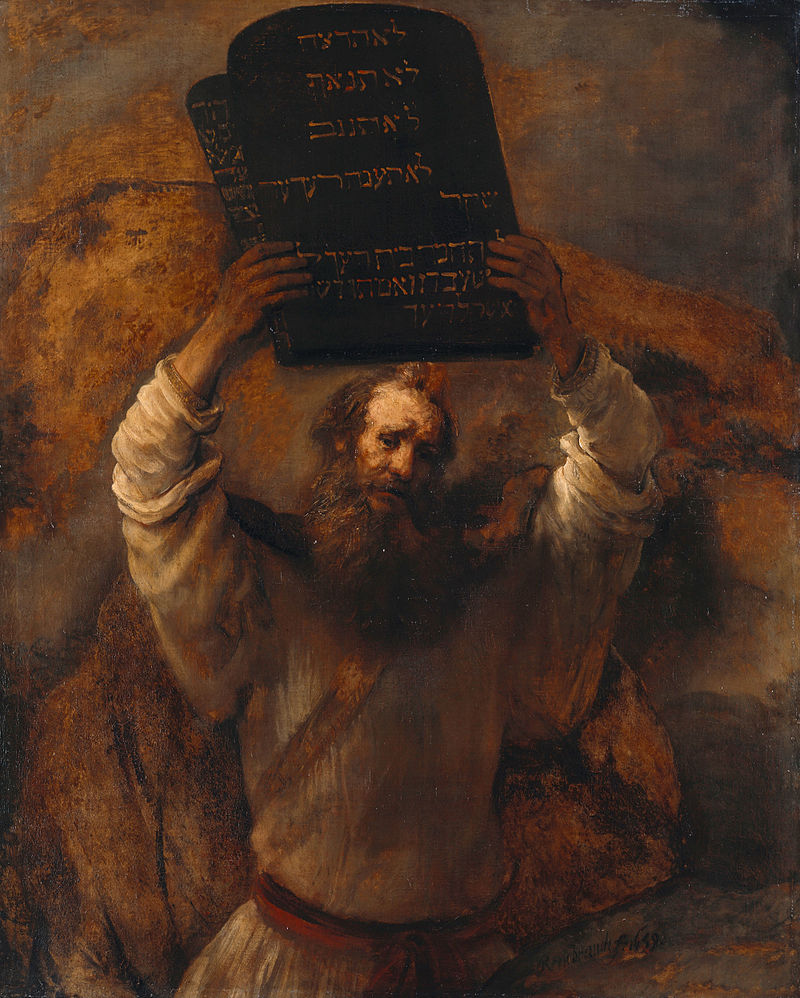
Rembrandt, Moses with the Ten Commandments

Rembrandt, Moses with the Ten Commandments

When I started the biblical reflections portion of this blog almost four years ago, I didn’t realize how much I would learn and how much it would shape my ministry. Many Christians don’t know how to approach the Hebrew Scriptures that many call the Old Testament, and as much as I love the gospels and the letters of Paul I am learning how to hear those writings much more fully as I become more and more familiar with the Psalms, Jeremiah, Deuteronomy, Ecclesiastes, Esther and Haggai. I am understanding more what Dietrich Bonhoeffer meant when he said,

I notice more and more how much I am thinking and perceiving things in line with the Old Testament; thus in recent months I have been reading much more the Old than the New Testament. Only when one knows the name of God may not be uttered may one sometimes speak the name of Jesus Christ. Only when one loves life and the earth so much that with it everything seems lost and at its end may one believe in the resurrection of the dead and a new world. Only when one accepts the law of God as binding for oneself may one perhaps sometimes speak of grace. And only when the wrath and vengeance of God against God’s enemies are allowed to stand can something of forgiveness and love of enemies touch our hearts. Whoever wishes to be and perceive too quickly and too directly in New Testament ways is to my mind no Christian. We have already, discussed this a few times, and every day confirms for me that it is right. One can and must not speak the ultimate word prior to the penultimate. We are living in the penultimate and believe the ultimate. (DBW 8: 213)

As I have wrestled with some difficult pieces of the Bible it has caused me to think about ethics, faith, our current world and so much more. For me this is the more challenging way but it has also been incredibly rewarding. Finishing Psalms 21-30 as a transition between books now I stand ready to begin another large piece. Next will be the book of Exodus, the second of the Pentateuch that I have approached. It is a book that I am more familiar with than I was with Jeremiah or Deuteronomy when I began and it is more of a narrative than any of the books I have done previously. I have two trustworthy companions for the journey. Since this is one of the central books of the Torah and the defining drama of the Jewish people I am delighted to have Rabbi Jonathan Sacks’, Covenant and Conversation: A Weekly Reading of the Jewish Bible as he reads through Exodus: The Book of Redemption as one of my primary dialogue partners. I will also be taking along Carol Meyers commentary on Exodus from the New Cambridge Bible Commentary Series. I have other resources that I have read in the past or that are on my shelf that may also be a part of this journey. With the forty chapters of Exodus the hope is to make the journey in approximately forty weeks, but as journeys go there are often unforeseen stops along the way. I am looking forward to this next exploration as I reenter the journey of the people of Israel from Egypt into the wilderness, from slavery into becoming the people of God and seeing how their journey and faith continue to shape and inform my own.

Ecclesiastes 5-The Gift of Mortality Before God and in the World

Samuel Cursing Saul by Hans Holbein the Younger (1530)

Samuel Cursing Saul by Hans Holbein the Younger (1530)

 Ecclesiastes 5:1-7 Silence Not Sacrifice

1 Guard your steps when you go to the house of God; to draw near to listen is better than the sacrifice offered by fools; for they do not know how to keep from doing evil. 2 Never be rash with your mouth, nor let your heart be quick to utter a word before God, for God is in heaven, and you upon earth; therefore let your words be few.

 3 For dreams come with many cares, and a fool’s voice with many words.

 4 When you make a vow to God, do not delay fulfilling it; for he has no pleasure in fools. Fulfill what you vow. 5 It is better that you should not vow than that you should vow and not fulfill it. 6 Do not let your mouth lead you into sin, and do not say before the messenger that it was a mistake; why should God be angry at your words, and destroy the work of your hands?

 7 With many dreams come vanities and a multitude of words; but fear God.

Perhaps it is my skeptical nature but I’ve always been wary of those who knew too clearly what God wanted from them and others. I think that sometimes the quest for certainty fills that uneasy quiet space of waiting for God to speak. In our own time there has become more common for people to claim they are spiritual but not religious, where that organized religion for various reasons may not speak to them. There are times where Christianity has tried to model itself after the ancient mystery religions where you did certain acts to try to appease a god or goddess to act on your behalf, but the LORD the God of Israel’s ways are not our ways. As Amy Plantiga Pauw can say memorably, “God does not exist to satisfy human aims and desires. God is not a mascot for our favorite causes.” (Pauw, 2015, p. 166) There are many times when people have used their religious piety as a way of bringing glory to themselves or securing their own sense of place within the chosen people. Qohelet encourages us to enter into that space of silence and waiting to draw near and listen to God.

It is possible that the narrative of 1 Samuel 15, where King Saul uses sacrifice as a way to cover up his disobedience to God’s command in the defeat of the Amalekites, informs this portion of Ecclesiastes. Saul is commanded to utterly destroy the people and the animals but when the battle is won in addition to sparing King Agag’s life the people also spared the best of the sheep, cattle, and other valuables. Capturing the spoils of war was a normal practice but here the Amalekites are dedicated as herem where they are consigned to destruction. (For much more about the understanding of war, herem, as well as an ethical reflection on how to address texts like 1 Samuel 15 see my post on Deuteronomy 20). When the next day King Saul is confronted by Samuel he claims that these best animals are to be a sacrifice to God. Samuel informs King Saul that he has earned the LORD’s disfavor and states:

“Has the LORD as great delight in burnt offerings and sacrifices, as in obedience to the voice of the LORD? Surely, to obey is better than sacrifice, and to heed than the fat of rams. For rebellion is no less a sin than divination, and stubbornness is like iniquity and idolatry. Because you have rejected the word of the LORD, he has also rejected you from being king.” 1 Samuel 15: 22f

Guarding one’s actions before God also involves the words that we say and the promises that we make. The misuse of the name of God was a serious offense for the people of Israel, enough so that it became enshrined within the ten commandments. When speaking about vows in verse four, Ecclesiastes begins with a direct parallel of Deuteronomy 23: 21. Making promises before God is a serious measure, in discussing Deuteronomy 23 I mentioned Jephthah’s rash oath and since I have just been discussing King Saul there is his rash oath in 1 Samuel 14: 24 which puts his son Jonathan’s life in danger. Ellen Davis shares, “To vow something before the priest (NRSV: “messenger”) that one has not considered carefully or, even worse, has no intention of fulfilling is to mock God” (Davis, 2000, p. 165)

Ecclesiastes has been pondering the place of humanity with its mortality within the seemingly timeless nature of creation and the eternity of God. Humanity, with all its limits, is placed in the position of listening to the wisdom of the eternal one. Ecclesiastes has striven to pay attention in the present moment to the gifts that God provides. It may be a paradox but a part of wisdom is learning to be patient with the finite gift of time. Making space and silence to be in that place where our words and wisdom fade before the words and wisdom of God.

Jesus, in Matthew’s gospel, can take the words of Ecclesiastes a step further. Ecclesiastes stated it is better to not vow than vow and not fulfill it but Jesus says not to swear an oath at all. For Jesus all words were to be faithful to what is said, whether they are under oath or not, and as in Ecclesiastes our power to fulfill these vows is often limited by the reality that one ‘cannot make one hair on one’s head white or black.’ (Matthew 5: 33-37)

Ecclesiastes 5: 8-20

 8 If you see in a province the oppression of the poor and the violation of justice and right, do not be amazed at the matter; for the high official is watched by a higher, and there are yet higher ones over them. 9 But all things considered, this is an advantage for a land: a king for a plowed field.

 10 The lover of money will not be satisfied with money; nor the lover of wealth, with gain. This also is vanity.

 11 When goods increase, those who eat them increase; and what gain has their owner but to see them with his eyes?

 12 Sweet is the sleep of laborers, whether they eat little or much; but the surfeit of the rich will not let them sleep.

 13 There is a grievous ill that I have seen under the sun: riches were kept by their owners to their hurt,14 and those riches were lost in a bad venture; though they are parents of children, they have nothing in their hands. 15 As they came from their mother’s womb, so they shall go again, naked as they came; they shall take nothing for their toil, which they may carry away with their hands. 16 This also is a grievous ill: just as they came, so shall they go; and what gain do they have from toiling for the wind? 17 Besides, all their days they eat in darkness, in much vexation and sickness and resentment.

 18 This is what I have seen to be good: it is fitting to eat and drink and find enjoyment in all the toil with which one toils under the sun the few days of the life God gives us; for this is our lot. 19 Likewise all to whom God gives wealth and possessions and whom he enables to enjoy them, and to accept their lot and find enjoyment in their toil– this is the gift of God. 20 For they will scarcely brood over the days of their lives, because God keeps them occupied with the joy of their hearts.


Gratitude and joy are the gifts from God in Ecclesiastes, not wealth or wisdom (even though it is better than foolishness). Our desire for wealth, power, possessions, land, position, and numerous other things we think will make us happy is insatiable. When riches and status become the central quest in life they leave the seeker unsatisfied. Governments may be corrupt, the system may be unfair, riches may be lost suddenly and all may be vanity yet joy can be found.

Ecclesiastes can recognize the problems and corruption that are a part of government and bureaucracy and still believe they ultimately benefit the land and the people. The oppression of the poor and the violation of justice and right are real, and a person may not be in a position to change these things. Yet, the author is no revolutionary. Even with all of the government of his time’s flaws he still sees the king (and by extension the rest of the government) put in place to serve the land and the farmer. The people placed in positions of authority may be motivated by a quest for greed or power, yet in the balance there is justice in the midst of the injustice, protection of justice and right in the midst of the injustice and ultimately even a bad government is in service of its people. Ecclesiastes is wisdom literature, not prophetic literature, so do not be surprised that it is invested in the maintaining of the way things are. Yet, there is wisdom in learning the balance of where one can invest in change and where one learns to live in an imperfect system.

Wisdom that is applied to the increasing of goods or the increasing of position and power is never satisfied. The human appetite for acquisition is insatiable. Riches can be hoarded and lost and never enjoyed. The future is never guaranteed, permanent security is never guaranteed, one’s position in society is never guaranteed. If one lives one’s life only for the future never enjoying the food and drink that one has, never giving thanks for the banquets one can be a part of or host, then one lives impoverished. If one spends one’s nights continually plagued by insecurity over one’s possessions or plotting how to increase one’s wealth or stature, one lives an impoverished life. If one never is given the gift of enjoying their labor and their time of leisure, one lives an impoverished life. The paradox of Ecclesiastes wisdom is that it is by embracing one’s limits-one’s mortality, one’s possessions, one’s position, and one’s companions that one is able to be thankful. Gratitude and joy is a gift of God in the midst of our brief days, our limited resources, our imperfect situations and governments and in our families and friends. Ecclesiastes is not, as I once thought, dismissive of life but actively seeks to embrace life as it is lived in the present.

Ecclesiastes 4- The Things That Steal Our Peace

Ecclesiastes 4

1 Again I saw all the oppressions that are practiced under the sun. Look, the tears of the oppressed– with no one to comfort them! On the side of their oppressors there was power– with no one to comfort them. 2 And I thought the dead, who have already died, more fortunate than the living, who are still alive; 3 but better than both is the one who has not yet been, and has not seen the evil deeds that are done under the sun.

 4 Then I saw that all toil and all skill in work come from one person’s envy of another. This also is vanity and a chasing after wind.
 5 Fools fold their hands and consume their own flesh.
 6 Better is a handful with quiet than two handfuls with toil, and a chasing after wind.

 7 Again, I saw vanity under the sun: 8 the case of solitary individuals, without sons or brothers; yet there is no end to all their toil, and their eyes are never satisfied with riches. “For whom am I toiling,” they ask, “and depriving myself of pleasure?” This also is vanity and an unhappy business.

 9 Two are better than one, because they have a good reward for their toil. 10 For if they fall, one will lift up the other; but woe to one who is alone and falls and does not have another to help. 11 Again, if two lie together, they keep warm; but how can one keep warm alone? 12 And though one might prevail against another, two will withstand one. A threefold cord is not quickly broken.

 13 Better is a poor but wise youth than an old but foolish king, who will no longer take advice. 14 One can indeed come out of prison to reign, even though born poor in the kingdom. 15 I saw all the living who, moving about under the sun, follow that youth who replaced the king; 16 there was no end to all those people whom he led. Yet those who come later will not rejoice in him. Surely this also is vanity and a chasing after wind.

The Hebrew word shalom is only used in Ecclesiastes in the previous chapter in the contrast between war and shalom (peace). Yet, beneath all of the vanity and chasing after the wind is perhaps the search for this concept of shalom, which is far more than an absence of conflict. Shalom has the sense of harmony, balance, living at peace with God’s will for one’s life and world. It is a greeting and a wish for one’s friends and neighbors and for one’s own life and yet then and now it seemed illusive. Qohelet turns his wisdom to the things that rob us of the joy and shalom of how life should be. In the brief verses of chapter four he addresses in a form that moves towards proverbs the issues of oppression, comparison and competition, overwork, isolation and institutional incompetency.

Oppression robs us of our humanity, both the oppressed and the oppressor. For the oppressed it means living in a sick society where their lives and work seem to matter less than those who operate in a more privileged state. For the oppressor it often means unconsciously adopting the views of a sick society that have allowed them to prosper only at the (often unseen) expense of others. Wisdom has opened the eyes of the privileged author of Ecclesiastes and it sickens him. The reality of oppression makes death better than life for him because it is not simply that an oppression can be stated and once brought into the open it dies under the light of day. Oppression involves a lifetime of learned and observed behaviors that require patience, prayer, struggle and dis-ease if the disease is ever to be healed. Oppression can be learned in families, in economic structures and in political systems and they in their own way are demonic. They so weave their ways into the thoughts and actions of ordinary people that they become a part of us. When the demons speak through us they reveal the uglier side of our lives and the inability to see one another as a gift, but instead we begin to see others as people who are to be oppressed or are our oppressor.

In the United States there has been a long struggle among people of color, women and people who because of race, sexuality, economic status, religion (or lack of religion), manner of dress, or numerous other reasons have felt their voices and lives did not matter. While I hope that the struggles of the last several years may eventually lead to a society that moves towards greater equality, for now there is no one to console the tears of the oppressed or the comfort those in power as they deal with the ways privilege has stolen a piece of their humanity as well. Perhaps there may come a day when those who have not been born yet don’t have to wonder if black lives, to use one of the red hot points of struggle in our time, matter less than other lives. There are places where our society is sick and its disease has infected all of us making our lives less human and less worth living. The oppression has possessed the soul of our society in the way it allows us to demonize others and to not see or hear them. The conflict that oppression creates robs our lives and our society of the shalom that wisdom seeks. Ecclesiastes does not offer the cure, only the diagnosis of the thing that steals our joy and peace, both the privileged and the excluded.

Envy is what Ecclesiastes names the second element that steals our joy and peace. This seems to encompass the ways we compare and contrast ourselves with one another. One the one hand toil and skill in work come from learning from and measuring oneself from the work of others. The author of Ecclesiastes can find joy in his labor, yet it can also become a source of anxiety. If our lives are continually measured by the gifts, talents and abilities of others then we will rarely, if ever, be satisfied. Our gifts and talents are not another’s gifts and talents. There is joy in learning to do what one is able with one’s gifts and abilities, for seeking what excellence might look like with one’s talents. Yet, envy of another’s gifts can steal the joy we find in our skills and work.

In a transition it appears that Ecclesiastes pulls from some preexisting form of proverbs about laziness and overwork. There are reasonably close parallels within the book of Proverbs:

A little sleep, a little slumber, a little folding of the hands to rest, and poverty will come upon you like a robber, and want, like an armed warrior. Proverbs 24: 33-34

Do not wear yourself out to get rich, be wise enough to desist. Proverbs 23: 4

Which Amy Plantiga Pauw (Pauw, 2015, p. 162) points out as possible connections with Proverbs, but for the second I actually find Proverbs 17: 1 closer

Better a dry morsel with quiet than a house full of feasting with strife. Proverbs 17:1

Especially when one takes into account the following verse about the slave who deals wisely and the child who acts shamefully in the context of the end of chapter four.

Ecclesiastes looks at the contrast between overwork and strife on the one hand and laziness and poverty on the other. Neither pole holds the answer, the wisdom is to find the balance point in the middle. A person who only applies their wisdom and knowledge in the quest for goods, wealth, and the insatiable quest for more will have to face the injustice that others will use the goods and wealth they have acquired. Overwork leads to an inability to the enjoy the gift of joy that God grants to the worker in their toil. Idleness also leads to a different type of challenge when the person doesn’t have what they need to feel filled or fulfilled. In our society being busy is a mark of success and achievement, as if the work of business is the work of busy-ness. As Ellen Davis can highlight,

“We regard work as primary, while the rest of what we do is “time-off.” But it was the opposite in the ancient world. The Latin word for “business” is neg-otium, literally, “not leisure”; the time when one does not have to work is the norm by which other activities are measured.” (Davis, 2000, p. 191)

There is wisdom in the practice of Sabbath, the practice of resting from one’s labor and toil. There is wisdom in finding joy in one’s work and pleasure in one’s leisure and knowing the balance of both. The wisdom of not wearing oneself out to be rich, of knowing when to desist but also not folding one’s hands only to consume one’s own flesh.

Isolation can also be a source that can rob us of joy. Sharing our labor with another, being able to share in the triumphs and the travails is one of the joys of life. Isolation can take many forms in life, isolation in the home, at work, in our leisure time and in our public time. A life that is driven by competition and envy shatters our community with one another. We were built for lives of partnership in our various vocations to support, strengthen and renew one another. In a world of increasing connection through digital media we face the struggle of maintaining the physical and personal connections that once formed the communities of our ancestors. In an unfair and often unjust world we need our solidarity with one another so that together we might be a cord not easily broken by the injustices and oppression of the world.

Qohelet seems to have little faith in the institutional structures of his day to provide wise, fair and just governance and a place where a life of shalom comes naturally. We live in an age where people have also become wary of the institutional structures of government, religion, and economics. There are some who still wonder, like Jesus’ disciples, that if a rich young man cannot easily enter the kingdom of God, then who can be saved, for the wealthy and powerful were supposed to be the blessed and the wise. Too many times we have seen the wealthy act only out of self-interest, the powerful act foolishly, and those supposed to be righteous commit horrible acts. Wisdom still has its place, even without power or wealth or fame, to navigate the way of the world. In the midst of oppression to find those moments of peace and the solidarity of one another. From the blindness of being the oppressor to cherish those moments, as difficult as they may be, when one’s eyes are opened and we can perhaps see a different future. Wisdom finds the balance between idleness and overwork and can find satisfaction in one’s own abilities and accomplishments. Like all things of shalom, they are transient. The seasons continue to turn and times of conflict do arise. The quest for permanence, security, and a lasting name ultimately give way to mortality and the turning of the seasons. These evanescent moments may not last for long but they are the gift of God that gives meaning to the toil and the struggle.