Deuteronomy 29: A Final Address

Deuteronomy 29: 1-9 Restating the Covenant

James Tissot, Moses (1896-1902)

James Tissot, Moses (1896-1902)

1 These are the words of the covenant that the LORD commanded Moses to make with the Israelites in the land of Moab, in addition to the covenant that he had made with them at Horeb.

                2 Moses summoned all Israel and said to them: You have seen all that the LORD did before your eyes in the land of Egypt, to Pharaoh and to all his servants and to all his land, 3 the great trials that your eyes saw, the signs, and those great wonders. 4 But to this day the LORD has not given you a mind to understand, or eyes to see, or ears to hear. 5 I have led you forty years in the wilderness. The clothes on your back have not worn out, and the sandals on your feet have not worn out; 6 you have not eaten bread, and you have not drunk wine or strong drink– so that you may know that I am the LORD your God. 7 When you came to this place, King Sihon of Heshbon and King Og of Bashan came out against us for battle, but we defeated them. 8 We took their land and gave it as an inheritance to the Reubenites, the Gadites, and the half-tribe of Manasseh. 9 Therefore diligently observe the words of this covenant, in order that you may succeed in everything that you do.


In a world of legal contracts where a signature is binding until such time as a legal contract that supersedes the previous contract is agreed upon it seems strange for us to see the need to go back within the same document multiple times to the same story and to restate the covenant. Yet, the way that Deuteronomy is shaped owes to its oral structure and possible origination. Just as in Deuteronomy 6 with its continual recitation of the central statement of faith when a person enters the house or leaves, when they rise up or when they lay down, so the re-iteration of the covenant multiple times serves to reinforce its binding nature upon the people. Chapter 29 begins what is often referred to as the third address of Moses and it begins by restating in a concise way the narrative laid out in Deuteronomy 1-3 as well as reminding them, as in Deuteronomy 8 of how the LORD provided for them on their journey to this point.

The covenant is always connected with the narrative. The people are the people of God because of the LORD’s action to bring them out of Egypt, through the wilderness and to the promised land. The Exodus becomes the central story of who they are as a people and their life flows out of the LORD’s provision for them. The great fear of Deuteronomy is that in the midst of abundance the people will become complacent. Yet, the people always lives in response to God’s action to free them from their captivity. Their life flows from the ways in which they embrace or turn away from the therefore of God’s action to give them freedom. As we have seen in the previous chapters the people have the ability to choose blessing or curse, and the fear is that they will choose by their actions the curse.

Within the prophetic imagination of Israel, the people will have to wrestle with their inability to remain faithful in the covenant. Is free will only a partial option, do they lack eyes that see, ears that hear and minds that understand? Will they become the embodiment of the people Isaiah is sent to in Isaiah 6:

Keep listening, but do not comprehend; keep looking, but do not understand.’ Make the mind of this people dull, and stop their ears, and shut their eyes, so that they may not look with their eyes, and listen with their ears, and comprehend with their minds, and turn and be healed.” Isaiah 6: 9-10

Yet as we will see in Deuteronomy 30, even with the inability of the people to remain faithful the LORD will, even though it is painful, remain in a relationship with them. There will be a place for those with eyes to see and ears to hear and a trust that eventually that the LORD will write the law on their hearts and they will all know the LORD (Jeremiah 31: 33)

Deuteronomy 29: 10-29 The Danger of Complacency

 10 You stand assembled today, all of you, before the LORD your God– the leaders of your tribes, your elders, and your officials, all the men of Israel, 11 your children, your women, and the aliens who are in your camp, both those who cut your wood and those who draw your water– 12 to enter into the covenant of the LORD your God, sworn by an oath, which the LORD your God is making with you today; 13 in order that he may establish you today as his people, and that he may be your God, as he promised you and as he swore to your ancestors, to Abraham, to Isaac, and to Jacob. 14 I am making this covenant, sworn by an oath, not only with you who stand here with us today before the LORD our God,

 15 but also with those who are not here with us today. 16 You know how we lived in the land of Egypt, and how we came through the midst of the nations through which you passed. 17 You have seen their detestable things, the filthy idols of wood and stone, of silver and gold, that were among them. 18 It may be that there is among you a man or woman, or a family or tribe, whose heart is already turning away from the LORD our God to serve the gods of those nations. It may be that there is among you a root sprouting poisonous and bitter growth. 19 All who hear the words of this oath and bless themselves, thinking in their hearts, “We are safe even though we go our own stubborn ways” (thus bringing disaster on moist and dry alike)– 20 the LORD will be unwilling to pardon them, for the LORD’s anger and passion will smoke against them. All the curses written in this book will descend on them, and the LORD will blot out their names from under heaven. 21 The LORD will single them out from all the tribes of Israel for calamity, in accordance with all the curses of the covenant written in this book of the law. 22 The next generation, your children who rise up after you, as well as the foreigner who comes from a distant country, will see the devastation of that land and the afflictions with which the LORD has afflicted it– 23 all its soil burned out by sulfur and salt, nothing planted, nothing sprouting, unable to support any vegetation, like the destruction of Sodom and Gomorrah, Admah and Zeboiim, which the LORD destroyed in his fierce anger– 24 they and indeed all the nations will wonder, “Why has the LORD done thus to this land? What caused this great display of anger?” 25 They will conclude, “It is because they abandoned the covenant of the LORD, the God of their ancestors, which he made with them when he brought them out of the land of Egypt. 26 They turned and served other gods, worshiping them, gods whom they had not known and whom he had not allotted to them; 27 so the anger of the LORD was kindled against that land, bringing on it every curse written in this book. 28 The LORD uprooted them from their land in anger, fury, and great wrath, and cast them into another land, as is now the case.” 29 The secret things belong to the LORD our God, but the revealed things belong to us and to our children forever, to observe all the words of this law.


After the previous chapter it may seem like overkill to return again to the possibility of disobedience, yet this is a pressing concern of Deuteronomy and this is also set up as a later address. As the people reaffirm the covenant there is both consequence, but there is also hope beyond consequence that is to come. In our world where we are hesitant to talk about God’s activity within our lives and within the movements of the world this may seem odd. In Deuteronomy’s world faithfully living out of their covenant identity is the meaning of life and peace and there is the trust that if they are faithful the LORD will provide. Yet, the danger is that they will become complacent or begin to place their trust in other things or gods. The LORD has invested in the people of Israel and for them to turn away rejecting God’s blessings grieves God. If you have read any of my writing on Jeremiah, you would see I approach the wrath in that book from the perspective of a wounded God crying out in pain at the loss of a relationship. Addressing this passage Deanna Thompson makes a similar point:

Amid the anger and fury, however, we also catch glimpses of an expression of rejected and wounded divine love similar to what we see in Hosea when it talks about Israel’s rejection of God. Israel’s disobedience leads to a portrait of God who is not just angry and wrathful but wounded as well. (Thompson, 2014, p. 207f.)

Time and time again Deuteronomy and the prophets of later times will try to speak to a people who do not hear on behalf of a wounded and grieved God.  The people cannot rest upon any special status, on kings or temples or walled cities or land. They are a people whose lives are bound into this covenantal relationship with a God who takes these bonds seriously. They have been given the law and the covenant, they are witnesses of the way the LORD has provided for them and now they live in the therefore. They may not know all the secrets of the universe, but their God has revealed enough for their life of faith as a people.

The other theme that re-emerges here is the way that the people and the land are linked. Much as in Genesis 3: 17-19 where the ground is cursed for the disobedience of Adam, here the land becomes a witness to the people’s unfaithfulness for generations to come. The soil becomes unable to support life and mirroring the lifelessness around Sodom and Gomorrah. Yet, the wrath articulated here in its fierceness seems to not be the first response of their God. The LORD will deal with the anger, woundedness, and rage but will continue to hope for a turn in the midst of the people. Moses is preparing to relinquish his position between the people and their LORD. It may seem like judgment takes a lot of the text of Deuteronomy or that wrath is the primary emotion, but as we will see in the coming chapter love always outlasts any wrath, and that even in desolation there is a way forward. As in Jeremiah there is a hard won hope that emerges out of the broken and exiled people, and here as well there is always the opportunity to return to the LORD their God who is gracious and merciful.
 

Posthuman Evolutions Part 2- The Beautiful Ones

venussymbolVenus- The Images of Perfection

Alexandre Cabanel, The Birth of Venus (1863)

Alexandre Cabanel, The Birth of Venus (1863)

They come to us mediated through the magazines and screens of all sizes
These angelic beings which represent a model of perfection
Far too unattainable for mere mortals to ever hope to attain
Whisked away from the natural world and placed out into the spotlight
Lifted up on stages and pedestals as unreachable objects of desire
These modern day representations of Venus yearning for love and devotion

By some miracle combination in the genetic lottery they emerge from among us
Emerging when fully formed out of the sea of humanity that they came from
Yet, their beauty caused them to be plucked from the waters and placed in the heavens
To be desired and worshipped by those below them and to cast ordinary women into despair

But their reigns are short. Only as long as they can sup the waters of the fountain of youth
Their beauty and their power do not last and as their bodies age their allure quickly perishes
And other beauties are lifted up to occupy the places vacated by their fallen predecessors
Their brief brush with immortality proves to be all too transient as time marches on
Some will hold on for a time longer by enhancing their beauty through surgical means
Others, assisted by the masters of the media, will use the digital tools to hide their flaws

But what comes up must always fall, and for these beautiful ones the fall from the heavens is hard
They are angels who long ago lost their wings and halos to feed the appetites of their devotees
For while love may be forever, lust quickly finds a new object to obsess upon
And broken images that once were perfection now litter the landscape

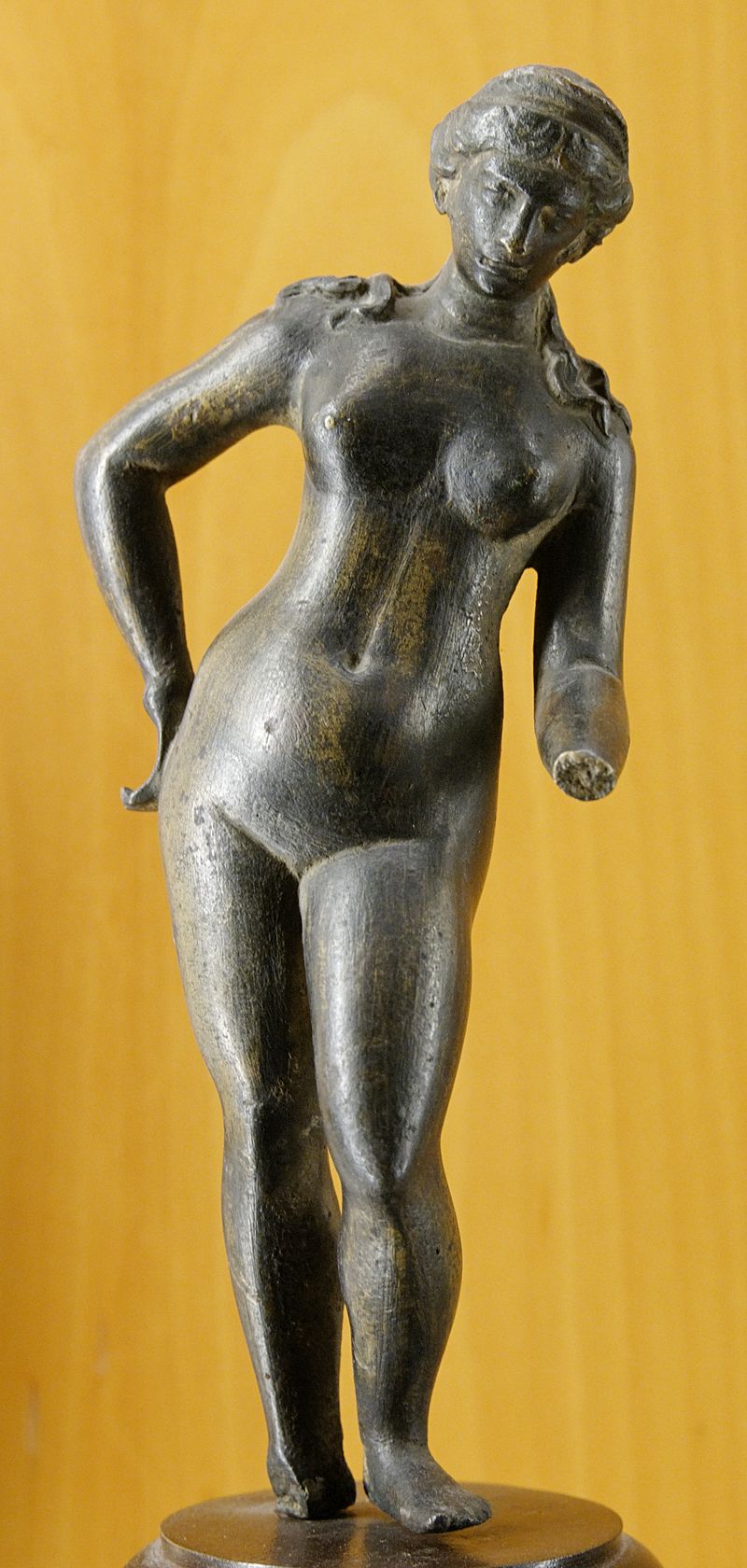
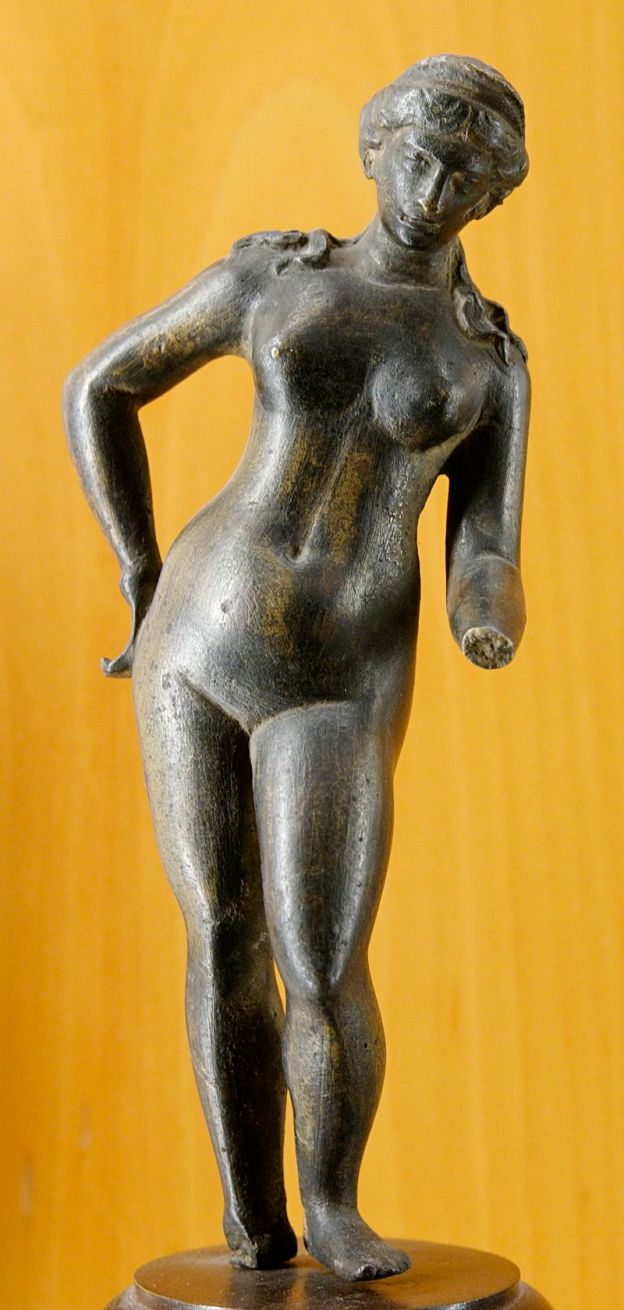
Venus, Ancient Rome bronze figurine

Venus, Ancient Rome bronze figurine

Post Human Evolutions Part 1

MercuryMercury-The Liminal Travelers

Amelia Rose, Virtual Relaity Content Around a Female Head, image from http://vrworld.com/2015/07/31/opinion-what-is-the-future-of-virtual-reality/

Amelia Rose, Virtual Relaity Content Around a Female Head, image from http://vrworld.com/2015/07/31/opinion-what-is-the-future-of-virtual-reality/

Does there come a point where homo sapiens become so transformed
Adapting to their new environment to the point where they evolve to post human species
Is there a point where the physical world humanity was created for recedes before a virtual one
And a population self selects themselves to become the occupants of a digital age
Living their lives through an avatar constructed not of flesh but from coded images
Where the construction of identity takes place on the multiple earths of the new reality
And the clouds of the heavens are exchanged for the cloud of data that is beamed through the air
 
Does the image of the mirror fade away before the image that traveler projects
A new self created to voyage in the liminal places of the new world
Does part of the human race change into some bio mechanical being wired
Permanently connected into the wireless broadcast that form the air they breathe
Do the sense of sight and smell become mediated through the screens of cyberspace
And do the geeks inherit the world where they can be the creators
As they occupy that liminal space between the virtual world and the physical
Becoming the ambassador to the other human species from their undiscovered country
And carrying their tribute of images and icons to the new gods of Rome
For they are Mercury, the messenger of the gods occupying the space between
The mediators for the unapproachable others that have been selected away
From the mass of the humanity to dwell in among the pantheon of new deities


Living Brave Semester Reflection 4- The Challenge of Comparison

By Ivana - Own work, CC BY-SA 3.0, https://commons.wikimedia.org/w/index.php?curid=486540

Inside the Roman Amphitheater at Pula, Istria region of Croatia By Ivana – Own work, CC BY-SA 3.0, https://commons.wikimedia.org/w/index.php?curid=486540

In 2007 I applied to several schools to enter a PhD program in New Testament. These were all really competitive programs like Duke University and Emory University but I felt really good about applying at that point in my life. I was a young pastor who had done extremely well academically in my Master’s degree, I had three years of ministry experience (required in my denomination), I had been given an opportunity to teach with a seminary professor a joint presentation on ways of reading Paul and I felt like this was supposed to be my calling. When I received the notifications from each program that I had not been accepted I took it pretty well. I knew the congregation I served had just undergone a massive upheaval and probably needed the stability I was providing and I figured it was just not the right time. A couple years late it was time to apply again, this time to a new set of schools-perhaps less elite but still really good schools and I figured I met the entry criteria for their doctoral programs. It was a time where I was looking for a way out of my current, highly stressful calling (same congregation as earlier, but after a lot of dealing with conflict) and I just felt like this was what I was supposed to be doing. When the letters came again saying that I had not been accepted it hit me to my core. Somehow, in my mind, I no longer measured up. I was constantly comparing myself to those who had been selected, those who had the academic opportunities or credentials. I wanted to be what I was not.

I had to rediscover who I was, I had to become much more of a scrapper. On the one hand, as a pastor I have always been well respected but for many people that was the only arena they saw me in and I wanted to engage that academic side. Life circumstances changed which made this even harder and I had to make some challenging choices in the years that came afterwards. It wasn’t until 2012 that I really began to experiment with writing again and over the past several years I have discovered the joy I get out of it and the gifts I have for it. Yet, there is always that self-critical part of me that compares what I have done with others.

Brené Brown talks about the box seats where the ones who set the rules for the arena sit. For me this was occupied by the academics, particularly those I had respect for. I felt like my own ability to write and contribute had been denied because I didn’t have the correct pedigree or degrees. I know this was as much a limitation I placed upon myself by my comparison of myself with the image I had of them. I’ve gotten a lot better but I still place myself continually in comparison with the best attributes in others and often forget about my own gifts. I still at times feel like I am having to ask for permission to have a place in the arena, but I’m getting better at moving past the comparisons, as unrealistic as they may be, and enter that place. There are times my own internal voices take me back to that time when I heard those who occupied the seats that I felt could allow me entry into the academic arena told me, “my voice was not needed in that place.” Well at least that was the message I received.

When I look at what I write, I am proud of it. I am proud of both the volume and the quality of what I have written. I have also enjoyed the freedom to engage a number of projects that are very different. There may come a time when I need to focus on my work being seen in a larger way, but for now I am writing and learning and that has made a world of difference. It may be a smaller arena, but it is mine, and for now I can be proud of the work I have done and show myself a little grace and compassion without needing to measure up to someone else’s standards.

Deuteronomy 28 Blessings and Curses

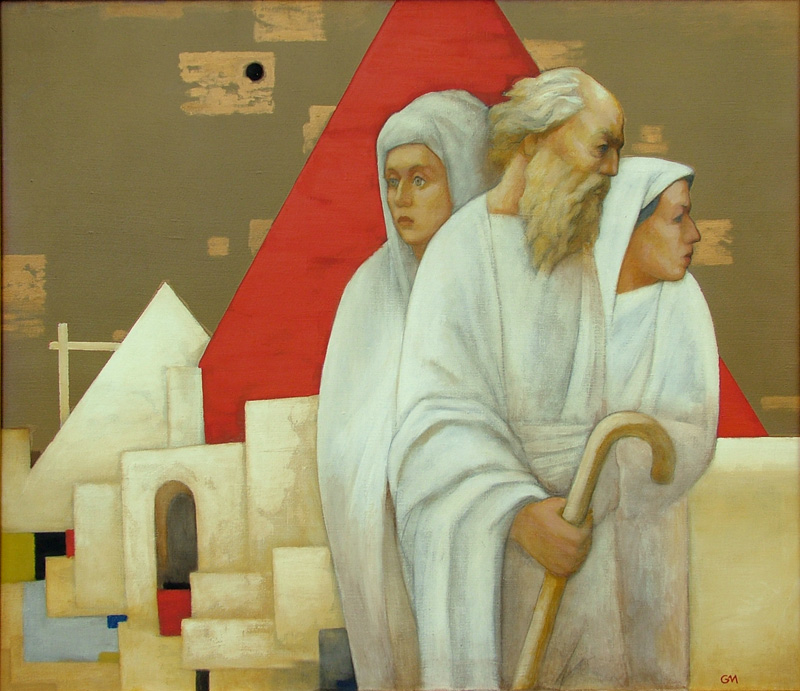
Grigory Mekheev, Exodus (2000) artist shared work under Creative Commons Attribution-Share Alike 3.0

Grigory Mekheev, Exodus (2000) artist shared work under Creative Commons Attribution-Share Alike 3.0

Deuteronomy 28: 1-14 Blessings for Obedience

1 If you will only obey the LORD your God, by diligently observing all his commandments that I am commanding you today, the LORD your God will set you high above all the nations of the earth; 2 all these blessings shall come upon you and overtake you, if you obey the LORD your God:
 3 Blessed shall you be in the city, and blessed shall you be in the field.
 4 Blessed shall be the fruit of your womb, the fruit of your ground, and the fruit of your livestock, both the increase of your cattle and the issue of your flock.
 5 Blessed shall be your basket and your kneading bowl.
 6 Blessed shall you be when you come in, and blessed shall you be when you go out.
 7 The LORD will cause your enemies who rise against you to be defeated before you; they shall come out against you one way, and flee before you seven ways. 8 The LORD will command the blessing upon you in your barns, and in all that you undertake; he will bless you in the land that the LORD your God is giving you. 9 The LORD will establish you as his holy people, as he has sworn to you, if you keep the commandments of the LORD your God and walk in his ways. 10 All the peoples of the earth shall see that you are called by the name of the LORD, and they shall be afraid of you. 11 The LORD will make you abound in prosperity, in the fruit of your womb, in the fruit of your livestock, and in the fruit of your ground in the land that the LORD swore to your ancestors to give you. 12 The LORD will open for you his rich storehouse, the heavens, to give the rain of your land in its season and to bless all your undertakings. You will lend to many nations, but you will not borrow. 13 The LORD will make you the head, and not the tail; you shall be only at the top, and not at the bottom– if you obey the commandments of the LORD your God, which I am commanding you today, by diligently observing them, 14 and if you do not turn aside from any of the words that I am commanding you today, either to the right or to the left, following other gods to serve them.
 
Deuteronomy closes this section with a series of blessings and curses. The previous chapter gives instructions for Simeon, Levi, Judah, Issachar, Joseph and Benjamin to stand on Mount Gerazim to proclaim the blessings. Although the ancient world had a much stronger view of blessings and curses than we do in our culture they are not quite these magic words that linger in the air and take on a power to bless or smite, rather they are a continual reminder of the contingent nature of the blessings that the LORD has promised. Israel does not have a true freedom in the sense of being able to choose its own destiny but it does, according to Deuteronomy, have a choice of which destiny it will live into. The reward for covenant obedience is that they will be materially blessed in this life, their harvests will be good, their flocks and herds will grow, they will have children and good health.

In an American context it would be easy to misread Deuteronomy as some sort of prosperity gospel for individuals, but this would be to miss much of what Deuteronomy is saying. Yes, in the author of Deuteronomy’s view the people (as a community) will be blessed if they are obedient. That obedience involves a harsh set of justice requirements and the continual care for the oppressed in their midst. It involves an acknowledgment that their blessings come from the LORD their God who brought them out of the Egypt and to this land of milk and honey. It is a way of thinking that is simple, and one that other books of the bible do challenge (for example in the book of Job which revolves around the righteous sufferer and in Matthew, Mark and Luke where prosperity is viewed with suspicion) yet it is a perspective that helps many people make sense of their lives, and probably helped the people Deuteronomy is written to initially make sense of their lives.

The people will often fail to diligently observe all the commandments and the much larger portion of this chapter is dedicated to the consequences for disobedience. Perhaps as we approach the following fifty three verses of curses, which seem oppressive and distasteful in our time, we can suspend our judgment and wonder about the experiences of the people who would hear these words.


Deuteronomy 28: 15-68 Curses for Disobedience

      15 But if you will not obey the LORD your God by diligently observing all his commandments and decrees, which I am commanding you today, then all these curses shall come upon you and overtake you:
 16 Cursed shall you be in the city, and cursed shall you be in the field.
 17 Cursed shall be your basket and your kneading bowl.
 18 Cursed shall be the fruit of your womb, the fruit of your ground, the increase of your cattle and the issue of your flock.
 19 Cursed shall you be when you come in, and cursed shall you be when you go out.
       20 The LORD will send upon you disaster, panic, and frustration in everything you attempt to do, until you are destroyed and perish quickly, on account of the evil of your deeds, because you have forsaken me. 21 The LORD will make the pestilence cling to you until it has consumed you off the land that you are entering to possess. 22 The LORD will afflict you with consumption, fever, inflammation, with fiery heat and drought, and with blight and mildew; they shall pursue you until you perish. 23 The sky over your head shall be bronze, and the earth under you iron. 24 The LORD will change the rain of your land into powder, and only dust shall come down upon you from the sky until you are destroyed.
      25 The LORD will cause you to be defeated before your enemies; you shall go out against them one way and flee before them seven ways. You shall become an object of horror to all the kingdoms of the earth. 26 Your corpses shall be food for every bird of the air and animal of the earth, and there shall be no one to frighten them away. 27 The LORD will afflict you with the boils of Egypt, with ulcers, scurvy, and itch, of which you cannot be healed. 28 The LORD will afflict you with madness, blindness, and confusion of mind; 29 you shall grope about at noon as blind people grope in darkness, but you shall be unable to find your way; and you shall be continually abused and robbed, without anyone to help. 30 You shall become engaged to a woman, but another man shall lie with her. You shall build a house, but not live in it. You shall plant a vineyard, but not enjoy its fruit. 31 Your ox shall be butchered before your eyes, but you shall not eat of it. Your donkey shall be stolen in front of you, and shall not be restored to you. Your sheep shall be given to your enemies, without anyone to help you. 32 Your sons and daughters shall be given to another people, while you look on; you will strain your eyes looking for them all day but be powerless to do anything. 33 A people whom you do not know shall eat up the fruit of your ground and of all your labors; you shall be continually abused and crushed, 34 and driven mad by the sight that your eyes shall see. 35 The LORD will strike you on the knees and on the legs with grievous boils of which you cannot be healed, from the sole of your foot to the crown of your head. 36 The LORD will bring you, and the king whom you set over you, to a nation that neither you nor your ancestors have known, where you shall serve other gods, of wood and stone. 37 You shall become an object of horror, a proverb, and a byword among all the peoples where the LORD will lead you.
 38 You shall carry much seed into the field but shall gather little in, for the locust shall consume it. 39 You shall plant vineyards and dress them, but you shall neither drink the wine nor gather the grapes, for the worm shall eat them. 40 You shall have olive trees throughout all your territory, but you shall not anoint yourself with the oil, for your olives shall drop off. 41 You shall have sons and daughters, but they shall not remain yours, for they shall go into captivity. 42 All your trees and the fruit of your ground the cicada shall take over. 43 Aliens residing among you shall ascend above you higher and higher, while you shall descend lower and lower. 44 They shall lend to you but you shall not lend to them; they shall be the head and you shall be the tail.
      45 All these curses shall come upon you, pursuing and overtaking you until you are destroyed, because you did not obey the LORD your God, by observing the commandments and the decrees that he commanded you. 46 They shall be among you and your descendants as a sign and a portent forever. 47 Because you did not serve the LORD your God joyfully and with gladness of heart for the abundance of everything, 48 therefore you shall serve your enemies whom the LORD will send against you, in hunger and thirst, in nakedness and lack of everything. He will put an iron yoke on your neck until he has destroyed you. 49 The LORD will bring a nation from far away, from the end of the earth, to swoop down on you like an eagle, a nation whose language you do not understand, 50 a grim-faced nation showing no respect to the old or favor to the young. 51 It shall consume the fruit of your livestock and the fruit of your ground until you are destroyed, leaving you neither grain, wine, and oil, nor the increase of your cattle and the issue of your flock, until it has made you perish. 52 It shall besiege you in all your towns until your high and fortified walls, in which you trusted, come down throughout your land; it shall besiege you in all your towns throughout the land that the LORD your God has given you. 53 In the desperate straits to which the enemy siege reduces you, you will eat the fruit of your womb, the flesh of your own sons and daughters whom the LORD your God has given you. 54 Even the most refined and gentle of men among you will begrudge food to his own brother, to the wife whom he embraces, and to the last of his remaining children, 55 giving to none of them any of the flesh of his children whom he is eating, because nothing else remains to him, in the desperate straits to which the enemy siege will reduce you in all your towns. 56 She who is the most refined and gentle among you, so gentle and refined that she does not venture to set the sole of her foot on the ground, will begrudge food to the husband whom she embraces, to her own son, and to her own daughter, 57 begrudging even the afterbirth that comes out from between her thighs, and the children that she bears, because she is eating them in secret for lack of anything else, in the desperate straits to which the enemy siege will reduce you in your towns.
      58 If you do not diligently observe all the words of this law that are written in this book, fearing this glorious and awesome name, the LORD your God, 59 then the LORD will overwhelm both you and your offspring with severe and lasting afflictions and grievous and lasting maladies. 60 He will bring back upon you all the diseases of Egypt, of which you were in dread, and they shall cling to you. 61 Every other malady and affliction, even though not recorded in the book of this law, the LORD will inflict on you until you are destroyed. 62 Although once you were as numerous as the stars in heaven, you shall be left few in number, because you did not obey the LORD your God. 63 And just as the LORD took delight in making you prosperous and numerous, so the LORD will take delight in bringing you to ruin and destruction; you shall be plucked off the land that you are entering to possess. 64 The LORD will scatter you among all peoples, from one end of the earth to the other; and there you shall serve other gods, of wood and stone, which neither you nor your ancestors have known. 65 Among those nations you shall find no ease, no resting place for the sole of your foot. There the LORD will give you a trembling heart, failing eyes, and a languishing spirit. 66 Your life shall hang in doubt before you; night and day you shall be in dread, with no assurance of your life. 67 In the morning you shall say, “If only it were evening!” and at evening you shall say, “If only it were morning!”– because of the dread that your heart shall feel and the sights that your eyes shall see. 68 The LORD will bring you back in ships to Egypt, by a route that I promised you would never see again; and there you shall offer yourselves for sale to your enemies as male and female slaves, but there will be no buyer.

One of my practices as I write these reflections is to physically write out the text. I have done this for Haggai, Esther, Jeremiah, Psalms 1-10 and now most of the way through Deuteronomy. This is a challenging text to listen to as you write it, but it is not the first time I have approached a text like this. What the text reminded me of was the end of Jeremiah, particularly Jeremiah 46-51 where the curses are uttered towards all the nations around Judah. Even though it is unusual in our time to think about dedicating this much energy to a ‘hex’ or ‘curse’ it is not unusual in the ancient world: both in Israel and in the cultures around them. Many ancient texts end with a long set of curses for failing to observe the commands or view of the text, but Deuteronomy does not end here. While this is the closing of this central portion of Deuteronomy that deals with the law, in the narrative of Deuteronomy Moses is still going to renew the covenant one more time, promise them that even in the midst of the curses that there is still an option to return to the LORD, a challenge to choose the way of blessing and life, the setting up Joshua as a successor and establishing practices for reminding the people of this law, Moses’ song and Moses’ final blessing. Yet, there is no avoiding the discomfort that a passage like this causes modern people.

I am amazed at the ways I have seen people misuse this text, for example the text in verses 56 and 57 (which is very reminiscent of Jeremiah) which talks about parents eating their own children within the context of a land under siege I have seen it twisted by a person trying to discredit the bible to God commanding parents to eat their children (which never happens). I can understand why people would misread these curses, but let’s take a little time to try to understand what is going on here. The great fear of the author of Deuteronomy is that the people when they enter the promised land will forget the covenant and turn aside to worship other gods. If they do this they lose their identity as being Israel, and with that they lose the land, their prosperity, and everything else. If scholars are correct that Deuteronomy, like many other books, reach their final form during the Babylonian exile then this portion in verses 47-57 makes a lot of sense. It does not parallel any of the blessings but does reflect the experience of the siege of Jerusalem and the departure into exile. As harsh as this language is, it may reflect the process of meaning making that is a part of the recovery from trauma. In her well written book interpreting the book of Jeremiah from the perspective of trauma and recovery Kathleen O’Connor can write about the rhetoric of responsibility and survival by saying:

If the world is ever to be trustworthy, victims need interpretation. For their lives to rest on the most minimal order, they must have meaning, interpretation, explanation, even if the explanation is ephemeral, inadequate, partial or outright wrong. Explanation puts order back in the world…. He (Jeremiah) claims without qualification that God is still in charge of the world; God controls events and governs justly. But perhaps even more important and surprising, when he places responsibility upon the people, he gives people a sense of control. (O’Connor, 2011, p. 43f.)

Amazingly in these curses, perhaps in a period where the world seems out of control, the people of Israel and Judah can find a sense of control and things they can do to return to their former state. The answer may be incomplete or there may be times where it doesn’t adequately address the complexity of the situation. Yet, in a time of a crisis of belief and life where the people are seeking an answer the simple answer is often the one that people cling to. In an option where they could either say their God is powerless or that they themselves were under judgment it was an easier option, at least for those who would become the remnant, to claim that they were the party that failed the covenant. This reflection is not likely to convince the person who does not have God as a central part of their life but to those who consider themselves the faithful they may find great comfort in it.

As I mentioned above, the great fear voiced throughout Deuteronomy is that the people will forget the covenant in their prosperity. They will begin to trust in their own work or in the practice of the nations around them. The narrative that follows beginning in Joshua and running through 2 Kings bears out this fear. If Deuteronomy does have its origins in a speech of Moses, then it is conceivable that this fear of what would happen after his death could be a pressing anxiety for Moses on behalf of this people. Wherever Deuteronomy emerges from in time and history, the form we have it now does spend a lot of energy on these curses in a way that encourages the people to remain faithful. Also remember this is more of an aural document (written for the ear) than a textual one. Even though it is recorded it was to be read to the people and then repeated emphasis on the consequences are probably intended to encourage one more time obedience.

The book of Deuteronomy does have a very binary manner of looking at the world. There is either Mount Ebal, the mountain of curses, or Mount Gerazim, the mountain of blessings. Reality is probably closer to the valley between the two. Even though God is portrayed harshly in Deuteronomy, and other places as well, this wrath of God is never the primary thing. Even though this chapter is dominated by curses for disobedience, the continuing unfolding of this narrative will show how often God attempts to get the people to turn away from the practices that are leading them to destruction. God will be the heartbroken one often in the story going forward, and yet a God who does not judge is an apathetic god, not the passionate God of the Bible. Yet, just as these curses are not the end of Deuteronomy, nor are the experiences of destruction and loss the end of God’s calling for the people. As the final chapters will make clear there is always the possibility for the people’s return and the LORD’s forgiveness.

Deuteronomy 27-Preserving the Law

Moses by Victorvictori, permission granted by author through WikiCommons

Moses by Victorvictori, permission granted by author through WikiCommons

Deuteronomy 27: 1-8 An Enduring Word

1 Then Moses and the elders of Israel charged all the people as follows: Keep the entire commandment that I am commanding you today. 2 On the day that you cross over the Jordan into the land that the LORD your God is giving you, you shall set up large stones and cover them with plaster. 3 You shall write on them all the words of this law when you have crossed over, to enter the land that the LORD your God is giving you, a land flowing with milk and honey, as the LORD, the God of your ancestors, promised you. 4 So when you have crossed over the Jordan, you shall set up these stones, about which I am commanding you today, on Mount Ebal, and you shall cover them with plaster.

 5 And you shall build an altar there to the LORD your God, an altar of stones on which you have not used an iron tool. 6 You must build the altar of the LORD your God of unhewn stones. Then offer up burnt offerings on it to the LORD your God, 7 make sacrifices of well-being, and eat them there, rejoicing before the LORD your God. 8 You shall write on the stones all the words of this law very clearly.

Deuteronomy narrates a scene where Moses has dictated the law to the people in its completion prior to their entering into the promised land. We know that Moses is not going to cross over with the people and so in the remaining chapters we see the beginning of a massive transition in the leadership of the people. We live in a time where written texts are readily available and even if we don’t have a physical copy for many texts a digital copy is only a few keystrokes away. In the ancient world there are very few physical texts and a relatively small class who are able to read and create the written texts. Even something as central as the law was lost, intentionally or unintentionally, multiple times in the story of the people of Israel and Judah. For example, in the reign of King Josiah it is reported in 2 Kings 22: 8: “The high priest Hilkiah said to Shaphan the secretary, “I have found the book of the law in the house of the LORD.” When Hilkiah gave the book to Shaphan, he read it. Shortly afterwards the written text is read before the king and the king continues the work of reform.

Moses has been the mediator of the law between the LORD and the people, but with Moses about to leave his role as leader, judge, mediator and teacher there needs to be a way for the people to refer to this critical law he is leaving behind. Oral texts may survive a couple of generations intact, but ultimately for the law to survive it must become a textual document. Much like the recording of the words of the prophet Jeremiah in Jeremiah 36, where the prophet’s haunting and inconvenient words survive both the physical threat to the prophet as well as the burning by King Jehoiakim by being recorded again, now the critical exposition of the law in Deuteronomy 4-26 is to be put on plastered stones to be a visible witness to the people. This “furniture of the covenant” (Brueggemann, 2001 , p. 251) now is to be a manner in which future leaders can refer back to the law that Moses handed on. Moses now begins to step aside from being the teacher of the law to make space for the written law that future leaders and the people will be governed by.

Moses throughout his ministry has occupied a central role in the place between the people and God. Even with the elders and the tribal leaders and priest, ultimately he is the one who mediated the relationship between the people and their God, was the political leader, their chief judge and prophet, their lawgiver, and peacemaker. Yet, as Rabbi Kushner can state,

In the Jewish tradition, we speak of him as Moses Rabeinu—Moses, Our Teacher—not Moses, our Political Leader; not Moses, Who Freed the Slaves. Moses, Our Teacher. He dedicates himself to getting the people to embrace the ideas that they have to live by when he’s no longer around to remind them. (Thompson, 2014, p. 194)

Moses, throughout Deuteronomy has been working to equip the people to live in accordance with the commandments, statutes and ordinances outlined within the book. He has done this with catechetical practices within the home and with worship practices at the place where the LORD’s name will rest that reinforce their identity as the people of God. Here in the recording of the law and the building of an altar to celebrate and worship the LORD the narrative shows Moses preparing the people for a faithful practice of the covenant when he is no longer there to guide or intercede for them. And when the people fail to live out the covenant, then the stones themselves can testify very clearly against them.

Deuteronomy 27: 9-10 Hear One More Time

 9 Then Moses and the levitical priests spoke to all Israel, saying: Keep silence and hear, O Israel! This very day you have become the people of the LORD your God. 10 Therefore obey the LORD your God, observing his commandments and his statutes that I am commanding you today.

Moses, along with the priest, charges the people one final time with their identity and calling. Echoing the tone of the Shema in Deuteronomy 6: 4-5 he makes a final appeal for the people to hear. In an aural world they are to be silent and listen so they may remember who they are. They are the people of the LORD their God and therefore they are to be obedient. Their calling comes with blessing and challenges, and in their faithfulness they will be a witness to the nations and a blessing to the world. In their failing they will become the embodiment of the curses that will come in the following chapter.

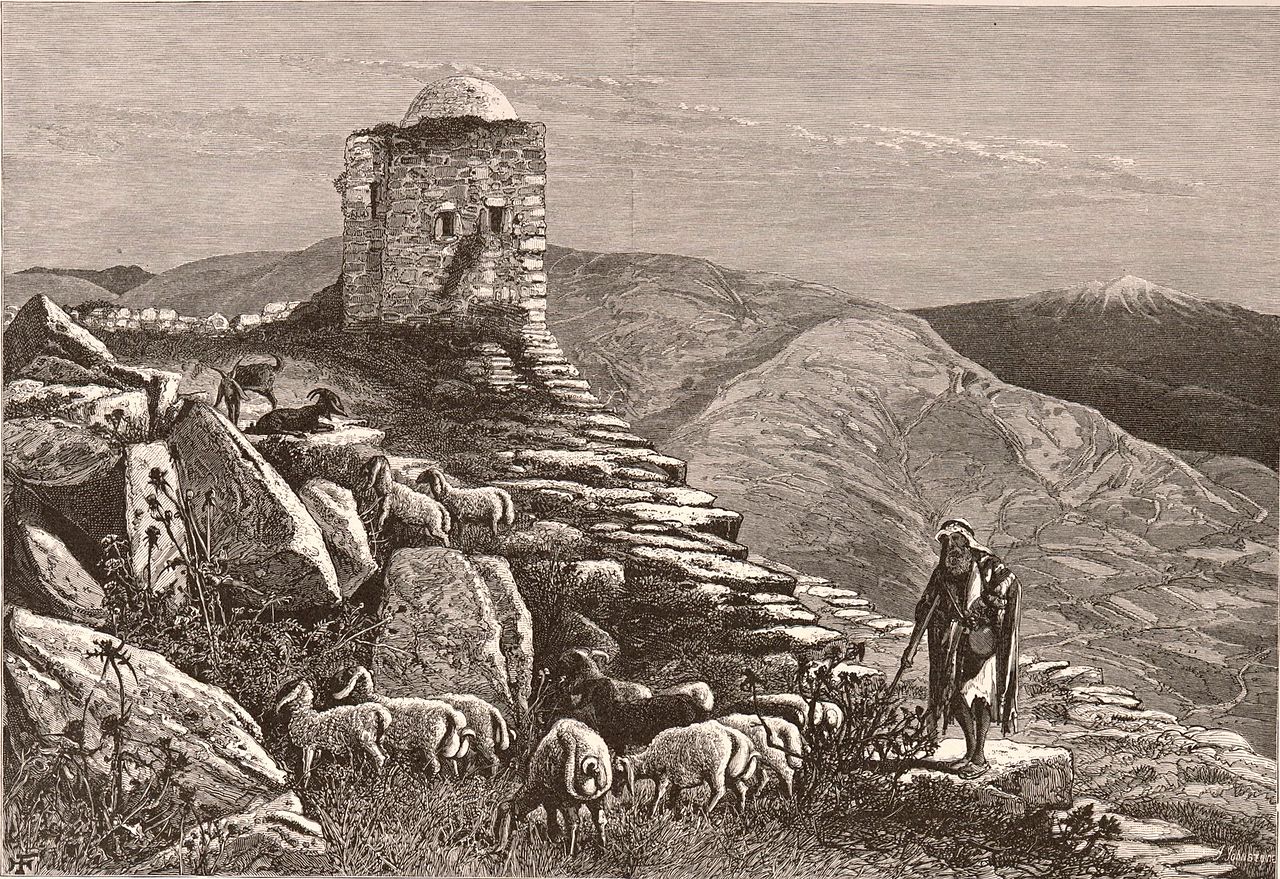
Herny Fenn, Ruins on the Summit of Mount Gerazim, On the Site of the Samaritan Temple (between 1881 and 1884)

Herny Fenn, Ruins on the Summit of Mount Gerazim, On the Site of the Samaritan Temple (between 1881 and 1884)

Deuteronomy 27: 11-26 A Liturgy of Curses

 11 The same day Moses charged the people as follows: 12 When you have crossed over the Jordan, these shall stand on Mount Gerizim for the blessing of the people: Simeon, Levi, Judah, Issachar, Joseph, and Benjamin. 13 And these shall stand on Mount Ebal for the curse: Reuben, Gad, Asher, Zebulun, Dan, and Naphtali. 14 Then the Levites shall declare in a loud voice to all the Israelites:
 15 “Cursed be anyone who makes an idol or casts an image, anything abhorrent to the LORD, the work of an artisan, and sets it up in secret.” All the people shall respond, saying, “Amen!”
 16 “Cursed be anyone who dishonors father or mother.” All the people shall say, “Amen!”
 17 “Cursed be anyone who moves a neighbor’s boundary marker.” All the people shall say, “Amen!”
 18 “Cursed be anyone who misleads a blind person on the road.” All the people shall say, “Amen!”
 19 “Cursed be anyone who deprives the alien, the orphan, and the widow of justice.” All the people shall say, “Amen!”
 20 “Cursed be anyone who lies with his father’s wife, because he has violated his father’s rights.” All the people shall say, “Amen!”
 21 “Cursed be anyone who lies with any animal.” All the people shall say, “Amen!”
 22 “Cursed be anyone who lies with his sister, whether the daughter of his father or the daughter of his mother.” All the people shall say, “Amen!”
 23 “Cursed be anyone who lies with his mother-in-law.” All the people shall say, “Amen!”
 24 “Cursed be anyone who strikes down a neighbor in secret.” All the people shall say, “Amen!”
 25 “Cursed be anyone who takes a bribe to shed innocent blood.” All the people shall say, “Amen!”
 26 “Cursed be anyone who does not uphold the words of this law by observing them.” All the people shall say, “Amen!”

 The chapter ends with a series of twelve individual curses that the community is to place on anyone who violates particular actions. This sets the scene as well for the blessings and curses in chapter 28 where six tribes are on Mount Ebal for curses and six tribes are on Mount Gerazim for blessings. The two mountains are on the opposite sides of a valley and for the Samaritans Mount Gerazim would become one of their holy sites. Within Deuteronomy Mount Gerazim becomes the mountain of blessing while Mount Ebal is the mountain of curse, yet for Deuteronomy the tablets of the law and the altar are to be built on Mount Ebal rather than Mount Gerazim.

Many of these are covered earlier in Deuteronomy and rather than spend much time on those I will link you back to the discussion at the appropriate place in Deuteronomy, but a few are new. Verse 15 which concerns idols and images is talked about earlier in Deuteronomy 4: 15-20, and Deuteronomy 5:8-10 and is depending on how you number either part of the first commandment or the second commandment. Verse 16 also harkens back to the ten commandments with the commandment on honoring father and mother in Deuteronomy 5: 16 and is also expanded in Deuteronomy 21: 18-21 with the punishment for children who are rebellious and bring dishonor to their father and mother. Verse 17 concerns the moving of boundary markers which is addressed in Deuteronomy 19: 14. Verse 18 is the first new item on misleading the blind, but it follows in the concern that people care for the vulnerable and the weak in the society. Leviticus 19: 14 also addresses this when it states, “You shall not revile the deaf or put a stumbling block before the blind; you shall fear the LORD your God.” Caring for the vulnerable is a central part of living out of the covenant and one of the places where the prophets are called upon to point out the way the people have not cared for the vulnerable.  The next curse continues about those who oppress the representative triumvirate of the vulnerable, the widows, the orphan and the alien. The tithe, addressed in Deuteronomy 14: 29 and Deuteronomy 26: 12-13, the inclusion of the vulnerable in the festivals like outlined in Deuteronomy 16: 11, 14 the practice of allowing the remnant of the harvest and vine to be gleaned by the vulnerable in Deuteronomy 24: 19-22 are all concrete practices to help care for the vulnerable in their community. Verse 20 about lying with the father’s wife is covered in Deuteronomy 22: 30. The next three curses about forbidden sexual relations are new to Deuteronomy but fit within the ordered world of Deuteronomy 22:13-26 for the author of Deuteronomy’s view of sexual relations. Sexual relations with any animal, with a sister or a mother-in-law are forbidden and Deuteronomy doesn’t feel the need to explain these any further. The command in verse 24 about striking a neighbor in secret is new and it addresses disputes outside the purview of the community. For Deuteronomy the community and the elders are key to ensuring that disputes are resolved equitably. The curse about taking a bribe to shed innocent blood is addressed in the judicial context of Deuteronomy 16:19. Finally the last curse is general in nature referring to the entirety of the law and the need for obedience. This final curse may round it out to bring the final number of these individual curses to the representative twelve. Obedience is both an individual and communal responsibility, where the community holds the individual accountable. By placing these curses in the mouths of the people as they enter the land their own words hold them accountable to living in obedience to this law and covenant.


Living Brave Semester Week 3- Speaking Back to The Gremlins

Stripe

The discussion this week on empathy and self-compassion takes me back to the tension between by competent, competitive and driven side and the gracious side of me that is willing to be self-compassionate and fair with myself. I have worked for several years on learning to be more gracious with myself and others and a part of this struggle is wrestling with those internal gremlins that point out all the places where I have fallen short, where I have not lived up to my own expectations (as unrealistic as they sometimes are) or I have perceived my own weakness. It wasn’t surprising that when I took the Self Compassion inventory designed by Kristen Neff that my two highest (negative) scores were on self-judgment and isolation. When I feel weak or like I have failed the internal gremlins interpret my own actions in the worst possible light. Even though I am normally a very confident person, in those moments I do tend to isolate myself until I can get past the messages in my head. Recently I’ve learned how to speak back and to lean into that gracious side of my values to get to a more honest place with myself.

I had an experience last week where I was dealing with several frustrations and my language towards myself was becoming accusing and settling into the patterns of self-judgment that I learned at some point in my past. I was getting ready to go into an event where I would have to do a lot of mingling and introducing myself to people I didn’t know, initiating conversations and all of these energy intensive things were coming at a place where I was already exhausted by the trials of the day. I had worked through the issues, I had a solution, but I was frustrated, I knew that the solution in a different situation could have been easier and cheaper and my internal gremlins were comparing the action with the best possible solution and, of course, I was being measured and found wanting. I sat down and began to write out the things I was saying to myself and the accusations I was making and then I responded to them. My responses were from a place that I would speak to another person, how I would respond to them telling me these things after working through the same situation. That helped to me to hear a more gracious voice and to acknowledge that in a situation with a lot of stress away from home I had worked out a solution. I had reached out and sought help, something difficult for me to do, and the process of working through those feelings in a kinder way helped me be in a better place to engage the day. It also helped make clearer the number of issues that I was wrestling with and how in many ways I was already in a place where a lot of healing was occurring.

I will probably always be hard on myself. I will probably always have those critical questions come up and attack me at the points when I feel weak, but part of my own practice of self-compassion is learning to speak back to the questions. To not allow my drive for competence to lose the value of being gracious to myself and others. To embody this in the practice of writing down and responding to these questions in a way that is more grace filled and realistic. I’ve learned how to be empathetic with others and I am learning better how to be more empathetic with myself.

Deuteronomy 26: Bringing Story into Liturgy

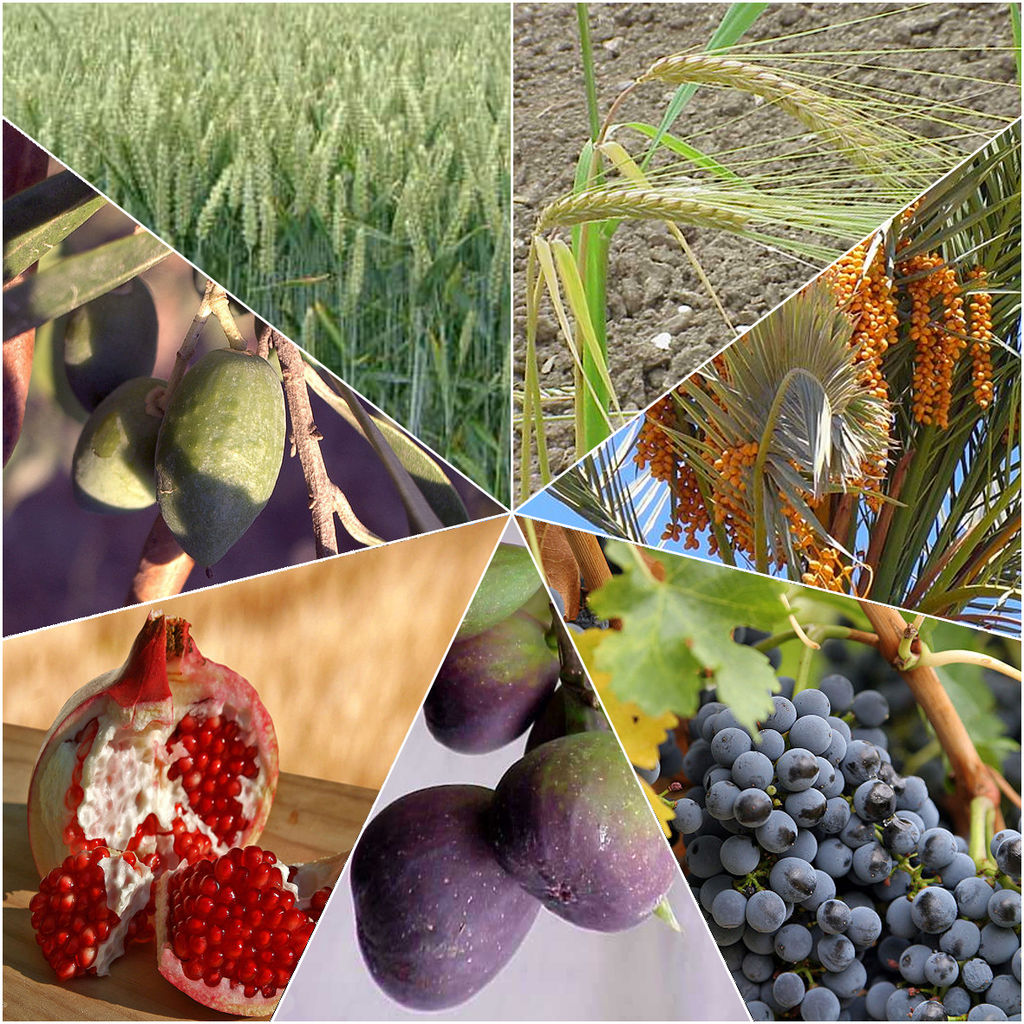
The Seven Species of the Land of Israel listed in Deuteronomy 8:8, Creative Commons Attribution 3.0

The Seven Species of the Land of Israel listed in Deuteronomy 8:8, Creative Commons Attribution 3.0

 Deuteronomy 26

1 When you have come into the land that the LORD your God is giving you as an inheritance to possess, and you possess it, and settle in it, 2 you shall take some of the first of all the fruit of the ground, which you harvest from the land that the LORD your God is giving you, and you shall put it in a basket and go to the place that the LORD your God will choose as a dwelling for his name. 3 You shall go to the priest who is in office at that time, and say to him, “Today I declare to the LORD your God that I have come into the land that the LORD swore to our ancestors to give us.” 4 When the priest takes the basket from your hand and sets it down before the altar of the LORD your God, 5 you shall make this response before the LORD your God: “A wandering Aramean was my ancestor; he went down into Egypt and lived there as an alien, few in number, and there he became a great nation, mighty and populous. 6 When the Egyptians treated us harshly and afflicted us, by imposing hard labor on us, 7 we cried to the LORD, the God of our ancestors; the LORD heard our voice and saw our affliction, our toil, and our oppression. 8 The LORD brought us out of Egypt with a mighty hand and an outstretched arm, with a terrifying display of power, and with signs and wonders; 9 and he brought us into this place and gave us this land, a land flowing with milk and honey. 10 So now I bring the first of the fruit of the ground that you, O LORD, have given me.” You shall set it down before the LORD your God and bow down before the LORD your God. 11 Then you, together with the Levites and the aliens who reside among you, shall celebrate with all the bounty that the LORD your God has given to you and to your house.

 12 When you have finished paying all the tithe of your produce in the third year (which is the year of the tithe), giving it to the Levites, the aliens, the orphans, and the widows, so that they may eat their fill within your towns, 13 then you shall say before the LORD your God: “I have removed the sacred portion from the house, and I have given it to the Levites, the resident aliens, the orphans, and the widows, in accordance with your entire commandment that you commanded me; I have neither transgressed nor forgotten any of your commandments: 14 I have not eaten of it while in mourning; I have not removed any of it while I was unclean; and I have not offered any of it to the dead. I have obeyed the LORD my God, doing just as you commanded me. 15 Look down from your holy habitation, from heaven, and bless your people Israel and the ground that you have given us, as you swore to our ancestors– a land flowing with milk and honey.”

 16 This very day the LORD your God is commanding you to observe these statutes and ordinances; so observe them diligently with all your heart and with all your soul. 17 Today you have obtained the LORD’s agreement: to be your God; and for you to walk in his ways, to keep his statutes, his commandments, and his ordinances, and to obey him. 18 Today the LORD has obtained your agreement: to be his treasured people, as he promised you, and to keep his commandments; 19 for him to set you high above all nations that he has made, in praise and in fame and in honor; and for you to be a people holy to the LORD your God, as he promised.

The twenty sixth chapter of Deuteronomy closes a long section which runs from chapter five (although many people move it back to the scene being set in Deuteronomy 4:44) through the end of this chapter. Here in the narrative Moses concludes his exposition of the commandments, statutes and ordinances of the LORD for the people of Israel. In this conclusion resides both ritual and liturgy that will continue to form the identity of the people for their life in the promised land. The manner in which the people of Israel bring in their offerings is mentioned several times throughout this portion of Deuteronomy but the way in which the author chooses to end this section liturgically explaining the significance of these practices is important to note.

In American Christianity there are several branches of the faith that are uncomfortable with the idea of a confessional creed. In a society based on individualism where the focus is on the individual’s faith and what they believe at each point in their lives the idea of a communal confession of faith seems unnecessary. I appreciate the gifts of the confessional tradition that I come out of and the way it binds me both to the manner Christians have understood the faith historically as well as locating me within a community that shares and wrestles with common confessions. Creeds have been used throughout the ages as summaries of a wider faith used in both catechetical (teaching future generations) and liturgical (worship) settings. The bible is full of these confessions of faith in both the Hebrew Scriptures and the New Testament (for example Philippians 2: 5-11) and various confessions of faith have been used as a part of the liturgy of faithful people for generations as a way of summarizing the faith. Deuteronomy 6: 21-25 is one example of a ‘credo’ a basic statement of belief to be used as a method of catechesis within the home. While in Deuteronomy 6 the focus is on the actions within the household that the parents will use to pass on the faith to their children and grandchildren and beyond, here we see confessions of faith used liturgically as a part of the telling of the story of the people of Israel. The practice of bringing the tithe and first fruits in Deuteronomy 14: 22-29 and in Deuteronomy 18:4 is now brought into a setting of worship with words that reinforce several basic parts of the understanding of the covenantal relationship the people would be expected to maintain in the promised land. Deanna Thompson outlines succinctly the key themes of the text as:
“the call for Israel to acknowledge God’s persistent care; the reminder that the land God is giving them is sheer gift; and the insistence that fundamental to Israel’s right relationship to God is the practice of attending to the needs of the stranger, the widow and the orphan.” (Thompson, 2014, p. 188)

As the offering are brought to the tabernacle or temple the people recite a brief exposition of their history which outlines their beginnings as a wandering people in Genesis, the journey to Egypt in the time of Joseph where they received the food they needed in the midst of famine, and then a brief synopsis of the Exodus experience including their oppression and liberation and being brought into the promised land. This short liturgical statement begins with the tenuousness of their situation as a landless people and later as slaves contrasted with their new but contingent identity as the covenant people of the LORD the God of Israel. The narrated history is now combined with the practice of giving which is intended to continue to form the identity of the people in their life in the land.

The liturgy in Deuteronomy 26: 1-11 focuses on re-telling the story of the people and the action of bringing the first fruit which is a result of God’s gracious provision for the people in the land. God has brought the people from being landless or oppressed to being in a land of milk and honey, therefore they are to bring in these gifts and celebrate and remember the provision of God. The focus on this first exhortation is on what God has done for Israel and now Israel is freed to enjoy the fruits of the land. In Deuteronomy 26: 12-15 the giving of the tithe Deuteronomy 14: 28-29 and a declaration that the individual has been faithful both in bringing the tithe (and not withholding a portion or using it in some other way) but also in the keeping of all of the commandments and asking the LORD to bless the peoples’ lives in the coming years.  Now the focus is on what Israel has done in response and their faithfulness to the covenant and understanding that because of their faithfulness the LORD will look down and allow them to prosper in the land. The section concludes with oaths that bind the people and the LORD the God of Israel together. The hope of this relationship is that “I will be your God, and you shall be my people; and walk only in the way that I command you, so that it may be well with you.” (Jeremiah 7: 23) As Brueggemann has helpfully outlined the italicized comments above and here now the people are to be utterly obedient to the LORD and the LORD will be utterly committed to Israel. (Brueggemann, 2001 , p. 249f)

This relationship between the LORD and the people as given in this giving and receiving of vows is to be a committed one, and perhaps the natural comparison is to the marriage vows that a couple make when they are married. This relation of the covenant to marriage will form a metaphorical background for Jeremiah (see for example Jeremiah 3) and Hosea (Hosea 2). Much of the remainder of Deuteronomy will call attention to the seriousness of Israel’s commitment in this covenant and the cost of disobedience as well as the LORD’s continuing commitment. As a people holy to the LORD their commitment is a calling. They will need to return to this covenant and recommit themselves several times throughout their story and yet there is the commitment that when they stumble and fall and recommit themselves that God will hear. They have been reminded of who they were and where they came from, how God acted to bring them graciously into this land filled with promise, how they are to respond to God’s faithfulness and the critical nature of their obedience.

Deuteronomy 25: Punishment, Justice, and the Enemy

Deuteronomy 25: 1-3 The Limit of Punishment

1 Suppose two persons have a dispute and enter into litigation, and the judges decide between them, declaring one to be in the right and the other to be in the wrong. 2 If the one in the wrong deserves to be flogged, the judge shall make that person lie down and be beaten in his presence with the number of lashes proportionate to the offense. 3 Forty lashes may be given but not more; if more lashes than these are given, your neighbor will be degraded in your sight.

Deuteronomy believes in a harsh justice but it also sets limits on the execution of justice or revenge. This is one of those places where the dignity and reputation of the neighbor limit the maximum punishment of lashes the neighbor can receive as forty. The action takes place in the sight of the judge who orders the proportionate punishment so that the dignity of the offender is preserved. Although we may live in a society that has trouble with this type of corporal punishment, this is a relatively new thing in our society. The idea of submitting oneself to the measured discipline of the community seems to be an expectation for being a part of the society of Israel. The Apostle Paul in 2 Corinthians 11:24 can claim that five times he received the punishment of forty lashes minus one in addition to the other punishment he lists, and this is one of the many indications that Paul saw himself remaining as a part of the Jewish community since he submitted to the discipline.

In our own society we have become very litigious and often use fines or imprisonment as a means of discipline. Yet, when it comes to these fines and imprisonments which can often be excessive for certain crimes (particularly drug related offenses with harsh minimum sentences) in addition to the shame that comes with a criminal record we may want to relook at the idea of punishment that does not permanently diminish our neighbor in our eyes. Are judges enabled to give punishments that are proportional to the offense or are they bound by laws that are harsh allowing the guilty not chance at a non-degraded standing within society. These are difficult issues, but they are the type of big questions of a society that the book of Deuteronomy deals with.

Deuteronomy 25: 4 Care for the Working Animals

4 You shall not muzzle an ox while it is treading out the grain.

This is an acknowledgment that the working animals are not machines to be driven mercilessly, but even in small ways the lost grain that an ox eats while treading the grain is a part of its due. It is one of the windows into a worldview where animals and plants (see Deuteronomy 20 on trees in war for example) are given some protection as well. They all are a part of the creation of the LORD and are entitled to the benefits of striving with humanity to carve a living from the earth. Paul references this section in 1 Corinthians 9:9 in his discussion of his authority and that he could ask for a material benefit for his work among the Corinthians even though he states he made no use of those rights. 1 Timothy 5: 17-18 also uses this line of argument for the supporting of elders.

Deuteronomy 25: 5-10 Levirate Marriage

Francesco Hayez, A Portrait of a Woman as Ruth (1853)

Francesco Hayez, A Portrait of a Woman as Ruth (1853)

 5 When brothers reside together, and one of them dies and has no son, the wife of the deceased shall not be married outside the family to a stranger. Her husband’s brother shall go in to her, taking her in marriage, and performing the duty of a husband’s brother to her, 6 and the firstborn whom she bears shall succeed to the name of the deceased brother, so that his name may not be blotted out of Israel. 7 But if the man has no desire to marry his brother’s widow, then his brother’s widow shall go up to the elders at the gate and say, “My husband’s brother refuses to perpetuate his brother’s name in Israel; he will not perform the duty of a husband’s brother to me.” 8 Then the elders of his town shall summon him and speak to him. If he persists, saying, “I have no desire to marry her,” 9 then his brother’s wife shall go up to him in the presence of the elders, pull his sandal off his foot, spit in his face, and declare, “This is what is done to the man who does not build up his brother’s house.” 10 Throughout Israel his family shall be known as “the house of him whose sandal was pulled off.”

 This passage enters into the narrative of Israel in both the story of Tamar in Genesis 38 as well as the book of Ruth. Deuteronomy is written in an intensely patriarchal world where barrenness is a crisis because it threatens the perpetuation of the family’s name. Women were honored in their role as bearers of children and in their role in allowing for the continuance of the line. The idea of Levirate marriage is foreign to our time, where the idea of marrying the wife of a deceased brother seems out of place. Yet, in the world of Deuteronomy it is an expectation and an obligation. The brother is to ensure that there is an heir to inherit the deceased’s land and title. This also provided protection for the widow for she both has a family she is brought into and with the birth of an heir there is the promise that she will be provided for once her son inherits. In the ancient world, where no government safety net exists, children were the security of their parents in their old age. Even in the ten commandments this concern is addressed in the command to honor the father and the mother (Deuteronomy 5: 16).

In the story of Tamar, who gets herself pregnant by Judah when he denies her his youngest son, is a fascinating short story of a woman who boldly claims her rights to protection and inheritance however she needs to. As Judah can acknowledge at the end of the story, “She is more in the right than I, since I did not give her to my son Shelah.” (Genesis 38: 26) In the book of Ruth this passage serves as the law behind the meeting of Boaz and the unnamed next-of-kin where the issues of inheritance and marriage are tied together. The kinsman acknowledges that he cannot redeem the property, and marry Ruth with the property passing to her children, and so the ‘right’ passes to Boaz. It is uncertain how deep of a shaming was associated with the unwillingness or inability to care for the needs of a widow, as Deanna Thompson states, “This public shaming would give this family the reputation of not providing for its widows, thus making it more difficult for the family to contract marriages for their sons.” (Thompson, 2014, p. 183)

Deuteronomy 25:11 An Unfair Fight

  11 If men get into a fight with one another, and the wife of one intervenes to rescue her husband from the grip of his opponent by reaching out and seizing his genitals, 12 you shall cut off her hand; show no pity.

Deuteronomy is written from a male dominant perspective and to the author of Deuteronomy the idea of a woman ‘sexually shaming’ a man in public (Thompson, 2014, p. 184). The genitals of another man which are exposed and could potentially put the man and the woman on an equal footing are to be off limits in a fight. As we saw in Deuteronomy 23: 1-8 the damaging of the testicles or penis is enough to make a man no longer a man in the eyes of the assembly. For men sexual generativity is on par with sight and limbs and the punishment listed of mutilation is only prescribed for one other event (in Exodus 21: 22-25) where a man injures a woman and causes her to miscarry. The husband may demand whatever punishment he sees fit in that case. Martin Luther addresses this broadly with the maxim, “Evil should not be done that good may come of it.” (Luther, 1960 (1525), p. 9:249) where he talks about the woman wanting to do good on behalf of her husband and yet doing it in a ‘cowardly’ way.

Again this brings up issues centered around women’s rights compared to men’s rights and the rights of self-defense. There are times I am convinced we are more concerned with protecting men than women, and while we might want to protect the vulnerable areas of both men and women how do we also ensure that women are given the ability and permission to protect themselves in an unfair fight and do we accuse that woman of sexually shaming the man or simply attempting to protect herself or her family?

 Deuteronomy 25: 13-16 Fair and Just Weights and Measures

 13 You shall not have in your bag two kinds of weights, large and small. 14 You shall not have in your house two kinds of measures, large and small. 15 You shall have only a full and honest weight; you shall have only a full and honest measure, so that your days may be long in the land that the LORD your God is giving you. 16 For all who do such things, all who act dishonestly, are abhorrent to the LORD your God.

Justice is a critical part of the people’s life within the land. There will always be the temptation to make a business deal work to one’s advantage and if one can skew measurements and weights in one’s favor one can cheat one’s neighbor out of their fair share. This type of injustice is another of the things that obtain the stronger disapproval of being abhorrent to the LORD. Economic injustices would be a common cry of the prophets for example in Amos 8: 5-6: saying, “When will the new moon be over so we may sell grain; and the Sabbath, so that we may offer wheat for sale? We will make the ephah small and the shekel great, and practice deceit with false balances.

In a barter economy where grain and oil are traded it is easy to think of concrete ways where this type of imbalance could be used to create economic advantages and disadvantages. Yet, in our world sometimes the examples are a little harder to see. When a company uses an inferior material that produces an item that wears out quickly, or a corporation delays in repairing a safety concern because it is cheaper to allow the improper item to remain in use, or when practices are used that harm the land and environment and then others have to bear the cost of cleaning up the land. In our days, as in the ancient times, acting dishonestly and can affect how long our days are in our own land. With the crisis with the water supply in Flint, Michigan we can see the cost when individuals and a government are not honest in their measurements and allow things to become unsafe for their society.

Deuteronomy 25: 17-19 The Amalekites

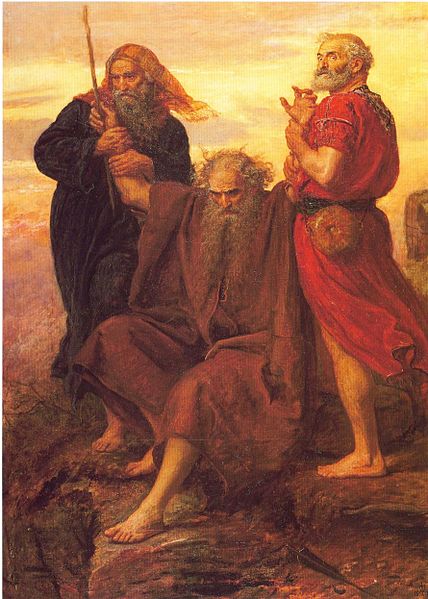
John Everett Millais (1829-1896), Victory O Lord!

John Everett Millais (1829-1896), Victory O Lord!

 17 Remember what Amalek did to you on your journey out of Egypt, 18 how he attacked you on the way, when you were faint and weary, and struck down all who lagged behind you; he did not fear God. 19 Therefore when the LORD your God has given you rest from all your enemies on every hand, in the land that the LORD your God is giving you as an inheritance to possess, you shall blot out the remembrance of Amalek from under heaven; do not forget.

The warrior God re-emerges here at the end of chapter 25 and demands revenge upon the Amalekites. In Exodus 17: 8-16 we hear the story of the conflict between the people of Israel, shortly after their emergence from Egypt, and Amalek. In the story Moses holds up his staff and the people prevail, but as Moses’ arms become tired the people falter, so Aaron and Hur hold up his hands and the battle is won. As Exodus states:

Then the LORD said to Moses, “Write this as a reminder in a book and recite it in the hearing of Joshua: I will utterly blot out the remembrance of Amalek from under heaven.” And Moses built an altar and called it, the LORD is my banner, He said, “A hand upon the banner of the LORD! The LORD will have war with Amalek from generation to generation.” Exodus 17: 14-16

The Amalekites become the enemy memorialized in a slogan, much as ‘Remember the Alamo’ or ‘Remember Pearl Harbor’ allowed for Texans or Americans to call to mind an earlier attack of an enemy. The people are to never forget this action and to never again allow it to happen. This memory sets the stage for a contentious history between the peoples and the people of Amalek enter the story of Israel again in the curses of Balaam in Numbers 24: 20, “First among the nations was Amalek, but its end is to perish forever,” in 1 Samuel 15 where King Saul defeats the Amalekites but leaves King Agag alive (disobeying the LORD) and probably in Esther 3:1 where Haman the Agagite is thought to be a descendent of Agag and the hatred between the remnant of Israel and the remnant of Amalek continues to burn.

We have seen many instances in history where ancient feuds emerge in surprising ways leading to acts of extreme violence and genocide. As Archbishop Desmond Tutu can state, “there is no future without forgiveness.” I talk more about this in the related passage of Deuteronomy 20 (or in the passages at the end of Esther, Esther 9:1-10 and 11-19). I spend more addressing the way passages like this would have been heard in the ancient world and how we talk about them today and don’t need to rearticulate them at this point. Deuteronomy is not a text that is always comfortable for us and passages like this where the people are commanded to blot out another people are passages we will have to struggle against if we are to embrace Christ’s call to love our enemies. In a time where many people want to use ‘Never forget’ in relation to the terrorist attacks of September 11th, we may also be condemning ourselves to a long history of warfare and hatred unless we can learn to remember rightly where the past violence does not define the totality of our future. I speak more about this idea of remembering rightly, influenced heavily by Miroslav Volf’s book The End of Memory here.

Living Brave Semester Reflection 2- Vulnerability Anthem

I guess I just got lost, being someone else…

So this ended up being another reflection on the final exercise of this week’s part of the Living Brave Semester where we were supposed to choose an anthem for that time before we are honest and enter into the arena where we share who we are, our thoughts and our dreams. Something that prepares us mentally to show up and be seen. When Brené Brown started describing this exercise the song that immediately came to mind was Let Me Be Myself by Three Doors Down.

I had the opportunity to see Three Doors Down in concert last November in Carrolton, and I have enjoyed their music for several years but this song was always one of my favorites, but I think particularly because it came into my life in a time of a lot of changes. There was a time where I felt like the first line of this song, that I had become lost being someone else…fitting in with all the expectations that others had placed upon me. I felt in many ways like I was living in different roles, my role as a pastor, as a husband or father, as a son or an older brother, and while I knew how to play all the parts well I felt more like I was fitting in than truly belonging in many of the roles. There were many parts of myself that got pushed further and further behind the masks that I wore in each of these roles (masks that said what was permissible and what was not) and the reality was I lost track of who wrote the script for each role. The crises that came with leaving a congregation, going through a divorce and letting go of a dream (I reflect on the divorce part of this here, here and here) forced me to re-look many pieces of my life. In a very fertile time of rediscovery and difficult work I learned an incredible amount about myself and rediscovered parts of myself that had been abandoned in the midst of living into the expectations of all of these roles. The reality is that being able to be honest about who I am has made me a far better pastor, person, father and, now that I have re-married, husband.

The chorus of the song states
Please, would you one time
Let me be myself
So I can shine with my own light
Let me be myself
For a while, if you don’t mind
Let me be myself

And while it may seem incredibly absurd to have to ask for permission to be ourselves, I know I can relate to the lyrics at this point (and throughout the song). Yet, the song also reminds me of the difference between where I was and where I am today and when I start to fall back into patterns that are designed for fitting in rather than belonging I need to be reminded of the cost of not being myself. There will always be places and times where we keep our opinions to ourselves, keep healthy boundaries and share pieces of ourselves with those who have earned it but I also have learned the cost of not being able to share who I am-because at some point you begin to get lost being someone else.