Tag Archives: Prophet Ezekiel

Ezekiel 22 A Bloody City, Impure Ore, and No One to Stand in the Breach

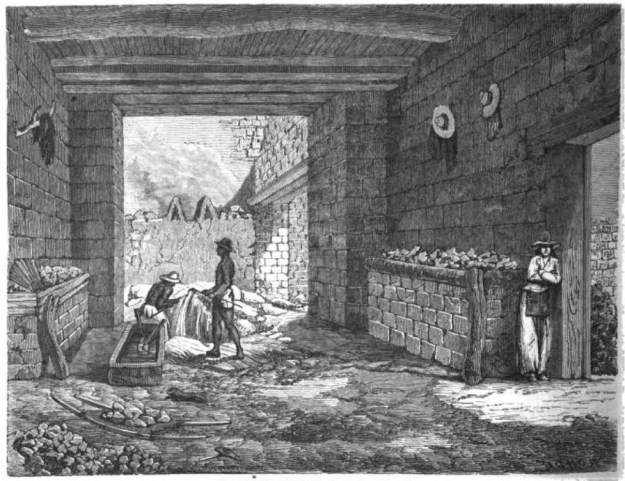
Interior of the Silver Smelter of Corralitos By Philippe Rondé – Le Tour du Monde, volume 4 [1], Public Domain, https://commons.wikimedia.org/w/index.php?curid=82418139

Ezekiel 22: 1-21 The Bloody City

The word of the LORD came to me: 2 You, mortal, will you judge, will you judge the bloody city? Then declare to it all its abominable deeds. 3 You shall say, Thus says the Lord GOD: A city! Shedding blood within itself; its time has come; making its idols, defiling itself. 4 You have become guilty by the blood that you have shed, and defiled by the idols that you have made; you have brought your day near, the appointed time of your years has come. Therefore I have made you a disgrace before the nations, and a mockery to all the countries. 5 Those who are near and those who are far from you will mock you, you infamous one, full of tumult.

6 The princes of Israel in you, everyone according to his power, have been bent on shedding blood. 7 Father and mother are treated with contempt in you; the alien residing within you suffers extortion; the orphan and the widow are wronged in you. 8 You have despised my holy things, and profaned my sabbaths. 9 In you are those who slander to shed blood, those in you who eat upon the mountains, who commit lewdness in your midst. 10 In you they uncover their fathers’ nakedness; in you they violate women in their menstrual periods. 11 One commits abomination with his neighbor’s wife; another lewdly defiles his daughter-in-law; another in you defiles his sister, his father’s daughter. 12 In you, they take bribes to shed blood; you take both advance interest and accrued interest, and make gain of your neighbors by extortion; and you have forgotten me, says the Lord GOD.

13 See, I strike my hands together at the dishonest gain you have made, and at the blood that has been shed within you. 14 Can your courage endure, or can your hands remain strong in the days when I shall deal with you? I the LORD have spoken, and I will do it. 15 I will scatter you among the nations and disperse you through the countries, and I will purge your filthiness out of you. 16 And I shall be profaned through you in the sight of the nations; and you shall know that I am the LORD.

The prophet Nahum in the 7th Century BCE issues oracles against the Assyrian capital Ninevah he declares that it is a city of bloodshed. Ninevah had been responsible for the conquering of Samaria and Nahum viewed their violent actions as meriting God’s judgement. “Ah, City of bloodshed, utterly deceitful, full of booty—no end to plunder” (Nahum 3:1) Although it is not certain that Ezekiel would have known these words from a prophet a couple of decades prior to his ministry, the content of this oracle reflects similar language, although now the bloody city is Jerusalem instead of Ninevah. Ezekiel is now called to judge the city which has transformed itself by its actions from the city of God to the bloody city.

The actions of bloodshed and idolatry have led the city to this space where they stand under God’s judgment. The punishment long withheld is finally arriving and Jerusalem instead of occupying a privileged space of honor as Zion now occupies a space of mockery and dishonor before the nations. The society of Judah has unraveled. They have lost their grounding in the covenant and in this dangerous city the fundamental building block of society (the family) has broken down and the vulnerable are exploited.

Throughout the law it is clear that leaders in Judah have a responsibility to maintain justice among the citizens. Their position is one of responsibility and not primarily one of privilege. Ezekiel accuses the princes of Israel of practicing exploitation instead of justice. Family is treated with contempt, the vulnerable (aliens, orphans, and widows) are exploited, the holy things of God are profaned, dishonest words are used to spill blood, unholy actions and things are lifted up, the boundaries of decency in family and among neighbors is broken, profit is made upon the misfortune of others (by charging interest) and all of this points to the reality that the people has forgotten the LORD. The list of unrighteous actions is the opposite of the righteous man who can save his own life in Ezekiel 18:5-9 and both build upon the understanding of holiness expressed in Leviticus 18-19.

Ezekiel paints a bleak picture of the communal life of Jerusalem. When they can be referred to in a similar way to Ninevah (or Samaria and Sodom as in 16: 44-58) then they are a society that has lost its moorings. When the city of shalom (Jeru-shalom) has become the bloody city the world has turned upside down. Ezekiel’s language is evocative. He paints this blood red image of violence to demonstrate the brokenness of Jerusalem and the righteousness of God in calling for judgment. These words, which are preserved beyond the judgment may have enabled the children to look upon the actions of their parents, consider and not do likewise. (Ezekiel 18:14)

Ezekiel 22: 17-22 Israel is Dross

17 The word of the LORD came to me: 18 Mortal, the house of Israel has become dross to me; all of them, silver, bronze, tin, iron, and lead. In the smelter they have become dross. 19 Therefore thus says the Lord GOD: Because you have all become dross, I will gather you into the midst of Jerusalem. 20 As one gathers silver, bronze, iron, lead, and tin into a smelter, to blow the fire upon them in order to melt them; so I will gather you in my anger and in my wrath, and I will put you in and melt you. 21 I will gather you and blow upon you with the fire of my wrath, and you shall be melted within it. 22 As silver is melted in a smelter, so you shall be melted in it; and you shall know that I the LORD have poured out my wrath upon you.

Israel was to be a treasured possession, a priestly kingdom, and a holy nation (Exodus 19: 5-6). Just as the city of peace became the blood city, now the treasured possession has become dross. The imagery of the refinement of silver from the silver ore which contains multiple elements (copper, iron, lead and tin) becomes the metaphor for God’s action of pouring out anger to melt the elements to separate the dross from the precious metal. There is a resonance with the metaphor here and Egypt as the iron smelter which God delivered his people from (Deuteronomy 4:20) but a stronger resonance exists in Isaiah’s earlier description of Judah:

How the faithful city has become a whore! She that was full of justice, righteousness lodged in her—but now murderers! Your silver has become dross, your wine is mixed with water. Your princes are rebels and companions of thieves. Everyone loves a bribe and runs after gifts. They do not defend the orphan, and the widow’s cause does not come before them. Isaiah 1: 21-23 (emphasis mine).

Yet, Ezekiel’s image may indicate that there is nothing precious left in Israel. They are completely dross. It is only God’s action that dross which has nothing precious can emerge from the smelter as silver. Any hope for Israel’s future lies in the same God whose blast of wrath is melting the people in their current state.

Ezekiel 22: 23-31 No One to Stand in the Breach

23 The word of the LORD came to me: 24 Mortal, say to it: You are a land that is not cleansed, not rained upon in the day of indignation. 25 Its princes within it are like a roaring lion tearing the prey; they have devoured human lives; they have taken treasure and precious things; they have made many widows within it. 26 Its priests have done violence to my teaching and have profaned my holy things; they have made no distinction between the holy and the common, neither have they taught the difference between the unclean and the clean, and they have disregarded my sabbaths, so that I am profaned among them. 27 Its officials within it are like wolves tearing the prey, shedding blood, destroying lives to get dishonest gain. 28 Its prophets have smeared whitewash on their behalf, seeing false visions and divining lies for them, saying, “Thus says the Lord GOD,” when the LORD has not spoken. 29 The people of the land have practiced extortion and committed robbery; they have oppressed the poor and needy, and have extorted from the alien without redress. 30 And I sought for anyone among them who would repair the wall and stand in the breach before me on behalf of the land, so that I would not destroy it; but I found no one. 31 Therefore I have poured out my indignation upon them; I have consumed them with the fire of my wrath; I have returned their conduct upon their heads, says the Lord GOD.

This third section within the chapter continues to build upon previously used imagery and has echoes of the words of Jeremiah, Micah,[1] and especially Zephaniah. The image of princes as roaring lions was seen in chapter 19 and prophets are covering up the flaws in the society with whitewash as in chapter 13. Like many speakers these images are brought again to hearers to reinforce the injustice done by the rulers of the society.  For the first time in Ezekiel the priests are brought into the condemnation. The overall passage, as mentioned above, echoes the language of Zephaniah 3:

Ah, soiled, defiled, oppressing city! It has listened to no voice; it has accepted no correction. It has not trusted the LORD; it has not drawn near to its God. The officials within it are roaring lions; its judges are evening wolves that leave nothing until the morning. Its prophets are reckless, faithless persons; its priests have profaned what is sacred they have done violence to the law. Zephaniah 3: 1-4 (emphasis mine).

The echoes between prophets may originate in a tradition of preserving the words of the prophets and studying these words, but if we take seriously the claims that the prophets are proclaiming the word of the LORD, then they share a common source. Through multiple voices similar images and messages have attempted to break through the resistance of the people of Israel, but now the people stand at the precipice of judgment with no one to stand in the gap for them.

The narrative of the flood in the book of Genesis (Genesis 6-9) deals with God’s attempt to cleanse the land from the wickedness, corruption, and violence of humanity. Now this violence, wickedness and corruption are focused in Judah and the action of the LORD is to purify the land once again. The princes, officials, priest, and prophets have all practiced violence, corrupted the teaching of the law and profaned the holy things, shed blood for dishonest gain, and covered up the corruption in the society. The result is a society that was intended to provide justice to the poor, needy, and the alien are now exploiting those vulnerable members of society.

The LORD seeks someone who will stand in the breach before God on behalf of the land. Gary Anderson points to the way Moses filled this role for the people in both Exodus 32: 7-14 and Numbers 14: 11-20. (Anderson, 2008, p. 223) Moses after both the Golden Calf and the rebellion against Moses and Aaron stands between the people and God and calls upon God not to destroy the people, initially for the sake of the name of God and then later picking up on God’s declared identity in the aftermath of the first betrayal. There is no Moses to stand in the breach for the people, to both defend the people from the wrath of the LORD, but also to reorient the people on the way of the law.

In a time where there is no Moses to stand in the breach and the princes, prophets, officials, and priests have all betrayed the ways of God the society is disordered. There is no reform that will reorient this broken society, only the wrath of God which washes over and consumes can purify the dross into silver. When Jerusalem is bloodier than Ninevah then perhaps only the destruction of the city can bring about the healing of the land. There is no hope in Ezekiel which does not pass through the destruction of Jerusalem, the temple, the Davidic line of kings, and the loss of the land.  There are only two more chapters of Ezekiel prior to the exile of the majority of the people, and throughout the book there has been no expectation that the people would hear and respond to the words of the prophet. Ezekiel does provide a lens for the people to look backward through in the aftermath of exile once they realize that there has been a prophet among them.

[1] Jeremiah 5: 1-5, 31; Micah 3:11.

Ezekiel 21 God’s Sword Against Judah

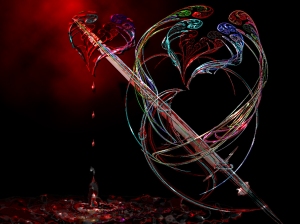
Swords Hanging in my Office, the sword on the left is a U.S. Army Ceremonial (Dress) Saber, the one on the right is a replica 1860 cavalry saber.

Ezekiel 21: 1-7 The LORD’s Challenge of Israel

1 The word of the LORD came to me: 2 Mortal, set your face toward Jerusalem and preach against the sanctuaries; prophesy against the land of Israel 3 and say to the land of Israel, Thus says the LORD: I am coming against you, and will draw my sword out of its sheath, and will cut off from you both righteous and wicked. 4 Because I will cut off from you both righteous and wicked, therefore my sword shall go out of its sheath against all flesh from south to north; 5 and all flesh shall know that I the LORD have drawn my sword out of its sheath; it shall not be sheathed again. 6 Moan therefore, mortal; moan with breaking heart and bitter grief before their eyes. 7 And when they say to you, “Why do you moan?” you shall say, “Because of the news that has come. Every heart will melt and all hands will be feeble, every spirit will faint and all knees will turn to water. See, it comes and it will be fulfilled,” says the Lord GOD.

At the end of the previous chapter the prophet is told to set his face towards the south (Teman, Darom, and Negev)[1] but then is accused by the people of being a maker of allegories. The previous section and this one belong together. The references to south are made clear when the prophet is instructed to set his face toward Jerusalem, the sanctuaries, and the land of Israel. The previous three different word for south is now decoded as Jerusalem, the sanctuaries and the land of Israel. The forests of the Negev may allegorically refer to the House of the Forest of Lebanon, a part of the royal buildings built by Solomon. (1 Kings 7: 2-5) Yet, now that the allegories are stripped away it is clear that the focus is on the city of Jerusalem, the temple, and the land of Israel itself. The upcoming judgment of the LORD will focus on the city but encompass the entire region.

The figure of God as a divine warrior is a common one in scripture, but now the divine warrior which has protected Israel in the past challenges the people of Israel to a duel. The LORD is coming against them and will draw out the sword, and yet this is not a fight that Israel can win. The image of the LORD drawing his sword was probably expected by the people to be a positive image, an image that the LORD was ready to fight for the people. Ezekiel inverts this image to where God is no longer their protector but their adversary.

The threat to cut off both the righteous and the wicked again illustrates that the prophecies in Ezekiel are not always consistent but are meant to evoke a hearing. At several points Ezekiel has been careful to allow for a distinction between the righteous and the unrighteous before God’s judgment.[2] There is an echo of Abraham’s challenge to the LORD on the LORD’s journey to Sodom, “Will you indeed sweep away the righteous with the wicked?” (Genesis 18:23) Yet, as in Ezekiel 16: 44-58 it is clear that the LORD views the transgressions of Judah as greater than Sodom. This may just be a shocking rhetorical device to encompass the totality of the people and shake them out of their stupor. Yet, Ezekiel’s prophecy has been less about the expectance of repentance than describing the upcoming horror in a way that people can look back upon his words and see that Ezekiel was a true prophet among them. A sword once it is swung is likely to cause collateral damage and war once unleashed is impossible to restrain where only the wicked are punished. Yet, this sword now taken out to the scabbard will become the central image for the remainder of the chapter.

Ezekiel is called to moan publicly, and this becomes another sign-act to cause people to question what the prophet is doing. The prophet is informed about the coming disaster but has no power to avert the catastrophe. He can look ahead to the time when hearts melt, hands are feeble, and the loss of bowel control causes people to wet themselves.[3] The disaster will physically and psychologically overwhelm the people. The God who has delivered them in the only offers challenge. The sword is drawn, and now Ezekiel will continue to develop this image throughout the chapter.

Ezekiel 21: 8-17 The Song of the Sword

8 And the word of the LORD came to me: 9 Mortal, prophesy and say: Thus says the Lord; Say: A sword, a sword is sharpened, it is also polished;

10 it is sharpened for slaughter, honed to flash like lightning! How can we make merry? You have despised the rod, and all discipline.

 11 The sword is given to be polished, to be grasped in the hand; it is sharpened, the sword is polished, to be placed in the slayer’s hand.

 12 Cry and wail, O mortal, for it is against my people; it is against all Israel’s princes; they are thrown to the sword, together with my people. Ah! Strike the thigh!

 13 For consider: What! If you despise the rod, will it not happen? says the Lord GOD.

14 And you, mortal, prophesy; strike hand to hand. Let the sword fall twice, thrice; it is a sword for killing. A sword for great slaughter — it surrounds them;

 15 therefore hearts melt and many stumble. At all their gates I have set the point of the sword. Ah! It is made for flashing, it is polished for slaughter.

 16 Attack to the right! Engage to the left! — wherever your edge is directed.

 17 I too will strike hand to hand, I will satisfy my fury; I the LORD have spoken.

Although the overall intent of this section is clear, the individual phrases are difficult to translate. Daniel Block suggests that the problems reflect the “heightened emotions of the prophet, who appears mesmerized by the image of the flashing weapon.” (Block, 1997, p. 675) Block’s suggestion is plausible, but it is also plausible that Ezekiel is adapting an existing poem, song, or invocation over a weapon and adapting it to the current image. This deadly sword which is drawn from the divine scabbard becomes a deadly image of destruction for the people and a lament of the prophet.

The repetitive references to the sword being sharpened and polished give the section a lyrical quality and this has led some to speculate that it derives from a sword dance or invocation over a weapon to prepare it for battle. (NIB VI: 1298) Armies both ancient and modern have rituals to prepare mentally for the upcoming battle that involve chants, movement, dance, and the focus on the weapons used in conflict. Psalm 144 is a biblical example of a prayer or song of a warrior preparing for combat as seen in its opening lines:

Blessed be the LORD, my rock, who trains my hands for war, and my fingers for battle, my rock and my fortress, my stronghold and my deliverer, my shield in whom I take refuge, who subdues the peoples under me. Psalm 144: 1-3

Yet, the focus in this image is exclusively on the sword. The wielder of this weapon will be revealed in the coming section, but now the sword itself is sharpened for slaughter and honed to flash like lightning. The princes of Israel are the ones sword is directed against, and they and the people are unable to stand against it. The sword, even without a wielder strikes multiple times and appears at every gate. The gates of the city are where the people can flee for safety but throughout the bible the city gates are also where public business was transacted, and cases brought for judgment. The sword at the gates also precludes the possibility of escape from the surrounded city.

The sword is a metaphor for war, and as we will see in the following section it is the war of Babylon against Judah. The siege of Jerusalem, often prophesied in the first twenty chapters, cuts off the possibility of escape. To echo a line from the Battle Hymn of the Republic, God “has loosed the fateful lightning of his terrible swift sword,” but the sword is not loosed against the enemies of Judah but upon Judah herself.

Replica 1860 Cavalry Saber hanging on my office wall

I was a cavalry officer in the U.S. Army prior to going to seminary and becoming a pastor. On the wall of my office, I have two swords from my time in the military. One is a ceremonial saber which is light and would not endure in a fight, but the other is a replica 1860 cavalry saber known sometimes called a wrist breaker because of its weight. This saber comes from a different era and is different technology than swords in the ancient world (which are shorter and thicker). Swords are shaped for the type of combat they will be used in. A saber is used on horseback for swinging downward, a rapier is a thrusting weapon, etc. Swords are not the primary implement used in slaughter[4] because both their value in the culture (they are costly to make and own) and the fact that they dull quickly. Ancient swords had to be heavy to be effective in combat, and they didn’t have the focused weight of an axe.[5] Yet, swords were the weapon of kings and great warriors and metaphorically they are often used to talk of war and battle.

Ezekiel 21: 18-27 Nebuchadrezzar Wielder of the Sword

18 The word of the LORD came to me: 19 Mortal, mark out two roads for the sword of the king of Babylon to come; both of them shall issue from the same land. And make a signpost, make it for a fork in the road leading to a city; 20 mark out the road for the sword to come to Rabbah of the Ammonites or to Judah and to Jerusalem the fortified. 21 For the king of Babylon stands at the parting of the way, at the fork in the two roads, to use divination; he shakes the arrows, he consults the teraphim, he inspects the liver. 22 Into his right hand comes the lot for Jerusalem, to set battering rams, to call out for slaughter, for raising the battle cry, to set battering rams against the gates, to cast up ramps, to build siege towers. 23 But to them it will seem like a false divination; they have sworn solemn oaths; but he brings their guilt to remembrance, bringing about their capture.

24 Therefore thus says the Lord GOD: Because you have brought your guilt to remembrance, in that your transgressions are uncovered, so that in all your deeds your sins appear — because you have come to remembrance, you shall be taken in hand.

 25 As for you, vile, wicked prince of Israel, you whose day has come, the time of final punishment,

 26 thus says the Lord GOD: Remove the turban, take off the crown; things shall not remain as they are. Exalt that which is low, abase that which is high.

 27 A ruin, a ruin, a ruin — I will make it! (Such has never occurred.) Until he comes whose right it is; to him I will give it.

The wielder of this divine sword is now revealed as the king of Babylon, Nebuchadrezzar II. The imagery fits the geopolitics of the time leading up to the destruction of Jerusalem in 586 BCE.  King Zedekiah (referred to as prince throughout Ezekiel) along with Tyre, Ammon, Edom and Moab rebelled against the Babylonians in 587 BCE and Babylon responds by placing Jerusalem under siege. This image envisions the king of Babylon at a crossroads with his servants divining the path they are to take in the battle ahead, do they take the eastern road heading to Ammon and a western road going to Jerusalem. Three divinations are conducted, the first using belomancy or rhabdomancy which draws inscribed arrows like a lot, the second consulting the household gods (teraphim), and the third being hepatoscopy which involves examining the irregularities of the liver of a sacrificed animal. Hepatoscopy is well attested in the historical record, but less is known about the other two practices. (Block, 1997, pp. 686-687)  The three divinations all reveal the western road to Jerusalem, even though the king and his servants suspect it is a false divination since Zedekiah had previously sworn allegiance to the king of Babylon. Yet, this foreign leader using divination, practices forbidden among the Jewish people, is shown the will of the LORD through these practices and comes in force to Jerusalem.

Geographically the image fits Damascus as the crossroads, and once the armies of Babylon are in motion there is no choice for the Judeans except to retreat behind the walls of Jerusalem. Battles in the ancient world between equal armies could take place along the roads and away from cities, but in an unequal fight the only hope for the smaller force was to utilize the strategic advantages of a walled city and force the larger force into a costly and timely siege. That is what Nebuchadrezzar does with Jerusalem and the siege becomes a traumatic event for the people trapped in the city. King Zedekiah (here the vile prince of Israel) will be forced to remove the marks of his reign because things will not remain as they are.

The LORD is turning the world of the Judeans upside down. The word translated in the NRSV as ruin (‘awwa) is rendered by Daniel Block as topsy-turvy. (Block, 1997, p. 691) This triple repetition of topsy-turvy in combination with the low being made exalted and the high being abased is God’s action of inverting the order among Jerusalem. The God who had been the divine warrior protecting Israel has now become the adversary of the people. The sword of the LORD has been placed in the hands of the king of Babylon. The city, the Davidic line of kings, the temple, the land, and the alliances formed to resist the Babylonians will all fail. Ezekiel’s visions, which will prove to be accurate, undermine the foundations upon which people had built their lives. It is a topsy-turvy world that will remake the people. Yet, there is a future under one whose right it is to rule.

Ezekiel 21: 28-32 The Future Judgment of Ammon

 28 As for you, mortal, prophesy, and say, Thus says the Lord GOD concerning the Ammonites, and concerning their reproach; say: A sword, a sword! Drawn for slaughter, polished to consume, to flash like lightning.

 29 Offering false visions for you, divining lies for you, they place you over the necks of the vile, wicked ones — those whose day has come, the time of final punishment.

 30 Return it to its sheath! In the place where you were created, in the land of your origin, I will judge you.

 31 I will pour out my indignation upon you, with the fire of my wrath I will blow upon you. I will deliver you into brutish hands, those skillful to destroy.

 32 You shall be fuel for the fire, your blood shall enter the earth; you shall be remembered no more, for I the LORD have spoken.

Ezekiel has an entire section of the book devoted to the proclamations against the nations surrounding Judea which begins with the proclamation against Ammon in chapter twenty-five. Because of this section of oracles against the nations later in the book some have believed this continuation of the sword imagery against Ammon to be out of place, but a Tova Ganzel reminds us, “Jerusalem preceded Ammon, it did not replace it.” (Ganzel, 2020, p. 162) The initial divination by Babylon to take the western road to Jerusalem does not mean that they will not also punish the actions of the Ammonite leaders to align themselves with Jerusalem against the Babylonians. The LORD is not only the God of Israel but is also the God of all the nations and his actions through the Babylonians judge also the Ammonites here. The sword will only return to its scabbard when its actions are completed.

[1] These are the three Hebrew words in 20:46. In the NRSV they are rendered south, south, and Negev, in the NIV they are all translated as south.

[2] Ezekiel 9:4-6, 14:12-20, 18

[3] This is the meaning of all knees will turn to water. See note on Ezekiel 7:17.

[4] The Hebrew word tabah translated slaughter in verse 10 often means the slaughter of domestic animals but can also refer to a massacre.

[5] Which is why axes and later the guillotines were used for executions. Swords dull quickly when they are used to cut through flesh and bone.

Ezekiel 20 Retelling Israel’s Story in a Negative Light

Ezekiel 20: 1-32

1 In the seventh year, in the fifth month, on the tenth day of the month, certain elders of Israel came to consult the LORD, and sat down before me. 2 And the word of the LORD came to me: 3 Mortal, speak to the elders of Israel, and say to them: Thus says the Lord GOD: Why are you coming? To consult me? As I live, says the Lord GOD, I will not be consulted by you. 4 Will you judge them, mortal, will you judge them? Then let them know the abominations of their ancestors, 5 and say to them: Thus says the Lord GOD: On the day when I chose Israel, I swore to the offspring of the house of Jacob — making myself known to them in the land of Egypt — I swore to them, saying, I am the LORD your God. 6 On that day I swore to them that I would bring them out of the land of Egypt into a land that I had searched out for them, a land flowing with milk and honey, the most glorious of all lands. 7 And I said to them, Cast away the detestable things your eyes feast on, every one of you, and do not defile yourselves with the idols of Egypt; I am the LORD your God. 8 But they rebelled against me and would not listen to me; not one of them cast away the detestable things their eyes feasted on, nor did they forsake the idols of Egypt.

Then I thought I would pour out my wrath upon them and spend my anger against them in the midst of the land of Egypt. 9 But I acted for the sake of my name, that it should not be profaned in the sight of the nations among whom they lived, in whose sight I made myself known to them in bringing them out of the land of Egypt. 10 So I led them out of the land of Egypt and brought them into the wilderness. 11 I gave them my statutes and showed them my ordinances, by whose observance everyone shall live. 12 Moreover I gave them my sabbaths, as a sign between me and them, so that they might know that I the LORD sanctify them. 13 But the house of Israel rebelled against me in the wilderness; they did not observe my statutes but rejected my ordinances, by whose observance everyone shall live; and my sabbaths they greatly profaned.

Then I thought I would pour out my wrath upon them in the wilderness, to make an end of them. 14 But I acted for the sake of my name, so that it should not be profaned in the sight of the nations, in whose sight I had brought them out. 15 Moreover I swore to them in the wilderness that I would not bring them into the land that I had given them, a land flowing with milk and honey, the most glorious of all lands, 16 because they rejected my ordinances and did not observe my statutes, and profaned my sabbaths; for their heart went after their idols. 17 Nevertheless my eye spared them, and I did not destroy them or make an end of them in the wilderness.

18 I said to their children in the wilderness, Do not follow the statutes of your parents, nor observe their ordinances, nor defile yourselves with their idols. 19 I the LORD am your God; follow my statutes, and be careful to observe my ordinances, 20 and hallow my sabbaths that they may be a sign between me and you, so that you may know that I the LORD am your God. 21 But the children rebelled against me; they did not follow my statutes, and were not careful to observe my ordinances, by whose observance everyone shall live; they profaned my sabbaths.

Then I thought I would pour out my wrath upon them and spend my anger against them in the wilderness. 22 But I withheld my hand, and acted for the sake of my name, so that it should not be profaned in the sight of the nations, in whose sight I had brought them out. 23 Moreover I swore to them in the wilderness that I would scatter them among the nations and disperse them through the countries, 24 because they had not executed my ordinances, but had rejected my statutes and profaned my sabbaths, and their eyes were set on their ancestors’ idols. 25 Moreover I gave them statutes that were not good and ordinances by which they could not live. 26 I defiled them through their very gifts, in their offering up all their firstborn, in order that I might horrify them, so that they might know that I am the LORD.

27 Therefore, mortal, speak to the house of Israel and say to them, Thus says the Lord GOD: In this again your ancestors blasphemed me, by dealing treacherously with me. 28 For when I had brought them into the land that I swore to give them, then wherever they saw any high hill or any leafy tree, there they offered their sacrifices and presented the provocation of their offering; there they sent up their pleasing odors, and there they poured out their drink offerings. 29 (I said to them, What is the high place to which you go? So it is called Bamah to this day.) 30 Therefore say to the house of Israel, Thus says the Lord GOD: Will you defile yourselves after the manner of your ancestors and go astray after their detestable things? 31 When you offer your gifts and make your children pass through the fire, you defile yourselves with all your idols to this day. And shall I be consulted by you, O house of Israel? As I live, says the Lord GOD, I will not be consulted by you.

This chapter in Ezekiel is one of the most uncomfortable passages I have wrestled with in the twelve years since I began this discipline of working through scripture on signoftherose. My goal was to pay particular attention to the passages of scripture I was less familiar with. For me this was more difficult than Ezekiel 16 with its portrayal of Jerusalem as God’s faithless bride because that imagery has resonance with imagery used in Jeremiah, and I was able to view it through my personal experiences of heartbreak and the emotions that evoked. I was glad to find I was not alone in my assessment of this passage, for example Katheryn Pfisterer Darr states:

Ezekiel 20: 1-44 is one of the Bible’s most troubling texts. What are we to make of an oracle that intentionally portrays a people’s history in the most pejorative of terms, in order utterly to erode any sense of integrity, any basis of hope? (NIB VI: 1290)

This text goes against many modern notions of independence. Israel cannot be Israel without living in the covenantal relationship with God. God chose them and the critical verse which forms the pivot for this chapter is verse thirty-two, “What is in your mind shall never happen — the thought, “Let us be like the nations, like the tribes of the countries, and worship wood and stone.”  Ezekiel has throughout the previous nineteen chapters attempted to demonstrate the apostasy of Israel as the cause for the LORD’s just action of condemnation. Now this rhetorical retelling of the history of Israel attempts to portray the total depravity of Israel throughout its history.

The prophet Ezekiel may be a poet, but he has little interest in ideas expressed in Emily Dickinson’s poem “Tell All the Truth But Tell It Slant”

Tell all the truth but tell it slant —

Success in Circuit lies

Too bright for our infirm Delight

The Truth’s superb surprise

As Lightning to the Children eased

With explanation kind

The Truth must dazzle gradually

Or every man be blind —[1]

Ezekiel’s message to a people who no longer have ears to hear is not told with an explanation kind, instead it is a brutally direct confrontation with the long running patterns of disobedience which have, in Ezekiel’s view, characterized the relationship between the people and their God. Or as Daniel Block states:

Far from being a story of election and salvation, Israel’s story is one of apostasy…Ezekiel’s “theology of history” is revisionist in the extreme. Other prophets had recognized the historical roots of Israel’s sins, but Ezekiel perceives the nation as corrupt as no other prophet did. (Block, 1997, p. 614)

Nor is Ezekiel’s primary concern at this point repentance, from early on God has communicated to Ezekiel that his role is to communicate the message so that, “Whether they hear or refuse to hear (for they are a rebellious house), they shall know that there has been a prophet among them.” (Ezekiel 2:5)

The prophecy is dated August 14, 591 BCE based on the information in verse one. This is two years before the siege of Jerusalem, almost a year after the prophecy in chapter eight, and two years after Ezekiel’s initial call. (Ganzel, 2020, p. 146) There have been several suggestions for why the elders approach Ezekiel at this point. One suggestion is that words of the false prophet Hananiah’s prophecy[2] had reached the exiles which suggested that the exile would be ending at this point. This is possible, but it is also possible that the elders are attempting to seek the LORD as mentioned in Deuteronomy 4:29, “From there (exile among the nations) you will seek the LORD your God and you will find him if your search after him with all your heart and soul (nephesh-life).” Yet, in Ezekiel’s view these elders are not wholeheartedly turning to the LORD. Like in chapter fourteen when certain elders come and the LORD considers whether he will answer them, only to answer in judgment, now the prophet is commanded to judge or arraign[3] the elders and the people.

The narrative begins in Egypt when the LORD chose (Hebrew bahar) Israel, swears to them and makes Godself known to them. The use of the Hebrew bahar reflects the language of Deuteronomy 7: 6-8:

For you are a people holy to the LORD your God; the LORD your God has chosen you out of all the peoples on earth to be his people, his treasured possession. It was not because you were more numerous than any other people that the LORD set his heart on you and chose you — for you were the fewest of all peoples. It was because the LORD loved you and kept the oath that he swore to your ancestors, that the LORD has brought you out with a mighty hand, and redeemed you from the house of slavery, from the hand of Pharaoh king of Egypt.

Being chosen by the LORD involves casing away the detestable things and the ‘idols’[4] of Egypt but from the very beginning they failed, in Ezekiel’s retelling of the story, to change their practices or to turn away from the idols they had in Egypt.

Throughout the narrative, their disobedience evokes a strong reaction from the LORD and God considers pouring out his wrath and spending his anger against them but refrains so that the name of God will not be profaned among the nations. The idea of God acting so that God’s name may be recognized and honored among the nations is reflected in the aftermath of the golden calf when Moses interceded for the people (Exodus 32: 11-14) and in the LORD’s declaration of identity in the thirteen attributes of God (Exodus 34: 1-9). A similar pattern is repeated when the people refuse to enter the promised land for fear of its occupants and Moses again has to intercede with the LORD (Numbers 14: 13-25). Throughout this retelling of history, the refrain reoccurs, Then I thought I would pour out my wrath upon them and spend my anger against them in the wilderness. But I withheld my hand, and acted for the sake of my name, so that it should not be profaned in the sight of the nations, in whose sight I had brought them out. This points to the LORD’s continual forbearance with the people in the past, but also highlights the anger and pain that the LORD bears from this continued pattern of disobedience.

Ezekiel’s retelling of Israel’s story continues from God’s choosing of the people in Egypt, even in their disobedience, to the leading of the people out of Egypt into the wilderness to give them the law and to lead them to the promised land. Ezekiel views this period as a time of continued rebellion[5] but now as the LORD makes the covenant expectations clear the rebellion takes on a more strident stance. The LORD has provided the statutes and ordinance by which everyone should live and gave them the practice of sabbath as a sign between God and the people. The people did not observe the statutes, rejected the ordinances, and greatly profaned the sabbath. In addition to the pursuit of idols and detestable things they have now added disobedience to the laws, decrees, and practices that are a part of the covenant. Yet, God’s anger is once again restrained by acting for the sake of the name of the God. Even though one generation never emerges from the wilderness their children inherit the promised land. Yet, the LORD warns them in the wilderness, probably referencing Deuteronomy where Moses warns the people before entering the land, to not follow the ways of their parents or to defile themselves with idol. Instead, they are charged to live by the law (statutes and ordinances) and to hallow the sabbath day.

The children who enter the promised land and the generations that follow fail in these practices. Ezekiel’s narration of God’s response produces a passage that, “Students of Scripture have struggled with…through the centuries.” (Block, 1997, p. 637)

because they had not executed my ordinances, but had rejected my statutes and profaned my sabbaths, and their eyes were set on their ancestors’ idols. Moreover I gave them statutes that were not good and ordinances by which they could not live. I defiled them through their very gifts, in their offering up all their firstborn, in order that I might horrify them, so that they might know that I am the LORD. (v. 24-26)

This is a difficult group of verses, and we are going to slow down and spend some time with this discomfortable passage. As Ellen Davis explains,

The statement resists all attempts at domestication. Its power lies precisely in the fact that it cannot be conformed to human reason. The verse reasserts, indeed, carries to its illogical extreme what is Ezekiel’s constant theme: the indisputable authority of God to determine and interpret the course of human history. (Davis, 1989, p. 114)

As I mentioned in my reflection A Split in the Identity of God, one of the difficult things for most Christians readers of scripture to reconcile is the all-encompassing view of the prophetic witness of God being responsible for all things. The adoption of idolatrous practices and non-covenant rules, and even the offering of children are now placed within the divine purview. The law was a gift, and now these not good laws become an anti-gift. The accusations of Ezekiel 16:20 of child sacrifice are now a way in which the LORD can horrify[6] the people. Throughout the narration of the Deuteronomic history[7] the people of Israel adopt idolatrous practices, fail to live according to the covenant, and at some points appear to engage in child sacrifice to Molech. It is impossible to know whether child sacrifice is occurring in the context of the exile in Babylon or in Jerusalem at the time. Yet, the theological implication of assigning the disobedience of the people, even to the point of, in the best light, misreading the provision for redeeming firstborns in Exodus 13: 11-16 or Exodus 22:29 to God is theologically troubling. Ezekiel is not a systematic theologian, nor is his message one of logical coherency. Ezekiel is providing a way to make sense of the future cataclysm for the people of Jerusalem while attempting to maintain God’s justice. Yet, most readers throughout history have struggled to reconcile these verses.

One of the insights I had in studying Jeremiah was that the God of Jeremiah, and by extension Ezekiel, is a brokenhearted God. The God portrayed in the bible has a surprisingly human set of emotions including anger, pain, desire, and loss. The LORD loves deeply and hurts deeply at the unfaithfulness of the people, and this hurt has been constrained by the concern for the honor of the divine name. Yet, generations of pain have compounded and the release of the pain—at least in words—is not always logical or easy to understand. The prophet stands between the wounded God and the wounding people and is the mediator of that pain from God to the people. The language of pain is attempting to shake the people from their long pattern of disobedience, or at least to give them language to explain the consequences when the LORD no longer saves them from the consequences of their actions. As modern people we might narrate this history differently from a different theological perspective, but Ezekiel (like his contemporary Jeremiah) has no choice but to pour out the emotion he receives from a brokenhearted God to a people who refuses to hear.

Deuteronomy 12 states to the people when they enter the land that they were to destroy the high places and shrines that the nations they pushed out created. Yet here Ezekiel narrates that instead of destroying these high places and shrines they adopted them for their own idolatrous practices. The play on words of “What is the high place (bamah) to which you go? So it is called Bamah to this day” adds one more way the people give the honor due to the LORD to the other gods of the nations.  Ezekiel argues that all the practices of the past continue to be built upon and practiced by the people in the present. The narration of the story of Israel has gotten progressively worse until the LORD’s anger can no longer be contained and the consequences of disobedience can no longer be averted.

There is no hope, at this point in Ezekiel, that the people will repent and save Jerusalem, the temple, the king, and the land from the consequences of this long pattern of disobedience. He is attempting to help the people understand their current crisis. His rhetorical retelling of the story of Israel as a story of continual and progressive disobedience and depravity is a difficult piece of scripture, but it is also a window into the pain of a brokenhearted God who has long delayed the consequences of the disobedience of the people.  Yet, Israel does not have the free will to choose to follow the gods of Egypt, Canaan, or Babylon. As we will see in the section that follows this will never happen. Israel can only be Israel in relation to the LORD the God of Israel.

Ezekiel 20: 33-44

32 What is in your mind shall never happen — the thought, “Let us be like the nations, like the tribes of the countries, and worship wood and stone.”

33 As I live, says the Lord GOD, surely with a mighty hand and an outstretched arm, and with wrath poured out, I will be king over you. 34 I will bring you out from the peoples and gather you out of the countries where you are scattered, with a mighty hand and an outstretched arm, and with wrath poured out; 35 and I will bring you into the wilderness of the peoples, and there I will enter into judgment with you face to face. 36 As I entered into judgment with your ancestors in the wilderness of the land of Egypt, so I will enter into judgment with you, says the Lord GOD. 37 I will make you pass under the staff, and will bring you within the bond of the covenant. 38 I will purge out the rebels among you, and those who transgress against me; I will bring them out of the land where they reside as aliens, but they shall not enter the land of Israel. Then you shall know that I am the LORD.

39 As for you, O house of Israel, thus says the Lord GOD: Go serve your idols, everyone of you now and hereafter, if you will not listen to me; but my holy name you shall no more profane with your gifts and your idols.

40 For on my holy mountain, the mountain height of Israel, says the Lord GOD, there all the house of Israel, all of them, shall serve me in the land; there I will accept them, and there I will require your contributions and the choicest of your gifts, with all your sacred things. 41 As a pleasing odor I will accept you, when I bring you out from the peoples, and gather you out of the countries where you have been scattered; and I will manifest my holiness among you in the sight of the nations. 42 You shall know that I am the LORD, when I bring you into the land of Israel, the country that I swore to give to your ancestors. 43 There you shall remember your ways and all the deeds by which you have polluted yourselves; and you shall loathe yourselves for all the evils that you have committed. 44 And you shall know that I am the LORD, when I deal with you for my name’s sake, not according to your evil ways, or corrupt deeds, O house of Israel, says the Lord GOD.

There is no free will for Israel. They do not get to opt out of being the people of God or self-select into being a different people. As Ellen Davis states,

Israel cannot be like the nations, no matter how assiduously it seeks to deny the association with YHWH by departing from anything recognizable as the law of God. (Davis, 1989, p. 114)

On the one hand this is the gracious promise that they will be brought out from the people to be gathered. On the other hand, there is no escape from their identity as the people of God and the judgment that they will endure. They will be brought back under the covenant and the rebels among the people will be purged. The only future is as a people obedient to the LORD. They will be sanctified, and in the future they will practice the laws and statutes and ordinances in a way that brings honor to the name of God. They will remember and regret their practices of the past. Everything hangs on the LORD’s control over history and the future of Israel. There is hope in the future, but it does not rest upon the practices of faithfulness of the people. As Ezekiel has narrated the story of Israel is a story of apostasy and depravity. Yet, with the LORD there is the promise of a gracious new beginning where a purified people will return to the land and properly honor their God. God is remaining faithful to God’s promises for the sake of God’s name. It is a difficult justice for most modern people to comprehend, but it is still gracious. Israel will have a future as Israel because of God’s action to make that future manifest.

Ezekiel 20: 45-49

45 The word of the LORD came to me: 46 Mortal, set your face toward the south, preach against the south, and prophesy against the forest land in the Negeb; 47 say to the forest of the Negeb, Hear the word of the LORD: Thus says the Lord GOD, I will kindle a fire in you, and it shall devour every green tree in you and every dry tree; the blazing flame shall not be quenched, and all faces from south to north shall be scorched by it. 48 All flesh shall see that I the LORD have kindled it; it shall not be quenched. 49 Then I said, “Ah Lord GOD! they are saying of me, ‘Is he not a maker of allegories?'”

These final five verses of chapter twenty are related to the imagery that will come in chapter twenty-one and set the stage for a new set of imagery organized around a sword. Yet, since in our bible they are a part of chapter twenty I will address them as they stand in the chapter. Now Ezekiel is to set his face[8] towards the south. He is to set his face toward Teman (either a place name for a northern district of Edom or may simply refer to south), Darom (either a place name between Beersheba and Beth-Gubrin or another term for south), and the ‘scrubland’[9] of the Negeb (negeb as a common noun also means south, or dry) (NIB VI: 1294) and declare that a blazing fire is coming upon these lands and it will scorch the land from south to north. Ezekiel answers the LORD that he is being accused of being a “maker of allegories.” The Hebrew doubling of the word masal (proverb, parable) probably indicates to Ezekiel that his message is not being received as seriously as he believes it merits. He may feel that the people are failing to understand his message, or that perhaps they view his words and actions as entertainment, but they do not yet understand that a prophet has been among them. The people may be taunting Ezekiel because his words have not come to pass and that his view of reality seems too divergent from the views of others, even others who claim the title of prophet, in his time and previously. It is difficult to walk through the first twenty-four chapters of Ezekiel, and it is only in the aftermath of the destruction of Jerusalem and the temple, the ending of the line of Davidic kings, and the exile that the prophet’s words make sense. Even those in exile with Ezekiel are looking forward to a homecoming to Jerusalem rather than the extension of their exile to the entire nation. Ezekiel’s words are difficult to stomach in the aftermath of the Babylonian exile and were probably unpalatable beforehand. It is only afterwards that people will understand that this maker of allegories was the prophet in their midst they failed to listen to.


[1] https://www.poetryfoundation.org/poems/56824/tell-all-the-truth-but-tell-it-slant-1263

[2] Jeremiah 28:1-4.

[3] “The interrogative particle often conveys an indignant affirmation.” (Block, 1997, p. 618)

[4] Ezekiel’s frequently used term gillum which is a derogatory term best rendered as something like ‘shit gods.’

[5] Daniel Block notes that Jeremiah views the Exodus romantically while Ezekiel views this time in Israel’s story as a continued example of their total depravity and abandonment to sin. (Block, 1997, p. 630)

[6] Hebrew samen is actually harsher than horrify. Katheryn Pfisterer Darr suggests, “that I might desolate them.” (NIB VI: 1284)

[7] The books between Joshua and 2 Kings in the bible. Referred to as the Deuteronomic history because they share the theological perspective of Deuteronomy.

[8] Which indicates judgment.

[9] It is doubtful the Negeb, which is desert-like, was ever in its history forested.

Ezekiel 19 A Lamentation for the Princes of Israel: Violent Lions and a Lofty Branch

 Ezekiel 19

1 As for you, raise up a lamentation for the princes of Israel, 2 and say:

What a lioness was your mother among lions! She lay down among young lions, rearing her cubs.
3 She raised up one of her cubs; he became a young lion, and he learned to catch prey; he devoured humans.
4 The nations sounded an alarm against him; he was caught in their pit; and they brought him with hooks to the land of Egypt.
5 When she saw that she was thwarted, that her hope was lost, she took another of her cubs and made him a young lion.
6 He prowled among the lions; he became a young lion, and he learned to catch prey; he devoured people.
7 And he ravaged their strongholds, and laid waste their towns; the land was appalled, and all in it, at the sound of his roaring.
8 The nations set upon him from the provinces all around; they spread their net over him; he was caught in their pit.
9 With hooks they put him in a cage, and brought him to the king of Babylon; they brought him into custody, so that his voice should be heard no more on the mountains of Israel.
10 Your mother was like a vine in a vineyard transplanted by the water, fruitful and full of branches from abundant water.
11 Its strongest stem became a ruler’s scepter; it towered aloft among the thick boughs; it stood out in its height with its mass of branches.
12 But it was plucked up in fury, cast down to the ground; the east wind dried it up; its fruit was stripped off, its strong stem was withered; the fire consumed it.
13 Now it is transplanted into the wilderness, into a dry and thirsty land.
14 And fire has gone out from its stem, has consumed its branches and fruit, so that there remains in it no strong stem, no scepter for ruling.

This is a lamentation, and it is used as a lamentation.

This lamentation, or dirge, utilizes well known imagery for Judah is a manner that may be both mournful and satirical. The tragic situation of the kings of Judah are portrayed metaphorically through the imagery of captured lions and uprooted vines. The difference between what could have been for these rulers if they had lived within the limits assigned to them is great. Instead, their rapacious actions and attempts to rise above the vine resulted both in their own destruction but also the destruction of the land and the people. The violent lions of this chapter are judged on their own actions, like the violent son of the previous chapter. Yet, the actions of these rulers who have been raised up have implications for the entirety of the people of Israel.

Ezekiel is commanded to raise up a qina (lamentation, NRSV) the word that brackets this pair of metaphors. A qina is a lamentation or dirge sung for the death of an individual[1]  or the people.[2] Ten of the eighteen occurrences of this word occur in Ezekiel (three in this chapter). The lamentation is for the princes (nasi) of Israel. Throughout the book of Ezekiel, the prophet does not refer to the final kings in Jerusalem by the traditional term for king (melek) but instead uses this term from the tribal past of Israel. (Block, 1997, p. 598) The two images used in this lamentation share the common goal of mourning the ignoble end of the Davidic monarchy, particularly in the actions of two kings whose identity is hinted at in the imagery.

The source for the imagery and the vocabulary used in these metaphors comes from Jacob’s blessing of Judah in Genesis 49:8-12 (particularly 9-11 common vocabulary underlined although some are obscured in English).

Judah, your brothers shall praise you; your hand shall be on the neck of your enemies; your father’s sons shall bow down before you. Judah is a lion’s whelp; from the prey, my son, you have gone up. He crouches down, he stretches out like a lion, like a lioness — who dares rouse him up? The scepter shall not depart from Judah, nor the ruler’s staff from between his feet, until tribute comes to him; and the obedience of the peoples is his. Binding his foal to the vine and his donkey’s colt to the choice vine, he washes his garments in wine and his robe in the blood of grapes; his eyes are darker than wine, and his teeth whiter than milk.

 The lioness may be a woman (see below) but more likely she is Israel personified who lifts up one of her cubs. The young lion does what a young lion is expected to do until he devours humans. Once this lion transgresses this boundary the nations rise up against him and catch him in a pit, a traditional method of catching a lion, and bring him in ‘hooks’[3] to Egypt. The taking of the first lion to Egypt makes Jehohaz the king that the first lion represents since he is the only one of the last kings of Judah to be taken to Egypt. (2 Kings 23: 31-35). This son of Josiah only reigns three months but is viewed negatively by 2 Kings. His short but disastrous reign ends with his imprisonment and put Judah under a heavy tribute to Egypt.

The second cub raised up by the lioness follows a path identical to the first lion and then goes even farther. The Hebrew[4] indicates that he consorted with his widows (instead of ravaged their strongholds, NRSV) and extending the lion imagery this occurs in nature when a new male takes over a pride. Yet, the critical piece of the imagery is when the lion laid waste to the towns and even the land becomes appalled at this roaring and unrestrained lion. Now the nations once again lay a trap for the lion as these nations become the liberators of the mountains of Israel. This second lion is taken away to Babylon and not heard from again.

Ezekiel never decodes this parable for us and although most readers are confident in the identity of the first lion, there is disagreement whether the second lion represents Jehoiachin or Zedekiah. Both have elements that make them intriguing candidates. Jehoiachin was deported to Babylon after a brief reign. Zedekiah and Jehohaz were brothers of the same mother (Hamutal)[5] and after his rebellion Zedekiah is also taken to Babylon. My personal opinion is that Ezekiel refers to Zedekiah as the second lion who is currently ruling in Jerusalem, and who Ezekiel views negatively. Yet, there are compelling arguments for both rulers being the second lion and there is no way to determine with certainty the object of this image. The exact historical reference is not as critical as the violent actions the metaphor communicates that these princes of Israel commit which lead to the collapse of the Davidic line of kings for a modern reader. From Ezekiel’s metaphor these princes of Israel were raised up to be lions, but the problem emerges when they become violent and do damage to their own land. The nations become the means of trapping and imprisoning these beasts and freeing the land of their terror.

The vine has already been used multiple times in Ezekiel to refer to Israel[6] and this imagery is used throughout the scriptures. Here a vine is planted in a place of abundant waters and produces strong branches which become the scepters of rulers. Yet, these branches do something very out of place for a vine, it becomes conspicuous for its height and towers high above the clouds.[7] These branches with their heads in the clouds provoke the fury of a passerby and it is cast out of its fertile place, dried up by the sirocco wind (east wind), stripped of its fruit, burned by fire, and transplanted into a desert. Both images point to the princes of Israel, and here these princes who have their heads in the clouds have risen beyond what was expected for the vine they were a part of.

Ezekiel was told to lift up a lamentation and concludes by telling us what we have read is a lamentation and is used as a lamentation. Although there may be a satirical or parody element to the imagery used, it is also a tragedy in Ezekiel’s usage. Ezekiel cares deeply about both the religious and the political institutions of Judah and their impact on the people, yet in this image he is critical of their violence and the way they have kept their head in the clouds. The behavior of these princes has imperiled not only their own reigns, but the city, the temple, the people, and the land. I am reminded of Richard Lischer’s words about the characteristic emotion of the prophet:

In rereading them, one is reminded that the emotion most characteristic of the prophet is not anger but sorrow. He tells the truth but rarely in bitterness of spirit and never with contempt for the Other. His truth-telling is pervaded by a sense of tragedy. (Lischer, 2005, p. 161)

The failure of these princes is a tragedy for the people, for Ezekiel, and for God. Their own actions brought about the punishment of the nations on these kings. Yet, the sorrow is shared by the people and the prophet who also bear the consequences of the arrogance and the violence of the princes of Israel.

[1] For example, David’s mourning of Jonathan (2 Samuel 1:26) or the mourning over the man of God from Judah (1 Kings 13:30)

[2] As in the book of Lamentations.

[3] There are different suggestions for the exact meaning of ‘hooks’ (hahim). It may be manacles, or some type of barb or piercing object, or a hook in the jaws or nose. (Block, 1997, p. 601) The exact meaning is not critical to the parable since the hooks perform the functional role in the imagery of bringing this lion to Egypt.

[4] The MT (Hebrew text), most English translations follow the Targum in parallel with the following line, but I agree with Block that using the lion imagery there the Hebrew wording makes sense and there is no reason to change it. (Block, 1997, pp. 596-597)

[5] If the lioness refers to a person it could refer to Hamutal who is mother to both Jehohaz and Zedekiah. I still believe the lioness is Israel, but it is a possible reading of the metaphor.

[6] Ezekiel 15 and 17.

[7] The term ‘abotim is translated in Ezekiel 31 as clouds, but here the NRSV renders it thick boughs. The NRSV translators are probably attempting to follow the vine imagery where vines do not reach to the clouds like the tree (in Ezekiel 31) would, but that is precisely the point of the metaphor. The vine branches are doing what vine branches should not do.

Ezekiel 18 Life for the Righteous Ones

Grigory Mekheev, Exodus (2000) artist shared work under Creative Commons Attribution-Share Alike 3.0

Ezekiel 18

1 The word of the LORD came to me: 2 What do you mean by repeating this proverb concerning the land of Israel, “The parents have eaten sour grapes, and the children’s teeth are set on edge”? 3 As I live, says the Lord GOD, this proverb shall no more be used by you in Israel. 4 Know that all lives are mine; the life of the parent as well as the life of the child is mine: it is only the person who sins that shall die.

5 If a man is righteous and does what is lawful and right — 6 if he does not eat upon the mountains or lift up his eyes to the idols of the house of Israel, does not defile his neighbor’s wife or approach a woman during her menstrual period, 7 does not oppress anyone, but restores to the debtor his pledge, commits no robbery, gives his bread to the hungry and covers the naked with a garment, 8 does not take advance or accrued interest, withholds his hand from iniquity, executes true justice between contending parties, 9 follows my statutes, and is careful to observe my ordinances, acting faithfully — such a one is righteous; he shall surely live, says the Lord GOD.

10 If he has a son who is violent, a shedder of blood, 11 who does any of these things (though his father does none of them), who eats upon the mountains, defiles his neighbor’s wife, 12 oppresses the poor and needy, commits robbery, does not restore the pledge, lifts up his eyes to the idols, commits abomination, 13 takes advance or accrued interest; shall he then live? He shall not. He has done all these abominable things; he shall surely die; his blood shall be upon himself.

14 But if this man has a son who sees all the sins that his father has done, considers, and does not do likewise, 15 who does not eat upon the mountains or lift up his eyes to the idols of the house of Israel, does not defile his neighbor’s wife, 16 does not wrong anyone, exacts no pledge, commits no robbery, but gives his bread to the hungry and covers the naked with a garment, 17 withholds his hand from iniquity, takes no advance or accrued interest, observes my ordinances, and follows my statutes; he shall not die for his father’s iniquity; he shall surely live. 18 As for his father, because he practiced extortion, robbed his brother, and did what is not good among his people, he dies for his iniquity.

19 Yet you say, “Why should not the son suffer for the iniquity of the father?” When the son has done what is lawful and right, and has been careful to observe all my statutes, he shall surely live. 20 The person who sins shall die. A child shall not suffer for the iniquity of a parent, nor a parent suffer for the iniquity of a child; the righteousness of the righteous shall be his own, and the wickedness of the wicked shall be his own.

21 But if the wicked turn away from all their sins that they have committed and keep all my statutes and do what is lawful and right, they shall surely live; they shall not die. 22 None of the transgressions that they have committed shall be remembered against them; for the righteousness that they have done they shall live. 23 Have I any pleasure in the death of the wicked, says the Lord GOD, and not rather that they should turn from their ways and live? 24 But when the righteous turn away from their righteousness and commit iniquity and do the same abominable things that the wicked do, shall they live? None of the righteous deeds that they have done shall be remembered; for the treachery of which they are guilty and the sin they have committed, they shall die.

25 Yet you say, “The way of the Lord is unfair.” Hear now, O house of Israel: Is my way unfair? Is it not your ways that are unfair? 26 When the righteous turn away from their righteousness and commit iniquity, they shall die for it; for the iniquity that they have committed they shall die. 27 Again, when the wicked turn away from the wickedness they have committed and do what is lawful and right, they shall save their life. 28 Because they considered and turned away from all the transgressions that they had committed, they shall surely live; they shall not die. 29 Yet the house of Israel says, “The way of the Lord is unfair.” O house of Israel, are my ways unfair? Is it not your ways that are unfair?

30 Therefore I will judge you, O house of Israel, all of you according to your ways, says the Lord GOD. Repent and turn from all your transgressions; otherwise iniquity will be your ruin. 31 Cast away from you all the transgressions that you have committed against me, and get yourselves a new heart and a new spirit! Why will you die, O house of Israel? 32 For I have no pleasure in the death of anyone, says the Lord GOD. Turn, then, and live.

The eighteenth chapter of Ezekiel is one of the portions of Ezekiel that does get utilized in the readings of churches that follow the lectionary, particularly the first four verses combined with verses twenty-five through thirty-two. Many readers of the particular Ezekiel text have found the prophet advocating for an individualistic spirituality of responsibility, ignoring the corporate influence present throughout other portions of the book. In Ezekiel’s context where the destruction that comes in the aftermath of King Zedekiah’s rebellion against King Nebuchadrezzar of Babylon appears imminent for those still in Jerusalem, the actions of individuals may seem futile. If society is going to be judged as wicked or bearing the sins of previous generations a malaise can set in where living according to the covenant seems pointless.

The theme of individuals attempting to live righteously in an unrighteous time is not new to Ezekiel. In Ezekiel 9 a scribal figure is sent out into the city of Jerusalem to mark the righteous and preserve them from judgment and in Ezekiel 14: 12-20 the themes of this chapter are prefigured when even Noah, Daniel, and Job can only save themselves by their righteousness. Here the prophet takes central ideas from the law (torah) and wrestles with the tradition. As Ellen Davis states,

Ezekiel appears primarily in conversation with the tradition. Like a creative archivist, he desires not only to preserve the treasures of the past but also to make them available and meaningful for the present. Even his disputation speeches are aimed as much at the tradition as at the people, purging it of its useless elements (12,22-28, 18.2-4) and correcting disastrous interpretations (33. 24-29. (Davis, 1989, p. 62)

The proverb spoken by the people about parents eating unripe grapes and the children’s teeth being blunted (or set on edge)[1] is also found in Jeremiah 31: 29-30 and both prophets answer in identical ways. Unlike Jeremiah, Ezekiel proceeds into a much longer discussion of the implications of righteousness and unrighteousness from a perspective of the law.

The proverb seems to derive from language of the second commandment:

You shall not make for yourself an idol, whether in the form of anything that is heaven above, or that is on the earth beneath, or that is in the water under the earth. You shall not bow down to them or worship them; for I the LORD your God am a jealous God, punishing children for the iniquity of parents, to the third and fourth generation of those who reject me, but showing steadfast love to the thousandth generation of those who love me and keep my commandments. Exodus 20:4-6; Deuteronomy 5: 8-10

This people attempting to make sense of the impending destruction probably understood that they were bearing the judgment of previous generations and that they were powerless in their actions to change the course of events for the nation or for their own lives. Yet, throughout this chapter the LORD’s response is that the life of the parent and child belongs to the LORD and the LORD will judge each by their actions. The word translated life throughout is the Hebrew nephesh which is not the Greek idea of soul (which English translations sometimes render it) but is that which is the essence of life. As Daniel Block helpfully states,

“life” is not merely the absence of judgment, any more than šālôm, “peace,” is simply the absence of war. Ezekiel holds out life in all its fullness and blessing to the righteous person, even for those who are exiles in Babylon. (Block, 1997, p. 574)

This promise of life for the righteous is not merely survival. Like Moses in Deuteronomy, Ezekiel holds out before the people a choice between a way that leads of condemnation and death and a way that leads to life. Yet, one of the crucial differences within Ezekiel is there is a provision for the righteous surviving in the midst of an unrighteous people.

To wrestle with this multigenerational judgment outline in the commandment Ezekiel goes to another portion of Deuteronomy:

Parents shall not be put to death for their children, nor shall children be put to death for their parents; only for their own crimes may persons be put to death. Deuteronomy 24: 16

This portion of the law meant to restrain human judgments is now applied to God’s working with humanity. On one hand this is a surprising use of the law of interpersonal judgments in the relationship between God and the people. On the other hand, the justice of God is expected to be at least as fair as the justice of humanity. Now this pattern is examined over three hypothetical generations.

The first generation is a prototypical righteous man according to the law. Eating on the mountains was probably associated with the worship of the idols.[2] Defiling a neighbor’s wife would violate the commandment on adultery. Ezekiel shares the Levitical view of menstruation in particular (and blood in general) causing uncleanness. (Leviticus 18:19) The concerns for the proper economic treatment of the neighbor: not oppressing, restoring the pledge, not robbing, giving food and clothing to the needy, not taking interest, and living in justice are present throughout the law (for example Deuteronomy 24:6-22) and this is the pattern of a wise and righteous life. Ezekiel is following both the pattern of the law and wisdom literature which differentiate between wise choices that lead to life and foolish choices that lead to death.

The wise father has an unwise son who does all the things the father does not do in addition to being violent. The violations of idolatry, the neighbor’s household, and economic justice all are characteristics of an unrighteous life that leads to death. These are the type of people Ezekiel was informed he would have to warn at the Chebar River. (Ezekiel 2:17-21) Yet the sins of the father do not dictate the life of the child. When a third generation sees the folly of their parents and returns to the way of righteousness they are promised life.

Ezekiel and Jeremiah engaged in the deconstruction of a Zion theology which focused on Jerusalem, the temple, the Davidic king, and the land as central symbols of the LORD’s relationship with Israel. Yet, the reorganization of faith without these central symbols was challenging and probably involved multiple attempts to reconstruct faith in the aftermath of disaster. The Deuteronomic history attempts to understand the destruction of Jerusalem and the loss of the land in terms of this multigenerational pattern of unfaithfulness, and this attempt to make sense of their world probably brought comfort to the people attempting to reorganize their life and faith as exiles in a strange land. In verse nineteen there appears to be resistance to Ezekiel’s message of a path forward for individuals who are righteous and a return to the way of thinking behind the proverb. The rhetorical question “should not the son suffer for the iniquity of the father?”  may seem strange to our individualistic mindset but it may have brought some comfort for people attempting to understand the time they were navigating. Blaming their situation on their ancestors also allowed the current generation to avoid an examination of their own practices. If God’s justice was unjust to them, but fair over the course of the generations, then they only had to wait for God’s wrath to pass and endure. Yet, Ezekiel is calling them to a path of examination in light of the covenant expectations. Ezekiel clings to the pattern of Deuteronomy 24:16 and presses forward with his claims that God’s ways are just.

The actions of individuals will not turn away the armies of Babylon from the walls of Jerusalem or save the temple, nor will they save the lives of the entire people. Ezekiel is committed to the idea of God delivering the righteous individuals from this situation and providing for them in the time of exile. Yet, the provision of God is dependent upon the actions of the individual in this portion of Ezekiel, and people are called to choose the way of life. Surprisingly, they are called to get for themselves a new heart and a new spirit, an action that will be God’s work in other parts of Ezekiel. Yet, the LORD as presented here is not a God who wants judgment, but who desires the people of Israel to individually and collectively adopt the practices of righteousness that will lead them to life.

Sometimes modern believers can break apart two ideas that ancient people had no problem holding together. I was formed by the Lutheran tradition of Christianity where there is a heavy focus on God’s gracious action and a discomfort with anything that seems to be legalistic or require a person to work out their own salvation. Other traditions focus exclusively on a person’s actions to be in a right relationship with God. Individual responsibility is a heavy focus of our modern age while corporate responsibility is often obscured. Ezekiel, like most authors of scripture, hold both God’s action and personal responsibility together as well as individual and corporate responsibility. At some points they may lift up one aspect, while at others they will lift up another. Sometimes multiple aspects can appear together baffling modern theological systems like Philippians 2: 2-13

Therefore, my beloved, just as you have always obeyed me, not only in my presence, but much more now in my absence, work out your own salvation with fear and trembling; for it is God who is at work in you, enabling you both to will and to work for his good pleasure.

Ezekiel can appeal to the people to get a new heart and new spirit here, and then can point to God’s action to place a new heart and new spirit in the people. (Ezekiel 11:19, 36:26) Sometimes people need to hear, in Luther’s terms, law that causes them to take responsibility for their own actions and sometimes they need gospel to give them hope in their hopelessness of God’s actions. Ezekiel attempts to get his hearers to claim their own agency in how they live their life despite the destruction occurring around them. There is promise that if they persist in righteousness they individually can find life even if their society corporately is choosing unrighteousness and death. In all this Ezekiel want to demonstrate the justice of God in a way that highlights many previous themes in the prophet’s imagery.


[1] The Hebrew qaha is a rarely used word and outside of this proverb is only used in Ecclesiastes 10:10 for iron being blunt. (Block, 1997, p. 558)

[2] Again, Ezekiel’s derogatory term gillum which Block and others argue means something like “shit gods.” See comments in Ezekiel 6.

Ezekiel 17 A Parable of Two Great Eagles, Two Trees, and a Fickle Vine

Golden Eagle Feathers (Aquila chrysaetos). Détail. Spécimen captif. Sud de la France from https://commons.wikimedia.org/wiki/Category:Accipitridae_feathers#/media/File:Aquila_chrysaetos_02_wing.jpg Shared under CC 3.0

Ezekiel 17

1 The word of the LORD came to me: 2 O mortal, propound a riddle, and speak an allegory to the house of Israel. 3 Say: Thus says the Lord GOD: A great eagle, with great wings and long pinions, rich in plumage of many colors, came to the Lebanon. He took the top of the cedar, 4 broke off its topmost shoot; He carried it to a land of trade, set it in a city of merchants. 5 Then he took a seed from the land, placed it in fertile soil; a plant by abundant waters, he set it like a willow twig. 6 It sprouted and became a vine spreading out, but low; its branches turned toward him, its roots remained where it stood. So it became a vine; it brought forth branches, put forth foliage.

7 There was another great eagle, with great wings and much plumage. And see! This vine stretched out its roots toward him; it shot out its branches toward him, so that he might water it. From the bed where it was planted 8 it was transplanted to good soil by abundant waters, so that it might produce branches and bear fruit and become a noble vine. 9 Say: Thus says the Lord GOD: Will it prosper? Will he not pull up its roots, cause its fruit to rot and wither, its fresh sprouting leaves to fade? No strong arm or mighty army will be needed to pull it from its roots. 10 When it is transplanted, will it thrive? When the east wind strikes it, will it not utterly wither, wither on the bed where it grew?

11 Then the word of the LORD came to me: 12 Say now to the rebellious house: Do you not know what these things mean? Tell them: The king of Babylon came to Jerusalem, took its king and its officials, and brought them back with him to Babylon. 13 He took one of the royal offspring and made a covenant with him, putting him under oath (he had taken away the chief men of the land), 14 so that the kingdom might be humble and not lift itself up, and that by keeping his covenant it might stand. 15 But he rebelled against him by sending ambassadors to Egypt, in order that they might give him horses and a large army. Will he succeed? Can one escape who does such things? Can he break the covenant and yet escape? 16 As I live, says the Lord GOD, surely in the place where the king resides who made him king, whose oath he despised, and whose covenant with him he broke — in Babylon he shall die. 17 Pharaoh with his mighty army and great company will not help him in war, when ramps are cast up and siege walls built to cut off many lives. 18 Because he despised the oath and broke the covenant, because he gave his hand and yet did all these things, he shall not escape. 19 Therefore thus says the Lord GOD: As I live, I will surely return upon his head my oath that he despised, and my covenant that he broke. 20 I will spread my net over him, and he shall be caught in my snare; I will bring him to Babylon and enter into judgment with him there for the treason he has committed against me. 21 All the pick of his troops shall fall by the sword, and the survivors shall be scattered to every wind; and you shall know that I, the LORD, have spoken.

22 Thus says the Lord GOD: I myself will take a sprig from the lofty top of a cedar; I will set it out. I will break off a tender one from the topmost of its young twigs; I myself will plant it on a high and lofty mountain. 23 On the mountain height of Israel I will plant it, in order that it may produce boughs and bear fruit, and become a noble cedar. Under it every kind of bird will live; in the shade of its branches will nest winged creatures of every kind. 24 All the trees of the field shall know that I am the LORD. I bring low the high tree, I make high the low tree; I dry up the green tree and make the dry tree flourish. I the LORD have spoken; I will accomplish it.

This riddle and parable (NRSV riddle and allegory) incorporates several commonly used images in the Hebrew scriptures: eagles, vines, cedar trees, and even the east wind. The initial ten verses tell the riddle and parable that could be interpreted in several ways based on how the imagery had been used throughout scriptures. The riddle and parable is followed by the interpretation of the imagery for the hearers but then the chapter ends with a surprising image of hope and reversal. There is a parallelism in the form that begins with the announcement of what the prophet is to declare (riddle and parable) and then proceeds to a parable with two eagles, two plants, fable and interpretation, a message of doom and a coda of hope. (Block, 1997, p. 525)

The initial image is of a magnificent golden eagle, and the description of the wings and pinions enhance the image of this bird. The imagery of an eagle has been used as an image for the LORD’s protections of Israel as in Deuteronomy 32:11, “As an eagle stirs up its nest, and hovers over its young; as it spreads its wings, takes them up, and bears them aloft on its pinions,” Yet, the image of an eagle has also been used in the judgment of Israel by a foreign nation, for example Deuteronomy 28: 49, “The LORD will bring a nation from far away, from the end of the earth, to swoop down on you like an eagle, a nation whose language you do not understand,“ The interpretation of the image points to the second usage, where the magnificent eagle is the king of Babylon and this eagle taking the top of the cedar tree is the removal of king Jehoiachin (along with the elite of the people) and transplants them in Babylon (the city of merchants).

The land where the seed is planted is a good place for the vine to flourish. There is a transition from the great tree to a vine and this probably indicates the reduction of Israel by Babylon when Jeconiah and the elite are removed and the much weaker remnant under Zedekiah. Zedekiah owes his crown and allegiance to King Nebuchadrezzar of Babylon but is still in a place where his reign and the people can prosper. According to the image the seed can grow into a vine in this fertile soil. Initially this vine grows towards the magnificent eagle that harvested it from Lebanon and planted it in the fertile soil of Israel,[1] but the vine proves to be a fickle vine. When another great eagle (but lesser than the magnificent eagle) appears, the vine turns towards this new eagle in the hope that it will water it. The second bird is passive, but the vine has turned away from the first to the second. The image is fluid: vines emerging from the harvest of a cedar tree, vines orienting themselves towards eagles instead of the sun, but it does manage to integrate two horticultural images commonly used for Israel-the vine and the tree. The transformation of the tree to the vine also sets up the expectation for the wilting under the hot sirocco (east wind) which in combination with a worm killed Jonah’s gourd (Jonah 4:8).

The questions at the end of the image have expected answers for the hearers. Will the vine prosper? No, it will not. Will he not pull up its roots? The expectation is that the first eagle will do precisely that. When it is transplanted will it thrive, or will it wither in the bed? This fickle vine that reached towards the wrong eagle when the first eagle provided good soil and abundant water does not have a hopeful future in this initial image. Like the worthless vine of Ezekiel 15, the ungrateful vine in this image is good for nothing but burning.

The second eagle in the imagery refers to Egypt and the imagery points to the actions of King Zedekiah and others in the region to form an alliance with Egypt against Babylon. This may point to the events that Jeremiah wears a yoke to represent to the representatives of Edom, Moab, Ammon, and Tyre who are meeting with King Zedekiah as reference in Jeremiah 27. Both Jeremiah and Ezekiel attempt to communicate to the leaders that they should bear the yoke of Babylon, but as the image here indicates, the vine reaches towards Egypt in this regional power struggle. Yet, Egypt fails to help in the war and Babylon responds to the rebellion in force. Both Jeremiah and Ezekiel maintain the unpopular position that God was working through Babylon to judge Israel and that continued resistance to Babylon was resistance to God’s work. The soldiers[2]of the king Zedekiah will fall before the forces of King Nebuchadrezzar. The events which Ezekiel has pointed to throughout the initial sixteen chapters now see the critical event which will set the judgment executed through Babylon in motion.

Yet, the chapter ends with an image of hope where a transplanted sprig grows into a great tree. Isaiah used the image of a shoot coming out of the dead stump of Jesse (Isaiah 11:1) and here there is a similar image of hope where from a humble sprig a noble cedar emerges. Yet here the image is not about the reemergence of a Davidic ruler but about the reemergence of the nation of Israel. Ezekiel plugs into the widespread ancient image of ‘the cosmic tree’ which brings life to the world. Yet, the primary actor in this final section is not Babylon but the LORD who plants and lifts up the mighty tree from the humble origins. The LORD can bring down the great trees, dry up the trees filled with life, or bring new life into a dried-up tree and bring up the trees overshadowed by the great trees. The unfaithful vine being dried up by the east wind does not preclude the LORD from taking a shoot and remaking it into something both strong and lifegiving.

[1] My initial reading of this led me to link the vine to the exiles in Babylon, but the more I reflect on the imagery the more clear it is that Ezekiel’s image points to the remnant in Judah.

[2] The word could also mean fugitives.

Ezekiel 16 Jerusalem as an Unfaithful Bride

Apophysis-Betrayal (1footonthedawn at deviantart.com)

Ezekiel 16:1-14 Jerusalem as an Abandoned, Rescued, and Claimed Woman

1 The word of the LORD came to me: 2 Mortal, make known to Jerusalem her abominations, 3 and say, Thus says the Lord GOD to Jerusalem: Your origin and your birth were in the land of the Canaanites; your father was an Amorite, and your mother a Hittite. 4 As for your birth, on the day you were born your navel cord was not cut, nor were you washed with water to cleanse you, nor rubbed with salt, nor wrapped in cloths. 5 No eye pitied you, to do any of these things for you out of compassion for you; but you were thrown out in the open field, for you were abhorred on the day you were born.

6 I passed by you, and saw you flailing about in your blood. As you lay in your blood, I said to you, “Live! 7 and grow up like a plant of the field.” You grew up and became tall and arrived at full womanhood; your breasts were formed, and your hair had grown; yet you were naked and bare.

8 I passed by you again and looked on you; you were at the age for love. I spread the edge of my cloak over you, and covered your nakedness: I pledged myself to you and entered into a covenant with you, says the Lord GOD, and you became mine. 9 Then I bathed you with water and washed off the blood from you, and anointed you with oil. 10 I clothed you with embroidered cloth and with sandals of fine leather; I bound you in fine linen and covered you with rich fabric. 11 I adorned you with ornaments: I put bracelets on your arms, a chain on your neck, 12 a ring on your nose, earrings in your ears, and a beautiful crown upon your head. 13 You were adorned with gold and silver, while your clothing was of fine linen, rich fabric, and embroidered cloth. You had choice flour and honey and oil for food. You grew exceedingly beautiful, fit to be a queen. 14 Your fame spread among the nations on account of your beauty, for it was perfect because of my splendor that I had bestowed on you, says the Lord GOD.

The sixteenth chapter of Ezekiel is an extended metaphor utilizing the feminine imagery commonly used for cities in the ancient world and in the bible and extending it in a provocative manner to portray Jerusalem as an unfaithful partner of the LORD.  Ezekiel is not the first prophet to utilize this type of imagery for the people of God, both Hosea in the eighth century BCE (Hosea 2) and Ezekiel’s older contemporary Jeremiah (Jeremiah 2, 3) both utilize a similar metaphor for the people of God as a whole. Yet, Ezekiel now focuses the imagery on Jerusalem and presses the metaphor in some even more shocking ways. Many recent Christians may not be familiar with these images since they are unlikely to be utilized in worship and the images are uncomfortable and even offensive. This imagery is still shocking 2,500 years later, but Ezekiel’s ministry was to a people who no longer see and hear. The explicit language of Ezekiel’s prophecy is memorable, especially in the Hebrew which is more graphic than most English translations.

Many modern Christians would prefer to ignore the imagery here and in Hosea and Jeremiah where the image of an adulterous spouse is used as a metaphor for the broken relationship between God and Israel. I can understand why many women and men would be uncomfortable in the rage directed at the metaphorical woman in these passages, but as I wrote about when I reflected on Jeremiah chapters two and three approaching this image made me reflect on the brokenhearted God that the prophet encounters. There is always danger of overgeneralizing one’s own experience but when I reflected on the language of Jeremiah in 2013 I recognized some of the pain, anger, and brokenness that I felt in 2009-2010 when the infidelity of a marital partner and her abandonment of the relationship caused similar feelings to emerge. Did I act upon that anger, no I did not, but even if in the quiet of my own room or in the hearing of a counselor I needed a place to express that hurt so that it did not explode inside of me. Before we discuss the difficulties of the imagery we also need to examine what the metaphor expresses about the betrayal that the LORD experiences and the way it causes emotional pain for the God of Israel.[1]

The prophets are called to stand between the wounded God and the wounding people. Ezekiel in this extended image utilizes the cultural practices of personifying cities and nations a female. As Katheryn Pfister Darr states:

Within Hebrew Scripture, they appear in a variety of female roles—e.g., daughters (Isa 1:8, Lam 2:18); wives (Ezekiel 16 and 23); mothers (Isai 49:14-18); and widows (Lam 1:1). These and other metaphorical depictions of cities draw upon certain (culture specific) stereotypical associations with women (e.g., barrenness and fertility; maternal devotion, nurture, and compassion; objects of familial and conjugal love; bereavement and mourning) in order to present them not as inanimate repositories of stone and mortar, but as characters in the story of Yahweh’s dealings with the world, and more specifically, with the people of Israel. (NIB VI:1222)

As a character in the story of the LORD’s dealings with the earth, Ezekiel recasts Israel’s history in a scandalous way: scandalous in the city’s origins, in the city’s reaction to the rescue and riches bestowed upon it, in the judgment of the city, and eventually in the grace shown to the city and her sisters.

The prophet is instructed to make Jerusalem’s abominations[2] known to her and then begins with a shocking birth narrative. Jerusalem’s origins are traced back to an Amorite father and Hittite mother who abandon their child leaving her laying uncared for in the afterbirth to die a rapid death. Instead of tracing the heritage back to Abraham and Sarah, Moses and Aaron, or even David who made the city his capital, this image utilizes up a polemical tone where the parents are Canaanites who represent the people that the Israelites were to have driven out. Although technically Jerusalem when it was conquered belonged to the Jebusites,[3] we have a child born to, in the eyes of the Jewish hearers, questionable parentage. In addition, the text highlights four expected actions on the arrival of a newborn: cutting the umbilical cord, bathing the infant in clean water, massaging it with a solution of salt, and wrapping it in swaddling bands. (Block, 1997, p. 475)

The parents of this child abandon it to the elements to die, and an infant without care and protection will not last long in the world. The LORD in passing by takes notice of this abandoned child and claims it. This rejected child of questionable parents is now claimed by the LORD and where once death was certain, now the LORD commands life. The narrative does not allow for any passage of time for this infant to transform into a mature young woman. The transformation between powerless infant and a woman with fully formed breast and pubic hair occurs between two occurrences of the LORD passing by. The Hebrew way of telling stories often leave gaps, and the growth, nurturing and development of this woman are unimportant to the image in the ancient imagination, although would be fascinating in our world of child psychology and adolescent development.

Nakedness was untroubling for an infant, but now with a fully developed woman has a different overtone. The LORD extends the wings of his garment over this now mature Jerusalem, a symbolic act we see Boaz do in Ruth 3:9 and enters into a covenant with the personified Jerusalem. The washing off of blood could be the original blood for this image (if there is no passage of time) or could be the menstrual blood or the bleeding after initial intercourse but now this clothed, cleaned, and oiled young woman is brought under the protective relationship of the LORD. The embroidered cloth and fine leather sandals are the clothing of a noble, but they are also the same materials used in the construction of the tabernacle.[4] The choice flour, oil and honey are also used in the offerings of the tabernacle and temple as is the gold and silver. This young woman is adorned like a queen or a priestess and is beautiful in her fine raiment and jewelry. As Daniel Block states, “this remarkable rags-to-riches story ends with an extremely important reminder: Jerusalem’s beauty was not innate—it was a gift, graciously bestowed.” (Block, 1997, p. 485)

Ezekiel 16: 15-34 The Betrayal of the Gifts of God

15 But you trusted in your beauty, and played the whore because of your fame, and lavished your whorings on any passer-by. 16 You took some of your garments, and made for yourself colorful shrines, and on them played the whore; nothing like this has ever been or ever shall be. 17 You also took your beautiful jewels of my gold and my silver that I had given you, and made for yourself male images, and with them played the whore; 18 and you took your embroidered garments to cover them, and set my oil and my incense before them. 19 Also my bread that I gave you — I fed you with choice flour and oil and honey — you set it before them as a pleasing odor; and so it was, says the Lord GOD. 20 You took your sons and your daughters, whom you had borne to me, and these you sacrificed to them to be devoured. As if your whorings were not enough! 21 You slaughtered my children and delivered them up as an offering to them. 22 And in all your abominations and your whorings you did not remember the days of your youth, when you were naked and bare, flailing about in your blood.

23 After all your wickedness (woe, woe to you! says the Lord GOD), 24 you built yourself a platform and made yourself a lofty place in every square; 25 at the head of every street you built your lofty place and prostituted your beauty, offering yourself to every passer-by, and multiplying your whoring. 26 You played the whore with the Egyptians, your lustful neighbors, multiplying your whoring, to provoke me to anger. 27 Therefore I stretched out my hand against you, reduced your rations, and gave you up to the will of your enemies, the daughters of the Philistines, who were ashamed of your lewd behavior. 28 You played the whore with the Assyrians, because you were insatiable; you played the whore with them, and still you were not satisfied. 29 You multiplied your whoring with Chaldea, the land of merchants; and even with this you were not satisfied.

30 How sick is your heart, says the Lord GOD, that you did all these things, the deeds of a brazen whore; 31 building your platform at the head of every street, and making your lofty place in every square! Yet you were not like a whore, because you scorned payment. 32 Adulterous wife, who receives strangers instead of her husband! 33 Gifts are given to all whores; but you gave your gifts to all your lovers, bribing them to come to you from all around for your whorings. 34 So you were different from other women in your whorings: no one solicited you to play the whore; and you gave payment, while no payment was given to you; you were different.

It is important to acknowledge that there are important differences between marriage in the ancient world and marriage in our current culture. Marriage in the United States in 2024 is primarily an emotional relationship with financial implications. People get married primarily for romantic reasons, and although anyone who goes through a divorce will discover the financial implications of dissolving a romantic relationship (and financial stress can be a reason that a divorce is asked for) most modern people view marriage through a romantic lens. In the ancient world, and until recently in historical terms, marriage was primarily an economic transaction which could have emotional and romantic overtones. Julia Galumbush compares marriage in ancient Israel to the suzerain/vassal treaty relationship:

Israelite marriage was, like vassaldom, a relationship of mutual obligations between two parties, one (the husband) superior and the other (the wife) inferior in terms of their legal status. As in a treaty agreement, the husband was required to protect the wife…and the wife was to obey the husband, and to refrain from sexual relationships with other men. The husband, like the suzerain was free of any such obligation of exclusivity. (NIB VI: 1223)

One can hear echoes of this type of relationship for example in the household codes of Ephesians 5:22-6:1 and Colossians 3:18-4:1, as well as the language of Ezekiel. A wife ‘loves’ a husband by being ‘obedient’ to them. There may be more to marriage than obedience in the ancient world, but this was the building block. The danger of an unfaithful woman was to pass the family inheritance to an illegitimate heir and to bring dishonor (a powerful force in the ancient world) upon the husband.

The gifts of the LORD graciously bestowed on Jerusalem have now been utilized in the practice of idolatry (metaphorically described as infidelity). They use the gifts of the LORD to ‘clothe’ and ‘feed’ the idols made from the provided gold and silver. If using the gifts that the LORD clothed his bride with to make and service both shrines and idols, the personified city practices the same disregard for children that her parents showed to her. The children which were dedicated to the LORD are now sacrificed. This may indicate the child sacrifice that the bible attributes to the worship of Molech[5] or the practices of injustice that failed to care for the vulnerable children of the LORD. Jerusalem who has been rescued from death and clothed and cared for by the LORD has misused the clothing, wealth, and food provided for her and delivers her own children to death.

The prostitution to idols extended to the image of prostitution oneself to the surrounding nations. Although this metaphorical recasting of Jerusalem’s history may not link any specific incidences of unfaithfulness with Egypt, Assyria, and Babylon (Chaldea) there are multiple instances of Judea negotiating relationships for protection and trade with each of these powers. The language in English is tidied up in the NRSV.[6] The imagery of a sexually unfulfilled woman continuing to seek new partners and even paying her partners rather than receiving payment while refusing her husband has led the reader to expect the husband to act against the wife who has misused his gifts, killed his children, and brought shame upon his household.

Ezekiel 16: 35-43a The Punishment of the Adulterous Bride

35 Therefore, O whore, hear the word of the LORD: 36 Thus says the Lord GOD, Because your lust was poured out and your nakedness uncovered in your whoring with your lovers, and because of all your abominable idols, and because of the blood of your children that you gave to them, 37 therefore, I will gather all your lovers, with whom you took pleasure, all those you loved and all those you hated; I will gather them against you from all around, and will uncover your nakedness to them, so that they may see all your nakedness. 38 I will judge you as women who commit adultery and shed blood are judged, and bring blood upon you in wrath and jealousy. 39 I will deliver you into their hands, and they shall throw down your platform and break down your lofty places; they shall strip you of your clothes and take your beautiful objects and leave you naked and bare. 40 They shall bring up a mob against you, and they shall stone you and cut you to pieces with their swords. 41 They shall burn your houses and execute judgments on you in the sight of many women; I will stop you from playing the whore, and you shall also make no more payments. 42 So I will satisfy my fury on you, and my jealousy shall turn away from you; I will be calm, and will be angry no longer. 43 Because you have not remembered the days of your youth, but have enraged me with all these things; therefore, I have returned your deeds upon your head, says the Lord GOD.

The metaphor now moves from the adulterous activity (as a metaphor for idolatry) of Jerusalem to the consequences of that activity. The four offenses that caused this response from the LORD are summarized as: (1) your lust was poured out[7] (2) your nakedness was uncovered (3) because of all your abominable idols, and (4) because of the blood of your children that you gave to them.  This metaphorical woman who has been richly clothed, given gold and silver jewelry, and well fed now is exposed without her finery. The public act of stripping is an action that occurs multiple times this metaphor of an adulterous bride is used in the prophets[8] and was likely among the practiced punishments of an adulterous woman by her husband. The public act may have indicated a withdrawal of support (a reversal of the action of covering the bride with one’s garment as indicated above). As Daniel Block mentioned, Jerusalem’s beauty was not inherent but bestowed upon it by the gracious clothing and provision of God. Now with that clothing and provision removed this metaphorical woman is not only shamed but is undesirable by her former lovers. They are the ones who perpetrate the physical violence in this image, not the scorned husband. The husband merely removes his protection and provision. The character of her former lovers is revealed when they steal from her and execute violence upon her.

The imagery is culturally specific to the practice of marriage in ancient Israel. Although a spouse in our context may want to humiliate their unfaithful partner that action is not done in this manner. Yet, within this understanding of relationships in the ancient world the image is of a God who as a husband has poured out his love (in the form of protection, rescuing from death, and provision), entered into a covenant with her and pledges Godself to her, lavishes on her benefits which are fit for a princess only to see these benefits used to promote an idolatrous lifestyle. God has loved intensely, acted graciously for a woman who was unloved by her parents, and when that grace has been treated with contempt responds jealously. Yet, at the end of this section we see a moment when the anger for the contempt that God has endured has passed and there is a hope for a future beyond the judgment. Like in Jeremiah, we will see that this moment of shame is not the end of the story and God looks to a future of reconciliation and return.

Ezekiel 16: 43b-52 The Three Wicked Sisters

Have you not committed lewdness beyond all your abominations? 44 See, everyone who uses proverbs will use this proverb about you, “Like mother, like daughter.” 45 You are the daughter of your mother, who loathed her husband and her children; and you are the sister of your sisters, who loathed their husbands and their children. Your mother was a Hittite and your father an Amorite. 46 Your elder sister is Samaria, who lived with her daughters to the north of you; and your younger sister, who lived to the south of you, is Sodom with her daughters. 47 You not only followed their ways, and acted according to their abominations; within a very little time you were more corrupt than they in all your ways. 48 As I live, says the Lord GOD, your sister Sodom and her daughters have not done as you and your daughters have done. 49 This was the guilt of your sister Sodom: she and her daughters had pride, excess of food, and prosperous ease, but did not aid the poor and needy. 50 They were haughty, and did abominable things before me; therefore I removed them when I saw it. 51 Samaria has not committed half your sins; you have committed more abominations than they, and have made your sisters appear righteous by all the abominations that you have committed. 52 Bear your disgrace, you also, for you have brought about for your sisters a more favorable judgment; because of your sins in which you acted more abominably than they, they are more in the right than you. So be ashamed, you also, and bear your disgrace, for you have made your sisters appear righteous.

Before the image moves to reconciliation a final surprising comparison is added. Jerusalem’s family tree is now expanded to show her two sisters. Samaria is an expected choice with the common history of Northern Israel (Samaria) and Judea (Jerusalem) who were once one nation of Israel. Yet, the surprising and offensive potion of this image, to the hearers in Jerusalem, is the inclusion of Sodom as a sister of Israel. Sodom is viewed within scripture as synonymous with injustice and wickedness[9] and Samaria was also viewed, from the perspective of Judea, as a nation which was judged for its idolatrous practices[10].  In Ezekiel 14: 12-20 the imagery of Abraham’s request to spare Sodom for the sake of ten righteous men[11] hangs over the statement that even the presence of three individual who epitomize righteousness would not be able to save the community or even their own families. Jerusalem has moved farther from righteousness and more towards wickedness than even irredeemable Sodom. Sodom’s practices of wickedness as recorded here are specifically that they had pride, excess of food, and prosperous ease, but did not aid the poor and needy. In this image Jerusalem has also had an excess of the best food and clothing, was given a life of ease, but in her pride did not acknowledge the gracious source of all her gifts. Jerusalem, Samaria, and Sodom were all given much, and yet in all their giftedness they did not understand that in a covenantal relationship when one is given much there is also the expectation of loyalty and faithfulness.

In a just world any reconciliation of Jerusalem must also involve a reconciliation with Sodom and Samaria who, in this metaphor, are less wicked than she. Jerusalem in a surprising way is now a part of God’s gracious action beyond the people of Judea. Yet, the proper response of the woman Jerusalem would be one of shame: she has been brought from death to life, from poverty to riches, from being unlovable to loved by the creator of the cosmos and she has thrown it all away. There is no reconciliation without an acknowledgment of her unfaithfulness and the consequences of those actions. The riches, provision, and protection are for a time removed, Jerusalem is brought lower than Sodom and Samaria. Yet, even in the judgment there we move towards an image of hope.

Ezekiel 16: 53-63 A Restoration of Fortunes

53 I will restore their fortunes, the fortunes of Sodom and her daughters and the fortunes of Samaria and her daughters, and I will restore your own fortunes along with theirs, 54 in order that you may bear your disgrace and be ashamed of all that you have done, becoming a consolation to them. 55 As for your sisters, Sodom and her daughters shall return to their former state, Samaria and her daughters shall return to their former state, and you and your daughters shall return to your former state. 56 Was not your sister Sodom a byword in your mouth in the day of your pride, 57 before your wickedness was uncovered? Now you are a mockery to the daughters of Aram and all her neighbors, and to the daughters of the Philistines, those all around who despise you. 58 You must bear the penalty of your lewdness and your abominations, says the LORD.

59 Yes, thus says the Lord GOD: I will deal with you as you have done, you who have despised the oath, breaking the covenant; 60 yet I will remember my covenant with you in the days of your youth, and I will establish with you an everlasting covenant. 61 Then you will remember your ways, and be ashamed when I take your sisters, both your elder and your younger, and give them to you as daughters, but not on account of my covenant with you. 62 I will establish my covenant with you, and you shall know that I am the LORD, 63 in order that you may remember and be confounded, and never open your mouth again because of your shame, when I forgive you all that you have done, says the Lord GOD.

The story of Israel began with God delivering them from their sojourn in Egypt, bringing them out of their slavery, guiding them and providing for them through the wilderness, and gifting them a new home in the promised land. Jerusalem may have broken their covenant with God, but the term covenant in the scriptures is a rich bond that often transcends expectations. God has bound Godself to Israel (both Samaria and Jerusalem) in a way that moves beyond the betrayal. As we see later in Ezekiel and in the later portions of Isaiah the post-exilic future of Israel will be conceived of in language evoking an new Exodus. As Ellen Davis can state:

Israel is brought to recognize YHWH through the same kind of restorative acts by which it was first constituted as a nation. These stir Israel’s memory and sense of shame at its own deeds, and the contrast between its deserving and what YHWH has done leads to a deeper understanding of this God before whom Israel stands for judgment and blessing. (Davis, 1989, p. 115)

Jerusalem long considered itself superior to its metaphorical sisters Samaria and Sodom. Yet, now she stands humiliated before not only her sisters but her longtime opponents the daughters of Aram and the daughters of the Philistines. They have fallen from their state of grace, despised their oath and broken the covenant, yet their unfaithfulness is only overcome by their God’s faithfulness. They hope for reconciliation for themselves but never imagined sharing their restoration with Sodom and Samaria. The prophet has deployed this imagery of the adulterous wife in a way that points to both the curses of disobedience to the covenant but also to the promises of renewal beyond the punishment.[12] As I discussed when reflecting on Jeremiah 3, God transcends the normal expectations where a wife who dishonors the relationship is unable to return. God refuses to give up on Jerusalem, Samaria, and in this image apparently even Sodom.[13]

To modern readers with a different view of women and marriage than the ancient world these words, especially with Ezekiel’s graphic wording, can be offensive. Ezekiel 16 is unlikely to make it into the preaching or teaching of many churches precisely because it is uncomfortable. When I began this project of looking deeply at scripture, particularly the parts of scripture rarely utilized in the teaching and preaching of the church, I knew passages like this would be difficult to wrestle with, but I also trusted there was wisdom to be gained by wrestling with these uncomfortable portions of scripture. Many of the insights I gained from wrestling with Jeremiah eleven years ago apply here as well. Ezekiel has portrayed a broken-hearted God and nowhere is that clearer than when he utilizes this relational imagery. Utilizing the imagery of love in the cultural expectations of ancient Israel God has gone far beyond the expectations of a faithful husband only to be met with the callous contempt of his rescued and treasured bride. Yet, the LORD remains unable to give up on the relationship. Beyond the shame and the pain there is a reconciliation and a new beginning. It is a new beginning that is bound to the original covenant, but it is also something new. It involves forgiveness because the actions of Jerusalem caused both shame and pain to the LORD. If we were to write this metaphor for our time we would do it differently and we should remain, at a minimum, uncomfortable with images that include violence and shaming of women. Yet, we also need to acknowledge that the metaphor was designed to cause the people of Jerusalem to feel guilt, acknowledge their unfaithfulness, and understand their upcoming exile as God’s judgment upon them. The image was offensive in its time as well and was designed to be remembered by a nation who stopped seeing and listening. The fact that this extremely long image was preserved within the prophesies of Ezekiel testifies to its impact. Otherwise, this extended image, longer half of the books in the minor prophets, would have not been continually copied in a world where physical copies required hand copying the text.

[1] Many people are not used to talking about God feeling emotions and have been raised with philosophical view of God as the ‘unmoved mover’ but this is not the picture of God presented in the scriptures. The LORD as described in the scriptures is a passionate (or jealous) God who is vulnerable to the actions of God’s people.

[2] The root t’b which is translated abomination here occurs eleven times in this chapter. (NIB VI: 1226)

[3] Joshua 18:28; Judges 19: 10-11; 1 Chronicles 11: 4-5

[4] Fine leather and embroidered cloth appear throughout the instructions for the Tabernacle in Exodus 26-28 and the construction in Exodus 36, 38-39.

[5] Leviticus 18: 21; 20:2-5; 2 Kings 23:10; Jeremiah 32:35

[6] For example, the Egyptians, your lustful neighbors would be more literally translated the Egyptians, your neighbors with huge organs. This image is expanded in an even more graphic way in 23:20.

[7] The Hebrew points to “feminine genital distillation produced at sexual arousal.” (Block, 1997, p. 500)

[8] Jeremiah 13:22, Hosea 2:9-10.

[9] In addition to the narrative of Genesis 18-19 see also Deuteronomy 29:23; Isaiah 1:9-10; 3:9; 13:19; Jeremiah 23:14; 49:18; 50:40; Lamentations 4:6; Amos 4:11; Zephaniah 2:9.

[10] From the split of Israel after the death of Solomon there is immediate and continual prophetic condemnation of the practices in Northern Israel (Samaria) beginning in 1 Kings 13 through Israel being carried captive into Assyria in 2 Kings 17.

[11] Genesis 18:16-33.

[12] See Leviticus 26, Deuteronomy 27-28 for blessings and curses which underly this imagery.

[13] Daniel Block questions whether the restoration of Sodom is a rhetorical device or whether to take the prophecy at face value. (Block, 1997, p. 513)

Ezekiel 15 The Unfruitful Vine

By Giancarlo Dessì – self-made (from archive of Istituto Professionale Statale per l’Agricoltura e l’Ambiente “Cettolini” di Cagliari), CC BY-SA 3.0, https://commons.wikimedia.org/w/index.php?curid=3859575

Ezekiel 15

1 The word of the LORD came to me: 2 O mortal, how does the wood of the vine surpass all other wood — the vine branch that is among the trees of the forest?

3 Is wood taken from it to make anything? Does one take a peg from it on which to hang any object?

4 It is put in the fire for fuel; when the fire has consumed both ends of it and the middle of it is charred, is it useful for anything?

 5 When it was whole it was used for nothing; how much less — when the fire has consumed it, and it is charred — can it ever be used for anything!

6 Therefore thus says the Lord GOD: Like the wood of the vine among the trees of the forest, which I have given to the fire for fuel, so I will give up the inhabitants of Jerusalem. 7 I will set my face against them; although they escape from the fire, the fire shall still consume them; and you shall know that I am the LORD, when I set my face against them. 8 And I will make the land desolate, because they have acted faithlessly, says the Lord GOD.

One of the frequently used images in scripture as an allegory for Israel is the grapevine or the vineyard. In Psalm 80 Israel is the vine brought out of Egypt that God clears a place for, and it grows to fill the land under God’s protection, until God removes the walls that protect it from the wild animals (Psalm 80: 8-13). Isaiah’s parable of the unfruitful vineyard tells of a vineyard on a fertile hill that God does everything for, and it produces wild grapes where it should have yielded cultivated grapes (Isaiah 5: 1-7). Jeremiah uses similar imagery when he states:

Yet I planted you as a choice vine, from the purest stock. How then did you turn degenerate and become a wild vine? Jeremiah 2: 21[1]

According to Tova Ganzel Ezekiel uses allegories and metaphors more often than any other prophet. (Ganzel, 2020, p. 130) Ezekiel takes the familiar allegorical image of the grapevine or the vineyard and uses it in a unique way. Grapevines are useful for the production of grapes, and that is the focal point of most of the uses of the grapevine in the scriptures. Here Ezekiel assumes the vine is unfruitful and asks is it good for anything else?

The initial statement from the LORD is translated in the NRSV (and most other translations) as a comparative statement between the wood of the vine and the wood of the other trees, but in Hebrew it is not a comparison. Daniel Block translates this, “What becomes of the wood of the grapevine?” (Block, 1997, p. 453) The wood of the vine is not strong enough to build anything, even a peg. If it does not produce fruit it is only suitable for burning and once it is burned it is even less valuable. Allegorically if Israel is unfruitful and unusable before undergoing judgment, how much less useful is it once it has undergone these trials. The allegory is made specific once the interpretation of the image is given in verses six through eight. Jerusalem is an unproductive vine that is only good for the fire and therefore the LORD will set God’s face against them and make the land desolate because the vine is fruitless. The divine act of choosing Israel and placing it in the promised land is no replacement for Israel being fruitful in the place where they have been planted.

In our world we often use the language of rights without the discussion of responsibilities. Within both the Jewish and Christian worldview election (rights and benefits) are always connected with covenant responsibilities (obedience to God and one’s responsibilities towards one’s neighbors and the vulnerable in society). The fiber that the people of faith are made of, to use Ezekiel’s imagery, are not useful if they are fruitless, whether they are the original vine or the later grafts onto the vine.


[1] See also Hosea 9:10, 10:1; Ezekiel 19: 10-14.

Ezekiel 14 Unfaithful Elders, Deceived Prophets, and Representative Righteous Ones

Ezekiel 14: 1-11

1 Certain elders of Israel came to me and sat down before me. 2 And the word of the LORD came to me: 3 Mortal, these men have taken their idols into their hearts, and placed their iniquity as a stumbling block before them; shall I let myself be consulted by them? 4 Therefore speak to them, and say to them, Thus says the Lord GOD: Any of those of the house of Israel who take their idols into their hearts and place their iniquity as a stumbling block before them, and yet come to the prophet — I the LORD will answer those who come with the multitude of their idols, 5 in order that I may take hold of the hearts of the house of Israel, all of whom are estranged from me through their idols.

6 Therefore say to the house of Israel, Thus says the Lord GOD: Repent and turn away from your idols; and turn away your faces from all your abominations. 7 For any of those of the house of Israel, or of the aliens who reside in Israel, who separate themselves from me, taking their idols into their hearts and placing their iniquity as a stumbling block before them, and yet come to a prophet to inquire of me by him, I the LORD will answer them myself. 8 I will set my face against them; I will make them a sign and a byword and cut them off from the midst of my people; and you shall know that I am the LORD.

9 If a prophet is deceived and speaks a word, I, the LORD, have deceived that prophet, and I will stretch out my hand against him, and will destroy him from the midst of my people Israel. 10 And they shall bear their punishment — the punishment of the inquirer and the punishment of the prophet shall be the same — 11 so that the house of Israel may no longer go astray from me, nor defile themselves any more with all their transgressions. Then they shall be my people, and I will be their God, says the Lord GOD.

Elders from among the exiles again approach Ezekiel and sit down before him. These elders, the text informs us, are coming to Ezekiel to consult the LORD, but the text also indicates that these elders who are seeking the LORD’s guidance have been unfaithful to their God. Ezekiel is brought into the LORD’s musings about how to respond to these elders who approach the prophet of the Lord GOD while still taking idols into their heart. The LORD’s deepest desire is for repentance among the people and so the LORD responds to these elders even though he views their divided loyalties as making their corrupted hearts unwilling to hear and repent.

As Daniel Block notes the parallels between the text dealing with these elders who have idols on their heart and the persistent problems of idolatry leading to the judgment in Jerusalem in Ezekiel 8:1-11:25 are numerous. (Block, 1997, pp. 422-423) The shared problem of idolatry both in Judea and in exile leads to a common response from God. The initial portion of the chapter lets us overhear Ezekiel being invited into God’s musings about how to respond to the elders’ approach to Ezekiel for consultation. The idolatry of the elders in God’s view would be enough reason to deny these elders a hearing and to only respond to any appeals with silence, but despite the repeated experience of Israel not hearing and responding to the words God imparts through the prophets, God still desires to take hold of their hearts and wrest their allegiance away from these idols they hold close.

These elders likely worshipped the LORD the God of Israel alongside other gods. This was a recurring problem in the story of Israel. The first commandment indicates that the people are to have no other gods before the LORD. Most modern readers would understand the first commandment to point to a practice of giving one’s sole allegiance to the LORD, but the practices reflected in the telling of Israel’s story point to multiple times where the LORD was one among several options that the people worshipped. They may have considered their practices faithful by putting the LORD in the first but not exclusive position, but continuation of the Ten Commandments and the witness of the prophets make clear that the expectation of the God of Israel is exclusive devotion rather than being a first among many for the people.

The LORD desires the people to repent and turn their hearts to their God. The LORD answers in hope that they may turn, but continuing in these idolatrous practices will not go unpunished. Even those in exile are not exempt from further judgment. There is a window into a hopeful future where the people no longer go astray from their God or defile themselves with breaking the commandments of God, but at this point it remains a hopeful future for those who emerge from this time of judgment. There will be those who persist in their unfaithfulness and they will at least be excluded from the community of the faithful (although in the context of Ezekiel being cut off from the community may also include death) but there is a window for a remnant.

The deceived prophets who speak brings up a difficult set of reflections upon Ezekiel’s view of God. As mentioned in my reflection, A Split in the Identity of God, in the prophets there is an all-encompassing view of God being responsible for everything, and so even false prophets are reflected on in light of God being responsible for their activity. There are narratives where there are deceived prophets[1]and whether this deception is a test for the leaders to determine if they will remain faithful, they are still uncomfortable passages. Here the prophet who is deceived and the people who are deceived are both punished, but later generations of faith would be uncomfortable with a God who deceives. For example, Martin Luther when talking about the Ten Commandments would state:

It is true that God tempts no one, but we ask in this prayer that God would preserve and keep us, so that the devil, the world and our flesh may not deceive us or mislead us into false belief, despair, and other great and shameful sins, and that, although we may be attacked by them, we may finally prevail and gain the victory. (Luther, 1978, p. 38)

Yet, Luther and all Christians shaped by the New Testament cosmology where the deceiving forces are now forces actively aligned against God, while in Ezekiel God is still the all-encompassing cause for all that the people of God encounter.

Ezekiel 14: 12-23

12 The word of the LORD came to me: 13 Mortal, when a land sins against me by acting faithlessly, and I stretch out my hand against it, and break its staff of bread and send famine upon it, and cut off from it human beings and animals, 14 even if Noah, Daniel, and Job, these three, were in it, they would save only their own lives by their righteousness, says the Lord GOD. 15 If I send wild animals through the land to ravage it, so that it is made desolate, and no one may pass through because of the animals; 16 even if these three men were in it, as I live, says the Lord GOD, they would save neither sons nor daughters; they alone would be saved, but the land would be desolate. 17 Or if I bring a sword upon that land and say, ‘Let a sword pass through the land,’ and I cut off human beings and animals from it; 18 though these three men were in it, as I live, says the Lord GOD, they would save neither sons nor daughters, but they alone would be saved. 19 Or if I send a pestilence into that land, and pour out my wrath upon it with blood, to cut off humans and animals from it; 20 even if Noah, Daniel, and Job were in it, as I live, says the Lord GOD, they would save neither son nor daughter; they would save only their own lives by their righteousness.

21 For thus says the Lord GOD: How much more when I send upon Jerusalem my four deadly acts of judgment, sword, famine, wild animals, and pestilence, to cut off humans and animals from it! 22 Yet, survivors shall be left in it, sons and daughters who will be brought out; they will come out to you. When you see their ways and their deeds, you will be consoled for the evil that I have brought upon Jerusalem, for all that I have brought upon it. 23 They shall console you, when you see their ways and their deeds; and you shall know that it was not without cause that I did all that I have done in it, says the Lord GOD.

A second message comes to Ezekiel which addresses the land. I have reflected on the connection between the people of God and the land in The Connection Between Humanity and the Earth in Scripture, and here the land sins against God as a consequence of the unfaithfulness of the people. Now humans and animals are cut off from the land, leaving it a desolate ruin. Even if there were multiple paragons of righteousness present among the people they could not reverse the judgment coming upon the land as a whole. The righteous, like those ‘moaning and groaning’ over the state of Jerusalem in Ezekiel 9: 4-6 will be set apart, but they cannot save others by their righteousness in this declaration.

Abraham intercedes with God on behalf of Sodom and Gomorrah asking if God will sweep away the righteous with the unrighteous. Abraham starts with asking God to spare the city on behalf of fifty righteous and eventually bargains God down to ten righteous being all that is required to save the city. (Genesis 18: 22-33) Yet, on encountering Sodom the LORD only spares Abraham’s relative Lot and his family. The comparison in this story paints the land of Judah as more unredeemable than Sodom, since the presence of three of the most righteous people wouldn’t even be able to redeem their own family, but only themselves. God is determined to send these four agents of judgment: famine, wild beasts, sword, and pestilence against the land yet surprisingly survivors will emerge. There is a hope beyond judgment and there will be a remnant to rebuild the covenant people.

Job by Leon Bonnat (1880)

There is some debate around the person Daniel among the righteous named in this passage. Noah (Genesis 6-9) and Job are both biblical figures from the distant past who are both acclaimed as righteous men who stand out in their generations. Noah is before the people of Israel are constituted but as one saved from an unrighteous generation he could be a symbol for hope. Job is from the land of Uz as reflected in the poetic book of Job who goes through a time of extreme testing and remains faithful to God. Scholars believe the book of Daniel to be written much later than the book of Ezekiel and this has led some scholars to believe that the person referred to here must be Dan’el the grandfather of Methuselah and may have a tradition of being a wise judge in Phoenician and north Canaanite tradition. (Block, 1997, p. 448) Yet, the book of Daniel relates the story of Daniel who would be a younger contemporary of Ezekiel in the exile in Babylon and many of the early stories in the book occur during the reign of Nebuchadrezzar. It is plausible that Daniel, even at this early stage, has become a symbol of what faithfulness to God in the midst of the Babylonian empire looked like.

The unfaithfulness of the people of Judah has wounded the land and brought about their own devastation. Yet, the Lord GOD will save some even with the faithlessness of the people and the land. In Ezekiel’s view the action of the LORD is justified even if harsh. Yet, even within the wrath expressed in Ezekiel there is a space of grace that prevents the people from being completely destroyed by the famine, wild bests, sword, and pestilence that is unleashed upon the land.

[1] 1 Kings 13 where the man of God from Judah who speaks out against the altar at Bethel and then an old prophet at Bethel deceives this man of God by declaring that an angel of the LORD has given him a message and 1 Kings 22 where Micaiah talks about a spirit who with the LORD’s permission deceives the prophets of King Ahab.

Ezekiel 13 Against the False Prophets

Window on a whitewashed wall, Djerba, Tunisia By LBM1948 – Own work, CC BY-SA 4.0, https://commons.wikimedia.org/w/index.php?curid=113677551

Ezekiel 13

Ezekiel 13: 1-16 Proclamation Against Male False Prophets

1 The word of the LORD came to me: 2 Mortal, prophesy against the prophets of Israel who are prophesying; say to those who prophesy out of their own imagination: “Hear the word of the LORD!” 3 Thus says the Lord GOD, Alas for the senseless prophets who follow their own spirit, and have seen nothing! 4 Your prophets have been like jackals among ruins, O Israel. 5 You have not gone up into the breaches, or repaired a wall for the house of Israel, so that it might stand in battle on the day of the LORD. 6 They have envisioned falsehood and lying divination; they say, “Says the LORD,” when the LORD has not sent them, and yet they wait for the fulfillment of their word! 7 Have you not seen a false vision or uttered a lying divination, when you have said, “Says the LORD,” even though I did not speak?

8 Therefore thus says the Lord GOD: Because you have uttered falsehood and envisioned lies, I am against you, says the Lord GOD. 9 My hand will be against the prophets who see false visions and utter lying divinations; they shall not be in the council of my people, nor be enrolled in the register of the house of Israel, nor shall they enter the land of Israel; and you shall know that I am the Lord GOD. 10 Because, in truth, because they have misled my people, saying, “Peace,” when there is no peace; and because, when the people build a wall, these prophets smear whitewash on it. 11 Say to those who smear whitewash on it that it shall fall. There will be a deluge of rain, great hailstones will fall, and a stormy wind will break out. 12 When the wall falls, will it not be said to you, “Where is the whitewash you smeared on it?” 13 Therefore thus says the Lord GOD: In my wrath I will make a stormy wind break out, and in my anger there shall be a deluge of rain, and hailstones in wrath to destroy it. 14 I will break down the wall that you have smeared with whitewash, and bring it to the ground, so that its foundation will be laid bare; when it falls, you shall perish within it; and you shall know that I am the LORD. 15 Thus I will spend my wrath upon the wall, and upon those who have smeared it with whitewash; and I will say to you, The wall is no more, nor those who smeared it — 16 the prophets of Israel who prophesied concerning Jerusalem and saw visions of peace for it, when there was no peace, says the Lord GOD.

The authentic prophets of God already have difficult roles when they are given an unpopular message of judgement to deliver to the people of God, and their role is made significantly more challenging when false prophets appear delivering a message of peace when there is no peace. Although there are significant differences between the society and worldview of Ezekiel’s time and our own, both times struggle to separate truth from opinion. In our own time different news sources present a completely different version of reality based on the political narrative the network holds. Likewise, a person can go to different congregations and receive drastically different interpretations of faith, some that would be unrecognizable as Christianity’s traditional beliefs.[1] As quote attributed the former senator Daniel Patrick Moynihan says, “Everyone is entitled to their own opinions, but not their own facts.” But when the facts in question are competing divine messages from God how are the people to discern the true prophet from the foolish and senseless prophets who have seen nothing and speak from their own spirit?

From our canonical standpoint we know that Ezekiel is the true prophet bearing the word of the LORD while his opponents are those who have envisioned falsehood and lying divination. Yet, in this time where Ezekiel and Jeremiah were declaring the judgment upon the temple, Jerusalem, the land, and the Davidic line of kings other prophets gave reasonable sounding reassurances of peace because of the covenant status of the people, the temple, the Davidic king, the land, and the favored position of Jerusalem with God. Jerusalem had been spared once before from the Assyrians, and these popular prophets proclaimed that deliverance would come once again. The guidance in Deuteronomy only allows a prophet’s truth to be evaluated in retrospect:

You may say to yourself, “How can we recognize a word that the LORD has not spoken?” If a prophet speaks in the name of the LORD but the thing does not take place or prove true, it is a word that the LORD has not spoken. The prophet has spoken presumptuously; do not be frightened. Deuteronomy 18: 21-22

Yet, Deuteronomy also indicates that the prophet who either speaks in the name of another god or the prophet who speaks a word that the LORD has not given them will die. (Deuteronomy 18: 20) Here the LORD declares, through Ezekiel, the judgment of these foolish prophets who have spoken what they have not heard and declared what they have not seen.

Although the NRSV declares the prophets as senseless, the Hebrew word (nabal) is normally translated foolish. As Daniel Block describes this word:

The adjective nābāl is used in wisdom literature of a special kind of fool: one who is arrogant (Prov. 30:32), crude of speech (Prov. 1:17), spiritually and morally obtuse (Job 2:10), a scoundrel (Job 30:8). In the Psalms the nābāl denies (14:1; 53:2 [End. 1]) and blasphemes God (74:22). (Block, 1997, p. 400)

Syrian Jackal (Canis aureus syriacus) in Tel Aviv By Jan Ebr – https://www.inaturalist.org/photos/114837596, CC BY 4.0, https://commons.wikimedia.org/w/index.php?curid=116759612

These foolish prophets have not received a divine vision, unlike Ezekiel, and are following their own human spirit rather than being directed by the spirit of God. These prophets are like jackals who inhabit the ruins of foreign cities in Isaiah[2] and in the ruins of Jerusalem in Micah 1:8. These foolish prophets rather than building up and defending the people have helped to bring about their downfall. The true prophet should have stood in the breach or helped to repair the wall literally or metaphorically. Instead, they stood in a position of privilege inside the city and away from the danger of conflict on the wall during the siege. Yet, instead of reinforcing the divine message or recalling people to the covenant they have resisted the true prophets like Ezekiel, and provided the illusion of peace where there was no peace.

The problem with these foolish prophets is not that they proclaim a message of peace, Ezekiel will later proclaim a message of peace and hope, but that they are not sent from God, and they do not understand the time. It is unclear whether these prophets are in Jerusalem or being encountered by Ezekiel in exile, although it is clear that Jeremiah encountered prophets who declared peace in contrast to his message of Babylon’s impending invasion and God’s judgment:

For from the least of them to the greatest of them, everyone is greedy for gain; and from prophet to priest, everyone deals falsely. They have treated the wound of my people carelessly, saying, “Peace, peace,” when there is no peace. Jeremiah 6:13-14[3]

These prophets have provided cosmetic treatments to cover up the flaws in the walls that will not endure the storm to come. These false prophets have contributed to a future where Jerusalem will have her foundations laid bare like Samaria[4] was by the Assyrians. These prophets have contributed to a cover up of the flaws in Jerusalem and have contributed to the fall of the city.

The judgment on these foolish prophets is to revoke their place among the people. Not only will they lose their place in the council of the people, but they will also be removed from the register of Israel and be exiles from the land. Like the jackals they were compared to earlier, they will be the castoffs living among the ruins and not fit to cohabitate with the rest of society. They may be popular at the moment, but history will remember Ezekiel and Jeremiah. The countless false prophets will lose their place in society and history.

One final note before proceeding to the next section which deals with women who are distracting from Ezekiel and other true prophets, is that although most interpreters assume these prophets are acting in the name of the LORD, and the ones mentioned above do seem to be referencing the God of Israel, a large part of the judgment upon Israel is due to their unfaithfulness both to the covenant but also their worship of other gods. It is clear that there were multiple gods worshipped in various ways throughout Judah at this time, and many probably considered this pluralistic worship alongside the worship of the LORD acceptable. There may have been prophets speaking and declaring on behalf of other (false) gods and with the unpopular nature of the harsh messages of Jeremiah and Ezekiel it made these alternative messages even more palatable.

Ezekiel 13: 17-23 Proclamation Against Female False Prophets

17 As for you, mortal, set your face against the daughters of your people, who prophesy out of their own imagination; prophesy against them 18 and say, Thus says the Lord GOD: Woe to the women who sew bands on all wrists, and make veils for the heads of persons of every height, in the hunt for human lives! Will you hunt down lives among my people, and maintain your own lives? 19 You have profaned me among my people for handfuls of barley and for pieces of bread, putting to death persons who should not die and keeping alive persons who should not live, by your lies to my people, who listen to lies.

20 Therefore thus says the Lord GOD: I am against your bands with which you hunt lives; I will tear them from your arms, and let the lives go free, the lives that you hunt down like birds. 21 I will tear off your veils, and save my people from your hands; they shall no longer be prey in your hands; and you shall know that I am the LORD. 22 Because you have disheartened the righteous falsely, although I have not disheartened them, and you have encouraged the wicked not to turn from their wicked way and save their lives; 23 therefore you shall no longer see false visions or practice divination; I will save my people from your hand. Then you will know that I am the LORD.

The target of Ezekiel in the second half of this condemnation of false prophets is against ‘the daughters of your people’ who like the male prophets speak from their own heart/imagination.[5] These women, who Ezekiel does not call prophets (although they are prophesying) are sewing something on peoples’ arms and making something for peoples’ heads. Any reconstruction of this scene involves speculation since the references are too obscure to give us an accurate picture of what Ezekiel is protesting against, although it would have been clear in his time. It is not even clear whether these women are in Jerusalem/Judea or in exile with Ezekiel (or perhaps both). Although the law has clear prohibitions against divination and augury as practiced in the surrounding culture[6] it is also likely that these practices did occur among the people at this time of crisis. When a crisis arises people often seek certainty and there will always be those who are vulnerable to those who promise protection or control.

One interpretation of the actions of these women is that they are creating bands and phylacteries, veils, or amulets that have the divine name upon them as a ward against evil times. Although this practice would bear the name of the LORD, it would be utilizing the name of God in a way that other nations invoke their deities. This context would make sense of the statement that these women ‘have profaned me’ and the barley and bread is their payment for these articles of clothing. It is also possible that these bands and veils/amulets may be utilizing other entities as a form of protection. From Ezekiel’s view these women are not prophets and are not only snake oil salespeople, but their practices have actively caused the innocent to die and the wicked to prosper. Their actions represent the opposite of Ezekiel’s call in Ezekiel 3: 16-21 where Ezekiel is responsible to confront the wicked to get them to turn from their ways. Now these daughters of Israel by the lies they tell, and the people who listen to their lies are enabling those who should not live to live, while those who should not die are dying.

There are women prophets in the story of Israel and there are women who resist the ways of the LORD. Although it is possible that as Katheryn Pfister Darr suspects, “that Ezekiel has, in effect, “demonized” these women unfairly.” (NIB VI: 1203)[7] I am less suspicious than she is in her interpretation here. Women have been demonized by men in positions of authority and the line between magic and authority was murkier in the past, but like the male prophets in the first half of the chapter the issue is not that they are prophesying-it is that they were not sent by God and their actions are furthering the injustice in the society.

[1] I would include Christian nationalism and the prosperity gospel among these common belief systems that are alien to traditional Christian theology, although they have emerged at various points throughout history.

[2] Isaiah 13:22, 34:13

[3] See also Jeremiah 8 :10-11, 14:13-24, 23: 16-22.

[4] Echoing the language of Micah 1:6.

[5] The word in Hebrew is “inner mind or heart” rather than the more modern concept of imagination. In verse three the male prophets are led by their own ruach (spirit, wind, breath).

[6] Leviticus 20:6, Deuteronomy 18: 10-14

[7] Referencing Nancy R. Bowen, “The Daughters of Your People: Female Prophets in Ezekiel 13: 17-23,” JBL 118 (199) 420.