Tag Archives: Old Testament

Deuteronomy 20: The Conduct of War

James Tissot, The Taking of Jericho (1896-1902)

James Tissot, The Taking of Jericho (1896-1902)

Deuteronomy 20

1 When you go out to war against your enemies, and see horses and chariots, an army larger than your own, you shall not be afraid of them; for the LORD your God is with you, who brought you up from the land of Egypt. 2 Before you engage in battle, the priest shall come forward and speak to the troops, 3 and shall say to them: “Hear, O Israel! Today you are drawing near to do battle against your enemies. Do not lose heart, or be afraid, or panic, or be in dread of them; 4 for it is the LORD your God who goes with you, to fight for you against your enemies, to give you victory.” 5 Then the officials shall address the troops, saying, “Has anyone built a new house but not dedicated it? He should go back to his house, or he might die in the battle and another dedicate it. 6 Has anyone planted a vineyard but not yet enjoyed its fruit? He should go back to his house, or he might die in the battle and another be first to enjoy its fruit. 7 Has anyone become engaged to a woman but not yet married her? He should go back to his house, or he might die in the battle and another marry her.” 8 The officials shall continue to address the troops, saying, “Is anyone afraid or disheartened? He should go back to his house, or he might cause the heart of his comrades to melt like his own.” 9 When the officials have finished addressing the troops, then the commanders shall take charge of them.

 10 When you draw near to a town to fight against it, offer it terms of peace. 11 If it accepts your terms of peace and surrenders to you, then all the people in it shall serve you at forced labor. 12 If it does not submit to you peacefully, but makes war against you, then you shall besiege it; 13 and when the LORD your God gives it into your hand, you shall put all its males to the sword. 14 You may, however, take as your booty the women, the children, livestock, and everything else in the town, all its spoil. You may enjoy the spoil of your enemies, which the LORD your God has given you. 15 Thus you shall treat all the towns that are very far from you, which are not towns of the nations here. 16 But as for the towns of these peoples that the LORD your God is giving you as an inheritance, you must not let anything that breathes remain alive. 17 You shall annihilate them– the Hittites and the Amorites, the Canaanites and the Perizzites, the Hivites and the Jebusites– just as the LORD your God has commanded, 18 so that they may not teach you to do all the abhorrent things that they do for their gods, and you thus sin against the LORD your God.

 19 If you besiege a town for a long time, making war against it in order to take it, you must not destroy its trees by wielding an ax against them. Although you may take food from them, you must not cut them down. Are trees in the field human beings that they should come under siege from you? 20 You may destroy only the trees that you know do not produce food; you may cut them down for use in building siegeworks against the town that makes war with you, until it falls.


I would love to be able to say that the remarks made by Jerry Falwell, Jr., the President of Liberty University that his students should arm themselves so that they could ‘end Muslims before they come in’ has no scriptural place to justify it, but that would mean looking aside from passages like Deuteronomy 20. Ultimately, from the way I read scriptures his remarks were not only wrong but inflammatory and yet passages like this probably feel like home for some conservative evangelical Christians who seem to feel the right to bear arms is more important than anyone else’s right freedom of religion. Yet, passages like this are in need of discussion and the warrior image of the God of Israel is a potent image which can be used for both good and ill.  As I discuss when talking about the second half of Deuteronomy 2 the warrior image of God which is used throughout the scriptures can be used in both powerful ways for good and evil. We have uncomfortable, well at least uncomfortable for a Christian who tries to take the witness of Jesus seriously, passages like this as a part of our scriptures. What I will attempt to do below is first talk about this text within the context of war in the ancient world and what it meant then, discuss some of how this powerful language can be used appropriately in our day as well as the challenges of this text in our secular and polarized age.

The Passage in the Ancient World

War is an assumed reality for the people of Israel, especially being at the crossroads for trade and movement of troops in the ancient world. In a world where empires would rise and fall around them the land of ancient Palestine would (and still does) find itself pulled between competing kings and empires. Ancient Israel, with the exception of a brief period under David and Solomon, is never a major military power in comparison to the other ancient empires (and in Deuteronomy 17 we see how Solomon is the opposite of the model king Deuteronomy envisions). And if the people of Israel are not to be a society whose strength relies upon its military might and muscle they probably felt the need for a way to demonstrate their reliance upon God in this reality. If Deuteronomy is finalized within the context of the Babylonian exile it may also be reflecting back upon the ways the focus on their own military solutions failed them in their conflict with Babylon.

The practice of a priest coming forward and blessing the troops for combat would not have been unusual in the ancient world. The soldiers of Israel, especially if they were fighting a larger opponent with better equipment, would want to believe that the fighting they were engaged in was a part of a holy war. Perhaps Psalms like 144 would become individual prayers for the soldiers after the priest gave their blessing:

1Blessed be the LORD, my rock, who trains my hands for war, and my fingers for battle; 2 my rock and my fortress, my stronghold and my deliverer, my shield, in whom I take refuge, who subdues the peoples under me. Psalm 144: 1-2

These words and the sense that the endeavor that they are taking part in is the LORD of Israel’s battle and war may also serve to provide a sense of justification for the horrors of war they are to endure. The charge given by the mustering officer which gives an opportunity for those who have not yet been able to enjoy the fruits of a good life (house, fruit of the harvest and family) to return from battle so that they would not be deprived of these things. These three things the mustering officer allows people to return to also are lifted up as a part of the curse of disobedience:

You shall become engaged to a woman, but another man shall lie with her. You shall build a house, but not live in it. You shall plant a vineyard, but not enjoy its fruits. Deuteronomy 28:30

Also the charge for anyone who is disheartened to return home does point to the reality that fear in combat is contagious, and yet for Deuteronomy this fear is also the result of a lack of trust in the God of Israel. While there is no stigma attached to the previous reasons for release from service in an honor based society there would be for this last one. Military duty was expected of the males of ancient Israel, they were to fight for their God and for their king (or judge or leader).

This passage addresses two types of conflicts, the conflict of occupying the promised land (which is covered second although in the narrative of Deuteronomy its time is near at hand) and the invasion of future enemies.  For the enemies of the future where the people of Israel come to take a city they are to offer terms of peace, the word behind this is shalom, but it is a brutal peace. The only way a city would probably accept these terms was if they saw no possibility of resistance for it ensured forced labor of all the people. In many respects this envisions a society, like Egypt, that is based upon conquest and slavery. Unlike our current world where war is an endeavor which societies go into debt for, war was a profitable endeavor in the ancient world. If a city resists their invasion there is the spoil of the city which goes to the conquerors once the men defending the city are slain. The booty is not just wealth, but also the women and children and livestock which may all serve to enhance the wealth of the invader. War in the ancient world, and in modern society as well, is not kind to women. Even for the Israelites, who have a little more protection for the conquered than some societies, the women are viewed as spoil. Even though we may interpret the commandment on adultery prohibiting the rape of women from a conquered village ancient Israel probably did not, they still viewed women as a commodity and adultery was primarily an offence against the male.  The ancient world was a violent world and war in any time in hellish.  For the list of enemies of the towns they will be occupying there is to be no accommodation, they are to be completely wiped out. There is to be no spoil but they are to be dedicated for destruction, they are herem (those to be destroyed, annihilated). In modern times we would consider this genocide.

A final note is on the environment which is also a victim in times of war. Siege warfare, which is the type of warfare represented in this section of Deuteronomy, involves cutting a city or refuge off from the surrounding resources of food and water and waiting for the supplies within the city to become desperate. Part of siege warfare against a walled city (which is the first line of defense for a city in the ancient world) is constructing siege engines which are designed to either breach or to go over a city wall. Siege engines and the practice of war in the ancient world would often consume the trees for use in these engines or burn them so that they couldn’t be used by an enemy. While crops can grow back in the next growing season the loss of trees involves a long term loss of production. The limit of cutting down only the trees that do not produce fruit to limit the environmental destruction of the siege is unusual, as well as the way the Deuteronomist frames it, “Are the trees human being that they should come under siege from you?” For the author of Deuteronomy, the conflict is with the people and not with the environment.

Militaristic Language and Its Positive and Negative Usage

You do not have to look far for examples of how religion has been used to justify any number of horrors. This is not exclusive to any faith and occurs even in non-religious governments. As Miroslav Volf states memorably:

The majority of the world’s populations is religious, and when they are at war, their gods are invariably at war too. It would seem that if we reconciled the gods we would come closer to reconciling the peoples. The question is, however, who is fighting whose battles in those wars? Are the people fighting the battles of the power-hungry gods or are the gods fighting the battles of their bellicose peoples? The two are not mutually exclusive, of course. My suspicion is, however, that the gods mostly get the short end of it: they end up doing more of the dirty work for their presumed earthly servants than their servants do for them. And when the gods refuse to do the dirty work most people involved in conflicts either discard them in favor of more compliant gods or seek to reeducate them, which amounts to the same thing. The poor gods! What they have to endure at the hands of their humble devotees! (Volf, 1996, p. 284)

And it is not hard to see how passages like Psalm 149 “Praise the Lord!…Let the high praise of God be in their throats and two-edged swords in their hands” (verses 1, 6) can quickly evolve into “Praise the Lord and pass the ammunition. There is great damage that has been done when people are absolutely convinced that the LORD or another god is on their side and that they are involved in a struggle against an unredeemable opponent. Whether it is groups like ISIS/ISIL, or Christian groups calling for the elimination of Muslims, or even the inter-ethnic atrocities like Rwanda and Bosnia that are justified under the belief that they are the righteous ones of a god purging the earth of the infidel. These actions seem to come first from the desire to do violence or oppress another group and then the religious militaristic language is brought in as justification of the work. The poor gods, what they must suffer from the hands of their devotees.

Yet, for all of its danger and the way that militaristic language has been utilized to sanctify violence, oppression, enslavement, rape, environmental destruction and even genocide, I still think there is a place for this language. Psalm 46, which was Luther’s inspiration for “A Mighty Fortress”, is full of militaristic images as the song itself is and yet it also speaks to the conflict that the faithful feel in the world. In the hands of the oppressed it has often been utilized to point to the God of liberation that cares for and lifts up the poor, the oppressed, the forgotten and the least. It has certainly been misused by the powerful as well as the disenfranchised to authorize their violence. Yet, it also has spoken to people in their lives. We may not be able to redeem texts like Deuteronomy 20, or at least not all of it, but it speaks to a people whose lives did involve conflict. We may not share the Deuteronomist’s certainty that God is on our side, and when we are too certain we probably have crafted a god in our own image, but we do need to wrestle with, in a world that is still full of conflict, war and oppression, where our God is in the midst of these struggles.

War, God and our Secular Age

The enlightenment arose out of the ashes of conflicts over religion in Europe and now we live in an age where, in the United States and much of Europe, spirituality has been consigned to the realm of private choice. When pastors and priests blessed the soldiers of the various armies going off to war in World War I, the war to end all wars as it was known then, they believed that their causes were linked directly to God’s cause and that nation and God were closely joined together. After two world wars and countless other wars of the twentieth and twenty first century for most people in the United States our current wars may have religious undertones but they are not authorized by God. There are exceptions to this, but the wars of state are no longer uniformly blessed by the churches, mosques, and temples of the land. In the United States the war on terror has at times moved towards being portrayed as a between Christianity and Islam, yet within many religious circles there has been a continual lament and protest against this conflict as well.

As people of faith how do we engage warfare and conflict? What are the central beliefs that shape our interpretation of the world around us? If faith in merely a private spirituality we never have to engage questions like this but if it is a public faith, then we have to engage our faith in the messiness and the conflicts of the real world. As a Christian and as a Lutheran I do go back to the life and witness of Jesus which continually calls us to love even my enemy and to pray for them, to turn the other cheek in response to being struck and to learn how to forgive. Christians have long struggled with theologically making a case for various wars or military service and I won’t even attempt to answer those questions here. I am a military veteran and that is a part of my own history and the things God used to shape me for my life and thankfully I never had to endure the hell that is war, training for war is hellish enough. And yet, I can hope, with Isaiah, for the time when nations no longer train for war, when swords are beaten into plowshares and spears into pruning hooks.

Let us Beat Swords Into Plowshares, a sculpture by Evgeniy Vuchetich, given by the Soviet Union to the United Nations in 1959

Let us Beat Swords Into Plowshares, a sculpture by Evgeniy Vuchetich, given by the Soviet Union to the United Nations in 1959
Deuteronomy 16: Celebrations, Remembrance and Justice

Painted Sukkah with a view of Jerusalem, Late 19th Century, Austria or South Germany

Painted Sukkah with a view of Jerusalem, Late 19th Century, Austria or South Germany


Deuteronomy 16: 1-17: Passover, the Festival of Weeks, and the Festival of Booths

1Observe the month of Abib by keeping the passover for the LORD your God, for in the month of Abib the LORD your God brought you out of Egypt by night. 2 You shall offer the passover sacrifice for the LORD your God, from the flock and the herd, at the place that the LORD will choose as a dwelling for his name. 3 You must not eat with it anything leavened. For seven days you shall eat unleavened bread with it– the bread of affliction– because you came out of the land of Egypt in great haste, so that all the days of your life you may remember the day of your departure from the land of Egypt. 4 No leaven shall be seen with you in all your territory for seven days; and none of the meat of what you slaughter on the evening of the first day shall remain until morning. 5 You are not permitted to offer the passover sacrifice within any of your towns that the LORD your God is giving you. 6 But at the place that the LORD your God will choose as a dwelling for his name, only there shall you offer the passover sacrifice, in the evening at sunset, the time of day when you departed from Egypt. 7 You shall cook it and eat it at the place that the LORD your God will choose; the next morning you may go back to your tents. 8 For six days you shall continue to eat unleavened bread, and on the seventh day there shall be a solemn assembly for the LORD your God, when you shall do no work.

9 You shall count seven weeks; begin to count the seven weeks from the time the sickle is first put to the standing grain. 10 Then you shall keep the festival of weeks for the LORD your God, contributing a freewill offering in proportion to the blessing that you have received from the LORD your God. 11 Rejoice before the LORD your God– you and your sons and your daughters, your male and female slaves, the Levites resident in your towns, as well as the strangers, the orphans, and the widows who are among you– at the place that the LORD your God will choose as a dwelling for his name. 12 Remember that you were a slave in Egypt, and diligently observe these statutes.

 13 You shall keep the festival of booths for seven days, when you have gathered in the produce from your threshing floor and your wine press. 14 Rejoice during your festival, you and your sons and your daughters, your male and female slaves, as well as the Levites, the strangers, the orphans, and the widows resident in your towns. 15 Seven days you shall keep the festival for the LORD your God at the place that the LORD will choose; for the LORD your God will bless you in all your produce and in all your undertakings, and you shall surely celebrate.

 16 Three times a year all your males shall appear before the LORD your God at the place that he will choose: at the festival of unleavened bread, at the festival of weeks, and at the festival of booths. They shall not appear before the LORD empty-handed; 17 all shall give as they are able, according to the blessing of the LORD your God that he has given you.


One of the gifts of the congregation being located next to a Hindu temple is seeing the way their community orders their lives around the various festivals that come up throughout the year. Especially since we share some of our parking spaces with them we can see the way their community swells around festivals like Diwali. The festivals we celebrate as a Christian church may look very different from our neighbors but our community is also significantly larger around our high festivals of Christmas and Easter. The Jewish festivals of Passover, weeks and booths were intended to be ways in which the community gathered together to share their story, to share their prosperity and give thanks to their LORD for the bounty of the previous year and to pass on the faith from generation to generation. It is an extension of the sabbatical way of living where the people are not to work on the Sabbath day, to forgive debts in the Sabbath year and then also there are these three weeks within the year set apart from the working in the fields to celebrate their identity as the people of Israel.

The Passover celebration is originally outlined in Exodus 13 and it is a ritual enactment of the beginning of the exodus journey out of Egypt and into the wilderness, away from slavery and into the dangerous freedom of being the people of the LORD. The people are called to enter into the story themselves, and much as the emphasis throughout the book of Deuteronomy insists that it was not a previous generation that the LORD gave the law to or spoke to or performed wonders on behalf of, so now the people who celebrate the Passover become a part of the story with their ancestors who were once slaves in Egypt. They are a people redeemed by the action of the LORD, not by their own military muscle or economic might. They are to gather together around the tabernacle or temple of the LORD.

The festivals remind the people each year of who they are and where their abundance comes from. They in their ritual action hope to reduce the amnesia that will come when the people enter into the abundance of the Promised Land and forget the way the LORD was present with them in the journey. They are symbols of hope as Rabbi Mark Dov Shapiro states when he says:

Our story is instead a vision that promises something better can always happen…True there is much sadness in our Jewish experience and the overall human experience. That is why you can’t have a Seder without salt water and maror. But you also can’t have a Seder without sweet charoset and freedom bread matza, without four cups of wine, and without the ultimate punch line-L’shana ha-ba-a b’Yershalayim (next year in Jerusalem). (Thompson, 2014, p. 133)

            The festival of weeks and the festival of booths are agricultural festivals which celebrate the harvest of the grain and the completion of the work of the harvest of the year. They are times to bring together the blessings of the year and an annual reminder that the harvest is a blessing of God rather than primarily a result of their own hard work or practices. Again they are to set aside a week of rest and celebration as they bring the harvest in and celebrate with those who are the vulnerable in their communities. The stranger, the orphan, the Levite and the widow are all to be included in the celebration of the landowners along with their children and their slaves. Everyone is to have a time of celebration and an ending of labor. Everyone is to share in the festival and the eating and drinking.

The early community of Israel did not come together every Sabbath to worship in the central place and while there was practices that probably did take place within the home these festivals were also intended to be a major part of the community’s act of passing on the traditions and faith. Amazingly the Hebrew Scriptures (or Old Testament as Christians sometimes refer to it) very rarely refer to the Passover, much less the other festivals. It seems probable that there were times where the celebrations were not widely practiced, and the narrative that runs from Judges through 2 Kings seems to be a narrative of amnesia with moments of remembrance. In the Christian calendar the festivals of Christmas, Easter and Pentecost also become festivals which enact central parts of the Christian story and serve as ritual reminders of the stories that Christians are a part of. Yet, as Christmas and Easter increasingly adopt a more secular tone in the United States there is the continued threat (and reality) of amnesia in the midst of our own prosperity.


Deuteronomy 16: 18-20: The Necessity of Justice

18 You shall appoint judges and officials throughout your tribes, in all your towns that the LORD your God is giving you, and they shall render just decisions for the people. 19 You must not distort justice; you must not show partiality; and you must not accept bribes, for a bribe blinds the eyes of the wise and subverts the cause of those who are in the right. 20 Justice, and only justice, you shall pursue, so that you may live and occupy the land that the LORD your God is giving you.

 21 You shall not plant any tree as a sacred pole beside the altar that you make for the LORD your God; 22 nor shall you set up a stone pillar– things that the LORD your God hates.

This is one of the places where the chapter break should be at a different place because verses twenty one and twenty two are more related to what comes at the beginning of chapter seventeen than what closes out chapter sixteen and I will address them in the next section.

From the very beginning of Deuteronomy (Deuteronomy 1: 9-18) there has been an emphasis on the need for a fair legal system to ensure that justice is done. One of the constant cries of the prophets is the way that justice is not being done for the people and particularly those who are vulnerable. Even today in our modern legal system it is difficult for people with limited economic means to receive the same type of treatment as those with the financial resources to ensure the best legal representation. Among the ancient world the people of Israel were to be a community of justice that did not favor the powerful over the powerless and ensured that the vulnerable communities, the orphans, widows, and the foreigners in their midst would receive justice as well. Even though bribes were common practice in the ancient world those entrusted with judging on behalf of Israel are not to accept them. The judges become an extension of God’s justice and the judges who are called upon to be a part of God’s law being lived out in community are to be unwilling to accept a bribe just as the God of Israel it.

Psalm 7- The God who Judges

Les Tres Riches Heures du duc de Berry, Folix 46v- David Beseeches God Against Evildoers, The Musee Conde, Chantilly

Les Tres Riches Heures du duc de Berry, Folix 46v- David Beseeches God Against Evildoers, The Musee Conde, Chantilly

Psalm 7

<A Shiggaion of David, which he sang to the LORD concerning Cush, a Benjaminite.>
 1 O LORD my God, in you I take refuge; save me from all my pursuers, and deliver me,
 2 or like a lion they will tear me apart; they will drag me away, with no one to rescue.
 3 O LORD my God, if I have done this, if there is wrong in my hands,
 4 if I have repaid my ally with harm or plundered my foe without cause,
 5 then let the enemy pursue and overtake me, trample my life to the ground,
 and lay my soul in the dust. Selah
 6 Rise up, O LORD, in your anger; lift yourself up against the fury of my enemies;
 awake, O my God; you have appointed a judgment.
 7 Let the assembly of the peoples be gathered around you, and over it take your seat on high.
 8 The LORD judges the peoples; judge me, O LORD,
according to my righteousness and according to the integrity that is in me.
 9 O let the evil of the wicked come to an end, but establish the righteous,
you who test the minds and hearts, O righteous God.
 10 God is my shield, who saves the upright in heart.
 11 God is a righteous judge, and a God who has indignation every day.
 12 If one does not repent, God will whet his sword; he has bent and strung his bow;
 13 he has prepared his deadly weapons, making his arrows fiery shafts.
 14 See how they conceive evil, and are pregnant with mischief, and bring forth lies.
 15 They make a pit, digging it out, and fall into the hole that they have made.
 16 Their mischief returns upon their own heads, and on their own heads their violence descends.
 17 I will give to the LORD the thanks due to his righteousness,
and sing praise to the name of the LORD, the Most High.
 

Within the Western church there is a long history where a lot of the focus has been upon the individual Christian’s sins and the way those sins would impact the individual’s afterlife. God’s judgment was removed from the sphere of everyday life and confined to a later time far removed from the actions in question. This has allowed our confession and guilt to be isolated from those who have borne the consequence of our individual or corporate sin, but this is not the world of the Psalmist. The Psalmist expects God to act upon the wrongdoer, to punish the sinful one because sin can never be separated from the victim of the sin. So the Psalmist can appeal to God for deliverance, a deliverance that is not separated from the reality of their oppressor. The Psalmist boldly trusts that, “If God is for us who can be against us.” As Paul states in Romans 8.31 or as Isaiah can state, “It is the LORD God who helps me, who will declare me guilty” (Isaiah 50.9a). The Psalmist appeals to God’s sense of right and wrong, justice and injustice, righteousness and wickedness.  The Psalmist cries out from their peril with the LORD standing as the righteous judge between the Psalmist and their accusers. For many Christians the Psalms seem impious, since they come from a different view of reality than most Christians are used to, but the Psalmist dares to boldly enter God’s presence declaring that the punishment they are receiving is far greater than whatever guilt they have incurred.

For a person who was brought up in a tradition of ‘judge not, lest ye be judged’ (paraphrasing Matthew 7.1) it is necessary to also realize that sometimes in withholding judgment I have allowed either the wickedness I have done or others have done to continue to perpetrate harm. As impartial as I may try to be, there are times where I am ill equipped to be the righteous judge and I need a God who can be. I need a God who cares about the victims, the powerless, the oppressed and those wrongly accused and can intervene for them. A God who does act to shield and protect. Who allows the guilty to fall into traps of their own design or who can, in God’s anger, have them put away their weapons whether real or metaphorical.

The Psalms are poetry and not dogma, they are evocative and cry out from the experiences and emotions of the author and they raise as many questions as they may answer. They are songs of faith, a faith that deals with the uncertainties and troubles of life in the hope that God is active and does intervene. Perhaps the Psalm echoes our own experience of being oppressed and crying out for God’s action, or as Rolf Jacobson asks helpfully, “Are there people today who could be praying this Psalm with me as their enemy? Are there victims of my sin who could cry to the righteous judge for recompense?” (Nancy de Clarisse-Walford, 2014, p. 119) But the dynamic of the Psalms is that the bear witness to the active faith of their author who struggles with God, calling forth for God’s action and judgment. There is the trust in a God who does see, does hear, and does act in the world, bringing forth God’s judgment and righteousness even in the experience of torment, oppression and fear.

Psalm 6- How Long, O LORD

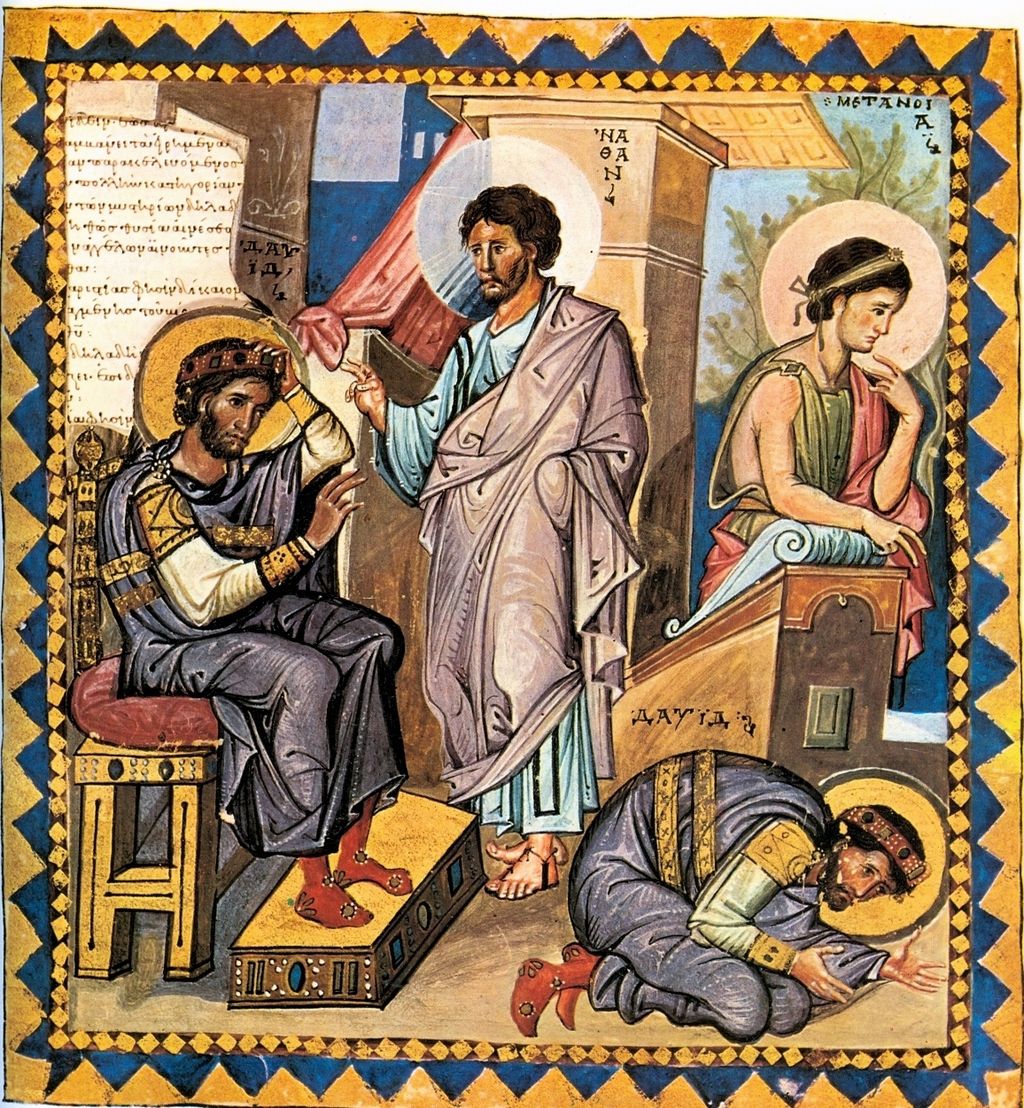
Paris Psalter, folio 136v  'Reproched de Nathan a David, David penitent

Paris Psalter, folio 136v ‘Reproched de Nathan a David, David penitent

  Psalm 6

<To the leader: with stringed instruments; according to The Sheminith. A Psalm of David.>
O LORD, do not rebuke me in your anger, or discipline me in your wrath.
 2 Be gracious to me, O LORD, for I am languishing;
O LORD, heal me, for my bones are shaking with terror.
 3 My soul also is struck with terror, while you, O LORD– how long?
 4 Turn, O LORD, save my life; deliver me for the sake of your steadfast love.
 5 For in death there is no remembrance of you; in Sheol who can give you praise?
 6 I am weary with my moaning; every night I flood my bed with tears;
 I drench my couch with my weeping.
 7 My eyes waste away because of grief; they grow weak because of all my foes.
 8 Depart from me, all you workers of evil, for the LORD has heard the sound of my weeping.
 9 The LORD has heard my supplication; the LORD accepts my prayer.
 10 All my enemies shall be ashamed and struck with terror;
they shall turn back, and in a moment be put to shame.
 

We will never know the situation that any particular Psalm is spoken originally from, except perhaps in cases where the Psalm itself gives us clues. Psalm 6 cries out in terms that reflect in turn a sense of alienation from God’s steadfast love, physical ailment or illness, anxiety and depression, and persecution by enemies and it is possible that all of these were afflicting the Psalmist at one particular moment or that the Psalmist may have used language and memory of these experiences to speak to the distress they feel in the moment as they cry out to the LORD. The Psalmist views their life as resting in the LORD’s hands and begins the appeal directly to God, crying out the name of the LORD. The Psalmist appeals for God’s graciousness not for the Psalmists own merit or worthiness but out of God’s hesed (steadfast love). In language that appears frequently through the psalter, the Psalmist speaks of their anguish and asks for God to end it. God’s anger may not be the only struggle of the Psalmist but it is the decisive one, for God’s anger is what the Psalmist is crying out for God to set aside so that they may be healed and their enemies may be put to shame.

The Psalmist cries out ‘how long’ and pleads for God to turn and relieve the poet’s suffering. Whether the poet is literally suffering in their bones (vs. 2) soul (vs. 3) and eyes (vs.7) there is a connection between external stresses and physical symptoms. As Rolf Jacobson aptly states, “anguish can dehumanize a sufferer, so that one’s sense of self is reduced to pain in one’s bones, body skin.” (Nancy de Clarisse-Walford, 2014, p. 105) Crying out how long while a traditional cry of lament also may indicate that the “pain described is no longer bearable and the speaker is at the breaking point. The intent of the phrase is to mobilize YHWH in a moment of desperate need.” (Brueggemann, 2014, p. 48) And perhaps if the question how long can be answered the Psalmist can endure until the LORD’s anger has passed.

This is one of the first Psalms we deal with the anger of God in relation to the faithful one, the Psalmist who cries out in lament. God’s anger is a necessary corollary of God’s love or as Jim Nieman, my preaching instructor years ago put it, “God’s anger is not the opposite of God’s love, God’s indifference would be the opposite of God’s love.” God’s love is not a sweet sentimentality to the Psalmist or throughout the Bible. God may care for and love me, but God also loves my neighbor and when my actions result in suffering or death to my neighbor then God’s anger arises from that love. Yet God’s steadfast love is always stronger than God’s anger and God’s anger is always connected to that love. (Nancy de Clarisse-Walford, 2014, p. 107)

The Psalmist trusts that in going to the LORD in lament that the Psalmist words are heard. Faith is far more than an optimistic state of mind for the Hebrew people, it is an active calling upon God to act according to God’s steadfast love precisely from the position of suffering. Even though God’s ways may be unknowable at times and mysterious there is still potent power in crying out to the LORD and that God actively hears and intervenes in their lives and in their world. And from my own experience it is often these times of questioning and suffering and anguish where later we can see the faith of the one who endures and cries out deepened. It is a fuller faith that trusts in a God who is present in the midst of the times of joy and the times of tears. A life which can endure the times where our bed is flooded with tears because we know in God’s mysterious time that God’s steadfast love will show itself and that God’s steadfast love will last longer than the suffering or the anger.  That eventually the LORD does hear the sound of the Psalmist, ancient and contemporary, weeping and that the LORD does act upon these pleading words.

One final note on the Psalm in verse 5 where it mentions “for in death there is no remembrance of you; in Sheol who can give you praise?” In ancient Israel there is not yet a hope for a resurrection of the dead or anything more than a shadowy existence in the afterlife. Thinking about the resurrection is something that emerges much later and is up for debate at the time of Jesus. In the New Testament this will be a part of the disagreement between the Sadducees and the Pharisees. At the time the Psalms are written they are written with a very earthly understanding of God’s blessings and God’s anger. God’s steadfast love was a worldly reality that unfolded in the ways God took care of God’s people (or disciplined God’s people) and this may be hard for us to approach in the same way today in a secular world where we no longer think of unseen forces moving on our world but part of the Christian and Jewish understanding of reality is that God does act upon our world. For Christians it becomes a part of the Lord’s Prayer when we pray, ‘thy will be done on earth as it is in heaven.’

Psalm 5- The God Who Hears and Protects

Gustave Dore, David Mourning Absalom (1866)

Gustave Dore, David Mourning Absalom (1866)

Psalm 5

<To the leader: for the flutes. A Psalm of David.>
 Give ear to my words, O LORD;give heed to my sighing.
 2 Listen to the sound of my cry, my King and my God, for to you I pray.
 3 O LORD, in the morning you hear my voice; in the morning I plead my case to you, and watch.
 4 For you are not a God who delights in wickedness; evil will not sojourn with you.
 5 The boastful will not stand before your eyes; you hate all evildoers.
 6 You destroy those who speak lies;the LORD abhors the bloodthirsty and deceitful.
 7 But I, through the abundance of your steadfast love, will enter your house,
 I will bow down toward your holy temple in awe of you.
 8 Lead me, O LORD, in your righteousness because of my enemies;
 make your way straight before me.
 9 For there is no truth in their mouths; their hearts are destruction;
their throats are open graves; they flatter with their tongues.
 10 Make them bear their guilt, O God;let them fall by their own counsels;
because of their many transgressions cast them out, for they have rebelled against you.
 11 But let all who take refuge in you rejoice;let them ever sing for joy.
Spread your protection over them,so that those who love your name may exult in you.
 12 For you bless the righteous, O LORD;you cover them with favor as with a shield.


The God of the Psalmist, and the God presented throughout the bible, is a God who takes sides and values certain things and does not like others. This is not the impassive, unmoved mover of the philosophy of the 1700s-1900s who set the world in motion and then allowed it to move through time like a machine. The passionate cries of the Psalmist assume a God who not only hears but actively responds to the complaints and needs of the poet. Again and again God is named, implored to hear, listen, heed and ultimately to act. One of the courageous acts of the Psalmist and those who pray the Psalms is calling on God to be the God they expect God to be. They remind God of the contrast between the situation they perceive and the things they understand God to value.

In Psalm 5 the contrast is stated in terms of wickedness, lies, bloodshed, deceit and evil. The Psalmist is one who seeks righteousness, and as in Psalm 1 trusts, “for the LORD watches over the way of the righteous, but the way of the wicked will perish” (Psalm 1.6) and so the poet reminds the LORD again that “you are not a God who delights in wickedness.” Yet the complaint of the Psalmist arises out of the situation where the wicked, the evil, the boastful, liars, bloodthirsty and deceitful are the ones who the Psalmist perceives as their troublemakers. The Psalmist calls on God to act and to do something about this. Perhaps there are those by flattery who are obtaining power or who are accusing the writer of the psalm and the Psalmist asks for the guilt to fall upon them. As in Psalms three and four the Psalmist calls out for protection and for the LORD’s deliverance from the situation that the Psalmist finds themselves caught up within.

There is also the reality that the Psalmist, while attempting to be faithful, relies upon God’s steadfast love. The word translated steadfast love is hesed which also can be translated as grace. This is one of the many places in the Psalms where Martin Luther and others could find evidence of the gracious God who met the hearer in the midst of their own unworthiness. As in the reformation where the response to God’s grace was to love, serve, worship, and obey the LORD, so in the Psalm the steadfast love of the LORD is cause for awe and worship. The LORD is the Psalmist’s refuge and the refuge of all who seek the LORD. In language that would be familiar to many the LORD is refuge and shield, protection in the midst of their trouble and a safe place where the faithful may sing for joy and rejoice.

Jeremiah 22: Justice, the King and Judgment

Justice and the Covenant

Gustav Dore, Jeremiah Preaching (1865)

Gustav Dore, Jeremiah Preaching (1865)

1 Thus says the LORD: Go down to the house of the king of Judah, and speak there this word, 2 and say: Hear the word of the LORD, O King of Judah sitting on the throne of David– you, and your servants, and your people who enter these gates. 3 Thus says the LORD: Act with justice and righteousness, and deliver from the hand of the oppressor anyone who has been robbed. And do no wrong or violence to the alien, the orphan, and the widow, or shed innocent blood in this place. 4 For if you will indeed obey this word, then through the gates of this house shall enter kings who sit on the throne of David, riding in chariots and on horses, they, and their servants, and their people. 5 But if you will not heed these words, I swear by myself, says the LORD, that this house shall become a desolation. 6 For thus says the LORD concerning the house of the king of Judah:
You are like Gilead to me, like the summit of Lebanon;
but I swear that I will make you a desert, an uninhabited city.
7 I will prepare destroyers against you, all with their weapons;
they shall cut down your choicest cedars and cast them into the fire.
8 And many nations will pass by this city, and all of them will say one to another, “Why has the LORD dealt in this way with that great city?” 9 And they will answer, “Because they abandoned the covenant of the LORD their God, and worshiped other gods and served them.”
10 Do not weep for him who is dead, nor bemoan him;
weep rather for him who goes away, for he shall return no more to see his native land.

Two conflicting views of reality are coming into conflict between the prophetic and the royal ideologies of the day. Jeremiah’s worldview comes out of the Mosaic and particular the Deuteronomic covenant where the covenant is conditional, if the people live into the vision that God has set before them they will be bless and if they do not they shall be cursed. For example the structure of Deuteronomy 28 illustrates this well:
If you will only obey the LORD your God, by diligently observing all his commandments that I am commanding you today, the LORD your God will set you high above all the nations of the earth; 2all the blessings shall come upon you and overtake you, if you obey your God:….
But if you will not obey the LORD your God by diligently observing all his commandments and decrees, which I am commanding you today, then all these curses shall come upon you and overtake you:
Deuteronomy 28: 1,2,15
And the prophetic voice interprets these obligations primarily not in terms of cultic actions but in terms of living in justice/righteousness (justice and righteousness are the same word families in both Hebrew and Greek). In contrast the royal ideology views God’s commitment as unconditional, so long as there is a Davidic king and a temple God will not forsake God’s people. The prophet Jeremiah tries again and again to call the people and the rulers back to the vision of justice and righteousness. They are charged again to not shed innocent blood, to care for the weakest of the society, the widows and orphans, and their success is conditional upon their living out of this justice. In contrast to the desire to accumulate more and more wealth among the elite as a way of securing their position, Jeremiah points to the practice of justice and righteousness as a condition for their security which ultimately comes from God. Numerous passages throughout the prophets echo this sentiment, perhaps one of the most well known being from Amos:
But let justice roll down like waters, and righteousness like an ever-flowing stream. Amos 5: 24

The King Of No Account

Vultures around a Dead Donkey

Vultures around a Dead Donkey

11 For thus says the LORD concerning Shallum son of King Josiah of Judah, who succeeded his father Josiah, and who went away from this place: He shall return here no more, 12 but in the place where they have carried him captive he shall die, and he shall never see this land again.
13 Woe to him who builds his house by unrighteousness, and his upper rooms by injustice;
who makes his neighbors work for nothing, and does not give them their wages;
14 who says, “I will build myself a spacious house with large upper rooms,”
and who cuts out windows for it, paneling it with cedar, and painting it with vermilion.
15 Are you a king because you compete in cedar?
Did not your father eat and drink and do justice and righteousness?
Then it was well with him.
16 He judged the cause of the poor and needy; then it was well.
Is not this to know me? says the LORD.
17 But your eyes and heart are only on your dishonest gain,
for shedding innocent blood, and for practicing oppression and violence.
18 Therefore thus says the LORD concerning King Jehoiakim son of Josiah of Judah: They shall not lament for him, saying, “Alas, my brother!” or “Alas, sister!” They shall not lament for him, saying, “Alas, lord!” or “Alas, his majesty!” 19 With the burial of a donkey he shall be buried– dragged off and thrown out beyond the gates of Jerusalem.
20 Go up to Lebanon, and cry out, and lift up your voice in Bashan;
cry out from Abarim, for all your lovers are crushed.
21 I spoke to you in your prosperity, but you said,
“I will not listen.” This has been your way from your youth,
for you have not obeyed my voice.
22 The wind shall shepherd all your shepherds,
and your lovers shall go into captivity;
then you will be ashamed and dismayed because of all your wickedness.
23 O inhabitant of Lebanon, nested among the cedars,
how you will groan when pangs come upon you, pain as of a woman in labor!
24 As I live, says the LORD, even if King Coniah son of Jehoiakim of Judah were the signet ring on my right hand, even from there I would tear you off 25 and give you into the hands of those who seek your life, into the hands of those of whom you are afraid, even into the hands of King Nebuchadrezzar of Babylon and into the hands of the Chaldeans. 26 I will hurl you and the mother who bore you into another country, where you were not born, and there you shall die. 27 But they shall not return to the land to which they long to return.
28 Is this man Coniah a despised broken pot, a vessel no one wants?
Why are he and his offspring hurled out and cast away in a land that they do not know?
29 O land, land, land, hear the word of the LORD!
30 Thus says the LORD: Record this man as childless,
a man who shall not succeed in his days;
for none of his offspring shall succeed in sitting on the throne of David,
and ruling again in Judah.

Much of the ire of the prophets is directed at the kings, and we need to remember that this is a time much different from our own. In an age where the vast majority of the population was illiterate and relied on the kings and the elites of the society to establish the systems of justice that the society operated within. As Brueggeman accurately states, “The conduct of the king is decisive for the weal or woe of the entire social system.” (Brueggemann, 1998, p. 194) and so here at the end of the Davidic monarchy, at the point where the elites are being taken into exile, including King Jehoiakim and his son Jeconiah (here referred to as Coniah) who is contrasted to his well respected father/grandfather Josiah. He is of no account, he will not have the honors he desires, instead of an honorable death Jeremiah declares he will have the death of a donkey—simply thrown beyond the gates. God is done with Jeconiah, ready to cast him off. In contrast to Josiah who rebuilt the temple, his son and grandson are accused with surrounding themselves with luxury far greater. This is not a new critique, it goes at least as far back as Solomon when the amount of resources placed into the temple is compared with the amount of time and resources that go into the construction of Solomon’s houses. Yet in contrast to Jeremiah’s words at the end of this chapter about his being recorded childless, when the people return to Jerusalem under the Persian empire it will be Zerubabbel, the grandson of Jeconiah will be leading the people home. The grandson of the one who if he was a signet ring on the LORD’s finger he would be cast off will experience the reversal of being the signet ring that is put back on after the exile is over.

On that day, says the LORD of hosts, I will take you, O Zerubbabel my servant, son of Shealtiel, says the LORD, and make you like a signet ring; for I have chosen you, says the LORD of hosts. Haggai 2: 24

And the harsh words of Jeremiah about the type of death Jehoiakim (or Jehoiachin) would receive seem also not to come to pass as the ending of 2 Kings points to:

27 In the thirty-seventh year of the exile of King Jehoiachin of Judah, in the twelfth month, on the twenty-seventh day of the month, King Evil-merodach of Babylon, in the year that he began to reign, released King Jehoiachin of Judah from prison; 28 he spoke kindly to him, and gave him a seat above the other seats of the kings who were with him in Babylon. 29 So Jehoiachin put aside his prison clothes. Every day of his life he dined regularly in the king’s presence. 30 For his allowance, a regular allowance was given him by the king, a portion every day, as long as he lived. 2 Kings 25: 27-30

Jeremiah 8:4- 9:1: The Headstrong People and the Heartsick Prophet and God

Stallions charging

I am trying something a little different as I start again with Jeremiah: rather than breaking each section into several posts throughout the week I am going to try to do one larger post for those who enjoy this type of Biblical reflection but to where those who don’t read this part of the blog don’t have multiple posts weekly on Jeremiah. I have also been given the honor of reviewing Binyamin Lau’s Jeremiah: The Fate of the Prophet and that should be coming in the next couple weeks as well as integrating some of his insights into my journey through Jeremiah.

Jeremiah 8:4-17
4 You shall say to them, Thus says the LORD:
When people fall, do they not get up again?
If they go astray, do they not turn back?
5 Why then has this people turned away in perpetual backsliding?
They have held fast to deceit, they have refused to return.
6 I have given heed and listened, but they do not speak honestly;
no one repents of wickedness, saying, “What have I done!”
All of them turn to their own course, like a horse plunging headlong into battle.
7 Even the stork in the heavens knows its times;
and the turtledove, swallow, and crane observe the time of their coming;
but my people do not know the ordinance of the LORD.
8 How can you say, “We are wise, and the law of the LORD is with us,”
when, in fact, the false pen of the scribes has made it into a lie?
9 The wise shall be put to shame, they shall be dismayed and taken;
since they have rejected the word of the LORD, what wisdom is in them?
10 Therefore I will give their wives to others and their fields to conquerors,
because from the least to the greatest everyone is greedy for unjust gain;
from prophet to priest everyone deals falsely.
11 They have treated the wound of my people carelessly,
 saying, “Peace, peace,” when there is no peace.
12 They acted shamefully, they committed abomination;
yet they were not at all ashamed, they did not know how to blush.
Therefore they shall fall among those who fall; at the time when I punish them,
they shall be overthrown, says the LORD.
13 When I wanted to gather them, says the LORD,
there are no grapes on the vine, nor figs on the fig tree;
even the leaves are withered, and what I gave them has passed away from them.
14 Why do we sit still? Gather together, let us go into the fortified cities and perish there;
for the LORD our God has doomed us to perish, and has given us poisoned water to drink,
because we have sinned against the LORD.
15 We look for peace, but find no good,
for a time of healing, but there is terror instead.
16 The snorting of their horses is heard from Dan;
at the sound of the neighing of their stallions the whole land quakes.
They come and devour the land and all that fills it, the city and those who live in it.
17 See, I am letting snakes loose among you,
adders that cannot be charmed, and they shall bite you, says the LORD.

If you have been following through Jeremiah to this point you could be forgiven for thinking you have read much of this before. Much as people agonizing over the brokenness of a relationship or the ending of a marriage often revisit the same material again and again trying to make sense of the reality of the changes they are dealing with, we see God continuing to struggle through God’s own disillusionment and emotions. As I’ve mentioned before the God portrayed in Jeremiah struggles with very human emotions and struggles against the coming disaster, desiring any evidence of a return to the way things could have been. Yet the falsehood of the people, which begins at the top with the prophets and the priests, has set them on a course that is moving away from God. Over and over we hear God saying, turn, return, repent but the people are charging towards their own destiny as a horse charging in battle. Even the law has been corrupted by the scribes, whether it is by their interpretation of it or their actual recording of it we do not know, but this is a world where only a select few were literate and they were the interpreters of God’s will to the people.

Two things that caught my attention reading through this, one is the reference to the fig tree, in verse 13, that neither puts our figs and even its leaves are withered. I am becoming more and more convinced of the influence of Jeremiah’s imagery on the New Testament, and in Mark 11(as well as Matthew) we encounter Jesus encountering a fig tree with no fruit, cursing it and it withers-which is a direct allusion to the temple. In earlier posts I have also talked about the vine/vineyard imagery. Both figs and grapes are common parts of the agricultural life of the people in Judah. The other image is the transition to snakes in verse 17, which may also point back to Numbers 21 where the Lord sent snakes among the people in their journey in the wilderness and Moses eventually was commanded to make a bronze serpent that the people could look upon and live.

God continues to agonize over the judgment that is coming upon God’s chosen people. If there was some way to restore the relationship without the removing of God’s protection and the harsh reality of the coming Babylonian invasion God seems open to it, but the direction of the people has moved away from God’s pursuit, and soon God’s people will also join in the grieving.

scarsofheart

Jeremiah 8: 18-9:1
18 My joy is gone, grief is upon me, my heart is sick.
19 Hark, the cry of my poor people from far and wide in the land:
“Is the LORD not in Zion? Is her King not in her?”
(“Why have they provoked me to anger with their images, with their foreign idols?”)
20 “The harvest is past, the summer is ended, and we are not saved.”
21 For the hurt of my poor people I am hurt,
I mourn, and dismay has taken hold of me.
22 Is there no balm in Gilead? Is there no physician there?
Why then has the health of my poor people not been restored?
9:1 O that my head were a spring of water, and my eyes a fountain of tears,
so that I might weep day and night for the slain of my poor people!
Who is doing the weeping here, is it the prophet or is it God, or perhaps it is both. The prophet is so closely tied into God’s emotions and yet these are his people too. There is a heartsick God and a heartsick prophet who are mourning for the people whose path is taking them to a place where they will experience hurt and destruction. It is like the parent watching a child go down a path that they know will cause them pain but no words they say will turn them away, or it is like the person who loves the addict but has to allow them to follow the path they are on until they are ready to receive treatment not as a punishment but as a new opportunity. The old African American spiritual points to the reality of a the region of Gilead, East of the Jordan, being famous for a balm, an aromatic resin famous for its properties of easing pain and covering the smell of a festering wound:

There is a balm in Gilead to make the wounded whole
There is a balm in Gilead to heal the sin sick soul. (Evangelical Lutheran Worship 2006)

But in contrast to not only the words in the song and the hopeful nature, Jeremiah and God see no healing, even in Gilead. There is no prescription medication or course of treatment that will ease the pain of what is to come.

purple rose 01 by picsofflowers.blogspot.com

Searching for the Righteous One: Jeremiah 5: 1-6

Icon of Jeremiah

Icon of Jeremiah

Jeremiah 5: 1-6

Run to and fro through the streets of Jerusalem, look around and take note!
 Search its squares and see if you can find one person who acts justly and seeks truth—
so that I may pardon Jerusalem.
 2 Although they say, “As the LORD lives,” yet they swear falsely.
 3 O LORD, do your eyes not look for truth?
 You have struck them, but they felt no anguish;
 you have consumed them, but they refused to take correction.
 They have made their faces harder than rock; they have refused to turn back.
 4 Then I said, “These are only the poor, they have no sense;
for they do not know the way of the LORD, the law of their God.
 5 Let me go to the rich and speak to them; surely they know the way of the LORD, the law of their God.
” But they all alike had broken the yoke, they had burst the bonds.
 6 Therefore a lion from the forest shall kill them,
 a wolf from the desert shall destroy them.
 A leopard is watching against their cities;
 everyone who goes out of them shall be torn in pieces—
 because their transgressions are many, their apostasies are great.

Where is the righteous person, show me the person who I can look at and say all this pain it really is worth it. Yet the vision, the hope seems dashed. God is so deeply wounded that God that God’s pain seems to be overwhelming God’s love. Such is the risk of caring deeply. You can say many things about the picture of God we see in Jeremiah, but you can never make the claim that this God does not care and is uninvolved. In an intentional echo of Genesis 18 when Abraham intercedes before God for the people of Sodom and Gomorrah and bargains with God down to ten righteous people, now God tells Jeremiah ‘just find one.’ Things have become so bad that the people are living in a lie and the lie has become their reality. It is as if they have told themselves over and over again a falsehood until they believe it is true. Beyond that they have begun to believe that the lie has divine sanction. Something is so horribly wrong in the relationship of the people with God that it appears irreconcilable.

Jeremiah seems to say back to God, do you not want to see the truth. You have sought and believed the best possible in these people. God seems to have, in Jeremiah’s mind, done everything to interpret the peoples actions in the best possible light and the divine trust has been met with increased recalcitrance.  Yet, Jeremiah too seems reluctant to give up hope. These are his people, his family as well and so he goes first among the poor, and then assuming it is ignorance (remember this is a pre-literate society where the poor would have been unable to read and this is a time where most people would have made it to the temple primarily for festivals if they were able) Jeremiah goes to the elite. Those who have no excuse, who can read and would have been taught the law of God which contains the vision of peace and justice God desired for them to live in, and they too have refused to live within it.

In a relationship we see a God who doesn’t want to believe that things have reached this point, but has seen the hopes and dreams of the relationship dashed by the people and we hear the wounded words go forth. The very animals of nature begin to represent the destruction that is coming, the people have become like sheep without a shepherd and their fence has been taken away. It is almost as if the shepherd walks away with tears in his eyes, exhausted from trying to lead and protect them surrendering them to the natural consequences of the world they live in.

 purple rose 01 by picsofflowers.blogspot.com

The Poetry of Death and Destruction: Jeremiah 4: 11-18

The Prophet Jeremiah by Michelangelo

The Prophet Jeremiah by Michelangelo

Jeremiah 4: 11-18

 11 At that time it will be said to this people and to Jerusalem: A hot wind comes from me out of the bare heights in the desert toward my poor people, not to winnow or cleanse- 12 a wind too strong for that. Now it is I who speak in judgment against them.
 13 Look! He comes up like clouds, his chariots like the whirlwind;
his horses are swifter than eagles– woe to us, for we are ruined!
 14 O Jerusalem, wash your heart clean of wickedness so that you may be saved.
 How long shall your evil schemes lodge within you?
 15 For a voice declares from Dan and proclaims disaster from Mount Ephraim.
 16 Tell the nations, “Here they are!”
Proclaim against Jerusalem, “Besiegers come from a distant land;
they shout against the cities of Judah.
 17 They have closed in around her like watchers of a field,
 because she has rebelled against me, says the LORD.
 18 Your ways and your doings have brought this upon you.
This is your doom; how bitter it is! It has reached your very heart.”
 
The prophet lapses into his deathly poetry again, trying desperately with his words to shake his people out of what Brueggeman calls their “religious indifference and covenantal recalcitrance”  (Brueggemann 1998, 56) Yet the words seem to be falling on deaf ears, the party continues and nobody wants to sober up and go home. Yet the Northern tribe of Dan is proclaiming the disaster that is coming.

Though it will be the Babylonian army that will come and lay siege to Jerusalem and take the people into exile, they are not named. The people and the prophet live in different theological realities.  The prophet sees the way in which God is sovereign over not just Israel or Judah, but over the besiegers and conquerors as well, and that God is indeed moving in judgment towards the people of Judah for the ways they have not kept their covenantal faith.

The people are presented with two conflicting realities. The rulers and the priests pass on the platitudes that things are ok, as well as apparently many of those looked upon as prophets. They continue to prop up the Davidic regime and the temple hierarchy, and the people really have no reason to question the way things are. It is a much different world, where most people are illiterate and do not have anything beyond their oral memory to challenge the king and the priests who not only bear the recorded word of God, they are the only ones who are educated enough to be able to approach the words we take for granted. Also worship has become focused on the temple, and so most people may make it to the temple for the festivals (much as people who come at Christmas and Easter) and may have their own practices which may or may not line up with the temple ideology, but they are reliant upon the priests and the king to point them to what covenantal faithfulness looks like. Jeremiah, the prophet and poet, is one of the few voices of dissent pointing to the way in which the leaders have failed to be the exemplars of covenantal faithfulness that may lead the people back into God’s way of justice and shalom.

purple rose 01 by picsofflowers.blogspot.com

The Siren Call: Jeremiah 4: 5-10

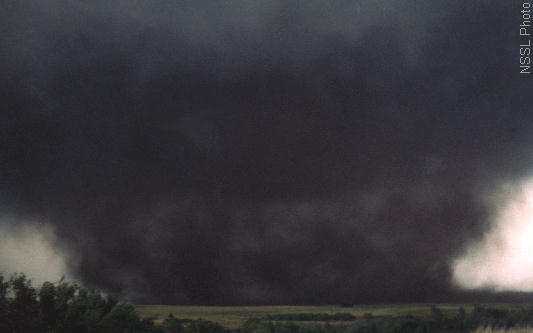
F4 Wedge Type Tornado, nearly a mile wide that hit Binger, Oklahoma

F4 Wedge Type Tornado, nearly a mile wide that hit Binger, Oklahoma

Jeremiah 4: 5-10

5 Declare in Judah, and proclaim in Jerusalem, and say:
Blow the trumpet through the land; shout aloud and say,
 “Gather together, and let us go into the fortified cities!”
 6 Raise a standard toward Zion, flee for safety, do not delay,
for I am bringing evil from the north, and a great destruction.
 7 A lion has gone up from its thicket, a destroyer of nations has set out;
 he has gone out from his place to make your land a waste;
 your cities will be ruins without inhabitant.
 8 Because of this put on sackcloth, lament and wail:
“The fierce anger of the LORD has not turned away from us.”

 9 On that day, says the LORD, courage shall fail the king and the officials; the priests shall be appalled and the prophets astounded. 10 Then I said, “Ah, Lord GOD, how utterly you have deceived this people and Jerusalem, saying, ‘It shall be well with you,’ even while the sword is at the throat!”

 When I lived in Oklahoma, tornado sirens were a way of life. When spring came you knew that if the siren was blaring its dissonant tones that you needed to check the TV to see where the storm might be and how dangerous the storm was. Some storms were storms that you could weather in place, going to the safe room in your house. But some storms, if you were in their path you didn’t want to stay in place and wait out, you needed to flee to designated areas that were better able to withstand the winds.  And yet sometimes even fleeing to a strong place is not enough, as was the case of the F5 tornado that struck Oklahoma City in 1999 destroying or badly damaging over 8,000 homes.

Jeremiah has the unfortunate role of being the siren, alerting the people to a disaster they do not expect nor do they want to see. War is approaching, an unspecified invading  army is coming to lay waste to the land. Destroying cities, burning crops, killing and enslaving and the Lord has withdrawn the protection they have relied upon in the past. The prophet goes even farther, to place the Lord behind the movement of the predicted enemy. The Lord has made a choice, a dreadful choice, a choice against his former people. It is a choice the prophet has allowed us to see the Lord agonizing over, and yet the pieces are in motion, the storm is in motion and yet the prophet continues to hope for a turn. The prophet desires for the people to put on sackcloth, to lament and wail, and perhaps the Lord will turn once more.

The very people who should be keeping the people in the relationship with God, the king-priest-prophet have become the very people who have dulled the people to the siren’s call. There is a Davidic king and the temple which the people have begun to place their trust in, yet the prophets are always pointing to God’s vision of justice and shalom (harmony/peace) and the ways that the people have betrayed this vision.

Jeremiah makes a bold statement, in essence placing the blame at God’s feet, for the people have heard and received the message that it is well (most likely from the king and his officials, the priests and the prophets) while terror approaches. One of the roles of the prophet is to stand between the people and God, challenging both. The prophet will love both God and the people and weep with and for both of them, and in standing between the two his heart and body will be broken. Yet Jeremiah, among the prophets, seems to stand alone-for the other prophets of his time seem to be singing in unison with the kings and priests. Jeremiah speaks dangerous words, but they are the words of the faithful willing to enter into the struggle with God, to challenge God, to even go so far as calling God a traitor while still remaining in the relationship. As Moses in the Exodus, Jeremiah intercedes for the people he loves and yet even Jeremiah will have his limits as we will find.

purple rose 01 by picsofflowers.blogspot.com