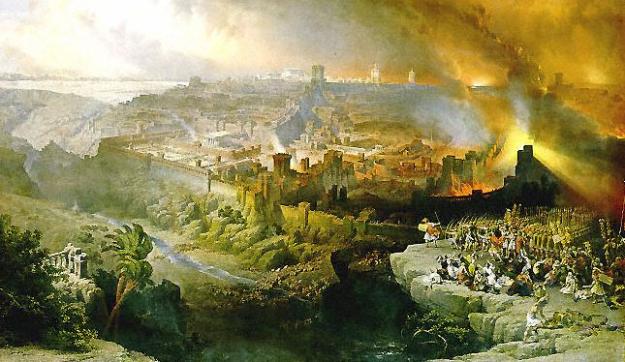
1 Kings 12: A Divided Kingdom

By Hans Holbein the Younger – Christian Müller; Stephan Kemperdick; Maryan Ainsworth; et al, Hans Holbein the Younger: The Basel Years, 1515–1532, Munich: Prestel, 2006, ISBN 9783791335803., Public Domain, https://commons.wikimedia.org/w/index.php?curid=5977456

1 Kings 12: 1-24 A Divided Kingdom

1 Rehoboam went to Shechem, for all Israel had come to Shechem to make him king. 2 When Jeroboam son of Nebat heard of it (for he was still in Egypt, where he had fled from King Solomon), then Jeroboam returned from Egypt. 3 And they sent and called him; and Jeroboam and all the assembly of Israel came and said to Rehoboam, 4 “Your father made our yoke heavy. Now therefore lighten the hard service of your father and his heavy yoke that he placed on us, and we will serve you.” 5 He said to them, “Go away for three days, then come again to me.” So the people went away.

6 Then King Rehoboam took counsel with the older men who had attended his father Solomon while he was still alive, saying, “How do you advise me to answer this people?” 7 They answered him, “If you will be a servant to this people today and serve them, and speak good words to them when you answer them, then they will be your servants forever.” 8 But he disregarded the advice that the older men gave him, and consulted with the young men who had grown up with him and now attended him. 9 He said to them, “What do you advise that we answer this people who have said to me, ‘Lighten the yoke that your father put on us’?” 10 The young men who had grown up with him said to him, “Thus you should say to this people who spoke to you, ‘Your father made our yoke heavy, but you must lighten it for us’; thus you should say to them, ‘My little finger is thicker than my father’s loins. 11 Now, whereas my father laid on you a heavy yoke, I will add to your yoke. My father disciplined you with whips, but I will discipline you with scorpions.'”

12 So Jeroboam and all the people came to Rehoboam the third day, as the king had said, “Come to me again the third day.” 13 The king answered the people harshly. He disregarded the advice that the older men had given him 14 and spoke to them according to the advice of the young men, “My father made your yoke heavy, but I will add to your yoke; my father disciplined you with whips, but I will discipline you with scorpions.” 15 So the king did not listen to the people, because it was a turn of affairs brought about by the LORD that he might fulfill his word, which the LORD had spoken by Ahijah the Shilonite to Jeroboam son of Nebat.

16 When all Israel saw that the king would not listen to them, the people answered the king,

“What share do we have in David? We have no inheritance in the son of Jesse. To your tents, O Israel! Look now to your own house, O David.”

So Israel went away to their tents. 17 But Rehoboam reigned over the Israelites who were living in the towns of Judah. 18 When King Rehoboam sent Adoram, who was taskmaster over the forced labor, all Israel stoned him to death. King Rehoboam then hurriedly mounted his chariot to flee to Jerusalem. 19 So Israel has been in rebellion against the house of David to this day.

20 When all Israel heard that Jeroboam had returned, they sent and called him to the assembly and made him king over all Israel. There was no one who followed the house of David, except the tribe of Judah alone.

21 When Rehoboam came to Jerusalem, he assembled all the house of Judah and the tribe of Benjamin, one hundred eighty thousand chosen troops to fight against the house of Israel, to restore the kingdom to Rehoboam son of Solomon. 22 But the word of God came to Shemaiah the man of God: 23 Say to King Rehoboam of Judah, son of Solomon, and to all the house of Judah and Benjamin, and to the rest of the people, 24 “Thus says the LORD, You shall not go up or fight against your kindred the people of Israel. Let everyone go home, for this thing is from me.” So they heeded the word of the LORD and went home again, according to the word of the LORD.

At the end of Solomon’s reign, Israel is only three generations removed from a United Israelite kingdom being a collection of loosely affiliated tribal groups and territories. Solomon’s forty year reign put the kingdom on a fast track to becoming a powerful monarchy involved in global trade and with an aggressive set of building projects. Although Solomon attempted to replace the tribal power structures with a regional set of administrators to deliver the taxes and to conscript labor for the state projects there is a growing tension between Solomon’s Jerusalem based monarchy and the population which has borne the burden of these projects through both taxation of their (primarily) agricultural production and the physical labor of construction. The prosperity of Solomon’s reign may have given the illusion of Israel being a modern unified kingdom, but as Alex Israel states, “the seam between Judah and the other tribes is prone to unravelling.” (Israel, 2013, p. 154)

Rehoboam the son of Solomon comes to Shechem, one of the most important cities of the northern tribes of Israel, to be anointed as king. We do not know whether this is, at the behest of his advisors, a strategic political and symbolic move to honor the northern tribes and attempt to provide unity or a move to assert control over these tribes but it leads to the people giving voice to their dissatisfaction with the administration of Rehoboam’s father and their desire for change. There still seems to be a chance for the kingdom to remain united if Rehoboam will make some concessions to the people who have borne the taxation and labor of Solomon’s kingdom building. Additionally, the northern tribes may be concerned about the security situation on their borders with the rise of Rezon in Damascus and the selling off of Cabul to finance Solomon’s construction and acquisition of gold and other precious resources. It is likely that the northern tribes felt that they were being asked to carry a heavy yoke on behalf of the Solomon’s monarchy without sharing in the benefits of their burden. (Cogan, 2001, pp. 351-352) Jerusalem and Judah have grown wealthy and prosperous while northern Israel has lost territory, security, and the fruit of their labor. With their taxation they ask not for representation, but for their monarch to hear their plight and to be a king for all Israel, not merely the king of Judah and Jerusalem.

During the three days intermission in the story, Rehoboam consults two distinct groups of counselors for advice. One group of counselors are his father’s men who may remember a time before Solomon’s forty-year reign or who may have seen the cost the people of the land bore. Their advice of serving the people and giving kind words to them has the potential to ease the tensions which threaten to pull the seam between Judah and the other tribes apart. But the advice of the group derogatorily in Hebrew called ‘boys’ (hayla-dim) (NIB III: 102) only inflames the tensions. Rehoboam identifies with this group saying, “What do you advise that we answer this people.” It is likely that these comrades of Rehoboam have grown up knowing the affluence of Solomon’s court and have been insulated from the burden of the people. They probably have grown up in an environment where they never knew, in Brueggemann’s words,

anything but extravagant privilege and a heavy sense of their own entitlement. They likely take their affluence as normal and have never known anything other than a standard of living supported by heavy taxation. (Brueggemann, 2000, p. 156)

These ‘boys’ counsel their king and companion to display strength in defending their way of life. Solomon may have been a strong king who demanded much of the people, but Rehoboam will be build a stronger kingdom by being more demanding. The childish advice includes a graphic illustration of the potency of the new king by saying that his member[1] is larger than his father’s thigh. Rehoboam does not reiterate this part of the advice at the gathering of the people but he accepts the counsel of those who, like him, have benefited from the policies of his father and attempts to bluster the people into submission.

There is a common misperception among leaders, particularly leaders who are trying to portray themselves in a masculine manner, that misunderstands strength as toughness or cruelty. This occurs even in modern societies like the United States where a political leaders try to show how tough they are on crime or immigration by incredibly cruel policies or who try to assert dominance over their opponents. Often these leaders are not people of distinguished careers in the military or arenas of physical competition, but they create this persona of strength which may attempt to cover their own insecurities. This scene with the attempt by Rehoboam and his counterparts to bluster and dominate the nation with a heavier yoke and scorpions seems to be an attempt to show toughness through cruelty. The ‘scorpions’ mentioned may be a lash with metal edges, but whatever the meaning of this term it is designed to invoke pain greater than a whip.

The response of the people, “What share do we have in David? We have no inheritance in the son of Jesse. To your tents, O Israel! Look now to your own house, O David.” echoes an earlier incident in the reign of King David. In the aftermath of the rebellion of David’s son Absalom as weakened David is reconsolidating power in Israel when Sheba son of Bichri utters identical words (2 Samuel 19:1). David rallies his forces and his general Joab pursues Sheba and besieges the town of Abel of Beth-maacah until the residents throw the head of Sheba to the general.[2] David, through Joab, decisively deals with this fraying of the seams between the Judah and the other tribes. Yet, here the seam will not hold as the ten pieces of the new robe of the prophet Ahijah[3] separate from the two remaining pieces. We will see that Rehoboam is no David.

Rehoboam’s inability to accurately perceive the situation and his own weakness continues to make itself clear in response to the declaration of the people. Jeroboam may have been at work sowing dissent among the people, or the disillusionment of the people may be so great that it would lead to the rupture without any encouragement by Jeroboam. Rehoboam’s decision to send Adoram who was in charge of forced labor probably intended to continue to show this strength through toughness and cruelty, but it is an inflammatory and politically insensitive response to the people which result in the outbreak of violence and causes the king to flee in his chariot to Jerusalem. The strength and toughness he desired to demonstrate only highlighted his own impotence in the face of the rising rebellion.

In a final attempt to demonstrate strength Rehoboam rallies the forces of Judah and Benjamin. Apparently the Benjaminites remained while the other tribes departed, but the stated 180,000 men rallied to hold the kingdom together by force may be able to strike before the northern tribes and Jeroboam can organize. Yet, Shemaiah the man of God is able to communicate to the king where the other older voices have not been able. In contrast to King David his grandson Rehoboam will not reunite the nation through military action and he has no Joab to demonstrate his strength. But like his grandfather, Rehoboam will be sensitive to hearing the word of God and in this case acts accordingly.[4] The seam that brought the tribes of Israel together has unraveled and throughout the remaining history of the kings we will follow a progression of kings of Israel (the northern tribes) and the kings of Judah. There kingdom is rent asunder and there is no king or prophet who will be able to reunite the tribes.

1 Kings 12: 25-33 The Worship Places at Bethel and Dan

25 Then Jeroboam built Shechem in the hill country of Ephraim, and resided there; he went out from there and built Penuel. 26 Then Jeroboam said to himself, “Now the kingdom may well revert to the house of David. 27 If this people continues to go up to offer sacrifices in the house of the LORD at Jerusalem, the heart of this people will turn again to their master, King Rehoboam of Judah; they will kill me and return to King Rehoboam of Judah.” 28 So the king took counsel, and made two calves of gold. He said to the people, “You have gone up to Jerusalem long enough. Here are your gods, O Israel, who brought you up out of the land of Egypt.” 29 He set one in Bethel, and the other he put in Dan. 30 And this thing became a sin, for the people went to worship before the one at Bethel and before the other as far as Dan. 31 He also made houses on high places, and appointed priests from among all the people, who were not Levites. 32 Jeroboam appointed a festival on the fifteenth day of the eighth month like the festival that was in Judah, and he offered sacrifices on the altar; so he did in Bethel, sacrificing to the calves that he had made. And he placed in Bethel the priests of the high places that he had made. 33 He went up to the altar that he had made in Bethel on the fifteenth day in the eighth month, in the month that he alone had devised; he appointed a festival for the people of Israel, and he went up to the altar to offer incense.

Much of Solomon’s reign concentrated the worship of the LORD and the political power, military might, and the wealth of Israel in Jerusalem. Now as Jeroboam and the new kingdom of Israel finds itself adrift from this center of worship, power and wealth he begins to reestablish the nation around new centers and a new identity. Jeroboam’s position is tenuous as long as the central symbols of the people remain outside of the borders of this new territory. His reorganization of political life, religious life, and even the calendar will be judged harshly by the writer of 1 Kings who views these reforms through the perspective of Jerusalem and the temple. In the perspective of 1 Kings these are the ‘sins of Jeroboam’ that will become the reference for the negative evaluation of future kings of Israel.[5]

Jeroboam establishes two places of political and military power: Shechem and Peneul. Shechem is the site where the people rebelled against Rehoboam but it is also the site where Abimelech is the first in Israel to claim the title of king (Judges 9).[6] Yet, Shechem is probably chosen as a site due to its role in the stories of Abram and Jacob. Shechem is where God promises Abraham that his offspring will inherit the land (Genesis 12: 6-7), it is the unfortunate location of the rape of Dinah, the daughter of Jacob and her brothers’ revenge and where the family of Jacob leaves their foreign gods behind (Genesis 34) and where Joseph is sold into slavery by his brothers (Genesis 37: 12-36). Penuel also has a connection with the story of Abimelech’s father Gibeon (Judges 8)[7] but it is probably rebuilt for its connection to the story of Jacob. Penuel (or Peniel)[8] is the site where Jacob wrestles with the mysterious stranger and is renamed Israel (Genesis 32: 22-32). Establishing Israel’s new centers of political life around these two cities with associations with Abraham, Jacob, and Joseph gives a new geological and narrative root for this new nation of Israel to orient itself around.

Solomon’s centralization of the worship of the LORD around the temple in Jerusalem also presents a challenge for Jeroboam. He responds to this challenge by centering worship around two existing worship sites with new images. The narrator of 1 Kings wants us to hear in this story an echo of the story of the golden calf in Exodus 32 and places in Jeroboam’s mouth the same words that Aaron utters in that story, “These are your gods, O Israel, who brought you up out of the land of Egypt.” (Exodus 32:4) The two shrines at Bethel and in Dan become the locations of these new golden calves and for Israel replace the temple in Jerusalem. It is possible that the calves are not to be a replacement for the LORD, just a physical representation of the LORD (or like the bulls under the bronze sea in the temple designs ornamentation of the worship space). Yet, the author of 1 Kings views this innovation through the lens of the Exodus account of the golden calf and view Jeroboam’s reforms as evidence of his unfaithfulness to the LORD the God of Israel.

Additionally, the priests that Jeroboam appoints are not exclusively Levites. The text does not specifically state that no Levites were priests, but there were those from among the general public who became priests. In Exodus 32 the Levites were those who were most resistant to Aaron’s introduction of the golden calf and it is possible that there were Levites who resisted this, but there were Levites in the book of Judges who gladly used ephods and other icons as a part of the worship at shrines like the one in Dan.[9] Even the king functions as a priest, although Solomon also acted in this way in the dedication of the temple, but there is a complete reorganization of the religious life of the people around new shrines with new images and new priests. Finally there is a new calendar to orient the life of the people completely breaking with the ways of Judah.

In Canaan the bull is often associated with the deities of Baal and El[10] (Cogan, 2001, p. 358). 1 Kings tells us the narrative of Jeroboam from the perspective of Torah observance as shaped by the theology of Deuteronomy and Exodus. In light of that theological perspective the innovations of Jeroboam (like the innovations of Aaron) are judged negatively and harshly. The practices that Jeroboam adopts may have deeper roots in the worship history of the northern Israelite tribes that we will never know because their records have been lost to time. What we do have is the evaluation of those practices in the light of the perspective of 1 Kings which view this action as the ‘sin of Jeroboam’ that leads Israel astray.

[1] Can be translated finger but probably refers to his penis.

[2] This story in 2 Samuel 20 is a fascinating but twisted story of the power of David as exercised by Joab which is too complex to do more than point to as a parallel here.

[3] See previous chapter.

[4] In 2 Chronicles 12 Shemiah also confronts Rehoboam when King Shishak of Egypt attacks causing the king and his officers to humble themselves causing God to grant them deliverance. 1 Kings 14: 25-28 will mention the invasion of King Shishak but does not contain Shemiah’s role.

[5] Going forward I will follow 1 Kings’ practice of referring to the northern kingdom as Israel and the southern kingdom as Judah. The spilt is unfamiliar for many readers of scripture and the referral to the united monarchy as Israel along with the northern kingdom post Solomon can cause confusion, but no more than using other common references like Ephraim or even the northern kingdom.

[6] Abimelech never reigned over all Israel, he was a regional strongman whose short, violent domination of the area is the opposite of what judges were supposed to be.

[7] Gideon appeals to Penuel for food to support his pursuit of the kings of Midian but is rebuffed and later tears down their tower.

[8] Genesis uses both spellings in the story of Jacob.

[9] Judges 17-18

[10] El is a general term for god which is often a part of the names used to talk about the LORD the God of Israel, but may also refer to gods of other nations.

1 Kings 11 The Foolish End of Solomon

Willem de Poorter, ‘De afgoderij van konig Solomo’-Solomon’s decent into idolatry (between 1630 and 1648)

1 Kings 11: 1-13 The Foolishness of Solomon

1 King Solomon loved many foreign women along with the daughter of Pharaoh: Moabite, Ammonite, Edomite, Sidonian, and Hittite women, 2 from the nations concerning which the LORD had said to the Israelites, “You shall not enter into marriage with them, neither shall they with you; for they will surely incline your heart to follow their gods”; Solomon clung to these in love. 3 Among his wives were seven hundred princesses and three hundred concubines; and his wives turned away his heart. 4 For when Solomon was old, his wives turned away his heart after other gods; and his heart was not true to the LORD his God, as was the heart of his father David. 5 For Solomon followed Astarte the goddess of the Sidonians, and Milcom the abomination of the Ammonites.

6 So Solomon did what was evil in the sight of the LORD, and did not completely follow the LORD, as his father David had done. 7 Then Solomon built a high place for Chemosh the abomination of Moab, and for Molech the abomination of the Ammonites, on the mountain east of Jerusalem. 8 He did the same for all his foreign wives, who offered incense and sacrificed to their gods. 9 Then the LORD was angry with Solomon, because his heart had turned away from the LORD, the God of Israel, who had appeared to him twice, 10 and had commanded him concerning this matter, that he should not follow other gods; but he did not observe what the LORD commanded.

11 Therefore the LORD said to Solomon, “Since this has been your mind and you have not kept my covenant and my statutes that I have commanded you, I will surely tear the kingdom from you and give it to your servant. 12 Yet for the sake of your father David I will not do it in your lifetime; I will tear it out of the hand of your son. 13 I will not, however, tear away the entire kingdom; I will give one tribe to your son, for the sake of my servant David and for the sake of Jerusalem, which I have chosen.”

In many divorces there may be a critical crisis where rupture in the relationship becomes readily apparent to both partners, but normally there has been a slow degradation of the relationship before this critical crisis. Many casual readers of First Kings’ report of Solomon’s reign will realize the critical crisis in the relationship between Solomon and God here as Solomon begins to turn away from the ways of his father and follow other gods. Yet, as I’ve tried to illustrate, Solomon’s focus on gold, military might, political alliances, and luxury items have already shown a drift away from the covenantal ways of the law towards the practices of King Hiram of Tyre, Pharaoh of Egypt, and the other kings of the surrounding region. Solomon has become a king deeply enmeshed in trade, building a capital city like that of Egypt, and he is the opposite of the model king lifted up in Deuteronomy 17: 14-20. At the ending of the previous chapter he had acquired large numbers of horses and chariots from Egypt and massive quantities of gold and silver (to the point silver was no longer valued) and now he also has a thousand wives and concubines.

First Kings is considered by our Jewish ancestors as a prophetic book and it shares with Joshua, Judges, First and Second Samuel, and Second Kings a theological perspective which resonates strongly with the book of Deuteronomy. This covenantal understanding of the relationship between Israel’s king, Israel’s temple, the people of Israel, and the God of Israel is a central theme of the Hebrew Scriptures, yet it also is neglected by the leaders of the people of Israel. As Walter Brueggemann can insightfully state:

The editorial practice of the book of Kings is to provide a theological assessment of each king by the criterion of Torah-obedience, a criterion in which kings characteristically are not at all interested. The kings are evaluated by norms that they themselves would consider irrelevant. (Brueggemann, 2000, p. 141)

Solomon’s self-evaluation would probably be oriented around his piety in constructing the temple, his success in international trading relations, his acquisition of wealth, his construction of Jerusalem and other walled cities, and his transition of the people from a disunified tribal society to a unified monarchy which for a brief moment occupies a place on the world stage. Solomon’s evaluation by other leaders like King Hiram of Tyre, the Queen of Sheba, and Pharoah of Egypt is that he is a wise son of David who administers his kingdom in a way they find praiseworthy. Yet, the LORD’s power has been notably absent from the narrative of Solomon. God has granted wisdom, wealth, and freedom from enemies but then the narrative shifts to Solomon’s achievements occasionally interrupted by divine warnings. Solomon’s story up to this point has been one of self-reliance and achievement but the connection to the commands, statutes, and ordinances of God has been lost. Solomon has exchanged God’s wisdom for the wisdom of the other nations. Solomon’s values had already shifted by this point in the narrative, his allowance or adoption of the worship of the gods of his wives is merely the critical crisis.

Solomon’s wives are almost certainly an extension of his vast network of diplomatic and trading networks he embarks upon. Marriages in the ancient world were primarily economic relationships rather than relationships of love or lust. This does not mean that Solomon is not emotionally attached to some or all of his wives and concubines, but they were brought into his household as a way of strengthening relationships between neighboring kingdoms in addition to regional leaders in Israel. Even if the foreign women among his wives and concubines formally accepted the worship of the LORD, the God of Israel, they never adopted a Torah based value system. (Israel, 2013, p. 127) and they may have encouraged Solomon’s own drift from that value system. Early in First Kings we heard that “Solomon loved the LORD” (3:3) but now that love is in tension with Solomon’s love of many foreign women.

The law as stated in Deuteronomy is highly aware of the competing value systems that it will encounter among the surrounding people in the promised land. The people were not to make covenants with them, to intermarry with them,[1]and they were to be excluded from the assembly of the faithful. (Deuteronomy 7: 2-4, 23: 2-7) Not only were they not to worship these other deities, they were also not to blend the practices of gods like Astarte, Chemosh, and Molech with the practices of the LORD. For example there are instances where the worship of the LORD in the book of Judges is indistinguishable from the worship of the Canaanite gods. Now Solomon allows the establishment of places of worship in close proximity to the temple itself, including on the Mount of Olives[2] directly opposite the temple mount.

Solomon’s heart has turned away from the LORD. The NRSV indicates that Solomon’s mind has moved but the Hebrew indicates that this is Solomon’s will.[3] Solomon who was granted wisdom has now directed his will and heart towards things that the LORD views as foolish. It may be wise in the view of the world, but in God’s eyes and in light of the covenant it is foolishness that breaks the relationship between God and Solomon and leads to a rupture in the kingdom. Yet the LORD does not act immediately. God has repeatedly warned Solomon and I believe still desires Solomon’s return and grants time and space for repentance. There is also a promise that God made to David in 2 Samuel 7:15 where the LORD promises not to take his love away like he did with Saul. Even at this critical crisis which brings a rupture to the relationship between God and the king, the LORD continues to extend grace in the midst of judgment for the sake of David and Jerusalem. God continues to honor the temple, the hope of what a Davidic king could be and to leave open a future where return to God’s ways could bring a reunited relationship. The LORD continues to seek the misplaced love of Solomon.

1 Kings 11: 14-40 Conflict in the Peaceful Reign

14 Then the LORD raised up an adversary against Solomon, Hadad the Edomite; he was of the royal house in Edom. 15 For when David was in Edom, and Joab the commander of the army went up to bury the dead, he killed every male in Edom 16 (for Joab and all Israel remained there six months, until he had eliminated every male in Edom); 17 but Hadad fled to Egypt with some Edomites who were servants of his father. He was a young boy at that time. 18 They set out from Midian and came to Paran; they took people with them from Paran and came to Egypt, to Pharaoh king of Egypt, who gave him a house, assigned him an allowance of food, and gave him land. 19 Hadad found great favor in the sight of Pharaoh, so that he gave him his sister-in-law for a wife, the sister of Queen Tahpenes. 20 The sister of Tahpenes gave birth by him to his son Genubath, whom Tahpenes weaned in Pharaoh’s house; Genubath was in Pharaoh’s house among the children of Pharaoh. 21 When Hadad heard in Egypt that David slept with his ancestors and that Joab the commander of the army was dead, Hadad said to Pharaoh, “Let me depart, that I may go to my own country.” 22 But Pharaoh said to him, “What do you lack with me that you now seek to go to your own country?” And he said, “No, do let me go.”

23 God raised up another adversary against Solomon, Rezon son of Eliada, who had fled from his master, King Hadadezer of Zobah. 24 He gathered followers around him and became leader of a marauding band, after the slaughter by David; they went to Damascus, settled there, and made him king in Damascus. 25 He was an adversary of Israel all the days of Solomon, making trouble as Hadad did; he despised Israel and reigned over Aram.

26 Jeroboam son of Nebat, an Ephraimite of Zeredah, a servant of Solomon, whose mother’s name was Zeruah, a widow, rebelled against the king. 27 The following was the reason he rebelled against the king. Solomon built the Millo, and closed up the gap in the wall of the city of his father David. 28 The man Jeroboam was very able, and when Solomon saw that the young man was industrious he gave him charge over all the forced labor of the house of Joseph. 29 About that time, when Jeroboam was leaving Jerusalem, the prophet Ahijah the Shilonite found him on the road. Ahijah had clothed himself with a new garment. The two of them were alone in the open country 30 when Ahijah laid hold of the new garment he was wearing and tore it into twelve pieces. 31 He then said to Jeroboam: Take for yourself ten pieces; for thus says the LORD, the God of Israel, “See, I am about to tear the kingdom from the hand of Solomon, and will give you ten tribes. 32 One tribe will remain his, for the sake of my servant David and for the sake of Jerusalem, the city that I have chosen out of all the tribes of Israel. 33 This is because he has forsaken me, worshiped Astarte the goddess of the Sidonians, Chemosh the god of Moab, and Milcom the god of the Ammonites, and has not walked in my ways, doing what is right in my sight and keeping my statutes and my ordinances, as his father David did. 34 Nevertheless I will not take the whole kingdom away from him but will make him ruler all the days of his life, for the sake of my servant David whom I chose and who did keep my commandments and my statutes; 35 but I will take the kingdom away from his son and give it to you — that is, the ten tribes. 36 Yet to his son I will give one tribe, so that my servant David may always have a lamp before me in Jerusalem, the city where I have chosen to put my name. 37 I will take you, and you shall reign over all that your soul desires; you shall be king over Israel. 38 If you will listen to all that I command you, walk in my ways, and do what is right in my sight by keeping my statutes and my commandments, as David my servant did, I will be with you, and will build you an enduring house, as I built for David, and I will give Israel to you. 39 For this reason I will punish the descendants of David, but not forever.” 40 Solomon sought therefore to kill Jeroboam; but Jeroboam promptly fled to Egypt, to King Shishak of Egypt, and remained in Egypt until the death of Solomon.

Solomon’s name comes from the Hebrew word shalom which is often translated ‘peace’ and until this point in the narrative his reign has been mainly peaceful. There may have been bloody proceedings at the beginning, but for most of Solomon’s forty year reign the nation has enjoyed peace and prosperity. Now in light of Solomon’s foolishness the LORD begins to act by introducing adversaries which bring conflict to the edges and eventually to the heart of the kingdom of Solomon.  The first adversary[4] is Hadad the Edomite. Hadad’s antagonism towards Solomon originates in the actions of his father David’s military commander, Joab. Solomon has Joab killed in the temple at the beginning of his reign but his murderous actions against the Edomites (2 Samuel 8: 13-14) on behalf of David leave an enemy for Solomon. In the narrative of First Kings Hadad typologically becomes like Moses (escapes a purge of a murderous king, raised in Pharoah’s household) and in combination with the previous narrative where we hear of Solomon’s forced labor, building of storage cities and the depiction of his son Rehoboam “whipping” the nation in the next chapter we see Solomon typologically as a Pharaoh like tyrant. (Israel, 2013, pp. 136-137) Hadad’s words to Pharaoh are also similar to Moses’ words to ‘let my people go’ but now it is Hadad asking Pharoah permission to ‘let me go”  on behalf of my people. This was may have been awkward for Pharaoh who has allied himself with Solomon now having to restrain an opponent within his own household who wants to oppose Solomon’s reign. The ‘sins’ of his father David and his servants are now falling on Solomon’s head just like his own ‘sins’ will fall on the head of his son.

The second adversary is Rezon whose rise to power as a strongman leading a marauding band is also facilitated by David’s military actions against the Arameans (2 Samuel 8:3-7, 10:1-19). David’s expansion of his territory and defeat of King Hadadezer enabled this former servant to rise up and become the leader of a marauding band much like David had been when Saul still reigned. The emergence of Rezon may illustrate that Solomon is beginning to lose a grip on the territory that his father claimed by conflict. Solomon has already sold a part of his inheritance to Hiram King of Tyre (1 Kings 9: 10-14) and these two external adversaries may be the beginning of troubles on the edge of Solomon’s kingdom.

Yet, the most significant threat is internal and, as indicated in God’s words to Solomon in verse eleven and here, it comes from a servant of Solomon. Just as David was once a servant of Saul and was God’s hand chosen replacement, now Jeroboam the servant of Solomon is God’s chose one to lead Israel. Jeroboam we are told is the son of a widow named Zeruah, which probably indicates an upbringing that was less secure than many of his fellow Israelites. Widows are one of the vulnerable groups, with orphans and resident aliens, that the law lifts up for protection, but the highlighting of these groups probably indicates that they were often taken advantage of. The naming of Jeroboam as a widow’s son may also be a way of discrediting him in the eyes of the Judean line of kings, but he rises to be viewed as a mighty one.[5] He is placed over the forced labor (corvee) of the houses of Joseph (the tribes of Ephraim and Manasseh) or the administrative replacement for the tribes that Solomon designated (1 Kings 4: 7-19). This is in contrast to 1 Kings 9:15-22 which attempts to state that the forced labor comes only from captured nations. Jeroboam’s upbringing may make him sensitive to the burdens that Solomon’s reign is placing upon the common people of his region of Israel, something Solomon may have been blinded to by his increasing separation from the people and his acquisition of wealth. The critical moment comes when a word of God comes through the prophetic voice of Ahijah from the northern shrine at Shiloh. It is possible that at this point the priests at Shiloh are more focused on Torah than the priests at the temple in Jerusalem, but the prophet comes from the same holy place that Solomon once received his visitation from God where God granted him wisdom (1 Kings 3). There are similarities between this scene and the scene in 1 Samuel 15: 27-29 where the tearing of Saul’s robe indicates that the kingdom will be torn away from Saul. Two foreigners may have ripped at the edges of the kingdom, but like the newly torn robe of Ahijah, now Jeroboam will be the cause of the internal rupture where ten tribes separate from the line of David and the city of Jerusalem. These three adversaries become the forces that begin to tear at the seams of Solomon’s kingdom which will be ripped apart after his death. Jeroboam, like Hadad, flees to Egypt while Shishak is Pharaoh. The harboring of enemies of Israel by Pharaoh also foreshadows the breakdown of relations between Egypt and Israel that will end in King Shishak of Egypt attacking Jerusalem when Rehoboam is king and taking away many of the golden things that Solomon acquired during his reign.

1 Kings 11: 41-43 The Death of Solomon

41 Now the rest of the acts of Solomon, all that he did as well as his wisdom, are they not written in the Book of the Acts of Solomon? 42 The time that Solomon reigned in Jerusalem over all Israel was forty years. 43 Solomon slept with his ancestors and was buried in the city of his father David; and his son Rehoboam succeeded him.

As mentioned at the beginning of the chapter First Kings is a narration of the story of Solomon and later kings from a perspective they may have considered irrelevant. It is a theological evaluation of each ruler in terms of their fidelity to the LORD the God of Israel and the covenant as outlined in the commandments, statutes and precepts of God. Solomon may have been a success in every measure to the nations around him, but in the view of First Kings he is ultimately a failed king. His divinely granted wisdom slowly turned into foolishness as it adopted the practices of kings like King Hiram of Tyre, the Queen of Sheba, and the Pharaoh of Egypt and in the critical crisis where Solomon’s love for the LORD is challenged by his love for his many foreign wives which leads him to allow idolatry to take hold in Israel. Solomon is warned numerous times in the text and I do believe that God continued to yearn for his repentance and the renewal of his fidelity, but even in the absence of that he continues to provide some grace in the midst of judgment. At his death the eyes of the people and of God shift to his son Rehoboam to see if he will be a worthy leader. There still is a chance for repentance and reconciliation between Rehoboam and God as well as Rehoboam and the people. There will be wise voices calling for Rehoboam to listen, but the ‘sins’ of his father as well as his own adoption of his father’s foolishness will lead to the rupture in the kingdom.

[1] This is not primarily about sexual relations but instead a fear that mixing with the daughters and sons of these nations will lead to the adoption of their practices and idolatry. (Cogan, 2001, p. 326)

[2] This is the mountain referred to when the text mentions the mountain east of Jerusalem.

[3] Hebrew ‘im. The heart is the organ of will in Hebrew thought not the mind. (Cogan, 2001, p. 328) Hence the use of the word heart in verse nine paired with the Hebrew word for will in verse eleven.

[4] The word behind adversary is the Hebrew word satan, where the name Satan comes from. There is no understanding in 1 Kings of Satan being a personified force against the LORD of Israel, instead that is the other gods of the nations. Satan appears as a personified being for the first time in the book of Job.

[5] The Hebrew gibbor hayil which occurs frequently in the book of Judges is often translated as a ‘mighty warrior’ but can also indicated a person of means (like Boaz in Ruth). The NRSV’s translation as industrious places a western valuation of work upon the concept of one who has either economic, military or physical strength.

1 Kings 10 The Queen of Sheba and the Golden King

Edward Poynter, The Visit of the Queen of Shebe to King Solomon (1890)

1 Kings 10: 1-10 The Queen of Sheba and Solomon

1 When the queen of Sheba heard of the fame of Solomon (fame due to the name of the LORD), she came to test him with hard questions. 2 She came to Jerusalem with a very great retinue, with camels bearing spices, and very much gold, and precious stones; and when she came to Solomon, she told him all that was on her mind. 3 Solomon answered all her questions; there was nothing hidden from the king that he could not explain to her. 4 When the queen of Sheba had observed all the wisdom of Solomon, the house that he had built, 5 the food of his table, the seating of his officials, and the attendance of his servants, their clothing, his valets, and his burnt offerings that he offered at the house of the LORD, there was no more spirit in her.

6 So she said to the king, “The report was true that I heard in my own land of your accomplishments and of your wisdom, 7 but I did not believe the reports until I came and my own eyes had seen it. Not even half had been told me; your wisdom and prosperity far surpass the report that I had heard. 8 Happy are your wives! Happy are these your servants, who continually attend you and hear your wisdom!

 9 Blessed be the LORD your God, who has delighted in you and set you on the throne of Israel! Because the LORD loved Israel forever, he has made you king to execute justice and righteousness.” 10 Then she gave the king one hundred twenty talents of gold, a great quantity of spices, and precious stones; never again did spices come in such quantity as that which the queen of Sheba gave to King Solomon.

There has been a long running dialogue among scholars about the location of Sheba. One common thought was Ethiopia and there is a long existent tradition in the church of Ethiopia which traces their royal line back to a liaison between the queen of Sheba and Solomon. Others looked to the Northern Arabian deserts and others to the southwestern part of the Arabian Peninsula (modern day Yemen). Late biblical texts regularly associate Sheba with gold, spices, and other luxury trading items.[1] Perhaps Sheba was an ancient and wealthy kingdom, like Tyre, that was based around walled cities and palaces but for the purpose of our narrative it could also be a people who lived off trade. A traveling queen who brings with her numerous camels and a large retinue (typically an armed force)[2] does not indicate the type of medieval kingdoms with palaces and walled cities many often imagine. At this time there are many groups that live a nomadic existence of traveling both for trade and with flocks of animals and if Sheba is in one of the proposed desert locations they would need places to stop, but much of their existence would be in motion.

This worldly traveled queen comes to Solomon and observes this newly constructed capital of Israel and hears the wisdom of Solomon and is left breathless[3]. Solomon has been aggressively engaged in building projects and trading and has acquired significant displays of wealth. He has also welcomed the entourage of Sheba to enjoy his hospitality as he answers the questions of the queen. Perhaps she views Solomon as a worthy and wise partner to trade ideas with, but she certainly views Solomon as a trading partner worthy of cultivation. Yet her vision of Solomon’s reign is probably centered around the palace complex and the city that Solomon has worked to build. Yet, with the prosperity that Solomon has surrounded himself with he seems to this worldly queen to be blessed.[4]

Something has changed in Solomon’s reign. Early in his reign a conflict between two prostitutes was brought before him but now he spends his time with royalty and trading partners. Solomon continues to acquire gold, precious stones and spices but these precious items are likely traded on the agricultural produce of the land. While I am not opposed to luxury nor do I expect kings to live like peasants, the continual focus on gold and precious items in these chapters about Solomon likely indicate a focus on gathering together and displaying the wealth that has been accumulated. Throughout the past seven chapters there has been very little focus on the condition of the people of Israel and whether they are sharing in this prosperity with their golden king.

1 Kings 10: 11-29 The Golden King

11 Moreover, the fleet of Hiram, which carried gold from Ophir, brought from Ophir a great quantity of almug wood and precious stones. 12 From the almug wood the king made supports for the house of the LORD, and for the king’s house, lyres also and harps for the singers; no such almug wood has come or been seen to this day.

13 Meanwhile King Solomon gave to the queen of Sheba every desire that she expressed, as well as what he gave her out of Solomon’s royal bounty. Then she returned to her own land, with her servants.

14 The weight of gold that came to Solomon in one year was six hundred sixty-six talents of gold, 15 besides that which came from the traders and from the business of the merchants, and from all the kings of Arabia and the governors of the land. 16 King Solomon made two hundred large shields of beaten gold; six hundred shekels of gold went into each large shield. 17 He made three hundred shields of beaten gold; three minas of gold went into each shield; and the king put them in the House of the Forest of Lebanon. 18 The king also made a great ivory throne, and overlaid it with the finest gold. 19 The throne had six steps. The top of the throne was rounded in the back, and on each side of the seat were arm rests and two lions standing beside the arm rests, 20 while twelve lions were standing, one on each end of a step on the six steps. Nothing like it was ever made in any kingdom. 21 All King Solomon’s drinking vessels were of gold, and all the vessels of the House of the Forest of Lebanon were of pure gold; none were of silver — it was not considered as anything in the days of Solomon. 22 For the king had a fleet of ships of Tarshish at sea with the fleet of Hiram. Once every three years the fleet of ships of Tarshish used to come bringing gold, silver, ivory, apes, and peacocks.

23 Thus King Solomon excelled all the kings of the earth in riches and in wisdom. 24 The whole earth sought the presence of Solomon to hear his wisdom, which God had put into his mind.25 Every one of them brought a present, objects of silver and gold, garments, weaponry, spices, horses, and mules, so much year by year.

26 Solomon gathered together chariots and horses; he had fourteen hundred chariots and twelve thousand horses, which he stationed in the chariot cities and with the king in Jerusalem. 27 The king made silver as common in Jerusalem as stones, and he made cedars as numerous as the sycamores of the Shephelah. 28 Solomon’s import of horses was from Egypt and Kue, and the king’s traders received them from Kue at a price. 29 A chariot could be imported from Egypt for six hundred shekels of silver, and a horse for one hundred fifty; so through the king’s traders they were exported to all the kings of the Hittites and the kings of Aram.

Solomon has become a trading partner with Sheba, Tyre, and Egypt. The accumulation of six hundred sixty-six talents (over 25 tons) of gold in a single year is an incredible amount to comprehend. It is possible that the text wants us to understand this as an annual income of gold, but it also may represent one year at the height of the gold trade for Solomon. The number 666 here has no connection with the use of the number in Revelation, but there are many ways where Solomon’s reign begins to look like the portrayal of Babylon in that book from centuries later. As Walter Brueggeman can state, “the impression is given that all roads and all gold leads to Jerusalem.” (Brueggemann, 2000, p. 134)

Solomon’s wisdom, as represented by 1 Kings, has been primarily applied to trading and construction of luxurious buildings. Solomon’s great ivory throne may be lifted up by the text as unique, but it displays the type of ostentatious use of resources expected by kings of the surrounding kingdoms. Everything is gold, even silver is considered of little value. Golden shields which only serve the purpose of display (both the full-length shields and the bucklers) rather than being practical for defense are much like the apes and peacocks (or baboons)[5] which are brought into the royal menagerie. Everything Solomon touches seems to turn to gold like the legend of King Midas. Yet, the golden king seems to be emulating Pharaoh, Hiram of Tyre, and the Queen of Sheba more than his father King David.

Solomon has also become an arms trader. Solomon’s downfall is narrated in the following chapter and the listing of Solomon’s acquisition and trading of horses and chariots from Egypt and Kue as well as his amassing of vast quantities of gold and other precious resources and the taking of many wives in the following chapter is the opposite of the ideal king imagined in Deuteronomy 17: 16-17. The forty year reign of Solomon is a time where much seems to be gained in Jerusalem, but one also has to wonder if there was also something lost. The wisdom of Solomon seems to have left the law of God behind in pursuit of the wealth of the world. As we prepare to enter the final chapter of 1 Kings which covers King Solomon’s reign we may wonder if this golden king has gained the wealth of the whole world but lost his soul[6] and the soul of the nation he is chosen to reign over.

[1] Isaiah 60: 6, Jeremiah 6:20, Ezekiel 27:22

[2] The Hebrew hayil behind entourage typically refers to a military force. (Cogan, 2001, p. 311)

[3] The Hebrew ruach means both spirit and breath and so having no more spirit can also mean being breathless.

[4] The Hebrew ‘asre can be translated ‘blessed’ or ‘happy’ and is very common in the book of Psalms and throughout wisdom literature.

[5] Translators have struggled with the Hebrew tukki for years. It may be a word from Tamil (tokai) indicating trade with India (hence peacocks) but others have suggested baboons from African trade. Translation of rarely used words is often very challenging.

[6] The idea of soul (nephesh) in Hebrew is not an immortal portion of being separate from the earthly body, it is closer to the essence of life itself. Soul and life are often interchangeable in Hebrew thought.

1 Kings 9 Solomon’s Second Vision and Continued Reign

Isaak Asknaziy, Vanita vanitatum et omnia vanitas (19th Century)

1 Kings 9: 1-9 Solomon’s Second Vision of the LORD

1 When Solomon had finished building the house of the LORD and the king’s house and all that Solomon desired to build, 2 the LORD appeared to Solomon a second time, as he had appeared to him at Gibeon. 3 The LORD said to him, “I have heard your prayer and your plea, which you made before me; I have consecrated this house that you have built, and put my name there forever; my eyes and my heart will be there for all time. 4 As for you, if you will walk before me, as David your father walked, with integrity of heart and uprightness, doing according to all that I have commanded you, and keeping my statutes and my ordinances, 5 then I will establish your royal throne over Israel forever, as I promised your father David, saying, ‘There shall not fail you a successor on the throne of Israel.’

6 “If you turn aside from following me, you or your children, and do not keep my commandments and my statutes that I have set before you, but go and serve other gods and worship them, 7 then I will cut Israel off from the land that I have given them; and the house that I have consecrated for my name I will cast out of my sight; and Israel will become a proverb and a taunt among all peoples. 8 This house will become a heap of ruins; everyone passing by it will be astonished, and will hiss; and they will say, ‘Why has the LORD done such a thing to this land and to this house?’ 9 Then they will say, ‘Because they have forsaken the LORD their God, who brought their ancestors out of the land of Egypt, and embraced other gods, worshiping them and serving them; therefore the LORD has brought this disaster upon them.'”

This second appearance of the LORD to Solomon echoes the covenantal themes that have recurred throughout the initial eight chapters of 1 Kings. Although the consequences for turning aside from keeping the commandments and statutes of the LORD is spoken in more ominous tones directly from the mouth of God, we’ve seen the necessity of obedience in David’s words to Solomon (2:2-4), in the LORD’s first appearance to Solomon (3:14), the word of the LORD during the construction of the temple (6: 11-13), and from Solomon’s own mouth in the extended prayer of dedication (8:22-53). The dedication of the temple and the sacrifices offered there are not enough, nor are they primary to the LORD. The timing of this divine visitation and its charge and warnings should alert us to the danger that Solomon faces as his material prosperity continues. Knowing the failures of the end of Solomon’s reign this warning at the apex of his success may help the attentive reader begin to see that Solomon, “did not fail overnight; darker strands and shadows are revealed, indicating the deep flaws that threatened the impressive national enterprise.” (Israel, 2013, p. 113)

The LORD’s response to Solomon indicates that God is listening to the prayers offered at the temple and that God continues to fix God’s vision and God’s will upon this place where the people can come to offer their petitions and their sacrifices. Yet, it is not Solomon who has consecrated the temple but the LORD. The covenant is once again restated and Solomon who earlier asked for wisdom is again offered the path of wisdom. In stark language the cost of disobedience is spelled out and the presence of the temple is not a guarantee of God’s protection if the people and their king do not practice obedience. The city, the temple and the nation of Israel are all contingent on the provision of the LORD and if they turn away they will be an example that others will ‘hiss’ at to avoid sharing their curse as they pass by.[1] Solomon is asked to navigate the uneasy tension between his consolidation of power and wealth in his ‘royal growth economy’ (Brueggemann, 2000, p. 128) and the principles of the Law of God.

1 Kings 9: 10-14 Entanglement with the Ways of Tyre and Egypt

0 At the end of twenty years, in which Solomon had built the two houses, the house of the LORD and the king’s house, 11 King Hiram of Tyre having supplied Solomon with cedar and cypress timber and gold, as much as he desired, King Solomon gave to Hiram twenty cities in the land of Galilee. 12 But when Hiram came from Tyre to see the cities that Solomon had given him, they did not please him. 13 Therefore he said, “What kind of cities are these that you have given me, my brother?” So they are called the land of Cabul to this day. 14 But Hiram had sent to the king one hundred twenty talents of gold.

15 This is the account of the forced labor that King Solomon conscripted to build the house of the LORD and his own house, the Millo and the wall of Jerusalem, Hazor, Megiddo, Gezer 16 (Pharaoh king of Egypt had gone up and captured Gezer and burned it down, had killed the Canaanites who lived in the city, and had given it as dowry to his daughter, Solomon’s wife; 17 so Solomon rebuilt Gezer), Lower Beth-horon, 18 Baalath, Tamar in the wilderness, within the land, 19 as well as all of Solomon’s storage cities, the cities for his chariots, the cities for his cavalry, and whatever Solomon desired to build, in Jerusalem, in Lebanon, and in all the land of his dominion. 20 All the people who were left of the Amorites, the Hittites, the Perizzites, the Hivites, and the Jebusites, who were not of the people of Israel — 21 their descendants who were still left in the land, whom the Israelites were unable to destroy completely — these Solomon conscripted for slave labor, and so they are to this day. 22 But of the Israelites Solomon made no slaves; they were the soldiers, they were his officials, his commanders, his captains, and the commanders of his chariotry and cavalry.

23 These were the chief officers who were over Solomon’s work: five hundred fifty, who had charge of the people who carried on the work.

24 But Pharaoh’s daughter went up from the city of David to her own house that Solomon had built for her; then he built the Millo.

25 Three times a year Solomon used to offer up burnt offerings and sacrifices of well-being on the altar that he built for the LORD, offering incense before the LORD. So he completed the house.

26 King Solomon built a fleet of ships at Ezion-geber, which is near Eloth on the shore of the Red Sea,1 in the land of Edom. 27 Hiram sent his servants with the fleet, sailors who were familiar with the sea, together with the servants of Solomon. 28 They went to Ophir, and imported from there four hundred twenty talents of gold, which they delivered to King Solomon.

Many readers of 1 Kings will see chapters nine and ten as a testament to Solomon’s wise management of the kingdom of Israel, but on closer inspection it is clear that something is amiss in the administration of Solomon. Solomon has become entangled in the ways of King Hiram of Tyre and the Pharaoh of Egypt. In this and the following chapter the word gold is written seventeen times and this gold standard illustrates Solomon’s focus on indulgence and extravagance.  (Israel, 2013, p. 116) The arrangement with King Hiram was dependent on the continued agricultural prosperity of the land of Israel, but now Solomon has either fallen in arears in his payments to Hiram or is so desperate for gold that he hands over twelve towns in the northern part of the kingdom. The area which the displeased King of Tyre labels ‘Cabul’ is an agriculturally prosperous region, and we have no indication of why Hiram is unhappy with the transaction. It is possible that Hiram is continuing to attempt to manipulate the deal in his favor or that the recording of this being unpleasing land softens the domestic blow for Solomon. Regardless, the ceding of a portion of the land to another nation in exchange for gold (and perhaps debt relief) indicates that the land and the people are less important to Solomon than gold.

We return to the use of forced labor again, and now (in contrast to 5:27-30) the text indicates that it is only other conquered people who are used in forced labor. Yet, the scale of these projects would probably be impossible without the employment of the people of Israel in all these projects. Even if it is only the Canaanites who are now placed in forced labor, this casts Solomon in a similar light as Pharaoh. In addition to the temple and Solomon’s houses there are several other major projects listed: the Millo (likely a terrace system on the eastern side of Jerusalem), walled cities (the primary defensive structure of the time), cities for storage, and for his military garrisons. The last two again parallel Solomon and Pharaoh. The word for ‘storage cities’ (arei miskenot)[2] recalls Israel’s enslavement in Egypt, but now Solomon is the king. (Israel, 2013, p. 117) Solomon’s adoption of an army built around chariots and cavalry also is adopting the primary weapons utilized by Egypt, and this is the item a king of Israel is not to go to Egypt to acquire (Deuteronomy 17: 16). In addition we are reminded of this connection by the mention of Pharaoh’s daughter who Solomon has already constructed a house for.

Finally Solomon continues his alliance with Tyre and learning the ways of this seafaring and trading nation. It is interesting that Solomon constructs his fleet in Ezion Geber in Edom which gives him access to the Gulf of Aqaba and the Red Sea to the south instead of the Great Sea ‘what we call the Mediterranean) in the west. Solomon may no longer be in control of the Philistine territories that his father David subdued, or it may be in Tyre’s best interest to have access to the southern passage which leads to Ethiopia (Cush) and Eastern Africa. Once again the adoption of the ways of Tyre brings Solomon additional wealth from Ophir, but Solomon’s use of wisdom for the acquisition of larger quantities of gold and other objects of luxury, his emulation of the ways of Pharaoh and King Hiram, and his continual employment of forced labor placed alongside his continued piety at the temple suggest the deep flaws in this national enterprise. Solomon seems to have gained the world but to have sold his soul of the nation for gold.

[1] This is a phrase used in Jeremiah 18:16 and 19:8 as Jeremiah attempts to warn the people of God’s coming judgment. (Cogan, 2001, p. 296)

[2] Only used here and in Exodus 1:11 (Cogan, 2001, p. 303)

1 Kings 8 The Dedication of the Temple

James Tissot, Solomon Dedicates the Temple (1896-1902)

1 Kings 8: 1-26 The Dedication of the Temple Begins

1 Then Solomon assembled the elders of Israel and all the heads of the tribes, the leaders of the ancestral houses of the Israelites, before King Solomon in Jerusalem, to bring up the ark of the covenant of the LORD out of the city of David, which is Zion. 2 All the people of Israel assembled to King Solomon at the festival in the month Ethanim, which is the seventh month. 3 And all the elders of Israel came, and the priests carried the ark. 4 So they brought up the ark of the LORD, the tent of meeting, and all the holy vessels that were in the tent; the priests and the Levites brought them up. 5 King Solomon and all the congregation of Israel, who had assembled before him, were with him before the ark, sacrificing so many sheep and oxen that they could not be counted or numbered. 6 Then the priests brought the ark of the covenant of the LORD to its place, in the inner sanctuary of the house, in the most holy place, underneath the wings of the cherubim. 7 For the cherubim spread out their wings over the place of the ark, so that the cherubim made a covering above the ark and its poles. 8 The poles were so long that the ends of the poles were seen from the holy place in front of the inner sanctuary; but they could not be seen from outside; they are there to this day. 9 There was nothing in the ark except the two tablets of stone that Moses had placed there at Horeb, where the LORD made a covenant with the Israelites, when they came out of the land of Egypt. 10 And when the priests came out of the holy place, a cloud filled the house of the LORD, 11 so that the priests could not stand to minister because of the cloud; for the glory of the LORD filled the house of the LORD.

 12 Then Solomon said, “The LORD has said that he would dwell in thick darkness. 13 I have built you an exalted house, a place for you to dwell in forever.”

14 Then the king turned around and blessed all the assembly of Israel, while all the assembly of Israel stood. 15 He said, “Blessed be the LORD, the God of Israel, who with his hand has fulfilled what he promised with his mouth to my father David, saying, 16 ‘Since the day that I brought my people Israel out of Egypt, I have not chosen a city from any of the tribes of Israel in which to build a house, that my name might be there; but I chose David to be over my people Israel.’ 17 My father David had it in mind to build a house for the name of the LORD, the God of Israel. 18 But the LORD said to my father David, ‘You did well to consider building a house for my name; 19 nevertheless you shall not build the house, but your son who shall be born to you shall build the house for my name.’ 20 Now the LORD has upheld the promise that he made; for I have risen in the place of my father David; I sit on the throne of Israel, as the LORD promised, and have built the house for the name of the LORD, the God of Israel. 21 There I have provided a place for the ark, in which is the covenant of the LORD that he made with our ancestors when he brought them out of the land of Egypt.”

22 Then Solomon stood before the altar of the LORD in the presence of all the assembly of Israel, and spread out his hands to heaven. 23 He said, “O LORD, God of Israel, there is no God like you in heaven above or on earth beneath, keeping covenant and steadfast love for your servants who walk before you with all their heart, 24 the covenant that you kept for your servant my father David as you declared to him; you promised with your mouth and have this day fulfilled with your hand. 25 Therefore, O LORD, God of Israel, keep for your servant my father David that which you promised him, saying, ‘There shall never fail you a successor before me to sit on the throne of Israel, if only your children look to their way, to walk before me as you have walked before me.’ 26 Therefore, O God of Israel, let your word be confirmed, which you promised to your servant my father David.

The Construction and dedication of the temple of Solomon covers three long chapters of First Kings and this is the high point of the royal-temple establishment. To mark the beginning of the era of the temple of Solomon we have a complex interweaving of prayer and cultic leadership bringing together multiple theological perspective in this one recorded action. The generation of scholars who looked to discern the source material could easily find distinct theological voices which were brought together in this critical moment in the history of Israel. All wrapped up within this long celebration are things reflective of Israel’s past, the celebration of the completion of this massive project under Solomon, but it also foreshadows the future that Israel will encounter as Israel begins the long decent from this moment of jubilation.

The dedication of the temple occurs almost an entire year after its completion. This likely occurs to dedicate the temple during the festival of Succoth which marks the ending of the harvest and enables the people to be away from their fields for an extended period. The leaders of the tribes are the first people listed along with the elders of Israel, but as we have seen Solomon has also been replacing the traditional tribal leadership with a different set of leaders over the twelve regions of Israel. The ark of the covenant is brought to its new home in the temple with the priests bearing it like they did in previous ages, but now instead of a tent that travels with the ark there is a ‘permanent’ resting place. However, the poles extend beyond the dimensions of the inner sanctuary and their continued presence in the ark may highlight both the inability of the sanctuary to contain the LORD the God of Israel as well as the continued mobility of the God of Israel.

Yet, there is a shift of gravity taking place in Solomon’s dedication from the time when God did not choose any city or any tribe to build a house to the location of the temple in the city of David. Jerusalem now becomes Zion, the city of David and the city of the house of the LORD. The temple is intended to be a resting place for God and Solomon at his most audacious declares that this exalted house is to be a place where the LORD can ‘dwell’ forever. Yet, even within verse twelve and thirteen there is a tension not reflected in English. The LORD has declared that God will dwell (tabernacle-Hebrew sakan) in thick darkness. I have built you an exalted house, a place for you to dwell (be enthroned- Hebrew yasab) forever. (NIB III:70) The subtle change in wording may not seem like much but the divine promise to tabernacle or dwell among the people in their movement where the divine freedom is preserved, and God’s dwelling is conditional upon the people’s obedience to the commandments, ordinances, and statutes God has given them. Solomon’s enthroning notion in relation to God in the temple has the connotation of sitting permanently. Yet, as we saw in God’s words to Solomon in 1 Kings 5: 11-13, God’s presence and blessing is always conditional upon the obedience to the covenant. Despite the royal claims for God to be the patron of the Davidic regime, God’s presence is never to be taken for granted. The ark of the covenant cannot contain God, only the tablets of the covenant. This costly temple cannot contain God or permanently decide God’s favor.

Yet, in the moment when the ark of the covenant is placed within the inner sanctuary of the temple the presence of God makes itself felt. The cloud which fills the space echoes the presence of God in the dedication of the Tabernacle (Exodus 40: 34-35) and now the priests, like Moses, are unable to enter in this moment. This moment marks the culmination of the priestly hope for the presence of God among the people, and the temple now replaces the tabernacle as a place where Israel and the nations can come to seek out God. Now the city of David and the temple mountain are lifted up as a place for Israel and all the world to direct their prayers and their appeals to the God of Israel.

Solomon views this moment as a culmination of the promises made to his father David and as a demonstration of the faithfulness of the LORD toward David and himself. Solomon has already been informed that this covenant faithfulness requires both the LORD and Israel to keep faith, but Solomon asks for God’s continual provision of the monarchical line of David. The temple and the monarchy are two symbols that will be important for the people of Israel (or later the people of Judah) and often Zion/temple theology and royal theology are intertwined in this era of king and temple. However, there is always a countervailing covenant/Torah tradition within Israel’s relationship with their God. No matter the beauty of the temple, or the line of the ruler covenantal faithfulness remains the continual condition for the LORD’s presence among the people. As Walter Brueggemann can aptly state, “Yahweh’s presence among Yahweh’s people is much desired, but never easy, never obvious, always a problem.” (Brueggemann, 2000, p. 107)

1 Kings 8: 27-53 A Forward-Looking Prayer

27 “But will God indeed dwell on the earth? Even heaven and the highest heaven cannot contain you, much less this house that I have built! 28 Regard your servant’s prayer and his plea, O LORD my God, heeding the cry and the prayer that your servant prays to you today; 29 that your eyes may be open night and day toward this house, the place of which you said, ‘My name shall be there,’ that you may heed the prayer that your servant prays toward this place. 30 Hear the plea of your servant and of your people Israel when they pray toward this place; O hear in heaven your dwelling place; heed and forgive.

31 “If someone sins against a neighbor and is given an oath to swear, and comes and swears before your altar in this house, 32 then hear in heaven, and act, and judge your servants, condemning the guilty by bringing their conduct on their own head, and vindicating the righteous by rewarding them according to their righteousness.

33 “When your people Israel, having sinned against you, are defeated before an enemy but turn again to you, confess your name, pray and plead with you in this house, 34 then hear in heaven, forgive the sin of your people Israel, and bring them again to the land that you gave to their ancestors.

35 “When heaven is shut up and there is no rain because they have sinned against you, and then they pray toward this place, confess your name, and turn from their sin, because you punish them, 36 then hear in heaven, and forgive the sin of your servants, your people Israel, when you teach them the good way in which they should walk; and grant rain on your land, which you have given to your people as an inheritance.

37 “If there is famine in the land, if there is plague, blight, mildew, locust, or caterpillar; if their enemy besieges them in any of their cities; whatever plague, whatever sickness there is; 38 whatever prayer, whatever plea there is from any individual or from all your people Israel, all knowing the afflictions of their own hearts so that they stretch out their hands toward this house; 39 then hear in heaven your dwelling place, forgive, act, and render to all whose hearts you know — according to all their ways, for only you know what is in every human heart — 40 so that they may fear you all the days that they live in the land that you gave to our ancestors.

41 “Likewise when a foreigner, who is not of your people Israel, comes from a distant land because of your name 42 — for they shall hear of your great name, your mighty hand, and your outstretched arm — when a foreigner comes and prays toward this house, 43 then hear in heaven your dwelling place, and do according to all that the foreigner calls to you, so that all the peoples of the earth may know your name and fear you, as do your people Israel, and so that they may know that your name has been invoked on this house that I have built.

44 “If your people go out to battle against their enemy, by whatever way you shall send them, and they pray to the LORD toward the city that you have chosen and the house that I have built for your name, 45 then hear in heaven their prayer and their plea, and maintain their cause.

46 “If they sin against you — for there is no one who does not sin — and you are angry with them and give them to an enemy, so that they are carried away captive to the land of the enemy, far off or near; 47 yet if they come to their senses in the land to which they have been taken captive, and repent, and plead with you in the land of their captors, saying, ‘We have sinned, and have done wrong; we have acted wickedly; 48 if they repent with all their heart and soul in the land of their enemies, who took them captive, and pray to you toward their land, which you gave to their ancestors, the city that you have chosen, and the house that I have built for your name; 49 then hear in heaven your dwelling place their prayer and their plea, maintain their cause 50 and forgive your people who have sinned against you, and all their transgressions that they have committed against you; and grant them compassion in the sight of their captors, so that they may have compassion on them 51 (for they are your people and heritage, which you brought out of Egypt, from the midst of the iron-smelter). 52 Let your eyes be open to the plea of your servant, and to the plea of your people Israel, listening to them whenever they call to you. 53 For you have separated them from among all the peoples of the earth, to be your heritage, just as you promised through Moses, your servant, when you brought our ancestors out of Egypt, O Lord GOD.”

The inauguration of the temple is a critical moment in the narration of 1 Kings and therefore it is not surprising that this moment brings together numerous theological perspectives and unites them under Solomon’s voice. This forward-looking set of prayers foreshadows the remaining narrative of First and Second Kings which has the people frequently encountering God’s judgment for their lack of faithfulness which ends in their captivity. The prayer looks to a future where the people’s lack of faithfulness leaves them with only the option of prayerful repentance and reliance upon God’s hearing and responding to their petitions gracefully.

In contrast to the previous words of Solomon desiring God to dwell in this magnificent house, now the words placed in Solomon’s prayer declare this is impossible. The house, like the ark and tabernacle before it, cannot bear God. The earth and the heavens are not enough to contain God. As Choon-Leong Seow states:

The Temple is neither God’s residence nor the place where the petitioner personally encounters the deity. Rather, it is a place at which the needs of the petitioner coincide with the willingness of the deity to respond. The Temple is not the place where the person of God is; rather it is merely the place where God’s presence may be known, where the authority of God is proclaimed. (NIB III: 75)

The list of troubles that may come upon Israel bear several similarities to the lists in Leviticus 26: 14-39 and Deuteronomy 28: 15-68. Within the Torah there is blessings for obedience and consequences/curses for disobedience. The prayer also shares several similarities to the narrative of Judges where the people continue in disobedience until they call upon the LORD for their God to deliver them. This prayer to the people dealing with famine, defeat, or exile may provide hope that their separation from God’s blessing is not permanent and that despite their unworthiness God will hear and respond in forgiveness, acceptance, and reclaim the people.

Within this prayer the expectation goes to people beyond the boundaries of Israel calling upon God’s name. The non-Israelite calling upon the LORD is the foreigner who does not reside in Israel (nokri) instead of the resident alien (ger). (Cogan, 2001, p. 286) This fits with the prophetic hope of prophets like Isaiah looking at the nations gathering around Mount Zion:

In days to come the mountain of the LORD’s house shall be established as the highest of the mountains, and shall be raised above the hills; all nations shall stream to it. Many people will come and say, “Come, let us go up to the mountain of the LORD, to the house of the God of Jacob; that he may teach us his ways and that we may walk in his paths.” For out of Zion shall go forth instruction. Isaiah 2: 2-3

People like Naaman, the Queen of Sheba, the sailors in the story of Jonah, and countless other foreigners are expected to see the obedience and the prosperity of the Hebrew people and want to know their God’s way. This moment of great expectations sees the dedication of the temple as the center of the story of Israel and now the city and the temple are theologically the center of the world because it is a place where God’s presence may be known. The temple may not be able to contain God’s presence, but it still remains an important space in the life of the people.

1 Kings 8: 54-66

54 Now when Solomon finished offering all this prayer and this plea to the LORD, he arose from facing the altar of the LORD, where he had knelt with hands outstretched toward heaven; 55 he stood and blessed all the assembly of Israel with a loud voice:

56 “Blessed be the LORD, who has given rest to his people Israel according to all that he promised; not one word has failed of all his good promise, which he spoke through his servant Moses. 57 The LORD our God be with us, as he was with our ancestors; may he not leave us or abandon us, 58 but incline our hearts to him, to walk in all his ways, and to keep his commandments, his statutes, and his ordinances, which he commanded our ancestors. 59 Let these words of mine, with which I pleaded before the LORD, be near to the LORD our God day and night, and may he maintain the cause of his servant and the cause of his people Israel, as each day requires; 60 so that all the peoples of the earth may know that the LORD is God; there is no other. 61 Therefore devote yourselves completely to the LORD our God, walking in his statutes and keeping his commandments, as at this day.”

62 Then the king, and all Israel with him, offered sacrifice before the LORD. 63 Solomon offered as sacrifices of well-being to the LORD twenty-two thousand oxen and one hundred twenty thousand sheep. So the king and all the people of Israel dedicated the house of the LORD. 64 The same day the king consecrated the middle of the court that was in front of the house of the LORD; for there he offered the burnt offerings and the grain offerings and the fat pieces of the sacrifices of well-being, because the bronze altar that was before the LORD was too small to receive the burnt offerings and the grain offerings and the fat pieces of the sacrifices of well-being.

65 So Solomon held the festival at that time, and all Israel with him — a great assembly, people from Lebo-hamath to the Wadi of Egypt — before the LORD our God, seven days. 66 On the eighth day he sent the people away; and they blessed the king, and went to their tents, joyful and in good spirits because of all the goodness that the LORD had shown to his servant David and to his people Israel.

The commemoration of the temple concludes on a note that echoes the words of Joshua to the people at the completion of the occupation of the promised land: Not one of all the good promises that the LORD had made to the house of Israel had failed; all came to pass. (Joshua 21: 45) Now God’s fidelity is linked to the completion of the temple. As mentioned earlier there is the view in 1 Kings that the completion of the temple is the high point of the story that begins with the occupation of the promised land and runs through Joshua, Judges, 1&2 Samuel and 1&2 Kings. Looking backwards upon the story from the end at the exile there is a knowledge that “the royal-temple establishment does not quite work.” (Brueggemann, 2000, p. 119)

The massive feast that the dedication becomes with the sacrifice of twenty-two thousand oxen and one hundred twenty thousand sheep would be a week-long indulgence for the people. On the one hand it is a communal gathering celebrating the completion of the temple and the abundance that the LORD has provided. It is easy from a modern perspective to view this as excessive and a commoditization of religion, but a gathering of the entire population for a week would involve feeding a very large congregation. The number may be an exaggeration, but we also are part of a culture that views life through the lens of scarcity. For the people of Israel who have labored and sacrificed for seven years to come to this moment this is a time of feasting.

1 Kings 7 The Halls of Solomon and the Furnishing of the Temple

James Tissot, Solomon Decicates the Temple (1896-1902)

1 Kings 7: 1-12 The Halls of Solomon

1 Solomon was building his own house thirteen years, and he finished his entire house.

2 He built the House of the Forest of the Lebanon one hundred cubits long, fifty cubits wide, and thirty cubits high, built on four rows of cedar pillars, with cedar beams on the pillars. 3 It was roofed with cedar on the forty-five rafters, fifteen in each row, which were on the pillars. 4 There were window frames in the three rows, facing each other in the three rows. 5 All the doorways and doorposts had four-sided frames, opposite, facing each other in the three rows.

6 He made the Hall of Pillars fifty cubits long and thirty cubits wide. There was a porch in front with pillars, and a canopy in front of them.

7 He made the Hall of the Throne where he was to pronounce judgment, the Hall of Justice, covered with cedar from floor to floor.

8 His own house where he would reside, in the other court back of the hall, was of the same construction. Solomon also made a house like this hall for Pharaoh’s daughter, whom he had taken in marriage.

9 All these were made of costly stones, cut according to measure, sawed with saws, back and front, from the foundation to the coping, and from outside to the great court. 10 The foundation was of costly stones, huge stones, stones of eight and ten cubits. 11 There were costly stones above, cut to measure, and cedarwood. 12 The great court had three courses of dressed stone to one layer of cedar beams all around; so had the inner court of the house of the LORD, and the vestibule of the house.

In the middle of the narrative about the construction of the temple the narrator of 1 Kings briefly attends to the other major construction project in Jerusalem: the construction of the houses of Solomon. On the one hand this is in keeping with the rapid transition of Solomon’s reign which completed the consolidation of Israel from a group of tribes with some interconnection to a monarchy consolidated around a king and a capital city. This inclusion in the midst of the construction of the temple may serve for the narrator as an indication that Solomon’s agenda may be drifting from its devotion to the LORD the God of Israel since the collection of buildings is significantly larger than the temple and takes roughly twice the time to complete.

The House of the Forest of Lebanon by itself covers over twice the area of the temple and the Hall of Pillars is similar in area to the temple. With the exception of the Hall of Justice and the residences for himself and Pharaoh’s daughter we are not given any indication what these buildings were used for. The narrator also does not take the time to detail the construction of these buildings except to indicate that they use large amounts of cedar and costly stones. The inclusion of Pharaoh’s daughter at this point may also be a warning that Solomon is beginning to model his leadership on Pharaoh. The text is suggestive of a criticism of Solomon but it is not explicit. The narrator may be impressed by the scale of the projects that the people under Solomon are able to achieve. It would not be surprising for a monarch to use the best materials in the construction of their residence and their place of conducting the business of running the kingdom. This complex of buildings probably serves a similar function to the White House in the United States which is both a residence and a place where the leader of the nation conducts their business.


1 Kings 7: 13-51 Furnishing the Temple

13 Now King Solomon invited and received Hiram from Tyre. 14 He was the son of a widow of the tribe of Naphtali, whose father, a man of Tyre, had been an artisan in bronze; he was full of skill, intelligence, and knowledge in working bronze. He came to King Solomon, and did all his work.

15 He cast two pillars of bronze. Eighteen cubits was the height of the one, and a cord of twelve cubits would encircle it; the second pillar was the same. 16 He also made two capitals of molten bronze, to set on the tops of the pillars; the height of the one capital was five cubits, and the height of the other capital was five cubits. 17 There were nets of checker work with wreaths of chain work for the capitals on the tops of the pillars; seven for the one capital, and seven for the other capital. 18 He made the columns with two rows around each latticework to cover the capitals that were above the pomegranates; he did the same with the other capital. 19 Now the capitals that were on the tops of the pillars in the vestibule were of lily-work, four cubits high. 20 The capitals were on the two pillars and also above the rounded projection that was beside the latticework; there were two hundred pomegranates in rows all around; and so with the other capital. 21 He set up the pillars at the vestibule of the temple; he set up the pillar on the south and called it Jachin; and he set up the pillar on the north and called it Boaz. 22 On the tops of the pillars was lily-work. Thus the work of the pillars was finished.

23 Then he made the molten sea; it was round, ten cubits from brim to brim, and five cubits high. A line of thirty cubits would encircle it completely. 24 Under its brim were panels all around it, each of ten cubits, surrounding the sea; there were two rows of panels, cast when it was cast. 25 It stood on twelve oxen, three facing north, three facing west, three facing south, and three facing east; the sea was set on them. The hindquarters of each were toward the inside. 26 Its thickness was a handbreadth; its brim was made like the brim of a cup, like the flower of a lily; it held two thousand baths.

27 He also made the ten stands of bronze; each stand was four cubits long, four cubits wide, and three cubits high. 28 This was the construction of the stands: they had borders; the borders were within the frames; 29 on the borders that were set in the frames were lions, oxen, and cherubim. On the frames, both above and below the lions and oxen, there were wreaths of beveled work. 30 Each stand had four bronze wheels and axles of bronze; at the four corners were supports for a basin. The supports were cast with wreaths at the side of each. 31 Its opening was within the crown whose height was one cubit; its opening was round, as a pedestal is made; it was a cubit and a half wide. At its opening there were carvings; its borders were four-sided, not round. 32 The four wheels were underneath the borders; the axles of the wheels were in the stands; and the height of a wheel was a cubit and a half. 33 The wheels were made like a chariot wheel; their axles, their rims, their spokes, and their hubs were all cast. 34 There were four supports at the four corners of each stand; the supports were of one piece with the stands. 35 On the top of the stand there was a round band half a cubit high; on the top of the stand, its stays and its borders were of one piece with it. 36 On the surfaces of its stays and on its borders he carved cherubim, lions, and palm trees, where each had space, with wreaths all around. 37 In this way he made the ten stands; all of them were cast alike, with the same size and the same form.

38 He made ten basins of bronze; each basin held forty baths, each basin measured four cubits; there was a basin for each of the ten stands. 39 He set five of the stands on the south side of the house, and five on the north side of the house; he set the sea on the southeast corner of the house.

40 Hiram also made the pots, the shovels, and the basins. So Hiram finished all the work that he did for King Solomon on the house of the LORD: 41 the two pillars, the two bowls of the capitals that were on the tops of the pillars, the two latticeworks to cover the two bowls of the capitals that were on the tops of the pillars; 42 the four hundred pomegranates for the two latticeworks, two rows of pomegranates for each latticework, to cover the two bowls of the capitals that were on the pillars; 43 the ten stands, the ten basins on the stands; 44 the one sea, and the twelve oxen underneath the sea.

45 The pots, the shovels, and the basins, all these vessels that Hiram made for King Solomon for the house of the LORD were of burnished bronze. 46 In the plain of the Jordan the king cast them, in the clay ground between Succoth and Zarethan. 47 Solomon left all the vessels unweighed, because there were so many of them; the weight of the bronze was not determined.

48 So Solomon made all the vessels that were in the house of the LORD: the golden altar, the golden table for the bread of the Presence, 49 the lampstands of pure gold, five on the south side and five on the north, in front of the inner sanctuary; the flowers, the lamps, and the tongs, of gold; 50 the cups, snuffers, basins, dishes for incense, and firepans, of pure gold; the sockets for the doors of the innermost part of the house, the most holy place, and for the doors of the nave of the temple, of gold.

51 Thus all the work that King Solomon did on the house of the LORD was finished. Solomon brought in the things that his father David had dedicated, the silver, the gold, and the vessels, and stored them in the treasuries of the house of the LORD.

The introduction of the artisan Hiram from Tyre who brings the technical expertise to do the metal work used in the construction of the temple again directs us to the massive project that the construction of the temple is for the nation of Israel. Hiram possesses the skill, knowledge, and intelligence like Bezalel and Oholiab did when the constructed the tabernacle. Yet, Hiram, like many of the resources for the temple, comes from Tyre and even though he mother from the tribe of Naphtali his father is from outside Israel. Yet, the narrative of 1 Kings is more concerned with the skill and knowledge that Hiram learned from his father than the kinship he shares with the people through his mother[1].

Possible Looks of the Bronze Pillars from Encylopedia Biblia (1903)

The construction of the temple has already consumed vast resources of lumber, stone, and precious metal but now the work of Hiram utilizes an uncounted amount of bronze. The two massive bronze pillars named Jachin and Boaz[2], the bronze sea, and the ten stands and basins along with the other items necessary for the sacrificial work of the temple are massive. On the one hand they may illustrate the bringing together of the resources of the people to be committed to the devotion to the LORD the God of Israel. The surrounding of the construction of Solomon’s palace complex by the commitment of the resources to the temple may be intended to present Solomon’s devotion in a positive light. Yet, as Brueggemann points out the continual focus on bronze and gold in this final description of the construction may also lead to the commoditization of the temple where the focus becomes on the gold and costly material used in the construction of the building rather than on the worship and the covenantal fidelity the temple is to embody. (Brueggemann, 2000, p. 104)

The temple built by Solomon will occupy an important place in the theological imagination of the Jewish people. This is evident when one pays attention to the vision of the throne room of God in the vision of Ezekiel and compares it to the temple. The image of oxen, lions, and cherubim play an important role in this vision. It is interesting that the temple includes several images of oxen after the golden calf and the inclusion of these animal and angelic images in the temple seems to be in tension with the prohibition of images in the ten commandments. Yet, for the narrator of 1 Kings, even if they do include some warnings in the texts, the construction of the temple is a high point in the story of the people of Israel and the reign of Solomon. The dedication of three chapter of the book to the construction and dedication of the temple while most kings entire reigns will fill significantly less space is a testament to the importance in the imagination of the people as they remember their history.

[1] In 2 Chronicles 2:14 Hiram (Huram-abi) is the child of a Danite woman and a Tyrian man, both Kings and Chronicles move over the mixed parentage of Hiram without needing to explain it.

[2] Scholars disagree on the meaning of the names for the pillars but one suggestion is “in strength” (Boaz) and “established (Jachin) (Brueggemann, 2000, p. 98)

1 Kings 6 The Construction of Solomon’s Temple

The Temple by Radojavor@deviantart.com

1 Kings 6

1 In the four hundred eightieth year after the Israelites came out of the land of Egypt, in the fourth year of Solomon’s reign over Israel, in the month of Ziv, which is the second month, he began to build the house of the LORD. 2 The house that King Solomon built for the LORD was sixty cubits long, twenty cubits wide, and thirty cubits high. 3 The vestibule in front of the nave of the house was twenty cubits wide, across the width of the house. Its depth was ten cubits in front of the house. 4 For the house he made windows with recessed frames. 5 He also built a structure against the wall of the house, running around the walls of the house, both the nave and the inner sanctuary; and he made side chambers all around. 6 The lowest story was five cubits wide, the middle one was six cubits wide, and the third was seven cubits wide; for around the outside of the house he made offsets on the wall in order that the supporting beams should not be inserted into the walls of the house.

7 The house was built with stone finished at the quarry, so that neither hammer nor ax nor any tool of iron was heard in the temple while it was being built.

8 The entrance for the middle story was on the south side of the house: one went up by winding stairs to the middle story, and from the middle story to the third. 9 So he built the house, and finished it; he roofed the house with beams and planks of cedar. 10 He built the structure against the whole house, each story five cubits high, and it was joined to the house with timbers of cedar.

11 Now the word of the LORD came to Solomon, 12 “Concerning this house that you are building, if you will walk in my statutes, obey my ordinances, and keep all my commandments by walking in them, then I will establish my promise with you, which I made to your father David. 13 I will dwell among the children of Israel, and will not forsake my people Israel.”

14 So Solomon built the house, and finished it. 15 He lined the walls of the house on the inside with boards of cedar; from the floor of the house to the rafters of the ceiling, he covered them on the inside with wood; and he covered the floor of the house with boards of cypress. 16 He built twenty cubits of the rear of the house with boards of cedar from the floor to the rafters, and he built this within as an inner sanctuary, as the most holy place. 17 The house, that is, the nave in front of the inner sanctuary, was forty cubits long. 18 The cedar within the house had carvings of gourds and open flowers; all was cedar, no stone was seen. 19 The inner sanctuary he prepared in the innermost part of the house, to set there the ark of the covenant of the LORD. 20 The interior of the inner sanctuary was twenty cubits long, twenty cubits wide, and twenty cubits high; he overlaid it with pure gold. He also overlaid the altar with cedar. 21 Solomon overlaid the inside of the house with pure gold, then he drew chains of gold across, in front of the inner sanctuary, and overlaid it with gold. 22 Next he overlaid the whole house with gold, in order that the whole house might be perfect; even the whole altar that belonged to the inner sanctuary he overlaid with gold.

23 In the inner sanctuary he made two cherubim of olivewood, each ten cubits high. 24 Five cubits was the length of one wing of the cherub, and five cubits the length of the other wing of the cherub; it was ten cubits from the tip of one wing to the tip of the other. 25 The other cherub also measured ten cubits; both cherubim had the same measure and the same form. 26 The height of one cherub was ten cubits, and so was that of the other cherub. 27 He put the cherubim in the innermost part of the house; the wings of the cherubim were spread out so that a wing of one was touching the one wall, and a wing of the other cherub was touching the other wall; their other wings toward the center of the house were touching wing to wing. 28 He also overlaid the cherubim with gold.

29 He carved the walls of the house all around about with carved engravings of cherubim, palm trees, and open flowers, in the inner and outer rooms. 30 The floor of the house he overlaid with gold, in the inner and outer rooms.

31 For the entrance to the inner sanctuary he made doors of olivewood; the lintel and the doorposts were five-sided. 32 He covered the two doors of olivewood with carvings of cherubim, palm trees, and open flowers; he overlaid them with gold, and spread gold on the cherubim and on the palm trees.

33 So also he made for the entrance to the nave doorposts of olivewood, four-sided each, 34 and two doors of cypress wood; the two leaves of the one door were folding, and the two leaves of the other door were folding. 35 He carved cherubim, palm trees, and open flowers, overlaying them with gold evenly applied upon the carved work. 36 He built the inner court with three courses of dressed stone to one course of cedar beams.

37 In the fourth year the foundation of the house of the LORD was laid, in the month of Ziv. 38 In the eleventh year, in the month of Bul, which is the eighth month, the house was finished in all its parts, and according to all its specifications. He was seven years in building it.

The construction of the temple of Solomon in Jerusalem is a central event in the narration of the story of Israel. For the era this temple is a massive building roughly one hundred five feet long, thirty feet wide and forty-five feet tall. It is twice the length and breadth of the tabernacle and three times as tall with ten times the internal space which is correspondingly lit by ten menorahs. (Israel, 2013, pp. 177-179) It is a project of impressive scope and a phenomenal investment of resources for this relatively young and small monarchy, and it is a project which will be a central part of Jerusalem for around four hundred years.

Theologically the completion of the temple is viewed as a completion of the promises God made to the people when they left Egypt. Calendars are important in Hebrew thought and the four hundred eighty years is significant as the multiple of twelve and forty. Twelve is of course the number of tribes of Israel while forty is often a number of completion (forty days and forty nights of rain, forty years in the wilderness) and forty years is often viewed as the length of a generation in the bible. Now twelve generations later the nation has reached its adulthood and is building a permanent home for its God in the promised land.

The act of constructing the temple concentrates the resources of the nation into this great project, and yet despite the grandeur of the temple God’s presence within this space is contingent upon obedience to the statutes, ordinances, and commandments of God. The pious act of constructing the temple and offering sacrifices is never sufficient to replace covenant obedience to the God of Israel. Like the tabernacle it is to be a place where God can dwell among God’s people, but God’s presence and blessing require fidelity.

The design and construction of the temple is similar to other religious sites excavated in the Middle East, and it is likely that Solomon uses the worship sites of other nations as a guide for the construction of the temple in Jerusalem. Especially with craftsmen sent from Tyre, it is likely that lessons learned in construction of other sites are applied to this project. As a project showing Solomon’s devotion to the LORD, it likely uses the best of design and knowledge to build a structure that will endure.

Evaluating the construction of the temple often depends upon the perspective one examines it from. For much of the history of both Judaism and Christianity holy spaces were constructed to bring a small piece of heaven to earth. If one enters a Catholic cathedral you see the evidence of the very best resources of the people being brought together to create a beautiful space where God’s presence might be encountered in the beauty of the space. The Protestant Reformation with its democratization of space often constructed worship sites that were much more austere and functional rather than beautiful and awe inspiring. The lavish use of gold and cedar in the temple of Jerusalem is designed to be an awe-inspiring space which reflects its place as a place where God’s name can dwell.

First Kings views the construction of the temple as a high point in the reign of Solomon and of the people of Israel in general. There is the subtle critique of placing too much focus on the temple at the expense of covenant fidelity as well as a subtle questioning of the deal that Solomon makes to acquire the resources for the temple in the previous chapter. Yet, the completion of the temple in all its majesty is viewed as an accomplishment for both Solomon and the people. This massive temple with its ornate doors, gold plated walls, and massive gold covered cherubim is a place where God can be present among the people. Its completion at the end of seven years (also a theologically significant number) and its overall evaluation of being perfect is representative the building’s calling to be a place where God’s presence can be encountered.

Someone Else’s Fortune


As the slip of paper emerges from the cracked cookie
My eyes focus on words that can only be
Someone else’s fortune

The words may have fitted any number of the possible lives I’ve grieved
Sure, they are supposed to be generic enough to fit many lives
But the particularity of my experiences transgresses the boundaries
Of Someone else’s fortune

This simple sentence of a throw away piece of paper
Becomes a mental pathway to the present that never was to be
To dreams stillborn and paths that receded into the past
An invitation to rumination upon hopes I thought long buried
Of the someone else that those paths would have created
If this wasn’t someone else’s fortune, but mine

Review of the Big Sleep by Raymond Chandler

Time Magazine Top 100 Novels

Book 13: The Big Sleep by Raymond Chandler

This is a series of reflections reading through Time Magazine’s top 100 novels as selected by Lev Grossman and Richard Lacayo published since 1923 (when Time magazine was founded). For me this is an attempt to broaden my exposure to authors I may not encounter otherwise, especially as a person who was not a liberal arts major in college. Time’s list is alphabetical, so I decided to read through in a random order, and I plan to write a short reflection on each novel.

The Big Sleep is the first novel featuring the iconic private eye, Philip Marlowe. This is one of the books that would be instrumental in the evolution of the private eye character in the noir films with dark characters. Chandler’s writing style immediately evokes the feeling of watching a classical private eye or crime movie and he takes us to the darker side of Hollywood in the 1930s. Philip Marlowe is the intelligent but hardnosed investigator asked to investigate an attempt to extort the elderly patriarch of the family. The investigation quickly walks into the murky world of pornography, gambling and drinking (in the immediate aftermath of prohibition), and murder.

The book’s style seems tailor made to become the movie it would be made into multiple times. Raymond Chandler does a good job of balancing giving enough information to show the reader the scene in their mind without becoming bogged down. It is a quick paced read but the characters seem somewhat two dimensional. Philip Marlowe is the tough guy investigator who is intelligent but has no emotional depth, and the other characters are given just enough story to fit their place in the plot. It is very different from many of the other books in the Time Magazine top 100 list, but it probably finds its place here to represent the noir investigative genre that has continued to exercise popularity. It is an invitation to the smoke-filled world of tough guys who drink all the time and walk on the dark side of 1930s Hollywood.

1 Kings 5 The High Cost of Construction

Cedar of Lebanon (Cedar of God), Lebanon By © Vyacheslav Argenberg / http://www.vascoplanet.com/, CC BY 4.0, https://commons.wikimedia.org/w/index.php?curid=92872076

1 Kings 5

1 Now King Hiram of Tyre sent his servants to Solomon, when he heard that they had anointed him king in place of his father; for Hiram had always been a friend to David. 2 Solomon sent word to Hiram, saying, 3 “You know that my father David could not build a house for the name of the LORD his God because of the warfare with which his enemies surrounded him, until the LORD put them under the soles of his feet. 4 But now the LORD my God has given me rest on every side; there is neither adversary nor misfortune. 5 So I intend to build a house for the name of the LORD my God, as the LORD said to my father David, ‘Your son, whom I will set on your throne in your place, shall build the house for my name.’ 6 Therefore command that cedars from the Lebanon be cut for me. My servants will join your servants, and I will give you whatever wages you set for your servants; for you know that there is no one among us who knows how to cut timber like the Sidonians.”

7 When Hiram heard the words of Solomon, he rejoiced greatly, and said, “Blessed be the LORD today, who has given to David a wise son to be over this great people.” 8 Hiram sent word to Solomon, “I have heard the message that you have sent to me; I will fulfill all your needs in the matter of cedar and cypress timber. 9 My servants shall bring it down to the sea from the Lebanon; I will make it into rafts to go by sea to the place you indicate. I will have them broken up there for you to take away. And you shall meet my needs by providing food for my household.” 10 So Hiram supplied Solomon’s every need for timber of cedar and cypress. 11 Solomon in turn gave Hiram twenty thousand cors of wheat as food for his household, and twenty cors of fine oil. Solomon gave this to Hiram year by year. 12 So the LORD gave Solomon wisdom, as he promised him. There was peace between Hiram and Solomon; and the two of them made a treaty.

13 King Solomon conscripted forced labor out of all Israel; the levy numbered thirty thousand men. 14 He sent them to the Lebanon, ten thousand a month in shifts; they would be a month in the Lebanon and two months at home; Adoniram was in charge of the forced labor. 15 Solomon also had seventy thousand laborers and eighty thousand stonecutters in the hill country, 16 besides Solomon’s three thousand three hundred supervisors who were over the work, having charge of the people who did the work. 17 At the king’s command, they quarried out great, costly stones in order to lay the foundation of the house with dressed stones. 18 So Solomon’s builders and Hiram’s builders and the Gebalites did the stonecutting and prepared the timber and the stone to build the house.

The reign of Solomon sets in motion dramatic changes for Israel. The mobilization to build the temple is a massive undertaking requiring international cooperation for materials. Traditionally most interpreters of these early portions of Solomon’s reign have viewed the preparation and the construction of the temple as examples of the wisdom and faithfulness of Solomon to the LORD. However, there are multiple perspectives related to the temple and the building projects of Solomon and that are woven together in the report of 1 Kings on this massive undertaking which dramatically changes the religious landscape of the people.

The tabernacle constructed during the journey from Egypt to the promised land was to be a place where God could dwell among the people, but it was a tent designed to travel with the people. Once the people entered the land of Canaan there were several worship sites throughout the land, but the worship of the LORD often was modeled after the worship of the deities of the surrounding peoples. From a perspective of unifying the worship of the LORD in a common place and with a common practice the temple has the potential to be a unifying place where the name of the LORD can dwell, and the priest can hand on the law and its interpretation to the people. Israel had never before had a permanent place to worship the LORD or a place to become a central symbol of God’s presence among the people.

Yet, even when King David wants to build the temple of God during his reign he is met with the response of a God who is flattered but who refuses to be confined to a permanent place. While God indicates that David’s son will eventually build a house of cedar for the LORD, there is a thread of discomfort within the passage about God’s presence not being able to move among the people (2 Samuel 7: 1-17). The compromise in the construction is that temple will be a house ‘for the name of the LORD my God’ and not a place where God’s presence is limited to. God’s freedom will continue to expand beyond the temple. God will deign to show God’s presence in this place, but God will not be limited to only being present in this place among the people.

In the construction of a place of worship the expectation is that people will contribute their best to the endeavor. This was the practice in the construction of the tabernacle and Moses was reported to have more than enough for the project by a freewill offering (Exodus 35). Now the temple is the first public project of the Solomon regime, and it is done by the mechanism of taxation and forced labor. The temple may be a great public good, but the question of cost is subtly raised here in the text along with the broader question of what type of nation Israel is becoming. The negotiations between King Hiram and King Solomon may be necessary to secure the materials and good relations to ensure peace during the construction of the temple. Yet, the project comes with an extremely high price tag.

King Hiram of Tyre provided lumber and people skilled in construction when David established his household in Jerusalem after he conquered it. There is no indication of the cost David paid the King of Tyre for these resources and craftsmen, but this trade agreement marks the entry of Israel onto a much broader stage. Now in negotiations with the new king, Hiram continues to provide lumber and craftsmen in exchange for the agricultural produce of the land. In addition to supplying the needs of the household of Solomon, now the land must support the burden of the household of King Hiram of Tyre. Choon-Leong Seow names this section “Shady Deals and Oppressive Policies” (NIB III: 56) and it is likely that the deal cut between Solomon and this Phoenician king well versed in international trade is more favorable to the King of Tyre than the people of Israel. Looking closely at the amount of wheat and oil given it quickly becomes apparent that the numbers here are large. Roughly twice the amount of grain collected for Solomon’s household is given annually to the King of Tyre, and if you follow the Hebrew (unlike the NRSV which follows the Greek Septuagint in its translation) the 2,000 cors (almost 7,000 gallons) of oil is a wealth of agricultural resources traded for the cedar. The cedars of Lebanon are often associated with affluence and their use by the people of Israel comes at a high annual price tag. It is possible that Israel enjoyed many years of great harvests that may have made the construction projects bearable but knowing the stresses on the population by the end of Solomon’s reign we can see the beginning of the internal strain within the nation.

In addition to the cost in agricultural production is the cost in conscripted forced labor. As mentioned earlier, the people of Israel were the forced labor for construction in Egypt and this new project which in the text mobilizes over one hundred eighty thousand men for log cutting and transport, stone cutting and transport, and construction is another strain on the population. It is possible that Judah is excluded from this conscription (NIB III: 58) like it is possible they were excluded from the provision for Solomon’s household in the previous chapter, but this is assuming a differentiation between Israel and Judah. It also is a return to the ways of Egypt where the king enslaves the people and wealth of the nation is owned by the ruler.

The construction of the temple will be a focal point for the reign of Solomon and for the worship of the southern kingdom of Judah after his death. The temple of Solomon will stand as a central fixture of Jerusalem for centuries and will be a symbol of the faith of the people. Yet, the process of construction sounds some ominous notes as it becomes a public work that is done by the taxation and forced labor of the people. The suspicious part of my mind wonders if this is like the public work projects throughout the former Warsaw Pact countries where beautiful train stations, government buildings, and public spaces were constructed while the majority of the population lived in deprivation. Solomon’s early reign is rapidly changing the city of Jerusalem and the manner in which the population of the nation is governed. This place created for the name of God will be a source of public focus for many generations, but we are primed to wonder about the cost that this great building will exact not only on the wealth of the people but also on their identity.