Category Archives: Time Magazine 100 Novels

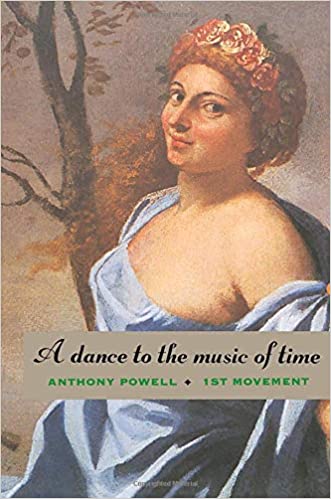
Reflections on A Dance to the Music of Time: 1st Movement by Anthony Powell (1951, 1952, 1955)

Time Magazine Top 100 Novels

Book 25: Anthony Powell, A Dance to the Music of Time: 1st Movement (1951, 1952, 1955)

This is a series of reflections reading through Time Magazine’s top 100 novels as selected by Lev Grossman and Richard Lacayo published since 1923 (when Time magazine was founded). For me this is an attempt to broaden my exposure to authors I may not encounter otherwise, especially as a person who was not a liberal arts major in college. Time’s list is alphabetical, so I decided to read through in a random order, and I plan to write a short reflection on each novel.

A Dance to the Music of Time is a massive twelve-part reflection on the social life of the wealthier class of citizens in England between the first and second world wars, the first movement contains the first three of these novels: A Question of Upbringing, A Buyer’s Market, and The Acceptance World. Many people have found Anthony Powell’s work both entertaining and compelling, and I can understand why it was a part of the Time magazine list, yet these first three novels were an incredibly slow read for me. In fairness this is not a time period or a genre I normally find compelling.

The protagonist and narrator, Nicholas, is a part of the portion of English society that has access to travel, college, and some amount of wealth and it portrays the overlapping social circles he encounters in education, art, and society. His perspective points out the vanity and formality of a society that is unraveling and while the book can look at many of the interactions (and rejections) within this society in a humorous light, Nicholas still tries to live in this nexus of the business and art world. The portrayal of the world that Nicholas encounters seems a dry and while the various characters may navigate it with different degrees of success there is very little joy in the characters. I’m guessing that the remaining volumes continue to observe the unravelling of the society and morals of the previous Victorian and Edwardian Ages in this Interwar period of economic, political, and societal upheaval but the first movement was enough for me. Again, others have found this work incredible powerful so please make your own judgments, these brief reflections are merely my consolidation of my thoughts on each work.

Reflection on C. S. Lewis’ the Chronicles of Narnia (1950-1956)

Time Magazine Top 100 Novels

Book 50: C. S. Lewis, The Lion, the Witch, and the Wardrobe (1950)

This is a series of reflections reading through Time Magazine’s top 100 novels as selected by Lev Grossman and Richard Lacayo published since 1923 (when Time magazine was founded). For me this is an attempt to broaden my exposure to authors I may not encounter otherwise, especially as a person who was not a liberal arts major in college. Time’s list is alphabetical, so I decided to read through in a random order, and I plan to write a short reflection on each novel.

If you have read Lev Grossman’s the Magicians, it should clear of the influence of the Chronicles of Narnia on his writing since Narnia is slightly modified to become Fillory in his trilogy. I first read The Lion, the Witch and the Wardrobe as a child and have read it multiple times both as a child and as an adult. Although it is a children’s story and can be read, on one level, as a simple fairy tale where four children find themselves in a magical world that they enter through a wardrobe, it also has moments of real profundity.

Since I own the Chronicles of Narnia I plan to add a brief reflection on each volume as I complete it:

The Magician’s Nephew:

Although it may be the sixth book written in the series, it is the beginning of the Narnia narrative. This is a creation story for Narnia and explains the origins of several features of the world and the entrance of the witch into Narnia. I listened to the audio version with Kenneth Branagh which is very well done. This is a well-done prequel to the Lion, the Witch and the Wardrobe.

The Lion, the Witch, and the Wardrobe

This story of a magical world and a conflict between good and evil also in a fable like manner touches in an allegorical way (whether C. S. Lewis intended or not) on many themes of Christianity, which C.S. Lewis also writes about explicitly in many of his other works. Even after many reads it is still an enjoyable story with many great images which I have been able to pull from at various times.

The Horse and His Boy

This story expands the world beyond Narnia by introducing the kingdom of Calormen. The Calormen are obviously based on Middle Eastern stereotypes, but setting aside the derogatory view of other cultures which are characteristic of Lewis’ time, the basic story of a talking horse from Narnia and a boy who are quickly joined by another talking horse and noble born young woman in their flight to freedom in Narnia. A simple but enjoyable story if you can set aside the stereotypes.

Prince Caspian

The fourth novel in the timeline of Narnia (2nd written) occurs in a time well after the time of the Lion, the Witch and the Wardrobe where Narnia is now ruled by the Telmarines, a group that invaded Narnia and has tried to eliminate the stories of Narnia. Prince Caspian, nephew of the current king, summons Peter, Susan, Edmond and Lucy back to Narnia as he struggles with the ‘old Narnians’ to end the Telmarine rule. This also is a simple but enjoyable short story where good triumphs in the end.

The Voyage of the Dawn Treader

Fifth novel in the timeline of Narnia which occurs a couple years later in King Caspian’s reign where he sets out on a voyage to find seven friends of his father that were sent east as a punishment during the time preceding Prince Caspian. Edmond, Lucy and their relative Eustace are brought into Narnia for the voyage. I found some parts of the story directed towards younger children (like the Monopods) but overall an enjoyable voyage.

The Silver Chair

The penultimate novel in the timeline of Narnia now has Eustace and a girl from his school, Jill Pole arrive in Narnia once King Caspian is an old man. This was my least favorite of the chronicles so far, partially because neither Eustace or Jill are particularly likeable characters for much of the book. There is also an element where C.S. Lewis’ criticism of the secular direction of schooling and culture becomes very pointed in this work in an almost petulant manner. There are elements in the story where the dialogue involves C.S. Lewis’ characters knocking down ‘straw-man’ arguments. There are some very imaginative features of this walk through Narnia and the Under world but the story didn’t seem as imaginative or mythical as the other volumes.

The Final Battle

It starts out a little slow, but this is a fitting end to the series. The deception of the people of Narnia by an ape and an unwitting donkey dressed up as Aslan sets the stage for a final scene where characters from all the books are reunited in a final ending of the world of Narnia and the stories.

Reflection on Judy Blume, Are You There God? It’s Me Margaret (1970)

Time Magazine Top 100 Novels
Book 7: Judy Blume, Are You There God? It’s Me Margaret (1970)

This is a series of reflections reading through Time Magazine’s top 100 novels as selected by Lev Grossman and Richard Lacayo published since 1923 (when Time magazine was founded). For me this is an attempt to broaden my exposure to authors I may not encounter otherwise, especially as a person who was not a liberal arts major in college. Time’s list is alphabetical, so I decided to read through in a random order, and I plan to write a short reflection on each novel.

I had read several of Judy Blume’s books as a child and read several of her books, particularly the Fudge Books and Pickle Juice to my own children when they were younger. I had never read Are You There God? It’s Me Margaret prior to this, but I remember seeing it as assigned reading for some of the gifted and talented classes when I was in middle school. I knew it was a coming of age story of a young girl but was surprised that a story for a younger audience was on the list.

It is a very quick read and Judy Blume does a great job introducing you to the world of a preteen girl named Margaret, the social network of girls and schools she is transplanted into, a complex family narrative which is revealed as the book progresses, and the struggle for identity in the midst of competing forces. For its simplicity there are some deep themes that underlie Margaret’s story, particularly in attempting to define who she is in relation to her friends and classmates and in religion. Margaret’s parents move her immediately before sixth grade from New York City to Farbrook, New Jersey. Her father continues to commute into the city to work while her mother stays home, which is reflective of the society of the late 1960s, early 1970s white suburbia where the story takes place. Margaret is quickly brought into a circle of girls who become important in her quest for belonging in this new environment but who also set boundaries around who is acceptable to be friends with and who is not. Margaret never fully ‘fits in’ with this group of girls and one of the differences is that she does not belong to either a church or synagogue due to friction in her family between her parents and her grandparents. Margaret’s father, who grew up Jewish, and Margaret’s mother, who grew up Christian want her to choose a religion for herself when she grows up, but this is a source of struggle for Margaret as she seeks exposure to both worlds. As the story continues it reveals both the continuing wound that both parents have with Margaret’s grandparents and the way this continues to impact their relationship with their children, their spouses, and their grandchild.

I enjoyed the book, it is designed for younger readers but it also addresses some important questions of identity, of discerning what is true and navigating peer relationships, attempting to find a place for one’s relationship with God amid different religious options and pressure from family and friends. It is a coming of age book for girls and so questions of body image and early curiosity about sexuality are present and form the background of issues of jealousy and exclusion.