Time Magazine Top 100 Novels
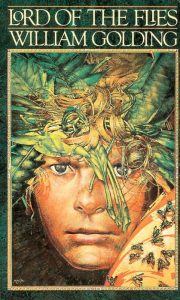
Book 52: Lord of the Flies by William Golding (1954)
This is a series of reflections reading through Time Magazine’s top 100 novels as selected by Lev Grossman and Richard Lacayo published since 1923 (when Time magazine was founded). For me this is an attempt to broaden my exposure to authors I may not encounter otherwise, especially as a person who was not a liberal arts major in college. Time’s list is alphabetical, so I decided to read through in a random order, and I plan to write a short reflection on each novel.
The Lord of the Flies is a novel I encountered in either late middle school or early high school as required reading and reread now as an adult. The novel follows a group of boys who crash on an island during a war, perhaps even a nuclear war, and find themselves alone and isolated from society. The novel is an exploration of the darkness of the human, particularly male, heart when isolated from the civilizing influence of society. The rules on the island quickly breakdown when Ralph, the boy initially selected by the boys as chief, is unable to maintain control over both the hunters, led by Jack, and the little ones who tend to do their own thing. Eventually Jack and his hunters continue to devolve into a violent and savage tribe that results in the death of two of the boys and the story ends with their hunt of Ralph before an officer of the Royal Navy arrives on the island to rescue the boys.
The Lord of the Flies is a story about children, but it also exhibits the author’s low view of humanity apart from the civilizing restraint of law and order. It might be this book’s place within the assigned reading of my childhood, but this felt like a book you were supposed to read and not enjoy. It felt like the theme of the book was more important than the characters. While there are some cleverly written plot ideas in the book, like the alluding to biblical language with the Beast from the Sea and the Beast of the Air or the Lord of the Flies, it just felt like the narration and dialogue fell flat. The individual children were more types than developed characters: Ralph was the somewhat slow protagonist, Piggy the overweight, asthmatic scared know it all, Simon the introverted and spiritual one, Jack the bully always needing to be right. It probably didn’t help that I listened to the audiobook version read by the author, and the author’s narration did not help the story.

