Category Archives: Book Reviews

Review of the Melody of Trees: 10 Tales from the Forest by Helen Whistberry

Helen Whistberry, The Melody of Trees: 10 Tales from the Forest

For me a five-star book is something that either I want to read again or something that is so profound it makes an immediate impact. There are lots of ways that books can be compelling: a unique idea, an interesting set of characters, a complex plot, an artistic use of the English language and more. Reading is also a subjective experience, so what appeals to me as a reader may be very different for you. I read a lot for both pleasure and work but these short reviews are a way for me to show my appreciation for the work and the craft of the author of the reviewed work.

The Melody of Trees is a collection of diverse short stories where trees or forests play some role in the story. Each story is short enough to be read in one setting but unique and complex enough to be intriguing. The stories span from mythological to science fiction, some are delightful fairy tales while others are dark stories of ash, death, and darkness. ‘Forest’ is told from the perspective of Forest as an ancient god observing the life and death occurring within its boundaries. ‘Girl of Glass’ is the story of a witch’s daughter who makes a desperate magical bargain to escape her unloving home that requires a heavy sacrifice. ‘Revenant of High Lonesome’ is an interesting combining of fantasy and western themes as a gun for hire determines that a promise made is worth taking on the authorities of a faithless town. ‘The Melody of Trees’ is a story of two people who find themselves in an odd sort of futuristic prison where they must use their skills as an artist and programmer to find an escape. It is a story of the beginning of relationships and learning to trust, but also creativity and intuition. ‘An Invitation of Shadows’ is the story of a young boy who escapes a murderous father leaving behind his loving mother, but learns he has a special power and a difficult choice to make: to heed his mother’s last wish and flee or to return to attempt to save her and his siblings. ‘The Watcher’ follows a cranky elderly man who is living in a retirement home and finds his only solace in watching the field and the forest near the home, but when his environment begins to change in nightmarish ways, he finds that he is also being watched. ‘Written in Ashes’ is a story of doors that should not be opened, of warnings unheeded, and of a darkly magical curse that lies just beyond the normal world for those whose curiosity gets the better of them. ‘Flora and Milo’ is another magical story of a missing mother, an absent father, and two children who follow the animals into the forest learning who is friend and who is foe and the magic the daughter possess. ‘Bad Day on the Job’ is a delightfully absurd story of two hit men in a supernatural world of werewolves, monsters under the bed, summoned demons, ghosts, and a mob boss who crossed the wrong woman. ‘A Gnashing of Teeth’ is another story in a science fiction world where humanity is at risk of being consumed by an invading race of strange beings that resemble the ancient pictures of Seraphim, and a ‘wise one’ who provides hope for a group of survivors.

I found each of the tales engaging and the overall book a delight. I intentionally attempted not to give away too many secrets in my brief summaries of each tale so new readers can discover the strange twists that the stories include. The stories are just long enough to introduce you to a new world and an interesting set of characters, but each story still manages to be complete.

Review of Sunyi Dean The Book Eaters

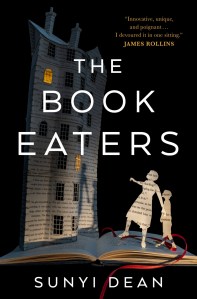
Sunyi Dean. The Book Eaters
For me a five star book is something that either I want to read again or something that is so profound it makes an immediate impact. There are lots of ways that books can be compelling: a unique idea, an interesting set of characters, a complex plot, an artistic use of the English language and more. Reading is also a subjective experience, so what appeals to me as a reader may be very different for you. I read a lot for both pleasure and work but these short reviews are a way for me to show my appreciation for the work and the craft of the author of the reviewed work.

The Book Eaters is a work of dark fantasy set in contemporary England. The first time I saw the title and read the synopsis I was intrigued by the idea of a people who ate books instead of food and I was curious to see how this idea played out in the story. The story alternates between the present-day struggle of Devon and her son Cai and the traumatic story that places this mother and son on the run from the families of book eaters. Devon grows up in a world where she is isolated from the rest of the world by her family and grows up on fairy tales of princesses. These carefully curated stories are fed to her (literally since she is a book eater) and form her world and imagination, but she is also curious for the other stories that she is not supposed to read or eat. She begins to see signs that life is not the fairy tales she has been fed as a child, but as an adult she discovers that her role in the families is to be essentially breeding stock and she will be unable to raise the children she bears. Devon is permanently scared when the connection with her daughter is severed suddenly and she is sent to another marriage to bear her second child.

Devon’s second child, Cai, is a mind eater. Among the book eaters there are children born who consume human minds instead of paper and although there is a drug that allows them to consume books instead of minds they are always looked upon as a danger. Most of these children will become ‘dragons’ who are kept by the ‘knights’ in the story but as the time near for Cai to be taken by the knights and Devon to be removed from his life the family who produces the drug to treat the mind eaters disappears. In the present day the story follows Devon and Cai as they attempt to find the Ravenscar family who manufactures this drug which will allow five-year-old Cai to no longer eat human minds. In the meantime Devon must find a human for her son to feed on every two weeks as she attempts to avoid the families and the knights who want her and her son dead.

What makes The Book Eaters a compelling read is the realistic character development of both Devon and Cai who are looked upon as monsters but are bound together by the love of a mother and son. It is a book full of betrayals and broken people, of fairy tales that hide the darker side of reality, of the difficult choices love can cause us to make, and princesses who find a way to save themselves. The isolation of the families reminded me a little of the Ravenwood/Duchennes family in the Kami Garcia and Margaret Stohl series Beautiful Creatures although that is set in a Southern U.S. gothic world rather than an English one. A compelling plot which realistically develops a group of characters who are shaped by the curated narratives they have been fed and the trauma inflicted upon them as they attempt to survive in a world that views them as monsters.

Review of The Berlin Stories by Christopher Isherwood

Time Magazine Top 100 Novels

Book 12: The Berlin Stories by Christopher Isherwood

This is a series of reflections reading through Time Magazine’s top 100 novels as selected by Lev Grossman and Richard Lacayo published since 1923 (when Time magazine was founded). For me this is an attempt to broaden my exposure to authors I may not encounter otherwise, especially as a person who was not a liberal arts major in college. Time’s list is alphabetical, so I decided to read through in a random order, and I plan to write a short reflection on each novel.

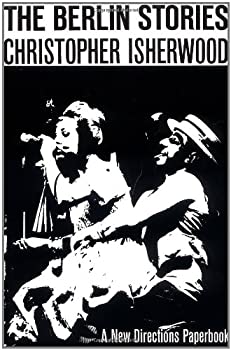
The Berlin Stories is actually two books written based on the author’s time in Berlin from 1929-1933. The Last of Mr. Norris narrates Christopher Isherwood’s relationship with Arthur Norris and several other figures from his circle of acquaintances. Arthur Norris as a character is both charming and paranoid and is a complex collection of contradictory eccentricities and collaborations. Arthur can rally a communist rally or manipulate Arthur into entrapping a fellow friend Kuno (Baron von Pregnitz) in  a trip to Switzerland. The character of Arthur with his unappealing assistant Schmidt is always one step away from disaster and early 1930s Berlin is a dangerous place for a trickster like Arthur. The Berlin Diaries is a collection of shorter encounters with characters set in the same time period. The character of Sally Bowles, who would later be adopted to the stage in “I Am Camera” and the movies in “Cabaret” is the shining star among this collection as this young woman navigates the nightlife of Berlin as an aspiring actor and dancer in a cabaret. Peter and Otto, an older man and a younger man in an arranged relationship, form the second group of characters with Peter jealous of Otto’s other attractions. In a time when his finances are challenging Christopher Isherwood moves into the slums with Otto’s family in Berlin, the Nowaks with their sick mother, alcoholic father, two sons and one daughter. Moving in opposite directions Christopher also shows us into his connections with the wealthy Jewish family, the Landauers, where he has an initially friendly if formal relationship with the Natalia Landauer and is taken into the confidence of Bernard who runs the family business. Connecting the two stories is the landlady Fraulein Schroeder in whose house Christopher lives through much of this time.

The environment of early 1930s Berlin also plays a crucial role in these two books and it gives a window into this desperate time. Berlin is a place of conflict and danger where communists and fascists are vying for power, where poverty and depression are constantly present, where anything is available for sale and where people will do anything to survive. It does illuminate both the violence of the emerging Nazi movement but also gives a perspective why hopeless people would be drawn to it or its communist alternative. It is a dark environment to write a story within and none of the characters would be considered heroic, but they are survivors. Seeing the environment of pre-Nazi Berlin through the characters eyes helps make the time more vivid, but the understanding of the environment also helps the characters more understandable.

Review of the Big Sleep by Raymond Chandler

Time Magazine Top 100 Novels

Book 13: The Big Sleep by Raymond Chandler

This is a series of reflections reading through Time Magazine’s top 100 novels as selected by Lev Grossman and Richard Lacayo published since 1923 (when Time magazine was founded). For me this is an attempt to broaden my exposure to authors I may not encounter otherwise, especially as a person who was not a liberal arts major in college. Time’s list is alphabetical, so I decided to read through in a random order, and I plan to write a short reflection on each novel.

The Big Sleep is the first novel featuring the iconic private eye, Philip Marlowe. This is one of the books that would be instrumental in the evolution of the private eye character in the noir films with dark characters. Chandler’s writing style immediately evokes the feeling of watching a classical private eye or crime movie and he takes us to the darker side of Hollywood in the 1930s. Philip Marlowe is the intelligent but hardnosed investigator asked to investigate an attempt to extort the elderly patriarch of the family. The investigation quickly walks into the murky world of pornography, gambling and drinking (in the immediate aftermath of prohibition), and murder.

The book’s style seems tailor made to become the movie it would be made into multiple times. Raymond Chandler does a good job of balancing giving enough information to show the reader the scene in their mind without becoming bogged down. It is a quick paced read but the characters seem somewhat two dimensional. Philip Marlowe is the tough guy investigator who is intelligent but has no emotional depth, and the other characters are given just enough story to fit their place in the plot. It is very different from many of the other books in the Time Magazine top 100 list, but it probably finds its place here to represent the noir investigative genre that has continued to exercise popularity. It is an invitation to the smoke-filled world of tough guys who drink all the time and walk on the dark side of 1930s Hollywood.

Review of The English Koren Tanakh: The Magerman Edition

The English Koren Tanakh: The Magerman Edition The Hebrew Bible in a New English Translation. Translated by Rabbi Jonathan Sacks, Rabbi Tzvi Weinreb, et. al. Jerusalem: Koren Publisher, 2021

The Magerman Edition of the English Koren Tanakh is a beautifully put together volume. This translation of the Hebrew Scriptures done by Rabbi Lord Jonathan Sacks, Rabbi Dr. Tzvi Hirsch Weinreb and several other distinguished Jewish scholars does a good job of capturing both the richness of the Hebrew language in an understandable English syntax. As a Christian reader who has some fluency in the Hebrew language it is a gift to have the loving work of this dedicated group of scholars. This is one of translations I now use when doing a close reading of a text.

One of the gifts of doing work on the scriptures that we share with our Jewish ancestors is being aware of some of the differences in form and structure between how Christian and Jewish interpreters have approached these holy books that we share. The Jewish organization of scripture divides the scripture into three sections: Torah (Genesis-Deuteronomy), Prophets (Joshua-Kings, Isaiah-Malachi excluding Daniel), and Writings (Wisdom literature, Ruth, Lamentations, Esther, Daniel, Ezra, Nehemiah, Chronicles, and Daniel).  The introductions also give several insights into how the scriptures are used in both personal devotion and corporate worship by our Jewish counterparts. The translations themselves capture balance the Hebrew syntax with English flow and readability and manage to capture the form of poetry and prose. The casual English reader will quickly realize that the names of individuals and places have been transliterated from the Hebrew rather than using the English traditional renderings of these names and places which date bank to the original English translations and are often significantly different than the Hebrew pronunciation. Even the layout of the text on the page is attractive to the eye and large enough to easily read. The maps, diagrams, and images at the end of the book are also very well done.

I’ve used several resources from Koren Publishers in the past and they have consistently been insightful and readable. I was given a copy of the Magerman Edition of the English Koren Tanakh to share an honest review of the resource and for those who are interested in a readable translation of the Hebrew Scriptures to inform their reading, devotions, and study I highly recommend this work.

Review of the Blind Assassin by Margaret Atwood

Time Magazine Top 100 Novels
Book 14: The Blind Assassin by Margaret Atwood

This is a series of reflections reading through Time Magazine’s top 100 novels as selected by Lev Grossman and Richard Lacayo published since 1923 (when Time magazine was founded). For me this is an attempt to broaden my exposure to authors I may not encounter otherwise, especially as a person who was not a liberal arts major in college. Time’s list is alphabetical, so I decided to read through in a random order, and I plan to write a short reflection on each novel.

The Blind Assassin is a story within a story narrated in flashback by Iris Chase Griffen. Looking back as an old woman she remembers her time growing up with her sister Laura in household whose father shattered by World War I and the economic downturn of the 1930s and whose mother died while both girls were still young. Their father, Norval Chase, runs the Button Factory in the fictional town of Port Ticonderoga but struggles with alcoholism and depression and often isolates himself from the family to drink his pain away. Both girls were raised by Reenie, the family housekeeper, and while much of their childhood they live a relatively privileged life until the economic downturn and its impact on their father’s factory sets the conditions that cause her father to allow the wealthy Richard Griffen to propose to Iris at only eighteen to provide for his daughters. Iris’ marriage into the family of the politically ambitious Richard and his dominating sister Winifred leaves her feeling powerless, manipulated and controlled. Her husband’s version of love is abusive and Iris suspects he has several affairs during their marriage. Richard and Winifred also control the life of her sister Laura after the death of her father while Iris is on her honeymoon with Richard. The control of Laura’s life leads to her confinement in a mental health asylum and eventually her choice to commit suicide in a vehicular accident. Yet, Iris maintains her own secret life, an affair with Alex Thomas who tells her science fiction stories but who is also on the run for his activities with Communist groups in Canada in the 1930s. The story moves between the reflections and life of an old woman, remembrances of the affair and the narration of the story of the blind assassin, and a narration of the life of Iris to be handed on to her granddaughter who she is unable to see or visit due to the manipulation of the relationship between her daughter and her by Winifred.

The ending of this story is clever and the overall story is well written, but it takes a long time to develop. There is something in the voice of the old Iris which a bit haughty and detached in her view of the world around her and I had to work to get through the first two thirds of the book. Iris’ character is passive for much of the book and life happens to her, it is only in the end where we see the places where she has carved out a space to reclaim some control of her life. It is a book told from the perspective of regret: regret for her own feelings of powerlessness, regret for the damage she was unable to shield her sister, her daughter, or herself from. There is a realism in the lack of agency for a woman who is both the child of an alcoholic and who lives in a time where women had few options. I enjoyed the ending and that made the overall journey worth it. It is difficult to read the story of a woman who has no agency from the perspective of a man who is used to exercising agency and there were times I wanted to rage at the male characters in the story for the way they treated their daughter, their wife, or their lover. Yet, the views of the past are often as alien as the worlds that are described in the science fiction narrative of the blind assassin and the strange power of a book to place you in that alien place and allow you to rage at the situations of the characters in a book is part of the strange magic that authors yield in their words.

Review of Light in August by William Faulkner

Time Magazine Top 100 Novels

Book 49: Light in August by William Faulkner

This is a series of reflections reading through Time Magazine’s top 100 novels as selected by Lev Grossman and Richard Lacayo published since 1923 (when Time magazine was founded). For me this is an attempt to broaden my exposure to authors I may not encounter otherwise, especially as a person who was not a liberal arts major in college. Time’s list is alphabetical, so I decided to read through in a random order, and I plan to write a short reflection on each novel.

Light in August deploys a combination of poetic and banal language to tell an ugly story with a series of characters who for their own reasons are unable to exist within the confines of their society. There is something that reminds me of the writing of Flannery O’Connor in the way Faulkner uses beautiful language combined with the simple speech of the characters in his stories that is authentic to their education and station. There are many times where the language and the assumptions of the American South in the 1930s, when the novel is written and set, are jarring to the ears of a modern hearer, but the novel is historically situated in a time where the views on race, sex, religion, and society are very different from our current era. At times I could fall into Faulkner’s poetic use of prose, and he is truly gifted as a wielder of the English language, but each of the characters is unlovable in their own ways. Whether it is the indomitable Lena who refuses to give up her search for Lucas Burch/Joe Brown who is the father to the child she carries, Joe Christmas whose birth and life seems to be overshadowed by a questionable birth and lineage and a grandfather who views his divine calling as bringing about the destruction of his grandson, or Gail Hightower the disgraced minister who lives in the shadow of his grandfather who died in the Civil War.

Light in August is a work of art but like all art its reception is subjective. The world of the 1930s American South at times seems like an alien world for its strangeness and prejudices. There are times where the work seems dystopian and none of the characters, except perhaps Byron Burch, attempt to be heroic. For me the prose is gifted but the story is plodding and the characters seem to fit into a deterministic pattern based upon their inherited flaws. I can appreciate it as a classic but it was hard to hear the speech of the 1930s South, especially towards Black Americans, and not cringe at the way the derogatory terms for Black Americans continued to echo in my head even after putting the book aside. Perhaps it, like Flannery O’Connor’s work, present an uncomfortable mirror to the world of my grandparents whose prejudices echo in both spoken and unspoken ways in our own.

Review of Herzog by Saul Bellow

Time Magazine Top 100 Novels

Book 43: Herzog by Saul Bellow

This is a series of reflections reading through Time Magazine’s top 100 novels as selected by Lev Grossman and Richard Lacayo published since 1923 (when Time magazine was founded). For me this is an attempt to broaden my exposure to authors I may not encounter otherwise, especially as a person who was not a liberal arts major in college. Time’s list is alphabetical, so I decided to read through in a random order, and I plan to write a short reflection on each novel.

Herzog is named for the main character Moses Herzog a Jewish former professor whose mind seems to be unraveling in the aftermath of his second divorce. The story is told from a first-person perspective and the reader is invited into the rambling reflections of an intelligent but cluttered mind. Moses Herzog begins by stating, “If I am out of my mind, it’s all right with me.” We encounter in Moses’ thinking, speaking, and especially in his incessant drive to write notes to a diverse group of recipients from former friends and relations to President Dwight Eisenhower a mind balancing on the precipice of sanity. There are times when the erratic and non-chronological reflections full of non-sequiturs do feel like a descent into some type of madness of this man driven by compulsions he doesn’t understand.

The mind of Moses Herzog is the entirety of the novel and entering into that mind is to encounter the contradictions and confusions of a person who struggles to comprehend the world around him and the feelings and motivations of other individuals. His divorce caused, in his view, by the manipulation by his wife and best friend shatter him. A combination of the situation and the makeup of Moses as an individual leave him caught in an egocentric loop where the world revolves around his experience of it. He is not a rational actor at this point in his life and he often sabotages himself by making impulsive decisions on a whim which cause him trouble. For the majority of the book, he is not in his right mind. At the end his intelligent mind finally comes to rest and appears to let go of its compulsions.

Herzog is a strange book. I can understand why it is considered a masterwork and the comparison to James Joyce’s Ulysses is apt since both share a stream of consciousness manner of narration. Due to the erratic nature of Herzog’s mind the story is often slow moving and then it can jump suddenly when his mind seizes on another compulsion. I struggled to find Herzog a likeable character since he is so enmeshed in his own ego and madness. Reading a novel in first person forces the reader to see the character through their own eyes and Herzog seemed to have an inflated opinion of his abilities while still not liking the person he had become. Perhaps the genius of the work is seeing through the eyes of madness. I can appreciate it as an experiment in literature but as a novel it is not one that I will probably return to. All experiences of fiction are subjective and there are many readers throughout the last sixty years who have made this a classic.


Review of All the Kings Men by Robert Penn Warren

Time Magazine Top 100 Novels

Book 2:All the Kings Men by Robert Penn Warren

This is a series of reflections reading through Time Magazine’s top 100 novels as selected by Lev Grossman and Richard Lacayo published since 1923 (when Time magazine was founded). For me this is an attempt to broaden my exposure to authors I may not encounter otherwise, especially as a person who was not a liberal arts major in college. Time’s list is alphabetical, so I decided to read through in a random order, and I plan to write a short reflection on each novel.

Robert Penn Warren’s story set in the political culture of an unnamed southern state where an idealistic self-taught lawyer transforms into a charismatic political operative who eventually becomes governor and is looking ahead to a run for the senate. Willie Talos,[1] or the boss as his staff call him, quickly becomes a savvy and forceful political operator wielding both his popularity, but also using pressure, knowledge of indiscretions, and occasionally bribery. Yet, the story is told from the perspective of Jack Burden, a former journalist and historian, who becomes a personal assistant to Willie Talos and the story of Willie Talos is the story of Jack Burden and several others who become intwined in this tale of power, desire, relationships, and perceptions. There are aspects of the story that are incredibly relevant even sixty years after its publication. There are times where the plot meanders along as Jack Burden reflects on the path that led him to this point in his life, but ultimately in the end his past and Willie Talos’ present come together in an ending where secrets are revealed and many lives are shattered (and a few are reborn).

Jack Burden’s childhood in Burden’s Landing with his friends Anne and Adam Stanton, his attractive mother and her string of men, his father who walks out on his mother, and Judge Stanton who acts as a second father to Jack all find their way into the story’s progress. Adam and Anne Stanton are the children of a previous governor and Adam, as a popular surgeon, becomes the boss’ choice to run the new hospital he is building for the state. Anne was Jack Burden’s romantic interest growing up and although both she and her brother initially disapprove of the boss, she eventually becomes entangled in an affair with Governor Talos. The Judge appears at the beginning of the story and is a major part of Jack Burden’s narration. Once the Judge endorses another candidate other than the one Governor Talos is backing Jack is instructed to dig into the Judge’s past for any indiscretion. Through his digging into the past, he does discover a time when the Judge took a bribe and when his friend Governor Stanton had covered for him.

Robert Penn Warren does a masterful job of brining all the strings together in the end. The boss becomes manipulated by a political opponent due to his son’s possible impregnation of a young woman and becomes mired in the type of corruption he campaigned against. The investigation of Judge Irwin now becomes important because the judge has influence on the politician attempting to manipulate the boss. When Jack reveals the secret he learned about Judge Irwin, it causes the judge to commit suicide and Jack’s mother in her grief reveals that the Judge was his father. The revelation of the boss’ affair with Anne Stanton by one of the boss’ staff members and former lovers ultimately results in Adam Stanton shooting the boss and taking his own life. The boss also becomes manipulated by a political opponent due to his son’s possible impregnation of a young woman and becomes mired in the type of corruption he campaigned against. Secrets built upon secrets are ultimately revealed and the survivors have to find a new way with the boss, the judge, and the surgeon no longer there to be paragons in their world. Jack Burden eventually makes peace with the reality that each of these men, though not perfect, were good men and he begins to reassemble his life with Anne and the man who raised him as a father.

All the King’s Men is a well told story. There are times where the prose slows the story down or we spend time caught in Jack Burden’s meandering mind, but ultimately it paints a world where power can corrupt, where good men (and women) do occasionally act in unethical ways, where secrets exercise power, and where the sticky world of politics is populated by people struggling for power, influence, and wealth. It is an uncomfortable read at times because it embodies many of the prejudices of the 1930s and 1940s when it is written but it also feels appropriate for its narration of a brash populism that seems to be resurgent in the United States.


[1] Earlier editions named the Governor Willie Stark based on the editor’s recommendation, but Robert Penn Warren wanted his last name to be Talos and that was used throughout the Restored Edition that I read through.

Review of the Lord of the Rings by J.R.R. Tolkien

Time Magazine Top 100 Novels

Book 53: The Lord of The Ring by J.R.R. Tolkien

This is a series of reflections reading through Time Magazine’s top 100 novels as selected by Lev Grossman and Richard Lacayo published since 1923 (when Time magazine was founded). For me this is an attempt to broaden my exposure to authors I may not encounter otherwise, especially as a person who was not a liberal arts major in college. Time’s list is alphabetical, so I decided to read through in a random order, and I plan to write a short reflection on each novel.

Tolkien’s Lord of the Rings is one of my favorite books. I first read this work as a teenager and I return and read through it every couple of years. I continue to be amazed at the depth of the story and how I continue to be enriched by each reading. Tolkien is a master at developing a complex world complete with complex cultures, languages, and histories which form the backdrop for the incredible journey of Frodo, Sam, Pippin, Merry, Gandalf, Aragorn, Gimli, Legolas, and Boromir. The work is a classical battle between good and evil on an epic stage and throughout the work spins a defiant hope in the midst of incredible odds.

The test of any great book is how it holds up after multiple readings. Even after walking the paths with the characters many times and knowing how the journey unfolds it still remains a phenomenal journey which continues to reveal new aspects each time. The battle scenes at Helms Deep and Minas Tirith are some of the most moving fantasy battle scenes I’ve read both in their reserve in the details of the battle and their stirring defiant language that lets the reader ride with Rohirrim or stand against the darkness or Mordor.

This is a hopeful epic of heroic perseverance with good ultimately triumphing over evil. After reading several nihilistic or fatalistic works on this list that narrate the ending of an age it was enjoyable to revisit this rich story where the protagonists come through the darkness and emerge into the new age they helped form. Even though the main protagonist, Frodo, comes out permanently scarred and unable to enjoy the homecoming at the end of the work he leaves behind a hopeful new beginning for his beloved Shire, a world safe under the reign of Aragorn, and a place where Sam can raise his new family and tell the stories of the fellowship to new generation.