Category Archives: Biblical Reflections

Deuteronomy 30 – Hope Beyond the Curse

Water original image from splashhttp://www.ripples.ca/

Water original image from splashhttp://www.ripples.ca/


Deuteronomy 30: 1-10 Returning to the LORD

1 When all these things have happened to you, the blessings and the curses that I have set before you, if you call them to mind among all the nations where the LORD your God has driven you, 2 and return to the LORD your God, and you and your children obey him with all your heart and with all your soul, just as I am commanding you today, 3 then the LORD your God will restore your fortunes and have compassion on you, gathering you again from all the peoples among whom the LORD your God has scattered you. 4 Even if you are exiled to the ends of the world, from there the LORD your God will gather you, and from there he will bring you back. 5 The LORD your God will bring you into the land that your ancestors possessed, and you will possess it; he will make you more prosperous and numerous than your ancestors.

 6 Moreover, the LORD your God will circumcise your heart and the heart of your descendants, so that you will love the LORD your God with all your heart and with all your soul, in order that you may live. 7 The LORD your God will put all these curses on your enemies and on the adversaries who took advantage of you. 8 Then you shall again obey the LORD, observing all his commandments that I am commanding you today, 9 and the LORD your God will make you abundantly prosperous in all your undertakings, in the fruit of your body, in the fruit of your livestock, and in the fruit of your soil. For the LORD will again take delight in prospering you, just as he delighted in prospering your ancestors, 10 when you obey the LORD your God by observing his commandments and decrees that are written in this book of the law, because you turn to the LORD your God with all your heart and with all your soul.

Deuteronomy 30 is one of those passages whose images will have a ripple effect in both the prophets, particularly Jeremiah, and later in the words of the apostle Paul. Whenever these words are spoken, they speak to the context of the Babylonian exile where the land, Judean king, and the temple which formed the central parts of the identity of the Jewish people prior to the exile are all lost. It is in the midst of this experience of desolation that the prophetic hope arises, but it is always a hope that is not easily won. It only comes after all the curses have been exhausted, or in the experience of the exile once the nation has been conquered multiple times and not only with the elite being carried off into exile but rather after continued rebellion and failed cheap solutions like those presented by false prophets like Hananiah in Jeremiah 28 which promised a quick and easy end to judgment. There is hope in the midst of what may seem like hopelessness. In exile there is the promise of return and the primary actor is the LORD.

The prophets will spend a lot of ink talking about the return from exile. Isaiah 40-55, Jeremiah 30-33, Ezekiel 36-37 and several of the minor prophets all address this. The poetic and prophetic hope emerges out of this place of desolation and destruction. The promise is again the land and prosperity and this becomes a central image for the people. Their lives and stories are linked to the land, but their prosperity in the land is linked to their ability to live out of the covenant. We are linked back to Deuteronomy 6:5 by the echo of loving the LORD with all of their heart and soul. If the people return to the LORD, then the words of Isaiah echo the sentiment of this passage:

Do not fear, I am with you, I will bring your offspring from the east, and from the west I will gather you; I will say to the north, “Give them up,” and to the south, “Do not withhold; bring my sons from far away and my daughters from the ends of the earth—everyone who is called by my name, whom I created for my glory, whom I formed and made.” Isaiah 43:5-7

The image of circumcision is now used metaphorically in relationship to the heart. Just as the physical act of circumcision became a mark of the covenant for the Jewish people, now the LORD circumcises the heart of the renewed people. In Deuteronomy 10: 16 the people are commanded to circumcise the foreskin of their hearts so that they would no longer be stubborn and would be receptive to the commandments of the LORD. Now in this period of renewal God is the primary actor and the one enabling the people to love the LORD with their heart and soul. In Jeremiah 4:4 this image re-appears in language similar to Deuteronomy 10, in the sense of a warning to turn towards the LORD prior to the experience of exile:

Circumcise yourselves to the LORD, remove the foreskin of your hearts, O people of Judah and inhabitants of Jerusalem, or else my wrath will go out like fire, and burn with no one to quench it, because of the evil of your doings. Jeremiah 4:4

But for the apostle Paul, who has to justify his ministry among the Gentiles before those who expect Gentiles to undergo physical circumcision, he is able to use these passages to reflect his ministry in a different light:

For a person is not a Jew who is one outwardly, nor is true circumcision something external and physical. Rather, a person is a Jew who is one inwardly, and real circumcision is a matter of heart—it is spiritual and not literal. Such a person receive praise not from others but from God. Romans 2: 28f.

The condition of exile, much like the captivity in Egypt, creates the space where the covenant can begin again and God hears the cries of the oppressed people. Just as in the exodus from Egypt, in the return from exile the primary actor will be God. Yet, in this condition where God has acted on behalf of the people, the people still have the obligation to live in obedience to the commands and decrees and that begins with loving and turning to the LORD their God with all their heart and soul.

Deuteronomy 30: 11-20 Obedience is Possible

 11 Surely, this commandment that I am commanding you today is not too hard for you, nor is it too far away. 12 It is not in heaven, that you should say, “Who will go up to heaven for us, and get it for us so that we may hear it and observe it?” 13 Neither is it beyond the sea, that you should say, “Who will cross to the other side of the sea for us, and get it for us so that we may hear it and observe it?” 14 No, the word is very near to you; it is in your mouth and in your heart for you to observe.

 15 See, I have set before you today life and prosperity, death and adversity. 16 If you obey the commandments of the LORD your God that I am commanding you today, by loving the LORD your God, walking in his ways, and observing his commandments, decrees, and ordinances, then you shall live and become numerous, and the LORD your God will bless you in the land that you are entering to possess. 17 But if your heart turns away and you do not hear, but are led astray to bow down to other gods and serve them, 18 I declare to you today that you shall perish; you shall not live long in the land that you are crossing the Jordan to enter and possess. 19 I call heaven and earth to witness against you today that I have set before you life and death, blessings and curses. Choose life so that you and your descendants may live, 20 loving the LORD your God, obeying him, and holding fast to him; for that means life to you and length of days, so that you may live in the land that the LORD swore to give to your ancestors, to Abraham, to Isaac, and to Jacob.

The people to this point in the story have not demonstrated that they have a mind to understand, or eyes to see, or ears to hear as Deuteronomy states in Deuteronomy 29: 4, yet for Deuteronomy obedience is not only possible, it is easily within the people’s reach. The Jewish people were not to view the law as a heavy burden but rather as Psalm 1 can state that for the faithful the law of the LORD is their delight. To live in accordance with commandments, decrees and ordinances is to choose life and to fail to do so is to choose death for the people. The earth, who we have seen at previous points, bears some of the consequences of the disobedience of the people of God is called to witness against them. The people are urged once more to choose life, just as at the end of the book of Joshua they will be charged to choose to serve the LORD (Joshua 24).

The apostle Paul in his letter to the Romans demonstrates how for the followers of Jesus the focus of this obedience changes. In Romans 10: 5-8 now Christ takes the place of this word that is near you and on your hearts.

Moses writes concerning the righteousness that comes from the law, that “the person who does these things will live by them.” But the righteousness that comes from faith says, “Do not say in your heart, ‘Who will ascend into heaven?'” (that is, to bring Christ down) “or ‘Who will descend into the abyss?'” (that is, to bring Christ up from the dead). But what does it say? “The word is near you, on your lips and in your heart” (that is, the word of faith that we proclaim); Romans 10: 5-8

Much as John’s Gospel can refer to Jesus as the Word of God (John 1) or Matthew’s Gospel can refer as Jesus as the fulfillment of the Law (Matthew 5: 17) it shows how this concept becomes completely transformed in a Christian worldview. Even though Jesus will echo the greatest commandment being Deuteronomy 6: 4-5 which comes down to loving the LORD with all the heart. These texts become transformed with now Jesus occupying the place of the law, and the righteousness of faith takes the place of the righteousness of the law. It is not surprising that Paul was frequently in trouble with other Jewish people over a transformation that affects such a central thing as the law, and that is probably why he spends much of Romans (in addition to Galatians) trying to re-interpret the scriptures in light of his experience of the risen Christ.

Deuteronomy 29: A Final Address

Deuteronomy 29: 1-9 Restating the Covenant

James Tissot, Moses (1896-1902)

James Tissot, Moses (1896-1902)

1 These are the words of the covenant that the LORD commanded Moses to make with the Israelites in the land of Moab, in addition to the covenant that he had made with them at Horeb.

                2 Moses summoned all Israel and said to them: You have seen all that the LORD did before your eyes in the land of Egypt, to Pharaoh and to all his servants and to all his land, 3 the great trials that your eyes saw, the signs, and those great wonders. 4 But to this day the LORD has not given you a mind to understand, or eyes to see, or ears to hear. 5 I have led you forty years in the wilderness. The clothes on your back have not worn out, and the sandals on your feet have not worn out; 6 you have not eaten bread, and you have not drunk wine or strong drink– so that you may know that I am the LORD your God. 7 When you came to this place, King Sihon of Heshbon and King Og of Bashan came out against us for battle, but we defeated them. 8 We took their land and gave it as an inheritance to the Reubenites, the Gadites, and the half-tribe of Manasseh. 9 Therefore diligently observe the words of this covenant, in order that you may succeed in everything that you do.


In a world of legal contracts where a signature is binding until such time as a legal contract that supersedes the previous contract is agreed upon it seems strange for us to see the need to go back within the same document multiple times to the same story and to restate the covenant. Yet, the way that Deuteronomy is shaped owes to its oral structure and possible origination. Just as in Deuteronomy 6 with its continual recitation of the central statement of faith when a person enters the house or leaves, when they rise up or when they lay down, so the re-iteration of the covenant multiple times serves to reinforce its binding nature upon the people. Chapter 29 begins what is often referred to as the third address of Moses and it begins by restating in a concise way the narrative laid out in Deuteronomy 1-3 as well as reminding them, as in Deuteronomy 8 of how the LORD provided for them on their journey to this point.

The covenant is always connected with the narrative. The people are the people of God because of the LORD’s action to bring them out of Egypt, through the wilderness and to the promised land. The Exodus becomes the central story of who they are as a people and their life flows out of the LORD’s provision for them. The great fear of Deuteronomy is that in the midst of abundance the people will become complacent. Yet, the people always lives in response to God’s action to free them from their captivity. Their life flows from the ways in which they embrace or turn away from the therefore of God’s action to give them freedom. As we have seen in the previous chapters the people have the ability to choose blessing or curse, and the fear is that they will choose by their actions the curse.

Within the prophetic imagination of Israel, the people will have to wrestle with their inability to remain faithful in the covenant. Is free will only a partial option, do they lack eyes that see, ears that hear and minds that understand? Will they become the embodiment of the people Isaiah is sent to in Isaiah 6:

Keep listening, but do not comprehend; keep looking, but do not understand.’ Make the mind of this people dull, and stop their ears, and shut their eyes, so that they may not look with their eyes, and listen with their ears, and comprehend with their minds, and turn and be healed.” Isaiah 6: 9-10

Yet as we will see in Deuteronomy 30, even with the inability of the people to remain faithful the LORD will, even though it is painful, remain in a relationship with them. There will be a place for those with eyes to see and ears to hear and a trust that eventually that the LORD will write the law on their hearts and they will all know the LORD (Jeremiah 31: 33)

Deuteronomy 29: 10-29 The Danger of Complacency

 10 You stand assembled today, all of you, before the LORD your God– the leaders of your tribes, your elders, and your officials, all the men of Israel, 11 your children, your women, and the aliens who are in your camp, both those who cut your wood and those who draw your water– 12 to enter into the covenant of the LORD your God, sworn by an oath, which the LORD your God is making with you today; 13 in order that he may establish you today as his people, and that he may be your God, as he promised you and as he swore to your ancestors, to Abraham, to Isaac, and to Jacob. 14 I am making this covenant, sworn by an oath, not only with you who stand here with us today before the LORD our God,

 15 but also with those who are not here with us today. 16 You know how we lived in the land of Egypt, and how we came through the midst of the nations through which you passed. 17 You have seen their detestable things, the filthy idols of wood and stone, of silver and gold, that were among them. 18 It may be that there is among you a man or woman, or a family or tribe, whose heart is already turning away from the LORD our God to serve the gods of those nations. It may be that there is among you a root sprouting poisonous and bitter growth. 19 All who hear the words of this oath and bless themselves, thinking in their hearts, “We are safe even though we go our own stubborn ways” (thus bringing disaster on moist and dry alike)– 20 the LORD will be unwilling to pardon them, for the LORD’s anger and passion will smoke against them. All the curses written in this book will descend on them, and the LORD will blot out their names from under heaven. 21 The LORD will single them out from all the tribes of Israel for calamity, in accordance with all the curses of the covenant written in this book of the law. 22 The next generation, your children who rise up after you, as well as the foreigner who comes from a distant country, will see the devastation of that land and the afflictions with which the LORD has afflicted it– 23 all its soil burned out by sulfur and salt, nothing planted, nothing sprouting, unable to support any vegetation, like the destruction of Sodom and Gomorrah, Admah and Zeboiim, which the LORD destroyed in his fierce anger– 24 they and indeed all the nations will wonder, “Why has the LORD done thus to this land? What caused this great display of anger?” 25 They will conclude, “It is because they abandoned the covenant of the LORD, the God of their ancestors, which he made with them when he brought them out of the land of Egypt. 26 They turned and served other gods, worshiping them, gods whom they had not known and whom he had not allotted to them; 27 so the anger of the LORD was kindled against that land, bringing on it every curse written in this book. 28 The LORD uprooted them from their land in anger, fury, and great wrath, and cast them into another land, as is now the case.” 29 The secret things belong to the LORD our God, but the revealed things belong to us and to our children forever, to observe all the words of this law.


After the previous chapter it may seem like overkill to return again to the possibility of disobedience, yet this is a pressing concern of Deuteronomy and this is also set up as a later address. As the people reaffirm the covenant there is both consequence, but there is also hope beyond consequence that is to come. In our world where we are hesitant to talk about God’s activity within our lives and within the movements of the world this may seem odd. In Deuteronomy’s world faithfully living out of their covenant identity is the meaning of life and peace and there is the trust that if they are faithful the LORD will provide. Yet, the danger is that they will become complacent or begin to place their trust in other things or gods. The LORD has invested in the people of Israel and for them to turn away rejecting God’s blessings grieves God. If you have read any of my writing on Jeremiah, you would see I approach the wrath in that book from the perspective of a wounded God crying out in pain at the loss of a relationship. Addressing this passage Deanna Thompson makes a similar point:

Amid the anger and fury, however, we also catch glimpses of an expression of rejected and wounded divine love similar to what we see in Hosea when it talks about Israel’s rejection of God. Israel’s disobedience leads to a portrait of God who is not just angry and wrathful but wounded as well. (Thompson, 2014, p. 207f.)

Time and time again Deuteronomy and the prophets of later times will try to speak to a people who do not hear on behalf of a wounded and grieved God.  The people cannot rest upon any special status, on kings or temples or walled cities or land. They are a people whose lives are bound into this covenantal relationship with a God who takes these bonds seriously. They have been given the law and the covenant, they are witnesses of the way the LORD has provided for them and now they live in the therefore. They may not know all the secrets of the universe, but their God has revealed enough for their life of faith as a people.

The other theme that re-emerges here is the way that the people and the land are linked. Much as in Genesis 3: 17-19 where the ground is cursed for the disobedience of Adam, here the land becomes a witness to the people’s unfaithfulness for generations to come. The soil becomes unable to support life and mirroring the lifelessness around Sodom and Gomorrah. Yet, the wrath articulated here in its fierceness seems to not be the first response of their God. The LORD will deal with the anger, woundedness, and rage but will continue to hope for a turn in the midst of the people. Moses is preparing to relinquish his position between the people and their LORD. It may seem like judgment takes a lot of the text of Deuteronomy or that wrath is the primary emotion, but as we will see in the coming chapter love always outlasts any wrath, and that even in desolation there is a way forward. As in Jeremiah there is a hard won hope that emerges out of the broken and exiled people, and here as well there is always the opportunity to return to the LORD their God who is gracious and merciful.


Deuteronomy 28 Blessings and Curses

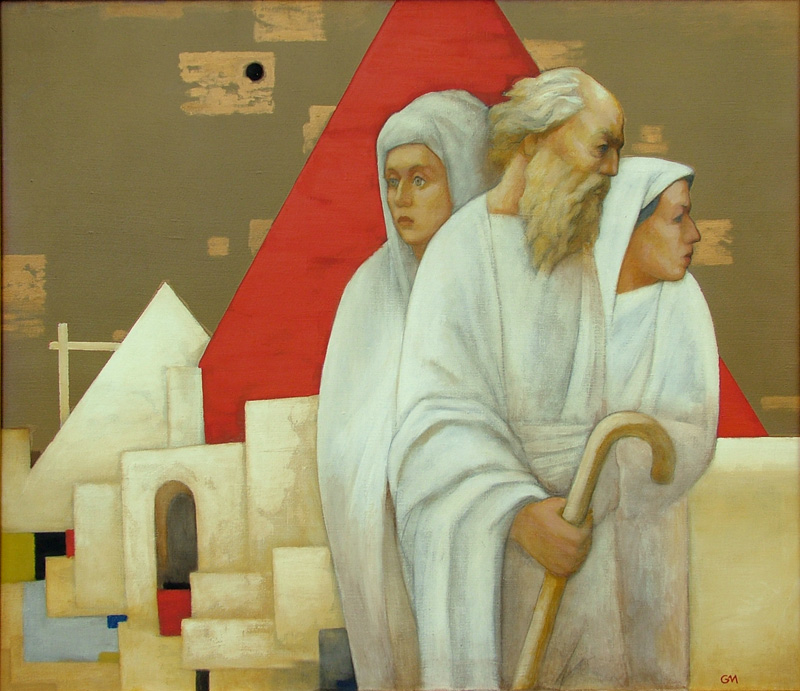
Grigory Mekheev, Exodus (2000) artist shared work under Creative Commons Attribution-Share Alike 3.0

Grigory Mekheev, Exodus (2000) artist shared work under Creative Commons Attribution-Share Alike 3.0

Deuteronomy 28: 1-14 Blessings for Obedience

1 If you will only obey the LORD your God, by diligently observing all his commandments that I am commanding you today, the LORD your God will set you high above all the nations of the earth; 2 all these blessings shall come upon you and overtake you, if you obey the LORD your God:
 3 Blessed shall you be in the city, and blessed shall you be in the field.
 4 Blessed shall be the fruit of your womb, the fruit of your ground, and the fruit of your livestock, both the increase of your cattle and the issue of your flock.
 5 Blessed shall be your basket and your kneading bowl.
 6 Blessed shall you be when you come in, and blessed shall you be when you go out.
 7 The LORD will cause your enemies who rise against you to be defeated before you; they shall come out against you one way, and flee before you seven ways. 8 The LORD will command the blessing upon you in your barns, and in all that you undertake; he will bless you in the land that the LORD your God is giving you. 9 The LORD will establish you as his holy people, as he has sworn to you, if you keep the commandments of the LORD your God and walk in his ways. 10 All the peoples of the earth shall see that you are called by the name of the LORD, and they shall be afraid of you. 11 The LORD will make you abound in prosperity, in the fruit of your womb, in the fruit of your livestock, and in the fruit of your ground in the land that the LORD swore to your ancestors to give you. 12 The LORD will open for you his rich storehouse, the heavens, to give the rain of your land in its season and to bless all your undertakings. You will lend to many nations, but you will not borrow. 13 The LORD will make you the head, and not the tail; you shall be only at the top, and not at the bottom– if you obey the commandments of the LORD your God, which I am commanding you today, by diligently observing them, 14 and if you do not turn aside from any of the words that I am commanding you today, either to the right or to the left, following other gods to serve them.
 
Deuteronomy closes this section with a series of blessings and curses. The previous chapter gives instructions for Simeon, Levi, Judah, Issachar, Joseph and Benjamin to stand on Mount Gerazim to proclaim the blessings. Although the ancient world had a much stronger view of blessings and curses than we do in our culture they are not quite these magic words that linger in the air and take on a power to bless or smite, rather they are a continual reminder of the contingent nature of the blessings that the LORD has promised. Israel does not have a true freedom in the sense of being able to choose its own destiny but it does, according to Deuteronomy, have a choice of which destiny it will live into. The reward for covenant obedience is that they will be materially blessed in this life, their harvests will be good, their flocks and herds will grow, they will have children and good health.

In an American context it would be easy to misread Deuteronomy as some sort of prosperity gospel for individuals, but this would be to miss much of what Deuteronomy is saying. Yes, in the author of Deuteronomy’s view the people (as a community) will be blessed if they are obedient. That obedience involves a harsh set of justice requirements and the continual care for the oppressed in their midst. It involves an acknowledgment that their blessings come from the LORD their God who brought them out of the Egypt and to this land of milk and honey. It is a way of thinking that is simple, and one that other books of the bible do challenge (for example in the book of Job which revolves around the righteous sufferer and in Matthew, Mark and Luke where prosperity is viewed with suspicion) yet it is a perspective that helps many people make sense of their lives, and probably helped the people Deuteronomy is written to initially make sense of their lives.

The people will often fail to diligently observe all the commandments and the much larger portion of this chapter is dedicated to the consequences for disobedience. Perhaps as we approach the following fifty three verses of curses, which seem oppressive and distasteful in our time, we can suspend our judgment and wonder about the experiences of the people who would hear these words.


Deuteronomy 28: 15-68 Curses for Disobedience

      15 But if you will not obey the LORD your God by diligently observing all his commandments and decrees, which I am commanding you today, then all these curses shall come upon you and overtake you:
 16 Cursed shall you be in the city, and cursed shall you be in the field.
 17 Cursed shall be your basket and your kneading bowl.
 18 Cursed shall be the fruit of your womb, the fruit of your ground, the increase of your cattle and the issue of your flock.
 19 Cursed shall you be when you come in, and cursed shall you be when you go out.
       20 The LORD will send upon you disaster, panic, and frustration in everything you attempt to do, until you are destroyed and perish quickly, on account of the evil of your deeds, because you have forsaken me. 21 The LORD will make the pestilence cling to you until it has consumed you off the land that you are entering to possess. 22 The LORD will afflict you with consumption, fever, inflammation, with fiery heat and drought, and with blight and mildew; they shall pursue you until you perish. 23 The sky over your head shall be bronze, and the earth under you iron. 24 The LORD will change the rain of your land into powder, and only dust shall come down upon you from the sky until you are destroyed.
      25 The LORD will cause you to be defeated before your enemies; you shall go out against them one way and flee before them seven ways. You shall become an object of horror to all the kingdoms of the earth. 26 Your corpses shall be food for every bird of the air and animal of the earth, and there shall be no one to frighten them away. 27 The LORD will afflict you with the boils of Egypt, with ulcers, scurvy, and itch, of which you cannot be healed. 28 The LORD will afflict you with madness, blindness, and confusion of mind; 29 you shall grope about at noon as blind people grope in darkness, but you shall be unable to find your way; and you shall be continually abused and robbed, without anyone to help. 30 You shall become engaged to a woman, but another man shall lie with her. You shall build a house, but not live in it. You shall plant a vineyard, but not enjoy its fruit. 31 Your ox shall be butchered before your eyes, but you shall not eat of it. Your donkey shall be stolen in front of you, and shall not be restored to you. Your sheep shall be given to your enemies, without anyone to help you. 32 Your sons and daughters shall be given to another people, while you look on; you will strain your eyes looking for them all day but be powerless to do anything. 33 A people whom you do not know shall eat up the fruit of your ground and of all your labors; you shall be continually abused and crushed, 34 and driven mad by the sight that your eyes shall see. 35 The LORD will strike you on the knees and on the legs with grievous boils of which you cannot be healed, from the sole of your foot to the crown of your head. 36 The LORD will bring you, and the king whom you set over you, to a nation that neither you nor your ancestors have known, where you shall serve other gods, of wood and stone. 37 You shall become an object of horror, a proverb, and a byword among all the peoples where the LORD will lead you.
 38 You shall carry much seed into the field but shall gather little in, for the locust shall consume it. 39 You shall plant vineyards and dress them, but you shall neither drink the wine nor gather the grapes, for the worm shall eat them. 40 You shall have olive trees throughout all your territory, but you shall not anoint yourself with the oil, for your olives shall drop off. 41 You shall have sons and daughters, but they shall not remain yours, for they shall go into captivity. 42 All your trees and the fruit of your ground the cicada shall take over. 43 Aliens residing among you shall ascend above you higher and higher, while you shall descend lower and lower. 44 They shall lend to you but you shall not lend to them; they shall be the head and you shall be the tail.
      45 All these curses shall come upon you, pursuing and overtaking you until you are destroyed, because you did not obey the LORD your God, by observing the commandments and the decrees that he commanded you. 46 They shall be among you and your descendants as a sign and a portent forever. 47 Because you did not serve the LORD your God joyfully and with gladness of heart for the abundance of everything, 48 therefore you shall serve your enemies whom the LORD will send against you, in hunger and thirst, in nakedness and lack of everything. He will put an iron yoke on your neck until he has destroyed you. 49 The LORD will bring a nation from far away, from the end of the earth, to swoop down on you like an eagle, a nation whose language you do not understand, 50 a grim-faced nation showing no respect to the old or favor to the young. 51 It shall consume the fruit of your livestock and the fruit of your ground until you are destroyed, leaving you neither grain, wine, and oil, nor the increase of your cattle and the issue of your flock, until it has made you perish. 52 It shall besiege you in all your towns until your high and fortified walls, in which you trusted, come down throughout your land; it shall besiege you in all your towns throughout the land that the LORD your God has given you. 53 In the desperate straits to which the enemy siege reduces you, you will eat the fruit of your womb, the flesh of your own sons and daughters whom the LORD your God has given you. 54 Even the most refined and gentle of men among you will begrudge food to his own brother, to the wife whom he embraces, and to the last of his remaining children, 55 giving to none of them any of the flesh of his children whom he is eating, because nothing else remains to him, in the desperate straits to which the enemy siege will reduce you in all your towns. 56 She who is the most refined and gentle among you, so gentle and refined that she does not venture to set the sole of her foot on the ground, will begrudge food to the husband whom she embraces, to her own son, and to her own daughter, 57 begrudging even the afterbirth that comes out from between her thighs, and the children that she bears, because she is eating them in secret for lack of anything else, in the desperate straits to which the enemy siege will reduce you in your towns.
      58 If you do not diligently observe all the words of this law that are written in this book, fearing this glorious and awesome name, the LORD your God, 59 then the LORD will overwhelm both you and your offspring with severe and lasting afflictions and grievous and lasting maladies. 60 He will bring back upon you all the diseases of Egypt, of which you were in dread, and they shall cling to you. 61 Every other malady and affliction, even though not recorded in the book of this law, the LORD will inflict on you until you are destroyed. 62 Although once you were as numerous as the stars in heaven, you shall be left few in number, because you did not obey the LORD your God. 63 And just as the LORD took delight in making you prosperous and numerous, so the LORD will take delight in bringing you to ruin and destruction; you shall be plucked off the land that you are entering to possess. 64 The LORD will scatter you among all peoples, from one end of the earth to the other; and there you shall serve other gods, of wood and stone, which neither you nor your ancestors have known. 65 Among those nations you shall find no ease, no resting place for the sole of your foot. There the LORD will give you a trembling heart, failing eyes, and a languishing spirit. 66 Your life shall hang in doubt before you; night and day you shall be in dread, with no assurance of your life. 67 In the morning you shall say, “If only it were evening!” and at evening you shall say, “If only it were morning!”– because of the dread that your heart shall feel and the sights that your eyes shall see. 68 The LORD will bring you back in ships to Egypt, by a route that I promised you would never see again; and there you shall offer yourselves for sale to your enemies as male and female slaves, but there will be no buyer.

One of my practices as I write these reflections is to physically write out the text. I have done this for Haggai, Esther, Jeremiah, Psalms 1-10 and now most of the way through Deuteronomy. This is a challenging text to listen to as you write it, but it is not the first time I have approached a text like this. What the text reminded me of was the end of Jeremiah, particularly Jeremiah 46-51 where the curses are uttered towards all the nations around Judah. Even though it is unusual in our time to think about dedicating this much energy to a ‘hex’ or ‘curse’ it is not unusual in the ancient world: both in Israel and in the cultures around them. Many ancient texts end with a long set of curses for failing to observe the commands or view of the text, but Deuteronomy does not end here. While this is the closing of this central portion of Deuteronomy that deals with the law, in the narrative of Deuteronomy Moses is still going to renew the covenant one more time, promise them that even in the midst of the curses that there is still an option to return to the LORD, a challenge to choose the way of blessing and life, the setting up Joshua as a successor and establishing practices for reminding the people of this law, Moses’ song and Moses’ final blessing. Yet, there is no avoiding the discomfort that a passage like this causes modern people.

I am amazed at the ways I have seen people misuse this text, for example the text in verses 56 and 57 (which is very reminiscent of Jeremiah) which talks about parents eating their own children within the context of a land under siege I have seen it twisted by a person trying to discredit the bible to God commanding parents to eat their children (which never happens). I can understand why people would misread these curses, but let’s take a little time to try to understand what is going on here. The great fear of the author of Deuteronomy is that the people when they enter the promised land will forget the covenant and turn aside to worship other gods. If they do this they lose their identity as being Israel, and with that they lose the land, their prosperity, and everything else. If scholars are correct that Deuteronomy, like many other books, reach their final form during the Babylonian exile then this portion in verses 47-57 makes a lot of sense. It does not parallel any of the blessings but does reflect the experience of the siege of Jerusalem and the departure into exile. As harsh as this language is, it may reflect the process of meaning making that is a part of the recovery from trauma. In her well written book interpreting the book of Jeremiah from the perspective of trauma and recovery Kathleen O’Connor can write about the rhetoric of responsibility and survival by saying:

If the world is ever to be trustworthy, victims need interpretation. For their lives to rest on the most minimal order, they must have meaning, interpretation, explanation, even if the explanation is ephemeral, inadequate, partial or outright wrong. Explanation puts order back in the world…. He (Jeremiah) claims without qualification that God is still in charge of the world; God controls events and governs justly. But perhaps even more important and surprising, when he places responsibility upon the people, he gives people a sense of control. (O’Connor, 2011, p. 43f.)

Amazingly in these curses, perhaps in a period where the world seems out of control, the people of Israel and Judah can find a sense of control and things they can do to return to their former state. The answer may be incomplete or there may be times where it doesn’t adequately address the complexity of the situation. Yet, in a time of a crisis of belief and life where the people are seeking an answer the simple answer is often the one that people cling to. In an option where they could either say their God is powerless or that they themselves were under judgment it was an easier option, at least for those who would become the remnant, to claim that they were the party that failed the covenant. This reflection is not likely to convince the person who does not have God as a central part of their life but to those who consider themselves the faithful they may find great comfort in it.

As I mentioned above, the great fear voiced throughout Deuteronomy is that the people will forget the covenant in their prosperity. They will begin to trust in their own work or in the practice of the nations around them. The narrative that follows beginning in Joshua and running through 2 Kings bears out this fear. If Deuteronomy does have its origins in a speech of Moses, then it is conceivable that this fear of what would happen after his death could be a pressing anxiety for Moses on behalf of this people. Wherever Deuteronomy emerges from in time and history, the form we have it now does spend a lot of energy on these curses in a way that encourages the people to remain faithful. Also remember this is more of an aural document (written for the ear) than a textual one. Even though it is recorded it was to be read to the people and then repeated emphasis on the consequences are probably intended to encourage one more time obedience.

The book of Deuteronomy does have a very binary manner of looking at the world. There is either Mount Ebal, the mountain of curses, or Mount Gerazim, the mountain of blessings. Reality is probably closer to the valley between the two. Even though God is portrayed harshly in Deuteronomy, and other places as well, this wrath of God is never the primary thing. Even though this chapter is dominated by curses for disobedience, the continuing unfolding of this narrative will show how often God attempts to get the people to turn away from the practices that are leading them to destruction. God will be the heartbroken one often in the story going forward, and yet a God who does not judge is an apathetic god, not the passionate God of the Bible. Yet, just as these curses are not the end of Deuteronomy, nor are the experiences of destruction and loss the end of God’s calling for the people. As the final chapters will make clear there is always the possibility for the people’s return and the LORD’s forgiveness.

Deuteronomy 27-Preserving the Law

Moses by Victorvictori, permission granted by author through WikiCommons

Moses by Victorvictori, permission granted by author through WikiCommons

Deuteronomy 27: 1-8 An Enduring Word

1 Then Moses and the elders of Israel charged all the people as follows: Keep the entire commandment that I am commanding you today. 2 On the day that you cross over the Jordan into the land that the LORD your God is giving you, you shall set up large stones and cover them with plaster. 3 You shall write on them all the words of this law when you have crossed over, to enter the land that the LORD your God is giving you, a land flowing with milk and honey, as the LORD, the God of your ancestors, promised you. 4 So when you have crossed over the Jordan, you shall set up these stones, about which I am commanding you today, on Mount Ebal, and you shall cover them with plaster.

 5 And you shall build an altar there to the LORD your God, an altar of stones on which you have not used an iron tool. 6 You must build the altar of the LORD your God of unhewn stones. Then offer up burnt offerings on it to the LORD your God, 7 make sacrifices of well-being, and eat them there, rejoicing before the LORD your God. 8 You shall write on the stones all the words of this law very clearly.

Deuteronomy narrates a scene where Moses has dictated the law to the people in its completion prior to their entering into the promised land. We know that Moses is not going to cross over with the people and so in the remaining chapters we see the beginning of a massive transition in the leadership of the people. We live in a time where written texts are readily available and even if we don’t have a physical copy for many texts a digital copy is only a few keystrokes away. In the ancient world there are very few physical texts and a relatively small class who are able to read and create the written texts. Even something as central as the law was lost, intentionally or unintentionally, multiple times in the story of the people of Israel and Judah. For example, in the reign of King Josiah it is reported in 2 Kings 22: 8: “The high priest Hilkiah said to Shaphan the secretary, “I have found the book of the law in the house of the LORD.” When Hilkiah gave the book to Shaphan, he read it. Shortly afterwards the written text is read before the king and the king continues the work of reform.

Moses has been the mediator of the law between the LORD and the people, but with Moses about to leave his role as leader, judge, mediator and teacher there needs to be a way for the people to refer to this critical law he is leaving behind. Oral texts may survive a couple of generations intact, but ultimately for the law to survive it must become a textual document. Much like the recording of the words of the prophet Jeremiah in Jeremiah 36, where the prophet’s haunting and inconvenient words survive both the physical threat to the prophet as well as the burning by King Jehoiakim by being recorded again, now the critical exposition of the law in Deuteronomy 4-26 is to be put on plastered stones to be a visible witness to the people. This “furniture of the covenant” (Brueggemann, 2001 , p. 251) now is to be a manner in which future leaders can refer back to the law that Moses handed on. Moses now begins to step aside from being the teacher of the law to make space for the written law that future leaders and the people will be governed by.

Moses throughout his ministry has occupied a central role in the place between the people and God. Even with the elders and the tribal leaders and priest, ultimately he is the one who mediated the relationship between the people and their God, was the political leader, their chief judge and prophet, their lawgiver, and peacemaker. Yet, as Rabbi Kushner can state,

In the Jewish tradition, we speak of him as Moses Rabeinu—Moses, Our Teacher—not Moses, our Political Leader; not Moses, Who Freed the Slaves. Moses, Our Teacher. He dedicates himself to getting the people to embrace the ideas that they have to live by when he’s no longer around to remind them. (Thompson, 2014, p. 194)

Moses, throughout Deuteronomy has been working to equip the people to live in accordance with the commandments, statutes and ordinances outlined within the book. He has done this with catechetical practices within the home and with worship practices at the place where the LORD’s name will rest that reinforce their identity as the people of God. Here in the recording of the law and the building of an altar to celebrate and worship the LORD the narrative shows Moses preparing the people for a faithful practice of the covenant when he is no longer there to guide or intercede for them. And when the people fail to live out the covenant, then the stones themselves can testify very clearly against them.

Deuteronomy 27: 9-10 Hear One More Time

 9 Then Moses and the levitical priests spoke to all Israel, saying: Keep silence and hear, O Israel! This very day you have become the people of the LORD your God. 10 Therefore obey the LORD your God, observing his commandments and his statutes that I am commanding you today.

Moses, along with the priest, charges the people one final time with their identity and calling. Echoing the tone of the Shema in Deuteronomy 6: 4-5 he makes a final appeal for the people to hear. In an aural world they are to be silent and listen so they may remember who they are. They are the people of the LORD their God and therefore they are to be obedient. Their calling comes with blessing and challenges, and in their faithfulness they will be a witness to the nations and a blessing to the world. In their failing they will become the embodiment of the curses that will come in the following chapter.

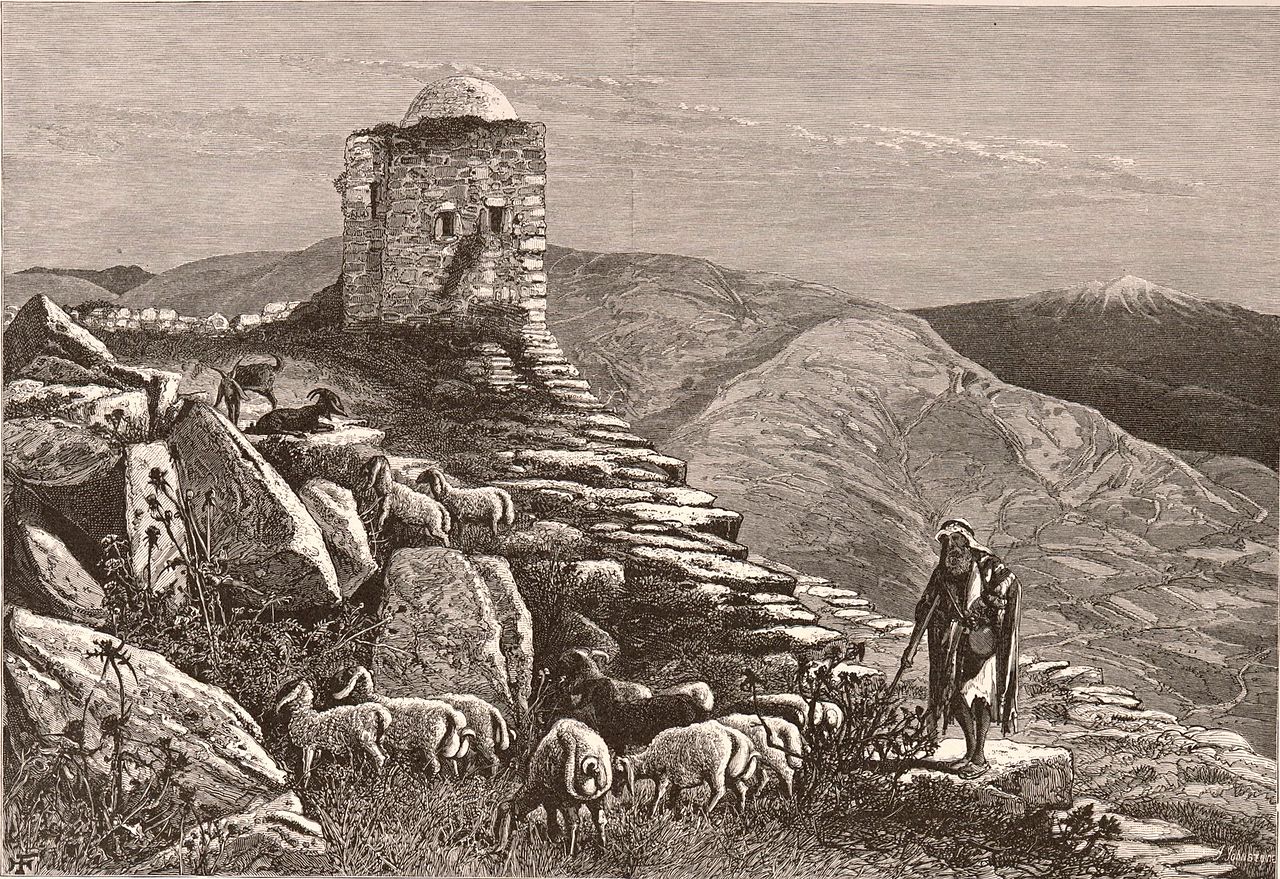
Herny Fenn, Ruins on the Summit of Mount Gerazim, On the Site of the Samaritan Temple (between 1881 and 1884)

Herny Fenn, Ruins on the Summit of Mount Gerazim, On the Site of the Samaritan Temple (between 1881 and 1884)

Deuteronomy 27: 11-26 A Liturgy of Curses

 11 The same day Moses charged the people as follows: 12 When you have crossed over the Jordan, these shall stand on Mount Gerizim for the blessing of the people: Simeon, Levi, Judah, Issachar, Joseph, and Benjamin. 13 And these shall stand on Mount Ebal for the curse: Reuben, Gad, Asher, Zebulun, Dan, and Naphtali. 14 Then the Levites shall declare in a loud voice to all the Israelites:
 15 “Cursed be anyone who makes an idol or casts an image, anything abhorrent to the LORD, the work of an artisan, and sets it up in secret.” All the people shall respond, saying, “Amen!”
 16 “Cursed be anyone who dishonors father or mother.” All the people shall say, “Amen!”
 17 “Cursed be anyone who moves a neighbor’s boundary marker.” All the people shall say, “Amen!”
 18 “Cursed be anyone who misleads a blind person on the road.” All the people shall say, “Amen!”
 19 “Cursed be anyone who deprives the alien, the orphan, and the widow of justice.” All the people shall say, “Amen!”
 20 “Cursed be anyone who lies with his father’s wife, because he has violated his father’s rights.” All the people shall say, “Amen!”
 21 “Cursed be anyone who lies with any animal.” All the people shall say, “Amen!”
 22 “Cursed be anyone who lies with his sister, whether the daughter of his father or the daughter of his mother.” All the people shall say, “Amen!”
 23 “Cursed be anyone who lies with his mother-in-law.” All the people shall say, “Amen!”
 24 “Cursed be anyone who strikes down a neighbor in secret.” All the people shall say, “Amen!”
 25 “Cursed be anyone who takes a bribe to shed innocent blood.” All the people shall say, “Amen!”
 26 “Cursed be anyone who does not uphold the words of this law by observing them.” All the people shall say, “Amen!”

 The chapter ends with a series of twelve individual curses that the community is to place on anyone who violates particular actions. This sets the scene as well for the blessings and curses in chapter 28 where six tribes are on Mount Ebal for curses and six tribes are on Mount Gerazim for blessings. The two mountains are on the opposite sides of a valley and for the Samaritans Mount Gerazim would become one of their holy sites. Within Deuteronomy Mount Gerazim becomes the mountain of blessing while Mount Ebal is the mountain of curse, yet for Deuteronomy the tablets of the law and the altar are to be built on Mount Ebal rather than Mount Gerazim.

Many of these are covered earlier in Deuteronomy and rather than spend much time on those I will link you back to the discussion at the appropriate place in Deuteronomy, but a few are new. Verse 15 which concerns idols and images is talked about earlier in Deuteronomy 4: 15-20, and Deuteronomy 5:8-10 and is depending on how you number either part of the first commandment or the second commandment. Verse 16 also harkens back to the ten commandments with the commandment on honoring father and mother in Deuteronomy 5: 16 and is also expanded in Deuteronomy 21: 18-21 with the punishment for children who are rebellious and bring dishonor to their father and mother. Verse 17 concerns the moving of boundary markers which is addressed in Deuteronomy 19: 14. Verse 18 is the first new item on misleading the blind, but it follows in the concern that people care for the vulnerable and the weak in the society. Leviticus 19: 14 also addresses this when it states, “You shall not revile the deaf or put a stumbling block before the blind; you shall fear the LORD your God.” Caring for the vulnerable is a central part of living out of the covenant and one of the places where the prophets are called upon to point out the way the people have not cared for the vulnerable.  The next curse continues about those who oppress the representative triumvirate of the vulnerable, the widows, the orphan and the alien. The tithe, addressed in Deuteronomy 14: 29 and Deuteronomy 26: 12-13, the inclusion of the vulnerable in the festivals like outlined in Deuteronomy 16: 11, 14 the practice of allowing the remnant of the harvest and vine to be gleaned by the vulnerable in Deuteronomy 24: 19-22 are all concrete practices to help care for the vulnerable in their community. Verse 20 about lying with the father’s wife is covered in Deuteronomy 22: 30. The next three curses about forbidden sexual relations are new to Deuteronomy but fit within the ordered world of Deuteronomy 22:13-26 for the author of Deuteronomy’s view of sexual relations. Sexual relations with any animal, with a sister or a mother-in-law are forbidden and Deuteronomy doesn’t feel the need to explain these any further. The command in verse 24 about striking a neighbor in secret is new and it addresses disputes outside the purview of the community. For Deuteronomy the community and the elders are key to ensuring that disputes are resolved equitably. The curse about taking a bribe to shed innocent blood is addressed in the judicial context of Deuteronomy 16:19. Finally the last curse is general in nature referring to the entirety of the law and the need for obedience. This final curse may round it out to bring the final number of these individual curses to the representative twelve. Obedience is both an individual and communal responsibility, where the community holds the individual accountable. By placing these curses in the mouths of the people as they enter the land their own words hold them accountable to living in obedience to this law and covenant.


Deuteronomy 26: Bringing Story into Liturgy

The Seven Species of the Land of Israel listed in Deuteronomy 8:8, Creative Commons Attribution 3.0

The Seven Species of the Land of Israel listed in Deuteronomy 8:8, Creative Commons Attribution 3.0

 Deuteronomy 26

1 When you have come into the land that the LORD your God is giving you as an inheritance to possess, and you possess it, and settle in it, 2 you shall take some of the first of all the fruit of the ground, which you harvest from the land that the LORD your God is giving you, and you shall put it in a basket and go to the place that the LORD your God will choose as a dwelling for his name. 3 You shall go to the priest who is in office at that time, and say to him, “Today I declare to the LORD your God that I have come into the land that the LORD swore to our ancestors to give us.” 4 When the priest takes the basket from your hand and sets it down before the altar of the LORD your God, 5 you shall make this response before the LORD your God: “A wandering Aramean was my ancestor; he went down into Egypt and lived there as an alien, few in number, and there he became a great nation, mighty and populous. 6 When the Egyptians treated us harshly and afflicted us, by imposing hard labor on us, 7 we cried to the LORD, the God of our ancestors; the LORD heard our voice and saw our affliction, our toil, and our oppression. 8 The LORD brought us out of Egypt with a mighty hand and an outstretched arm, with a terrifying display of power, and with signs and wonders; 9 and he brought us into this place and gave us this land, a land flowing with milk and honey. 10 So now I bring the first of the fruit of the ground that you, O LORD, have given me.” You shall set it down before the LORD your God and bow down before the LORD your God. 11 Then you, together with the Levites and the aliens who reside among you, shall celebrate with all the bounty that the LORD your God has given to you and to your house.

 12 When you have finished paying all the tithe of your produce in the third year (which is the year of the tithe), giving it to the Levites, the aliens, the orphans, and the widows, so that they may eat their fill within your towns, 13 then you shall say before the LORD your God: “I have removed the sacred portion from the house, and I have given it to the Levites, the resident aliens, the orphans, and the widows, in accordance with your entire commandment that you commanded me; I have neither transgressed nor forgotten any of your commandments: 14 I have not eaten of it while in mourning; I have not removed any of it while I was unclean; and I have not offered any of it to the dead. I have obeyed the LORD my God, doing just as you commanded me. 15 Look down from your holy habitation, from heaven, and bless your people Israel and the ground that you have given us, as you swore to our ancestors– a land flowing with milk and honey.”

 16 This very day the LORD your God is commanding you to observe these statutes and ordinances; so observe them diligently with all your heart and with all your soul. 17 Today you have obtained the LORD’s agreement: to be your God; and for you to walk in his ways, to keep his statutes, his commandments, and his ordinances, and to obey him. 18 Today the LORD has obtained your agreement: to be his treasured people, as he promised you, and to keep his commandments; 19 for him to set you high above all nations that he has made, in praise and in fame and in honor; and for you to be a people holy to the LORD your God, as he promised.

The twenty sixth chapter of Deuteronomy closes a long section which runs from chapter five (although many people move it back to the scene being set in Deuteronomy 4:44) through the end of this chapter. Here in the narrative Moses concludes his exposition of the commandments, statutes and ordinances of the LORD for the people of Israel. In this conclusion resides both ritual and liturgy that will continue to form the identity of the people for their life in the promised land. The manner in which the people of Israel bring in their offerings is mentioned several times throughout this portion of Deuteronomy but the way in which the author chooses to end this section liturgically explaining the significance of these practices is important to note.

In American Christianity there are several branches of the faith that are uncomfortable with the idea of a confessional creed. In a society based on individualism where the focus is on the individual’s faith and what they believe at each point in their lives the idea of a communal confession of faith seems unnecessary. I appreciate the gifts of the confessional tradition that I come out of and the way it binds me both to the manner Christians have understood the faith historically as well as locating me within a community that shares and wrestles with common confessions. Creeds have been used throughout the ages as summaries of a wider faith used in both catechetical (teaching future generations) and liturgical (worship) settings. The bible is full of these confessions of faith in both the Hebrew Scriptures and the New Testament (for example Philippians 2: 5-11) and various confessions of faith have been used as a part of the liturgy of faithful people for generations as a way of summarizing the faith. Deuteronomy 6: 21-25 is one example of a ‘credo’ a basic statement of belief to be used as a method of catechesis within the home. While in Deuteronomy 6 the focus is on the actions within the household that the parents will use to pass on the faith to their children and grandchildren and beyond, here we see confessions of faith used liturgically as a part of the telling of the story of the people of Israel. The practice of bringing the tithe and first fruits in Deuteronomy 14: 22-29 and in Deuteronomy 18:4 is now brought into a setting of worship with words that reinforce several basic parts of the understanding of the covenantal relationship the people would be expected to maintain in the promised land. Deanna Thompson outlines succinctly the key themes of the text as:
“the call for Israel to acknowledge God’s persistent care; the reminder that the land God is giving them is sheer gift; and the insistence that fundamental to Israel’s right relationship to God is the practice of attending to the needs of the stranger, the widow and the orphan.” (Thompson, 2014, p. 188)

As the offering are brought to the tabernacle or temple the people recite a brief exposition of their history which outlines their beginnings as a wandering people in Genesis, the journey to Egypt in the time of Joseph where they received the food they needed in the midst of famine, and then a brief synopsis of the Exodus experience including their oppression and liberation and being brought into the promised land. This short liturgical statement begins with the tenuousness of their situation as a landless people and later as slaves contrasted with their new but contingent identity as the covenant people of the LORD the God of Israel. The narrated history is now combined with the practice of giving which is intended to continue to form the identity of the people in their life in the land.

The liturgy in Deuteronomy 26: 1-11 focuses on re-telling the story of the people and the action of bringing the first fruit which is a result of God’s gracious provision for the people in the land. God has brought the people from being landless or oppressed to being in a land of milk and honey, therefore they are to bring in these gifts and celebrate and remember the provision of God. The focus on this first exhortation is on what God has done for Israel and now Israel is freed to enjoy the fruits of the land. In Deuteronomy 26: 12-15 the giving of the tithe Deuteronomy 14: 28-29 and a declaration that the individual has been faithful both in bringing the tithe (and not withholding a portion or using it in some other way) but also in the keeping of all of the commandments and asking the LORD to bless the peoples’ lives in the coming years.  Now the focus is on what Israel has done in response and their faithfulness to the covenant and understanding that because of their faithfulness the LORD will look down and allow them to prosper in the land. The section concludes with oaths that bind the people and the LORD the God of Israel together. The hope of this relationship is that “I will be your God, and you shall be my people; and walk only in the way that I command you, so that it may be well with you.” (Jeremiah 7: 23) As Brueggemann has helpfully outlined the italicized comments above and here now the people are to be utterly obedient to the LORD and the LORD will be utterly committed to Israel. (Brueggemann, 2001 , p. 249f)

This relationship between the LORD and the people as given in this giving and receiving of vows is to be a committed one, and perhaps the natural comparison is to the marriage vows that a couple make when they are married. This relation of the covenant to marriage will form a metaphorical background for Jeremiah (see for example Jeremiah 3) and Hosea (Hosea 2). Much of the remainder of Deuteronomy will call attention to the seriousness of Israel’s commitment in this covenant and the cost of disobedience as well as the LORD’s continuing commitment. As a people holy to the LORD their commitment is a calling. They will need to return to this covenant and recommit themselves several times throughout their story and yet there is the commitment that when they stumble and fall and recommit themselves that God will hear. They have been reminded of who they were and where they came from, how God acted to bring them graciously into this land filled with promise, how they are to respond to God’s faithfulness and the critical nature of their obedience.

Deuteronomy 25: Punishment, Justice, and the Enemy

Deuteronomy 25: 1-3 The Limit of Punishment

1 Suppose two persons have a dispute and enter into litigation, and the judges decide between them, declaring one to be in the right and the other to be in the wrong. 2 If the one in the wrong deserves to be flogged, the judge shall make that person lie down and be beaten in his presence with the number of lashes proportionate to the offense. 3 Forty lashes may be given but not more; if more lashes than these are given, your neighbor will be degraded in your sight.

Deuteronomy believes in a harsh justice but it also sets limits on the execution of justice or revenge. This is one of those places where the dignity and reputation of the neighbor limit the maximum punishment of lashes the neighbor can receive as forty. The action takes place in the sight of the judge who orders the proportionate punishment so that the dignity of the offender is preserved. Although we may live in a society that has trouble with this type of corporal punishment, this is a relatively new thing in our society. The idea of submitting oneself to the measured discipline of the community seems to be an expectation for being a part of the society of Israel. The Apostle Paul in 2 Corinthians 11:24 can claim that five times he received the punishment of forty lashes minus one in addition to the other punishment he lists, and this is one of the many indications that Paul saw himself remaining as a part of the Jewish community since he submitted to the discipline.

In our own society we have become very litigious and often use fines or imprisonment as a means of discipline. Yet, when it comes to these fines and imprisonments which can often be excessive for certain crimes (particularly drug related offenses with harsh minimum sentences) in addition to the shame that comes with a criminal record we may want to relook at the idea of punishment that does not permanently diminish our neighbor in our eyes. Are judges enabled to give punishments that are proportional to the offense or are they bound by laws that are harsh allowing the guilty not chance at a non-degraded standing within society. These are difficult issues, but they are the type of big questions of a society that the book of Deuteronomy deals with.

Deuteronomy 25: 4 Care for the Working Animals

4 You shall not muzzle an ox while it is treading out the grain.

This is an acknowledgment that the working animals are not machines to be driven mercilessly, but even in small ways the lost grain that an ox eats while treading the grain is a part of its due. It is one of the windows into a worldview where animals and plants (see Deuteronomy 20 on trees in war for example) are given some protection as well. They all are a part of the creation of the LORD and are entitled to the benefits of striving with humanity to carve a living from the earth. Paul references this section in 1 Corinthians 9:9 in his discussion of his authority and that he could ask for a material benefit for his work among the Corinthians even though he states he made no use of those rights. 1 Timothy 5: 17-18 also uses this line of argument for the supporting of elders.

Deuteronomy 25: 5-10 Levirate Marriage

Francesco Hayez, A Portrait of a Woman as Ruth (1853)

Francesco Hayez, A Portrait of a Woman as Ruth (1853)

 5 When brothers reside together, and one of them dies and has no son, the wife of the deceased shall not be married outside the family to a stranger. Her husband’s brother shall go in to her, taking her in marriage, and performing the duty of a husband’s brother to her, 6 and the firstborn whom she bears shall succeed to the name of the deceased brother, so that his name may not be blotted out of Israel. 7 But if the man has no desire to marry his brother’s widow, then his brother’s widow shall go up to the elders at the gate and say, “My husband’s brother refuses to perpetuate his brother’s name in Israel; he will not perform the duty of a husband’s brother to me.” 8 Then the elders of his town shall summon him and speak to him. If he persists, saying, “I have no desire to marry her,” 9 then his brother’s wife shall go up to him in the presence of the elders, pull his sandal off his foot, spit in his face, and declare, “This is what is done to the man who does not build up his brother’s house.” 10 Throughout Israel his family shall be known as “the house of him whose sandal was pulled off.”

 This passage enters into the narrative of Israel in both the story of Tamar in Genesis 38 as well as the book of Ruth. Deuteronomy is written in an intensely patriarchal world where barrenness is a crisis because it threatens the perpetuation of the family’s name. Women were honored in their role as bearers of children and in their role in allowing for the continuance of the line. The idea of Levirate marriage is foreign to our time, where the idea of marrying the wife of a deceased brother seems out of place. Yet, in the world of Deuteronomy it is an expectation and an obligation. The brother is to ensure that there is an heir to inherit the deceased’s land and title. This also provided protection for the widow for she both has a family she is brought into and with the birth of an heir there is the promise that she will be provided for once her son inherits. In the ancient world, where no government safety net exists, children were the security of their parents in their old age. Even in the ten commandments this concern is addressed in the command to honor the father and the mother (Deuteronomy 5: 16).

In the story of Tamar, who gets herself pregnant by Judah when he denies her his youngest son, is a fascinating short story of a woman who boldly claims her rights to protection and inheritance however she needs to. As Judah can acknowledge at the end of the story, “She is more in the right than I, since I did not give her to my son Shelah.” (Genesis 38: 26) In the book of Ruth this passage serves as the law behind the meeting of Boaz and the unnamed next-of-kin where the issues of inheritance and marriage are tied together. The kinsman acknowledges that he cannot redeem the property, and marry Ruth with the property passing to her children, and so the ‘right’ passes to Boaz. It is uncertain how deep of a shaming was associated with the unwillingness or inability to care for the needs of a widow, as Deanna Thompson states, “This public shaming would give this family the reputation of not providing for its widows, thus making it more difficult for the family to contract marriages for their sons.” (Thompson, 2014, p. 183)

Deuteronomy 25:11 An Unfair Fight

  11 If men get into a fight with one another, and the wife of one intervenes to rescue her husband from the grip of his opponent by reaching out and seizing his genitals, 12 you shall cut off her hand; show no pity.

Deuteronomy is written from a male dominant perspective and to the author of Deuteronomy the idea of a woman ‘sexually shaming’ a man in public (Thompson, 2014, p. 184). The genitals of another man which are exposed and could potentially put the man and the woman on an equal footing are to be off limits in a fight. As we saw in Deuteronomy 23: 1-8 the damaging of the testicles or penis is enough to make a man no longer a man in the eyes of the assembly. For men sexual generativity is on par with sight and limbs and the punishment listed of mutilation is only prescribed for one other event (in Exodus 21: 22-25) where a man injures a woman and causes her to miscarry. The husband may demand whatever punishment he sees fit in that case. Martin Luther addresses this broadly with the maxim, “Evil should not be done that good may come of it.” (Luther, 1960 (1525), p. 9:249) where he talks about the woman wanting to do good on behalf of her husband and yet doing it in a ‘cowardly’ way.

Again this brings up issues centered around women’s rights compared to men’s rights and the rights of self-defense. There are times I am convinced we are more concerned with protecting men than women, and while we might want to protect the vulnerable areas of both men and women how do we also ensure that women are given the ability and permission to protect themselves in an unfair fight and do we accuse that woman of sexually shaming the man or simply attempting to protect herself or her family?

 Deuteronomy 25: 13-16 Fair and Just Weights and Measures

 13 You shall not have in your bag two kinds of weights, large and small. 14 You shall not have in your house two kinds of measures, large and small. 15 You shall have only a full and honest weight; you shall have only a full and honest measure, so that your days may be long in the land that the LORD your God is giving you. 16 For all who do such things, all who act dishonestly, are abhorrent to the LORD your God.

Justice is a critical part of the people’s life within the land. There will always be the temptation to make a business deal work to one’s advantage and if one can skew measurements and weights in one’s favor one can cheat one’s neighbor out of their fair share. This type of injustice is another of the things that obtain the stronger disapproval of being abhorrent to the LORD. Economic injustices would be a common cry of the prophets for example in Amos 8: 5-6: saying, “When will the new moon be over so we may sell grain; and the Sabbath, so that we may offer wheat for sale? We will make the ephah small and the shekel great, and practice deceit with false balances.

In a barter economy where grain and oil are traded it is easy to think of concrete ways where this type of imbalance could be used to create economic advantages and disadvantages. Yet, in our world sometimes the examples are a little harder to see. When a company uses an inferior material that produces an item that wears out quickly, or a corporation delays in repairing a safety concern because it is cheaper to allow the improper item to remain in use, or when practices are used that harm the land and environment and then others have to bear the cost of cleaning up the land. In our days, as in the ancient times, acting dishonestly and can affect how long our days are in our own land. With the crisis with the water supply in Flint, Michigan we can see the cost when individuals and a government are not honest in their measurements and allow things to become unsafe for their society.

Deuteronomy 25: 17-19 The Amalekites

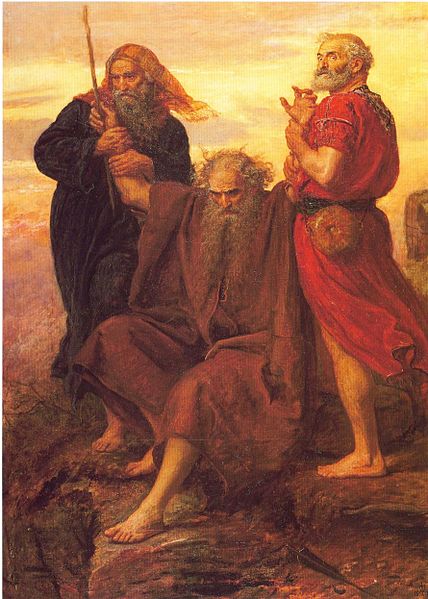
John Everett Millais (1829-1896), Victory O Lord!

John Everett Millais (1829-1896), Victory O Lord!

 17 Remember what Amalek did to you on your journey out of Egypt, 18 how he attacked you on the way, when you were faint and weary, and struck down all who lagged behind you; he did not fear God. 19 Therefore when the LORD your God has given you rest from all your enemies on every hand, in the land that the LORD your God is giving you as an inheritance to possess, you shall blot out the remembrance of Amalek from under heaven; do not forget.

The warrior God re-emerges here at the end of chapter 25 and demands revenge upon the Amalekites. In Exodus 17: 8-16 we hear the story of the conflict between the people of Israel, shortly after their emergence from Egypt, and Amalek. In the story Moses holds up his staff and the people prevail, but as Moses’ arms become tired the people falter, so Aaron and Hur hold up his hands and the battle is won. As Exodus states:

Then the LORD said to Moses, “Write this as a reminder in a book and recite it in the hearing of Joshua: I will utterly blot out the remembrance of Amalek from under heaven.” And Moses built an altar and called it, the LORD is my banner, He said, “A hand upon the banner of the LORD! The LORD will have war with Amalek from generation to generation.” Exodus 17: 14-16

The Amalekites become the enemy memorialized in a slogan, much as ‘Remember the Alamo’ or ‘Remember Pearl Harbor’ allowed for Texans or Americans to call to mind an earlier attack of an enemy. The people are to never forget this action and to never again allow it to happen. This memory sets the stage for a contentious history between the peoples and the people of Amalek enter the story of Israel again in the curses of Balaam in Numbers 24: 20, “First among the nations was Amalek, but its end is to perish forever,” in 1 Samuel 15 where King Saul defeats the Amalekites but leaves King Agag alive (disobeying the LORD) and probably in Esther 3:1 where Haman the Agagite is thought to be a descendent of Agag and the hatred between the remnant of Israel and the remnant of Amalek continues to burn.

We have seen many instances in history where ancient feuds emerge in surprising ways leading to acts of extreme violence and genocide. As Archbishop Desmond Tutu can state, “there is no future without forgiveness.” I talk more about this in the related passage of Deuteronomy 20 (or in the passages at the end of Esther, Esther 9:1-10 and 11-19). I spend more addressing the way passages like this would have been heard in the ancient world and how we talk about them today and don’t need to rearticulate them at this point. Deuteronomy is not a text that is always comfortable for us and passages like this where the people are commanded to blot out another people are passages we will have to struggle against if we are to embrace Christ’s call to love our enemies. In a time where many people want to use ‘Never forget’ in relation to the terrorist attacks of September 11th, we may also be condemning ourselves to a long history of warfare and hatred unless we can learn to remember rightly where the past violence does not define the totality of our future. I speak more about this idea of remembering rightly, influenced heavily by Miroslav Volf’s book The End of Memory here.

Deuteronomy 24: Divorce, Purity and Justice

"Ten Commandments by A.Losenko (?)" by Anton Losenko - http://www.university.kiev.uawww.uer.varvar.ru/arhiv/gallery/klassitsizm/losenko/losenko13.html. Licensed under Public Domain via Wikimedia Commons - https://commons.wikimedia.org/wiki/File:Ten_Commandments_by_A.Losenko_(%3F).jpg#/media/File:Ten_Commandments_by_A.Losenko_(%3F).jpg

“Ten Commandments by A.Losenko (?)” by Anton Losenko – http://www.university.kiev.uawww.uer.varvar.ru/arhiv/gallery/klassitsizm/losenko/losenko13.html. Licensed under Public Domain via Wikimedia Commons – https://commons.wikimedia.org/wiki/File:Ten_Commandments_by_A.Losenko_(%3F).jpg#/media/File:Ten_Commandments_by_A.Losenko_(%3F).jpg

Deuteronomy 24:1-5  Divorce, Remarriage and Wedded Bliss

1 Suppose a man enters into marriage with a woman, but she does not please him because he finds something objectionable about her, and so he writes her a certificate of divorce, puts it in her hand, and sends her out of his house; she then leaves his house 2 and goes off to become another man’s wife. 3 Then suppose the second man dislikes her, writes her a bill of divorce, puts it in her hand, and sends her out of his house (or the second man who married her dies); 4 her first husband, who sent her away, is not permitted to take her again to be his wife after she has been defiled; for that would be abhorrent to the LORD, and you shall not bring guilt on the land that the LORD your God is giving you as a possession.
 5 When a man is newly married, he shall not go out with the army or be charged with any related duty. He shall be free at home one year, to be happy with the wife whom he has married.

As a person who has gone through a divorce (I share some of my reflections on this here, here and here) I found it interesting that this is really the only place that divorce is discussed in the law for the general population. There are the prohibitions of a priest marrying a divorced woman in Leviticus 21 and the ability of a divorced daughter of a Levite to return to her father’s home and eat of his food in Leviticus 22: 13 but otherwise the reality of divorce is simply assumed. Numbers 30, for example can discuss that the vows a divorced woman makes are bound to her, while a married woman the husband (or if unmarried the father) may nullify the vows-but divorced women are an assumption as is their remarriage. We saw that in Deuteronomy 22: 13-30 a couple situations (the false accusation of lost virginity before marriage or a virgin who is violated and the man pays the bride price for her) where a woman cannot be divorced but in the Hebrew Bible divorce seems mainly to be an assumed option for men. Here the issue of divorce comes up in the complicated issue of a woman who is divorced, remarries, is either widowed or divorced again and a prohibition against her remarrying her first husband.

Here, as in the discussions of blood guilt in Deuteronomy 19, 21 and 22, the concern is for contaminating the land. The re-unification of first husband with the now defiled ex-wife (notice that the husband is not considered defiled since polygynous weddings were accepted in Israel). This is an issue that receives the strong condemnation of being ‘abhorrent to the LORD.’ In the author of Deuteronomy’s ordered world this is simply something that is not to be done.

Deuteronomy discusses things from a male-centered perspective and it is inconceivable that a woman would ask for a divorce. A husband may release the woman from the relationship, but not the other way around in the ancient world. In releasing the woman from the relationship he also removes her from her means of support. For women in the ancient world there were limited options of support, so a divorced woman would be property-less, and if she wasn’t accepted back into her father’s home (and this may have been an issue of shame so severe that a family would not re-accept their child) then she either must re-marry, or be reduced to begging, or prostitution. Even with the provisions to care for the vulnerable outlined below, being a divorced woman in the ancient world would put one at a severe economic disadvantage.

This passage takes on a life in two other significant places in the Bible, the first being Jeremiah 3 where God is cast in the role of the husband who wants to re-take the wife who abandoned her marriage.  God refuses to abandon God’s love for God’s adulterous people (using the language of Jeremiah) and is willing to set aside the past for the possibility of something new. The other place this passage comes up is in Mark 10, and its parallel in Matthew 19, where Jesus is asked by a group of Pharisees whether divorce is lawful. Jesus interestingly reframes the issue that the man who divorces commits adultery against the divorced wife and the woman who divorces (not a conceived possibility in Deuteronomy) commits adultery against her former husband.

Divorce is a difficult issue in ancient times and in modern times. The church has often been a place where divorced men and women were excluded or made to feel like second class citizens. In earlier times, even though my own divorce was not something I wanted or did anything to cause, I would not have been permitted to serve as a pastor within my denomination. There are other denominations where this still would be the case. I have certainly had verses like Titus 1: 6 where it refers to a bishop being, “someone who is blameless, married only once, whose children are believers, not accused of debauchery and not rebellious.” Texts like this are difficult, but essential to wrestle with in a world where we also find divorce as an assumed reality. As we as individuals and churches struggle with issues of relationship like divorce and sexuality it is important to exercise wisdom and compassion. Divorce is something I wouldn’t wish on my worst enemy, even in modern times it is an incredible emotional, financial and spiritual drain on a person. While a man or woman who is divorced in our society has opportunities to re-invent themselves they need communities to care for them while they and the affected families are in very vulnerable states.

The final line in this section links back to Deuteronomy 20 where a person who is recently married is exempted from military service. Here the issue is expanded slightly giving a one-year window where a newly married man is freed from military service.  Here the language can be read that the exemption is so that the wife may be happy, which would be an uncommon acknowledgment of the value of women’s feeling in the ancient world. From a person who served in the Army this is would have interesting implications if it were applied in modern times (and I would think in times of conflict the marriage rate would skyrocket to avoid wartime service), yet in the world of Deuteronomy it makes sense. It is essential for the man to have the ability to ensure a future descendent who will carry on his name and inheritance in Israel. I also wonder how effective this was in practice when the elites would have been able to marry multiple times, and perhaps prevent themselves the risk of military action. Again, very different from the experience of the modern military which is filled with stories of people being married immediately before deployment.

Deuteronomy 24: 6-22: Purity and Justice

  6 No one shall take a mill or an upper millstone in pledge, for that would be taking a life in pledge.
 7 If someone is caught kidnaping another Israelite, enslaving or selling the Israelite, then that kidnaper shall die. So you shall purge the evil from your midst.
 8 Guard against an outbreak of a leprous skin disease by being very careful; you shall carefully observe whatever the levitical priests instruct you, just as I have commanded them. 9 Remember what the LORD your God did to Miriam on your journey out of Egypt.
 10 When you make your neighbor a loan of any kind, you shall not go into the house to take the pledge. 11 You shall wait outside, while the person to whom you are making the loan brings the pledge out to you. 12 If the person is poor, you shall not sleep in the garment given you as the pledge. 13 You shall give the pledge back by sunset, so that your neighbor may sleep in the cloak and bless you; and it will be to your credit before the LORD your God.
 14 You shall not withhold the wages of poor and needy laborers, whether other Israelites or aliens who reside in your land in one of your towns. 15 You shall pay them their wages daily before sunset, because they are poor and their livelihood depends on them; otherwise they might cry to the LORD against you, and you would incur guilt.
 16 Parents shall not be put to death for their children, nor shall children be put to death for their parents; only for their own crimes may persons be put to death.
 17 You shall not deprive a resident alien or an orphan of justice; you shall not take a widow’s garment in pledge. 18 Remember that you were a slave in Egypt and the LORD your God redeemed you from there; therefore I command you to do this.
 19 When you reap your harvest in your field and forget a sheaf in the field, you shall not go back to get it; it shall be left for the alien, the orphan, and the widow, so that the LORD your God may bless you in all your undertakings. 20 When you beat your olive trees, do not strip what is left; it shall be for the alien, the orphan, and the widow. 21 When you gather the grapes of your vineyard, do not glean what is left; it shall be for the alien, the orphan, and the widow. 22 Remember that you were a slave in the land of Egypt; therefore I am commanding you to do this.
This portion of chapter 24 deals predominantly with protecting the vulnerable within the community from exploitation, but within this passage is also a provision for protection from skin disease. The guarding against the “leprous” skin disease, which we honestly don’t know what this disease is-it isn’t what would be medically categorized as leprosy (also known as Hansen’s disease).  The mention of Miriam and Aaron’s speaking against Moses where Miriam is afflicted with this skin disease (Numbers 12) is an interesting narrative linkage that the text makes. Miriam (not Aaron, perhaps because of his role as priest) is placed outside the community, yet the community waits for seven days when she is healed and is able to be re-united with the community. Leviticus 13 and 14 go into great detail for the priests on how they are to diagnose and deal with these skin diseases and it was a significant issue in the community. There are numerous places where lepers are lifted up as a part of the narrative throughout the bible, too many to address here, and apparently this was a significant issue among the people of Israel they had to guard against.

The remainder of the chapter deals with caring for the vulnerable in the community. Verse 6, dealing with taking a mill or millstone in pledge prevents a person’s livelihood from being taken which would not only prevent the repayment of the debt but also imperil the person’s ability to live. To take a person’s livelihood is to deprive them of life. In a similar way they are not to be a society where a person is taken captive or sold into slavery, this was not a practice the people of Israel were to tolerate and this is probably behind the command to not allow kidnapping. In verse 6 the people of Israel are prevented from depriving another Israelite of livelihood and in verse 7 they are prevented from depriving another person of freedom.

In Deuteronomy 23: 19-20 there is already a prohibition against charging interest on debt to another Israelite, but Deuteronomy spends even more time on the issue of debt here. This must have been a pressing issue among the people. As Deanna Thompson can state these laws reveal, “a fundamental respect for the dignity of the neighbor; even if he stands in need of money.” (Thompson, 2014, p. 178)  A person was to respect the neighbor’s property and to wait outside the home to receive a pledge (preventing the lender from voyeuristically deciding what among their neighbor’s property they would confiscate). Nor may a person’s means of being warm at night be taken away. As the prophet Amos can criticize in his time:

They lay themselves down beside every altar on garments taken in pledge;
 and in the house of God they drink wine bought with fines they imposed. Amos 2:8

In any society the poor and vulnerable are likely to be preyed upon by those in power and debt can become a burden that they cannot ever emerge from. Yet, Israel was to be a society that cared for the poor in their midst and did not allow a neighbor to become permanently enslaved or burdened by their debt. In a similar manner the following verses relating to paying the poor and needy laborers daily and not holding onto wages for it could put their livelihood at risk. In a society where the poor are preyed upon by ‘payday loans’ and high interest rates on purchases, higher prices for goods and pay schedules that benefit the business but may not benefit the employee we have a lot we could learn from this view of economic justice based upon being a covenant people.

When I first encountered liberation theology[i] the idea of a “preferential option for the poor” it troubled me, because it seemed that God was picking one group over another. The reality is that the God of the Bible does pick, and that this is a faithful witness to the God we come to know.  As Miroslav Volf can state eloquently:

Consider, second, God’s partiality. In the biblical traditions, when God looks at a widow, for instance, God does not see “a free and rational agent,” but a woman with no standing in society. When God looks at a sojourner, God does not see simply a human being, but a stranger, cut off from the network of relations, subject to prejudice and scapegoating. How does the God who “executes justice for the oppressed” act toward widows and strangers? Just as God acts toward any other human being? No. God is partial to them. God “watches over the strangers” and “upholds the orphan and the widow” (Psalm 147: 7-9) in a way that God does not watch over and uphold the powerful.
Why is God partial to widows and strangers? In a sense, because God is partial to everyone—including the powerful, whom God resists in order to protect the widow and the stranger. (Volf, 1996, p. 221f.)

God seeks justice, but not revenge. We live in a revenge culture, if a person harms me there is the desire to make sure that this could never happen again. In the United States, and much of the world, this also informs foreign policy. Revenge in interpersonal conflicts is addressed here, where the idea of “if you hurt me, I will not only hurt you but all those close to you” is forbidden. A person is to be penalized for their own offense, not their children or parents. Justice ultimately seeks to establish an end to the cycle of punishment. In our own society where children of parents who are in prison are often set up to follow in their footsteps by the lack of opportunities and support for a different path maybe we too can imagine how we could imagine a society where children are not punished for the mistakes of the parents and vice versa.

These commands to help the vulnerable, highlighted in the widow, alien and orphan, are brought into the narrative of liberation of the people from their slavery. In Exodus 23: 9 we hear for the first time this command brought into the narrative “You shall not oppress a resident alien; you know the heart of an alien, for you were aliens in the land of Egypt.” The people are to remember their own situation was not one where they ‘pulled themselves up by their bootstraps’ but instead a gift of their covenant identity with their LORD. They are given concrete ways to enact this justice towards the vulnerable. They are to be shown justice, not taken advantage of. These landless ones are to have a method of living off the plentiful harvest that the people are promised in the land. They are to be different than the world they knew in Egypt, or the societies they see around them. “The neighbor—especially the neighbor in need—lives in a world governed not by the ruthless “iron law” of the market or by the unencumbered autonomy of the powerful, but by the same God who curbed Pharaoh.” (Brueggemann, 2001 , p. 240f.) Throughout their life, they would struggle with this view of justice. The prophets would often cry about the way the widow, orphans and the resident aliens were being denied justice, being oppressed by practices designed to keep them poor and being denied their rights within the land. The vision was a noble one, and yet, justice is a hard dream to achieve. Yet, even though dreams of justice may be difficult to achieve in reality it does not free us from the struggle of attempting to live into the vision of justice that God calls us to.

[i] Liberation theology is a broad term for theological perspectives that came out of various experiences of oppression. Liberation theology started with the experience of base communities in Latin America among the poor, but also now are experienced in black liberation theology, feminist liberation theology and many other branches of theology which utilize the experience of oppression as a lens to encounter God and God’s action towards the world.

Deuteronomy 23: Boundaries, Purity, Interest, Vows and Limits

Rembrandt, The Baptism of the Eunuch (1626)

Rembrandt, The Baptism of the Eunuch (1626)

Deuteronomy 23: 1-8 Boundaries of the Assembly

1 No one whose testicles are crushed or whose penis is cut off shall be admitted to the assembly of the LORD.

 2 Those born of an illicit union shall not be admitted to the assembly of the LORD. Even to the tenth generation, none of their descendants shall be admitted to the assembly of the LORD.

 3 No Ammonite or Moabite shall be admitted to the assembly of the LORD. Even to the tenth generation, none of their descendants shall be admitted to the assembly of the LORD, 4 because they did not meet you with food and water on your journey out of Egypt, and because they hired against you Balaam son of Beor, from Pethor of Mesopotamia, to curse you. 5 (Yet the LORD your God refused to heed Balaam; the LORD your God turned the curse into a blessing for you, because the LORD your God loved you.) 6 You shall never promote their welfare or their prosperity as long as you live.

 7 You shall not abhor any of the Edomites, for they are your kin. You shall not abhor any of the Egyptians, because you were an alien residing in their land. 8 The children of the third generation that are born to them may be admitted to the assembly of the LORD.

The Bible is not a unified document where there is only one position on any particular issue, instead it is a dialogue of many voices trying to reflect faithfully on who God is and who they are to be. Deuteronomy 23: 1-8, and the theology of Deuteronomy offers a great deal of influence for many of the voices of the Hebrew Scriptures on issues of who is a part of the community (or specifically here the assembly) and who is not. Holiness and purity are large concerns for the author of Deuteronomy and occupy an important part of their vision of what it means to be the people of the God of Israel.

One the first prohibition, which has to do with males who have been emasculated, they are (according to Deuteronomy) not to be a part of the assembly of the LORD. Here is a place where we see how being admitted is also tied to sexual generativity or the ability to produce offspring. A person who is unable, physically, to be sexually active was probably not viewed as fully male and therefore not a legitimate part of the assembly which would be charged with making decisions on behalf of the community. Here is another place where we see that maleness was a large part of what it was to have status in the community.

The second prohibition is against children born of illicit unions, or to use the derogatory term bastard children. Apparently the rules that have proceeded this (for example Deuteronomy 22) have not prevented the reality of children outside of marriage, but this prohibition places them as a disadvantaged group outside the assembly. This may also reflect children born of mixed marriages between Israelites and non-Israelites as are further outline in the coming verses. Once again they are separated from the assembly because their presence corrupts the pureness of the people of Israel.

Finally, there are the specific prohibitions directed at the unions with Ammonites, Moabites, Edomites and Egyptians. These specific prohibitions, much harsher on Ammonites and Moabites, are difficult to make sense of based upon the narrative of Exodus and Numbers. The Ammonites and Moabites, according to this section of Deuteronomy, failed in the imperative of hospitality to the people of Israel. In Deuteronomy 2 the people of Moab and the Ammonites were not allowed to be invaded because their land had also been given by promise to their ancestors by the LORD. In Numbers 20: 14-21 the Edomites are the first to refuse hospitality and do not allow the Israelites to pass through their land, refusing to offer water, food or passage and come out to meet the Israelites with a large force diverting them on their journey, yet they are not to be abhorred and they, like the Egyptians who enslaved the people but are instead remembered here for the acceptance of them as aliens into their land at the end of Genesis. In Numbers 22-24 we have the story of the Moabites hiring Balaam to curse Israel (referred to in verse 4-5) and perhaps this narrative is a part of the distinction as well as the story that follow it about Israelite men beginning to have sexual relations with the women of Moab and the way this led some of Israel to begin to worship Baal of Peor (see Numbers 25).

As I mentioned at the beginning of this section, the bible is more like a dialogue than a unified voice. While the perspective of this portion of Deuteronomy will be echoed in book like Ezra and Nehemiah where there is a movement to exclude the foreigners from the community simply because they are foreigners. Yet, there are important counter voices throughout the Hebrew Scriptures. For example, the book of Ruth, where a Moabite woman becomes a model of what hospitality and faithfulness looks like and her courageous action as a woman in a man’s world not only wins her a place of honor among the people but she becomes the grandmother to King David (who according to these rules would have to be excluded from the assembly of the LORD).  Perhaps even more critical for the New Testament perspective are these surprising words from Isaiah 56:

3 Do not let the foreigner joined to the LORD say, “The LORD will surely separate me from his people”; and do not let the eunuch say, “I am just a dry tree.”
 4 For thus says the LORD: To the eunuchs who keep my sabbaths, who choose the things that please me and hold fast my covenant,
 5 I will give, in my house and within my walls, a monument and a name better than sons and daughters; I will give them an everlasting name that shall not be cut off.
 6 And the foreigners who join themselves to the LORD, to minister to him, to love the name of the LORD, and to be his servants, all who keep the sabbath, and do not profane it, and hold fast my covenant–
 7 these I will bring to my holy mountain, and make them joyful in my house of prayer; their burnt offerings and their sacrifices will be accepted on my altar; for my house shall be called a house of prayer for all peoples.

Isaiah goes directly against the voice of Deuteronomy and Ezra and Nehemiah, seeing both eunuchs and foreigners as admitted if they hold fast to the covenant. The early church had to wrestle with their own place within this heritage and the witness of both Acts as well as the fact that we have the letters of Paul show that they moved to embrace Isaiah’s vision of God’s openness rather than Deuteronomy’s vision of attempting to legislate the purity of the people of Israel.

With all this talks of eunuchs and bastards we could be referring to the storyline of Game of Thrones rather than the bible, and this is a point where I think most people miss the complexity of the bible as well as the messiness of it. Game of Thrones, for example, depicts a brutal and messy reality but so does the narrative of scriptures. No matter how orderly Deuteronomy may want to make the world, it is fundamentally messy since it involves God’s interaction with flawed and forgetful people. Yet, when we are honest our world is messy as well. I think, for example, in our country the immigration debates feel pulled between the same types of poles—those who are worried about how immigrants might change our culture or nation and those who feel called to an inclusive vision of an American society. Both of these positions can claim a scriptural worldview (even though in our context they may play out as secular positions) but ultimately it is difficult to make an exclusive worldview Christian. One more scriptural reference before we close this reflection and that is the narrative of the Ethiopian eunuch in Acts 8: 26-43. This is a part of a series of stories that reflect God’s movement of key leaders (Peter, Paul and here Philip) towards this more inclusive vision. As the eunuch, on hearing the narrative of Jesus can recognize it as a story where now instead of being excluded he has the possibility to be included and says to Philip, “Look, here is water! What is to prevent me from being baptized?” Philip, and eventually the early church would have to be stretched by God’s vision of inclusion they felt they were called to, and perhaps the struggles of the church in our own time about the boundaries of the assembly and leadership of our own assemblies reflect this ancient dialogue between purity and holiness and inclusion.


Deuteronomy 23: 9-16 Rules of Encampment

 9 When you are encamped against your enemies you shall guard against any impropriety.

 10 If one of you becomes unclean because of a nocturnal emission, then he shall go outside the camp; he must not come within the camp. 11 When evening comes, he shall wash himself with water, and when the sun has set, he may come back into the camp.

 12 You shall have a designated area outside the camp to which you shall go. 13 With your utensils you shall have a trowel; when you relieve yourself outside, you shall dig a hole with it and then cover up your excrement. 14 Because the LORD your God travels along with your camp, to save you and to hand over your enemies to you, therefore your camp must be holy, so that he may not see anything indecent among you and turn away from you.

 15 Slaves who have escaped to you from their owners shall not be given back to them. 16 They shall reside with you, in your midst, in any place they choose in any one of your towns, wherever they please; you shall not oppress them.

 Military service was a part of the expectations for the males of the people of Israel, and particularly in a narrative where Deuteronomy is spoken to the people of Israel prior to Joshua’s leading of the tribes in their conquest of the promised land these rules have immediate implications for the upcoming military actions. The ancient military force of the Hebrew people was not a professional army that spent its time training for war, but rather they were called upon in times of conflict to leave their homes and fields to be a part of the defense (or offensive actions) of Israel. Warfare is not neat and tidy even with a professional army, but things are heightened for the people of Israel theologically by their belief that God travels with them in their camp as they prepare for action, and as Deuteronomy 20 outlined their strength is not in their superior weaponry or equipment but the belief that the LORD will grant them victory.

Many people are familiar with the proverb, “Cleanliness is next to godliness” and while it is not a scriptural proverb it does resonate with the ordered world of Deuteronomy. Nocturnal emissions would be viewed as a contamination of the camp and the person would be excluded for a time and while the commands to carry a trowel to dig a hole for relieving oneself is a very practical command (and modern military forces do the same thing if they are in an area where portable facilities are not available). Yet, for Deuteronomy’s worldview it is less concerning that a fellow soldier might step in someone else’s excrement and more a concern for purity before the LORD who travels with their camp.

Interesting is the final command in relation to slaves, where slaves who are fleeing their captors are not to be returned but instead are to be allowed to settle among the people. This is different than the typical practice of much of the ancient world. Perhaps it draws upon their own narratives as people who were freed from slavery accepting others freed from slavery. This also builds upon an understanding of slavery outlined in Deuteronomy 15: 12-18 where the slavery in Israel is not a permanent thing and they, unlike Egypt, are not to have an economy based upon slave labor.

Deuteronomy 23: 17-18 Men, Women, Temple Service and Prostitution

 17 None of the daughters of Israel shall be a temple prostitute; none of the sons of Israel shall be a temple prostitute. 18 You shall not bring the fee of a prostitute or the wages of a male prostitute into the house of the LORD your God in payment for any vow, for both of these are abhorrent to the LORD your God.

Looking at this phrase was interesting for me because it challenged what I thought I knew. In English verse seventeen the term rendered temple prostitute for both the male and the female is simply the male and female form of “holy.” The term for prostitute is used in the following verse about the wages of a prostitute not being brought into the house of the LORD. It is easy to make assumptions if it is translated temple prostitute that sexually charged elements were a part of the worship of the surrounding culture and perhaps there was and perhaps there wasn’t. It may be the idea of having a female priestess of any type is behind this prohibition. While there is a prohibition against bringing the money made from prostitution into the temple there is no prohibition of the practice itself. Prostitution is simply assumed as a part of life in much of the ancient world, even if it needs to be kept away from the vision of the priests in the ordered worldview of Deuteronomy.

Deuteronomy 23: 19-20 Interest

 19 You shall not charge interest on loans to another Israelite, interest on money, interest on provisions, interest on anything that is lent. 20 On loans to a foreigner you may charge interest, but on loans to another Israelite you may not charge interest, so that the LORD your God may bless you in all your undertakings in the land that you are about to enter and possess.

The community of Israel as imagined by Deuteronomy is to be very different than either the societies of Egypt which is based upon slave labor and production or the American consumer society where debt can become its own method of enslavement for many people. As in Deuteronomy 15: 7-11 they are openhanded in lending to their neighbor in need and as we talked about in Deuteronomy 22:1-4 they are not to turn away from their neighbor’s need. There is a lot of Anti-Semitic literature that talks about the Jewish people being greedy, yet there were many times where tax and rent collecting or moneylending were occupations that the Jewish people were forced into in Europe since many other occupations were closed to them by society and by the church.  Deuteronomy does allow for interest to be charged to outsiders, and perhaps this allowed them to find some middle ground in the midst of the challenges they faced through centuries of having to accept some of these jobs that were viewed as marginal within the society. Perhaps a question to ask is how did it become permissible for Christians to view charging of interest as the norm. This is probably one of many times where our understandings of Christianity have been tailored to our society rather than the other way around. In one of the most economically challenging parts of the Sermon on the Mount Jesus states:

Give to everyone who begs from you, and do not refuse anyone who wants to borrow from you. (Matthew 5:42)

Yet, even in Jesus time he can assume the norm of interest being charged and use it as a part of the parable of the talents (Matthew 25: 14-30).

Deuteronomy 23: 21-23 On Vows

 21 If you make a vow to the LORD your God, do not postpone fulfilling it; for the LORD your God will surely require it of you, and you would incur guilt. 22 But if you refrain from vowing, you will not incur guilt. 23 Whatever your lips utter you must diligently perform, just as you have freely vowed to the LORD your God with your own mouth.

There are countless stories throughout scripture of people making rash oaths, probably none rasher than the vow of Jephthah in Judges 11: 29-40 where he vows to God, “If you give the Ammonites into my hand, then whoever comes out of the doors of my house to meet me, when I return victorious from the Ammonites, shall be the LORD’s, to be offered up by burnt offering.” (Judges 11: 30b-31) and upon returning it is his daughter, his only child who comes out. She is offered up, even though there is a repeated emphasis against child sacrifice in Deuteronomy and elsewhere in the Hebrew Bible, in fulfillment of the vow. Vows are serious business for the people of Israel and they are bound by these words. These words also serve as a backdrop for Jesus words in the Sermon on the Mount about oaths where speech is to be truthful without oaths. (Matthew 5: 33-37). As in Matthew’s gospel the speaker is expected to use truthful speech but is also encouraged to refrain from vowing. The practice is not forbidden, just cautioned against, for the speaker will be bound by those words.

Deuteronomy 23: 24-25 Providing for the Neighbor

 24 If you go into your neighbor’s vineyard, you may eat your fill of grapes, as many as you wish, but you shall not put any in a container.

 25 If you go into your neighbor’s standing grain, you may pluck the ears with your hand, but you shall not put a sickle to your neighbor’s standing grain.

The covenant community was to care for one’s neighbors, and yet caring for one’s neighbors has to negotiate the boundaries of providing for the neighbor’s need without having one’s field decimated. Here at the end of Deuteronomy 23, they use Moses voice to attempt to reach a balance point. A person may eat the fruit of the vineyard or the wheat of the field, but only what they can eat or pluck then. They are not to bring in vessels to store up for tomorrow or instruments of harvest to take as much as they can. This practice sets the backdrop for the story of Jesus and his disciples in Matthew 12: 1-8 where the controversy does not revolve around his disciples picking grain out of someone’s field (that was acceptable) but rather doing it on the Sabbath. This issue of how do I care for my neighbors in need is a live one that many churches wrestle with. In a time where churches are sometimes asked to cover house payments, car repairs, insurance and many other things in addition to simply providing food (and I don’t want to portray that these are not real needs-they are simply not within the budgets of many church outreach funds to cover). How do we as Christians and communities of Christians work individually and together to help provide for our neighbors by meeting their true need and not become consumed in the process?


 Deuteronomy 22: Miscellaneous Laws

Grigory Mekheev, Exodus (2000) artist shared work under Creative Commons Attribution-Share Alike 3.0

Grigory Mekheev, Exodus (2000) artist shared work under Creative Commons Attribution-Share Alike 3.0

Deuteronomy 22: 1-4 Caring for the Neighbor’s Property

1 You shall not watch your neighbor’s ox or sheep straying away and ignore them; you shall take them back to their owner. 2 If the owner does not reside near you or you do not know who the owner is, you shall bring it to your own house, and it shall remain with you until the owner claims it; then you shall return it. 3 You shall do the same with a neighbor’s donkey; you shall do the same with a neighbor’s garment; and you shall do the same with anything else that your neighbor loses and you find. You may not withhold your help.
 4 You shall not see your neighbor’s donkey or ox fallen on the road and ignore it; you shall help to lift it up.


I have broken the laws outlined in Deuteronomy 22 into three parts: those for the protection of the neighbor’s property, those for the creation of a properly ordered community and those that arise out of the interpretation of the commandment on adultery. This first section of commandments, addressing the neighbor’s property, specifically livestock property, is the easiest to address. In an agricultural world livestock is wealth, but a lose animal can also cause a lot of damage, particularly to farmland. Yet all of these actions that the individual is to take towards the animal is to ensure the best interest of their neighbor.

We live in a highly individualized society where we can often ignore the impact of our actions upon others in our community, but the book of Deuteronomy envisions a community where the neighbor is a vital part of one’s life. One does not have the option to hide from one’s responsibility for one’s neighbor. As Walter Bruggemann can point out in this passage:
The NRSV translates “You may not withhold your help.” The verb is “conceal, hide” stated in reflexive form. You may not withdraw from neighborliness. Perhaps in a more contemporary context, you may not hide behind high walls in a gated community, as though you are not obligated to be a neighbor. (Brueggemann, 2001 , p. 219)
 

The neighbor’s livestock and animals are not merely my neighbor’s responsibility, but they are mine as well. In our own time our neighbor’s livelihood is our concern as well. This is a difficult challenge then and now. When the question of neighborliness is asked it is natural for a Christian to go back to the parable of the Good Samaritan told in Luke’s gospel (Luke 10: 25-37) where our calling is to be the one who showed mercy (even when it is inconvenient or perhaps crosses the lines of purity or contamination in Luke’s gospel). This simple example of returning a neighbor’s animal or helping to lift it up or caring for an animal that is not one’s own goes against our own disinclination to become involved in the struggles of the neighbor. For the people of Israel to be who they are called to be they are called to look out for their neighbor’s best interest even when it would be far easier to simply ignore their struggles.

In our interconnected world this is a difficult challenge and one that I don’t have the answer to. There are a plethora of issues that can daily call out to me from the television or computer screen of people who are in need. The soft hearted part of me wants to help them all, the rest of me simply want to ignore my neighbors struggle both locally and across the world. Yet, I don’t get to put a limit on who my neighbor is and I believe that I am called to be the one who shows mercy. The reality is that no one person can do it on their own, but that is why the people of Israel were insistent on creating a community where neighbors are responsible for one another.


Deuteronomy 22: 5-12 Ordering the World

 5 A woman shall not wear a man’s apparel, nor shall a man put on a woman’s garment; for whoever does such things is abhorrent to the LORD your God.
 6 If you come on a bird’s nest, in any tree or on the ground, with fledglings or eggs, with the mother sitting on the fledglings or on the eggs, you shall not take the mother with the young. 7 Let the mother go, taking only the young for yourself, in order that it may go well with you and you may live long.
 8 When you build a new house, you shall make a parapet for your roof; otherwise you might have bloodguilt on your house, if anyone should fall from it.
 9 You shall not sow your vineyard with a second kind of seed, or the whole yield will have to be forfeited, both the crop that you have sown and the yield of the vineyard itself.
 10 You shall not plow with an ox and a donkey yoked together.
 11 You shall not wear clothes made of wool and linen woven together.
 12 You shall make tassels on the four corners of the cloak with which you cover yourself.

These seven laws may seem strange to us, but for the author of Deuteronomy the maintenance of a proper order was essential for the life of the people. The barriers between men and women and proper roles in Deuteronomy may seem strange to us, but this is written at least 2,500 years ago and the standards were much different. The idea of a woman wearing men’s clothing being abhorrent to the LORD seems excessive in our time, but in the tightly ordered world of Deuteronomy women and men were to remain in separate roles. The author of Deuteronomy would probably look down not only on crossdressing but also things like women wearing clothes styled after men’s clothing (like suits or pants). Probably a close analogy (although the clothing would reflect a different era) would be the Amish where men and women have specific clothing that they wear almost like a uniform. Deuteronomy’s boundaries are rigid and crossing them may have been viewed as a slippery slope to chaos and disorder and to being like the nations around them. Clothing is a significant part of identity and three of the seven laws address clothing. Mixing fabrics together was also considered crossing a boundary and leading to disorder as was the distinctive tassels they were to wear as a mark of their identity.

The command about a bird and its nest and eggs or fledglings does reflect an environmental concern that the people were to have, they were not to prevent a species from being able to continue to reproduce and produce more food by consuming the mother and the young at the same time. Yet, there is no remorse for eating the eggs or young of the mother bird-merely a limit on killing both. It is worth noticing that this command ends with the same ending as the commandment to honor one’s father and mother and to ponder if perhaps in the minds of the people honoring the mother in creation is connected to honoring the mother in the family. This may also relate to the command not to boil a kid in its mother’s milk in Deuteronomy 14: 21.

Bloodguilt again enters the discussion (as before in Deuteronomy 19 and 21) and this time the command is to prevent innocent blood by creating a parapet on the roof of a house to prevent someone falling off and bringing guilt on the house and land. Sowing multiple seeds in a vineyard and not plowing with and ox and a donkey together close out the commands here which again point to definitive practices that the people were to practice that made them different than others. Deuteronomy envisions a rigidly ordered world and that rigidly ordered world keeps the chaos and danger of wilderness and the surrounding people away from their world. These boundaries helped them feel safer in an uncontrollable world and perhaps we may reflect upon the boundaries we erect that help us feel safer.

Since the next section will deal with sexual relations in a way that are very foreign to us perhaps we might begin with looking at the command against wearing the opposite sex clothing in verse 5. For some communities this would still be abhorrent, in others it is accepted. One of the challenges of any time is to define the boundaries of acceptable and unacceptable behavior, yet in making these distinctions we also have the challenge of accepting neighborliness and learning to love the neighbor as they are. One of the struggles of the church in the 20th and 21st century in the United States was the role of the church in defining those boundaries. For example there are churches who want the society to reflect a set of conservative moral boundaries that they feel protect families and they often act like a shrill siren against the perceived moral decline of the society. Yet, there are great differences within the Christian church and I serve a much more gracious (and in many others eyes more liberal) community that attempts to meet the neighbor where they are. There is not an easy answer in this either, and while I can understand Deuteronomy’s wish for a simple and ordered universe, I also can’t say that this is a worldview that I share.

Deuteronomy 22: 13-30 Sex, Lies and Proper Proceedings

 13 Suppose a man marries a woman, but after going in to her, he dislikes her 14 and makes up charges against her, slandering her by saying, “I married this woman; but when I lay with her, I did not find evidence of her virginity.” 15 The father of the young woman and her mother shall then submit the evidence of the young woman’s virginity to the elders of the city at the gate. 16 The father of the young woman shall say to the elders: “I gave my daughter in marriage to this man but he dislikes her; 17 now he has made up charges against her, saying, ‘I did not find evidence of your daughter’s virginity.’ But here is the evidence of my daughter’s virginity.” Then they shall spread out the cloth before the elders of the town. 18 The elders of that town shall take the man and punish him; 19 they shall fine him one hundred shekels of silver (which they shall give to the young woman’s father) because he has slandered a virgin of Israel. She shall remain his wife; he shall not be permitted to divorce her as long as he lives.
 20 If, however, this charge is true, that evidence of the young woman’s virginity was not found, 21 then they shall bring the young woman out to the entrance of her father’s house and the men of her town shall stone her to death, because she committed a disgraceful act in Israel by prostituting herself in her father’s house. So you shall purge the evil from your midst.
 22 If a man is caught lying with the wife of another man, both of them shall die, the man who lay with the woman as well as the woman. So you shall purge the evil from Israel.
23 If there is a young woman, a virgin already engaged to be married, and a man meets her in the town and lies with her, 24 you shall bring both of them to the gate of that town and stone them to death, the young woman because she did not cry for help in the town and the man because he violated his neighbor’s wife. So you shall purge the evil from your midst.
 25 But if the man meets the engaged woman in the open country, and the man seizes her and lies with her, then only the man who lay with her shall die. 26 You shall do nothing to the young woman; the young woman has not committed an offense punishable by death, because this case is like that of someone who attacks and murders a neighbor. 27 Since he found her in the open country, the engaged woman may have cried for help, but there was no one to rescue her.
 28 If a man meets a virgin who is not engaged, and seizes her and lies with her, and they are caught in the act, 29 the man who lay with her shall give fifty shekels of silver to the young woman’s father, and she shall become his wife. Because he violated her he shall not be permitted to divorce her as long as he lives.
 30 A man shall not marry his father’s wife, thereby violating his father’s rights.
 

This is another of those passages in Deuteronomy where their worldview is drastically different from mine, but I come from a much different time and would ask much different questions in these circumstances than Deuteronomy would.  As I have done before I will begin with how Deuteronomy would understand these things in its would and then attempt to move to thinking through how we might faithfully walk with people who find themselves in these situations today.

In the ancient world, marriage and sexual relationships may involve love but they are primarily based on economic and honor concerns. In the ancient world women were viewed as property, their father’s property until (by an economic arrangement) she is married and then she becomes her husband’s property. As in Deuteronomy 21: 10-14, where the issue of a female captive is discussed, the woman has no choice in many of these matters. It is a patriarchal society, much like the other societies of the ancient world, and even though there are some restraints placed here as well, there are not many placed upon this worldview. In an arranged marriage one of the expectations was that the new bride would be a virgin, and while scholars can debate about exactly what ceremonies would have been involved after the wedding to acquire this ‘proof of virginity’ ultimately it was important to the father of the new bride that he be able to demonstrate that he is giving the new husband an undamaged product. Divorce will be covered in Deuteronomy 24, but here Deuteronomy imagines a situation where the new husband is immediately dissatisfied with his new bride and tries to break the marriage based on an accusation that the daughter is not a virgin.

The accusation of a woman having sex out of wedlock are serious accusations for the woman and the family involved. It is a life or death issue for the woman in Deuteronomy’s strictly ordered world but it also brings a great deal of dishonor upon the family and may endanger the ability to negotiate future marriages for other children. There are a number of parallels between the daughter who brings dishonor by having sexual relations prior to marriage and the rebellious son discussed in Deuteronomy 21: 18-21. What is at stake is the family’s (particularly the father’s) honor and their standing within the community. The stakes are high for the author of Deuteronomy and he attaches the ending, “so shall you purge the evil that is in your midst” to this command (see also Deuteronomy 13: 5, 17:7, 19:19 and 21: 21) The stakes are not nearly so high for the accuser. Notice that the hundred shekel fine is paid to the father to account for the damage the accusation may have done, and while this is not a trivial fine it is not a life or death matter. Again the elders of the community are the ones who are responsible for the judgment and its execution with the man who makes the accusation. In addition, the man may never divorce this wife he has slandered, which does provide her with economic security as long as he lives.

The next three situations (vs. 22-27) involve a woman who is already spoken for who is caught in a sexual act with another man. If a woman is married both she and the man are to be killed. If she is engaged she is still considered to belong to the one she is engaged with and so the penalties are the same. The only time where she is given the benefit of the doubt is in the open country where she may have cried for help and was not heard. In that case only the man is killed, but in any other case both the man and the woman are killed. While these penalties are harsh, they are consistent with Deuteronomy’s view of harsh justice.

The situation envisioned in verse 28 and 29 shows how different the stakes are for women and men. We need to be honest that this is a situation of rape, where the man seizes and lies with her. If it was a woman who had sex out of wedlock and was therefore damaged property the penalty is stoning, but for the man he pays the fine, marries her and cannot divorce her. Finally, the situation is discussed where a son wants to marry his father’s wife. This is not the son’s mother, for that would be incest, but in a polygynous marriage where a father may have multiple wives a son may not marry one that belonged to his father, even after his father’s death.

Texts like this are distasteful, but perhaps more distasteful is the way the church has often preferred texts like this one that favored a male based power structure and had to be drug kicking and screaming by the enlightenment to grant women a greater role in the human enterprise. The church has struggled to be critical of its own traditions in the light of the gospel. Men and women together are critical parts of both families and societies and laws are needed to protect both women and men. We cannot simply accept a worldview where sexual relations are a life and death issue for women and an economic one for men. Nor should women be viewed as property that can be dealt with in any way the head of the household pleases. There are still significant conversations to be had around sexual ethics within the church and the household, but we cannot do it from the patriarchal framework of Deuteronomy and be faithful to our calling today.

The questions of sex before marriage, affairs, rape, unhappy marriages and abuse and domination within marriages are all very real and have drastic consequences on our lives and our communities. It is challenging to navigate the middle ground between the moral absoluteness of the community in Deuteronomy and the individual autonomy of today where fidelity to family and community are no longer valued in the same way. These are difficult questions, but I think perhaps a place to begin is the value of the individual within the relationships. Both women and men have needs and value in families, in the workplace and in our religious and other communities.

Perhaps the story recorded in John 8: 1-11[1] gives us a starting point to look at the way passages like this might have been handled by Jesus. The story has the scribes and Pharisees bring Jesus a woman caught in adultery (note the man is not brought forward and never appears in the story). Instead of following Deuteronomy in its rigid justice where she is to be stoned he places the challenge back upon the accusing community and does not condemn her. Forgiveness is hard, grace is challenging and for both women and men who are victims in sexual violence, abuse and affairs the desire for punishment and justice is real. How do communities of faith today stand with the victims and is there a place where reconciliation in some circumstances might happen? Can we be a part of a community that brings healing to women and men who have often not received grace in their families, society, and religious communities.

"Christ and the sinner" by Andrey Mironov - Own work. Licensed under CC BY-SA 4.0 via Wikimedia Commons - https://commons.wikimedia.org/wiki/File:Christ_and_the_sinner.jpg#/media/File:Christ_and_the_sinner.jpg

“Christ and the sinner” by Andrey Mironov – Own work. Licensed under CC BY-SA 4.0 via Wikimedia Commons – https://commons.wikimedia.org/wiki/File:Christ_and_the_sinner.jpg#/media/File:Christ_and_the_sinner.jpg

[1] Even though this passage is not a part of the earliest historical copies of the Gospel of John, it is one of the more better known stories distinctive to John’s gospel.

 Deuteronomy 21: Death, Rebellious Children, Captured Women and Inheritance

The First Funeral, Louis Ernest Barrias (1883)

The First Funeral, Louis Ernest Barrias (1883)

Deuteronomy 21: 1-9: Dealing with an Unsolvable Death

1 If, in the land that the LORD your God is giving you to possess, a body is found lying in open country, and it is not known who struck the person down, 2 then your elders and your judges shall come out to measure the distances to the towns that are near the body. 3 The elders of the town nearest the body shall take a heifer that has never been worked, one that has not pulled in the yoke; 4 the elders of that town shall bring the heifer down to a wadi with running water, which is neither plowed nor sown, and shall break the heifer’s neck there in the wadi. 5 Then the priests, the sons of Levi, shall come forward, for the LORD your God has chosen them to minister to him and to pronounce blessings in the name of the LORD, and by their decision all cases of dispute and assault shall be settled. 6 All the elders of that town nearest the body shall wash their hands over the heifer whose neck was broken in the wadi, 7 and they shall declare: “Our hands did not shed this blood, nor were we witnesses to it. 8 Absolve, O LORD, your people Israel, whom you redeemed; do not let the guilt of innocent blood remain in the midst of your people Israel.” Then they will be absolved of bloodguilt. 9 So you shall purge the guilt of innocent blood from your midst, because you must do what is right in the sight of the LORD.

The author of Deuteronomy is concerned that the people’s life in the land is not contaminated by bloodguilt and that they have a means for dealing with an unsolvable death in their land. Even though the death may not be solvable there still needs to be action on behalf of the community to atone for the wrong that has been done and to make things right. This issue also comes up in Deuteronomy 19: 1-13 when discussing the cities of refuge to ensure innocent blood is not spilled for an accidental killing. In Deuteronomy’s perspective there is a need to atone for the death that occurs and only blood can do that. The ritual involves the elders of the community and the Levites who come together to absolve the community of guilt.

The ritual itself involves assigning the responsibility to the nearest town, the giving up of something of high value to the community, declaration of innocence of the community, blessing and finally a ritual of surrendering responsibility. The role of the Levites in the judicial process laid out in Deuteronomy 17: 8-13 is now expanded here to involve any case of dispute and assault, but they also oversee the actions of the community to make things right with God. Once the responsibility is assigned to the elders of the town they bring a heifer, a cow that has not been used for agricultural purposes and has not born a calf, and identify a wadi, a ravine which must have running water, that is also not being used in agricultural purposes to conduct the ritual. Breaking the heifer’s neck kills the animal in a non-sacrificial way and unlike the sacrifices (talked about earlier in Deuteronomy 12, in relation to the festivals in Deuteronomy 16, and in relation to the priests in Deuteronomy 18) there is no mention of participating in eating the heifer that has been killed. This animal is lost to the community in the action of absolution. The washing of hands to absolve responsibility is a common practice, but here the elders of the community act on behalf of the community: declaring innocence both in action and in not covering up the crime and attempt to make things right between the community and God.

Deuteronomy is an ancient book and it is sometimes difficult to approach in our world, and one of the reasons I spend the time working through this publicly is there is not much that is available online that is not either using Deuteronomy as a classic case of how irrelevant the Bible and religion is or on the other side lifts up Deuteronomy (often individual verses or sections) as a methodology that we should embrace without reflection in all its harshness. Most Christian pastors, especially in the more liturgical traditions, spend very little time in Deuteronomy other than perhaps chapters 4-6. Yet, as I have moved through these sections of Deuteronomy that deal with interpreting the law for the people of Israel it has become for me a dialogue within and between scripture. Wanting to honor and find what wisdom Deuteronomy has and how its perspective on God’s relationship to God’s people might help our communal life as Christians even when we can’t always agree with either the rules or the perspectives contained within Deuteronomy.

Some passages, including some coming immediately after this one, we would not want to integrate into our life in our society, but in our litigious society there is no way to deal with an unsolved case. It simply remains unsolved unless, somewhere down the road, a new revelation makes the case solvable. In events where a public wrong has been done, like an unsolved murder, perhaps there would be wisdom in finding a way for community leaders and religious leaders to come together, to denounce the wrong that has been done, to ensure that they do not bear responsibility for the actions and to atone on behalf of the community. Perhaps these actions might begin the process of the community’s healing and bring together the community to protect and watch over the fellow members of the community so that this type of action does not occur in the future.

Deuteronomy 21: 10-14 The Female Captive

 10 When you go out to war against your enemies, and the LORD your God hands them over to you and you take them captive, 11 suppose you see among the captives a beautiful woman whom you desire and want to marry, 12 and so you bring her home to your house: she shall shave her head, pare her nails, 13 discard her captive’s garb, and shall remain in your house a full month, mourning for her father and mother; after that you may go in to her and be her husband, and she shall be your wife. 14 But if you are not satisfied with her, you shall let her go free and not sell her for money. You must not treat her as a slave, since you have dishonored her.

War in any time is hellish both for the soldiers involved in it but perhaps even more so for those who are the victims of the conflict. Women and children rarely had any choices when their cities or lands were captured. From a modern standard the idea of forcing a captive woman to marry a warrior of the army that has conquered their land seems abhorrent. Deanna Thompson argues that this passage is a “glimpse of restraint in the midst of the brutal realities of war.” (Thompson, 2014, p. 159) It does set limits on the injustices that (in theory) be committed on a captive of war by the warriors of Israel.

The author of Deuteronomy would not understand the questions that people from a postmodern secular word (or even earlier worldviews) would have with passages like this, it was simply the world they lived in. Even though there are parts of the bible that can be read as sympathetic with a feminist or egalitarian view of sexuality there are large portions, like this one, which simply come from a world that would be alien to us. In the world that Deuteronomy speaks to: polygamy is an accepted and encouraged practice (to quickly grow the nation of Israel), being a brought into the chosen people of God (through conquest) is a privilege that the vanquished should be thankful for (many Christians shared a similar perspective in the conquest of the Americas), and ultimately in a male centered society the feeling of the women doesn’t carry very much weight. In the United States we can joke that, “if mama ain’t happy, ain’t nobody happy” but assuming that type of worldview on the world of Deuteronomy is simply not true.

One of the gifts and challenges of wrestling through Deuteronomy is that it requires us to wonder how do utilize the wisdom and sometimes the wrongness (from a current perspective) of ancient scripture in our time. There isn’t a major calling for a wholesale adoption of the Deuteronomic and Levitical practices as a guide for life in our time, but I think the pieces of Deuteronomy that make me uncomfortable force me to think about questions like, “how then should women be protected in situations involving combat?” “How do we honor the scriptures and those who wrote them even when we disagree?” “Is there wisdom to be learned even in our disagreements?” “Are there places where the ancient scriptures challenged the world of their day?”

In the world of Deuteronomy, where women are looked upon as spoils that were treated however the captors chose: used while desired and then perhaps sold when no longer desired, Deuteronomy does place a restraint upon the power of the male head of the household. While the woman who is captured has no choice, once she is taken up into the household she does have some, albeit small protection. She is given a time to mourn, she is to lose hair and nails and fancy clothes that may have contributed to her being an object of attraction. She is given protection from being sold into slavery, even though being released does subject her to a significant economic challenge without a means of support. The reality is that she may be forced into begging or prostitution by the release but at least the releaser does not become the one to profit financially by this. Ultimately this is probably told in the hope that the one who releases would provide for the captive woman initially like the people of Israel receiving material wealth from the Egyptians prior to their leaving in the Exodus narrative. In its own harsh way I believe that Deuteronomy is trying to communicate a level of personhood and protection for the captured women. This provides a limit to the power over the booty outlined in Deuteronomy 20, not a sufficient limit for our time, but a limit nonetheless.

The reality of the plight of captive women in the ancient world, even within Deuteronomy’s system, forces them into marriages where they have no voice in the matter. The reality that in this world the woman has no choice over how her body is to be used may not be as far away as we would like to admit. Many women, and some men, in relationships may not feel freedom in how their body is used. Throughout history rape has been used as a part of the conquest of an area. Even today in combat zones throughout the world women’s bodies are not safe. As people of faith we need to be willing to answer the difficult questions of how we honor women and men and their bodies in relationship, in society and even in conflict.

Deuteronomy 21: 15-17 The Rights of the Firstborn

 15 If a man has two wives, one of them loved and the other disliked, and if both the loved and the disliked have borne him sons, the firstborn being the son of the one who is disliked, 16 then on the day when he wills his possessions to his sons, he is not permitted to treat the son of the loved as the firstborn in preference to the son of the disliked, who is the firstborn. 17 He must acknowledge as firstborn the son of the one who is disliked, giving him a double portion of all that he has; since he is the first issue of his virility, the right of the firstborn is his.

This is one of those interesting passages where the Biblical narrative, particularly as it relates to God’s freedom, comes into conflict with the ordered worldview of Deuteronomy. This passage places a limit on the freedom of the male head of household with respect to passing on the inheritance. A husband is not allowed to pick a younger son from a (currently) favored wife to inherit in preference to the eldest son. Matters of inheritance were serious business in the ancient world as possessions and land passed from one generation of men to the next. Yet, it is interesting the way that the narrative of the people of Israel comes into conflict with this fairly simple and common understanding of inheritance.

Throughout the book of Genesis there are stories of later sons inheriting the first born portion. Beginning with the story of Abraham and Sarah and Hagar, the first born son, Ishmael, is set aside for the child of promise, Isaac. In this story the argument could be made that Hagar was never the wife of Abraham so the promise wouldn’t flow to Ishmael but to Isaac. Yet in the very next generation there is the stories of Jacob and Esau where Jacob, by trickery, gets both the inheritance and the blessing. Joseph is favored by his father over his brothers because he is the first child of Rachel, the favored wife, and later Reuben, the firstborn, is passed over for Judah because of sleeping with his father’s concubine Bilhah. David is chosen by God to be king even though he is the youngest brother and in the political intrigue surrounding David’s impending death he appoints Solomon to reign instead of older brothers. There are many other examples that could be lifted up, but things are rarely as neat and orderly as Deuteronomy may want them to be.

Deuteronomy 21: 18-21 The Rebellious Son and the Community

 18 If someone has a stubborn and rebellious son who will not obey his father and mother, who does not heed them when they discipline him, 19 then his father and his mother shall take hold of him and bring him out to the elders of his town at the gate of that place. 20 They shall say to the elders of his town, “This son of ours is stubborn and rebellious. He will not obey us. He is a glutton and a drunkard.” 21 Then all the men of the town shall stone him to death. So you shall purge the evil from your midst; and all Israel will hear, and be afraid.

This portion of Deuteronomy links back to the commandment:

Honor your father and mother, as the LORD your God commanded you, so that your days may be long and that it may go well with you in the land that the LORD your God is giving you. Deuteronomy 5: 16

And attempts to legislate how families are to deal with children, particularly male children, who bring dishonor upon the household. Deuteronomy has a harsh view of justice and of honor and being a dishonor to one’s parents is lifted up as a capital offence. However, when you read closely to this passage there is a significant limit placed upon the familial authority. Families are not allowed to take matters into their own hands. The family is expected to be firm in their disciplining of their child but the threat, “I brought you into this world, I can take you out of it!” was not to be left to the discretion of the parents. The disciplining of the stubborn and rebellious son is left to the community, but must be initiated by the parents. Again the elders are expected to take upon themselves the role of judging for their community.

We wouldn’t sanction execution of children, even adult children, in our society for being stubborn and rebellious, being a glutton or a drunkard or refusing to obey parents. We as a society do set limits on what is acceptable for parents with respect to disciplining. Navigating the boundaries between discipline and abuse can be tricky at times but that is one of the decisions we make as a society for the protection of children. How we care for our elderly also is a part of this discussion as we create rules for a society and how their children are allowed to treat them, since the commandment on honoring parents probably primarily refers to how adult children care for their elderly parent as I discuss when talking about Deuteronomy 5. We may not always agree with Deuteronomy’s harsh stance on justice, and working through this part of the book can seem very legalistic, but the author of Deuteronomy is trying to construct a society that is living out of God’s covenant. In our society we also have to figure out how to advocate for rules that protect children and families, providing limits and unfortunately penalties for people who do not live in accordance with those laws.

Deuteronomy 21: 22-23 A Limit on Execution for the Sake of the Land

 22 When someone is convicted of a crime punishable by death and is executed, and you hang him on a tree, 23 his corpse must not remain all night upon the tree; you shall bury him that same day, for anyone hung on a tree is under God’s curse. You must not defile the land that the LORD your God is giving you for possession.

                 For Christians this is one of those rare portions of Deuteronomy that is well known because of its echo by Paul in his letter to the Galatians:

Christ redeemed us from the curse of the law by becoming a curse for us—for it is written, “Cursed is everyone who hangs on a tree”—in order that in Christ Jesus the blessing of Abraham might come to the Gentiles, so that we might receive the promise of the Spirit through faith. Galatians 3: 13-14

As Paul wrestles with the scandal of the cross among both Jewish and Greek audiences he alludes back to this piece of Deuteronomy and recasts it as a part of the language to explain the death of Christ. The passage does not have a problem with the execution, even hanging or crucifixion, but it does place a limit upon the way that body can be used.


Gladiators Crucified after the Third Servile War (73-71 BCE)

Gladiators Crucified after the Third Servile War (73-71 BCE)

In the ancient world executions had both a physical and a psychological dimension. Physically it killed the person who was executed but it also worked psychologically by making the person a public display of the cost of disobedience. Victims of crucifixion in many cultures were left out to both rot and be dismembered by animals as the executor destroyed not only the person but their honor. In cultures ruled by fear the executed one became a grotesque billboard proclaiming what happened to those who challenged the regimes in power. For the Hebrew people they were to treat the dead differently. As mentioned above in verses 1-9, and in Deuteronomy 19 there is the concept of blood guilt but here it is expanded to a curse upon the land for leaving a cursed person out in the elements. In the world of Deuteronomy the land and people are defiled by failing to deal properly with the dead.

This passage also may help shed some light on the crucifixion narrative in the synoptic gospels where Joseph of Arimathea requests the body of Jesus and buries it on the night of the crucifixion as well as John’s narrative in John 19: 31-37 where the Jewish leaders don’t want the bodies left on the cross. But for the Jewish people they were not to be a culture who relished in death, they were not to display dead bodies or skulls so that others would fear them: instead this would be a source of defilement for them. The prophet Ezekiel can lift up in the vision of the destruction of the armies of Gog, how the burial of the bodies of the vanquished horde will be a part of the cleansing of the land (Ezekiel 39: 11-20)