Category Archives: Biblical Reflections

Ecclesiastes 10: Wisdom, Life and the King

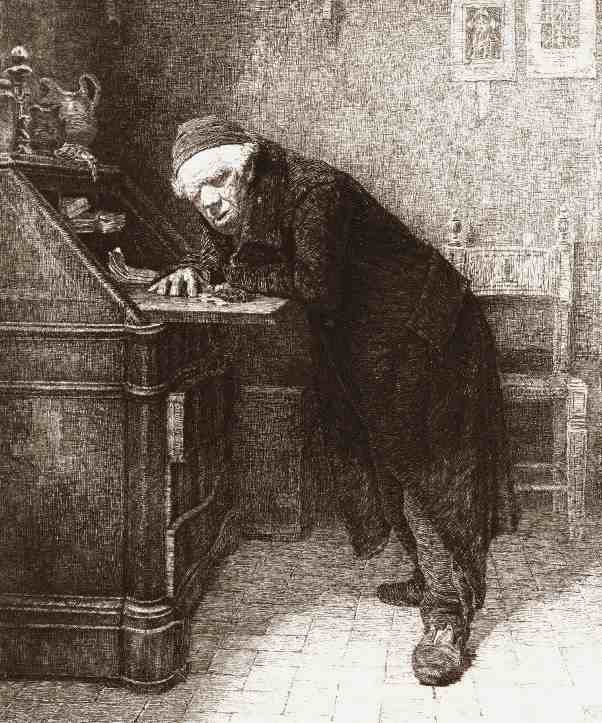
Paul Alexander Leroy, Haman and Mordecai (1884)

Paul Alexander Leroy, Haman and Mordecai (1884)

 Ecclesiastes 10

1 Dead flies make the perfumer’s ointment give off a foul odor; so a little folly outweighs wisdom and honor.
 2 The heart of the wise inclines to the right, but the heart of a fool to the left.
 3 Even when fools walk on the road, they lack sense, and show to everyone that they are fools.
 4 If the anger of the ruler rises against you, do not leave your post, for calmness will undo great offenses.
 5 There is an evil that I have seen under the sun, as great an error as if it proceeded from the ruler: 6 folly is set in many high places, and the rich sit in a low place. 7 I have seen slaves on horseback, and princes walking on foot like slaves.
 8 Whoever digs a pit will fall into it; and whoever breaks through a wall will be bitten by a snake.
 9 Whoever quarries stones will be hurt by them; and whoever splits logs will be endangered by them.
 10 If the iron is blunt, and one does not whet the edge, then more strength must be exerted; but wisdom helps one to succeed.
 11 If the snake bites before it is charmed, there is no advantage in a charmer.
 12 Words spoken by the wise bring them favor, but the lips of fools consume them.
 13 The words of their mouths begin in foolishness, and their talk ends in wicked madness;
 14 yet fools talk on and on. No one knows what is to happen, and who can tell anyone what the future holds?
 15 The toil of fools wears them out, for they do not even know the way to town.
 16 Alas for you, O land, when your king is a servant, and your princes feast in the morning!
 17 Happy are you, O land, when your king is a nobleman, and your princes feast at the proper time– for strength, and not for drunkenness!
 18 Through sloth the roof sinks in, and through indolence the house leaks.
 19 Feasts are made for laughter; wine gladdens life, and money meets every need.
 20 Do not curse the king, even in your thoughts, or curse the rich, even in your bedroom; for a bird of the air may carry your voice, or some winged creature tell the matter.

Wisdom is not the exclusive property of the wealthy or nobility as we heard at the end of the previous chapter when the author related the parable of the wise poor man who saved (or might have saved) a town. Yet, even knowing that those who rule are not necessarily wise or diligent, Ecclesiastes is deeply troubled by the thought of the ‘powerful being brought down from their thrones and the lowly being lifted up’ as Mary can sing in Luke 1: 52. The teacher in Ecclesiastes still ultimately believes that ‘a king is for a plowed field’ (Ecclesiastes 5: 9) even with all the oppression that can happen under the sun. Ecclesiastes version of wisdom seeks an ordered world, not necessarily a fair one, but one in which the wise person can learn to live and can make peace with their position within that world. Many other voices in the scriptures will attempt to challenge those in power, particularly the prophets. Ecclesiastes attempts to find a place for wisdom in the midst of all the folly and absurdity that are a part of life.

One bad apple can spoil the batch and a little folly can undo years of working wisely. Wisdom seems to be for Ecclesiastes a way of walking and thinking and acting that are continually cultivated. There is a sharp delineation between the walk of a foolish person and the walk of the wise. Wisdom may be the road less taken and it is a road that requires accountability but eventually the toil of the foolish wears them out.

The proverb in verse four about calmness in the face of the anger of the ruler reminds me of a time when I was a young lieutenant in the army. My unit had been assigned funeral duty, in a time before the omnipresence of cell phones, and we had been on this duty for many weeks. I had sat at home many weekends while my girlfriend at the time was 200 miles away. We would wait for a call to come in to tell us if we had any funerals on Saturday or Sunday but we were expected to remain close to Ft. Polk where I was stationed. One weekend I waited until late Friday, but no call came so I drove to spend the remainder of the weekend with my girlfriend in Texas. Saturday morning a request for a funeral came in and I was not reachable. I returned on Sunday to a couple messages on my phone. As hard as it was I first called my commander, then everyone else involved and apologized and was willing to accept whatever punishment was to come. Later I learned that my willingness to call and be open and honest about my mistake and willingness to accept the consequences earned me a lot of respect in the unit, but that day I was only trying to do what was right after I had made a mistake.

Ecclesiastes has already shown that it is well aware of how nobility and position do not automatically ensure wisdom. Foolish rulers and crooked officials were a part of the experience of the people of Israel. Unlike some other cultures that enshrined their elite with almost godlike status the Hebrew Scriptures have a skeptical view of kings and their motives. Even Solomon who is lifted up for his wisdom often ruled in ways, especially later in his life, that the texts considered unwise and ultimately led to the fracturing of the Davidic kingdom and monarchy. Yet, Ecclesiastes still holds onto the belief that the nobility and the king are ultimately a positive thing and anything that upsets that order or the appearance of that order (like slaves on horseback while a prince walks) upsets the ordered world of the teacher in Ecclesiastes.

One’s wise actions may not prevent the chances of life from coming about, but they still may prevent self-injury. If one refrains from digging a pit one also refrains from falling into it for example. The wise are measured in their speech and know when to remain silent but the foolish in contrast talk on and on. Blessed in the one, in Ecclesiastes view, who lives with the gift of good government and wise rulers who work during the day and celebrate only once the work is done. Laziness in rule and in life can destroy much and a little folly can outweigh wisdom and honor in a person’s home and in a kingdom. Yet, wisdom is not an ascetic’s life. The wise person can enjoy feasts and wine and wealth.

Finally, the chapter closes with a proverb similar to our own times saying that, ‘the walls have ears.’ Cursing those in power over you or complaining about them can make it back to their ears. There will always be people who will use our words to their advantage. Perhaps this also can evoke stories like the story of Esther where Haman’s words and plots become unraveled because he unknowingly plotted against Esther and Mordecai who could in their own way appeal to the king.  Words matter to the wise, speech matters and actions matter. Many things are beyond the control of the wise person but one’s speech, calmness, walk and how one lives are within one’s control.


Ecclesiastes 9 Staring into the Abyss and Finding Peace

La Porte dr l'Enfer a ete dressee dans les jardins du musee Rodin (The Thinker at the Gates of the Inferno and the Museum in Rodin)

La Porte dr l’Enfer a ete dressee dans les jardins du musee Rodin (The Thinker at the Gates of the Inferno and the Museum in Rodin)

Ecclesiastes 9

1 All this I laid to heart, examining it all, how the righteous and the wise and their deeds are in the hand of God; whether it is love or hate one does not know. Everything that confronts them 2 is vanity, since the same fate comes to all, to the righteous and the wicked, to the good and the evil, to the clean and the unclean, to those who sacrifice and those who do not sacrifice. As are the good, so are the sinners; those who swear are like those who shun an oath. 3 This is an evil in all that happens under the sun, that the same fate comes to everyone. Moreover, the hearts of all are full of evil; madness is in their hearts while they live, and after that they go to the dead. 4 But whoever is joined with all the living has hope, for a living dog is better than a dead lion. 5 The living know that they will die, but the dead know nothing; they have no more reward, and even the memory of them is lost. 6 Their love and their hate and their envy have already perished; never again will they have any share in all that happens under the sun.
 7 Go, eat your bread with enjoyment, and drink your wine with a merry heart; for God has long ago approved what you do. 8 Let your garments always be white; do not let oil be lacking on your head. 9 Enjoy life with the wife whom you love, all the days of your vain life that are given you under the sun, because that is your portion in life and in your toil at which you toil under the sun. 10 Whatever your hand finds to do, do with your might; for there is no work or thought or knowledge or wisdom in Sheol, to which you are going.
 11 Again I saw that under the sun the race is not to the swift, nor the battle to the strong, nor bread to the wise, nor riches to the intelligent, nor favor to the skillful; but time and chance happen to them all. 12 For no one can anticipate the time of disaster. Like fish taken in a cruel net, and like birds caught in a snare, so mortals are snared at a time of calamity, when it suddenly falls upon them.
 13 I have also seen this example of wisdom under the sun, and it seemed great to me. 14 There was a little city with few people in it. A great king came against it and besieged it, building great siegeworks against it. 15 Now there was found in it a poor wise man, and he by his wisdom delivered the city. Yet no one remembered that poor man. 16 So I said, “Wisdom is better than might; yet the poor man’s wisdom is despised, and his words are not heeded.”
 17 The quiet words of the wise are more to be heeded than the shouting of a ruler among fools.
 18 Wisdom is better than weapons of war, but one bungler destroys much good.

There are those both inside and outside the Christian community who see faith as a house of cards that if one thing is removed then the whole house crumbles. I see this from many of my friends who are agnostic or atheist who read the bible in a way that is as fundamentalist as the most fundamentalist Christian in order to discredit it and I see it in people who I are so afraid of the modern world challenging their faith that they are fearful of science or culture. Often the latter never move beyond trying to defend the timeline of creation in Genesis 1 (and may miss even the beauty of the way that passage poetically talks about the creation) and the former would never realize that within the scriptures there is one who asks their questions and takes them deeper. Ecclesiastes takes us to the edge of the abyss of meaninglessness, willing to rest his observations in the experience of the vanity of the present moment and his own experience. Ecclesiastes, knowing that in this present life being wise, righteous, faithful, religious or good do not guarantee one a blessed life nor does being foolish, wicked, unfaithful, irreligious or evil do not guarantee that one will be cursed, is willing wonder are the righteous loved or hated by God. There is no way to ensure one’s security in this life or beyond this life in Ecclesiastes view. Ecclesiastes stands at the edge of the abyss, where death is the only certainty and finds peace. It may take us a little longer standing in this place before we can find peace, but it can be found. It is a wisdom that may take us a bit of a journey to get to because it undercuts many of the narratives we are used to living with, but once we do we can find joy even in the midst of the often inscrutable nature of God or the perversity of life.

One of the narratives that Ecclesiastes undercuts is an orientation towards the future that is unable to see the gifts of the present. In its most extreme form it is a focus on the afterlife, awaiting joy in heaven, at the expense of enjoying the gifts of this day. Sometimes the apostle Paul is used to support this argument when he says to the Corinthians, discussing the resurrection, that, “If for this life only we have hoped in Christ, we are of all people most to be pitied.” (1 Corinthians 15: 19) yet Paul would learn to “be content with whatever I have.” (see Philippians 4: 11). While there has been a predominance in much Christian preaching on heaven (and also hell) over the generations much of the Bible is concerned with how to enjoy the present life. Dietrich Bonhoeffer, writing from his cell in Tegel Prison, wrote:

I believe we are so to love God in our life and in the good things God gives us and to lay hold of such trust in God that, when the time comes and is here—but truly only then!—we also go to God with love, trust, and joy. But—to say it clearly—that a person in the arms of his wife should long for the hereafter is, to put it mildly, tasteless and in any case is not God’s will. One should find and love God in what God directly gives us; if it pleases God to allow us to enjoy an overwhelming earthly happiness, then one shouldn’t be more pious than God than God and allow this happiness to be gnawed away through arrogant thoughts and challenges and wild religious fantasy that is never satisfied with what God gives. (Bonhoeffer, 2010, p. 228)

Wisdom is not deferring life until the next life or living with a contempt for the world. Wisdom that is really willing to come to the edge of the abyss and ask difficult questions of one’s experience if it isn’t going to fall into cynicism one will learn to embrace the good in the present in the midst of its impermanence.

A second narrative that Ecclesiastes refuses to let stand is the myth of living for one’s legacy. If one’s legacy is as transient as one’s life then a focus on one’s curricula vitae to the exclusion of one’s life with a partner one loves the enjoyment of food and drink and labor is truly vanity. There is no enjoyment of life and accomplishment beyond the boundary of death. The memory of the person we are and the life we lived is rarely preserved beyond a couple generations and even the wise among us are forgotten.

Another narrative that is potent in the American context is the narrative of security. Security may be the great American idol and we invest a lot of our resources into attempting to guarantee ourselves against financial, medical, or any other disaster. Yet, even with our security complex we often suffer from foreboding joy, a sense that even in moments of joy we are unwilling to trust them because they may be temporary. Yet, Ecclesiastes is willing to be honest about the elements of our lives that we cannot control and that when disaster strikes it pulls us out of what we know like fish in a net or a bird in a snare. Worrying about the possibility of disaster doesn’t prepare us for disaster but it can steal the joy out of the moments of joy in our life that we are gifted to enjoy.

Ecclesiastes keeps circling back to the gift of enjoyment of the things that are a part of our life now. Eating and drinking, dressing in festive garments (as white garments were in an ancient culture where people rarely washed their clothes and water was a precious resource), enjoying one’s relationships and enjoying one’s labor. They are not permanent, you cannot guarantee them, and yet they are precious and enjoying them is a gift from God. Better to be the dog, a scavenger and a dishonorable animal in Jewish thought, who is alive than the proud lion who is dead. Whatever one’s lot the best one can do is to find enjoyment in it. One can worry that life is not fair or that it is too short or one can embrace what one has. One may be a king or a poor but wise person whose wisdom is not heard and yet be quickly forgotten in the turning of the seasons.

Yet, even wisdom is often overcome by shouting and foolishness. It seems that perhaps the life of wisdom is at least partially tragic. The story told in verse eleven of the poor man who delivered (or as C.L Seow translates it might have delivered had anyone listened to the poor man whose wisdom was despised) (Pauw, 2015, p. 196)but is quickly forgotten seems to lead to the final brief proverbs about the struggle for wisdom in Ecclesiastes and our own time. People may overlook wisdom for the shouting of the ruler among fools or in favor of the weapons of war and one bungling individual can undo much of the wisdom of generations. Wisdom may continually struggle and often be overcome in the public arena by the louder or more powerful voice but ultimately the wise and the foolish voices are all forgotten by a new generation and their legacies forgotten. Yet, the wise person can learn to enjoy the gifts and the impact they can make in their brief span of life.


Life May Be Good…

Dosso and Battista Dossi, Democrito (1540)

Dosso and Battista Dossi, Democrito (1540)

Life may not be fair but it can still be good
Taking the moment to savor food and drink
The embrace of a friend or the lover’s kiss
To enjoy the quest for knowledge and wisdom
Or to delight in the produce of one’s hands

Life may not be fair but it can still be good
When one doesn’t obsess about one getting more
And another getting less than their works deserve
When one doesn’t let fame or prosperity define
The enjoyment of the day or the measure of life

Life may not be fair but it can still be good
When one accepts the gifts one has with gratitude
And celebrates the relationships one has in life
Remaining thankful for all that the seasons bring
For life can be good even when it isn’t fair

This is the poem inspired by the day 8 prompt of intro to poetry (pleasure) using anaphora (repetition of a word or phrase at the beginning of a verse). This was also inspired by book of Ecclesiastes which I’ve been working my way through over the last several weeks

Ecclesiastes 8 Wisdom in an Unjust World

Still Life with Glass Bowl of Fruit and Vases from the House of Julia Felix in Pompeii around 70 CE

Still Life with Glass Bowl of Fruit and Vases from the House of Julia Felix in Pompeii around 70 CE

Ecclesiastes 8

1 Who is like the wise man? And who knows the interpretation of a thing?
Wisdom makes one’s face shine, and the hardness of one’s countenance is changed.
 2 Keep the king’s command because of your sacred oath. 3 Do not be terrified; go from his presence, do not delay when the matter is unpleasant, for he does whatever he pleases. 4 For the word of the king is powerful, and who can say to him, “What are you doing?” 5 Whoever obeys a command will meet no harm, and the wise mind will know the time and way. 6 For every matter has its time and way, although the troubles of mortals lie heavy upon them. 7 Indeed, they do not know what is to be, for who can tell them how it will be? 8 No one has power over the wind to restrain the wind, or power over the day of death; there is no discharge from the battle, nor does wickedness deliver those who practice it. 9 All this I observed, applying my mind to all that is done under the sun, while one person exercises authority over another to the other’s hurt.

 10 Then I saw the wicked buried; they used to go in and out of the holy place, and were praised in the city where they had done such things. This also is vanity. 11 Because sentence against an evil deed is not executed speedily, the human heart is fully set to do evil. 12 Though sinners do evil a hundred times and prolong their lives, yet I know that it will be well with those who fear God, because they stand in fear before him, 13 but it will not be well with the wicked, neither will they prolong their days like a shadow, because they do not stand in fear before God.

 14 There is a vanity that takes place on earth, that there are righteous people who are treated according to the conduct of the wicked, and there are wicked people who are treated according to the conduct of the righteous. I said that this also is vanity. 15 So I commend enjoyment, for there is nothing better for people under the sun than to eat, and drink, and enjoy themselves, for this will go with them in their toil through the days of life that God gives them under the sun.

 16 When I applied my mind to know wisdom, and to see the business that is done on earth, how one’s eyes see sleep neither day nor night, 17 then I saw all the work of God, that no one can find out what is happening under the sun. However much they may toil in seeking, they will not find it out; even though those who are wise claim to know, they cannot find it out.

Life is not fair, justice is often skewed towards a privileged group or individual, and the wicked may prosper while the righteous suffer. Bad things do happen to good people and one would have to shut one’s eyes tight to the world around them not to perceive the unfairness of the world. No one, not even the greatest president, king or official will be able to by their own wisdom alleviate all the suffering and injustice of the world. Oppression does occur and sometimes is sometimes even praised. Wisdom has to figure out how to live in the world as it is and not in the world as one imagines it should be.

Wisdom making one’s face shine may be a reference to the starting place of all wisdom, to God’s own wisdom. As Ellen Davis can say, “A shining face is, then, a sign of God’s benevolent presence; it shows forth the light of the Holy Spirit.” (Davis, 2000, p. 206) The wisdom in the shining face that reflects God’s benevolent presence is also coming from a softened face. A part of this wisdom that fears God and can place one’s trust in God precisely in the midst of an unfair and unjust world is the ability to find joy and celebration even in the midst of the seasons of the world one cannot control. It is finding peace in the midst of the oppression, joy even in the midst of suffering, and enjoying the food and drink in the moments of prosperity and want for they all come (ultimately in Ecclesiastes view) from God. Wisdom seems to reflect the ability to trust God even when one cannot riddle out the interpretation of a thing. Wisdom is willing to let go of the quest for certainty and is willing to reside in the humility of one’s own knowledge and power. Wisdom fears God and knows that we are at every moment of our life caught up in the movement of things that we have no control over. We cannot control when the time of birth or death is or war or peace or even whom we receive love from and who we might receive hate from. No one, not even the wisest sage can understand all that is going on under the sun.

J.K. Rowling’s character Albus Dumbledore in the Harry Potter series may be an interesting figure to contemplate as one explores Ecclesiastes description of a wise person. In the novels he is a complex character who often has to put people he cares about into situations that may bring about suffering for them or even death and yet he rarely in the novels displays a hard countenance. His face is often light, he seems to enjoy the moments of levity and celebration even when they are brief. He is unafraid to tell the difficult truth that other may want to obscure or hide and he refrains from the certainties that many of the other characters want to cling to. Even for all his wisdom and power there are many things he is unable to prevent and close friends he is unable to protect and yet in his life and death (in the story) he becomes a character who models what wisdom might look like in that fictional world with all its struggles.

As a person who served in the Army I understand the need to follow orders that may be unpopular and the times when unquestioned obedience was called for. In the royal court, in government and in society there are times where we simply have to follow the commands we are given. There are certainly times where one will have to resist and illegal or unjust command or attempt to work with the system (or sometimes oppose it) to work towards a more just system. Yet, most of our lives we live with rules, laws and boundaries that we have to work within.

As a preacher I attempt to invite my congregation into the struggle with the texts and to teach them to wonder what it may speak to them rather than confidently claiming to have all the answers. God’s mysterious ways often elude me and in Ecclesiastes the interpretation of the thing often eludes the author in all their wisdom. In the United States there are a number of preachers and traditions that seem unwilling to allow for this type of wisdom which can reside in the places of uncertainty and instead they fill in the gaps with their own interpretation of the mind of God. “The dangers of overly confident preaching are felt particularly in the homiletic temptation to discern God’s retributive justice in situations of human suffering. In this respect, some preachers seem to have the whole divine road map spread out in front of them and so are in a position to give the rest of us confident progress reports. Qohelet, by contrast, reminds us the wisdom about God’s mysterious ways in the world regularly elude us.” (Pauw, 2015, p. 185) Wisdom could lead us to a homiletical humility, a willingness to acknowledge the limits of our knowledge and to acknowledge the gaps rather than to explain them away. To help oneself and one’s community to learn the wisdom of finding joy precisely in the midst of an unjust world, and the wisdom of trusting God event when one cannot make sense of the senselessness of life. As Søren Kierkegaard said, “It takes moral courage to grieve; it takes religious courage to rejoice.” (Pauw, 2015, p. 189)

Ecclesiastes 7-The Lonely Path of the Seeker

Isaak Asknaziy, Vanita vanitatum et omnia vanitas (19th Century)

Isaak Asknaziy, Vanita vanitatum et omnia vanitas (19th Century)

Ecclesiastes 7: 1-10 The Cost of Wisdom

1 A good name is better than precious ointment, and the day of death, than the day of birth.
 2 It is better to go to the house of mourning than to go to the house of feasting; for this is the end of everyone, and the living will lay it to heart.
 3 Sorrow is better than laughter, for by sadness of countenance the heart is made glad.
 4 The heart of the wise is in the house of mourning; but the heart of fools is in the house of mirth.
 5 It is better to hear the rebuke of the wise than to hear the song of fools.
 6 For like the crackling of thorns under a pot, so is the laughter of fools; this also is vanity.
 7 Surely oppression makes the wise foolish, and a bribe corrupts the heart.
 8 Better is the end of a thing than its beginning; the patient in spirit are better than the proud in spirit.
 9 Do not be quick to anger, for anger lodges in the bosom of fools.
 10 Do not say, “Why were the former days better than these?” For it is not from wisdom that you ask this.

There is a joy that is a gift of God but that joy will not be present in every season and often it is the times of grief where wisdom is refined and tested. Ecclesiastes has no place for the masks of happiness that people often feel constrained to wear. Wisdom, we find here, does not drive the teacher to a life of prosperity, rich relationships, easy decisions or universal popularity. It is the road that is less traveled and engages the moments of joy and sadness, pain and pleasure, life and death.

There is a certain kind of wisdom that is only learned through the process of grief and loss and perhaps this is a part of what these proverbs that begin this section point to. Ecclesiastes’ search for wisdom is not a quest that only takes him to the places that are isolated from pain and suffering, instead wisdom often means wrestling with the more challenging parts of life and death. Even though the quest for a lasting legacy of name may be vanity they still seem better than the sweet smelling oils that spoil even more quickly. A person’s life can only begin to be measured at its completion for when the person is present we often take their contributions for granted and can easily focus upon their failures. There is also the hard wisdom of sitting Shiva with those who are mourning and the value that comes not from the cheap pithy sayings but in the long silence of presence. The wisdom that comes from inhabiting the house of mourning may not be a popular wisdom but it is wisdom nevertheless.

In our social media age where we can surround ourselves with an echo chamber of like-minded people we may find it almost impossible to hear the rebuke of the wise if they disagree with our opinions. Yet, that rebuke and cognitive dissonance is an essential part of wisdom. Wisdom and knowledge only grow when they are challenged and pulled. Too often we settle for the quick flash of the thorns which catch fire easily but produce little heat rather than the coals that actually can bring about warmth and can provide the heat needed for the essential task of transforming a dough into a cake or cooking the meat for a meal.

The gift (bribe), impatience, anger and nostalgia become the traps on the path of wisdom as well. Oppression was discussed in chapters four and five and it becomes one of the things that blocks our enjoyment of life and it can also be a roadblock to wisdom. There are certainly those who rise above what may seem impossible circumstances to phenomenal heights but most of those who are oppressed will remain trapped within that oppression. As Ellen Davis can state, “Evil must be remembered but never romanticized; every period of great oppression produces some heroism and much more madness among its victims.” (Davis, 2000, p. 201) The gift, or a bribe, which turns a person aside from the path of wisdom or justice is also a corruption of not only justice but the character of the person. When we change our actions for the sake of another person’s gift (and this may be something as simple as their approval) we have left the path of wisdom. The path of wisdom is not the quick or easy path, it is a path that needs patience. Anger may be an essential part of life and there is a time for righteous anger, but becoming quickly angered is the way of the foolish. Finally nostalgia tries to walk into the future looking backwards. There are gifts to be learned by the study of the past, but trying to recreate the past or romanticizing it often bankrupts both the present and the future. When our memories of the past become larger than our dreams for the future we become trapped in the pain of nostalgia rather than being open to the potential gift of today and tomorrow.


Ecclesiastes 7: 11-21 Wisdom and Ambiguity

 11 Wisdom is as good as an inheritance, an advantage to those who see the sun.
 12 For the protection of wisdom is like the protection of money, and the advantage of knowledge is that wisdom gives life to the one who possesses it.
 13 Consider the work of God; who can make straight what he has made crooked?
 14 In the day of prosperity be joyful, and in the day of adversity consider; God has made the one as well as the other, so that mortals may not find out anything that will come after them.
 15 In my vain life I have seen everything; there are righteous people who perish in their righteousness, and there are wicked people who prolong their life in their evildoing. 16 Do not be too righteous, and do not act too wise; why should you destroy yourself? 17 Do not be too wicked, and do not be a fool; why should you die before your time? 18 It is good that you should take hold of the one, without letting go of the other; for the one who fears God shall succeed with both.
 19 Wisdom gives strength to the wise more than ten rulers that are in a city.
 20 Surely there is no one on earth so righteous as to do good without ever sinning.
 21 Do not give heed to everything that people say, or you may hear your servant cursing you; 22 your heart knows that many times you have yourself cursed others.
 
Wisdom is better than foolishness and it may even provide some protection and advantage but one person’s wisdom cannot make everything crooked in the world straight. This passage about not being too righteous or too wicked might seem a little Machiavellian but wisdom knows that the complex world rarely falls into absolutes. Life can bring about many border situations where the line between what is right and what is wrong becomes blurred by the ambiguity of the situation. One can apply wisdom and knowledge to the best of one’s ability, one can attempt to be righteous but ultimately in the life lived before God what wisdom we have is incomplete and short lived. There may indeed be times where for the sake of another we might incur guilt or violate what we once believed to be absolutes. Dietrich Bonhoeffer in his Ethics, written in the time when Adolf Hitler was in power in Germany, struggles with many of these border situation and how ethically the Christian was to respond. Eventually his struggle would lead him to take a role within the resistance plot to assassinate Hitler. Shortly before his imprisonment in Christmas of 1942 Dietrich Bonhoeffer wrote, “The ultimate question for a responsible man to ask is not how he is to extricate himself heroically from the affair, but how the coming generation is to live. It is only from this question, with its responsibility towards history, that fruitful solutions can come, even if for the time being they are very humiliating.” (Bethge, 2000, p. 797)

Whether we live life in the position of authority having to use our wisdom on behalf of a community or whether in our private lives attempting to use wisdom in our relationship we never eradicate the evil in ourselves or in society. We live in the paradox of the ending of the Lord’s prayer. In the prayer we pray for the forgiveness of our sins as well as the ability to forgive the sins of others, that we would not be lead into temptation and that we would be delivered from evil. Even our best actions often have unintended harmful consequences and sometimes out of great evil some good can emerge. We are never completely the saint or irreconcilably the sinner and we cannot rely upon our own righteousness nor should we want to immerse ourselves completely into wickedness. We live in times of prosperity and adversity and both come from the same God. 

Ecclesiastes 7: 23-29: The Loneliness of the Seeker

 23 All this I have tested by wisdom; I said, “I will be wise,” but it was far from me. 24 That which is, is far off, and deep, very deep; who can find it out? 25 I turned my mind to know and to search out and to seek wisdom and the sum of things, and to know that wickedness is folly and that foolishness is madness. 26 I found more bitter than death the woman who is a trap, whose heart is snares and nets, whose hands are fetters; one who pleases God escapes her, but the sinner is taken by her. 27 See, this is what I found, says the Teacher, adding one thing to another to find the sum, 28 which my mind has sought repeatedly, but I have not found. One man among a thousand I found, but a woman among all these I have not found. 29 See, this alone I found, that God made human beings straightforward, but they have devised many schemes.

In Ecclesiastes 4: 9-11 the Teacher reflected on the benefit of companionship but here, in what may be a personal reflection, he reflects upon the loneliness of the seeker. Whether he was unsuccessful in love and in developing friendships we will never know, but the nature of the quest that he has embarked on is not one that is likely to endear him with those content with a less questioning existence. Perhaps, like many who perhaps are more introverted and reflective, he simply never mastered (and perhaps never cared to master) the social niceties and small talk that seem to come so easily to others. Perhaps he never moved beyond his quest where women and men, slaves and concubines and singers became anything more than delights of the flesh. (Ecclesiastes 2: 8) There is a loneliness for a companion who is truly able to share in the seekers quest, to delight in the wisdom they can share together. Perhaps in his time, where women were not considered equal, he couldn’t see someone who could be his equal in conversation and reflection, yet even among men this is exceedingly rare. Humanity and the challenge of the human political game perhaps becomes the area where the seekers gifts in wisdom seemingly fail him and leave him unable to partake in the joy of true companionship.

 Ecclesiastes 6: The Illusiveness of Joy

Detail from L'Avaro by Antonio Piccinni (1878)

Detail from L’Avaro by Antonio Piccinni (1878)

Ecclesiastes 6

1 There is an evil that I have seen under the sun, and it lies heavy upon humankind: 2 those to whom God gives wealth, possessions, and honor, so that they lack nothing of all that they desire, yet God does not enable them to enjoy these things, but a stranger enjoys them. This is vanity; it is a grievous ill. 3 A man may beget a hundred children, and live many years; but however many are the days of his years, if he does not enjoy life’s good things, or has no burial, I say that a stillborn child is better off than he. 4 For it comes into vanity and goes into darkness, and in darkness its name is covered; 5 moreover it has not seen the sun or known anything; yet it finds rest rather than he. 6 Even though he should live a thousand years twice over, yet enjoy no good– do not all go to one place?

 7 All human toil is for the mouth, yet the appetite is not satisfied. 8 For what advantage have the wise over fools? And what do the poor have who know how to conduct themselves before the living? 9 Better is the sight of the eyes than the wandering of desire; this also is vanity and a chasing after wind.

 10 Whatever has come to be has already been named, and it is known what human beings are, and that they are not able to dispute with those who are stronger. 11 The more words, the more vanity, so how is one the better? 12 For who knows what is good for mortals while they live the few days of their vain life, which they pass like a shadow? For who can tell them what will be after them under the sun?

Ecclesiastes can acknowledge that joy and the enjoyment of one’s toil, food, drink, prosperity and success are all gifts from God but then wonder about the lack of joy among those who have so much and perhaps the illusiveness of the Teacher’s own joy. To use Amy Plantiga Pauw’s clever phrase the unhappy person is described as a “biblical patriarch on steroids” (Pauw, 2015, p. 173) who has possessions, honor, wealth, an abundance of children and a life over twice as long as Methuselah (who lives 969 years according to Genesis 5:27). None of these things can exhaust the insatiability of the human appetite which continually needs to be fed and yet never seems to be satisfied. This insatiability is a great evil that weighs upon humankind and perhaps leads to perception of scarcity where one is continually competing with others for the perceived limited resources of land, possessions, time, family, honor and wealth. Without the gift of God to be able to enter the space of gratitude the insatiability and drive for acquisition continues to leave the person who applies their wisdom to gaining these things unsatisfied.

This illusiveness of joy which the author is describing is an affliction of both Ecclesiastes’ time and ours. Too often happiness is both marketed and believed to be the product of acquisition and the only cure for the insatiability is the continued consumption of things that at best satisfy us momentarily. This escalating quest in our time and the continued presentation before our eyes of the things we don’t have but we should want has led our society to be the most depressed, medicated, addicted and overweight in history. There is something missing that we keep trying to find, something wrong that we continue to try to cure, some empty place we continue to try to fill. We search for something new, something novel but even the new things are imitations or improvements of things that came before. There is nothing new under the sun that can satisfy. The vanity and chasing after wind that go with searching for this illusive joy may indeed be a part of the human condition, what is missing is the grace of gratitude. As mentioned before this gratitude and joy is a gift of God that allows one to enjoy the gifts one has, to be satisfied in the moment, to embrace the seasons of life as they come and go.

The place of humanity is not to dispute with the one who is stronger (NRSV here in verse 10 takes the singular one who is stronger, which probably refers to God, and makes it a plural). The original temptation in the narrative of Genesis is to attempt to be like God. Yet, just as Job is challenged with his own inability to stand before the immenseness of God’s power and work (Job 40-42) humanity as a whole is not in the place to wrestle with the Creator’s plans or limits. We know the experience that comes in the span of our own days and the wisdom we can acquire within them. We cannot control what the future will hold after our days or what our legacy will be, those things rest in the hands of the Creator and those who come after us. Our days can be gift or curse or perhaps both at once. Perhaps if we cannot embrace the joy of the moments and gifts that we have then we would be better off to never have been born. Yet, I’m not willing to fully give in to the pessimism of this turning point of Ecclesiastes, I still believe in the gift that the author found in the toil and relationships, in the eating and drinking, in the accepting of one’s place within the seasons. At the place where he turned away from the insatiable appetite for acquisition and rested in the moments of joy that were a gift of grace.

Ecclesiastes 5-The Gift of Mortality Before God and in the World

Samuel Cursing Saul by Hans Holbein the Younger (1530)

Samuel Cursing Saul by Hans Holbein the Younger (1530)

 Ecclesiastes 5:1-7 Silence Not Sacrifice

1 Guard your steps when you go to the house of God; to draw near to listen is better than the sacrifice offered by fools; for they do not know how to keep from doing evil. 2 Never be rash with your mouth, nor let your heart be quick to utter a word before God, for God is in heaven, and you upon earth; therefore let your words be few.

 3 For dreams come with many cares, and a fool’s voice with many words.

 4 When you make a vow to God, do not delay fulfilling it; for he has no pleasure in fools. Fulfill what you vow. 5 It is better that you should not vow than that you should vow and not fulfill it. 6 Do not let your mouth lead you into sin, and do not say before the messenger that it was a mistake; why should God be angry at your words, and destroy the work of your hands?

 7 With many dreams come vanities and a multitude of words; but fear God.

Perhaps it is my skeptical nature but I’ve always been wary of those who knew too clearly what God wanted from them and others. I think that sometimes the quest for certainty fills that uneasy quiet space of waiting for God to speak. In our own time there has become more common for people to claim they are spiritual but not religious, where that organized religion for various reasons may not speak to them. There are times where Christianity has tried to model itself after the ancient mystery religions where you did certain acts to try to appease a god or goddess to act on your behalf, but the LORD the God of Israel’s ways are not our ways. As Amy Plantiga Pauw can say memorably, “God does not exist to satisfy human aims and desires. God is not a mascot for our favorite causes.” (Pauw, 2015, p. 166) There are many times when people have used their religious piety as a way of bringing glory to themselves or securing their own sense of place within the chosen people. Qohelet encourages us to enter into that space of silence and waiting to draw near and listen to God.

It is possible that the narrative of 1 Samuel 15, where King Saul uses sacrifice as a way to cover up his disobedience to God’s command in the defeat of the Amalekites, informs this portion of Ecclesiastes. Saul is commanded to utterly destroy the people and the animals but when the battle is won in addition to sparing King Agag’s life the people also spared the best of the sheep, cattle, and other valuables. Capturing the spoils of war was a normal practice but here the Amalekites are dedicated as herem where they are consigned to destruction. (For much more about the understanding of war, herem, as well as an ethical reflection on how to address texts like 1 Samuel 15 see my post on Deuteronomy 20). When the next day King Saul is confronted by Samuel he claims that these best animals are to be a sacrifice to God. Samuel informs King Saul that he has earned the LORD’s disfavor and states:

“Has the LORD as great delight in burnt offerings and sacrifices, as in obedience to the voice of the LORD? Surely, to obey is better than sacrifice, and to heed than the fat of rams. For rebellion is no less a sin than divination, and stubbornness is like iniquity and idolatry. Because you have rejected the word of the LORD, he has also rejected you from being king.” 1 Samuel 15: 22f

Guarding one’s actions before God also involves the words that we say and the promises that we make. The misuse of the name of God was a serious offense for the people of Israel, enough so that it became enshrined within the ten commandments. When speaking about vows in verse four, Ecclesiastes begins with a direct parallel of Deuteronomy 23: 21. Making promises before God is a serious measure, in discussing Deuteronomy 23 I mentioned Jephthah’s rash oath and since I have just been discussing King Saul there is his rash oath in 1 Samuel 14: 24 which puts his son Jonathan’s life in danger. Ellen Davis shares, “To vow something before the priest (NRSV: “messenger”) that one has not considered carefully or, even worse, has no intention of fulfilling is to mock God” (Davis, 2000, p. 165)

Ecclesiastes has been pondering the place of humanity with its mortality within the seemingly timeless nature of creation and the eternity of God. Humanity, with all its limits, is placed in the position of listening to the wisdom of the eternal one. Ecclesiastes has striven to pay attention in the present moment to the gifts that God provides. It may be a paradox but a part of wisdom is learning to be patient with the finite gift of time. Making space and silence to be in that place where our words and wisdom fade before the words and wisdom of God.

Jesus, in Matthew’s gospel, can take the words of Ecclesiastes a step further. Ecclesiastes stated it is better to not vow than vow and not fulfill it but Jesus says not to swear an oath at all. For Jesus all words were to be faithful to what is said, whether they are under oath or not, and as in Ecclesiastes our power to fulfill these vows is often limited by the reality that one ‘cannot make one hair on one’s head white or black.’ (Matthew 5: 33-37)

Ecclesiastes 5: 8-20

 8 If you see in a province the oppression of the poor and the violation of justice and right, do not be amazed at the matter; for the high official is watched by a higher, and there are yet higher ones over them. 9 But all things considered, this is an advantage for a land: a king for a plowed field.

 10 The lover of money will not be satisfied with money; nor the lover of wealth, with gain. This also is vanity.

 11 When goods increase, those who eat them increase; and what gain has their owner but to see them with his eyes?

 12 Sweet is the sleep of laborers, whether they eat little or much; but the surfeit of the rich will not let them sleep.

 13 There is a grievous ill that I have seen under the sun: riches were kept by their owners to their hurt,14 and those riches were lost in a bad venture; though they are parents of children, they have nothing in their hands. 15 As they came from their mother’s womb, so they shall go again, naked as they came; they shall take nothing for their toil, which they may carry away with their hands. 16 This also is a grievous ill: just as they came, so shall they go; and what gain do they have from toiling for the wind? 17 Besides, all their days they eat in darkness, in much vexation and sickness and resentment.

 18 This is what I have seen to be good: it is fitting to eat and drink and find enjoyment in all the toil with which one toils under the sun the few days of the life God gives us; for this is our lot. 19 Likewise all to whom God gives wealth and possessions and whom he enables to enjoy them, and to accept their lot and find enjoyment in their toil– this is the gift of God. 20 For they will scarcely brood over the days of their lives, because God keeps them occupied with the joy of their hearts.


Gratitude and joy are the gifts from God in Ecclesiastes, not wealth or wisdom (even though it is better than foolishness). Our desire for wealth, power, possessions, land, position, and numerous other things we think will make us happy is insatiable. When riches and status become the central quest in life they leave the seeker unsatisfied. Governments may be corrupt, the system may be unfair, riches may be lost suddenly and all may be vanity yet joy can be found.

Ecclesiastes can recognize the problems and corruption that are a part of government and bureaucracy and still believe they ultimately benefit the land and the people. The oppression of the poor and the violation of justice and right are real, and a person may not be in a position to change these things. Yet, the author is no revolutionary. Even with all of the government of his time’s flaws he still sees the king (and by extension the rest of the government) put in place to serve the land and the farmer. The people placed in positions of authority may be motivated by a quest for greed or power, yet in the balance there is justice in the midst of the injustice, protection of justice and right in the midst of the injustice and ultimately even a bad government is in service of its people. Ecclesiastes is wisdom literature, not prophetic literature, so do not be surprised that it is invested in the maintaining of the way things are. Yet, there is wisdom in learning the balance of where one can invest in change and where one learns to live in an imperfect system.

Wisdom that is applied to the increasing of goods or the increasing of position and power is never satisfied. The human appetite for acquisition is insatiable. Riches can be hoarded and lost and never enjoyed. The future is never guaranteed, permanent security is never guaranteed, one’s position in society is never guaranteed. If one lives one’s life only for the future never enjoying the food and drink that one has, never giving thanks for the banquets one can be a part of or host, then one lives impoverished. If one spends one’s nights continually plagued by insecurity over one’s possessions or plotting how to increase one’s wealth or stature, one lives an impoverished life. If one never is given the gift of enjoying their labor and their time of leisure, one lives an impoverished life. The paradox of Ecclesiastes wisdom is that it is by embracing one’s limits-one’s mortality, one’s possessions, one’s position, and one’s companions that one is able to be thankful. Gratitude and joy is a gift of God in the midst of our brief days, our limited resources, our imperfect situations and governments and in our families and friends. Ecclesiastes is not, as I once thought, dismissive of life but actively seeks to embrace life as it is lived in the present.

Ecclesiastes 4- The Things That Steal Our Peace

Ecclesiastes 4

1 Again I saw all the oppressions that are practiced under the sun. Look, the tears of the oppressed– with no one to comfort them! On the side of their oppressors there was power– with no one to comfort them. 2 And I thought the dead, who have already died, more fortunate than the living, who are still alive; 3 but better than both is the one who has not yet been, and has not seen the evil deeds that are done under the sun.

 4 Then I saw that all toil and all skill in work come from one person’s envy of another. This also is vanity and a chasing after wind.
 5 Fools fold their hands and consume their own flesh.
 6 Better is a handful with quiet than two handfuls with toil, and a chasing after wind.

 7 Again, I saw vanity under the sun: 8 the case of solitary individuals, without sons or brothers; yet there is no end to all their toil, and their eyes are never satisfied with riches. “For whom am I toiling,” they ask, “and depriving myself of pleasure?” This also is vanity and an unhappy business.

 9 Two are better than one, because they have a good reward for their toil. 10 For if they fall, one will lift up the other; but woe to one who is alone and falls and does not have another to help. 11 Again, if two lie together, they keep warm; but how can one keep warm alone? 12 And though one might prevail against another, two will withstand one. A threefold cord is not quickly broken.

 13 Better is a poor but wise youth than an old but foolish king, who will no longer take advice. 14 One can indeed come out of prison to reign, even though born poor in the kingdom. 15 I saw all the living who, moving about under the sun, follow that youth who replaced the king; 16 there was no end to all those people whom he led. Yet those who come later will not rejoice in him. Surely this also is vanity and a chasing after wind.

The Hebrew word shalom is only used in Ecclesiastes in the previous chapter in the contrast between war and shalom (peace). Yet, beneath all of the vanity and chasing after the wind is perhaps the search for this concept of shalom, which is far more than an absence of conflict. Shalom has the sense of harmony, balance, living at peace with God’s will for one’s life and world. It is a greeting and a wish for one’s friends and neighbors and for one’s own life and yet then and now it seemed illusive. Qohelet turns his wisdom to the things that rob us of the joy and shalom of how life should be. In the brief verses of chapter four he addresses in a form that moves towards proverbs the issues of oppression, comparison and competition, overwork, isolation and institutional incompetency.

Oppression robs us of our humanity, both the oppressed and the oppressor. For the oppressed it means living in a sick society where their lives and work seem to matter less than those who operate in a more privileged state. For the oppressor it often means unconsciously adopting the views of a sick society that have allowed them to prosper only at the (often unseen) expense of others. Wisdom has opened the eyes of the privileged author of Ecclesiastes and it sickens him. The reality of oppression makes death better than life for him because it is not simply that an oppression can be stated and once brought into the open it dies under the light of day. Oppression involves a lifetime of learned and observed behaviors that require patience, prayer, struggle and dis-ease if the disease is ever to be healed. Oppression can be learned in families, in economic structures and in political systems and they in their own way are demonic. They so weave their ways into the thoughts and actions of ordinary people that they become a part of us. When the demons speak through us they reveal the uglier side of our lives and the inability to see one another as a gift, but instead we begin to see others as people who are to be oppressed or are our oppressor.

In the United States there has been a long struggle among people of color, women and people who because of race, sexuality, economic status, religion (or lack of religion), manner of dress, or numerous other reasons have felt their voices and lives did not matter. While I hope that the struggles of the last several years may eventually lead to a society that moves towards greater equality, for now there is no one to console the tears of the oppressed or the comfort those in power as they deal with the ways privilege has stolen a piece of their humanity as well. Perhaps there may come a day when those who have not been born yet don’t have to wonder if black lives, to use one of the red hot points of struggle in our time, matter less than other lives. There are places where our society is sick and its disease has infected all of us making our lives less human and less worth living. The oppression has possessed the soul of our society in the way it allows us to demonize others and to not see or hear them. The conflict that oppression creates robs our lives and our society of the shalom that wisdom seeks. Ecclesiastes does not offer the cure, only the diagnosis of the thing that steals our joy and peace, both the privileged and the excluded.

Envy is what Ecclesiastes names the second element that steals our joy and peace. This seems to encompass the ways we compare and contrast ourselves with one another. One the one hand toil and skill in work come from learning from and measuring oneself from the work of others. The author of Ecclesiastes can find joy in his labor, yet it can also become a source of anxiety. If our lives are continually measured by the gifts, talents and abilities of others then we will rarely, if ever, be satisfied. Our gifts and talents are not another’s gifts and talents. There is joy in learning to do what one is able with one’s gifts and abilities, for seeking what excellence might look like with one’s talents. Yet, envy of another’s gifts can steal the joy we find in our skills and work.

In a transition it appears that Ecclesiastes pulls from some preexisting form of proverbs about laziness and overwork. There are reasonably close parallels within the book of Proverbs:

A little sleep, a little slumber, a little folding of the hands to rest, and poverty will come upon you like a robber, and want, like an armed warrior. Proverbs 24: 33-34

Do not wear yourself out to get rich, be wise enough to desist. Proverbs 23: 4

Which Amy Plantiga Pauw (Pauw, 2015, p. 162) points out as possible connections with Proverbs, but for the second I actually find Proverbs 17: 1 closer

Better a dry morsel with quiet than a house full of feasting with strife. Proverbs 17:1

Especially when one takes into account the following verse about the slave who deals wisely and the child who acts shamefully in the context of the end of chapter four.

Ecclesiastes looks at the contrast between overwork and strife on the one hand and laziness and poverty on the other. Neither pole holds the answer, the wisdom is to find the balance point in the middle. A person who only applies their wisdom and knowledge in the quest for goods, wealth, and the insatiable quest for more will have to face the injustice that others will use the goods and wealth they have acquired. Overwork leads to an inability to the enjoy the gift of joy that God grants to the worker in their toil. Idleness also leads to a different type of challenge when the person doesn’t have what they need to feel filled or fulfilled. In our society being busy is a mark of success and achievement, as if the work of business is the work of busy-ness. As Ellen Davis can highlight,

“We regard work as primary, while the rest of what we do is “time-off.” But it was the opposite in the ancient world. The Latin word for “business” is neg-otium, literally, “not leisure”; the time when one does not have to work is the norm by which other activities are measured.” (Davis, 2000, p. 191)

There is wisdom in the practice of Sabbath, the practice of resting from one’s labor and toil. There is wisdom in finding joy in one’s work and pleasure in one’s leisure and knowing the balance of both. The wisdom of not wearing oneself out to be rich, of knowing when to desist but also not folding one’s hands only to consume one’s own flesh.

Isolation can also be a source that can rob us of joy. Sharing our labor with another, being able to share in the triumphs and the travails is one of the joys of life. Isolation can take many forms in life, isolation in the home, at work, in our leisure time and in our public time. A life that is driven by competition and envy shatters our community with one another. We were built for lives of partnership in our various vocations to support, strengthen and renew one another. In a world of increasing connection through digital media we face the struggle of maintaining the physical and personal connections that once formed the communities of our ancestors. In an unfair and often unjust world we need our solidarity with one another so that together we might be a cord not easily broken by the injustices and oppression of the world.

Qohelet seems to have little faith in the institutional structures of his day to provide wise, fair and just governance and a place where a life of shalom comes naturally. We live in an age where people have also become wary of the institutional structures of government, religion, and economics. There are some who still wonder, like Jesus’ disciples, that if a rich young man cannot easily enter the kingdom of God, then who can be saved, for the wealthy and powerful were supposed to be the blessed and the wise. Too many times we have seen the wealthy act only out of self-interest, the powerful act foolishly, and those supposed to be righteous commit horrible acts. Wisdom still has its place, even without power or wealth or fame, to navigate the way of the world. In the midst of oppression to find those moments of peace and the solidarity of one another. From the blindness of being the oppressor to cherish those moments, as difficult as they may be, when one’s eyes are opened and we can perhaps see a different future. Wisdom finds the balance between idleness and overwork and can find satisfaction in one’s own abilities and accomplishments. Like all things of shalom, they are transient. The seasons continue to turn and times of conflict do arise. The quest for permanence, security, and a lasting name ultimately give way to mortality and the turning of the seasons. These evanescent moments may not last for long but they are the gift of God that gives meaning to the toil and the struggle.

An Ongoing Reference to Luther’s Works

Martin Luther (1523) by Lucas Cranach

Martin Luther (1523) by Lucas Cranach

I am a Lutheran pastor but not a Lutheran scholar and the breadth of Luther’s works makes them a staggering task to approach. As a part of my study of various books of the scriptures I have also made it my practice, recently, to attempt to go through Luther’s works interpreting scriptures which may not be as concise as many of his theological works but give me as a reader some exposure to the evolution of Luther’s thought and theology in conversation with the Word that he cherished. I also think it is useful as we approach each volume to honestly look at what Luther’s interpretation over 500 years ago in his earliest works might have to still contribute in our time (and some books will be better handled by Luther’s theology than others).

Luther’s Works, Volume 9- Lectures on Deuteronomy (1523-1525)-This volume was written five years after the 95 theses and Luther’s theology and his Christocentric and preference for a plain text reading of scripture are beginning to emerge. Luther in this work is still heavily dependent on the allegorical methods of interpretation he learned in his earlier work, but we see a hermeneutic beginning to evolve. Luther, due to the subject matter, also speaks a lot about his view of the law and its purpose in the life of the believer. Those familiar with Luther’s theology would see his first and second uses of the law reflected in the theological approach to adopting Deuteronomy. One of the other unfortunate things one sees in this volume is a heavily anti-Jewish tone which Luther becomes famous for in some of his late writings. Those who want to confine Luther’s anti-Semitic comments to those later works will be disappointed in the way they occur frequently in his exegetical work. Luther for all his gifts is a man of his time.

Luther’s Works, Volume 10- First Lecture on the Psalm, Psalms 1-75 (1513-1515)- This is a pre-reformation Luther and so his methodology is still heavily dependent on the allegorical methods taught in the renaissance university. Luther is beginning to exercise the linguistic and explore some new hermeneutic roads but his theology has not developed yet. It is amazing how far Luther will come within a few short years after these lectures. There is not a lot in these lectures that are going to be enlightening to a modern reading of the Psalms or that will shed much light on Luther’s later theology. This is probably best used as a reference to understand where Luther’s theology begins before it fully develops.

Luther’s Works, Volume 11- First Lectures on the Psalms II, Psalms 76-126 (1513-1515)-Like the previous volume, this is a pre-reformation Luther and these lectures on the psalms will be strange to any modern reader unfamiliar with the allegorical and typological readings of the renaissance and earlier. There is not a lot of Luther’s developed theology in these works. The Psalms are mainly read from a Christological perspective and many of the readings are deeply critical of the Jewish people and faith. As with volume 10 there is not much that will be enlightening to a modern reader of the Psalms and should really be viewed as a historical document to understand the early theological perspective of Luther and how is evolves.

Luther’s Works, Volume 12- Selections from the Psalms, contains Luther’s Commentaries on Psalms 2, 8, 19, 23, 45, 51 (1524-1536 depending on the Psalm) These are later approaches to the Psalms by Luther and they reflect his more developed theology. These are primarily Theological/Christological approaches to the Psalms. Luther still relies heavily on an allegorical approach to reading scripture which places each of the Psalms as either spoken through Christ or talking about Christ. Other times the Psalms become launching points for Luther to expound upon the Reformation theology. Some of these expositions can become very lengthy and he can discuss a single Psalm for a hundred pages, but there are some good insights into Luther’s Christological approach to scripture and his more developed theology in this volume.

Luther’s Works, Volume 13-Selections from the Psalms, contains Luther’s Commentaries on Psalms 68, 82, 90, 101, 110, 111, 112 (1521-1535 depending on the Psalm) These continue to show Luther’s theology and way of reading scripture developing as well as illustrating some of the conflicts he was engaged in. You also see Luther the preacher in the expositions on the psalms using very earthy imagery and simple illustrations and proverbs. Luther’s reads the psalms through a very Christocentric lens, and many of the psalms he interprets as either applying directly to Christ or the Lord’s Supper. Luther continues to be verbose in his exposition, covering seven psalms in four hundred pages, and some of these expositions were multiple sermons or teachings. Even as Luther’s theological interpretation of scripture develops it would still be strange to most modern interpreters.

Luther’s Works, Volume 15- Ecclesiastes, Song of Songs, The Last Words of David 2 Samuel 23: 1-7 These are three separate works joined together in one volume and so I will treat each one separately.

Ecclesiastes (Initial lectures 1526, published in 1532)- Luther enjoyed Ecclesiastes and we see him begin to utilize a more plain text reading. There are still times where he falls back into allegory, but there are also times where he has a very lucid reading of the text that would be echoed in some modern commentators. Luther prefers to call this the Politics or the Economics of Solomon and within the later chapters one can see some of Luther’s own political theology (with its respect for temporal authority) being given voice as he wrestles with Ecclesiastes. Luther grasps the way in which our yearning for future things is in his words ‘a part of the depraved affection and desires of men’(8) and reflective of the ‘inconstancy of the human heart’ (10).

Song of Songs (Delivered 1530-31, published in 1539)- Luther, like most classical interpreters of the Song of Songs, reads this work allegorically as an illustration of the relationship between God and the people of God, or specifically for Luther between Christ and the church. Many of Luther’s concepts (law/gospel, two kingdoms, etc.) play into the interpretation and explication of the allegory. It is interesting to see the sexual language of Song of Songs explained away into something ‘purer’ and although Luther does a good job of drawing out an allegorical reading his overall interpretation in not as insightful as many of his other works.

Last Words of David (1543)-This is a polemical work and it bears the same ugly language of On the Jews and their Lies which appeared in the same year. This is the dark side of Luther’s Christocentric way of approaching scripture. If you want to learn about Luther’s later views on the Jewish people and Muslims this is one of the places where his anti-Jewish views are clearly exhibited. Luther spends a lot of time revisiting the Christological debates of the early church and attempting to argue in a way that would be unlikely to convince anyone who wasn’t already a Christian. Perhaps he was trying to erase any perception that he could have been an ally to the Jewish people from some of his earlier writings, but this is really an ugly piece.

Luther’s Works, Volume 21-The Sermon on the Mount and the Magnificat

The Sermon on the Mount composes the majority of this volume and reflects some of the developed theological themes of the Lutheran reformation. Particularly the division of the two kingdoms (the kingdom of God and the secular kingdom) and the division of law and gospel are apparent in Luther’s exegesis of the Sermon on the Mount. The Magnificat is a much shorter work, on a smaller piece of scripture, written for Prince John Fredrick and perhaps most remarkably in this work is Luther’s favorable, for the 1500s, treatment of the Jewish people at the very end of the work.

Treatise on Good Works (1520) This is a part of the Annotated Luther Study Editions published by Augsburg Fortress in preparation for the 500th Anniversary of the Reformation. A good translation of Luther’s 1520 treatise in a good visual presentation. Luther uses the ten commandments as the basis for this treatise to talk about the place of good works in relation to faith. It reads like a series of sermons or some of his other teachings. There are some good theological insights but it is a 1520 document and reflects the thoughts and language of that time.

The Annotated Luther, Volume 4: Pastoral Writings This is a part of the Annotated Luther Study Editions published by Augsburg Fortress in preparation for the 500th Anniversary of the Reformation. The volume is visually attractive to read and well put together. Several of the works are excellent examples of Luther’s creative and pastoral thought including: Selected Hymns, the Small Catechism, and Whether One May Flee From a Deadly Plague. Some of the works like the Little Prayer Book could’ve been left out, but they do show a development of Luther’s thought and style. Overall a good collection of Luther’s writings directed towards his pastoral theology and actions.

Ecclesiastes 3- Approaching Time Wisely

Ecclesiastes 3

1 For everything there is a season, and a time for every matter under heaven:
 2 a time to be born, and a time to die; a time to plant, and a time to pluck up what is planted;
 3 a time to kill, and a time to heal; a time to break down, and a time to build up;
 4 a time to weep, and a time to laugh; a time to mourn, and a time to dance;
 5 a time to throw away stones, and a time to gather stones together; a time to embrace, and a time to refrain from embracing;
 6 a time to seek, and a time to lose; a time to keep, and a time to throw away;
 7 a time to tear, and a time to sew; a time to keep silence, and a time to speak;
 8 a time to love, and a time to hate; a time for war, and a time for peace.

 9 What gain have the workers from their toil? 10 I have seen the business that God has given to everyone to be busy with. 11 He has made everything suitable for its time; moreover he has put a sense of past and future into their minds, yet they cannot find out what God has done from the beginning to the end. 12 I know that there is nothing better for them than to be happy and enjoy themselves as long as they live; 13 moreover, it is God’s gift that all should eat and drink and take pleasure in all their toil. 14 I know that whatever God does endures forever; nothing can be added to it, nor anything taken from it; God has done this, so that all should stand in awe before him. 15 That which is, already has been; that which is to be, already is; and God seeks out what has gone by.

 16 Moreover I saw under the sun that in the place of justice, wickedness was there, and in the place of righteousness, wickedness was there as well. 17 I said in my heart, God will judge the righteous and the wicked, for he has appointed a time for every matter, and for every work. 18 I said in my heart with regard to human beings that God is testing them to show that they are but animals. 19 For the fate of humans and the fate of animals is the same; as one dies, so dies the other. They all have the same breath, and humans have no advantage over the animals; for all is vanity. 20 All go to one place; all are from the dust, and all turn to dust again. 21 Who knows whether the human spirit goes upward and the spirit of animals goes downward to the earth? 22 So I saw that there is nothing better than that all should enjoy their work, for that is their lot; who can bring them to see what will be after them?


The Byrd’s version of Turn! Turn! Turn!, Pete Seeger’s adaptation of the first half of Ecclesiastes 3, was one of the records I remember my mother and father playing when I was growing up. This is probably the best know piece of Ecclesiastes and its poetic parallelism makes it easier to grasp some sense of rhythm in the contrasts and the seemingly opposing ebb and flow of life and death, happiness and sadness, that which seems good and that which seems evil. This beautiful little poem grasps something of the essence of time which is far different from the way our digital world often thinks about time.

Like many people, I have a schedule that I work out of that maps out my day by hours and minutes, and if I needed to I could measure the precision down to seconds. Chronological time which is mechanically measured by clocks with incredible accuracy is a fixation of the Western world, but it is not that way everywhere. Many cultures the understanding of time is more fluid, transportation is less reliable, schedules are less packed, food takes longer to prepare and many other factors figure into a very different conception of time in many places. Yet, even in these places where the correlation between a watch and time is looser there is still a desire to control time. Yet, the wisdom of Ecclesiastes sees time differently, not measured primarily by what we are able to do but by what is happening to us. We don’t get to choose when we are born or die, when planting and harvest time are. We don’t choose when we fall in love or when we begin to hate someone and most of us don’t occupy an office where we can determine the times of war or peace. Part of wisdom is knowing in which time you are in, embracing the joy of the good times and learning from the difficult times. There is no way to guarantee how the cycle of time will play out in one’s lifetime as it continues to turn, turn, turn, but one can find pleasure in one’s toil.

We are a people of infinite appetites limited by finite time and abilities and placed within a world where our actions frequently are insignificant in the broader movement of seasons. Yet, there is a place for our work under heaven and wisdom can perhaps find joy in the ephemeral. Beginning in verse nine Qohelet (a commonly used way of referring to the author of Ecclesiastes) takes the wisdom and works of mortals and places it within the far wider wisdom and work of God. The wisdom of any person is limited, there is a sense of their current time and some time before and perhaps an intuition of the future, but within the universal scope of time it is infinitesimally small. God is the one who is behind the cycles of time and even though portions of the cycle are painful they can ultimately be beautiful. Yet, between the finite time of humanity and the vast unseen and unending time of the creator, the gift of God is to find joy in the present. God’s work, God’s creation may endure forever but our portion of that is small. Our contributions may be ‘vanity’ and meaninglessness in the larger realm of time but they can still be joyful. Perhaps it is the limits that make the joy more profound, just as happiness without sadness loses its reference and contrast. Perhaps the wisdom of the poem in 3: 2-8 is in placing the opposites in parallel and allowing speech and silence, love and hate, war and peace to dwell together giving meaning to the other and still allowing the wise to know the time they inhabit and the gift of that time.

The flow of time may be beautiful but it is not always just or fair. Too often the places where justice should be are devoid of that justice and the places of righteousness and holiness are often infected by the greed and brokenness of the surrounding world. Ultimately Ecclesiastes leaves the final judgment of these things to God, yet it also is honest that evil things happen to good people and that wicked people often flourish in many ways.

Ecclesiastes, like most of the Hebrew Bible/Old Testament does not have a conception of the afterlife that would be familiar to many Christians or groups like the Pharisees at the time of Jesus. Ecclesiastes and most of the Hebrew Scriptures are concerned with the way in which God’s promises occur within the earthly experience of the writer. Ultimately, within this frame, Ecclesiastes is willing to point out the perceived unfairness of the world-that the righteous may not be blessed while the wicked prosper, that wise and foolish the humans will share the mortality of the rest of the animal world, and that our ambitions and achievements are ultimately vanity. Yet, contrary to my initial expectations when looking at the book, Ecclesiastes far from being dismissive of the joy and pleasure of the earthly things embraces them. They may be ephemeral and transitory but so is joy and that doesn’t make it any less precious. Martin Luther almost 500 years ago could grasp the ways in which we need the lesson of Ecclesiastes:

What is being condemned in this book, therefore, is not the creatures but the depraved affection and desire of us men, who are not content with the creatures of God that we have and with their use but are always anxious and concerned to accumulate riches, honors, glory and fame, as though we were going to live here forever; and meanwhile we become bored with the things that are present and continually yearn for other things, and then still others. For this is the height of vanity and misery, to cheat oneself of the use of present goods and vainly to be troubled about future ones. (LW 15:8)

In a much different time Brené Brown can write about the culture of scarcity which can transform joy into foreboding joy where there is an inability to embrace the present moment because we are vainly rehearsing tragedies that could happen[1]. Ecclesiastes understands the wisdom of knowing what time one is in and knowing that ultimately one is not in control of the movement of the seasons and times within one’s life. Eating, drinking, enjoying one’s labors in the present time are all gifts of God and are to be enjoyed in their time. Our mortality may indeed serve as a gift to limit our ambitions and to allow us to embrace the present that is placed before us. Qohelet, for all the wisdom he or she possesses, doesn’t know how to describe or quantify what happens after death any more than any of us does. In the midst of the unfairness and unpredictability of life the wisdom they find is in the gratitude for the gifts and challenges, the joy and the tears, the eating and drinking and working in the present. Beyond this is vanity and to be unaware of time in which one lives.

[1] She talks about this in Daring Greatly at the beginning of chapter 4 discussing the Vulnerability Armor we use to attempt to protect ourselves.