Category Archives: Biblical Reflections

Exodus 4: Divine Magic, Anger and The Return to Egypt

Burning Bush by Quirill at deviantart.com

Burning Bush by Quirill at deviantart.com

Exodus 4: 1-9- So That They May Believe

Then Moses answered, “But suppose they do not believe me or listen to me, but say, ‘The LORD did not appear to you.'” 2 The LORD said to him, “What is that in your hand?” He said, “A staff.” 3 And he said, “Throw it on the ground.” So he threw the staff on the ground, and it became a snake; and Moses drew back from it. 4 Then the LORD said to Moses, “Reach out your hand, and seize it by the tail”– so he reached out his hand and grasped it, and it became a staff in his hand– 5 “so that they may believe that the LORD, the God of their ancestors, the God of Abraham, the God of Isaac, and the God of Jacob, has appeared to you.”

 6 Again, the LORD said to him, “Put your hand inside your cloak.” He put his hand into his cloak; and when he took it out, his hand was leprous, as white as snow. 7 Then God said, “Put your hand back into your cloak”– so he put his hand back into his cloak, and when he took it out, it was restored like the rest of his body– 8 “If they will not believe you or heed the first sign, they may believe the second sign. 9 If they will not believe even these two signs or heed you, you shall take some water from the Nile and pour it on the dry ground; and the water that you shall take from the Nile will become blood on the dry ground.”

Moses’ second objection or clarification leads us to the first demonstrations of divine power in the form of magic. In our modern disenchanted world, we may have trouble trusting a narrative where God acts in concrete physical and magical ways within the world but to remove the magic from Exodus, or the Bible in general, is to remove from the story the active engagement of God in the liberation of the people of Israel. Personally, I have little interest in the enlightenment era portrayal of God as ‘the divine clockmaker’ or ‘the prime mover’ who stands unengaged and uninvolved in the world. The bible does speak to a world where ‘good magic,’ the magic which kept the forces of death and darkness at bay was the purview of the temples and churches. While many of the more fundamentalist churches have been troubled by the popularity of books like the Harry Potter series, The Magicians, and many other fantasy series involving magicians, witches, and a world that is somehow still enchanted I personally enjoy these books and believe in a world that is still more magical than our scientific disenchantment would encourage. To limit faith to that which is seen, observed and controlled is to transform faith into some sort of disenchanted dogmatism. There was wisdom when the council of Nicaea included in the Nicene Creed’s first article “We believe in One God, the Father, the Almighty, maker of heaven and earth, of all that is, visible and invisible.” (Emphasis mine)

These three magical signs are in response to Moses’ fear that they will not believe him or listen. Here with each of these signs the emphasis on believing is placed. The staff becomes a snake and then again, a staff so that they may believe. The hand becomes diseased and then healed and whole again in case they do not believe the first sign, they may believe the second.  This skin disease, probably not Hansen’s disease or what we know today as leprosy, was still a fearful thing in the ancient world and particularly for the purity concerns of the ancient Jewish people. Leviticus chapters thirteen and fourteen are entirely dedicated for how the people are to deal with those who have a skin disease like this, this type of disease would prevent a descendant of Aaron from participating in or receiving the benefits of the offerings and the temple (Leviticus 22:4) the book of Numbers will remind the people again that people with a skin disease are to be put outside of the camp (Numbers 5:2) and later Miriam, Moses’ sister, when she and Aaron challenge Moses’ leadership will also be afflicted with this or a similar skin disease. (Numbers 12) This type of skin disease must have occupied a central place of fear or disgust for the Hebrew people and here the LORD uses this disease as a demonstration of the God of Israel’s power over this feared ailment. Finally, a third sign is given but not demonstrated but it foreshadows one of the coming signs in the conflict between the God of Israel and the leaders (and by extension gods) of Egypt.

The gospel of John will later share a similar view of the signs that Jesus did so that his followers may believe. While that gospel can state that many other signs other than those recorded were done: “But these were written so that you may come to believe” (John 20:31). Yet, these demonstrations of power tend not to create a robust and long lasting faith. One of the continual struggles throughout the book of Exodus will be the people’s continual inability to trust in either Moses or the LORD despite the incredible actions that God will do to bring the people out of Egypt, to bring them across the Red Sea and to sustain them in the wilderness. Yet, these signs and the conflict with Moses and the magicians of Egypt will be an essential part of the way the LORD will triumph and bring about the liberation of the people.

Exodus 4: 10-17- Prophetic Resistance and Divine Anger

 10 But Moses said to the LORD, “O my Lord, I have never been eloquent, neither in the past nor even now that you have spoken to your servant; but I am slow of speech and slow of tongue.” 11 Then the LORD said to him, “Who gives speech to mortals? Who makes them mute or deaf, seeing or blind? Is it not I, the LORD? 12 Now go, and I will be with your mouth and teach you what you are to speak.” 13 But he said, “O my Lord, please send someone else.” 14 Then the anger of the LORD was kindled against Moses and he said, “What of your brother Aaron, the Levite? I know that he can speak fluently; even now he is coming out to meet you, and when he sees you his heart will be glad. 15 You shall speak to him and put the words in his mouth; and I will be with your mouth and with his mouth, and will teach you what you shall do. 16 He indeed shall speak for you to the people; he shall serve as a mouth for you, and you shall serve as God for him. 17 Take in your hand this staff, with which you shall perform the signs.”

Isaiah could proclaim he was a person of unclean lips, Jeremiah was only a boy too young to take up the calling God placed upon him, Gideon, Zechariah and countless others would wonder about their sufficiency for the task that God had entrusted to them. Moses has already asked, “Who am I that I should go to Pharaoh, and bring the Israelites out of Egypt?” (see 3:10) Now Moses claims he is slow of speech and slow of tongue (literally heavy of mouth and heavy of tongue). There is a parallel with the Apostle Paul who, particularly in his correspondence with the Corinthian churches, where his eloquence in person may not compare to the words of his letters. Yet he, like Moses,

“did not come proclaiming to you the mystery of God to you in lofty words or wisdom…My speech and my proclamation were not with plausible words of wisdom, but with a demonstration of the Spirit and of power,” 1 Corinthians 2: 1, 4

Moses’ proclamation of the message to the people of Israel and to Pharaoh will not depend upon his words but as demonstrated with the magical signs immediately before will predominantly be a display of God’s power working through Moses.  Yet, God also wants Moses to know that these words will come from God and that God can empower his mouth and tongue. Yet Moses persists in asking God to send someone else.

The anger of the LORD was kindled against Moses. This is a pregnant statement which may be connected to the strange interlude in verses 24-26, but the LORD’s anger about Moses’ unease at accepting this mantle does not prevent God from attempting to find an accommodation. Here Aaron enters the story as Moses’ previously unknown brother. Moses will not find a way out of the calling that the LORD has placed upon him but now there is the sharing of the mantle between the two brothers. Aaron will become the mouthpiece for Moses and Moses the mouthpiece for God. The words of God will now be doubly mediated but still effective. Aaron’s partnership with Moses will perhaps make the beginning of the process easier on Moses but there will come a time where Aaron and his sister Miriam will also become a challenge to Moses’ leadership of the community. (Numbers 12)

Exodus 4: 18-26- A Strange Interlude

 18 Moses went back to his father-in-law Jethro and said to him, “Please let me go back to my kindred in Egypt and see whether they are still living.” And Jethro said to Moses, “Go in peace.” 19 The LORD said to Moses in Midian, “Go back to Egypt; for all those who were seeking your life are dead.” 20 So Moses took his wife and his sons, put them on a donkey and went back to the land of Egypt; and Moses carried the staff of God in his hand.

 21 And the LORD said to Moses, “When you go back to Egypt, see that you perform before Pharaoh all the wonders that I have put in your power; but I will harden his heart, so that he will not let the people go. 22 Then you shall say to Pharaoh, ‘Thus says the LORD: Israel is my firstborn son. 23 I said to you, “Let my son go that he may worship me.” But you refused to let him go; now I will kill your firstborn son.'”

 24 On the way, at a place where they spent the night, the LORD met him and tried to kill him. 25 But Zipporah took a flint and cut off her son’s foreskin, and touched Moses’ feet with it, and said, “Truly you are a bridegroom of blood to me!” 26 So he let him alone. It was then she said, “A bridegroom of blood by circumcision.”

Moses returns to Jethro and requests his leave for the task the LORD has set before him and begins his journey back to Egypt with his wife and sons. The LORD is now speaking to Moses separate from the theophany at Mount Horeb giving him insight to both the situation back in Egypt and charging him to perform the acts of power he has been given. The dynamic of hardening Pharaoh’s heart will be a theme for much of the coming conflict between Moses and the LORD with Pharaoh. The charge to identify before Pharaoh that ‘Israel is my firstborn son’ serves multiple purposes. First, it demonstrated the close and intimate bond that the LORD has with the people of Israel and the vulnerability that the LORD experiences not only their suffering and oppression but also later the feeling of betrayal. Second, the phrase is connected in parallel to the foreshadowing of the final plague, the death of the firstborn sons in Egypt. Finally, it may be one of the textual insights into the strange interlude that comes immediately afterwards.

Detail of Ziporah from Boticelli's the Trials of Moses (1481-82)

Detail of Ziporah from Boticelli’s the Trials of Moses (1481-82)

Exodus 4: 24-26 is one of the strangest and most cryptic passages in all the bible. Generations of scholars have come at this passage and come away puzzled. Many scholars of a previous generation would have pointed to multiple sources that preceded the final composition of the book of Exodus and this portion being an inclusion from an ancient telling of this story but regardless of how we arrived at the canonical form of Exodus this story has survived any attempts at editing away the uncomfortable image of the LORD coming to kill the messenger. The Hebrew is ambiguous about whether the LORD is coming for one of Moses’ sons or for Moses himself and either argument can be made textually. If the LORD is coming for Moses it is due to the divine anger being kindled in 4: 14. If the LORD is coming for the first-born son of Moses it may be linked textually to the parallel Israel is my firstborn son/killing the firstborn son of Egypt, which may sound like a more stretched link but considering some of the discussion below about foreshadowing the Passover it at least needs to be considered. Regardless of the ambiguity the aggressor is clearly the LORD and the savior is clearly a woman.

One of the themes of the first portion of Exodus is the ways that women’s actions, often foreign women, led to the preservation of the children of the Israelites and particularly Moses. The midwives, Moses’ mother and sister, the daughter of Pharaoh and now Zipporah (the first one to receive a name) all have a part in the preservation of life and making possible the future liberation of the people. Perhaps due to her position as a daughter of Jethro, priest of Midian, she is aware of what is required in this type of encounter with the presence of the LORD. Even though the Israelites did not have women priestesses many Near Eastern cultures did use women in priestly roles. The quick circumcision of her son and then the touching of Moses’ feet (or genitals- feet is often a euphemism in the bible) combined with the unique proclamation of Moses being ‘a bridegroom of blood’ is enough to thwart the LORD’s attempt on Moses’ (or his son’s) life.

Some interesting things, at least to me, to reflect on: the LORD only tried to kill Moses. We have already seen that the LORD can make healthy skin instantly become diseased or turn water to blood and a staff into a snake and we are approaching a phenomenal display of divine power to bring the people out of Egypt, yet here the LORD is unable (or perhaps unwilling) to follow through on the threat to Moses’ life. Perhaps this is a place where Moses is learning that he will be called upon at times to stand up to the LORD, as he will both later in the book of Exodus and throughout the journey of the people of Israel to the promised land. Perhaps it has something to do with perception of uncleanness for Moses’ uncircumcised son (and perhaps self). Literarily the passage has a unique connection with the Passover as Carol Meyers can demonstrate when she says,

It foreshadows the way blood will save the firstborn Israelites from the final plague that God will visit upon the Egyptians (12: 7, 13, 22-23), and it anticipates the role of circumcision in defining the legitimate participants in the Passover (12: 43-49). (Myers, 2005, p. 66f.)

There are some similarities between this story and Jacob’s wrestling with God in Genesis 32: 22-32 and yet this story is unique in the LORD attempting to kill in this way. Perhaps the closest I can come to a resolution on this strange interlude begins in the description of Aslan in the Chronicles of Narnia by Mr. Beaver, “Who said anything about safe? ‘Course he isn’t safe. But he is good. He’s the king, I tell you.” The LORD is many things, but safe is not among them. Walter Brueggemann can speak of the passages witness to, “the deep, untamed holiness of God.” (Actemeir, 1997, p. 2:718) Moses’ entry into the role of mediating God’s presence is one that can be threatening to his very life, and not only by Pharaoh. It is an uncomfortable passage but one that resonates with many of the prophets who found their lives surrendered to God’s message. The God who can turn healthy skin into diseased or a staff into a snake or who will unleash the plagues that will bring the empire of the day to its knees is many things, but safe is not one of them. We can only believe that God in God’s deep untamed holiness is indeed good, the king, and that God’s entry into the ordinary space of our world will ultimately be a force for setting the captives free.

Exodus 4: 27-31 Moses, Aaron and the Israelites

 27 The LORD said to Aaron, “Go into the wilderness to meet Moses.” So he went; and he met him at the mountain of God and kissed him. 28 Moses told Aaron all the words of the LORD with which he had sent him, and all the signs with which he had charged him. 29 Then Moses and Aaron went and assembled all the elders of the Israelites. 30 Aaron spoke all the words that the LORD had spoken to Moses, and performed the signs in the sight of the people. 31 The people believed; and when they heard that the LORD had given heed to the Israelites and that he had seen their misery, they bowed down and worshiped.

At this point in the narrative Aaron is the primary mouthpiece and actor before the people of Israel. Moses’ taking the central role will come soon enough, but for now Aaron acts as the LORD allowed to Moses in 4:14. The words and the signs produce within the people a hopeful faith and they are able to worship knowing their misery and oppression has been seen and heard. Moses has survived his experience with God on the mountaintop and in the wilderness and together he and Aaron and Zipporah have returned to Egypt and the struggle for the people of Israel’s freedom is about to begin. The struggle between the God of the Israelites and Pharaoh of Egypt will unleash a power previously unknown by the people and will allow a captive people to emerge from the superpower of the age.

Exodus 3: The Calling of Moses and the Name of God

Burn by JustinChristenbery from deviantart.com

Burn by JustinChristenbery from deviantart.com

Exodus 3:1-12- Moses, the Mountain, the Burning Bush and the Voice of God

Moses was keeping the flock of his father-in-law Jethro, the priest of Midian; he led his flock beyond the wilderness, and came to Horeb, the mountain of God. 2 There the angel of the LORD appeared to him in a flame of fire out of a bush; he looked, and the bush was blazing, yet it was not consumed. 3 Then Moses said, “I must turn aside and look at this great sight, and see why the bush is not burned up.” 4 When the LORD saw that he had turned aside to see, God called to him out of the bush, “Moses, Moses!” And he said, “Here I am.” 5 Then he said, “Come no closer! Remove the sandals from your feet, for the place on which you are standing is holy ground.” 6 He said further, “I am the God of your father, the God of Abraham, the God of Isaac, and the God of Jacob.” And Moses hid his face, for he was afraid to look at God.

 7 Then the LORD said, “I have observed the misery of my people who are in Egypt; I have heard their cry on account of their taskmasters. Indeed, I know their sufferings, 8 and I have come down to deliver them from the Egyptians, and to bring them up out of that land to a good and broad land, a land flowing with milk and honey, to the country of the Canaanites, the Hittites, the Amorites, the Perizzites, the Hivites, and the Jebusites. 9 The cry of the Israelites has now come to me; I have also seen how the Egyptians oppress them. 10 So come, I will send you to Pharaoh to bring my people, the Israelites, out of Egypt.” 11 But Moses said to God, “Who am I that I should go to Pharaoh, and bring the Israelites out of Egypt?” 12 He said, “I will be with you; and this shall be the sign for you that it is I who sent you: when you have brought the people out of Egypt, you shall worship God on this mountain.”

Chapters three and four are the calling of Moses into his large task of being the leader, law bringer, prophet and teachers of the people of Israel. The call of Moses on the mountain with the burning bush, the angel of the LORD, the voice of God and Moses’ reluctance to take up the call is a very rich text densely condensed into the narrative we have handed on to us. Moses’ transition from tending the flock of his father-in-law to tending the people of the God of Abraham, Isaac and Jacob and the task of confronting the king of Egypt is a daunting one.

Moses’ father-in-law is here called Jethro instead of Reuel. There are multiple interpretations of why the name changes in this part of the story. One is that Jethro is a title, perhaps an honorary title given to a priest of Midian, while Reuel is the name of his father-in-law. Another theory comes from the source theory that was particularly popular in scholarly interpretations of the Pentateuch in the previous generation of scholars. Much as scholars in this vein would discern different source material behind the books of Genesis, Exodus, Leviticus, Numbers and Deuteronomy based on the way that the texts referred to God and their theology (the classic J-E-P-D, or Jehovah {or YHWH}, Elohist {primarily using the term Elohim to refer to God}, Priestly and Deuteronomist divisions that some may have learned in a bible class came out of this theoretical approach). According to this theory we see a seam where the compiler of the book of Exodus uses a different source to tell this part of the story. Regardless, in the narrative of Exodus we have Reuel and Jethro are referring to the same person, the father-in-law of Moses and the one out of whose household the LORD will call the leader to bring the Israelites out of Egypt.

Mountains in ancient literature are the typical places where a theophany (appearances of a divine being) occur, perhaps because of their proximity to the skies (the heavens) and perhaps because of their inaccessibility. Mount Horeb, Mount Sinai, the temple mount, the Mount of the Transfiguration or the mountain where the Sermon on the Mount and even Golgotha in its own way become places where the presence of the divine somehow encounters the people who are on the mountain when God appears. These mountaintop experiences of the immanent presence of the divine are both clarifying and terrifying. They often represent critical points within the communication of God with God’s people and so here, like in the giving of the law, God will set apart the people of Israel for a special purpose within the world and Moses for a special purpose with the people.

Many people of all ages are familiar with the story of the burning bush, where God speaks to Moses out of the fire but the story is more complex than that. Much as in the book of Genesis (example Genesis 22: 15) the angel of the LORD is the one who appears and speaks, and yet God’s voice is heard through this mediating messenger. The burning bush, which is not consumed by the fire, catches Moses’ attention. This magical moment is designed to lure Moses into this experience of the God’s words and call. The LORD is portrayed as watching for the moment when Moses is lured into this experience and encounters the fire and the angel of the LORD. Even though later in Exodus Moses will speak to God ‘face to face’ here the presence of God is mediated. Somehow the angel of the LORD is a messenger and yet an extension of the voice of God and here, even though mediated, the presence of God draws closer and makes this piece of mountainous property a holy place where God is present in a more immediate way. Much as the angel of the LORD will be the mediator of God’s presence to Moses, now Moses is being prepared to be the mediator of God’s presence to the people of both Israel and Egypt.

The fear of the LORD is the beginning of wisdom, and knowledge of the Holy One is insight” Proverbs 9:10 can state, and here Moses’ initial reaction to this intensified presence of the LORD is to hide his face and to fear.  Rabbi Jonathan Sacks has a fascinating discussion of ‘of what was Moses afraid?’ (Sacks, 2010, pp. 35-40) where he pulls on Rabbinic wisdom to draw several parallels in Moses’ life: Moses here hides his face and later the Israelites will see Moses’ face radiant after he talks with God and be afraid to approach him; he is afraid to look upon God here and later in Exodus he will see the form of God. And yet, why is the fear of the LORD the beginning of wisdom, or why is Moses afraid. Rabbi Sacks argument that to see the face of God is also to see ultimate justice of history and to understand why sometimes humans must suffer would be a wisdom whose price was too high. Whether these thoughts in any way parallel Moses’ thoughts we will never know but there is a perspective that we, no matter how broad minded we try to be, cannot see. Certainly, leaders at times must make choices that will cause pain for a portion of their followers to forward some greater good, or parents at times deny their children momentary pleasures for their health, security or well-being. Yet, we as people, while we can say with Martin Luther King, Jr. that ‘the moral arc of the universe is long, but it bends towards justice’ we still are, like Moses, called to become angry and upset about oppression and the injustice of this world. Moses is probably chosen because he could see the injustices, like those committed towards the Hebrew people or the daughters of Jethro in the previous chapter and felt compelled to act upon those injustices.

God has heard and seen the misery of the people and now God is going to act upon that observation. Moses will be the instrument that the LORD uses to bring the people from slavery to the promised land. God’s actions in the world often are mediated through the people God calls, indeed Israel as a people’s calling is to mediate God’s presence and blessing to the world. Being an instrument of God is both an incredible but also a fearful calling, perhaps this is one of the central reason why so often one of the first things said is ‘Do not be afraid’ but that is not said here. Instead the promise of God’s presence with Moses is to be the reassurance that he will need to boldly go before Pharaoh.

The land that the Israelites are to go to is here referred to for the first time as a land of milk and honey. As Carol Myers, can remind us this refers to, “The products of animal husbandry (represented by “milk”) and viticulture (represented by “honey,” or grape syrup) represent the productivity of a land that, in fact, has a difficult topography and chronic water shortages.” (Myers, 2005, p. 54) Honey in the bible is rarely bee honey, there are expectations like Judges 14 in the story of Samson, and mainly this fruit syrup. The land of milk and honey is only a productive land on the condition of the LORD of Israel granting fertility and rains at the appropriate time. It is not, like the American heartland, a comparatively easy place to grow crops and herds. The people’s prosperity, like their entire life will always be dependent upon the generative gift of the LORD their God.

Moses’ response to the call is one of self-doubt. It is easy to forget in the boldness that Moses will need to later embody before the people, before Pharaoh and before God that his initial response is one of self-doubt. Perhaps for most of us this is the natural response. We are unable to see within ourselves the very characteristics that God based God’s calling upon. The things that we may see as challenges, perhaps in Moses’ case his inability to see the injustices occurring without acting, may be the very characteristics that God sees as necessary for the calling we have. Moses will bargain with God here and in chapter four about Moses’ perceived insufficiencies and needs for reassurance and even when it may not be the way the LORD would prefer God accommodates Moses. Moses the man is critical to God’s work of liberation and even though he cannot see who he will become God sees within him the potential and the characteristics that God needs for him to be the instrument chosen for this task.

Hebrew Letters for the Name of God

Hebrew Letters for the Name of God

Exodus 3: 13-22 The Name of God

13 But Moses said to God, “If I come to the Israelites and say to them, ‘The God of your ancestors has sent me to you,’ and they ask me, ‘What is his name?’ what shall I say to them?” 14 God said to Moses, “I AM WHO I AM.” He said further, “Thus you shall say to the Israelites, ‘I AM has sent me to you.'” 15 God also said to Moses, “Thus you shall say to the Israelites, ‘The LORD, the God of your ancestors, the God of Abraham, the God of Isaac, and the God of Jacob, has sent me to you’:

This is my name forever, and this my title for all generations.

 16 Go and assemble the elders of Israel, and say to them, ‘The LORD, the God of your ancestors, the God of Abraham, of Isaac, and of Jacob, has appeared to me, saying: I have given heed to you and to what has been done to you in Egypt. 17 I declare that I will bring you up out of the misery of Egypt, to the land of the Canaanites, the Hittites, the Amorites, the Perizzites, the Hivites, and the Jebusites, a land flowing with milk and honey.’ 18 They will listen to your voice; and you and the elders of Israel shall go to the king of Egypt and say to him, ‘The LORD, the God of the Hebrews, has met with us; let us now go a three days’ journey into the wilderness, so that we may sacrifice to the LORD our God.’ 19 I know, however, that the king of Egypt will not let you go unless compelled by a mighty hand. 20 So I will stretch out my hand and strike Egypt with all my wonders that I will perform in it; after that he will let you go. 21 I will bring this people into such favor with the Egyptians that, when you go, you will not go empty-handed; 22 each woman shall ask her neighbor and any woman living in the neighbor’s house for jewelry of silver and of gold, and clothing, and you shall put them on your sons and on your daughters; and so you shall plunder the Egyptians.”

There is both power and necessity in a name. There is necessity in a name in being able to differentiate creatures, people, things and even God. Just as in Genesis 2: 19-20 where God brings Adam each of the different creatures to name, so there is a need to have a way to distinguish the God of Abraham, Isaac and Jacob from the gods of Egypt or Canaan. One of the things that people throughout the narrative of Genesis did was give names for the God they encountered (for example Hagar will name God ‘El-Roi’, Melchizedek will call God ‘El-Elyon’).  Here God is asked for what God’s name is and God’s response ‘I AM WHO I AM’ and its later four Hebrew Letter YHWH will be the one name that of God that is spoken rarely if ever among the Jewish people.

The divine name is behind the later commandment in Exodus 20:7 “You shall not make wrongful use of the name of the LORD your God, for the LORD will not acquit anyone who misuses his holy name.” Many Jewish people will not even write the word God, substituting G_d. Even in the translation of the Bible the name is not casually written. Only here is the name translated “I AM” and throughout the rest of the Hebrew Scriptures (or Old Testament) the four-letter name of God is translated LORD. A person reading in Hebrew would pronounce ‘Adonai’ the Hebrew word for Lord rather than Yahweh which is scholarship’s best guess at the proper pronunciation of the divine name.

In the fantasy series Eragon to know the true name of something is to have power over that item and magic was worked by knowing something’s true name. This is an ancient idea that Christopher Paolini picked up knowingly or unknowingly in those stories. For example, in an exorcism if one can call upon the name of the demon being exorcised it is a sign of power (an example of this is in the story of Jesus and the Gerasene demoniac in Mark 5: 1-20 and parallels). There is an entire tradition of Jewish mysticism based upon the names of God which have some resonance of magical power. Here the name of God is both necessary and powerful, in a certain sense God unveils a part of God’s identity in releasing this name. Yet, the name itself, “I AM,” has a certain veiling quality as well. Coming from the ‘to be’ verb of Hebrew it both reveals and refuses to reveal. The LORD says, “I exist” and perhaps I am behind all existence (which would fit with the Hebrew understanding of God as the creator of all things) and yet it is only four letters. Yet, those four letters would necessitate a commandment to prevent their misuse, the name of God is a powerful thing. This is also a dynamic that the Gospel of John uses in respect to Jesus’ numerous ‘I am’ sayings (I am the bread of life, I am the good shepherd, I am the gate, I am the way, the truth and the light, etc.)

God calls Moses to go and assemble the elders and then foreshadows much of what is to come in the remainder of Exodus through Joshua. The land to which they are going is now named as the land of the Canaanites, Hittites, Amorites, Perizzites, Hittites and Jebusites. The initial request is to go out for three days to sacrifice, a request that will be denied multiple times by Pharaoh. Also foreshadowed is the conflict between Pharaoh, and by extension the gods of Egypt, and the LORD. Finally, the Egyptians giving to the people of Israel as they begin their journey jewelry, wealth and clothing. God may see what is ahead for Moses and the people and yet Moses will still need to see some evidence from God how this may come about.


Exodus 2: Moses’ Story Begins

Alexey Tyranox, Moses Being Lowered into the Nile by His Mother (1839-1842)

Alexey Tyranox, Moses Being Lowered into the Nile by His Mother (1839-1842)

Exodus 2: 1-10 The Continued Resistance of Women

Now a man from the house of Levi went and married a Levite woman. 2 The woman conceived and bore a son; and when she saw that he was a fine baby, she hid him three months. 3 When she could hide him no longer she got a papyrus basket for him, and plastered it with bitumen and pitch; she put the child in it and placed it among the reeds on the bank of the river. 4 His sister stood at a distance, to see what would happen to him.

 5 The daughter of Pharaoh came down to bathe at the river, while her attendants walked beside the river. She saw the basket among the reeds and sent her maid to bring it. 6 When she opened it, she saw the child. He was crying, and she took pity on him, “This must be one of the Hebrews’ children,” she said. 7 Then his sister said to Pharaoh’s daughter, “Shall I go and get you a nurse from the Hebrew women to nurse the child for you?” 8 Pharaoh’s daughter said to her, “Yes.” So the girl went and called the child’s mother. 9 Pharaoh’s daughter said to her, “Take this child and nurse it for me, and I will give you your wages.” So the woman took the child and nursed it. 10 When the child grew up, she brought him to Pharaoh’s daughter, and she took him as her son. She named him Moses, “because,” she said, “I drew him out of the water.”

The resistance to the policies of the unnamed king of Egypt begins with Shiphrah and Puah, the Hebrew midwives, and continues with a mother, a daughter of the Hebrews and a daughter of the king’s own household. Even in the time of oppression the Israelites continue to marry and bear children, even though the lives of those children are now threatened by a command to all the people of Egypt. Yet, even in ancient Egypt we hear a memory of the subtle and artful resistance to the abhorrent policies of murder. This one child rescued from being thrown into the Nile will later lead the people out of slavery and into a new calling and identity.

A mother looks upon her newborn son and seeing that, in similar language to the creation narratives in Genesis, that he is good attempts to preserve this small piece of God’s creation she holds in her hands. For three months she manages to keep the child hidden but ultimately the wickedness of humanity forces her, like God sealing up Noah and his family in an ark (and the word for the basket here is the same used for the ark in Genesis), places him in the waters of the Nile-the same waters that Pharaoh demanded the Egyptians cast the Hebrew sons into, and hopes against hope for deliverance from those very waters. The mother moves away from the basket leaving a final hope in God’s unseen hands but his sister, perhaps Miriam but unnamed here, continues to watch.

Deliverance comes from the household of the man who ordered the death of the Hebrew children. This daughter of Pharaoh has nothing to gain by being involved in this story. She could’ve easily allowed the basket to remain undisturbed by human hands and still she sees, she acts, and she becomes the deliverance for this child and a medium God will use in the deliverance of the people. She is able to see in this child the human cost of her father’s oppression and she takes pity and acts. She realizes that this indeed must be one of the Hebrew’s children consigned to death and she hears his cries, much as God will later hear the Israelite’s cries. All throughout this beginning of Exodus it is women who prefigure the ways in which God will act.

The surprising nature of the story continues when the daughter of Moses’ mother speaks openly to the daughter of Pharaoh and together they conspire to save the child’s life. It is Moses’ sister who suggests a subtle resistance that allows the mother of Moses’ to be shielded from losing her son and to be compensated by Pharaoh’s household for resisting the deathly order of Pharaoh himself. Moses will grow to be a child of two worlds, both the world of the Hebrews still connected to his family of birth and connected to the household of Pharaoh where he receives not only protection and privilege but also his name. Yet, like Pharaoh’s daughter, his mother and his sister, he too will see the cost of the oppression around him as a young man and be compelled to act.

Lawrence Alma-Tadema, The Finding of Moses (1904)

Lawrence Alma-Tadema, The Finding of Moses (1904)


Exodus 2: 11-15a: Reacting to the Oppression

 11 One day, after Moses had grown up, he went out to his people and saw their forced labor. He saw an Egyptian beating a Hebrew, one of his kinsfolk. 12 He looked this way and that, and seeing no one he killed the Egyptian and hid him in the sand. 13 When he went out the next day, he saw two Hebrews fighting; and he said to the one who was in the wrong, “Why do you strike your fellow Hebrew?” 14 He answered, “Who made you a ruler and judge over us? Do you mean to kill me as you killed the Egyptian?” Then Moses was afraid and thought, “Surely the thing is known.” 15 When Pharaoh heard of it, he sought to kill Moses.

Moses has grown up as a person of two worlds. He has both his identity as a child brought into the household of Pharaoh as well as his identity as a Hebrew. Perhaps he was shielded during his upbringing from the friction between these two identities but upon seeing the oppression of his people he feels compelled, like God will at the end of chapter two, to act. Moses reacts violently, he feels his kinship with the Hebrew being beaten, and he commits murder. His action may not be a reasoned and calm reaction, most likely we would brand this type of action today a terrorist action, and yet he sees the oppression and feels compelled to act. Perhaps this is something that God sees in Moses, one who cannot stand aside while the powerful abuse the powerless. Moses believes that he is able to act without his action being seen and known, yet he soon finds he is now seen by both sets of peoples as a murder. His fellow Hebrew sees his quest for justice in a different manner, as yet another person who acts with violence to achieve his goals.

Moses’ resistance is more violent and less effective than the resistance of the women who came before him. Moses ultimately ends up fleeing to preserve his life and going from being a person of two people to a man without a people. Yet, he will continue to see and act when he sees those with power taking advantage of those without. Moses will be unable to be the liberator of the people from their oppression on his own, ultimately he, like God, needs to see and to choose how to act. For Moses his actions mean giving up the protection that Pharaoh’s daughter was able to provide for him and he identifies with a people who is not ready to accept him.

Ciro Ferri, Moses and the Daughters of Jethro (between 1660 and 1689)

Ciro Ferri, Moses and the Daughters of Jethro (between 1660 and 1689)

Exodus 2: 15b-22: An Alien Residing in a Foreign Land

But Moses fled from Pharaoh. He settled in the land of Midian, and sat down by a well. 16 The priest of Midian had seven daughters. They came to draw water, and filled the troughs to water their father’s flock. 17 But some shepherds came and drove them away. Moses got up and came to their defense and watered their flock. 18 When they returned to their father Reuel, he said, “How is it that you have come back so soon today?” 19 They said, “An Egyptian helped us against the shepherds; he even drew water for us and watered the flock.” 20 He said to his daughters, “Where is he? Why did you leave the man? Invite him to break bread.” 21 Moses agreed to stay with the man, and he gave Moses his daughter Zipporah in marriage. 22 She bore a son, and he named him Gershom; for he said, “I have been an alien residing in a foreign land.”

Moses may have fled Egypt but he has not left his sense of justice behind. In Midian, where he comes to rest after his flight, he feels compelled this time to act on behalf of the daughters of Midian who are being harassed by the shepherd in that region and being made to wait until their flocks are watered so they can water their own flock. Moses again acts and breaks what was apparently an ongoing struggle. When their father is surprised by their early return he realizes something must have changed. Moses again sees and chooses to act and this action opens up a new home for the wanderer.

Reuel, the priest of Midian, after inquiring of his daughters about their early arrival challenges them to welcome in this stranger. “Where is he? Why did you leave the man? Invite him to break bread.” Reuel in extending his hospitality to Moses welcomes the alien residing in his land. This hospitality eventually transforms into a new kinship when he gives his daughter, Zipporah, to become Moses’ wife and later bear Moses his son Gershom. Moses now becomes a man of a third people and family and makes his home in the land of Midian away from the empire of Egypt and away from the oppression of the Hebrew people. His choices have led him to a new home away from the homes he knew. He once again is extended the unexpected saving hospitality of another and his life begins again. It will take God’s call to get him to reluctantly return to Egypt and become the one God uses to liberate the Israelites, and yet in his son’s name there is perhaps the longing for home and the identification of displacement he feels being an Egyptian and an Israelite in the household of the priest of Midian.

Exodus 2: 23-25: The God of the Israelites

 23 After a long time the king of Egypt died. The Israelites groaned under their slavery, and cried out. Out of the slavery their cry for help rose up to God. 24 God heard their groaning, and God remembered his covenant with Abraham, Isaac, and Jacob. 25 God looked upon the Israelites, and God took notice of them.

Up to this point in Exodus we have seen a human drama where the Israelites and Egyptians have struggled to live within the fear of Pharaoh. But the God of the Israelites is a God who, like the midwives, Moses’ mother and sister, Pharaoh’s daughter, and ultimately Moses, sees and acts. Unlike the gods of the Egyptians or the many gods of the nations than will surround the Israelites in the promised land the God of Israel has an eye for the oppressed. The pivot of Exodus is here where God hears their cry, God remembers the promises made to Abraham, Isaac and Jacob, God takes notice and God decides to act.

The death of the king of Egypt doesn’t change the position of the Israelite people. Individual policies may have changed and the order to kill infants may not have continued but the people are reduced to cries and groans. They may be numerous but they also feel powerless in their captivity. The God of the Israelites, who is ultimately the God of the whole earth, will challenge the gods of Egypt and their emissaries to bring out of the empire of the day a slave people who might learn to be the covenant people of God.

Exodus 1: Setting the Stage

Roman collared slaves-Marble relief from Smyrna (Izmir, Turkey), 200 CE

Roman collared slaves-Marble relief from Smyrna (Izmir, Turkey), 200 CE

 Exodus 1: 1-7 Setting the Stage

These are the names of the sons of Israel who came to Egypt with Jacob, each with his household: 2 Reuben, Simeon, Levi, and Judah, 3 Issachar, Zebulun, and Benjamin, 4 Dan and Naphtali, Gad and Asher. 5 The total number of people born to Jacob was seventy. Joseph was already in Egypt. 6 Then Joseph died, and all his brothers, and that whole generation. 7 But the Israelites were fruitful and prolific; they multiplied and grew exceedingly strong, so that the land was filled with them.

The book of Genesis, the preceding book in the Bible, spends the bulk of the book with God working through a specific family, the family of Abraham, Isaac and Jacob, to be God’s covenant partners and to be a blessing to all the nations. As Exodus begins we are joined to the ending of the book of Genesis where the sons of Jacob (Israel) have come down to Egypt and settled in the land of Goshen. Joseph was already in Egypt after being sold into slavery and rising to being second in command of all Egypt and Jacob and his remaining sons come to Egypt seeking relief from a severe famine throughout the land. Throughout the stories of Abraham, Isaac, Jacob, and Joseph God has continued to provide for them in unexpected ways. Yet, now we have left the time of Abraham, Isaac and Jacob and the original sons of Israel behind as that generation passes away.

One of the struggles of many of the stories of Genesis was the struggle against barrenness. Sarah, Rebekah and Rachel all struggle with infertility and these families of the promise struggle with the command in the first creation narrative to ‘be fruitful and multiply’ (Genesis 1. 28). At the end of Genesis and here at the beginning of Exodus there has been a slow increase from the original two of Sarah and Abraham to now a household of seventy born to Jacob. Yet now the increase becomes exceedingly fruitful, they begin to become numerous and this combined with a historical amnesia in the land of Egypt sets the stage for the initial crisis of Exodus and the transition from the people’s lives in Egypt to their journey to the promised land.

Exodus 1: 8-14 Historical Amnesia and the Politics of Fear and Oppression

 8 Now a new king arose over Egypt, who did not know Joseph. 9 He said to his people, “Look, the Israelite people are more numerous and more powerful than we. 10 Come, let us deal shrewdly with them, or they will increase and, in the event of war, join our enemies and fight against us and escape from the land.” 11 Therefore they set taskmasters over them to oppress them with forced labor. They built supply cities, Pithom and Rameses, for Pharaoh. 12 But the more they were oppressed, the more they multiplied and spread, so that the Egyptians came to dread the Israelites. 13 The Egyptians became ruthless in imposing tasks on the Israelites, 14 and made their lives bitter with hard service in mortar and brick and in every kind of field labor. They were ruthless in all the tasks that they imposed on them.

The initial reception in Egypt for the family of Israel was positive and as the book of Deuteronomy can remind the people: “You shall not abhor any of the Egyptians, because you were an alien residing in their land.” (Deuteronomy 23: 7) Yet, as time passes a sense of historical amnesia sets in. A new king, an unnamed king, arises in the land of Egypt. He may rule the superpower of the day but within this book that will become the ‘West’s meta-narrative of hope’ (Sacks, 2010, p. 1) his name remains unspoken and forgotten. He will not be linked to any of the massive construction projects of one of the Egyptian dynasties or to the culture of the land. This nameless ruler will be only remembered for the way in which the ruler of the most powerful empire of that age feared a subset of those in his land.

Until this point the Israelites were a family, they may have grown larger, but here it is the unnamed ruler who for the first time designates them as a unique people. Somehow the Israelites are distinct, they are unlike the people of the rest of the nation and that distinction gives rise to a politics of oppression. Ultimately, as Rabbi Sacks can remind us, “Pharaoh is driven by political motives, not hate.” (Sacks, 2010, p. 4) Throughout the book of Exodus the people of Egypt will be presented as one option, even a shrewd option for a type of society that can capitalize on the fear and distinction of a people to transform them from neighbors into forced laborers. Fear provides the opportunity to not only discriminate against a people but to build a civilization on their broken backs. The people of Israel will be challenged to learn a different way of organizing their lives rather than the manner of the Pharaohs of Egypt or the kings of the nations that surround them. Yet, the politics of fear and oppression continue to be used in our time to set one group of people against another and to transform neighbors into the ones to be feared.

The initial strategy to remove the threat of the Israelites through oppression fails because the more they were oppressed the more they multiplied. While the policy may have the desired effect in the near term by allowing the Egyptians to have a forced labor pool to build the monuments and houses of the empire it continues to create a fear and a dependence upon the very people they wish to eliminate. The oppression and violence has not yet reached its peak and yet it has already begun to change the oppressor. To maintain this separation between Egyptian and Israelite they become ruthless. Fear and oppression has changed them. Their placing of the projects of the empire above the needs of their neighbor changes their culture. Hospitality is replaced with brutality and yet the Israelites endure and continue to multiply even under the heavy burden of the empire’s imposed service.

Exodus 1: 15-22 The Disobedience of Women

15 The king of Egypt said to the Hebrew midwives, one of whom was named Shiphrah and the other Puah, 16 “When you act as midwives to the Hebrew women, and see them on the birthstool, if it is a boy, kill him; but if it is a girl, she shall live.” 17 But the midwives feared God; they did not do as the king of Egypt commanded them, but they let the boys live. 18 So the king of Egypt summoned the midwives and said to them, “Why have you done this, and allowed the boys to live?” 19 The midwives said to Pharaoh, “Because the Hebrew women are not like the Egyptian women; for they are vigorous and give birth before the midwife comes to them.” 20 So God dealt well with the midwives; and the people multiplied and became very strong. 21 And because the midwives feared God, he gave them families. 22 Then Pharaoh commanded all his people, “Every boy that is born to the Hebrews you shall throw into the Nile, but you shall let every girl live.”

This is the first of six stories in the book of Exodus of outstanding moral courage and they are all about women, two (Pharaoh’s daughter and Zipporah) are not Israelites and here with Shiphrah and Puah they may not be Israelites as well. (Sacks, 2010, p. 9) We don’t know whether these two women are simply midwives that are working with the Hebrew women or whether they are themselves Hebrews but they are named while the king of Egypt remains anonymous. They become examples of how women, who would not have a place within the power structures of men, are able to subvert the command of the king.

The king of Egypt asks these women to commit a crime against humanity. Perhaps the Hebrews are no longer valued as humans any longer by Pharaoh and they become a subhuman beast of burden where the master can decide upon their life and death. Yet, for these women it is not only a crime against humanity but also a crime against the LORD of the Hebrew women who keeps granting them the fertility to bring forth children. The Pharaoh has overstepped the line with these two servants and they work in their own way to find a way to allow life to occur when death has been ordered. Shiphrah and Puah have a calling, whether through morality or through faith, to not carry out this order to kill infants. When they are summoned they respond with a lie and it is a lie which also taunts the strength of the Egyptians. Hebrew women are able to deliver without a midwife present, they are much more robust than the more fragile Egyptian women who need to wait upon the ministering of the midwives. This is one of those times where God seems to delight in the craftiness of the servant. The midwives, who may have been in their role because they have no families of their own, are seen and they too are granted fertility and families. They also now have a place with the Hebrews and they become the first to resist the murderous impulses of the empire. Pharaoh, deciding that these women will not do his work for him now extends the murderous command to all his people. Now the murder of Israelites infant boys becomes the work of the nation and doubtless there will be those who are willing to embrace the politics of fear and division and be a part of the ordered purge. Yet, it is from within the oppression of the empire that something new will happen, that the people who were slaves to Pharaoh will be claimed as the first-born children by the God who is not bound to any place or nation but is instead the creator of the heaven and the earth.

Transitioning Into Exodus

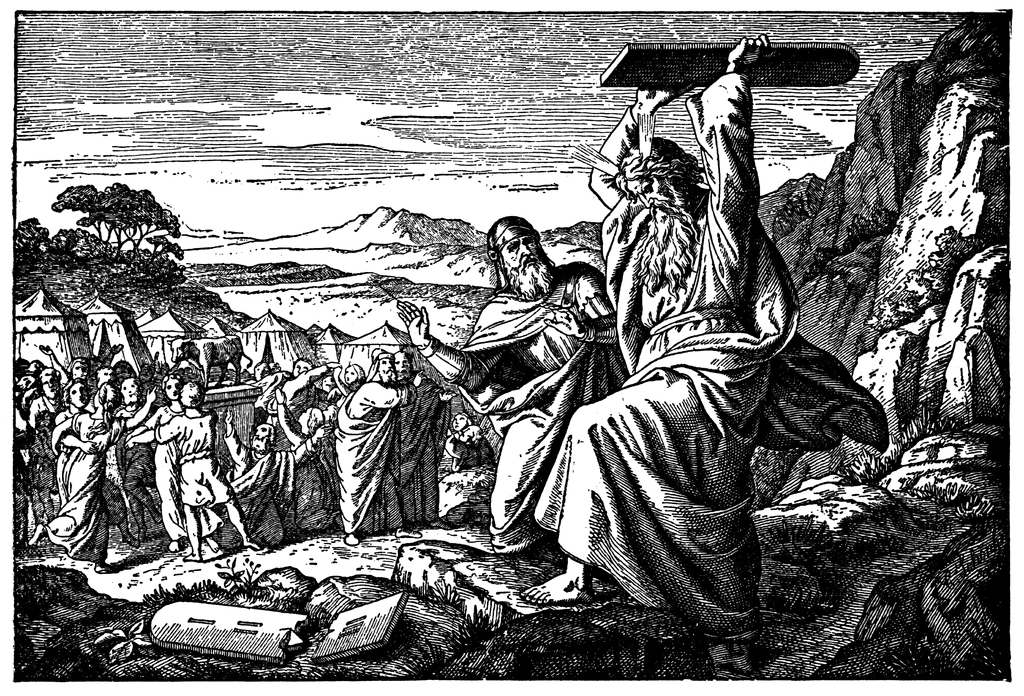
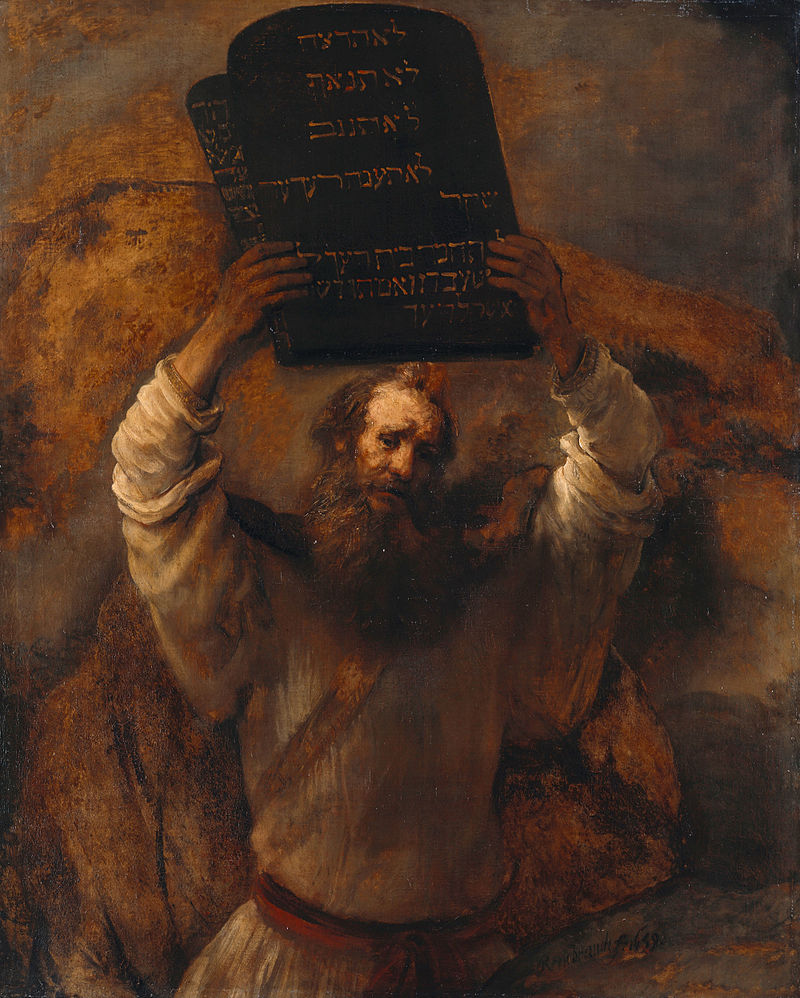
Rembrandt, Moses with the Ten Commandments

Rembrandt, Moses with the Ten Commandments

When I started the biblical reflections portion of this blog almost four years ago, I didn’t realize how much I would learn and how much it would shape my ministry. Many Christians don’t know how to approach the Hebrew Scriptures that many call the Old Testament, and as much as I love the gospels and the letters of Paul I am learning how to hear those writings much more fully as I become more and more familiar with the Psalms, Jeremiah, Deuteronomy, Ecclesiastes, Esther and Haggai. I am understanding more what Dietrich Bonhoeffer meant when he said,

I notice more and more how much I am thinking and perceiving things in line with the Old Testament; thus in recent months I have been reading much more the Old than the New Testament. Only when one knows the name of God may not be uttered may one sometimes speak the name of Jesus Christ. Only when one loves life and the earth so much that with it everything seems lost and at its end may one believe in the resurrection of the dead and a new world. Only when one accepts the law of God as binding for oneself may one perhaps sometimes speak of grace. And only when the wrath and vengeance of God against God’s enemies are allowed to stand can something of forgiveness and love of enemies touch our hearts. Whoever wishes to be and perceive too quickly and too directly in New Testament ways is to my mind no Christian. We have already, discussed this a few times, and every day confirms for me that it is right. One can and must not speak the ultimate word prior to the penultimate. We are living in the penultimate and believe the ultimate. (DBW 8: 213)

As I have wrestled with some difficult pieces of the Bible it has caused me to think about ethics, faith, our current world and so much more. For me this is the more challenging way but it has also been incredibly rewarding. Finishing Psalms 21-30 as a transition between books now I stand ready to begin another large piece. Next will be the book of Exodus, the second of the Pentateuch that I have approached. It is a book that I am more familiar with than I was with Jeremiah or Deuteronomy when I began and it is more of a narrative than any of the books I have done previously. I have two trustworthy companions for the journey. Since this is one of the central books of the Torah and the defining drama of the Jewish people I am delighted to have Rabbi Jonathan Sacks’, Covenant and Conversation: A Weekly Reading of the Jewish Bible as he reads through Exodus: The Book of Redemption as one of my primary dialogue partners. I will also be taking along Carol Meyers commentary on Exodus from the New Cambridge Bible Commentary Series. I have other resources that I have read in the past or that are on my shelf that may also be a part of this journey. With the forty chapters of Exodus the hope is to make the journey in approximately forty weeks, but as journeys go there are often unforeseen stops along the way. I am looking forward to this next exploration as I reenter the journey of the people of Israel from Egypt into the wilderness, from slavery into becoming the people of God and seeing how their journey and faith continue to shape and inform my own.

Psalm 30- The Life of Praise

Mosaic Mural of Pentecost by Manuel Perez Paredes in Nuestro Senor del Veneno Temple, Mexico City

Mosaic Mural of Pentecost by Manuel Perez Paredes in Nuestro Senor del Veneno Temple, Mexico City

Psalm 30

<A Psalm. A Song at the dedication of the temple. Of David.>
 1 I will extol you, O LORD, for you have drawn me up, and did not let my foes rejoice over me.
 2 O LORD my God, I cried to you for help, and you have healed me.
 3 O LORD, you brought up my soul from Sheol, restored me to life from among those gone down to the Pit.
 4 Sing praises to the LORD, O you his faithful ones, and give thanks to his holy name.
 5 For his anger is but for a moment; his favor is for a lifetime. Weeping may linger for the night, but joy comes with the morning.
 6 As for me, I said in my prosperity, “I shall never be moved.”
 7 By your favor, O LORD, you had established me as a strong mountain; you hid your face; I was dismayed.
 8 To you, O LORD, I cried, and to the LORD I made supplication:
 9 “What profit is there in my death, if I go down to the Pit? Will the dust praise you? Will it tell of your faithfulness?
 10 Hear, O LORD, and be gracious to me! O LORD, be my helper!”
 11 You have turned my mourning into dancing; you have taken off my sackcloth and clothed me with joy,
 12 so that my soul may praise you and not be silent. O LORD my God, I will give thanks to you forever.

This is a Psalm of praise but as Rolf Jacobson also can state it is a Psalm about praise. (Nancy deClaisse-Walford, 2014, p. 298) Psalm thirty with its poetic polarities looks at what a life of praise might look like and how one’s experience of God’s deliverance can lead to a life where one’s soul can praise and not be silent. The Psalm also moves beyond the individual Psalmists praise to the community’s experience of the deliverance of God and the attribution of the Psalm as a song at the dedication of the temple can let us wonder how the words originally written by one speaker now gets echoed to the faithful ones through their testimony and becomes reflective of a communal faith at the dedication of a place of worship. Praise leads the person not to remain silent, to proclaim their life before the gathered community and ultimately to dedicate a place where God’s name can be praised.

The superscription which lists the Psalm as being used in the dedication of a temple has two possibilities in ancient Israelite and Jewish writings: the dedication of the second temple in 515 BCE (as described in Ezra 6) or the rededication of the temple after the Maccabean revolt in 165 BCE after it had been defiled by Antiochus Epiphanes (which Hanukah and the books of Maccabees talk about). (Nancy deClaisse-Walford, 2014, p. 289) In either case the community has come out of a time where the LORD appeared to hide his face and remove the protection from the people and yet ultimately the people stand in the position of being renewed and redeemed from either captivity or persecution. In using these words in the position of praising God with the dedication of a new (or renewed) temple the people take the experience of the Psalmist and the words of praise and relate them to the experience of the Jewish community as they emerge from the shadow of oppression and the threat of death.

The Psalm itself bursts with praise from the writer’s experience of redemption. From the very beginning the poet show how their LORD saved them from the point of death. The language is full of images reflecting a struggle for life against the possibility of death. Being drawn up, brought up from Sheol, having one’s life restored from among those who have gone down to the Pit: these are all ways of representing the near-death experience that the Psalmist trusts that God has redeemed them from. So, the Psalmist feels compelled not only to tell and praise but to command others to praise and give thanks as well. In sharing their experience and song they begin to teach the community how to sing praises to the LORD and to give thanks to his holy name.

In the center of the psalm is the testimony of a life that has forgotten praise and which became comfortable in its complacency. The Psalmist, like many in our own time, made security their idol and they began to trust in their own strength rather than the LORD who had provided for them. They began to believe that they would never be moved. Yet, this is where the LORD hides the protecting and benevolent face of God. To many people who believe God only brings prosperity and blessing this may indeed feel like what Martin Luther would call ‘the alien work of God’: the actions of condemnation, judgment or punishment. Or as Dietrich Bonhoeffer could say in a 1944 letter to Eberhard Bethge,

Thus our coming of age leads us to a truer recognition of our situation before God. God would have us know that we must live as those who manage their lives without God. The same God who is with us is the God who forsakes us (Mark 15: 34!) (DBW 8:479)

The Psalmist describes the descent into the Godforsaken place that leads them to pleading for life. The Psalms come from a time before the Jewish people would even begin thinking of a resurrection and so the ending of life is the ending of praise. Death silences the songs of the faithful but even at the edge of the abyss the faithful can cry out. They know that God’s anger will pass, that joy will come in the morning. That God can and will act to bring life out of death, hope out of despair, turn mourning into dancing and brokenness into healing.

So, the Psalmist and the community that can echo these words learn to praise and not be silent. They participate in a faith in a redeeming God who delivers the faithful ones in their time of trouble. Having participated in the renewal of life after the brush with death, persecution or destruction they learn that it is because of the LORD that they shall never be moved. As St. Paul could echo this idea in a later time, talking to the early followers of Jesus, ‘that neither death, nor life, nor angels, nor rulers, nor things present, nor things to come, nor powers, nor height, nor depth, nor anything else in all creation, will be able to separate us from the love of God in Christ Jesus our LORD.” (Romans 8.38f.) And as the faithful gather together in the places dedicated to praising and giving thanks to God forever as the old song says, “How can they keep from singing.”


Psalm 29- The Thundering Voice of God

Supercell Thunderstorm over Chaparral, New Mexico on April 3, 2004

Supercell Thunderstorm over Chaparral, New Mexico on April 3, 2004

Psalm 29

<A Psalm of David.>
 1 Ascribe to the LORD, O heavenly beings, ascribe to the LORD glory and strength.
 2 Ascribe to the LORD the glory of his name; worship the LORD in holy splendor.
 3 The voice of the LORD is over the waters; the God of glory thunders, the LORD, over mighty waters.
 4 The voice of the LORD is powerful; the voice of the LORD is full of majesty.
 5 The voice of the LORD breaks the cedars; the LORD breaks the cedars of Lebanon.
 6 He makes Lebanon skip like a calf, and Sirion like a young wild ox.
 7 The voice of the LORD flashes forth flames of fire.
 8 The voice of the LORD shakes the wilderness; the LORD shakes the wilderness of Kadesh.
 9 The voice of the LORD causes the oaks to whirl, and strips the forest bare; and in his temple all say, “Glory!”
 10 The LORD sits enthroned over the flood; the LORD sits enthroned as king forever.
 11 May the LORD give strength to his people! May the LORD bless his people with peace!
 
What language do we use to praise God and where does it come from? I know for many contemporary Christians there is a fear of using the secular language or language that may come from a mythological or another religion’s background. Yet, here is Psalm 29 which uses the language that the Canaanites used to talk about their god Baal and repurposes that praise in a way to explicitly and repetitively talk about the LORD. In our desire to ascribe to the LORD glory and strength what words, what language and what images shall we use? How do the metaphors capture some piece of what the LORD’s strength and power is? One of the gifts of the Psalms is the way in which it stretches and challenges the ways in which we can poetically allow ourselves to talk about God.

The metaphorical exploration of the power of God’s voice as a thunderstorm is a potent image on its own. The powerful image also takes on a polemical context when paired in a Canaanite environment when their primary god Baal is a storm god who battles the chaotic sea (Yam). In a bold move the poet who puts these words on paper takes the primary image of strength of the god of the surrounding nation and usurps the image to talk about the voice of the LORD. All the other heavenly beings are summoned from the beginning to honor the LORD and to assume their proper subservient positions. The unimaginable power of the mighty storm which can strip the forests are or which can break the mighty cedars of Lebanon is now one attribute of the LORD’s strength.

To use the language of the surrounding world as a part of the language we use to praise God is necessary and yet like all metaphors it has its limits. The Psalms never pretend to be a systematic theology but rather a window into the ways in which God has been experienced. The metaphors can capture our imaginations as ways, as in this Psalm, to give praise to God. In a Psalm where the voice of the LORD is emphasized seven times the only word spoken is reserved for those in the temple. We, like those in the temple, use our own limited words to try to proclaim, “Glory!” The bible wants to use the language it can muster to bring honor and praise to the LORD, and if it means redirecting language which the people of the LORD believed was misused to worship other gods then they would repurpose and recast those words to bring honor and praise to their God. To echo another poet quoted by Paul in Philippians they wanted to see that time when “every knee should bend, in heaven and on earth and under the earth.” (Philippians 2. 10)

Psalm 29 celebrates the power of the LORD with all its destructive might but ultimately that power is wielded so that the people may be at peace. As in Psalm 46 where the bows are broken and spears are shattered and shields burned to make wars cease, so here the incredible powerful voice of the LORD is wielded to bring the people peace. As Rolf Jacobson can state, “God’s strength quells the warring madness of the children of Adam and Eve. (Nancy deClaisse-Walford, 2014, p. 286) Until the days to come that the prophet Isaiah could dream of when swords are turned into plowshares and spears into pruning hooks (Isaiah 2.4) and where the voice of the LORD blesses the people with peace and all the nations stream to the house of the LORD we live in the expectation for the time when the voice of the LORD’s immense power thunders across our world, strengthens the people, blesses us with peace and all can proclaim, “Glory!”

Psalm 28- Can You Hear Me Lord?

Can You Hear Me by jinzilla@deviantart.com

Can You Hear Me by jinzilla@deviantart.com

Psalm 28

<Of David.>
 1 To you, O LORD, I call; my rock, do not refuse to hear me, for if you are silent to me, I shall be like those who go down to the Pit.
 2 Hear the voice of my supplication, as I cry to you for help, as I lift up my hands toward your most holy sanctuary.
 3 Do not drag me away with the wicked, with those who are workers of evil, who speak peace with their neighbors, while mischief is in their hearts.
 4 Repay them according to their work, and according to the evil of their deeds; repay them according to the work of their hands; render them their due reward.
 5 Because they do not regard the works of the LORD, or the work of his hands, he will break them down and build them up no more.
 6 Blessed be the LORD, for he has heard the sound of my pleadings.
 7 The LORD is my strength and my shield; in him my heart trusts; so I am helped, and my heart exults, and with my song I give thanks to him.
 8 The LORD is the strength of his people; he is the saving refuge of his anointed.
 9 O save your people, and bless your heritage; be their shepherd, and carry them forever.
 
There is an intensity and beauty to this Psalm in its movement from crying to be heard to blessing the LORD who has heard. We can never enter the original Psalmist’s world and know who their enemies are or what is the crisis they are experiencing or how long they cry before they know that the LORD hears and responds, and yet we have their words which can echo our own crises and cries. The life of faith can inhabit this wide space between the desperate cry and the confident trust of one who has been answered. Faith does not exempt the faithful one from these times of crisis, but it does give the faithful petitioner a Faithful One who they trust will hear and answer their calls.

The intensity of the petitioner’s prayer is carried by the verbs focused on hearing: “I call, do not refuse to hear (literally do not be deaf), if you are silent” and the additional contrast between the LORD’s role as the petitioner’s rock and their destination if their rock proves untrustworthy, the pit. The psalmist cries out to the LORD, their rock, because the LORD is the only one who can deliver them. This cry is both an individual cry for help but also has the connotation of worship with lifting up hands toward the sanctuary. The Psalm doesn’t bargain with God but instead attempts to lift up the desperate reality that the Psalmist finds themselves within. If God does not rescue them from the wicked their life will end. The words of the Psalm 28 point to a life or death reality and wait upon the LORD for deliverance.

In contrast to the words of the Psalmist are the words of the wicked who speak peace while plotting mischief. The wicked often masquerade as the righteous and yet the Psalmist can point to the “fundamental disjunction between words, intentions and deeds.” (Nancy deClaisse-Walford, 2014, p. 276) The wicked here are portrayed as those who do not ‘regard the work of the LORD,’ who seem to easily inhabit that space of God’s perceived silence with their own certainty that their words will go unpunished. They fill the pause in God’s perceived works with their own evil works and while the Psalmist wants the LORD to repay the evildoers for their works he also wants to ensure that he is not swept away along with them. Do not mistake my words for those of the evildoers who oppress me, do not mistake my work for their work or my deeds for their deeds. The work of the wicked is contrasted with the work of the LORD and the trust is that their disregard for the LORD’s working will result in their own destruction.

The space between verse five and six, the space between the LORD will break them down and blessed be the LORD who has heard is unknown. During that time the one praying holds onto the promise of the LORD’s hearing and the remembrance of the way the LORD has acted for the faithful ones in the past. Yet, the Psalm takes us across the unknown span of time to the resolution where God has acted, where the Psalmist can rest because God has provided them safety and strength, God did hear and act and save. It is this space where the Psalmist can utter the words of praise for the LORD who is faithful to the promises that were made. Now the Psalm moves beyond the individual to the community that calls upon God for their inheritance as well as guidance. The LORD is called upon to be their shepherd (which also has royal/kingly connotations in the Hebrew Bible) and to watch over and lead them forever. Perhaps, like in Psalm 23, the people will again find themselves in the darkest valley needing to cry out for the LORD to hear and rescue them again and then once again the intensity of the beginning of this Psalm may be a part of the movement again to that time when the LORD has heard and acted.

Psalm 27- Faith in an Age of Anxiety

The Temple by Radojavor@deviantart.com

The Temple by Radojavor@deviantart.com

Psalm 27
<Of David.>
 1 The LORD is my light and my salvation; whom shall I fear? The LORD is the stronghold of my life; of whom shall I be afraid?
 2 When evildoers assail me to devour my flesh– my adversaries and foes– they shall stumble and fall.
 3 Though an army encamp against me, my heart shall not fear; though war rise up against me, yet I will be confident.
 4 One thing I asked of the LORD, that will I seek after: to live in the house of the LORD all the days of my life, to behold the beauty of the LORD, and to inquire in his temple.
 5 For he will hide me in his shelter in the day of trouble; he will conceal me under the cover of his tent; he will set me high on a rock.
 6 Now my head is lifted up above my enemies all around me, and I will offer in his tent sacrifices with shouts of joy; I will sing and make melody to the LORD.
 7 Hear, O LORD, when I cry aloud, be gracious to me and answer me!
 8 “Come,” my heart says, “seek his face!” Your face, LORD, do I seek.
 9 Do not hide your face from me. Do not turn your servant away in anger, you who have been my help. Do not cast me off, do not forsake me, O God of my salvation!
 10 If my father and mother forsake me, the LORD will take me up.
 11 Teach me your way, O LORD, and lead me on a level path because of my enemies.
 12 Do not give me up to the will of my adversaries, for false witnesses have risen against me, and they are breathing out violence.
 13 I believe that I shall see the goodness of the LORD in the land of the living.
 14 Wait for the LORD; be strong, and let your heart take courage; wait for the LORD!

The fear of the LORD is the antidote to the fear of the things that produce anxiety in the world around the Psalmist. One of the most common commands when there is a divine revelation through a dream, an angel or a prophecy is “Do not be afraid.” Often these words come in situations that would produce fear and yet the one who calls the Psalmist, the prophets and poets, the kings and the shepherds, the young women like Mary and old men like Zechariah becomes their light and salvation throughout their life and journey. As the apostle Paul can write to the church in Rome, “What then are we to say about these things? If God is for us, who is against us?” Or as Martin Luther could explain when talking about what it means to follow the first commandment of having no other Gods, “We are to fear, love and trust God above all things.” The Psalmists faith in God becomes such a central part of their life that they can enter into the darkest valleys without being paralyzed by fear because their LORD is indeed guiding them through those places and times.

The fear of the LORD is not an immunization against bad things happening to the faithful one, the Psalms and even the theology of books like Deuteronomy are not some simple prosperity gospel where trust in the LORD guarantees a return on investment in wealth, happiness, children, flocks and fields. There is a sense in which that trust is rewarded and validated but the Psalmist and those throughout scripture who are lifted up as models of faith often live challenging lives. Job, for example, would continue to believe that he would be vindicated by the LORD even when his household and health were all destroyed and yet, defiantly, Job would trust that God would answer his plea. The martial imagery of enemies that attack in cannibalistic fashion or an army that encamps around the faithful one may be metaphors for the great struggles or, if the Psalm refers backwards into David’s experience, it may reflect the reality of being one who is hunted for. Faith doesn’t make life easy but it may make the incredible struggle that one goes through bearable because faith becomes the antidote to the overwhelming fear and anxiety that may be present otherwise in the Psalmist’s life.

Worship becomes a foundational piece of the faithful life. The desire of the Psalmist is to live their life in the house of the LORD. The temple or tabernacle becomes a place to seek God’s presence, God’s voice and guidance, to reaffirm one’s trust in their God and a place where prayers can go forth. It is a place where defiant shouts of joy and joyous songs and praises can be offered. It becomes a continual reminder that the Psalmist does not journey alone, but that the LORD their God and other faithful ones, perhaps many other faithful ones also join in these defiant shouts and songs. Faith is strengthened in the continual dwelling in the house of the LORD.

Their God to the faithful one becomes shelter, the one who conceals them under the cover of the tent and the one who sets them upon a rock. Shelter, while used only here in the Psalms, reflects a common idea of the LORD sheltering the people of Israel and is the word behind the Feast of Sukkoth (Festival of Booths) remembering how the LORD cared for the people during their Exodus journey. The LORD has been the rock and foundation before, as in Psalm 18, but now the LORD places the Psalmist upon a rock where they are safe and sheltered from their enemies. As Rolf Jacobson can point out the tent can be a reference to the tabernacle or temple but it also has the element of being God’s protective presence. (Nancy deClaisse-Walford, 2014, p. 269) Within the hospitality culture of the ancient world being concealed under the cover of the tent may also allude to the expectation of protection provided for the guest that has been welcomed into one’s home and there are numerous stories throughout the bible, probably the most famous being that of Lot and the two angels that he shields within his house in Genesis 19 (a text often misinterpreted). In the ancient world if someone comes to your house and you extend them hospitality then their lives are entrusted to your care.

Yet, even the faith that knows that the LORD is their light and salvation may have to convince itself to trust in the midst of the challenges of life. For me verses eight through fourteen may be this type of internal dialogue of faithfulness in the midst of challenge. There is the plea to be heard and the reminder spoken to oneself to seek the face of the Lord and a reaffirmation of this seeking followed by a plea not to hide or turn away, a plea not to cast one off or forsake. There is the continual struggle to remember the character of God and yet the falling back into the language of commitment, deeper commitment to the faithful one than even a parental bond may yield. This Psalm has been a Psalm of commitment and trust and the Psalmist calls upon God in the midst of their struggles to uphold that trust: not to give them up to their adversaries and to lead them on the level paths. The Psalm ends on that note of trust as the wait for the LORD and the belief that in the midst of their time of trial the LORD will somehow deliver them or give them the strength and courage to endure.

Psalm 26- A Liturgy for the Falsely Accused

The Temple by Radojavor@deviantart.com

The Temple by Radojavor@deviantart.com

Psalm 26

<Of David.>
 1 Vindicate me, O LORD, for I have walked in my integrity, and I have trusted in the LORD without wavering.
 2 Prove me, O LORD, and try me; test my heart and mind.
 3 For your steadfast love is before my eyes, and I walk in faithfulness to you.
 4 I do not sit with the worthless, nor do I consort with hypocrites;
 5 I hate the company of evildoers, and will not sit with the wicked.
 6 I wash my hands in innocence, and go around your altar, O LORD,
 7 singing aloud a song of thanksgiving, and telling all your wondrous deeds.
 8 O LORD, I love the house in which you dwell, and the place where your glory abides.
 9 Do not sweep me away with sinners, nor my life with the bloodthirsty,
 10 those in whose hands are evil devices, and whose right hands are full of bribes.
 11 But as for me, I walk in my integrity; redeem me, and be gracious to me.
 12 My foot stands on level ground; in the great congregation I will bless the LORD.

Many have stood in times where they felt unjustly accused by those in authority or those with power in their lives (whether friends, family, or perhaps in an educational, work or legal setting). In a familiar pattern from the Psalms in this part of the book of Psalms the petitioner and God stand against the judgment they experience from the forces around them. Martin Luther, for example, could reference his own struggles in attempting to be faithful to God’s Word and the persecution he is feeling in 1525 when he expounds upon the Psalm, (LW 12: 184) The Psalm invites us into that struggle with the difference between the life one expects in attempting to be faithful to God and the reality that the faithful one may experience.

The first two verses call upon God to act: to vindicate and to prove. Ultimately the crux of the Psalm is the trust that the speaker has for the LORD. They have tried to walk in a manner that reflects that faith and trust and it is that walk that has led them into this time of trial. The LORD is the one they call upon to act in setting the tables right and restoring the things that have been lost in this time where their way of life has been called into question. In parallel with this prayer to be vindicated is a parallel prayer to be evaluated. They cry on the LORD to weigh their life on the scales of justice and to see if their punishment is just. In the psalmist’s view the struggles they are going through do not fit the life they have tried to live and they open themselves up to God’s evaluation. This is perhaps a terrifying place for many people who are painfully aware of their sins or times they have not been completely faithful but as Beth Tanner can state about this text, “The point here is not to prove oneself, but to demonstrate one’s trust in God’s power of hesed and grace.” (Nancy deClaisse-Walford, 2014, p. 263)

It would be easy to become critical of the tone of this and many other Psalms where the psalmist places themselves in the position of the righteous one who is judged and yet that would miss the point in this Psalm. The Psalms are experienced theology put into prose rather than some type of systematic theology which needs to be consistent throughout. The freedom of the Psalms is the ability to give voice in a faithful way to the world one is experiencing. There will be moments where the Psalms will focus on the writer’s guilt or their need of redemption, but there are also times in the Psalms and in life where the speaker feels unjustly persecuted. The Psalms can provide us a ‘Liturgy for the Falsely Accused’ in the words of William Bellinger and Walter Brueggemann. (Brueggeman, 2014, p. 137) There are times where we need to know that we are innocent, or at least justified if we want to be dogmatic, where we haven’t associated with the wrong people or done the wrong things. Where our life has attempted to closely follow our values and where we do need a God who can judge between us and our persecutors. We want God to discriminate between us and the ones who we feel have acted unjustly. Maybe in the space of the prayer God acts, maybe in the space of the prayer our enemy changes, or maybe in the space of the prayer we are tested in heart and mind and we need to change. Yet, the speaker trusts that God will do something with their words and with their life. God will not remain silent and inactive.

Most of the prayer calls upon God to act on the psalmist’s behalf: to vindicate and to prove and not to sweep them away with the sinners. Yet, in the final two verses we return to the life the speaker is trying to live, a life that is in harmony with the trust they have in their LORD and the integrity in which they have attempted to walk. Even before God’s redemption they will continue to walk in integrity, and to bless the LORD in the worshipping community. They will continue to try to live the life they feel called to live, a life faithful to their calling as a person of the LORD.