Neil White, 2014
Author Archives: Neil
Beautiful
There was a beauty that was found when each of my children were born That moment they touched my heart with their tiny thumbprints Still remaining beautiful in their own way as they grow into young adults There is the beauty of the person who you see and cannot look away For something about appearance or movement or voice or demeanor Captures your imagination and draws you in, even if only for a moment Some will hear their beauty spoken in words awkward or eloquent Many times the words remain trapped within our throats And perhaps the most difficult beauty to acknowledge Is the one that we find as we criticize our reflection in the mirror For it is far easier to see the things that make us unique as our flaws And to become blinded by other’s judgments To that which is beautiful in ourselves. Neil White, 2014
Only A Dream- A Poem
Images for the Fourth Sunday of Easter -2014
Readings: Acts 2: 42-47, Psalm 23, 1 Peter 2: 19-25 and John 10: 1-10. Frequently called ‘Good Shepherd’ Sunday since the gospel reading for the Fourth Sunday always comes from John 10 which is all images surrounding Jesus being the Good Shepherd paired with Psalm 23.
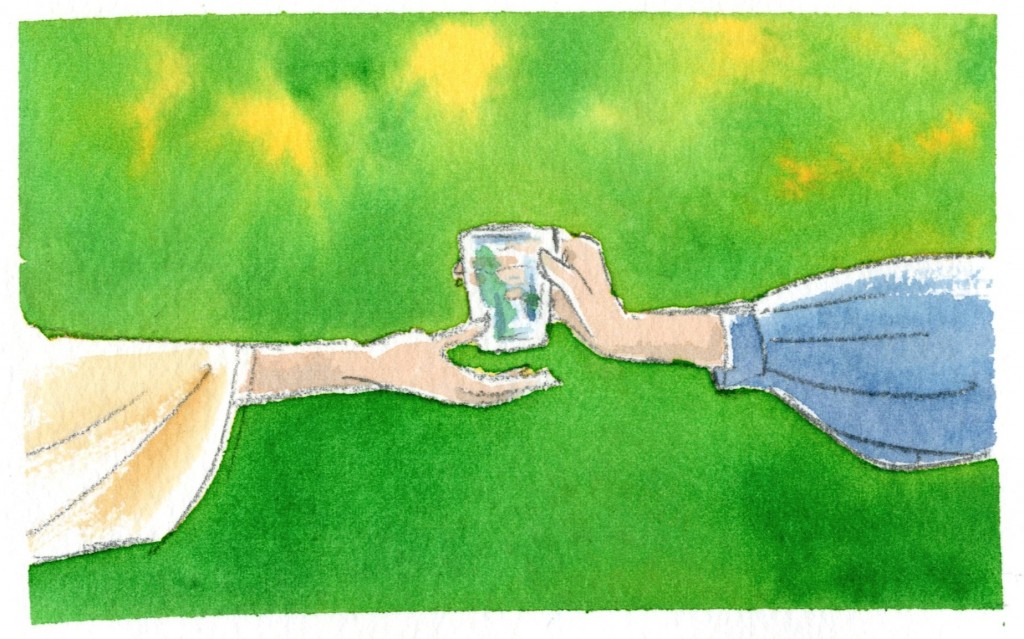
I think the Acts 2 reading about the life of the earliest church is worth paying attention to as well so a couple images that remind me of this reading about the earliest followers devoting themselves to the apostle’s teaching with breaking of bread and prayer and holding all things in common.
Now on to Good Shepherd Images:
Paths Not Taken- A Poem
Sometimes I look back upon the paths I have taken and wonder about the paths turned aside
The possibilities, the different journeys and relationships and adventures
Each one full of its own love and pain, dreams accepted and denied
In each one the person I become is different because the world in which I walk changes
Sometimes I dwell for a moment in this imaginary me surrounded by the people who walked those paths
Never knowing if the way I imagine the journey down the untaken path reflect reality
Yet, I can’t help but wonder who I might have been
Not that I regret the path I have taken or the person I have been shaped to be
For in the crucible of the journey I have been on has shaped me to be the man I am
I don’t regret the lessons learned by the willingness to love and to lose
Nor do I regret the experiences learned by moving from place to place
Meeting so many new people, learning so many new towns
Yet, sometimes I think back on the friendships that were just beginning to grow
When yet again I was transplanted to some new soil to take root.
Perhaps it is the reflective nature of a poet’s soul to look upon the past and wonder
To imagine different possibilities and unseen futures
And as I look back on so many of the paths I may have never used those eyes to see any other world
And sometimes I wonder how much choice I had as I moved along the paths
Or how much was preordained and how many alternate paths were really choices
Would the man I was then have ever made any decision differently even knowing the pitfalls ahead?
Or would I have steadfastly held fast to the path that would have led me to where I stand today?
Neil White, 2014
Jeremiah 33 Hope in the Midst of Hopelessness
Jeremiah 33: 1-11: Hope in the Midst of the Hopelessness
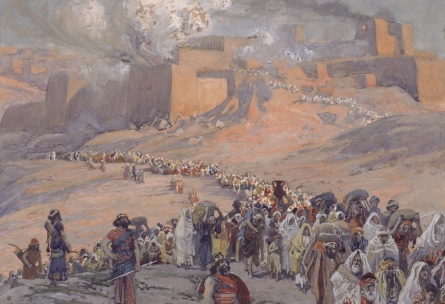
The word of the LORD came to Jeremiah a second time, while he was still confined in the court of the guard: 2 Thus says the LORD who made the earth, the LORD who formed it to establish it– the LORD is his name: 3 Call to me and I will answer you, and will tell you great and hidden things that you have not known. 4 For thus says the LORD, the God of Israel, concerning the houses of this city and the houses of the kings of Judah that were torn down to make a defense against the siege ramps and before the sword: 5 The Chaldeans are coming in to fight and to fill them with the dead bodies of those whom I shall strike down in my anger and my wrath, for I have hidden my face from this city because of all their wickedness. 6 I am going to bring it recovery and healing; I will heal them and reveal to them abundance of prosperity and security. 7 I will restore the fortunes of Judah and the fortunes of Israel, and rebuild them as they were at first. 8 I will cleanse them from all the guilt of their sin against me, and I will forgive all the guilt of their sin and rebellion against me. 9 And this city shall be to me a name of joy, a praise and a glory before all the nations of the earth who shall hear of all the good that I do for them; they shall fear and tremble because of all the good and all the prosperity I provide for it. 10 Thus says the LORD: In this place of which you say, “It is a waste without human beings or animals,” in the towns of Judah and the streets of Jerusalem that are desolate, without inhabitants, human or animal, there shall once more be heard 11 the voice of mirth and the voice of gladness, the voice of the bridegroom and the voice of the bride, the voices of those who sing, as they bring thank offerings to the house of the LORD: “Give thanks to the LORD of hosts, for the LORD is good, for his steadfast love endures forever!” For I will restore the fortunes of the land as at first, says the LORD.Out of the darkness and destruction comes a new beginning and a new light. Jeremiah is still in prison and the armies of Babylon surround the city. The deepest depths have not been reached yet, but in the midst of the darkness we continue to have the message of hope and reversals emerge. Finally the expected invasion from the previous 30 chapters has come, the devastation places the people into a place where they feel they have no future, no hope, no God they can turn to, and in this time life comes to a standstill. Men and women no longer marry, celebrations stop and those who remain are merely trying to survive. But the prophet now sees the long-expected judgment in the horizon of hope. That the death and destruction are not ultimate, that God’s steadfast love endures forever even as the judgment only lasts for a season. The people will be cleansed and made knew, the city becomes again a source of joy for God rather than a place that evokes God’s wrath. Where joy and mirth are absent, the time will come when they re-emerge. The land, one of the central symbols of identity for the people is again to be restored to the people as they in the future will regain their identity.
Jeremiah 33: 12-26: Restoration of Prosperity, the Line of Kings and the Priesthood
12 Thus says the LORD of hosts: In this place that is waste, without human beings or animals, and in all its towns there shall again be pasture for shepherds resting their flocks. 13 In the towns of the hill country, of the Shephelah, and of the Negeb, in the land of Benjamin, the places around Jerusalem, and in the towns of Judah, flocks shall again pass under the hands of the one who counts them, says the LORD. 14 The days are surely coming, says the LORD, when I will fulfill the promise I made to the house of Israel and the house of Judah. 15 In those days and at that time I will cause a righteous Branch to spring up for David; and he shall execute justice and righteousness in the land. 16 In those days Judah will be saved and Jerusalem will live in safety. And this is the name by which it will be called: “The LORD is our righteousness.” 17 For thus says the LORD: David shall never lack a man to sit on the throne of the house of Israel, 18 and the levitical priests shall never lack a man in my presence to offer burnt offerings, to make grain offerings, and to make sacrifices for all time. 19 The word of the LORD came to Jeremiah: 20 Thus says the LORD: If any of you could break my covenant with the day and my covenant with the night, so that day and night would not come at their appointed time, 21 only then could my covenant with my servant David be broken, so that he would not have a son to reign on his throne, and my covenant with my ministers the Levites. 22 Just as the host of heaven cannot be numbered and the sands of the sea cannot be measured, so I will increase the offspring of my servant David, and the Levites who minister to me. 23 The word of the LORD came to Jeremiah: 24 Have you not observed how these people say, “The two families that the LORD chose have been rejected by him,” and how they hold my people in such contempt that they no longer regard them as a nation? 25 Thus says the LORD: Only if I had not established my covenant with day and night and the ordinances of heaven and earth, 26 would I reject the offspring of Jacob and of my servant David and not choose any of his descendants as rulers over the offspring of Abraham, Isaac, and Jacob. For I will restore their fortunes, and will have mercy upon them.The theme of reversals continues as the agricultural losses of the invasion of Babylon are regained as they see the flocks again counted. In one of the better known pieces of Jeremiah to Christians because this portion is often read as a prefiguring of the Christ, it also stands as a promise to the people of Judah that the line of Davidic kings which seems to have failed. The priesthood which now has lost its place without the temple will also be restored and the traditional places of Levi and Judah will be restored. The one guaranteeing the continued line of kings and place for the priests is the Lord who states again that only if the basic orders of creation can be reversed will his promises come to an end. The exile in Babylon is not the ultimate reality, God will not forget God’s people.
Images for the Third Sunday of Easter
Readings: Acts 2: 14a, 36-41, Psalm 116, 1 Peter 1: 17-23, and Luke 24: 13-35
The Luke reading is the ‘Walk to Emmaus’ text which is very familiar and very well represented in art. Here are some selections:
Images for the Second Sunday of Easter
The primary text for this Sunday is John 20: 19-31 where Jesus first appears to the rest of the disciples and then a second time when Thomas is present. Known by a lot of people as the ‘doubting Thomas’ story which is unfortunate since doubt, although there in most English translations, is not there in the Greek but that is a whole long story. Here are a few of the images for the week.
Jeremiah 32: Purchasing a Field During the Siege
The word that came to Jeremiah from the LORD in the tenth year of King Zedekiah of Judah, which was the eighteenth year of Nebuchadrezzar. 2 At that time the army of the king of Babylon was besieging Jerusalem, and the prophet Jeremiah was confined in the court of the guard that was in the palace of the king of Judah, 3 where King Zedekiah of Judah had confined him. Zedekiah had said, “Why do you prophesy and say: Thus says the LORD: I am going to give this city into the hand of the king of Babylon, and he shall take it; 4 King Zedekiah of Judah shall not escape out of the hands of the Chaldeans, but shall surely be given into the hands of the king of Babylon, and shall speak with him face to face and see him eye to eye; 5 and he shall take Zedekiah to Babylon, and there he shall remain until I attend to him, says the LORD; though you fight against the Chaldeans, you shall not succeed?”
6 Jeremiah said, The word of the LORD came to me:7 Hanamel son of your uncle Shallum is going to come to you and say, “Buy my field that is at Anathoth, for the right of redemption by purchase is yours.” 8 Then my cousin Hanamel came to me in the court of the guard, in accordance with the word of the LORD, and said to me, “Buy my field that is at Anathoth in the land of Benjamin, for the right of possession and redemption is yours; buy it for yourself.” Then I knew that this was the word of the LORD.
9 And I bought the field at Anathoth from my cousin Hanamel, and weighed out the money to him, seventeen shekels of silver. 10 I signed the deed, sealed it, got witnesses, and weighed the money on scales. 11 Then I took the sealed deed of purchase, containing the terms and conditions, and the open copy; 12 and I gave the deed of purchase to Baruch son of Neriah son of Mahseiah, in the presence of my cousin Hanamel, in the presence of the witnesses who signed the deed of purchase, and in the presence of all the Judeans who were sitting in the court of the guard. 13 In their presence I charged Baruch, saying, 14 Thus says the LORD of hosts, the God of Israel: Take these deeds, both this sealed deed of purchase and this open deed, and put them in an earthenware jar, in order that they may last for a long time. 15 For thus says the LORD of hosts, the God of Israel: Houses and fields and vineyards shall again be bought in this land.
The first two verses of the chapter fix the context of when this prophetic action takes place, during the siege of Jerusalem by Nebuchadnezzar’s Babylonian forces while Jeremiah has been placed under arrest for his prophecy. Jeremiah’s words have been heard by the king enough that he can parrot them back to Jeremiah, and what I believe is the dominant question of the chapter comes out for the first time: Why? From the king’s mouth to Jeremiah: Why have you said these things. For Jeremiah his calling doesn’t give him a choice in this matter, there are many times Jeremiah would have preferred to stay silent but the words were like burning fire within him (Jeremiah 20: 9-10).
While Jeremiah is in the court of the guard the word of the Lord comes to him telling him that he is to redeem a piece of property from a relative. This concrete action of what seems like foolishness becomes an action of hope. Jeremiah publicly purchases the field of Hanamel in Anathoth, his hometown, a place where he has met opposition in the past but it is the land of his family and he redeems it. In a time of siege this would be a questionable investment, but there is the obligation to ensure the land remains in the family as well as the word of the Lord commanding Jeremiah to purchase this field. For this to happen the action must come to Jeremiah and Jeremiah is surprised when Hanamel comes. Perhaps Jeremiah has been charged with a proclamation of destruction, a proclamation that went against the cheap hope of many other prophets of his day, that this message from the Lord seems so out of step with his previous messages. Hanamel’s coming confirms the word of the Lord and Jeremiah seals the deal, weighing out the silver, signing the deed, getting witnesses to ensure it is a public and legal act. Jeremiah has the deed placed in an earthenware jug to be preserved for the end of the exile, but the action signals for Jeremiah and the people that in the midst of the death and destruction of the siege that the coming exile is not ultimate, the people will return and life will return to normal.
Jeremiah 32: 16-42: Jeremiah’s Prayer and the Lord’s Answer

16 After I had given the deed of purchase to Baruch son of Neriah, I prayed to the LORD, saying: 17 Ah Lord GOD! It is you who made the heavens and the earth by your great power and by your outstretched arm! Nothing is too hard for you. 18 You show steadfast love to the thousandth generation, but repay the guilt of parents into the laps of their children after them, O great and mighty God whose name is the LORD of hosts, 19 great in counsel and mighty in deed; whose eyes are open to all the ways of mortals, rewarding all according to their ways and according to the fruit of their doings. 20 You showed signs and wonders in the land of Egypt, and to this day in Israel and among all humankind, and have made yourself a name that continues to this very day. 21 You brought your people Israel out of the land of Egypt with signs and wonders, with a strong hand and outstretched arm, and with great terror; 22 and you gave them this land, which you swore to their ancestors to give them, a land flowing with milk and honey; 23 and they entered and took possession of it. But they did not obey your voice or follow your law; of all you commanded them to do, they did nothing. Therefore you have made all these disasters come upon them. 24 See, the siege ramps have been cast up against the city to take it, and the city, faced with sword, famine, and pestilence, has been given into the hands of the Chaldeans who are fighting against it. What you spoke has happened, as you yourself can see. 25 Yet you, O Lord GOD, have said to me, “Buy the field for money and get witnesses”– though the city has been given into the hands of the Chaldeans.
26 The word of the LORD came to Jeremiah: 27 See, I am the LORD, the God of all flesh; is anything too hard for me? 28 Therefore, thus says the LORD: I am going to give this city into the hands of the Chaldeans and into the hand of King Nebuchadrezzar of Babylon, and he shall take it. 29 The Chaldeans who are fighting against this city shall come, set it on fire, and burn it, with the houses on whose roofs offerings have been made to Baal and libations have been poured out to other gods, to provoke me to anger. 30 For the people of Israel and the people of Judah have done nothing but evil in my sight from their youth; the people of Israel have done nothing but provoke me to anger by the work of their hands, says the LORD. 31 This city has aroused my anger and wrath, from the day it was built until this day, so that I will remove it from my sight 32 because of all the evil of the people of Israel and the people of Judah that they did to provoke me to anger– they, their kings and their officials, their priests and their prophets, the citizens of Judah and the inhabitants of Jerusalem. 33 They have turned their backs to me, not their faces; though I have taught them persistently, they would not listen and accept correction. 34 They set up their abominations in the house that bears my name, and defiled it. 35 They built the high places of Baal in the valley of the son of Hinnom, to offer up their sons and daughters to Molech, though I did not command them, nor did it enter my mind that they should do this abomination, causing Judah to sin.
36 Now therefore thus says the LORD, the God of Israel, concerning this city of which you say, “It is being given into the hand of the king of Babylon by the sword, by famine, and by pestilence”: 37 See, I am going to gather them from all the lands to which I drove them in my anger and my wrath and in great indignation; I will bring them back to this place, and I will settle them in safety. 38 They shall be my people, and I will be their God. 39 I will give them one heart and one way, that they may fear me for all time, for their own good and the good of their children after them. 40 I will make an everlasting covenant with them, never to draw back from doing good to them; and I will put the fear of me in their hearts, so that they may not turn from me. 41 I will rejoice in doing good to them, and I will plant them in this land in faithfulness, with all my heart and all my soul.
42 For thus says the LORD: Just as I have brought all this great disaster upon this people, so I will bring upon them all the good fortune that I now promise them. 43 Fields shall be bought in this land of which you are saying, It is a desolation, without human beings or animals; it has been given into the hands of the Chaldeans. 44 Fields shall be bought for money, and deeds shall be signed and sealed and witnessed, in the land of Benjamin, in the places around Jerusalem, and in the cities of Judah, of the hill country, of the Shephelah, and of the Negeb; for I will restore their fortunes, says the LORD.
Now it is Jeremiah asking why, we hear his prayer narrated much like a Psalm or many of the other prayers in the Hebrew Scriptures where the way God has acted in the past is lifted up as a prologue, preparing the way for the question to be asked. Jeremiah in this narration reminds himself and God who God is, how God has acted and the frame in which he views God’s action (God’s actions in bringing the people of Judah under siege by Babylon are directly linked to the continuing disobedience and idolatry of the people over a span of generations). Jeremiah’s why in all of this is simple, Jeremiah wants to know why, at this very moment of judgment, has Jeremiah been commanded to buy a field, an act of hope in a time of hopelessness. The Lord’s answer does indeed confirm that the disobedience and idolatry has led to the siege and the upcoming exile, but a return is in the future. The Lord indeed will gather the people from all the places they have been scattered, the social and economic life of the nation will resume and like in chapter 32 the language of covenant returns. “I will make an everlasting covenant with them. (40) There will be another great reveral, misfortune will be transformed into fortune, in a place of death life will be reborn, disobedient hearts will have the fear of the Lord placed within them, and in Jeremiah’s actions we see the prefiguring of the return here at the beginning of the exile.
Images for Easter
There are a multitude of images of the resurrection out there, but here are a few