Author Archives: Neil

Lamentations 2 Speaking Up For Daughter Zion

Christ and the Sinner by Andrey Mironov -2011 Oil on Canvas, CC BY-SA 4.0, https://commons.wikimedia.org/w/index.php?curid=30518018

Lamentations 2

1How the Lord in his anger has humiliated daughter Zion! He has thrown down from heaven to earth the splendor of Israel; he has not remembered his footstool in the day of his anger.
2The Lord has destroyed without mercy all the dwellings of Jacob; in his wrath he has broken down the strongholds of daughter Judah; he has brought down to the ground in dishonor the kingdom and its rulers.
3He has cut down in fierce anger all the might of Israel; he has withdrawn his right hand from them in the face of the enemy; he has burned like a flaming fire in Jacob, consuming all around.
4He has bent his bow like an enemy, with his right hand set like a foe; he has killed all in whom we took pride in the tent of daughter Zion; he has poured out his fury like fire.
5The Lord has become like an enemy; he has destroyed Israel. He has destroyed all its palaces, laid in ruins its strongholds, and multiplied in daughter Judah mourning and lamentation.
6He has broken down his booth like a garden, he has destroyed his tabernacle; the LORD has abolished in Zion festival and sabbath, and in his fierce indignation has spurned king and priest.
7The Lord has scorned his altar, disowned his sanctuary; he has delivered into the hand of the enemy the walls of her palaces; a clamor was raised in the house of the LORD as on a day of festival.
8The LORD determined to lay in ruins the wall of daughter Zion; he stretched the line; he did not withhold his hand from destroying; he caused rampart and wall to lament; they languish together.
9Her gates have sunk into the ground; he has ruined and broken her bars; her king and princes are among the nations; guidance is no more, and her prophets obtain no vision from the Lord.
10The elders of daughter Zion sit on the ground in silence; they have thrown dust on their heads and put on sackcloth; the young girls of Jerusalem have bowed their heads to the ground.
11My eyes are spent with weeping; my stomach churns; my bile is poured out on the ground because of the destruction of my people, because infants and babes faint
 in the streets of the city.
12They cry to their mothers, “Where is bread and wine?” as they faint like the wounded
 in the streets of the city, as their life is poured out on their mothers’ bosom.
13What can I say for you, to what compare you, O daughter Jerusalem? To what can I liken you, that I may comfort you, O virgin daughter Zion? For vast as the sea is your ruin; who can heal you?
14Your prophets have seen for you false and deceptive visions; they have not exposed your iniquity to restore your fortunes, but have seen oracles for you that are false and misleading.
15All who pass along the way clap their hands at you; they hiss and wag their heads
 at daughter Jerusalem; “Is this the city that was called the perfection of beauty, the joy of all the earth?”
16All your enemies open their mouths against you; they hiss, they gnash their teeth, they cry: “We have devoured her! Ah, this is the day we longed for; at last we have seen it!”
17The Lord has done what he purposed, he has carried out his threat; as he ordained long ago, he has demolished without pity; he has made the enemy rejoice over you, and exalted the might of your foes.
18Cry aloud to the Lord! O wall of daughter Zion! Let tears stream down like a torrent day and night! Give yourself no rest, your eyes no respite!
19Arise, cry out in the night, at the beginning of the watches! Pour out your heart like water
 before the presence of the LORD! Lift your hands to him for the lives of your children, who faint for hunger at the head of every street.
20Look, O LORD, and consider! To whom have you done this? Should women eat their offspring, the children they have borne? Should priest and prophet be killed in the sanctuary of the Lord?
21The young and the old are lying on the ground in the streets; my young women and my young men have fallen by the sword; in the day of your anger you have killed them, slaughtering without mercy.
22You invited my enemies from all around as if for a day of festival; and on the day of the anger of the LORD no one escaped or survived; those whom I bore and reared my enemy has destroyed.

Within these first two connected poems there are three primary figures: the narrator (or the poet), daughter Zion (Jerusalem personified) and the LORD who was once the divine protector of daughter Zion but has now become her humiliator and destroyer. In the first poem (Lamentations 1) the voice of the poem was split equally between the narrator (poet) and daughter Zion. The narrator in Lamentations one attempted to remain detached and narrate the plight of the broken relationship between daughter Zion and the LORD, while daughter Zion spoke out of the desolation of herself and her people. Ultimately throughout the poems of Lamentations the LORD remains an unspeaking figure, but that does not mean that daughter Zion’s words spoken to both the LORD and those she once believed as friends go unheard and her plight goes unobserved. In this second poem the narrator, once content with reporting on her fall, can no longer remain a detached observer. Her plight has undone him and now he steps into the space between daughter Zion and the God of Israel.

An important difference between the first and second poem is the way the narrator refers to the God of Israel. In English translations of the Hebrew Scriptures when the English word LORD is capitalized throughout the word[1] the four Hebrew consonants for the name of God (YHWH) given to Moses is behind the translation with the vowels pointed to tell the speaker to pronounce the word as ‘Adonai.’[2] Yet, if you look closely at your English translation you should notice that most of the occurrences of Lord in this poem are not capitalized throughout. There are six occurrences of the divine name, but every other time it is ‘Adonai’ which is normally translated Lord. This can be as simple as calling someone “Sir” or “master” in deference or it can be an indication of rank, but it is not the normal way the prophets, poets, and narrators of the Hebrew Scriptures refer to God. Combining this observation with the content of the poem there seems to be a gap introduced between the narrator and the LORD.

Perhaps to the poet this Lord who has become an enemy is no longer acting like the LORD the God of Israel is supposed to act. Previously this narrator pointed out the unfaithfulness of daughter Zion but looking upon her desperate plight he cannot remain silent. He is committed to raising his voice the Lord may hear him. Roughly half of the utilizations of the word ‘Zion’ in the book of Lamentations occur in this second poem. (Goldingay, 2022, p. 84) This narrator steps into the space between Zion and her Lord and demands the Lord to see the impact of his anger. Perhaps this mighty God does not realize the damage that has been done and so this poet in forceful verbs attempts to gain a hearing for daughter Zion who has been humiliated and thrown down from heaven to earth. Like a child throwing a tantrum Jerusalem (or the temple)[3] has been kicked about unremembered in the wrath of this God. This Lord has destroyed, broken down, and brought down to the ground. He cut down and removed his restraining hand from daughter Zion’s enemies, but rather than passively allowing her enemies to triumph the Lord has become her enemy, burning and consuming, drawing back his bowstring to strike, killing and pouring out his fury like fire. That which was supposed to stand forever has been carelessly dismantled like a booth or tent. Stronghold and temple, kings and priests, young and old, men and women, walls and dwellings all lay ruined. Yet, in the midst of all this devastation there is no word of the LORD coming to the prophets. God’s voice remains silent as God’s devastation leaves the elders of Zion and the young girls of Jerusalem sitting on the ground in silence. The elders and the young girls represent the two extremes of the population, and the poet wants us to see a shattered people reduced to sitting in the dust of the earth in sackcloth and mourning.

In Lamentations 1:20 daughter Zion stated that “her stomach churned within her,” and now this narrator forced to hear her plea and see her plight shares her emotional reaction. In verse eleven the poet reports that his eyes are spent with weeping; my stomach churns; my bile is poured out on the ground. The poet cannot stay detached in the face of this violence against his own people. He is one of them. The children who are dying are the future of his people. The suffering of these young children with nothing to eat and nothing to drink has turned his stomach. Mothers who are powerless to prevent the starvation of their own children fill their eyes with tears. His words may not be able to comfort daughter Zion, but perhaps they can rouse her Lord to pay attention to the damage his unrestrained wrath has done. Daughter Zion through the first poem was referred to by the narrator in third person, but now he sees, and she is now the ‘you’ of his direct address. Daughter Zion who in the previous poem was implied to be adulterous has become virgin daughter Zion, one who is suffering innocently.

The poet points to the prophets who failed by giving the people false visions that allowed them to persist in their disobedience. They covered over the failings in the relationship between the people and their God and perhaps worked against prophets like Jeremiah who attempted to speak the truth. Yet, these now silent prophets are replaced by enemies who gloat at the way they have destroyed Jerusalem. The poet knows that it is the Lord who opened his mouth and allowed this to happen. The enemies who waited for this day did not know they were participating in the premeditated act of destruction unleashed by the anger of their God.  

The narrator calls for the walls of the city to cry out to the Lord as the poet himself is crying out. The identity of their God is one who sees and hears, and their only deliverance is in God turning from God’s action. This destroyed wall of Jerusalem becomes a ‘wailing wall’. (Goldingay, 2022, p. 113) The city and the poet refuse to remain silent amid their weeping and stomach-turning reality. They now stand together calling on their Lord to once again be the LORD who rescues, delivers, protects, and provides.

Kathleen O’Connor views the voice of the poem returning to daughter Zion in verse twenty (NIB VI: 1043) but the poem is not explicit about a voice change and for me retaining the entire poem in the narrator’s voice makes logical sense. This narrator who once stood observing both daughter Zion’s disobedience and punishment now has come to her side and asks the LORD (and it is the divine name used here) to look and consider if God’s actions are just or proportional. The question to whom have you done this is even more direct in Hebrew. Kathleen O’Connor indicated that even ‘who have you ever treated (‘alal) like this’ needs to be strengthened because ‘alal suggests affliction and abuse. (NIB VI: 1043) and the word for children (‘ol ale) parallels this word for affliction. Even in English the implication of the Lord being responsible for a starvation so vast that it forces women into cannibalism, creating a reality where priests and prophets are slain in the holy place of the temple and that young and old die indiscriminately is a bold claim, but it is also a claim that fits within the language of Jeremiah and the Psalms. The young men and young women have died in the streets, the future itself is dying, and it is the Lord’s fault. Instead of allowing the people to celebrate the festivals to the LORD, now it is the enemies who are invited to Jerusalem to celebrate. But the LORD, the protector, has transformed in his fury into the Lord who is now the enemy of daughter Zion, and by extension the narrator who speaks up for her.

These poems in Lamentations attempt to make sense of a reality turned on its head. Their world has collapsed. Jerusalem, the king, the priests and prophets, the temple, and the land have all been devastated. Children, men and women in their prime, and the elders have all fallen victim to starvation and the sword. As Kathleen O’Connor states eloquently:

They (the poems of Lamentations) create a rhetoric of fury, a swirling language of pain, distrust, and betrayal, both divine and human. In this language what is awry and causes unspeakable suffering is the way that God relates to humans, the way God has abandoned covenant mutuality and faithfulness. This causes profound rage. (NIB VI:1043)

Yet, even in this profound rage the poet and the city cry out to the Lord. The desire God to turn from God’s anger and see the devastation God has wrought and to repent. They may feel that God’s actions and anger have gone too far, that God has abandoned God’s covenant responsibilities just as they had done. This second acrostic poem is an exercise of attempting to bring order to a disordered world. Of utilizing words to speak of a suffering which surpasses what words can communicate. Their world, their home, their lives, and their relationship with their God is broken. They speak these words into the silence of the void waiting for an answer from their LORD which they have not received.


[1] Many printings of English bibles will use drop cap for this where the first L is in the normal font size and the ORD drops down one font size.

[2] In Hebrew the vowels were added later and are above and below the consonants. This is done to not casually pronounce the divine name in keeping with the commandment of not using the name of the LORD your God in vain.

[3] Footstool often is used to refer to the cover of the ark of the covenant and by extension the temple or Zion as a whole.

Lamentations 1 The Cry of Daughter Zion

By Antoine Coypel – Susanna Accused of Adultery (1695-1696)http://www.museodelprado.es/imagen/alta_resolucion/P02247.jpg, Public Domain, https://commons.wikimedia.org/w/index.php?curid=12894461

Lamentations 1

1How lonely sits the city that once was full of people! How like a widow she has become, she that was great among the nations! She that was a princess among the provinces has become a vassal.
2She weeps bitterly in the night, with tears on her cheeks; among all her lovers she has no one to comfort her; all her friends have dealt treacherously with her, they have become her enemies.
3Judah has gone into exile with suffering and hard servitude; she lives now among the nations, and finds no resting place; her pursuers have all overtaken her in the midst of her distress.
4The roads to Zion mourn, for no one comes to the festivals; all her gates are desolate, her priests groan; her young girls grieve, and her lot is bitter.
5Her foes have become the masters, her enemies prosper, because the LORD has made her suffer for the multitude of her transgressions; her children have gone away, captives before the foe.
6From daughter Zion has departed all her majesty. Her princes have become like stags that find no pasture; they fled without strength before the pursuer.
7Jerusalem remembers, in the days of her affliction and wandering, all the precious things that were hers in days of old. When her people fell into the hand of the foe, and there was no one to help her, the foe looked on mocking over her downfall.
8Jerusalem sinned grievously, so she has become a mockery; all who honored her despise her, for they have seen her nakedness; she herself groans, and turns her face away.
9Her uncleanness was in her skirts; she took no thought of her future; her downfall was appalling, with none to comfort her. “O LORD, look at my affliction, for the enemy has triumphed!”
10Enemies have stretched out their hands over all her precious things; she has even seen the nations invade her sanctuary, those whom you forbade to enter your congregation.
11All her people groan as they search for bread; they trade their treasures for food to revive their strength. Look, O LORD, and see how worthless I have become.
12Is it nothing to you, all you who pass by? Look and see if there is any sorrow like my sorrow, which was brought upon me, which the LORD inflicted on the day of his fierce anger.
13From on high he sent fire; it went deep into my bones; he spread a net for my feet; he turned me back; he has left me stunned, faint all day long.
14My transgressions were bound into a yoke; by his hand they were fastened together;
 they weigh on my neck, sapping my strength; the LORD handed me over to those whom I cannot withstand.
15The LORD has rejected all my warriors in the midst of me; he proclaimed a time against me to crush my young men; the LORD has trodden as in a wine press the virgin daughter Judah.
16For these things I weep; my eyes flow with tears; for a comforter is far from me,
 one to revive my courage; my children are desolate, for the enemy has prevailed.
17Zion stretches out her hands, but there is no one to comfort her; the LORD has commanded against Jacob that his neighbors should become his foes; Jerusalem has become a filthy thing among them.
18The LORD is in the right, for I have rebelled against his word; but hear, all you peoples,
 and behold my suffering; my young women and young men have gone into captivity.
19I called to my lovers but they deceived me; my priests and elders perished in the city
 while seeking food to revive their strength.
20See, O LORD, how distressed I am; my stomach churns, my heart is wrung within me, because I have been very rebellious. In the street the sword bereaves; in the house it is like death.
21They heard how I was groaning, with no one to comfort me. All my enemies heard of my trouble; they are glad that you have done it. Bring on the day you have announced, and let them be as I am.
22Let all their evil doing come before you; and deal with them as you have dealt with me because of all my transgressions; for my groans are many and my heart is faint.

Poetry can be used to speak to things that are at the edge of our ability to articulate. It can be utilized to speak to moments of profound joy, of awe and wonder, of emotions like love and happiness whose meanings seem to transcend our words. Yet poetic words can be utilized in our moments of heartbreak, depression, grief, and trauma as we attempt to make sense of a world which seems senseless. Lamentations is the work of a poet or poets attempting to make sense of their reality in the aftermath of the destruction of Jerusalem in 586 BCE. The poet has seen death from war and starvation, has seen the foundations upon which their life was built collapse, and the LORD who was supposed to protect Zion has turned away. The poet attempts to make sense of the loss of the home they knew, grieve the family and friends who did not survive the siege and the beginning of the exile, and to walk among a shattered people with shattered dreams into a previously unimagined reality.

The survivors of Jerusalem not only retained the words of the prophets who warned of this reality, but they also retained the words of the prophets and poets wrestling with God, attempting to reconcile their faith with the world they experience. They are living in a disordered world, and yet in their words they attempt to bring some order into the disorder. Kathleen O’Connor in her book Jeremiah: Pain and Promise talks about the way these works written in the time surrounding the exile invite not only the contemporary generation but also future generations to enter the process of being meaning-makers.

It not only reflects the interpretive chaos that follows disasters, when meaning collapses and formerly reliable beliefs turn to dust. Jeremiah’s literary turmoil is also an invitation to the audience to become meaning-makers, transforming them from being passive victims of disaster into active interpreters of their world. (O’Connor, 2011, p. 31)

Making sense of a traumatic world-changing event is not an overnight process. It is a journey through the dark shadows of grief and fear, depression and guilt, the struggle to survive as others surrender to the end. This first poem in the book of Lamentations attempt to bring some order to the disorder and give voice to the pain and humiliation felt by the people. They, like Jeremiah and Ezekiel, understand that the tragedy is a result of their own rebellion and disobedience which have broken their relationship with the LORD who protected them. They also understand that they have no future without the LORD looking, seeing, and considering the fate of this disgraced and displaced people.

The poem has two voices, a narrator and daughter Zion. The narrator is the primary speaker for the first half of the poem and attempts to relate the fate of daughter Zion as an observer of the fall of this city personified as a woman. The poem begins with the interrogative “How?” Although in English translations the word how is used primarily as an inquiry about the state of daughter Zion: How lonely, How like a widow. The word also inquires about the manner or way in which something comes to pass: How did it happen that lonely sits the city, How did she become like a widow? How did this place of honor among the nations become dishonored? How did the princess become the vassal? What has brought about this reversal for daughter Zion and those who made their home in this great city. Something has changed that has brought about the reversal of fortunes for the city and the people.

The narrator voice in the poem has a greater detachment from the suffering and events occurring to daughter Zion. Daughter Zion may weep, but the narrator reports. Yet, the narrator’s reports begin to allude to the reason why daughter Zion weeps. In a world where women were not to have lovers, they were to be faithful to their husband, now this one who has become like a widow[1] we learn is also abandoned by her lovers and friends. Something has gone wrong in the relationships that were supposed to provide support. The narrator slips out of the metaphor to narrate Judah’s entry into exile and the suffering that comes with her displacement from the promised land into the hostile nations. The exclamation that Judah found no resting place echoes the language of the curses for disobedience in Deuteronomy 28:65. As Lamentations, like Ezekiel and Jeremiah, make sense of the catastrophe of the Babylonian exile the utilize the theological perspective of Deuteronomy.

Now the roads that pass through Jerusalem mourn the loss of the pilgrim traffic to the festivals, and the priests who officiated at the festivals groan as the young women grieve. The young women here are teenage women of marriageable age. These may be the women at greatest risk of sexual violence from the enemy soldiers who have breached the city and who now escort them into exile. They also would be the women whose potential partners died in the defense of the city or in the aftermath of the breach. Daughter Zion now returns to the poem as one with a bitter lot, whose foes are now her master, whose enemies prosper. The reason is for the first time explicitly stated by the narrator: she is being made to suffer by the LORD for her transgressions. Jeremiah, Ezekiel, and Lamentations all share a common perspective on the disastrous events. The tragedy of the siege, destruction, and exile are all a result of Judah’s disobedience to God and the curses of Deuteronomy 28 echo throughout Lamentation’s poetic remembrance.

Yael Zigler has a powerful explanation of the poetic image of the princes being like stags which find no pasture:

The verse portrays the previously powerful leadership as drained of energy, unable to find pastures or the basic means of survival. If they cannot find pasture for themselves, they certainly cannot help their people, whose sufferings are compounded by their leaders’ impotence. (Ziegler, 2021, p. 92)

Nobles, priests, and elders all failed the people in this crisis, but now they are unable to even deliver themselves. Both Jeremiah and Ezekiel had harsh words for these leaders who failed to care for the people and who compounded the upcoming crisis, but now as the world is turned upside down the powerful in Jerusalem are now impotent.

As the image once again returns to Jerusalem personified as mourning over her past riches and glories. She is isolated among the nations. Lamentations adopt a similar image to Hosea 1-3, Jeremiah 24, and particularly the harsh language of Ezekiel 16. Jerusalem’s past actions have led those who once admired her to despise her. Like the imagery of Ezekiel 16:35-43, Jerusalem is like a woman who is shamed by having her clothing taken away as an act of humiliation. The language of uncleanness enters the poem for the first time, but the uncleanness is literally in her hems at the bottom of her clothing. Whether the poem imagines her walking through the uncleanness of the world around her and it clinging to the skirts or whether it utilizes the image of menstruation[2] (which will come up with uncleanness later in the poem) without rags to catch the blood. Regardless of how exactly her uncleanness is visualized in the imagery of the poem, from the narrator’s perspective her actions which took no thought of the future, are the reason for her humiliated state. Her fall from grace was appalling and former friends and lovers are distant as daughter Zion for the first time raises her voice in the poem calling out to the LORD to “look at my affliction, for the enemy has triumphed!

The narrator concludes his portion of the poem with the enemies of Zion taking her precious things and invading her sanctuary. Nations that were not to be a part of the congregation of Israel in the law now stand in the center of the temple where even priests would not enter. The language behind invade, often rendered “come into,” often denotes sex in the Hebrew scriptures and the poetic intent of the imagery may be to communicate that this is both the pillaging and rape of Zion. (Goldingay, 2022, p. 67) Daughter Zion is stripped, humiliated, dishonored, and disgraced as her people struggle to find the food, they need for the strength to endure the ravages of the siege and now exile. For most of the first half of the poem the narrator has described her sorry state, but now she turns to the LORD and to those who see her and raises her voice to command people to look, see, and consider her.

Rather than cowering in her pitiful state, daughter Zion lifts her voice and demands to be seen. The first one she cries to is the LORD to see the state that the LORD’s fierce anger has left her in. Then she cries to those who pass by to look and see her sorrow. Former friends and lovers who pass by ashamed of her are commanded by daughter Zion to see her in all her suffering and to understand the reason for her suffering. Her betrayal of the LORD has resulted in the LORD’s actions. As Kathleen O’Connor narrates,         

Using vivid, violent verbs; she relates Yahweh’s brutal treatment of her. He sent fire; he spread a net; he turned her back; he left her devastated. Divine attacks of the female body again serve as a metaphor for the destruction of the city. (NIB VI: 1033)

In addition to the violent verbs listed above, the transgressions become a yoke which daughter Zion bears. The harsh language of daughter Zion’s appeal may also be designed to call upon the LORD to again assume the protector role. She now is the vulnerable one who needs the protection of the LORD. Like in the Psalms, the LORD may be both the cause of their suffering and the only one who can end the suffering.

The warriors, young men, daughters, and children of Zion now bear the crushing weight of the defeat of Zion by her foes. Warriors and young men have been crushed in the crucible of war and starvation, and in an image that will resonate in Isaiah 63, Joel 3, and Revelation 14 now “girl daughter Judah” is treaded as in a wine press. Daughter Zion weeps, and there is no one to comfort her or wipe away her tears. Children, perhaps orphaned by war or the first to suffer from starvation, are a prime example of the vulnerable caught in situations they cannot control.

In verse seventeen the narrator interrupts daughter Zion’s cries. This narrator can describe her isolation where no one will comfort her because the LORD has commanded her neighbors to become her foes. Yet, even beyond foes Jerusalem has become a “filthy thing” among them. “Filthy thing” (NRSV) or “unclean thing” (NIV) translates the Hebrew term nidda which refers to a “menstrual rag.” As Kathleen O’Connor states daughter Zion, “is not only ritually unclean, but she is also repulsive and dirty.” (NIB VI: 1033) Yet, rather than refute the narrator’s claim daughter Zion proclaims, “the LORD is in the right.” The woman does not deny that her suffering is justified but she also cries out the peoples once again to look and see her sufferings. Her bowels churn and her heart is wrung and death reigns both in the house and in the streets.

The enemies of Zion have seen and heard but their reaction is one of joy. In one final appeal the woman asks for the LORD to judge these enemies. That they may be judged as she was judged. That their evil may come before the LORD as her own rebellion came before the LORD. The LORD has dealt fairly if violently with her, now dealing in a similar fashion with those who abuse and taunt her. With a groaning body and a faint heart, she appeals to God out of her desolation asking for her God to look, see, and consider her words.

This acrostic poem utilizes the voice of a narrator and daughter Zion to express the pain and desolation of the collapse of the world as the people of Jerusalem gives words to the trauma of the exile. Like reading Elie Wiesel’s Night it allows a reader to encounter a small part of the tragic reality that the author encounters. Its language may at times make us uncomfortable, but we should never feel comfortable looking into the courageous act of someone trying to use words to express the inexpressible depths of their pain, their attempts to reimagine the relationship between themselves and their God in the midst of an earthshattering tragedy, and their attempts to make sense in a senseless world. One appeal of the acrostic form is that it imposes order on a chaotic world.

Any time we engage with the scriptures it is helpful to remember that there is some distance between the worldview of the exiles of Jerusalem in 586 BCE and ourselves. To appreciate the courage of the poet in their attempt to make sense of the world with words does not require us to fully endorse the use of vivid, violent verbs against a metaphorical female body. Although I cannot speak with authority about the view of masculinity of this time, I do believe one of the intentional uses of this language is to invoke in the LORD, who plays the masculine role in this imagery here and throughout the prophets, the role of protector. Jeremiah, Ezekiel, and Lamentations do not shirk from the perspective that Jerusalem’s punishment is justified but that does not prevent Jeremiah, Lamentations, and the Psalms[3] from calling out to the LORD to look, see, consider and to respond in mercy.

The first poem of Lamentations may be able to articulate the pain of daughter Zion, but it is unable to resolve that pain. Even though the poet has worked through their crisis from aleph to tav, the acrostic poem has not brought about a complete expression of the pain. Perhaps that leads to the second poem which also speaks out of the pain of defeat, grief, and an uncertain future. These poems are steps on the way to healing. They are the articulation of the pain and loss of the people of Jerusalem. The loss of home, the loss of identity, the loss of meaning. Yet, in a strange way, these poems are a part of the rediscovery of faith. The LORD is the focal point of daughter Zion’s appeal. Daughter Zion hopes for a future beyond the anger of the LORD in this moment which has brought such devastation and disgrace.


[1] Widows in the bible are not only women who have lost their husbands but also people who have lost familial support and are therefore vulnerable. A person may be a widow and have a son or son-in-law to take her into her house, but widows as a vulnerable portion of the population (like orphans and strangers/resident aliens) would be those outside the familial support structure. (NIB VI: 1029)

[2] This may be a source of discomfort for modern readers, but menstruation occupies a significant place in the law in relation to cleanness and uncleanness. Similar language appears in the prophets.

[3] Ezekiel rarely appeals to the LORD for mercy. Ezekiel tends to value obedience to the LORD and rarely protests like his older colleague Jeremiah.

Introduction to Lamentations

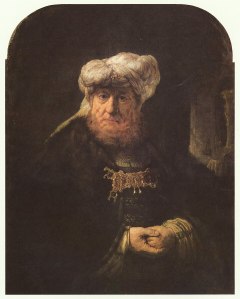
Jeremiah Lamenting the Destruction of Jerusalem by Rembrandt van Rijn 1630

I have intentionally worked my way through several books normally overlooked by Christian readers and leaders in our scriptures. The book of Lamentations for most of its history would qualify as an underutilized book within the scriptures we share with our Jewish Ancestors. Although there has been some recent scholarly interest in these five poems, for the average person of faith the name of the book is probably enough to scare the casual reader away. Yet, I do believe that we neglect the breadth of scripture to our own detriment. Over the thirteen years I’ve been writing on signoftherose I’ve gained a much greater appreciation for the wisdom of Hebrew poetry and the open and honest dialogue between God and God’s people that our scriptures capture.

Having worked through Psalms 1-110 and Song of Songs (or Song of Solomon) has given me a much greater appreciation of Hebrew poetry, and Lamentations is poetry. Lamentations is five poems, four of which are structured as acrostics[1] which move sequentially through the twenty-two letters of the Hebrew alphabet and the final poem’s twenty-two lines while not acrostic matches the twenty-two verse format of an acrostic. The acrostic form is often used to denote the completion of a thought, but due to the tragic event that evokes these poems it is also may be a tool to provide structure during a traumatic time.

Gwen Sayler and Ann Fritschel, my Hebrew Bible instructors twenty-five years ago at Wartburg Seminary used to joke that the answer to any question in the Hebrew Scriptures was likely to be the Babylonian exile. This event reshaped the Hebrew people when the Davidic king is sent into exile as well as the people. They mourn the loss of their land, the temple, and Jerusalem. Having worked through both Jeremiah and Ezekiel, which bracket Lamentations in the Christian arrangement of scriptures, has involved me dwelling in the writings of this period around 587 BCE. Lamentations current position after Jeremiah is due to the traditional attribution of these poems to Jeremiah.

The Hebrew name of this short book of poems is Eikha which comes from the first word of the first poem. Eikha is the elongated form of the word eikh which means “how?” How has this disaster happened to the people. This question would consume the two long prophetic books of Jeremiah and Ezekiel, the Deuteronomic historical retelling of the narrative of 1 & 2 Kings which climaxes at the exile at the end of the narrative, and several psalms most notably Psalm137. How has the relationship between God and God’s people come to this point where the central symbols of the people have collapsed: the Davidic monarchy, the city of Jerusalem (Zion), the land, and the temple built by Solomon. As the people find themselves as strangers in strange lands they have to rediscover what it means to be the people of the covenant.

Lamentations is a book with theological implications, but it is not attempting to be systematic. It is emotional, as it should be. Its voice is the voice of the wounded people of a lost city seeing through tear-filled eyes. It may be utilizing structure to help make sense of the chaotic, but it is a book shaped by grief and broken hearts. As John Goldingay states, “Lamentations is a “mandate to question.”” (Goldingay, 2022, p. 30) Theologically Lamentations assumes, like much of Hebrew literature, that the God of Israel is responsible for everything that occurs. Although Lamentations understands that the cause of the exile is the covenant unfaithfulness of Israel to their God, they protest and plead with God to change God’s mind and reverse the punishment they are receiving. Ultimately for the poet or poets of Lamentations their physical and emotional problems are a result of their relational problems with their God.

Resources Used For This Journey

Harvey Cox and Stephanie Paulsell, Lamentations and The Song of Songs. Belief Commentary on the Bible. Louisville: Westminster John Knox Publishing Company,2012.

The Belief Commentary series is a theological commentary written by theologians rather than biblical scholars. Harvey Cox did the Lamentations half of this commentary and uses Lamentations as a springboard into a wide range of theological topics. I read this commentary initially when I was working through Song of Songs.

John Goldingay, The Book of Lamentations. (New International Commentary on the Old Testament series). Grand Rapids: William B. Eerdman’s Publishing Company, 2022.

The NICOT series of commentaries have often been helpful textual commentaries, and when looking for a volume to assist with the language as well as the historical background these have often been helpful. John Goldingay is a scholar who has written extensively on Jeremiah and the literature associated with Jeremiah.

Kathleen M. O’Connor, “Book of Lamentations” in The New Interpreter’s Bible. Volume VI. Nashville, Abingdon Press, 1996.

The NIB is a solid all-around commentary on the entire bible and apocrypha. It is designed for pastors and those leading in congregations, so it does not normally engage the textual issues as deeply as the NICOT or Anchor Bible commentaries.

Ziegler, Yael, Lamentations: Faith in a Turbulent World. Maggid Studies in Tanakh. Jerusalem. Maggid Books, 2021.

When I can I attempt to utilize a Jewish scholar when reading the scriptures that we share. The Maggid Studies I have utilized in the past have been approachable but also provide a window into perspectives that most Christian scholars may not explore.


[1] Chapter three is acrostic but instead of one verse per letter there are three verses.

Review of Go Tell It On The Mountain by James Baldwin (1953)

Time Magazine Top 100 Novels

Book 35: Go Tell It On The Mountain by James Baldwin (1953)

This is a series of reflections reading through Time Magazine’s top 100 novels as selected by Lev Grossman and Richard Lacayo published since 1923 (when Time magazine was founded). For me this is an attempt to broaden my exposure to authors I may not encounter otherwise, especially as a person who was not a liberal arts major in college. Time’s list is alphabetical, so I decided to read through in a random order, and I plan to write a short reflection on each novel.

Go Tell It On The Mountain starts on the birthday of John Grimes who is the central character in this book of religion and hypocrisy, love desired and rarely returned, a family of secrets and hurt, and the first arousals of sexuality in a young man who realizes he is attracted to other men. Gabriel, his father but not his biological father, Elizabeth, John’s mother, and Florence, John’s aunt and Gabriel’s sister, all contribute to the tension in this household as well as the younger son Roy, biological son of Gabriel, and the unclaimed memory of Royal, an out of wedlock son of Gabriel who died before this moment in the story. The event of John’s birthday, which his mother belatedly remembers, is pushed into the background when his belligerent younger brother storms out of the house only to return wounded by a knife. Even though it is his birthday and he had taken his mother’s belated gift of a little money to the theater, his father lashes out at him, his mother, and his aunt in exasperation about Roy’s wild ways. John eventually escapes to the storefront church where his father is a deacon and the theme of sexuality emerges as he wrestles with Elisha, an older boy in the church, as they set up for evening services.

The remainder of the book occurs in flashbacks and visions during the evening church service where first his aunt Florence remembers her life and reluctantly surrenders to prayer. Then his father’s life is revealed in his wild teenage years, his marriage, his affair which produces Royal who he never claims and eventually dies a violent death, and his marriage to Elizabeth, John’s mother. Then Elizabeth has her own vision of her weak mother and the father who she loved. After her mother’s death who she was taken from by her father by her aunt because of the work her father does. She grows up in a loveless childhood but finds love in a young man named Richard. Before she can tell Richard about her pregnancy he commits suicide after a wrongful arrest by the police. Finally, is John’s dark night of the soul before his vision and acceptance of Christ.

The book does a good job of showing both the brokenness and the strength of faith. The Pentecostal tradition has a strong emphasis on holiness and yet the book is open about the hypocrisy and closely held secrets of the men who lead the church. It is a story of several intertwined people who never experienced the love they desired from the fathers, mothers, and siblings in their lives and who continue to hand on their broken lives to the next generation. The visions in part two do a good job of telling the backstory of the characters but even among the revelations of the visions the brokenness between the family members remains entrenched to the end. Even as there should be celebration over the salvation of John, his father Gabriel remains closed off from him. The shattered relationship between Gabriel and Florence over Gabriel’s wild past and his unforgiving nature is never resolved even though Florence feels she is near the end of her life, and she holds a letter with the secret of Gabriel’s out of wedlock child which she threatens to release to the congregation. Apparently, the story is semi-autobiographical, and I can appreciate the way the author works through his broken home and broken heart through the pages of the book.

Psalm 110 A Psalm of Enthronement

Stained Glass window at the Melkite Catholic Annunciation Cathedral in Roslindale, MA depicting Christ the King with the regalia of a Byzantine Emperor

Psalm 110

Of David. A Psalm.
1The LORD says to my lord, “Sit at my right hand until I make your enemies your footstool.”
2The LORD sends out from Zion your mighty scepter. Rule in the midst of your foes.
3Your people will offer themselves willingly on the day you lead your forces on the holy mountains. From the womb of the morning, like dew, your youth will come to you.
4The LORD has sworn and will not change his mind, “You are a priest forever according to the order of Melchizedek.”
5The LORD is at your right hand; he will shatter kings on the day of his wrath.
6He will execute judgment among the nations, filling them with corpses; he will shatter heads over the wide earth.
7He will drink from the stream by the path; therefore he will lift up his head.

Psalm 110 is repeatedly referenced in the New Testament[1] as a way of demonstrating that Jesus is the Messiah and that as the Messiah, he is more important even than David. Yet this psalm so important to early Christians is heard differently by Jewish readers. Within these reflections I’ve tried to hold both Christian and Jewish voices in conversation, and I think that both can help us gain a fuller picture of the scriptures that we share. This enthronement psalm shares similar themes to Psalm 2. Both psalms view this newly anointed lord as the chosen vessel of the LORD the God of Israel. The king may be seated at the right hand[2]

As an enthronement psalm for a Davidic king, these words would likely come from a court prophet or singer to be spoken as God’s words over the new king. The prophet or singer refers to the new king as ‘my lord’ because they serve that king. The capitalization of the letters in the other occurrences of LORD in this psalm indicate that it refers to the divine name, YHWH, and the vowels are pointed around the letters to indicate to the speaker to say ‘Lord’ (or Adonai in Hebrew) instead of the divine name. YHWH speaks through the prophet to the new king and invites the king into this position of honor and promises to fight on the new king’s behalf. Verse three is full of textual difficulties, as Nancy deClaissé- Walford states, the

words appear to be an elevated description of the newly enthroned monarch, obeyed willingly by the people and endowed with strength and stamina—the dew of your childhood—which emanate from the splendor of holiness.” (Nancy deClaisse-Walford, 2014, p. 836)

Although there were both royal and priestly roles in the world of the Davidic kings, the kings of Israel did have priestly functions. Now the king is linked to the ancient figure of Melchizedek who comes from Salem, and who is also a king, and blesses Abraham by God Most High. This King of Salem becomes the priestly model for the King of Jerusalem, likely built on the same spot generations later. This installation of the new king in both a royal and priestly role integrates this new leader into their privileged place in God’s ordering of the world. (Mays, 1994, p. 352)

The ancient world was a violent place, and the Davidic kings were expected to lead the nation to both safety and military victory. Yet, Israel was never to be a military power,[3] and their strength resided in the God who executes judgment among the nations. The language of ‘filling the nations with corpses’ and ‘shattering heads over the wide earth’ continues the elevated description of the power behind the new monarch and the power behind the throne that ultimately controls the fate of the nations. The LORD, the God of Israel, will provide the stream beyond the path of the new king allowing this king to lift up his head in honor and strength.

Christian readers will hear this psalm through the lens of Christ, and ‘sitting at the right hand of the Father’ becomes a way that the church will talk about the honored and powerful position of Jesus for the church and the world. Jesus takes on the role of king for Christians and this led to the persecution of many early followers of Jesus who refused to pay honor to the divinity of Caesar. The book of Hebrews also highlights the way Jesus fulfils the role of the priesthood for Christians.[4] In liturgical churches the final Sunday of the church year is Christ the King Sunday which celebrates the way Jesus is enthroned at the right hand of God, but instead of being a conquering king he was a crucified messiah. Revelation 19: 11-16 is the closest the New Testament gets to the militaristic language of verse five and six of this psalm. The quotation of this psalm by Jesus in his conflicts with the Pharisees in Matthew 22:44 and parallels probably was not viewed as a convincing argument by his opponents and most Jewish leaders, if they utilize this psalm today, would be waiting for a return of a Davidic ruler who can rule from the power of the LORD the God of Israel and bring the nation back to a place of security. As large of a role as this psalm plays in the New Testament, I don’t believe that it plays a similar role in the thought of contemporary Judaism.


[1] Matthew 22:44; Mark 14:62; 16:19; Luke 22:69; Acts 2:34-35; 7:55; Romans 8:34; Ephesians1:20; Colossians 3:1; Hebrews 1:3,13; 8:1; 10:12; 1 Peter 3:22

[2] Being seated at the right hand is a position of honor and power. It is interesting that in Psalm 109 the psalmists asks for an accuser to take this position for the wicked person. The name Benjamin comes from a conjunction of the Hebrew word for son (bin) and right hand (yamin).  

[3] Deuteronomy 17: 14-20 which sets the limits on a king for Israel indicates that the focus is not to be on building a stronger military but instead on a ruler being faithful to the LORD and the covenant.

[4] Particularly Hebrews chapters 5 and 7.

Psalm 109 A Prayer For God’s Vengeance

From Susan Harris Anger and art// A Rage to Paint https://www.susanharrisart.com/blog

Psalm 109

To the leader. Of David. A Psalm.
1Do not be silent, O God of my praise.
2For wicked and deceitful mouths are opened against me, speaking against me with lying tongues.
3They beset me with words of hate, and attack me without cause.
4In return for my love they accuse me, even while I make prayer for them.
5So they reward me evil for good, and hatred for my love.
6They say, “Appoint a wicked man against him; let an accuser stand on his right.
7When he is tried, let him be found guilty; let his prayer be counted as sin.
8May his days be few; may another seize his position.
9May his children be orphans, and his wife a widow.
10May his children wander about and beg; may they be driven out of the ruins they inhabit.
11May the creditor seize all that he has; may strangers plunder the fruits of his toil.
12May there be no one to do him a kindness, nor anyone to pity his orphaned children.
13May his posterity be cut off; may his name be blotted out in the second generation.
14May the iniquity of his father be remembered before the LORD, and do not let the sin of his mother be blotted out.
15Let them be before the LORD continually, and may his memory be cut off from the earth.
16For he did not remember to show kindness, but pursued the poor and needy and the brokenhearted to their death.
17He loved to curse; let curses come on him. He did not like blessing; may it be far from him.
18He clothed himself with cursing as his coat, may it soak into his body like water, like oil into his bones.
19May it be like a garment that he wraps around himself, like a belt that he wears every day.”
20May that be the reward of my accusers from the LORD, of those who speak evil against my life.
21But you, O LORD my LORD, act on my behalf for your name’s sake; because your steadfast love is good, deliver me.
22For I am poor and needy, and my heart is pierced within me.
23I am gone like a shadow at evening; I am shaken off like a locust.
24My knees are weak through fasting; my body has become gaunt.
25I am an object of scorn to my accusers; when they see me, they shake their heads.
26Help me, O LORD my God! Save me according to your steadfast love.
27Let them know that this is your hand; you, O LORD, have done it.
28Let them curse, but you will bless. Let my assailants be put to shame; may your servant be glad.
29May my accusers be clothed with dishonor; may they be wrapped in their own shame as in a mantle.
30With my mouth I will give great thanks to the LORD; I will praise him in the midst of the throng.
31For he stands at the right hand of the needy, to save them from those who would condemn them to death.

This process of reflecting on scripture, particularly the parts of scripture that the church rarely utilizes, has opened my eyes to a far more dynamic and honest relationship between God and God’s people. Sometimes that dynamic and honest relationship is uncomfortable for people who grew up, like me, in churches where prayer was always a calm and measured practice. Psalm 109 rarely will find its way into a church bulletin or a sermon, but this psalm of imprecation that prays for harm to come to a wicked person provides a fertile place for discussion of the relationship between ourselves, others who have wronged us, and God. Anger and the desire for vengeance are powerful emotions, and too often we as people of faith have refused to give voice to these human feelings. Yet, these feelings will find their way into our lives and into the culture around us.

In a situation where the relationships that shape our society are shattered the faithful ones cry out to God. They name the brokenness that they encounter. They name those who have wronged them. But the brokenness of the world and the person who has brought about the suffering are placed into God’s hands. The person lifting up this cry to God has no ability to determine what God will do with the prayer and the ‘wicked one.’ Here, instead of suppressing the reality of suffering and pain or taking vengeance into their own hands, the faithful one cries out in desperation to God to act on their behalf.

Ellen Davis’s chapter on the cursing psalms in Getting Involved with God: Rediscovering the Old Testament (Davis, 2001, pp. 23-29) has shaped a lot of my thinking about the imprecatory (or cursing) psalms in general and this psalm in particular. The language of the bible shapes should shape our practices of faith, and the psalms and the prophets can give us language to articulate our honest feelings in our conversations with God. These may not be the more attractive offerings of thanksgiving or praise, but these words and feelings we also commit to God’s steadfast love. Ellen Davis shared the advice she received from a professor to take the imprecatory psalms into the chapel at a time when it was unoccupied and pray them at full voice. The experience helped her to move beyond her hurt and begin the needed journey to forgiveness. She remarks afterwards,

For the cursing psalms confront us with one of our most persistent idolatries, to which neither Israel nor the church has ever been immune: the belief that God has as little use for our enemies as we do, the desire to reduce God to an extension of our own embattled and wounded egos. (Davis, 2001, p. 26)

God cares for both the faithful and the wicked. Yet, that does not mean that the crimes of the wicked are not noticed by God. Psalm 109 anticipates a God who both hears this petition and acts upon it. The wicked and deceitful seem to have no problem using their words to shatter or their lies to cause harm to both the individual and the community. There are times when the innocent are surrounded by words of hate or attacked without justification. There are situations where love is repaid with hate and good with evil. As I was working through this psalm, I was reading Elie Wiesel’s Night where he shares his experience of being a young Jewish boy whose hope and faith were broken in Auschwitz in 1944 and Suzanne Collins, Sunrise on the Reaping which continues the fictional Hunger Games series where children are put into a fatal game for the entertainment of the powerful. Both the historical and the fictional may be extreme examples of a world where wickedness has triumphed over kindness, but the origin story of the people of Israel is the story of a God who rescued them from oppression and slavery. It is a story of a God who heard their cries and acted for their rescue from that a world without steadfast love.

One of the keys to hearing this psalm occurs in verse six. Most English translations being the verse with “They say” which places the most extreme portions of the psalm in the mouths of the adversary. Yet, there is no textual support in Hebrew for the words “they say.” (Bellinger, 2014, p. 473) Even if these words are put into the mouth of the adversary, the psalmist still wishes for these words that the adversary pulls around themselves like a cloak may become the garment they wear every day and soak into their body like water or oil all the way to the bones. Whether you read these words as being spoken by or toward the adversary, this brokenhearted prayer ascends to God bearing the hurt and brokenness of the psalmist’s world asking for God to intervene on the psalmist’s behalf and answer the psalmist’s pain.

The Hebrew word hesed, often translated steadfast love when coming from God or kindness (as in verse 12 and 16) when coming from other people, is a key idea throughout the Old Testament. Hesed is tied to the covenant between God and God’s people, as well as the covenant between the people of God. Central to the accusation of this individual is their failure to show hesed.

For he did not remember to show kindness (hesed), but pursued the poor and needy and the brokenhearted to their death. Verse 16.

Hesed is the glue that holds the Hebrew society together. It is both the proper relationship between God and God’s people but also the proper relationship among the people. When hesed is not present, the poor, needy, and brokenhearted die. The implications of a person living in disregard for the standards of society may be fatal. This could apply to a nobleman in Jerusalem who takes advantage of the vulnerable or a businessperson or politician who uses their influence in a way that impacts the physical and emotional health of others. The bible’s way of thinking assumes a common obligation between humanity and creation to care for one another. I once heard Rolf Jacobson remark that the Ten Commandments and the law in general were about, “my neighbor’s best life.”

The words directed at the wicked adversary are sharp. That a wicked person would be appointed against him, someone to accuse him on his right hand, when he is tried to be found guilty (Hebrew wicked), and that his prayers would be sin (either missing the mark or something refused by God). That his life would be short and another would claim his position, that even his wife and children would bear the repercussions of his fall. The adversary created a world without hesed (kindness) for the psalmist and now may the world fail to show him hesed. That the sins of his ancestors would be remembered and yet his memory fade. In Hebrew I don’t think there could be a stronger curse than to encounter a world devoid of hesed.

 One verse of this psalm has entered the political dynamics of the United States. I first encountered a bumper sticker with Psalm 109:8, “May his days be few, may another seize his position” referring to Barak Obama. The psalm is used to appear to be prayerful and cursing at the same time. Psalm 109:8 may have been utilized before Barak Obama, but I have seen it used to piously point to Donald Trump and Joe Biden since. It is unlikely that most people who have worn this psalm proudly on a shirt, button, or on their car read the entirety of the psalm, but unfortunately in the polarized and angry political climate the vengeful desires against not only those in power but their entire family would probably be embraced by many. Verse eight is also the only verse of this psalm that appears in the New Testament, in Acts 1:20, when Peter makes the case for replacing Judas. Yet, the use in the New Testament bears no desire for vengeance on Judas, merely understands the psalm as authorizing the search for a new disciple to fill the twelfth position after Judas’s death.

How do we use this rarely utilized psalm. My first reflection comes from Dietrich Bonhoeffer in his The Prayerbook of the Bible:

So the psalm of vengeance leads to the cross of Jesus and to the love of God that forgives enemies. I cannot forgive the enemies of God by myself, only the crucified Christ can; and I can forgive through him. So the carrying out of vengeance becomes grace for all in Jesus Christ. (DBWE 5:175)

Bonhoeffer takes the traditional Lutheran law-gospel hermeneutic where the psalm of vengeance (as law) pushes us to the love of God in Christ (gospel). As Ellen Davis mentioned earlier our inability to see anything redeemable in our enemies does not preclude God from acting in mercy and grace towards them. But Ellen Davis also has a wise if uncomfortable way of utilizing these psalms of cursing:

If you have the courage (and it will take some), try turning the psalm a full 180 degrees, until it is directed at yourself, and ask: Is there anyone in the community of God’s people who might want to say this to God about me—or maybe, about us? (Davis, 2001, p. 28)

We may not feel oppressed. We may not have anything we need to forgive in another, but perhaps there is someone who we have wronged. Whose futures have we, intentionally or unintentionally, harmed? Whose wives and children have learned to curse our names as individuals or as a group? Whose reputations have we destroyed? In her own way she encourages this use of the psalm as law which highlights the places where we also have not shown hesed.

Yet even a psalm of cursing ends with thanks to the God who defends the needy and saves from those who would condemn. Ultimately hesed, so important to this psalm and the Old Testament in general, is one of the defining characteristics of God. God is both the model of what hesed looks like, but also the one who intervenes when hesed is not found. This psalm has demonstrated all the differences between the world of oppression the psalmist lives in and the world God intends for God’s people. It resonates with the Lord’s prayer which calls out to God for God’s kingdom to come and God’s will to be done on earth as it is in heaven.

Psalm 108 Old Words Brought Together For A New Time

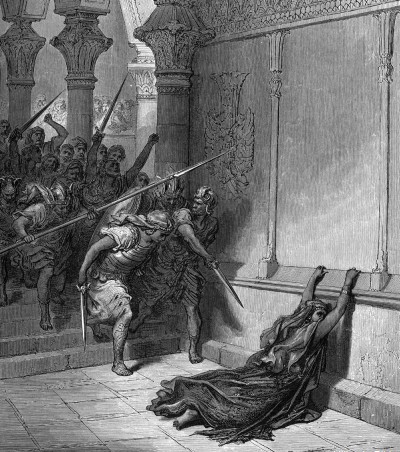
Nehemiah View the Ruins of jerusalem’s Walls, Gustav Dore 1866

Psalm 108

A Song. A Psalm of David.
 1My heart is steadfast, O God, my heart is steadfast; I will sing and make melody. Awake, my soul!
 2Awake, O harp and lyre! I will awake the dawn.
 3I will give thanks to you, O LORD, among the peoples, and I will sing praises to you among the nations.
 4For your steadfast love is higher than the heavens, and your faithfulness reaches to the clouds.
 5Be exalted, O God, above the heavens, and let your glory be over all the earth.
 6Give victory with your right hand, and answer me, so that those whom you love may be rescued.
 7God has promised in his sanctuary: “With exultation I will divide up Shechem, and portion out the Vale of Succoth.
 8Gilead is mine; Manasseh is mine; Ephraim is my helmet; Judah is my scepter.
 9Moab is my washbasin; on Edom I hurl my shoe; over Philistia I shout in triumph.”
 10Who will bring me to the fortified city? Who will lead me to Edom?
 11Have you not rejected us, O God? You do not go out, O God, with our armies.
 12O grant us help against the foe, for human help is worthless.
 13With God we shall do valiantly; it is he who will tread down our foes.

Psalm 108 brings together portions of two psalms attributed to David for a new time. Most interpreters believe that Psalm 57: 7-11 and Psalm 60: 5-12 were written before they were later joined together in the current psalm. This is a common practice in scripture where a key idea or phrase is utilized in multiple contexts[1] but here the entirety of the psalm is a composition of two previous psalms. Psalm 57: 7-11 forms the initial five verses while Psalm 60: 5-12 forms the final eight verses. Based on the position of Psalm 108 in book five of the Psalter the new situation may involve the return of the people to their home after the exile, but even without knowing a concrete situation for the invocation of these words from earlier psalms it points to the long-standing resonance and vitality of these words in the life of the people.

The heart (the organ of will in Hebrew) is steadfast and the proper response to the steadfast love of God is for the entirety of one’s being to respond in praise and song. The steadfast love (hesed) and the faithfulness of God are beyond measure and the psalmist’s gift of song echoes the chorus of a grateful creation to its creator. The joyous ending of Psalm 57 introduces the petition of verse six which initiates the quotation of Psalm 60.

The psalms are spoken from the embodied experience of the covenant people, and that experience involves times where God’s promise and presence feel distant. The beloved ones of God have always understood their continued existence was contingent on God’s continual provision. As in a previous time the people do not need a stronger army or a better military technology, they need the God who reigns over both Israel and the surrounding nations, to come to their aid. As J. Clinton McCann Jr. can articulate.

Their prayer is not that of the powerful, who seek to claim God’s sanction of the status quo. Rather, their prayer is the desperate prayer of those who turn to God as the only possible hope in an apparently hopeless situation (v. 11) (NIB IV:918)

If these words reemerge in the fragile situation of the post-exilic return to Jerusalem where the people are threatened by hostile neighbors, the reminder that Moab, Edom, and Philistia are all under God’s claim[2] is a source of comfort. Yet, the people who claim the title of ‘those whom you love’ now feel the abandonment of God. God no longer goes out with the people or defends them, but they cry out to God for God’s renewed favor.

The psalms understand the dependence of the people upon God’s continual provision but also speak eloquently about the perception of God’s absence. This psalm utilizes two previously utilized psalms to speak of the trust in God’s steadfast love and faithfulness in a time where they feel endangered by God’s absence. Yet, the perception of God’s distance causes the beloved ones of God to cry out to God for deliverance from their current distress. For they can do nothing on their own, but with God they shall do valiantly.


[1] For example, 1 Chronicles 16 brings together Psalm 105: 1-11 and Psalm 106: 35-36, of Isaiah 2: 2-4 is repeated in Micah 4: 2-3. There are numerous other examples of parallels.

[2] The designation of Moab as washbasin, Edom as a place where shoes are hurled, and Philistia as one that the LORD shouts in triumph over may be intended as an insult to these nations, but it also may simply be a way of designating that they too remain under God’s control. Moab, Edom, and Philistia all incur words of judgment in the prophets (Ezekiel 25, Jeremiah 4748, Obadiah 12-13).  

Psalm 107 The God of Steadfast Love Who Rescues

Rembrandt, Christ in the Storm (1633)

Psalm 107

 1O give thanks to the LORD, for he is good; for his steadfast love endures forever.
 2Let the redeemed of the LORD say so, those he redeemed from trouble
 3and gathered in from the lands, from the east and from the west, from the north and from the south.
 4Some wandered in desert wastes, finding no way to an inhabited town;
 5hungry and thirsty, their soul fainted within them.
 6Then they cried to the LORD in their trouble, and he delivered them from their distress;
 7he led them by a straight way, until they reached an inhabited town.
 8Let them thank the LORD for his steadfast love, for his wonderful works to humankind.
 9For he satisfies the thirsty, and the hungry he fills with good things.
 10Some sat in darkness and in gloom, prisoners in misery and in irons,
 11for they had rebelled against the words of God, and spurned the counsel of the Most High.
 12Their hearts were bowed down with hard labor; they fell down, with no one to help.
 13Then they cried to the LORD in their trouble, and he saved them from their distress;
 14he brought them out of darkness and gloom, and broke their bonds asunder.
 15Let them thank the LORD for his steadfast love, for his wonderful works to humankind.
 16For he shatters the doors of bronze, and cuts in two the bars of iron.
 17Some were sick through their sinful ways, and because of their iniquities endured affliction;
 18they loathed any kind of food, and they drew near to the gates of death.
 19Then they cried to the LORD in their trouble, and he saved them from their distress;
 20he sent out his word and healed them, and delivered them from destruction.
 21Let them thank the LORD for his steadfast love, for his wonderful works to humankind.
 22And let them offer thanksgiving sacrifices, and tell of his deeds with songs of joy.
 23Some went down to the sea in ships, doing business on the mighty waters;
 24they saw the deeds of the LORD, his wondrous works in the deep.
 25For he commanded and raised the stormy wind, which lifted up the waves of the sea.
 26They mounted up to heaven, they went down to the depths; their courage melted away in their calamity;
 27they reeled and staggered like drunkards, and were at their wits’ end.
 28Then they cried to the LORD in their trouble, and he brought them out from their distress;
 29he made the storm be still, and the waves of the sea were hushed.
 30Then they were glad because they had quiet, and he brought them to their desired haven.
 31Let them thank the LORD for his steadfast love, for his wonderful works to humankind.
 32Let them extol him in the congregation of the people, and praise him in the assembly of the elders.
 33He turns rivers into a desert, springs of water into thirsty ground,
 34a fruitful land into a salty waste, because of the wickedness of its inhabitants.
 35He turns a desert into pools of water, a parched land into springs of water.
 36And there he lets the hungry live, and they establish a town to live in;
 37they sow fields, and plant vineyards, and get a fruitful yield.
 38By his blessing they multiply greatly, and he does not let their cattle decrease.
 39When they are diminished and brought low through oppression, trouble, and sorrow,
 40he pours contempt on princes and makes them wander in trackless wastes;
 41but he raises up the needy out of distress, and makes their families like flocks.
 42The upright see it and are glad; and all wickedness stops its mouth.
 43Let those who are wise give heed to these things, and consider the steadfast love of the LORD.

This psalm of thanksgiving divides into four representative manners by which the faithful have been saved by their God: hunger and thirst, imprisonment and oppression, sickness and nearing death, and bombarded by wind and waves upon the sea. These four life threatening events are matched to the four cardinal directions of the compass in most English translations.[1] The LORD, the God of Israel, is the one who rescues from the wilderness of the desert and the dangers of the sea, from the bondage and oppression as well as sickness because of sinful ways. God responds to the cries of a lost and scattered people and provides them food and drink, recovery and rescue.

Like many psalms, this psalm focuses on the steadfast love (hesed) of God. God’s unending steadfast love is the reason for the song, but the steadfast love is recognized through the redemption that has been received. The desert wastes were a theme of both the people’s original journey from Egypt to the promised land, and an exilic theme as God promises the people a new exodus leading them from exile to their home. The land of Israel is bordered by the Syrian and Arabian deserts to the east as well as the Saharan desert to the south. Although there are fertile places in the Middle East, and much of Israel is a productive land, any extended travel over land involves traversing the desert. Within the desert waste it is very easy to become lost, and both food and water are precious commodities away from one’s home. Yet in the song they cry to the LORD and there is an immediate (in the progression of the text) reply to the cry of distress. The LORD hears the hungry and thirsty and satisfies them with good things. The LORD hears the lost and leads them on a straight path to a town where they can receive shelter and nourishment. Although hunger and thirst play a significant role in the narrative of the exodus and the words of the prophets pointing to a return to the promised land it is only mentioned here in the psalms, with the exception for hungering and thirsting for God (Psalm 42,43). (Mays, 1994, p. 345)

The second tribulation that the people cry out from is imprisonment and oppression. This also echoes the original situation of the people at the beginning of the exodus as well as the exile, yet the only other psalm that mentions imprisonment is Psalm 142. Here the imprisonment is because they rebelled and spurned the words of God and likely reflects the experience of the community in exile rather than one individual imprisoned, yet even this experience of imprisonment and oppression the people call, and God responds. No bronze doors or iron bars can prevent the LORD from rescuing the people of God when they cry out for deliverance.

The sickness experienced, like the imprisonment in the previous section, is a result of sin and iniquity. The Hebrew term translated sickness (‘awal) means ‘foolish ones.’ (Nancy deClaisse-Walford, 2014, p. 818) The petitioner is suffering as a result of their own actions, and they are at the point where they can no longer eat and stand at the gate of death. Yet even the gate of death is not too far for the LORD to hear their call and respond in steadfast love. Sickness and imprisonment, hunger and thirst, being lost in the desert and even lost at sea the people of God remainonly a cry away from the experience of the steadfast love of God.

Finally, the faithful are rescued from calamity on the sea. Seafaring was not a large part of Hebrew culture and the only other psalm speaking about the sea is Jonah’s prayer in Jonah 2. Yet, like the wanderers lost in the desert these seafarers are lost in the wind and waves of the sea. Once again, the mighty wonders of the LORD on the sea may terrify, but the LORD’s mighty deliverance is reason for praise. Sailors are reduced to reeling like drunkards until the LORD delivers them from the wind and waves which threaten their ship and their lives. The action of Jesus to still the wind and the waves with a word[2] echoes the obedience of the waves and wind to the LORD in verse twenty-nine. The LORD brings those lost at sea back to a haven.

Martin Luther captures the essence of this psalm which responds to all the LORD has done when he states, “For all of this I owe it to God to thank and praise, serve and obey him.” (Luther, 1978, p. 25) Later hymnwriters would try to lift up their thanks in songs like William Whitings “Eternal Father, Strong to Save” and Martin Rinkhart’s “Now Thank We All Our God.” For God has led God’s people through desert and sea, sickness and suffering. Yet, God can also turn the fertile places to infertile. The princes who wield power are humbled before the power of the LORD, but the humble crying out for deliverance are saved. The God of the psalms is the God who created and sustains the heavens and the earth. This God can turn the current reality in creation upside down: deserts can become fertile, while rivers can run dry, storms can be stilled, and even the chaotic sea tamed. The Weak can turn to their God of steadfast love for deliverance but the proud and foolish princes may find their way frustrated by the same God. Wisdom to the psalmist is considering the steadfast love of God which does amazing things for the faithful ones who cry out for deliverance.


[1] No Hebrew Manuscript has ‘south’ in verse three. Instead in Hebrew the word is sea, and several other translations also have sea (including the Septuagint and the Vulgate). 

[2] Matthew 8: 23-27, Mark 4: 35-41, Luke 8: 22-25.

Review of The Bear and the Nightingale by Katherine Arden

Five Star Book Review

Katherine Arden, The Bear and the Nightingale

For me a five-star book is something that either I want to read again or something that is so profound it makes an immediate impact. There are lots of ways that books can be compelling: a unique idea, an interesting set of characters, a complex plot, an artistic use of the English language and more. Reading is also a subjective experience, so what appeals to me as a reader may be very different for you. I read a lot for both pleasure and work, but these short reviews are a way for me to show my appreciation for the work and the craft of the author of the reviewed work.

The Bear and the Nightingale feels like a story told around an oven in a home snowed in for the winter, a story of magical creatures and grown ups who cannot see the magic of the world any longer. Vasya, the main protagonist, is both mischievous and kind and has a strong enough will to resist the machinations of her stepmother and father. There are many of the classic elements you find in fairy tales, for example a wicked stepmother, but I enjoyed the interweaving of distinctive Russian elements to the story: from the Russian orthodox painting of an iconostasis by Father Kostantin to the domovoy, rusalka, leshy, and other elements of eastern European folk stories. Although Morozko and his brother Medved, who the conflict of the story rotates around, have the classic good verses evil polarity, Morozko is not simply good and Medved is more animalistic hunger than evil. It is a story of family, of faith both in the sense of religion and in the sense of magic, and for the main character it is the beginning of a coming-of-age story for a woman who will determine her own course in a world where women do not write their own stories.

I read the entire Winternight trilogy several years ago, and I was deeply impressed with Katherine Arden’s debut novels. Returning to this novel was like returning to a home I never knew. The characters are great, but I think it was the way she narrated the atmosphere of the story that invited me in to dwell in this magical world for a time. This is a work of historical fantasy, so the magical events are caught up in the history of the Russian people and I really appreciated the way she allowed me to live a snapshot of an imaginary life in a magic infused slice of this world defined by winter. I look forward to continuing through the remainder of this series with Vasya, Morozko, and the rest.

Psalm 106 Confessing the Unfaithfulness of the People of God

Grigory Mekheev, Exodus (2000) artist shared work under Creative Commons Attribution-Share Alike 3.0

Psalm 106

1Praise the LORD! O give thanks to the LORD, for he is good; for his steadfast love endures forever.
 2Who can utter the mighty doings of the LORD, or declare all his praise?
 3Happy are those who observe justice, who do righteousness at all times.
 4Remember me, O LORD, when you show favor to your people; help me when you deliver them;
 5that I may see the prosperity of your chosen ones, that I may rejoice in the gladness of your nation, that I may glory in your heritage.
 6Both we and our ancestors have sinned; we have committed iniquity, have done wickedly.
 7Our ancestors, when they were in Egypt, did not consider your wonderful works; they did not remember the abundance of your steadfast love, but rebelled against the Most High at the Red Sea.
 8Yet he saved them for his name’s sake, so that he might make known his mighty power.
 9He rebuked the Red Sea, and it became dry; he led them through the deep as through a desert.
 10So he saved them from the hand of the foe, and delivered them from the hand of the enemy.
 11The waters covered their adversaries; not one of them was left.
 12Then they believed his words; they sang his praise.
 13But they soon forgot his works; they did not wait for his counsel.
 14But they had a wanton craving in the wilderness, and put God to the test in the desert;
 15he gave them what they asked, but sent a wasting disease among them.
 16They were jealous of Moses in the camp, and of Aaron, the holy one of the LORD.
 17The earth opened and swallowed up Dathan, and covered the faction of Abiram.
 18Fire also broke out in their company; the flame burned up the wicked.
 19They made a calf at Horeb and worshiped a cast image.
 20They exchanged the glory of God for the image of an ox that eats grass.
 21They forgot God, their Savior, who had done great things in Egypt,
 22wondrous works in the land of Ham, and awesome deeds by the Red Sea.
 23Therefore he said he would destroy them — had not Moses, his chosen one, stood in the breach before him, to turn away his wrath from destroying them.
 24Then they despised the pleasant land, having no faith in his promise.
 25They grumbled in their tents, and did not obey the voice of the LORD.

 26Therefore he raised his hand and swore to them that he would make them fall in the wilderness,
 27and would disperse their descendants among the nations, scattering them over the lands.
 28Then they attached themselves to the Baal of Peor, and ate sacrifices offered to the dead;
 29they provoked the LORD to anger with their deeds, and a plague broke out among them.
 30Then Phinehas stood up and interceded, and the plague was stopped.
 31And that has been reckoned to him as righteousness from generation to generation forever.
 32They angered the LORD at the waters of Meribah, and it went ill with Moses on their account;
 33for they made his spirit bitter, and he spoke words that were rash.
 34They did not destroy the peoples, as the LORD commanded them,
 35but they mingled with the nations and learned to do as they did.
 36They served their idols, which became a snare to them.
 37They sacrificed their sons and their daughters to the demons;
 38they poured out innocent blood, the blood of their sons and daughters, whom they sacrificed to the idols of Canaan; and the land was polluted with blood.
 39Thus they became unclean by their acts, and prostituted themselves in their doings.
 40Then the anger of the LORD was kindled against his people, and he abhorred his heritage;
 41he gave them into the hand of the nations, so that those who hated them ruled over them.
 42Their enemies oppressed them, and they were brought into subjection under their power.
 43Many times he delivered them, but they were rebellious in their purposes, and were brought low through their iniquity.
 44Nevertheless he regarded their distress when he heard their cry.
 45For their sake he remembered his covenant, and showed compassion according to the abundance of his steadfast love.
 46He caused them to be pitied by all who held them captive.
 47Save us, O LORD our God, and gather us from among the nations, that we may give thanks to your holy name and glory in your praise.
 48Blessed be the LORD, the God of Israel, from everlasting to everlasting. And let all the people say, “Amen.” Praise the LORD!

Psalms 105 and 106 form two complementary but very different lenses to examine the history of God and God’s people. Like the yin and yang in Chinese philosophy represents two opposite but connected forces, these two psalms are connected by an understanding of God’s steadfast love operating throughout the story of Israel, but where Psalm 105 is a psalm which accentuates the positive aspect of the relationship Psalm 106 eliminates the positive aspects of the relationship from the side of Israel. (Nancy deClaisse-Walford, 2014, p. 796) God has remained faithful despite Israel’s history of unfaithfulness. Psalm 106 reminds us that any telling of the story of God’s people is a story of a people who are disobedient and unworthy of the steadfast love they have received, and the psalmist cries out to God not because they are worthy but because the LORD is a God nature is to be a God who is merciful and gracious, slow to anger, and abounding in steadfast love and faithfulness. (Exodus 34:6)

The confession of Psalm 106 emphasizes the unworthiness of God’s people of receiving the gracious actions of God on their behalf. It echoes the sentiment of Isaiah standing before God stating, “Woe is me! I am lost, for I am a man of unclean lips, and I live among a people of unclean lips; yet my eyes have seen the King, the LORD of hosts.” (Isaiah 6:5) For the psalmist, the LORD is good, and God’s steadfast love endures forever but in contrast none of the people of God can utter the mighty works of God without the realization that they are a people of unclean lips and actions. Yet, this psalmist joins himself to the people in need of rescue and God’s unmerited provision and protection. Happy/blessed[1] are those who observe justice is “an ironic beatitude”[2] (Nancy deClaisse-Walford, 2014, p. 801) since the remainder of the psalm will demonstrate how the people have failed to observe justice and maintain righteousness throughout their journey with God. The psalmist longs to enjoy the prosperity of God’s chosen ones, the gladness of the people of God, and the glory of God’s heritage but they also know that they and their ancestors have fallen short of their calling as the people of God. Instead of living in justice they have lived in iniquity, instead of righteousness they have produced wickedness. The psalmist’s words of confession place them before God needing forgiveness and redemption. Unworthy of grace but longing for it. This is an act of remembering what has been forgotten that they may learn from the mistakes of their ancestors and live into their calling under the covenant.

Even in Egypt, surrounded by the fearful power of God’s signs and wonders to bring this enslaved people out of their bondage to Pharoah, the people take God’s actions on their behalf for granted. Once they arrive at the Red Sea, they fail to trust in the God who delivered them from Egypt and again God acts for their deliverance, but early in this telling God is acting for the sake of God’s name. These mighty acts in Egypt and at the Red Sea bring a momentary faithfulness and trust in the LORD, but quickly the people resort to grumbling against both God and God’s emissaries. The psalm narrates in quick succession the rebellions of Israel articulated in Numbers 11-17 and the creation of the Golden Calf in Exodus 32. All of Israel’s rebellions are tied to their forgetfulness of the mighty works God had done on their behalf to bring them out of Egypt and to sustain them in the wilderness. Moses stands in the breach for the people and intercedes with God on their behalf, calling God back to God’s self-articulated identity in Exodus 34:6-7 and God continues to bring them to the promised land.

On arriving in the promised land, the people continue to forget what their God has done to bring them out of Egypt and through the wilderness and ‘they despised the pleasant land’ which leads to the generation falling in the wilderness prior to the entry into the promised land. They intermarry with women of Moab and begin to adopt the practices of the Moabites, including the worship of Baal of Peor (Numbers 25) when Aaron’s son Phineas zealously fights against the idolatrous actions of the people and turns aside God’s wrath. Even Moses is made bitter and claims to bring forth the waters at Meribah instead of continuing to point to God’s action of provision (Numbers 20).

Even when the people occupy the promised land under Joshua, they fail to carry out the LORD’s instructions for their claiming of the land. They do not drive the people out and they eventually intermarry with the residents of the land and adopt their practices. This brief retelling of the people’s history of unfaithfulness only alludes to the cyclical nature of disobedience and rescue articulated in Judges when it indicates that ‘Many times he delivered them.’ Throughout this narrative poem the people’s unrighteousness has been contrasted with God’s continuing actions of faithfulness to come to the people’s deliverance in their time of disaster and need.

The final verses of the poem indicate a time where they are in exile among the nations, and yet even in this exile away from the land God has caused them to be pitied by their captors. They long for a time when God acts to gather them from among the nations and bring them home, not because they have earned God’s favor but due to God’s gracious and forgiving nature. The final verse closes both this psalm and book four of the psalter. Psalms 105 and 106 belong together as two narrations of the history of God and God’s people and it is worth noting that while the psalm in 1 Chronicles 16 appointed by David begins with Psalm 105: 1-11 it ends with Psalm 106:35-36. These two narratives which close book four demonstrate that praise and the confession are two halves of the songs and stories of the people of God. God is a gracious God of steadfast love and faithfulness and yet the people and their ancestors have sinned and fallen short of their calling as the people of God.  

The scriptures that both Christians and our Jewish ancestors have inherited are a deeply varied collection of works that attempt to make sense of the encounter between the people of God, the world around them, and the God who has called them. The reality that our scriptures include a narration of Israel’s story that does not attempt to hide their history of unfaithfulness is exceptional because many ancient histories[3] attempt to hide the stories that paints a nation in an unflattering light. Confession is a part of the life of the people of Go and I believe that in a world that attempts to conceal or deny any foolishness, wickedness, or unfaithfulness it is essential for people of faith to begin with the reality that we have fallen short of God’s vision for our lives. We have failed to fear, love, and trust God above all things and that has led us not to love our neighbors as ourselves. Yet, the God of the scriptures is a God who is merciful and gracious who often responds not as we deserve but out of the abundance of God’s steadfast love and faithfulness.


[1] The Hebrew ‘asre is typically an indication of wisdom literature contrasting the way of the good/just/righteous/wise with the bad/unjust/evil/foolish. Is often translated ‘happy’ in the Old Testament. In Greek it is translated as markarios which is rendered ‘blessed’ in the New Testament (see for example the Sermon on the Mount).

[2] Rolf A. Jacobson captures this term insightfully since ‘beatitude’ comes from ‘blessed’ which is what ‘asre points to.

[3] This is not exclusive to ancient retellings of history as the ongoing debate about how to teach history in my own country shows. History can easily fall into propaganda and all true historical narratives have both heroic and tragic elements. Yet, history is often closely tied to identity and in an age of bespoke realities, to use a phrase I learned from studying social media, we often shape our historical remembrances to fit our preferred view of our group. We, like the ancient Israelites, also stand in need of narratives of confession.