Author Archives: Neil

Rumors of Assassination: Esther 2: 19-23

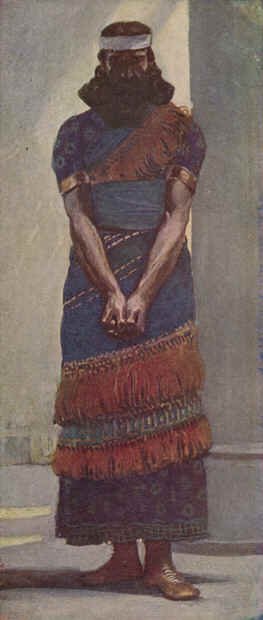
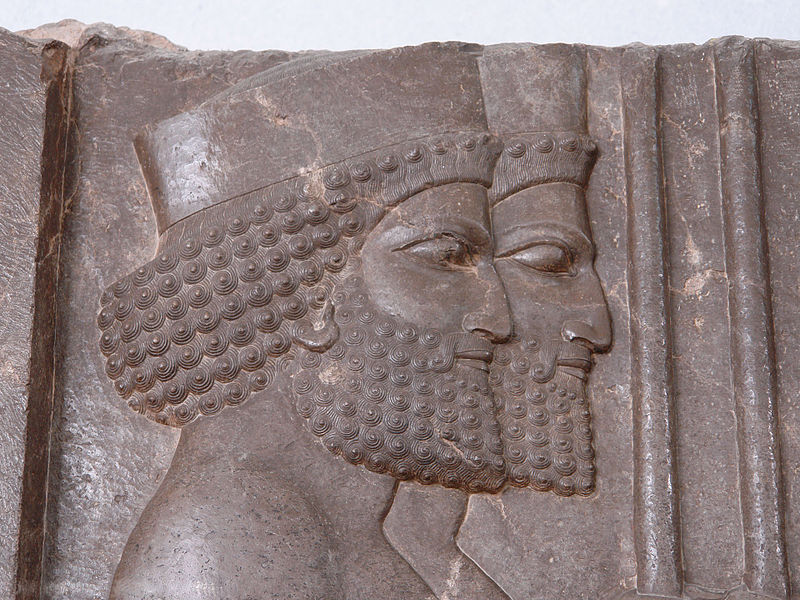
Two Persian Soldiers on the Persepolis

Two Persian Soldiers on the Persepolis

Esther 2: 19-23

 19 When the virgins were being gathered together, Mordecai was sitting at the king’s gate. 20 Now Esther had not revealed her kindred or her people, as Mordecai had charged her; for Esther obeyed Mordecai just as when she was brought up by him. 21 In those days, while Mordecai was sitting at the king’s gate, Bigthan and Teresh, two of the king’s eunuchs, who guarded the threshold, became angry and conspired to assassinate King Ahasuerus. 22 But the matter came to the knowledge of Mordecai, and he told it to Queen Esther, and Esther told the king in the name of Mordecai. 23 When the affair was investigated and found to be so, both the men were hanged on the gallows. It was recorded in the book of the annals in the presence of the king.

There are a lot of things that are unclear in this little passage: Esther is already queen, why are they gathering the virgins together. Does the competition go on? It doesn’t seem so, but there is no indication they are being sent home either. As confusing as it is we have our two protagonists, Esther and Mordecai, who have assimilated to the Persian culture and who are in the court of the king working together to expose a coup attempt. Mordecai comes into knowledge of the plots of Bigthan and Teresh and he informs Esther, and Ester tells the king. Mordecai doesn’t expect or receive any reward at this point and the two conspirators after an investigation are executed. This gets recorded, and it is critical to the story moving forward, but ultimately it is recorded and forgotten for now.

Plots were not uncommon in the Persian courts, nor were coup attempts. The act of saving the king at this point will prove important for Esther, Mordecai and the Jewish people going forward.

If you are going to plot an assassination, probably best not to do it at the king’s gate where many ears are listening. Eunuchs did have a fair amount of power but they would never lead themselves, and we will never know what they are upset about. Perhaps they believe the king is a fool, perhaps they think he parties too much, perhaps some policy worked against their people. We will never know the reasons, and ultimately they are a necessary side plot that will be important later, but once the investigation commences it is not a good day to be named Bigthan or Teresh.

Long Live the Queen: Esther 2:12-18

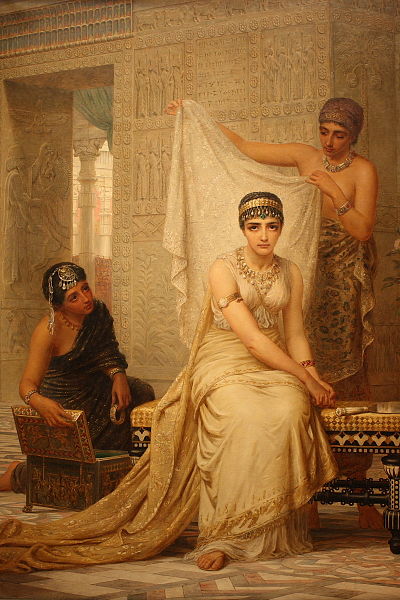
Esther Edwin Long

Esther 2: 12-18

12 The turn came for each girl to go in to King Ahasuerus, after being twelve months under the regulations for the women, since this was the regular period of their cosmetic treatment, six months with oil of myrrh and six months with perfumes and cosmetics for women. 13 When the girl went in to the king she was given whatever she asked for to take with her from the harem to the king’s palace. 14 In the evening she went in; then in the morning she came back to the second harem in custody of Shaashgaz, the king’s eunuch, who was in charge of the concubines; she did not go in to the king again, unless the king delighted in her and she was summoned by name.

 15 When the turn came for Esther daughter of Abihail the uncle of Mordecai, who had adopted her as his own daughter, to go in to the king, she asked for nothing except what Hegai the king’s eunuch, who had charge of the women, advised. Now Esther was admired by all who saw her. 16 When Esther was taken to King Ahasuerus in his royal palace in the tenth month, which is the month of Tebeth, in the seventh year of his reign, 17 the king loved Esther more than all the other women; of all the virgins she won his favor and devotion, so that he set the royal crown on her head and made her queen instead of Vashti. 18 Then the king gave a great banquet to all his officials and ministers– “Esther’s banquet.” He also granted a holiday to the provinces, and gave gifts with royal liberality.


So we come to the ‘rose ceremony’ after the date where the king gets to choose the person who he has fallen for, what the woman thinks about the matter doesn’t matter. After a year of treatments, and we really don’t know exactly what all these treatments would entail and whether they would also include training to be more sexually proficient, but this is a story of excess and after a year of preparation, at least in Esther’s case, the girl is brought to the palace to spend the night with the king and then shipped off to be with the rest of the concubines to be summoned at the king’s will. The young girl is to try to win the heart of the king or be consigned to the house of the concubines never to be summoned again. Unlike the Bachelor, these girls are not sent home that they may find someone else who will love them, nope they are the kings women, and they have no say in this.

Esther plays the game well and the king loves her. She is his new queen and the throws a banquet, proclaims a holiday and there was much rejoicing. Again this is a story of excess and this is the celebration of the completion of the search for the new queen. Esther the powerless orphan and the Jew is now Queen Esther, bride of King Ahasuerus the ruler of the world (or at least the biggest empire of the day).

One final note, Esther apparently isn’t a devoutly practicing Jew. There is no mention of her requiring a special diet, like Daniel. Nobody realized that she is Jewish, it never seems to be a consideration. She assimilates to the culture of the people who she is in exile with. As the prophet Jeremiah states:

4 Thus says the LORD of hosts, the God of Israel, to all the exiles whom I have sent into exile from Jerusalem to Babylon: 5 Build houses and live in them; plant gardens and eat what they produce. 6 Take wives and have sons and daughters; take wives for your sons, and give your daughters in marriage, that they may bear sons and daughters; multiply there, and do not decrease. 7 But seek the welfare of the city where I have sent you into exile, and pray to the LORD on its behalf, for in its welfare you will find your welfare. Jeremiah 29: 4-7

There is no condemnation of this assimilation, Esther does what she has to do (just as Mordecai does) to survive. Yet, somehow through these two powerless ones God will work to make a place for his people in the midst of Babylon.

purple rose 01 by picsofflowers.blogspot.com

Reality TV in the Ancient World: Esther 2: 1-11

the-bachelor-logo21

Esther 2:1-11

After these things, when the anger of King Ahasuerus had abated, he remembered Vashti and what she had done and what had been decreed against her. 2 Then the king’s servants who attended him said, “Let beautiful young virgins be sought out for the king. 3 And let the king appoint commissioners in all the provinces of his kingdom to gather all the beautiful young virgins to the harem in the citadel of Susa under custody of Hegai, the king’s eunuch, who is in charge of the women; let their cosmetic treatments be given them. 4 And let the girl who pleases the king be queen instead of Vashti.” This pleased the king, and he did so.

                5 Now there was a Jew in the citadel of Susa whose name was Mordecai son of Jair son of Shimei son of Kish, a Benjaminite. 6 Kish had been carried away from Jerusalem among the captives carried away with King Jeconiah of Judah, whom King Nebuchadnezzar of Babylon had carried away. 7 Mordecai had brought up Hadassah, that is Esther, his cousin, for she had neither father nor mother; the girl was fair and beautiful, and when her father and her mother died, Mordecai adopted her as his own daughter. 8 So when the king’s order and his edict were proclaimed, and when many young women were gathered in the citadel of Susa in custody of Hegai, Esther also was taken into the king’s palace and put in custody of Hegai, who had charge of the women. 9 The girl pleased him and won his favor, and he quickly provided her with her cosmetic treatments and her portion of food, and with seven chosen maids from the king’s palace, and advanced her and her maids to the best place in the harem. 10 Esther did not reveal her people or kindred, for Mordecai had charged her not to tell. 11 Every day Mordecai would walk around in front of the court of the harem, to learn how Esther was and how she fared.

Here we have the Old Testament’s version of the Bachelor where many young women are gathered up to try to impress a single man. Now the Old Testament version would not be fit to show on network television, even though the book of Esther does not go into any details like modern literature would do, it is quite clear that how these young girls please the king determines whether they are to be the queen or not. There is no rose ceremony, nor have these young girls chosen this path…it is the way of the time: a powerful man has the authority to take the best and brightest to himself. The King has the power, and as Mel Brooks would say, “It’s good to be the king!” If you make a complete fool of yourself and allow your words to become law, law which cannot be revoked and you put your queen, who it seems like King Ahasuerus is missing, aside and prevent her from being in your present-why not get a new and replacement queen.

Power and powerlessness are put side by side in the book of Esther, the king has all the power, but then enters Mordecai, the exile, and Esther (or her Jewish name Hadassah used only here), the orphan, who have no power. Esther is taken into the custody of Hegai, the king’s eunuch, and her life is in another’s hands. From this point forward her life depends upon how she can please others. As much as we may want to rebel against this, in the world of Esther her life is not in her own hands. Because she pleases Hegai she gets cosmetic treatments, food, maids and the best place in the house. On the one hand this is probably like the young teenager who suddenly finds stardom and realizes quickly that their life is no longer their own, but rather many others want a piece of her life. Esther’s life is now contained in the bubble of the king’s harem and she will have her audition night with the king, but she and Mordecai are ultimately powerless in the midst of the powerful king seeking one who pleases him.

purple rose 01 by picsofflowers.blogspot.com

Ashes and Dust

AshWednesday

By the sweat of your face you shall eat bread until you return to the ground, for out of it you were taken; you are dust, and to dust you shall return. Genesis 3: 19
 
The fire of time burns in each of us, slowly consuming our days and our years
In the springtime of our youth we seemed immortal, we didn’t feel the touch of the flames
Nothing could touch us, we burned brightly while our wood was green
Our branches were too tall to be licked by the tongues of flames that licked the ground around us
We were warmed by the risks and the dangers that we believed would never shorten our days
And yet each of us leave a trail of ash on the pathways we walk.
But in the summer of our adulthood, when the air was hotter and drier we begin to feel the touch.
Our joints begin to dry out, the vigor of youth wanes, and the rainment of youth begins to dry
The pain of loss begins to touch our lives and we begin to wonder whether we will endure
For the fire of time burns hotter as the days get longer
As the seeds we planted begin to grow and we marvel at the vigor of youth
We also begin to see the trail of ashes that we left behind
And we pray that the ashes and the dust fertilize the ground for the journeyers behind us
Rather than poisoning the wells from which they and we shall drink
In the fall of our lives, the third age, when leaves begin to fall to join the dust of the ground
We are no longer young, not yet old, and yet we have seen those whose roots caught
Those who the fires of time consumed far too young, and we know we are but ashes and dust
We pray for those who make the journey behind us, and rejoice in the seeds we have sown
We look back at the trail of dust mingled with ash and we wonder what could have been,
What should have been, what still might be, how long the ash and the dust will continue to blend
We wonder what we might do in the autumn days of life as the fires of time continue to dry us for winter
As winter comes, the green has gone and our wood has dried
We are not creatures of iron or bronze that can be melted down and recast into youth,
No, we are dust and to dust we shall return.
Some burn brightly and shortly, other molder on throughout the winter
But the fires consume us all, and the energy of our lives returns to the earth we were taken from.
We are dust and ash, mingled together on our journey through the seasons and ages
We begin and we end, we are all born and we all die, we are mortal as much as we flee our weakness
Yet, dust and ash though we are, we are precious and valued
We desire to live and breathe, to make a difference, to share our journeys and stories
We love, laugh, cry, desire, struggle, we are always life and death mixed together
And yet even though we end, we make a place for others to begin
And life continues, sustained by the hands that formed us from the future and past
The ashes of history that become the dust, the earth of the future
Marked by ashes, we continue our journey to the dust
Trusting the potter who breathes breath into dust and ash
Treasuring dust and ash beyond gold and diamonds
Though diamonds are forever, dust and ash live and die,
Yet dust and ash live, precious under the mark of the cross.

Composed: Neil White, 2013

purple rose 01 by picsofflowers.blogspot.com

If You Make a Decision While Drunk, Make Sure You Have Good Advisers: Esther 1: 13-21

Vashti Refuses the King's Summons, painting by Edward Long (1879)

Vashti Refuses the King’s Summons, painting by Edward Long (1879)

Esther 1: 13-21

                13 Then the king consulted the sages who knew the laws (for this was the king’s procedure toward all who were versed in law and custom, 14 and those next to him were Carshena, Shethar, Admatha, Tarshish, Meres, Marsena, and Memucan, the seven officials of Persia and Media, who had access to the king, and sat first in the kingdom): 15 “According to the law, what is to be done to Queen Vashti because she has not performed the command of King Ahasuerus conveyed by the eunuchs?” 16 Then Memucan said in the presence of the king and the officials, “Not only has Queen Vashti done wrong to the king, but also to all the officials and all the peoples who are in all the provinces of King Ahasuerus. 17 For this deed of the queen will be made known to all women, causing them to look with contempt on their husbands, since they will say, ‘King Ahasuerus commanded Queen Vashti to be brought before him, and she did not come.’ 18 This very day the noble ladies of Persia and Media who have heard of the queen’s behavior will rebel against the king’s officials, and there will be no end of contempt and wrath! 19 If it pleases the king, let a royal order go out from him, and let it be written among the laws of the Persians and the Medes so that it may not be altered, that Vashti is never again to come before King Ahasuerus; and let the king give her royal position to another who is better than she. 20 So when the decree made by the king is proclaimed throughout all his kingdom, vast as it is, all women will give honor to their husbands, high and low alike.”

 21 This advice pleased the king and the officials, and the king did as Memucan proposed;22 he sent letters to all the royal provinces, to every province in its own script and to every people in its own language, declaring that every man should be master in his own house.
In George R.R. Martin’s book (and by extension the television series) The Game of Thrones begins with Robert Baratheon  as king, and King Robert likes his drink and he likes his women (well every woman except the one he is married to, but that is a long story) and he makes a number of brash decisions. In both stories a king’s inebriation leads him to make decisions he will later regret and allows him to  be manipulated by his counselors. What began as an interpersonal refusal, Vashti refuses to appear, becomes an event of national consequence. One adviser leads the king on a drastic course of action that seems to be completely disproportionate to the slight for fear that Vashti’s actions will embolden all women to be rebels against their own husbands, and well anarchy is only one tipping domino away, at least as Memucan fears it.

We can speculate all we want about why Vashti refuses: was it because she knew the kings would make a spectacle of her, some seem to think that she was to appear naked although this is not a part of what is recorded, her reasons in the story are her own and as much as we might want to applaud her, she is but a foil in the story. She has unsuccessfully negotiated the realities of the situation she found herself in. In challenging the king’s authority she lost. In a perfect world with equal power, with no patriarchal systems or favoritism based on authority, position or wealth someone would never have to worry about how they negotiate the realities of the political situations they find themselves in, but Vashti and we do not live in a perfect world. Vashti will open the door for Esther, our protagonist to enter the scene and we will see her enter the story next.

A decision made in anger makes the story turn. The excess of the decision should make us laugh at the king. The story is told by people who are without power at a festival where they have some free space to poke fun, indirectly, at the ruling powers. We should be able to enjoy the sarcastic picture of this ruler of the largest empire of his day as well: the king is a buffoon whose heart is made glad with wine and he is no wiser or more powerful than the rest of us for his own decision will bind him, and bad advice will cost him something he cherishes. Perhaps before we allow our own fears of what might happen if the dominos begin to fall and we find ourselves on the treacherous slippery slope of moral depravity unleashed by one person’s refusal to conform to expectations, we should take a deep breath and perhaps a reality check. Yet the king in this respect is no different than us, for words harshly uttered cannot be taken back, and although we may not find ourselves in the ridiculous position of being unable to unmake a law or ruling many times our words can leave a legacy that we must live with.

purple rose 01 by picsofflowers.blogspot.com

Let the Party Begin: Esther 1: 1-12

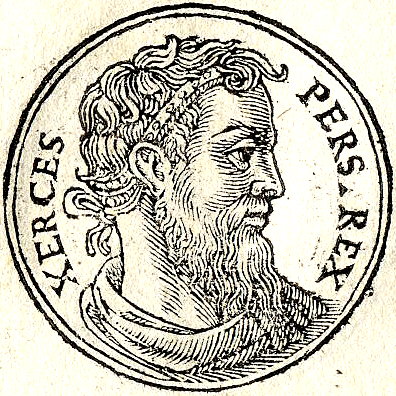
Xerxes_I

This happened in the days of Ahasuerus, the same Ahasuerus who ruled over one hundred twenty-seven provinces from India to Ethiopia. 2 In those days when King Ahasuerus sat on his royal throne in the citadel of Susa, 3 in the third year of his reign, he gave a banquet for all his officials and ministers. The army of Persia and Media and the nobles and governors of the provinces were present, 4 while he displayed the great wealth of his kingdom and the splendor and pomp of his majesty for many days, one hundred eighty days in all.

                5 When these days were completed, the king gave for all the people present in the citadel of Susa, both great and small, a banquet lasting for seven days, in the court of the garden of the king’s palace. 6 There were white cotton curtains and blue hangings tied with cords of fine linen and purple to silver rings and marble pillars. There were couches of gold and silver on a mosaic pavement of porphyry, marble, mother-of-pearl, and colored stones. 7 Drinks were served in golden goblets, goblets of different kinds, and the royal wine was lavished according to the bounty of the king. 8 Drinking was by flagons, without restraint; for the king had given orders to all the officials of his palace to do as each one desired.

 9 Furthermore, Queen Vashti gave a banquet for the women in the palace of King Ahasuerus.

10 On the seventh day, when the king was merry with wine, he commanded Mehuman, Biztha, Harbona, Bigtha and Abagtha, Zethar and Carkas, the seven eunuchs who attended him, 11 to bring Queen Vashti before the king, wearing the royal crown, in order to show the peoples and the officials her beauty; for she was fair to behold. 12 But Queen Vashti refused to come at the king’s command conveyed by the eunuchs. At this the king was enraged, and his anger burned within him.

Roll them bones!

Oftentimes we get too uptight about approaching a Biblical story and we forget the way they are approached by people throughout the generations. Esther is a story told at the Jewish festival of Purim, which quite likely has its origins in Persian or Babylonian celebrations[i], and it is heard with raucous laughter-it should be a fun story perhaps shared over wine or beer. Are there things we can learn from this story: Absolutely, but we should be aware that God is never mentioned in the book, nor are there any indications (other than fasting which was widely practiced beyond Judaism) of any Jewish practice. It is the story of excess and foolishness, of the people of God who are trying to navigate living in the world where they are mixed in with everyone else, trying to make their way in the world of the Medes and Persians. There are things to learn from all of this, but also we need to learn to laugh at the story, to find humor where there is humor. Even Martin Luther who I respect greatly wished the book of Esther did not exist, perhaps this was a moment when Luther was taking himself too seriously.

First, Ahasuerus is probably to represent King Xerxes of Persia, and some translations will automatically change Ahasuerus to Xerxes, but this not intended to be a historical work as much as a story, and the fact that the story was linked with a festival is probably the main reason it was included in the canon. It is a story of excess and the excess begins with a six month long party (take that college students) yet unlike a college student the king has the financial wherewithal to finance a six month long party where the wine flows liberally and people are able to recline on couches of gold and silver in addition to the other lavish surroundings. This is a scene that puts the largest royal banquet in Game of Thrones to shame, and while a banquet that lasts for seven days seems excessive to us in the West for whom eating is functional, I am reminded that for many cultures something like a wedding will last days or even as long as a week.

All this lavishness sets the scene for the king’s command sent through seven eunuchs to retrieve his extremely beautiful wife (who is throwing her own party with the women) to display her before his officials and those with him at his banquet. This is not a fair world, in our society it would not be uncommon for a woman to refuse a drunken request but this is an extremely patriarchal world which women did not have a great deal of freedom, and even queens are only queens so long as it pleases the king. But the amazing happens, Vashti refuses, the king is enraged and the stage is set for the unfolding of a new drama. It will be set with overreactions and a paranoid defense of the patriarchal order (can’t have a queen who disobeys a king, what would that do to the fabric of society-it is a fear we will see expressed.) Most modern women and many men have some empathy for Vashti, but the reaction of the men in the court of Ahasuerus will be much different.

purple rose 01 by picsofflowers.blogspot.com


[i] I owe this observation to Sidnie White Crawford, (Actemeier, Elizabeth et. al. 1999, 3:860). This is not a unique phenomenon, Christians celebrate Christmas and Easter at the times when they are celebrated as a way of displacing holidays celebrated by the people that Christianity was spreading to. Or think of the conjunction of All Saints day (November 1) with All Hallows Eve (or as we call it today Halloween).

The Names We Take and the Names We Give

I enjoy music, a wide range of music, and so one of my hopes was to take something that strikes me when I am listening to it throughout the week, take the lyrics and their meaning and then see what thoughts it evokes. Just because today’s offering comes from the world of Rock/Metal and it happened to be what got me thinking today…you never know what might provoke thought.

One note before going further, the song, My Name by Shinedown does contain profanity which some people may be offended by. I have removed much of the repetition of chorus and tags in the text of the lyrics. My comments will be below, I also deal with some offensive material in this post due to the nature of the subject.

My Name (Your Wearing Me Out)

My name is worthless like you told me I once was
My name is empty ’cause you drained away the love
My name is searching since you stole my only soul
My name is hatred, and the reasons we both know
 

Worthless, empty, searching, hatred 
Who am I right now?
 

You’re fuckin’ wearing me out! 
You’re always dragging me down!
 
You’re the fake fallen force of nature’s sick mind!
 
I don’t need a gun to take back what’s mine
 
It’s over
 
It’s over now
 
You’re done wearing me out
 

My name is screaming like the sound of your heart failing 
My name is loco like the motive that betrayed me
 
Screaming, loco, don’t say you know who I am right now
 

You’ll be ancient history 
But who am I right now?
 

My name is revenge and I’m here to save my name 

I’m sure somebody is thinking, “these are terrible” why would anyone want to focus any time on this, but we all give and take names, some that are honorable and good and some that are horrible. I say to people dealing with the aftermath of verbal and psychological trauma, “Sticks and stones may break my bones, but words will send me to therapy.” Names and words hurt, and even the most resilient person will occasionally take a label that someone else gives them into part of their personality. If you look back at some of the work I discuss from Brené Brown’s work on shame and vulnerability, you can see how powerful this is. Taking a name is a way that shame takes hold of us. In the song the person’s names become: worthless, empty, searching, hatred, screaming, loco, revenge…they may not be the names we want but sometimes they are the words we take and give.

Miroslav Volf in Exclusion and Embrace relates a story from his homeland from the perspective of a Muslim woman:

“I am a Muslim, and I am thirty five years old. To my second son who was just born, I gave the name “Jihad.” So he would not forget the testament of his mother—revenge. The first time I put my baby at the breast I told him, “May this milk choke you if you forget.” So be it. The Serbs taught me to hate. For the last two months there was nothing in me. No pain, no bitterness. Only hatred. I taught these children to love. I did. I am a teacher of literature. I was born in Ilijaś and I almost died there. My student, Zoran, the only son of my neighbor, urinated into my mouth. As the bearded hooligans standing around laughed, he told me: “You are good for nothing else, you stinking Muslim woman…” I do not know whether I first heard the cry of felt the blow. My former colleague, a teacher of physics, was yelling like mad, “Ustasha, ustasha…”And kept hitting me. Wherever he could. I have become insensitive to pain. But my soul it hurts. I taught them to love and all the while they were making preparations to destroy everything that is not of the Orthodox faith. Jihad—war. This is the only way… “(Volf 1996, 111)

Fortunately most of us are not literally named something as horrible as Jihad, although the family dynamics of hatred passed from one generation to another are very real, as does the reality of abuse: physical, psychological or sexual. The natural response for a wounded person is to wound another, if I am insulted the natural response is to bring someone else down to make myself feel better (even though this doesn’t work and only decreases my own self worth). Yet the cycle of naming continues.

How does the cycle end? How do we give new and better names to ourselves and others? It isn’t easy. It starts first with being clear about who we are, and what are the names we are willing to accept for ourselves, and even the type of self-talk we do. No matter how bone-headed some action may have been that doesn’t make a person an idiot-they are simply someone who did something dumb. A child who shoplifts can either take it into their identity that they are a thief or they can be ashamed of the action, I stole something, but that doesn’t change who I am. I’m a person with a fairly strong sense of who I am, but even I have to work at this.

I have a plaque in my office, given to me by Nate Frambach who was my advisor which says: “Neil Eric White you are a baptized child of God. Whatever else you are, remember you are that; for that is the basis of whatever else you are.” I go back to this often. At the root, that is a name I’ve taken that I desire to be the touchstone any other name is judged by. I’m not always there, there are times when another name seems to overwhelm that or any other name, but eventually I come back to this name that I claim this name that isn’t wearing me out. There is much more to say so perhaps I’ll spend some more time here next week.

purple rose 01 by picsofflowers.blogspot.com

The Return Home: A Sermon on the Return of the Remnant to Judah

James Tissot, The Prophet Haggai

James Tissot, The Prophet Haggai

We have been on a journey with God’s people, it is a story where God has continued to be faithful, but the people often have not. We went through a series of times where the kings and the people “did evil in the eyes of the Lord” and finally the Lord used first Assyria and then Babylon to take the people into exile. While in exile we heard the stories of Daniel and Mesach, Shadrach and Abendigo and how they were faithful in serving God while in Babylon, even though it put them at extremely high personal risk: being thrown into the fiery furnace for Mesach, Shadrach and Abendigo and into the lions den for Daniel but in the midst of these episodes God was faithful, and just like in the story of Joseph their faithfulness both gave witness to God as well as continuing to allow them to be placed in positions of greater authority. The Babylonian exile is a difficult time in the people’s story, but it is also the time when the really begin to intentionally gather together there stories, the law and the prophets so they can preserve who they are as strangers in a foreign land, but God has not abandoned them, and the time has come to return home.

Ezra begins the report of the return home like this:

In the first year of King Cyrus of Persia, the Lord fulfilled the prophecy he had given through Jeremiah. He stirred the heart of Cyrus to put this proclamation in writing and to send it throughout his kingdom:“This is what King Cyrus of Persia says: The Lord, the God of heaven, has given me all the kingdoms of the earth. He has appointed me to build him a temple at Jerusalem, which is in Judah. Any of you who are his people may go to Jerusalem in Judah to rebuild this temple of the Lord, the God of Israel, who lives in Jerusalem. And may your God be with you! Ezra 1: 1-3

So the journey  begins, and everything seems great, but of all the people who went into exile, only 42,360 people decide to go back. Now in the midst of a massive empire that spreads from North Africa, through the Middle East and into Greece, roughly 2/3 the size of the United States, we are talking about an area the size of Rhode Island with a population density roughly that of Cass County. What is left, the remnant of Israel and Judah are no longer major players on the world stage, and yet what they do is important to the God who is not just behind them but also in charge of the whole world. And so we have this tiny remnant of the people returning home, farms and households are destroyed, Jerusalem is in shambles, the temple is gone and they have come home to begin to rebuild. There is a lot of work ahead for this faithful remnant who decides to make the journey home. Everything starts out great, they set up an alter, they begin to reconstruct the temple and lay the foundation and then they run into challenges. They start to receive resistance from the people around them, they encounter sabotage and political pressure to stop construction and they do. The foundation is laid, an altar is out but there is no temple and this is not a short delay, it is 18 years that the people go off and they take care of their own farms and houses and so the Lord sends the prophets Haggai and Zechariah who both minister at the same time and call the people and leaders back to the task of completing the temple. This is from the prophet Haggai:

On August 29 of the second year of King Darius’s reign, the LORD gave a message through the prophet Haggai to Zerubbabel son of Shealtiel, governor of Judah, and to Jeshua son of Jehozadak, the high priest.2 “This is what the LORD of Heaven’s Armies says: The people are saying, ‘The time has not yet come to rebuild the house of the LORD.'” 3 Then the LORD sent this message through the prophet Haggai: 4 “Why are you living in luxurious houses while my house lies in ruins? 5 This is what the LORD of Heaven’s Armies says: Look at what’s happening to you! 6 You have planted much but harvest little. You eat but are not satisfied. You drink but are still thirsty. You put on clothes but cannot keep warm. Your wages disappear as though you were putting them in pockets filled with holes! Haggai 1: 1-6

                 The people have focused on their own concerns, but God through the prophets is calling them again to be God’s people, to trust God and to recommit to the building of the temple. Now earlier in the story the prophets would speak and the people would ignore them, but not so this time. Haggai and Zechariah speak and the people and the leaders respond. On August 29th the prophet speaks and on September 21st the construction begins in earnest, and the voice of the God coming through the prophets becomes one of encouraging the people for the task they have ahead of them. You see, rebuilding the temple is not an easy process, they couldn’t go to Lowe’s or Home Depot and pick up pretreated lumber, buy pre-fabricated doors and curtains, they had to go and bring the materials and craft them to be used for the building of God’s temple. Yet the people did, they heard, they listened and the Lord was with them in the midst of the process.

So if God can use this small remnant  of a conquered people to be his people, and to be a part of God’s story, if God can take their gifts and use them –what gifts might God be calling us to bring? Ultimately what I bring might seem so small, and yet what I do matters to God. You see God’s desire is to dwell among us, God wants to come down to be there with God’s people, God wants to bring God’s upper story down to merge with the lower story that we see every day. God wants God’s love and will for the world to take on flesh and be enacted and lived and that involves moving beyond what seems to be in our own best interest. Sometimes it seems impossible, but God works through both the ordinary and the amazing. Hear some of the words of the prophet Zechariah who ministered at the same time as Haggai:

6 “This is what the LORD of Heaven’s Armies says: All this may seem impossible to you now, a small remnant of God’s people. But is it impossible for me? says the LORD of Heaven’s Armies. 7 “This is what the LORD of Heaven’s Armies says: You can be sure that I will rescue my people from the east and from the west. 8 I will bring them home again to live safely in Jerusalem. They will be my people, and I will be faithful and just toward them as their God.  9 “This is what the LORD of Heaven’s Armies says: Be strong and finish the task! Ever since the laying of the foundation of the Temple of the LORD of Heaven’s Armies, you have heard what the prophets have been saying about completing the building. 10 Before the work on the Temple began, there were no jobs and no money to hire people or animals. No traveler was safe from the enemy, for there were enemies on all sides. I had turned everyone against each other.  11 “But now I will not treat the remnant of my people as I treated them before, says the LORD of Heaven’s Armies. 12 For I am planting seeds of peace and prosperity among you. The grapevines will be heavy with fruit. The earth will produce its crops, and the heavens will release the dew. Once more I will cause the remnant in Judah and Israel to inherit these blessings. 13 Among the other nations, Judah and Israel became symbols of a cursed nation. But no longer! Now I will rescue you and make you both a symbol and a source of blessing. So don’t be afraid. Be strong, and get on with rebuilding the Temple!

Zechariah 8: 6-13

It may be God’s work, it may be God’s story, but our lives, our work, our gifts, our hands have a part in that story. For the last several years the Nebraska synod has used the motto “God’s work, our hands” to talk about our work together in God’s mission to the world. Like the people of Judah returning home, bringing together their gifts to build the temple ultimately to give glory to God in their lives and among the nations, as baptized children of God we remember that Jesus told us to, “let our lives shine before others that they may see your good works and glorify your Father who is in heaven.” God wants our lives to be a part of God’s work in the world. We may think we aren’t good enough, or don’t have enough to bring, but remember this story from Jesus life:

3 Meanwhile, Jesus was in Bethany at the home of Simon, a man who had previously had leprosy. While he was eating, a woman came in with a beautiful alabaster jar of expensive perfume made from essence of nard. She broke open the jar and poured the perfume over his head. 4 Some of those at the table were indignant. “Why waste such expensive perfume?” they asked. 5 “It could have been sold for a year’s wages and the money given to the poor!” So they scolded her harshly.  6 But Jesus replied, “Leave her alone. Why criticize her for doing such a good thing to me? 7 You will always have the poor among you, and you can help them whenever you want to. But you will not always have me. 8 She has done what she could and has anointed my body for burial ahead of time. 9 I tell you the truth, wherever the Good News is preached throughout the world, this woman’s deed will be remembered and discussed.” Mark 14: 3-9

I’ll speak for myself here, I know there are many times I am conflicted because there are so many things that could and should be done, so many needs of the world, and I can be quick to criticize my own actions and occasionally the actions of others, but the reality is that here is a woman who out of love for Jesus comes and makes this extraordinary waste of perfume and resources from the world’s perspective…think of what I could have done with the money from that…it could better have been spent on…I could have done this for me if I didn’t give to church, etc. But one of the things I am coming to believe more and more is that I am trying to lead the life that I think I am called to lead, and sometimes that means fighting against my own instincts for self-preservation. It is so easy to get trapped into putting all my efforts into building my own paneled house, or making sure that I have enough set aside to deal with emergencies, to invest in my retirement, to buy a nice car, or to have new clothes, to go out to eat whenever I want, or even to be completely debt free—but if I wait to give to God until everything I want is paid for and all the stars line up and I have the perfect job and I make more than enough and I can give out of my abundance, then I’ll never give. It’s like the conversation I had several years ago with a friend of mine from the army about having kids, if you wait to have kids until you feel like you are ready financially, career wise, etc… to have kids then you will never have kids. Sometimes in life to be the people we want to be and the people God calls us to be we have to do things that to others may not make sense, we have to turn away from our own self interest and give back to God, and make the effort to put God’s desires and activities as a part of our lives.

Martin Luther talked frequently about sin as ‘being turned inward on oneself’ and ultimately all commandments come from the first commandment of placing God in God’s proper place and in Luther’s words “to fear, love and trust God above all things.” And I’ve had several of those conversations with God, the type of conversations where the thought comes up “are you sure God” and the sense I get back is “will you trust me” Will you trust that if you work with me, that I will give you the things you need? Will you trust me to bring you beyond this moment to where things may be difficult to the time to a time where you can look back and see the way I sustained you and used your gifts and your hands as a part of my story? Will you trust me?

purple rose 01 by picsofflowers.blogspot.com

Trusting a Dream: Haggai 2

Bust of the Prophet Haggai by GIovanni Pisano, last quarter of the 13th Century

Bust of the Prophet Haggai by Giovanni Pisano, last quarter of the 13th Century

Haggai 2

In the second year of King Darius, in the seventh month, on the twenty-first day of the month, the word of the LORD came by the prophet Haggai, saying: 2 Speak now to Zerubbabel son of Shealtiel, governor of Judah, and to Joshua son of Jehozadak, the high priest, and to the remnant of the people, and say, 3 Who is left among you that saw this house in its former glory? How does it look to you now? Is it not in your sight as nothing? 4 Yet now take courage, O Zerubbabel, says the LORD; take courage, O Joshua, son of Jehozadak, the high priest; take courage, all you people of the land, says the LORD; work, for I am with you, says the LORD of hosts, 5 according to the promise that I made you when you came out of Egypt. My spirit abides among you; do not fear. 6 For thus says the LORD of hosts: Once again, in a little while, I will shake the heavens and the earth and the sea and the dry land; 7 and I will shake all the nations, so that the treasure of all nations shall come, and I will fill this house with splendor, says the LORD of hosts. 8 The silver is mine, and the gold is mine, says the LORD of hosts. 9 The latter splendor of this house shall be greater than the former, says the LORD of hosts; and in this place I will give prosperity, says the LORD of hosts.

 10 On the twenty-fourth day of the ninth month, in the second year of Darius, the word of the LORD came by the prophet Haggai, saying: 11 Thus says the LORD of hosts: Ask the priests for a ruling: 12 If one carries consecrated meat in the fold of one’s garment, and with the fold touches bread, or stew, or wine, or oil, or any kind of food, does it become holy? The priests answered, “No.” 13 Then Haggai said, “If one who is unclean by contact with a dead body touches any of these, does it become unclean?” The priests answered, “Yes, it becomes unclean.”

 14 Haggai then said, So is it with this people, and with this nation before me, says the LORD; and so with every work of their hands; and what they offer there is unclean. 15 But now, consider what will come to pass from this day on. Before a stone was placed upon a stone in the LORD’s temple, 16 how did you fare? When one came to a heap of twenty measures, there were but ten; when one came to the wine vat to draw fifty measures, there were but twenty. 17 I struck you and all the products of your toil with blight and mildew and hail; yet you did not return to me, says the LORD. 18 Consider from this day on, from the twenty-fourth day of the ninth month. Since the day that the foundation of the LORD’s temple was laid, consider: 19 Is there any seed left in the barn? Do the vine, the fig tree, the pomegranate, and the olive tree still yield nothing? From this day on I will bless you.

 20 The word of the LORD came a second time to Haggai on the twenty-fourth day of the month: 21 Speak to Zerubbabel, governor of Judah, saying, I am about to shake the heavens and the earth, 22 and to overthrow the throne of kingdoms; I am about to destroy the strength of the kingdoms of the nations, and overthrow the chariots and their riders; and the horses and their riders shall fall, every one by the sword of a comrade. 23 On that day, says the LORD of hosts, I will take you, O Zerubbabel my servant, son of Shealtiel, says the LORD, and make you like a signet ring; for I have chosen you, says the LORD of hosts.


It is easy to start a project, but when something is going to take a while it may be harder to bring it to completion. For example, many people make New Years Resolutions, few manage to keep them throughout the year. Weight loss either through exercise or diet works really well on the front end, but most people quit and never make the changes that are necessary to prevent the weight from returning. A long building project may start out great, but if it takes more than a couple weekends it may begin occupying space in the garage. I have started a project of going through the book of Jeremiah, all 52 chapters and I’m reluctant to publish anything until I get far enough in to be confident I might actually finish it (or my place of authority work which is currently in a season of writers block because I really am not at the point where I feel confident in my own position to write about what should logically come next, the Rise of Islam). Well in Haggai, the people and the leaders in Judah are re-embarking on a long term construction project with the temple. It is not going to go together overnight or even in a year, but they have begun. God here is encouraging them that he will be with them through this project, that they will be blessed in this project and that ultimately the silver and gold of the nations will come to fill the house with splendor.

This is a people who has dealt with drought and they are having to learn to think in a new way. In a drought you go into survival mode, you hoard what you have, but God is trying to take them into a way of living with enough, or maybe even abundance. A way of living where they can focus on something that can be used by everyone. It is a much more civic and theologically minded approach to living. There is some benefit to the temple for everyone, and the people will be blessed in and through its construction.

A couple thoughts: Haggai definitely works from what is sometimes called a Deuteronomic theology “If you do good you will be blessed, if you do evil you will be cursed” this is not the New Testament’s predominant theology, but I do think we do need to consider it. In what ways do our actions and the ways in which we live effect our wealth, status, happiness, etc… There is obviously not a one to one correlation, and often those who live the most righteous appearing lives seem to suffer the most, but God appears to believe that our actions are important for God’s plans and that God will add his work to the work the people are doing.

One of the dynamics that may be functioning is the dynamic of memory. Some of the older people may remember the temple torn down by the Babylonians, and the temple being built is ‘as nothing’ and this happens in churches as well. “I remember the way it was when I grew up” and while the memories may be good they can also be dangerous. Any time our memory of the past is greater than our hope for the future we are approaching the point of despair. I know people who grasp for a past that is no longer present and fear the present and future, but there are no time machines and we are a people who are future oriented not past oriented.

As W. Eugene March correctly states, “Although the main concern of Haggai the prophet was the rebuilding and rededication of a relatively insignificant temple in a small district in the backwaters of the Persian Empire (at least as far as the world would have judged it), the real issue is worldwide domination of the Lord of hosts.” (Achtemeier, Elizabeth et. al 1999, 7:731) The larger church I am a part of for the last couple of years has used the slogan, “God’s work, our hands” and this is one of those times where the work of our hands may seem insignificant but we trust that the  impact may be larger than what we know.  Just as it may not seem like Zerubbabel is not very significant, but in God’s eyes he is chosen, a signet ring. Maybe it is only a dream, and that is always the risk of trusting and faith, but it is a dream worth having.

purple rose 01 by picsofflowers.blogspot.com

Build the House: Haggai 1

Russian Icon of the Holy Prophet Haggai

Russian Icon of the Holy Prophet Haggai

Haggai 1

                 In the second year of King Darius, in the sixth month, on the first day of the month, the word of the LORD came by the prophet Haggai to Zerubbabel son of Shealtiel, governor of Judah, and to Joshua son of Jehozadak, the high priest: 2 Thus says the LORD of hosts: These people say the time has not yet come to rebuild the LORD’s house. 3 Then the word of the LORD came by the prophet Haggai, saying: 4 Is it a time for you yourselves to live in your paneled houses, while this house lies in ruins? 5 Now therefore thus says the LORD of hosts: Consider how you have fared. 6 You have sown much, and harvested little; you eat, but you never have enough; you drink, but you never have your fill; you clothe yourselves, but no one is warm; and you that earn wages earn wages to put them into a bag with holes.

               7 Thus says the LORD of hosts: Consider how you have fared. 8 Go up to the hills and bring wood and build the house, so that I may take pleasure in it and be honored, says the LORD. 9 You have looked for much, and, lo, it came to little; and when you brought it home, I blew it away. Why? says the LORD of hosts. Because my house lies in ruins, while all of you hurry off to your own houses. 10 Therefore the heavens above you have withheld the dew, and the earth has withheld its produce. 11 And I have called for a drought on the land and the hills, on the grain, the new wine, the oil, on what the soil produces, on human beings and animals, and on all their labors.

                12 Then Zerubbabel son of Shealtiel, and Joshua son of Jehozadak, the high priest, with all the remnant of the people, obeyed the voice of the LORD their God, and the words of the prophet Haggai, as the LORD their God had sent him; and the people feared the LORD. 13 Then Haggai, the messenger of the LORD, spoke to the people with the LORD’s message, saying, I am with you, says the LORD. 14 And the LORD stirred up the spirit of Zerubbabel son of Shealtiel, governor of Judah, and the spirit of Joshua son of Jehozadak, the high priest, and the spirit of all the remnant of the people; and they came and worked on the house of the LORD of hosts, their God, 15 on the twenty-fourth day of the month, in the sixth month.

One of the shorter books in the bible, one of the 12 Minor Prophets[i] Haggai speaks to the people of God with the voice of the Lord and unlike many of the other prophets the people listen. To set the scene this entire short book takes place in the span of about 3 ½ months roughly 18 years after the return of the exiles from Babylon (I deal briefly with this in The Place of Authority:  A Brief History Part 4:Re-establishment, Disillusionment and Germination) This is the period covered in the book of Ezra, and it is also the time of the prophet Zechariah.[ii]When the people who returned from the exile in Babylon came back the land was not vacant, many of the poorer people had been left behind to farm the land and so when the people came back there was some period of time where people were “re-claiming” their family lands (or dispossessing others already working the land), hence a focus on individuals rebuilding their houses.  To put this all in context, the land of Judah is a small territory within the larger Persian empire at this point (roughly the size of Rhode Island) which is sparsely populated (this is an agrarian society) with land that is not producing well. Haggai’s message is one predominantly of hope coming from the difficult situation of coming together as a post-exilic[iii] people. (Haggai fixes the time of each oracle precisely, unlike most prophets and most scholars seem to agree that the record we have comes from shortly after this point. By our reckoning the first date mentioned in verse 1 is August 29, 520 BCE, and work begins on September 21, 520 BCE. (Actemeier, Elizabeth et. al 1999, 7:711) The re-settlement of Judah has stalled, the people have become focused on their own problems and the temple begun at the beginning of the resettlement remains a great unfinished project, a daily reminder of their weakness in the midst of the nations that surround them. The people have settled into a communal depression where they have settled in and are doing what they feel they need to do, and yet it takes something new to bring them out of this. Haggai, Zechariah, Zerubbabel, and Joshua are all used by the Lord to turn this situation around.

Haggai is a person with no known heritage, unlike Zerubbabel and Joshua we don’t know his family or where he comes from, all we have is the message. The message we have here is like splashing your face with ice water, it is designed to wake up the people, to shake them out of their slumber. It, like all the prophets, is more poetry than dissertation. Haggai is not interested in a debate about when God causes hardship and famines; rather he is focused on the behavior God desires from the people. God desires to dwell among them; God would take pleasure in the temple.  Relatively quickly the people do come together, work resumes, and the Spirit of the Lord stirs up the leadership. In this post-exilic period the prophet is actually heard and the prophet-king-priest triumvirate work together and the work begins.

purple rose 01 by picsofflowers.blogspot.com


[i] I follow the delineation of minor verses major prophets where Isaiah, Jeremiah and Ezekiel are Major Prophets by the size of their respective works (Isaiah 65 chapters, Jeremiah 52 +5 in Lamentations, and Ezekiel 48) where the Minor Prophets recorded works are significantly shorter. This is not a value judgment on the importance of their words. Daniel is typically classed by Hebrew scholars as a part of the writings rather than being place with either the major or minor prophets.

[ii] Zechariah and Haggai are explicitly mentioned in Ezra 5:1 as prophets working at the same time for the re-establishment of the temple.

[iii] Post-exilic in this context refers to the time after the Babylonian exile which took place beginning in 597BCE, with a more substantial portion of the population taken in 587BCE, post-exilic begins in 538 BCE with the rise of the Persian empire)