Tag Archives: Psalms

Psalm 105 Give Thanks to the Faithful God of Our Story

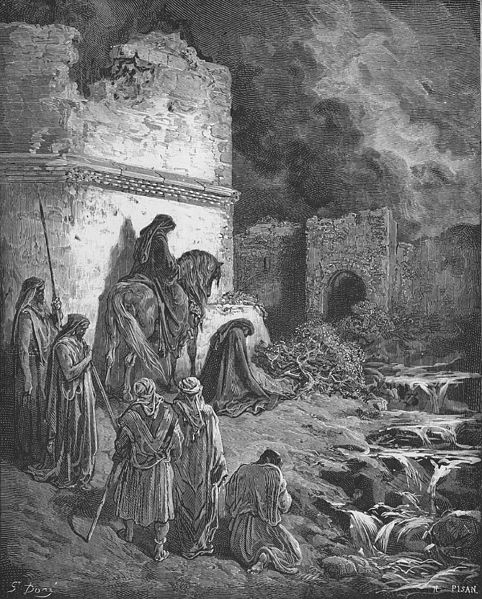
Grigory Mekheev, Exodus (2000) artist shared work under Creative Commons Attribution-Share Alike 3.0

Psalm 105 

1O give thanks to the LORD, call on his name, make known his deeds among the peoples.
 2Sing to him, sing praises to him; tell of all his wonderful works.
 3Glory in his holy name; let the hearts of those who seek the LORD rejoice.
 4Seek the LORD and his strength; seek his presence continually.
 5Remember the wonderful works he has done, his miracles, and the judgments he has uttered,
 6O offspring of his servant Abraham, children of Jacob, his chosen ones.
 7He is the LORD our God; his judgments are in all the earth.
 8He is mindful of his covenant forever, of the word that he commanded, for a thousand generations,
 9the covenant that he made with Abraham, his sworn promise to Isaac,
 10which he confirmed to Jacob as a statute, to Israel as an everlasting covenant,
 11saying, “To you I will give the land of Canaan as your portion for an inheritance.”
 12When they were few in number, of little account, and strangers in it,
 13wandering from nation to nation, from one kingdom to another people,
 14he allowed no one to oppress them; he rebuked kings on their account,
 15saying, “Do not touch my anointed ones; do my prophets no harm.”
 16When he summoned famine against the land, and broke every staff of bread,
 17he had sent a man ahead of them, Joseph, who was sold as a slave.
 18His feet were hurt with fetters, his neck was put in a collar of iron;
 19until what he had said came to pass, the word of the LORD kept testing him.
 20The king sent and released him; the ruler of the peoples set him free.
 21He made him lord of his house, and ruler of all his possessions,
 22to instruct his officials at his pleasure, and to teach his elders wisdom.
 23Then Israel came to Egypt; Jacob lived as an alien in the land of Ham.
 24And the LORD made his people very fruitful, and made them stronger than their foes,
 25whose hearts he then turned to hate his people, to deal craftily with his servants.
 26He sent his servant Moses, and Aaron whom he had chosen.
 27They performed his signs among them, and miracles in the land of Ham.
 28He sent darkness, and made the land dark; they rebelled against his words.
 29He turned their waters into blood, and caused their fish to die.
 30Their land swarmed with frogs, even in the chambers of their kings.
 31He spoke, and there came swarms of flies, and gnats throughout their country.
 32He gave them hail for rain, and lightning that flashed through their land.
 33He struck their vines and fig trees, and shattered the trees of their country.
 34He spoke, and the locusts came, and young locusts without number;
 35they devoured all the vegetation in their land, and ate up the fruit of their ground.
 36He struck down all the firstborn in their land, the first issue of all their strength.
 37Then he brought Israel out with silver and gold, and there was no one among their tribes who stumbled.
 38Egypt was glad when they departed, for dread of them had fallen upon it.
 39He spread a cloud for a covering, and fire to give light by night.
 40They asked, and he brought quails, and gave them food from heaven in abundance.
 41He opened the rock, and water gushed out; it flowed through the desert like a river.
 42For he remembered his holy promise, and Abraham, his servant.
 43So he brought his people out with joy, his chosen ones with singing.
 44He gave them the lands of the nations, and they took possession of the wealth of the peoples,
 45that they might keep his statutes and observe his laws. Praise the LORD!

Although there is no superscript to introduce Psalm 105, verses 1-15 of this psalm appear in the mouth of King David in 1 Chronicles 16: 8-22 combined with several other psalms. This quote of this psalm at the arrival of the ark of the covenant in the tent David set up for it in Jerusalem is one possible background for the composition of this psalm narrating God’s gracious actions on behalf of the covenant people. Within book four of the psalter this psalm pairs with Psalm 106 which closes book four as well as Psalm 103 and 104 which preceded it. Psalm 103 gives thanks to the LORD because God is good (hesed), Psalm 104 gives thanks to the God who is great in relation to the creation, and now Psalm 105 celebrates the covenant faithfulness of God to God’s people in a narration of their history. Psalm 105 and Psalm 106 form complementary narrations of the history of God’s faithfulness. Throughout Psalm 105 there is no mention of the faithless moments in Israel’s history with the LORD the God of Israel, nor is there any moment of reflection upon God’s reaction to those moments of faithlessness. Unlike the other historical psalms[1] that is not the purpose of this psalm. Psalm 106 will contrast the faithfulness of God with the faithlessness of the people.

Once again, the people are summoned to give thanks and praise the LORD for the things that God has done and to remember the works, miracles, and judgments. The covenant throughout this Psalm appears to be the covenant with Abraham in relation to God giving the people the land of Canaan. Even though the second half of the psalm will deal with God’s mighty works in the Exodus narrative the Sinai covenant is never mentioned. Instead the focal point of the promise is the covenant with Abraham confirmed with Jacob (aka Israel) and the statute here and everlasting covenant is one sided. God promises protection and the land as an inheritance for this family set aside by God.

The people in the time of Abraham, Isaac, and Jacob wander this land as strangers (Hebrew gerim) who are reliant upon the LORD for protection. Abraham would claim before the Hittites that he was a “stranger and alien residing among them”[2] and this reality of the patriarchs and the people in Egypt being ‘strangers’ forms the ethical reaction to ‘strangers’ in Deuteronomy: “You shall also love the stranger, for you were strangers in the land of Egypt.[3] Yet here the focus of the narrative is not upon the ethical responsibility of the people, but the gracious protection of God. God does not allow the settled nations to touch his anointed people or to harm the prophets.[4]

The backstory of the psalm continues through the narrative of Genesis, arriving to the story of Joseph who is sent ahead by God to Egypt to provide bread for the people in a time of famine. Even here, although Joseph is sold as a slave, the mention of the role of the brothers of Joseph in his sojourn in Egypt is obscured. Instead, it is the LORD who tests him through these ordeals. Joseph becomes a heroic figure who endures slavery and imprisonment only to rise to become the lord of the house of Pharoah. Yet, even at the end of this brief retelling of the Joseph story Jacob/Israel is an alien in the land of Ham.[5]

At the midpoint of the psalm the narrative shifts from the stories of Genesis to the stories of Exodus. Exodus remembers the duration of the sojourn of the people in Egypt as four hundred thirty years[6] and during this time they had not only been protected by God but prospered, emerging as a people great in number and feared by their Egyptian overlords. Moses and Aaron are sent to be God’s voice to the people and to Pharoah. The number and order of the plagues are different from the narration of Exodus 7-12 and Psalm 78:44-51. It is possible that this is a separate tradition recounting the Exodus narrative, but I believe it is also likely that the constraints of the poetic form of this psalm are responsible for the truncated nature of this retelling.

Yet, the truncated nature of the retelling of the signs and miracles performed in Egypt are extravagant compared to the narration of the journey from Egypt to the promised land. As mentioned above, the giving of the covenant at Sinai as well as the disobedience of the people is omitted. The forty years of wandering in the wilderness is reduced to eight verses or one stanza of the psalm and as throughout the psalm the focus is on God’s presence, protection, and provision for the people. God provided protection by the cloud and the fire, provided mana from heaven, quails for the camp, and water from the rock, and brought them to the long-promised land of the covenant.

Songs can play a crucial role in helping people to remember their story, and this Psalm helps to remind the people where they come from. Throughout this psalm they are sustained by protection and provision of the LORD through works, miracles, and judgments which demonstrate the faithfulness of the LORD to the people. Any narration of a story makes choices about what to include and what to exclude based upon the intent of the story, or in this case poem or song. The focus upon God’s continual faithfulness and provision may choose to exclude the faithless moments of the people, and yet this psalm stands within a collection of psalms and narratives which reinforce, strengthen, and complete its narration. Yet, the focal imagery of the past three psalms of God being a God of goodness and steadfast love, God being a God of greatness in relation to the creation, and finally God being a God of steadfast love and greatness towards the covenant people mutually reinforce each other.


[1] Psalm 78, 106, 136.

[2] Genesis 23:4.

[3] Deuteronomy 10:19.

[4] Presumably for the purpose of the Psalm the patriarchs are the prophets.

[5] The tradition of Egypt coming from Noah’s son Ham is traced back to Genesis 10:6 where Cush (Ethiopia), Egypt, Put, and Canaan trace their lineage to this survivor of the ark in the Hebrew telling of their history.

[6] Exodus 12:40.

Psalm 104 Praise the Great God of Creation

Sun over Lake Hawea in New Zealand By Michal Klajban – Own work, CC BY-SA 4.0, https://commons.wikimedia.org/w/index.php?curid=78855569

Psalm 104

 1Bless the LORD, O my soul. O LORD my God, you are very great. You are clothed with honor and majesty,
 2wrapped in light as with a garment. You stretch out the heavens like a tent,
 3you set the beams of your chambers on the waters, you make the clouds your chariot, you ride on the wings of the wind,
 4you make the winds your messengers, fire and flame your ministers.
 5You set the earth on its foundations, so that it shall never be shaken.
 6You cover it with the deep as with a garment; the waters stood above the mountains.
 7At your rebuke they flee; at the sound of your thunder they take to flight.
 8They rose up to the mountains, ran down to the valleys to the place that you appointed for them.
 9You set a boundary that they may not pass, so that they might not again cover the earth.
 10You make springs gush forth in the valleys; they flow between the hills,
 11giving drink to every wild animal; the wild asses quench their thirst.
 12By the streams the birds of the air have their habitation; they sing among the branches.
 13From your lofty abode you water the mountains; the earth is satisfied with the fruit of your work.
 14You cause the grass to grow for the cattle, and plants for people to use, to bring forth food from the earth,
 15and wine to gladden the human heart, oil to make the face shine, and bread to strengthen the human heart.
 16The trees of the LORD are watered abundantly, the cedars of Lebanon that he planted.
 17In them the birds build their nests; the stork has its home in the fir trees.
 18The high mountains are for the wild goats; the rocks are a refuge for the coneys.
 19You have made the moon to mark the seasons; the sun knows its time for setting.
 20You make darkness, and it is night, when all the animals of the forest come creeping out.
 21The young lions roar for their prey, seeking their food from God.
 22When the sun rises, they withdraw and lie down in their dens.
 23People go out to their work and to their labor until the evening.
 24O LORD, how manifold are your works! In wisdom you have made them all; the earth is full of your creatures.
 25Yonder is the sea, great and wide, creeping things innumerable are there, living things both small and great.
 26There go the ships, and Leviathan that you formed to sport in it.
 27These all look to you to give them their food in due season;
 28when you give to them, they gather it up; when you open your hand, they are filled with good things.
 29When you hide your face, they are dismayed; when you take away their breath, they die
 and return to their dust.
 30When you send forth your spirit, they are created; and you renew the face of the ground.
 31May the glory of the LORD endure forever; may the LORD rejoice in his works —
 32who looks on the earth and it trembles, who touches the mountains and they smoke.
 33I will sing to the LORD as long as I live; I will sing praise to my God while I have being.
 34May my meditation be pleasing to him, for I rejoice in the LORD.
 35Let sinners be consumed from the earth, and let the wicked be no more. Bless the LORD, O my soul. Praise the LORD!

This psalm and its predecessor are linked by their common opening and closing, “Bless the LORD, O my soul (nephesh).”  The pairing of these psalms reminds me of a table prayer that I taught my children as they were growing up, “God is great, God is good, and we thank God for our food.”  As Rolf A. Jacobson can state,

Whereas the central theological witness of Psalm 103 is that God is good (that is, the Lord is a God of hesed), the driving witness of Psalm 104 is that God is great. (Nancy deClaisse-Walford, 2014, p. 774)

This psalm looks in doxological wonder at the beauty, majesty, and order of God’s creation and exuberantly pours out praise at the greatness of the God who created the heavens and the earth. Like earlier psalms that marveled in the intricate connections and scale of creation, the psalmist joins their voice as a humble offering amidst the chorus of creation.

When modern people talk of creation our typical mode of thought is scientific and explanatory. The debate between creationists who try to limit God’s creation to the seven days of Genesis 1 and evolutionists arguing for a natural evolution of the universe are both framed by the language of modernity, a language which would be foreign to the scriptures. The biblical way of approaching the creation is the language of poetry and praise, wonder and curiosity. The entire direction of both the biblical narratives of creation in Genesis 1-2 and the places where the bible poetically wonders at the creation is oriented on giving praise, honor, glory, and majesty to the God of creation. This poem shares the characteristic joyfulness of the faithful ones throughout the scriptures reflecting on God’s own joy at the good creation.

Both Psalm 104 and the Genesis narratives utilize and subvert the mythological language found in the creation myths throughout the Middle East. While the Lord’s chambers are established upon the waters, an image of chaos throughout the Middle Eastern mythologies, both Genesis and the Psalms have the LORD bringing order out of chaos in a non-violent manner. Light and heavens, waters and wind, fires and flames, clouds and earth all become ordered to form the dominion of God and all the elements are brought together to build and serve the order of God. The waters rise up like a garment and though they can cover the mountains they flee at God’s rebuke and are bound and contained. The chaotic waters that threatened to flood the earth become the lifegiving seas and waters which provide for the plants of the earth and the animals of the field.

The psalmist delight’s in “God’s superabundant liberality”[1] and imagines God looking with delight upon the majestic creation. The lens of the psalmist begins his reflection on the works[2] of God’s hands with agricultural images that would likely be closest to their daily experience. God causes grass to grow for cattle, and plants that people harvest that bring forth the food that people eat. God is great and God is good, and they thank God for the food that God provides. God provide for the necessities of life but also for the joyous things: wine to gladden the human heart, oil for the human face, and bread to strengthen the heart.[3] Yet, the reflection on the works of God do not end with the immediate benefits for human society. God provides for the trees and the birds that live in them, wild goats and rabbits. There is a time for everything, daytime and nighttime for humanity and the creatures of the forest, days marked by the sun and seasons marked by the moon. The lion, the representative great beast of the forest, humanity works in the city and fields, and Leviathan the great beast of the sea all joins in the noise of creation calling out to God. Leviathan, the great chaos monster that was a threat to the gods in other societies, is now merely a plaything of the LORD. The great lion of the forest and the dragon of the sea have been tamed by the creating LORD upon whom both depend.  Lion, humanity, and Leviathan all know that God is great, and God is good, and it is the LORD who they thank for the food that God provides in due season.

Yet, the creation is dependent upon God’s continual attention and sustainment. Hebrew thought has no conception of the modern image of a god who created the universe as a clockmaker creates a clock, winds it up and then departs. The creation remains dependent upon God’s face being turned towards it and God’s breath[4] residing within and animating the creature. Humanity and all creation are completely dependent upon the continued provision of the LORD which animates the creatures and renews the face of the ground. The face of the ground looks up in adoration at the face of the LORD which provides for it. The earth trembles at the attention of the LORD and the touch of God’s finger upon the mountain causes them to smoke.

The psalmist sings his song amid the majesty of creation as an offering to the LORD. The penultimate line where the psalmist asks for “sinners to be consumed from the earth, and let the wicked be not more” may seem like a discordant note to end the psalm with, but within the ordered world of creation and God’s justice and righteousness there is no space for those who undermine the order of creation. Hebrew wisdom does separate good from evil, righteous from sinners, wise from foolish, and the faithful from the wicked. Yet, the LORD is both good and great, providing life, food, and joy for all of creation, and the psalmists humble meditation tries to with their humble offering of praise to bring a little joy to the creator. Their whole life[5] is involved with blessing and praising the good and great God of creation.

Cecil Alexander’s joyous song “All Things Bright and Beautiful” echoes the emotion and orientation of this psalm:

All things bright and beautiful, all creatures great and small, all things wise and wonderful, the Lord God made them all.

And in the final verse of this song, after reflecting on creation from the smallness of flowers to the majesty of the mountains, Cecil Alexander’s words come back to the human standing amid the wonders of God’s works:

God gave us eyes to see them, and lips that we might tell how great is God Almighty, who has made all things well.

Or in the words of the psalmist, Bless the LORD, O my soul (nephesh). Praise the LORD. May our eyes, lips, and entire being continually live in wonder at the greatness of the creation that God’s hands formed, at the faithfulness of God continuing to look upon the face of the earth and sending forth the ruach (wind, spirit, breath) which continues to animate and sustain the creation and to respond in praise.


[1] John Calvin’s term. (Bellinger, 2014, p. 446)

[2] Works, Hebrew ‘asa, is an important concept in the poem which is sometimes translated make (s)/made (v. 4, 19, 24b) and other times as works (v. 13, 31). (NIB VI: 1096)

[3] Worth noting that the heart in Hebrew is not the instrument of emotion but of will and decision.

[4] This is the Hebrew ruach which can also mean spirit or wind. All creation in both Genesis 1 and Psalm 104 is dependent upon the ruach which originates in God. English translates ruach as breath and spirit in successive verses obscuring this connection.

[5] Hebrew nephesh is not simple the Greek concept of soul but encompasses all of life.

Psalm 103 A Meditation on the Steadfast Love of God

A Frosty Morning By USFWS Mountain-Prairie – A Frosty Morning, Public Domain, https://commons.wikimedia.org/w/index.php?curid=110781726

Psalm 103

Of David.
 1Bless the LORD, O my soul, and all that is within me, bless his holy name.
 2Bless the LORD, O my soul, and do not forget all his benefits —
 3who forgives all your iniquity, who heals all your diseases,
 4who redeems your life from the Pit, who crowns you with steadfast love and mercy,
 5who satisfies you with good as long as you live so that your youth is renewed like the eagle’s.
 6The LORD works vindication and justice for all who are oppressed.
 7He made known his ways to Moses, his acts to the people of Israel.
 8The LORD is merciful and gracious, slow to anger and abounding in steadfast love.
 9He will not always accuse, nor will he keep his anger forever.
 10He does not deal with us according to our sins, nor repay us according to our iniquities.
 11For as the heavens are high above the earth, so great is his steadfast love toward those who fear him;
 12as far as the east is from the west, so far he removes our transgressions from us.
 13As a father has compassion for his children, so the LORD has compassion for those who fear him.
 14For he knows how we were made; he remembers that we are dust.
 15As for mortals, their days are like grass; they flourish like a flower of the field;
 16for the wind passes over it, and it is gone, and its place knows it no more.
 17But the steadfast love of the LORD is from everlasting to everlasting on those who fear him, and his righteousness to children’s children,
 18to those who keep his covenant and remember to do his commandments.
 19The LORD has established his throne in the heavens, and his kingdom rules over all.
 20Bless the LORD, O you his angels, you mighty ones who do his bidding, obedient to his spoken word.
 21Bless the LORD, all his hosts, his ministers that do his will.
 22Bless the LORD, all his works, in all places of his dominion. Bless the LORD, O my soul.

This poem of blessing and praise attempts to capture the fulness of God’s steadfast love and compassion from the experience of the individual, the community of the faithful, and all of creation. This psalm is not an acrostic[1] but like an acrostic poem it is twenty-two lines long and it is likely that the author is using form to denote a whole or complete treatment of the steadfast love and compassion of God. In twenty-two lines the poet covers a remarkable breath of issues. Rolf A. Jacobson can state,

Psalm 103 is a wide-reaching hymn of praise that reaches out and touches most of the great theological issues of life and faith—sin and forgiveness, sickness and health, oppression and vindication, God’s election of Israel and the gift of the law, God’s transcendence and God’s mercy, human mortality and divine immortality, and the reign of God. (Nancy deClaisse-Walford, 2014, p. 759)

This psalmist joins its voice with the hosts of heaven and the works of God’s creation in lifting their humble blessing on the God of steadfast love and compassion.

This is a psalm where a little knowledge of Hebrew can bring a lot of richness to one’s reading because translations restrict the meaning of some key Hebrew ideas. “Bless,” Hebrew barak, originally meant to bow in homage to one’s king or lord and it does not have the connotation of providing a gift or benefit that the English bless/blessing has. This poem or praise or worship is framed by “bless” and the imperative to “bless” begins with the psalmist and then extends to the heavens and earth joined by the psalmist’s “soul.” “Soul” in Hebrew thought, Hebrew nephesh, is not the Greek idea of a soul which is different from the body but instead is the essence of life and the totality of oneself. It is not only the spiritual Greek “soul” which is to praise God but the center of one’s life and everything else that is a part of the psalmist joined in the action of praising God’s name.

Martin Luther’s contemporary Philip Melanchthon once stated memorably in his Loci Communes, “that to know Christ is to know his benefits.” (Melanchthon, 2014, p. 24) Now this psalm attributed to David[2] reflects on several of the primary characteristics of God and their benefits for the psalmist and all of creation. The thirteen attributes articulated in Exodus 34: 6-7 provide the language for much of reflection on God’s characteristics throughout the scriptures. In the aftermath of the golden calf, God has chosen not to destroy the people of Israel and declares to Moses:

The LORD passed before him, and proclaimed,

“The LORD, the LORD,

a God merciful and gracious,

slow to anger,

and abounding in steadfast love and faithfulness,

7 keeping steadfast love for the thousandth generation,

 forgiving iniquity and transgression and sin,

yet by no means clearing the guilty,

but visiting the iniquity of the parents upon the children

and the children’s children,

to the third and the fourth generation.”

The psalmist begins with the LORD’s action of forgiving iniquity which is linked to the healing of diseases. The word for diseases can refer to illness, weakness, or pains that come from hunger, famine, disease, or old age (Nancy deClaisse-Walford, 2014, p. 763) and the cause of  ‘disease’ is often a punishment for iniquity in Hebrew thought.[3] Yet, it is the forgiveness of the LORD which brings about the rescue from death for this poet. The rescue from the Pit may be a time when their life was at death’s door or it may be a metaphor for God’s rescue from a time of urgency, but regardless the psalmist has benefited from the forgiving nature of the LORD for the LORD’s servant and the poet understands the benefits they have received from their God.

Instead of crowning the psalmist with gold or silver they are crowned with steadfast love and mercy. Steadfast love and mercy are traits associated with God and God has reached into the divine character to place these traits upon the servant of the LORD. Steadfast love, Hebrew hesed, is the central feature attributed to God and hesed is the root of the New Testament concept of the grace of God. Hesed is a relational love and within this psalm God’s hesed is for those who fear him. Hebrew thought is covenantal in nature and the steadfast love of God is tied to the fear, honor, and respect of God’s people. Transgressions can be removed but the mercy of God is only known in relationship with the LORD. Frequently in the psalms hesed is paired with faithfulness, but in this psalm and other psalms relating to human sin and divine anger resolved by faithfulness it may instead be paired with compassion/mercy. [4](Mays, 1994, p. 328) The psalmist trusts that God’s hesed and mercy/compassion will prevail over any anger at the transgressions of either the psalmist or the people.

The dimensions of the “steadfast love”/hesed of God and the forgiveness of God are measured by the vastness of the heavens. The vertical distance between the heavens and the earth are used metaphorically to speak of the unmeasurable hesed of God. Yet, although English translations obscure this, the length of the heavens is used to envision God’s forgiveness of transgressions. The Hebrew behind “as far as the east is from the west,” is literally rendered as distant as the sunrise (rising) is from the sunset (setting). The compassion/mercy of the LORD is compared to the compassion of a father for their child. God’s steadfast love and forgiveness are as vast as can be comprehended and yet God’s compassion is as tender and intimate as what one hopes to experience within the family.

The immeasurability of the steadfast love of God and the forgiveness of God is contrasted by the impermanence of God’s human servants. The psalm picks up the play on words of Genesis 3:18 “you are dust, and to dust you shall return.”[5] The impermanence of humanity is poetically rendered by the metaphors of dust and grass, flowers and wind. In contrast to the impermanence of humanity is the permanence of the hesed of God which lasts from everlasting to everlasting to those who live in faithfulness to the covenant and obedience to the commandments. The steadfast love of God in Hebrew is a relational concept and the gracious, eternal, and forgiving love of God is tied to the fear, respect, obedience, and faithfulness of the servant.

The psalm ends where it begins, in ‘blessing’ the LORD. The blessings begin with the angels and the hosts and ministers of the LORD and then extends to all the works of God’s hands (the creation of God) and finally resides in the voice of this poet praising God in harmony with all creation. The psalmist has seen the way God has crowned their life with the attributes of God, and they have come to celebrate the benefits of living in a relational covenant of steadfast love and compassion/mercy with their God. Martin Luther would later echo the sentiment of the psalmist in reflecting on God’s act of creation when he stated, “For all this I owe it to God to thank and praise, serve and obey him. This is most certainly true.” (Luther, 1978, p. 25) Like the psalmist we can reflect upon the benefits of this life lived in blessing and praise of God, we can marvel at the immeasurable depth of God’s steadfast love and forgiveness, and we can strive to live in faithful obedience to the God whose love and compassion shape our lives.


[1] In an acrostic poem each line begins with a successive letter in the alphabet. In Hebrew there are twenty-two letters and a multiple of twenty-two is often a clue that a psalm or other Hebrew poetry is acrostic. Acrostic poetry tends to denote dealing with a topic in a complete manner.

[2] Some scholars attribute this psalm to a post-monarchical period and point to the reference to Moses instead of a king as evidence of this reaching back to a pre-Davidic period for a foundation for their faith. Although this historical reconstruction is possible, it is also possible that a psalm written by David, particularly before he is king, would refer back to the last common leader of the people of Israel and the creator of the law.

[3] Although this is not absolute. Within Deuteronomic thought suffering and illness is linked to iniquity, but there are significant counter voices like Job which challenge this linkage.

[4] Psalm 51:1; 77: 7-10.

[5] The name Adam in Genesis 3 is taken from the Hebrew word for soil/ground adamah. In both the psalm and Genesis 3 the word for dust is aphar, but even though the Hebrew utilizes two words in the wordplay the connection between the two words is clear in Genesis 3.

Psalm 102 The Song of One Suffering in Solitude

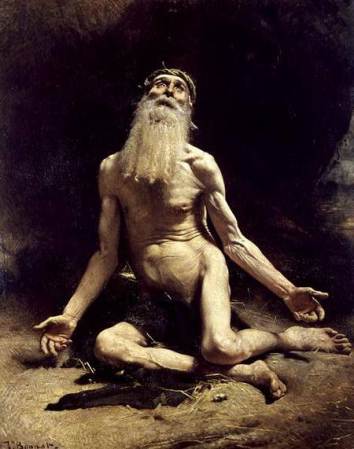
Job (oil on canvas) by Bonnat, Leon Joseph Florentin (1833-1922)

Psalm 102

A prayer of one afflicted, when faint and pleading before the LORD.
 1Hear my prayer, O LORD; let my cry come to you.
 2Do not hide your face from me in the day of my distress. Incline your ear to me; answer me speedily in the day when I call.
 3For my days pass away like smoke, and my bones burn like a furnace.
 4My heart is stricken and withered like grass; I am too wasted to eat my bread.
 5Because of my loud groaning my bones cling to my skin.
 6I am like an owl of the wilderness, like a little owl of the waste places.
 7I lie awake; I am like a lonely bird on the housetop.
 8All day long my enemies taunt me; those who deride me use my name for a curse.
 9For I eat ashes like bread, and mingle tears with my drink,
 10because of your indignation and anger; for you have lifted me up and thrown me aside.
 11My days are like an evening shadow; I wither away like grass.
 12But you, O LORD, are enthroned forever; your name endures to all generations.
 13You will rise up and have compassion on Zion, for it is time to favor it; the appointed time has come.
 14For your servants hold its stones dear, and have pity on its dust.
 15The nations will fear the name of the LORD, and all the kings of the earth your glory.
 16For the LORD will build up Zion; he will appear in his glory.
 17He will regard the prayer of the destitute, and will not despise their prayer.
 18Let this be recorded for a generation to come, so that a people yet unborn may praise the LORD:
 19that he looked down from his holy height, from heaven the LORD looked at the earth,
 20to hear the groans of the prisoners, to set free those who were doomed to die;
 21so that the name of the LORD may be declared in Zion, and his praise in Jerusalem,
 22when peoples gather together, and kingdoms, to worship the LORD.
 23He has broken my strength in midcourse; he has shortened my days.
 24“O my God,” I say, “do not take me away at the midpoint of my life, you whose years endure throughout all generations.”
 25Long ago you laid the foundation of the earth, and the heavens are the work of your hands.
 26They will perish, but you endure; they will all wear out like a garment. You change them like clothing, and they pass away;
 27but you are the same, and your years have no end.

 28The children of your servants shall live secure; their offspring shall be established in your presence.

Psalm 102 is described in its superscription as a prayer of one afflicted, when faint and pleading before the LORD. This type of description is unusual among the psalms. It doesn’t indicate an author to attribute the psalm to, nor does it give instructions for its performance or a reference to a scriptural story that the psalm comes from. This psalm of a suffering one who is alienated from their body, from society, and ultimately from God may have been intended as a psalm that any suffering individual could recite at times where their situation seemed hopeless, and God’s help seemed far away. Imagery of impermanence, loneliness, pain, and shame permeate the complaint of the psalm, but like many psalms of complaint there is a turn towards hope. The psalmist intuits that the answer, “to human finitude and mortality is divine infinitude and immortality.” (Nancy deClaisse-Walford, 2014, p. 754)

The opening language of the psalm resonates with appeals throughout the psalter as Rolf A. Jacobson notes:

The opening appeal to be heard employs language quite typical of these entreaties—hear my prayer, let my cry come unto you (39:12), do not hide your face (27:9; 143:7), turn your ear towards me (31:2; 71:2), make haste to answer me (69:17; 143:7) (Nancy deClaisse-Walford, 2014, p. 751)

Although Rolf Jacobson attributes this to intentionally creating a generic composition for use in the community, the use of familiar language may also reflect a person shaped in the communal worship which utilizes these psalms. The language of prayer and faith is shaped in the worshipping community which shaped the psalmist’s faith and life. Yet, now in a time when the author is alienated from their own physical body, from the community, and from God, they turn to the words that shaped their life when they were physically, socially, and religiously whole.

The psalm moves between personal complaints about their own health and isolation, “I complaints” in Westermann’s terminology, complaints about the actions of isolation and persecution by those in the psalmist’s society, “they complaints”, and complaints about the way that God is treating the psalmist, “you complaints.”[1] The personal complaints begin with an image of transience that reminds me of Ecclesiastes frequently used term hebel (vanity, emptiness). Hebel literally means smoke, mist, or vapor but is often used metaphorically to refer to the emptiness of life.[2] Now for the psalmist their days pass away like smoke and their bones burn like a furnace. Their life down to their very bones is going up in smoke while their heart withers like grass and they are too far gone to even eat the bread that could give them strength.  Their songs have turned to groans and their body now is transforming into a (barely) living skeleton. We don’t know if they were suffering from an illness, but they attribute their suffering to God’s judgment upon them. Their suffering is also done in isolation, they are like an unclean owl of the wastelands or a lonely bird on a roof. These lonely images of birds heighten the feeling of the psalm, for the sufferer is not only weak but they are abandoned.

The social complaints are also sharply worded as the psalmist’s unnamed name is synonymous with a curse among their enemies. Their personal weakness and isolation are viewed in the society as a curse from God, and enemies have taken advantage of this weakness. The only nourishment left for this abandoned one is the bread of ashes and the drink of tears.  Yet, behind both the physical pain and suffering and the social isolation is the LORD. We are never told of any sin that this poet has committed, but they view their suffering because of God’s anger and distance. In the words of the psalm God has cast the suffering one aside and yet hope resides in God repenting from God’s attitude towards the psalmist, turning the face and hearing with the ear and responding with grace and healing.

In contrast to the evanescent position of the psalmist is the strength and might of the LORD. The psalmist now joins his fate to the action of God to have compassion on Zion. It is possible that this psalm originates in the time of the exile where there is hope for the rebuilding of Zion and rescue the people from the destitute position as exiles in a foreign land. Yet, even without the context of the Babylonian exile, the turn to hope is based on the faithfulness of God for the people and a belief that God’s anger lasts only a moment, but God’s favor is for a lifetime.[3] The poet’s strength may have been broken in the middle of their life by God’s action, but if God wills it will be renewed. The heavens and the earth which seem so permanent to humanity are like a garment that can easily be changed by the powerful and permanent God. God will continue to endure and only in God can this suffering one hope to find a renewed physical, social, and religious life. The psalmist claims their familial bond to the LORD the God of Israel and now awaits the parental turning of their God to the children of God’s servants.


[1] Rolf A. Jacobson notes this helpful pattern citing Westermann, The Psalms (54-57). (Nancy deClaisse-Walford, 2014, p. 752)

[2] Psalm102 does not use the term hebel but the combination of words of impermanence create a similar resonance for me as Ecclesiastes.

[3] Psalm 30:5.

Psalm 101 A Leader Shaping a Community of Character

The Presentation of the Torah By Édouard Moyse – Own work Musée d’art et d’histoire du Judaïsme, CC BY-SA 4.0, https://commons.wikimedia.org/w/index.php?curid=41893002

Psalm 101

Of David. A Psalm.
 1I will sing of loyalty and of justice; to you, O LORD, I will sing.
 2I will study the way that is blameless. When shall I attain it? I will walk with integrity of heart within my house;
 3I will not set before my eyes anything that is base. I hate the work of those who fall away;
 it shall not cling to me.
 4Perverseness of heart shall be far from me; I will know nothing of evil.
 5One who secretly slanders a neighbor I will destroy. A haughty look and an arrogant heart
 I will not tolerate.
 6I will look with favor on the faithful in the land, so that they may live with me; whoever walks in the way that is blameless shall minister to me.
 7No one who practices deceit shall remain in my house; no one who utters lies shall continue in my presence.
 8Morning by morning I will destroy all the wicked in the land, cutting off all evildoers from the city of the LORD.

As modern readers we tend to read the psalms individualistically, and from that perspective this psalm can sound judgmental. “Do not judge, so that you may not be judged”[1] may resonate with many modern readers but if we read the psalm from this perspective, we fundamentally have missed the point of this psalm written for or by a ruler in a communal society. I am heavily influenced by Charles Taylor’s description of society prior to our disenchanted view of the world, and I think his description of the community or parish deploying the collective power of its prayers, worship, and faith for blessing and protection is instructive here. In Taylor’s words, “Villagers who hold out, or even denounce the common rites, put the efficacy of these rites in danger, and hence pose a menace to everyone.” (Taylor, 2007, p. 42) Especially after working through the prophet Ezekiel, it is clear that the Hebrew view of the world in relation to God expects a society of justice and a ruler who enforces the character of the world that God’s law articulates. The king in Jerusalem, and leaders throughout history have been responsible for checking the selfish impulses of those who have the power to exploit others. Allowing injustice to take root in their kingdom quickly corrupts not only the individual practicing the injustice but the entire society.

This is a psalm of loyalty (hesed)[2] and justice, two primary characteristics of God that are to be embodied in the community of the faithful. Throughout this psalm the ideas of being blameless and having integrity translate the Hebrew terms tam and tamim.[3] This psalm is a royal psalm, and so the one studying the way of blamelessness (tamim) likely points to the ideal of a king articulated in Deuteronomy 17:14-20. Yet, the king can acknowledge that their practice of these ideals of loyalty and justice and the way of blamelessness are still aspirational.

The leader aspires to walk with integrity of heart and to keep its opposite, perverseness in heart, far from them. The metaphor of walking (halak) is often used in Hebrew about the way one lives one’s life. Halakah is a term commonly used to talk about the law and one’s life is to be oriented around the practices outlined in the law of God. In addition, the heart in Hebrew thought is not the seat of emotion, but the seat of will and discernment. This leader’s life and will are set upon God’s way for the community and not on the way that will enrich themselves or allow them to accrue more power. This leader in following God is walking in God’s way, learning to set their heart on the things of integrity and justice, and their character is shaped by the God they serve.

The character of the leader shapes the character of the community. One of the critical acts of leading a community is setting boundaries that protect those under the leader’s authority. Those who slander a neighbor, who are haughty and arrogant and feel they are above the law, who practice deceit and utter lies undermine the ethos the leader is attempting to cultivate. The leader seeks the way of loyalty and justice, a blameless way that models the character of God, and the presence of those who follow the path of wickedness, deceit and injustice are a danger to the life of the community.

James Mays notes that Martin Luther called this psalm, “the mirror of a monarch” and relates the story of Ernest the Pious, Duke of Saxe-Gotha who would send an unfaithful minister a copy of the 101st Psalm when that official had done anything wrong. (Mays, 1994, pp. 321-322) A leader who models their leadership on the loyalty and justice of God, who strives to study the way that is blameless and walk in integrity of heart was unusual both in biblical times and in our own time. Yet, it is path that the way of God expects for those entrusted with power in family, land, city, congregation, or the world. The things we invest in with both our resources and our actions show where our heart is located. As Jesus would state in the Sermon on the Mount, “where your treasure is, there your heart will be also.”[4] The life of faith is not merely a quest for individualistic righteousness, but to shape a community of loyalty and justice that seek the way of blamelessness and walk in integrity. Both Hebrew and Christian communities have often fallen short of the vision of this psalm, but leaders can call the community together to this of life shaped by the character of the God we attempt to follow. Communities that are in the heart shaping business of studying the way that is blameless and modeling walking with integrity.


[1] Matthew 7:1.

[2] Hesed is one of those rich Hebrew concepts that loses richness in translation. It is often translated as steadfast love in English. I am partial to ‘covenantal faithfulness’ as a translation of this term but it almost always points to the connection between God and God’s people. A Christian/New Testament term that is heavily related to God’s hesed is grace.

[3] See my discussion on Perfection and Blamelessness in the Bible.

[4] Matthew 6:21.

Psalm 96 A New Song of God’s Triumph

Psalm 96

1 O sing to the LORD a new song; sing to the LORD, all the earth.
2 Sing to the LORD, bless his name; tell of his salvation from day to day.
3 Declare his glory among the nations, his marvelous works among all the peoples.
4 For great is the LORD, and greatly to be praised; he is to be revered above all gods.
5 For all the gods of the peoples are idols, but the LORD made the heavens.
6 Honor and majesty are before him; strength and beauty are in his sanctuary.
7 Ascribe to the LORD, O families of the peoples, ascribe to the LORD glory and strength.
8 Ascribe to the LORD the glory due his name; bring an offering, and come into his courts.
9 Worship the LORD in holy splendor; tremble before him, all the earth.
10 Say among the nations, “The LORD is king! The world is firmly established; it shall never be moved. He will judge the peoples with equity.”
11 Let the heavens be glad, and let the earth rejoice; let the sea roar, and all that fills it;
12 let the field exult, and everything in it. Then shall all the trees of the forest sing for joy
13 before the LORD; for he is coming, for he is coming to judge the earth. He will judge the world with righteousness, and the peoples with his truth.

Psalm 96 is an exultant song of God’s glory and reign over all gods, nations, and the creation itself. 1 Chronicles 16 places the majority of this psalm within the song of thanksgiving appointed by David (1 Chronicles 16: 23-33) which marks the placing the placing of the ark of God in the tent. This psalm might have its origin in the songs of David, and its placement in 1 Chronicles creates an event that would make sense for this song of God’s triumphant ascension. However, this psalm also articulates the defiant faith of the chosen people in their God as they attempt to remain faithful in a multireligious world where they are not dominant among the nations. This new song allows the singers and hearers to articulate a vision of a world already giving glory and praise to the LORD who is enthroned over all gods and kings.

Three times the hearers are commanded to sing to the LORD, and the hearers are not limited to Judah or Israel. All the earth is to join in this song of blessing to the God of salvation. The song proclaims the gospel[1] that God has triumphed over the forces that opposed God’s reign. God’s works and glory are to extend to all the nations as the LORD transcends all the gods of the nations. The gods of the nations are ‘idols’ (NRSV), ‘nobodies’ ( (Brueggemann, 2014, p. 415) or ‘ineffective and incompetent.’ (Mays, 1994, p. 308) The LORD is the creator of the heavens compared to all the ineffective and incompetent nobodies who the nations once gave their allegiance to. The peoples and families of the earth are to bear witness to the glory and strength that is due to God. The nations are to stream to Jerusalem to bring an offering before God as the prophets envision. (Isaiah 2: 2-3, Micah 4: 1-2, Zechariah 8:21-23) The temple of God in Zion now occupies the central place in the world where all the families of the peoples come together in awe filled worship and celebration of the God who reigns over all the heavens and the earth.

God’s reign over the earth is to be a reign of justice that brings joy to the peoples of the earth and to the creation. The heavens, the sea, and the land all join in this praise of the nations. Those who have reigned with injustice, whose actions have done violence to people and the earth are now removed so the nations, the land, the sea, and the sky can all heal. The psalm envisions God’s kingdom coming and God’s will being done on earth as it is in heaven.
The faithful ones who worship God declare God does reign over the earth and then enter into the tension of a world where God’s reign is not realized. Injustice continues to occur. The heavens, sea, and the earth are polluted by those who improperly use the gifts of creation and the blood spilled in conflict and war. The nations continue to give their allegiance to idols that are ineffective nobodies who cannot deliver what they promise. This psalm may be easier to sing in moments of triumph, but the defiant faith of this psalm bears witness to the world of the reality faith allows them to see: that God’s kingdom is already present in the midst of the world and the time will come when the nations will all see, worship, and give glory to the God who reigns over the heavens and the earth.

[1] The Hebrew bissar is the verb “for the duty of the herald who precedes a victor to bring a report to those who await good news from the battle.” (Mays, 1994, p. 308) This verb is normally translated in the Septuagint as the Greek euangelion translated as gospel in the New Testament.

Psalm 92:  Song of the Sabbath

Cedrus libani var. libani — Lebanon Cedars; old and sacred grove. In the Cedars of God nature preserve in the Mount Lebanon Range, North Lebanon. Photograph By Jerzy Strzelecki – Own work, CC BY-SA 3.0, https://commons.wikimedia.org/w/index.php?curid=3356425

Psalm 92

<A Psalm. A Song for the Sabbath Day.>
1 It is good to give thanks to the LORD, to sing praises to your name, O Most High;
2 to declare your steadfast love in the morning, and your faithfulness by night,
3 to the music of the lute and the harp, to the melody of the lyre.
4 For you, O LORD, have made me glad by your work; at the works of your hands I sing for joy.
5 How great are your works, O LORD! Your thoughts are very deep!
6 The dullard cannot know, the stupid cannot understand this:
7 though the wicked sprout like grass and all evildoers flourish, they are doomed to destruction forever,
8 but you, O LORD, are on high forever.
9 For your enemies, O LORD, for your enemies shall perish; all evildoers shall be scattered.
10 But you have exalted my horn like that of the wild ox; you have poured over me fresh oil.
11 My eyes have seen the downfall of my enemies; my ears have heard the doom of my evil assailants.
12 The righteous flourish like the palm tree, and grow like a cedar in Lebanon.
13 They are planted in the house of the LORD; they flourish in the courts of our God.
14 In old age they still produce fruit; they are always green and full of sap,
15 showing that the LORD is upright; he is my rock, and there is no unrighteousness in him.

The superscription of Psalm 92 indicates that it is a psalm for the Sabbath Day, and although the Sabbath is never mentioned in the text of the psalm there are several reasons for this being an appropriate psalm for the Sabbath. The name of God is mentioned seven times[1] in the psalm for the seventh day set apart as holy to the LORD. The psalm begins with praising God is thankfulness, song, and declaration and ends in scenes of peaceful rest. The Sabbath as a day of rest is due the great works of God in creation, in the deliverance of the people from slavery, and the continued provision for those who seek God’s ways. Both commandments on the Sabbath[2] point to a vision of life where the people can trust in God’s provision and protection and lay down their burdens and fears to celebrate a day of gratitude and rest.

To most modern people their assumptions about life rotate around ideas of ownership and self-sufficiency. The theology of the bible understands life rotating around stewardship of the gifts that God provides and dependance upon God’s continuing work and provision for God’s people. From this perspective the psalm declares that it is good to live a life of gratitude to God for the works God has done. That gratitude is expressed in song, declaration, prayer, and praise. The psalmist lives in the trust that God provides for those who seek God’s ways. As J. Clinton McCann, Jr. points out:

From the perspective of Psalm 92, the irony is that the more sophisticated and self-sufficient we think we are, the more stupid and insecure we actually are. A renewed sense of the greatness of God’s works, of the stunning depth of God’s design for the cosmos, and of the breadth of God’s sovereign claim upon humankind, is urgently needed (see vv. 5-9). (NIB IV: 1052)

The wicked may spring up like grass, evildoers may flourish, those who seek self-sufficiency apart for God may succeed for a time, but the faith of the psalmist sees their efforts as foolish. Their lack of insight into the true nature of the world and God’s activity upon it makes them dullards. Their actions may seek to oppose those who trust in God, but it is God who anoints them and makes them strong.[3] The wicked are like grass but the righteous are like palm or cedar trees which are planted in the house of God flourishing and enduring.

James L. Mays notes that the Mishnah Tamid in speaking about Psalm 92 indicates, “It is a psalm and a song for the era to come, for the day that will be entirely Sabbath for eternal life.” (Mays, 1994, p. 300) The perspective of the psalmist moves beyond the immediate observations of the present where those who seek their own self-sufficiency and security apart from God’s provision may spring up like grass. They look forward to a vision of God’s future where the righteous are rewarded with fruitful flourishing as they reside in God’s court. Sabbath as a time of rest and praise anticipates this reality. The actions of gratitude and praise are anticipations the times when the steadfast love and faithfulness of God strengthen the righteous ones and God is demonstrated to be the upright rock that the people can trust.

[1] In English translations of the Hebrew texts when LORD is placed in capital letters it indicates that the four consonants YHWH which comprise the name of God given to Moses in Exodus 3 are present in Hebrew.

[2] The explanation of the Sabbath commandments differs in Exodus 20 and Deuteronomy 5. In Exodus the justification for the seventh day is God’s creation of the world in six days and resting on the seventh, while in Deuteronomy the explanation is remembering that the people were slaves in Egypt and the LORD delivered them.

[3] Exalting one’s horn is an idiom for strength.

Psalm 85 Waiting For God’s Kingdom to Come

Kiss of Peace and Justice by Laurent de La Hyre (1654) – The figures of Peace (burning the weapons of war) and Justice (holding a sword and scales) embrace in a quiet landscape. The Latin inscription under the antique urn reads “Justice and Peace kissed” (referring to an Old Testament verse, Psalms 85:11). The subject may have had political significance: the painting’s date coincides with the end of the Fronde, a period of civil war in France during which the parliament (courts of appeal) and the nobility sought—unsuccessfully—to limit the power of the monarchy, Taken in 2012, CC0, https://commons.wikimedia.org/w/index.php?curid=18176364

Psalm 85

<To the leader. Of the Korahites. A Psalm.>
1 LORD, you were favorable to your land; you restored the fortunes of Jacob.
2 You forgave the iniquity of your people; you pardoned all their sin. Selah
3 You withdrew all your wrath; you turned from your hot anger.
4 Restore us again, O God of our salvation, and put away your indignation toward us.
5 Will you be angry with us forever? Will you prolong your anger to all generations?
6 Will you not revive us again, so that your people may rejoice in you?
7 Show us your steadfast love, O LORD, and grant us your salvation.
8 Let me hear what God the LORD will speak, for he will speak peace to his people, to his faithful, to those who turn to him in their hearts.
9 Surely his salvation is at hand for those who fear him, that his glory may dwell in our land.
10 Steadfast love and faithfulness will meet; righteousness and peace will kiss each other.
11 Faithfulness will spring up from the ground, and righteousness will look down from the sky.
12 The LORD will give what is good, and our land will yield its increase.
13 Righteousness will go before him, and will make a path for his steps.

Throughout the psalms there is a rhythm that moves between the memory of God’s actions in the past, the crisis of the present, and a hopeful vision of the world that God brings when God acts on behalf of the psalmist and the people. God has acted in the past, God hears the cries of God’s people as they endure a time of judgment, but God’s anger will always yield to God’s steadfast love and faithfulness. The crisis which is a part of the people’s wanderings into a spiritual wilderness will be resolved by God’s shalom (peace) and righteousness which are united in embrace. The poetry of hope emerges out of the reservoir of memory which calls the people to return to the practices of faithfulness and to a life in covenant with the LORD.

The narrative of Israel is filled with times when the people turned from the ways of God and do evil in the sight of the LORD and then their God in anger abandons them to their enemies. From the construction of the golden calf and the reestablishment of the covenant (Exodus 32-34) to the pernicious pattern which repeats continually through the book of Judges, David’s betrayal with Bathsheba, Solomon’s adoption of the worship of other gods, and then the various kings of Israel and Judah who do evil and lead the people away from the way of the God of Israel there are numerous touchpoints in the people’s history where they can reflect on how God was anxious to receive their repentance. The LORD has proven that their God does forgive and pardon, does withdraw wrath and turn from hot anger, and does restore the people.

The petitioners ask for what their ancestors have received in the past. God’s anger may be justified but the people cannot endure it much longer. They present no argument for God’s restoration of the people other than God’s history of doing so. They appeal to the steadfast love of God to grant them the salvation they need and to overcome God’s indignation. Yet, the psalmist also desires more than a temporary return to the LORD’s ways. The poet trusts that God will speak shalom to the people. Yet, the end of verse eight in Hebrew is “but let them not return to stupidity.”[1]

The hoped for “renewal, restoration, and revival of the community is completely a gift from God.” (Brueggemann, 2014, p. 369) Poetry moves beyond a tame hope for the restoration of the past and leaps into a beautiful and lyrical vision of a world where the ways of God and the ways of the world unite. They trust that God’s salvation is at hand and that the longed-for reunion will occur after the desperate time of separation. God’s presence and glory will again dwell among the people. God’s hesed (steadfast love) meets with faithfulness among the people. Righteousness (living in the way of the law) and shalom[2] (God’s gift of peace and harmony) embrace in a kiss of reconciliation. Faithfulness grows like the grain from the earth while righteousness comes down like the sun and rain from the heavens. The reconciliation between God and God’s people doesn’t just mean peace for the people, but restoration for the creation as the land yields its increase. This is a beautiful lyrical imagination of what God’s kingdom arriving on earth as in heaven looks like through the poet’s words. Righteousness goes before God on the journey as God’s arrival with steadfast love and peace are at hand.

[1] The NRSV follows the Septuagint (LXX, the Greek translation of the Hebrew Scriptures) by stating “to those who turn to him in their hearts.” But as Beth Tanner points out the Hebrew (MT) is readable and there isn’t a compelling reason to adopt the LXX reading instead. (Nancy deClaisse-Walford, 2014, p. 656)

[2] Shalom is not just the absence of conflict. It also includes the idea of wholeness or harmony where people and creation live in comfort without fear. (Nancy deClaisse-Walford, 2014, p. 658)

Psalm 72 Leading God’s Covenant People

Luca Giordano, Dream of Solomon, (1694-1695)

Psalm 72

<Of Solomon.>

1 Give the king your justice, O God, and your righteousness to a king’s son.
2 May he judge your people with righteousness, and your poor with justice.
3 May the mountains yield prosperity[1] for the people, and the hills, in righteousness.
4 May he defend the cause of the poor of the people, give deliverance to the needy, and crush the oppressor.
5 May he live while the sun endures, and as long as the moon, throughout all generations.
6 May he be like rain that falls on the mown grass, like showers that water the earth.
7 In his days may righteousness flourish and peace abound, until the moon is no more.
8 May he have dominion from sea to sea, and from the River to the ends of the earth.
9 May his foes bow down before him, and his enemies lick the dust.
10 May the kings of Tarshish and of the isles render him tribute, may the kings of Sheba and Seba bring gifts.
11 May all kings fall down before him, all nations give him service.
12 For he delivers the needy when they call, the poor and those who have no helper.
13 He has pity on the weak and the needy, and saves the lives[2] of the needy.
14 From oppression and violence he redeems their life; and precious is their blood in his sight.
15 Long may he live! May gold of Sheba be given to him. May prayer be made for him continually, and blessings invoked for him all day long.
16 May there be abundance of grain in the land; may it wave on the tops of the mountains; may its fruit be like Lebanon; and may people blossom in the cities like the grass of the field.
17 May his name endure forever, his fame continue as long as the sun. May all nations be blessed in him; may they pronounce him happy.
18 Blessed be the LORD, the God of Israel, who alone does wondrous things.
19 Blessed be his glorious name forever; may his glory fill the whole earth. Amen and Amen.
20 The prayers of David son of Jesse are ended.

This royal psalm which looks with optimism at the coronation of new king could easily be met with cynicism for multiple reasons, but even our jaded imaginations have something to learn from this psalms vision of the way the nation, properly administered, could be. One reason for our jaded imaginations can be our own experience with politicians and powerbrokers who claim to be ‘protectors of the poor’ but a sober examination of their actions highlights the ways in which they have enriched themselves or their allies. The biblical narration of Israel and Judah’s history of monarchs as told by 1 and 2 Kings, 1 and 2 Chronicles, and the recorded witness of the prophets tell a vastly different story from the utopic vision of kingship imagined by this psalm and other places in the Hebrew Scriptures. Particularly in a time where dystopic literature has become a dominant way of telling stories that highlight uncomfortable truths we may have little interest in the seemingly idealistic vision of what a monarch or political leader can mean for a people and the world. Yet, there is some undying residue of hope that is essential to the Jewish and Christian worldview: a belief in what God can do through the right person to further God’s kingdom.

The bracketing of this psalm by the names of the first two Davidic kings, David and Solomon, provides two initial reading possibilities. One possibility is that the psalm is written by Solomon, perhaps early in his reign before he turns his wisdom to acquisition, and it reflects Solomon’s request for wisdom to, “discern between good and evil” so that he may faithfully govern the people of Israel. (1 Kings 3: 1-14) Another possible reading suggested by the closing of this psalm is that this is a final psalm of David at the ascension of his son, Solomon, and the superscription indicates that the psalm refers to Solomon. Narratively I prefer this second option where David pronounces a blessing on the upcoming and hopeful coronation of his son without knowing how Solomon’s later choices will turn away from this vision. It makes less sense for Solomon writing this at some later date even though it indicates knowledge of events within the early reign of Solomon. The psalm may be written at a later date tapping into the hope of the Solomonic reign, and trying to provide another witness to the incoming king, along with Deuteronomy 17: 14-20, to encourage the new ruler to examine their rule in light of God’s covenantal expectations for the people and the nation’s part in God’s reign on earth.

The Davidic monarch was one of the central symbols of God’s provision for the people and when Israel and Judah narrate their history it is centered on a theological judgment of each king’s faithfulness. The king, the temple, and the land are all viewed as a means through which God can provide protection and care for the people. The focus of Psalm 72 is the king and how the “regular rhythm between covenantal imperatives addressed to the king and divine promises made to the king that are conditioned on the imperatives.” (Brueggemann 2014, 313) The king is to lead in a way that enables the entire nation, including the exploited poor of the people, to experience God’s justice and the blessings that come from it. This covenant shaped imagination of what the society of the people of God could be is a strong contrast to the societies of Egypt where the people had served as slaves for the benefit of the Pharaoh. Now the king is to be a defender of the cause of the poor rather than their exploiter.

The covenantal imperatives of justice and righteousness by the king’s reign over the people lead to the divine promise of shalom which comes forth from the creation for the people. Living in accordance with the vision of God is expected to bring about wholeness, completeness, harmony, and both personal and communal well-being and prosperity. A non-exploitative government overseen by a faithful monarch who judges and defends the needs according to God’s justice and righteousness may contradict the self-interest of the ruler to accumulate personal power and wealth, but this psalm shares the vision of Deuteronomy.

 16 Even so, he must not acquire many horses for himself, or return the people to Egypt in order to acquire more horses, since the LORD has said to you, “You must never return that way again.” 17 And he must not acquire many wives for himself, or else his heart will turn away; also silver and gold he must not acquire in great quantity for himself. (Deuteronomy 17: 16-17)

It is God who ultimately provides longevity and prosperity for the king, and through the king for all the people. One could perhaps make the accusation that this is a divine trickle-down economics, but that would fundamentally misunderstand the covenantal identity of the people and the way that the law was intended to structure the society they lived in. Yet the kings faithful reign was to be a blessing for not only the people of Israel, but also a force that nourished the land like rain showers on the soil.

Throughout the royal psalms there is an expectation that God will extend God’s power and reign over the nations through the king. Psalms 2, 18, 20,21, and 45 (all royal psalms directly referring to the king) expect God to provide deliverance for the faithful king and people from the military might of the nations that surround them and to extend God’s reign beyond the boundaries of Israel. Some view this a endorsing a larger empire that conquers the lands that stretch from the ocean to the Euphrates river where Jerusalem becomes an imperial capital, but Israel was never a military powerhouse that could establish an empire nor does the vision of the ideal king rest on military might or prowess. The psalm imagery also imagines Jerusalem as the trade center of the world with wealth and gifts from the ends of the earth flowing through the gates of the city in tribute. But the psalm, after leaning into these images of greater influence and wealth immediately returns to the cause of this experience of prosperity: the king’s justice and deliverance of the poor and needy.

In the royal psalms the king is often viewed as God’s special vessel and a way in which the people of Israel and beyond would come to know what their God is like. The king, like their God, is one who saves the weak from oppression and violence, provides justice and righteousness to the needy, restrains the powerful and creates a space where the shalom of God can be received. They become a means for the God’s kingdom to be experienced on earth.  The choice to follow a different ideal of leadership by most of the kings of Israel and Judah would give rise to the fiery words of the prophets. Just as the good king is credited with extending the reign of God in this psalm, the unfaithful rulers are judged by God for their unfaithful shepherding of God’s people. The psalm may have originally ended with verse seventeen which has a natural closing with the king assuming the vocation of Abraham in language that mirrors Genesis 12: 1-3, “that all nations may be blessed in him.

The psalm, as we receive it, transitions from the king to the God of Israel in worship and praise and then closes this section of the psalter by indicating this is the last of David’s psalms. The primary actor throughout the psalms is the God of Israel, but the faithful ones who intercede, give thanks, and sometimes lead on behalf of that God may also be a part of the reign of God extending to the ends of the earth. The people of Israel and the writers of the psalms experienced times of oppression by enemies, the struggle of living under unfaithful leaders, and yet they lived in hope of God’s protection and action. Modern people may be critical of this psalm or Deuteronomy 17: 14-20 as utopic visions that are incompatible with the self-interested nature of humans, yet I’m not convinced that our dystopic visions have been any more effective at challenging the misuse of power. Deuteronomy and this psalm provide a vision for a faithful leader to enact a portion of God’s reign on earth and also provide the language for the prophetic critique of leaders who become unfaithful shepherds of the flock God entrusted to them.

[1] Hebrew shalom which is often translate ‘peace’ but has broader connotations of wholeness, completeness, well-being and prosperity.

[2] The word here and in the following verse is once again nephesh which is often translated ‘soul’ but in Hebrew refers to the entirety of ‘life.’

Psalm 71 A Prayer for Help Shaped by a Life of Worship

An Old Woman Reading, Probably the Prophetess Hannah by Rembrandt (1631)

Psalm 71

1 In you, O LORD, I take refuge; let me never be put to shame.
2 In your righteousness deliver me and rescue me; incline your ear to me and save me.
3 Be to me a rock of refuge, a strong fortress, to save me, for you are my rock and my fortress.
4 Rescue me, O my God, from the hand of the wicked, from the grasp of the unjust and cruel.
5 For you, O Lord, are my hope, my trust, O LORD, from my youth.
6 Upon you I have leaned from my birth; it was you who took me from my mother’s womb. My praise is continually of you.
7 I have been like a portent to many, but you are my strong refuge.
8 My mouth is filled with your praise, and with your glory all day long.
9 Do not cast me off in the time of old age; do not forsake me when my strength is spent.
10 For my enemies speak concerning me, and those who watch for my life consult together.
11 They say, “Pursue and seize that person whom God has forsaken, for there is no one to deliver.”
12 O God, do not be far from me; O my God, make haste to help me!
13 Let my accusers be put to shame and consumed; let those who seek to hurt me be covered with scorn and disgrace.
14 But I will hope continually, and will praise you yet more and more.
15 My mouth will tell of your righteous acts, of your deeds of salvation all day long, though their number is past my knowledge.
16 I will come praising the mighty deeds of the Lord GOD, I will praise your righteousness, yours alone.
17 O God, from my youth you have taught me, and I still proclaim your wondrous deeds.
18 So even to old age and gray hairs, O God, do not forsake me, until I proclaim your might to all the generations to come. Your power
19 and your righteousness, O God, reach the high heavens. You who have done great things, O God, who is like you?
20 You who have made me see many troubles and calamities will revive me again; from the depths of the earth you will bring me up again.
21 You will increase my honor, and comfort me once again.
22 I will also praise you with the harp for your faithfulness, O my God; I will sing praises to you with the lyre, O Holy One of Israel.
23 My lips will shout for joy when I sing praises to you; my soul also, which you have rescued.
24 All day long my tongue will talk of your righteous help, for those who tried to do me harm have been put to shame, and disgraced.

The practice of worship shapes the language of our prayers and informs how we talk about God’s action in the world. Psalm 71 bears witness to this process by bringing together language from several psalms to address the situation of a faithful elderly worshiper crying once again for God’s deliverance. These psalms which have been a part of the regular recitations of those seeking to live a righteous life now shape a new prayer lifted up to God. Even as this psalm reflects on what has gone before, it becomes a pattern for others to build their own prayers and songs upon. The psalm becomes a medium where the psalmist proclaims God’s might to generations to come.

A consistent theme throughout the psalms is that God is the source of refuge and deliverance from one’s enemies. God is the refuge, the strong fortress, and the rock, all familiar images for God’s protection. The lifelong faith of the psalmist begins metaphorically from birth where God serves as the midwife delivering the psalmist from the mother’s womb. The trust of the psalmist is formed by a lifetime of worship, prayer, song, and the experience of God’s protection and rescue.

This praying one has been a portent to many. Many assume that they are a portent because they were judged by God for some past action, but it is equally likely that they are a portent of what a life lived under God’s favor is like. Although this is a psalm petitioning for God’s deliverance from enemies there is no indication that the psalmist feels distant from God or judged by God. Even though this is a psalm asking for God’s deliverance and protection it maintains a confident note of praise throughout. The current struggle that the psalmist endures does not erase a lifetime of God’s provision or the language of praise formed in worship.

In a hostile world the vulnerability that comes with old age can be a cause of great anxiety and danger. The enemies in the psalms are often looking for weaknesses that they can exploit for their own benefit, and their action here goes against the intent of the law that God provided Israel. The commandment on honoring father and mother in both Exodus 20 and Deuteronomy 5 is primarily about caring for parents in their old age and the Hebrew culture was to be a culture that honored the elderly rather than preying on them. Unfortunately, in any conflict it is often the weak: the sick, the elderly, the disabled, women, children, and the poor who often are viewed as expendable. The enemies are portrayed like vultures who are waiting to pick at the psalmist’s carcass and their actions are viewed as shameful. Perhaps they are waiting to seize power from this psalmist and the psalmist, on their own, is unable to resist them as vigorously as they would have been able to when they were younger. Their vulnerability forces them to rely upon God as their refuge and strength and to bring these dishonorable ones to justice.

The life of faith is a life shaped by the praising of God for God’s faithfulness and steadfast love, and even in times of trouble this praise comes naturally to the psalmist’s lips. Even psalms of lamentations will normally turn to praise and this unnamed psalm writer[1] uses rhythms and patterns that mirror several other psalms to give voice to this praise in the midst of their crisis. J. Clinton McCann points to several places in the psalm where it mirrors Psalms 22, 31, 35, 36, 38, and 40 in addition to the verbal links with Psalm 70. (NIB IV: 958) In the midst of their personal crisis the psalmist leans into the hymnbook looking for words to express their concern and confidence in God. It is likely that we see in this psalm the process of building upon the language of faith learned in worship to express the needs to God in a new time.

The psalmist asks that they be allowed to “proclaim your might to all the generations to come.” (18) In this psalm becoming a part of the scriptures this prayer is granted. The actions of this unnamed psalmist weaving together the language they learned from a lifetime of faithfulness to respond to the struggles brought by the vulnerability of growing older becomes one of the many patterns of faithful praising and crying out to God in the midst of their life recorded in the scriptures. God was there as a midwife to begin the faithful one’s life and God will accompany the psalmist and those who read these psalms throughout their life. The writer of this psalm trusts that God is active in the world and can use troubles and calamities and the deliverance from these troubles to shape the life of the faithful one and to witness to God’s providence in the world. Instruments and voices are lifted up to praise God who has been faithful in the past. The psalmist sings in confidence that God will deliver in the present. The lessons of a life shaped by worship are not quickly forgotten.

[1] Psalm 71 is one of the psalms with no attribution.