Tag Archives: Old Testament

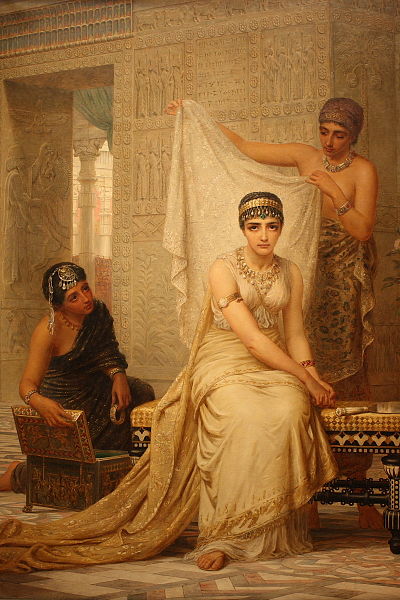
Reality TV in the Ancient World: Esther 2: 1-11

the-bachelor-logo21

Esther 2:1-11

After these things, when the anger of King Ahasuerus had abated, he remembered Vashti and what she had done and what had been decreed against her. 2 Then the king’s servants who attended him said, “Let beautiful young virgins be sought out for the king. 3 And let the king appoint commissioners in all the provinces of his kingdom to gather all the beautiful young virgins to the harem in the citadel of Susa under custody of Hegai, the king’s eunuch, who is in charge of the women; let their cosmetic treatments be given them. 4 And let the girl who pleases the king be queen instead of Vashti.” This pleased the king, and he did so.

                5 Now there was a Jew in the citadel of Susa whose name was Mordecai son of Jair son of Shimei son of Kish, a Benjaminite. 6 Kish had been carried away from Jerusalem among the captives carried away with King Jeconiah of Judah, whom King Nebuchadnezzar of Babylon had carried away. 7 Mordecai had brought up Hadassah, that is Esther, his cousin, for she had neither father nor mother; the girl was fair and beautiful, and when her father and her mother died, Mordecai adopted her as his own daughter. 8 So when the king’s order and his edict were proclaimed, and when many young women were gathered in the citadel of Susa in custody of Hegai, Esther also was taken into the king’s palace and put in custody of Hegai, who had charge of the women. 9 The girl pleased him and won his favor, and he quickly provided her with her cosmetic treatments and her portion of food, and with seven chosen maids from the king’s palace, and advanced her and her maids to the best place in the harem. 10 Esther did not reveal her people or kindred, for Mordecai had charged her not to tell. 11 Every day Mordecai would walk around in front of the court of the harem, to learn how Esther was and how she fared.

Here we have the Old Testament’s version of the Bachelor where many young women are gathered up to try to impress a single man. Now the Old Testament version would not be fit to show on network television, even though the book of Esther does not go into any details like modern literature would do, it is quite clear that how these young girls please the king determines whether they are to be the queen or not. There is no rose ceremony, nor have these young girls chosen this path…it is the way of the time: a powerful man has the authority to take the best and brightest to himself. The King has the power, and as Mel Brooks would say, “It’s good to be the king!” If you make a complete fool of yourself and allow your words to become law, law which cannot be revoked and you put your queen, who it seems like King Ahasuerus is missing, aside and prevent her from being in your present-why not get a new and replacement queen.

Power and powerlessness are put side by side in the book of Esther, the king has all the power, but then enters Mordecai, the exile, and Esther (or her Jewish name Hadassah used only here), the orphan, who have no power. Esther is taken into the custody of Hegai, the king’s eunuch, and her life is in another’s hands. From this point forward her life depends upon how she can please others. As much as we may want to rebel against this, in the world of Esther her life is not in her own hands. Because she pleases Hegai she gets cosmetic treatments, food, maids and the best place in the house. On the one hand this is probably like the young teenager who suddenly finds stardom and realizes quickly that their life is no longer their own, but rather many others want a piece of her life. Esther’s life is now contained in the bubble of the king’s harem and she will have her audition night with the king, but she and Mordecai are ultimately powerless in the midst of the powerful king seeking one who pleases him.

purple rose 01 by picsofflowers.blogspot.com

If You Make a Decision While Drunk, Make Sure You Have Good Advisers: Esther 1: 13-21

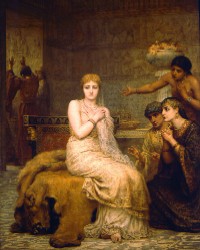
Vashti Refuses the King's Summons, painting by Edward Long (1879)

Vashti Refuses the King’s Summons, painting by Edward Long (1879)

Esther 1: 13-21

                13 Then the king consulted the sages who knew the laws (for this was the king’s procedure toward all who were versed in law and custom, 14 and those next to him were Carshena, Shethar, Admatha, Tarshish, Meres, Marsena, and Memucan, the seven officials of Persia and Media, who had access to the king, and sat first in the kingdom): 15 “According to the law, what is to be done to Queen Vashti because she has not performed the command of King Ahasuerus conveyed by the eunuchs?” 16 Then Memucan said in the presence of the king and the officials, “Not only has Queen Vashti done wrong to the king, but also to all the officials and all the peoples who are in all the provinces of King Ahasuerus. 17 For this deed of the queen will be made known to all women, causing them to look with contempt on their husbands, since they will say, ‘King Ahasuerus commanded Queen Vashti to be brought before him, and she did not come.’ 18 This very day the noble ladies of Persia and Media who have heard of the queen’s behavior will rebel against the king’s officials, and there will be no end of contempt and wrath! 19 If it pleases the king, let a royal order go out from him, and let it be written among the laws of the Persians and the Medes so that it may not be altered, that Vashti is never again to come before King Ahasuerus; and let the king give her royal position to another who is better than she. 20 So when the decree made by the king is proclaimed throughout all his kingdom, vast as it is, all women will give honor to their husbands, high and low alike.”

 21 This advice pleased the king and the officials, and the king did as Memucan proposed;22 he sent letters to all the royal provinces, to every province in its own script and to every people in its own language, declaring that every man should be master in his own house.
In George R.R. Martin’s book (and by extension the television series) The Game of Thrones begins with Robert Baratheon  as king, and King Robert likes his drink and he likes his women (well every woman except the one he is married to, but that is a long story) and he makes a number of brash decisions. In both stories a king’s inebriation leads him to make decisions he will later regret and allows him to  be manipulated by his counselors. What began as an interpersonal refusal, Vashti refuses to appear, becomes an event of national consequence. One adviser leads the king on a drastic course of action that seems to be completely disproportionate to the slight for fear that Vashti’s actions will embolden all women to be rebels against their own husbands, and well anarchy is only one tipping domino away, at least as Memucan fears it.

We can speculate all we want about why Vashti refuses: was it because she knew the kings would make a spectacle of her, some seem to think that she was to appear naked although this is not a part of what is recorded, her reasons in the story are her own and as much as we might want to applaud her, she is but a foil in the story. She has unsuccessfully negotiated the realities of the situation she found herself in. In challenging the king’s authority she lost. In a perfect world with equal power, with no patriarchal systems or favoritism based on authority, position or wealth someone would never have to worry about how they negotiate the realities of the political situations they find themselves in, but Vashti and we do not live in a perfect world. Vashti will open the door for Esther, our protagonist to enter the scene and we will see her enter the story next.

A decision made in anger makes the story turn. The excess of the decision should make us laugh at the king. The story is told by people who are without power at a festival where they have some free space to poke fun, indirectly, at the ruling powers. We should be able to enjoy the sarcastic picture of this ruler of the largest empire of his day as well: the king is a buffoon whose heart is made glad with wine and he is no wiser or more powerful than the rest of us for his own decision will bind him, and bad advice will cost him something he cherishes. Perhaps before we allow our own fears of what might happen if the dominos begin to fall and we find ourselves on the treacherous slippery slope of moral depravity unleashed by one person’s refusal to conform to expectations, we should take a deep breath and perhaps a reality check. Yet the king in this respect is no different than us, for words harshly uttered cannot be taken back, and although we may not find ourselves in the ridiculous position of being unable to unmake a law or ruling many times our words can leave a legacy that we must live with.

purple rose 01 by picsofflowers.blogspot.com

Let the Party Begin: Esther 1: 1-12

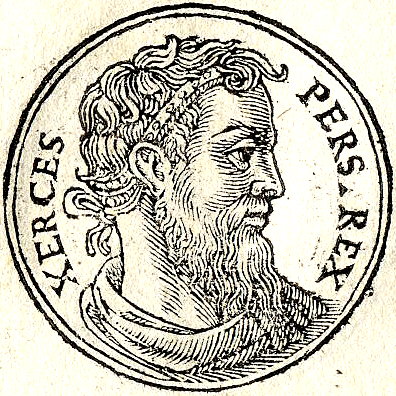
Xerxes_I

This happened in the days of Ahasuerus, the same Ahasuerus who ruled over one hundred twenty-seven provinces from India to Ethiopia. 2 In those days when King Ahasuerus sat on his royal throne in the citadel of Susa, 3 in the third year of his reign, he gave a banquet for all his officials and ministers. The army of Persia and Media and the nobles and governors of the provinces were present, 4 while he displayed the great wealth of his kingdom and the splendor and pomp of his majesty for many days, one hundred eighty days in all.

                5 When these days were completed, the king gave for all the people present in the citadel of Susa, both great and small, a banquet lasting for seven days, in the court of the garden of the king’s palace. 6 There were white cotton curtains and blue hangings tied with cords of fine linen and purple to silver rings and marble pillars. There were couches of gold and silver on a mosaic pavement of porphyry, marble, mother-of-pearl, and colored stones. 7 Drinks were served in golden goblets, goblets of different kinds, and the royal wine was lavished according to the bounty of the king. 8 Drinking was by flagons, without restraint; for the king had given orders to all the officials of his palace to do as each one desired.

 9 Furthermore, Queen Vashti gave a banquet for the women in the palace of King Ahasuerus.

10 On the seventh day, when the king was merry with wine, he commanded Mehuman, Biztha, Harbona, Bigtha and Abagtha, Zethar and Carkas, the seven eunuchs who attended him, 11 to bring Queen Vashti before the king, wearing the royal crown, in order to show the peoples and the officials her beauty; for she was fair to behold. 12 But Queen Vashti refused to come at the king’s command conveyed by the eunuchs. At this the king was enraged, and his anger burned within him.

Roll them bones!

Oftentimes we get too uptight about approaching a Biblical story and we forget the way they are approached by people throughout the generations. Esther is a story told at the Jewish festival of Purim, which quite likely has its origins in Persian or Babylonian celebrations[i], and it is heard with raucous laughter-it should be a fun story perhaps shared over wine or beer. Are there things we can learn from this story: Absolutely, but we should be aware that God is never mentioned in the book, nor are there any indications (other than fasting which was widely practiced beyond Judaism) of any Jewish practice. It is the story of excess and foolishness, of the people of God who are trying to navigate living in the world where they are mixed in with everyone else, trying to make their way in the world of the Medes and Persians. There are things to learn from all of this, but also we need to learn to laugh at the story, to find humor where there is humor. Even Martin Luther who I respect greatly wished the book of Esther did not exist, perhaps this was a moment when Luther was taking himself too seriously.

First, Ahasuerus is probably to represent King Xerxes of Persia, and some translations will automatically change Ahasuerus to Xerxes, but this not intended to be a historical work as much as a story, and the fact that the story was linked with a festival is probably the main reason it was included in the canon. It is a story of excess and the excess begins with a six month long party (take that college students) yet unlike a college student the king has the financial wherewithal to finance a six month long party where the wine flows liberally and people are able to recline on couches of gold and silver in addition to the other lavish surroundings. This is a scene that puts the largest royal banquet in Game of Thrones to shame, and while a banquet that lasts for seven days seems excessive to us in the West for whom eating is functional, I am reminded that for many cultures something like a wedding will last days or even as long as a week.

All this lavishness sets the scene for the king’s command sent through seven eunuchs to retrieve his extremely beautiful wife (who is throwing her own party with the women) to display her before his officials and those with him at his banquet. This is not a fair world, in our society it would not be uncommon for a woman to refuse a drunken request but this is an extremely patriarchal world which women did not have a great deal of freedom, and even queens are only queens so long as it pleases the king. But the amazing happens, Vashti refuses, the king is enraged and the stage is set for the unfolding of a new drama. It will be set with overreactions and a paranoid defense of the patriarchal order (can’t have a queen who disobeys a king, what would that do to the fabric of society-it is a fear we will see expressed.) Most modern women and many men have some empathy for Vashti, but the reaction of the men in the court of Ahasuerus will be much different.

purple rose 01 by picsofflowers.blogspot.com


[i] I owe this observation to Sidnie White Crawford, (Actemeier, Elizabeth et. al. 1999, 3:860). This is not a unique phenomenon, Christians celebrate Christmas and Easter at the times when they are celebrated as a way of displacing holidays celebrated by the people that Christianity was spreading to. Or think of the conjunction of All Saints day (November 1) with All Hallows Eve (or as we call it today Halloween).

Trusting a Dream: Haggai 2

Bust of the Prophet Haggai by GIovanni Pisano, last quarter of the 13th Century

Bust of the Prophet Haggai by Giovanni Pisano, last quarter of the 13th Century

Haggai 2

In the second year of King Darius, in the seventh month, on the twenty-first day of the month, the word of the LORD came by the prophet Haggai, saying: 2 Speak now to Zerubbabel son of Shealtiel, governor of Judah, and to Joshua son of Jehozadak, the high priest, and to the remnant of the people, and say, 3 Who is left among you that saw this house in its former glory? How does it look to you now? Is it not in your sight as nothing? 4 Yet now take courage, O Zerubbabel, says the LORD; take courage, O Joshua, son of Jehozadak, the high priest; take courage, all you people of the land, says the LORD; work, for I am with you, says the LORD of hosts, 5 according to the promise that I made you when you came out of Egypt. My spirit abides among you; do not fear. 6 For thus says the LORD of hosts: Once again, in a little while, I will shake the heavens and the earth and the sea and the dry land; 7 and I will shake all the nations, so that the treasure of all nations shall come, and I will fill this house with splendor, says the LORD of hosts. 8 The silver is mine, and the gold is mine, says the LORD of hosts. 9 The latter splendor of this house shall be greater than the former, says the LORD of hosts; and in this place I will give prosperity, says the LORD of hosts.

 10 On the twenty-fourth day of the ninth month, in the second year of Darius, the word of the LORD came by the prophet Haggai, saying: 11 Thus says the LORD of hosts: Ask the priests for a ruling: 12 If one carries consecrated meat in the fold of one’s garment, and with the fold touches bread, or stew, or wine, or oil, or any kind of food, does it become holy? The priests answered, “No.” 13 Then Haggai said, “If one who is unclean by contact with a dead body touches any of these, does it become unclean?” The priests answered, “Yes, it becomes unclean.”

 14 Haggai then said, So is it with this people, and with this nation before me, says the LORD; and so with every work of their hands; and what they offer there is unclean. 15 But now, consider what will come to pass from this day on. Before a stone was placed upon a stone in the LORD’s temple, 16 how did you fare? When one came to a heap of twenty measures, there were but ten; when one came to the wine vat to draw fifty measures, there were but twenty. 17 I struck you and all the products of your toil with blight and mildew and hail; yet you did not return to me, says the LORD. 18 Consider from this day on, from the twenty-fourth day of the ninth month. Since the day that the foundation of the LORD’s temple was laid, consider: 19 Is there any seed left in the barn? Do the vine, the fig tree, the pomegranate, and the olive tree still yield nothing? From this day on I will bless you.

 20 The word of the LORD came a second time to Haggai on the twenty-fourth day of the month: 21 Speak to Zerubbabel, governor of Judah, saying, I am about to shake the heavens and the earth, 22 and to overthrow the throne of kingdoms; I am about to destroy the strength of the kingdoms of the nations, and overthrow the chariots and their riders; and the horses and their riders shall fall, every one by the sword of a comrade. 23 On that day, says the LORD of hosts, I will take you, O Zerubbabel my servant, son of Shealtiel, says the LORD, and make you like a signet ring; for I have chosen you, says the LORD of hosts.


It is easy to start a project, but when something is going to take a while it may be harder to bring it to completion. For example, many people make New Years Resolutions, few manage to keep them throughout the year. Weight loss either through exercise or diet works really well on the front end, but most people quit and never make the changes that are necessary to prevent the weight from returning. A long building project may start out great, but if it takes more than a couple weekends it may begin occupying space in the garage. I have started a project of going through the book of Jeremiah, all 52 chapters and I’m reluctant to publish anything until I get far enough in to be confident I might actually finish it (or my place of authority work which is currently in a season of writers block because I really am not at the point where I feel confident in my own position to write about what should logically come next, the Rise of Islam). Well in Haggai, the people and the leaders in Judah are re-embarking on a long term construction project with the temple. It is not going to go together overnight or even in a year, but they have begun. God here is encouraging them that he will be with them through this project, that they will be blessed in this project and that ultimately the silver and gold of the nations will come to fill the house with splendor.

This is a people who has dealt with drought and they are having to learn to think in a new way. In a drought you go into survival mode, you hoard what you have, but God is trying to take them into a way of living with enough, or maybe even abundance. A way of living where they can focus on something that can be used by everyone. It is a much more civic and theologically minded approach to living. There is some benefit to the temple for everyone, and the people will be blessed in and through its construction.

A couple thoughts: Haggai definitely works from what is sometimes called a Deuteronomic theology “If you do good you will be blessed, if you do evil you will be cursed” this is not the New Testament’s predominant theology, but I do think we do need to consider it. In what ways do our actions and the ways in which we live effect our wealth, status, happiness, etc… There is obviously not a one to one correlation, and often those who live the most righteous appearing lives seem to suffer the most, but God appears to believe that our actions are important for God’s plans and that God will add his work to the work the people are doing.

One of the dynamics that may be functioning is the dynamic of memory. Some of the older people may remember the temple torn down by the Babylonians, and the temple being built is ‘as nothing’ and this happens in churches as well. “I remember the way it was when I grew up” and while the memories may be good they can also be dangerous. Any time our memory of the past is greater than our hope for the future we are approaching the point of despair. I know people who grasp for a past that is no longer present and fear the present and future, but there are no time machines and we are a people who are future oriented not past oriented.

As W. Eugene March correctly states, “Although the main concern of Haggai the prophet was the rebuilding and rededication of a relatively insignificant temple in a small district in the backwaters of the Persian Empire (at least as far as the world would have judged it), the real issue is worldwide domination of the Lord of hosts.” (Achtemeier, Elizabeth et. al 1999, 7:731) The larger church I am a part of for the last couple of years has used the slogan, “God’s work, our hands” and this is one of those times where the work of our hands may seem insignificant but we trust that the  impact may be larger than what we know.  Just as it may not seem like Zerubbabel is not very significant, but in God’s eyes he is chosen, a signet ring. Maybe it is only a dream, and that is always the risk of trusting and faith, but it is a dream worth having.

purple rose 01 by picsofflowers.blogspot.com

Build the House: Haggai 1

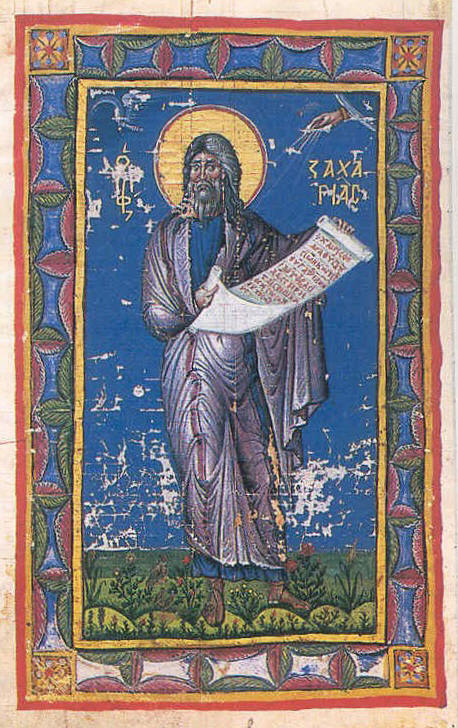
Russian Icon of the Holy Prophet Haggai

Russian Icon of the Holy Prophet Haggai

Haggai 1

                 In the second year of King Darius, in the sixth month, on the first day of the month, the word of the LORD came by the prophet Haggai to Zerubbabel son of Shealtiel, governor of Judah, and to Joshua son of Jehozadak, the high priest: 2 Thus says the LORD of hosts: These people say the time has not yet come to rebuild the LORD’s house. 3 Then the word of the LORD came by the prophet Haggai, saying: 4 Is it a time for you yourselves to live in your paneled houses, while this house lies in ruins? 5 Now therefore thus says the LORD of hosts: Consider how you have fared. 6 You have sown much, and harvested little; you eat, but you never have enough; you drink, but you never have your fill; you clothe yourselves, but no one is warm; and you that earn wages earn wages to put them into a bag with holes.

               7 Thus says the LORD of hosts: Consider how you have fared. 8 Go up to the hills and bring wood and build the house, so that I may take pleasure in it and be honored, says the LORD. 9 You have looked for much, and, lo, it came to little; and when you brought it home, I blew it away. Why? says the LORD of hosts. Because my house lies in ruins, while all of you hurry off to your own houses. 10 Therefore the heavens above you have withheld the dew, and the earth has withheld its produce. 11 And I have called for a drought on the land and the hills, on the grain, the new wine, the oil, on what the soil produces, on human beings and animals, and on all their labors.

                12 Then Zerubbabel son of Shealtiel, and Joshua son of Jehozadak, the high priest, with all the remnant of the people, obeyed the voice of the LORD their God, and the words of the prophet Haggai, as the LORD their God had sent him; and the people feared the LORD. 13 Then Haggai, the messenger of the LORD, spoke to the people with the LORD’s message, saying, I am with you, says the LORD. 14 And the LORD stirred up the spirit of Zerubbabel son of Shealtiel, governor of Judah, and the spirit of Joshua son of Jehozadak, the high priest, and the spirit of all the remnant of the people; and they came and worked on the house of the LORD of hosts, their God, 15 on the twenty-fourth day of the month, in the sixth month.

One of the shorter books in the bible, one of the 12 Minor Prophets[i] Haggai speaks to the people of God with the voice of the Lord and unlike many of the other prophets the people listen. To set the scene this entire short book takes place in the span of about 3 ½ months roughly 18 years after the return of the exiles from Babylon (I deal briefly with this in The Place of Authority:  A Brief History Part 4:Re-establishment, Disillusionment and Germination) This is the period covered in the book of Ezra, and it is also the time of the prophet Zechariah.[ii]When the people who returned from the exile in Babylon came back the land was not vacant, many of the poorer people had been left behind to farm the land and so when the people came back there was some period of time where people were “re-claiming” their family lands (or dispossessing others already working the land), hence a focus on individuals rebuilding their houses.  To put this all in context, the land of Judah is a small territory within the larger Persian empire at this point (roughly the size of Rhode Island) which is sparsely populated (this is an agrarian society) with land that is not producing well. Haggai’s message is one predominantly of hope coming from the difficult situation of coming together as a post-exilic[iii] people. (Haggai fixes the time of each oracle precisely, unlike most prophets and most scholars seem to agree that the record we have comes from shortly after this point. By our reckoning the first date mentioned in verse 1 is August 29, 520 BCE, and work begins on September 21, 520 BCE. (Actemeier, Elizabeth et. al 1999, 7:711) The re-settlement of Judah has stalled, the people have become focused on their own problems and the temple begun at the beginning of the resettlement remains a great unfinished project, a daily reminder of their weakness in the midst of the nations that surround them. The people have settled into a communal depression where they have settled in and are doing what they feel they need to do, and yet it takes something new to bring them out of this. Haggai, Zechariah, Zerubbabel, and Joshua are all used by the Lord to turn this situation around.

Haggai is a person with no known heritage, unlike Zerubbabel and Joshua we don’t know his family or where he comes from, all we have is the message. The message we have here is like splashing your face with ice water, it is designed to wake up the people, to shake them out of their slumber. It, like all the prophets, is more poetry than dissertation. Haggai is not interested in a debate about when God causes hardship and famines; rather he is focused on the behavior God desires from the people. God desires to dwell among them; God would take pleasure in the temple.  Relatively quickly the people do come together, work resumes, and the Spirit of the Lord stirs up the leadership. In this post-exilic period the prophet is actually heard and the prophet-king-priest triumvirate work together and the work begins.

purple rose 01 by picsofflowers.blogspot.com


[i] I follow the delineation of minor verses major prophets where Isaiah, Jeremiah and Ezekiel are Major Prophets by the size of their respective works (Isaiah 65 chapters, Jeremiah 52 +5 in Lamentations, and Ezekiel 48) where the Minor Prophets recorded works are significantly shorter. This is not a value judgment on the importance of their words. Daniel is typically classed by Hebrew scholars as a part of the writings rather than being place with either the major or minor prophets.

[ii] Zechariah and Haggai are explicitly mentioned in Ezra 5:1 as prophets working at the same time for the re-establishment of the temple.

[iii] Post-exilic in this context refers to the time after the Babylonian exile which took place beginning in 597BCE, with a more substantial portion of the population taken in 587BCE, post-exilic begins in 538 BCE with the rise of the Persian empire)

The Ballad of Ruth

The Ballad of Ruth[i]

William Blake, Naomi Entreating Ruth and Orpah

There was no bread in the house of bread[ii] and so from the house of bread the breadless fled

To Moab went Elimelech and Naomi[iii] the sweet with two sons, departing hungry yet full

Foreigners in a foreign land they seek life but find only death and emptiness

A father dies, but leaves two sons behind to watch over the sweet one and to carry the name on

And yet the names of the sons, Mahlon and Chilion, tell a tale all their own and a short tale it is

For Ruth and Orpah marry men whose part in the story seems only to perish, and perish they do[iv]

So in Moab is left Naomi the sweet made bitter, no longer hungry but empty

And yet in the house of bread, bread has returned

In the land of Moab sweet has turned bitter, bitterness has filled Naomi from bone to bile

In a foreign land the blessing of God seems to have turned to a curse, fullness to emptiness

The joy of wedding and the blessing of hope into the dirge of mourning and sons buried too soon

There is no gift for the wives of her children except to send them home to their father’s house

No sons left to give or bear, only a wish for the Lord’s kindness and a new beginning

For with Naomi there is only death, what is left but to return home to die

Breadless, childless, loveless, hopeless and bitter

And yet to the house of bread, Naomi will return

In the land of Moab, Orpah returns home to her father’s home but Naomi will not return home empty

The love of God comes wrapped in an unexpected form, the Moabite wife of her son

She becomes not only the bearer of grace and mercy but as the agent of God’s love[v] for the wounded child

Ruth’s words that, ‘where you go I’ll go, where you live I’ll live, your people will be my people and your God my God. Where you die, I’ll die and there I’ll be buried.’

You asked for the Lord’s blessing in my departure, but may the Lord judge me if I depart

For neither life nor death, nor things present nor things to come will be able to separate Naomi

From the love of God shown in the Moabitess

To the house of bread, Naomi returns with Ruth as her only harvest

To the house of bread came two women, one known and one unknown

The known is Naomi, gone for a decade or more, returning as Mara[vi]

Departed sweet and returned bitter

The other is the Moabitess, the daughter of former oppressors, the alien, the outsider

She is the immigrant, the unprotected, the dangerous defiler, and yet she is Ruth

The outsider bears God’s grace in a way the insiders do not

At harvest time they return to a home long abandoned with empty fields.

Will there be bread in house of bread for the breadless?

Is there a place for the alien, the outcast, the widow, the poor and the weak?

Will the leftovers be enough to fill their emptiness or will they die forgotten?

Will their bodies be sold or taken for free in the reaping fields?

Or will new life begin in the harvest, will life return to the lifeless and bread to the breadless?

What will be gleaned in the barley harvest? Blessing or curse, life or death?

The fields are ripe in the house of bread and the harvest begins

The worthy man extends the blessing of the Lord’s covering[vii] and offers the shelter of his protection

For he has taken notice of the Moabitess working in the fields and knows of the grace she has shown

The outsider is made equal of the servants out in the fields and return home with a bushel of grain

Bread had returned to the breadless, life to the lifeless

Boaz has spoken to the heart[viii] of Ruth, and his words have returned hope to the bitter one

Bless the one who has covered us, who has not forgotten the dead

Bless the one who grants bread from the house of bread

Harvests come and harvests go in the house of bread, and then comes the celebration

The eating and drinking, the festival and feasting for once again the work is done

On the field of the threshing floor lies the worthy man, the fruit has been separated from the chaff

On the floor, covered[ix] lies the man who provided a covering for Ruth and Naomi

Work done, mercy extended, blessing shared…

Yet in the mystery of midnight what will happen to what lies on the threshing floor?

For in the mystery of midnight Ruth comes, perfumed and prepared

On the threshing floor at midnight the man finds himself uncovered and a woman lying at his feet

“I am Ruth, spread your covering over me” Once you wished the Lord’s covering on me, now be that covering

Can you accept the foreigner as one of your own, can your family be my family and your home my home

Your God is already God, may I go where you go, may I die where you die

In the mystery of midnight are the worthy man and the foreigner

Two agents of grace, two who covered others

Will the mystery of midnight on the threshing floor of the house of bread be fruitful?[x]

The worthy man and the kinsman and the elders at the gate must make settlement

Land must be redeemed, a family saved, life will begin anew

A sandal is passed, the deal is done

The worthy man and the foreigner are now one

God’s covering came, life begins anew

A child named Obed in Naomi’s lap grew

And from Obed, Jesse, and from Jesse , David the King

And a foreigner showed grace, a worthy man covered her and life began anew

In the house of bread begins a line of kings

And in ages to come over the house of bread the angels will sing.

purple rose 01 by picsofflowers.blogspot.com


[i] This is taken from the book of Ruth, this is not a translation or paraphrase but I do stay fairly close to the story and try to capture some of it’s patterns

[ii] Ruth plays on the Hebrew word for bread which is lechem, Bethlehem is literally the house of bread

[iii] Naomi one of the meanings of Naomi is sweet one

[iv] Mahlon’s name is similar to one of the Hebrew words for disease while Chilion name is the Hebrew word ‘to perish’

[v] Another of the key words to Ruth is the Hebrew word ‘Hesed’ often translated kindness in Ruth, but most other places it refers to God’s actions of unmerited grace and mercy

[vi] Mara is the name she gives herself which means bitter, the opposite of her former self

[vii] Another of the keywords in Ruth, kanap which can mean wing, covering or garment and will be used playfully from this point on in the story

[viii] Another Hebraism which may mean speaking kindly to or may indicate sweet-talking

[ix] This is again Kanap, as the blessing of the Lord’s covering was  wished on rush, now this covering will become that covering

[x] This scene is pregnant with images that can go either in an innocent or non-innocent way, it is like a movie where the door is closed and what goes on is based largely on assumptions.

The Place of Authority: A Brief History Part 4: Re-establishment, Disillusionment and Germination

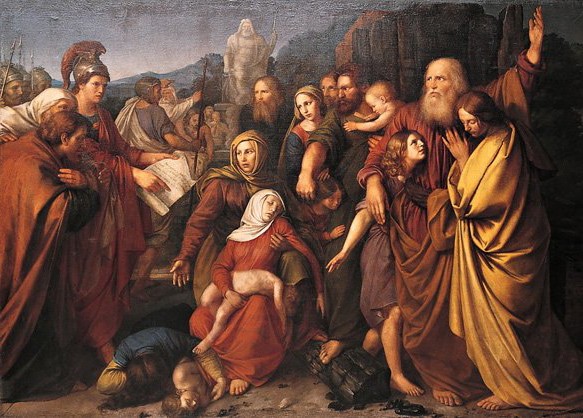
Wojceich Stattler, Machabeusze (Maccabbes) Public Domain Art

I think I need to be clear at this point that while I am doing a historical trek through Israel’s story, I am not trying to do a history of Israel at this point, or even of the Hebrew Scriptures.  I am intentionally trying to locate where authority rested within their story.  Within key transitions the places of authority do change and how the people react to that authority changes and see how that might inform our current questions of authority.  Hence, while it might be interesting to focus in greater detail on particular events, or to spend more time interpreting what is going on within a particular piece of scripture or what the theology of a particular author might be, that will have to be for another time and place as we continue on through the story.

A humorous illustration before we proceed. The Hebrew people remain deeply suspicious of external authorities which exercise authority over them, and so there will remain an antagonism between them and those who come to occupy their land.  In another Monty Python reference we have the scene of the French Castle where the French refuse to recognize Arthur’s authority. For this period the Hebrew people will stubbornly resist assimilation by the empires that they are a part of.

Beginning around 538 BCE, during the reign of Cyrus of Persia, there is the beginnings of the return to Jerusalem and Judea.  There are at least four major stages of the return which span a period of roughly 80 years, longer than the original period of exile, and even with the final return many of the people choose to remain settled and scattered throughout the empires of the day.  The diaspora (the dispersion) those Jewish people scattered throughout the empire continue to at various levels maintain their practices and stories that make them distinguishable from the nations around them, but I will be focusing in on the remnant that returns to the promised land since that is where the final pieces of the remembered story of the Hebrew Scriptures (or Old Testament) come from.

Over the eighty years of re-establishment, many of the people return and their first concern is the reclamation of their land (or perhaps in some cases the claiming of land for their family).Remember that in an agrarian society land is the primary source of wealth and power. It takes a great deal of effort by the leaders and prophets to get the people to focus on the effort to rebuild the temple, and even once it is rebuilt it cannot compete with the memory of the former temple.  In the memory of the people it is a shadow of the greatness of their past.  Even with the codification of the Torah (law-quite possibly Deuteronomy) by Ezra and the completion of the city wall under Nehemiah, Jerusalem and what remains of the former nation are completely dependent on the will of the nations around them.  The temple worship does regain some of its former status as one authority figure, but in the absence of a true monarch-temple authority that has the power to authorize the story of the people, the written and oral set of practices begin to take on a greater and greater role of what it means to be the chosen people.

Internal fault lines begin to emerge, not that they didn’t exist previously, but issues of purity and justice come into conflict with one another.  At least, in the remembered story it seems that in the time of re-establishment purity becomes the dominant issue, the removal of foreign influences—even when it means disbanding families—and being a ‘purer’ Hebrew people who worship the one Lord in holiness. This is the mark of a society intent on establishing and maintaining boundaries between the insider and the outsider—and I don’t mean this to sound as critical as it may sound—when one feels the world is out to destroy you it is natural for an us/them (or Jew/Gentile) dichotomy to emerge. Yet even though this seems to be the dominant voice a counter-voice emerges, the prophetic voice that never went away and attempts to refocus the central focus on justice.  Although there is a strong presence of the prophetic voice in the collected scriptures, it also never seems to gain the influence to reframe the story to create the type of society the prophets imagine.

Certainly within the prophetic voice, but also within the population there is disillusionment with the way things are.  Things are not the way people hoped they would be, the temple is a shell of its former self, different religious groups vie for power and influence among the people, various incarnations of leaders try to rally the people with varying levels of success-but the reality is that for most of this 500 year stretch they are a people under the rule first of the Persians, then briefly under Greece. When the Greek empire splits up into the Ptolemaic Empire (in the South) and the Seleucid Empire (in the North) Jerusalem will find itself firmly at the middle of the struggle for power.

A final defining moment comes in 167 BCE with the Maccabean revolt, an event commemorated by Hanukkah today and remembered in the books named Maccabees, where the pressure of the outside influence to conform to a Hellenistic (Greek) culture causes a religious revolt which for a brief moment grants Jerusalem its independence.  It is short lived, but it gives the people a memory of their practices defining themselves as a people who are willing to die for what they believe in.  Again this is not universal, there are certainly those willing to accommodate, but there are also those willing to revolt, and that fire will not go out again for some time.

Deep divisions continue to grow within Judaism. They will not be fully in control of their own destinies after the fall of the Maccabees , but the hope for a new king, a new David, a messiah will persist.  Religious authority will split between Saducees, who predominantly control the temple and accommodate with the kings like Herod, or whichever government official Rome places to govern Judea.  With Herod the Great (who rules from 40 BCE-6 CE) reconstructing the temple in magnificent fashion (at a magnificent cost) the Sadducees are able to operate from a position of privilege.  The Pharisees in contrast are more of a people’s movement focused on maintaining their identity through purity and right practice of the Torah. There are other groups, the Essenes who pull away and isolate themselves to remain pure, the zealots intent on driving the foreign influence from the promised land.  Herod and Rome have the military authority, the Saducees in partnership with the Roman authorities run the temple and all is in a state of tension at the turning of the ages.  We are approaching a great turning point in the story, from one group will emerge two-one that is new and one that will be completely reshaped.  It is to the turning of the ages that we turn next.

purple rose 01 by picsofflowers.blogspot.com

The Place of Authority: A Brief History Part 3b: The Exile, Reconstructing Identity-Narrative, Practice and Hope

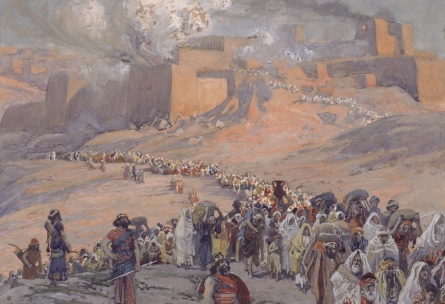
James Tissot, The Flight of the Prisoners

Thus says the Lord of hosts, the God of Israel, to all the exiles whom I have sent into exile from Jerusalem to Babylon: Build houses and live in them; plant gardens and eat what they produce. Take wives and have sons and daughters; take wives for your sons, and give your daughters in marriage that they bear sons and daughters; multiply there, and do not decrease.  But seek the welfares of the city where I have sent you into exile, and pray to the Lord on its behalf, for in its welfare you will find your welfare. Jeremiah 29. 4-7 NRSV

Even when the world as you know it ends, life still goes on, and we have to make sense of the conflict, the struggle and our place within it.  The communal memory becomes important, the stories parents have told their children, the history of families. In the midst of competing narratives what is the story that one can identify with? With the loss of the Davidic monarchy, the temple, the land of their ancestors the people did something amazing, they recast their identity.  They dug deep into their narrative, they began bringing together their stories, and in fact much of the Old Testament is brought together at this point. Stories of creation and exodus begin to be the patterns in which the present is made sensible and the community begins to come up with answers to the hardest question, “why did this happen?” They don’t come up with just one answer, they come up with many. They bring together their stories and the Torah (typically translated into English as law, but it is a term that is much more than what we understand as law in our context) begins to be center of their life.  Practice and story come together to bind together this community in exile.

This does not mean that everyone agrees, there is not a central authorizing authority for the narrative at this point, it is constructed mainly by the remnant of the elite (everyone else would have been illiterate at this point) from both the priestly and prophetic side. Some of the central ideas to emerge include:

Justice: a sense of living in harmony (shalom) with God’s desire for the way things are to be structured in society. This includes a strong sense of economic justice, compassion for the widows, orphan, immigrant, and the dispossessed. It is from this vision that many prophets operate out of, and this is a central image for the prophetic hope. The new Jerusalem, the new Israel is to be a place of justice where the nations around can look and say “Come, let us go up to the mountain of the Lord, to the house of Jacob; that he may teach us his ways and that we may walk in his paths” (Isaiah 3b, NRSV) and within God’s plan the nations will stream to Jerusalem.

Purity/Holiness: For us there is often a tension between Purity/Holiness and Justice, but it was not necessarily seen that way by the Jewish people.  Especially for priests there are practices that are to be done to prevent the contamination of unholiness from infecting them as a people and making them repulsive to the holiness of God. It also becomes a powerful way of distinguishing between themselves as a Hebrew people and the nations around them who are the Gentiles, the unclean ones.  This tends to be more of a priestly focus and there are conflicts between which will dominate going forward, but at the root both justice and holiness are practices which distinguish them from the hostile surrounding culture.

With these two distinctive directions emerges a new strand of a hope for a new beginning, a new temple, a New Jerusalem, a new anointed (and Davidic) king, a messiah.  Wrapped up within the memory of the stories of creation and the exodus of the people from Egypt hope springs forth of a return home and a new beginning:

Do not remember the former things, or consider the things of old. I am about to do a new thing: now it springs forth, do you not perceive it? I will make away in the wilderness and rivers in the desert. The wild animals will honor me, the jackals and the ostriches; for I give water in the wilderness, rivers in the desert, to give drink to my chosen people, the people who I formed for myself so that they might declare my praise. Isaiah 43.18-21

2nd Isaiah (Isaiah 40-55, which reflects the time of preparation for the return home, while Isaiah 1-39 deals with the time before the exile) in particular is full of this vibrant hope, along with other voices.  Empires rise and empires fall, and a generation later Babylon falls to Persia (modern day Iran) and Cyrus (who Isaiah interestingly calls Messiah/Christ-same word in Hebrew/Greek) makes possible the beginning of a return home.  Their stories and practices have maintained their identity and given them hope of a new beginning. With the return to Jerusalem, the land, and the possibility of reconstructing the temple comes yet another transition.  It is to that transition that we turn next.

purple rose 01 by picsofflowers.blogspot.com

The Place of Authority: A Brief History Part 3a: The Exile, the Crisis of Collapse

James Tissot, The Flight of the Prisoners

By the rivers of Babylon—there we sat down and there we wept when we remembered Zion. In the willows there we hung up our harps.For there our captors asked us for songs, and our tormentors asked for mirth, saying,

“Sing us one of the songs of Zion!”

How could we sing the Lord’s song in a foreign land? If I forget you, O Jerusalem, let my right hand wither! Let my tongue cling to the roof of my mouth, if I do not remember you,if I do not set Jerusalem above my highest joy. 

Remember, O Lord, against the Edomites the day of Jerusalem’s fall, how they said,

 “Tear it down! Tear it down! Down to its foundations!”

O daughter of Babylon, you devastator! Happy shall they be who pay you back what you have done to us! Happy shall they be who take your little ones and dash them against the rock!   Psalm 137 NRSV

In 721 BCE, after roughly 200 years of separation from the Southern Kingdom of Judah, the Northern Kingdom Israel falls to the Assyrian Empire (which has its origins in the Northwestern Part of modern day Iraq) and the Northern Kingdom is effectively absorbed into the Assyrian nation.  Somehow Judah holds on, even though it becomes completely surrounded by the Assyrian Empire.  Empires come and go, and power shifts to the Babylonian Empire (which has its origins in modern day Southern Iraq) without going into the bloody details: Jerusalem falls, the temple is destroyed, the Davidic monarchy effectively ends and the people of Judah are taken into exile or captivity in Babylon.  The loss of king and temple, as well as the land cause a crisis of authority which leads to one of the most constructive and important periods in Judaism.

The loss of home is catastrophic, it leads to a ton of questions about the future and there may not be any good answers at that point.  The closest cinematic example I could come up with was the loss of Anatevka in Fiddler on the Roof where families try to make the best of their coming exile, belittling what they are leaving behind-and yet families are broken apart, scattered across the world, many will never see each other again.

Something as catastrophic to not only the physical well-being but also to the communal consciousness can lead to several outcomes, many of which do emerge in this time. One response of the conquered is to assimilate with the conqueror, to align oneself with the victor, to adopt their values and practices and to set aside at least a portion of one’s previous identity to become a part of something different.  This is the perceived response of the Northern Kingdom by the Southern Kingdom-they stay on their land, intermarry with the Assyrians, and what emerges will be a hybrid people-no longer really Jewish, already separated from the Davidic monarchy and the temple hundreds of years before they become the other…the Samaritan (yes this is where those Samaritans that Jesus runs into in the New Testament come from).  But to be fair, a large number of the Judeans also assimilate into Babylon, only a small portion of the Judean people will return to their homeland at the end of the exile, most will remain dispersed throughout the nations.

In the lead up to the exile, the prophetic voice becomes very harsh in its critique of the monarchy, temple, the lack of economic justice within the nation, and the perceived idolatry of the shepherds of the nation.  This is the time where the first parts of Isaiah, much of Jeremiah and Ezekiel and many of the Minor Prophets become active in the memory of the people. The prophetic voice leads the way pointing to the ways in which kings and priests, throne and temple have not only failed as sources of authority but are at the very heart of the crisis viewed as a judgment from the LORD.  The prophets announce condemnation for the shepherds (the leaders, the authority in throne and temple) as one example among many:

The word of the Lord came to me: Mortal, prophesy against the shepherds of Israel: prophesy, and say to them—to the shepherds: Thus says the Lord God: Ah, you shepherds of Israel who have been feeding yourselves! Should not the shepherds feed the sheep? You eat the fat, you clothe yourselves with the wool, you slaughter the fatlings: but you do not feed the sheep. You have not strengthened the weak, you have not healed the sick, you have not brought back the strayed, you have not sought the lost, but with force and harshness you ruled them.  So they were scattered, because there was no shepherd: and scattered wandered over all the mountains and on every high hill; my sheep were scattered over the face of the earth, with no one to search or seek for them. Ezekiel 34.1-6 NRSV

 Instead of coming to believe that somehow their God is weaker than the gods of the Assyrians or the Babylonians, something amazing happens in the prophetic imagination (to use Walter Brueggemann’s keen words) and they begin to understand the transitions and the conflict around them as a part of God’s work—that behind Assyrian and Babylonian is the Lord of hosts (literally the Lord of armies-typically we think of this as heavenly armies, but I am beginning to think that in there is something more earthly to this term than often given credit). The coming destruction is a judgment particularly on the leaders, but also within all this death is the chance for something new: a fresh start, a redefinition, a chance to redefine and re-imagine what it means to be the chosen people.

The hand of the Lord came upon me, and he brought me out by the spirit of the Lord and set me down in the middle of the valley; it was full of bones.  He led me around them; there were very many lying in the valley, and they were very dry.  He said to me, “Mortal, can these bones live?” I answered, “O Lord God, you know.” Then he said to me, “Prophecy to these bones, and say to them: O dry bones, hear the word of the Lord. Thus says the Lord God to these bones: I will cause breath to enter you, and you shall live. I will lay sinews on you, and will cause flesh to come upon you, and cover you with skin, and put breath in you, and you shall live; and you shall know that I am the Lord. Ezekiel 37.1-6 NRSV

The prophetic voice will help the people re-imagine a new way forward, a way that is so critical to the way we understand things that we need to take some time with it.  Hope will not die, in fact it will be reborn in a new and powerful way and the people will understand themselves as a chosen people, but what that means takes a dramatic turn in the exile.  To that we shall turn next.

purple rose 01 by picsofflowers.blogspot.com

The Place of Authority: A Brief History Part 2: King, Temple and the Prophetic Critique

David and King Saul, Rembrandt

David and King Saul, Rembrandt

 So Samuel reported all the words of the LORD to the people who were asking him for a king. He said, “These will be the ways of the king who will reign over you: he will take your sons and appoint them to his chariots and to be his horsemen, and to run before his chariots; and he will appoint for himself commanders of thousands and commanders of fifties, and some to plow his ground and to reap his harvest, and to make his implements of war and the equipment of his chariots. He will take your daughters to be perfumers and cooks and bakers. He will take the best of your fields and vineyards and olive orchards and give them to his courtiers. He will take one-tenth of your grain and of your vineyards and give it to his officers and his courtiers. He will take your male and female slaves, and the best of your cattle and donkeys, and put them to his work. He will take one-tenth of your flocks, and you shall be his slaves. And in that day you will cry out because of your king, whom you have chosen for yourselves; but the LORD will not answer you in that day.” 1 Samuel 8.10-18


At roughly 1,020 BCE a decisive change takes place and Israel enters the time of monarchy.  Power becomes consolidated briefly under King Saul.  Two men, King Saul and Samuel, whose title before had been that of a judge but functioned as a mouthpiece for God at this point, hold the religious and political authority.  Israel begins to act as a powerful actor in the region, constantly moving from one conflict to another, but internal conflict emerges when David emerges on the scene.  Without getting bogged down in the story or trying to parse out what happened historically  by 1000 David would unify his power as king and Israel became for a brief shining moment a power player on the world stage, Jerusalem becomes the capitol, and then perhaps decisively for this era the temple is established under Solomon.   Especially for the Southern Kingdom of Judah this is decisive because the monarchy and the temple become linked as the dominant secular/religious authority. There is a prophetic voice within that critiques the monarchy and temple, but for the most part the people give up a portion of their freedom for the relative security, power and identity of being a part of the unified kingdom of Israel.  That is not to say that family, clan and tribe have lost their power or authority, but that the people become much more linked to the kings and temple than at any previous point in their history.

This is probably a good point for a fun interlude, it is hard for us to imagine being bound in systems where our autonomy is defined so externally.  We don’t have any experience of a monarchical system and so our reaction might be somewhat like the peasants in this scene from Monty Python and the Holy Grail.  Even a romanticized king when we look from our perspective seems like a tyranny or despot.

Even though King David is often looked upon romantically like the King Arthur of legend, one of the incredible things is that the recorded memory of David includes many ugly situations, many family struggles, many times where he is at odds with the prophetic voice of the time.  The whole Bathsheba and Uriah episode (2 Samuel 10-12), incest within the royal family (2 Samuel 13) and eventually the usurpation of the throne by his son Absalom (2 Samuel 15-19) as well as other internal rebellions are a part of David’s roughly forty years of consolidated rule.  Even though the King amasses incredible authority previously unattainable in anyone’s imagination the constant warfare and internal struggles begin to wear on the people.  By the time Solomon, David’s son, ascends to the throne it is a relatively peaceful time but the energy is directed internally on large building projects, the temple, but also many houses and palaces for Solomon and his entourage. The temple becomes, at least for a large group of people, the central focus of worship, and yet again just like with the idea of consolidating power with a king there is a large amount of space dedicated to the critique of the temple

 King Solomon conscripted forced labor out of all Israel; the levy numbered thirty thousand men. He sent them to the Lebanon, ten thousand a month in shifts; they would be a month in the Lebanon and two months at home; Adoniram was in charge of the forced labor. Solomon also had seventy thousand laborers and eighty thousand stonecutters in the hill country, besides Solomon’s three thousand three hundred supervisors who were over the work, having charge of the people who did the work. At the king’s command, they quarried out great, costly stones in order to lay the foundation of the house with dressed stones. So Solomon’s builders and Hiram’s builders and the Gebalites did the stonecutting and prepared the timber and the stone to build the house.  1 Kings 5.13-18 NRSV

This is a huge commitment of people and resources which are directed internally.  In fact it is such a strain that immediately upon Solomon’s death when Rehoboam takes power the people come and plead for relief:

Your father made our yoke heavy.  Now therefore lighten the hard service of your father and his heavy yoke that he placed upon us and we will serve you. 1 Kings 12.4 NRSV

To which the narrative has Rehoboam reply three days later in our language, ‘you ain’t seen nothing yet, you think my father made things hard on you?  Well prepare to be screwed!’ Most translations clean this up significantly…but the little thing that is thicker than his father’s loins is probably not a finger (see 1 Kings 12: 6-15 particularly v.10) Things are not nearly as clean in the Bible as we sometimes want to make them.  The people are offended, the kingdom splits apart and now there are two kings, two places of worship, a prophetic voice that continues to grow louder…but even with this prophetic voice within the Kingdom of Judah in the South and the Kingdom of Israel in the North growing stronger the fate of both nations is linked to the actions of kings and the worship at the temple in Judah and the worship at various sites in the North.  Particularly for the Southern Kingdom of Judah, so long as there is a Davidic king and the Temple who they are as the people of God seems secure.  Yet this too will change….

purple rose 01 by picsofflowers.blogspot.com