Tag Archives: Fiction

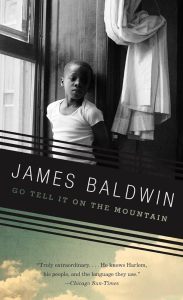
Review of Go Tell It On The Mountain by James Baldwin (1953)

Time Magazine Top 100 Novels

Book 35: Go Tell It On The Mountain by James Baldwin (1953)

This is a series of reflections reading through Time Magazine’s top 100 novels as selected by Lev Grossman and Richard Lacayo published since 1923 (when Time magazine was founded). For me this is an attempt to broaden my exposure to authors I may not encounter otherwise, especially as a person who was not a liberal arts major in college. Time’s list is alphabetical, so I decided to read through in a random order, and I plan to write a short reflection on each novel.

Go Tell It On The Mountain starts on the birthday of John Grimes who is the central character in this book of religion and hypocrisy, love desired and rarely returned, a family of secrets and hurt, and the first arousals of sexuality in a young man who realizes he is attracted to other men. Gabriel, his father but not his biological father, Elizabeth, John’s mother, and Florence, John’s aunt and Gabriel’s sister, all contribute to the tension in this household as well as the younger son Roy, biological son of Gabriel, and the unclaimed memory of Royal, an out of wedlock son of Gabriel who died before this moment in the story. The event of John’s birthday, which his mother belatedly remembers, is pushed into the background when his belligerent younger brother storms out of the house only to return wounded by a knife. Even though it is his birthday and he had taken his mother’s belated gift of a little money to the theater, his father lashes out at him, his mother, and his aunt in exasperation about Roy’s wild ways. John eventually escapes to the storefront church where his father is a deacon and the theme of sexuality emerges as he wrestles with Elisha, an older boy in the church, as they set up for evening services.

The remainder of the book occurs in flashbacks and visions during the evening church service where first his aunt Florence remembers her life and reluctantly surrenders to prayer. Then his father’s life is revealed in his wild teenage years, his marriage, his affair which produces Royal who he never claims and eventually dies a violent death, and his marriage to Elizabeth, John’s mother. Then Elizabeth has her own vision of her weak mother and the father who she loved. After her mother’s death who she was taken from by her father by her aunt because of the work her father does. She grows up in a loveless childhood but finds love in a young man named Richard. Before she can tell Richard about her pregnancy he commits suicide after a wrongful arrest by the police. Finally, is John’s dark night of the soul before his vision and acceptance of Christ.

The book does a good job of showing both the brokenness and the strength of faith. The Pentecostal tradition has a strong emphasis on holiness and yet the book is open about the hypocrisy and closely held secrets of the men who lead the church. It is a story of several intertwined people who never experienced the love they desired from the fathers, mothers, and siblings in their lives and who continue to hand on their broken lives to the next generation. The visions in part two do a good job of telling the backstory of the characters but even among the revelations of the visions the brokenness between the family members remains entrenched to the end. Even as there should be celebration over the salvation of John, his father Gabriel remains closed off from him. The shattered relationship between Gabriel and Florence over Gabriel’s wild past and his unforgiving nature is never resolved even though Florence feels she is near the end of her life, and she holds a letter with the secret of Gabriel’s out of wedlock child which she threatens to release to the congregation. Apparently, the story is semi-autobiographical, and I can appreciate the way the author works through his broken home and broken heart through the pages of the book.
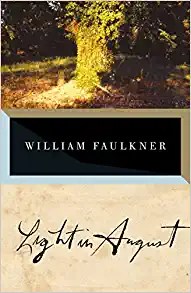
Review of Light in August by William Faulkner

Time Magazine Top 100 Novels

Book 49: Light in August by William Faulkner

This is a series of reflections reading through Time Magazine’s top 100 novels as selected by Lev Grossman and Richard Lacayo published since 1923 (when Time magazine was founded). For me this is an attempt to broaden my exposure to authors I may not encounter otherwise, especially as a person who was not a liberal arts major in college. Time’s list is alphabetical, so I decided to read through in a random order, and I plan to write a short reflection on each novel.

Light in August deploys a combination of poetic and banal language to tell an ugly story with a series of characters who for their own reasons are unable to exist within the confines of their society. There is something that reminds me of the writing of Flannery O’Connor in the way Faulkner uses beautiful language combined with the simple speech of the characters in his stories that is authentic to their education and station. There are many times where the language and the assumptions of the American South in the 1930s, when the novel is written and set, are jarring to the ears of a modern hearer, but the novel is historically situated in a time where the views on race, sex, religion, and society are very different from our current era. At times I could fall into Faulkner’s poetic use of prose, and he is truly gifted as a wielder of the English language, but each of the characters is unlovable in their own ways. Whether it is the indomitable Lena who refuses to give up her search for Lucas Burch/Joe Brown who is the father to the child she carries, Joe Christmas whose birth and life seems to be overshadowed by a questionable birth and lineage and a grandfather who views his divine calling as bringing about the destruction of his grandson, or Gail Hightower the disgraced minister who lives in the shadow of his grandfather who died in the Civil War.

Light in August is a work of art but like all art its reception is subjective. The world of the 1930s American South at times seems like an alien world for its strangeness and prejudices. There are times where the work seems dystopian and none of the characters, except perhaps Byron Burch, attempt to be heroic. For me the prose is gifted but the story is plodding and the characters seem to fit into a deterministic pattern based upon their inherited flaws. I can appreciate it as a classic but it was hard to hear the speech of the 1930s South, especially towards Black Americans, and not cringe at the way the derogatory terms for Black Americans continued to echo in my head even after putting the book aside. Perhaps it, like Flannery O’Connor’s work, present an uncomfortable mirror to the world of my grandparents whose prejudices echo in both spoken and unspoken ways in our own.

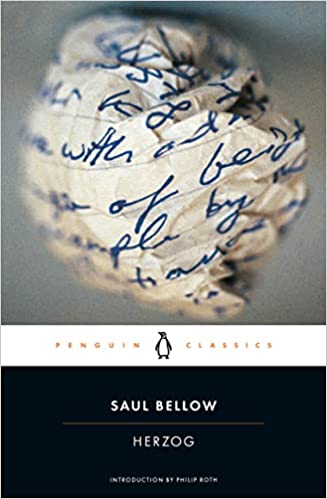
Review of Herzog by Saul Bellow

Time Magazine Top 100 Novels

Book 43: Herzog by Saul Bellow

This is a series of reflections reading through Time Magazine’s top 100 novels as selected by Lev Grossman and Richard Lacayo published since 1923 (when Time magazine was founded). For me this is an attempt to broaden my exposure to authors I may not encounter otherwise, especially as a person who was not a liberal arts major in college. Time’s list is alphabetical, so I decided to read through in a random order, and I plan to write a short reflection on each novel.

Herzog is named for the main character Moses Herzog a Jewish former professor whose mind seems to be unraveling in the aftermath of his second divorce. The story is told from a first-person perspective and the reader is invited into the rambling reflections of an intelligent but cluttered mind. Moses Herzog begins by stating, “If I am out of my mind, it’s all right with me.” We encounter in Moses’ thinking, speaking, and especially in his incessant drive to write notes to a diverse group of recipients from former friends and relations to President Dwight Eisenhower a mind balancing on the precipice of sanity. There are times when the erratic and non-chronological reflections full of non-sequiturs do feel like a descent into some type of madness of this man driven by compulsions he doesn’t understand.

The mind of Moses Herzog is the entirety of the novel and entering into that mind is to encounter the contradictions and confusions of a person who struggles to comprehend the world around him and the feelings and motivations of other individuals. His divorce caused, in his view, by the manipulation by his wife and best friend shatter him. A combination of the situation and the makeup of Moses as an individual leave him caught in an egocentric loop where the world revolves around his experience of it. He is not a rational actor at this point in his life and he often sabotages himself by making impulsive decisions on a whim which cause him trouble. For the majority of the book, he is not in his right mind. At the end his intelligent mind finally comes to rest and appears to let go of its compulsions.

Herzog is a strange book. I can understand why it is considered a masterwork and the comparison to James Joyce’s Ulysses is apt since both share a stream of consciousness manner of narration. Due to the erratic nature of Herzog’s mind the story is often slow moving and then it can jump suddenly when his mind seizes on another compulsion. I struggled to find Herzog a likeable character since he is so enmeshed in his own ego and madness. Reading a novel in first person forces the reader to see the character through their own eyes and Herzog seemed to have an inflated opinion of his abilities while still not liking the person he had become. Perhaps the genius of the work is seeing through the eyes of madness. I can appreciate it as an experiment in literature but as a novel it is not one that I will probably return to. All experiences of fiction are subjective and there are many readers throughout the last sixty years who have made this a classic.


Three Metaphors at a Closing of a Story: Part 1 Diverging Paths

The story ends, as all stories eventually do
A door closes, a world comes to its conclusion
And I stand watching as the words that conjured it
Sink slowly into the deep sea of memories.
Its characters who became my companions on the road.
I have known their names, I have shared their dreams
I supped at their table and walked their winding way
But they now recede with their world as my path diverges
Their story ends and mine continues forward
And I have been changed on this journey through their world
Rarely do I walk out of a story unaltered by its magic
I’ve seen another world and talked with its denizens
Yet, other worlds beckon from the shelves invitingly
There is a beautiful, tearful, strange magic in these words
Which invoke such vivid reactions in my mind
It’s time to close the book, maybe someday I’ll return
To share this journey once again, to rekindle friendships lost
And rediscover the people and place in these pages.