Tag Archives: Bible Study

2 Kings 15 The Stability of Judah in Contrast to the Instability of Samaria

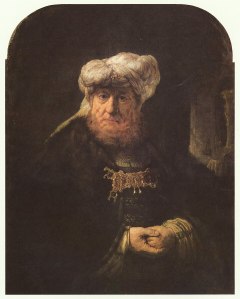
The King Uzziah Stricken with Leprosy, by Rembrandt, 1635.

2 Kings 15: 1-7 King Azariah (Uzziah) of Judah

 1In the twenty-seventh year of King Jeroboam of Israel, King Azariah son of Amaziah of Judah began to reign. 2He was sixteen years old when he began to reign, and he reigned fifty-two years in Jerusalem. His mother’s name was Jecoliah of Jerusalem. 3He did what was right in the sight of the Lord, just as his father Amaziah had done. 4Nevertheless, the high places were not taken away; the people still sacrificed and made offerings on the high places. 5The Lord struck the king so that he had a defiling skin disease to the day of his death and lived in a separate house. Jotham the king’s son was in charge of the palace, governing the people of the land. 6Now the rest of the acts of Azariah and all that he did, are they not written in the Book of the Annals of the Kings of Judah? 7Azariah slept with his ancestors; they buried him with his ancestors in the city of David; his son Jotham succeeded him.

King Azariah, also known as King Uzziah, has a long and successful reign over Judah. Uzziah and Azariah are used interchangeably in scriptures and even in this chapter and Uzziah was likely the name he assumed as king of Judah. His fifty-two-year reign begins in the middle of the forty-one year reign of Jeroboam II and both kings enjoy a period of military success and national resurgence. Azariah’s long and stable reign contrasts with his two predecessors (Joash and Amaziah) who saw the royal and temple treasuries diminished and in their political or military weakness were ultimately assassinated by those who served them. The stability during the time of Azariah in Judah also contrasts sharply with the instability in Samaria after the death of Jeroboam II.

Although 2 Kings does not spend a lot of time on the reign of Azariah/Uzziah his story is greatly expanded in 2 Chronicles 26. According to 2 Chronicles Azariah/Uzziah is a successful military leader who wins victories over Philistia, Ammon and extends Judah’s trade and military influence over the region. 2 Kings 14:22 gives a small window into the king’s success when it notes, “He rebuilt Elath and restored it to Judah after King Amaziah slept with his ancestors.” This small note indicates a large accomplishment only shared by Solomon, Jehoshaphat and Hezekiah. This gave Judah a port on the Mediterranean but also required them to control not only the port but the wilderness between. Alex Israel notes that he controls both major highways between Egypt and Mesopotamia, a lucrative trade route and source of income for the nation. (Israel, 2019, p. 227) 2 Chronicles also notes that King Uzziah strengthened the city walls of Jerusalem and increased the agricultural output of the land by his improvements and built up the army.

2 Kings’ brief account of this king who did what was right in the sight of the LORD ends with the jarring note that the LORD struck the king with ‘a defiling skin disease.’ This skin disease was traditionally rendered leprosy in most translations although we now believe that Hanson’s disease (which is what we call leprosy today) did not exist in the Middle East during this time. Yet, this affliction was normally associated with a judgment from God, and 2 Chronicles tells of the king entering the temple to offer incense, the job of the priests, and being struck with ‘leprosy’ as a punishment. Ultimately in 2 Chronicles the king is punished for overstepping his responsibility, attempting to fulfill both the kingly and the priestly role and ends his life separated from the palace and his responsibilities were assumed by his son Jotham until he died.

It is interesting that 2 Kings does not go into the success and fall of Azariah/Uzziah in the same manner as 2 Chronicles. Perhaps the narrator of 2 Kings doesn’t want to focus on the military success of Azariah in contrast to the lack of success by Joash and Amaziah who are both evaluated as kings who did what was right in the site of the LORD and at the same time does not want to focus on the act that leads to the king’s affliction. Despite the short narration of Azariah’s lengthy reign it is a consequential time as Judah remains stable as Northern Israel becomes chaotic and is one generation from collapse. This is also a time of prophetic voices and Isaiah (first Isaiah), Amos, Hosea, and Micah all give voice to this time in Israel and Judah.

2 Kings 15: 8-12 The Brief Reign of Zechariah King of Israel and the End of the Jehu Dynasty

  8 In the thirty-eighth year of King Azariah of Judah, Zechariah son of Jeroboam reigned over Israel in Samaria six months. 9 He did what was evil in the sight of the Lord, as his ancestors had done. He did not depart from the sins of Jeroboam son of Nebat that he caused Israel to sin. 10 Shallum son of Jabesh conspired against him and struck him down in Ibleam and killed him and reigned in place of him. 11 Now the rest of the deeds of Zechariah are written in the Book of the Annals of the Kings of Israel. 12 This was the promise of the Lord that he gave to Jehu, “Your sons shall sit on the throne of Israel to the fourth generation.” And so it happened.

The message of the LORD to Jehu after the destruction of the Omri dynasty indicated that his line would continue for four generations (2 Kings 10:30) and now after the death of Jeroboam II, the fourth generation, the Jehu dynasty collapses six months later. Jehu’s line ruled in Samaria for ninety-two years and it was enjoying a period of success under Jeroboam II, but the public murder of Zechariah ignites a power for struggle that will be violent and ultimately weaken Northern Israel as the Assyrian empire under Tiglath-Pileser III ascends. Zechariah is the first of a group of inconsequential kings in Samaria whose cumulative impact is very consequential in weakening Israel in a dangerous world.

2 Kings 15: 13-31 A Tumultuous Period in Israel

  13Shallum son of Jabesh began to reign in the thirty-ninth year of King Uzziah of Judah; he reigned one month in Samaria. 14Then Menahem son of Gadi came up from Tirzah and came to Samaria; he struck down Shallum son of Jabesh in Samaria and killed him; he reigned in place of him. 15Now the rest of the deeds of Shallum, including the conspiracy that he made, are written in the Book of the Annals of the Kings of Israel. 16At that time Menahem sacked Tiphsah, all who were in it and its territory from Tirzah on; because they did not open it to him, he sacked it. He ripped open all the pregnant women in it.

  17
In the thirty-ninth year of King Azariah of Judah, Menahem son of Gadi began to reign over Israel; he reigned ten years in Samaria. 18He did what was evil in the sight of the Lord; he did not depart all his days from any of the sins of Jeroboam son of Nebat that he caused Israel to sin. 19King Pul of Assyria came against the land; Menahem gave Pul a thousand talents of silver, so that he might help him confirm his hold on the royal power. 20Menahem exacted the silver from Israel, that is, from all the wealthy, fifty shekels of silver from each one, to give to the king of Assyria. So the king of Assyria turned back and did not stay there in the land. 21Now the rest of the deeds of Menahem and all that he did, are they not written in the Book of the Annals of the Kings of Israel? 22Menahem slept with his ancestors, and his son Pekahiah succeeded him.

  23
In the fiftieth year of King Azariah of Judah, Pekahiah son of Menahem began to reign over Israel in Samaria; he reigned two years. 24He did what was evil in the sight of the Lord; he did not turn away from the sins of Jeroboam son of Nebat that he caused Israel to sin. 25Pekah son of Remaliah, his captain, conspired against him with fifty of the Gileadites and attacked him in Samaria, in the citadel of the palace along with Argob and Arieh; he killed him and reigned in place of him. 26Now the rest of the deeds of Pekahiah and all that he did are written in the Book of the Annals of the Kings of Israel.

  27
In the fifty-second year of King Azariah of Judah, Pekah son of Remaliah began to reign over Israel in Samaria; he reigned twenty years. 28He did what was evil in the sight of the Lord; he did not depart from the sins of Jeroboam son of Nebat that he caused Israel to sin.
  29
In the days of King Pekah of Israel, King Tiglath-pileser of Assyria came and captured Ijon, Abel-beth-maacah, Janoah, Kedesh, Hazor, Gilead, and Galilee, all the land of Naphtali, and he carried the people captive to Assyria. 30Then Hoshea son of Elah made a conspiracy against Pekah son of Remaliah, attacked him, and killed him; he reigned in place of him, in the twentieth year of Jotham son of Uzziah. 31Now the rest of the acts of Pekah and all that he did are written in the Book of the Annals of the Kings of Israel.

Shallum son of Jabesh, Menahem son of Gadi, Pekahiah son of Menahem and Peka son of Remaliah all struggle for power during the stable reign of Azariah/Uzziah and (during Pekah’s reign in Samaria) the transition to Azariah’s son Jothan. Shallum reigns only for a month before he is overthrown by Menahem. Menahem assumes power in a violent manner and his description of sacking Tiphsah and tearing open the wombs of pregnant women describes him like the worst oppressors of Israel[1] and it is the violent ones who have ascended to power. Menahem may reign for ten years in Samaria but the large tribute payment[2] to Assyria under Tiglath-Pileser III[3] that he extracts from the gibbor hahayil (NRSVue ‘wealthy’)[4] likely means he is ruling with the political and even possibly military support of Assyria. When he dies his son is only to reign for two years. There are likely factions looking to align the nation with Assyria or Egypt as Hosea states:

Ephraim has become like a dove,
silly and without sense;
they call upon Egypt, they go to Assyria. (Hosea 7:11)

This is conjecture, but if Peka son of Remaliah ended the alliance with Assyria it would make sense of Tiglath-Pileser III seizing territory as well as dragging the captured people into exile. Records from Assyria indicate that there was a campaign against Israel in 733-732 BC and they took 13,520 people into exile. (Israel, 2019, p. 238) The Assyrian were known for taking exiles and displacing them to where they are totally dependent on Assyria and forced to blend into the larger Assyrian world. (Cogan, 1988, p. 177) The enemy has been within Samaria with this string of strongmen seizing power but now they face a much larger threat which is penetrating their borders and capturing the people and Israel appears powerless to resist.

2 Kings 15: 32-38 King Jothan of Judah


  32
In the second year of King Pekah son of Remaliah of Israel, King Jotham son of Uzziah of Judah began to reign. 33He was twenty-five years old when he began to reign, and he reigned sixteen years in Jerusalem. His mother’s name was Jerusha daughter of Zadok. 34He did what was right in the sight of the Lord, just as his father Uzziah had done. 35Nevertheless, the high places were not removed; the people still sacrificed and made offerings on the high places. He built the upper gate of the house of the Lord. 36Now the rest of the acts of Jotham and all that he did, are they not written in the Book of the Annals of the Kings of Judah? 37In those days the Lord began to send King Rezin of Aram and Pekah son of Remaliah against Judah. 38Jotham slept with his ancestors and was buried with his ancestors in the city of David, his ancestor; his son Ahaz succeeded him.

In contrast to the bloody and dangerous instability of Samaria, Judah continues to function under another king of the Davidic line who does what is right in the sight of the LORD. 2 Chronicles 27 indicates that Jothan continues to build up the walls and defenses of Judah, and the king is likely aware of the growing threat to the north in Assyria. Again, 2 Chronicles portrays Jothan as a militarily successful king and in 2 Kings we have indication of both Aram and Samaria/Northern Israel attacking Judah (possibly as agents of Assyria) yet we do not have any indication that Judah is losing territory. Resin and Pekah may be attempting to raid for resources in their own struggles against the rising might of Assyria, but for the moment the threat to stable Judah is significantly less than it appears to be for Northern Israel.


[1] See for example Elisha’s description of what Hazael will do in 2 Kings 8:12, the accusations against Edom in Amos 1:13, or the judgement oracle of Hosea 13:16.

[2] Roughly seventy five thousand pounds of silver.

[3] King Pul is a nickname in late sources for Tiglath-Pileser III, and the use of this title in 2 Kings indicated the familiarity of the narrator with this leader of Assyria. (Israel, 2019, p. 238)

[4] Gibbor hahayil is often rendered mighty ones and often this was assumed to have military connotations. This term is common in the book of Judges, but it also can refer to landowners like Boaz in the book of Ruth. Wealthy may be the proper translation, but with Menahem being a warrior leader, it may also indicate something like warlords who are maintaining power beneath him.

2 Kings 14 King Amaziah of Judah and King Jehoash and Jeroboam II of Israel

Stele of Adad-nirari III from Tell al-Rimah, now in the Iraq Museum, mentions the name of Jehoash the Samarian

2 Kings 14: 1-22

1In the second year of King Joash son of Joahaz of Israel, King Amaziah son of Joash of Judah began to reign. 2He was twenty-five years old when he began to reign, and he reigned twenty-nine years in Jerusalem. His mother’s name was Jehoaddin of Jerusalem. 3He did what was right in the sight of the LORD, yet not like his ancestor David; in all things he did as his father Joash had done. 4But the high places were not removed; the people still sacrificed and made offerings on the high places. 5As soon as the royal power was firmly in his hand, he killed his servants who had murdered his father the king. 6But he did not put to death the children of the murderers, according to what is written in the book of the law of Moses, where the Lord commanded, “The parents shall not be put to death for the children or the children be put to death for the parents, but all shall be put to death for their own sins.”
  7
He killed ten thousand Edomites in the Valley of Salt and took Sela by storm; he called it Jokthe-el, which is its name to this day.
  8
Then Amaziah sent messengers to King Jehoash son of Jehoahaz son of Jehu of Israel, saying, “Come, let us look one another in the face.” 9King Jehoash of Israel sent word to King Amaziah of Judah, “A thornbush on Lebanon sent to a cedar on Lebanon, saying, ‘Give your daughter to my son for a wife,’ but a wild animal of Lebanon passed by and trampled down the thornbush. 10You have indeed defeated Edom, and your heart has lifted you up. Be content with your glory and stay at home, for why should you provoke trouble so that you fall, you and Judah with you?”
  11
But Amaziah would not listen. So King Jehoash of Israel went up; he and King Amaziah of Judah faced one another in battle at Beth-shemesh, which belongs to Judah. 12Judah was defeated by Israel; everyone fled home. 13King Jehoash of Israel captured King Amaziah of Judah son of Jehoash son of Ahaziah at Beth-shemesh; he came to Jerusalem and broke down the wall of Jerusalem from the Ephraim Gate to the Corner Gate, a distance of four hundred cubits. 14He seized all the gold and silver and all the vessels that were found in the house of the LORD and in the treasuries of the king’s house, as well as hostages; then he returned to Samaria.
  15
Now the rest of the acts that Jehoash did, his might, and how he fought with King Amaziah of Judah, are they not written in the Book of the Annals of the Kings of Israel? 16Jehoash slept with his ancestors and was buried in Samaria with the kings of Israel; then his son Jeroboam succeeded him.
  17
King Amaziah son of Joash of Judah lived fifteen years after the death of King Jehoash son of Jehoahaz of Israel. 18Now the rest of the deeds of Amaziah, are they not written in the Book of the Annals of the Kings of Judah? 19They made a conspiracy against him in Jerusalem, and he fled to Lachish. But they sent after him to Lachish and killed him there. 20They brought him on horses; he was buried in Jerusalem with his ancestors in the city of David. 21All the people of Judah took Azariah, who was sixteen years old, and made him king to succeed his father Amaziah. 22He rebuilt Elath and restored it to Judah, after King Amaziah slept with his ancestors.

This is a fascinating passage that looks at the paradox of King Amaziah’s twenty-nine-year reign and highlights some of the ways that most biblical scholars struggle with the competing desires of the theological perspective of the text and the expectation of kings in the ancient world. Walter Brueggemann, a well-respected and highly published biblical scholar, highlights this for me when he states, “What strikes one most is that the reign of Amaziah is dominated by acts of violence.” (Brueggemann, 2000, p. 439) The text does highlight three instances of conflict in Amaziah’s almost three decade long reign, and there is an internal conflict within the theological perspective of the narrator of 2 Kings. On the one hand, from the very beginning of Israel having kings, these kings were warriors who led the people in conflict. The Old Testament may want a king to trust primarily in God, and military victories are primarily a sign of the LORD the God of Israel’s deliverance and not the military prowess of the king and their military leaders, and yet it shares a view with the majority of the ancient world that the primary role of a king was to expand their territory and wealth through the exercise of their power. Susan Kay Penman, a historical fiction author, shares some of this idea in writing about her perspective on Richard the Lionheart in the comments at the end of her historical fiction retelling Lionheart:

War was the vocation of kings in the Middle Ages, and, at that, Richard excelled; he was almost invincible in hand-to-hand combat, and military historians consider him one of the best medieval generals. It was in the Holy Land that the Lionheart legend took root, and his bravura exploits won him a permanent place in the pantheon of semimythic heroes, those men whose fame transcended their own time. Even people with little knowledge of history have heard of Caesar, Alexander, Napolean—and Richard Lionheart. This would have pleased Richard greatly, for he was a shrewd manipulator of his public image. (Penman, 2013, p. 582)

Even though there are many differences between the Middle Ages and the late Iron Age where Amaziah reigns, the ancient world expected kings to accumulate wealth primarily through gaining land and resources. There is an important caveat in the narration of the stories of the kings of Israel and Judah in 1&2 Kings which evaluates these kings by their faithfulness to the worship of the LORD the God of Israel.

The evaluation of King Amaziah in the beginning of the text is a positive one with the caveat that the high places were not removed. King Amaziah, like his father Joash in 2 Kings, is faithful to the LORD and we even see him conducting justice in the framework of Deuteronomy. 2 Kings explicitly references Deuteronomy 24:16 to justify the king’s decision not to put to death the family of the men who assassinated his father. From the Deuteronomic theology which forms the perspective of the narrator of 2 Kings Amaziah is a faithful king who worships God and practices judgment according to the law.

From a military perspective King Amaziah starts out well by winning a significant victory over Edom and expanding the territory of Judah by adding the city Sela, which is renamed Jokthe-el. Yet, Amaziah makes a critical error in engaging King Jehoash of Israel in battle. The NIV translates verse eight in a way that indicates the antagonistic intent of Amaziah, “with the challenge: “Come, meet me face to face.” Northern Israel is larger and more populous and has been continually engaged with Aram throughout this time. Amaziah may see his role as recapturing Israel and reuniting the entire kingdom under Davidic rule, but he also misreads the situation. The threat to northern Israel from Aram has diminished with the rise of the Assyrian empire which provides a moment of relative peace for Samaria. Jehoash may understand the broader implications of the struggle for power to his north and his parable indicates that war between the two parties is not wise because there is a third party (perhaps Aram of Assyria) who can trample down Judah the insignificant thornbush next to the cedar of Israel. There is an obvious warning but also condescending tone to Jehoash’s answer to Amaziah and Amaziah marches out but is defeated before he even leaves the boundary of Judah. Even though 2 Kings does not include Amaziah’s defeat in its overall evaluation of his reign the inclusion of this narrative paints the king in a negative light. Amaziah’s ambition not only results in his defeat and capture but also in the destruction of a six-hundred-foot section of Jerusalem’s northern wall, a humiliation for the city and the king. In addition, Samaria seizes the wealth of Judah stored in the king’s household and the temple. The royal and temple treasuries have been emptied in a humiliating manner under consecutive Davidic kings.

It is unclear how long Amaziah remains captive, but he continues to reign fifteen years after the death of Jehoash who captured him. Yet, his reign ends with a coup that causes him to flee to Lachish where he is captured, killed, and returned to Jerusalem to be buried with his ancestors. He may receive the honor of being buried in Jerusalem but his time as the king of Judah ends in disaster. His reign is the sole example of a time when Israel will penetrate the walls of Jerusalem and take a Davidic king captive. Even with the early mention of Amaziah’s faithfulness there is no mention of the LORD throughout the narration of his conflicts and as Brueggemann can correctly indicate, “Amaziah, heir of David, may be a prize example of Nathan’s verdict on the dynasty in 2 Samuel 12:10, “The sword will never depart from your house.” (Brueggemann, 2000, p. 446) Amaziah may have passed the theological perspective of 2 Kings but 2 Kings also narrates the events of an reign that is unsuccessful in conflict and ends with the king running for his life and ultimately killed by his own people.

2 Kings 14: 23-29

  23In the fifteenth year of King Amaziah son of Joash of Judah, King Jeroboam son of Joash of Israel began to reign in Samaria; he reigned forty-one years. 24He did what was evil in the sight of the LORD; he did not depart from all the sins of Jeroboam son of Nebat that he caused Israel to sin. 25He restored the border of Israel from Lebo-hamath as far as the Sea of the Arabah, according to the word of the LORD, the God of Israel, which he spoke by his servant Jonah son of Amittai, the prophet who was from Gath-hepher. 26For the LORD saw that the distress of Israel was very bitter; there was no one left, bond or free, and no one to help Israel. 27But the LORD had not said that he would blot out the name of Israel from under heaven, so he saved them by the hand of Jeroboam son of Joash.
  28
Now the rest of the acts of Jeroboam and all that he did, and his might, how he fought, and how he recovered for Israel Damascus and Hamath, which had belonged to Judah, are they not written in the Book of the Annals of the Kings of Israel? 29Jeroboam slept with his ancestors, the kings of Israel; his son Zechariah succeeded him.

In contrast to Amaziah of Judah, Jeroboam II of Samaria is a king who fails in the theological evaluation of the narrator of 2 Kings but succeeds militarily. Jeroboam II, like his unrelated namesake Jeroboam I (1 Kings 12) maintains the northern shrines in Dan and Bethel (the sin of Jeroboam) but the LORD the God of Israel sends word by the prophet Jonah son of Amittai which allows Jeroboam II to recapture the boundaries of Israel under David and Solomon.

Jeroboam’s military success which allows his recovery of territories lost to Aram takes place within the geopolitical events of the region. As Alex Israel states,

Jeroboam son of Joash of the northern kingdom takes full advantage of a regional power vacuum. Aram, Israel’s prime enemy of the past decades, has waned, while the Assyrian empire has yet to extend its reach westward. Jeroboam restores and expands the norther border beyond Damascus, to Hamath, establishing Israel’s hegemony to the border in place during King Solomon’s heyday. (Israel, 2019, p. 222)

From the theological perspective of 2 Kings, it is the LORD the God of Israel who is behind these movements as testified by the positive words of the prophet Jonah and the tangible success of Jeroboam. The LORD saw the distress of Israel and utilizes Jeroboam II as the means of deliverance in the view of 2 Kings.

It is also worth noting that there is another prophetic voice other than Jonah son of Amittai that speaks of the time of Jeroboam II. As the book of Amos records,

The words of Amos, who was among the shepherds of Tekoa, which he saw concerning Israel in the days of King Uzziah of Judah and in the days of King Jeroboam son of Joash of Israel, two years before the earthquake. Amos 1:1

Alex Israel correctly categorizes the witness of Amos when he states it, “depicts a society of wealth, complacency, and security, and yet it bears startling inequalities of income and outrageous exploitation of the poor by the rich.” (Israel, 2019, p. 222) Jeroboam II success may be due to the action of the LORD the God of Israel but that success does not mean that Jeroboam II will govern according to the intent of the law. We are entering the time where we have the words of the prophets written into the scriptures and this gives us a second witness about the time of these kings as the story of the Northern Kingdom nears its conclusion.

2 Kings 12 The Reign of King Jehoash/Joash of Judah

The coronation of Jehoash of Judah (c.1840), by Francesco Hayez

2 Kings 12: 1-3

 1In the seventh year of Jehu, Jehoash began to reign; he reigned forty years in Jerusalem. His mother’s name was Zibiah of Beer-sheba. 2Jehoash did what was right in the sight of the LORD all his days because the priest Jehoiada instructed him. 3Nevertheless, the high places were not taken away; the people continued to sacrifice and make offerings on the high places.

Jehoash, or Joash, is one of the kings of Judah regarded positively but there is a qualification to that assessment and when one looks closely at this narrative and the more critical parallel in 2 Chronicles 24 it leaves some questions about the totality of the reign of this king. The NIV renders the judgment of Jehoash’s reign. ”Joash did what was right in the eyes of the LORD all the years Jehoida the priest instructed him.” The NIV appears to harmonize its translation with the narrative of 2 Chronicles (see below) but even within the narrative of 2 Kings there is enough to give pause. Yes, there is a qualification that the high places are not removed but looking closely at the end of 2 King’s description of Jehoash’s reign there are enough things revealed to indicate there may be some trouble below the surface of the narration.

Jehoash’s mother is named as Zibiah of Beer-sheba. Beer-sheba would be on the southern border of Judah and geographically distant from the influence of Northern Israel which had led to the turmoil of the previous chapter. There are numerous examples of queen mothers exercising significant power in both positive and negative manners. The influence of a Jezebel or Athaliah to corrupt both Israel and Judah are matched by a queen mother like Bathsheba who uses her influence to get Solomon in anointed rather than Adonijah.

2 Kings 12: 4-16

  4Jehoash said to the priests, “All the silver offered as sacred donations that is brought into the house of the LORD—the census tax, personal redemption payments, and silver from voluntary offerings brought into the house of the LORD 5let the priests receive from each of the donors, and let them repair the house wherever any need of repairs is discovered.” 6But by the twenty-third year of King Jehoash the priests had made no repairs on the house. 7Therefore King Jehoash summoned the priest Jehoiada with the other priests and said to them, “Why are you not repairing the house? Now therefore do not accept any more silver from your donors but hand it over for the repair of the house.” 8So the priests agreed that they would neither accept more silver from the people nor repair the house.
  9
Then the priest Jehoiada took a chest, made a hole in its lid, and set it beside the altar on the right side as one entered the house of the LORD; the priests who guarded the threshold put in it all the silver that was brought into the house of the LORD. 10Whenever they saw that there was a great deal of silver in the chest, the king’s secretary and the high priest went up, cast the silver that was found in the house of the LORD into ingots, and counted it. 11They gave the silver that was weighed out into the hands of the workers who had the oversight of the house of the LORD; then they paid it out to the carpenters and the builders who worked on the house of the LORD, 12to the masons and the stonecutters, as well as to buy timber and quarried stone for making repairs on the house of the LORD, as well as for any outlay for repairs of the house. 13But for the house of the LORD no basins of silver, snuffers, bowls, trumpets, or any vessels of gold or of silver were made from the silver that was brought into the house of the LORD, 14for that was given to the workers who were repairing the house of the LORD with it. 15They did not ask an accounting from those into whose hand they delivered the silver to pay out to the workers, for they dealt honestly. 16The silver from the guilt offerings and the silver from the sin offerings was not brought into the house of the LORD; it belonged to the priests.

King Jehoash was probably involved in a number of important decisions and moments throughout his forty-year reign, but for 2 Kings the central event of his positively assessed reign is the repair of the temple. I’ve noted earlier that much of the book of Kings could have easily been the book of prophets, but it is also worth noting that the narrative of the book of Kings begins with Solomon’s construction of the temple (1 Kings 5-8) and ends with its destruction (2 Kings 25). In the ancient world the construction and maintenance of the temple and the worship in that temple was an expected part of royal piety, and while we can debate the proper balance between proper worship and faithful execution of the law both have been recently missing in Judah. As Alex Israel notes the temple is one hundred and fifty years old (Israel, 2019, p. 184) and 2 Chronicles makes explicit the damage that Athaliah has done:

7For the children of Athaliah, that wicked woman, had broken into the house of God and had even used all the dedicated things of the house of the LORD for the Baals. 2 Chronicles 24:7

Between the age of the structure and the misuse of the building it was likely in serious need of repair to be a structure worthy of the name of the LORD.

We do not know when in his reign Jehoash commanded that the taxes, payments, and specific offerings would be utilized for the repair of the temple. Jehoash began to reign at age seven and would have been heavily influenced by the priest Jehoida and others who advised him, but in his twenty-third year of his forty-year reign he is thirty years old and confronts Jehoida and the other priests about the lack of progress. There are multiple theories that have nothing to do with corruption that have plausibly explained the lack of progress: from the expectations of the priests to be the fundraisers for these taxes, payments, and offerings and limiting their appeal to their family groups, to inability of the priests to properly determine the scope of the work and effectively carry out the repairs. 2 Kings does not indicate that corruption was a part of the problem, although this is possible, nor does it indicate that the collected funds are not available. It gives Jehoash and Jehoida credit for creating a workable solution. While it is possible that the NRSVue’s translation which indicates that the process included taking the donated items and smelting them into ingots occurred at this time, the Hebrew only indicates they tied it up. The physical structure is the recipient of the repairs rather than creating the implements for the conduct of worship, and in light of the upcoming note on King Jehoash’s reign it is probably an important note. The text on the repair of the temple ends with a note that the priests still had a source of income from the guilt and sin offerings.

2 Kings 12: 17-18

  17At that time King Hazael of Aram went up, fought against Gath, and took it. But when Hazael set his face to go up against Jerusalem, 18King Jehoash of Judah took all the votive gifts that Jehoshaphat, Jehoram, and Ahaziah, his ancestors, the kings of Judah, had dedicated, as well as his own votive gifts, all the gold that was found in the treasuries of the house of the LORD and of the king’s house, and sent these to King Hazael of Aram. Then Hazael withdrew from Jerusalem.

King Hazael, first mentioned in chapter eight, captures Gath, one of the Philistine cities and then orients his forces on Jerusalem. Jehoash decides that he does not have adequate forces to resist Hazael’s force and so sets out with the treasures of Jerusalem to make peace. Military conflict in the ancient world is an economic matter and if a leader can gain a significant tribute, like the one mentioned above, without having to expend the cost and trouble of a military siege they will often take it. King Asa (1 Kings 15:18) utilized the temple resources to buy off the forces of Aram under King Ben-hadad (who Hazael later assassinated and assumed his role) and so it is only the gifts given under Jehoshaphat, Jehoram, and Ahaziah that remain in the temple.

King Jehoash’s decision to bribe King Hazael not to attack may have been a wise one, but its narration in 2 Kings is ambiguous. The people of Judah were never a great military power but there is no indication that Jehoash seeks God’s will in this decision or that he trusts in God’s deliverance. This decision also probably brings the repair of the temple to an end, at least for a time. Military conflict and siege warfare create problems not just for the king but the entire population, yet many probably viewed this move as a sign of weakness and this may contribute to King Jehoash’s assassination by his servants in the next section.

2 Kings 12: 19-21

  19Now the rest of the acts of Joash and all that he did, are they not written in the Book of the Annals of the Kings of Judah? 20His servants arose, devised a conspiracy, and killed Joash in the house of Millo, on the way that goes down to Silla. 21It was Jozacar son of Shimeath and Jehozabad son of Shomer, his servants, who struck him down, so that he died. He was buried with his ancestors in the city of David; then his son Amaziah succeeded him.

King Jehoash’s (or Joash) forty-year reign ends with his assassination by two subordinates: Jozacar son of Shimeath and Jehozabad son of Shomer. These men may have been slaves in the household of the king (the word translated servant has the primary meaning of slave) but whether they are servants or slaves it is an indication of a conspiracy[1] in the palace to end the reign of Jehoash. Brueggemann notes that in the 2 Kings narrative it could be a conspiracy by those who were faithful to Baal and the ways of Athaliah (Brueggemann, 2000, p. 423) but the 2 Chronicles 24: 17-22 telling of the end of Jehoash’s reign is very different and leads to the NIV translation noted in the beginning of the chapter:

17 Now after the death of Jehoiada the officials of Judah came and did obeisance to the king; then the king listened to them. 18 They abandoned the house of the Lord, the God of their ancestors, and served the sacred poles and the idols. And wrath came upon Judah and Jerusalem for this guilt of theirs. 19 Yet he sent prophets among them to bring them back to the Lord; they testified against them, but they would not listen.
 20 Then the spirit of God took possession of Zechariah son of the priest Jehoiada; he stood above the people and said to them, “Thus says God: Why do you transgress the commandments of the Lord, so that you cannot prosper? Because you have forsaken the Lord, he has also forsaken you.” 21 But they conspired against him, and by command of the king they stoned him to death in the court of the house of the Lord. 22 King Joash did not remember the kindness that Jehoiada, Zechariah’s father, had shown him but killed his son. As he was dying, he said, “May the Lord see and avenge!”
2 Chronicles 24: 17-22

If 2 Chronicles is accurate in its narration of the end of Jehoah’s reign it could have been out of loyalty to the LORD and the temple that these servants conspired against their king. It is plausible that 2 Kings wanted to narrate the reign of Jehoash in an overall positive manner without delving into the murky ending that 2 Chronicles narrates. If 2 Chronicles narrative is correct then Jehoash becomes a lesser version of Solomon: Solomon builds the temple and Jehoash repairs the temple, Solomon’s reign begins in wisdom, but later Solomon is led astray by his wives and Jehoash is led away by the officials of Judah. Ultimately, we only have the sources of 2 Kings and 2 Chronicles to bear witness to this time in the story of Judah, and we can do our best to place the narratives in the world the inhabited but all of our reconstructions involve some level of educated guessing.


[1] The word translated “conspiracy” here is rendered as treason in 11:14. (Brueggemann, 2000, p. 422)

Online Video Study on the Book of Philippians: Chapter 2

St. Paul Writing His Epistles probably by Valentin de Boulogne (1618-1620)

I created this for my congregation as a summer study on the book of Philippians. It is more of a devotional with a short reflection on a couple verses each day. This is the second chapter of Philippians, below is a link to the other chapters

Chapter 1

Day 9: Philippians 2: 1-4

Day 10: Philippians 2: 5-8

Day 11: Philippians 2: 9-11

Day 12: Philippians 2: 12-13

Day 13: Philippians 2: 14-18

Day 14: Philippians 2: 19-24

Day 15: Philippians 2: 25- 3:1a

Online Video Study on the Book of Philippians: Chapter 1

St. Paul Writing His Epistles probably by Valentin de Boulogne (1618-1620)

I created this for my congregation as a summer study on the book of Philippians. It is more of a devotional with a short reflection on a couple verses each day.

Day 1: Philippians 1: 1-2

Day 2: Philippians 1: 3-6

Day 3: Philippians 1: 7-11

Day 4: Philippians 1: 12-14

Day 5: Philippians 1: 15-18

Day 6: Philippians 1: 18b-20

Day 7: Philippians 1: 20-26