Psalm 7- The God who Judges

Les Tres Riches Heures du duc de Berry, Folix 46v- David Beseeches God Against Evildoers, The Musee Conde, Chantilly

Les Tres Riches Heures du duc de Berry, Folix 46v- David Beseeches God Against Evildoers, The Musee Conde, Chantilly

Psalm 7

<A Shiggaion of David, which he sang to the LORD concerning Cush, a Benjaminite.>
 1 O LORD my God, in you I take refuge; save me from all my pursuers, and deliver me,
 2 or like a lion they will tear me apart; they will drag me away, with no one to rescue.
 3 O LORD my God, if I have done this, if there is wrong in my hands,
 4 if I have repaid my ally with harm or plundered my foe without cause,
 5 then let the enemy pursue and overtake me, trample my life to the ground,
 and lay my soul in the dust. Selah
 6 Rise up, O LORD, in your anger; lift yourself up against the fury of my enemies;
 awake, O my God; you have appointed a judgment.
 7 Let the assembly of the peoples be gathered around you, and over it take your seat on high.
 8 The LORD judges the peoples; judge me, O LORD,
according to my righteousness and according to the integrity that is in me.
 9 O let the evil of the wicked come to an end, but establish the righteous,
you who test the minds and hearts, O righteous God.
 10 God is my shield, who saves the upright in heart.
 11 God is a righteous judge, and a God who has indignation every day.
 12 If one does not repent, God will whet his sword; he has bent and strung his bow;
 13 he has prepared his deadly weapons, making his arrows fiery shafts.
 14 See how they conceive evil, and are pregnant with mischief, and bring forth lies.
 15 They make a pit, digging it out, and fall into the hole that they have made.
 16 Their mischief returns upon their own heads, and on their own heads their violence descends.
 17 I will give to the LORD the thanks due to his righteousness,
and sing praise to the name of the LORD, the Most High.
 

Within the Western church there is a long history where a lot of the focus has been upon the individual Christian’s sins and the way those sins would impact the individual’s afterlife. God’s judgment was removed from the sphere of everyday life and confined to a later time far removed from the actions in question. This has allowed our confession and guilt to be isolated from those who have borne the consequence of our individual or corporate sin, but this is not the world of the Psalmist. The Psalmist expects God to act upon the wrongdoer, to punish the sinful one because sin can never be separated from the victim of the sin. So the Psalmist can appeal to God for deliverance, a deliverance that is not separated from the reality of their oppressor. The Psalmist boldly trusts that, “If God is for us who can be against us.” As Paul states in Romans 8.31 or as Isaiah can state, “It is the LORD God who helps me, who will declare me guilty” (Isaiah 50.9a). The Psalmist appeals to God’s sense of right and wrong, justice and injustice, righteousness and wickedness.  The Psalmist cries out from their peril with the LORD standing as the righteous judge between the Psalmist and their accusers. For many Christians the Psalms seem impious, since they come from a different view of reality than most Christians are used to, but the Psalmist dares to boldly enter God’s presence declaring that the punishment they are receiving is far greater than whatever guilt they have incurred.

For a person who was brought up in a tradition of ‘judge not, lest ye be judged’ (paraphrasing Matthew 7.1) it is necessary to also realize that sometimes in withholding judgment I have allowed either the wickedness I have done or others have done to continue to perpetrate harm. As impartial as I may try to be, there are times where I am ill equipped to be the righteous judge and I need a God who can be. I need a God who cares about the victims, the powerless, the oppressed and those wrongly accused and can intervene for them. A God who does act to shield and protect. Who allows the guilty to fall into traps of their own design or who can, in God’s anger, have them put away their weapons whether real or metaphorical.

The Psalms are poetry and not dogma, they are evocative and cry out from the experiences and emotions of the author and they raise as many questions as they may answer. They are songs of faith, a faith that deals with the uncertainties and troubles of life in the hope that God is active and does intervene. Perhaps the Psalm echoes our own experience of being oppressed and crying out for God’s action, or as Rolf Jacobson asks helpfully, “Are there people today who could be praying this Psalm with me as their enemy? Are there victims of my sin who could cry to the righteous judge for recompense?” (Nancy de Clarisse-Walford, 2014, p. 119) But the dynamic of the Psalms is that the bear witness to the active faith of their author who struggles with God, calling forth for God’s action and judgment. There is the trust in a God who does see, does hear, and does act in the world, bringing forth God’s judgment and righteousness even in the experience of torment, oppression and fear.

300 Thoughts

Folded Dreams by PORG at Deviantart.com

Folded Dreams by PORG at Deviantart.com

Three hundred thoughts from a cluttered and curious minds confined to print and digital text
Poetry and prose, history and religion, philosophy and psychology all clamoring to be heard
An external wrestling of an introspective mind playing with ideas and experimenting with words
Three hundred thoughts over the span of a couple years that bear some connection in my mind
Yet are not the ordered and methodical story of a novel, not even some convoluted collection of shorts
But somehow they fit together as a part of the web of thoughts that my mind seems to spin

Perhaps I thought this electronic place might serve as some mechanical pensieve
Some collection place where thoughts can be stored and later looked upon with detached fascination
But even once committed to pen and paper or keystroke and bytes the thoughts become impressed
The act of scribing them inscribes them all the more keenly on the pages of my mind
And yet in the process of writing the thoughts become clearer and connections unseen appear
And somehow in the midst of the poetry and prose and reflections I change and I grow
Not in some methodical and measurable way and yet as time plods its slow march
Things begin to make sense and new questions and curiosities rise to the surface

To you my reader who stand on the outside looking at what must at times seem a tangled mess
I thank you for your time and your patience and I hope that in these random thoughts
Some piece of wonder or wisdom has perhaps touched your journey as well
For these simple words we wield are powerful things and you never know what their impact may be

Neil White, 2015

This is the 300th post on sign of the rose and more are coming but it was a fun way to reflect on the process and posts of the last couple years.

Psalm 6- How Long, O LORD

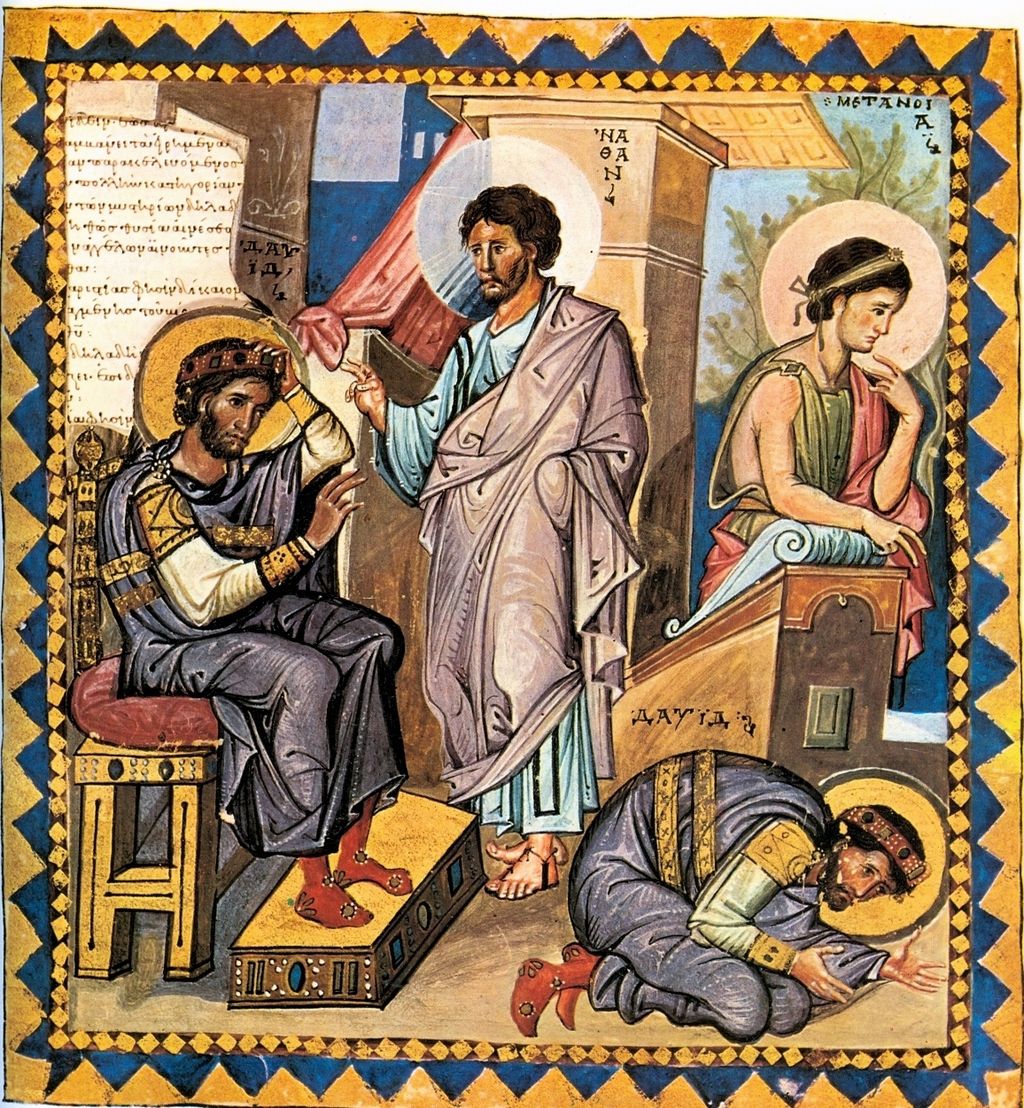
Paris Psalter, folio 136v  'Reproched de Nathan a David, David penitent

Paris Psalter, folio 136v ‘Reproched de Nathan a David, David penitent

  Psalm 6

<To the leader: with stringed instruments; according to The Sheminith. A Psalm of David.>
O LORD, do not rebuke me in your anger, or discipline me in your wrath.
 2 Be gracious to me, O LORD, for I am languishing;
O LORD, heal me, for my bones are shaking with terror.
 3 My soul also is struck with terror, while you, O LORD– how long?
 4 Turn, O LORD, save my life; deliver me for the sake of your steadfast love.
 5 For in death there is no remembrance of you; in Sheol who can give you praise?
 6 I am weary with my moaning; every night I flood my bed with tears;
 I drench my couch with my weeping.
 7 My eyes waste away because of grief; they grow weak because of all my foes.
 8 Depart from me, all you workers of evil, for the LORD has heard the sound of my weeping.
 9 The LORD has heard my supplication; the LORD accepts my prayer.
 10 All my enemies shall be ashamed and struck with terror;
they shall turn back, and in a moment be put to shame.
 

We will never know the situation that any particular Psalm is spoken originally from, except perhaps in cases where the Psalm itself gives us clues. Psalm 6 cries out in terms that reflect in turn a sense of alienation from God’s steadfast love, physical ailment or illness, anxiety and depression, and persecution by enemies and it is possible that all of these were afflicting the Psalmist at one particular moment or that the Psalmist may have used language and memory of these experiences to speak to the distress they feel in the moment as they cry out to the LORD. The Psalmist views their life as resting in the LORD’s hands and begins the appeal directly to God, crying out the name of the LORD. The Psalmist appeals for God’s graciousness not for the Psalmists own merit or worthiness but out of God’s hesed (steadfast love). In language that appears frequently through the psalter, the Psalmist speaks of their anguish and asks for God to end it. God’s anger may not be the only struggle of the Psalmist but it is the decisive one, for God’s anger is what the Psalmist is crying out for God to set aside so that they may be healed and their enemies may be put to shame.

The Psalmist cries out ‘how long’ and pleads for God to turn and relieve the poet’s suffering. Whether the poet is literally suffering in their bones (vs. 2) soul (vs. 3) and eyes (vs.7) there is a connection between external stresses and physical symptoms. As Rolf Jacobson aptly states, “anguish can dehumanize a sufferer, so that one’s sense of self is reduced to pain in one’s bones, body skin.” (Nancy de Clarisse-Walford, 2014, p. 105) Crying out how long while a traditional cry of lament also may indicate that the “pain described is no longer bearable and the speaker is at the breaking point. The intent of the phrase is to mobilize YHWH in a moment of desperate need.” (Brueggemann, 2014, p. 48) And perhaps if the question how long can be answered the Psalmist can endure until the LORD’s anger has passed.

This is one of the first Psalms we deal with the anger of God in relation to the faithful one, the Psalmist who cries out in lament. God’s anger is a necessary corollary of God’s love or as Jim Nieman, my preaching instructor years ago put it, “God’s anger is not the opposite of God’s love, God’s indifference would be the opposite of God’s love.” God’s love is not a sweet sentimentality to the Psalmist or throughout the Bible. God may care for and love me, but God also loves my neighbor and when my actions result in suffering or death to my neighbor then God’s anger arises from that love. Yet God’s steadfast love is always stronger than God’s anger and God’s anger is always connected to that love. (Nancy de Clarisse-Walford, 2014, p. 107)

The Psalmist trusts that in going to the LORD in lament that the Psalmist words are heard. Faith is far more than an optimistic state of mind for the Hebrew people, it is an active calling upon God to act according to God’s steadfast love precisely from the position of suffering. Even though God’s ways may be unknowable at times and mysterious there is still potent power in crying out to the LORD and that God actively hears and intervenes in their lives and in their world. And from my own experience it is often these times of questioning and suffering and anguish where later we can see the faith of the one who endures and cries out deepened. It is a fuller faith that trusts in a God who is present in the midst of the times of joy and the times of tears. A life which can endure the times where our bed is flooded with tears because we know in God’s mysterious time that God’s steadfast love will show itself and that God’s steadfast love will last longer than the suffering or the anger.  That eventually the LORD does hear the sound of the Psalmist, ancient and contemporary, weeping and that the LORD does act upon these pleading words.

One final note on the Psalm in verse 5 where it mentions “for in death there is no remembrance of you; in Sheol who can give you praise?” In ancient Israel there is not yet a hope for a resurrection of the dead or anything more than a shadowy existence in the afterlife. Thinking about the resurrection is something that emerges much later and is up for debate at the time of Jesus. In the New Testament this will be a part of the disagreement between the Sadducees and the Pharisees. At the time the Psalms are written they are written with a very earthly understanding of God’s blessings and God’s anger. God’s steadfast love was a worldly reality that unfolded in the ways God took care of God’s people (or disciplined God’s people) and this may be hard for us to approach in the same way today in a secular world where we no longer think of unseen forces moving on our world but part of the Christian and Jewish understanding of reality is that God does act upon our world. For Christians it becomes a part of the Lord’s Prayer when we pray, ‘thy will be done on earth as it is in heaven.’

Psalm 5- The God Who Hears and Protects

Gustave Dore, David Mourning Absalom (1866)

Gustave Dore, David Mourning Absalom (1866)

Psalm 5

<To the leader: for the flutes. A Psalm of David.>
 Give ear to my words, O LORD;give heed to my sighing.
 2 Listen to the sound of my cry, my King and my God, for to you I pray.
 3 O LORD, in the morning you hear my voice; in the morning I plead my case to you, and watch.
 4 For you are not a God who delights in wickedness; evil will not sojourn with you.
 5 The boastful will not stand before your eyes; you hate all evildoers.
 6 You destroy those who speak lies;the LORD abhors the bloodthirsty and deceitful.
 7 But I, through the abundance of your steadfast love, will enter your house,
 I will bow down toward your holy temple in awe of you.
 8 Lead me, O LORD, in your righteousness because of my enemies;
 make your way straight before me.
 9 For there is no truth in their mouths; their hearts are destruction;
their throats are open graves; they flatter with their tongues.
 10 Make them bear their guilt, O God;let them fall by their own counsels;
because of their many transgressions cast them out, for they have rebelled against you.
 11 But let all who take refuge in you rejoice;let them ever sing for joy.
Spread your protection over them,so that those who love your name may exult in you.
 12 For you bless the righteous, O LORD;you cover them with favor as with a shield.


The God of the Psalmist, and the God presented throughout the bible, is a God who takes sides and values certain things and does not like others. This is not the impassive, unmoved mover of the philosophy of the 1700s-1900s who set the world in motion and then allowed it to move through time like a machine. The passionate cries of the Psalmist assume a God who not only hears but actively responds to the complaints and needs of the poet. Again and again God is named, implored to hear, listen, heed and ultimately to act. One of the courageous acts of the Psalmist and those who pray the Psalms is calling on God to be the God they expect God to be. They remind God of the contrast between the situation they perceive and the things they understand God to value.

In Psalm 5 the contrast is stated in terms of wickedness, lies, bloodshed, deceit and evil. The Psalmist is one who seeks righteousness, and as in Psalm 1 trusts, “for the LORD watches over the way of the righteous, but the way of the wicked will perish” (Psalm 1.6) and so the poet reminds the LORD again that “you are not a God who delights in wickedness.” Yet the complaint of the Psalmist arises out of the situation where the wicked, the evil, the boastful, liars, bloodthirsty and deceitful are the ones who the Psalmist perceives as their troublemakers. The Psalmist calls on God to act and to do something about this. Perhaps there are those by flattery who are obtaining power or who are accusing the writer of the psalm and the Psalmist asks for the guilt to fall upon them. As in Psalms three and four the Psalmist calls out for protection and for the LORD’s deliverance from the situation that the Psalmist finds themselves caught up within.

There is also the reality that the Psalmist, while attempting to be faithful, relies upon God’s steadfast love. The word translated steadfast love is hesed which also can be translated as grace. This is one of the many places in the Psalms where Martin Luther and others could find evidence of the gracious God who met the hearer in the midst of their own unworthiness. As in the reformation where the response to God’s grace was to love, serve, worship, and obey the LORD, so in the Psalm the steadfast love of the LORD is cause for awe and worship. The LORD is the Psalmist’s refuge and the refuge of all who seek the LORD. In language that would be familiar to many the LORD is refuge and shield, protection in the midst of their trouble and a safe place where the faithful may sing for joy and rejoice.

Incarnation

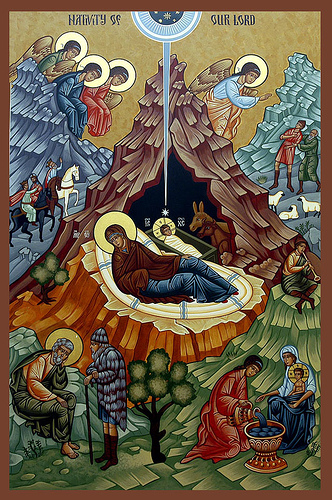
The Nativity of Christ, Icon by Ranosonar

The Nativity of Christ, Icon by Ranosonar


In a world where we have pushed the heavens into the farthest recesses of the universe

And we filled the pores in the world where angels and demons, magic and mystery could enter in

Filling each transcended node with the immanent certainty of rationality and reason

Plugging ourselves into our own isolation connected through patterns of numbers and light

We created a world of which we were our own new gods claiming the generative power of words

Yet, as our own new gods we find ourselves being consumed by the hungry creation we unleashed

Wired into our wireless networks, completely disconnected in our continual connection

Yearning for hope in the tyranny of the soulless world in which nothing is sacred


Yet, there is a memory of a different story from a different time that tugs at my thoughts

Of the transcendent coming to occupy the immanent, of the creator incarnating the creation

Of the infinite coming to occupy the mundane and the ordinary, of making sacred the secular

And perhaps in this season as we remember the narrative of the Word that become flesh

Living among us and daring to enter into a creation that has lost its dreams of tomorrow

That the light may enlighten the present darkness of our permanently lighted world

That we may dream of the truth beyond the facts and the vision beyond our perception

The poetry of a God who invades the impersonal world in the form of a person

Who brings acceptance in the midst of rejection and love in the midst of hatred

In the midst of our perceived wisdom the wisdom of God may appear foolish

And strength comes masquerading as weaknesses and power in the guise of powerlessness


If the Word becomes incarnate and lives among us it comes not to conquer and enslave

But it does come to offer us a dream of a different world and to shape for us a new reality

While it may describe and illuminate and deconstruct the world we shaped for ourselves

It comes as the wisdom that holds the creation together and narrates for us a new story

And in the light of this enfleshed Word we are renamed and our stories have a new frame

Where the sacred inhabits our secular world and life takes on a sacramental reality

And from the soul of the new creation emerges again and ancient hope that we are not alone

For Emmanuel has come and our God is with us, we are among those God favored ones

The ancient angelic host announced in a long ago age when our world still had a place for them.

Review of David Lose’s Preaching at the Crossroads

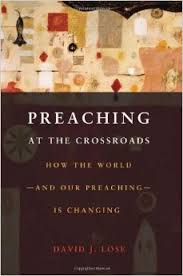
preaching at crossroads

PREACHING AT THE CROSSROADS HOW THE WORLD AND OUR PREACHING IS CHANGING, by David J. Lose. Minneapolis: Fortress Press, 2013. Pp.112. (paperback)

Postmodernity, Secularism and Pluralism are three topics often discussed in relation to understanding the changes that have taken place in society and the lives of individuals in the last half of a century but they are rarely brought together. David Lose provides an incredibly useful introduction to three of the major influences that are shaping the world of the people both inside and outside of congregations and in a brief and helpful way illuminates the impact of these three massive shifts in the way the world is viewed and identity is constructed. In addition to being a descriptive book, where the nature of a postmodern, secular and pluralistic world is described, the book is also suggestive in responding to how a preacher might constructively engage each of the challenges and opportunities presented by our changing world.

Dr. Lose’s proposal in this book is that rather than looking at preaching through a list of problems that are described and solutions that are prescribed to look at the mystery of preaching and the questions of our age.  He invites the reader to enter into, “an ongoing, curious, and lively engagement with the questions that people living at particular times are asking” and then enter into the questions of the current age and understand those questions so as to speak from the mystery and wisdom of faith to those questions in a way that is helpful. (6) The structure of Preaching at the Crossroads deals with each of the three topics with two chapters, one descriptive and one suggestive. In each descriptive chapter the author describes the way each influence is seen in our daily lives and how it impacts the way the church has been able to interact with the world and the second chapter he presents some hopeful suggestions for the road ahead.

Postmodernity is the subject of the first two chapters of the book and in a very quick manner David Lose describes both postmodernity and its predecessor modernity (since postmodernity is a deconstruction of modernity). Modernity depended on rational verifiability as the standard of truth in an ordered world that was searching for certainty in rising scientific and technological revolutions that spanned several centuries. Postmodernism emerges from the disappointment with the costs of the modern age and as a skepticism about the ability of humanity to solve the crises of the world through reason, science, industry and technology. Where modernity sought some unified truth, postmodernity would say there is no unified reality or truth but rather truth has often been the values of the dominant culture. Postmodernity view language and culture are not merely descriptive of reality but are forces that are utilized in the construction of reality and instead of Francis Bacon’s famous dictum “knowledge is power” the postmodern philosopher Michael Foucault reverses this to “power is knowledge.” (18) In a postmodern world where all truth is at best penultimate and that the foundations which our truth and knowledge is based upon may need to be revised in the light of a more plausible alternative. The postmodern world is one of competing stories and narratives of which the Christian story is merely one possible narrative whose validity must be proven through interface with the hearer’s experiences and contact with other competing narratives. In a world where the certainties that humanity can save itself through continued progress and development are stripped away it calls for a different preaching that is willing to courageously wager about God’s engagement of the world and to see how that narrative is received in the experience of the postmodern hearer. Following Paul Ricoeur’s move of employing a hermeneutic of suspicion and trust simultaneously David Lose invites the preacher to consider a centered, communal, and humble approach to preaching.

Secularism is dealt with in chapters three and four of Preaching at the Crossroads. While postmodernity questions modernity’s assumption that humanity can save itself secularism represents a loss of confidence in the divine to allow humanity to escape from its crises. It is a world where the immanent has triumphed over the transcendent and the religious stories that once helped individuals look outward for their sources of meaning no longer have the same power forcing people to turn inward on their quest for meaning and identity. Where postmodernity presented the Christian faith with a crisis of authority secularism present that same faith a crisis of relevance. Many feel that with the triumph of the immanent that the transcendent no longer has a role to play in their lives. The triumph of the immanent over the transcendent has come at a high personal cost leading many to despair at the loss of meaning in their lives. This is where David Lose sees opportunity in the secularism that has come to dominate so many people’s lives, faith gains its relevance when it responds to the secular crisis of hope. In a world full of meaningless stories we are the bearers of an incredible story that does have the audacity to speak hope into hopelessness. Secularism has heightened our awareness of the mundane and ordinariness of life but particularly speaking from the perspective of vocation we have the ability to speak of the transcendent God who is present in the day to day tasks. Rather than restricting God’s activity to the realm of the church, Dr. Lose argues this frees us to point to the places God is at work in the lives of the people we encounter beyond the congregational walls.

Pluralism is the final topic tackled in the final two chapters of Preaching at the Crossroads. With pluralism the place of Christianity is no longer privileged as the one dominant story but is rather placed along with countless competing narratives: some religious, others may be centered on nationality, wealth, ethnicity or even the narratives used in advertising to place a product. This has been heightened by the rise of the digital age where a more robust variety of stories are instantly available at any one time. In light of the near unending choices available the culture has shifted from one of obligation to discretion. Now the center of identity is no longer inherited but rather constructed by the choices of what one affiliates with and which stories one values. We no longer live in a culture that values tradition but rather experience is the touchstone of value in this age. As with the previous shifts, David Lose points to the opportunity in this movement as well. In an age where identity is constructed we have the ability to ask the questions of how to “meet their deepest needs, construct meaningful identities and experience the living God”.(93) In a time where Christianity no longer benefits from the society reinforcing our story it is a chance to help people find themselves in the story again and to tell our story in a way that helps people make sense of their lives. David Lose ends these chapters with some suggestive ideas of how participatory preaching might provide a space for people to make sense of their lives in light of the biblical story.

David Lose’s book is a wonderful introduction to the interconnected movements of postmodernity, secularism and pluralism. It is a concise and quick summary that is helpful both for the preacher who has studied and lived with these swirling movements and for the student learning about preaching and wanting to understand the world that is changing around them. This was a book I wished I had years earlier but I am glad to have found as a helpful resource for today.


Psalm 4: Finding A Space in the Blessing

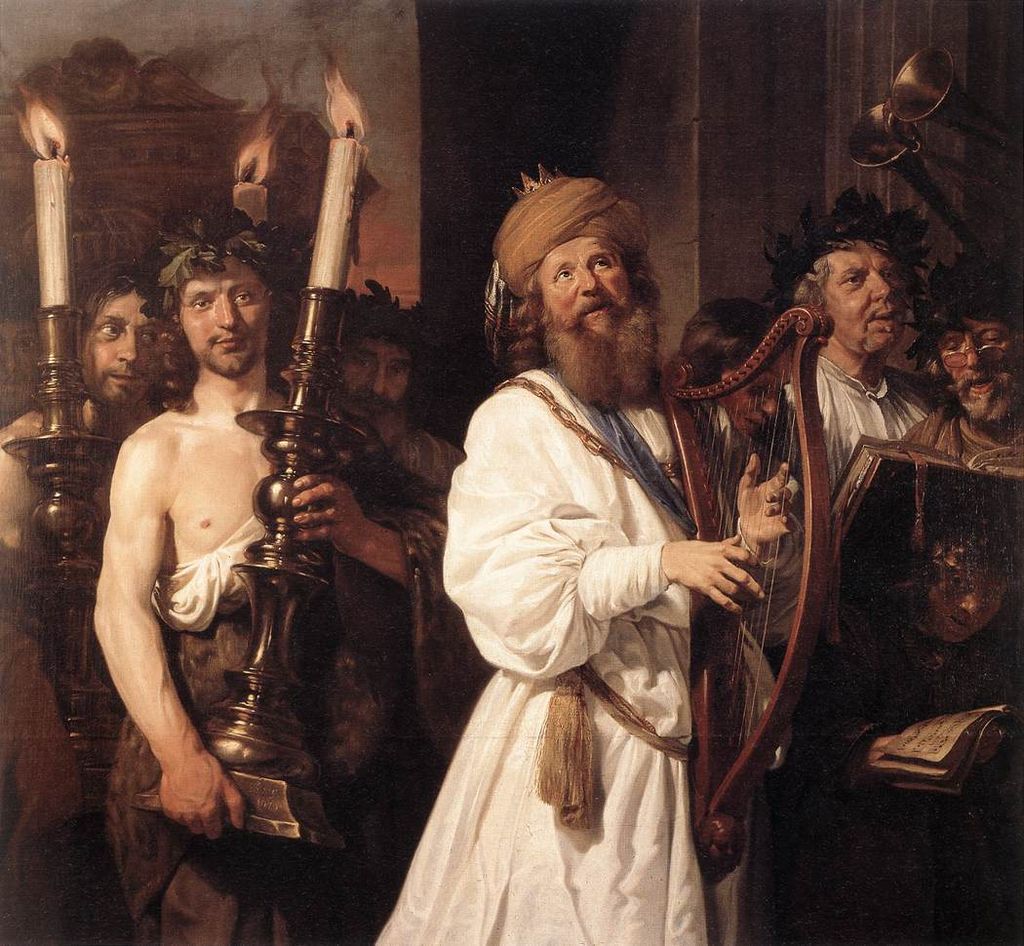
Jan de Bray, David Playing the Harp (1670)

Jan de Bray, David Playing the Harp (1670)

 Psalm 4

<To the leader: with stringed instruments. A Psalm of David.>
Answer me when I call, O God of my right!
You gave me room when I was in distress.
Be gracious to me, and hear my prayer.
2 How long, you people, shall my honor suffer shame?
How long will you love vain words, and seek after lies? Selah
3 But know that the LORD has set apart the faithful for himself;
the LORD hears when I call to him.
4 When you are disturbed, do not sin;
ponder it on your beds, and be silent. Selah
5 Offer right sacrifices, and put your trust in the LORD.
6 There are many who say, “O that we might see some good!
Let the light of your face shine on us, O LORD!”
7 You have put gladness in my heart more than when their grain and wine abound.
8 I will both lie down and sleep in peace;
for you alone, O LORD, make me lie down in safety.

One of the gifts of the Psalter is the range and depth of emotions that it shows as the various Psalmists struggle and rejoice and lament and celebrate their lives with the LORD. Faith is rarely, if ever, a linear progression of growth or a static unmoving reality but a relationship that endures times where one party has moved away or is no longer hearing and times of incredible closeness and intimacy. Psalm 4 is to me a good example of this movement within the life of faith as the Psalmist moves from complaint to reassurance, from question into faith and from need into safety. It begins with a cry, “Answer me when I call” and directs that call to the God who is the source of the Psalmist’s righteousness and identity. The Psalmist reflects back upon the way God has been present: listening, making a space for the petitioner, responding in grace instead of judgment. There is a dissonance between the Psalmist and the people, somehow the Psalmist has fallen out of favor, their name has been dishonored and they are following the words they want to hear rather than the truth. Perhaps the positioning of this psalm encourages us to hear it in the same circumstances as the previous Psalm, while David is fleeing after the rebellion of his son Absalom has taken over Jerusalem. Yet the Psalmist find comfort in their identity.

It is in this identity, the Psalmist considers himself one of the righteous, one who has been set apart, one whom the LORD listens to. In a time when the Psalmist words go unheard by the people, they are heard by the LORD. In a time where the identity of the Psalmist in the eyes of the people is that of the unrighteous in God’s eyes they remain the righteous one. Much as Job can appeal to God’s judgment as he endures the questioning of his friends, or Paul can state in the letter to the Romans 8.31 “If God is for us, who is against us?” the Psalmist can hold tight to the identity they have in the LORD. So the Psalmist returns to the practices of how they will live, not sinning, offering right sacrifices, pondering on one’s bed but not losing sleep over it. And the Psalmist rapidly moves in this brief prayer from complaint into resting in peace and safety, from the moment of anxiety to the gladness and reassurance of the LORD’s blessing. In an echo of the Aaronic blessing from the book of Numbers:

 The LORD bless you and keep you;
the LORD make his face shine upon you and be gracious to you;
the LORD lift up his countenance upon you, and give you peace Numbers 6: 24-26

The Psalmist can say “let the light of your face shine upon us and finds strength and trust in their identity as they continue in their journey as one of God’s set apart ones.

Psalm 3- Hope in the Heart of Brokeness

Gapare Traversi Die Erordung Amnons beim Gastmahl Absaloms (1752)

Gapare Traversi Die Erordung Amnons beim Gastmahl Absaloms (1752)

 Psalm 3

<A Psalm of David, when he fled from his son Absalom.>
 O LORD, how many are my foes! Many are rising against me;
 2 many are saying to me, “There is no help for you in God.” Selah
 3 But you, O LORD, are a shield around me, my glory, and the one who lifts up my head.
 4 I cry aloud to the LORD, and he answers me from his holy hill. Selah
 5 I lie down and sleep; I wake again, for the LORD sustains me.
 6 I am not afraid of ten thousands of people who have set themselves against me all around.
 7 Rise up, O LORD! Deliver me, O my God! For you strike all my enemies on the cheek;
 you break the teeth of the wicked.
 8 Deliverance belongs to the LORD; may your blessing be on your people! Selah

Psalm 1 begins with happy/blessed are those and Psalm 2 ends with happy/blessed are all who take refuge in the the Lord, and then we begin a series of laments in Psalm three and four as well as six and seven. There is something more to this than some simple sort of life and a blessed life (my preferred translation of the word in Psalm one and two) is not an easy life. In my experience some of the people who have the strongest faith are those who have been through the most difficult and harrowing struggles. To be a person ‘after God’s own heart’ does not grant one an untroubled life and there is a need for an expression of desperation, a faithful cry for help in the midst of the struggle.

The superscription of the Psalm takes us back to one of the dark moments in the story of King David and in the narrative this is a part of a series of dark times for the king which so many have placed their trust in. After 2 Samuel narrates the story of David and Bathsheba, where David has sex with Bathsheba and conspires to have her husband Uriah the Hittite killed and the immediate after effects of this with God sending the prophet Nathan to David, the child dying and then a new hope with the birth of Solomon (2 Samuel 11 and 12) we reach a story of a deeply broken royal family. Absalom and his sister Tamar of children of one of David’s wives while Ammon is his son by another wife. Ammon conspires to bring Tamar into his room and then rapes her and King David does nothing to Ammon, his oldest son. Furious with his brother and the king’s inaction Absalom takes vengeance himself and during a banquet murders Ammon, his brother. Absalom flees, but is later welcomed home and forgiven. Once Absalom is home he begins to create his own power base and several years later leads a coup which forces David from Jerusalem and leads to Absalom’s eventual death. (2 Samuel 13-18). In the heart of the brokenness where families have failed, where forgiveness has been turned away, where power has been seized and life is at risk, the superscription places the words within that story.

In a world where we think God helps those who help themselves, the Psalm points to a different reality. God helps those who cannot help themselves. (Elizabeth Actemeir, et. al., 1994, p. IV: 692f). In the narrative world of the story of David evoked in the superscription and in the opening verses the surrounding people believe there is ‘no help for you in God.’ But for the Psalmist, the Lord is shield, refuge and strength. Even in the times where it seems like hope is lost the persistent faith of the Psalmist calls out to God and trusts that there will be an answer. The petitions of the Psalmist are great and their foes are many and yet the confidence that the petitioner holds to comes from the God who has sustained them. There is the trust that even in the crisis that the Psalmist can entrust deliverance into the Lord’s hands and the even as their name may be uttered as a curse, the deeper reality is that they are a part of the people the Lord has set apart as a blessing.

Psalm 2 – The LORD’s Messiah

  Psalm 2

Why do the nations conspire, and the peoples plot in vain?
 2 The kings of the earth set themselves,
and the rulers take counsel together,
against the LORD and his anointed, saying,
 3 “Let us burst their bonds asunder, and cast their cords from us.”
 4 He who sits in the heavens laughs; the LORD has them in derision.
 5 Then he will speak to them in his wrath, and terrify them in his fury, saying,
 6 “I have set my king on Zion, my holy hill.”
 7 I will tell of the decree of the LORD: He said to me,
“You are my son; today I have begotten you.
 8 Ask of me, and I will make the nations your heritage,
and the ends of the earth your possession.
 9 You shall break them with a rod of iron,
and dash them in pieces like a potter’s vessel.”
 10 Now therefore, O kings, be wise; be warned, O rulers of the earth.
 11 Serve the LORD with fear, with trembling
 12 kiss his feet, or he will be angry, and you will perish in the way;
for his wrath is quickly kindled. Happy are all who take refuge in him.
  

Psalms 1 and 2 introduce the Psalter and while Psalm 1 highlights one of the major foci of the Jewish people, God’s law the Torah, Psalm 2 focuses on the Messiah, the Davidic King.  Perhaps this Psalm was at one point used in coronations or in some other ritual setting within the nation of Israel or later the kingdom of Judah, and it reflects back upon some mystical time when Israel was an empire that ruled over vassal kings. There is an idealization of the dominion and power of the Davidic kingship which reached its peak under Solomon and would from that point forward be a small kingdom caught among the rise and falls of empires in Egypt, Assyria and Babylon. Even with the focus on the Lord’s anointed (literally the Lord’s messiah) the focus, as through out the Psalter, is taking refuge in the Lord.

For Christians this is one of the Psalms that has often been read through the image of Jesus, particularly verse 7 “You are my son; today I have begotten you” and while Christians should not forget that this Psalm originally refers back to a Davidic king part of the living witness of scriptures allows people to hear the words echoed in a new way in a new era. Yet if one is going to listen to this Psalm in terms of Jesus one does have to wrestle with the militaristic language of verse 9 (You shall break them with a rod of iron, and dash them in pieces like a potter’s vessel) and yet this is not that much different from some of the triumphal language lifted up by Paul and others in the New Testament.

Bible paintings in the Castra center, Haifa-Samuel Annointing David and David and Goliath

Bible paintings in the Castra center, Haifa-Samuel Annointing David and David and Goliath


Psalm 1 and 2 taken together lift up the Torah and the Davidic King as two of the foci of the way of life outlined within the meditations contained within the Psalter and yet both Torah and King are to point back to the LORD. The linkage at the beginning of Psalm 1 (Happy are those who do not follow the advice of the wicked) and the end of Psalm 2 (Happy are those who take refuge in him) joins the king and the law together as ways in which God establishes God’s rule among God’s people. As in many of the other Psalms the LORD will laugh at the movements of the nations and empires and for a nation that frequently found itself under duress from other kings and rulers perhaps this Psalm was its own revelation of God’s rule in, with and under the movements of the kings and empires around them. Perhaps like King Arthur for the Anglo-Saxon time it reflects back to the time of the once and future king, the one who was a ‘man after God’s own heart.’ To a simpler or perhaps better time. Perhaps it is a part of the imagination and story that allows the people to maintain their identity in the midst of dispersion and exile, of disillusioned hopes of rebuilding the temple and their loss of power and status in the world. Perhaps this was one more way in which they were able to see the shade pulled back and trust that the LORD was the one who was in control rather than the other gods and lords and powers. And perhaps it is wise to remember that the Psalter is poetry which attempts to express truth that transcends the situation that the people may have found themselves in. Or perhaps a more cynical approach would look at this as a form of self-aggrandizement of the Davidic kings, granting themselves divine authority and  granting themselves a position of ‘sons of God’ in a way that the Caesars in Rome would later do in a different way.

I choose to read this in a non-cynical way. I am certainly influenced by the post-modern hermeneutic of suspicion but at a certain level I have had to learn to trust. To let the words wash over and to listen deeply for the wisdom in the poetry. The God of the Hebrew people, the same God the Christian people would come to know, was deeply involved in the world. Politics and power were not separate things but a part of the engaged and sacred reality of their God who engaged the world.  A God who can laugh at the movement of armies and empires and who is their refuge and strength as Psalm 46 and other places will remind them. Who when the kings of the earth seem to be taking counsel against the chosen people in Zion or in all times and places throughout the world, who still reigns and holds those who rebel against God’s rule in derision. The one who reads and approaches and meditates on the Psalter as a way of understanding how God approached them in the earth find the blessedness (happiness) by taking refuge in this hope, this poetry and this narrative.


Death and Taxes

denarius

The only two certainties are the things we dread
For the notion of control gets stuck in our head
How can death take the life we try so hard to live
Or a government tell us how much income we have to give
For it is all about control of our lives and our share
Yet death and taxes are a burden we all bear
Is it lawful to render to Caesar we complain
Please tell us it’s our to hold and sustain
Don’t tell us to render to God the things God is due
We’d rather bicker and argue to fight to sue
Tell us somehow that by growing our bottom line
That our place in the kingdom will be just fine
Not to sell our possessions of give them away
Or to render to Caesar our portion to pay
Yet if we put our treasure where our heart should be
We would give more away and hold on less tightly
For in a world of death and taxes we scrimp and pinch
We dread each penny lost and charge for each inch
But perhaps in a world death no longer holds sway
And taxes aren’t needed to fund things anyway
In a dream of a kingdom, this strange peculiar dream
Where the people of the king don’t hold onto anything
When someone is in need they simply give things away
And all can eat and drink at the feast where no one has to pay
A dream that is so foreign to you and to me
Where death and taxes are not certainty
Neil White, 2014
A little rhyming fun with Matthew 22:21