The Rejected Kingdom- A Sermon on the Crucifixion in Mark’s Gospel

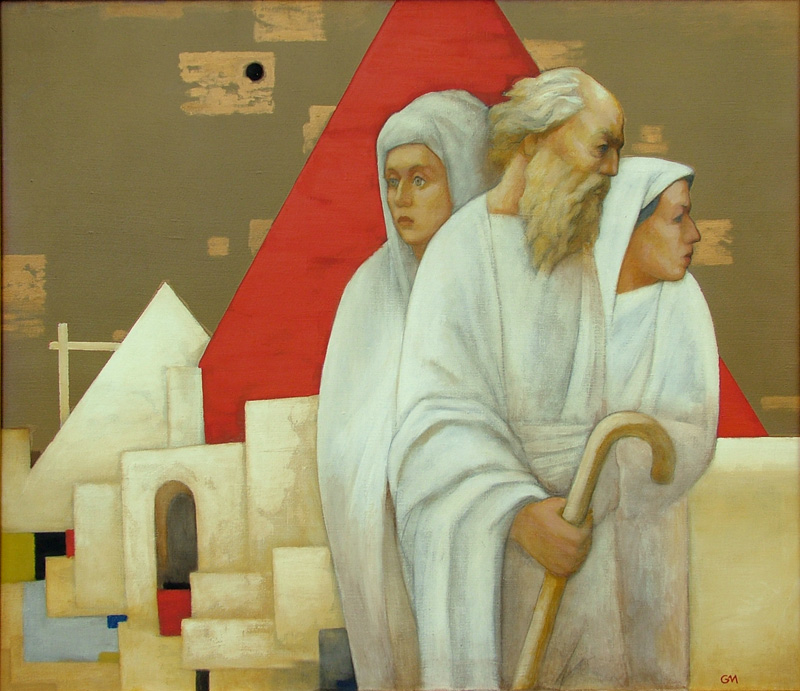
Time Heal All Wounds, by kparks@deviantart.com

Time Heal All Wounds, by kparks@deviantart.com


33 When it was noon, darkness came over the whole land until three in the afternoon. 34 At three o’clock Jesus cried out with a loud voice, “Eloi, Eloi, lema sabachthani?” which means, “My God, my God, why have you forsaken me?” 35 When some of the bystanders heard it, they said, “Listen, he is calling for Elijah.” 36 And someone ran, filled a sponge with sour wine, put it on a stick, and gave it to him to drink, saying, “Wait, let us see whether Elijah will come to take him down.” 37 Then Jesus gave a loud cry and breathed his last. 38 And the curtain of the temple was torn in two, from top to bottom. 39 Now when the centurion, who stood facing him, saw that in this way he breathed his last, he said, “Truly this man was God’s Son!” Mark 15: 33-39

When I began seminary one of the first books that I was required to read was Gerd Theissen’s The Shadow of the Galilean which follows Andreas, a first century merchant who kept walking through the places where Jesus had been, hearing the echoes of his passing, seeing the effects that he had on people. He never meets Jesus while before the crucifixion but I enjoyed this scholars attempt to wonder what it might be like on the ground in ancient Palestine at the time of Jesus. Through the story the author tries to figure out who is this Jesus and why did he die, and those are questions that Christians and others who live in the wake of this Galilean have wondered for two thousand years. In the words of the Appalachian carol ‘I Wonder As I Wander’

I wonder as I wander, out under the sky,
How Jesus the Savior did come for to die
For poor ord’n’ry people like you and like I.
I wonder as I wander, out under the sky.

And each of the gospels wonder as they wander with Jesus, narrating his story in their own way. They pull on their experiences, on the stories they’ve heard, on the things they’ve seen, on the world they understand in light of their scriptures and they call us into the mystery as well. So as we wonder about the cross and why Jesus did die we come to Mark’s gospel and one answer, and that is that God had a dream that was rejected. Jesus comes and proclaims that the kingdom of God is at hand, that God has a vision for the world and that because of this the world was changing. It was not a new dream, the prophets had pointed to it, the psalms sang of it, and the law envisioned it, but just as the people had never accepted the prophets in their own time they did not receive the son. But why would people reject this dream? Why would they turn away from God’s calling and desire? Why would they choose something else than the kingdom of God?

Well in part because this dream challenged the reality had grown up experiencing. It challenged people’s practices, how they could judge and exclude one another, who they could ignore, who they could exploit. It challenged the temple and the religious, for healing was coming from a source other than them. Jesus didn’t do the right things, hang out with the right people, and show the right people the proper deference. Who did he think he was? It challenged the Romans and the powerful of the day, it didn’t believe that a person’s value was based on their power or position, it didn’t occupy strongholds or build armies but it did undercut the threat of violence. It challenged the rich and the wealthy because it told people to place their trust not in wealth or possessions or land but instead in the presence of God who had come down to be a part of the world. It called people away from their trades, their homes, their families and their lives. It made lepers clean and allowed the blind to see and yet those with eyes to see and ears to hear were few indeed. It lifted up the weak and the widow, the outcast and the orphan, the foreigner and the forgotten. It imagined a place where the first where last and the last were first where people found a new community in being gathered together around this Galilean. It taught people to love and that aroused hate.

Why did Jesus die, well on the ground level there are a number of answers: fear, power, authority, security. The religious of Jesus’ day felt that he was a blasphemer and a heretic, the Romans crucified him as a rebel and he dies on a cross viewed as a traitor to both Israel and Rome. He dies because the dream was rejected, the kingdom cast aside and its king crowned with thorns. Jesus dies to kill the messenger and destroy the message. Crucified to erase his honor, name and memory from all traces of history. But in this crazy dream where the first are last and the last are first, where the irony of Jesus’ mocking title hung over him on the cross is somehow true, where one consigned to be forgotten becomes remembered far beyond any other figure of any day or time, this mystery of the message lives on in us. We are those who come today and wonder as we wander out under the sky, how Jesus the Savior did come for to die. And while there are many answers to this question and what happened on this day will continue to defy our attempts to lock it down and so we come together and we wonder about the mystery of the cross and the one who went to the cross. We learn to dream God’s dreams, to live in God’s kingdoms, and to be transformed by the message and the messenger who died on the cross and yet live.

Deuteronomy 1: Retelling The Story For A New Time

Moses Speaks To His People at Moab, Charles Mosley, 1747

Moses Speaks To His People at Moab, Charles Mosley, 1747

Deuteronomy 1: 1-8 Retelling the Story

These are the words that Moses spoke to all Israel beyond the Jordan– in the wilderness, on the plain opposite Suph, between Paran and Tophel, Laban, Hazeroth, and Di-zahab. 2 (By the way of Mount Seir it takes eleven days to reach Kadesh-barnea from Horeb.) 3 In the fortieth year, on the first day of the eleventh month, Moses spoke to the Israelites just as the LORD had commanded him to speak to them. 4 This was after he had defeated King Sihon of the Amorites, who reigned in Heshbon, and King Og of Bashan, who reigned in Ashtaroth and in Edrei. 5 Beyond the Jordan in the land of Moab, Moses undertook to expound this law as follows:  

6 The LORD our God spoke to us at Horeb, saying, “You have stayed long enough at this mountain. 7 Resume your journey, and go into the hill country of the Amorites as well as into the neighboring regions– the Arabah, the hill country, the Shephelah, the Negeb, and the seacoast– the land of the Canaanites and the Lebanon, as far as the great river, the river Euphrates. 8 See, I have set the land before you; go in and take possession of the land that I swore to your ancestors, to Abraham, to Isaac, and to Jacob, to give to them and to their descendants after them.”

I was sitting with some of my colleagues earlier this week when someone asked, “Why do you write on things that can be gloomy or less interesting, you spent over a year going through Jeremiah and now you are going to do Deuteronomy. You are about to get married, why not write on something like Song of Solomon.”  And my answer was simply I think there is wisdom in going back to these books that as Christians we don’t spend a lot of time in, that rarely appear, for example, in the Revised Common Lectionary, and that those who do spend time with them do it from a moralistic perspective and may be selectively choosing parts that fit their idea of what is important. I also think there is a need for understanding the God of covenant which is the background for the stories of the gospels and the New Testament as a whole. As a person who understands God primarily as a gracious and loving God I also need to be able to wrestle with the multiple pictures of God that are painted by the numerous authors of scripture. I think it is also important to walk with the God who is present in these stories because it is too easy for us as modern people to reduce God to ideas, God is love or God is the unmoved mover, or God is omnipotent, omnipresent, all knowing, etc. I think without continually going back to the narratives that we have we run the risk of falling quickly into H. Richard Niebuhr’s statements about American Christianity, “A God without wrath brought men without sin into a kingdom without judgment through the ministrations of Christ without a cross.” (Niebuhr, 1988, p. 193) I could easily write on the gospels or Paul’s letters but I also spend time here because it is a part of scripture I don’t know well and I trust that although it may not be the easiest place to engage the story of God, it remains important.

Also for our Jewish ancestors Deuteronomy is at the very heart of their understanding of God, one of the five books of the Torah, and in many ways a distillation of the books of Exodus, Leviticus and Numbers. It is a book which contains the central Jewish command, the Shema, which we will see in chapter 6. Going into the book of Deuteronomy requires me to step into another perspective and another time, and perhaps I like the Psalmist can learn to meditate on this ‘second law’ and find delight. As Psalm 1 states “but their delight is in the law of the LORD, and on his law they meditate day and night.” (Psalm 1.2) The word Deuteronomy comes from a mistranslation and the name literally means second law, and it is a second telling of the story and a highlighting of certain key portions of the law. The narrator of Deuteronomy places these words in the mouth of Moses as the people is almost ready to finally enter the promised land after their generation long sojourn in the wilderness. It is the end of Moses journey and the passing of the torch from Moses who led them out of Egypt to Joshua and the new generation who will move into the promise land.

Deuteronomy is not a neutral retelling of history, nor is any of scripture, but it is told in a way to make certain things clear. It is a book that talks about the faithful covenant God who has journeyed with the people from Egypt and will continue to journey with the people. It expounds and interprets history through the lens of God’s covenant faithfulness. Deuteronomy begins by telling the story of God and interpreting the people’s identity in light of that story. Deuteronomy narrates Israel’s identity at this crucial moment as they stand at the transition between sojourners and residents of the promised land, a generation ago they understood themselves as slaves in Egypt and that identity does not easily pass away, but now they are the chosen people called to live in a covenant with the God of Abraham and Isaac and Jacob. It is an identity that they have failed to live into in the past and it is an identity that they will not easily shoulder in the future but for Deuteronomy their lives and future are at stake as they place the people there in the valley hearing Moses tell about their past so that they may live into their present identity.


Deuteronomy 1: 9-18

 9 At that time I said to you, “I am unable by myself to bear you. 10 The LORD your God has multiplied you, so that today you are as numerous as the stars of heaven. 11 May the LORD, the God of your ancestors, increase you a thousand times more and bless you, as he has promised you! 12 But how can I bear the heavy burden of your disputes all by myself? 13 Choose for each of your tribes individuals who are wise, discerning, and reputable to be your leaders.” 14 You answered me, “The plan you have proposed is a good one.” 15 So I took the leaders of your tribes, wise and reputable individuals, and installed them as leaders over you, commanders of thousands, commanders of hundreds, commanders of fifties, commanders of tens, and officials, throughout your tribes. 16 I charged your judges at that time: “Give the members of your community a fair hearing, and judge rightly between one person and another, whether citizen or resident alien. 17 You must not be partial in judging: hear out the small and the great alike; you shall not be intimidated by anyone, for the judgment is God’s. Any case that is too hard for you, bring to me, and I will hear it.” 18 So I charged you at that time with all the things that you should do.


Moses is characterized as the type of leader who takes everything on his shoulders and the people follow, but this type of leadership not only burns out the leader dealing with every issue that comes up but it also prevents the people from taking ownership for their own calling. Now in the ancient world where most people were not literate and relied on kings, priests, and judges to be not only the interpreters but the readers of the law it was crucial to have people entrusted to this. This may refer back to both Exodus 18 and Numbers 11 which refer to two separate events, but the character of Moses in the retelling is interesting. In Exodus 18 it is Jethro, Moses’ father-in-law, who sees Moses spending all his time adjudicating minor manners and says to him, “What you are doing is not good. You will surely wear yourself out, both you and these people with you. For the task is too heavy for you and you cannot do it alone.”(Exodus 11.18) and so it is at his father-in-laws urging that Moses appoints judges. In Numbers 11 the people are complaining and Moses reaches his breaking point saying, “Why have you treated your servant so badly?…I am not able to carry all this people alone, for they are too heavy for me.” (Numbers 11.11, 14) Now it is Moses who appeals to God from exhaustion, frustration and in desperation looking for assistance and God provides a portion of the spirit that is on Moses and give it to these seventy elders. In Deuteronomy Moses is the wise and trusted leader and Moses comes up with the idea and the people respond, “the plan you have proposed is a good one.”  The story perhaps begins with the appointing of judges because of the critical nature having good judges will play in the story as it goes forward. Living justly requires a set of good and competent judges and a strong and impartial legal system which cares for the poor and the rich, the citizen and the immigrant is critical to living out their identity as the people of God.

Moses by Victorvictori, permission granted by author through WikiCommons

Moses by Victorvictori, permission granted by author through WikiCommons


Deuteronomy 1: 19-33

 19 Then, just as the LORD our God had ordered us, we set out from Horeb and went through all that great and terrible wilderness that you saw, on the way to the hill country of the Amorites, until we reached Kadesh-barnea. 20 I said to you, “You have reached the hill country of the Amorites, which the LORD our God is giving us. 21 See, the LORD your God has given the land to you; go up, take possession, as the LORD, the God of your ancestors, has promised you; do not fear or be dismayed.”

 22 All of you came to me and said, “Let us send men ahead of us to explore the land for us and bring back a report to us regarding the route by which we should go up and the cities we will come to.” 23 The plan seemed good to me, and I selected twelve of you, one from each tribe. 24 They set out and went up into the hill country, and when they reached the Valley of Eshcol they spied it out 25 and gathered some of the land’s produce, which they brought down to us. They brought back a report to us, and said, “It is a good land that the LORD our God is giving us.”

 26 But you were unwilling to go up. You rebelled against the command of the LORD your God; 27 you grumbled in your tents and said, “It is because the LORD hates us that he has brought us out of the land of Egypt, to hand us over to the Amorites to destroy us. 28 Where are we headed? Our kindred have made our hearts melt by reporting, ‘The people are stronger and taller than we; the cities are large and fortified up to heaven! We actually saw there the offspring of the Anakim!'” 29 I said to you, “Have no dread or fear of them. 30 The LORD your God, who goes before you, is the one who will fight for you, just as he did for you in Egypt before your very eyes, 31 and in the wilderness, where you saw how the LORD your God carried you, just as one carries a child, all the way that you traveled until you reached this place. 32 But in spite of this, you have no trust in the LORD your God, 33 who goes before you on the way to seek out a place for you to camp, in fire by night, and in the cloud by day, to show you the route you should take.”


There is no identity without knowing one’s story. The book of Deuteronomy narrates again the story of the people at the edge of the promised land a generation ago in order to construct a different identity in this new generation. They are the children of those who did not trust the LORD at this crucial moment in the story and they have the opportunity to act differently than their ancestors. They are the children of the people who God, “who carried you, just as one carries a child” but still had not learned to trust in the God who journeyed with them. Perhaps learning to trust in the LORD who we don’t always see is one of the hardest things to learn, and even though I think Luther is correct to interpret the first commandment, “We are to fear, love and trust God above all things” (Luther, 1994) It is more difficult to live that ideal out in the realities of life and conflict. Moses can see and interpret reality to the people, that the LORD has given them possession of the land and that it is a good and prosperous land but people will always see the giants and the walled cities.

One thing I noticed about this is that there is a changed dynamic. In the previous section Moses made the suggestion about the judges and the people felt it was a good idea, but here the people make the suggestion of exploring the land and Moses felt the plan sounded good. Perhaps, without reading too much into this, this is one of the dangers that leaders face. Knowing when to listen to the people they lead and knowing when to stick with their own plan. The time of scouting out the land allows many of the doubts to return. The murmurs of the journey through the wilderness return. The people continue to misunderstand who the LORD is and the way they are to relate to this God who has led them or their journey. The people see the LORD’s absence while Moses sees the LORD’s presence and continually calls the people to trust in the LORD who has been present throughout the journey.


Deuteronomy 1: 34-45

 34 When the LORD heard your words, he was wrathful and swore: 35 “Not one of these– not one of this evil generation– shall see the good land that I swore to give to your ancestors, 36 except Caleb son of Jephunneh. He shall see it, and to him and to his descendants I will give the land on which he set foot, because of his complete fidelity to the LORD.” 37 Even with me the LORD was angry on your account, saying, “You also shall not enter there. 38 Joshua son of Nun, your assistant, shall enter there; encourage him, for he is the one who will secure Israel’s possession of it. 39 And as for your little ones, who you thought would become booty, your children, who today do not yet know right from wrong, they shall enter there; to them I will give it, and they shall take possession of it. 40 But as for you, journey back into the wilderness, in the direction of the Red Sea.”

 41 You answered me, “We have sinned against the LORD! We are ready to go up and fight, just as the LORD our God commanded us.” So all of you strapped on your battle gear, and thought it easy to go up into the hill country. 42 The LORD said to me, “Say to them, ‘Do not go up and do not fight, for I am not in the midst of you; otherwise you will be defeated by your enemies.'” 43 Although I told you, you would not listen. You rebelled against the command of the LORD and presumptuously went up into the hill country. 44 The Amorites who lived in that hill country then came out against you and chased you as bees do. They beat you down in Seir as far as Hormah. 45 When you returned and wept before the LORD, the LORD would neither heed your voice nor pay you any attention.

 46 After you had stayed at Kadesh as many days as you did,


Can we learn from our past or are we somehow destined to repeat it? One of the things that the prophets of Israel will do over and over again is to take these central stories, like the story of the exodus and recast them to be heard again in their day. The will use the stories of the past to tell the people of their time the cost of their disobedience to their covenant with God. The God of the Bible does get angry, does show emotions, is become wounded by the disobedience of the chosen people. This time when Israel refuses to hear the word of the LORD leads to the LORD being unwilling to hear them. This is one of those times where the people missed their window of opportunity, and the LORD through Moses (even in the midst of God’s anger) tells Moses to warn the people not to go up, but the people strap on their equipment and proceed to walk into their own defeat.

This disobedience has consequences not only for the people but for Moses. The narrative places the blame for Moses’ inability to reach the promised land at the feet of the people. Their disobedience not only brings anger on themselves but on Moses, and even though Moses has stood in the gap between the people and God, now Moses finds himself caught between the people and the LORD.

One of things this makes me ponder is the God who refuses to hear. We often act as if God hears every prayer regardless of how we interact with the world God has made, and there may be some truth in this, but there is also truth in the view of the Deuteronomist where our actions and our lives matter to God. The LORD presented by Deuteronomy does care about the lives of the people who are supposed to represent God in the world. Yet there is a hope, it is not an immediate or cheap hope. God will not stay angry forever, there will be a time when God listens to the people again. It may be a generation later when the sons and daughters who grow up in the wilderness now are adults ready to enter the promise land but ultimately, for Deuteronomy, God will uphold God’s part of the covenant but not on a human timeline.

Perhaps in a later time, when all the books scholars like to label the Deuteronomic History (Deuteronomy, Joshua, Judges, 1&2 Samuel and 1&2 Kings) are brought together the people are looking back on their history trying to make sense of their world. They are trying to bring order to the chaos of living in the midst of the exile in Babylon. As they look back over their story they find meaning in who they are called to be and how they are called to live. Even without the land or the temple or a king they are still the people of the covenant and perhaps in this time of disobedience where a generation is lost in the wilderness they can find hope in their own lost generation in exile.

Meaning and Metrics

William Blake, The Ancient of Days: The Division of Light and Darkness (1794)

William Blake, The Ancient of Days: The Division of Light and Darkness (1794)

We often act if the only things that matter are the things that we can measure
Equating quantifiability with quality and metrics for meaning
In a scientific world we like to measure and enumerate
Statistically straining our lives into sets of data to be examined
Living for our curricula vita rather than the unmeasurable moments of meaning
And perhaps someday we will describe the mathematics of love and passion
But lives that are lived seek the meaning that defies the metrics
We live not for numbers but for stories, for feelings and values
Our impact is felt in the quality of connections we cultivate
Rather than the quantity of work we manufacture
Numbers have their necessity and their place in our world
And metrics cannot give us the meaning that our lives seek

Neil White, 2015

Reverie

There are songs to be sung whose words I don’t yet know
There are novels to be written and stories to be told
Journeys to be made, battles to be won,
Hearts broken and mended in these ballads left unsung.
Perhaps, one day, they’ll find their way from my mind onto a page
Until that day they grow in my thoughts and in my dreams they rage
Most will be lost and forgotten never seen
Except in their brilliant flashes upon my mind’s own screen
So many times I wish that there was a way that I could share
The ones who dance beyond my reach and vanish in thin air
So if someday you see me and you ask what’s on my mind
And I simply tell you nothing, I don’t mean to be unkind
Perhaps there simply aren’t the words to describe the things I see
Or maybe, I fear, the magic that I invest them with won’t translate unto thee
So there are novels that may never be written and stories left untold
And songs whose words and melodies the world will never know.

Paul Cesar Helleu, Daydream (1901)

Paul Cesar Helleu, Daydream (1901)

Psalm 10: Calling Upon God to Be God

The Hebrew Alphabet. Hebrew reads right to left so it begins with Aleph and ends with Tet

The Hebrew Alphabet. Hebrew reads right to left so it begins with Aleph and ends with Tet

 Psalm 10

1 Why, O LORD, do you stand far off?
Why do you hide yourself in times of trouble?
2 In arrogance the wicked persecute the poor—
let them be caught in the schemes they have devised.
3 For the wicked boast of the desires of their heart,
those greedy for gain curse and renounce the LORD.
4 In the pride of their countenance the wicked say, “God will not seek it out”;
all their thoughts are, “There is no God.”
5 Their ways prosper at all times; your judgments are on high, out of their sight;
as for their foes, they scoff at them.
6 They think in their heart, “We shall not be moved;
throughout all generations we shall not meet adversity.”
7 Their mouths are filled with cursing and deceit and oppression;
under their tongues are mischief and iniquity.
8 They sit in ambush in the villages; in hiding places they murder the innocent.
Their eyes stealthily watch for the helpless;
9 they lurk in secret like a lion in its covert;
they lurk that they may seize the poor;
they seize the poor and drag them off in their net.
10 They stoop, they crouch, and the helpless fall by their might.
11 They think in their heart,
“God has forgotten, he has hidden his face, he will never see it.”
12 Rise up, O LORD; O God, lift up your hand; do not forget the oppressed.
13 Why do the wicked renounce God, and say in their hearts,
“You will not call us to account”?
14 But you do see! Indeed you note trouble and grief, that you may take it into your hands;
the helpless commit themselves to you; you have been the helper of the orphan.
15 Break the arm of the wicked and evildoers;
seek out their wickedness until you find none.
16 The LORD is king forever and ever; the nations shall perish from his land.
17 O LORD, you will hear the desire of the meek;
you will strengthen their heart, you will incline your ear
18 to do justice for the orphan and the oppressed,
so that those from earth may strike terror no more.
 
As I mentioned when writing about Psalm 9, these two psalms were probably one psalm originally but we now have them as two separate psalms and in this portion of the acrostically assembled (although imperfectly) poem in Hebrew we have a very different tone. In contrast to Psalm 9 which mainly praises God’s power and justice Psalm 10 resides in the place where that power and judgment seem unseen and ineffective. It is one of the central dissonances of faith, seeing the wicked prosper while the righteous ones stumble and fall under the weight of oppression. When bad things happen to good people and good things come to the wicked how does one make sense of a very worldly faith that believes in an active and present God who is an active part of the Psalmists world? The Psalmist responds by calling on God to be God, challenging God to come to action, to pay attention to what is going on in God’s world and to bring about change. Christians pray in the Lord’s Prayer, “Thy kingdom come, thy will be done on earth as it is in heaven.’ And this is, like the Psalms, a very worldly prayer. It asks for God’s activity not in some distant heaven or some spiritual reality separated from the day to day reality of our lives. It doesn’t ask for God’s action after our death but precisely within the day to day activity of life. It is a risky faith because there will be times in life where God’s justice and God’s action seem far off and God’s very reality is questioned by the distance between our present reality and God’s promise. Yet this is the faith of the bible and the psalmist in particular that continues to hope in the midst of what may seem like hopelessness that God will act in God’s own mysterious way.

Perhaps this is one of the more dangerous and at the same time more pertinent Psalms for our time with its continual focus on the adversaries schemes to take advantage of the poor and to increase their own wealth and power. In our age we often live with one of the American myths that anyone can be successful with enough hard work and dedication but that myth does not match the reality of our own day where the gap between rich and poor has widened to an alarming level. As I was reading through the Psalm the lines that Rakim raps in Linkin Park’s Guilty All The Same echoed in my head:

Can y’all explain what kind of land is this when a man has plans of being rich

But the bosses plan is wealthy?

Dirty money scheme, a clean split is nonsense

It’s insane

Even corporate hands is filthy

They talk team and take the paper route

All they think about is bank accounts, assets and realty

At anybody’s expense,

No shame with a clear conscience

No regrets and guilt free,

It is easy to be skeptical in the world in which we live and turn inward and only worry about ensuring our own survival or our own interests. But the Psalmist calls on God to turn the tables, to see and act and prevent those who are powerful from preying on the weak, to prevent the rich from deceiving and devouring the poor. In a godless world might makes right, my security trumps anyone else’s interests and the one with the most toys wins. In a world that the psalmist envisions where God is active this is not the case, but instead the orphan and oppressed are cared for and the meek are heard and protected. In this case the poet becomes the prophet who cries out to God for God’s justice when it seems absent and calls us to have the courage to call upon God to be God. To pray the difficult prayers in the times where it seems like the wicked prosper and we are suffering. To retell the stories of the way God has acted in the past and to imagine a new future where God’s kingdom has come to be among us. It is perhaps the easy way to take the path that modernity did, consigning God’s operation to the spiritual realm and removing God from history, but the psalmist calls for an active faith which calls upon God to be God precisely within the moments of history where God seems absent.

Psalm 9 Praising the God of Justice and Might

The Hebrew Alphabet. Hebrew reads right to left so it begins with Aleph and ends with Tet

The Hebrew Alphabet. Hebrew reads right to left so it begins with Alef and ends with Tav

 Psalm 9

<To the leader: according to Muth-labben. A Psalm of David.>
I will give thanks to the LORD with my whole heart; I will tell of all your wonderful deeds.
2 I will be glad and exult in you; I will sing praise to your name, O Most High.
3 When my enemies turned back, they stumbled and perished before you.
4 For you have maintained my just cause; you have sat on the throne giving righteous judgment.
5 You have rebuked the nations, you have destroyed the wicked;
you have blotted out their name forever and ever.
6 The enemies have vanished in everlasting ruins; their cities you have rooted out;
the very memory of them has perished.
7 But the LORD sits enthroned forever, he has established his throne for judgment.
8 He judges the world with righteousness; he judges the peoples with equity.
9 The LORD is a stronghold for the oppressed, a stronghold in times of trouble.
10 And those who know your name put their trust in you,
for you, O LORD, have not forsaken those who seek you.
11 Sing praises to the LORD, who dwells in Zion. Declare his deeds among the peoples.
12 For he who avenges blood is mindful of them; he does not forget the cry of the afflicted.
13 Be gracious to me, O LORD. See what I suffer from those who hate me;
you are the one who lifts me up from the gates of death,
14 so that I may recount all your praises, and, in the gates of daughter Zion, rejoice in your deliverance.
15 The nations have sunk in the pit that they made; in the net that they hid has their own foot been caught.
16 The LORD has made himself known, he has executed judgment;
the wicked are snared in the work of their own hands. Higgaion. Selah
17 The wicked shall depart to Sheol, all the nations that forget God.
18 For the needy shall not always be forgotten, nor the hope of the poor perish forever.
19 Rise up, O LORD! Do not let mortals prevail; let the nations be judged before you.
20 Put them in fear, O LORD; let the nations know that they are only human. Selah

Most scholars think Psalms 9 and 10 were originally linked together for a number of reason but the form we have them now they have been broken into separate Psalms. Together they form a movement from the current Psalm where the Psalmist reflects upon the way the LORD has been powerful in the past into the cry for deliverance from enemies in Psalm 10. Separated as they are now Psalm 9 forms a psalm praising God’s power and justice but there are lots of indications that this is not all of the story. Psalms 9 and 10 together seem to form an acrostic poem, where roughly every other verse begins with a different letter of the Hebrew alphabet, yet it is not a fully consistent pattern. For example verse 5 should begin with Dalet (the Hebrew ‘D’ equivalent) but it does not and there is no sensible way to create a break where it would begin with either Dalet or He and we will never be able to explain exactly why, but more to the point the movement of the two Psalms together in effect move from A to Z to form a completion.

In its current arrangement Psalm 9 poetically reflects back on the past beginning and continuing with a theme of praising the LORD and the victories the LORD has delivered in the past. Perhaps one reason for the current separation is the difference between the seemingly final judgment on the enemies of the Psalmist and the reality of the reemergence of the same or new enemies. Psalms are poetry so they may tend to be dramatic about the reality to express a point but the Psalmist remembers how their enemies stumbled and perished, how the nations (presumably those challenging Israel) were rebuked and the wicked destroyed, and their names were blotted out forever. The enemies are vanquished to the point where the memory of them has perished. In contrast between the strength of the enemies and the strength of the LORD the enemies are overwhelmed. In contrasting the equity and fairness of the LORD with the wickedness of the enemies the LORD reigns as a righteous judge ensuring justice and equity and defending the weak and powerless.

Yet, in verse 13 we see the turning from the broad picture to the narrow. From the LORD’s actions toward the nations to the peril of the individual.  We may not know what the crisis of the Psalmist is but it him from praise to pleading. The petitioner asks God for deliverance so that they may continue to lift up praise and worship in Zion and return back to the primary motif of Psalm 9. Perhaps this one piece of the acrostic (verses 13-14 would be the Heth, an H sound) is the key on which the whole psalm turns for it introduces the dissonance between the hope of the psalmist and the reality of the plight they see themselves and other faithful ones enduring. The psalmist has a vision for how God is to interact and intervene in the world and calls upon God to act and to take notice. In a situation where it seems like the needy are forgotten and the poor are perishing and might is making right the psalmist calls on the LORD to act, as the LORD has acted before. To save and to liberate, to establish justice and to protect and save the righteous.

Psalm 8- The Soul Searcher’s Psalm

Picture of Buzz Aldrin taken by Neil Armstrong on the Apollo 11 mission to the moon

Picture of Buzz Aldrin taken by Neil Armstrong on the Apollo 11 mission to the moon

 Psalm 8
 <To the leader: according to The Gittith. A Psalm of David.>
O LORD, our Sovereign, how majestic is your name in all the earth!
You have set your glory above the heavens.
2 Out of the mouths of babes and infants you have founded a bulwark because of your foes,
to silence the enemy and the avenger.
3 When I look at your heavens, the work of your fingers,
the moon and the stars that you have established;
4 what are human beings that you are mindful of them, mortals that you care for them?
5 Yet you have made them a little lower than God, and crowned them with glory and honor.
6 You have given them dominion over the works of your hands;
you have put all things under their feet,
7 all sheep and oxen, and also the beasts of the field,
8 the birds of the air, and the fish of the sea, whatever passes along the paths of the seas.
9 O LORD, our Sovereign, how majestic is your name in all the earth!
 

When Apollo 11 made its trip to the moon in 1969 the leaders of various nations and important voices from the earth were invited to send messages that were included on a small disk that included these greeting. Pope Paul VI included Psalm 8 as a part of his greeting and in light of the magnitude of the journey and the fragility of the men and machines that made the journey this psalm was an excellent choice. This is the first Psalm of praise and wonder in the Psalter and it wonders at the writer’s place in the cosmos and the place of humanity in the cosmos. It, like the language of the creation narratives in Genesis, is an expression of awe and praise, of reflecting on the majesty of the world and the universe that wondered encounters.  Where Psalms 3-7 have found the psalmist finding their world compressed by fear, by weakness or sickness, by oppression or opposition in Psalm 8 we find the world expanded beyond the immediate moment as the poet gazes into the sky and enters into a state of wonder and awe.

Perhaps the place of wonder, praise and amazement arises out of the experience of being delivered. Where before there was wonder about the present moment because of one’s enemies, now the enemies have been silenced from the weakest of place-from the mouth of babes. The world is no longer compressed and the promise in previous Psalms to praise the LORD can now be fulfilled. This is as Rolf Jacobson calls it appropriately the Psalm for ‘soul searchers’ (Nancy de Clarisse-Walford, 2014, p. 120) For those who look out at the heavens and the earth and all of flora, fauna and features and marvel. In our modern age as we look further out into the night sky at galaxies and universes or deeper into the subatomic world we can still respond from a place of awe at the complexity and beauty of the cosmos we inhabit. Yet for many people the world has lost the sense of wonder it may have once had. The skies become illumined by electric lights blotting out the stars and constellations, the beauty of the world becomes reduced to cold and analytical resources to be exploited. We lose the mystery and magic of the world and the romance between the question of ourselves as a part of the creation and yet somehow entrusted with it as well. As Charles Taylor states memorably speaking of our disenchanted reality, “We might say that we moved from living in a cosmos to be included in a universe.” (Taylor, 2007, p. 59) What Charles Taylor is referring to is the sense of loss that many people feel about the difference between the enchanted cosmos of our ancestors full of mystery, magic and danger and our more analyzed and scientific universe where we have lost the sense of mystery and magic.

Psalms are poetry and in their words they wonder about the place in the world of the writer and the writer’s relationship with their Creator. What are human beings that you are mindful of them? These fragile and fickle beings that live for only a short time and then must pass the torch to the next generation. Yet in the midst of the marvel of the cosmos which the poet stands within is the contrast between the miniscule and the majestic. The finite is valued by the infinite, for the Creator has endowed the creation, these men and women, with the ability to reign. Perhaps reflecting back to the Genesis 1 creation narrative Psalm 8 talks of humans being crowned with the glory of God, perhaps a way of referring to the Hebrew thought that humans are created in the image of God. And echoing the creation narratives humanity rules over “the fish of the sea, and over the birds of the air, and over the cattle, and over all the wild animals of the earth, and over every creeping thing that creeps upon the earth.” (Genesis 1. 26) and yet the place of the Psalmist is not due to the Psalmist own power or majesty but instead is bestowed upon them by the Creator whose name is magnificent in all the earth. It is praise and awe and wonder, and as Martin Luther reflected on creation almost 500 years ago the response was simply:

“For all of this I owe it to God to thank and praise, serve and obey him. This is most certainly true.” (Luther, 1994, p. 25)

Psalm 7- The God who Judges

Les Tres Riches Heures du duc de Berry, Folix 46v- David Beseeches God Against Evildoers, The Musee Conde, Chantilly

Les Tres Riches Heures du duc de Berry, Folix 46v- David Beseeches God Against Evildoers, The Musee Conde, Chantilly

Psalm 7

<A Shiggaion of David, which he sang to the LORD concerning Cush, a Benjaminite.>
 1 O LORD my God, in you I take refuge; save me from all my pursuers, and deliver me,
 2 or like a lion they will tear me apart; they will drag me away, with no one to rescue.
 3 O LORD my God, if I have done this, if there is wrong in my hands,
 4 if I have repaid my ally with harm or plundered my foe without cause,
 5 then let the enemy pursue and overtake me, trample my life to the ground,
 and lay my soul in the dust. Selah
 6 Rise up, O LORD, in your anger; lift yourself up against the fury of my enemies;
 awake, O my God; you have appointed a judgment.
 7 Let the assembly of the peoples be gathered around you, and over it take your seat on high.
 8 The LORD judges the peoples; judge me, O LORD,
according to my righteousness and according to the integrity that is in me.
 9 O let the evil of the wicked come to an end, but establish the righteous,
you who test the minds and hearts, O righteous God.
 10 God is my shield, who saves the upright in heart.
 11 God is a righteous judge, and a God who has indignation every day.
 12 If one does not repent, God will whet his sword; he has bent and strung his bow;
 13 he has prepared his deadly weapons, making his arrows fiery shafts.
 14 See how they conceive evil, and are pregnant with mischief, and bring forth lies.
 15 They make a pit, digging it out, and fall into the hole that they have made.
 16 Their mischief returns upon their own heads, and on their own heads their violence descends.
 17 I will give to the LORD the thanks due to his righteousness,
and sing praise to the name of the LORD, the Most High.
 

Within the Western church there is a long history where a lot of the focus has been upon the individual Christian’s sins and the way those sins would impact the individual’s afterlife. God’s judgment was removed from the sphere of everyday life and confined to a later time far removed from the actions in question. This has allowed our confession and guilt to be isolated from those who have borne the consequence of our individual or corporate sin, but this is not the world of the Psalmist. The Psalmist expects God to act upon the wrongdoer, to punish the sinful one because sin can never be separated from the victim of the sin. So the Psalmist can appeal to God for deliverance, a deliverance that is not separated from the reality of their oppressor. The Psalmist boldly trusts that, “If God is for us who can be against us.” As Paul states in Romans 8.31 or as Isaiah can state, “It is the LORD God who helps me, who will declare me guilty” (Isaiah 50.9a). The Psalmist appeals to God’s sense of right and wrong, justice and injustice, righteousness and wickedness.  The Psalmist cries out from their peril with the LORD standing as the righteous judge between the Psalmist and their accusers. For many Christians the Psalms seem impious, since they come from a different view of reality than most Christians are used to, but the Psalmist dares to boldly enter God’s presence declaring that the punishment they are receiving is far greater than whatever guilt they have incurred.

For a person who was brought up in a tradition of ‘judge not, lest ye be judged’ (paraphrasing Matthew 7.1) it is necessary to also realize that sometimes in withholding judgment I have allowed either the wickedness I have done or others have done to continue to perpetrate harm. As impartial as I may try to be, there are times where I am ill equipped to be the righteous judge and I need a God who can be. I need a God who cares about the victims, the powerless, the oppressed and those wrongly accused and can intervene for them. A God who does act to shield and protect. Who allows the guilty to fall into traps of their own design or who can, in God’s anger, have them put away their weapons whether real or metaphorical.

The Psalms are poetry and not dogma, they are evocative and cry out from the experiences and emotions of the author and they raise as many questions as they may answer. They are songs of faith, a faith that deals with the uncertainties and troubles of life in the hope that God is active and does intervene. Perhaps the Psalm echoes our own experience of being oppressed and crying out for God’s action, or as Rolf Jacobson asks helpfully, “Are there people today who could be praying this Psalm with me as their enemy? Are there victims of my sin who could cry to the righteous judge for recompense?” (Nancy de Clarisse-Walford, 2014, p. 119) But the dynamic of the Psalms is that the bear witness to the active faith of their author who struggles with God, calling forth for God’s action and judgment. There is the trust in a God who does see, does hear, and does act in the world, bringing forth God’s judgment and righteousness even in the experience of torment, oppression and fear.

300 Thoughts

Folded Dreams by PORG at Deviantart.com

Folded Dreams by PORG at Deviantart.com

Three hundred thoughts from a cluttered and curious minds confined to print and digital text
Poetry and prose, history and religion, philosophy and psychology all clamoring to be heard
An external wrestling of an introspective mind playing with ideas and experimenting with words
Three hundred thoughts over the span of a couple years that bear some connection in my mind
Yet are not the ordered and methodical story of a novel, not even some convoluted collection of shorts
But somehow they fit together as a part of the web of thoughts that my mind seems to spin

Perhaps I thought this electronic place might serve as some mechanical pensieve
Some collection place where thoughts can be stored and later looked upon with detached fascination
But even once committed to pen and paper or keystroke and bytes the thoughts become impressed
The act of scribing them inscribes them all the more keenly on the pages of my mind
And yet in the process of writing the thoughts become clearer and connections unseen appear
And somehow in the midst of the poetry and prose and reflections I change and I grow
Not in some methodical and measurable way and yet as time plods its slow march
Things begin to make sense and new questions and curiosities rise to the surface

To you my reader who stand on the outside looking at what must at times seem a tangled mess
I thank you for your time and your patience and I hope that in these random thoughts
Some piece of wonder or wisdom has perhaps touched your journey as well
For these simple words we wield are powerful things and you never know what their impact may be

Neil White, 2015

This is the 300th post on sign of the rose and more are coming but it was a fun way to reflect on the process and posts of the last couple years.

Psalm 6- How Long, O LORD

Paris Psalter, folio 136v  'Reproched de Nathan a David, David penitent

Paris Psalter, folio 136v ‘Reproched de Nathan a David, David penitent

  Psalm 6

<To the leader: with stringed instruments; according to The Sheminith. A Psalm of David.>
O LORD, do not rebuke me in your anger, or discipline me in your wrath.
 2 Be gracious to me, O LORD, for I am languishing;
O LORD, heal me, for my bones are shaking with terror.
 3 My soul also is struck with terror, while you, O LORD– how long?
 4 Turn, O LORD, save my life; deliver me for the sake of your steadfast love.
 5 For in death there is no remembrance of you; in Sheol who can give you praise?
 6 I am weary with my moaning; every night I flood my bed with tears;
 I drench my couch with my weeping.
 7 My eyes waste away because of grief; they grow weak because of all my foes.
 8 Depart from me, all you workers of evil, for the LORD has heard the sound of my weeping.
 9 The LORD has heard my supplication; the LORD accepts my prayer.
 10 All my enemies shall be ashamed and struck with terror;
they shall turn back, and in a moment be put to shame.
 

We will never know the situation that any particular Psalm is spoken originally from, except perhaps in cases where the Psalm itself gives us clues. Psalm 6 cries out in terms that reflect in turn a sense of alienation from God’s steadfast love, physical ailment or illness, anxiety and depression, and persecution by enemies and it is possible that all of these were afflicting the Psalmist at one particular moment or that the Psalmist may have used language and memory of these experiences to speak to the distress they feel in the moment as they cry out to the LORD. The Psalmist views their life as resting in the LORD’s hands and begins the appeal directly to God, crying out the name of the LORD. The Psalmist appeals for God’s graciousness not for the Psalmists own merit or worthiness but out of God’s hesed (steadfast love). In language that appears frequently through the psalter, the Psalmist speaks of their anguish and asks for God to end it. God’s anger may not be the only struggle of the Psalmist but it is the decisive one, for God’s anger is what the Psalmist is crying out for God to set aside so that they may be healed and their enemies may be put to shame.

The Psalmist cries out ‘how long’ and pleads for God to turn and relieve the poet’s suffering. Whether the poet is literally suffering in their bones (vs. 2) soul (vs. 3) and eyes (vs.7) there is a connection between external stresses and physical symptoms. As Rolf Jacobson aptly states, “anguish can dehumanize a sufferer, so that one’s sense of self is reduced to pain in one’s bones, body skin.” (Nancy de Clarisse-Walford, 2014, p. 105) Crying out how long while a traditional cry of lament also may indicate that the “pain described is no longer bearable and the speaker is at the breaking point. The intent of the phrase is to mobilize YHWH in a moment of desperate need.” (Brueggemann, 2014, p. 48) And perhaps if the question how long can be answered the Psalmist can endure until the LORD’s anger has passed.

This is one of the first Psalms we deal with the anger of God in relation to the faithful one, the Psalmist who cries out in lament. God’s anger is a necessary corollary of God’s love or as Jim Nieman, my preaching instructor years ago put it, “God’s anger is not the opposite of God’s love, God’s indifference would be the opposite of God’s love.” God’s love is not a sweet sentimentality to the Psalmist or throughout the Bible. God may care for and love me, but God also loves my neighbor and when my actions result in suffering or death to my neighbor then God’s anger arises from that love. Yet God’s steadfast love is always stronger than God’s anger and God’s anger is always connected to that love. (Nancy de Clarisse-Walford, 2014, p. 107)

The Psalmist trusts that in going to the LORD in lament that the Psalmist words are heard. Faith is far more than an optimistic state of mind for the Hebrew people, it is an active calling upon God to act according to God’s steadfast love precisely from the position of suffering. Even though God’s ways may be unknowable at times and mysterious there is still potent power in crying out to the LORD and that God actively hears and intervenes in their lives and in their world. And from my own experience it is often these times of questioning and suffering and anguish where later we can see the faith of the one who endures and cries out deepened. It is a fuller faith that trusts in a God who is present in the midst of the times of joy and the times of tears. A life which can endure the times where our bed is flooded with tears because we know in God’s mysterious time that God’s steadfast love will show itself and that God’s steadfast love will last longer than the suffering or the anger.  That eventually the LORD does hear the sound of the Psalmist, ancient and contemporary, weeping and that the LORD does act upon these pleading words.

One final note on the Psalm in verse 5 where it mentions “for in death there is no remembrance of you; in Sheol who can give you praise?” In ancient Israel there is not yet a hope for a resurrection of the dead or anything more than a shadowy existence in the afterlife. Thinking about the resurrection is something that emerges much later and is up for debate at the time of Jesus. In the New Testament this will be a part of the disagreement between the Sadducees and the Pharisees. At the time the Psalms are written they are written with a very earthly understanding of God’s blessings and God’s anger. God’s steadfast love was a worldly reality that unfolded in the ways God took care of God’s people (or disciplined God’s people) and this may be hard for us to approach in the same way today in a secular world where we no longer think of unseen forces moving on our world but part of the Christian and Jewish understanding of reality is that God does act upon our world. For Christians it becomes a part of the Lord’s Prayer when we pray, ‘thy will be done on earth as it is in heaven.’