Matthew 24: 1-28 Hope in the Midst of Suffering

Section of the Arch of Titus showing the Spoils of Jerusalem

Matthew 24: 1-28

Parallel Mark 13:1-28; Luke 17:5-24,37b

As Jesus came out of the temple and was going away, his disciples came to point out to him the buildings of the temple. 2 Then he asked them, “You see all these, do you not? Truly I tell you, not one stone will be left here upon another; all will be thrown down.”

3 When he was sitting on the Mount of Olives, the disciples came to him privately, saying, “Tell us, when will this be, and what will be the sign of your coming and of the end of the age?” 4 Jesus answered them, “Beware that no one leads you astray. 5 For many will come in my name, saying, ‘I am the Messiah!and they will lead many astray. 6 And you will hear of wars and rumors of wars; see that you are not alarmed; for this must take place, but the end is not yet. 7 For nation will rise against nation, and kingdom against kingdom, and there will be faminesand earthquakes in various places: 8 all this is but the beginning of the birth pangs.

9 “Then they will hand you over to be tortured and will put you to death, and you will be hated by all nations because of my name. 10 Then many will fall away,and they will betray one another and hate one another. 11 And many false prophets will arise and lead many astray. 12 And because of the increase of lawlessness, the love of many will grow cold. 13 But the one who endures to the end will be saved. 14 And this good newsof the kingdom will be proclaimed throughout the world, as a testimony to all the nations; and then the end will come.

15 “So when you see the desolating sacrilege standing in the holy place, as was spoken of by the prophet Daniel (let the reader understand), 16 then those in Judea must flee to the mountains; 17 the one on the housetop must not go down to take what is in the house; 18 the one in the field must not turn back to get a coat. 19 Woe to those who are pregnant and to those who are nursing infants in those days! 20 Pray that your flight may not be in winter or on a sabbath. 21 For at that time there will be great suffering, such as has not been from the beginning of the world until now, no, and never will be. 22 And if those days had not been cut short, no one would be saved; but for the sake of the elect those days will be cut short. 23 Then if anyone says to you, ‘Look! Here is the Messiah!’or ‘There he is!’ — do not believe it. 24 For false messiahsand false prophets will appear and produce great signs and omens, to lead astray, if possible, even the elect. 25 Take note, I have told you beforehand. 26 So, if they say to you, ‘Look! He is in the wilderness,’ do not go out. If they say, ‘Look! He is in the inner rooms,’ do not believe it. 27 For as the lightning comes from the east and flashes as far as the west, so will be the coming of the Son of Man. 28 Wherever the corpse is, there the vultures will gather.

Among Christians in the United States, this chapter which is sometimes called the ‘little apocalypse’ has become difficult to hear for two opposing reasons. The first reason is the way this, and other texts in both the New Testament and Hebrew Scriptures often labeled apocalyptic have been used and obsessed over in various Christian theologies and groups which focus on the return or coming (Greek parousia) of Christ and the advent of God’s kingdom almost like a script out of a horror movie where a vengeful God inflicts God’s wrath on all who oppose God’s will. While there is a grain of truth in this perspective when it comes to God’s judgment, it is helpful to remember that the grain of truth has often been overwhelmed by a barn full of chaff laid upon it in many modern Christian theologies. The second struggle is that the enlightenment has regarded the apocalyptic as an embarrassment and has often attempted to distance itself from the concept of God’s intervention in the world. It is important to realize that what we often transform into fear was the hope of the early followers of Jesus, they longed for Christ’s return and expected it and were willing to endure the struggles of their time to proclaim what they felt was a gospel of hope. This message also helped the early church endure the loss of several key symbols to the Jewish worldview and to see the suffering of the present as the painful but ultimately life-giving birth pangs of God’s new kingdom emerging in the midst of the world.

The temple was a focal point of the Jewish people in Judea and beyond. The temple in Jerusalem takes up a large amount of the city’s overall footprint and as N.T. Wright can state helpfully,

Jerusalem was not, like Corinth for example, a large city with lots of little temples dotted here and there. It was not so much a city with a temple in it; more like a temple with a small city round it. (Wright 1992, 225)

Matthew is not explicit that with Jesus departing the temple that the presence of God has left the temple, but with Matthew’s Emmanuel theology which permeates the gospel it may be implied in this scene. The temple, for all the grandeur of its reconstruction, will soon for not only the Christians but also for the rest of the Jewish people, will be displaced as a central symbol of their faith with its destruction. The coming destruction of the temple and Jerusalem, which occurs in the Jewish War of 66-70 CE, will cause a crisis which forces both the Jewish people and the early followers of Jesus, both Jew and Gentile, to reexamine their faith in terms of a new central place where God will meet them. For the followers of Jesus, one greater than the temple is currently among them and for Matthew’s community they await his return.

One of the consistent struggles of the disciples throughout the gospel is attempting to understand Jesus’ message in light of the traditional symbols and paradigms the learned. They are still ‘little faith ones’ which see in part, trust in part but still are struggling to let go of the beliefs and practices they learned over a lifetime. They see the temple primarily as a structure dedicated to God’s service, and so the destruction of the temple and Jerusalem seem like the opposite of what to expect after the coming of the long-awaited Messiah. Just like Jeremiah’s message which often fell on deaf ears before the destruction of the temple and Jerusalem by Babylon, only to be remembered as the people reconstructed their identity in exile, these words of Jesus which at the time seemed strange, provided meaning, and hope in a future where the followers of Jesus are scattered among the nations. At a time when the Roman empire seems to be consumed by struggles for power, and when the early Christians themselves may be beginning to experience exclusion from their identity with the Jewish people and persecution among the nations these words encourage them to persevere.

Jesus’ proclamation of the kingdom of heaven has prepared his followers to expect God’s intervention in the world, and there are others in Judaism of the time who also expected God’s intervention in various ways. We know the Essenes and the Pharisees expected God to intervene in history to deliver Israel from its enslavement to foreign powers and (in the Essenes case) unfaithful shepherds leading in the temple. Jewish hope was not for an ending of the world, as is present in popular culture and several late Christian movements, but rather for a reordering of the world around God’s reign through Israel. When the disciples ask about Jesus’ coming (parousia) at the end of the eon (suntelias tou aionos)[1] they are not asking about the end of the world but the advent of God’s kingdom which will replace the kingdoms of Herod or the empire of Caesar. The idea of Christ’s return is probably imagined in imagery similar to a celebration after one of King David’s victories. The other source of imagery would be the celebrations of imperial might by Caesar, but these would be considered only a parody of the expected victorious celebration of the advent of the kingdom of heaven on earth. Yet, Jesus does not answer the disciples with signs of his coming to inaugurate the kingdom of heaven but instead gives warnings about events, false prophets and false messiahs/Christs which will lead people to trust in the wrong things.

Jesus warns his disciples “See (blepete) that no one leads you astray.” While the NRSV’s use of beware does capture the sense of warning, the disciples are to take an active role in ensuring that they do not follow false prophets and false Christs. It is helpful to remember that Christ and Messiah are the same term, ultimately meaning anointed king, in Greek and Hebrew respectively rather than a part of Jesus’ name. Others will come claiming the same title that Peter has previously applied to Jesus, and they will gather followers. It is helpful to know that in the decades after Jesus’ death there would be those making the claim to be the ‘king of the Jews’ who would lead the people of Judea in multiple uprisings against Rome (not only the Jewish War of 66-70 which resulted in the destruction of Jerusalem, but also the 115-117 Jewish revolts in Egypt, Cyrene and Cyprus and the 133-135 rebellion of Bar-Kochba). This was a violent time for the Jewish people, and these followers of Jesus were not to follow these claimants who are attempting to establish God’s kingdom by force. Jesus’ followers are not to look for certain events which herald the advent of God’s kingdom on earth but to continue in their mission of teaching and proclamation to all nations. As Richard B. Hays can state, “The reality of the final judgment is crucial for Matthew, but not its timing.” (Hays 1996, 104) If these followers of Christ seek meaning in the midst of the struggle that is coming it can be read in the feminine imagery of ‘birth pangs’ that must occur before the advent of the new kingdom, or new creation in Paul’s language[2].

The suffering of these followers of Jesus in the midst of wars and rumors of wars, famines, and earthquakes in to be expected. As Jesus could tell them in the Sermon on the Mount, “Blessed are those who are persecuted for righteousness’ sake, for theirs is the kingdom of heaven.” (5:10) now they are told they will face ‘oppression’[3] and some will be killed. Matthew, unlike Mark and Luke, indicates that this oppression will come from the nations[4] instead of perhaps their own people which may be assumed in Mark and Luke and this may reflect the situation of Matthew’s community being away from Judea and experiencing persecution primarily from sources outside the Jewish people. Even among the community of Jesus followers some may be ‘caused to stumble,’[5] and others will ‘hand over,’[6] and hate will enter into these communities formed around loving God and one’s neighbor. In addition to false Christs there will be false prophets who tell people a message that did not come from God. The identity of the community is at stake here. Anna Case-Winters helpfully illustrates:

Lawlessness will afflict them and “the love of many will grow cold (v.12). This latter is perhaps the most serious threat for Matthew. Lawlessness (Greek anomia) is the ultimate crisis for a community centered around Torah. For love to “grow cold” signifies the loss of the very heart of Torah, which is love of God and neighbor. (Case-Winters 2015, 271)

The crisis of oppression, death, stumbling, betrayal, and hate threaten to extinguish[7] the love that the community is grounded in. But those who endure to the completion[8] will not be left on their own. This scene anticipates the great commission with its promise of both the authority and presence of Christ as well as the commission to take this gospel to all nations. As David Garland can helpfully state,

the church is not to circle the wagons until the danger passes but is to engage in active mission. In spite of the trauma, the community’s responsibility to love and proclaim the gospel of the kingdom remains in force. (Garland 2001, 242)

Matthew, who has been intent throughout the gospel in helping the reader understand scripture, adds the citation of Daniel to the comment about the ‘blasphemy’[9] standing in the holy place so the reader might find:

Forces sent by him shall occupy and profane the temple and fortress. They shall abolish the regular burnt offering and set up the abomination that makes desolate. Daniel 11:31

Daniel, which most scholars would say is pointing to Antiochus IV Epiphanes a Seleucid king who persecuted the Jewish people leading to the Maccabean revolt, is now read in light of the actions of the Romans conquering the temple and removing the holy items for their victory parade in Rome. Instead of being drawn into this conflict with the empire of Rome, those followers of Christ in Judea are to flee. The war, which will continue beyond 70 as the imperial forces continue to quell their rebellious Jewish province, will indeed bring great suffering for the people of Judea. Ironically, these warnings to flee throughout this chapter are misread drastically by some later Christians into talking about a ‘rapture’ where the hope is to be the one taken but to the original hearers they would understand this as a warning to prepare to flee on short notice. They may need to flee without packing, without re-entering the house or taking additional garments.[10] Into this time of great affliction (thlipsis) those claiming authority as leaders, or those who claim the authority to interpret God’s will as prophets will come claiming to create meaning out of the suffering, but they are telling a false story. These false prophets and false Christs, who most likely portrayed themselves as being the saviors of Israel from her oppressors, were probably an attractive alternative to the message of Matthew’s community and the gospel they proclaimed. Yet, they are warned not to go out seeking these leaders and prophets.

To the early community of Jesus followers these warnings probably were intended to keep them away from the revolutionary movements gaining strength in Judea, Galilee and beyond. Matthew’s closing line that Wherever the corpse is, there the eagles[11]will gather may refer to the massing of Roman standards (eagles) gathered around Jerusalem. Although I believe Warren Carter rightly discerns the echo of Rome in this verse, I believe he misinterprets the direction of the verse. Carter indicates that the verse indicates a judgment on Rome and the corpse is the Roman army, (Carter 2001, 87-88) but I believe the plainer reading in the context is to avoid Judea and Jerusalem in revolt where the legions assemble to wage war against the revolt. The corpse may refer to the crucifixion, to the temple (especially in the context of this chapter) or to Jerusalem, but the geographical location would be understood.

In a passage like this one, especially where I have covered a lot of historical ground, it is perhaps more difficult to allow it to speak to the church today, yet I believe there is no way to separate Christianity from the apocalyptic portions of its scriptures.  Every time one prays the Lord’s Prayer asking for God’s kingdom to come and God’s will to be done on earth as it is in heaven, one is praying for God’s intervention to bring about God’s promised new eon. Yet, throughout the gospel and throughout history there have been forces which are opposed to God’s reign and the changes that will bring. What may be perceived as a blessing to the poor in spirit, the meek, those hungering and thirsting for righteousness and the others mentioned in the beatitudes may be experienced as a woe to those who have become invested in the maintaining of the current order or who may want to bring about God’s order in their own terms. This chapter, even as it has been frequently misused in modern times, holds a key insight for the way of Christ: it is a way of hope even as one endures suffering. The Christians were not zealots who attempted to bring about God’s order by driving out the Gentiles from the promised land, rather they were those sent into the nations bearing witness to the gospel of peace. They meet violence by turning the other cheek, the learn to find blessing even when they are oppressed, and they find meaning amidst the times of affliction and tribulation by trusting in God’s hearing of their prayers and acting on them. This is a hope that would be at home in the psalms and the prophets and has sustained Christians for millennia. It is a hope that has sustained non-violent groups through the years and as I write this the lyrics of “We Shall Overcome,” used in the civil rights movement but has its origins in Charles Tindley’s adaptation of the 19th Century Spiritual “No More Auction Block for Me.” Oh deep in my heart, I do believe, that we shall overcome one day, and that overcoming comes when God changes the world bringing down the mighty and lifting up the lowly.  Until that day we work, and we wait, and we suffer, and we hope. We hold fast to what we have received and are alert for false prophets and false messiahs which proclaim cheap and easy paths to claiming God’s kingdom


[1] We again encounter the common Matthew word telos, here with the prefix sun attached to it, meaning completion, consummation, end. I think the older word eon is helpful, since it is both a direct transliteration of the Greek aion but also does not have some of the baggage of ‘the end of the age’ in Christian parlance.

[2] Paul can also use the imagery of labor pains of the creation giving birth to something new in Romans 8:18-25

[3] This is the Greek word thlipsis which occurs twice in this passage meaning ‘oppression, affliction, or tribulation’

[4] Ethnos can also be translated Gentiles.

[5] This is a passive form Scandalizo, where we get the English scandalize from, which has the connotation of stumbling. Has been used frequently in Matthew.

[6] Paradidomi is an important word in all the gospels which means both betray, but more literally to hand over (presumably into another’s custody)

[7] The Greek Psucho can mean grow cold or extinguish. I think the future indicative tense leads to the more absolute reading, especially when paired with lawlessness.

[8] Telos again used as a term of completion in verses 13 and 14.

[9] Bdelugma-blasphemy, abomination, detestable thing. NRSV ‘desolating sacrilege’

[10] Imation, which is translated a coat by the NRSV, means garments or clothing in general.

[11] Aetoi can be translated vultures, as the NRSV does, but it often refers to eagles
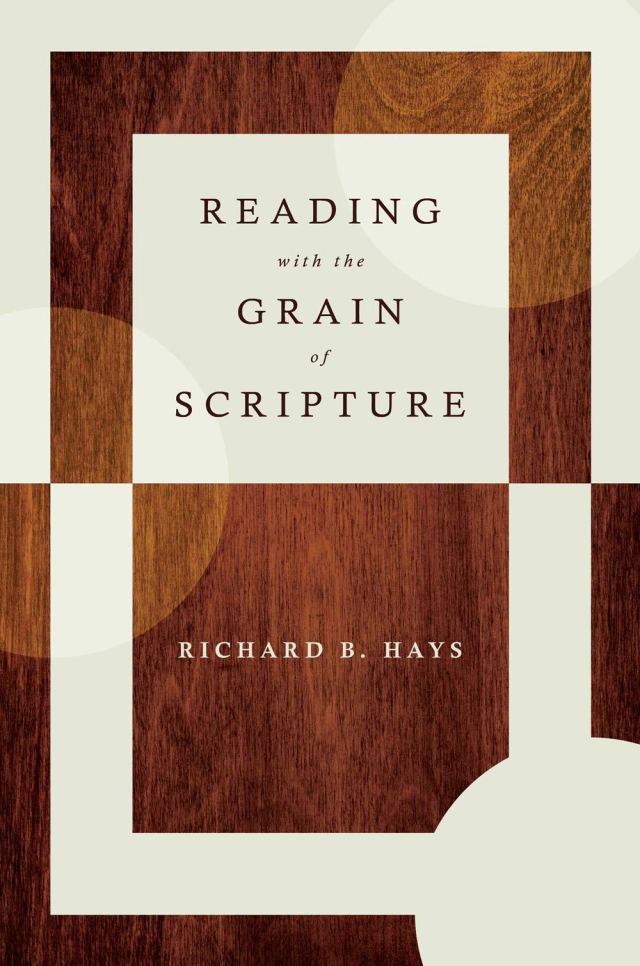
Review of Reading With The Grain of Scripture by Richard B. Hays

READING WITH THE GRAIN OF SCRIPTURE, by Richard B. Hays. Grand Rapids, MI: William B. Eerdmans Publishing Company, 2020. 467pp. $55.00

Richard B. Hays is a phenomenal interpreter of scriptures and a provocative thinker whose writing and teaching over the past thirty-five years demonstrate a deep passion for a close and careful reading of scripture. Professor Hays’ writing has broken new ground and unearthed often overlooked treasures for decades and his persistent and careful work has helped reshape the discipline of biblical studies. This collection of essays which span a wide range of topics from the past twenty-five years of his writing and speaking, collected after his retirement from Duke Divinity School, reflect the efforts of the author who in his own words has:

“For the past forty years I have been seeking to learn how to read closely and faithfully the testimonies of the early authors who wrote about these world-shaking events. The essays gathered here are the fruit of my effort to listen carefully to their testimony-bearing texts.” (2)

The collection covers topics including: interpretation of scripture, dialogues between Hays’ canonical approach to Jesus and the quest for the historical Jesus, the writings of the apostle Paul and their theological importance to our faith, and how the New Testament might shape the theology of its hearers. Hays lists six unifying themes among the diverse articles which make up the collection:

  1. The importance of narrative as the “glue” that holds the Bible together.
  2. The retrospectively discerned figural coherence between the Old Testament and the New.
  3. The centrality of the resurrection of Jesus.
  4. The hope for new creation and God’s eschatological transformation of the world.
  5. The importance of standing in trust and humility before the text.
  6. The importance of reading Scripture within and for the community of faith: the ἐκκλησίᾳ τοῦ θεοῦ. (3)

Richard B. Hays’ career began looking at the apostle Paul’s writing through both a narrative and as an interpreter of Israel’s scriptures. His classic works The Faith of Jesus Christ: An Investigation of the Narrative Substructure of Galatians 3:1-4:11 and Echoes of Scriptures in the Letters of Paul began his career of illuminating the importance of narrative and refining his retrospectively discerned figural coherence between the Old and New Testament. For those who have followed Hay’s writing through the years, many familiar themes will emerge in these essays on interpretation including the narrative and figural coherence mentioned above as well as the importance of reading from the perspective of faith using what Hays’ has coined a “hermeneutic of trust” and the centrality of the resurrection for understanding the scriptures.

Hays’ essays in the historical Jesus engage a diverse set of dialogue partners, from the Jesus Seminar to Joseph Ratzinger and N.T. Wright and concludes with his own modest sketch of what can be known about Jesus of Nazareth. Hays evaluation of the Jesus presented by the Jesus Seminar is summarized when he states:

Does the passive, politically correct, laconic sage who speaks in the red type of The Five Gospels have the capacity to remake our imaginative world and provde a new fiction within which millions might find meaning for their lives? Surely not. (102)

While Hays’ views their method of this entrepreneurial scholarship which provides easy sound bites is decidedly negative and their arrival at a non-Jewish Jesus is “one particularly pernicious side effect of the Jesus Seminar’s methodology.” (99) His response to N. T. Wright is far more favorable as they have been dialogue partners in New Testament scholarship for decades, but even in a paper where he appreciatively but critically engages the work of N. T. Wright he can bring his critical insights to refine and improve the work of his colleague and friend. His engagement with Joseph Ratzinger’s Jesus of Nazareth can demonstrate both respect for the author and his perspective while pointing out that most of Ratzinger’s dialogue partners are scholars of a previous generation and that much of New Testament scholarship has revised its methods and opinions as well as highlighting Ratzinger’s “pervasive tendency to treat the texts as transparent to the historical facts about Jesus.” (128) Hays’ conclusion of this section with his own modest proposal on what can be known about Jesus illustrates his careful approach which seeks coherence with first century Judaism, some relation of continuity with the church that would come after Jesus, a narrative that can explain both the emergence of the church as well as the crucifixion and which aims to include within its description of the canonical gospels including, as much as possible, John’s gospel.

Continuing his long career engaging with Paul’s writings continues with essays delivered at various times dealing with major topics of Christology, Soteriology, Pneumatology, Israel as well as his engagement with Stanley Stower’s A Rereading of Romans and engaging the relationship between the Pauline letters and Acts. Hays’ essay on Paul’s Christology is constructed around narrative identity of Jesus presented in the letters of Paul from Christ’s preexisting glory to his cruciform abasement, transformative exaltation and finally will conclude with Christ’s eschatological consummation. Hays’ brief examination of Paul’s narrative soteriology focuses on two texts: 1 Corinthians 15:1-28 and Romans 5:6-11 in response to Francis Watson claim the Paul’s is essentially a non-narratable vertical incursion of God’s grace. (178) The essay on the apocalyptic reviews themes in Galatians which highlight Paul’s insistence on divine initiative to bring about the conclusion of the present evil age and the genesis of the new creation. Hays returns to Romans to examine how Paul envisions the Spirit of God which gives life, leads God’s adopted children and groans and intercedes for us. His dialogue with Stanley Stowers Rereading of Romans and N.T. Wright’s reading of Romans 11: 25-27 in Paul and the Faithfulness of God to argue that Paul’s gospel is for both the Jewish people and the Gentiles. The final article in this section demonstrates some overlaps between Luke and Paul in explicit citations of the Old Testament to begin seeking an intertextual common ground of theological themes and convictions shared by Paul and Luke’s portrayal of Paul’s gospel in Acts.

The final section on New Testament theology brings together a diverse set of articles dealing with the portrayal of Jesus in the book of Revelation, examination on the idea of covenant in the book of Hebrews, and engagement with the Rudolf Bultmann’s reduction of Pauline theology to anthropology in his classic Theology of the New Testament, a lecture on what Christian theology could offer the world of law, an essay examining the Holy Spirit in light of Paul’s letter to the Romans and the Nicene Creed, and an essay which examines various perspectives on eschatology to discern how Christians may continue to engage the in light of the eschatological witness of the New Testament. The conclusion lifts up Hays’ recommended hermeneutic of trust, rather than the dominant hermeneutic of suspicion that is prevalent in biblical studies.

This collection of essays is a gift to the broader church after years of labor. I have read everything I could find of Professor Hays for the past sixteen years of my ministry and every piece is tightly written and brings new insights into whatever text or topic he presents. If you have followed Richard B. Hays work this work will bring forward both familiar themes and engagement with topics that may not have figured as strongly in his other works. For those unfamiliar with Hays’ work these essays could form an entryway into the major themes of his thought and writing. Like all of his previous works it will force you to think critically and enrich your appreciation of the treasures, new and old, that can be brought out by a faithful student of the scriptures.

Reflections on A Dance to the Music of Time: 1st Movement by Anthony Powell (1951, 1952, 1955)

Time Magazine Top 100 Novels

Book 25: Anthony Powell, A Dance to the Music of Time: 1st Movement (1951, 1952, 1955)

This is a series of reflections reading through Time Magazine’s top 100 novels as selected by Lev Grossman and Richard Lacayo published since 1923 (when Time magazine was founded). For me this is an attempt to broaden my exposure to authors I may not encounter otherwise, especially as a person who was not a liberal arts major in college. Time’s list is alphabetical, so I decided to read through in a random order, and I plan to write a short reflection on each novel.

A Dance to the Music of Time is a massive twelve-part reflection on the social life of the wealthier class of citizens in England between the first and second world wars, the first movement contains the first three of these novels: A Question of Upbringing, A Buyer’s Market, and The Acceptance World. Many people have found Anthony Powell’s work both entertaining and compelling, and I can understand why it was a part of the Time magazine list, yet these first three novels were an incredibly slow read for me. In fairness this is not a time period or a genre I normally find compelling.

The protagonist and narrator, Nicholas, is a part of the portion of English society that has access to travel, college, and some amount of wealth and it portrays the overlapping social circles he encounters in education, art, and society. His perspective points out the vanity and formality of a society that is unraveling and while the book can look at many of the interactions (and rejections) within this society in a humorous light, Nicholas still tries to live in this nexus of the business and art world. The portrayal of the world that Nicholas encounters seems a dry and while the various characters may navigate it with different degrees of success there is very little joy in the characters. I’m guessing that the remaining volumes continue to observe the unravelling of the society and morals of the previous Victorian and Edwardian Ages in this Interwar period of economic, political, and societal upheaval but the first movement was enough for me. Again, others have found this work incredible powerful so please make your own judgments, these brief reflections are merely my consolidation of my thoughts on each work.

Hearing the Monsters’ Fears

Some desire a dance with their demons

awakening the monsters that lie within

Embracing their deepest darkness

Drinking away the inhibitions

Silencing their consciences

Entering the darkest night

Without the searching of the soul

I’d rather sing a lullaby for my demons

To listen to monsters’ fears by candlelight

Hearing their stories and regrets

Learning what they were afraid to see

Tending the scars of the soul

Walking through the darkest valley

Into the morning beyond the mourning

Monsters of the Mind, by Tirby@deviantart.com

Matthew 23: 37-39 Lament over Jerusalem

Image from http://www.thiscontemplativelife.org/2018/03/lament-over-jerusalem-free-prayer.html

Matthew 23: 37-39

Parallel Luke 13: 34-35

 37 “Jerusalem, Jerusalem, the city that kills the prophets and stones those who are sent to it! How often have I desired to gather your children together as a hen gathers her brood under her wings, and you were not willing! 38 See, your house is left to you, desolate. 39 For I tell you, you will not see me again until you say, ‘Blessed is the one who comes in the name of the Lord.’”

The focus shifts from the religious leaders to the city of Jerusalem in this brief lament for the city. This passage has received renewed attention from feminist readers who have pointed out that here the traditional image of being sheltered under God’s wings is now set within a female metaphor for Jesus doing a traditionally feminine task of mourning. This brief, poignant image which mourns for a people and city which have been led astray and have rejected the messengers of God and have resisted God’s continual desire to gather the people together only to find themselves lost in the wilderness and homeless. The loss of Jerusalem, the loss of the temple and the loss of the land have occurred before in Israel’s story (under the Babylonian empire for Judah, under the Assyrians for the northern kingdom of Israel) and these focal portions of their identity were shattered. If Matthew’s community is hearing this in the aftermath of the destruction of Jerusalem and the temple by Rome, they (and other Jewish communities) are probably trying to make sense of the destruction while they seek the peace of the city they find themselves within.

The image of God’s wings as a refuge is used frequently in the Hebrew Scripture[1] but the image of God is frequently described using masculine metaphors. That Jesus uses a feminine metaphor to describe his desire to gather together the people of Jerusalem is not unique, but it is noteworthy. Instead of an eagle or hawk, a bird often associated with strength, now Jesus casts himself as the anxious mother hen trying to gather her young birds together and shelter them. The Apocryphal work 4 Esdras 1:30 also uses an identical image when referencing the Lord Almighty, and although 4 Esdras may be later than Matthew’s gospel they both capture the desire of God or Jesus to shelter God’s people. From the beginning of Matthew’s gospel part of Jesus’ vocation has been to save his people from their sins (1:20) but here the very people he desires to rescue resist that saving.

The house becomes a wilderness[2] and in the aftermath of the Jewish War many people who considered Jerusalem either their physical or spiritual home find themselves homeless and having to make their peace in whatever city they now make their life. The previous exile was a time where the people of Israel had to rediscover what it meant to be the people of God without the promised land, a Davidic king, the city of Jerusalem and the temple. In the previous exile the written scriptures became central to their new identity. For these followers of Jesus, they have now centered their identity on Jesus as the writing of the gospel accounts of Jesus’ ministry become attempts to reorient their identity around a new center in a new land. Jesus is the awaited Davidic king, but he is a crucified messiah, Jesus is greater than the temple and will be with these disciples where two or three are gathered, and this people who may be homeless now await for the day when they can proclaim with all creation “Blessed is the one who comes in the name of the Lord” at the arrival of their new home when the kingdom of heaven comes. They live oriented towards a hope that can move them beyond their lament because even in their desolation their Lord desires to gather them together like a mother gathers her children or a hen gathers her brood.


[1] Exodus 19:4, Ruth 2:12, Psalm 17:8, 36:7, 57:1, 61:4, 63:7, 91:4

[2] The Greek eremos means wilderness, desert and can have the connotation of being abandoned/desolate as most translations render.

Matthew 23: 1-36 Woe to the Blind Hypocrites

James Tissot, Woe Unto You Scribes and Pharisees

Matthew 23: 1-36

Then Jesus said to the crowds and to his disciples, 2 “The scribes and the Pharisees sit on Moses’ seat; 3 therefore, do whatever they teach you and follow it; but do not do as they do, for they do not practice what they teach. 4 They tie up heavy burdens, hard to bear,and lay them on the shoulders of others; but they themselves are unwilling to lift a finger to move them. 5 They do all their deeds to be seen by others; for they make their phylacteries broad and their fringes long. 6 They love to have the place of honor at banquets and the best seats in the synagogues, 7 and to be greeted with respect in the marketplaces, and to have people call them rabbi. 8 But you are not to be called rabbi, for you have one teacher, and you are all students. 9 And call no one your father on earth, for you have one Father — the one in heaven. 10 Nor are you to be called instructors, for you have one instructor, the Messiah. 11 The greatest among you will be your servant. 12 All who exalt themselves will be humbled, and all who humble themselves will be exalted.

13 “But woe to you, scribes and Pharisees, hypocrites! For you lock people out of the kingdom of heaven. For you do not go in yourselves, and when others are going in, you stop them. 15 Woe to you, scribes and Pharisees, hypocrites! For you cross sea and land to make a single convert, and you make the new convert twice as much a child of hellas yourselves.

16 “Woe to you, blind guides, who say, ‘Whoever swears by the sanctuary is bound by nothing, but whoever swears by the gold of the sanctuary is bound by the oath.’ 17 You blind fools! For which is greater, the gold or the sanctuary that has made the gold sacred? 18 And you say, ‘Whoever swears by the altar is bound by nothing, but whoever swears by the gift that is on the altar is bound by the oath.’ 19 How blind you are! For which is greater, the gift or the altar that makes the gift sacred? 20 So whoever swears by the altar, swears by it and by everything on it; 21 and whoever swears by the sanctuary, swears by it and by the one who dwells in it; 22 and whoever swears by heaven, swears by the throne of God and by the one who is seated upon it.

23 “Woe to you, scribes and Pharisees, hypocrites! For you tithe mint, dill, and cumin, and have neglected the weightier matters of the law: justice and mercy and faith. It is these you ought to have practiced without neglecting the others. 24 You blind guides! You strain out a gnat but swallow a camel!

25 “Woe to you, scribes and Pharisees, hypocrites! For you clean the outside of the cup and of the plate, but inside they are full of greed and self-indulgence. 26 You blind Pharisee! First clean the inside of the cup,so that the outside also may become clean.

27 “Woe to you, scribes and Pharisees, hypocrites! For you are like whitewashed tombs, which on the outside look beautiful, but inside they are full of the bones of the dead and of all kinds of filth. 28 So you also on the outside look righteous to others, but inside you are full of hypocrisy and lawlessness.

29 “Woe to you, scribes and Pharisees, hypocrites! For you build the tombs of the prophets and decorate the graves of the righteous, 30 and you say, ‘If we had lived in the days of our ancestors, we would not have taken part with them in shedding the blood of the prophets.’ 31 Thus you testify against yourselves that you are descendants of those who murdered the prophets. 32 Fill up, then, the measure of your ancestors. 33 You snakes, you brood of vipers! How can you escape being sentenced to hell? 34 Therefore I send you prophets, sages, and scribes, some of whom you will kill and crucify, and some you will flog in your synagogues and pursue from town to town, 35 so that upon you may come all the righteous blood shed on earth, from the blood of righteous Abel to the blood of Zechariah son of Barachiah, whom you murdered between the sanctuary and the altar. 36 Truly I tell you, all this will come upon this generation.

I am taking the majority of this chapter as a long unit both because this is a section of Matthew that many modern Christians are uncomfortable with, especially looking back at the way Christians, when they became the dominant religion in many areas, treated their Jewish neighbors. The paradox of the way Matthew has been read is that while it is the most Jewish of the gospels, it also has passages that have been read to paint Judaism as a whole in a judgmental and harsh light. The language of Matthew 23 would be very familiar to those who have spent any time studying the prophets in particular and the Hebrew Scriptures in general, but since most Christians have little familiarity with how to read the scriptures we share with our Jewish brothers and sisters we misunderstand Matthew, the scriptures, Christianity and Judaism.

If you’ve read through these reflections on Matthew, you will not be surprised that judgment is a part of the coming kingdom of heaven for those who resist it and prevent others from hearing about or accepting its approach. Matthew is an extremely gifted scribe who is able to pull from a wide range of the scriptures (the Hebrew Scriptures or Old Testament) as he is attempting to narrate the story and teachings of Jesus, but in a world where copies of the scriptures were both rare and controlled by those in religious authority the Pharisees and scribes would be the ones with both access to these scriptures and the ability to proclaim them to the people. The Hebrew scriptures in the law, narrative and prophets is very hard on rulers and those with religious authority because they are the ones who will shape the actions of the people because they have access to these sacred writings that reveal God’s will for the society they are to construct.

One way to read this section is to allow it to be a mirror to compare one’s own practices to. Jesus is speaking to his disciples and the crowds, not primarily the Pharisees (as they are represented in Matthew) here. As Anna Case-Winters can state:

As we read these sharp edged texts today we are tempted to let them rest in the past as a condemnation of a particular subset of the Pharisees. We locate ourselves among the righteous and know that Jesus is talking not about “us” but about “them.” What if, instead, we took the texts as an occasion to examine our own religious life and practice to see if the things Jesus speaks so heatedly against are to be found there? Those who are religious leaders might look particularly closely at what is condemned here. These texts are surely a cautionary tale instructive for religious leaders and all “would-be” followers of Jesus. (Case-Winters 2015, 263)

The Pharisees and scribes become an example of those who do not practice what they preach, who focus on the wrong things, who are judged here because they in positions of power have judged or misled others. Throughout Matthew the followers of Christ have been pointed towards a completeness, a wholeness, in how they embody the law mercifully in both inside and outside. The reinterpretation of the commandments in the sermon on the mount is designed to create a community which can be the salt of the earth, a city on a hill and a light to the nations. In our modern, individualistic readings of Matthew we may find it hard to reconcile the rigorous obedience of Matthew with mercy and forgiveness but that point to the ways our readings have become more like the Pharisees and less like Jesus as Matthew presents him. For Matthew, mercy informs what this obedience looks like and transforms this from a project of individualistic perfection to a community where the needs of one’s neighbor are central and righteousness is not practice for the approval of others in the community or society but before one’s heavenly Father.

It is also important to realize that these texts, as difficult as they can be to hear, are also spoken with the desire that the hearers will change their course. While Matthew may believe it is unlikely that the Pharisees and the scribes will repent and change their ways, at the right time the seed of this difficult word may take root even among these who are resisting this proclamation of the kingdom of heaven. It is also important to realize that these Pharisees represented to many hearers a compelling alternative to the practices of these early Christians. They did occupy positions of influence and authority and their practices, while easily discernable to the observer, provided a piety which could be observed and practiced. Jesus has always called for practicing something deeper than piety, practicing righteousness. The wearing of phylacteries or fringes on one’s clothing are not lifted up as wrong, it is the practice of enlarging the phylacteries (which carry a copy of Deuteronomy 6:4-9) or lengthening one’s tassels[1] to be noticed by others. It is the desire to be noticed and acclaimed by others based on places of honor, honorific greetings, or specific titles which form the basis for the actions of these Pharisees Matthew portrays which form a contrast to the relations as ‘brothers and sisters.’[2] All the disciples of Jesus stand in the same relationship as siblings of the one heavenly Father, and are all those who are taught by Christ. They are the opposite of the characterization of these Pharisees who seek positions of honor and power and, as throughout the gospel, the greatest are servants, and the humble ones are lifted up.

As we look at the seven woes, we encounter themes that have been present before in the gospel. The first woe sets the stage for why Jesus is so hard on the Pharisees and scribes, they are actively doing harm to others by denying them entrance to the kingdom of heaven. They are so opposed to what Jesus is doing in proclaiming and enacting the kingdom’s presence that they impede and actively work to convert others to their way of reading scripture. Their work to create converts who share their certainty and makes these new Pharisees children of Gehenna[3] who continue to work against the children of heaven. While followers of Christ are not to swear on anything (5:33-37), Jesus criticizes these Pharisees who are willing to delineate between which oaths are binding and which oaths are not based on what is sworn upon. This practice of delineating which oaths are binding may go back to Number 30 which deals with oaths made by women, which can be overruled by men in Numbers, but if this is based on actual practices it would be an innovation which would make the taking of certain oaths meaningless. For Jesus’ disciple their words and their faithfulness to those words, whether under oath or not, are central to being a community of truth.

Ultimately the practices, while not wrong, place the focus on the wrong place. Slavish obedience to weighing out a tithe of spices that detracts from the weightier demands of justice, mercy and faith misses the mark, as does washing the outside of cups or making beautiful tombs without changing what is inside the individuals.

Jesus’ accusation of the Pharisees and scribes is that they are both blind and hypocrites. As in 15:14 their blindness is dangerous because they are the blind leading others who are blind to fall into a pit. Hypocrite is a word used more by Matthew than any other gospel, and it is a word which originates talking about stage actors who pretend to be something they are not. To Jesus, the Pharisees are those who act like they are righteous and yet it is a role they play rather than a reality they inhabit. They continue the resistance to the servants of God who have been sent again and again to God’s people, and yet they are in a position where others watch their actions to understand what righteousness looks like. To Jesus their actions and their resistance are not only dangers to themselves but to the others looking for leaders that point them to God. As those who may control access to the scriptures and who occupy positions of power they are judged more harshly.

There is a long tradition of warnings in the scriptures about the cost of being unfaithful. They may be toward the people in general like the blessings and curses of Deuteronomy 28, or they may be directed specifically at leaders like Ezekiel 34 and many other places. The language may be harsh and polemical, but it is also to try to open the possibility of repentance. Sometimes it is the language of a people who have been broken by the movement of foreign empires crying out in pain to God, like Jeremiah 46-51, and asking for God’s judgment on the nations. Here, Jesus stands in the prophetic tradition, like those sent before, to Jerusalem and Israel crying out to the people about leaders who have failed to embody the coming kingdom of heaven and have resisted its messenger. It is a plea for the people to hear even when their leaders have been deaf. Still today it is a call to reexamine our own practices of righteousness and to examine if we have been blind guides and hypocrites who are a danger not only to ourselves but those who rely on us to understand God’s will.


[1] In Matthew Jesus wears tassels on his clothing which is noted in the story of healing the woman with a flow of blood in 9:20 (NRSV translates this same word as fringe)

[2] What the NRSV and others translate as ‘students’ is the Greek adelphos which is brothers, which can be expanded to ‘brothers and sisters’ since women would be assumed to be a part of the community.

[3] The translation of Gehenna as ‘hell’ places a lot of baggage around this term that would not have been there at the time of Jesus’ ministry. See my discussion on Gehenna, Tartaros, Sheol, Hades and Hell

Matthew 22: 34-46 The Heart of Scripture

By James Tissot – Online Collection of Brooklyn Museum; Photo: Brooklyn Museum, 2007, 00.159.143_PS2.jpg, Public Domain, https://commons.wikimedia.org/w/index.php?curid=10195994

Matthew 22: 34-46

Parallel Mark 12:28-37; Luke 10:25-28, 20:41-44

34 When the Pharisees heard that he had silenced the Sadducees, they gathered together, 35 and one of them, a lawyer, asked him a question to test him. 36 “Teacher, which commandment in the law is the greatest?” 37 He said to him, “‘You shall love the Lord your God with all your heart, and with all your soul, and with all your mind.’ 38 This is the greatest and first commandment. 39 And a second is like it: ‘You shall love your neighbor as yourself.’ 40 On these two commandments hang all the law and the prophets.”

41 Now while the Pharisees were gathered together, Jesus asked them this question: 42 “What do you think of the Messiah?Whose son is he?” They said to him, “The son of David.” 43 He said to them, “How is it then that David by the Spiritcalls him Lord, saying, 44 ‘The Lord said to my Lord, “Sit at my right hand, until I put your enemies under your feet” ‘? 45 If David thus calls him Lord, how can he be his son?” 46 No one was able to give him an answer, nor from that day did anyone dare to ask him any more questions.

Many of Jesus’ conflicts with religious leaders throughout Matthew’s gospel rotate around the interpretation of the law and prophets and Jesus’ identity. This final challenge from a religious teacher followed by Jesus’ challenge to the Pharisees and sets the stage for Jesus’ condemnation of the scribes and Pharisees in the following chapter. Although Jesus’ declaration of Deuteronomy 6:5 and Leviticus 19:18 being the central commandments of the law is not unique among Jewish readers of scripture, this passage forms a final lens which clarifies Jesus’ teaching and way of understanding scripture. This is one of the reasons I believe many readers misread the Sermon on the Mount, because they fail to read it through the lens of loving neighbor and instead understand it as an impossible burden of moralistic perfectionism. This way of reading scripture centered on loving God and neighbor allows us to read back through Matthew’s gospel and see how love and mercy become central to Jesus’ teaching and allows the disciple to hold the call to be complete in their living out of the law and the forgiveness of sinners together.

The translation of the questioner as a ‘lawyer’ (Greek nomikos) in our culture places us in the judicial sphere with a professional nuance that is not present at this time in history. Instead this is a person coming from a religious group with a particular way of reading scripture and this expert in the law is a scholar of the Torah (the first five books of the bible). (Sigal 2007, 21) The question, which in Matthew is asked as a test or temptation rather than Mark’s more positive portrayal, asks Jesus for clarification on how he reads scripture. In Luke’s gospel Jesus turns the question back to the questioner, but in Matthew and Mark it is Jesus who gives us this central way of understanding the law and the prophets. The addressing of Jesus as ‘teacher’ combined with Matthew’s statement that the question is ‘to test him’ and the lawyer’s association with the Pharisees prepare us to expect that the questioner will not respond to the answer in the openness of faith. Yet, like the previous conflict with the Sadducees, the answer will silence this questioning ‘lawyer.’

The question of how to interpret scripture rightly is an important one in any generation, and Matthew’s gospel has slowly been opening the law and the prophets to the attentive reader throughout. Central to Jesus’ ministry has been a merciful reading of scripture where Hoses 6:6, ”I desire mercy and not sacrifice” has been used multiple times (9:13, 12:7) to point to a different way of understanding scripture than Jesus’ opponents use. Now this double love commandment that, in Jesus view, form the foundation that all the law and prophets are built upon also highlights why this particular verse from Hosea can demonstrate Jesus’ merciful and prophetic way of reading scripture.

The Pharisees, as they are portrayed in Matthew, are operating from a different way of reading scripture, and although Jesus’ answer may not be something that they could dispute they still are not in harmony with Jesus’ way. Yet now Jesus turns to them and asks how they read scripture and how they understand the Christ (Messiah). Matthew has used the Son of David title for Jesus throughout, most recently in the entry to Jerusalem and the cleansing of the temple (Matthew 21), but Matthew is not content to use this or any other title on its own to describe Jesus. Son of David may be a part of Jesus’ identity, but something greater than David is before these Pharisees. Psalm 110, for early followers of Christ, is frequently used to provide language to help explain who Jesus is[1]. Jesus reads these words as David speaking prophetically, which would not be an unusual way of thinking about the psalms, where the LORD the God of Israel speaks to ‘my lord’ and Jesus argues that one who David calls lord must be greater than David. These parables and conflicts in Matthew all occur in a day that begins with the chief priests and the elders questioning Jesus’ authority (21:23) and although Jesus’ has continually alluded to the answer, once more Jesus links the title of Christ/Messiah to one greater than the Son of David. Now that the Pharisees, the Sadducees, and the rest of the religious teachers are silenced for the moment, Jesus is about to proclaim judgement on both the religious leaders and the temple.


[1] For example, the book of Hebrew picks up on Psalm 110:6 in Hebrews 5-7 referring to Jesus as a priest forever according to the order of Melchizedek.

Matthew 22: 23-33 One Bride for Seven Brothers

By James Tissot – Online Collection of Brooklyn Museum; Photo: Brooklyn Museum, 2007, 00.159.143_PS2.jpg, Public Domain, https://commons.wikimedia.org/w/index.php?curid=10195994

Matthew 22: 23-33

Parallels Mark 12: 18-27, Luke 20: 27-40

23 The same day some Sadducees came to him, saying there is no resurrection;and they asked him a question, saying, 24 “Teacher, Moses said, ‘If a man dies childless, his brother shall marry the widow, and raise up children for his brother.’ 25 Now there were seven brothers among us; the first married, and died childless, leaving the widow to his brother. 26 The second did the same, so also the third, down to the seventh. 27 Last of all, the woman herself died. 28 In the resurrection, then, whose wife of the seven will she be? For all of them had married her.”

29 Jesus answered them, “You are wrong, because you know neither the scriptures nor the power of God. 30 For in the resurrection they neither marry nor are given in marriage, but are like angelsin heaven. 31 And as for the resurrection of the dead, have you not read what was said to you by God, 32 ‘I am the God of Abraham, the God of Isaac, and the God of Jacob’? He is God not of the dead, but of the living.” 33 And when the crowd heard it, they were astounded at his teaching.

The second conflict story in this pattern of three shifts opponents to the Sadducees. This is the second time in Matthew the Sadducees are mentioned as challenging Jesus, previously they were mentioned with the Pharisees in Matthew 16:1-4, but now in Jerusalem they act on their own. Their question uses the practice of Levirate marriage and a story of one bride for seven brothers to mock the idea that both Jesus and the Pharisees apparently preached of the resurrection. Even though this is the only time the Sadducees are explicitly mentioned in the final week in Jerusalem, the chief priests and elders were probably composed mainly of Sadducees, and the silencing of the Sadducees before the crowds contributes to their desire to end the words of Jesus.

Just as the Pharisees and the Herodians can work together for mutually beneficial purposes, the Sadducees have maintained their power in the temple through their relationship with Rome. There is an old Christian saying that Sadducees did not believe in the resurrection, so they were sad-you-see, and while this is a catchy play on words it misses the point of who the Sadducees are. The Sadducees, like much of the Hebrew Scriptures, do not have a concept of the resurrection and their belief that God’s blessings are a part of their experience in the world is probably confirmed in their minds by the more affluent priestly positions they occupied. Their faith centers on the first five books of both the Hebrew and Christian scriptures, and particularly their actions as the cultic leaders for the temple.

The story that the Sadducees use focuses on the practice of Levirate marriage (the term comes from the Latin levir meaning husband’s brother, not Leviticus) which is outlined in Deuteronomy 25:5-10

When brothers reside together, and one of them dies and has no son, the wife of the deceased shall not be married outside the family to a stranger. Her husband’s brother shall go in to her, taking her in marriage, and performing the duty of a husband’s brother to her, and the firstborn whom she bears shall succeed to the name of the deceased brother, so that his name may not be blotted out in Israel. Deuteronomy 25: 5-6

This practice is active in both the stories of Tamar (Genesis 38, Matthew 1:3) and Ruth (Ruth 4, Matthew 1:5) and was to ensure security for the widow by providing her both with a household and children (who will take care of her in old age), The story of seven brothers and one bride takes the practice to a ridiculous end, which is intentional, as the Sadducees attack the belief in a resurrection which they found contrary to their reading of scripture.

Jesus claims they have been led astray (Greek planao) in both their knowledge of scripture and their understanding of God’s power. Jesus answers first from God’s power to transform humanity in the resurrection where the values of securing one’s future through familial ties and reproduction are no longer important. In challenging the Sadducees’ reading of Moses, Jesus returns to God’s initial call of Moses where God refers to Godself as: “I am the God of your father, the God of Abraham, the God of Isaac, and the God of Jacob.” (Exodus 3: 6) Even though the patriarchs Abraham, Isaac, and Jacob died millennia earlier, Jesus refers to this ancient self-titling of God to point to both an ongoing relationship between God and these patriarchs and that the promises God made to them have not been broken by death. As Richard B. Hays, following J. Gerald Janzen, can state:

ust as God delivered and saved the patriarchs, so he will do for his people in their plight in Egypt. Furthermore, if God acted to deliver his people from the “death” of slavery in Egypt, surely he will do so again in the future—not precisely in the same way, but in ways that are recognizably analogous. Consequently, Jesus’ use of Exodus 3:6 in support of the resurrection—that claim that God will finally save his beloved people from death—is nothing other than a metaphorical extension of the Exodus theophany claim. (Hays 2020, 59)

Jesus’ claim and repurposing of the title God claims as the God of Moses’ father, Abraham, Isaac, and Jacob places the resurrection of the dead alongside God’s work to fulfill God’s promises to God’s people. The language of raising up seed (NRSV childless, the Greek is sperma where we get the English sperm) which is used frequently in the Hebrew scriptures in the stories of Abraham, Isaac and Jacob. The failure of the seven brothers to ‘raise up seed’ for the first one corresponds to the misunderstanding of the scriptures and the power of God that the Sadducees have in their inability to believe God will raise the dead. In a manner, Jesus points to a sterility in their claims which matches the sterility in their story. Only a God who can raise up children for ones as good as dead and who can raise the dead can open their eyes where they have been led astray. In Matthew, Jesus comes out the victor in the eyes of the crowd and the Sadducees are silenced. Yet, the conflict between Jesus and those in religious authority will continue until his death.

Lost Dreams

Child by fabii from http://www.deviantart.com/art/child-61251692

Sometimes I imagine you running through some unending shopping mall

Realizing that somewhere along the trip you lost hold of me in the crowd

Perhaps you stopped to gaze at some curiosity in a shop window for a moment

And I was gone, moved on by the crush of the crowd’s unending, unfeeling flow

Tears streaming down your cheeks for the companion no longer there

As both our futures were severed by forces beyond our control


Like a parent who came to a new country seeking hope for their family

Only to find that family ripped asunder at the border, children caged

Fighting bureaucrats and their cold, unfeeling mountains of paperwork

Fanning the embers of hope for some eventual reunification

Only to find out that you are gone, given to a new family to foster

Just a dream who has hopefully found a new father to be cherished by


Some part of me won’t accept that dreams die when reality shatters them

When life moves on, when circumstances change, when new dreams are born

Something makes me hope that they find a new heart that beats with theirs

Someone who cherishes them the way that I did as they grew and changed

That they have a future beyond the fracture, and that they find joy and love

That you may be the dream that another person raises up for the world to see

Matthew 22:15-22 Rendering to Caesar and God

Roman Denarius Depicting Caesar Augustus

Matthew 22: 15-22

Parallels Mark 12:13-17; Luke 20:20-26

15 Then the Pharisees went and plotted to entrap him in what he said. 16 So they sent their disciples to him, along with the Herodians, saying, “Teacher, we know that you are sincere, and teach the way of God in accordance with truth, and show deference to no one; for you do not regard people with partiality. 17 Tell us, then, what you think. Is it lawful to pay taxes to the emperor, or not?” 18 But Jesus, aware of their malice, said, “Why are you putting me to the test, you hypocrites? 19 Show me the coin used for the tax.” And they brought him a denarius. 20 Then he said to them, “Whose head is this, and whose title?” 21 They answered, “The emperor’s.” Then he said to them, “Give therefore to the emperor the things that are the emperor’s, and to God the things that are God’s.” 22 When they heard this, they were amazed; and they left him and went away.

Three parables are followed by three challenges of Jesus’ authority as the Pharisees and Sadducees attempt to respond to Jesus in this charged situation. The Pharisees, which have been in conflict with Jesus from early in his ministry, now reemerge as those challenging his authority and putting him to the test. Jesus’ response to their question, which is often lifted out of its context and used with a couple other texts, particularly Romans 13:1-7, by many conservative Christians as a basis for a church/state theology where being a Christian means being serving those in political power, but for those who listen to Matthew’s presentation of Jesus’ message should understand that something much greater lies underneath these words and the way Jesus skillfully answers the question that is designed to either alienate Jesus from the crowds or to give the religious leaders a way to paint Jesus as an insurrectionist to the Romans.

Jesus’ proclamation of the kingdom of heaven presents an alternative to the bloody peace of the pax Romana, and yet throughout Matthew, Jesus often subverts the way of Rome from within. Jesus’ presence has resulted in reaction from those with political power since his birth, and yet Jesus has not sought out direct conflict with those in power but has instead modeled a way of peacemaking that is an alternative to the ways of the empire. This is the second time Jesus has been asked about taxes in Matthew and, as in 17:24-27, Jesus finds a way to grant to temple or Caesar what they claim without impinging on God’s claims. It is also important to remember the audacious claim of Israel’s faith: that their God is not merely the God of Israel, but the God of all the nations and God can use the nations, whether they are aware of it or not, to be forces of judgment and blessing for Israel. In the revised common lectionary this text is paired with Isaiah 45:1-7 where God anoints Cyrus the Great for God’s mysterious purposes. The prophet Jeremiah dealt with people who withheld tribute from Babylon, an unforgivable move from not only Babylon’s perspective but also in Jeremiah’s understanding, of God’s. As Rabbi Binyamin Lau can state:

Jeremiah keeps returning to his most deeply held principles: God controls geopolitics, and He has chosen Nebuchadnezzar to rule the world at this time. The decision cannot be revoked, and anyone who rebels against it is in fact rebelling against God. (Lau 2010, 141)

In the parable which precedes this question, it is probable that Matthew understands Rome’s destruction of the temple and the city in 70 CE as God’s working through Rome in judgment of the leaders refusal to accept the invitation to meet the bridegroom (22:1-14) or present the harvest as in the second parable of the series (21:33-46).

I’m writing this at the end of a contentious election cycle in the United States, and while many Christians may tacitly acknowledge that God is the ruler of all the nations, there is an amazing propensity to try to turn that God into a tribal god who is primarily concerned for one group or nation and to align religious and political power in unhealthy ways. We know that in Jesus’ time there was significant political unrest in Galilee and Jerusalem with the Roman rule and occupation, but there was also coordination between political and religious authorities for mutually beneficial purposes. IAlthough very little is known about the Pharisees as a group in Jesus’ time, and the two primary sources we have: the gospels (where the Pharisees are continually in conflict with Jesus and his disciples) and Josephus, who writes in the aftermath of the destruction of Jerusalem, must be read closely and at the same time critically. I have attempted to limit the Pharisees, as they are portrayed in the gospel, to a group Jesus was in conflict with and allow the story to illustrate the nature of that conflict. What we can point to is the Pharisees, as portrayed in Matthew coordinate with the Herodians, presumably those allied with Herod Antipas who is ruling in Galilee, and with the Pharisees’ presence in conflict with Jesus in Galilee it is reasonable to assume that Matthew sees some alignment between the Pharisees and Herod Antipas’ desire to assume the mantle of his father, Herod the Great. Narratively it would make sense that the Pharisees alignment with power in the person of Herod and the Sadducees alignment with Pilate would be a continuation of their struggle for power among Israel. I have also suggested that John the Baptists’ and Jesus’ condemnation of the Pharisees and Sadducees may be linked to the accommodation they’ve made with these powers.

Any question of what is permissible is bound to be contentious, and this has been a frequent part of the challenges Jesus has encountered from the Pharisees (12:2,4,10; 19:3), it was how John the Baptist challenged Herod Antipas’ relationship with Herodias (14:4) and how Jesus, in a parable, challenges those unhappy with the ‘housemaster’ paying each worker the same. (20:15) The question is framed to entrap Jesus as either in rebellion against Roman authority or being viewed by the crowd as sympathetic to Rome. Jesus’ answer, which uses the imagery and inscription of Roman coinage, coinage which would not be accepted in the temple because of the image and the claims made by the inscription about Caesar being a ‘son of a god’, both accepts and qualifies Roman authority. Rome may demand the coinage they mint, and yet God’s claim on the disciples is far greater. There may be times where to resist authority is to resist God who is in control of geopolitics, but even when the empire doesn’t know the God of Israel its authority is contingent upon God’s sometimes mysterious work in the world and the nations.

Christians of every time have had to navigate between when they can accommodate the practices of the empire and when they must prophetically resist. When it comes to taxes to the temple (17:24-27) or Rome, Jesus points to a way to render to Rome and temple what belongs to them without losing one’s primary allegiance to God. Much of the New Testament involves the early Christian church navigating their citizenship of the kingdom of heaven within the world of the Roman empire. Two thousand years later, Christians still have to navigate their primary allegiance to God and the often bellicose demands of nation, culture and one’s political tribe. As St. Paul would say in Romans, “If it is possible, so far as it depends on you, live peaceably with all.” (Romans 12:18) while at the same time insisting that followers of Christ are not to be “conformed to this world, but to be transformed by the renewing of you minds, so that you may discern the will of God.” (12:2) Just as Jesus reframed the question of the Pharisees, so modern Christians will often have to reframe the questions the culture asks them based on their understanding of the will of God.