Category Archives: 5 Star Book Reviews

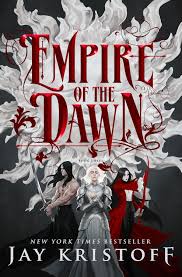
Review of Empire of the Dawn by Jay Kristoff

For me a five-star book is something that either I want to read again or something that is so profound it makes an immediate impact. There are lots of ways that books can be compelling: a unique idea, an interesting set of characters, a complex plot, an artistic use of the English language and more. Reading is also a subjective experience, so what appeals to me as a reader may be very different for you. I read a lot for both pleasure and work, but these short reviews are a way for me to show my appreciation for the work and the craft of the author of the reviewed work.

Jay Kristoff quickly became one of my favorite authors with both the Nevernight trilogy and this worthy conclusion to the Empire of the Vampire trilogy. This narrative journey through Empire of the Vampire, Empire of the Damned and now Empire of the Dawn has been phenomenal. Gabriel de Leon, the last Silversaint (vampire hunter), Celene Castia, Gabriel’s sister and the last Liathe, and Dior le Chance, the young woman who is believed to have the power to end the eternal darkness of their world form the central characters in this final volume. The story is dark, the narration of the conflict scenes so rich I could imagine them as a manga or anime (I think that is the only way you could faithfully replicate the speed and damage of these vampire vs Silversaint fights). The world cloaked in darkness, the place of religion and mysticism, the rich imagery in a perilous world, there is so much to love in this long but engaging story of a world where vampires are no longer consigned to the night and humanity hangs on the precipice. But beyond the incredible plot, worldbuilding, and hard driving action are the characters and their interactions with one another. There were so many times the dialogue between the characters echoed the pattern of conversations I had with people in the army, the way men rib each other to show they care, the language, and verbal duels that went along with the physical trials. There were countless times I would look up from the page and say, “Damn. Jay Kristoff can write.”

Each of the volumes of this trilogy were the best read of the year they were released and there is some regret in coming to the end of this massive journey. Jay Kristoff will not be for every reader: his language is the language of fighting men which includes frequent swearing (and he has some really interesting ways of utilizing the coarser parts of the English language) and there are several very spicy erotic scenes throughout the books. It is a dark world (literally and metaphorically) where no human character or animal character is safe. It is fantasy with horror and romantic elements set in a beautifully imagined (and illustrated if you buy a physical copy) world. It is a poignantly human story of characters who walk through the hell of war, betrayal, death, and times that seem hopeless. People will be divided on the ending of the book, but I thought it was masterful use of a plot device that breaks the fourth wall with a pair of narrators who have their own motivations for why they tell the story they are spinning. I did not want to put this almost eight-hundred-page book down, each time I picked it up it hooked me. I loved this dark gothic story of faith and fighting in a world struggling against four vampiric armies. The symbology and the myth, the conversations and the combat, the characters and the plot all come together to form the favorite trilogy I have ever read.

Review of D-Day: June 6, 1944 by Stephen Ambrose

Review of D-Day:June 6, 1944: The Climactic Battle of World War II by Stephen Ambrose (1994)

For me a five-star book is something that either I want to read again or something that is so profound it makes an immediate impact. There are lots of ways that books can be compelling: a unique idea, an interesting set of characters, a complex plot, an artistic use of the English language and more. Reading is also a subjective experience, so what appeals to me as a reader may be very different for you. I read a lot for both pleasure and work, but these short reviews are a way for me to show my appreciation for the work and the craft of the author of the reviewed work.

Stephen Ambrose’s phenomenal telling of D-Day accomplishes the daunting task of bringing together the first-person experiences of both allied and axis soldiers, placing the experiences together with the units and locations within the overall plan and execution of the D-Day invasion of Normandy. This is like a mosaic where the author takes a variety of perspectives on the invasion and places them together into a coherent picture which still conveys the chaos the soldiers often felt on the beaches. The first third of the book examines the preparations for the invasion. Stephen Ambrose is able to narrate the personalities and styles of both Eisenhower and Rommel who were the respective commanders on D-Day as well as the command structures they operated within. The D-Day invasion was involved a mammoth effort of logistics and construction to mount and the author walks the reader through the construction of the landing craft, the planning of the invasion and the disinformation campaigns designed to keep German forces away from the landing site, and the training of the soldiers, sailors, and coast guardsmen who would conduct the landing and axis construction and forces designated to repel the invasion. The preparation was critical, and it both made the invasion possible and saved lives, but the book demonstrates all the ways that the plans for the invasion could not account for the reality the soldiers on the beach or who were dropped behind the beach encountered. Moving from west to east he narrates the individual experiences of the battle beginning with the experiences of the 82nd and 101st Airborne Divisions in their night drop and ending with the British 6th Airborne Division on the eastern edge of the battlefield. Particularly with the airborne landings and the 16th and 116th Regiments landing on Omaha beach, the author does an excellent job of portraying the chaotic environment that soldiers found themselves in. The battle in these spaces often relied on junior officers and non-commissioned officers rallying any soldiers they could gather and the training these soldiers received. The book does a good job of combining the epic scale of the invasion with the narrow experiences of the individuals who were a part of this. It was readable and comprehensive at the same time, and I greatly appreciate the dedication and devotion that went into this massive narration of one of the critical days of World War II.

Review of the Girl in the Tower by Katherine Arden (2018)

Five Star Book Review

Katherine Arden, The Girl in the Tower

For me a five-star book is something that either I want to read again or something that is so profound it makes an immediate impact. There are lots of ways that books can be compelling: a unique idea, an interesting set of characters, a complex plot, an artistic use of the English language and more. Reading is also a subjective experience, so what appeals to me as a reader may be very different for you. I read a lot for both pleasure and work, but these short reviews are a way for me to show my appreciation for the work and the craft of the author of the reviewed work.

The Girl in the Tower is the middle book of the Winternight Trilogy, and it picks up in the aftermath of The Bear and the Nightingale. Vasya and her magnificent horse Solovey now set off to travel away from her home of Lesnaya Zemla where her father can no longer protect her from being viewed as a witch. She sets off on a journey as a traveler but quickly finds herself rescuing girls stolen by bandits and reunited with her brother Sasha who is a monk, a renowned warrior, and a trusted advisor of the crown prince of Moscow. She disguises herself as a boy and her brother, and later her sister Olya in Moscow, are caught up in this deception. From pursuing bandits raiding small villages in the woods to the world of court in Moscow and the appearance of the strange noble Kasyan this is a story with an even richer world than The Bear and the Nightingale. One of the things I appreciate about this story is that it is honest about the danger of Vasya as a woman attempting to navigate a different path where the only two options available for women are marriage and the convent.  

Katherine Arden does a remarkable job of portraying the world of this story. A time where Russia still owed allegiance to the Tatars but is beginning to yearn for independence, when the Russian Orthodox church reigns supreme in Moscow but the old practices and myths still have a hold in the rural areas. It is a winter story, but it is also a story of winter losing its hold to spring. For Vasya it is also a coming-of-age story and I appreciate the tension in the relationship between Vasya and the Winter King Morosko, but that there is an acknowledgement that this cannot be a simple love story. In the words of the characters:

                “Love?” he (Mososko) retorted. “How? I am a demon and a nightmare; I die every spring, and I will live forever.”

                She waited.

                “But yes,” he said wearily. “As I could, I loved you. Now will you go? Live.”

                “I, too,” she said. “In a childish way, as girls love heroes that come in the night, I loved you.” (336)

Even in a world that still has a little magic in it, maidens do not easily surrender their hearts to myths nor do inhuman ‘gods’ warm quickly to the maiden. Yet, Katherine Arden does a remarkable job of creating the tension which is formed by their bond. I really enjoy this mixture of fantasy with historical fiction and myths and folk stories of medieval Russia. I wrote in my review of The Bear and the Nightingale that the story felt like returning to a home I never knew, and the characters and environment made me feel at home with them once again in this second book of the Winternight trilogy. I look forward to returning to The Winter of the Witch later this year.  

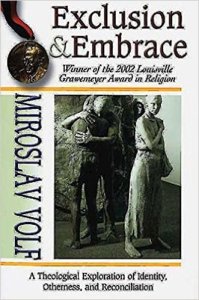
Review of Exclusion and Embrace: A Theological Exploration of Identity, Otherness, and Reconciliation by Miroslav Volf

Review of Exclusion and Embrace: A Theological Exploration of Identity, Otherness, and Reconciliation (1996) by Miroslav Volf.

This is the volume that introduced me to the work of Miroslav Volf and from the first page of the preface, where he lays out what is at stake in this theological exploration, through the final chapter on Violence and Peace it is a passionate and articulate formulation of a theology of the cross for our time. Volf is both honest about the challenges of reconciliation while holding before the reader the dream and hope of embrace as the end for which we are called to work. He powerfully weaves together theology, scripture, philosophy, and personal experience into a work that I have gone back to multiple times in my own ministry. Re-reading this work over twenty years after my initial reading Exclusion and Embrace is still a powerful work, but it also highlights my own evolution as a reader and scholar in the years between readings.

I first saw Exclusion and Embrace at the bookstore at Wartburg Seminary, and I felt drawn to it. I integrated it into an independent study attempting to flesh out Luther’s theology of the cross for our time in my senior year of seminary. At that point I was a young scholar reading everything I could get my hands on, and Volf’s work combined a deeply personal search for a Christian practice that was authentic with an academic rigor that was inspiring. This was the type of scholar I hoped to be. I was still attempting to integrate the diverse voices I had encountered in the previous two years of seminary into something that I could carry beyond the seminary walls. I was still wrestling with postmodernism as a way of thinking, knowing enough to be attracted and repelled by this alien way of encountering the world I was introduced to tangentially (although rarely under the name postmodernism) in academics. In Volf I found someone who was far more versed in authors like Nietzsche, Foucault, Deleuze, Said, and many other authors from a variety of perspectives who still took the scriptures, theology, and Christian practice seriously.

One of the major differences between my original and this reading is I have engaged enough with postmodern, feminist, and other voices to have developed my own perspective. I understand the influence of postmodern voices and perspectives, but in my own journey I have walked away from these perspectives because at their root I find them nihilistic. They serve as good critiques which fail to provide a viable alternative to the modernity they critique. Exclusion and Embrace is still an incredibly valuable work, but I found the central chapters speaking to dialogue partners who have little interest in a constructive dialogue with Christianity. I still believe the first two chapters and final chapter are incredibly important and make this a book that deserves wide reading. These are the places I have found myself referencing over the past twenty years and have caused me to read most of what Volf has written before and after Exclusion and Embrace.

One of the things I am most thankful for in Volf’s work is the way he bridges the divide between the academic world and the world which the academy often neglects. Like the three cities which form the concrete background of the reflection of the initial chapter (Los Angeles where Volf taught at the time, Berlin where he was giving the presentation that formed the chapter, and Sarajevo the war torn city from the land of Volf’s background as a Croatian) this is deals with the broken stories in need of forgiveness. Volf’s critique of the “pleasant captivities of the liberal mind” when he critiques the ‘God of perfect non-coercive love’ (Volf, 1996, p. 304) has stuck with me for the life of my ministry and resonates with my engagement with scriptures. This is a work that helped form my theology and gave me tools that would help me continue to grow as a pastor who engaged the scriptures and the questions of the surrounding world.     

Review of Project Hail Mary by Andy Wier

Five Star Book Review: Project Hail Mary by Andy Wier

For me a five-star book is something that either I want to read again or something that is so profound it makes an immediate impact. There are lots of ways that books can be compelling: a unique idea, an interesting set of characters, a complex plot, an artistic use of the English language and more. Reading is also a subjective experience, so what appeals to me as a reader may be very different for you. I read a lot for both pleasure and work, but these short reviews are a way for me to show my appreciation for the work and the craft of the author of the reviewed work.

Project Hail Mary was a delightful journey with Dr. Ryland Grace on a last chance mission to save humanity from a failing sun caused by a previously unknown species. The story cleverly combines Dr. Grace’s experiences in the Tau Seti system as the sole survivor of the ship named Hail Mary and flashbacks to his role in the discovery of the problem, the conception of a solution and his surprising inclusion on the interstellar mission. This is a novel that is science fiction, heavy on science, but in a delightfully geeky way that allows a non-scientist to enjoy with the scientific main character. Both the portions that take place on earth as well as the portions that occur in space tell a very human story of fear, loneliness, the joy of discovery, and hope. Without providing spoilers, the book is full of unexpected discoveries and friendships, and Ryland Grace is a character who is easy to enjoy as you experience the discoveries, both scientific and personal, through his eyes.

Andy Wier does a great job of creating a book that is a joy to read. He strikes a great balance between science and storytelling. His curiosity expresses itself through his characters and he does a miraculous job of making the scientific experimentation that the story depends upon both accessible and interesting. I listened to the audio version of Project Hail Mary and there are some added benefits to this version of the book which I can’t adequately express without providing some spoilers. One of my sisters gave me this book as a gift after she had enjoyed it, and I thoroughly enjoyed it as well. Great characters caught in an epic journey who are unapologetic in their curiosity about their world. A very human story of space, discovery, curiosity, and hope.

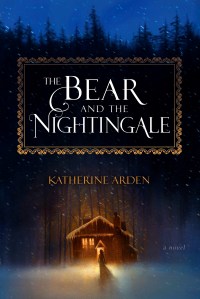
Review of The Bear and the Nightingale by Katherine Arden

Five Star Book Review

Katherine Arden, The Bear and the Nightingale

For me a five-star book is something that either I want to read again or something that is so profound it makes an immediate impact. There are lots of ways that books can be compelling: a unique idea, an interesting set of characters, a complex plot, an artistic use of the English language and more. Reading is also a subjective experience, so what appeals to me as a reader may be very different for you. I read a lot for both pleasure and work, but these short reviews are a way for me to show my appreciation for the work and the craft of the author of the reviewed work.

The Bear and the Nightingale feels like a story told around an oven in a home snowed in for the winter, a story of magical creatures and grown ups who cannot see the magic of the world any longer. Vasya, the main protagonist, is both mischievous and kind and has a strong enough will to resist the machinations of her stepmother and father. There are many of the classic elements you find in fairy tales, for example a wicked stepmother, but I enjoyed the interweaving of distinctive Russian elements to the story: from the Russian orthodox painting of an iconostasis by Father Kostantin to the domovoy, rusalka, leshy, and other elements of eastern European folk stories. Although Morozko and his brother Medved, who the conflict of the story rotates around, have the classic good verses evil polarity, Morozko is not simply good and Medved is more animalistic hunger than evil. It is a story of family, of faith both in the sense of religion and in the sense of magic, and for the main character it is the beginning of a coming-of-age story for a woman who will determine her own course in a world where women do not write their own stories.

I read the entire Winternight trilogy several years ago, and I was deeply impressed with Katherine Arden’s debut novels. Returning to this novel was like returning to a home I never knew. The characters are great, but I think it was the way she narrated the atmosphere of the story that invited me in to dwell in this magical world for a time. This is a work of historical fantasy, so the magical events are caught up in the history of the Russian people and I really appreciated the way she allowed me to live a snapshot of an imaginary life in a magic infused slice of this world defined by winter. I look forward to continuing through the remainder of this series with Vasya, Morozko, and the rest.

Review of Lonesome Dove by Larry McMurtry

Five Star Book Review

Larry McMurtry. Lonesome Dove.

For me a five-star book is something that either I want to read again or something that is so profound it makes an immediate impact. There are lots of ways that books can be compelling: a unique idea, an interesting set of characters, a complex plot, an artistic use of the English language and more. Reading is also a subjective experience, so what appeals to me as a reader may be very different for you. I read a lot for both pleasure and work, but these short reviews are a way for me to show my appreciation for the work and the craft of the author of the reviewed work.

Lonesome Dove is an invitation back to a journey through a time when the American West in transition with a memorable cast of characters. Augustus “Gus” McCrae and Woodrow F. Call are two retired Texas Rangers living in Lonesome Dove on the Texas border with Mexico. One of their former rangers comes riding into town with a description of Montana, and that sets the journey in motion through the central United States driving a herd to establish the first ranch in Montana. Through the drive and the struggles they encounter, I grew to love this group of men. Larry McMurtry takes you back to a different time and makes you feel as if you are a part of the drive observing the conversations between Gus, Call, Deets, Newt, Jake and more. This is a long book, but I wasn’t ready for the journey to end either in Montana or when the book ends.

I’ve been doing a lot of reading on the American West from a historical perspective, and this journey put a narrative to the time after the Civil War and before the railroads crossed the nation. The drive north may be the unifying plotline, but the characters are what really make this a delightful journey. Gus is the philosopher and comedian who continually needs to talk, there is the driven but quiet Call, to the young Newt wondering about his place in the world and wondering who his father is. It is a story of tragedy and perseverance, of unrequited love and the search for meaning in a wild and dangerous land. I had seen the miniseries years ago, and although the actors do a great job in that series it is impossible even in a long series to capture the majesty of this journey on the written page.


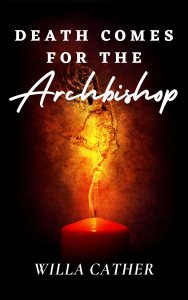
Review of Death Comes for the Archbishop by Willa Cather

Time Magazine Top 100 Novels

Book 27: Death Comes for the Archbishop by Willa Cather (1927)

This is a series of reflections reading through Time Magazine’s top 100 novels as selected by Lev Grossman and Richard Lacayo published since 1923 (when Time magazine was founded). For me this is an attempt to broaden my exposure to authors I may not encounter otherwise, especially as a person who was not a liberal arts major in college. Time’s list is alphabetical, so I decided to read through in a random order, and I plan to write a short reflection on each novel.

This was a well written and very enjoyable historical fiction book set in late 1800s New Mexico and Arizona. Bishop Jean Marie Latour travels with his friend and fellow priest Joseph Valliant from Ohio to assume responsibility for the parish of New Mexico now that New Mexico and Arizona have been incorporated into the United States. The author does a great job describing the environment that the two men inhabit, and I appreciate her sympathetic handling of both the two main characters, the Mexican and the Native People who inhabit this world. The story includes several historical characters including Kit Carson and Pope Gregory XVI and both the main characters and their parishioners are well developed and interesting. As a pastor I found the devotion of both Bishop Latour and Father Valliant to their flock inspiring.

The descriptions of the land are breathtaking, and Willa Cather obviously has a great deal of affection for both the land and the characters in the story. As a person who enjoys the history of the American West and is a religious leader this was a story that appealed to me strongly. I quickly found myself journeying with the characters through New Mexico, Mexico, Arizona, and eventually Colorado. It was a story of life, faith, and relationships. This was a beautifully written work of historical fiction portraying the faithful life of two religious leaders encountering faith in the people they are called to shepherd is the type of novel I hoped to discover in this reading list.

Review of The Hazel Wood by Melissa Albert

Melissa Albert, The Hazel Wood

For me a five-star book is something that either I want to read again or something that is so profound it makes an immediate impact. There are lots of ways that books can be compelling: a unique idea, an interesting set of characters, a complex plot, an artistic use of the English language and more. Reading is also a subjective experience, so what appeals to me as a reader may be very different for you. I read a lot for both pleasure and work, but these short reviews are a way for me to show my appreciation for the work and the craft of the author of the reviewed work.

Every reader has certain types of stories that they are drawn to and for me two of those genres are dark fairy tales and books that have another story underneath the story that helps to shape the world. The Hazel Wood is dark fairy tale that lives on the edge of our world that is defined by a set of stories published by the protagonist’s grandmother. This is the first book in a series of three books set in this world, one is the book of stories alluded to throughout the Hazel Wood while the second is a sequel that continues the story of Alice and Finch. This is my second reading of the series and yet it still retains its edge even though the journey was familiar. I appreciate this fantasy world which has teeth and claws and is as close to hell as heaven.

The story is more plot driven than character driven which would normally be less appealing for me, but in this story is about stories where the story spinner places an actual Story Spinner in the narrative and stories are characters it works. The dynamic of a broken family haunted by a story that has planted its roots in our world and follows the characters wanting to draw them back to the Hazel Wood, and eventually back to the Hinterlands. For Alice it is a journey into wonderland where she discovers the family she needed is the family she already had, not the mysterious grandmother who she could only read about until she arrives at her estate and discovers that some dreams are nightmares.

Review of The Only Good Indians by Stephen Graham Jones

Five Star Book Review

Stephen Graham Jones, The Only Good Indians

For me a five-star book is something that either I want to read again or something that is so profound it makes an immediate impact. There are lots of ways that books can be compelling: a unique idea, an interesting set of characters, a complex plot, an artistic use of the English language and more. Reading is also a subjective experience, so what appeals to me as a reader may be very different for you. I read a lot for both pleasure and work but these short reviews are a way for me to show my appreciation for the work and the craft of the author of the reviewed work.

The Only Good Indians is a very interesting read. When you read something where the protagonists are from a different cultural world than the reader, a good author will make you feel the environment and worldview of the characters. The Only Good Indians is the story of four Blackfeet who while hunting elk on restricted land awaken a vengeful spirit determined to avenge the death of its herd. The story from the opening page grabs the reader with these four characters caught between the reservation and the world outside two characters attempt to leave the reservation for. It does a phenomenal job of putting you into experiences and minds of Ricky, Lewis, Cass and Gabe as well as the characters brought into their story. The Po’noka, the vengeful spirit, is an unrelenting monster with an animalistic desire to inflict pain and death on the ones who caused death to its herd a decade earlier. This is horror that transcends the normal tropes that the genre operates in.

Stephen Graham Jones uses the words of the story to manipulate the mood and feel of the story. Even when the characters act in self-destructive ways you understand and empathize with them. The reservation becomes its own character in the story, a home that seems impossible to leave behind. There is no escaping a past that still holds onto the present or the forces that seem to lead to the early death of too many Indian men. Yet, even as the novel confronts the dark forces that bind the four main protagonists it also has a hopeful note in another character that emerges from these broken men.