Author Archives: Neil

Jeremiah 12: The Disillusioned Prophet and the God who Listens

Jeremiah’s Petition

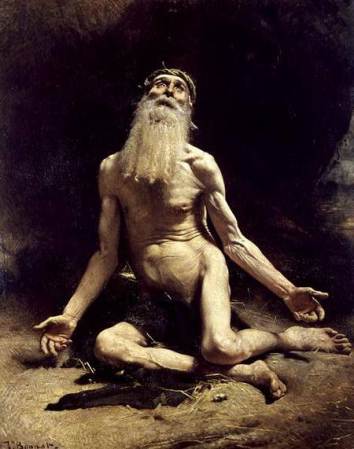
Job by Leon Bonnat (1880)

Job by Leon Bonnat (1880)

  Jeremiah 12

 You will be in the right, O LORD,when I lay charges against you;
 but let me put my case to you. Why does the way of the guilty prosper?
Why do all who are treacherous thrive?
 2 You plant them, and they take root; they grow and bring forth fruit;
 you are near in their mouths yet far from their hearts.
 3 But you, O LORD, know me; You see me and test me– my heart is with you.
Pull them out like sheep for the slaughter, and set them apart for the day of slaughter.
 4 How long will the land mourn, and the grass of every field wither?
For the wickedness of those who live in it the animals and the birds are swept away,
and because people said, “He is blind to our ways.”
 
The question of theodicy, how can the wicked prosper while the righteous suffer is one that the bible wrestle with again and again, and here Jeremiah lays it before God. Jeremiah lays out the difference between himself as the righteous one and the ‘wicked ones’ who believe that God is blind to their ways and Jeremiah is ready for God to judge. Jeremiah is worn out, tired and brokenhearted and is ready to be done with it, ready for God to judge his opponents not knowing how long of a journey he still has before him. While most commentators see God’s response as harsh, that has as much to do with the tone they hear it in as the words themselves (that and they way they divide the text which I will address below). I hear it somewhat differently

Stallions charging

God’s response

 5 If you have raced with foot-runners and they have wearied you, how will you compete with horses?
 And if in a safe land you fall down, how will you fare in the thickets of the Jordan?
 6 For even your kinsfolk and your own family, even they have dealt treacherously with you;
 they are in full cry after you; do not believe them, though they speak friendly words to you.

God’s response to Jeremiah is one of warning of what is still to come. Jeremiah’s journey is not going to be an easy one going forward with betrayal coming even from his own household. Jeremiah this is probably one of those points where Jeremiah needs to be heard and hear that God is still active.  In Jeremiah it is often difficult to know where God is speaking and where Jeremiah is speaking. Two of the scholars I respect greatly see God speaking from verse 5 through the end of the chapter, (Brueggemann 1998, 102-123) (Elizabeth Acthemeier, et.al 1999, VI:679f.) but I am going to propose a different reading with Jeremiah picking up at verse 7

 masai-mara-national-park-scavengers--large-msg-115779180761

Jeremiah’s reponse

 7 I have forsaken my house, I have abandoned my heritage;
 I have given the beloved of my heart into the hands of her enemies.
 8 My heritage has become to me like a lion in the forest;
 she has lifted up her voice against me– therefore I hate her.
 9 Is the hyena greedy for my heritage at my command?
Are the birds of prey all around her?
Go, assemble all the wild animals;
bring them to devour her.
 10 Many shepherds have destroyed my vineyard,
 they have trampled down my portion,
 they have made my pleasant portion a desolate wilderness.
 11 They have made it a desolation; desolate, it mourns to me.
The whole land is made desolate, but no one lays it to heart.
 12 Upon all the bare heights in the desert spoilers have come;
for the sword of the LORD devours from one end of the land to the other;
 no one shall be safe.
 13 They have sown wheat and have reaped thorns,
 they have tired themselves out but profit nothing.
They shall be ashamed of their harvests because of the fierce anger of the LORD.

Jeremiah no longer is concerned for his relations, his family, his heritage. He feels betrayed and so he is ready to surrender them to the consequences of their actions. He is ready for the birds of the air and the beasts of the field to pick over the bones of his homeland, his own village and his family. Jeremiah at this point sees no hope, all he can see is the betrayal and devastation that is coming. The prophet’s broken heart has left him in a state of absolute depression where there is no longer any profit, any joy.

scarsofheart

God’s response

 14 Thus says the LORD concerning all my evil neighbors who touch the heritage that I have given my people Israel to inherit: I am about to pluck them up from their land, and I will pluck up the house of Judah from among them. 15 And after I have plucked them up, I will again have compassion on them, and I will bring them again to their heritage and to their land, everyone of them. 16 And then, if they will diligently learn the ways of my people, to swear by my name, “As the LORD lives,” as they taught my people to swear by Baal, then they shall be built up in the midst of my people. 17 But if any nation will not listen, then I will completely uproot it and destroy it, says the LORD.

God desires God’s people back. There is no easy way around what is coming, even in the reforms of Josiah at the time Jeremiah begins his time as a prophet only brought about superficial changes and God desires something much deeper. The only way a new relationship can begin is for the old one to die so a new one can take it’s place. The Babylonian exile, while an event of horror in the memory of the Jewish people was also a time where they went through a process that they re-identified who they were in their relationship with the Lord. The Lord is unwilling to sit by and not be active, the Lord can no longer abide the way things are where the treacherous thrive and the guilty prosper, yet God still loves the people and desires to have compassion on them and wants them to live out of their identity.

purple rose 01 by picsofflowers.blogspot.com

Images for St. Michael and All Angels Sunday

Since I have begun my new position at Rejoice Lutheran Church in Frisco, Texas and they are using the Revised Common Lectionary I am going to begin posting public domain Christian art I find for the upcoming week (some of which I will use, others I will not) and maybe someone else might find this helpful in their process of thinking about the texts.


Archangel Michael defeating evil, at the Michaelkirche close to Hofburg imperial palace in Vienna

Archangel Michael defeating evil, at the Michaelkirche close to Hofburg imperial palace in Vienna

Statue of Archangel Michael by August Vogel over the portal of St. Michael's in Hamburg, Neustadt

Statue of Archangel Michael by August Vogel over the portal of St. Michael’s in Hamburg, Neustadt

Illustration for John Milton's Paradise Lost by Gustav Dore (1866)

Illustration for John Milton’s Paradise Lost by Gustav Dore (1866)


Illustration for John Milton's Paradise Lost by Gustav Dore (1866)

Illustration for John Milton’s Paradise Lost by Gustav Dore (1866)


Archangel Michael by Guido Reni (1636)

Archangel Michael by Guido Reni (1636)


Michael the Archangel. A 13th Century Byzantine icon from the Monastery of St. Catherine, Sinai

Michael the Archangel. A 13th Century Byzantine icon from the Monastery of St. Catherine, Sinai


The Fall of the Rebel Angels by Pieter Bruegel the Elder (1562)

The Fall of the Rebel Angels by Pieter Bruegel the Elder (1562)


The Need to Remember Rightly

170px-911_Tribute_(perspective_fixed)

On a day when there will be a number of calls to ‘Never Forget’ I want to add a caution that we need to be willing to remember rightly. The destruction and violence of September 11, 2001 cost the 19 hijackers and 2,977 victims their lives and impacted the lives of many others physically, emotionally and economically. Remembering rightly we can pause and remember the emotions of the day, the sadness the confusion, the fear and the desire to put things right that many people felt, in fact you cannot remember an event rightly without the emotion that goes with the event. However, sometimes the call to ‘Never Forget’ can be transformed into a call to ‘Never Forgive’ and as a follower of Christ that is a place that I cannot remain. In Christ I am called to love my enemies, to pray for those who persecute me so that I may live into my identity as a child of God. (Matthew 5.44f) ‘Never Forget’ can also become transformed into ‘Never Again’ where any numbers of actions are justified by the fear of some other entity or individual causing harm or destruction. Remembering may have the function of a shield to protect us from easily allowing harm to come to us again, but as Miroslav Volf insightfully says:

It is because they remember (emphasis original) past victimization that they feel justified in committing present violence. Or rather, it is because they remember their past victimization that they justify as rightful self-protection what to most observers looks like violence born of intolerance of even hatred. So easily does the protective shield of memory morph into a sword of violence. (Volf 2006, 33)

If we are to remember, to grieve, to mark the day then let us also remember who we were on that day. The events in our life matter to our identity but we should never allow an act of senseless violence to transform our identity into something different. We have had a dozen years of acting on the memory of September 11, 2001 and having the memory act upon us, of stealing our attention for both good and ill. But we do not need to allow the beast of this tragic memory to shape us in its image or allow it to impact our own ability to interact with others, to love and to trust. If we do that terror has won, and in attempting to ‘Never Forget’ we become trapped into a cycle of violence. If we remember September 11, 2001 we also need to reflect upon our own reactions to that day as a people. In our responses in many ways (militarily, economically, security, etc.) we need to examine: are we allowing the fear that the events of that day to transform our identity as a people into something different?

Our memories and stories define us as individuals and as a people and as important as the events of September 11, 2001 are they are not the central events in either our nations’ story or specifically to me as a Christian and as a pastor to the story of our lives in Christ. To allow the memories of September 11, 2001 to take over that central part of our identity would be to neglect the other central stories of our identity. Within my own calling I follow a God who is both just but who justifies the ungodly, who can love me and my enemy, who meets me most concretely at the very point of injustice and rejection (in the crucifixion). As Martin Luther said in The Freedom of a Christian:

A Christian lives not in himself (sic), but in Christ and his neighbor. Otherwise he is not a Christian. He lives in Christ through faith, in his neighbor through love. By faith he is caught up beyond himself into God. By love he descends beneath himself into his neighbor. Yet he always remains in God and in his love. (Volf 2006, 198)

So as we remember this day may we remember in the light of love and reconciliation. May we remember rightly in light of our own identities and not allow the terror of the day to redefine who we are.

purple rose 01 by picsofflowers.blogspot.com

Words and Will

Creation by Selfish Eden (deviantart.com)

Creation by Selfish Eden (deviantart.com)

There are no magic words, no secret sounds that bend the world
And yet words have power in the hearers mind
They can create and destroy, build up or tear down
Yet the speaker can only have an imagined result
The secret lies in the will of the audience

The hearer grants the power to the spoken and written word
Accepts the compliment, absorbs the dagger or simply chooses to ignore
Words may fall on ears that hear or on deaf ears, yet they are the same words
In one setting they may invoke desire or love, in another rejection
Some may invite into an adventure into another world, yet they can only invite
Even when they shame, cajole, and ridicule they may strike their mark
Or they may fall as useless barbs to the floor before the will that deems them unworthy

Yet without the words, the good and the bad the will remains at rest
Caught within its own world, not knowing the possibilities and dangers that rest beyond
The will grants one person’s words powers and deems another’s powerless
And yet with the magic of words and will are worlds inhabited
Love and hatred, fear and hope, science and magic all reside
In words and will

Neil White, 2013

purple rose 01 by picsofflowers.blogspot.com

Jeremiah 11: From Blessing to Curse

Shemah inscription on the Knesset Menorah, Jerusalem

Shemah inscription on the Knesset Menorah, Jerusalem

Jeremiah 11: 1-8: Recalling the People’s Vocation
The word that came to Jeremiah from the LORD: 2 Hear the words of this covenant, and speak to the people of Judah and the inhabitants of Jerusalem. 3 You shall say to them, Thus says the LORD, the God of Israel: Cursed be anyone who does not heed the words of this covenant, 4 which I commanded your ancestors when I brought them out of the land of Egypt, from the iron-smelter, saying, Listen to my voice, and do all that I command you. So shall you be my people, and I will be your God, 5 that I may perform the oath that I swore to your ancestors, to give them a land flowing with milk and honey, as at this day. Then I answered, “So be it, LORD.”
6 And the LORD said to me: Proclaim all these words in the cities of Judah, and in the streets of Jerusalem: Hear the words of this covenant and do them. 7 For I solemnly warned your ancestors when I brought them up out of the land of Egypt, warning them persistently, even to this day, saying, Obey my voice. 8 Yet they did not obey or incline their ear, but everyone walked in the stubbornness of an evil will. So I brought upon them all the words of this covenant, which I commanded them to do, but they did not.

Jeremiah attempts to call the people back to their vocation as the people of God. The language recalls the formative story of the Hebrew people, the story of the Exodus and calls them back to the covenant that God made with the people when they were brought out of Egypt. The people are called once again to hear the words of the covenant, obey the Lord’s voice in a powerful echo of Deuteronomy where the central command is to ‘hear’ or ‘give heed.’ For Jeremiah this sense of a calling the people are to live into as the people of God is their reason for existing. Yet, Jeremiah is also aware of the story of his people and the way they didn’t listen and heed. Jeremiah is working out of a Deuteronomic theology (do these things and you will be blessed, fail to do these things and you will be cursed) and from that perspective he will judge the way God is working in the life of the people. Jeremiah will find this perspective challenged as he continues his ministry, but the basic understanding of why the people find themselves under God’s judgment remains a powerful thought throughout Jeremiah. It is the way Jeremiah makes senses of the senseless desolation he will encounter later in his life with the desolation of his people and their forced exile.

436px-DeadTree

Jeremiah 11: 9-17: The Good Tree Gone Bad
9 And the LORD said to me: Conspiracy exists among the people of Judah and the inhabitants of Jerusalem.10 They have turned back to the iniquities of their ancestors of old, who refused to heed my words; they have gone after other gods to serve them; the house of Israel and the house of Judah have broken the covenant that I made with their ancestors. 11 Therefore, thus says the LORD, assuredly I am going to bring disaster upon them that they cannot escape; though they cry out to me, I will not listen to them. 12 Then the cities of Judah and the inhabitants of Jerusalem will go and cry out to the gods to whom they make offerings, but they will never save them in the time of their trouble. 13 For your gods have become as many as your towns, O Judah; and as many as the streets of Jerusalem are the altars you have set up to shame, altars to make offerings to Baal.
14 As for you, do not pray for this people, or lift up a cry or prayer on their behalf, for I will not listen when they call to me in the time of their trouble. 15 What right has my beloved in my house, when she has done vile deeds? Can vows and sacrificial flesh avert your doom? Can you then exult? 16 The LORD once called you, “A green olive tree, fair with goodly fruit”; but with the roar of a great tempest he will set fire to it, and its branches will be consumed. 17 The LORD of hosts, who planted you, has pronounced evil against you, because of the evil that the house of Israel and the house of Judah have done, provoking me to anger by making offerings to Baal.

This is the language of the betrayed. The Lord speaks out of the Lord’s deep wounds and the grief of the brokenness of the relationship. The people have lost their position, their betrayal has cut so deep that their appeals no longer have any value. They are reaping the harvest of their past deed, and the blanket term that covers their betrayal is idolatry. Their identity has changed from being the fruitful olive tree to becoming the blackened and dead tree after the fire consumes it. God no longer wants to hear from the people, nor the intercession of even his prophet on their behalf. God is done listening, God has turned God’s back, like a parent who disowns his or her children or a spouse who divorces their partner, God no longer is willing to continue with the relationship because of the continued betrayal of the people.

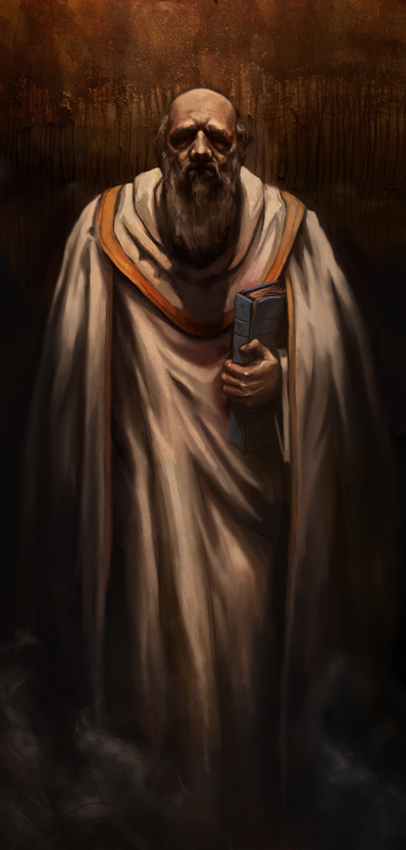
The Prophet (nogard86 at deviantart.com)

The Prophet (nogard86 at deviantart.com)

Jeremiah 11: 18-23: The Cost of Being a Prophet
18 It was the LORD who made it known to me, and I knew;
then you showed me their evil deeds.
19 But I was like a gentle lamb led to the slaughter.
And I did not know it was against me that they devised schemes, saying,
“Let us destroy the tree with its fruit,
let us cut him off from the land of the living,
so that his name will no longer be remembered!”
20 But you, O LORD of hosts, who judge righteously,
who try the heart and the mind,
let me see your retribution upon them,
for to you I have committed my cause.
21 Therefore thus says the LORD concerning the people of Anathoth, who seek your life, and say, “You shall not prophesy in the name of the LORD, or you will die by our hand”– 22 therefore thus says the LORD of hosts: I am going to punish them; the young men shall die by the sword; their sons and their daughters shall die by famine; 23 and not even a remnant shall be left of them. For I will bring disaster upon the people of Anathoth, the year of their punishment.

The consequences for the prophet are steep, and just as the Lord experiences betrayal so now the prophet also experiences a deep betrayal. The prophet has loved his people, indeed that is one of the requirements of being a prophet, and yet now the Lord reveals the plot against the prophet himself. The prophet is horrified and also lapses into the language of betrayal-calling for retribution on his betrayers. In the Lord’s verdict (21-23) we also learn that this betrayal, from the people of Anathoth, are from Jeremiah’s own kin, his own hometown. The people of Anathoth are going to bear an even greater punishment than the people in general, for the Lord says there will not be a remnant from them, unlike the rest of the people.

purple rose 01 by picsofflowers.blogspot.com

Weighed Down: A Poem

atlas

The weight of two worlds resting on the shoulders
As Atlas tried to bear not only his own burdens
But relieve the fears and burdens of others
Knowing that the titan’s constitution would bear the one
But bearing them both would crush body and spirit
Does he dare consider the freedom of letting go
Or does he continue to bear the soul crushing weight?

Neil White, 2013

purple rose 01 by picsofflowers.blogspot.com

The Illusion of Control: A Poem

Clocks by Azoz7 on Deviantart.com

Clocks by Azoz7 on Deviantart.com

Control is a grand illusion that we cast
Within its shroud we dispel the shadows of doubt
But there are moments when its veil is pierced
And we realize our own powerlessness
Caught in the thrall of things beyond our control
Yet as we seek to reestablish the illusion
We are thrust into the quagmire
Of our insecurities and inadequacies
And we flounder for a foothold
To free ourselves from our fears
And the awareness our lives are not our own

Neil White, 2013

purple rose 01 by picsofflowers.blogspot.com

What I Learned About Myself, Life and God from My Divorce Part 3

Apophysis-Betrayal (1footonthedawn at deviantart.com)

Apophysis-Betrayal (1footonthedawn at deviantart.com)

This is the final reflection on this at this point in my journey.

7. The Place of Ritual and the Value of a Worshipping Community- I know that many people have had bad experiences in churches, synagogues and places of worship after a divorce, which is sad but a very real experience of many people-but not every place is like that. For myself, as a pastor I found myself in a new community, where I knew the pastor as one of my colleagues and I showed up with my kids each Sunday and as much as I could be I was anonymous. I did have a few people ask where their mother was in an inquiring and not an accusing way (to which I answered that she had chosen not to be there) and since I was still at the process of trying to save the marriage initially and later going through the divorce I didn’t want to close any doors, but I needed a place to just be. I knew that when I needed I could talk to the pastor as a friend and as a person who knew more of what was happening but mostly I just needed to be around the rituals and around a worshipping community. I needed someone else to sing when there were no songs coming out of my heavy heart. I needed something that was familiar and known in the midst of all the changes. I needed to be reminded that in the bigger picture that I mattered. I needed to hear about forgiveness, that I was valued, that I mattered. I needed to be in a place where I could begin my journey of healing.

8. The Gift of Limitations-For years in my life I would always find a way to dig a little deeper, to draw on some reserve of physical, spiritual or emotional strength and continue to do whatever needed done. In my relationship with my ex, in my work or school, in my life failure was never an option. The time leading up to the divorce pushed me for the first time in my life beyond the breaking point, where I reached a point where my spiritual and emotional strength were exhausted and depression began to sap even my physical strength. At the time, nothing about this seemed like a gift but it forced me to begin to pay attention to my own body and mind for the first time. To accept that my energy had limitations, that I needed to take breaks and pay attention, that there were times that I would need to say no to a commitment because I simply was not in a state of mind to deal with things. I began to listen more closely, to recapture some of the parts of myself that had been lost in pushing so hard for so many years. I began to recommit to listening and paying attention which eventually turned into poetry and writing, and I made space to listen to stories, to read, to listen to music and to make time for myself and not feel guilty about it. In accepting my own limitations I was able to find strengths that I had long forgotten about.

9. Seeing Myself as Worthy of Being Loved Again-I never imagined how deeply the rejection I felt from my ex-wife would reach into my sense of self-worth, but it challenged the core of my identity. I had always been pretty confident, in at least decent physical shape, considered myself fairly attractive and charismatic, emotionally resilient, intelligent and I had done a lot of things in my life that I was pretty proud of. The things that happened in this time caused me to question all of this, through both words and actions everything that I was felt rejected. I felt ugly, emotionally flat, I questioned whether anyone would find me interesting, I wondered whether everything I had done in the past was merely me managing to get through rather than really achieving anything. I wondered what type of future I might have in relationships, I was also wondering what I would do as far as work. Everything seemed in a period of months to have gone away and I really began to wonder who I was. I’m not sure exactly when it happened, and it probably didn’t happen all at once, but slowly I began to see that I really was pleased with the way I had lived my life, that I genuinely was happy with who I was. That I was worthy of being loved again, that I was still creative and intelligent (and in fact the experiences had opened up new avenues of creativity) and that I was OK with who I was. Not that every moment and every day I remembered this, there were occasional dark times and still are every once in a while, but  the emotional resilience did return and that I was able to see myself as worthy of being loved again.

10. The Process of Forgiveness and Reconciliation– Until you’ve really been hurt you don’t understand how difficult forgiveness and reconciliation really are. Even when you have made the choice to forgive there will be times where past actions are reenacted in your mind and you need to let go of them to move forward. It was a journey from the point where I had made the initial decision to forgive my ex (while we were still married) and work towards reconciliation and the possibility of a new beginning, to realizing that the reconciliation which occurred (which involved the divorce which I didn’t want) was much different than what I hoped for, to continually having to commit to trying not to allow things that happened in the past to determine the relationship going forward. It was a journey and not a one-time decision, and yet it was a journey that ultimately led me towards healing.

In the midst of the many challenges and lessons I have changed and grown. It took time and I have been able to walk with several others through their own journeys through broken relationships and divorces. It was not a skill I was seeking or an experience I wanted but you can learn to find the gift in even the most challenging of times.

purple rose 01 by picsofflowers.blogspot.com

The Things That Deceive: Jeremiah 10

Ishtar Vase from between 1999 and 1500 BCE

Ishtar Vase from between 1999 and 1500 BCE

Mocking the Idols: Jeremiah 10: 1-16

 Hear the word that the LORD speaks to you, O house of Israel.
 2 Thus says the LORD:
 Do not learn the way of the nations,
or be dismayed at the signs of the heavens;
 for the nations are dismayed at them.
 3 For the customs of the peoples are false:
 a tree from the forest is cut down,
 and worked with an ax by the hands of an artisan;
 4 people deck it with silver and gold;
they fasten it with hammer and nails so that it cannot move.
 5 Their idols are like scarecrows in a cucumber field, and they cannot speak;
 they have to be carried, for they cannot walk.
 Do not be afraid of them, for they cannot do evil, nor is it in them to do good.
 6 There is none like you, O LORD; you are great, and your name is great in might.
 7 Who would not fear you, O King of the nations? For that is your due;
 among all the wise ones of the nations and in all their kingdoms there is no one like you.
 8 They are both stupid and foolish; the instruction given by idols is no better than wood!
 9 Beaten silver is brought from Tarshish, and gold from Uphaz.
They are the work of the artisan and of the hands of the goldsmith;
their clothing is blue and purple; they are all the product of skilled workers.
 10 But the LORD is the true God; he is the living God and the everlasting King.
 At his wrath the earth quakes, and the nations cannot endure his indignation.
 11 Thus shall you say to them: The gods who did not make the heavens and the earth shall perish from the earth and from under the heavens.
 12 It is he who made the earth by his power,
who established the world by his wisdom,
and by his understanding stretched out the heavens.
 13 When he utters his voice, there is a tumult of waters in the heavens,
 and he makes the mist rise from the ends of the earth.
He makes lightnings for the rain, and he brings out the wind from his storehouses.
 14 Everyone is stupid and without knowledge;
 goldsmiths are all put to shame by their idols;
 for their images are false, and there is no breath in them.
 15 They are worthless, a work of delusion;
at the time of their punishment they shall perish.
 16 Not like these is the LORD, the portion of Jacob,
for he is the one who formed all things,
and Israel is the tribe of his inheritance; the LORD of hosts is his name.

The people of Jeremiah’s time, like people in our own time, live in a world of multiple allegiances and gods and one of the central commandment of the Jewish people was not to create an image for their God. There is always the temptation to attempt to place our hopes in the things that we create, and so Jeremiah like Isaiah (see for example Isaiah 44: 9-20) has a section of mocking the idols as powerless. Yet these idols are things that are consuming the most precious resources: gold, silver, the finest clothing, the best wood, caring sculpted by an artisan and yet they are nothing. The Hebrew word hevel comes up three times in this section talking about the idols, this is a word which goes back to the name Abel (from the Cain and Abel story) which is most famously picked up in Ecclesiastes:

Vanity of Vanities,says the teacher
Vanity of Vanities! All is vanity. Ecclesiastes 1:2

The word translated vanities (hevel) is literally mist, smoke, vapor-it is something that when grasped onto vanishes within one’s grasp. Those who are trusting in these things they created are finding the objects of their trust are no more reliable than the evanescent vapor of a morning fog.

In our own time we have our own idols as well, they may not be stone, wood or metal statues but they may be individuals (athletes, politicians, actors, musicians); military might or power, security, wealth, fame, position or status or any number of other things. They may be external things we give our allegiance to or they may be things we create (or at least believe we create) with our own hands. Often they are tied up with our wealth and where our wealth is directed. And just like the people of Jeremiah’s time who invested their wealth into the creation of images of gods, we too invest our wealth where our gods are. As Walter Brueggemann can point out false economics and false religion are tied together (Brueggemann 1998, 103) or as Jesus says in the Sermon on the Mount:

For where your treasure is, there your heart will be also Matthew 6: 21.

shepherd-sheep

The Leaders who Lead Astray Jeremiah 10: 17-25

17 Gather up your bundle from the ground, O you who live under siege!
 18 For thus says the LORD:
I am going to sling out the inhabitants of the land at this time,
 and I will bring distress on them, so that they shall feel it.
 19 Woe is me because of my hurt! My wound is severe.
But I said, “Truly this is my punishment, and I must bear it.”
 20 My tent is destroyed, and all my cords are broken;
 my children have gone from me, and they are no more;
there is no one to spread my tent again, and to set up my curtains.
 21 For the shepherds are stupid, and do not inquire of the LORD;
 therefore they have not prospered, and all their flock is scattered.
 22 Hear, a noise! Listen, it is coming—
 a great commotion from the land of the north
 to make the cities of Judah a desolation, a lair of jackals.
 23 I know, O LORD, that the way of human beings is not in their control,
that mortals as they walk cannot direct their steps.
 24 Correct me, O LORD, but in just measure;
not in your anger, or you will bring me to nothing.
 25 Pour out your wrath on the nations that do not know you,
and on the peoples that do not call on your name;
for they have devoured Jacob;
they have devoured him and consumed him,
and have laid waste his habitation.

Who is the mourner, is it the prophet, is it Zion personified, or is it God? Any of the three, and perhaps all of the three are mourning together. The reality is that for those who are willing to listen, which seems to be few if any, they are to flee like the people of Israel fleeing at the beginning of their exodus in the wilderness. In the midst of the wounded God, wounded prophet and a wounded people we see at the center of things are the leaders who have led the flock astray. This is not the world where everyone makes their own decision on things, in fact the Davidic and priestly leadership would claim divine authorization, and yet they had not inquired of God. Rather they had probably looked out for their own interests, ensuring their own comfort, and operating much as any other nation’s leaders operated. If the leaders don’t live out the vision of God’s peace what hope do the people have.

At verse 23 we have a shift and the prophet is talking back to God, pleading both for God’s mercy and justice at the same time. Much as Psalm 6 begins with an appeal for God to act justly but not in anger:

O Lord, do not rebuke me in your anger,
Or discipline me in your wrath. Psalm 6:1

The plea is for God to calm down, to make decisions after God’s anger has dissipated which places the prophet in a precarious place (which any person who has told a person who is raging to calm down knows) and then also calls on God to pour out God’s wrath on the nations around Jerusalem. To hold them to the same standard that Jerusalem is being held to.

Being the set aside people of God is a dangerous position, God has high hopes for them. The calling is a gift and a challenge at the same time. The people have failed in their vocation and are now enduring the wrath and the grief of God. Wrath is an uncomfortable term and I probably need to spend some time talking about it, but ultimately God is not passive-God does take sides and one of the hopes that Christians have is that God will not allow injustice to continue indefinitely. Unfortunately, many times this image of God’s wrath has been used as an object of fear to prop up the unquestioned authority of the church or particular leaders, and this would not be that different from Jeremiah’s day with the temple and king.

purple rose 01 by picsofflowers.blogspot.com

What I Learned About Myself, Life and God from My Divorce: Part 2

Apophysis-Betrayal (1footonthedawn at deviantart.com)

Apophysis-Betrayal (1footonthedawn at deviantart.com)

4. The Language of Woundedness– Growing up, in seminary and even through the first several years of my ministry I never really knew what to do with much of the language of the prophets in the bible. At times it is visceral, offensive, painful and harsh and even though I had done many things through my life to challenge myself physically and mentally I didn’t realize what a sheltered life I had lived. It was only in the time before and after my divorce, where I found myself emotionally shattered and dealing with a deep emotional and spiritual wound that I found that this was the language of emotional pain. Those who have been following my writing know I’ve been writing quite a bit on Jeremiah, and Jeremiah is full of this language of woundedness-of a wounded God and the wounded prophet who are working through an intense feeling of betrayal by the very people they committed themselves to. I’ve come to understand that this language, although harsh and painful and often unheard by anyone else is a part of the healing process. It is a way that we try to make sense of the deep brokenness that we feel on the inside and to let go of the relationship, dreams, trust, love and eventually move towards forgiveness. For me, many times, these were words that were said in the car alone, in the shower when nobody could hear, and rarely before anyone except a couple close friends who I trusted deeply as well as some of my conversations with God (which both the Psalms and the Prophets model). It is the language of our emotional self crying out in desperation as it tries to re-establish itself and it needs the place to be vented, and yet it is not where we want to remain. It is a wilderness of anger that I had to move through on my journey of healing, but I have also know people who have established their residence there and allowed their identity to remain wounded. This is one of those things that there is a season for, a season for woundedness and anger and a season of healing and new beginnings.

5. Letting Go of Dead Dreams-This took some time, probably close to two years for me. Many people will immediately try to re-establish a relationship to take the place of the relationship they lost but I didn’t. I did date some over my first couple years but was never able to place myself fully into the relationships because I was still holding on to what had been in the past. For two years of dating and thirteen years of marriage I had seen my life always being connected to my ex-wife’s and there was a time, even after divorce where I dreamed the relationship could be reestablished, my family could be joined back together and the dream I had held onto for years could be realized. The crazy part is that I was holding onto this dream precisely when I was also dealing with the most extreme pain and hurt. Eventually I did reach a point where I was able to say that the relationship was truly over, the dream was dead, that I had come to the point where there was no going back, where I could be honest with myself about the number of things I had given up over the previous years to make the relationship work and I could see some of the flaws. For me this was a part of letting go and beginning to wonder what might happen in the future and making space for the present. It also allowed me to accept the gift of myself and hopefully in the future be ready for the gift of somebody else.

6. The Relational Currency of Trust-I had the opportunity as I was going through my divorce to do some coursework on Marriage and Family Therapy which has been invaluable going forward in my life and in the counseling I do as a pastor. At a fundamental level, when you love someone else you open yourself up to the possibility of being hurt-there is no love without this possibility. This is why a person’s death can be so difficult and why betrayal within any relationship can be so devastating. In my own experience I know there were times when I may have known what was going on but I didn’t want to admit that someone I had opened up to so deeply could possibly be willing to betray that trust. The reason that betrayal is so deadly to marriages (and this can come in many forms, affairs both emotional and physical, addictions, lying, hiding of financial struggles or resources, undisclosed legal struggles and the list could go on) is that it violates trust. Trust allows us to risk opening ourselves up, and once trust is broken it is painful and it takes a lot for another person to grant that trust again. In my case I was willing to open myself up again in the hope of saving the relationship and I ended up being wounded again, but it was the right decision for me to make in the long run. If trust has been broken it can be rebuilt, but it takes a lot of time and work.

purple rose 01 by picsofflowers.blogspot.com