Author Archives: Neil

Images for Christ the King Sunday

Stained Glass window at the Melkite Catholic Annunciation Cathedral in Roslindale, MA depicting Christ the King with the regalia of a Byzantine Emperor

Stained Glass window at the Melkite Catholic Annunciation Cathedral in Roslindale, MA depicting Christ the King with the regalia of a Byzantine Emperor

Hubert van Eyck, Genter Altar, Altar des Mystischen Lammes (before 1432) in the Cathedral St. Bavo, Gent

Hubert van Eyck, Genter Altar, Altar des Mystischen Lammes (before 1432) in the Cathedral St. Bavo, Gent

Icon of Crucifixion in the Byzantine and Christian Museum in Athens

Icon of Crucifixion in the Byzantine and Christian Museum in Athens


Miguel Angel Buonarroti, Copia desde la Crucifixion dibujada (1540)

Miguel Angel Buonarroti, Copia desde la Crucifixion dibujada (1540)

Reproduction of Carl Heinrich Bloch's, Christ on the Cross (1870)

Reproduction of Carl Heinrich Bloch’s, Christ on the Cross (1870)

This is one of those festivals where there are no shortage of images for either the kingly side, particularly in Roman Catholic Churches, and the Crucifixion. I have included a couple images of  each, and I used images of the crucifixion I had not previously used in other posts


Jeremiah 17: States of the Heart

scarsofheart

Jeremiah 17

The sin of Judah is written with an iron pen; with a diamond point it is engraved on the tablet of their hearts, and on the horns of their altars, 2 while their children remember their altars and their sacred poles, beside every green tree, and on the high hills, 3 on the mountains in the open country. Your wealth and all your treasures I will give for spoil as the price of your sin throughout all your territory. 4 By your own act you shall lose the heritage that I gave you, and I will make you serve your enemies in a land that you do not know, for in my anger a fire is kindled that shall burn forever.

Walter Brueggeman has an excellent line about this passage:

It (Judah’s idolatry) is written on the ultimate places of memory, on the heart and on the altar. The record on the heart is the very antethesis of the torah on the heart (31:33). Something will be written on the heart, either sin or torah. (Brueggemann, 1998, p. 156)

This chapter brings together a lot of varied styles and probably comes from various places in Jeremiah’s ministry, but it all centers around issues of the heart, and specifically the poet’s heart and the people’s heart. Here the heart of the people is directed away from God, towards the high hills, the green trees and the poles, probably indicating worship of Asherah and Baal. Now the degree that the people are worshipping other gods compared to turning away from God’s vision for their lives we will never know, but from Jeremiah’s view they have turned their heart to other gods and placed their place in other things. Their turning has left a permanent mark on their heart and on their worship and the consequences of this turning away from the source of their life is dire.

 5 Thus says the LORD:
Cursed are those who trust in mere mortals
and make mere flesh their strength,
whose hearts turn away from the LORD.
 6 They shall be like a shrub in the desert,
and shall not see when relief comes.
They shall live in the parched places of the wilderness,
in an uninhabited salt land.
 7 Blessed are those who trust in the LORD,
whose trust is the LORD.
 8 They shall be like a tree planted by water,
sending out its roots by the stream.
It shall not fear when heat comes,
and its leaves shall stay green;
in the year of drought it is not anxious,
and it does not cease to bear fruit.
 9 The heart is devious above all else;
 it is perverse– who can understand it?
 10 I the LORD test the mind and search the heart,
to give to all according to their ways,
according to the fruit of their doings.
Now the oracle switches styles to reflect a more poetic style and reflects the language of the psalms or wisdom literature. The contrast between a shrub in the desert and the tree planted by water contrasts between the wise choice (trusting God) and the unwise choice (trusting in mortals). On the one hand, this seems readily apparent, but Jeremiah is probably protesting the practice of making alliances with nations like Egypt to protect the nation from the threat of the armies of Assyria or Babylon. Throughout the book of Jeremiah these alliances prove to be unreliable leaving the people of Judah captive to Babylon. Even when later Jeremiah will urge the people to not resist Babylon it is more attractive to rely on a foreign power that can challenge the armies that march upon the nation. Here the heart again becomes one of the images and it is a devious heart, yet it is also searched out by God.

 11 Like the partridge hatching what it did not lay,
so are all who amass wealth unjustly;
in mid-life it will leave them,
and at their end they will prove to be fools.

This little wisdom snippet may be a part of what lies ahead or it may be its own little pithy saying comparing those who amass unjust wealth with the partridge that hatches other birds eggs. Just like placing trust in mortals is a bad idea, so is placing ones trust in wealth for it will ultimately abandon them as well.

12 O glorious throne, exalted from the beginning,
shrine of our sanctuary!
 13 O hope of Israel! O LORD!
All who forsake you shall be put to shame;
those who turn away from you shall be recorded in the underworld,
for they have forsaken the fountain of living water, the LORD.
 14 Heal me, O LORD, and I shall be healed;
save me, and I shall be saved;
for you are my praise.
 15 See how they say to me,
“Where is the word of the LORD? Let it come!”
 16 But I have not run away from being a shepherd in your service,
nor have I desired the fatal day.
 You know what came from my lips;
it was before your face.
 17 Do not become a terror to me;
you are my refuge in the day of disaster;
 18 Let my persecutors be shamed,
but do not let me be shamed;
let them be dismayed,
but do not let me be dismayed;
bring on them the day of disaster;
destroy them with double destruction!

The  prophet lifts up a prayer in the language of lament.  He begins by praising God as many lament psalms do and then he present his case. The prophet claims to have been faithful and has been wounded in remaining faithful. He is taunted by those who mock him saying, “Where is the word of the Lord? Let it come!” and yet Jeremiah has remained true. As a prophet he is caught between God and the disobedient people and Jeremiah asks not to receive terror from both sides for God is all the prophet has left. I read this as the prophet asking to be removed from this place between so that his persecutors may be shamed, not him, they may be dismayed, not him, and they may be destroyed, not him.

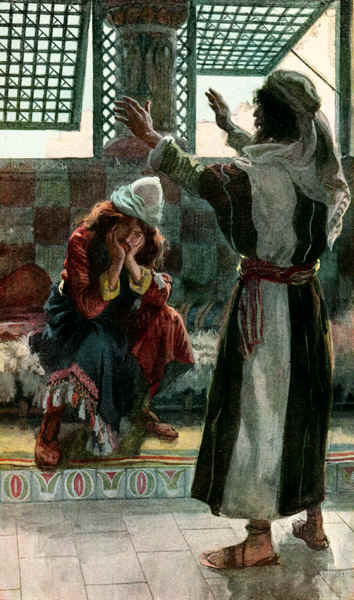
Orthodox Icon of the Prophet Jeremiah

Orthodox Icon of the Prophet Jeremiah

 
19 Thus said the LORD to me: Go and stand in the People’s Gate, by which the kings of Judah enter and by which they go out, and in all the gates of Jerusalem, 20 and say to them: Hear the word of the LORD, you kings of Judah, and all Judah, and all the inhabitants of Jerusalem, who enter by these gates. 21 Thus says the LORD: For the sake of your lives, take care that you do not bear a burden on the sabbath day or bring it in by the gates of Jerusalem. 22 And do not carry a burden out of your houses on the sabbath or do any work, but keep the sabbath day holy, as I commanded your ancestors. 23 Yet they did not listen or incline their ear; they stiffened their necks and would not hear or receive instruction.
 24 But if you listen to me, says the LORD, and bring in no burden by the gates of this city on the sabbath day, but keep the sabbath day holy and do no work on it, 25 then there shall enter by the gates of this city kings who sit on the throne of David, riding in chariots and on horses, they and their officials, the people of Judah and the inhabitants of Jerusalem; and this city shall be inhabited forever. 26 And people shall come from the towns of Judah and the places around Jerusalem, from the land of Benjamin, from the Shephelah, from the hill country, and from the Negeb, bringing burnt offerings and sacrifices, grain offerings and frankincense, and bringing thank offerings to the house of the LORD. 27 But if you do not listen to me, to keep the sabbath day holy, and to carry in no burden through the gates of Jerusalem on the sabbath day, then I will kindle a fire in its gates; it shall devour the palaces of Jerusalem and shall not be quenched.

In a world where God is not central the Sabbath is neglected. When people trust in their own works, in wealth and in their own abilities to bring about prosperity there is no need for a day of rest. The Sabbath becomes another day for commerce, for work, for making and selling, for travel and for burdens. The most challenging thing that God commands God people is to rest and to trust in God to provide. Paradoxically it is this additional work which will undercut the value of the rest of the work. If the people rest they will be secure, they will have a king and be safe and they will receive the gifts from the surrounding world coming to them, yet if they work harder and harder to attain these things they will fall away and become more and more distant as the nation separates itself from it source of life and its reason for being

purple rose 01 by picsofflowers.blogspot.com

Images for the 26th Sunday After Pentecost (Lectionary 33C)

The primary text this week is Jesus talking about the destruction of the Temple, so there are a number of good temple related images:

The Temple by Radojavor@deviantart.com

The Temple by Radojavor@deviantart.com

Model of the Second Temple at the time of Jesus

Model of the Second Temple at the time of Jesus

James Tissot, Reconstruction of Jerusalem and the Temple of Herod, painted between 1886 and 1894

James Tissot, Reconstruction of Jerusalem and the Temple of Herod, painted between 1886 and 1894

The Disciples Admire the Buildings of the Temple, James Tissot

The Disciples Admire the Buildings of the Temple, James Tissot

The Siege and Destruction of Jerusalem by Romans Under the Command of Titus, A.D. 70 by David Roberts 1850

The Siege and Destruction of Jerusalem by Romans Under the Command of Titus, A.D. 70 by David Roberts 1850


Jeremiah 16: A Vision of Resurrection, But Only Through Death

Jeremiah Lamenting the Destruction of Jerusalem by Rembrandt van Rijn 1630

Jeremiah Lamenting the Destruction of Jerusalem by Rembrandt van Rijn 1630

The word of the LORD came to me: 2 You shall not take a wife, nor shall you have sons or daughters in this place. 3 For thus says the LORD concerning the sons and daughters who are born in this place, and concerning the mothers who bear them and the fathers who beget them in this land: 4 They shall die of deadly diseases. They shall not be lamented, nor shall they be buried; they shall become like dung on the surface of the ground. They shall perish by the sword and by famine, and their dead bodies shall become food for the birds of the air and for the wild animals of the earth.
5 For thus says the LORD: Do not enter the house of mourning, or go to lament, or bemoan them; for I have taken away my peace from this people, says the LORD, my steadfast love and mercy. 6 Both great and small shall die in this land; they shall not be buried, and no one shall lament for them; there shall be no gashing, no shaving of the head for them. 7 No one shall break bread for the mourner, to offer comfort for the dead; nor shall anyone give them the cup of consolation to drink for their fathers or their mothers. 8 You shall not go into the house of feasting to sit with them, to eat and drink. 9 For thus says the LORD of hosts, the God of Israel: I am going to banish from this place, in your days and before your eyes, the voice of mirth and the voice of gladness, the voice of the bridegroom and the voice of the bride.
10 And when you tell this people all these words, and they say to you, “Why has the LORD pronounced all this great evil against us? What is our iniquity? What is the sin that we have committed against the LORD our God?” 11 then you shall say to them: It is because your ancestors have forsaken me, says the LORD, and have gone after other gods and have served and worshiped them, and have forsaken me and have not kept my law; 12 and because you have behaved worse than your ancestors, for here you are, every one of you, following your stubborn evil will, refusing to listen to me. 13 Therefore I will hurl you out of this land into a land that neither you nor your ancestors have known, and there you shall serve other gods day and night, for I will show you no favor.
14 Therefore, the days are surely coming, says the LORD, when it shall no longer be said, “As the LORD lives who brought the people of Israel up out of the land of Egypt,” 15 but “As the LORD lives who brought the people of Israel up out of the land of the north and out of all the lands where he had driven them.” For I will bring them back to their own land that I gave to their ancestors.
16 I am now sending for many fishermen, says the LORD, and they shall catch them; and afterward I will send for many hunters, and they shall hunt them from every mountain and every hill, and out of the clefts of the rocks. 17 For my eyes are on all their ways; they are not hidden from my presence, nor is their iniquity concealed from my sight. 18 And I will doubly repay their iniquity and their sin, because they have polluted my land with the carcasses of their detestable idols, and have filled my inheritance with their abominations.

19 O LORD, my strength and my stronghold,
my refuge in the day of trouble,
to you shall the nations come from the ends of the earth and say:
Our ancestors have inherited nothing but lies, worthless things in which there is no profit.
20 Can mortals make for themselves gods? Such are no gods!
21 “Therefore I am surely going to teach them, this time I am going to teach them my power and my might, and they shall know that my name is the LORD.”
This is a really harsh passage, and there have been a number of these harsh passages in the book and in the life of Jeremiah. Here Jeremiah is commanded not to share in the joy of others in the community, not to have the joy of a wife or family, but to live in preparation for the coming destruction. He is a contrast to the people around him, and his life of sorrow is a message to the surrounding world in the midst of its feasting and celebration. It is a hard life as a prophet, a life that no one would choose on their own if they knew what it would entail. Jeremiah will suffer, and perhaps not having a family prevents the deeper suffering of seeing the ones you love wounded by the convictions you are called to live out of, yet this is a call to a very lonely life and profession. Yet, he is the bearer of a message of the death of not only an age, but of people: of families and friends, of a way of life, of the world as it is known. It is a death so profound that it overwhelms the past stories that made the people who they are and strips away all the things that held the community together.
It is a time of death, but in the middle of this chapter we also see the glimmer of a resurrection. For the new covenant between God and God’s people to come to light the current relationship has to die. For something truly new to be born something old is having to give way. The people who have trusted in Kings, in land, in the Temple and the temple cult are about to have all these things stripped away and as exiles in a foreign land only then will they refind who they are. The promised new identity will be so strong that no longer will they point to the Exodus as their defining story but rather the regathering of the people after the Babylonian Exile as God brings them home from all the places they have been.
Yet the passage closes again with the death and with the fishers and hunters who are seeking out the people. Much as the narratives at the end of the synoptic gospels (Matthew, Mark and Luke) sometimes called the Olivet Discourses point to a similar seeking:
Then two will be in the field; one will be taken and the one will be left. Two women will be grinding meal together; one will be taken and one will be left. (Matthew 24: 40f)
And I think Jesus is also pointing towards the coming destruction of the city and temple that will come in the Jewish War around 70 CE. Yet Jeremiah continues to wrestle with God and enters once more into the language of lament in 19-20 hoping and praying for a merciful turn, yet perhaps God sees that it is only through death that a resurrection will be possible, only through exile that the people can return to their new home, and only through the loss of the old relationship that a new relationship can be born, and only through the loss of these idols (or things that the people have placed their trust in) that they can once again see the living God. As Isaiah states:
A shoot shall come out of the stump of Jesse, and a branch shall grow out of its roots. (Isaiah 11:1)
Without making the too quick jump to Christ, that many Christians naturally make with this passage, let us also consider that for Jeremiah and Isaiah who would see the house of Jesse, the line of David kings cut off and reduced to a stump, that it would take the death of this line before the people could see new life. There is no avoiding the harshness and the pain of this passage, but without the hope of new life, resurrection or the shoot that comes out of the stump; without the hope of the return from the exile that will outshine the remembrance of the journey to the promised land from Egypt-without these things the journey into the loneliness and brokenness that Jeremiah and the people will encounter is senseless hell. It only is bearable in the hope that God will once again create life out of death.

purple rose 01 by picsofflowers.blogspot.com

Images for 25th Sunday after Pentecost- Lectionary 32C

This is the confrontation between Jesus and the Sadducees in Luke 20: 27-40, Job19: 23-27 and 2 Thessalonians 2: 1-5, 13-17

Before I get into specific Sunday there is a really cool link to the Wikipedia Commons for James Tissot’s Paintings of the Life of Christ, roughly 436 paintings from various scenes.

Job (oil on canvas) by Bonnat, Leon Joseph Florentin (1833-1922)

Job (oil on canvas) by Bonnat, Leon Joseph Florentin (1833-1922)

1394146_483357285112583_1050708757_nFor a little fun from United Methodist Memes

James Tissot, Annas and Ciaphas (between 1886-1894)

James Tissot, Annas and Ciaphas (between 1886-1894)

James Tissot, The Chief Priests Take Counsel Together (1886-1894)

James Tissot, The Chief Priests Take Counsel Together (1886-1894)


Ezekiel's Vision: Resurrection of the Dead, Synagogue interior wood panel Dura Europos, Syria

Ezekiel’s Vision: Resurrection of the Dead, Synagogue interior wood panel Dura Europos, Syria

Luca Signorelli, Resurrection of the Flesh (1499-1502)

Luca Signorelli, Resurrection of the Flesh (1499-1502)


Jeremiah 15-Ready to Walk Away

Jeremiah 15

The Prophet Jeremiah by Michelangelo

The Prophet Jeremiah by Michelangelo

Anger and Regret
Then the LORD said to me: Though Moses and Samuel stood before me, yet my heart would not turn towards this people. Send them out of my sight, and let them go! 2And when they say to you, ‘Where shall we go?’ you shall say to them: Thus says the LORD:
Those destined for pestilence, to pestilence,
and those destined for the sword, to the sword;
those destined for famine, to famine,
and those destined for captivity, to captivity.
3And I will appoint over them four kinds of destroyers, says the LORD: the sword to kill, the dogs to drag away, and the birds of the air and the wild animals of the earth to devour and destroy. 4I will make them a horror to all the kingdoms of the earth because of what King Manasseh son of Hezekiah of Judah did in Jerusalem.

5 Who will have pity on you, O Jerusalem,
or who will bemoan you?
Who will turn aside
to ask about your welfare?
6 You have rejected me, says the LORD,
you are going backwards;
so I have stretched out my hand against you and destroyed you—
I am weary of relenting.
7 I have winnowed them with a winnowing-fork
in the gates of the land;
I have bereaved them, I have destroyed my people;
they did not turn from their ways.
8 Their widows became more numerous
than the sand of the seas;
I have brought against the mothers of youths
a destroyer at noonday;
I have made anguish and terror
fall upon her suddenly.
9 She who bore seven has languished;
she has swooned away;
her sun went down while it was yet day;
she has been shamed and disgraced.
And the rest of them I will give to the sword
before their enemies,
says the LORD.

Jeremiah can be a very harsh book since it comes at the point of the story between God and God’s people where there is no easy way to fix the brokenness, it is a story where something will have to die for the possibility of new life. The leadership of Judah have become attracted to the Assyrian culture which seemed so powerful here at the beginning of Jeremiah’s ministry (the fact that it refers to what King Manasseh did points to an early date since Jeremiah begins his ministry in the time of Josiah, Manasseh’s successor). Even here at the beginning God seems to be at the point of being out of patience, of not wanting to hear from the prophet- and yet perhaps through the prophets intercession God will seemingly grant more time or at least allow the political situation to develop. Yet, God seems to swing from unrelenting anger in the first four verses to a tone of regret in 5-9 where at the beginning we see the anger for what the nation became and then in 5-9 the regret over the brokenness of the relationship. I’ve mentioned before that the God portrayed in Jeremiah has very human emotions and has been deeply wounded by the brokenness of the relationship with God’s people and is finally at the point where God can no longer abide with them in the same place. The old covenant which God has held to and yet the people have not, where God has tried to give the blessing and apparently held back the woes of the Deuteronomic covenant, this covenant is finally beyond reconciliation in the way that it is. For new life and a new covenant something has to die so that something new can live.
God is weary, worn, tired and heartbroken. Wrath and anger in Jeremiah are not signs of a cruel and vicious God, but rather a God who was so deeply involved with the people that God was wounded and heartbroken. As harsh as the language of Jeremiah is, and indeed as offensive as it may at points be, it is the language of relationship. For all the violence and destruction of the language you can never say that the God that Jeremiah points to doesn’t care.

Job by Leon Bonnat (1880)

Job by Leon Bonnat (1880)

Taking God to Task
10 Woe is me, my mother, that you ever bore me, a man of strife and contention to the whole land! I have not lent, nor have I borrowed, yet all of them curse me. 11The LORD said: Surely I have intervened in your life for good, surely I have imposed enemies on you in a time of trouble and in a time of distress. 12Can iron and bronze break iron from the north?
13 Your wealth and your treasures I will give as plunder, without price, for all your sins, throughout all your territory. 14I will make you serve your enemies in a land that you do not know, for in my anger a fire is kindled that shall burn for ever.
15 O LORD, you know;
remember me and visit me,
and bring down retribution for me on my persecutors.
In your forbearance do not take me away;
know that on your account I suffer insult.
16 Your words were found, and I ate them,
and your words became to me a joy
and the delight of my heart;
for I am called by your name,
O LORD, God of hosts.
17 I did not sit in the company of merrymakers,
nor did I rejoice;
under the weight of your hand I sat alone,
for you had filled me with indignation.
18 Why is my pain unceasing,
my wound incurable,
refusing to be healed?
Truly, you are to me like a deceitful brook,
like waters that fail.

19 Therefore, thus says the LORD:
If you turn back, I will take you back,
and you shall stand before me.
If you utter what is precious, and not what is worthless,
you shall serve as my mouth.
It is they who will turn to you,
not you who will turn to them.
20 And I will make you to this people
a fortified wall of bronze;
they will fight against you,
but they shall not prevail over you,
for I am with you
to save you and deliver you,

says the LORD.
21 I will deliver you out of the hand of the wicked,
and redeem you from the grasp of the ruthless.

Jeremiah has been given a rough calling, to proclaim a message that nobody wants to hear and to be considered politically traitorous and religiously dangerous. Jeremiah’s words have not made him any friends and many enemies, and here we see Jeremiah tormented by the calling God gave him. I think most leaders who have faced opposition can relate to these words, maybe not quite to the level of Jeremiah, but there are times where we lament our calling and the pain and loneliness it can bring. To wonder if it would be easier to never have existed or if somehow our life were to end. I don’t know if Jeremiah ever contemplated suicide, but he certainly despaired of his life getting better. He lived in a rough time to be a prophet, and these words are especially surprising if they do come early in his ministry in the time of Josiah, a time that most voices in the bible considered a time of great revival and return to God’s ways. Yet, Jeremiah seems to be the one called on in the midst of all the trumpets of celebration to play the dirge. He is off key with everyone else of his time and because of that he is an outsider and is persecuted. Yet God’s words to the prophet are not encouraging, instead they are letting Jeremiah know it is going to get worse. There is no easy balm here, there is no springs of renewal, only the long journey into the wilderness of desolation. Jeremiah turns to the tradition of laments, like in the Psalter where the psalms of lament call upon God, the lift up the reality that God knows what is going on and they call on God to act. Unlike most the Psalms of lament though God does not answer in the expected way. The prophet goes so far as to accuse God of being unreliable, of in effect saying, “God you deceived me, you lied to me, I have done everything you have asked and you have allowed everyone else to prosper while I remain with a wound that won’t heal. Jeremiah gives us an incredibly rich, if sometimes combative set of language to be in conversation with God about, and yet, God’s answer is harsh as well. It is almost as if Jeremiah screams at God from his wounds and God yells back. “If you turn back…if you utter what is precious…” and in a world where there is a woundedness that will not heal, where preachers and prophets and people run into persecution for attempting to be faithful to the calling God has for them. Perhaps there is the freedom to vocally wrestle with God, to scream at God in frustration and to know that we may not always like God’s answers. Yet in the midst of all of this God promises God’s presence “I am with you…I will make you… I will deliver you.” In the midst of the darkness and depression, in the midst of the times when God’s faithful want to scream that they feel betrayed, in the midst of all the pain and confusion, perhaps the gospel is the presence of God that does not abandon in precisely those moments. In those moments where we may not want God around that God does not abandon and journeys with us through the darkest days.

purple rose 01 by picsofflowers.blogspot.com

Images for All Saints Sunday, 2013

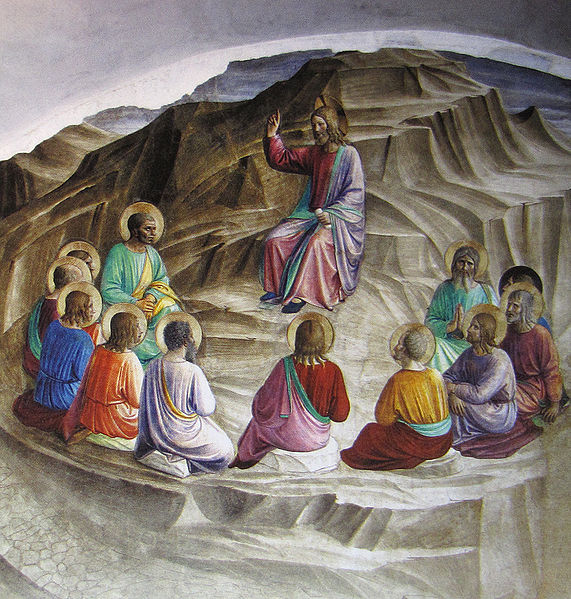
James Tissot The Sermon of the Beatitudes  (1886-1896)

James Tissot The Sermon of the Beatitudes (1886-1896)


This is the closest I found where (even though it is not truly on a plain) Jesus is looking up at his disciples

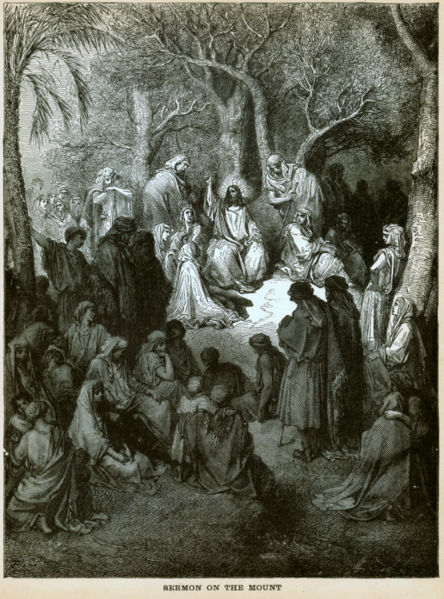
Gustave Dore, Jesus Prechant Sur La Montagne (1865)

Gustave Dore, Jesus Prechant Sur La Montagne (1865)

For broader context it is also followed by the Parable of the Mote and the Beam

Domineco Fetti, The Parable of the Mote and Beam (1619)

Domineco Fetti, The Parable of the Mote and Beam (1619)

And a couple images that reflect the All Saints nature of the day

The Forerunners of Christ with Saints and Martyrs (around 1423) en: Fra Angelico

The Forerunners of Christ with Saints and Martyrs (around 1423) en: Fra Angelico


Greek Icon of the Second Coming (around 1700)

Greek Icon of the Second Coming (around 1700)


Silence

love me forever by syntheses on deviantart.com

love me forever by syntheses on deviantart.com

When the words don’t come
And the rhymes don’t rhyme
And silence creeps into the soul
Though the absence of words feels like an unwanted guest
And the loneliness like a creeping malady
Perhaps, the silence itself is a healing balm
A release from the cacophony that is life
Freeing from the continual chorus of babble
And there in the abyss of nothingness
The rhythm and meaning return
And against the backdrop of silence
The words that were always there return
Finally able to be heard

Neil White, 2013

Images for Reformation Sunday

There are a number of different you can go for Reformation Sunday. These are some I am using:

The Door of the Castle Church in Wittenburg where Martin Luther posted the 95 Theses. The Theses are now engraved in the metal doors.

The Door of the Castle Church in Wittenburg where Martin Luther posted the 95 Theses. The Theses are now engraved in the metal doors.


Lucas Cranach the Elder altarpiece in City Church of Wittenberg (1547)

Lucas Cranach the Elder altarpiece in City Church of Wittenberg (1547)

Detail Left Panel

Detail Left Panel

Detail top center panel

Detail top center panel

Detail Right Panel

Detail Right Panel

Detail Bottom Panel

Detail Bottom Panel

Martin Luther (1523) by Lucas Cranach

Martin Luther (1523) by Lucas Cranach


Jeremiah 14: The Broken Covenant and the Death of the Land

drought18-8b9a6db718dda8f9f968da97316f9c0a2daa3655-s6-c30

Jeremiah 14

The word of the Lord that came to Jeremiah concerning the drought: 

2 Judah mourns
and her gates languish;
they lie in gloom on the ground,
and the cry of Jerusalem goes up.
3 Her nobles send their servants for water;
they come to the cisterns,
they find no water,
they return with their vessels empty.
They are ashamed and dismayed
and cover their heads,
4 because the ground is cracked.
Because there has been no rain on the land
the farmers are dismayed;
they cover their heads.
5 Even the doe in the field forsakes her newborn fawn
because there is no grass.
6 The wild asses stand on the bare heights,
they pant for air like jackals;
their eyes fail
because there is no herbage.
7 Although our iniquities testify against us,
act, O Lord, for your name’s sake;
our apostasies indeed are many,
and we have sinned against you.
8 O hope of Israel,
its savior in time of trouble,
why should you be like a stranger in the land,
like a traveler turning aside for the night?
9 Why should you be like someone confused,
like a mighty warrior who cannot give help?
Yet you, O Lord, are in the midst of us,
and we are called by your name;
do not forsake us!
10 Thus says the Lord concerning this people:
Truly they have loved to wander,
they have not restrained their feet;
therefore the Lord does not accept them,
now he will remember their iniquity
and punish their sins. 
There is a connection between the vision of shalom that the people of God are called to live in and not only their own health, but the very health of the earth around them. The turning away of the people has effected everything and nobody is able to avoid the drought. Even nobles who have the choice wells and access to the best water are no longer able to have their servants successfully draw water. Farmers in their fields are directly affected as their crops are unable to grow and life itself hangs by a thread. Even the wild animals abandon the natural order, does no longer care for their fawns, wild donkeys can find no food foraging in the mountains. Everything is dying in the midst of the drought. And in a turn of lament, whether the prophet or the people call on God. In the tradition of the Psalms of lament they cry out in their distress calling on the Lord to act, to rouse Godself from slumber, to act like God has acted in the past, to demonstrate God’s power. Finally as the land dies and the events of the people’s rebellion is coming to fruition, both in the approaching armies of the Babylonians and in the oppressive lack of moisture which is killing the animals and crops of the fields. Yet the prayer comes too late, God is not willing to quickly and easily accept the words that come before God. Too many times in the past the turning has been superficial and now God has turned God’s back upon the people of the covenant, allowing the negative side of the covenant-the woes-to come to pass. The iniquity and sins will not be forgotten or passed over, forgiveness is not granted, the past is not forgotten.
The wrath of God can be a troubling concept for many, myself included at times, especially the way in which it can be utilized to be a tool of fear and oppression. Yet, there is a very real sense where God does care, where God does take sides and where we need to wrestle with the ways in which forgiveness is not cheap, where reconciliation is often a hard and painful process and where our actions (or inactions) cause pain and harm not only to ourselves but the world around us.

Jeremiah Lamenting the Destruction of Jerusalem by Rembrandt van Rijn 1630

Jeremiah Lamenting the Destruction of Jerusalem by Rembrandt van Rijn 1630

Jeremiah 14: 11-22

11 The Lord said to me: Do not pray for the welfare of this people.12Although they fast, I do not hear their cry, and although they offer burnt-offering and grain-offering, I do not accept them; but by the sword, by famine, and by pestilence I consume them.

13 Then I said: ‘Ah, Lord God! Here are the prophets saying to them, “You shall not see the sword, nor shall you have famine, but I will give you true peace in this place.” ’ 14And the Lord said to me: The prophets are prophesying lies in my name; I did not send them, nor did I command them or speak to them. They are prophesying to you a lying vision, worthless divination, and the deceit of their own minds.15Therefore thus says the Lord concerning the prophets who prophesy in my name though I did not send them, and who say, ‘Sword and famine shall not come on this land’: By sword and famine those prophets shall be consumed. 16And the people to whom they prophesy shall be thrown out into the streets of Jerusalem, victims of famine and sword. There shall be no one to bury them—themselves, their wives, their sons, and their daughters. For I will pour out their wickedness upon them. 


17 You shall say to them this word:
Let my eyes run down with tears night and day,
and let them not cease,
for the virgin daughter—my people—is struck down with a crushing blow,
with a very grievous wound.
18 If I go out into the field,
look—those killed by the sword!
And if I enter the city,
look—those sick with famine!
For both prophet and priest ply their trade throughout the land,
and have no knowledge. 


19 Have you completely rejected Judah?
Does your heart loathe Zion?
Why have you struck us down
so that there is no healing for us?
We look for peace, but find no good;
for a time of healing, but there is terror instead.
20 We acknowledge our wickedness, O Lord,
the iniquity of our ancestors,
for we have sinned against you.
21 Do not spurn us, for your name’s sake;
do not dishonor your glorious throne;
remember and do not break your covenant with us.
22 Can any idols of the nations bring rain?
Or can the heavens give showers?
Is it not you, O Lord our God?
We set our hope on you,
for it is you who do all this.

Perhaps the role of the prophet is not to give up, to be willing to wrestle with God-even when God is unwilling to hear any longer. Moses wrestled with God for the sake of the people several times in the Exodus and God changed God’s mind, and here Jeremiah enters in to once again plead for the people even after God instructs him not to pray for them any longer. Jeremiah refuses to give us, refuses to stay silent. Once again he searches for a way, reminding God that the priests, the prophets and the leaders have failed the people, they have set them on a course for war with Babylon while promising peace. They have trusted in their own strength and the strength of allies like Egypt and have not accepted that it is God’s hand that is moving with the Babylonians and they are to accept their rule for the time being. The Lord is not having any of this, the prophets and leaders will indeed bear the consequences with the people, but there is no turning back from the death that is coming and will soon be all around. Death in the fields, death in the city, death from war and famine and sickness, and the shattering of all that was. The world that the people of Judah know is about to die, they will now be exiles in a foreign land, the remnant of a once proud people.

Jeremiah refuses to give up, returning to the language of lament, searching for hope in the hopelessness. Trying once again to call on God to be God, to be their hope, to save the people not because they deserve it but because it will bring glory to God. Jeremiah fears that if God turns this time the stump will be destroyed to the point it will never rise again, that the people will be wiped out and that death will triumph. Jeremiah continues, even in his own woundedness, to pray for and appeal for the people against the command of God. His love of the people, of Jerusalem and the temple push him to this even though he has been considered a traitor by all of these throughout his ministry. Grace and healing may be coming, but it is not before the people passes through the valley of the shadow of death. With the approaching armies of Babylon death is coming. But we looking back know that God will not turn God’s back forever.

purple rose 01 by picsofflowers.blogspot.com