Author Archives: Neil

Understanding the Constitution of the United States: Article 1 the Legislative Branch Sections 1-6

Image of the U.S. Constitution from http://wvconstitutionaladvocates.com/u-s-constitution/

Image of the U.S. Constitution from http://wvconstitutionaladvocates.com/u-s-constitution/

Even though most people in the United States at some point took a government class where the basics of the constitution and the U.S. form of government were taught, I am aware that often things learned in high school or college are easily forgotten. I often find myself in conversations with individuals, even those who may speak emphatically about defending the constitution, who speak in ways that show they do not understand the U.S. Constitution and the form of government it establishes. This has not been helped by the proliferation of opinions put out across multiple media seem either unaware or who willfully deceive those following them on how the U.S. system of government and legal system works.

I am not a constitutional scholar but I am a person who does have a profound respect for the work of the original crafters of the constitution as well as the long process of amending the constitution. This is both a refresher for me as I re-examine these foundational documents of our republic and an attempt to make the constitution itself easier to understand for those who read it. Also for those who want to effect change within our society it is essential to understand how at a basic level how our government and legal system is structured. If you would like to look at the text of the constitution it can be found at http://constitutioncenter.org/media/files/constitution.pdf.

Article 1 of the U.S. Constitution in summary

Section 1: The first branch of the U.S. government laid out in the constitution is the legislative branch, which is responsible for the establishing of laws to govern the country. The formation of the bicameral (two house) legislative branch was a compromise to address the concerns of both the smaller states who feared that they would not be fairly heard if population was the only means of representation and larger states who wanted greater representation based upon their larger populations.

Section 2: The House of Representatives, the larger of the two parts of the legislative branch where the representation is based upon the population.

Qualifications to be eligible to be elected to the House of Representatives: 25 years of age, citizen of the United States for seven years and an inhabitant of the state where they have been chosen. The Representatives serve two year terms, elected on even number years, and do not have a limit on the number of times they can be re-elected.

The number of members in the House of Representatives is fixed at 435. This number was fixed in the Apportionment Act of 1911 and then tied to the U.S. census in the Reapportionment Act of 1929. Originally within the constitution Native Americans were not counted and African Americans (primarily slaves when the constitution was written) were counted as 3/5 of a person. The constitution was not a perfect document and so individual pieces, like this, had to be amended later. (In this case Ammendment 14 in 1866 readjusted the method for counting for representation, several ammendments to the constitution are specifically working to expand the right to vote and participate in the legal system due to discriminatory practices).

The House of Representatives has the sole Power of Impeachment, the ability to bring charges against a civil officer or government and can do this by a majority vote of the House of Representatives. The House of Representatives does not try the Impeachment, that is outlined in section 3 with respect to the Senate. The division of power within the legislative branch for impeachment proceedings is one of the checks and balances built into the system of government we have inherited.

Section 3: The Senate, the smaller of the two parts of the legislative branch where each state is entitled to two representatives.

Qualifications to be eligible to be elected as a Senator: 30 years of age, a citizen of the United States for nine years and an inhabitant of the state where they are elected.  Senators serve for a six year term (1/3 of the senate is up for re-election at each even number year and do not have a limit on the number of times they can be re-elected).

Since there are two senators for each state the senate has 100 members. The Vice President of the United States serves as the President of the Senate but has no vote except in the case of a tie.

If articles of impeachment are brought from the House of Representative the Senate will try the impeachment proceedings. If the President is tried then the Chief Justice of the United States will preside and it takes 2/3 of the Senate to vote in favor of conviction for the impeached individual to be convicted. Andrew Jackson and Bill Clinton were both impeached but were acquitted in the Senate and therefore had no action taken against them. Richard Nixon technically was never impeached because he resigned before the House could vote on impeachment. The maximum penalty that impeachment proceedings can lead to is removal from office and disqualification for hold any high office in the United States. Impeachment does not remove the possibility of civil or legal proceedings after impeachment, but except in rare cases legal proceedings can’t be brought against a person in and Office of Honor (Representative, Senator, Judge, President, etc. see for example Section 6 below).

Section 4:  Refers to the election of Senators and Representatives which is primarily left to the states to determine the time, place and manner of the elections and it requires the congress to assemble at least once a year. In the seventeenth amendment the treatment of senators and representatives is fixed to occur in the same manner (now a part of our national elections). The Twentieth amendment will fix the time of initial assembly of the congress for the year as January 3rd at noon.

Section 5: Sets the quorum for each house at a majority of its membership and allows for the houses to compel the attendance of absent members. Each house determines its own rules of meeting, can punish members who act disorderly and even expel a member with a 2/3 vote (censure and lesser punishments require only a majority vote). Each house is required to keep a journal of its proceedings that will be published, but may exempt parts that require secrecy. It also requires both houses to not break for longer than three days while congress is in session (so that one house doesn’t by inaction delay the action of the other house).

Section 6: Requires that Senators and Representatives are compensated for their services. Since 2009 the basic salary for a Senator or Representative has been $174,000. It also exempts Senators and Representatives from arrest except in cases of Treason, Felony and Breach of Peace while attending at session of their house, returning to or from their respective house, and they may not be arrested for any speech or debate in those houses. This is also an important concept within the balances of power because it prevents the Executive branch or state or federal authorities from threatening members of the legislative branch with imprisonment for dissenting. Senators and Representatives to preserve the separation of powers cannot at the same time as they serve in the House or Senate assume a role within the executive or judicial branch.

The first six articles provide the foundation for the senators and representatives to do the primary work they are appointed for: the process of making laws and raising and appropriating funds for the functioning of the republic. The process of creating laws, the responsibilities and limits of the legislative authority and the limiting of the authority of the states closes out this article but these topics are detailed enough that they will constitute their own post in this series.


Psalm 26- A Liturgy for the Falsely Accused

The Temple by Radojavor@deviantart.com

The Temple by Radojavor@deviantart.com

Psalm 26

<Of David.>
 1 Vindicate me, O LORD, for I have walked in my integrity, and I have trusted in the LORD without wavering.
 2 Prove me, O LORD, and try me; test my heart and mind.
 3 For your steadfast love is before my eyes, and I walk in faithfulness to you.
 4 I do not sit with the worthless, nor do I consort with hypocrites;
 5 I hate the company of evildoers, and will not sit with the wicked.
 6 I wash my hands in innocence, and go around your altar, O LORD,
 7 singing aloud a song of thanksgiving, and telling all your wondrous deeds.
 8 O LORD, I love the house in which you dwell, and the place where your glory abides.
 9 Do not sweep me away with sinners, nor my life with the bloodthirsty,
 10 those in whose hands are evil devices, and whose right hands are full of bribes.
 11 But as for me, I walk in my integrity; redeem me, and be gracious to me.
 12 My foot stands on level ground; in the great congregation I will bless the LORD.

Many have stood in times where they felt unjustly accused by those in authority or those with power in their lives (whether friends, family, or perhaps in an educational, work or legal setting). In a familiar pattern from the Psalms in this part of the book of Psalms the petitioner and God stand against the judgment they experience from the forces around them. Martin Luther, for example, could reference his own struggles in attempting to be faithful to God’s Word and the persecution he is feeling in 1525 when he expounds upon the Psalm, (LW 12: 184) The Psalm invites us into that struggle with the difference between the life one expects in attempting to be faithful to God and the reality that the faithful one may experience.

The first two verses call upon God to act: to vindicate and to prove. Ultimately the crux of the Psalm is the trust that the speaker has for the LORD. They have tried to walk in a manner that reflects that faith and trust and it is that walk that has led them into this time of trial. The LORD is the one they call upon to act in setting the tables right and restoring the things that have been lost in this time where their way of life has been called into question. In parallel with this prayer to be vindicated is a parallel prayer to be evaluated. They cry on the LORD to weigh their life on the scales of justice and to see if their punishment is just. In the psalmist’s view the struggles they are going through do not fit the life they have tried to live and they open themselves up to God’s evaluation. This is perhaps a terrifying place for many people who are painfully aware of their sins or times they have not been completely faithful but as Beth Tanner can state about this text, “The point here is not to prove oneself, but to demonstrate one’s trust in God’s power of hesed and grace.” (Nancy deClaisse-Walford, 2014, p. 263)

It would be easy to become critical of the tone of this and many other Psalms where the psalmist places themselves in the position of the righteous one who is judged and yet that would miss the point in this Psalm. The Psalms are experienced theology put into prose rather than some type of systematic theology which needs to be consistent throughout. The freedom of the Psalms is the ability to give voice in a faithful way to the world one is experiencing. There will be moments where the Psalms will focus on the writer’s guilt or their need of redemption, but there are also times in the Psalms and in life where the speaker feels unjustly persecuted. The Psalms can provide us a ‘Liturgy for the Falsely Accused’ in the words of William Bellinger and Walter Brueggemann. (Brueggeman, 2014, p. 137) There are times where we need to know that we are innocent, or at least justified if we want to be dogmatic, where we haven’t associated with the wrong people or done the wrong things. Where our life has attempted to closely follow our values and where we do need a God who can judge between us and our persecutors. We want God to discriminate between us and the ones who we feel have acted unjustly. Maybe in the space of the prayer God acts, maybe in the space of the prayer our enemy changes, or maybe in the space of the prayer we are tested in heart and mind and we need to change. Yet, the speaker trusts that God will do something with their words and with their life. God will not remain silent and inactive.

Most of the prayer calls upon God to act on the psalmist’s behalf: to vindicate and to prove and not to sweep them away with the sinners. Yet, in the final two verses we return to the life the speaker is trying to live, a life that is in harmony with the trust they have in their LORD and the integrity in which they have attempted to walk. Even before God’s redemption they will continue to walk in integrity, and to bless the LORD in the worshipping community. They will continue to try to live the life they feel called to live, a life faithful to their calling as a person of the LORD.

Grey Days        

There was a time when the rain fell softly every day
When the cool dampness soaked beyond flesh and bone
And the cold water dimmed the fire of my soul
While the earth around me seemed to drink in the drops
Bursting forth into forests of deep green that blocked out the sun
I am a creature of the sun baked plains and the heat of summer
And the life in the forest made the air too heavy to breathe
Now I’ve returned to my natural habitat, to the place where I can thrive
Perhaps a place to hot and dry for many but it warms my bones
And in this place the fire of my soul was rekindled and burns brightly
Yet, on those grey days where the thunder rumbles and clouds collect
And the lightning flashes across the sky announcing the coming
Of the large grey drops that drench the earth and flood the plains
For a time I am returned to the dampness of that forested place
And the fire within sputters under the impact of the downpour
But in this place of dust and sun the rains last only for a time
Shortly to be replace by the arid heat and the drying wind
But without the grey days, without the chilling rain and cool wind
The life of the plains shrivels and dies and even the creatures of the sun
Need those times of being soaked soul, flesh and bone
To enjoy the life in the midst of the valley of the sun

Technology, News and the Distorted View of Reality

When I was growing up in the 1970s and 1980s the way we received our news was very different from the way we currently consume our news about the world around us. The technology was beginning to change but it was still a time of the three primary commercial networks (NBC, CBS and ABC) with the Public Broadcast Channel. Later Fox would come in on the UHF channels and cable TV would begin to emerge. It was a world of newspapers which were published daily and news programming which would be on at regular morning, evening and nighttime schedules. Perhaps the world moved slower: there were no cell phones, no social media, no internet. It was a world my children wouldn’t recognize and while I don’t want to get caught in a nostalgic idealization of that period I do want to reflect upon the changes that technology and our use of technology has changed us and how the economic models behind these technologies have shaped the news media we consume.

In 1980 a change began within the existing media of television with the advent of CNN, a network devoted to around the clock news coverage. Through a number of events, like the explosion of the Space Shuttle Challenger, the Persian Gulf War and the expanded political coverage of Presidential campaigns CNN and then additional dedicated news channels, like MSNBC or Fox News, began to shift the consumption of news from dedicated news times within the day to more frequent viewing throughout the day. Many organizations began showing news programming throughout the day in their waiting areas instead of networks programming. In the 1990s, as more people began using cable TV, the continual availability of new programming and multiple news channels cause the evolution of new types of news programming designed to keep people tuning into the various stations to keep the revenues for those channels going (since advertising is the economic driver of network and cable news). When news is viewed as a consumer product and the purpose is to keep people continually tuning into new and new commentary programs it needs to generate some type of reaction to keep people engaged. The media long ago figured out that people are emotional creatures and that emotions like anxiety and shared disgust would keep people coming back to their channels. This has led to a distorted perception of reality based on what will continue to get people tuning in and increasing the ratings of the news programming rather than an accurate perception of reality. Most people believe, for example, that the world in which we live is less safe than the world they grew up in but statistically this is not true, but media presents to people a reality that is focused on the most violent and most memorable crimes and creates an anxiety that is not based on a balanced view of our world.

As we entered the 21st Century the age of digital information continues to alter the way we get out news and has continued to lower the threshold of review for publication. With the advent of the internet the average user now has access to incredible amounts of information but relatively few ways to effectively filter that information. Search engines like Google, Bing and Yahoo all use algorithms to attempt to bring relevant information to the searchers screen but just because a website may be relevant does not ensure it is accurate, honest or true. While websites, blogs, twitter feeds and other places have provided access to people who would not have been able to publish through newspapers, journals and print media they also have removed or significantly lowered the peer review process designed to help insure that information is accurate. Especially with the advent of social media sites like Facebook where people can share information and links and the Facebook algorithm attempts to compute what other people want to see based on likes and shares (and an economic model that pays on advertising on a per click basis) it has led to intentionally misleading or incorrect but ultimately profitable reporting that causes people to view articles based on their shared opinions, disgusts and paranoia. In the past election the proliferation of false and misleading articles based upon a person’s political persuasion continued to build the level of anxiety and mistrust in the political and electoral system. It has become increasingly easy to create echo chambers by surrounding ourselves digitally with people who reinforce or enhance our beliefs, biases and prejudices. It has become much easier to criticize another person’s views without ever having to encounter and experience the other person as a real person because of our digital technology. While the availability of information through the internet and the vast data it can provide is a remarkable technological breakthrough the economic engine of the digital reporting cycle and its continual reinforcement of the truth we want to see, rather than having some peer reviewed or other method to attempt to make the news we consume an accurate picture of reality has led to what many are beginning to term a post-truth reality.

In our society news is a consumer product and probably always will be and yet there are a number of ethical questions that we should be asking about the news that we consume. Is there a way to create a better system that provides a news media that reflects reality better than profitability? Are there ways to encourage people to become critical consumers, especially online, where the threshold for publication is incredibly low and there is no accountability for publishing dishonest or misleading information presented as news? Are we willing to settle for a smaller America where our tribe of people is only those who agree with us, who may look like us and believe the same way that we believe in or are we willing to experience the cognitive dissonance of engaging with someone whose reality may be very different than our own? With each new technology there is an ethical lag as we attempt to figure out the ethical implications of the new technology, what would an ethical consumption of digital media look like? What would be the expected ethics of media presented as factual reporting?

These are not easy questions but they are things that we need to wrestle with if we want a nation of citizens that can make informed decisions then we need the information they receive to be accurate. If we are only consuming media that feeds our anxieties, disgusts, prejudices and biases then we will continue to have an increasingly polarized and divided society. Perhaps it is my idealistic nature but I do believe an ethical media is possible, although difficult, in age of digital consumption.


Toward Healing a Broken Republic

Image of the U.S. Constitution from http://wvconstitutionaladvocates.com/u-s-constitution/

Image of the U.S. Constitution from http://wvconstitutionaladvocates.com/u-s-constitution/

As an inquisitive person I am constantly trying to understand what is happening in the world around me and how to describe and faithfully impact it. I try to pay attention to not only the religious tradition I am a part of but also the broader trends in society. In October of this year I was having a conversation with one of my colleagues about the political landscape nationally and locally and what that meant for the church. As a person who generally approaches the world in a positive way I was seeing the challenge as also an opportunity for the church to be a place where we can address some of the issues that have arisen within our society, particularly highlighted in the political elections of 2017. I would later write Wisdom of Story 4: Daring to Imagine a Bigger Story at the conclusion of my working through Brené Brown and Glennon Melton Doyle’s class on The Wisdom of Story and I Pray that I am Wrong… the day after the election of Donald Trump to serve as the President of the United States.

For me this blog is a kind of chalkboard or whiteboard for my mind, it is a place where I can wonder about things both secular and sacred. Over the past week I’ve been writing down things I want to reflect upon on pieces of paper but I’m, at least for now, going to put up some of the ideas here so that I can begin to work on them. A lot of these have emerged out of conversations I have either heard or been a part of in the past week and the list will probably grow. Some may be self-explanatory others are little more than reminders so I don’t forget.

Beyond a Politics of Disgust

Masculinity and Femininity: What Does it Mean to Be a Man or Woman Today and How Has That Changed (and why might it be different across generations)

A Fractured Republic: What are Democrats and Republicans Nostalgic For and Why has their vision diverged so drastically

Living With the Things One Can Change: The Wisdom of Ecclesiastes in an Unsettled Time

Gifts of the Constitution and the Declaration of Independence and Why Knowing these Documents is so Important: Published as

Understanding the Constitution of the United States: Article 1 The Legislative Branch, Sections 1-6
Understanding the Constitution of the United States: Article 1 The Legislative Branch, Section 7: The Process of Making Laws
Understanding the Constitution of the United States: Article 1 The Legislative Branch, Section 8: The Powers of Congress
Understanding the Constitution of the United States: Article 1 The Legislative Branch, Section 9-10: Limiting the Powers of Congress and the Independent States

Expanding the Tribe we hear from: How do we hear the voices of another who differs from us? Perhaps exploring the book of Ruth compared to books like Ezra and Nehemiah

Political Correctness and Common Decency: Political Correctness has often been labeled as a bad thing, but what is it and did we ever have common decency?

What are the civil religions of the United States and is there still a civil religion in a secular, postmodern age

What do Postmodernity, Secularism, Pluralism, etc. have to speak to our current context

Does Digital pluralism necessarily lead to a Post-Truth era

From Nostalgia to Casting a New Dream

The 24 hour digital news cycle, the loss of review, the flood of data and the skewed perception of reality (Or is our addiction to news causing our anxiety on purpose) Coming on December 2, 2016 as Technology, News and the Distorted View of Reality

Shame and Anti-Racism Training

The Fall of Anakin Skywalker and the Rise of the Dark Side in American Culture and Politics

Psalm 25: The Struggle of Faith From Aleph to Tav

The Hebrew Alphabet. Hebrew reads right to left so it begins with Aleph and ends with Tet

The Hebrew Alphabet. Hebrew reads right to left so it begins with Aleph and ends with Tav

Psalm 25

<Of David.>
1 To you, O LORD, I lift up my soul.
 2 O my God, in you I trust; do not let me be put to shame; do not let my enemies exult over me.
 3 Do not let those who wait for you be put to shame; let them be ashamed who are wantonly treacherous.
 4 Make me to know your ways, O LORD; teach me your paths.
 5 Lead me in your truth, and teach me, for you are the God of my salvation; for you I wait all day long.
 6 Be mindful of your mercy, O LORD, and of your steadfast love, for they have been from of old.
 7 Do not remember the sins of my youth or my transgressions; according to your steadfast love remember me, for your goodness’ sake, O LORD!
 8 Good and upright is the LORD; therefore he instructs sinners in the way.
 9 He leads the humble in what is right, and teaches the humble his way.
 10 All the paths of the LORD are steadfast love and faithfulness, for those who keep his covenant and his decrees.
 11 For your name’s sake, O LORD, pardon my guilt, for it is great.
 12 Who are they that fear the LORD? He will teach them the way that they should choose.
 13 They will abide in prosperity, and their children shall possess the land.
 14 The friendship of the LORD is for those who fear him, and he makes his covenant known to them.
 15 My eyes are ever toward the LORD, for he will pluck my feet out of the net.
 16 Turn to me and be gracious to me, for I am lonely and afflicted.
 17 Relieve the troubles of my heart, and bring me out of my distress.
 18 Consider my affliction and my trouble, and forgive all my sins.
 19 Consider how many are my foes, and with what violent hatred they hate me.
 20 O guard my life, and deliver me; do not let me be put to shame, for I take refuge in you.
 21 May integrity and uprightness preserve me, for I wait for you.
 22 Redeem Israel, O God, out of all its troubles.

The Psalms are poetry and many types of poetry rely upon certain forms. One of the forms that Hebrew Poetry seems drawn to is the acrostic, where the poem divides by line or verse by descending letters of the alphabet. Psalms 9 and 10  together form an acrostic poem as do several other Psalms, yet it is a form that lies unseen in the English translations of this Psalm. One of the reasons for using an acrostic is to express a complete thought from A to Z (or from Aleph to Tav in Hebrew).

Many commentators remark upon the disjointed structure of the petitions in this prayer and conclude that the disjointedness comes from the form of the poem (having to start a petition with the next consonant in the alphabet) and divide the Psalm up into distinct units that share themes. Yet, spending some time with Psalm 25, I think the form, content and vocabulary of the Psalm point to a larger picture of the struggle of faith in the space of the ambiguity of life. The Psalm wrestles with the difference between the experience of the faithful one who is praying and their own experience of being put to shame, seeing others who are treacherous succeeding, and wondering about the promises of God’s steadfast love in the concrete experiences of life where that love may seem distant. It is a conversation of faith, not a cheap faith which sprouts up quickly when everything is going right, but the more complex examined faith that still continues to call out to God in the experiences of struggle, guilt and shame.

The petitions begin with the cry out to God and the perceived distance between the life the Psalmist is living and their expectation of what the covenant life would bring. It is a psalm of waiting for the LORD to act and experiencing a time where the Psalmist feels they are, at least for the time, on their own. Their place within the community is threatened by their enemies and their honor and standing is threatened by shame. They have trusted in the LORD and the treacherous ones seem to be prospering. The long struggle of how bad things can happen to good people and the wicked can prosper continues to play out in this Psalm and it is a question of fairness and justice that the scriptures never settle. Yet, the scriptures allow a place for this struggle and for the protest against reality as they are experiencing it.

The petitions in verse four begin to take a new direction within this struggle of reality. The Psalmist cries for God to show them the path they are to walk. They come from the perspective of not understanding the way the world is unfolding before them so they turn their questions back to God, “make me know your ways, teach me your paths, lead me in truth.” The petitioner now moves to being the one requesting guidance, like a student or disciple seeking their master’s wisdom. There is a more introspective tone that emerges as the sins of the past are brought to the seekers mind and they are now the sinner seeking guidance. The petitioner brings to voice their own failings and sins and once again it is to the LORD that they turn, this time for forgiveness. The Psalmist captures the paradox that encompasses life, where in Luther’s famous terms we can at the same time be the sinner and the righteous one calling out for help. So often in the Psalms the life of the poet encompasses the paradoxical reality of being a steadfast one seeking the LORD’s path, the shamed one seeking the LORD’s vindication, the forgiven one who wrestles with guilt and the one who can trust in the LORD’s covenant love even when the treacherous are prospering and causing trouble for the righteous.

In verse twelve the petitions go back to the promises: that God will teach, that God will grant not only prosperity but friendship and will deliver those in trouble from the troubles of the heart and their physical distress. It lifts up before the LORD the promises that have been made and calls upon God to act upon those promises. It presents the difference from the covenant promised and the covenant experienced and asks for God’s intervention to guard and deliver the faithful ones from their foes. The foes may be the foes of the individual petitioner or the foes of the people of God, and yet the trust is that God can and will deliver the faithful ones in their time of need, that the covenant promised will someday become the covenant experienced, and that ultimately the treacherous will not prosper forever. The life of the Psalmist is a life of prayerfully and honestly struggling with the world as they experience it, with their own shortcomings, with their confusion about what God asks of them in their life, with the promises of God and yet holds fast to the trust that God hears and acts. The Psalms allow a space to wrestle with the entire messy reality of life with all of its paradoxes from A to Z (or Aleph to Tav).

Psalm 24- The Coming of the LORD

Altar Paraments created for Easter Lutheran Church in Eagen Minnesota by Linda Witte Henke

Altar Paraments created for Easter Lutheran Church in Eagen Minnesota by Linda Witte Henke

Psalm 24

<Of David. A Psalm.>
1 The earth is the LORD’s and all that is in it, the world, and those who live in it;
2 for he has founded it on the seas, and established it on the rivers.
3 Who shall ascend the hill of the LORD? And who shall stand in his holy place?
4 Those who have clean hands and pure hearts, who do not lift up their souls to what is false, and do not swear deceitfully.
5 They will receive blessing from the LORD, and vindication from the God of their salvation.
6 Such is the company of those who seek him, who seek the face of the God of Jacob. Selah
7 Lift up your heads, O gates! and be lifted up, O ancient doors! that the King of glory may come in.
8 Who is the King of glory? The LORD, strong and mighty, the LORD, mighty in battle.
9 Lift up your heads, O gates! and be lifted up, O ancient doors! that the King of glory may come in.
10 Who is this King of glory? The LORD of hosts, he is the King of glory. Selah

This Psalm, which uses the language of the approach of the Creator to the creation and the approach of the faithful to the hill of the LORD where the worshipper and the worshipped one meet taps into the creation narrative and the wonder of Psalm 8 with the questioning nature of Psalm 15 about who may dwell in the LORD’s presence. Power and promise and presence all come together in the prose of this Psalm. We a poetically brought into the presence of the triumphal approach of the Creator’s return to the earth and the joyous reception of the faithful ones.

The Psalm begins with describing the approaching LORD not as an invader or alien to this world but instead as its founder, shaper, creator and rightful owner. In language, like Genesis 1, where the deep with its chaotic waters are moved over by the Spirit of God and the speaking of God pulls life and land out of the seas and rivers. God is the one who places limits upon the seas and the waters as the book of Job can poetically echo:

Or who shut in the sea with doors when it burst out from the womb?—
when I made the clouds its garment, and thick darkness its swaddling band,
and prescribed bounds for it, and set bars and doors,
and said, ‘Thus far shall you come, and no farther,
and here shall your proud waves be stopped’? Job 38: 8-11

Once the Psalm had used the language of praise to testify to the immense power of the Creator whose dominion extends over all the earth and all its creatures it moves to the place where the creature can meet the Creator. The first two verses are pointing to the descent of the LORD to come to the world God created, but now the pivot turns to the worshipper ascending the hill of the LORD to the tabernacle or temple to participate in the celebration of the LORD’s advent. How does one prepare to receive the ultimate honored guest? As in Psalm 15 the preparation is not cultic but ethical. There are no rituals, no prescribed sacrifice but instead what is called for is a life that is ethically right. Clean hands and pure hearts and lives oriented toward God and not towards other gods and finally words spoken truthfully. Approaching the LORD in worship in the Psalm is connected to a life lived authentically. If anything is left on the altar to be sacrificed it is one’s life, as the apostle Paul can state in his letter to the Romans:

I appeal to you therefore, brothers and sisters, by the mercies of God, to present your bodies as a living sacrifice, holy, and acceptable to God, which is your spiritual worship. Do not be conformed to this world, but be transformed by the renewing of your minds, so that you may discern what is the will of God—what is good and acceptable and perfect. Romans 12: 1-2

Yet, if one is offering up to the LORD a life of clean hands, pure hearts, rightly oriented soul and truthful speech what one receives in return is a blessing and vindication. The Creator sees and honors the gift of the created one and as we heard in Psalm 23 provides for and grants the shelter of a shepherd and the protection of a host even amid conflict.

The Psalm concludes with the image of a King returning to their walled city in triumph as a metaphor to describe the advent of the LORD. The city itself is called to have courage that the long-awaited return of the king will occur. They are to prepare for this coming in hope and courage based on the identity of the one who is expected to return. This is the LORD, the creator, the divine warrior, the rock, the mighty one, the LORD of armies (literal rendering of the LORD of hosts), the LORD who could speak to seas and oceans and rivers and stop their advance. The praise echoes in the certainty of the LORD’s descent not only to the earth but specifically to meet the faithful ones in the holy city. Those with clean hands, pure hearts, rightly oriented souls and truthful tongues sing out in praise at the expected coming of the King of glory.

I Pray That I Am Wrong…

As a person who dearly loves this country and the dream of what it can be I dearly hope that I am wrong….

After an election that has caused long lasting trauma for people on the left, right and in the middle and where fear and anxiety were the dominant emotions we the people elected Donald Trump. I dearly hope that those who voted for Donald are right and I am wrong, that he is somehow better than what he appears to be: a better leader, a better learner, and a better human being. I pray that somehow he can learn that as the President of the United States he is no longer a reality TV star or a business man who maximizes his own personal profit at the cost of many others. I pray that he will neither destroy the credit of the American people with rash economic decisions or with our moral standing in the world. My fear is that he is not the type of man who will put the needs of the people before his own needs but I dearly hope that I am wrong.

As a veteran who gladly committed my service to this country when I was younger and who still has a strong attachment to not only my former regiment but to those who serve in any of the armed services and our allies across the globe, I dearly hope that President Trump will take the time to learn the intricacies of diplomacy and the importance of the promises our country has made in the past. Whether it is the Breton Woods accords which guaranteed commerce across the oceans protected by U.S. naval power or the alliances like NATO which continue to serve a vital role in preserving and protecting and providing a space in which freedom and democracy have a chance. I pray that he can understand the importance of things like the Geneva convention not only for our standing in the world but for the safety of our own soldiers when they are called into action. I hope that he understands that just because the executive branch of the United States government can call upon the complete set of weapons in the U.S. arsenal that force is only used as a last resort and that there are consequences for the type of warfare he so casually talked about in his campaign. I pray that his own seemingly fragile ego does not continually place those who are willing to serve in conflict because of a perceived insult to his person. Perhaps President Trump will be able to enhance America’s standing on the world stage, and for those who elected him to make America great again I pray that you are right and my fears this day are wrong.

As a Lutheran pastor who cares deeply for not only those who are members of my congregation but those well beyond the walls of any Christian community who are my neighbors, I hope that the language of scapegoating that was so rampant in the Trump campaign for president ends and there is no additional harm done. As a white straight male who has not spoken up enough on behalf of my friends and neighbors of color, of different or no religion, who are LBTGQ or are people with disabilities, I apologize. I refuse to see a future that reflects my denomination’s past in 1930s Germany. I will stand with you, perhaps falteringly at first as I learn how to use my voice, but I will not see a future where they came for my Muslim neighbor, but I was not Muslim and I did nothing, then they came for my Latino/Latina brothers and sisters and I did nothing. Granted as a white straight male I probably could coast through with little fear that my own personal status would be impacted, but that is not the America I believe in. I do believe it is self-evident that all men (and women) are created equal as our founding fathers could so boldly state in the Declaration of Independence.

To those who are celebrating this day, please know that almost half of your fellow Americans are mourning. Your version of the American dream and theirs may be somewhat different but I fear that you have elected someone who will not allow either sets of visions for the American dream to prosper. I pray that I am wrong…

But if I am not wrong and Donald Trump is not able to be an effective leader, to learn the role of President and assume the responsibilities that are a part of the office and that he can become a decent human being for the four years of his term then:

I hope that you can pay a fraction of the attention to the electronic communication of the new president that you have paid to Hillary Clinton’s during the past twelve years. Hillary Clinton was far from a perfect candidate but the news story of her emails was probably the key piece in the strategy to win this election but now the bar is set. Does the communication coming out of the office of President befit the office, is it causing harm to America’s security, is it antagonizing movements around the world that put our diplomats and military in dangerous situations? If President Trump’s previous actions on twitter are any indication I fear greatly for the security of our country. Again, I pray that I am wrong.

I hope that you can pay a fraction of the attention that you have paid to Bill Clinton in his affair with Monica Lewinsky to President Trump’s words and actions while in the presidency. Particularly for those of you who elected Trump when you have opposed other presidents on moral grounds I hope that you will apply the same standards for him. We have elected a person to the highest office in the land who, if he was a professional athlete, probably would not be able to play on any professional sports team. I hope you understand the message you sent to our daughters about the type of language that we are willing to tolerate when someone speaks about their bodies. Maybe Trump will be able to learn how to be a person who has the highest respect for women. I have my severe doubts but again I pray that I am wrong.

I fear for the damage that will be done to the U.S. and global economy and not just for my own self-serving reasons. Yes, I fear that the anxiety in the market will hurt my retirement account and could damage the long work of debt reduction I have undertaken in my personal life but my fears are greater for my children’s generation. I fear that people like my son who is autistic will not be able to find coverage for his healthcare needs since Trump and a Republican congress will likely overturn the Affordable Care Act and return us to the free market system of insurance without protections for those who are unable to get insurance. I worry that the trend of Republican presidents to decrease taxes, increase both military spending and the overall budget while reducing revenues will continue to add to the deficit that myself and my children will continue to have to pay back. I worry that the turning away from the advances made in alternative energy sources and an increased reliance on coal and oil will continue to have a negative impact on the world my children will inherit. I pray that I am wrong on this.

This day, like every day before, I will get up and go to work. I will pay my bills, my taxes and make sure my family has food on the table. I will pray for my country and those who have been elected to serve it. Yet, on this day I need to voice my own fears about the man we have elected to be our president. I pray that my fears do not come to pass. Yet, I have not given up working for this country to be the country that I love where all men and women are created equal, where we are a nation that other nations look to as an example of freedom and justice, to be a place where everyone has an opportunity for the pursuit of life, liberty and happiness.

Wisdom of Story: Reflection 4 Daring to Imagine a Bigger Story

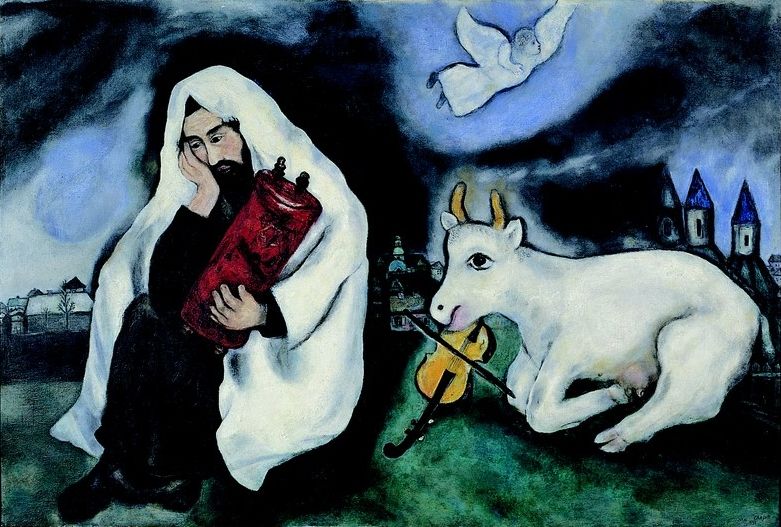
Marc Chagall, Solitude (1933)

Marc Chagall, Solitude (1933)

So, this is the final of the Wisdom of Story reflections after working through this course with Brené Brown and Glennon Doyle Melton (reflection 3 is The Rules which is more of a poetic reflection on the content) and it ended with a profound challenge: what is a community challenge or a global story that you want to write yourself into? This was a hard question because it forced me to think of what are the things going on in my community and in the world, that breaks my heart and to pay attention to that. Where I ended up was highlighted by several conversations I have had over the past weeks and I think it is an area where I need to spend some time both reflecting and creating opportunities to imagine a different big story.

There are so many places where I have seen a growing cultural anxiety paired with malaise in the church, in the communities around us and in the nation. There are so many pieces of this: I believe that we have become addicted to anxiety, almost like a drug, by the continual presence of news and information constantly throughout our lives. Anxiety sells even if it is not an accurate representation of reality- news programs present the worst aspects of the world continually before our eyes and we believe we no longer live in a safe place, even though statistically we are significantly safer than 20 years ago. Like many I have gone through our current election cycle with a bad taste in my mouth because of the ways the candidates have been portrayed. While character matters when elections become primarily about tearing down another person’s character or even demonizing one’s opponent we all lose. I am dismayed by the loss of civility in our public square, where one whose ideas may be different from our own are not only dismissed out of hand but may even be considered ‘un-American’ and in a digital age it is easier to become a troll out to destroy the other person. We live in a polarized and anxious world where there is less of an American dream and more alternate versions of an American nostalgia for a time and place that never truly existed. We become so consumed with work, with taking care of ourselves, with the desire for the next new thing that never quite satisfies that I’m not sure we know what a good life looks like.

That is a huge bundle of tightly wound knots and so how do I begin to untangle it? Well for me it begins with understanding so I can try to imagine a different story. There is a self-reflective component: It will mean thinking critically on my own life and its incessant business and what a good life means for me. There will be a time to listen to other people’s stories and their fears and concerns as well as their hopes and dreams, which is one of the gifts of what I do. As a reflective person, it will also mean that I go back and ask questions both in reading and research but also to question some of the narratives I hear around me.  Honestly not sure where it will ultimately go or look like but I’ve got lots of questions and I’m curious enough to see where they might lead.

Psalm 23- The LORD as Shepherd, Host and Destination

Eastman Johnson, The Lord is My Shepherd (1863)

Eastman Johnson, The Lord is My Shepherd (1863)

Psalm 23

<A Psalm of David.>
1 The LORD is my shepherd, I shall not want.
2 He makes me lie down in green pastures; he leads me beside still waters;
3 he restores my soul. He leads me in right paths for his name’s sake.
4 Even though I walk through the darkest valley, I fear no evil;
for you are with me; your rod and your staff– they comfort me.
5 You prepare a table before me in the presence of my enemies;
you anoint my head with oil; my cup overflows.
6 Surely goodness and mercy shall follow me all the days of my life,
and I shall dwell in the house of the LORD my whole life long.
 
To attempt to write about the best-known Psalm and one of the most loved pieces in all the scriptures is a challenge because of these words have such an emotional resonance in my memory and the memory of many others. Yet, sometimes slowing down to meditate upon these words that I and many others know by heart can be beneficial. These words of trust have been spoken, prayed and meditated on for millennia and the image of the LORD as shepherd and generous host echoes in many places in the bible, in art and in song.

The metaphor of the LORD being one’s shepherd resonates in multiple ways. Primarily the images evoke the literal pastoral image of a shepherd guiding and watching over the sheep and the words of the Psalm (at least in the first four verses) are told from the sheep’s perspective. In the more literal reading of the metaphor the shepherd is the one who continually provides for the needs of the sheep as it seeks food, water, and safety. The shepherd seeks out an environment where the sheep may thrive and provides protection from the threat of enemies (either wild beasts or men). If, as the Psalm indicates in its attribution, this is a Psalm of David it makes sense that the pastoral image would be a readily available metaphor as David himself begins as a shepherd. Yet, within the world of the bible the shepherd also has a metaphorical linkage to those entrusted as rulers and kings. Jeremiah 23:1-7 and Ezekiel 34, for example, can use this metaphor as a condemnation of the rulers who have not cared for the people they ruled and then later in John 10 Jesus can pick up this language by claiming ‘I am the good shepherd’ which would have both the pastoral image as well as the kingly image.

The LORD leading the sheep into an environment where they might prosper for ‘his name’s sake’ reflects upon a long tradition of honoring the name of the LORD the God of Israel. While the Hebrew people lifted the honoring of God’s name as a commandment it also was used as a claim upon God’s identity. For example, in Psalm 79:9 the Psalmist can cry out, “Help us, O God of our salvation, for the glory of your name; deliver us and forgive our sins, for your name’s sake.” To call upon the name of the LORD is to call upon the character of God. In many ways, this Psalm, and many other Psalms and prayers, call upon the name of the LORD to ask God to act in a way that is in the character of God’s provision and care for the sheep of the LORD’s field and the people under the LORD’s care.

One of the most memorable parts of the Psalm is the darkest valley, or as I remember it growing up ‘the valley of the shadow of death.’ God’s presence amid the dark and difficult moments of our life is both a source of great comfort for the sufferer and a challenge to many simplistic theologies that can only find a place for God in the times of joy and prosperity. God’s presence provides security in every part of our lives and the faithful one can lean upon the protective rod and staff in a time of insecurity. The journey of the follower will not always be a time in green pastures and still waters and yet they shepherd leads the sheep through the dangerous and scary places to places where the flock can once again thrive.

In the final two verses the metaphor shifts from the LORD as shepherd to the LORD as host. The follower becomes one welcomed into the LORD’s hospitality, and as one extended hospitality the host also provides protection. In this way, a banquet table can be spread even when one’s enemies may be nearby for the host provides the security which allows the feast to be peaceful. The traveler is welcomed, anointed with oil and given food to eat and rich drink. Goodness and mercy become personified and follow the traveler, pursuing them throughout their life to provide a safe harbor.

Ultimately the one who has led the sheep/follower throughout life is finally the destination. Dwelling in the house of the LORD is far more than just residing there as a priest, but ultimately goodness and mercy have pursued the Psalmist and the LORD has led the Psalmist like a shepherd back to the LORD’s house. St. Augustine’s famous words, “Thou hast made us for thyself, O Lord, and our heart is restless until it finds its rest in you” resonates with Psalm 23. As the book of John loves to use a set of images in John 10: I am the gate for the sheep (10:7); I am the gate (10:9) and I am the good shepherd (10: 11, 14) can ultimately lead in chapter 14:6 to “I am the way, the truth and the life.” Just as John can develop the imagery of the Psalm in a way that points ultimately to Jesus being the destination of the journey for Christians, the Psalm can point back to the LORD the God of Israel being both shepherd, host and destination for the Psalmist and those who would echo these words.