Author Archives: Neil

Transitioning Into Exodus

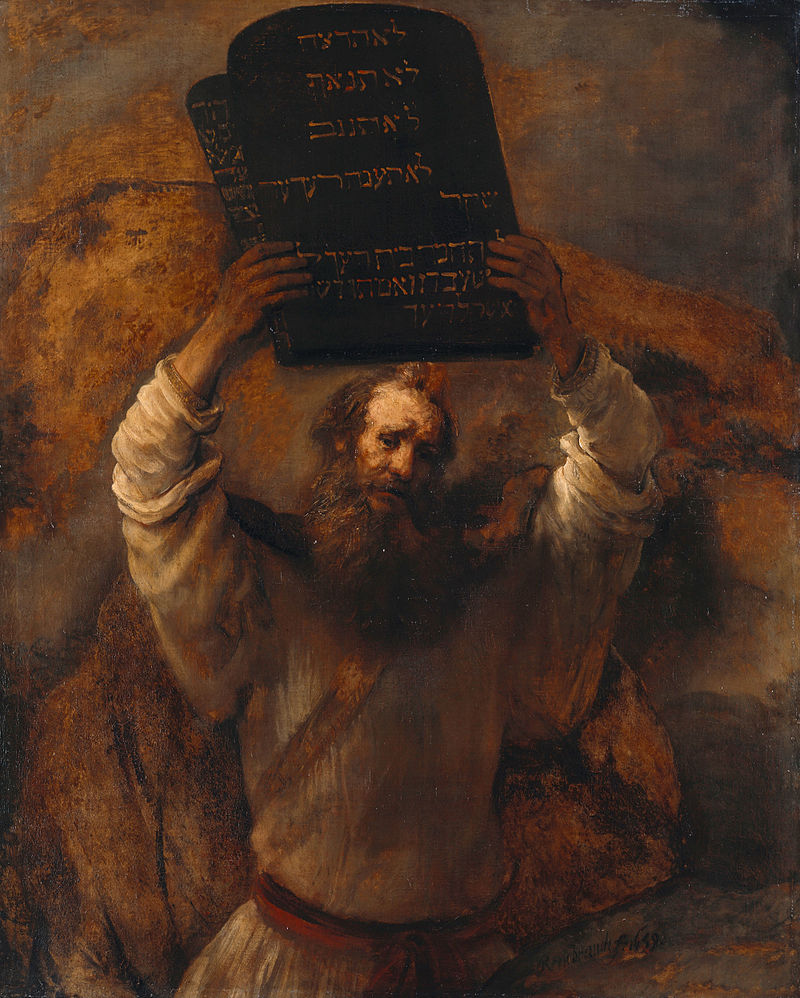
Rembrandt, Moses with the Ten Commandments

Rembrandt, Moses with the Ten Commandments

When I started the biblical reflections portion of this blog almost four years ago, I didn’t realize how much I would learn and how much it would shape my ministry. Many Christians don’t know how to approach the Hebrew Scriptures that many call the Old Testament, and as much as I love the gospels and the letters of Paul I am learning how to hear those writings much more fully as I become more and more familiar with the Psalms, Jeremiah, Deuteronomy, Ecclesiastes, Esther and Haggai. I am understanding more what Dietrich Bonhoeffer meant when he said,

I notice more and more how much I am thinking and perceiving things in line with the Old Testament; thus in recent months I have been reading much more the Old than the New Testament. Only when one knows the name of God may not be uttered may one sometimes speak the name of Jesus Christ. Only when one loves life and the earth so much that with it everything seems lost and at its end may one believe in the resurrection of the dead and a new world. Only when one accepts the law of God as binding for oneself may one perhaps sometimes speak of grace. And only when the wrath and vengeance of God against God’s enemies are allowed to stand can something of forgiveness and love of enemies touch our hearts. Whoever wishes to be and perceive too quickly and too directly in New Testament ways is to my mind no Christian. We have already, discussed this a few times, and every day confirms for me that it is right. One can and must not speak the ultimate word prior to the penultimate. We are living in the penultimate and believe the ultimate. (DBW 8: 213)

As I have wrestled with some difficult pieces of the Bible it has caused me to think about ethics, faith, our current world and so much more. For me this is the more challenging way but it has also been incredibly rewarding. Finishing Psalms 21-30 as a transition between books now I stand ready to begin another large piece. Next will be the book of Exodus, the second of the Pentateuch that I have approached. It is a book that I am more familiar with than I was with Jeremiah or Deuteronomy when I began and it is more of a narrative than any of the books I have done previously. I have two trustworthy companions for the journey. Since this is one of the central books of the Torah and the defining drama of the Jewish people I am delighted to have Rabbi Jonathan Sacks’, Covenant and Conversation: A Weekly Reading of the Jewish Bible as he reads through Exodus: The Book of Redemption as one of my primary dialogue partners. I will also be taking along Carol Meyers commentary on Exodus from the New Cambridge Bible Commentary Series. I have other resources that I have read in the past or that are on my shelf that may also be a part of this journey. With the forty chapters of Exodus the hope is to make the journey in approximately forty weeks, but as journeys go there are often unforeseen stops along the way. I am looking forward to this next exploration as I reenter the journey of the people of Israel from Egypt into the wilderness, from slavery into becoming the people of God and seeing how their journey and faith continue to shape and inform my own.

Psalm 30- The Life of Praise

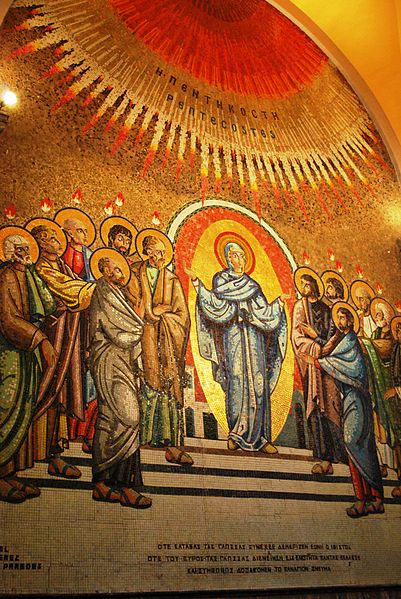
Mosaic Mural of Pentecost by Manuel Perez Paredes in Nuestro Senor del Veneno Temple, Mexico City

Mosaic Mural of Pentecost by Manuel Perez Paredes in Nuestro Senor del Veneno Temple, Mexico City

Psalm 30

<A Psalm. A Song at the dedication of the temple. Of David.>
 1 I will extol you, O LORD, for you have drawn me up, and did not let my foes rejoice over me.
 2 O LORD my God, I cried to you for help, and you have healed me.
 3 O LORD, you brought up my soul from Sheol, restored me to life from among those gone down to the Pit.
 4 Sing praises to the LORD, O you his faithful ones, and give thanks to his holy name.
 5 For his anger is but for a moment; his favor is for a lifetime. Weeping may linger for the night, but joy comes with the morning.
 6 As for me, I said in my prosperity, “I shall never be moved.”
 7 By your favor, O LORD, you had established me as a strong mountain; you hid your face; I was dismayed.
 8 To you, O LORD, I cried, and to the LORD I made supplication:
 9 “What profit is there in my death, if I go down to the Pit? Will the dust praise you? Will it tell of your faithfulness?
 10 Hear, O LORD, and be gracious to me! O LORD, be my helper!”
 11 You have turned my mourning into dancing; you have taken off my sackcloth and clothed me with joy,
 12 so that my soul may praise you and not be silent. O LORD my God, I will give thanks to you forever.

This is a Psalm of praise but as Rolf Jacobson also can state it is a Psalm about praise. (Nancy deClaisse-Walford, 2014, p. 298) Psalm thirty with its poetic polarities looks at what a life of praise might look like and how one’s experience of God’s deliverance can lead to a life where one’s soul can praise and not be silent. The Psalm also moves beyond the individual Psalmists praise to the community’s experience of the deliverance of God and the attribution of the Psalm as a song at the dedication of the temple can let us wonder how the words originally written by one speaker now gets echoed to the faithful ones through their testimony and becomes reflective of a communal faith at the dedication of a place of worship. Praise leads the person not to remain silent, to proclaim their life before the gathered community and ultimately to dedicate a place where God’s name can be praised.

The superscription which lists the Psalm as being used in the dedication of a temple has two possibilities in ancient Israelite and Jewish writings: the dedication of the second temple in 515 BCE (as described in Ezra 6) or the rededication of the temple after the Maccabean revolt in 165 BCE after it had been defiled by Antiochus Epiphanes (which Hanukah and the books of Maccabees talk about). (Nancy deClaisse-Walford, 2014, p. 289) In either case the community has come out of a time where the LORD appeared to hide his face and remove the protection from the people and yet ultimately the people stand in the position of being renewed and redeemed from either captivity or persecution. In using these words in the position of praising God with the dedication of a new (or renewed) temple the people take the experience of the Psalmist and the words of praise and relate them to the experience of the Jewish community as they emerge from the shadow of oppression and the threat of death.

The Psalm itself bursts with praise from the writer’s experience of redemption. From the very beginning the poet show how their LORD saved them from the point of death. The language is full of images reflecting a struggle for life against the possibility of death. Being drawn up, brought up from Sheol, having one’s life restored from among those who have gone down to the Pit: these are all ways of representing the near-death experience that the Psalmist trusts that God has redeemed them from. So, the Psalmist feels compelled not only to tell and praise but to command others to praise and give thanks as well. In sharing their experience and song they begin to teach the community how to sing praises to the LORD and to give thanks to his holy name.

In the center of the psalm is the testimony of a life that has forgotten praise and which became comfortable in its complacency. The Psalmist, like many in our own time, made security their idol and they began to trust in their own strength rather than the LORD who had provided for them. They began to believe that they would never be moved. Yet, this is where the LORD hides the protecting and benevolent face of God. To many people who believe God only brings prosperity and blessing this may indeed feel like what Martin Luther would call ‘the alien work of God’: the actions of condemnation, judgment or punishment. Or as Dietrich Bonhoeffer could say in a 1944 letter to Eberhard Bethge,

Thus our coming of age leads us to a truer recognition of our situation before God. God would have us know that we must live as those who manage their lives without God. The same God who is with us is the God who forsakes us (Mark 15: 34!) (DBW 8:479)

The Psalmist describes the descent into the Godforsaken place that leads them to pleading for life. The Psalms come from a time before the Jewish people would even begin thinking of a resurrection and so the ending of life is the ending of praise. Death silences the songs of the faithful but even at the edge of the abyss the faithful can cry out. They know that God’s anger will pass, that joy will come in the morning. That God can and will act to bring life out of death, hope out of despair, turn mourning into dancing and brokenness into healing.

So, the Psalmist and the community that can echo these words learn to praise and not be silent. They participate in a faith in a redeeming God who delivers the faithful ones in their time of trouble. Having participated in the renewal of life after the brush with death, persecution or destruction they learn that it is because of the LORD that they shall never be moved. As St. Paul could echo this idea in a later time, talking to the early followers of Jesus, ‘that neither death, nor life, nor angels, nor rulers, nor things present, nor things to come, nor powers, nor height, nor depth, nor anything else in all creation, will be able to separate us from the love of God in Christ Jesus our LORD.” (Romans 8.38f.) And as the faithful gather together in the places dedicated to praising and giving thanks to God forever as the old song says, “How can they keep from singing.”


Understanding the Constitution of the United States: Article 1 Section 9-10 Limiting the Powers of Congress and the Individual States

Image of the U.S. Constitution from http://wvconstitutionaladvocates.com/u-s-constitution/

Image of the U.S. Constitution from http://wvconstitutionaladvocates.com/u-s-constitution/

These final two sections limit both the powers of the congress in passing laws as well as the powers of individual states as they construct their state constitution and legal systems.

Section 9:

The first clause of section 9 is now obsolete but it prevented the congress from interfering with the slave trade until 1808 but did allow for the taxation of the slave trade. The constitution is not a perfect document nor were the founders perfect. This is one of the places where we see the necessity of being able to amend the constitution.

The writ of habeas corpus prevents unlawful detention or imprisonment except in cases of rebellion or invasion.  President George W. Bush’s administration attempted to argue that this provision allowed for the detainees at Guantanamo Bay outside the jurisdiction of habeas corpus but the Supreme Court overturned this action in the case of Boumediene vs. Bush.

The congress cannot pass a bill of attainder where a person or group can be declared guilty of some crime and punished without a trial.

The congress cannot establish a uniform tax on individuals based only on their count within the census, taxes can be based upon income and other factors but there is no tax merely for being within the United States.

No tax can be passed on commerce between states.

No preference shall be given to imports entering in one state’s ports over another’s and vessels traveling from one state to another must not be made to pay duties or tariffs to another.

No money may be withdrawn from the treasury except through the sequence of appropriations and laws and an accounting of the receipts and expenditures of the U.S. government must be published.

No title or nobility shall be granted by the United States and no person in office shall accept any gift, salary, office or title from a foreign government without the consent of congress.

Section 10: Limiting the Power of Individual States

States may not:

– enter into treaties, alliances or confederations

-print their own coin

– pass any bill of attainder (see section 9)

-pass any law that makes something that was legal when it occurred punished as illegal after a new law has been passed

-grant any titles of nobility

-impose duties on imports or exports (except to provide for the execution of the state’s inspection laws)

-Lay a duty of tonnage (a fee for being able to use a port)

-keep troops or ships of war

– Enter into agreements or compacts with other states or foreign powers or engage in war.


The Irrational Pieces of Our Identity: A Reflection on the Departure of the San Diego Chargers

la-chargers

Today I’m heartbroken. It isn’t for any particularly rational reason. Others today are worrying that they may lose their health coverage as congress continues its movement to repeal the ACA (Affordable Care Act known as Obamacare to its foes). Some are worried about the approval hearings for many of the Trump cabinet picks who if approved may prove threatening to their civil rights. Both of those are rational fears that some of my friends have today. Yet, today my heartbreak comes from that irrational part of my identity that comes from that almost tribal affiliation that a person has with a sports team. For those who enjoy sports it can be an uplifting and heartbreaking drama as you root for a team, a place, individual players and ultimately you give something of yourself to them. My affiliation has been irrational from the beginning. Even though I have never lived in San Diego, have only been in their stadium once and have only visited the city a couple of times I have been a San Diego Chargers fan for decades. How did a person who grew up in Texas and who has never lived on the West Coast end up rooting for a California team? I’ve told the story to many people, and I believe it is true, that I really think that sometime in my preteen or teenage years I decided I liked the uniform. Growing up in Texas in the 80s, and now living in Frisco, Texas where the Dallas Cowboys have their training facility I should, by all rights, be a Dallas Cowboys fan but somehow through living in Louisiana, Iowa, Wisconsin, Arkansas, Oklahoma, Nebraska and once again in Texas that loyalty has stuck. I have rooted for individual players like LaDainian Tomlison or Philip Rivers. I have wanted to like their coaches even though by the end of both Norv Turner and Mike McCoy’s tenures I was beginning to lose patience. I rooted for them to get the new stadium that someday I dreamed of being able to finally afford a trip to San Diego and tickets to a game to enjoy. Even though I have multiple jerseys, many shirts and hats and have paid to have coverage of their games here I know that I am not the type of fan that finances NFL teams anymore. Yet, even still, some part of my irrational identity was and to some level still is invested in them.

The decision to move the San Diego Chargers away from the city of San Diego after 56 years must have been a difficult one and I can at some detached level understand the frustration the team’s ownership has felt for the last several years attempting to find a way to build a stadium that is comparable to the other stadiums that are either built or being built across the NFL, not to mention the large stadiums built for college teams. I do believe that part of the appeal for me with the Chargers was San Diego and not only the beautiful location of the city and the tourist orientation of the city but also the similarities between it and my city I grew up in, San Antonio. Both are military cities, San Antonio is an Air Force/Army city while San Diego is Navy/Marine Corps, both have tourism as primary industries and both were large enough to support a professional team and yet still small enough to feel smaller than the Los Angeles, New York, Chicago, and even the Dallas/Fort Worth Metroplex where I currently live. I like rooting for the smaller market team, it felt a little like rooting for the underdog. I suppose having lived on the opposite side of Louisiana from New Orleans I could’ve picked up rooting for the Saints in the early 90s, or living in southern Wisconsin in 2002-03 I could’ve picked up rooting for the Packers. I know what it is like to be on the receiving end of a new team arriving since I lived in Oklahoma City when the Thunder arrived and they became one of the teams I rooted for and at times I would feel torn as they played the Spurs which I grew up rooting for.

What comes next for this unsettled irrational piece of my identity? At this point I don’t know. Perhaps as this year unfolds it will become clearer. Will I become the fan of the LA Chargers that I have been of the San Diego Chargers or will I migrate to some other team and some other group of players? I enjoy the game and the strategy of football and the level of play that is a part of the professional game so I doubt I’ll stop watching all together. But there is a sense of loss today. I can only imagine what those who live in San Diego and who regularly attended the games, even over the last couple dismal seasons, must feel.

Dan Fouts, the hall of fame San Diego quarterback said today that “the San Diego Chargers are dead” and today that is what it feels like. I was fortunate to have them going through one of their great stretches in a challenging time in my personal life and my career and I have a lot of memories of coming home and looking forward to that three to four hours where I could plug into their game with thousands of other fans and root for them in a time where they dominated the AFC West. Even the past two years with all the injuries and inconsistencies I have doggedly seen the potential in this team which seemed to fight hard each game, even when they seemed to find uncanny ways to lose in the end. I’m not going to go out and throw away my Chargers gear, at least not at this point but I am frustrated. I know that at the end of the year I intentionally did not buy any new jerseys or hats or gear knowing that this might happen. Like many in the San Diego Chargers tribe there is a sense of being heartbroken, betrayal and grief. Ultimately life will go on, but as with all grief it changes things.

Psalm 29- The Thundering Voice of God

Supercell Thunderstorm over Chaparral, New Mexico on April 3, 2004

Supercell Thunderstorm over Chaparral, New Mexico on April 3, 2004

Psalm 29

<A Psalm of David.>
 1 Ascribe to the LORD, O heavenly beings, ascribe to the LORD glory and strength.
 2 Ascribe to the LORD the glory of his name; worship the LORD in holy splendor.
 3 The voice of the LORD is over the waters; the God of glory thunders, the LORD, over mighty waters.
 4 The voice of the LORD is powerful; the voice of the LORD is full of majesty.
 5 The voice of the LORD breaks the cedars; the LORD breaks the cedars of Lebanon.
 6 He makes Lebanon skip like a calf, and Sirion like a young wild ox.
 7 The voice of the LORD flashes forth flames of fire.
 8 The voice of the LORD shakes the wilderness; the LORD shakes the wilderness of Kadesh.
 9 The voice of the LORD causes the oaks to whirl, and strips the forest bare; and in his temple all say, “Glory!”
 10 The LORD sits enthroned over the flood; the LORD sits enthroned as king forever.
 11 May the LORD give strength to his people! May the LORD bless his people with peace!
 
What language do we use to praise God and where does it come from? I know for many contemporary Christians there is a fear of using the secular language or language that may come from a mythological or another religion’s background. Yet, here is Psalm 29 which uses the language that the Canaanites used to talk about their god Baal and repurposes that praise in a way to explicitly and repetitively talk about the LORD. In our desire to ascribe to the LORD glory and strength what words, what language and what images shall we use? How do the metaphors capture some piece of what the LORD’s strength and power is? One of the gifts of the Psalms is the way in which it stretches and challenges the ways in which we can poetically allow ourselves to talk about God.

The metaphorical exploration of the power of God’s voice as a thunderstorm is a potent image on its own. The powerful image also takes on a polemical context when paired in a Canaanite environment when their primary god Baal is a storm god who battles the chaotic sea (Yam). In a bold move the poet who puts these words on paper takes the primary image of strength of the god of the surrounding nation and usurps the image to talk about the voice of the LORD. All the other heavenly beings are summoned from the beginning to honor the LORD and to assume their proper subservient positions. The unimaginable power of the mighty storm which can strip the forests are or which can break the mighty cedars of Lebanon is now one attribute of the LORD’s strength.

To use the language of the surrounding world as a part of the language we use to praise God is necessary and yet like all metaphors it has its limits. The Psalms never pretend to be a systematic theology but rather a window into the ways in which God has been experienced. The metaphors can capture our imaginations as ways, as in this Psalm, to give praise to God. In a Psalm where the voice of the LORD is emphasized seven times the only word spoken is reserved for those in the temple. We, like those in the temple, use our own limited words to try to proclaim, “Glory!” The bible wants to use the language it can muster to bring honor and praise to the LORD, and if it means redirecting language which the people of the LORD believed was misused to worship other gods then they would repurpose and recast those words to bring honor and praise to their God. To echo another poet quoted by Paul in Philippians they wanted to see that time when “every knee should bend, in heaven and on earth and under the earth.” (Philippians 2. 10)

Psalm 29 celebrates the power of the LORD with all its destructive might but ultimately that power is wielded so that the people may be at peace. As in Psalm 46 where the bows are broken and spears are shattered and shields burned to make wars cease, so here the incredible powerful voice of the LORD is wielded to bring the people peace. As Rolf Jacobson can state, “God’s strength quells the warring madness of the children of Adam and Eve. (Nancy deClaisse-Walford, 2014, p. 286) Until the days to come that the prophet Isaiah could dream of when swords are turned into plowshares and spears into pruning hooks (Isaiah 2.4) and where the voice of the LORD blesses the people with peace and all the nations stream to the house of the LORD we live in the expectation for the time when the voice of the LORD’s immense power thunders across our world, strengthens the people, blesses us with peace and all can proclaim, “Glory!”

Understanding the Constitution of the United States: Article 1, Section 8: The Powers of the Congress

Image of the U.S. Constitution from http://wvconstitutionaladvocates.com/u-s-constitution/

Image of the U.S. Constitution from http://wvconstitutionaladvocates.com/u-s-constitution/

Section 8: Powers of the Legislative Branch

People often blame the President of the United States for the national debt, and while there are some places where the executive branch does influence and in some cases (war for example) cause spending it is the legislative branch that is responsible for taxation, borrowing money and establishing the budget. The first several of the enumerated powers of the legislative branch deal explicitly with this:

The congress is to:

-To Collect Taxes, duties, imposts and excises to provide income for the federal government

-To borrow money on the credit of the United States

-To regulate commerce with foreign nations and internally

The congress establishes the tax code, sets any fees and duties for goods imported into the country as well as fees for the use of federal resources. Congress is responsible for borrowing money, and this has been an issue recently when the congress has shut down the government by refusing to borrow money or to pass a budget. When these actions have downgraded the credit rating of the U.S. government it also is the congress’ responsibility. Congress is responsible for trade within the United States and across the borders and the states are heavily limited in their ability to impact interstate or international trade in ways that would be an impediment for other states (see section 10).

The next enumerated power deals with how a person becomes a citizen of the United States. The executive branch can, for example, make a case for comprehensive immigration reform but ultimately it is the House of Representatives and Senate who is empowered to set the rules for how a person can legally become a citizen. The system as we have it today, with all of its flaws, is a result of the decisions of the legislative branch.

The next set of enumerated powers deals with the currency of the United States which also falls under the responsibilities of the congress. As enumerated in the constitution:

-The congress establishes laws on the subject of bankruptcies

-The congress has the power to coin money, or to determine how much money is printed in the United States and the value of that currency as well as establishing the standards for weights and measurements used in trade and commerce

-The congress is also responsible for protecting the integrity of the currency of the U.S. by providing for the punishment of counterfeiting the securities and coin of the U.S.

Bankruptcy came into the United States system from its precursor in the English code of law, although as it developed in the United States it moved from being a quasi-criminal act to being a system to allow businesses and individuals to focus on repaying the debts after suffering a heavy loss. U.S. bankruptcy code has been amended several times, most recently with the 2005 Bankruptcy Abuse Prevention and Consumer Protection Act. The congress also determines how much money the U.S. Mint will print and what the value of that currency is. The value of U.S. currency is based upon the trust of the people for the government, not on any gold or silver or other standard. Even without a gold standard the U.S. currency has traditionally been viewed as a safe commodity and a standard currency for trade throughout the world. The congress also is responsible for ensuring that the weights and measures used for trade throughout the country are consistent so that a bushel in Texas is the same as a bushel in Wisconsin for example. Finally they are responsible for ensuring that the currency of the United States is not counterfeited. This is done in multiple ways, through the elaborate design of U.S. currency and through law enforcement agencies like the Secret Service.

The next two enumerated powers also are related to the promoting commerce, communications and providing a place where intellectual property is protected

-They are responsible for establishing the postal system and the roads that the postal system will use.

-They are to promote the progress of science and the arts by providing a trademark and copyright system to protect the investment of scientists and artists in their writings and discoveries.

In creating a postal system and a network of roads for inexpensive communication helped to facilitate the nations expansion westward. The establishment of trademark and copyright law also was instrumental in the ability of intellectual property to be protected. Trademark law, mainly defined under the Lanham act, prevented the use of source-identifying mark by another to utilize that brand’s name or popularity. For example, if you purchase a pair of shoes with the Nike swoosh on it you are anticipating that it was designed, manufactured and marketed by Nike and is not an imitation. Copyright law protects the intellectual property and is defined in the Copyright act of 1976.

-They constitute tribunals (courts) lower than the supreme court. In recent years this has become an area of struggle between the two parties and between the executive branch. Congress has frequently held lower courts vacant rather than hold hearings on candidates that the executive branch recommended that they didn’t want to act upon. Yet, the constitution of the lower courts is an important part of the ideal of establishing justice and insuring domestic tranquility as outlined in the preamble of the constitution.

Most of the remaining enumerated powers relate to providing for the common defence:

-They define and punish piracy and felonies committed at sea

-They have the power to declare war, approve treaties and penalties after a war and establish the rules concerning prisoners captured in war

-They provide for the funding of the U.S. military (both Army and Navy are established in the constitution)

-They also create the laws that the military forces operate under (the Uniform Code of Military Justice)

-They also provide for the calling forth of a militia (the original military of the United States had a very small professional army/navy very different than the U.S. Military’s current structure but this is where the National Guard/Reserve components of the military come from). The congress is also responsible for organizing, equipping and disciplining the militia.

-They are responsible for setting aside (with the cooperation of the states) federal properties to be used as military installations, dock yards, and other needed buildings.

The final enumerated power was included to make space for unforeseen legislation that the congress would need to enact. It was a controversial addition to the constitution but ultimately the necessary and proper clause, as it is known, because some, like Patrick Henry, believed it would lead to limitless appropriation of power by the federal government, but it was included over these arguments giving congress the power to make any laws which are necessary for the execution of the above powers.
Psalm 28- Can You Hear Me Lord?

Can You Hear Me by jinzilla@deviantart.com

Can You Hear Me by jinzilla@deviantart.com

Psalm 28

<Of David.>
 1 To you, O LORD, I call; my rock, do not refuse to hear me, for if you are silent to me, I shall be like those who go down to the Pit.
 2 Hear the voice of my supplication, as I cry to you for help, as I lift up my hands toward your most holy sanctuary.
 3 Do not drag me away with the wicked, with those who are workers of evil, who speak peace with their neighbors, while mischief is in their hearts.
 4 Repay them according to their work, and according to the evil of their deeds; repay them according to the work of their hands; render them their due reward.
 5 Because they do not regard the works of the LORD, or the work of his hands, he will break them down and build them up no more.
 6 Blessed be the LORD, for he has heard the sound of my pleadings.
 7 The LORD is my strength and my shield; in him my heart trusts; so I am helped, and my heart exults, and with my song I give thanks to him.
 8 The LORD is the strength of his people; he is the saving refuge of his anointed.
 9 O save your people, and bless your heritage; be their shepherd, and carry them forever.
 
There is an intensity and beauty to this Psalm in its movement from crying to be heard to blessing the LORD who has heard. We can never enter the original Psalmist’s world and know who their enemies are or what is the crisis they are experiencing or how long they cry before they know that the LORD hears and responds, and yet we have their words which can echo our own crises and cries. The life of faith can inhabit this wide space between the desperate cry and the confident trust of one who has been answered. Faith does not exempt the faithful one from these times of crisis, but it does give the faithful petitioner a Faithful One who they trust will hear and answer their calls.

The intensity of the petitioner’s prayer is carried by the verbs focused on hearing: “I call, do not refuse to hear (literally do not be deaf), if you are silent” and the additional contrast between the LORD’s role as the petitioner’s rock and their destination if their rock proves untrustworthy, the pit. The psalmist cries out to the LORD, their rock, because the LORD is the only one who can deliver them. This cry is both an individual cry for help but also has the connotation of worship with lifting up hands toward the sanctuary. The Psalm doesn’t bargain with God but instead attempts to lift up the desperate reality that the Psalmist finds themselves within. If God does not rescue them from the wicked their life will end. The words of the Psalm 28 point to a life or death reality and wait upon the LORD for deliverance.

In contrast to the words of the Psalmist are the words of the wicked who speak peace while plotting mischief. The wicked often masquerade as the righteous and yet the Psalmist can point to the “fundamental disjunction between words, intentions and deeds.” (Nancy deClaisse-Walford, 2014, p. 276) The wicked here are portrayed as those who do not ‘regard the work of the LORD,’ who seem to easily inhabit that space of God’s perceived silence with their own certainty that their words will go unpunished. They fill the pause in God’s perceived works with their own evil works and while the Psalmist wants the LORD to repay the evildoers for their works he also wants to ensure that he is not swept away along with them. Do not mistake my words for those of the evildoers who oppress me, do not mistake my work for their work or my deeds for their deeds. The work of the wicked is contrasted with the work of the LORD and the trust is that their disregard for the LORD’s working will result in their own destruction.

The space between verse five and six, the space between the LORD will break them down and blessed be the LORD who has heard is unknown. During that time the one praying holds onto the promise of the LORD’s hearing and the remembrance of the way the LORD has acted for the faithful ones in the past. Yet, the Psalm takes us across the unknown span of time to the resolution where God has acted, where the Psalmist can rest because God has provided them safety and strength, God did hear and act and save. It is this space where the Psalmist can utter the words of praise for the LORD who is faithful to the promises that were made. Now the Psalm moves beyond the individual to the community that calls upon God for their inheritance as well as guidance. The LORD is called upon to be their shepherd (which also has royal/kingly connotations in the Hebrew Bible) and to watch over and lead them forever. Perhaps, like in Psalm 23, the people will again find themselves in the darkest valley needing to cry out for the LORD to hear and rescue them again and then once again the intensity of the beginning of this Psalm may be a part of the movement again to that time when the LORD has heard and acted.

Seeking Christmas

 It isn’t with the Christmas tree
Or presents wrapped for all to see
St.Nick, he didn’t bring it here
Nor Frosty of the Grinch I fear
 
It isn’t in the shopping mall
Nor songs that sing our ‘Deck the Hall’
Or houses decked in Christmas lights
Or people packed on holiday flights
 
Family and friends, feast and gift
Do comfort and my spirits lift
Yet sometimes all the noise and light
Distracts me on this silent night
 
From Joseph’s trip from Galilee
And his new wife, blessed Mary
From Jesus in a manger lay
For no room was found on his birthday
 
Messiah, the Word of God, the Light
That came upon that Holy Night
When the angel proclamation began
Peace on earth, good will to man
 
Come let us go and seek and tell
This child who is Emmanuel
The creator to creation come
A new covenant of grace begun
 
To seek with Magi Bethlehem
To see the king or the great ‘I am’
To ponder deep within our heart
The words the shepherd did impart
 
For that is what I seek this year
In the middle of the holiday cheer
The place where heaven comes to earth
To fill our hearts and souls with mirth

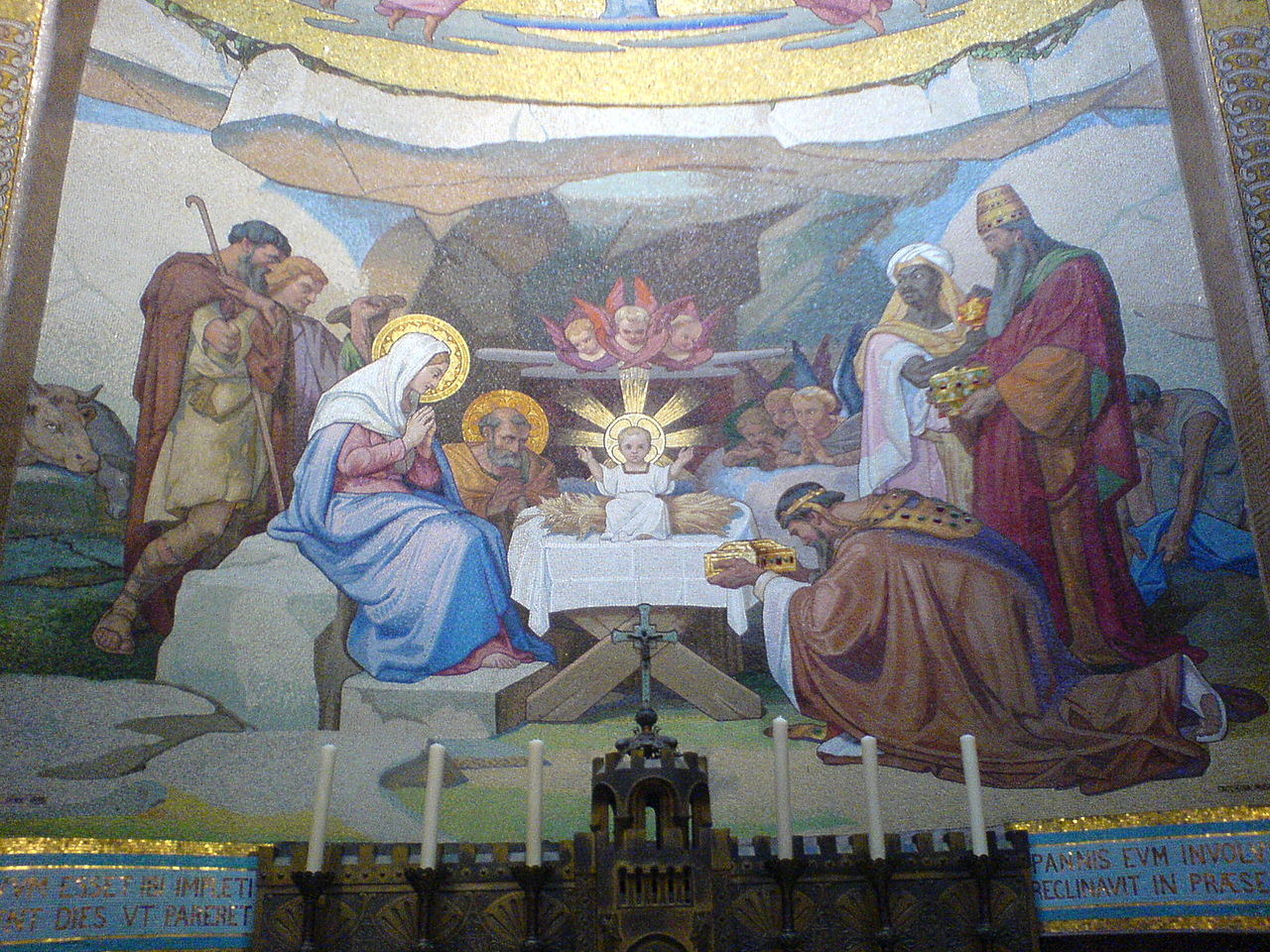
Mosaic in the Rosary Basilica, Lourdes

Mosaic in the Rosary Basilica, Lourdes

Psalm 27- Faith in an Age of Anxiety

The Temple by Radojavor@deviantart.com

The Temple by Radojavor@deviantart.com

Psalm 27
<Of David.>
 1 The LORD is my light and my salvation; whom shall I fear? The LORD is the stronghold of my life; of whom shall I be afraid?
 2 When evildoers assail me to devour my flesh– my adversaries and foes– they shall stumble and fall.
 3 Though an army encamp against me, my heart shall not fear; though war rise up against me, yet I will be confident.
 4 One thing I asked of the LORD, that will I seek after: to live in the house of the LORD all the days of my life, to behold the beauty of the LORD, and to inquire in his temple.
 5 For he will hide me in his shelter in the day of trouble; he will conceal me under the cover of his tent; he will set me high on a rock.
 6 Now my head is lifted up above my enemies all around me, and I will offer in his tent sacrifices with shouts of joy; I will sing and make melody to the LORD.
 7 Hear, O LORD, when I cry aloud, be gracious to me and answer me!
 8 “Come,” my heart says, “seek his face!” Your face, LORD, do I seek.
 9 Do not hide your face from me. Do not turn your servant away in anger, you who have been my help. Do not cast me off, do not forsake me, O God of my salvation!
 10 If my father and mother forsake me, the LORD will take me up.
 11 Teach me your way, O LORD, and lead me on a level path because of my enemies.
 12 Do not give me up to the will of my adversaries, for false witnesses have risen against me, and they are breathing out violence.
 13 I believe that I shall see the goodness of the LORD in the land of the living.
 14 Wait for the LORD; be strong, and let your heart take courage; wait for the LORD!

The fear of the LORD is the antidote to the fear of the things that produce anxiety in the world around the Psalmist. One of the most common commands when there is a divine revelation through a dream, an angel or a prophecy is “Do not be afraid.” Often these words come in situations that would produce fear and yet the one who calls the Psalmist, the prophets and poets, the kings and the shepherds, the young women like Mary and old men like Zechariah becomes their light and salvation throughout their life and journey. As the apostle Paul can write to the church in Rome, “What then are we to say about these things? If God is for us, who is against us?” Or as Martin Luther could explain when talking about what it means to follow the first commandment of having no other Gods, “We are to fear, love and trust God above all things.” The Psalmists faith in God becomes such a central part of their life that they can enter into the darkest valleys without being paralyzed by fear because their LORD is indeed guiding them through those places and times.

The fear of the LORD is not an immunization against bad things happening to the faithful one, the Psalms and even the theology of books like Deuteronomy are not some simple prosperity gospel where trust in the LORD guarantees a return on investment in wealth, happiness, children, flocks and fields. There is a sense in which that trust is rewarded and validated but the Psalmist and those throughout scripture who are lifted up as models of faith often live challenging lives. Job, for example, would continue to believe that he would be vindicated by the LORD even when his household and health were all destroyed and yet, defiantly, Job would trust that God would answer his plea. The martial imagery of enemies that attack in cannibalistic fashion or an army that encamps around the faithful one may be metaphors for the great struggles or, if the Psalm refers backwards into David’s experience, it may reflect the reality of being one who is hunted for. Faith doesn’t make life easy but it may make the incredible struggle that one goes through bearable because faith becomes the antidote to the overwhelming fear and anxiety that may be present otherwise in the Psalmist’s life.

Worship becomes a foundational piece of the faithful life. The desire of the Psalmist is to live their life in the house of the LORD. The temple or tabernacle becomes a place to seek God’s presence, God’s voice and guidance, to reaffirm one’s trust in their God and a place where prayers can go forth. It is a place where defiant shouts of joy and joyous songs and praises can be offered. It becomes a continual reminder that the Psalmist does not journey alone, but that the LORD their God and other faithful ones, perhaps many other faithful ones also join in these defiant shouts and songs. Faith is strengthened in the continual dwelling in the house of the LORD.

Their God to the faithful one becomes shelter, the one who conceals them under the cover of the tent and the one who sets them upon a rock. Shelter, while used only here in the Psalms, reflects a common idea of the LORD sheltering the people of Israel and is the word behind the Feast of Sukkoth (Festival of Booths) remembering how the LORD cared for the people during their Exodus journey. The LORD has been the rock and foundation before, as in Psalm 18, but now the LORD places the Psalmist upon a rock where they are safe and sheltered from their enemies. As Rolf Jacobson can point out the tent can be a reference to the tabernacle or temple but it also has the element of being God’s protective presence. (Nancy deClaisse-Walford, 2014, p. 269) Within the hospitality culture of the ancient world being concealed under the cover of the tent may also allude to the expectation of protection provided for the guest that has been welcomed into one’s home and there are numerous stories throughout the bible, probably the most famous being that of Lot and the two angels that he shields within his house in Genesis 19 (a text often misinterpreted). In the ancient world if someone comes to your house and you extend them hospitality then their lives are entrusted to your care.

Yet, even the faith that knows that the LORD is their light and salvation may have to convince itself to trust in the midst of the challenges of life. For me verses eight through fourteen may be this type of internal dialogue of faithfulness in the midst of challenge. There is the plea to be heard and the reminder spoken to oneself to seek the face of the Lord and a reaffirmation of this seeking followed by a plea not to hide or turn away, a plea not to cast one off or forsake. There is the continual struggle to remember the character of God and yet the falling back into the language of commitment, deeper commitment to the faithful one than even a parental bond may yield. This Psalm has been a Psalm of commitment and trust and the Psalmist calls upon God in the midst of their struggles to uphold that trust: not to give them up to their adversaries and to lead them on the level paths. The Psalm ends on that note of trust as the wait for the LORD and the belief that in the midst of their time of trial the LORD will somehow deliver them or give them the strength and courage to endure.

Understanding the Constitution of the United States: Article 1 the Legislative Branch, Section 7: The process of making laws:

Section 7: The process of making laws:

The making of laws for the nation is a complicated process and in the past congress only two percent of bills became laws. Section seven of the constitution is fairly concise but the actual process of passing a bill into law is much more challenging. Unlike the School House Rock bill sitting there on capitol hill, most bills never do become law for various reasons. Below is a quick introduction based on the Constitution and the U.S. Senate’s flowchart and attachments for how a senate bill becomes law.

Bills must pass both houses before they become law and then must be presented to the president for their signature. The passage of a law can be a messy process since both houses of congress must agree to the same provisions in the bill for it to pass both houses. A bill may be proposed by a senator, representative, may come for the White House, be referred to the House or Senate by a State Legislature, Organization, Scholar, or Constituent. A bill will need a sponsoring Representative or Senator to introduce the bill into the Senate and the bill once introduced begins its long process of consideration. The one major qualification that the constitution stipulates is that any bill raising revenue must begin in the House of Representatives

If there are no objections to a bill being considered it is referred to an appropriate committee within the House or Senate, logged in the appropriate house’s journal, given a number, entered into the Legislative Information System (LIS) and made available in the Senate and House document rooms. The committee is then required to conduct hearings and is expected to hear witnesses from both called by the committee chair and the minority party members. Once the hearings are concluded the committee debates and considers amendments to the bill and determines whether the bill will be recommended to the full senate or house of representatives. A vast majority of bills never make it out of committee, in the 114th Congress (our latest congress, which began on January 6, 2015, only has had 6% of the bills make it to the floor for a vote). A bill that makes it through the process of committee markup a member of the committee may move the order the measure reported to the Senate or House of Representatives. It takes a physical majority of the committee to report a measure to the Senate or House of Representatives. The bill may be reported with no changes, with amendments in various sections or in one amendment as a substitute. What this means is that the bill if it comes out of committee may be the same, may have individual portions of the bill altered or amended, or the entire bill may be rewritten as one amendment.

For those bills that make it to floor consideration they are now considered by the entire House of Representatives or Senate (based on which body they are moving through). The floor consideration typically begins with opening statements by the chair and ranking minority member of the reporting committee and appropriate subcommittees. The first amendments are typically those offered by the committee. Each amendment must be disposed of either by agreeing to vote on it directly or to table it (tabling an amendment effectively works as a vote to defeat the amendment if the motion to table passes). While an amendment is on the floor a Senator/Representative may propose an amendment to the amendment (second-degree amendment) and the second-degree amendment must be voted on before the original amendment (first-degree amendment) can change. This can become a complicated process but once all the amendments are acted upon the bill itself can be moved to the voting process.

One fifth of those present can ask for a roll call or recorded vote, otherwise a vote can be by voice vote, unanimous consent or by division (a process for obtaining a more accurate count of a voice vote). For example, if a bill is approved by the Senate then a final copy of the bill (reflecting all the amendments) is prepared, signed by the Secretary of the Senate, and delivered to the House of Representative (if the bill comes from the House then this process is the same except that it goes through the House and is delivered to the Senate).

Following the example of a bill that comes from the Senate and is referred to the House of Representatives, the House will then act upon the bill in a similar manner to what the Senate has. If the bill makes it through the House of Representatives and it has no amendments to the bill the Senate passed (it is exactly the same bill) it is returned to the Senate to be enrolled (this is the final copy of the bill that passes the House and Senate) and is signed by the President Pro Tempore of the Senate and the Speaker of the House to be delivered to the White House. If the House has amended the bill the Senate may either agree with the amendment or request a conference. If the House and Senate go to conference, then designated members of both will negotiate to resolve the differences between the two proposed versions of the bill. Once a majority of House and Senate conferees agree to a conference report (a final version of the bill negotiated in the conference committee). Both houses must vote to approve the conference report before it is enrolled, signed by the President Pro Tempore of the Senate and the Speaker of the House to be delivered to the White House.

Once the bill finally passes both houses it is sent to the President who has ten days to act, or it they do not act it becomes law in 10 days (Sundays excepted). If the president disapproves a bill (veto), that disapproval may be overridden by a 2/3 vote of both the Senate and the House of Representatives. This does not happen very often (of 2,574 vetoes only 111 have been overridden).

The making of laws for the nation is a complicated process and in the past congress only two percent of bills became laws and yet it is a process that slow down the process to consider the impact of the proposed legislation. It is a process that by nature requires compromise for legislation to become enacted. In theory it should ensure that voice both in favor of and opposed to the legislation should be considered prior to a piece of legislation being voted upon.

Image of the U.S. Constitution from http://wvconstitutionaladvocates.com/u-s-constitution/

Image of the U.S. Constitution from http://wvconstitutionaladvocates.com/u-s-constitution/