Time Magazine Top 100 Novels
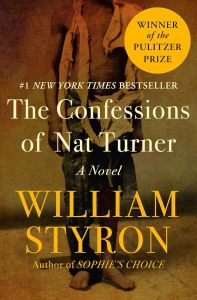
Book 22: The Confessions of Nat Turner by William Sty
This is a series of reflections reading through Time Magazine’s top 100 novels as selected by Lev Grossman and Richard Lacayo published since 1923 (when Time magazine was founded). For me this is an attempt to broaden my exposure to authors I may not encounter otherwise, especially as a person who was not a liberal arts major in college. Time’s list is alphabetical, so I decided to read through in a random order, and I plan to write a short reflection on each novel.
The Confessions of Nat Turner is a historical fiction reconstruction of Nat Turner’s life and the rebellion he led in Virginia prior to the Civil War. The book begins with a final reading of Nat Turner’s confession prepared by his lawyer Thomas Grey but quickly moves into a flashback which walks through the life of Nat as a young slave who is taught to read and occupies a world between his white masters and the slaves who work in the fields. Nat Turner is briefly promised a path to freedom by Samuel Turner, his master at the time who educated and saw him apprenticed as a carpenter, but Turner is unable to fulfill this promise when his fortunes fail. Nat is still promised a path to freedom when he is given to Reverend Eppes, but Eppes is far from a paragon of holiness and Nat finds himself serving not only Eppes but his entire congregation. Nat finally ends up as the slave of a hardworking and honest owner named Travis who allows Nat to utilize his skills, but Nat also begins to have visions which lead him to believe he is a prophet called to lead the black people in revolt. Nat gathers a group of loyal subordinate leaders around him and plans his revolt which occurs in August 1831.
The revolt never reaches its ultimate objective for several reasons. Just as the revolt is beginning an unruly and violent slave named Will requests to join but refuses to maintain the ideals Nat Turner established of not getting drunk or raping white women. Nat is also unable to kill the people he is asking his followers to kill and that leads to conflict over his leadership, particularly by those following the violent Will, and eventually he does kill the one white person he hoped would not be present. Finally, they anticipated the slaves from the surrounding plantations joining their revolt, but some fought with their masters against the revolt and many who did join quickly became drunk and were unreliable fighters.
William Styron’s book is thought provoking, although it was hard for me to view Nat Turner as a heroic figure. I struggled with the bloodthirsty reading of the prophets which is very different than my own reading of them. Nat was given opportunities and education that few slaves could ever imagine and although his life did have betrayals and abuses, his experiences were far less abusive than many of his fellow slaves. I do think William Styron did a good job of portraying the experience of a black slave and some of the ways they had to carefully navigate their interactions with white people.

