Yearly Archives: 2013

Dark Days

Thunderstorm_in_sydney_2000x1500

There are days where the emptiness takes over
And nothing can fill the abyss inside
When the successes of the past are transformed
Into the bars that the future can never measure up to
And the idealization of the way things were
Steals the joy of the present and the hope of tomorrow
And the emptiness of the house echoes
With the hollow sounds of failure.

When my own insatiable expectations overwhelm
My all too limited time and abilities
Where my spirit chastises weaknesses
Weaknesses others never see

Then as inexplicably as the appearance
Of the dark clouds the sun re-emerges
The dark day passes and the flowers
Of new life emerge in its light

On my journeys I know that the dark days
Pass and that the sunlight returns
Yet, my heart aches for those who dwell
Trapped within the darkness of their own minds
Isolated from their own brightly burning light
And I pray that their dark days
May pass into the breaking of a new dawn

Neil White, 2013

purple rose 01 by picsofflowers.blogspot.com

The Grudge- A Poem

I captured a grudge to let loose on you
For grudges are common in Kalamazoo
I found one the right size, it fit in my hand
For a fully grown grudge can swallow a man

It started so small, such the simplest slight
But I held this small creature with all o’my might
I held it so tightly, there in my hand
’til its tail wrapped around my arm like a band

And it brought me some comfort right there a’first
As it fed off my anger and purred with each curse
But the longer I held it the more that it grew
And its fur turned to spikes which wounded me too

I want to let go but I no longer know how
For its beady red eyes are eyeing me now
The grudge in my hands that I’m holding so tight
No longer resembles the original slight

This once tiny grudge that I should’ve set free
I held it so tightly that it’s now part of me
What once was so small that it fit in my hand
Has grown up until it has swallowed this man

Neil White 2013

purple rose 01 by picsofflowers.blogspot.com

Means of Perception

Eye_iris


In her insightful survey of Romantic philosophy’s concept of the imagination and the 20th Century critique of that concept, Mary Warnock arrives at the conclusion that, “Imagination is our means of interpreting the world, and it is also our means of forming images in the mind. The images themselves are not separate from our interpretations of the world; they are our way of thinking of the objects in the world.” (Warnock, 1976, p. 194) The journey with her throughout the study was full of realizations, but what I want to focus in on was a leap I made from her final conclusion to think more about these interpreted images that form in our memories and worldviews and ideas. At this point this is an intuitive jump that may be played out in more recent philosophy and science and it bears further investigation, but one of the processes of discovery is stating an idea and seeing if it remains true under further dialogue and observation.

Philosophers like Hume and Kant would point to the concept of imagination which allows us to realize that objects continue to exist and are indeed the same object when we encounter them at a later point, but this level of imagination is exhibited very early in life and by the time a child surpasses 12-18 months and has a sense of object permanence to use Jean Piaget’s language our imaginations have already become far more intricate than Hume and Kant would suggest. If imagination is involved in the ‘image making’ in our mind it is also responsible for the interpretation of these images, and these images are not like pictures, nor are they merely like ideas-perhaps a better word is they form interrelated constructs. When I encounter a person, for example, I don’t just take a mental picture of that person and store it in my memory, not even a three dimensional portrait, I take in much more information than that. I also am taking in the environment that I meet this person within, I am making value judgments about this individual, I am interpreting who they are within a web of relationships, I am interpreting their communication (not just spoken words, but also body language, tone and many other ways of interpreting the meaning of their communication) and I am placing them within a narrative or story. In even the simplest interaction there is far more data around me than my eyes and mind can possibly interpret so my mind has to know how to filter and pay attention to what is important. In a familiar environment we tend to pay less attention to the objects within that environment unless something changes, we filter out noise to be able to pay attention to a particular conversation and we decide what types of things from an interaction might be worth remembering. Yet with all this data we are not just passively acquiring information, but we are constantly interpreting and seeking meaning within the data. Even our most basic interpersonal interactions require a huge amount of creativity as we try to understand and interpret what another person is thinking and how they might interact with us next. For example, in the context of a job interview the person being interviewed is probably observing how the person conducting the interview is responding to the answer they are given since it will probably impact whether they are offered the job or not. At the same time this same person is attempting to make inferences about what it would be like to work with this person and make a value judgment if this is a job that they want. In interpersonal interactions this is what had been referred to as theory of mind (the realization that the other person has thoughts, feelings, intents and desires and that are distinct from one’s own thoughts, feelings, intents and desires, combined with the ability to interpret and predict those feelings).

Yet, while imagination is certainly involved in interpreting and giving meaning to the communications and the images or constructs within the appropriate environment, time, story, etc. it also must be involved in much more. For our imagination is able to take these communications and constructs which have been stored in our memory and continue to manipulate them. Sometimes this manipulation will be within a normal frame of reality and may be as simple as replaying an interaction either for further interpretation (did they really think this) or for continued learning (if this happens again I would do/say this) and sometimes we place or manipulate objects and transform them into new things in a different reality.

If we want to imagine an unreal creature or an unreal world we, by necessity, start with the world we know. For example if we were to imagine an imaginary creature like a dragon, we would in this case have many other people’s images of dragons in many media, but if we were to create a new dragon we would probably begin with creatures we are familiar with, like a lizard or a bird and continue to modify it in a way that fit that new reality. Or if you were to design a life-form for an imagined world, or the landscape for an imagined world you would start from the world you know and modify it based on some creative leaps. We can also imagine interactions with people that have never happened but are intelligent guesses  based upon previous interactions.

I’ve quickly moved into the realm of speculation, but I wanted to get some of these thoughts down so that as I continue to encounter some more recent work on imagination and experience I can test some of these ideas.

 

purple rose 01 by picsofflowers.blogspot.com

The Father’s We Seek

Saint Joseph the Carpenter, Georges de La Tour (1640)

Saint Joseph the Carpenter, Georges de La Tour (1640)

On Mother’s Day I wrote about women being more than mothers, and on Father’s Day I’m going to take a different angle because I think men struggle with a different issue and that is in society they are at best fathers only after they are whatever other role they have. To understand why this is I’m going to approach the male concept of shame, which is different than shame for women. For women shame comes from the inability to fit into the expectations of perfection defined first by looks and second by motherhood. Shame for women comes from how others view you and how you view yourself. Shame for men comes from being perceived as being weak or a failure. For men the societal expectations are: emotional control, primacy of work, pursuit of status and finally violence (the ability to take or protect that which is yours). Yet in relationships men are expected to put these things aside and be vulnerable, to share in the nurturing of children, to show restraint (it is very easy for a man to injure a child just due to the strength differential and the preponderance of rough play that is sought from fathers by boys and girls alike), and to enter into a world that is still defined by women’s expectations in the home. Just as women have struggled with the predominantly male expectations of the world of work, men have struggled with the very different set of expectations within the home.

Just as there was a time when a woman’s worth was tied to her ability to bear children, a man’s worth is still tied to his ability to provide security in terms of protection, shelter, food and comfort. Men are still primarily viewed as producers in society, and some of this is reflected in the way that employers view men taking time off for their family’s needs. Men do not give birth, but frequently they are expected to be back on the job within days of their wife or significant other giving birth. Men are looked upon as not having their work priorities straight if they take time off to be with a sick loved one, and this also  can extend to women as well-but the societal expectations are not as strong (although the expectations of perfection that women in the workplace put on themselves may be).

Mother’s Day and Father’s Day are important and should be celebrated, but I get the impression that of the two holidays Father’s Day is viewed as the lesser of the two. Perhaps this is because for men fatherhood is a secondary identity, second to their ‘real’ identity in the world of work. In the past couple generations while the role of men as fathers has changed the expectations in the working world have not decreased, nor has their compensation increased and like women they find themselves trying to live well between the worlds of word and home. As the workplace is learning to value women for who they are and the gifts they bring (and I understand that there is still a lot of work that needs to be done here), so in the world of the home as men become an increasing part of the world at home it will mean that the expectations in this world will need to begin to shift as well to be able to account for the gifts that men and women can bring.

I know I am leaving the issue of single parenthood unaddressed, which I definitely sympathize with being a single dad, but on Father’s Day I hope I was able to help us think about how we might help our young men be the fathers we hope they will be.

purple rose 01 by picsofflowers.blogspot.com

The Glorious Freedom of Creative Mistakes

chess

We are limited beings who do attempt to make sense of our world and we have the gifts of perception and communication which help us to do that. Our perception allows us to see and experience the world and communication allows us to learn from the experiences and intuitions of others and our minds are not machines. We cannot, like Descartes wanted to do many years ago, separate our mind from our bodies and senses-they are real, the mind and body are integrated and even if a sense doesn’t work, for example in the case of a person who is unable to see or hear, we find other ways of perceiving and communicating about the world around us. We make a lot of assumptions and inferences about the world around us and we try to set up closed systems to make everything fit, but combined with this comfort that comes from certainty is the joy that comes with discovery. As we encounter the world and interact with others there will be times where we discover new connections and have to expand our system to make sense of the new ideas or images we encounter. Sometimes these new paradigms come from outside us, when we through communication or observation come into contact with another person’s or group’s way of explaining something. So for example a person who encounters Newton’s physics in high school which would explain gravity in terms of the attraction between two objects may later in their life encounter relativity theory where gravity is explained very differently and in a way that makes more sense given what we know about the universe and perhaps sometime later would encounter a completely new explanation. Yet, we don’t magically jump from one explanation to another on our own, the road to discovery is paved with numerous failed attempts and creative mistakes.

Jacob Bronowski uses the example of a chess player when he says:

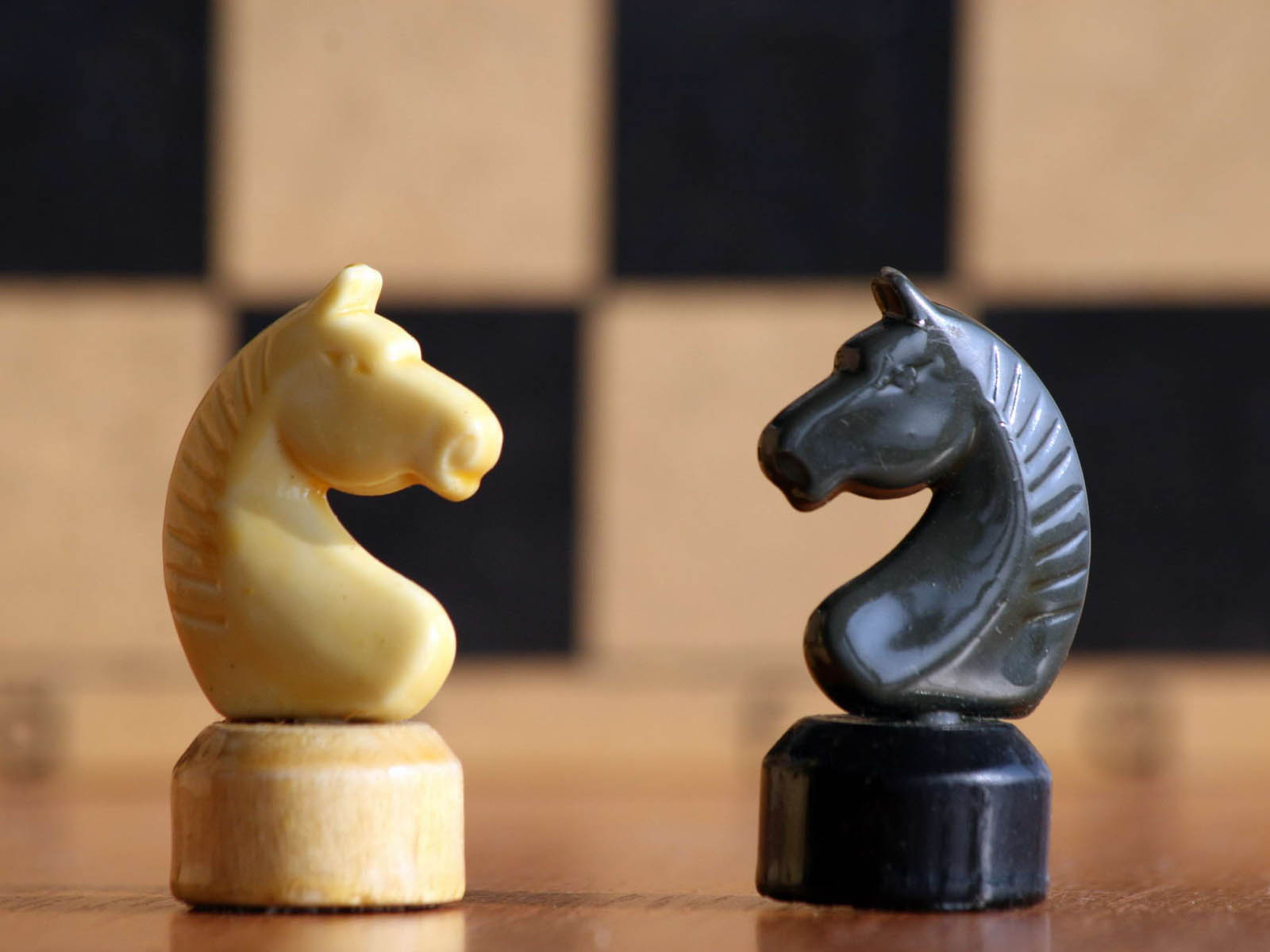
“Why does one chess player play better than another?”The answer is not that the one who plays better makes fewer mistakes, because in a fundamental way the one who plays better makes more mistakes, by which I mean more imaginative mistakes. He sees more ridiculous alternatives. (Bronowski, 1978, p. 110f)

Yet, as a person who knows the rules of chess but has never studied the strategy of chess, I would not play a challenging game to a chess master because I don’t have enough information to make new imaginative mistakes. There is something to understanding the systems that are already existent and then being able to manipulate them, experiment with them and see where there may be new places to discover. In the process of manipulation and experimentation we come up with possible explanations or visualizations which most of the time are not true. This is not just in the realm of science, but also in the realm of art where it is true that there are more bad works of art than good ones. It takes a lot of attempts to become good at any art, and in the midst of the attempts we learn. Every great imaginative construct, whether it be in science or art, begins as an exploration of past errors. One of our greatest freedoms is the ability to learn from our mistakes rather than being defined by them.

purple rose 01 by picsofflowers.blogspot.com

The Gift of Self Reference and Necessary Imaginative Constructs

Mirror

As I mentioned at the beginning of the post Metaphors of Reality we try to make sense of ourselves, the world and (at least for those who think in spiritual or religious terms) God. But one of the struggles we have is that we never have a ‘God’s eye’ view of reality and that our view is always provisional. Unlike in the gospel stories which sometimes have an all seeing narrator (who for example sees what is going on in the temptation of Jesus) we are limited to the things we have experienced through our senses, the creative leaps we have made through our imagination and the constructs we have learned from our conversations with others. We take all these pieces of reality as we perceive them and try to decode our world and experiences “by a highly imaginative, creative piece of guesswork. But we finish with something that is only a gigantic metaphor for that part of the universe which we are decoding.” (Bronowski 1978, 70) We attempt to make sense of things and we construct systems that seem to make sense of the world with some things we are fairly certain of, others less so, and some just our best guess at the time. Sometimes there are things we believe that we cannot prove, that doesn’t mean they are not true-just that they cannot be proved. That is the reality of living in which our perception and knowledge are incomplete and bound by constraints and self reference.

One of the vanities of the modern (note I am talking modern as a category, not necessarily in terms of recent) philosophy that emerged in the 18th century in the wake of the Enlightenment was that it believed that it could penetrate reality and get to absolute truth. That for example if you could peel away the encrusted layers of tradition you could actually get back to the real history of what happened-and while there were many useful insights gained from this dedicated effort to get back to the facts as well as the dialogues that came out of different interpretations of the same data, but we never are truly free of self reference. For a lot of people this is looked upon primarily as an issue to be apologized for, but I want to suggest this is one of the things that allow creativity to thrive. In contrast to a computer which understands its inputs in terms of its coding and programming that when it encounters a novel experience that doesn’t fit within the world of its programming either creates an error or the computer ignores the anomaly, humans are able to integrate experiences in creative ways into their worldview. We are not limited by one set of constructs which we make sense of the world; instead humans are constantly experiencing and growing in our interaction with others and the world around us.

We need the imaginative constructs, the language and systems and science we learn from others to make communication possible, so for example within linear mathematics we can feel confident that 1 + 1= 2, or that in speech the letter ‘c’ will make certain sounds, or that in the world of Newtonian physics every action will have an equal and opposite reaction. We need laws, theorems and systems to make sense of the world, but these laws, theorems and systems are not absolute because there are times when we will experience things that do not make sense within the constructs we may have accepted. As Bronowski alludes to when he states, “The fact that we are content, when running into this kind of difficult, to reanalyze the system, to seek a new consistent formulation, is terribly important.” (Bronowski 1978, 87)Without the ability to seek a better system that makes sense of ourselves and our world we would be limited in our understanding to the knowledge and systems that were handed on to us. The experience is always in reference to the self, it is using our senses and our intellect to interpret that experience within the memory of our previous experiences and knowledge, and yet because of this self reference we are able to challenge external references and experiences. We seek consistency, we want things to make sense, but the experience that does not make sense for many is actually an exciting process of discovery. Let’s say, for example, that we had received a way of evaluating others passed down from our parents that, “blondes have more fun.” So long as our experience of people having blonde hair being fun people to be around holds up we might assume this random piece of a world to be true. Yet, once we encounter a person who has blonde hair who is not fun to be around we have several options of how we might proceed: we might challenge the assumption (are blondes really more fun?), we might wonder if this person is an exception to the rule (and the ability for there to be exceptions is also an imaginative leap), we might wonder if blonde is really their natural color (providing we understand that people can change their hair color) but the reality is that we will attempt to make sense of a disparity we have encountered. This is the way for example that prejudices may change when a person has experiences that challenge that prejudice, or new scientific discoveries are made when data doesn’t fit the previously assumed construct, or a new challenge presents itself based on technologies not previously available. Our ability to take in new challenges and experiences and in light of our knowledge and memory to make sense of them in a new way, even if it is only a creative piece of guesswork, and then see if this piece of guesswork seems to hold true is a part of the experimentation that opens new horizons in the imagination.

purple rose 01 by picsofflowers.blogspot.com


Church in a Risky Environment

Unstable environment

I had the privilege to be a part of a pair of lectures by Diana Butler Bass last weekend at my synod convention which really helped me get a better view of the spiritual climate change going on within the country. There has been a lot of press given to the decline of the mainline denominations, which includes the Evangelical Lutheran Church in America which I am a pastor within, and there have been a number of ‘self-help’ approaches to the problem trying to create better programming, better worship experiences, better outreach, better stewardship and the list can go on and on. It is not that the people doing ministry today are less skilled than people doing ministry in the 1950s and 1960s when many congregations were experiencing their peaks, but the reality is that they are trying to be church in a risky and changing environment. This first post will deal with some of the more depressing information, but be patient-I actually found a lot of hope in the midst of what I learned.

Over the past five decades the percentage of the population that identifies itself as Christian has gone from 97% to 73% with the largest drop being among white Protestant Christians, which have dropped from 66% of the population to 48% between 1960 and 2012. Most people would assume that when you split the Protestants into Mainline Protestants (typically more moderate to liberal including the United Methodist Church (UMC), Evangelical Lutheran Church in America (ELCA), Presbyterian Church USA (PCUSA), Episcopal Church, American Baptist Church, the United Church of Christ (UCC), Disciples of Christ and the Reformed Church USA) and into Evangelical Protestants (which are too numerous to mention but for the purposes of study included groups that identified as Evangelical, Fundamentalist, and Charismatic) were declining at the same rate. This seems counterintuitive since there are most mega-churches are evangelical in their leaning, but the reality is that they are predominantly absorbing members from other congregations. Another surprise was the fastest declining denomination was the Southern Baptists, which in the current culture should not be surprising, but nobody has been talking about the Evangelical decline until fairly recently. Catholics are holding steady, primarily because of immigration and black or Hispanic communities of faith are either holding their own or growing as a percentage of the population. This has also been the time where the ‘nones’ which include atheists, agnostics, nothing in particular and spiritual but not religious went from registering as roughly 1% of the population to 20%, 1 in 5.

One of the most common reactions to changes in the environment around any person or group is fear, and fear has definitely been a driving force for many Christian groups in the recent years. There is almost a militant reaction against the current culture by some of the more conservative religious organizations and individuals. Especially after the last Presidential Election Campaign was complete there was a lot of evidence (which I will share in the next presentation) that they no longer were the decisive block that could determine who would remain in power, and as they look at the manner in which their cohort is aging the news gets worse. Sometimes this has even turned to rhetoric claiming that they are being oppressed for their religious viewpoints because not everyone will concede that their viewpoint is correct, when the reality is that they are now one within a much more varied religious landscape where there is no clear majority and no one group has a monopoly on defining religion and spirituality within the current culture. For some people what I have shared today is incredibly bad news, as will be some of the information I share in some upcoming posts, but it also represents an incredible possibility to re-imagine the way we are church in a changing culture and how we have a dialogue about issues of faith in our culture.

purple rose 01 by picsofflowers.blogspot.com


Metaphors of Reality

Newton by William Blake (1795)

Newton by William Blake (1795)

One of the sets of vows that is commonly used when I do weddings includes the words “to better understand ourselves, the world and God.” One of the things we do as humans with our language to better understand ourselves, the world and God is we attempt to describe objects and actions and their interactions. All of these words, symbols and ideas are constructed within a system to give meaning and sense to them, for example in the world of mathematics 1 + 1 = 2, if the rules of the system were different 1 +1 could equal a different number, but the rules that the system works within allow 1 + 1= 2 to be the correct answer while 1 + 1= 3 would not make sense within the system. The systems we understand the world within are attempts to describe the reality we observe and know, and yet they are always metaphors or propositions of reality. As Jacob Bronowski states:

I believe that all the kind of scientific descriptions that we can make about one another are perfectly real. And yet, I believe that any theory that we as human beings make at any point in time is full of provisional decodings which to some extent are as fictitious as the notion of force in Newton. (Bronowski, 1978, p. 58)

As Bronowski alludes to, Newton’s description of force, particularly the force of gravity where “the gravitational attraction is proportional to the mass of the two bodies divided by the square of the distance between some point in each mass.” Or in the symbolic language of science:

G=  k ( m m’) / r2

Which as a description of reality worked well in a system of Newtonian based physics, but when Albert Einstein published his first paper on relativity in 1905 it demonstrated the flaw in the concept and proposed a new way of describing the reality,  and yet even Einstein’s theory is no longer held to be an ultimate description of reality- yet both the work of Newton and Einstein and countless other scientists (just to stay within the scientific realm of creativity) work well for describing reality as it is encountered and it is only when we find exceptions to the rule where we begin to wonder what might cause these anomalies, is the way we have constructed reality inaccurate in some manner and we begin to wonder if perhaps there is some new way to understand the world our senses observe and to describe it so that others can encounter the world in a new way.

Science is not the only discipline that works this way, think for example in the realm of religion. At various point in history different metaphors have served as a dominant metaphor for understanding God. For example, at the beginning of the enlightenment where the clocks and watches were one of the most complicated pieces of technology available that most people would encounter in their world there was the common image of God as the clockmaker who constructed the world and then allowed it to run. It is not coincidental that this was a time in which deism was the primary philosophical tool for talking about God and the deist view of God was a God that was for the most part uninvolved in the day to day undertakings of the world. This is not the dominant picture of God today and there are a number of problems with this image, but it was how many religious people of that time tried to make sense of God in a way they could imagine.

Here I think is where the mystical tradition of talking about God can help us out: on the one hand there is the cataphatic tradition which in a positive manner says that our language can point to God while, on the other hand, there is the apophatic tradition which states that our language is never adequate to describe God. Moving back to our world and ourselves there is a sense in which our language describes reality, for example I can say that I have hazel eyes or that I am around 6’2” tall but ultimately my descriptions, even of myself, will never be completely adequate to convey all of who I am. Our understanding of the world around us is also provisional or metaphorical, that doesn’t mean it is incorrect-but it may not be complete. I think the French language has a helpful construct here with its two words that we can translate into the English ‘to know.’ The French word savior refers to knowing a fact, knowing how to do something or to know something by heart. The French word connaître refers to knowing a person or being familiar with a person or thing. There is a sense where we can know about and describe individual things but people, for example, are not reducible to a set of facts. We can describe others, ourselves, the world and even God, but that sense of knowing is always based upon our relation to those things and is in its own way contingent on the systems we understand them within. Each of these systems are really theories about the nature of the world and there may be times where we find our own metaphors of reality are inadequate and need to be reexamined as we attempt to make sense of our relationship to the reality we encounter.

purple rose 01 by picsofflowers.blogspot.com

Creativity for Fun

Jay Silver’s fun little video is really about the joy of discovery and interacting in new and playful ways with the world around us. The creativity he shows in the video is from manipulating and combining things that normally don’t go together and just experimenting (which is often how many discoveries come). Something as simple as the Makey-Makey circuit allowed for others to take this basic circuit and use it in numerous ways. Sometimes the discoveries and uses were unexpected, like the dad who decided to use the circuit to help create a controller for his son with cerebral palsy-a very useful invention. Many were just for fun and the delight of trying to create music, sound and interactions in new and creative ways.

Play is an under recognized form of learning, but it is something that all mammals do to learn, experiment and interact with their world. There is a sense of joy with playfully interacting with the world around us and exploring and discovering. Sometimes in the midst of the journey we encounter a problem that we have never had to answer before and we have to rethink a solution based upon the tools that are available. Necessity often can become the mother of invention, but so can playfulness. Not to take away from the work, research and knowledge that goes into the process of creation, or the frustration of failures (which all to often deter people) but as when boundaries are pushed there is often a sense of wonder at the discoveries that are eventually made.

I’m going to bring in some of these discussions on creativity as I go along. Take your own lessons and wonder from them, and hopefully you can also have something playful sparked in your own life.

purple rose 01 by picsofflowers.blogspot.com

In The Beginning Was The Sentence

Creation by Selfish Eden (deviantart.com)

Creation by Selfish Eden (deviantart.com)

Human beings have an incredible sense of perseverance when you think about it. We will take complex tasks, think them through, experiment, learn and then try to be prepared for the next time we use things. Now, on the one hand, this can lead to some unhealthy behaviors of hoarding or becoming pack rats but, at the same time, we don’t discard a tool that has become useful like animals will do. A chimpanzee may realize that it works well, for example, to use a stick to poke into an ant mound but they don’t store sticks for this use, when the chimpanzee comes upon the need he finds a stick and the same way with other tool using animals. Humans are unique in their ability to predict a future need based upon a past need and within language this also is a crucial development. (Bronowski, 1978, p. 32f.)

Now it is possible that there have been breakthroughs in animal communication that I am unaware of, but the way Bronowski illustrates this breakthrough is the concept that animals communicate not in words but sentences or ideas. For example a chipmunk may has a different signal based on danger from a snake, danger from the air, or danger from a large ground animal, but you can’t deconstruct and recombine these signals into components of danger and the type of animal-they are one unit. They paint in a way a limited verbal picture of their environment and the immediate need they need to respond to. Yet human language is different, and the way our language is structured relying on words and not sentences as the building block of communication allows for the sharing of knowledge and imagination in ways not possible otherwise. For example “Jack loves Jill” and “Jill loves Jack” even though they share the same components do not mean the same thing. Language becomes an incredibly powerful tool for conveying and sharing images, thoughts and even worldviews, a picture may be worth a thousand words but only if it is done well and the person viewing the picture can understand what it is. It is not a coincidence that early languages began with characters that represented pictorially the ideas they were trying to express, but as ideas became more and more complex and the communication of thoughts and ideas contained more and more words language evolved to use letters to create words reflecting the sound of the word. For a word either read or heard to be transformed into a visual image is an act of imagination and it may evoke different images for different readers/hearers. For example if I say “bird” someone may think of a sparrow or an eagle or an ostrich, or perhaps even an obscene gesture, words on their own begin to paint the picture and then when combined within a sentence with actions and descriptions we refine the picture.

Imagination and creativity may help with survival and with creating new tools and ideas that help an individual, but if they are going to make any lasting impression they need to be able to be communicated. The evolution of language, first spoken and later written, has made it possible to pass on and build upon the ideas of others. But there is always a process of taking the information we receive in terms of letters and sounds and reconstituting them in our mind in terms of images (and these images are often moving images-videos if you will) as we translate representations into a mental vision.

purple rose 01 by picsofflowers.blogspot.com