Tag Archives: Wisdom literature

Psalm 112 An Authentic Life Shaped by Wisdom

The Presentation of the Torah By Édouard Moyse – Own work Musée d’art et d’histoire du Judaïsme, CC BY-SA 4.0, https://commons.wikimedia.org/w/index.php?curid=41893002

Psalm 112 

1Praise the LORD! Happy are those who fear the LORD, who greatly delight in his commandments.
2Their descendants will be mighty in the land; the generation of the upright will be blessed.
3Wealth and riches are in their houses, and their righteousness endures forever.
4They rise in the darkness as a light for the upright; they are gracious, merciful, and righteous.
5It is well with those who deal generously and lend, who conduct their affairs with justice.
6For the righteous will never be moved; they will be remembered forever.
7They are not afraid of evil tidings; their hearts are firm, secure in the LORD.
8Their hearts are steady, they will not be afraid; in the end they will look in triumph on their foes.
9They have distributed freely, they have given to the poor; their righteousness endures forever; their horn is exalted in honor.
10The wicked see it and are angry; they gnash their teeth and melt away; the desire of the wicked comes to nothing.

Psalm 112 and Psalm 111 share a lot of commonalities. Both are acrostic poems with each cola beginning with successive letters of the Hebrew alphabet. They share commonalities in vocabulary[1] with each other and with wisdom literature in general. If Psalm 111 is the beginning of wisdom then Psalm 112 would be a life lived in wisdom. The fear of the LORD[2] here leads to a delighting in the commandments of the LORD and a life that is authentic and in harmony with God, society, and the creation.

Like Psalm 111 and 113, the first word of the psalm is Hallelujah (NRSV Praise the LORD). The acrostic poem begins with the second word asre (NRSV happy) which is a common indicator of wisdom literature. Like Psalm 1, which also begins with asre we are examining the contrast between a righteous life in harmony with God’s will for the world and a wicked life in conflict with God’s will. The Hebrew asre often translated ‘happy’ or ‘blessed’ or even ‘contented’ but the concept in Hebrew thought is closer to ‘wholeness’ or ‘completeness.’ This integrated life is a life of shalom, itself a word that has a much larger function than the standard English translation of peace. The way of wholeness and completeness is the way of wisdom. Those who ‘fear’ the LORD greatly delight in the LORD’s commandments. This is not a burdensome set of commands but the boundaries which provide the safe space where an individual can live a whole and integrated life.

The blessings of this whole person reflect the ideals of Hebrew thought. Abraham when he begins his journey with God is promised descendants, a blessing, house, land and prosperity and through his household all the nations will be blessed. For the ‘happy’ ones who follow the way of wisdom their descendants are mighty, their generation is blessed, their households are prosperous, and their righteousness endures. The Hebrew scriptures trust that God will provide for the righteous ones who follow God’s ways. Those who fear, love, and trust the LORD above all things will find that they have enough and even an abundance beyond what they need.

These wise and righteous ones reflect the God who they worship and serve. In Psalm 111 the LORD’s righteousness endures forever, and in verse three now the righteousness of these ‘happy’ ones endures forever. In Psalm 111 God was characterized as gracious and merciful and now these ones who fear the LORD are also gracious, merciful, and righteous. They become the image of the LORD they fear, obey, and worship. They become a light that reflects the light of the LORD for the upright in the darkness of the world.

This life of faithfulness is a life of generosity. They do not hoard what they have but deal generously and lend. They distribute freely and give to the poor trusting that God will provide what they need. They conduct their affairs in justice/righteousness[3] and that justice/righteousness has a gracious and merciful character. Their practices remain constant throughout their lives and they are examples who are remembered of a life well lived. They trust in the LORD and even in evil/wicked times they remain secure in their trust. Their horn, which is reflective of power and status, is exalted in honor.

In classical wisdom literature duality these ‘happy’ ones are contrasted with the wicked. The wise and the wicked are opposing ways of life. The wise life is generous and merciful while the wicked one does not care for the poor, does not live generously, and may aggressively attempt to take advantage of both the vulnerable and the generous righteous ones. Yet, the anger and aggression of the wicked melts away before the sustaining power of the LORD that the wise ones fear. The desire of the wicked comes to nothing.[4]

The way of wisdom in the Hebrew scriptures is a way of life that lives in harmony with God’s commandments. The law and wisdom are connected in Hebrew thought. The law provides the vision of a society where the weak are protected and harmony and peace are possible. A way that is wise fears and reverences the LORD, the God of Israel and reflects the generous and merciful nature of that God. It trusts that even when the wicked seem to prosper that their foolish path will lead to their demise.


[1] Nancy deClaissé-Walford notes eleven key terms and phrases that occur in both relatively short psalms including: fear, delight in, upright, good, gracious, merciful, righteousness, remember, steady, give, and for all time. (Nancy deClaisse-Walford, 2014, p. 843)

[2] See the discussion of the Hebrew word yare translated fear in English in my notes on Psalm 111.

[3] The Hebrew tsaddik is a key idea in the Hebrew Scriptures. Both justice and righteousness emerge from the family of terms in Hebrew, like the Greek dikaios/dikaisune.

[4] This is the same word that ends Psalm 1, ‘abad which means to perish.

Psalm 111 The Beginning of Wisdom

An Old Woman Reading, Probably the Prophetess Hannah by Rembrandt (1631)

Psalm 111

1Praise the LORD! I will give thanks to the LORD with my whole heart, in the company of the upright, in the congregation.
2Great are the works of the LORD, studied by all who delight in them.
3Full of honor and majesty is his work, and his righteousness endures forever.
4He has gained renown by his wonderful deeds; the LORD is gracious and merciful.
5He provides food for those who fear him; he is ever mindful of his covenant.
6He has shown his people the power of his works, in giving them the heritage of the nations.
7The works of his hands are faithful and just; all his precepts are trustworthy.
8They are established forever and ever, to be performed with faithfulness and uprightness.
9He sent redemption to his people; he has commanded his covenant forever. Holy and awesome is his name.
10The fear of the LORD is the beginning of wisdom; all those who practice it have a good understanding. His praise endures forever.

The next three psalms all begin with the word Hallelujah.[1] Psalms 111 and 112 are also acrostic poems with each cola[2] beginning alphabetically with the next letter of the Hebrew alphabet (after the initial Hallelujah). Most previous acrostic poems have been by verse, but here there are twenty-two cola after the initial word. The acrostic form was used in the book of Lamentations to provide a sense of order to the disordered world of the poet, but in the Psalms acrostic poems are often used to focus on wisdom, describing how life should be lived. For most Hebrew people the organizing center of wisdom is the law (torah) which will be the focus of the acrostic of acrostic poems, Psalm 119. For Psalm 111 the beginning of wisdom is the fear (see below) of the LORD and that is organized around the ‘works of the LORD’ and the ‘works of the people’ in response to the LORD.

A key word for the poem is ‘works’ (Hebrew ma’asim) which occurs in verses 2, 6, and 7 with the same root being used in 4 (NRSV wonderful deeds) and a synonym being used in verse 3. Then the same word is used in verse 8 and 10 (NRSV practice, perform) for the faithful ones responding to the work of the LORD. Wisdom here is recognizing the ‘works of the LORD’s hands’ which are established ‘forever and ever’ and ‘working’ in faithfulness and uprightness. The psalmist when referring to the ‘wonderful deeds’ of God likely has in mind the defining story of the Hebrew people, the exodus where God brings the people out of Egypt and into the promised land.[3] Yet, God’s provision of food, mindfulness to the covenant, demonstrating God’s power before the nations, and granting the people a heritage or inheritance from the nations is an ongoing action. God is known by what ‘works’ God has done, or as Philip Melanchthon would famously say in the 1500s, “that to know Christ is to know his benefits.” (Melanchthon, 2014, p. 24)

The best-known line of this psalm is “the fear of the LORD is the beginning of wisdom.” The Hebrew word for fear (yare’) encompasses a larger meaning than our English fear. As Nancy deClassé-Walford states it also means:

“awe, reverent, respect, honor.” It appears in Hebrew as a synonym for “love.” (‘ahab, Deut 10:12); “cling to” (dabaq, Deut 10:20); and “serve” (‘abad, Deut 6:13; Josh 24:14) (Nancy deClaisse-Walford, 2014, p. 841)

Knowing the ‘works’ of God and performing these works should lead to honor and awe, respect and honor, service and love. Wisdom that has good understanding can, to use Martin Luther’s explanation of the first commandment, “fear, love, and trust God above all things.” The ‘fear of the LORD’ leads the poet to ‘give thanks to the LORD with their whole heart.’ This is what a wisely practiced life looks like.


[1] ‘Praise the LORD” (NRSV). Hallelujah is a compound word of the verb to praise (hallel) and the first half of the name of God (yah from Yahweh). Some scholars believe that the final verse of Psalm 113 was originally the opening verse of Psalm 114 which would make four psalms which begin with Hallelujah, but as we have received the text we have three psalms beginning with Hallelujah and with Psalm 113 opening and closing with the word.

[2] Hebrew poetry breaks lines into cola. This is often reflected in the printing of poetic portions of scripture in how they are displayed. Psalm 111 in most bibles is easily divided this way because each on begins alphabetically with the next letter of the Hebrew alphabet (excluding verse 1a ‘Hallelujah’). In this poem the cola are marked by punctuation (comma, semi-colon, or period).

[3] Wonderful deed (Hebrew nipla’ot) is often used to refer to God’s works at that time (Exodus 3:20; 15:11; Psalm 77: 11, 14). (NIB IV:1133)

Ezekiel 33 The Beginning of Ezekiel’s Role After Jerusalem’s Fall

Poole, Paul Falconer; Sketch for ‘Vision of Ezekiel’; Tate; http://www.artuk.org/artworks/sketch-for-vision-of-ezekiel-201293

Chapter 33 of Ezekiel functions structurally as a hinge between the judgment of the previous thirty two chapters and the messages of hope that much of the remaining fourteen chapters involve. This chapter rearticulates numerous themes from throughout the early chapters but also helps to prepare us for the changed situation as the majority of the people find themselves in exile. Like the other biblical prophets, the movement to hope does not mean an abandonment of their message God’s desired repentance.

Ezekiel 33: 1-9 The Sentinel for the People

1 The word of the LORD came to me: 2 O Mortal, speak to your people and say to them, If I bring the sword upon a land, and the people of the land take one of their number as their sentinel; 3 and if the sentinel sees the sword coming upon the land and blows the trumpet and warns the people; 4 then if any who hear the sound of the trumpet do not take warning, and the sword comes and takes them away, their blood shall be upon their own heads. 5 They heard the sound of the trumpet and did not take warning; their blood shall be upon themselves. But if they had taken warning, they would have saved their lives. 6 But if the sentinel sees the sword coming and does not blow the trumpet, so that the people are not warned, and the sword comes and takes any of them, they are taken away in their iniquity, but their blood I will require at the sentinel’s hand.

7 So you, mortal, I have made a sentinel for the house of Israel; whenever you hear a word from my mouth, you shall give them warning from me. 8 If I say to the wicked, “O wicked ones, you shall surely die,” and you do not speak to warn the wicked to turn from their ways, the wicked shall die in their iniquity, but their blood I will require at your hand. 9 But if you warn the wicked to turn from their ways, and they do not turn from their ways, the wicked shall die in their iniquity, but you will have saved your life.

This rearticulation of Ezekiel’s role as a sentinel to the people of Israel echoes a similar passage in Ezekiel 3: 16-20. The word for sentinel in Hebrew (sopeh) comes from the shofar (trumpet/horn) which the watcher would blow. Ezekiel’s warning to the wicked and even the righteous may not be heeded, but he is under an obligation to sound the alarm announcing God’s judgment regardless. Both Hosea and Jeremiah[1] have performed this role of sounding a trumpet in the land or acting as a sentinel before and even if the people do not heed the trumpet call. Yet the prophet’s calling is to raise the alarm even if the people ignore the sound.

The wicked and the righteous are a common polarity used throughout wisdom literature, and Ezekiel who likely grew up schooled to be a priest was likely familiar with this way of engaging the world. Ezekiel uses the term wicked (rasa) more than any prophetic book, but the character of God is to desire repentance even among the wicked. The prophet is not to judge the worthiness of the recipients of God’s alarm but to raise the sound that they may hear. Even those who were once righteous but who commit iniquity are not exempt from God’s judgment. The ‘stumbling block’ (miksol) is “not an occasion for sin but a cause of downfall and ruin.” (NIB VI: 1135) As Katheryn Pfisterer Darr states about Ezekiel’s task,

His life depends solely on his performance of the task; it does not hang on the people’s response. Lives may be saved as a result of his warning. But Ezekiel is not told to hold that possibility before his audience. (NIB VI: 1135)

Like his older contemporary Jeremiah[2] he is charged with bearing an unpopular message to resistant people. Yet, as mentioned above the prophet is not in control. Ezekiel is called as a sentinel to the people, but his call does not come from the people. The words he is to speak are not his words, he is animated by a spirit not his own, and God’s hand will be upon him. Any unfaithfulness of Ezekiel will not save the wicked or righteous, but they will endanger the prophet.

Ezekiel 33: 10-20 The Justice of God’s Ways

10 Now you, mortal, say to the house of Israel, Thus you have said: “Our transgressions and our sins weigh upon us, and we waste away because of them; how then can we live?” 11 Say to them, As I live, says the Lord GOD, I have no pleasure in the death of the wicked, but that the wicked turn from their ways and live; turn back, turn back from your evil ways; for why will you die, O house of Israel? 12 And you, mortal, say to your people, The righteousness of the righteous shall not save them when they transgress; and as for the wickedness of the wicked, it shall not make them stumble when they turn from their wickedness; and the righteous shall not be able to live by their righteousness when they sin. 13 Though I say to the righteous that they shall surely live, yet if they trust in their righteousness and commit iniquity, none of their righteous deeds shall be remembered; but in the iniquity that they have committed they shall die. 14 Again, though I say to the wicked, “You shall surely die,” yet if they turn from their sin and do what is lawful and right — 15 if the wicked restore the pledge, give back what they have taken by robbery, and walk in the statutes of life, committing no iniquity — they shall surely live, they shall not die. 16 None of the sins that they have committed shall be remembered against them; they have done what is lawful and right, they shall surely live.

17 Yet your people say, “The way of the Lord is not just,” when it is their own way that is not just. 18 When the righteous turn from their righteousness, and commit iniquity, they shall die for it. 19 And when the wicked turn from their wickedness, and do what is lawful and right, they shall live by it. 20 Yet you say, “The way of the Lord is not just.” O house of Israel, I will judge all of you according to your ways!

This is the first time we have a confession of sin from the house of Israel in Ezekiel. The people have come a long way from when Ezekiel and other prophets were mocked for their words of doom that had not transpired. Now we hear, through Ezekiel, of a realization by the people that their actions have led to the deathlike state they inhabit.  They are weighed down by their sin and it has caused them to waste away[3] and they openly ask how they can live under the weight of their actions. This plaintive cry fits within the Hebrew tradition of lament to attempt to mobilize the God of Israel to bring about their deliverance from the deathlike state of exile. The answer that God grants through the prophet has a hopeful element to it that is often missed.

God’s response begins with the ‘oath of denial’ (NIB VI: 1446) “As I live” which places the trustworthiness of these words in connection with God’s life. The God of Israel immediately declares that God takes no pleasure in the death of the wicked and argues in a manner similar to Ezekiel 18. This may indeed be good news for people who are finally willing to accept responsibility for their previous actions and who are willing to turn from their past wickedness and embrace the way of righteousness. There is an opportunity for those who previously ignored their sentinel and continued in the ways of wickedness to turn and have their sins no longer remembered against them.

Throughout the book of Ezekiel the prophet has argued for the ‘justness’ of God. The current generation look at God’s patience with previous generations who continued to live in the land while they sinned and may have viewed their generation as bearing the judgment of their ancestors. Yet, for Ezekiel, God is just. God has repeatedly sent sentinels for the people, God has desired their repentance, and even now the judgment of God is not eternal. For Ezekiel the ways of God are simple: if the people turn from wickedness and live in righteousness there is a future. If they turn from righteousness to wickedness there is death. It is the classic pattern of wisdom literature in the bible.

Post Reformation Protestant readers often read scripture through the lens of God’s mercy, but the Hebrew Scriptures are probably better understood through being at the mercy of God. Both individuals and the people as a whole are dependent upon God for their protection and provision. There are times where they will protest the perceived injustice of God’s ways, but this is to provoke God to action rather than as a lack of faith. Ezekiel perceives the people’s future as dependent upon God’s action, and God’s action is tied to the people’s righteousness or wickedness.

Ezekiel 33: 21-29 The Fall of the City and Those Who Remain

21 In the twelfth year of our exile, in the tenth month, on the fifth day of the month, someone who had escaped from Jerusalem came to me and said, “The city has fallen.” 22 Now the hand of the LORD had been upon me the evening before the fugitive came; but he had opened my mouth by the time the fugitive came to me in the morning; so my mouth was opened, and I was no longer unable to speak.

23 The word of the LORD came to me: 24 Mortal, the inhabitants of these waste places in the land of Israel keep saying, “Abraham was only one man, yet he got possession of the land; but we are many; the land is surely given us to possess.” 25 Therefore say to them, Thus says the Lord GOD: You eat flesh with the blood, and lift up your eyes to your idols, and shed blood; shall you then possess the land? 26 You depend on your swords, you commit abominations, and each of you defiles his neighbor’s wife; shall you then possess the land? 27 Say this to them, Thus says the Lord GOD: As I live, surely those who are in the waste places shall fall by the sword; and those who are in the open field I will give to the wild animals to be devoured; and those who are in strongholds and in caves shall die by pestilence. 28 I will make the land a desolation and a waste, and its proud might shall come to an end; and the mountains of Israel shall be so desolate that no one will pass through. 29 Then they shall know that I am the LORD, when I have made the land a desolation and a waste because of all their abominations that they have committed.

Ezekiel reports the community in exile receiving the news of Jerusalem’s fall. The dating system makes the best sense if it follows the dating system referred to in Ezekiel 24, which follows the dating of 2 Kings and Jeremiah, rather than Ezekiel’s normal dating system. This allows the word to reach the exiles just under five months after the fall of Jerusalem, which seems like a long time for us, but if this is a person traveling with the first wave of new exiles traveling with families and animals by foot, the slow passage from Judah to Babylon is understandable. Travel in the ancient world was a slow and arduous process, especially when we are talking about moving entire communities. This confirmation of the destruction of the city now opens the possibility of Ezkiel opening his mouth to intercede for the people. Previously the prophet was not to intercede for the people, God no longer wanted to listen, but now the prophet’s mouth is opened.

Yet not all the inhabitants of Judah are deported. There is a remnant of people in the country and the poorest in the land. Now this remnant believes that they can now inherit the land, just as Abraham’s descendants did. This reference back to Abraham may involve a return to the story of the people, but the prophet’s words indicate that the actions of these remaining in Judah have not changed. The evocation of Abraham’s name has not brought about a reformation of practices. They still eat meat with blood in it, like the Gentiles, shed blood, and lift up their eyes to idols. The practices of the people have not changed. They depend on their ability to force their will by the sword, they commit the abominations that Ezekiel has protested throughout his time as a prophet, and they do not respect the boundaries of relations between neighbors. They have continued to practice wickedness and although they may have avoided punishment previously, their actions have not gone unseen by God. They stand under the same judgment that their neighbors enroute to Babylon or deceased in Judah endured. The evocation of Abraham’s name do not make them the heirs to the land.

If the people remaining in the land began appropriating the land, resources, and wealth left behind by the exiles and the dead they did not endear themselves to the exiles in Babylon or those enroute. Like the villainous Thenardiers couple in Les Misérables looting the corpses of the dead to ensure their prosperity, these remaining Judeans who benefited from the looting of Judah would likely be viewed in a similar way to the nations which took advantage of Jerusalem’s precarious position during and after the siege of the city. Ezekiel is one of our windows into this time in the life of the people of Judah, and we see a shattered and conflicted community. Sometimes the vultures picking over the corpse of the nation are not from outside the community, but those who see an opportunity for profiting off their neighbors’ misfortune.

Ezekiel 33: 30-33 The Toleration of the Prophet

30 As for you, mortal, your people who talk together about you by the walls, and at the doors of the houses, say to one another, each to a neighbor, “Come and hear what the word is that comes from the LORD.” 31 They come to you as people come, and they sit before you as my people, and they hear your words, but they will not obey them. For flattery is on their lips, but their heart is set on their gain. 32 To them you are like a singer of love songs, one who has a beautiful voice and plays well on an instrument; they hear what you say, but they will not do it. 33 When this comes — and come it will! — then they shall know that a prophet has been among them.

Even the people who now listen to Ezekiel’s words have not changed. The prophet may be the talk of the community, his words have not caused them to change. They like to listen to his words, they may have enjoyed his metaphors or sign actions, but they are entertained, not challenged to change. There will come a time when they understand this strange messenger is indeed a prophet among them, and many of Ezekiel’s words have come to pass. At this point, but for now the heart of the people has not changed. Their words may be kind or flattering. They may appreciate the prophet’s artistry, but they miss the point of the art.

[1] Hosea 9:8, Jeremiah 4: 5, 19, 21; 6: 1, 17; 51:27

[2] As Daniel Block notes (assuming that the thirtieth year at the beginning of Ezekiel reflects his age) Jeremiah would begin his ministry about the time Ezekiel was born. (Block, 1997, p. 148) It is likely that Ezekiel may have grown up knowing Jeremiah’s voice or message and both prophets share the challenging job of dismantling the theology that had grown up around Jerusalem, the temple, and the Davidic kings. Both were probably never popular but proved to be essential voices to make sense of the destruction of Jerusalem and the temple by Babylon.

[3] The Hebrew maqoq (NRSV waste away) is used elsewhere of gangrenous flesh. (Block, 1997, p. 246)

Song of Songs 1 An Embodied Desire

Virgin’s Monastery (Benedictine) Petropolis, Rio de Janeiro, Brazil by Claudio Pastro, photo by Eugenio Hansen, OFS shared under Creative Commons Attribution-Share Alike 3.0

Song of Songs 1

Bolded is the woman’s voice, the man’s voice is not bolded in the poem (my interpretation)

1 The Song of Songs, which is Solomon’s.
 2 Let him kiss me with the kisses of his mouth! For your love is better than wine,
 3 your anointing oils are fragrant, your name is perfume poured out; therefore the maidens love you.
 4 Draw me after you, let us make haste. The king has brought me into his chambers. We will exult and rejoice in you; we will extol your love more than wine; rightly do they love you.
 5 I am black and beautiful, O daughters of Jerusalem, like the tents of Kedar, like the curtains of Solomon.
 6 Do not gaze at me because I am dark, because the sun has gazed on me. My mother’s sons were angry with me; they made me keeper of the vineyards, but my own vineyard I have not kept!
 7 Tell me, you whom my soul loves, where you pasture your flock, where you make it lie down at noon; for why should I be like one who is veiled beside the flocks of your companions?
 8 If you do not know, O fairest among women, follow the tracks of the flock, and pasture your kids beside the shepherds’ tents.
 9 I compare you, my love, to a mare among Pharaoh’s chariots.
 10 Your cheeks are comely with ornaments, your neck with strings of jewels.
 11 We will make you ornaments of gold, studded with silver.
 12 While the king was on his couch, my nard gave forth its fragrance.
 13 My beloved is to me a bag of myrrh that lies between my breasts.
 14 My beloved is to me a cluster of henna blossoms in the vineyards of En-gedi.
 15 Ah, you are beautiful, my love; ah, you are beautiful; your eyes are doves.
 16 Ah, you are beautiful, my beloved, truly lovely. Our couch is green;
 17 the beams of our house are cedar, our rafters are pine.

Song of Songs, often called the Song of Solomon in many modern translations, may seem like a strange book to include within the wisdom literature of the bible. The name of the book, which is a long poem, is Song of Songs. The opening line serves the same purpose as the superscription on many of the psalms, and here it gives both the title and the attributed author. Song of Songs is a superlative declaring that what follows is the greatest of all songs or the ultimate song. Although it may be composed of poems that are collected together in some historical reconstructions the intended meaning of this title is not that it is a song made up of songs, but rather that here is a masterpiece that surpasses other songs. Although Solomon is mentioned in the title and occasionally is used as a description in the Song of Songs, many people who spend a lot more time with the Hebrew language than I do will tell you that the Hebrew represented by the Song of Songs is more recent than Solomon’s reign. Regardless of authorship, the text was collected and celebrated as a part of both the Jewish and Christian scriptures and it is both a source of strength and discomfort for both traditions.

When I began spending time delving deeply into the Hebrew scriptures, or Old Testament, I was amazed at how earthy they are. This collection of books has little concern about the afterlife which had dominated my early formation in faith and were concerned about a life lived on earth. These writings speak to the experience of being a human, with human needs and desires, in a covenant with a God of steadfast love and faithfulness who is jealous for their fidelity. Learning from these books have caused me to look at life and faith in an embodied way. Much of Christianity has viewed desire and passion suspiciously and in much Christian theology there is a schism between soul and body. This is not the view of the bible. The bible celebrates that way that we as humans are created to be and Song of Songs revels in the sensual and embodied poetry of attraction and desire as wisdom worth celebrating.

Song of Songs begins and is dominated by the female voice longing passionately for her beloved. The first three verses of the poem summon four of our five senses: touch (kiss me with the kisses of your mouth), taste (your kisses are better than wine), smell (your anointing oils are fragrant and metaphorically your name is perfume), and hearing (the unnamed name itself). Only sight is not immediately invoked, and that will come. Immediately we are brought into the intimate and passionate desire of the woman for her desired one’s kiss. In the language of metaphor love becomes better than wine, a loved name on the tongue is like a sweet smell in the nostrils. Others can see and recognize the desirability of the beloved, but the woman wants his attentions all for herself. She wants to touch, taste, hear, smell, and savor this lover who is like a king to her. Her lover may be royalty, or he may not, but in her eyes he rules every part of her.

Every culture in every time has expectations of beauty and the woman does not fit within what is expected. She is black and beautiful in her own words, and the word (Hebrew sehora) is not merely dark as some older translations would state but black. Skin color has often been an attribute that denotes privilege and which limits which relationships are acceptable. Even though she may not meet the societal standards of acceptability and beauty her response is one of affirmation of her body rather than rejection. Within her poetic response there is also the possibility that her references to her working in her brother’s vineyards and inability to keep her own vineyard may be a poetic way to state that she has not been able to safeguard her own virginity, which would also make her less desirable as a marriageable woman, Yet, if this is the case, the woman is able to accept her past along with her skin and declare that in spite of all of this she is black and she is beautiful.

Throughout the poem the woman will be seeking her beloved, and for the first time she asks where she can find him. She asks the one who her soul[1] loves where she can meet him when he pastures his flock and has some free time, presumably for her affections, in the middle of the day. She doesn’t want to waste her time having to seek him out and find him or having to remain veiled around others. She would rather spend her time in his presence. In response we hear the man speak for the first time not to answer where he will be but to encourage her to seek him out. The man in the Song of Songs may be elusive but the woman is determined and passionately persistent.

The man’s description of the woman highlights a very different set of metaphors. The first image is a militaristic one: a mare among the chariots. In the tactics of the ancient world sending a mare out among your enemies’ chariots, pulled by stallions, would make it challenging for the enemy to control their horses. In the metaphor the woman drives the man wild. Then the man begins to praise individual portions of her body. He begins with her cheek and her neck and also pays attention to the adornments which accentuate these features. The man desires to give her silver and gold to adorn herself and to highlight her already maddening beauty.

The woman has been seeking her beloved out in the pastures, but now the metaphor shifts again to being in the place of dining (meals were eaten reclining on the couch). The fragrance of nard could be the rich perfume imported to attract her lover (who is now a king instead of a shepherd) or it could be smells her own body is producing in anticipation of time spent passionately with her lover. The imagery becomes even more sensual as she inverts the man’s desire to give her adornments to now wear her beloved as an adornment between her breasts. He is that pleasant smelling thing that rests on this space unseen by all but her beloved. He is the flower that rests in the vineyard, which is probably a sexual allusion.  Verses 15-17 can be read as two voices (as I do) or as all in the woman’s voice. Verse 15 seems to me characteristic of the male voice in describing her attributes: you are beautiful, my love, your eyes are like doves. If I am reading this correctly the woman responds to her beloved that he also is beautiful, truly lovely. Poetry loves to mix metaphors and while the description of where they are can sound like a grand house the green couch and cedar beams and pine rafters may point to an encounter on the ground beneath the trees where two lovers are stealing some time for one another in the midst of nature.

On the one hand it is important to hear Song of Songs in a literal sense, as poetry between two lovers and its affirmation of the attraction and desire that humans were meant to experience. Yet I also believe there is something to the mystical and allegorical path that has dominated both Jewish and Christian appropriations to this book. The relationship between God and God’s beloved has often been one of passionate seeking. The woman whose role we take on in this reading may not fit societal standards of beauty or purity but remains lovely to God. Much of the path of the faithful is longing for a closer encounter with the beloved who is king and shepherd and beloved and yet still remains elusive and needs to be sought out. The gift of poetry is its expansiveness. It can playfully and passionately attempt to describe the object of its desire, and yet that language only highlights aspects of the beloved. Yet, even in his elusiveness the beloved one still lets the seeker know that they are seen as beautiful and valuable beyond treasure.

[1] Remember that the Hebrew idea of soul nephesh is much different from how many modern people think of soul. The Hebrew idea is closer to saying, “you whom every part of me loves.”

Transitioning into Song of Solomon

Aharon April, The Song of Songs-Last 2005 Shared under Creative Commons-SA 4.0 https://commons.wikimedia.org/wiki/Category:Song_of_Solomon#/media/File:Aharon_April_Song_of_Songs-Last.jpg

Psalm 62 may seem like a strange place to pause in the midst of the psalms, but there is a logic behind pausing here. The book of Psalms is subdivided into five books, with book two ending at Psalm 72. My pattern has been to do roughly 10 psalms between other books, and this sets me up to complete book two of the psalms following the next book I work through. I planned to work through Song of Solomon, or Song of Songs, prior to beginning Matthew but that project refused to wait. So now, after a long delay, I am finally turning to this strange love song which falls in the heart of the bible.

Song of Solomon has always been a controversial book within the scriptures. When our Jewish ancestors were debating which books would be included in their sacred scriptures opinions were sharply divided on this book. Ultimately its attribution to Solomon and the allegorical interpretation of the book’s poetry allowed Rabbi Akiba (ca. 50-135 CE) to defend it stating, “all the scriptures are holy, but the Song of Songs in the Holy of Holies.” (Paulsell 2012, 172) Within Medieval Christianity it was one of the most frequently read and written about book with over one hundred commentaries appearing by the year 1200. (Davis 2000, 231) Yet in modern times the Song of Solomon has fallen into disuse and many modern interpreters struggle once again to find an appropriate way of integrating this poem into the broader library of scriptures.

On the one hand, Song of Solomon is poetry about two lovers and their passionate desire for the other. Unique among the bible is the prevalence of the feminine voice throughout the poetry and it gives voice to a female perspective on desire in relationships in the bible. Like Esther, God is not mentioned in this book nor are there allusions to any religious traditions. On the other hand, the placement of this love poem within the scriptures assumes that it has something to speak about God, the world, relationships, and the people of God.  Within the organization of Christian scriptures, Song of Solomon is the final book of Wisdom Literature and like Ecclesiastes, which precedes it, it is not a religious or churchy type of wisdom.

Eighteen years ago, I was asked to give my senior sermon before the worshipping community at my seminary on a text from the Song of Solomon. I was struck then by the placement of this very unique book near the geometric center of the bible. I was fascinated by imagining God in the person of the lover leaping like a stag or looking through the lattice. (2:9) My intention as I go through this short book is to hold the sensual literal reading and the church’s historical reading alongside each other. I think there is wisdom in reading this book as simply a passionate poem of love and allowing it to rekindle some of the desire within us. Yet, I also believe that our own experiences of love at its best come from and in some way shape our understanding of God’s love for us as well. I’m curious to see where this unique book takes me over the next couple months.

Psalm 52 The Wicked Will Not Prosper Forever

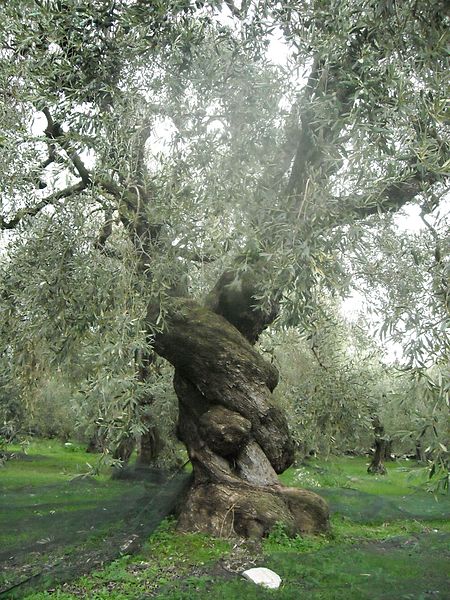
Ancient Olive Tree in Pelion, Greece

Psalm 52

To the leader. A Maskil of David, when Doeg the Edomite came to Saul and said to him, “David has come to the house of Ahimelech.”
1 Why do you boast, O mighty one,[1] of mischief done against the godly? All day long
2 you are plotting destruction. Your tongue is like a sharp razor, you worker of treachery.
3 You love evil more than good, and lying more than speaking the truth. Selah
4 You love all words that devour, O deceitful tongue.
5 But God will break you down forever; he will snatch and tear you from your tent; he will uproot you from the land of the living. Selah
6 The righteous will see, and fear, and will laugh at the evildoer, saying,
7 “See the one who would not take refuge in God, but trusted in abundant riches, and sought refuge in wealth!”
8 But I am like a green olive tree in the house of God. I trust in the steadfast love of God forever and ever.
9 I will thank you forever, because of what you have done. In the presence of the faithful I will proclaim your name, for it is good.
 
The basic question of the injustice that is present in the world when the boastful, deceptive, and wicked prosper while the righteous are persecuted informs the narrative of Psalm 52. This short poem or song which contrasts the wicked ‘mighty one’ and the righteous compares two opposing views of life and the poem pivots on God’s judgment of the mighty one in verse five. Although the superscription of this Psalm refers to a specific incident in the life of David, the big shot boaster who the first four verses describe can be found in any context. The way of the wicked may often appear to provide security in the moment, but the way of righteousness sinks deep roots of trust into the steadfast love of God.

The superscription of Psalm 52 places the words in the context of David’s flight from King Saul and the punishment of Ahimelech and the rest of the priests of the LORD. David, now fully convinced of Saul’s murderous intentions towards him, is fleeing Israel and arrives at Nob, a short journey away, where the tabernacle is. David seeks both food and a weapon from the priest Ahimelech, who is unaware of Saul’s intentions toward David, and after receiving these departs. Doeg the Edomite, the chief of Saul’s shepherds,[2] was also at the tabernacle and reports on these actions to Saul. Saul then gathers Ahimelech and the priests, accuses them of treachery, and then orders his guards to kill the priests. When the guards refuse this order from King Saul, Doeg the Edomite carries it out killing eighty-five priests and then putting the city of Nob, the city of priests, to the sword.

The psalm makes sense within the context of the narrative of 1 Samuel 21-22, as David can see the damage a violent and deceptive one has done to the righteous ones. Doeg could be viewed as one who does violence against the righteous, who plots destruction, whose words are sharp and who loves evil more than good. Doeg’s words and his sword have caused many deaths for those who offered David kindness and served the LORD as priests. In this moment, the suspicion of Saul and the deceptive words of Doeg are creating a world of injustice and violence.

Reading the Psalm in a more universal context, we can find many contemporary examples that fit the description of this ‘mighty one’ who ironically becomes the villain in this story. This ‘big man’ is one prospers at the expense of those attempting to live according to God’s will. They are schemers whose actions undercut the security of others and whose words are weapons that often cut deeper than a blade might. I’ve often parodied the old saying about ‘sticks and stones’ changing it to: ‘Sticks and stones may break my bones, but words will send me to therapy.’ When a person desires economic gain or power above the good of the community, deceitful words are often used and may do more damage to the life of the community than any action could. These devouring words once unleashed can seem to take up a life of their own, and the deceitful tongue that bears the sharp lie may produce great evil as it cuts into the trust which is the lifeblood of the communal life. As Beth Tanner can state:

We all know the damage of words. In a media-saturated world, lying words still cut like a razor. Indeed, we are surrounded by a culture that encourages us to be out only for ourselves and believes that our only protection is the wealth and possessions we amass behind gates that lock out the rest of the world. Words of advertisers and terrorists reduce our lives and diminish our delight. Abusive words by one we love and trust can do as much damage as a fist of knife. We know just as these ancient ones do that this way leads only to alienation and death. Any sane person would not choose this way to live, but instead grow slowly and surely as a great tree that flourishes in the house of God. (Nancy deClaisse-Walford 2014, 462-463)

Yet, in our media saturated culture which amplifies the boast of the mighty one and seems to thrive on the blood spilt by razor sharp words there are a plethora of instances where words demonized a group, split a community, and often destroy lives. Yet, the Psalmist states that this way will not stand, that God will not allow the mighty one who speaks evil and plots destruction to escape destruction forever. God will be the one who intervenes and balances the scales by removing the mighty one’s house from the people, who breaks down their defenses and walls, and who uproots them from the ground where the righteous remain planted.

Once God has acted to restore justice by uprooting the wicked, the psalm turns to the response of the righteous ones. Psalm 52 carries similar themes and imagery to Psalm 1 and in both psalms “the way of the wicked will perish.” (1:6) Yet, Psalm 52, instead of ending on the theme of the wicked perishing, now turns to the reaction of the righteous. The righteous see, and fear, and laugh. The righteous ones see and understand that the actions that uprooted the unrighteous one come from God. Fear in this context is the proper response to God, it is the beginning of wisdom (Psalm 110:11, Proverbs 1:7) and fear of God is understood throughout the Hebrew Scriptures mainly as reverence and awe. But the reaction to the ‘mighty one’ who has now fallen is laughter. The mighty one who trusted in the power and wealth gained through their deceitful ways and lying words has now become the fool who illustrates that wickedness and foolishness are ultimately the same thing. The way of the foolish may prove successful in the short term but in a world where God’s justice eventually levels the scales they find themselves uprooted while the wise/righteous endure like a green olive tree in the house of God. The wise know that the violence and deception of those who aggregate wealth and power will not endure, instead it is the steadfast love (hesed) of God which proves trustworthy and enduring. The injustices of this world and those who profit from them are real but they are not permanent.

[1] The Hebrew gibborim typically denotes a mighty warrior or hero. Here the context makes clear the ‘mighty one’ may be a big shot at the moment but is not in the Psalmist’s view heroic.

[2] Shepherds in the scriptures may be literally those who watch sheep, but the term is often used metaphorically to refer to a leader.

Gehenna, Tartaros, Sheol, Hades and Hell

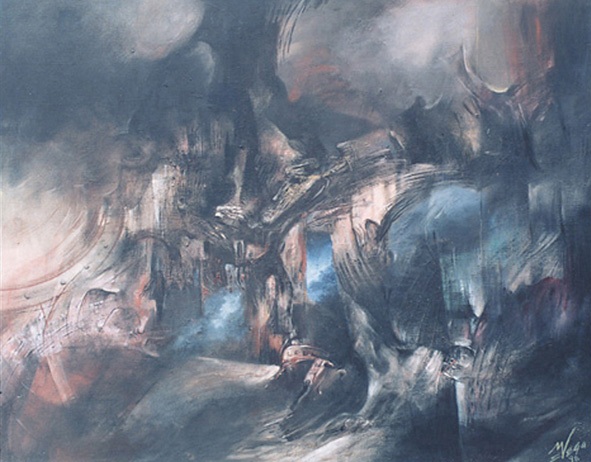
Mauricio Garcia Vega “Visita al infierno’ shared by artist under Creative Commons 3.0


For many Christians the concept of hell has a lot of baggage associated with it. In the New Testament Gehenna, Sheol, or Tartaros which are translated Hades (Sheol) or Hell (Gehenna or Tartaros) did not carry the same level of imagined meaning to its hearers. The New Testament is not primarily concerned with heaven and hell as locations for the afterlife reward and punishment, which is how most people hear these terms today.

The Afterlife in the Hebrew Scriptures

For most of ancient Judaism heaven was the place that God reigned from, but it was not a place where humans (except for a select few like Elijah and Enoch) were brought to be with God. The Hebrew Scriptures are primarily concerned with the relationship between God and the people of God in this life. The blessings of covenant faithfulness were to be experienced in the provision of God for the people and the curse of covenant unfaithfulness was experienced in the struggle and strife that occurred through invasion, famine and illness. There is a long history of lament when the blessings of covenant faithfulness seem to be denied by God unfairly, but this faithful protest to God still expected God’s action within the lifetime of the prophet or poet calling for God’s action. There is a concept of Sheol, a place where the dead rest, but it is not a place of punishment or reward but simply a place where the dead are. Two quick examples of the concept of Sheol in the Hebrew Scriptures: it occurs frequently in Psalms and Proverbs as a place where the dead go and where the faithful one will end up if God does not intervene. In Psalm 6:5 the author attempts to bargain with God to deliver them because, “For in death there is no remembrance of you; in Sheol who can give you praise?” Additionally, there was an understanding that, even though it was prohibited magic for the Jewish people, a medium was summoning the shade of a dead one from somewhere which we see in the story of Saul consulting the medium at Endor. (1 Samuel 28)

Belief about death would evolve near the end of the time where the Hebrew Scriptures were written because the experience of the people appeared to be in tension with the promise of covenant faithfulness. As Samuel Ballentine, quoting Peter Berger, can state:

“All socially constructed worlds are inherently precarious,” P. Berger observes. They are precarious because the socially managed consensus concerning right and wrong, good and evil, actions and abilities that are acceptable and those that exceed tolerable limits, is constantly threatened by chaos. (Ballentine, 1993, p. 139)

At the end of Isaiah, we see the first idea of an everlasting punishment for those who have rebelled against God. This is set within the larger context of an ingathering of the nations where all flesh worships before God but there is articulated a judgment for those who rebel against God that goes beyond this life:

And they shall go out and look at the dead bodies of the people who have rebelled against me; for their worm shall not die, their fire shall not be quenched, and they shall be an abhorrence to all flesh. (Isaiah 66:24)

In the Jewish writings like 2 Maccabees, Enoch and 2 Esdras, which are written between the time of the Hebrew Scriptures and the New Testament, we see the evolution of the resurrection of the dead but at the time of Jesus this is not a universal belief (the Pharisees and Jesus accept it but the Sadducees do not.)

In the New Testament

Tartaros occurs only in 2 Peter 2:4 and refers to a place where the rebellious angels are sent. This is combined in later theology to make hell the domain of the devil and the fallen angels, but this evolution has not occurred at the time when the New Testament is written. Satan has fallen from heaven, but his place seems to be on the earth at the time of the gospels. There is the concept of the Abyss in Revelation as well as angels and demonic forces which are unleashed from the sea and the earth as well as punishment in the lake of fire in Revelation 20: 11-15 where the devil and those who align themselves with him end up.

Sheol in the New Testament is translated Hades and is often in parallel with death. It seems to serve a similar function to the use of Sheol in the Hebrew Scriptures as a place where people are brought down to at death, but it also becomes personified as an entity (along with death) that is resisting God’s reign. In Matthew it is used twice, once in reference to Capernaum which has had ample opportunities to hear Jesus’ message and repent but since there has not been repentance will be brought down to Hades (Matthew 11:23) and most famously after the declaration of Peter:

And I tell you, you are Peter, and on this rock I will build my church and the gates of Hades will not prevail against it. (Matthew 16: 18)

Gehenna is used more in Matthew than in any other book of the New Testament (Matthew 5:22, 29, 30 [parallel Mark 9:43, 45,47] 10:28 [Parallel Luke 12: 5]; 18:9; 23: 15 and 33). The only uses outside of Matthew and Mark and Luke is James 3:6 (speaking about the tongues ability to set on fire being itself set on fire by Gehenna). To further explore Matthew’s concept, I’ve listed each place Matthew uses the idea of Gehenna.

22 But I say to you that if you are angry with a brother or sister, you will be liable to judgment; and if you insult a brother or sister, you will be liable to the council; and if you say, ‘You fool,’ you will be liable to the hell of fire… 29 If your right eye causes you to sin, tear it out and throw it away; it is better for you to lose one of your members than for your whole body to be thrown into hell. 30 And if your right hand causes you to sin, cut it off and throw it away; it is better for you to lose one of your members than for your whole body to go into hell. Matthew 5: 22, 29, 30 [parallel Mark 9:43, 45,47]

28 Do not fear those who kill the body but cannot kill the soul; rather fear him who can destroy both soul and body in hell. Matthew 10:28 [Parallel Luke 12: 5]

8If your hand or your foot causes you to stumble, cut it off and throw it away; it is better for you to enter life maimed or lame than to have two hands and two feet and to be thrown into the eternal fire. 9 And if your eye causes you to stumble, tear it out and throw it away; it is better for you to enter life with one eye than to have two eyes and to be thrown into the hell of fire (Matthew 18: 8-9)

15 Woe to you, scribes and Pharisees, hypocrites! For you cross sea and land to make a single convert, and you make the new convert twice as much a child of hell as yourselves. Matthew 23: 15

33 You snakes, you brood of vipers! How can you escape being sentenced to hell? Matthew 23: 33

Additionally Matthew does have a concept of the age of punishment in contrast to the age of life in Matthew 18:8, 19: 16, 29 and 25: 41 and 46. (I am intentionally not using the NRSV and most modern translations’ usage of eternal punishment and eternal life because these also have a lot of baggage in the Christian tradition).

Deror Avi, Picture of the Valley of Hinnom (2007) Shared by photographer under GNU Free Documentation License 1.2

Jesus, especially in Matthew and the synoptic tradition, does include punishment for those who choose the path of the wicked. The gospels use the term Gehenna a term that originates withthe valley of Hinnom, which was considered a cursed place and a place where trash from Jerusalem was burned but it also is used as the opposite of the kingdom of heaven. Choose the kingdom of heaven or choose Gehenna, it is a choice between wisdom and foolishness. I think it is difficult to argue that Jesus does not have some conception of a judgment that goes beyond this life that parallels the resurrection that also transcends this life. Yet, rather than giving us terrifying descriptions to fuel the imaginations, Jesus uses the term in a way that the people of his time would understand and that we can only approach through the accumulated tradition and imagination of the church and artists. Jesus doesn’t focus on Gehenna or heaven as a destination, instead he is focused on the kingdom of heaven’s approach to earth. Gehenna is the place that those who oppose the kingdom of heaven find themselves.

How do we as Christians almost two thousand years after Jesus death and resurrection approach this concept of judgement and hell? Here is some wisdom I can share that I’ve learned from other wise thinkers on our tradition. The first comes from Miroslav Volf in his work Exclusion and Embrace where in the final chapter he makes the point:

Most people who insist on God’s “nonviolence” cannot resist using violence themselves (or tacitly sanctioning its use by others). They deem the talk of God’s judgment irreverent, but think nothing of entrusting judgment into human hands, persuaded presumably that this is less dangerous and more humane than to believe in a God who judges! That we should bring “down the powerful from their thrones” (Luke 1: 51-52) seems responsible; the God should do the same, as the song of that revolutionary Virgin explicitly states, seems crude. And so violence thrives, secretly nourished by belief in a God who refuses to wield the sword.

My thesis that the practice of nonviolence requires a belief in divine vengeance will be unpopular with many Christians, especially theologians in the West. To the person who is inclined to dismiss it, I suggest imagining that you are delivering a lecture in a war zone (which is where a paper that underlies this chapter was originally delivered). Among your listeners are people whose cities and villages have been first plundered, then burned and leveled to the ground, whose daughters and sisters have been raped, whose fathers and brothers have had their throats slit. The topic of the lecture: a Christian attitude toward violence. The thesis: we should not retaliate since God is perfect noncoercive love. Soon you would discover it takes the quiet suburban home for the birth of the thesis that human nonviolence corresponds to God’s refusal to judge. In a scorched land, soaked in the blood of the innocent, it will invariably die. And as one watches it die, one will do well to reflect about many other pleasant captivities of the liberal mind. (Volf, 1996, pp. 303-304)

Additionally, I would add the way we often use the concept of eternal damnation and salvation incorrectly, something I learned from Lesslie Newbingin:

In the debate about Christianity and the world’s religions it is fair to say that there has been an almost unquestioned assumption that the only question is, “What happens to the non-Christian after death?” I want to affirm that this is the wrong question and that as long as it remains the central question we shall never come to the truth. And this for three reasons:

    1. First, and simply, it is the wrong question because it is a question to which God alone has the right to give the answer….
    2. The second reason for rejecting this way of putting the question is that it is based on an abstraction. By concentrating on the fate of the individual soul after death, it abstracts the soul from the full reality of the human person as an actor and sufferer in the ongoing history of the world…
    3. The third reason for rejecting this way of putting the question is the most fundamental: it is that the question starts with the individual and his or her need to be assured of ultimate happiness, and not with God and his glory.(Newbingin, 1989, pp. 177-179)

Ultimately questions of heaven and hell, salvation and damnation are not in my control, and that is something I am thankful for. I do trust that God is wiser than I am in judgment and that ultimately the injustice in this world will not outlast God’s justice. The world’s violence will not ultimately thwart God’s kingdom of peace. Beyond this I can accept that there is an opposite to the kingdom of heaven that Jesus announces to those who hear him, but instead of focusing on Gehenna and the path of foolishness I attempt to follow the path of the kingdom and share it with those who have ears to hear. Beyond this part which I can live and proclaim I leave the rest in God’s capable hands.

Psalm 37 A Song of a Wise Life

An Old Woman Reading, Probably the Prophetess Hannah by Rembrandt (1631)

Psalm 37

<Of David.>
1 א  Do not fret because of the wicked; do not be envious of wrongdoers,
 2 for they will soon fade like the grass, and wither like the green herb.
 3 ב Trust in the LORD, and do good; so you will live in the land, and enjoy security.
 4 Take delight in the LORD, and he will give you the desires of your heart.
 5 ג Commit your way to the LORD; trust in him, and he will act.
 6 He will make your vindication shine like the light, and the justice of your cause like the noonday.
 7 ד Be still before the LORD, and wait patiently for him; do not fret over those who prosper in their way, over those who carry out evil devices.
 8 ה Refrain from anger, and forsake wrath. Do not fret — it leads only to evil.
 9 For the wicked shall be cut off, but those who wait for the LORD shall inherit the land.
 10 ו Yet a little while, and the wicked will be no more; though you look diligently for their place, they will not be there.
 11 But the meek shall inherit the land, and delight themselves in abundant prosperity.
 12 ז The wicked plot against the righteous, and gnash their teeth at them;
 13 but the LORD laughs at the wicked, for he sees that their day is coming.
 14 ח The wicked draw the sword and bend their bows to bring down the poor and needy, to kill those who walk uprightly;
 15 their sword shall enter their own heart, and their bows shall be broken.
 16 ט Better is a little that the righteous person has than the abundance of many wicked.
 17 For the arms of the wicked shall be broken, but the LORD upholds the righteous.
 18 י The LORD knows the days of the blameless, and their heritage will abide forever;
 19 they are not put to shame in evil times, in the days of famine they have abundance.
 20 כ But the wicked perish, and the enemies of the LORD are like the glory of the pastures; they vanish — like smoke they vanish away.
 21 ל The wicked borrow, and do not pay back, but the righteous are generous and keep giving;
 22 for those blessed by the LORD shall inherit the land, but those cursed by him shall be cut off.
 23 מ Our steps are made firm by the LORD, when he delights in our way;
 24 though we stumble, we shall not fall headlong, for the LORD holds us by the hand.
 25 נ I have been young, and now am old, yet I have not seen the righteous forsaken or their children begging bread.
 26 They are ever giving liberally and lending, and their children become a blessing.
 27 ס Depart from evil, and do good; so you shall abide forever.
 28 For the LORD loves justice; he will not forsake his faithful ones.
    ע The righteous shall be kept safe forever, but the children of the wicked shall be cut off.
 29 The righteous shall inherit the land, and live in it forever.
 30 פ The mouths of the righteous utter wisdom, and their tongues speak justice.
 31 The law of their God is in their hearts; their steps do not slip.
 32 צ The wicked watch for the righteous, and seek to kill them.
 33 The LORD will not abandon them to their power, or let them be condemned when they are brought to trial.
 34 ק Wait for the LORD, and keep to his way, and he will exalt you to inherit the land; you will look on the destruction of the wicked.
 35 ר I have seen the wicked oppressing, and towering like a cedar of Lebanon.
 36 Again I passed by, and they were no more; though I sought them, they could not be found.
 37  ש Mark the blameless, and behold the upright, for there is posterity for the peaceable.
 38 But transgressors shall be altogether destroyed; the posterity of the wicked shall be cut off.
 39  ת The salvation of the righteous is from the LORD; he is their refuge in the time of trouble.
 40 The LORD helps them and rescues them; he rescues them from the wicked, and saves them, because they take refuge in him.

I have introduced the Hebrew letters at the beginning of each acrostic line to show the structure of this poem. The psalms frequently use acrostic poetry as a form which tends to denote a completion of thought from Aleph to Tav (or in our alphabet the equivalent would be from A to Z). Psalm 37 uses this form to express the contrast between the life of the wicked and the life of the righteous. The psalm was works in a similar way to the book of Proverbs where the words are a tool for passing on a manner of life that values the correct things. It encourages the hearer to take the long view of life as it compares the momentary success of the wicked and the way of the righteous.

Psalm 37, like much wisdom literature, wrestles with the common question of every age: Why do those who seem to be wicked often prosper and those who are faithful struggle? Or in simpler terms: Why do good things happen to bad people and bad things to good people? No psalm, poetry, proverbs or philosophy can adequately address every aspect of this fundamental question, but the poets, wise ones and prophets of the bible do attempt to give their provisional answers to these questions because they are important to how they understand what a good life looks life. In the psalms God is fundamentally trustworthy and, even when situations seem to testify otherwise, the authors trust that God’s will and God’s way will prevail. Psalm 37 attempts to make a case for faithfulness in the seeming prosperity of the faithless and for the long view of life in contrast to the ways of the wicked which focus on the immediate reward of their actions.

The psalm invites us into a life that is not dominated by worrying about how other’s actions are rewarded but rather to trust in the LORD amid the positives and negatives of life. It encourages the hearer to expand the horizon of their consideration beyond the transitory present. Throughout the psalms the LORD is trustworthy, sees the struggles of the righteous and does, in God’s time, act. The longstanding faithfulness of God is contrasted with the transitory prosperity of those who act unethically or who live wicked lives that are centered on their own interests. Vengeance and justice rest in God’s hands and it is ultimately God who will cut off the wicked, who will bring their plots and their power to an end. Their own actions will become their undoing and in time they will fade away while the righteous endure. For now, they may be imposing, like the cedars of Lebanon, but the day will come when the LORD’s ax will cut them down at the roots.

This psalm echoes in the sermon on the mount, where Jesus can state, “Blessed are the meek, for they shall inherit the earth.” (Matthew 5:5) In contrast to a worldview where one should seize all that one can this psalm offers a view of the world that outlasts those who grasp for land, wealth and power. This bit of wisdom points to a life of generosity and trust. One can lend and give generously because the righteous one can trust that the LORD will provide for their needs. They in their lives of generosity, the lives they model and hand on to their children, become a blessing to the world around them. They seek the good of the community and justice trusting that their God is a God of goodness and justice.

Psalm 37 in particular and wisdom literature in general attempts to pass on a way of life and cultivate practices that lead towards a whole life. I believe we ask this question too infrequently in our time. The question of the practices and values of a good life are questions that need to be asked as they are handed on from generation to generation. Part of the answer comes from the experiences of life. Like the psalmist we may be able to reflect upon times where someone’s power and prosperity that were accumulated in an unjust manner proved temporary. Like the psalmist we may reflect upon the way that God’s prosperity has provided for us in our own life. Reflections like this one do not deny the challenge of those who prosper while doing evil or who struggle while trying to live a righteous life. But they wrestle with these questions from the position of trust. The psalmist and those who echo this psalm believe that God is ultimately trustworthy. They believe, even when confronted by those who see prosperity in a life that goes against their values, that a life lived in the practices of wisdom and righteousness are worth living. They view life in a longer horizon than the profits of the moment or the experience of the day. Without discounting their present experience, they can set aside their anger, envy and strife because they trust that the LORD who has created the day will provide for them today and tomorrow. They sing a song of gratitude and trust and that song shapes the values and practices of the life they live.