Deuteronomy 9: 1-5 The Promise of God

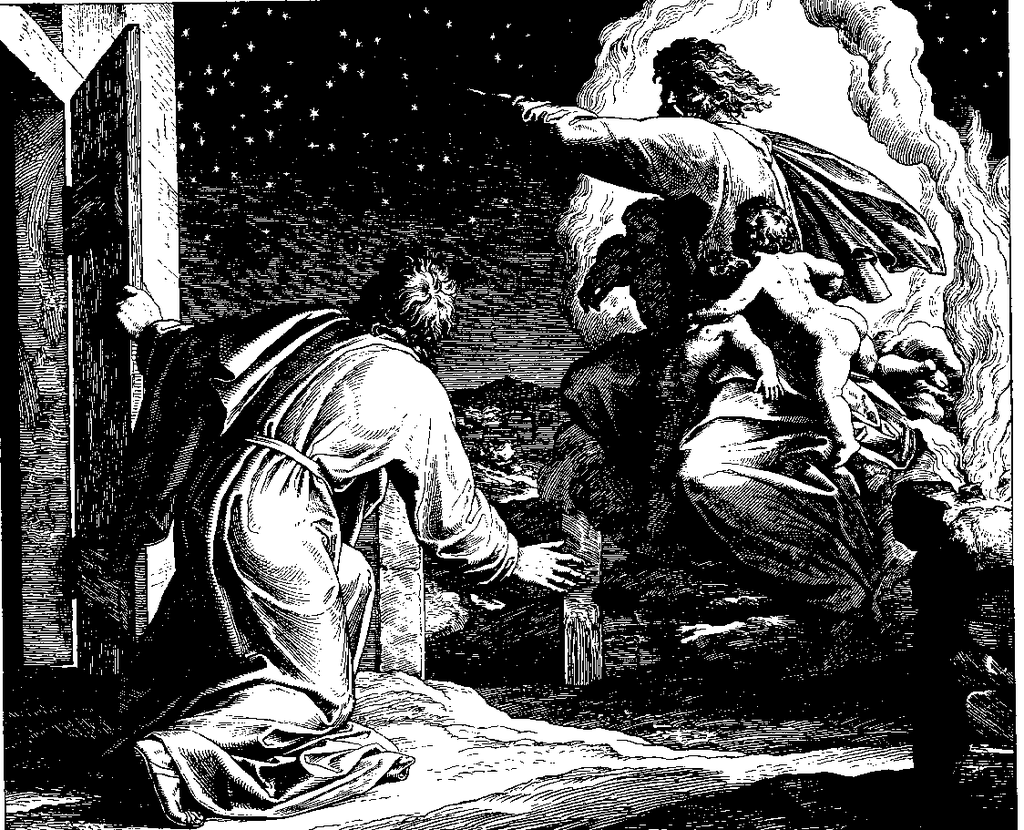
Julius Schnorr von Carolsfeld woodcut for “Die Bibel in Bildern” (1860) God telling Abraham to Count the Stars
1 Hear, O Israel! You are about to cross the Jordan today, to go in and dispossess nations larger and mightier than you, great cities, fortified to the heavens, 2 a strong and tall people, the offspring of the Anakim, whom you know. You have heard it said of them, “Who can stand up to the Anakim?” 3 Know then today that the LORD your God is the one who crosses over before you as a devouring fire; he will defeat them and subdue them before you, so that you may dispossess and destroy them quickly, as the LORD has promised you.
4 When the LORD your God thrusts them out before you, do not say to yourself, “It is because of my righteousness that the LORD has brought me in to occupy this land”; it is rather because of the wickedness of these nations that the LORD is dispossessing them before you. 5 It is not because of your righteousness or the uprightness of your heart that you are going in to occupy their land; but because of the wickedness of these nations the LORD your God is dispossessing them before you, in order to fulfill the promise that the LORD made on oath to your ancestors, to Abraham, to Isaac, and to Jacob.
In the first three chapters of Deuteronomy, Moses takes the people through a retelling of their failure the first time they explored the Promised Land and then the conquering of King Sihon of Heshbon and King Og of Bashan there is a continual reference to a fear of the Anakim, a group of people larger and stronger than the Israelites. Already in the narrative of Deuteronomy we have seen how this narrative of fear kept the people out of the Promised Land a generation before and how the people have already begun to conquer nations more powerful than themselves with great cities. Moses continues, in the narrative, to prepare the people to continue without him. Moses wants the people to understand that it is not because of their might (Deuteronomy 7) that they are chosen by God, or by their prosperity (Deuteronomy 8) or by their own righteousness or piety (Deuteronomy 9) that God is acting on their behalf. As a people their future is dependent upon their God and the promises that this God has made.
In seeking to make sense of the world the Deuteronomist provides his reason for the LORD’s action against the nations that currently occupy the land the people of Israel are preparing to occupy. It is not the righteousness of the people of Israel but the unrighteousness, or wickedness, of the people of the land. Israel has not merited God’s favor, but the nations of the land have somehow merited the divine disfavor. Much as in Romans 11, the Apostle Paul can make an argument against arrogance by the new Gentile Christians not to boast about their being grafted onto the tree of God’s faithful people, here Moses tells the people not to become arrogant over their new position in the Promised Land for their position is contingent upon God’s faithfulness to God’s promise. Moses casts back to the promise made to Abraham, Isaac and Jacob that their descendants would become a great nation. In Genesis 15 the LORD promises Abram (later Abraham) that his descendants shall be as numerous as the stars of heaven and in Genesis 12 there is the promise of the land to Abram’s descendants.
Deuteronomy 9: 6-29 An Unrighteous and Stubborn People

Antonio Molinari, Adoration of the Golden Calf between 1700 and 1702
6 Know, then, that the LORD your God is not giving you this good land to occupy because of your righteousness; for you are a stubborn people. 7 Remember and do not forget how you provoked the LORD your God to wrath in the wilderness; you have been rebellious against the LORD from the day you came out of the land of Egypt until you came to this place.
8 Even at Horeb you provoked the LORD to wrath, and the LORD was so angry with you that he was ready to destroy you. 9 When I went up the mountain to receive the stone tablets, the tablets of the covenant that the LORD made with you, I remained on the mountain forty days and forty nights; I neither ate bread nor drank water. 10 And the LORD gave me the two stone tablets written with the finger of God; on them were all the words that the LORD had spoken to you at the mountain out of the fire on the day of the assembly. 11 At the end of forty days and forty nights the LORD gave me the two stone tablets, the tablets of the covenant. 12 Then the LORD said to me, “Get up, go down quickly from here, for your people whom you have brought from Egypt have acted corruptly. They have been quick to turn from the way that I commanded them; they have cast an image for themselves.” 13 Furthermore the LORD said to me, “I have seen that this people is indeed a stubborn people. 14 Let me alone that I may destroy them and blot out their name from under heaven; and I will make of you a nation mightier and more numerous than they.”
15 So I turned and went down from the mountain, while the mountain was ablaze; the two tablets of the covenant were in my two hands. 16 Then I saw that you had indeed sinned against the LORD your God, by casting for yourselves an image of a calf; you had been quick to turn from the way that the LORD had commanded you. 17 So I took hold of the two tablets and flung them from my two hands, smashing them before your eyes. 18 Then I lay prostrate before the LORD as before, forty days and forty nights; I neither ate bread nor drank water, because of all the sin you had committed, provoking the LORD by doing what was evil in his sight. 19 For I was afraid that the anger that the LORD bore against you was so fierce that he would destroy you. But the LORD listened to me that time also. 20 The LORD was so angry with Aaron that he was ready to destroy him, but I interceded also on behalf of Aaron at that same time. 21 Then I took the sinful thing you had made, the calf, and burned it with fire and crushed it, grinding it thoroughly, until it was reduced to dust; and I threw the dust of it into the stream that runs down the mountain.
22 At Taberah also, and at Massah, and at Kibroth-hattaavah, you provoked the LORD to wrath. 23 And when the LORD sent you from Kadesh-barnea, saying, “Go up and occupy the land that I have given you,” you rebelled against the command of the LORD your God, neither trusting him nor obeying him. 24 You have been rebellious against the LORD as long as he has known you.
25 Throughout the forty days and forty nights that I lay prostrate before the LORD when the LORD intended to destroy you, 26 I prayed to the LORD and said, “Lord GOD, do not destroy the people who are your very own possession, whom you redeemed in your greatness, whom you brought out of Egypt with a mighty hand. 27 Remember your servants, Abraham, Isaac, and Jacob; pay no attention to the stubbornness of this people, their wickedness and their sin, 28 otherwise the land from which you have brought us might say, ‘Because the LORD was not able to bring them into the land that he promised them, and because he hated them, he has brought them out to let them die in the wilderness.’ 29 For they are the people of your very own possession, whom you brought out by your great power and by your outstretched arm.”
In C.S. Lewis’ classic book the Lion, the Witch and the Wardrobe there is a scene where the children are discussing Aslan, who they have not met yet, with Mr. and Mrs. Beaver. With Aslan being a lion one of the children asks if he is safe, to which Mr. Beaver replies, “Safe?…Don’t you hear anything that Mrs. Beaver tells you? Who said anything about safe? ‘Course he isn’t safe. But he’s good.” In that story the lion Aslan can be fierce but also gentle but is not domesticated. The LORD that the people of Israel come to know in their story is good but certainly not safe. Their narrative reminds them that they continually tested God throughout their Exodus and there were several times where their very existence was at risk because they offended their LORD and Moses had to intervene on behalf of the people and their leaders. The people often sought in the past and will continue to seek in the future more domesticated gods that provide for them without expecting who they are to change as individuals and as people. These gods of the nations around them that are placated by various offerings and activities rather than the LORD who demands their obedience and is never safe.
The narrative of Deuteronomy reminds the people of the story of their ancestors and gives a time period to the time Moses is up on the Mountain of Sinai (Horeb) receiving the ten commandments, the regulations for the priests, the design for the tabernacle, and several other ordinances. This part of the story where Moses receives all of these things is laid out in Exodus 20-31. This story in Deuteronomy is used to show the contrast between Moses’ faithfulness and the people’s unfaithfulness. While Moses spends the forty days on the mountain fasting and receiving the stone tablets from the LORD, the people at the base of Mount Sinai (Horeb) are violating the very heart of the commands Moses is receiving. For the LORD declares that they are not to cast images or to follow other Gods, and the LORD their God is indeed a jealous God. Wonders and signs may make the people trust in the moment but they rarely in the bible seem to create a lasting sense of trust, and so Moses takes them back to the story again so they can remember how time after time they put their own future in jeopardy in the past by trusting other gods and tries to encourage them not to repeat this practice in the future.
Moses in this story represents what Israel is to be. Moses stands between God and the people and intercedes for them, fasts for them, places his own safety at risk with this unsafe God and reminds God again of the promises God has made, of God’s reputation, and daringly calls upon God to be God. Moses wrestles with God (which is where the name Israel comes from) on behalf of the people and on behalf of Aaron and on behalf of God as well. Moses and the people stand in sharp contrast, Moses is engaged with the one LORD while the people craft an image of gold. Moses does not eat or drink for forty days twice while the emphasis is on the people eating and drinking and reveling in Exodus 32. Moses emphasizes that both they and Aaron where close to being consumed by the LORD’s wrath before this wrath turned away. Moses also lifts up Taberah, Massah and Kibroth-hattaavah (Numbers 11: 1-3; Exodus 17: 1-7 and Numbers 11: 31-34) as well as Kadesh-barnea (which was already highlighted in Deuteronomy 1: 19-45) as additional times where the LORD’s anger was kindled and with each of these stories the people failed in their calling to trust and obey the LORD. Moses argues like a lawyer laying out the case before the people that they are far from righteous on their own, but rather they are the beneficiaries of the divine provision in spite of their and their ancestor’s stubbornness. Their reception of the land is a result of God’s promise rather than their own abilities or piety.
For the people of Israel the god of moralism is not to be their god. They are a covenant people claimed by the LORD, the God of Israel and to be a covenant people is to be set aside because of God’s calling. If the book of Deuteronomy is compiled in the Babylonian exile, as many scholars believe, and the people are reflecting upon how they, with the temple and a Davidic king and the land, now found themselves in exile. They are reexamine their own story critically, trying to discover where they failed in their calling as the people of the God of Israel. Perhaps in the tradition of Jeremiah they are looking toward the time when the LORD will make a new covenant with them and put the LORD’s law within them and they shall all know the LORD (see Jeremiah 31; 31-34). They are a people who are ultimately dependent on their God’s righteousness and to use Martin Luther’s famous language about this righteousness it is an ‘alien righteousness’ that is given to them but does not belong to them. They are a people constituted by God’s calling. Perhaps Moses, in Deuteronomy, like many of the great revival preachers of the 1800s is trying to call the people back to the LORD, appealing to the fear of what would happen if their covenant with the LORD is dissolved. But they stand at the edge of the Promised Land due to the favor of a good but unsafe and not domesticated God. The narrative of Deuteronomy takes the reader back to this point and leaves them in this place and begs them to live in a way that is faithful to the calling they have received and the learn to trust and obey their LORD because their lives do depend upon it.

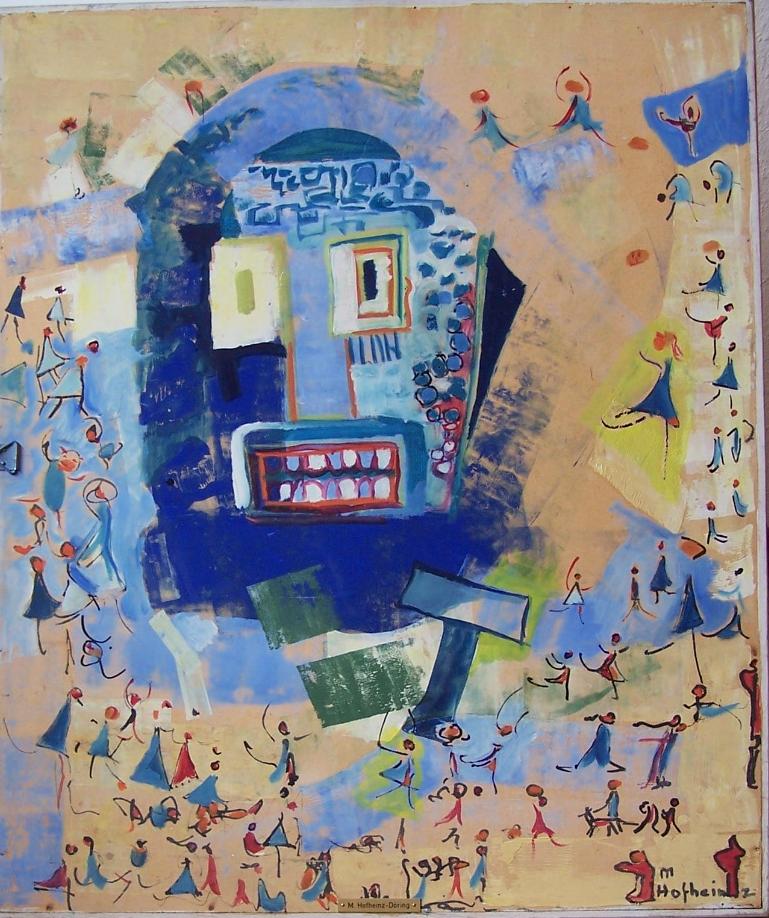
Margaret Hofheinz-Doring, Worship of the Golden Calf (1962) shared under Creative Commons Attribution-Share Alike 3.0