Tag Archives: righteousness

Matthew 6: 19-34 Wealth, Anxiety and Righteousness

Evelyn De Morgan, The Worship of Mammon (1909)

Matthew 6: 19-34

Parallel Luke 12: 33-34, Luke 11: 34-36, Luke 16: 13, Luke 12: 22-32

19 “Do not store up for yourselves treasures on earth, where moth and rust consume and where thieves break in and steal; 20 but store up for yourselves treasures in heaven, where neither moth nor rust consumes and where thieves do not break in and steal. 21 For where your treasure is, there your heart will be also.

22 “The eye is the lamp of the body. So, if your eye is healthy, your whole body will be full of light; 23 but if your eye is unhealthy, your whole body will be full of darkness. If then the light in you is darkness, how great is the darkness!

24 “No one can serve two masters; for a slave will either hate the one and love the other, or be devoted to the one and despise the other. You cannot serve God and wealth.

25 “Therefore I tell you, do not worry about your life, what you will eat or what you will drink, or about your body, what you will wear. Is not life more than food, and the body more than clothing? 26 Look at the birds of the air; they neither sow nor reap nor gather into barns, and yet your heavenly Father feeds them. Are you not of more value than they? 27 And can any of you by worrying add a single hour to your span of life? 28 And why do you worry about clothing? Consider the lilies of the field, how they grow; they neither toil nor spin, 29 yet I tell you, even Solomon in all his glory was not clothed like one of these. 30 But if God so clothes the grass of the field, which is alive today and tomorrow is thrown into the oven, will he not much more clothe you — you of little faith? 31 Therefore do not worry, saying, ‘What will we eat?’ or ‘What will we drink?’ or ‘What will we wear?’ 32 For it is the Gentiles who strive for all these things; and indeed your heavenly Father knows that you need all these things. 33 But strive first for the kingdom of God and his righteousness, and all these things will be given to you as well.

34 “So do not worry about tomorrow, for tomorrow will bring worries of its own. Today’s trouble is enough for today.

Following three practices of righteousness (acts of mercy or giving alms, prayer and fasting) we encounter a set of interconnecting proverbs connecting the relationship of the disciple to wealth and the anxiety encountered around possessions. From the very beginning of the Sermon on the Mount we’ve seen an emphasis on possessions, giving to those who beg and not refusing those who want to borrow and doing acts of mercy in this kingdom of heaven where the poor in spirit can be blessed. This kingdom of God that the disciple is to seek depends upon the abundance of God’s provisions rather than the disciple’s ability to accumulate wealth, power and property to secure their own future. Their treasure rests with the God they serve and their trust in God’s provision frees them from the anxiety produced by the cares of the world and the lures of wealth.

Martin Luther’s explanation of the first commandment where the disciple is to, “fear, love and trust God above all things” (Luther, 1978, p. 13) taps into the same wisdom as these sayings in the Sermon on the Mount. Love and trust in God are bound together and placing trust in something other than God, like wealth, interferes not only with the trust in God but also the disciples’ ability to love God. If the kingdom of heaven is approaching, like the Sermon on the Mount assumes and Jesus’ practice of sharing the table anticipates, then images like the image of the banquet in Isaiah 55 probably shape the imagination of Jesus’ hearers. As Isaiah can state:

Ho, everyone who thirsts, come to the waters; and you that have no money, come, buy and eat! Come, buy wine and milk without money and without price. Why do you spend your money for that which is not bread, and you labor for that which does not satisfy? Listen carefully to me, and eat what is good, and delight yourselves in rich food. Isaiah 55:1-2

I’m convinced that the great idol in the United States is security. People are told to attempt to secure the future for their retirement, for their health, and entire industries are engaged in helping people achieve this illusory security they seek. Yet this displacement of joy and happiness to a future time, or the inability to secure one’s own security is a source of anxiety for many people. The accumulation of wealth on earth can provide moments of happiness and treasures and wealth are not bad things, unless they are placed in a position of prominence where they become the meaning of our life, the thing that we serve. Yet, there is a note of hope in this passage because how we use our wealth can help lead us to the life we desire to live. As Mark Allan Powell can state,

Jesus does not want us to give from the heart. He wants us to give according to where we believe our hearts should be, to give according to where we hope our hearts will someday be. Give of your treasure and let your heart catch up. (Powell, 2004, p. 140)

The proverb about the eye being the lamp of the body may seem out of place in between two proverbs talking about treasures or wealth, but when paired with the other two proverbs (and the longer saying about anxiety and possessions) we can see the orientation of the eye towards wealth or possessions is the darkness spoken of here. The culminative effect of this group of sayings is to encourage the disciple to make the wise choice of looking (or seeking) first for the kingdom of God. In contrast to the kingdom of God which is light, seeking the ways of this world is the unwise way of darkness.

Jesus is calling his disciples to trust in God and not to have divided loyalties. As he will later share in the Parable of the Sower those who are ensnared by the cares of the world and the lure of wealth will choke the word that has been sowed among them and make them yield nothing. (Matthew 13: 22) One can trust in wealth or one can trust in God. The NRSV translates mammon as wealth, and while this is correct it misses the way in which the text personifies wealth into an entity which is able to possess and demand allegiance. Mammon becomes an alternative, and an attractive one for many people, to trusting in God to provide security.

After these three proverbs which point to the wisdom of trusting and serving God rather than attempting to secure our own security by hoarding or serving ‘wealth’ we are told therefore not to be anxious about our life and the things we need.  The Greek merimnao which is translated worry by the NRSV has the meaning of anxiety or even obsession about the object of concern. (Allen, 2013, p. 77)  Food, drink and clothing can become objects of this anxiety when one begins to adopt the worldview of providing one’s own security and provision. God takes care of the birds of the air, the grass of the field and the righteous will be provided for as well. In a world which seeks to ensnare the righteous in its snares and the lure of mammon the disciple of God is called to trust that God has given them enough, that God will provide daily bread and drink and clothing. They are to be different than the nations, to embody a different relationship with the fruit of their labor. The disciples do not abandon sowing or working, but instead this sowing and working is a part of their life before God instead of their own struggle to secure their own future. The future will bring worries of its own, but the God who is faithful today will also be faithful in the future. They live seeking righteousness knowing that they will be filled with the bread and drink of the banquet of God’s kingdom. They seek the security and wealth of the kingdom of God even though they may be the poor in spirit or those persecuted for righteousness sake.

One final translation note that I think is important to hearing Matthew in a less judgmental way. In verse thirty we have the first use of the Greek word oligopistos which is almost universally translated ‘You of little faith’ which is a proper English rendering of this adjective which always appears in the second person form (mostly plural but once as a singular form because it is addressing Peter). This term occurs four additional times throughout Matthew[1], always addressing either a disciple or disciples. My struggle with the traditional translation is the statement, ‘You of little faith’ in English implies a biting and condescending tone. The more I’ve listened to Matthew’s gospel, the more I’ve read this term as ‘little faith ones,’ a term of endearment or compassion. Instead of upbraiding the disciples who are listening for not having enough faith or trusting enough, perhaps Jesus here, and throughout the gospel is encouraging his little faith ones who are gathered around him, encountering the struggle of seeking the kingdom of God while the snares of the world are still present.

A part of this translation of oligopistos as ‘little faith ones’ goes to the heart of my struggle with the way the Sermon on the Mount is often presented. If Jesus is the embodiment of the judgmental God who is setting an unrealistic perfectionistic standard, then being derided as ‘You of little faith’ makes sense within this context. Yet, I am an heir of the Lutheran reformation which began with one man’s search for a gracious God, and I know that informs my view of Jesus who we meet in the scriptures. It is a part of my search for a way of reading the Sermon in a way that goes beyond an individualistic and moralistically perfectionist reading. I understand this reading is going against the grain of established scholarship, but it is also done for the little faith ones, like myself, who go to the scriptures seeking wisdom and seek the kingdom while still struggling with: the anxieties of the world, having both treasures and hearts in the right place, having eyes turned toward the kingdom of heaven and feeling the pull of two opposing masters.

[1] Matthew 8: 23-26; 14: 28-31; 16: 5-10; 17: 18-20

Matthew 6: 16-18 Exploring Fasting and Righteousness

Ivan Kramskoy, Christ in the Desert (1872)

Matthew 6: 16-18

16 “And whenever you fast, do not look dismal, like the hypocrites, for they disfigure their faces so as to show others that they are fasting. Truly I tell you, they have received their reward. 17 But when you fast, put oil on your head and wash your face, 18 so that your fasting may be seen not by others but by your Father who is in secret; and your Father who sees in secret will reward you.

The third practice of righteousness that Jesus lifts up is fasting. Fasting, like prayer, is often considered in terms of personal piety but most of the discussion of fasting in the scriptures, like here, pushes against a public demonstration of piety. The disciple again acts in private, but their actions related to the community are to embody the justice they are to live. Much of the discussion of fasting in the Hebrew Scriptures comes in the prophets as they criticize the way fasting is done by other members of the community and attempt to reunite fasting with the practices of righteousness.

Both Jeremiah and Isaiah have the LORD rejecting the fasting of the people because of the wider practices of unrighteousness. This stark language from God in Jeremiah will draw protest from Jeremiah for the people’s sake:

The LORD said to me: Do not pray for the welfare of this people. Although they fast, I do not hear their cry, and although they offer burnt offering and grain offering, I do not accept them; but by the sword, by famine, and by pestilence I consume them. Jeremiah 14: 11-12

Even though the LORD commands Jeremiah to no longer pray for the people, Jeremiah does exactly that to intercede on their behalf. The prophet is still in a person where the words and actions are seen and heard by God for the people, but the practices of the people cannot be separated from either fasting or offering sacrifice. In a similar way the prophet Isaiah criticizes the disconnection of religious practices from practices of righteousness in his familiar critique:

Shout out, do not hold back! Lift up your voice like a trumpet! Announce to my people their rebellion, to the house of Jacob their sins. Yet day after day they seek me and delight to know my ways, as if they were a nation that practiced righteousness and did not forsake the ordinance of their God; the ask of me righteous judgments, they delight to draw near to God. “Why do we fast, but you do not see? Why humble ourselves, but you do not notice?” Look, you serve your own interest on your fast day, and oppress all your workers. Look, you fast only to quarrel and to fight and to strike with a wicked fist. Such fasting as you do today will not make your voice heard on high. Is such the fast I choose, a day to humble oneself? Is it to bow down the head like a bulrush, and to lie in sackcloth and ashes? Will you call this a fast, a day acceptable to the LORD? Is not this the fast I choose: to loose the bonds of injustice, to undo the thongs of the yoke, to let the oppressed go free, and to break every yoke? Is it not to share your bread with the hungry, and to bring the homeless poor into your house; when you see the naked, to cover them, and not to hide yourself from your own kin?  Isaiah 58: 1-7

I’ve quoted Isaiah at length because this understanding of fasting also connects with final teaching of Jesus in Matthew’s gospel where the righteous are those who fed the hungry, gave drink to the thirsty, clothed the naked, welcomed the stranger, cared for the sick and visited the imprisoned. (Matthew 25: 31-46)

Fasting is an appropriate practice of righteousness as a practice of repentance (see for example Joel 1: 13-18; 2: 12-17; Jonah 3: 5-9) and is practiced by the followers of John the Baptist (Matthew 9: 14-15) and Jesus’ followers are criticized for their lack of fasting in comparison with the Pharisees and the followers of John the Baptist. Fasting is appropriate to times and seasons, but it is also to be a practice which doesn’t exempt the disciple from their normal manner of interacting with the community. Fasting is not an excuse for oppressing workers or quarreling and fighting. Instead fasting is to be an act seen by God and is to be instead of a mournful act a joyful act for the kingdom. As the prophet Zechariah can state:

The word of the LORD of hosts came to me, saying: Thus says the LORD of hosts: The fast of the fourth month, and the fast of the fifth, and the fast of the seventh , and the fast of the tenth, shall be seasons of joy and gladness, and cheerful festivals for the house of Judah: therefore love truth and peace. Zechariah 8: 18-19

Matthew 6 is read in churches that follow a lectionary at the beginning of the season of Lent where fasting is one of the practices that Christians may choose to practice in this time of forty days. Fasting can be a challenging discipline to practice but it does not exempt the disciple choosing to fast from engaging in the life of the community or the world around them. The community which practices fasting and righteousness will be seen, even when the individual disciple’s fast is not. They will be seen by the way they loose the bonds of injustice and their fasting allows them to hunger and thirst for righteousness. Fasting may be an occasion for repentance but should also be practiced in joy, for such seems to be the fast that the Jesus chooses for his disciples.

Matthew 6: 5-15 Exploring Prayer, Forgiveness and Righteousness

James Tissot, The Lord’s Prayer (1896-1894)

Matthew 6: 5-15

Parallels : Mark 11: 25-26, Luke 11: 1-4

5 “And whenever you pray, do not be like the hypocrites; for they love to stand and pray in the synagogues and at the street corners, so that they may be seen by others. Truly I tell you, they have received their reward. 6 But whenever you pray, go into your room and shut the door and pray to your Father who is in secret; and your Father who sees in secret will reward you.

7 “When you are praying, do not heap up empty phrases as the Gentiles do; for they think that they will be heard because of their many words. 8 Do not be like them, for your Father knows what you need before you ask him.

9 “Pray then in this way:
Our Father in heaven, hallowed be your name.
10 Your kingdom come. Your will be done, on earth as it is in heaven.
11 Give us this day our daily bread.
12 And forgive us our debts, as we also have forgiven our debtors.
13 And do not bring us to the time of trial, but rescue us from the evil one.

14 For if you forgive others their trespasses, your heavenly Father will also forgive you; 15 but if you do not forgive others, neither will your Father forgive your trespasses. 

This second practice of righteousness is prayer, but the prayer is between the disciple and their heavenly Father and is not done to either impress the surrounding community or God with their piety or eloquence. As mentioned above, the righteousness that we are encountering in Matthew has little to do with the way we often think of religious piety. Instead it is based upon the security of the individual and the community in their covenant with their heavenly Father. The disciple’s actions may be done in secret, but the community who trusts in God’s provision and attention will be visible.

Jesus, like the law, the prophets and psalmists, viewed the relationship between the people and God as founded on their righteousness as practiced in mercy toward their neighbors and prayer is an important part of maintaining that relationship. As Samuel Ballentine when writing about prayer in the Hebrew Scriptures can state:

prayer is a principal means of keeping the community bound to God in an ongoing dialogue of faith. I suggest that the church is summoned to a ministry that both promotes and enables this dialogue. (Ballentine, 1993, p. 275)

Prayer is, in Ballentine’s language, “a service of the heart” which breaks into the mundane reality of daily life with the presence of the sacred. (Ballentine, 1993, p. 274) Prayer can happen in the public places, the synagogue and the street corners for example, and prayer led in the community has a long-standing place within the community’s worship. Yet, the community is made up of disciples who can also have the private and unseen places interrupted as the language of the heart encounters the heavenly Father who knows the needs of the heart.

Instead of prayer being fashioned around rubrics and phrases that are piled one upon another, prayer for the followers of Jesus is simple because it lifts up to God what God already knows. One is not in prayer to appease a god with one’s eloquence or to impress the divine with one’s piety, for with the heavenly Father one’s righteousness is already seen. It is not for public display and recognition, but this wise prayer recognizes and honors the already existing relationship between the disciple and their God who sees.

The Lord’s Prayer, as given in the gospels, is slightly different than most Protestant Christians learned through worship. The most notable difference is the deletion of the final phrases about “the kingdom and the power and the glory” being God’s. Ultimately this change comes from the tools available to scholars and translators that were not available when the influential King James Version, and other early English translations were produced. The King James version of the Bible used a simple majority of early texts to determine what was translated, while later translations (like the NRSV which I’m using as a basis for this reading) are able to use technologies like carbon dating to determine the age of a manuscript and privilege the oldest manuscripts. It appears that the addition of the phrases attributing glory to God appear later and are then incorporated into later copies of the gospels, perhaps reflecting an already existing practice in the early church.

The language of this prayer is familiar to most Christians, addressing God as the heavenly Father and asking God to make holy the name of God. From a scriptural perspective there is the commandment that the people of God are not to profane the name of God, but the relationship also allows the one praying or in dialogue with God to declare than an action by God would bring God’s name dishonor. For example, during the dialogue between God and Moses after the construction of the golden calf by Israel, Moses’ appeal to God not to destroy the people hangs upon this understanding:

Moses appeals to God’s own character by reminding God that God has already taken an oath (v. 13: nisba’ta lahem bak, “You have sworn to them by your own self”), the violation of which would jeopardize trust in the divine character. (Ballentine, 1993, p. 138)

The book of Psalms and Jeremiah also frequently uses this tactic in appealing to God to act in accordance with maintaining the sanctity of God’s name and honor.

The prayer continues with the prayer for the coming of the kingdom of heaven where God’s will is done on earth as well. The community and the disciple trust in God for the provision of the things they need. Like the people of Israel in the wilderness, where God provided mana, now the followers of Jesus can trust that God will provide the bread they need, even when their physical ability to provide resources is unable to sustain the crowds that gather around Jesus (see for example Matthew 14: 13-21 and Matthew 15: 32-39).

Forgiveness is lifted up within the prayer and immediately following the prayer and in both occurrences divine forgiveness and the practice of forgiving others is linked.  The link with the Apocryphal book of Sirach (sometimes called the Wisdom of Sirach or Ecclesiasticus) is often noted:

Forgive your neighbor the wrong he has done, and then your sins will be pardoned when you pray. (Sirach 28:2)

While Jesus and Matthew may or may not have been familiar with the book of Sirach, both are pulling on a long tradition of wisdom literature interpreting both law and righteousness to the hearer, and here the wise and righteous one forgives the neighbor in the context of prayer and in their actions. The practice of forgiving debts goes back to the practice of remitting debts every seventh year (see Deuteronomy 15: 1-18). Additionally, it is important to note that in Matthew both the practice of forgiving economic debts (see also Matthew 18: 23-35) and trespasses (wrongdoing or sin, see also Matthew 18: 21-22 where a question about forgiving sin is answered with a parable about economic justice). Both cases, economic and trespasses link the disciple’s forgiveness with their reception of divine forgiveness. This is a community where justice is practiced, but the merciful receive mercy (Matthew 5:7). Ultimately a community where reconciliation is practiced, and anger is addressed will need to be a community of forgiving disciples.

Finally, the prayer concludes with a prayer not to be brought to the time of testing and deliverance from the evil one. The disciple’s life rests in their heavenly Father’s hands and it is God who can deliver them in the times when their trust in God is tested. Following Jesus may involve suffering, but that does not mean that one prays for that suffering to enter one’s life. The presence of the evil one is assumed throughout Matthew. The devil and those who are actively or passively working for him will resist the approach of the kingdom of their heavenly Father.  Ultimately God is the one who can deliver from both temptation and the evil one.

Prayer and forgiveness, along with acts of mercy (almsgiving) are all ways in which righteousness is practiced for the individual within the community of the faithful. It is a community where thoughts and prayers are also surrounded by actions of justice and personal piety involves commitment to the good of the neighbors in the community. It is a place where the kingdom of heaven approaches the community of the faithful and God’s will is done in these places where earth and heaven meet. Prayer and forgiveness are practiced as a part of the relationship between the God of the disciples and the community they share. Everything is done in the confidence of God’s provision for the needs of the community as a whole and the disciples as individuals. The heavenly Father is the one they trust to rescue them from the temptation and persecution they will encounter.

Matthew 6: 1-4 Exploring Righteousness and Justice

Lady Justice at the Castellania in Valletta, Malta shared by user: Continentaleurope under Creative Commons 3.0

Matthew 6: 1-4

highlighted words translation will have comment below on translation

1 “Beware of practicing your piety before others in order to be seen by them; for then you have no reward from your Father in heaven.

2 “So whenever you give alms, do not sound a trumpet before you, as the hypocrites do in the synagogues and in the streets, so that they may be praised by others. Truly I tell you, they have received their reward. 3 But when you give alms, do not let your left hand know what your right hand is doing, 4 so that your alms may be done in secret; and your Father who sees in secret will reward you.

Righteousness is an important concept to Matthew, and that is one of the reasons the translation of dikaisune as piety instead of righteousness in verse one obscures this linkage. While piety may capture the idea of the concrete religious acts like giving to the poor, prayer and fasting it also doesn’t capture the way that Jesus in Matthew’s, and the Hebrew Scriptures prior to this link a life lived in faithfulness to the covenant as more important than sacrifice or cultic ritual for one’s being in a right or just relationship with the God they come to worship. Justice/righteousness (the same word in Greek and Hebrew) is a critical concept of how one lives in relationship with one’s neighbor and ultimately with God in Jewish thought. Now the reason for practicing this righteousness is examined in view of the neighbor.

In the musical Wicked, Elphaba (the ‘wicked’ witch of the West as she will be known in the Wizard of Oz) sings about how ‘No Good Deed Goes Unpunished” after several losses in her story. A few of her lyrics are worth quoting as we consider practicing righteousness before others:

One question haunts and hurts
Too much, too much to mention
Was I really seeking good
Or just seeking attention?
Is that all good deeds are
When looked at with an ice-cold eye?
If that’s all good deeds are
Maybe that’s the reason why
No good deed goes unpunished

What is the reason for these practices of righteousness, are they seeking good or seeking attention? If the deeds are done to build up honor for the self, to place oneself as the righteous (in comparison with the unrighteous ones), or to win the admiration of the neighbor then the righteousness has become a public piety for others to see rather than a practiced righteousness seeking the justice for my neighbor. It is the type of practiced righteousness that allows those hungering and thirsting for righteousness to be filled.

This warning about how one practices righteousness is followed by three whenever statements (verse 2, 5 and 16) which expand upon this just practice of righteousness. The first has to do with the practice of providing for those in need. The Greek work eleemosune is one of two words, the other being dikaisune used in verse one, used in the Septuagint (the Greek translation of the Hebrew Scriptures) to translate the Hebrew tsadeqah. (Case-Winters, 2015, p. 87) Justice/righteousness in Hebrew thought involves how one cares for the at risk members of the community and there are numerous provisions in the law to ensure that there is a means for the poor, the widow, the orphans and the strangers in the land to be cared for.  We think of alms in terms of charity for the poor, but the Hebrew people thought of this in terms of justice and righteousness. Yet this righteousness is not to be proclaimed to call attention to the giver, but instead is done for the benefit of the neighbor. It is done without fanfare and without consideration for the reward of the individual but instead is done for the sake of the community that the person able to give to those in need is called to live within.

The paradox of the visible community (see Matthew 5: 13-20) and doing righteousness in secret may seem strange to people used to thinking about righteousness and its practice in individualistic terms, but the key is that the disciple acts in a way that calls attention to the community and not to the individual. As Warren Carter can cleverly state, “Disciples are to “fish for” people, not impress them.” (Carter, 2005, p. 159)  Yet, it is the community of disciples which are the bait which lures people in the nets of the kingdom. One’s future security depends on the community and ultimately on the God the community serves rather than the individual acts to secure one’s prosperity. In a community where people give to those who beg of them and not refuse those who borrow from them acts of giving to those in need are a part of the character of the community. This is a community where the poor in spirit can experience the kingdom of heaven and truly be blessed.

Behind these actions of righteousness is the trust in a God whose kingdom has come near. God may provide for both the righteous and unrighteous, but the righteous can trust that God to provide for them as they live in a community of justice. This type of community and trust may be difficult to imagine for people living in an individualistic society where the weight of providing for one’s security rests upon the ability of the solitary individual, but in a kingdom where God provides the daily bread and where God’s will is done on earth as it is in heaven one can learn that practicing justice toward one’s neighbor requires neither public recognition nor assurances of recompense. The community that the Sermon on the Mount envisions rests upon the provision of a Father who sees the hidden things and knows the needs of the righteous ones of God.

Matthew 5: 1-12 The Wisdom of the Sermon on the Mount

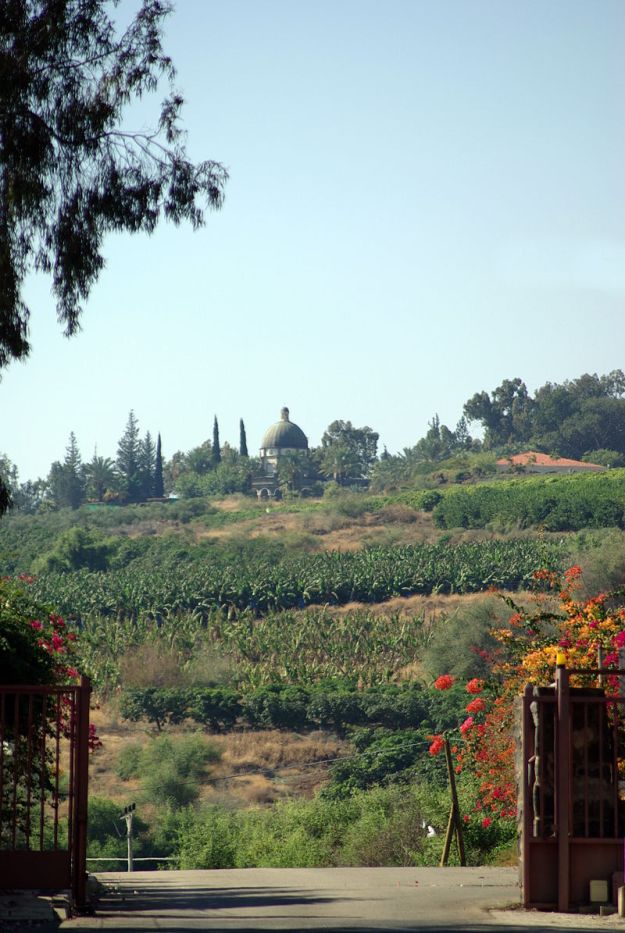
Mount of Beatitudes, seen from Capernaum. Photo by Berthold Werner, public domain

Matthew 5: 1-12

Parallel Luke 6: 20-26

Highlighted words will have comment on translation below

1 When Jesus saw the crowds, he went up the mountain; and after he sat down, his disciples came to him. 2 Then he began to speak, and taught them, saying:

3Blessed are the poor in spirit, for theirs is the kingdom of heaven.
4Blessed are those who mourn, for they will be comforted.
5Blessed are the meek, for they will inherit the earth.
6Blessed are those who hunger and thirst for righteousness, for they will be filled.
7Blessed are the merciful, for they will receive mercy.
8Blessed are the pure in heart, for they will see God.
9Blessed are the peacemakers, for they will be called children of God.
10Blessed are those who are persecuted for righteousness’ sake, for theirs is the kingdom of heaven.
11Blessed are you when people revile you and persecute you and utter all kinds of evil against you falsely on my account. 12 Rejoice and be glad, for your reward is great in heaven, for in the same way they persecuted the prophets who were before you.

The Sermon on the Mount is designed to be heard as one unit, even though we often break it up into individual readings and for the sake of space I will be dealing with smaller sections (even as I try to address it as an intentionally assembled and compact unit of teaching). Matthew constructs the Sermon on the Mount and places it early in the gospel to help the hearers in his time and later times understand what life in the community of disciples can be like, to open their ears, eyes, hearts, minds and imaginations to the kingdom of heaven. We probably do not have a transcript of Jesus’ teaching on at one specific time and place, but I do assume that the teachings collected in the sermon were among the memorable things that Jesus said and were probably used in multiple teaching opportunities. Several similar teachings are placed in different locations in Luke’s gospel, but the gospel writers were concerned with constructing their gospels to highlight what they felt was critical for their churches to understand about Jesus and the kingdom of heaven.

Location matters in the gospels, and Jesus going up the mountain is not only an action that allows him to be seen and heard by the crowds but it also (especially considering the content of the sermon) links him symbolically with Moses. Moses would go up the mountain to receive the law from God, now Jesus goes up the mountain to fulfill the law and the prophets. Jesus here and at the mountain of transfiguration will be linked to Moses (and Elijah and the rest of the prophets) and will also surpass them. But location helps to emphasize that Jesus is one speaking with the authority to declare the things he states. This will be especially important later in the chapter as he expands on the law.

The Beatitudes, the common name for Matthew 5: 3-12, get their name from the word in Latin that we translate as ‘blessed.’ This is another place where translation can obscure a linkage that may have been obvious to the initial hearers of the message. The Greek makarios is often used to translate the Hebrew asre which is often used in wisdom literature. I do think that we are invited into the framework of wisdom literature with its choice between the way of the wise and the foolish, those who follow the law and those who do not and this linkage is heightened in Luke’s similar blessings and woes in Luke 6: 20-26.  Asre is normally translated happy in the NRSV, for example:

Happy are those who do not follow the advice of the wicked, or take the path that the sinners tread, or sit in the seat of scoffers. (Psalm 1:1)

Happy are those to whom the LORD imputes no iniquity, and in whose spirit there is no deceit. (Psalm 32:2)

Happy are those who live in your house, ever singing your praise. Selah

Happy are those whose strength is in you, in whose heart are the highways to Zion. (Psalm 84: 4-5)

Happy are those whose way is blameless, who walk in the way of the LORD. Happy are those who keep his decrees, who seek him with their whole heart, (Psalm 119: 1-2)

Happy are those who find wisdom, and those who get understanding, (Proverbs 3: 13)

Happy is the one who listens to me, watching daily at my gates, waiting beside my doors. (Proverbs 8: 34)

Several other sayings in both Psalms, Proverbs, the prophets and the law take this form encouraging the people to choose the way that is being stated. Although the translation of makarios into blessed brings its own set of meaning to the passage I am going to begin to highlight terms that I would retranslate to bring in a different shade of meaning. For most people ‘blessed’ may have the sense of happiness with it but when they read religious language they simply take it as declarative language where God declares something ‘blessed’ and it is made holy but it doesn’t necessarily change anything for the ‘blessed one.’ While I agree with those who would highlight the aspect of inclusion for those excluded here in this passage (poor in spirit, mourners, meek, and those hungering and thirsting for righteousness) I also think it is important that we hear, in terms of wisdom literature and the language of the beatitudes, that in this kingdom of heaven those who have been unhappy, oppressed and excluded are invited to a community where they will be happy and the things they need to be happy will be given to them.

The gospel writers were each clever in the way they construct their gospels to link critical stories together and Matthew links this initial teaching section with his final section of teaching in Matthew 25, as Richard B. Hays can highlight:

Matthew creates an inclusio with the Beatitudes of Matthew 5: 3-12 by narrating an unsettling last judgment scene in which Jesus/Emmanuel turns out to have been present among us in the hungry and thirsty and naked and sick and imprisoned of this world. (Matt 25: 31-46). This, too, is an integral part of what “God with us” means in Matthew, as exemplified in the story of Jesus’ own suffering, culminating in the cross. To recognize God’s presence truly, then, Matthew’s readers must serve the needs of the poor, for “just as you did it to one of the least of these brothers, you did it to me:” (25:40) (Hays, 2016, p. 170)

Unlike Luke where the blessings and woes are placed next to one another, in Matthew the inclusion allows us to see the invitation at the beginning of Jesus’ teaching and the consequence for not following this wisdom at the end.

Moving into the Beatitudes themselves I will divide them into two sets of four and then a final saying set off by a change in reference (from blessed are the ones/those to blessed are you). The first set of four are those who God is depicted in scripture frequently being their advocate against those in power. The second set addresses those who are attempting to live in the way that they are called to live, and the final phrase addresses those who are persecuted specifically for living on account of Jesus for their rejection among the unwise will mean reward in the kingdom of heaven.

The ideas that will be articulated in the Beatitudes and the rest of the Sermon on the Mount are grounded in the vision of what Israel was to be for the sake of the world. Israel was always intended to be an alternative vision of society to the model used by Egypt, Assyria, Babylon, Greece, Rome or any other empire or nation ancient or modern. It was to be a society where they loved and feared the LORD their God and they loved and protected their neighbor. Much of the law is imagining a society where not only are the landholding members of the people of Israel protected but also the alien, the poor, the widow and the orphan. Israel often failed to embody this type of society, often emulating the practices of the larger nations around them with the powerful enlarging their own property, power, wealth and households by exploiting or failing to protect their vulnerable neighbors. The society gathered around Jesus are invited again into a kingdom where the poor in spirit, the mourning, the meek and those hungering and thirsting for righteousness are protected both by the community and by God.

The poor in spirit, in contrast to the poor in Luke 6:20, has caused a lot of debate about what Matthew means. My reading of this passage is the ‘poor in spirit’ and the ‘poor’ are referring to the same group, it is not a spiritualization of poverty but instead refers to those who have been oppressed and are holding on to their last thread of hope, against all evidence to the contrary, that God will deliver them. The longstanding wisdom of the Hebrew scriptures is that God is the one who will side with the poor against their oppressors and in the words of Proverbs, “Those who oppress the poor insult their Maker, but those who are kind to the needy honor him.” (Proverbs 14:31) The kingdom of the world may have no place for the poor, but the kingdom of heaven will belong to them. They can be happy because in the society that Jesus is presenting to the disciples and hearers they are included, valued and protected. They can be blessed because they have what they need to have the life God desires for them, and, as we will learn in Matthew 25, Jesus will be found among them.

The mourners are those who weep at the state of the world. The mourning may be personal, due to the loss of a loved one, or it may be social due to the loss of property, occupation, meaning or place in society. In contrast to the Greco-Roman worldview which disapproved of mourning (Carter, 2005, p. 132) and the stoic worldview many in the United States inherited, there was an expectation of mourning and a rich tradition of lament included in the Hebrew Scriptures, especially in the Psalms. Yet, there is also a confident hope in a God who could and would reverse the situations in the world that caused the faithful to mourn and lament. Isaiah 25:7-8 is one of the articulations of hope in a God who can destroy every enemy that haunts them and then comfort them in what should be familiar language for most Christians

And he will destroy on this mountain the shroud that is cast over all peoples, the sheet that is spread over all nations; he will swallow up death forever. Then the LORD God will wipe away the tears from all faces, and the disgrace of his people he will take away from all the earth, the LORD has spoken. (emphasis mine)

 Meekness in English means quiet, gentle, submissive or easily imposed upon which is similar in meaning to praus the Greek word behind it, but this word in Biblical usage is not so simple to translate. This word refers to Jesus twice in Matthew:

Take my yoke upon you, and learn from me; for I am gentle and humble in heart, and you will find rest for your souls. (Matthew 11: 29)

Tell the daughter of Zion, Look, your king is coming to you, humble and mounted on a donkey, and on a colt, the foal of a donkey. (Matthew 21:5)

The highlighted terms are both the Greek praus translated as gentle or humble. I think meek captures a shade of what Jesus is alluding to here, for they are those who rather than rising up in violent reaction to the oppression they may encounter are those who wait for God to deal with the wicked. As Psalm 37 can state:

Yet a little while, and the wicked will be no more; though you look diligently for their place, they will not be there. But the meek shall inherit the land, and delight themselves in abundant property. (Psalm 37: 10-11)

The final Beatitude of the first section is those who hunger and thirst for righteousness who will be filled. As with the previous three I read this as those who have suffered under the oppression of the current state of society and need God’s liberation, they are those who seek righteousness in society and before God but are hungry and thirsty in the midst of their attempt to live a righteous rather than a wicked life. When they strive first the kingdom of heaven, they are promised that all the things they need for food, clothing and life will be granted to them as well (Matthew 6: 25-34).

With the second set of Beatitudes are exhortations which point to the way of life that will be further described in the Sermon on the Mount and throughout Jesus’ life and ministry. Throughout Matthew’s gospel the understanding of what righteousness looks like is always read through the lens of mercy. From Joseph being a righteous man and deciding to act with mercy towards Mary (Matthew 1:19), to Jesus frequent transgressions of a literal reading of the law to act in mercy we are shown a hermeneutic[1] of mercy throughout this gospel. The merciful will receive mercy, and this is a way of reading the law that will contrast with the readings of the Pharisees and Sadducees Jesus encounters in Matthew. For example, in Matthew 9: 9-13, Jesus will tell the Pharisees criticizing his practice of eating with sinners and tax collectors, “Those who are well have no need of a physician, but those who are sick. Go and learn what this means, ’I desire mercy, not sacrifice.’ For I have come to call not the righteous but sinners.” (Matthew 9:11) Jesus’ words and actions will embody this hermeneutic of mercy and Hosea 6:6 (quoted in Matthew 9:11) seems to be a key text that Jesus and his followers are to use to unlock what scripture is to mean for their lives. As Richard B. Hays can state,

Clearly, for Matthew, mercy is a central theme. The important thing to recognize, in all these passages, is that the quality of mercy is not set in opposition to the Torah; rather, Matthew’s Jesus discerns within Scripture itself the hermeneutical principle—expressed epigrammatically in Hosea 6:6—that all the commandments are to be interpreted in such a way as to engender and promote the practice of mercy among God’s people. (Hays, 2016, p. 127)

The pure in heart are those who live in faithfulness to the vision of the kingdom of heaven articulated here and throughout Jesus’ ministry. As Psalm 24 can remind us:

Who shall ascend the hill of the LORD? And who shall stand in his holy place? Those who have clean hands and pure hearts, who do not lift up their souls to what is false, and do not swear deceitfully. (Psalm 24: 3-4)

Those of pure hearts and clean hands may approach the place of God in the psalm, and here the pure in heart are prepared to see God. The preparation for God’s approach is not ritual action or sacrifice but a life properly lived. The heart in Hebrew thought is not the instrument of emotion (that would be the gut) but rather the instrument of will and decision. Those who are pure in their will and decision, who live according to the way of righteousness rather than foolishness will see God. Seeing God may be impossible for mortals in several places in the scriptures, but one of the themes of Matthew’s gospel is that in Jesus we encounter ‘God with us.’ Yet, as discussed above this is also the “God with us” who is found with the hungry, thirsty, naked and poor. Those who are not pure in heart may be those who missed the appearance of God because they did not choose a way of righteousness and mercy which sees the need of the community around them, but in the kingdom of heaven the poor in spirit, mourning, meek and the ones hungering and thirsting for righteousness have already been granted a place with God.

Peacemaking in the kingdom of heaven is meant to be understood in contrast to the image of peace practiced by Rome which was peace through conquest and military might. When I served in Nebraska, near the former headquarters for Strategic Air Command, I would sometimes see stickers on vehicles with a B-52 Stratocaster bomber replacing the arms of a peace sign with a caption, “Peace the old-fashioned way.” This would fit with the Roman understanding of the Pax Romana which, in the language of the ancient historian Tacitus, “pacem sine dubio…verum cruentam. Peace there was, without question, but a bloody one” (Zanker, 1988, p. 187) The peace of the kingdom of heaven will only be a bloody one because the one who embraces it may be crucified by the emissaries of the kingdoms of the world, not because they respond in violence. The kingdom of heaven will be a place where reconciliation is more important than sacrifice, where enemies are loved, and where cheeks are turned in response to being struck. Those who practice this type of community will be welcomed into a familial relationship with the daughters and sons of God.

Those who are persecuted for righteousness sake as those who are persecuted for living a life that is shaped by this merciful, pure in heart and peaceful version of righteousness that Jesus will articulate. Structurally we are also linked back to the first Beatitude since both the poor in spirit and those persecuted for righteousness are inheritors of the kingdom of heaven. Ultimately this righteousness that one will be persecuted for involves standing with the poor in spirit, the mourning ones, the meek and the ones hungering and thirsting for righteousness. Disciples will be continually called to take up their cross. It will be a struggle for the kingdom of heaven to enter this world. Rather than responding to violence with violence they will respond with endurance instead.

The final Beatitude switches suddenly to a second person plural (all of you) where those who are gathered around Jesus now are addressed as ones who may be happy in the midst of being persecuted verbally or physically since it bears witness to their faithfulness to this kingdom. Their reward is great in this community because they are like one of the prophets who remained faithful to God in the midst of a faithless time. They are a part of a community, like the prophets, who believed that in a time of injustice the God’s justice would triumph, in a world of bloody peace believed that God’s true peace would come, who believe in mercy more than sacrifice and in a God who stand with the poor in spirit, the mourning ones, the meek and the one hungering and thirsting for a righteousness they’ve yet to see. Yet, they can be happy or blessed because the kingdom of heaven is being embodied in their hearing.          

[1] A hermeneutic is a way of interpretation, a word that is frequent in the world of scholarship but rarely heard outside the worlds of philosophy, scriptural interpretation and theology but I include it because it is a useful word in framing how to read a text.

Psalm 37 A Song of a Wise Life

An Old Woman Reading, Probably the Prophetess Hannah by Rembrandt (1631)

Psalm 37

<Of David.>
1 א  Do not fret because of the wicked; do not be envious of wrongdoers,
 2 for they will soon fade like the grass, and wither like the green herb.
 3 ב Trust in the LORD, and do good; so you will live in the land, and enjoy security.
 4 Take delight in the LORD, and he will give you the desires of your heart.
 5 ג Commit your way to the LORD; trust in him, and he will act.
 6 He will make your vindication shine like the light, and the justice of your cause like the noonday.
 7 ד Be still before the LORD, and wait patiently for him; do not fret over those who prosper in their way, over those who carry out evil devices.
 8 ה Refrain from anger, and forsake wrath. Do not fret — it leads only to evil.
 9 For the wicked shall be cut off, but those who wait for the LORD shall inherit the land.
 10 ו Yet a little while, and the wicked will be no more; though you look diligently for their place, they will not be there.
 11 But the meek shall inherit the land, and delight themselves in abundant prosperity.
 12 ז The wicked plot against the righteous, and gnash their teeth at them;
 13 but the LORD laughs at the wicked, for he sees that their day is coming.
 14 ח The wicked draw the sword and bend their bows to bring down the poor and needy, to kill those who walk uprightly;
 15 their sword shall enter their own heart, and their bows shall be broken.
 16 ט Better is a little that the righteous person has than the abundance of many wicked.
 17 For the arms of the wicked shall be broken, but the LORD upholds the righteous.
 18 י The LORD knows the days of the blameless, and their heritage will abide forever;
 19 they are not put to shame in evil times, in the days of famine they have abundance.
 20 כ But the wicked perish, and the enemies of the LORD are like the glory of the pastures; they vanish — like smoke they vanish away.
 21 ל The wicked borrow, and do not pay back, but the righteous are generous and keep giving;
 22 for those blessed by the LORD shall inherit the land, but those cursed by him shall be cut off.
 23 מ Our steps are made firm by the LORD, when he delights in our way;
 24 though we stumble, we shall not fall headlong, for the LORD holds us by the hand.
 25 נ I have been young, and now am old, yet I have not seen the righteous forsaken or their children begging bread.
 26 They are ever giving liberally and lending, and their children become a blessing.
 27 ס Depart from evil, and do good; so you shall abide forever.
 28 For the LORD loves justice; he will not forsake his faithful ones.
    ע The righteous shall be kept safe forever, but the children of the wicked shall be cut off.
 29 The righteous shall inherit the land, and live in it forever.
 30 פ The mouths of the righteous utter wisdom, and their tongues speak justice.
 31 The law of their God is in their hearts; their steps do not slip.
 32 צ The wicked watch for the righteous, and seek to kill them.
 33 The LORD will not abandon them to their power, or let them be condemned when they are brought to trial.
 34 ק Wait for the LORD, and keep to his way, and he will exalt you to inherit the land; you will look on the destruction of the wicked.
 35 ר I have seen the wicked oppressing, and towering like a cedar of Lebanon.
 36 Again I passed by, and they were no more; though I sought them, they could not be found.
 37  ש Mark the blameless, and behold the upright, for there is posterity for the peaceable.
 38 But transgressors shall be altogether destroyed; the posterity of the wicked shall be cut off.
 39  ת The salvation of the righteous is from the LORD; he is their refuge in the time of trouble.
 40 The LORD helps them and rescues them; he rescues them from the wicked, and saves them, because they take refuge in him.

I have introduced the Hebrew letters at the beginning of each acrostic line to show the structure of this poem. The psalms frequently use acrostic poetry as a form which tends to denote a completion of thought from Aleph to Tav (or in our alphabet the equivalent would be from A to Z). Psalm 37 uses this form to express the contrast between the life of the wicked and the life of the righteous. The psalm was works in a similar way to the book of Proverbs where the words are a tool for passing on a manner of life that values the correct things. It encourages the hearer to take the long view of life as it compares the momentary success of the wicked and the way of the righteous.

Psalm 37, like much wisdom literature, wrestles with the common question of every age: Why do those who seem to be wicked often prosper and those who are faithful struggle? Or in simpler terms: Why do good things happen to bad people and bad things to good people? No psalm, poetry, proverbs or philosophy can adequately address every aspect of this fundamental question, but the poets, wise ones and prophets of the bible do attempt to give their provisional answers to these questions because they are important to how they understand what a good life looks life. In the psalms God is fundamentally trustworthy and, even when situations seem to testify otherwise, the authors trust that God’s will and God’s way will prevail. Psalm 37 attempts to make a case for faithfulness in the seeming prosperity of the faithless and for the long view of life in contrast to the ways of the wicked which focus on the immediate reward of their actions.

The psalm invites us into a life that is not dominated by worrying about how other’s actions are rewarded but rather to trust in the LORD amid the positives and negatives of life. It encourages the hearer to expand the horizon of their consideration beyond the transitory present. Throughout the psalms the LORD is trustworthy, sees the struggles of the righteous and does, in God’s time, act. The longstanding faithfulness of God is contrasted with the transitory prosperity of those who act unethically or who live wicked lives that are centered on their own interests. Vengeance and justice rest in God’s hands and it is ultimately God who will cut off the wicked, who will bring their plots and their power to an end. Their own actions will become their undoing and in time they will fade away while the righteous endure. For now, they may be imposing, like the cedars of Lebanon, but the day will come when the LORD’s ax will cut them down at the roots.

This psalm echoes in the sermon on the mount, where Jesus can state, “Blessed are the meek, for they shall inherit the earth.” (Matthew 5:5) In contrast to a worldview where one should seize all that one can this psalm offers a view of the world that outlasts those who grasp for land, wealth and power. This bit of wisdom points to a life of generosity and trust. One can lend and give generously because the righteous one can trust that the LORD will provide for their needs. They in their lives of generosity, the lives they model and hand on to their children, become a blessing to the world around them. They seek the good of the community and justice trusting that their God is a God of goodness and justice.

Psalm 37 in particular and wisdom literature in general attempts to pass on a way of life and cultivate practices that lead towards a whole life. I believe we ask this question too infrequently in our time. The question of the practices and values of a good life are questions that need to be asked as they are handed on from generation to generation. Part of the answer comes from the experiences of life. Like the psalmist we may be able to reflect upon times where someone’s power and prosperity that were accumulated in an unjust manner proved temporary. Like the psalmist we may reflect upon the way that God’s prosperity has provided for us in our own life. Reflections like this one do not deny the challenge of those who prosper while doing evil or who struggle while trying to live a righteous life. But they wrestle with these questions from the position of trust. The psalmist and those who echo this psalm believe that God is ultimately trustworthy. They believe, even when confronted by those who see prosperity in a life that goes against their values, that a life lived in the practices of wisdom and righteousness are worth living. They view life in a longer horizon than the profits of the moment or the experience of the day. Without discounting their present experience, they can set aside their anger, envy and strife because they trust that the LORD who has created the day will provide for them today and tomorrow. They sing a song of gratitude and trust and that song shapes the values and practices of the life they live.

Psalm 36: The Way of God and the Way of the Wicked

Psalm 36

<To the leader. Of David, the servant of the LORD.>
1 Transgression speaks to the wicked deep in their hearts; there is no fear of God before their eyes.
2 For they flatter themselves in their own eyes that their iniquity cannot be found out and hated.
3 The words of their mouths are mischief and deceit; they have ceased to act wisely and do good.
4 They plot mischief while on their beds; they are set on a way that is not good; they do not reject evil.
5 Your steadfast love, O LORD, extends to the heavens, your faithfulness to the clouds.
6 Your righteousness is like the mighty mountains, your judgments are like the great deep; you save humans and animals alike, O LORD.
7 How precious is your steadfast love, O God! All people may take refuge in the shadow of your wings.
8 They feast on the abundance of your house, and you give them drink from the river of your delights.
9 For with you is the fountain of life; in your light we see light.
10 O continue your steadfast love to those who know you, and your salvation to the upright of heart!
11 Do not let the foot of the arrogant tread on me, or the hand of the wicked drive me away.
12 There the evildoers lie prostrate; they are thrust down, unable to rise.

Martin Luther, borrowing from St. Augustine, could talk about sin as a state of incurvatus in se (being turned/curved inward on oneself) in contrast to the will of God which curves the individual outward towards both God and neighbor. I borrow this phrase because I find it helpful in the psalms thinking about the contrast between the wicked and the righteous. The righteous one in the psalms is the one who trusts and depends on the LORD for their protection and provision through life. The righteous life is directly connected to the presence and life of God and is open to seeing the way that the LORD’s steadfast love, faithfulness, righteousness and judgements are exhibited even in the fabric of creation itself. The wicked in contrast have no fear of God before their eyes and are blind to the presence and power of God in their world and so their words and actions become curved inward on their own interests and glorification.

Psalm 36, like Psalm 1, devotes its beginning to discussing the wicked as a contrast to the type of life the faithful one is to live. However, now the character of the wicked will be contrasted with the character not of the righteous, but instead with the character of the LORD the God of Israel. The wicked are those who have transgression or rebellion speaking to them from deep inside their hearts. They are those whose inward curved lives provide an environment where sin thrives. There is no external source for their morality, there is no fear of God, for their lives are self-directed and self-governed. They believe that their words and actions are either unable to be criticized by others or are above others. They live a life oriented around their own self-interest rather than the way in which the law attempts to orient peoples’ lives around the neighbor’s interest. Their orientation on their own words, actions and interest blind them from seeing the character of God that the psalmist discusses as they turn to God’s steadfast love.

The character of God is poetically anchored in the elements of the earth through the psalm’s beautiful language. God’s steadfast love extends to the heavens and God’s faithfulness to the clouds linking these elements of God’s character into the skies above the earth while the righteousness of God and the judgments of God are linked to the highest and lowest expanses of the earth, the mountains and the deep. As in Psalm 33:5 the heavens and the earth are full of the steadfast love of God and the creation points to God’s majesty. The psalmist’s poetically opened eyes see the character and nature of God written all throughout the creation while the wicked remain only able to flatter themselves in their own eyes.

The poet behind Psalm 36 rejoices in their connection and their reliance upon God. The steadfast love of God is a precious thing to them, the shadow of God’s wings become yet another place of refuge within the psalms. God is the great provider who provides a feast in the house of the LORD and drink from the river of delight. God is, for the psalmist, the source of life itself and the light by which all things can be seen. As C. S. Lewis’s famous proverb states, “I believe in Christianity as I believe that the Sun has risen, not only because I see it but because by it I see everything else.” (Nancy deClaisse-Walford, 2014, p. 346f.) For the poet who celebrates God’s steadfast love, faithfulness, righteousness and justice the LORD becomes the very means of understanding the world and everything in it.

Even in the beauty of the psalm’s beholding of God’s character written into the structure of the cosmos there is still an allure to the blindness of the wicked. Particularly in modern times where the myth of the self-made and self-directing individual who generates their own standards of life has become the assumed orientation we would be wise to consider that this glorifies the state of incurvatus in se that Augustine and Luther warned about and the psalmist’s way of the wicked. The allure of the self-directed life means turning away from the character of God that is written on the cosmos itself. There will continue to be times where the prosperity of those who have become their own moral compass blind even the faithful to the presence of God’s steadfast love, righteousness, justice, and faithfulness. We, like the poet, continue to pray for our eyes to see God’s steadfast love on those who seek God and God’s salvation on the uprightness. We continue to seek the refuge of God’s wings when the ways of the wicked threaten us and drive us away. Perhaps there will come a day when the wicked will lie prostrate, as in prayer, so that they can heal and they too can see the character of God written on the creation itself. Yet, the lure of sin continues to turn people inward on themselves seeking their own interests and away from the steadfast love of God which permeates the entire world.

Psalm 15- Entering the Sacred Presence of God

The Temple by Radojavor@deviantart.com

The Temple by Radojavor@deviantart.com

Psalm 15

 <A Psalm of David.>
1 O LORD, who may abide in your tent? Who may dwell on your holy hill?
2 Those who walk blamelessly, and do what is right, and speak the truth from their heart;
3 who do not slander with their tongue, and do no evil to their friends,
  nor take up a reproach against their neighbors;
4 in whose eyes the wicked are despised, but who honor those who fear the LORD;
  who stand by their oath even to their hurt;
5 who do not lend money at interest, and do not take a bribe against the innocent.
  Those who do these things shall never be moved.

How does one prepare to enter the sacred spaces of the world, those places where the presence of the divine makes holy the profane? In many cultures there are a number of rituals one must undergo to purify oneself and prepare to enter the holy places of the world-those places where heaven and earth seem to meet. Even within the Bible there are places where there are actions that the priest must do to prepare for their tasks and in places like Leviticus 21: 17-21 and Deuteronomy 23: 1-6 there are limits placed upon who may enter the tabernacle or the temple to serve. Yet here, in Psalm 15, as is frequently the case in the Psalms and prophets there is no physical requirements, exclusions or cultic actions that prepares one to enter into the house of the LORD, instead the focus is on the way one lives out one’s relationship with one’s neighbor. Perhaps echoing this Psalm, the prophet Micah can say:

“With what shall I come before the LORD, and bow myself before the God on high?
Shall I come before him with burnt offerings, with calves a year old?
Will the LORD be pleased with thousands of rams, with ten thousand rivers of oil?
Shall I give my firstborn for my transgression, the fruit of my body for the sin of my soul?
He has told you, O mortal, what is good; and what does the LORD require of you
but to do justice, and to love kindness, and to walk humbly with your God. Micah 6: 6-8

In contrast to the duplicitous hearts in Psalm 12 and those who say in their hearts “there is no God” as in Psalm 14, stand the righteous ones who speak truth from the heart and who honor and fear God are allowed to enter into the presence of God.  It is one’s life in relation to one’s neighbor that prepares one to enter into the temple or tabernacle, one’s life in the mundane life of community that is the preparation for the sacred encounter with God. Loving one’s neighbor and living as truthful and righteous people toward the community is preparation for encountering God in the promised communion. As Rolf Jacobson can state, “when the Lord extends an invitation for a person to enter the sacred space, God insists that one’s neighbors are also invited.” (Nancy deClaisse-Walford, 2014, p. 173)

This short Psalm has a number of phrases that point towards what a life that is prepared to see God’s presence not only in the holy spaces but in the normal secular spaces of life as well. Speaking truth from one’s heart refers both to a person whose speech reflect truly their own character but also their character is pure and peaceful as well. The refuse to speak of a neighbor in a way that compromises the person’s participation within the community but instead as Martin Luther can talk about in his explanation to the eighth commandment:

We are to fear and love God, so that we do not tell lies about our neighbors, betray or slander them, or destroy their reputations. Instead we are to come to their defense, speak well of them, and interpret everything they do in the best possible light. (Luther, A Contemporary Translation of Luther’s Small Catechism, 1978, p. 20)

While we may struggle a little initially with the language of, “in whose eyes the wicked are despised” there is a strong need for the community not to tolerate or ignore things that are contrary to the justice their God has called for. When we turn a blind eye or accept, for example, the abuse of children or the oppression of the homeless then we have also turned away from the God who cares for the children and the vulnerable. After wrestling with Deuteronomy and Jeremiah I’ve come to appreciate the urgency the people of Israel felt for attempting to create a society that lived into the vision God called them to. A trustworthy society where the words and actions represented the God’s dream for them and the world. A society where mercy for one’s neighbor was more important than profit one could make upon one’s neighbor by charging interest to them in their need.

The Psalm is a bold vision and a vision that is challenging in our time. It is a vision that looks at holiness in terms of how we treat our neighbors rather than some version of piety or orthodoxy. In this Psalm and in many other places, particularly in the Psalms and prophets, issues of proper attire or cultic actions are disregarded or at least given a far lower place than one’s relationship with the neighbor. In the Sermon on the Mount, Jesus can echo this sentiment when he talks about leaving one’s gift before the altar to be reconciled to one’s neighbor (Matthew 5: 23-24). In contrast to the previous three Psalms, where one finds oneself in the position where the wicked seem to be prospering, the Psalmist now returns to the vision of the first Psalm, where the LORD watches over the righteous and they will not be moved. Their words and their actions truthfully come out of their heart and even when their truthful words and actions or their willingness to stand with their neighbor causes them hurt they are not moved. They look at the world through the lens of mercy rather than profit, through the lens of love rather than acquisition and they are perhaps ready to enter into the sacred spaces of the world where God meets them because they lived a godly life in the secular places of life.

Deuteronomy 9: The Promise of God and the Stubborn People


Deuteronomy 9: 1-5 The Promise of God


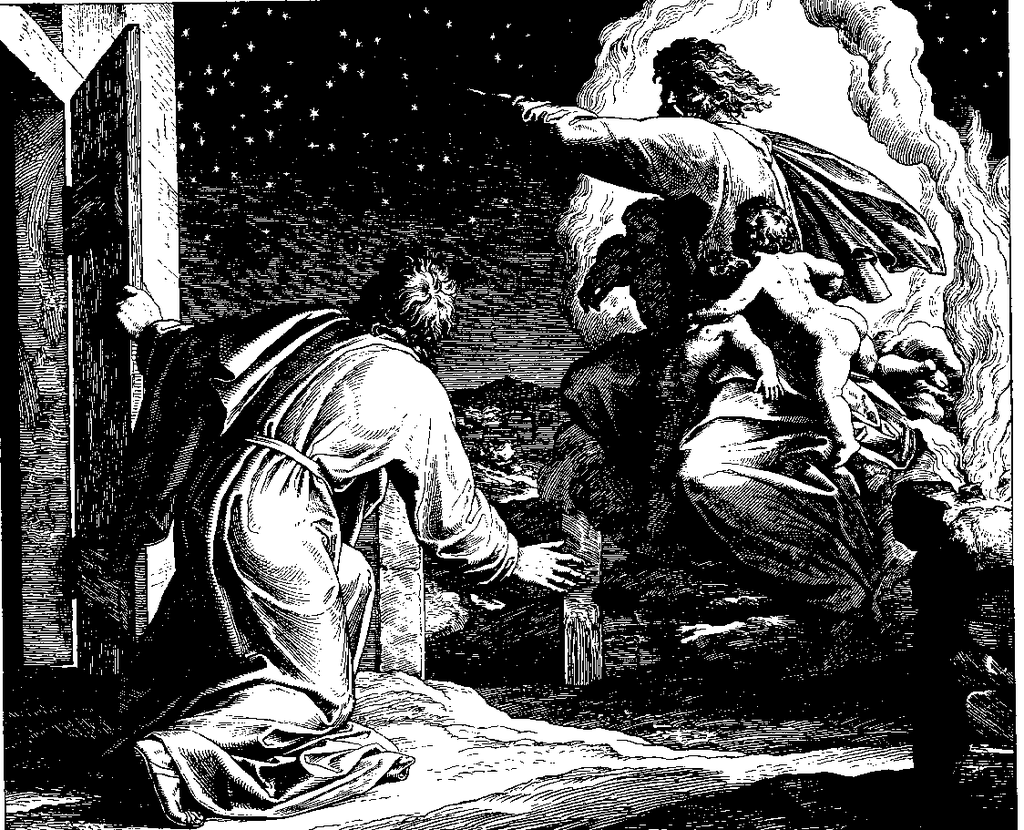
Julius Schnorr von Carolsfeld woodcut for "Die Bibel in Bildern" (1860) God telling Abraham to Count the Stars

Julius Schnorr von Carolsfeld woodcut for “Die Bibel in Bildern” (1860) God telling Abraham to Count the Stars

1 Hear, O Israel! You are about to cross the Jordan today, to go in and dispossess nations larger and mightier than you, great cities, fortified to the heavens, 2 a strong and tall people, the offspring of the Anakim, whom you know. You have heard it said of them, “Who can stand up to the Anakim?” 3 Know then today that the LORD your God is the one who crosses over before you as a devouring fire; he will defeat them and subdue them before you, so that you may dispossess and destroy them quickly, as the LORD has promised you.

4 When the LORD your God thrusts them out before you, do not say to yourself, “It is because of my righteousness that the LORD has brought me in to occupy this land”; it is rather because of the wickedness of these nations that the LORD is dispossessing them before you. 5 It is not because of your righteousness or the uprightness of your heart that you are going in to occupy their land; but because of the wickedness of these nations the LORD your God is dispossessing them before you, in order to fulfill the promise that the LORD made on oath to your ancestors, to Abraham, to Isaac, and to Jacob.


In the first three chapters of Deuteronomy, Moses takes the people through a retelling of their failure the first time they explored the Promised Land and then the conquering of King Sihon of Heshbon and King Og of Bashan there is a continual reference to a fear of the Anakim, a group of people larger and stronger than the Israelites. Already in the narrative of Deuteronomy we have seen how this narrative of fear kept the people out of the Promised Land a generation before and how the people have already begun to conquer nations more powerful than themselves with great cities. Moses continues, in the narrative, to prepare the people to continue without him. Moses wants the people to understand that it is not because of their might (Deuteronomy 7) that they are chosen by God, or by their prosperity (Deuteronomy 8) or by their own righteousness or piety (Deuteronomy 9) that God is acting on their behalf. As a people their future is dependent upon their God and the promises that this God has made.

In seeking to make sense of the world the Deuteronomist provides his reason for the LORD’s action against the nations that currently occupy the land the people of Israel are preparing to occupy. It is not the righteousness of the people of Israel but the unrighteousness, or wickedness, of the people of the land. Israel has not merited God’s favor, but the nations of the land have somehow merited the divine disfavor. Much as in Romans 11, the Apostle Paul can make an argument against arrogance by the new Gentile Christians not to boast about their being grafted onto the tree of God’s faithful people, here Moses tells the people not to become arrogant over their new position in the Promised Land for their position is contingent upon God’s faithfulness to God’s promise. Moses casts back to the promise made to Abraham, Isaac and Jacob that their descendants would become a great nation. In Genesis 15 the LORD promises Abram (later Abraham) that his descendants shall be as numerous as the stars of heaven and in Genesis 12 there is the promise of the land to Abram’s descendants.


Deuteronomy 9: 6-29 An Unrighteous and Stubborn People

Antonio Molinari, Adoration of the Golden Calf between 1700 and 1702

Antonio Molinari, Adoration of the Golden Calf between 1700 and 1702

6 Know, then, that the LORD your God is not giving you this good land to occupy because of your righteousness; for you are a stubborn people. 7 Remember and do not forget how you provoked the LORD your God to wrath in the wilderness; you have been rebellious against the LORD from the day you came out of the land of Egypt until you came to this place.

8 Even at Horeb you provoked the LORD to wrath, and the LORD was so angry with you that he was ready to destroy you. 9 When I went up the mountain to receive the stone tablets, the tablets of the covenant that the LORD made with you, I remained on the mountain forty days and forty nights; I neither ate bread nor drank water. 10 And the LORD gave me the two stone tablets written with the finger of God; on them were all the words that the LORD had spoken to you at the mountain out of the fire on the day of the assembly. 11 At the end of forty days and forty nights the LORD gave me the two stone tablets, the tablets of the covenant. 12 Then the LORD said to me, “Get up, go down quickly from here, for your people whom you have brought from Egypt have acted corruptly. They have been quick to turn from the way that I commanded them; they have cast an image for themselves.” 13 Furthermore the LORD said to me, “I have seen that this people is indeed a stubborn people. 14 Let me alone that I may destroy them and blot out their name from under heaven; and I will make of you a nation mightier and more numerous than they.”

15 So I turned and went down from the mountain, while the mountain was ablaze; the two tablets of the covenant were in my two hands. 16 Then I saw that you had indeed sinned against the LORD your God, by casting for yourselves an image of a calf; you had been quick to turn from the way that the LORD had commanded you. 17 So I took hold of the two tablets and flung them from my two hands, smashing them before your eyes. 18 Then I lay prostrate before the LORD as before, forty days and forty nights; I neither ate bread nor drank water, because of all the sin you had committed, provoking the LORD by doing what was evil in his sight. 19 For I was afraid that the anger that the LORD bore against you was so fierce that he would destroy you. But the LORD listened to me that time also. 20 The LORD was so angry with Aaron that he was ready to destroy him, but I interceded also on behalf of Aaron at that same time. 21 Then I took the sinful thing you had made, the calf, and burned it with fire and crushed it, grinding it thoroughly, until it was reduced to dust; and I threw the dust of it into the stream that runs down the mountain.

22 At Taberah also, and at Massah, and at Kibroth-hattaavah, you provoked the LORD to wrath. 23 And when the LORD sent you from Kadesh-barnea, saying, “Go up and occupy the land that I have given you,” you rebelled against the command of the LORD your God, neither trusting him nor obeying him. 24 You have been rebellious against the LORD as long as he has known you.

 25 Throughout the forty days and forty nights that I lay prostrate before the LORD when the LORD intended to destroy you, 26 I prayed to the LORD and said, “Lord GOD, do not destroy the people who are your very own possession, whom you redeemed in your greatness, whom you brought out of Egypt with a mighty hand. 27 Remember your servants, Abraham, Isaac, and Jacob; pay no attention to the stubbornness of this people, their wickedness and their sin, 28 otherwise the land from which you have brought us might say, ‘Because the LORD was not able to bring them into the land that he promised them, and because he hated them, he has brought them out to let them die in the wilderness.’ 29 For they are the people of your very own possession, whom you brought out by your great power and by your outstretched arm.”


In C.S. Lewis’ classic book the Lion, the Witch and the Wardrobe there is a scene where the children are discussing Aslan, who they have not met yet, with Mr. and Mrs. Beaver. With Aslan being a lion one of the children asks if he is safe, to which Mr. Beaver replies, “Safe?…Don’t you hear anything that Mrs. Beaver tells you? Who said anything about safe? ‘Course he isn’t safe. But he’s good.” In that story the lion Aslan can be fierce but also gentle but is not domesticated. The LORD that the people of Israel come to know in their story is good but certainly not safe. Their narrative reminds them that they continually tested God throughout their Exodus and there were several times where their very existence was at risk because they offended their LORD and Moses had to intervene on behalf of the people and their leaders. The people often sought in the past and will continue to seek in the future more domesticated gods that provide for them without expecting who they are to change as individuals and as people. These gods of the nations around them that are placated by various offerings and activities rather than the LORD who demands their obedience and is never safe.

The narrative of Deuteronomy reminds the people of the story of their ancestors and gives a time period to the time Moses is up on the Mountain of Sinai (Horeb) receiving the ten commandments, the regulations for the priests, the design for the tabernacle, and several other ordinances.  This part of the story where Moses receives all of these things is laid out in Exodus 20-31. This story in Deuteronomy is used to show the contrast between Moses’ faithfulness and the people’s unfaithfulness. While Moses spends the forty days on the mountain fasting and receiving the stone tablets from the LORD, the people at the base of Mount Sinai (Horeb) are violating the very heart of the commands Moses is receiving. For the LORD declares that they are not to cast images or to follow other Gods, and the LORD their God is indeed a jealous God. Wonders and signs may make the people trust in the moment but they rarely in the bible seem to create a lasting sense of trust, and so Moses takes them back to the story again so they can remember how time after time they put their own future in jeopardy in the past by trusting other gods and tries to encourage them not to repeat this practice in the future.

Moses in this story represents what Israel is to be. Moses stands between God and the people and intercedes for them, fasts for them, places his own safety at risk with this unsafe God and reminds God again of the promises God has made, of God’s reputation, and daringly calls upon God to be God.  Moses wrestles with God (which is where the name Israel comes from) on behalf of the people and on behalf of Aaron and on behalf of God as well. Moses and the people stand in sharp contrast, Moses is engaged with the one LORD while the people craft an image of gold. Moses does not eat or drink for forty days twice while the emphasis is on the people eating and drinking and reveling in Exodus 32. Moses emphasizes that both they and Aaron where close to being consumed by the LORD’s wrath before this wrath turned away. Moses also lifts up Taberah, Massah and Kibroth-hattaavah (Numbers 11: 1-3; Exodus 17: 1-7 and Numbers 11: 31-34) as well as Kadesh-barnea (which was already highlighted in Deuteronomy 1: 19-45) as additional times where the LORD’s anger was kindled and with each of these stories the people failed in their calling to trust and obey the LORD. Moses argues like a lawyer laying out the case before the people that they are far from righteous on their own, but rather they are the beneficiaries of the divine provision in spite of their and their ancestor’s stubbornness. Their reception of the land is a result of God’s promise rather than their own abilities or piety.

For the people of Israel the god of moralism is not to be their god. They are a covenant people claimed by the LORD, the God of Israel and to be a covenant people is to be set aside because of God’s calling. If the book of Deuteronomy is compiled in the Babylonian exile, as many scholars believe, and the people are reflecting upon how they, with the temple and a Davidic king and the land, now found themselves in exile. They are reexamine their own story critically, trying to discover where they failed in their calling as the people of the God of Israel. Perhaps in the tradition of Jeremiah they are looking toward the time when the LORD will make a new covenant with them and put the LORD’s law within them and they shall all know the LORD (see Jeremiah 31; 31-34). They are a people who are ultimately dependent on their God’s righteousness and to use Martin Luther’s famous language about this righteousness it is an ‘alien righteousness’ that is given to them but does not belong to them. They are a people constituted by God’s calling. Perhaps Moses, in Deuteronomy, like many of the great revival preachers of the 1800s is trying to call the people back to the LORD, appealing to the fear of what would happen if their covenant with the LORD is dissolved. But they stand at the edge of the Promised Land due to the favor of a good but unsafe and not domesticated God. The narrative of Deuteronomy takes the reader back to this point and leaves them in this place and begs them to live in a way that is faithful to the calling they have received and the learn to trust and obey their LORD because their lives do depend upon it.

Margaret Hofheinz-Doring, Worship of the Golden Calf (1962)  shared under Creative Commons Attribution-Share Alike  3.0

Margaret Hofheinz-Doring, Worship of the Golden Calf (1962) shared under Creative Commons Attribution-Share Alike 3.0

Psalm 7- The God who Judges

Les Tres Riches Heures du duc de Berry, Folix 46v- David Beseeches God Against Evildoers, The Musee Conde, Chantilly

Les Tres Riches Heures du duc de Berry, Folix 46v- David Beseeches God Against Evildoers, The Musee Conde, Chantilly

Psalm 7

<A Shiggaion of David, which he sang to the LORD concerning Cush, a Benjaminite.>
 1 O LORD my God, in you I take refuge; save me from all my pursuers, and deliver me,
 2 or like a lion they will tear me apart; they will drag me away, with no one to rescue.
 3 O LORD my God, if I have done this, if there is wrong in my hands,
 4 if I have repaid my ally with harm or plundered my foe without cause,
 5 then let the enemy pursue and overtake me, trample my life to the ground,
 and lay my soul in the dust. Selah
 6 Rise up, O LORD, in your anger; lift yourself up against the fury of my enemies;
 awake, O my God; you have appointed a judgment.
 7 Let the assembly of the peoples be gathered around you, and over it take your seat on high.
 8 The LORD judges the peoples; judge me, O LORD,
according to my righteousness and according to the integrity that is in me.
 9 O let the evil of the wicked come to an end, but establish the righteous,
you who test the minds and hearts, O righteous God.
 10 God is my shield, who saves the upright in heart.
 11 God is a righteous judge, and a God who has indignation every day.
 12 If one does not repent, God will whet his sword; he has bent and strung his bow;
 13 he has prepared his deadly weapons, making his arrows fiery shafts.
 14 See how they conceive evil, and are pregnant with mischief, and bring forth lies.
 15 They make a pit, digging it out, and fall into the hole that they have made.
 16 Their mischief returns upon their own heads, and on their own heads their violence descends.
 17 I will give to the LORD the thanks due to his righteousness,
and sing praise to the name of the LORD, the Most High.
 

Within the Western church there is a long history where a lot of the focus has been upon the individual Christian’s sins and the way those sins would impact the individual’s afterlife. God’s judgment was removed from the sphere of everyday life and confined to a later time far removed from the actions in question. This has allowed our confession and guilt to be isolated from those who have borne the consequence of our individual or corporate sin, but this is not the world of the Psalmist. The Psalmist expects God to act upon the wrongdoer, to punish the sinful one because sin can never be separated from the victim of the sin. So the Psalmist can appeal to God for deliverance, a deliverance that is not separated from the reality of their oppressor. The Psalmist boldly trusts that, “If God is for us who can be against us.” As Paul states in Romans 8.31 or as Isaiah can state, “It is the LORD God who helps me, who will declare me guilty” (Isaiah 50.9a). The Psalmist appeals to God’s sense of right and wrong, justice and injustice, righteousness and wickedness.  The Psalmist cries out from their peril with the LORD standing as the righteous judge between the Psalmist and their accusers. For many Christians the Psalms seem impious, since they come from a different view of reality than most Christians are used to, but the Psalmist dares to boldly enter God’s presence declaring that the punishment they are receiving is far greater than whatever guilt they have incurred.

For a person who was brought up in a tradition of ‘judge not, lest ye be judged’ (paraphrasing Matthew 7.1) it is necessary to also realize that sometimes in withholding judgment I have allowed either the wickedness I have done or others have done to continue to perpetrate harm. As impartial as I may try to be, there are times where I am ill equipped to be the righteous judge and I need a God who can be. I need a God who cares about the victims, the powerless, the oppressed and those wrongly accused and can intervene for them. A God who does act to shield and protect. Who allows the guilty to fall into traps of their own design or who can, in God’s anger, have them put away their weapons whether real or metaphorical.

The Psalms are poetry and not dogma, they are evocative and cry out from the experiences and emotions of the author and they raise as many questions as they may answer. They are songs of faith, a faith that deals with the uncertainties and troubles of life in the hope that God is active and does intervene. Perhaps the Psalm echoes our own experience of being oppressed and crying out for God’s action, or as Rolf Jacobson asks helpfully, “Are there people today who could be praying this Psalm with me as their enemy? Are there victims of my sin who could cry to the righteous judge for recompense?” (Nancy de Clarisse-Walford, 2014, p. 119) But the dynamic of the Psalms is that the bear witness to the active faith of their author who struggles with God, calling forth for God’s action and judgment. There is the trust in a God who does see, does hear, and does act in the world, bringing forth God’s judgment and righteousness even in the experience of torment, oppression and fear.